
Share this
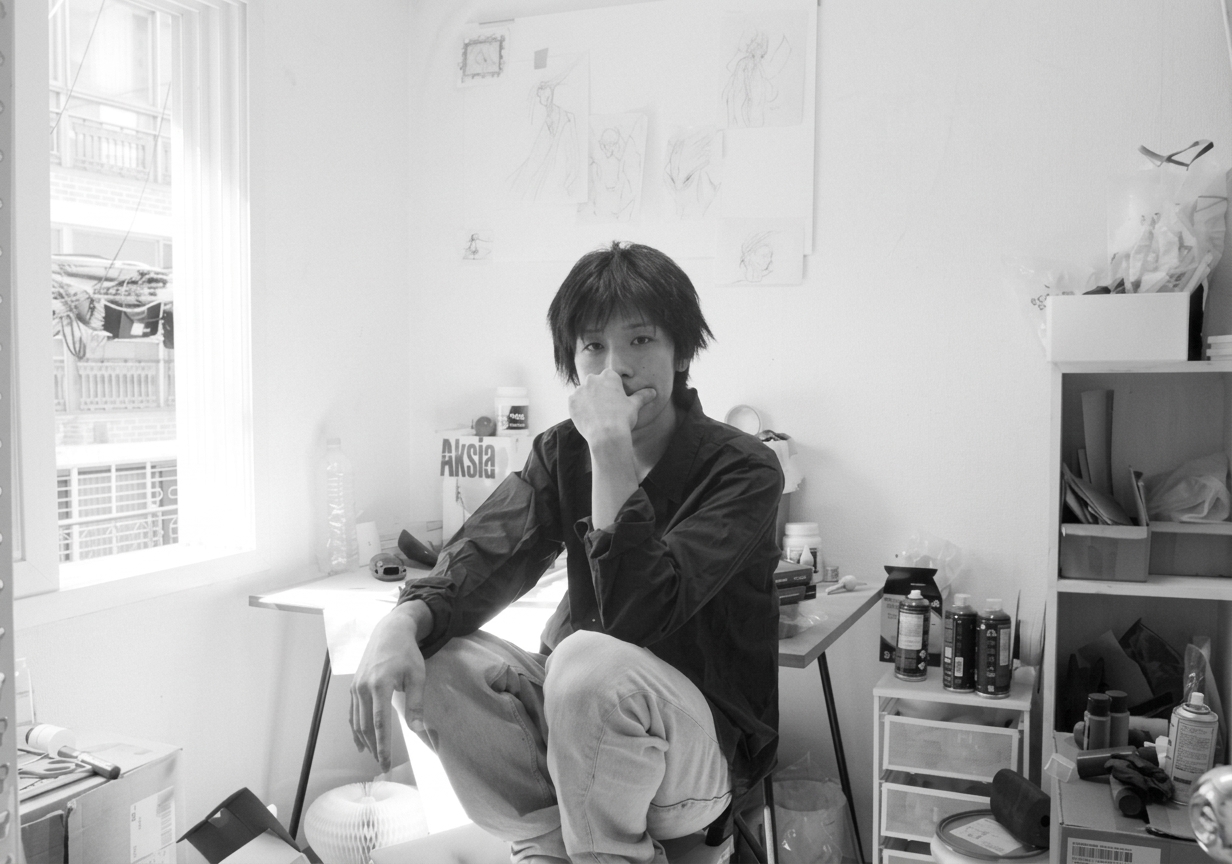
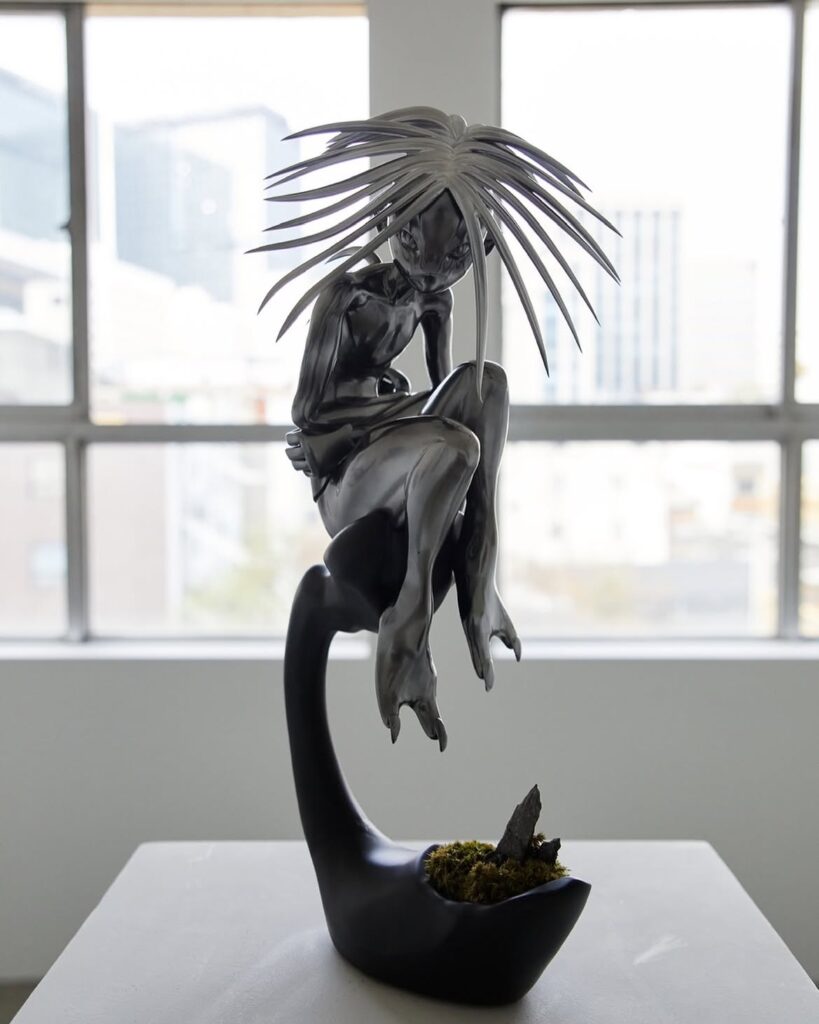
KOESY is an artist born in Ulsan, South Korea. With no formal art education, he has developed his own visual language through intuition and years of trial and error.
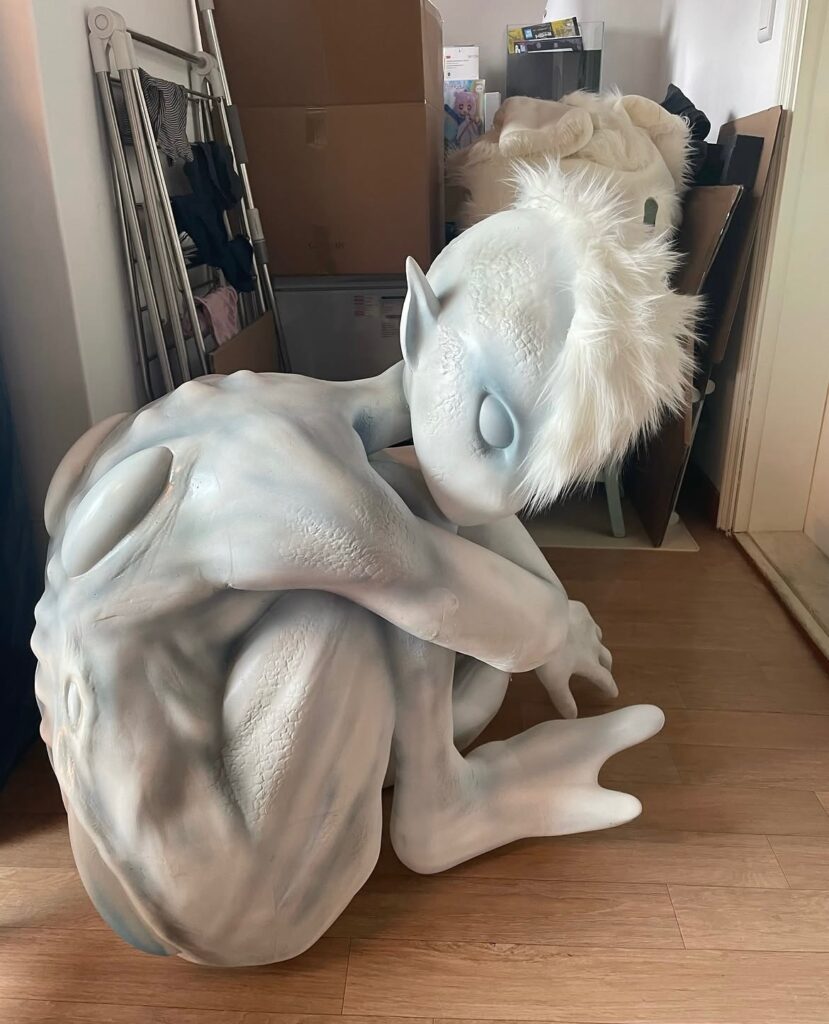
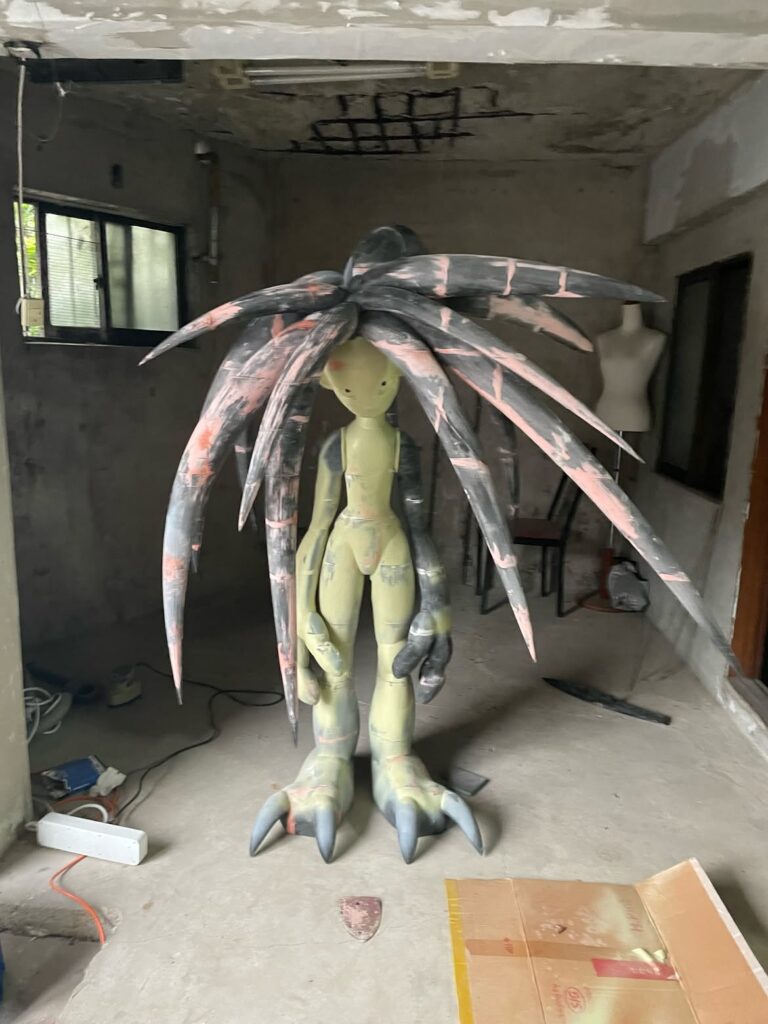
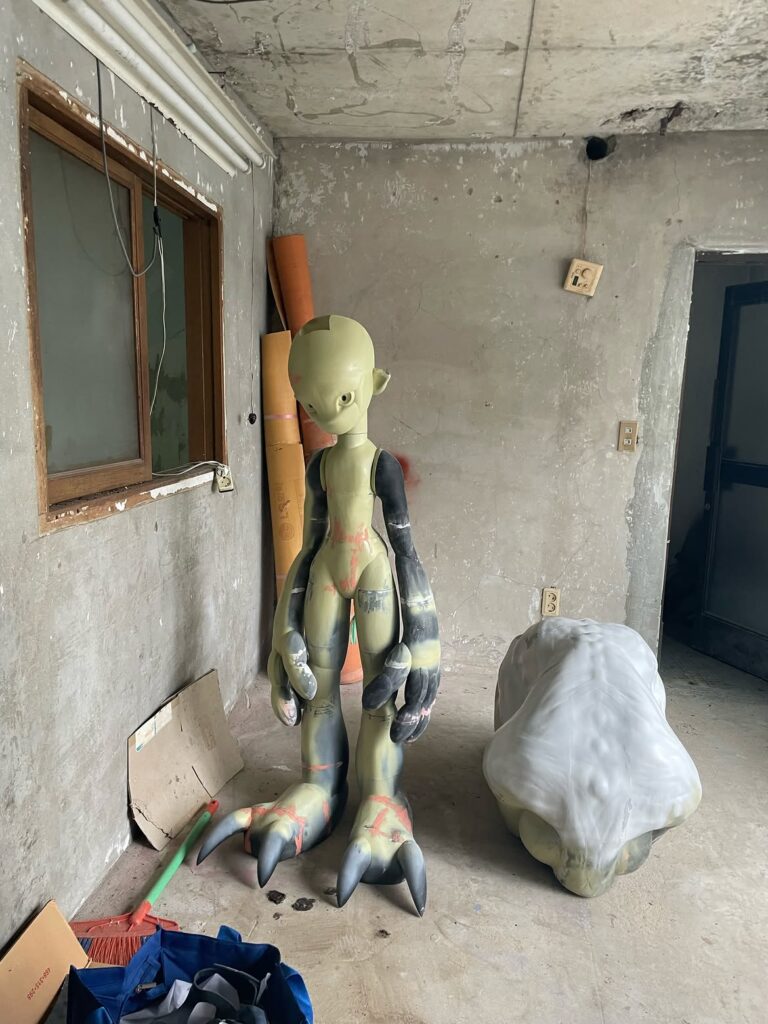
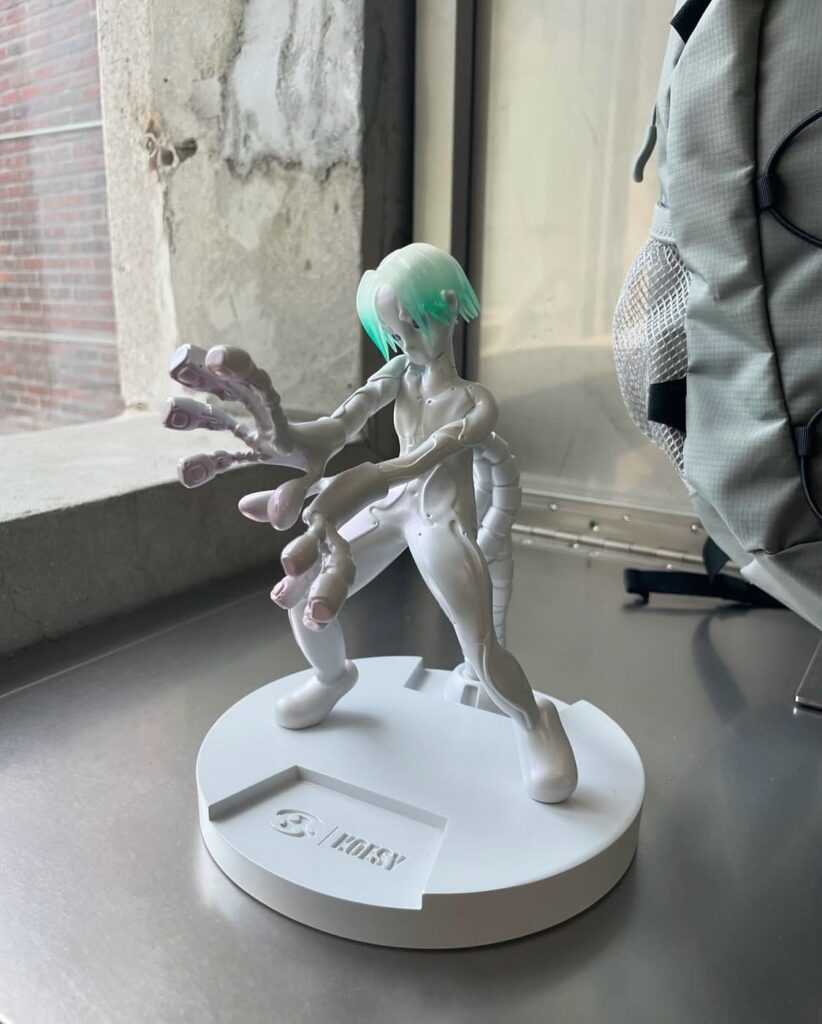
In the early stages of his practice, KOESY primarily worked with 3D graphics in the digital realm. Over time, however, he developed an increasing desire to physically touch the forms that existed beyond the screen. He began to feel that seeing alone was not enough to confirm their existence that physical sensations such as weight and texture were essential. This naturally led his practice to shift from virtual space toward physical sculpture.
KOESY intentionally avoids assigning fixed meanings or narratives to his works. He describes the act of making as something like taking a walk without a destination. By focusing simply on the act of making itself and the forms that remain as a result, he places importance on the process through which thoughts and emotions gradually settle into physical form.
Hi KOESY! It’s a pleasure to sit down with you! First question that I always ask. How does a regular day look like for you in Ulsan?
KOESY: I was born in Ulsan, but I live in Seoul now. My days in Seoul are actually pretty much the same every day. I work, eat, go for a walk, then work again. I live in almost the same routine over and over. It might sound a little boring, but sometimes I feel lucky to have that kind of repetition in my life. These days, I actually like being able to have a day where nothing special happens and today looks more or less like yesterday.
I’m curious, growing up, what was life like there? And what kind of kid were you? What did you enjoy doing?
KOESY: I was actually pretty sociable as a kid, and I had a lot of friends. But because of my family circumstances, we moved quite often, so I had to keep adapting to new cities and new environments. I think that naturally taught me how to spend time alone too. I liked being around friends, but I also got used to being by myself quite early.
Do you remember approximately at what age your creative side started to show? And when you started taking being an artist seriously?
KOESY: It feels a little embarrassing to call it my “creative side,” but my mother was an art teacher. My father also worked briefly in film before switching to interior work after my sister and I were born. So there were naturally a lot of art-related things and movie tapes around the house. I loved Japanese animation and manga from a young age, especially Dragon Ball. I used to copy the characters over and over onto sheets of A4 paper. Back then, I didn’t even understand the idea of “creating” something. I just drew because I liked it. And this might sound a little strange, but I still don’t think I’ve ever seriously thought of myself as an artist. What I do feels less like an act of “creating something” and more like continually exploring something and swimming around inside it. So even now, when someone calls me an artist, I still feel a little awkward.
So when did you first start playing around with different digital design and 3D programs?
KOESY: About five years ago. I started relatively late, and I learned everything by myself, just touching things one by one and figuring them out. This might be hard to believe, but I’m actually pretty terrible with computers. Even before that, I had a very strong but vague desire to make something. I just never really thought carefully about what I wanted to make or how I wanted to make it. Then I happened to come across 3D, and the very first thing I tried was making a short animation. I still remember how happy I was when I finished it. I was so happy my hands were shaking.
Your transition from 3D digital design to physical sculpture stems from a desire to feel weight and texture. How did your relationship with space and scale change when you moved out of the infinite digital canvas into physical reality?
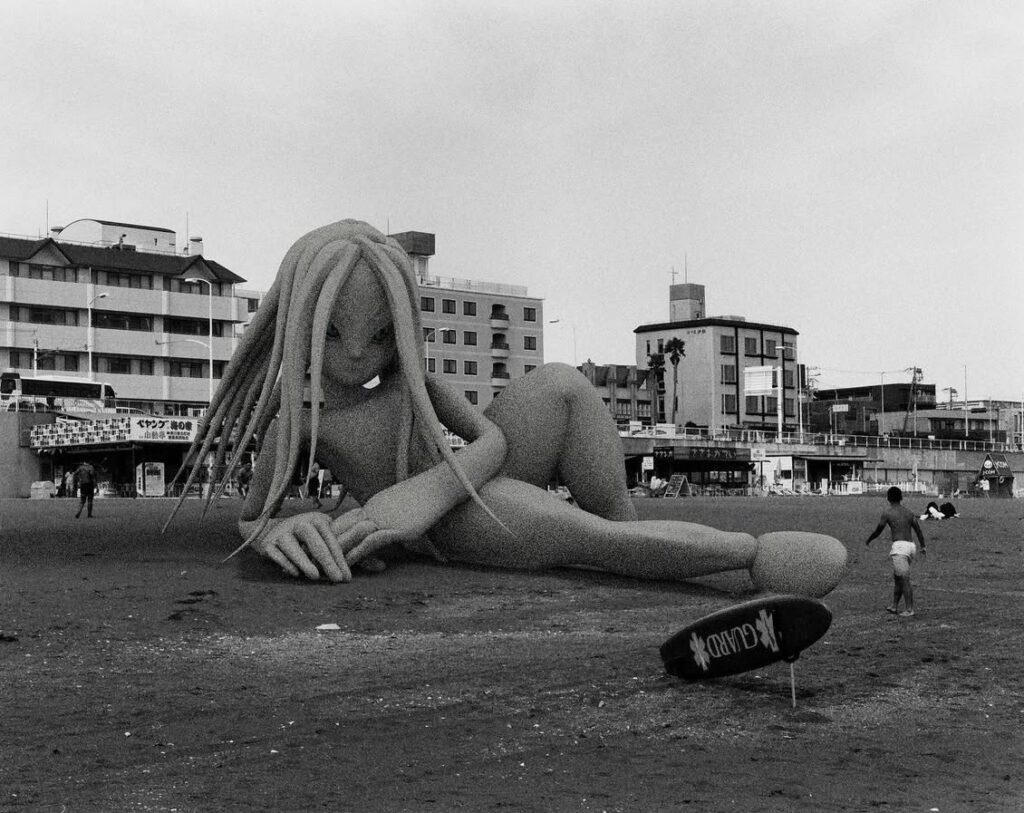
KOESY: When I was mainly working digitally, I would often composite characters I made onto analog photographs to create new images. Nobody commissioned me to do it, and I didn’t really have a specific purpose behind it. I just had this instinctive feeling of, “I want to put this character in this space.” The more I kept digging into where that desire came from, the more I realized that what I actually wanted was for the character to physically exist. I still don’t completely know why I wanted to make it real that badly. I think having it exist only inside a screen just wasn’t enough for me.
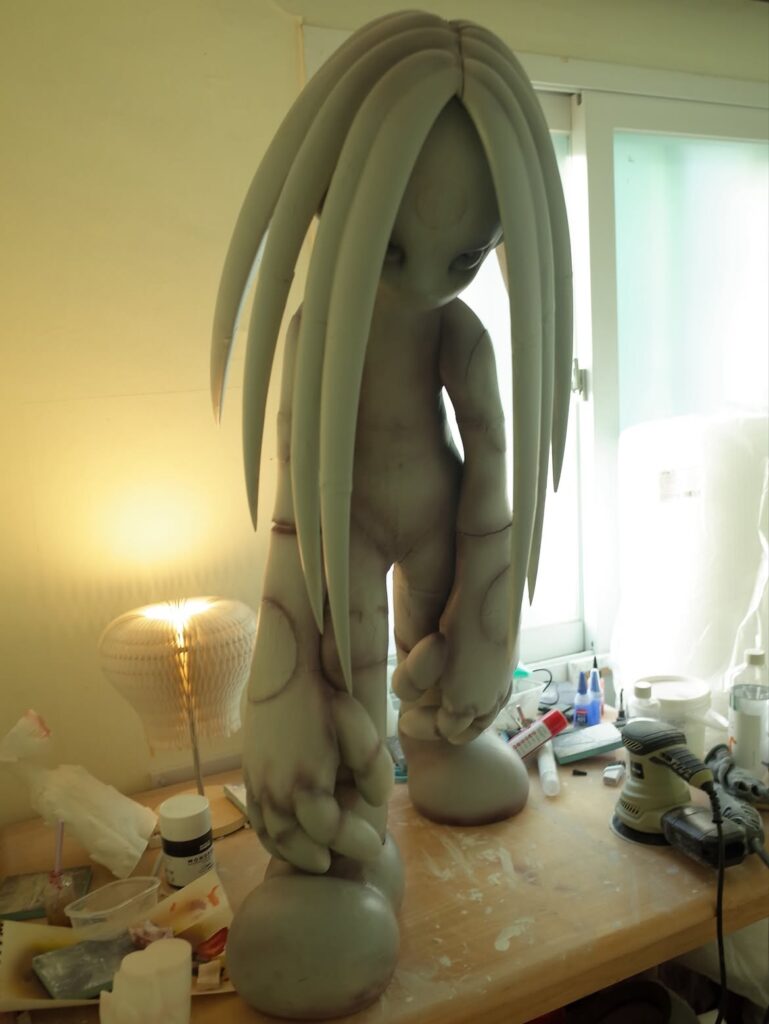
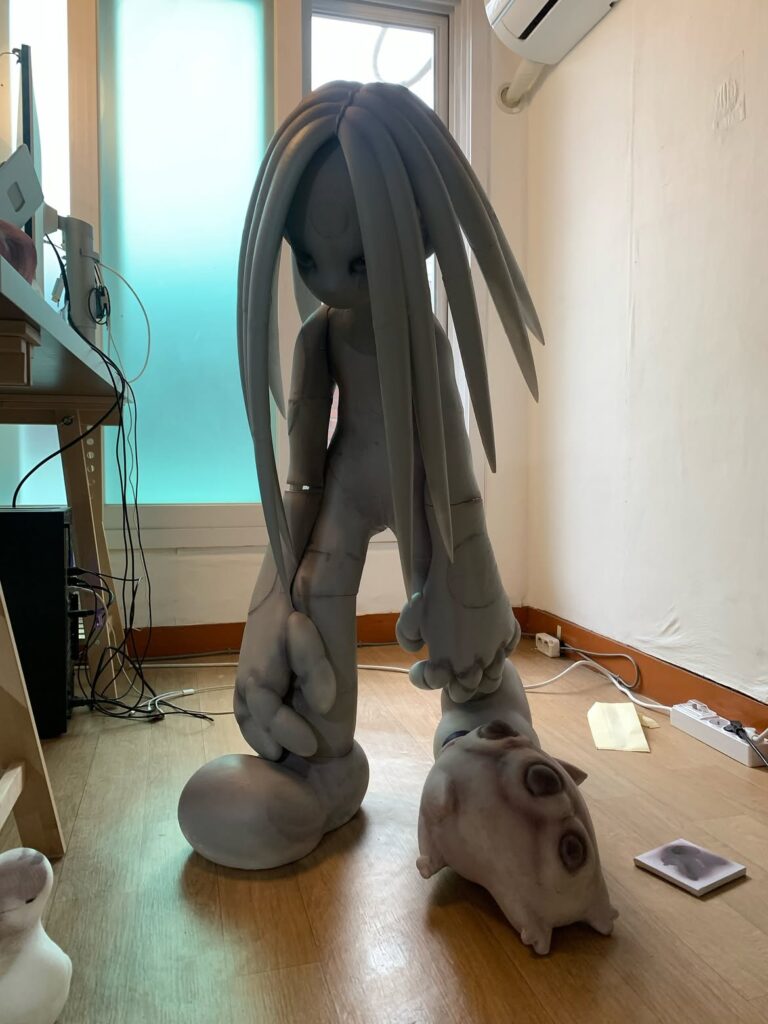
Digital tools allow for infinite undoing and iteration, whereas physical materials hold permanent consequences. How has trial and error changed for you now that you are working with tangible mediums?
KOESY: I actually had a strange habit even when I was working digitally. I almost never used autosave, which is probably one of the biggest advantages of digital work. Like I said, I’m pretty bad with computers. I came to 3D relatively late and taught myself everything, so even if I learned how to do something one day, I would sometimes wake up the next morning and forget how I had done it. At some point, instead of trying to remember methods with my head, I started trying to build a kind of muscle for the act of working itself. I wanted my body to react before my brain did. I love computer games, so I also treated 3D programs like games. Eventually, the idea of “learning a tool” almost disappeared for me. It just became another kind of play. Even before I print something, I go through countless mistakes inside the virtual space. And of course, in the physical world, I fail, remake things, break things, and fix them all the time too. But mistakes in those two spaces feel very different to me. In the virtual world, imperfections and things I haven’t done well are strangely easy to see. I constantly want to correct them. But when those imperfections appear in a physical sculpture, they often look surprisingly beautiful. So now I don’t necessarily think of trial and error in the physical world as failure. I think of it more as a way of learning what beauty is.
Our readers are often fascinated by the intersection of digital subcultures and fine art. Do you view your physical sculptures as a reaction against digital saturation, or as a physical extension of virtual space?
KOESY: At first, I definitely thought of it more as the virtual space extending into reality. But these days, this might sound strange, the more I work, the more unclear the boundary between the virtual and the real becomes. It doesn’t really feel like one is extending into the other anymore. It feels more like one continuous wave. Inside a 3D program, there are X, Y, and Z axes, and you understand where an object exists through those coordinates. When I first started learning 3D, I couldn’t even properly understand that. Then one day, I was talking to a friend and I agreed so deeply with something he said that, just for a moment, I felt as though I had entered his way of thinking. Until then, I think I had assumed that the center from which I saw the world could only ever be myself. But at some point, I started thinking that maybe that center can move. Maybe it can even keep expanding. I’m also very interested in language. More accurately, I often think about the boundaries of language. If we didn’t have the language we use now, many of the things we consider common sense or basic concepts might be completely different. So for me, the digital virtual world isn’t really the opposite of reality anymore. I think of it as a third language that I can use.
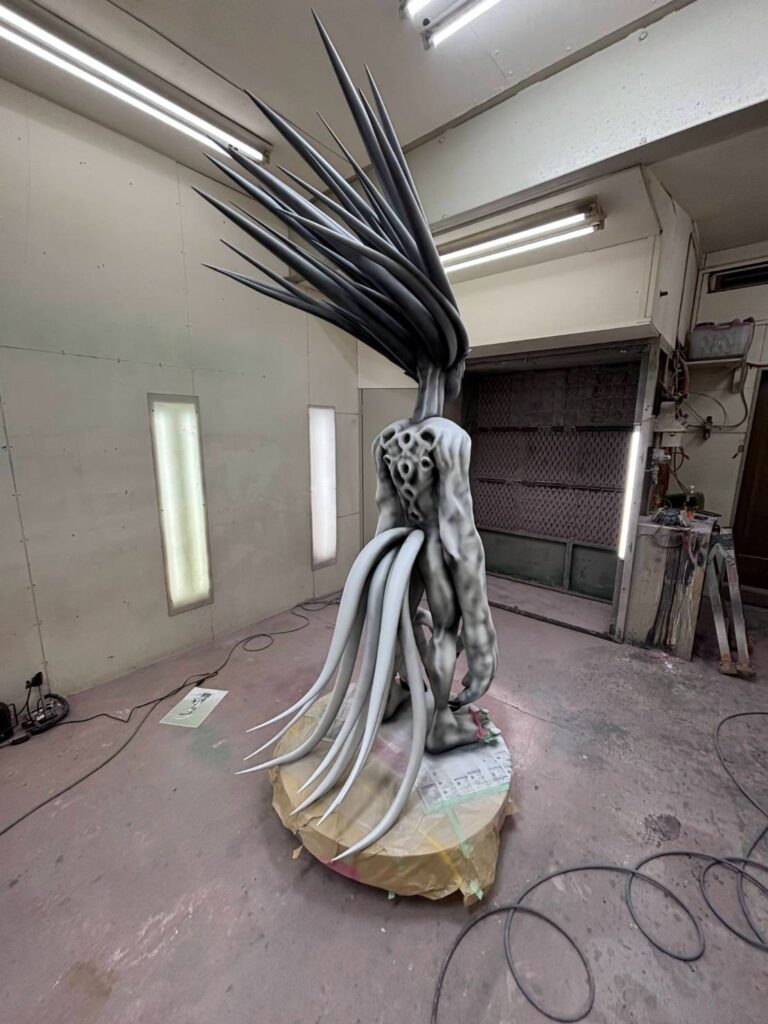
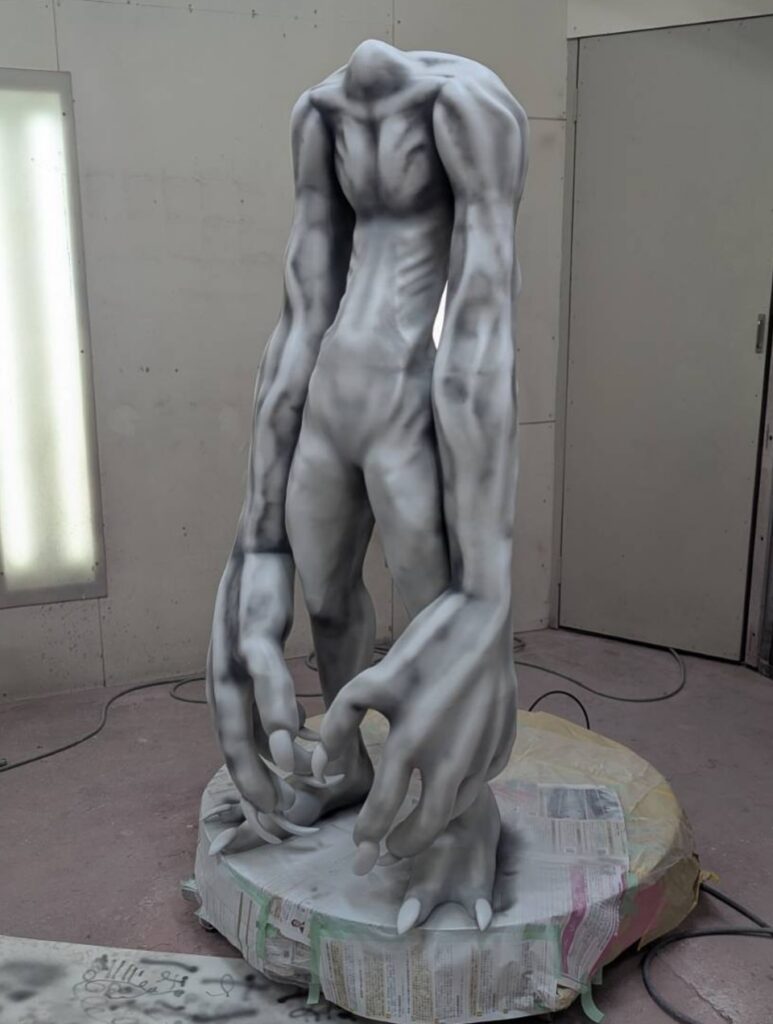
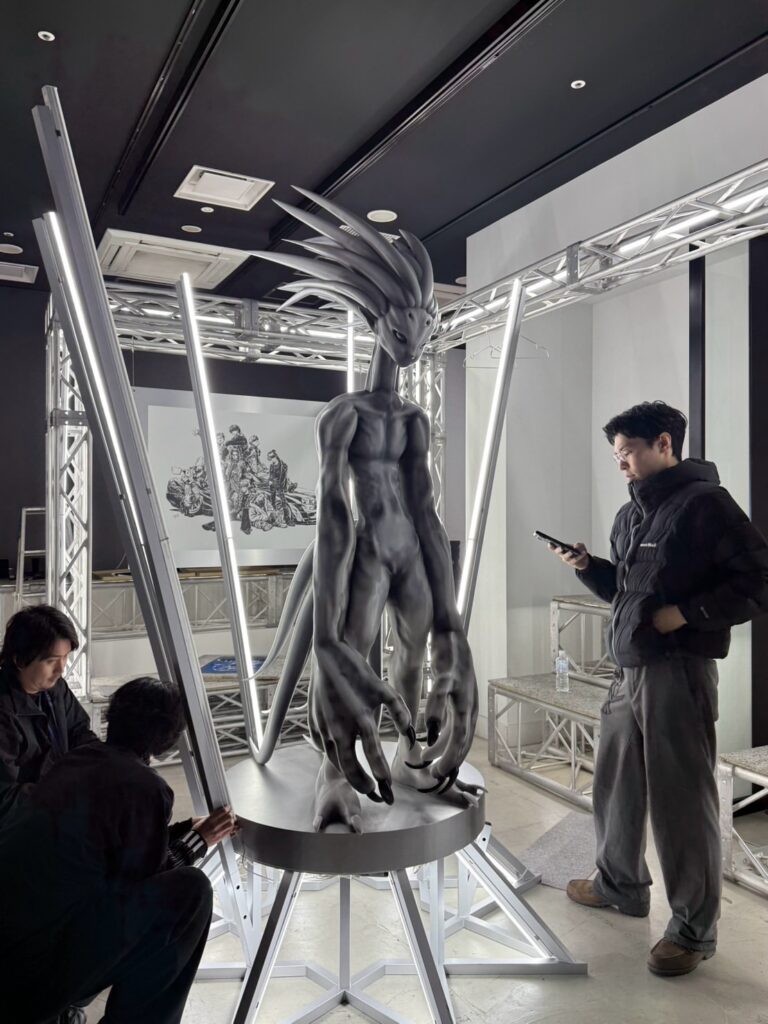
By intentionally avoiding fixed meanings or hidden messages, you leave the artwork open to interpretation. What has been the most unexpected or surprising reaction someone has had when encountering your physical forms?
KOESY: Honestly, I’m surprised by people’s reactions almost every time. This is a little embarrassing to say, but I’ve never really thought that I was making anything especially grand or important. Strangely, though, I’ve almost never lacked confidence in the work itself. If there’s something I want to make, I just make it. I don’t really question whether I’m allowed to make it. But I think I keep wanting reassurance about myself as a person. So whenever someone looks at my work and tells me something I had never thought of myself, I find it fascinating. Maybe through people’s reactions to the work, I’m also looking for some confirmation that I exist.
Without formal art education, you relied purely on intuition to build your visual language. Are there specific non-art influences—such as music, daily routines, or your surroundings growing up in Ulsan, that subtly guide your hands while you create?
KOESY: Something I keep thinking about is, “How should I live?” I often think about what kind of attitude I have toward my own life, and I think that naturally enters the work too. In the past, I always felt that something was missing until I achieved something or obtained something. But I didn’t even really know what I was lacking. These days, I don’t think achieving things or becoming successful as an artist is quite as important to me as it used to be. Of course I’m happy when something good happens, and I’m disappointed when something goes wrong. But I think those are ultimately just large and small events that happen while you’re alive. What matters more to me now is how I look at and live through the ordinary days that exist between those events. I’m still figuring that out too.
When thoughts and emotions settle into a physical object, the work becomes a snapshot of a specific moment in time. Does releasing these objects into the world feel cathartic, or does it feel like leaving behind a piece of yourself?
KOESY: Probably more like leaving a part of myself behind. When I think about it, I don’t usually start working because I have some big idea. The work enters my life pretty naturally, almost like part of the everyday. So if making work were always some kind of device for releasing a feeling, I’m not sure I would have been able to continue for this long. I like walking. When I walk without a destination, with every step I sometimes feel as though all the different layers of myself that were scattered around start gathering back into one. I like that feeling. Sometimes I imagine a Go player before placing a stone. Only one stone is eventually placed on the board, but before that, countless possible moves have already overlapped in their mind. Walking sometimes feels similar to me. The moment I take one step, one of all those possible versions becomes the actual me, and I’ve already moved forward into the next position. Layer by layer, I feel like those steps form the person who is here now. Then when I look back, the me from one second ago and the me from one second later have already become different traces. I don’t really feel attached to those traces. I just leave them there and move on.
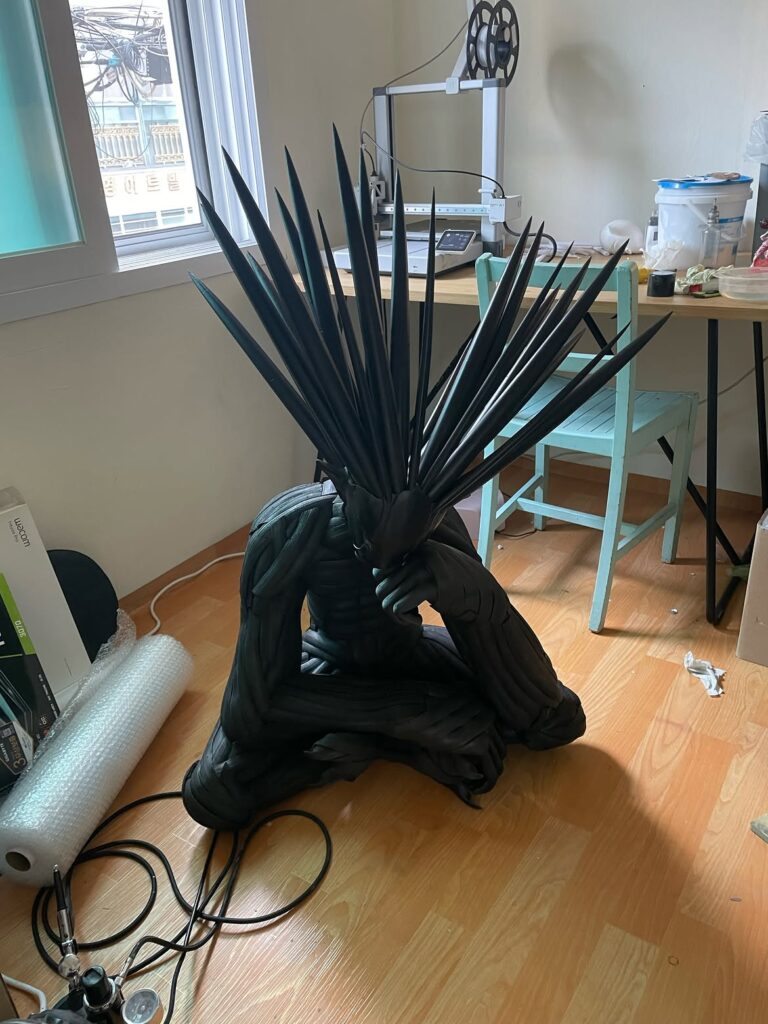
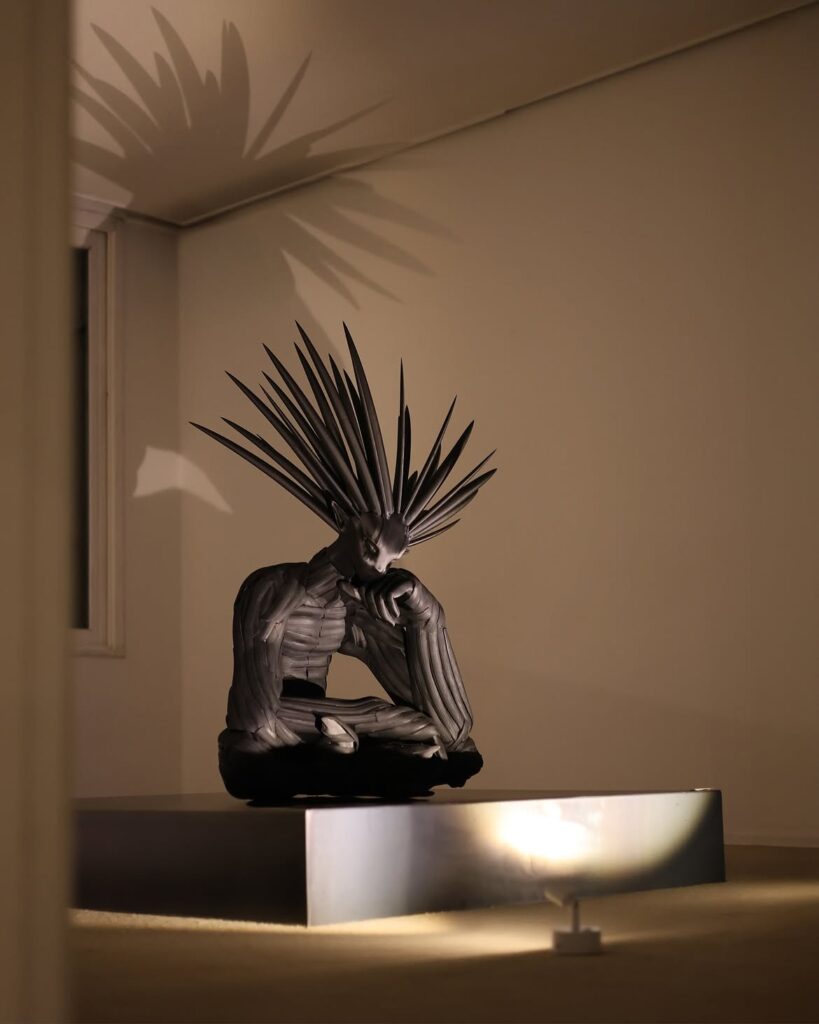
In 3D modeling programs, light and physics are completely simulated and flawless. When you translate those digital shapes into physical sculptures, what has been the most frustrating, or surprisingly beautiful, way real-world physics (like gravity, structural limits, or imperfections) altered your vision?
KOESY: Many times. Making forms digitally feels a little closer to design for me, while making physical sculpture can sometimes feel almost like a practice or discipline. Digitally, you can remove gravity. A form that could never structurally exist in reality can exist perfectly well on screen. But once it comes into the physical world, I have to think about where the weight will go, whether a certain thickness can support itself, and what order things need to be assembled in. And there was another physical limitation I hadn’t expected. My own body. Once I started making sculptures, I realized I had much less stamina than I thought. When I was only working at a computer, I barely had a routine. I could work through the night or keep going until morning. Physical work doesn’t really allow me to do that. So now I try to imagine that there’s a switch in my head. I try to make the difference between working and stopping more definite. My home and studio aren’t separated either, so when I make too many plans with people, my whole working rhythm gets broken very easily. I think learning the physical rules of the real world also made me learn the physical rules of my own body.
You’ve mentioned that visual perception alone wasn’t enough to confirm a form’s existence. What did your hands teach you about sculpture that your eyes never could in the digital world?
KOESY: I think I became much more aware of the limitations of visual information. Inside a 3D program, I can rotate an object 360 degrees and inspect it however I want. But in reality, what I can see at any one moment is limited. Sometimes I’m sanding a sculpture and completely miss a part of it, then discover it much later. Whenever that happens, I say, “Eureka!” to myself. At first, I thought those things were simply flaws. Now I think about them a little differently. They’re discoveries that exist precisely because I couldn’t control everything perfectly. Maybe they’re one of the happiest kinds of loss you can get from physical labor.
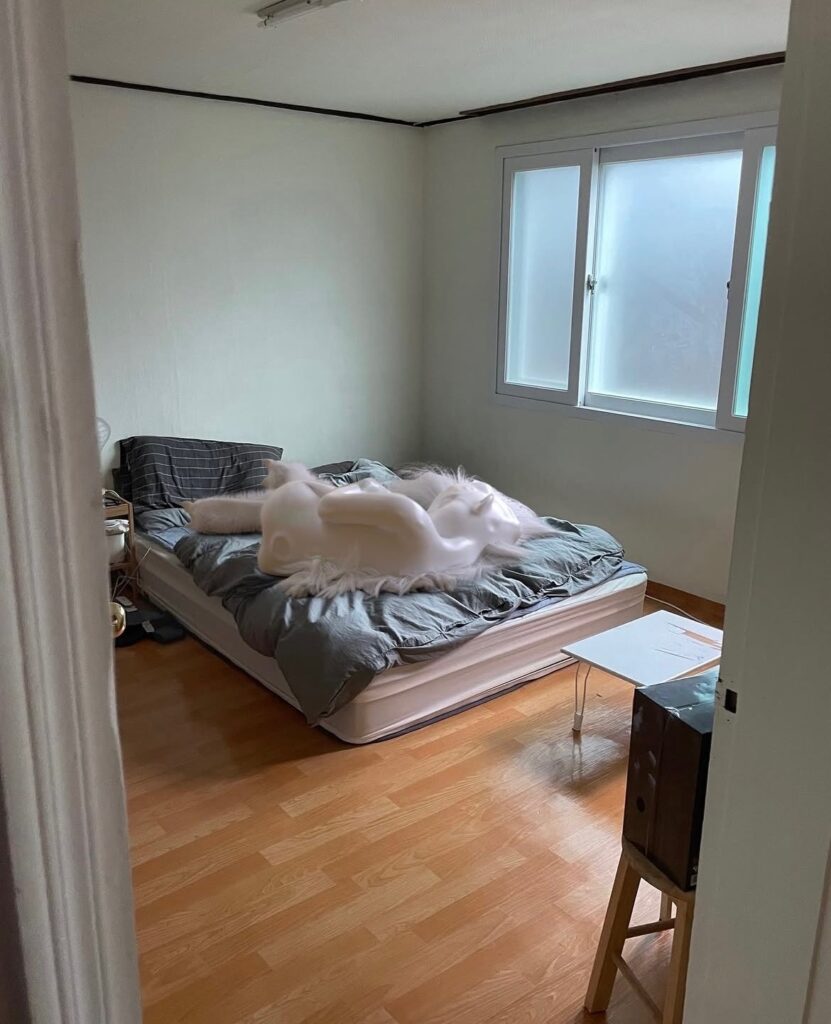
In your exhibition concept for Red Winter, you explored feeling an internal “perpetual winter” even while the outside world was in summer. How do your internal, unseasonal emotional states dictate the physical forms you shape?
KOESY: I don’t usually try to translate an emotion directly into a form. If I’m sad, I don’t necessarily make a character with a sad expression. If I’m lonely, I don’t deliberately make a lonely scene. It’s more that if a feeling stays inside me for a long time, it eventually comes out as a scene or a form without me consciously noticing it. When I was young, there was a period when meeting people became extremely difficult for me, and I barely left the house for almost a year.
I think I was living with my father at the time. He loved natto, so I remember him eating natto almost every day. I did almost everything lying down. I ate lying down, watched movies lying down, read manga lying down. And somehow a whole cycle of seasons went by. One day, I happened to open the window. It was the middle of a very hot summer, but because the air conditioner had been running inside, I hadn’t really felt the temperature outside. The moment I opened the window, this wave of hot air brushed across my face.
I could hear children playing outside and cicadas making an incredible amount of noise. Strangely, before that moment, I had never really felt that I was trapped anywhere. But in that instant, I felt that the season outside and the season where I was were completely different. I still remember the scene in extreme slow motion. The winter in Red Winter is closer to that kind of state than to an actual season. It can be summer outside while I’m still in winter. You can clearly exist and still not be noticed by anyone. You can make a sound and still not be heard. My recent work White Cicada also began somewhere around that feeling. Rather than explaining those mismatched states, I think I prefer to make them into a scene and just look at them.
A lot of our audience lives online, consuming and creating in digital spaces every day. What advice or perspective would you share with young digital creators who feel that same itch to leave the screen behind and build something tangible?
KOESY: I’d tell them not to make it too grand in their heads. I never started out thinking, “I’m going to become a sculptor.” I never studied sculpture, and in the beginning I didn’t even know the names of the materials properly. I just wanted to touch something that I had made on a screen. So I don’t think you need to be completely prepared before you start. If you make something wrong, you can make it again. If it comes out strange, you can look at why it came out strange. There’s still far more that I don’t know than I do. But touching things while you still don’t know what you’re doing is actually much more fun than you might expect.
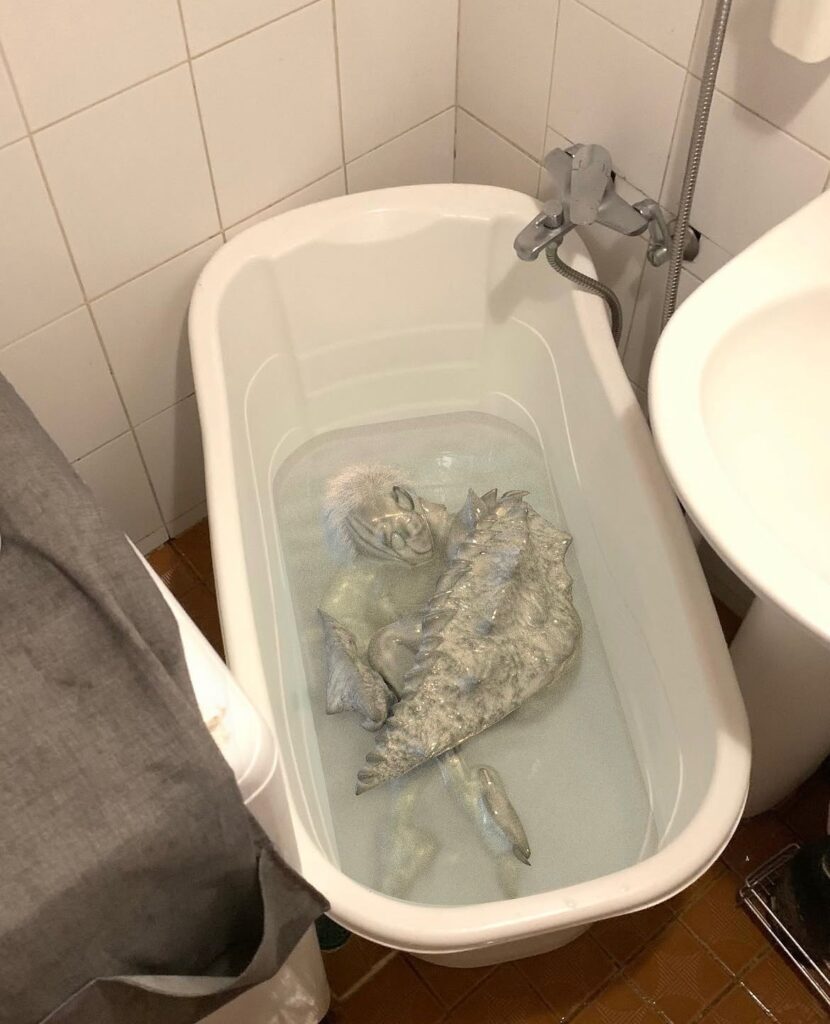
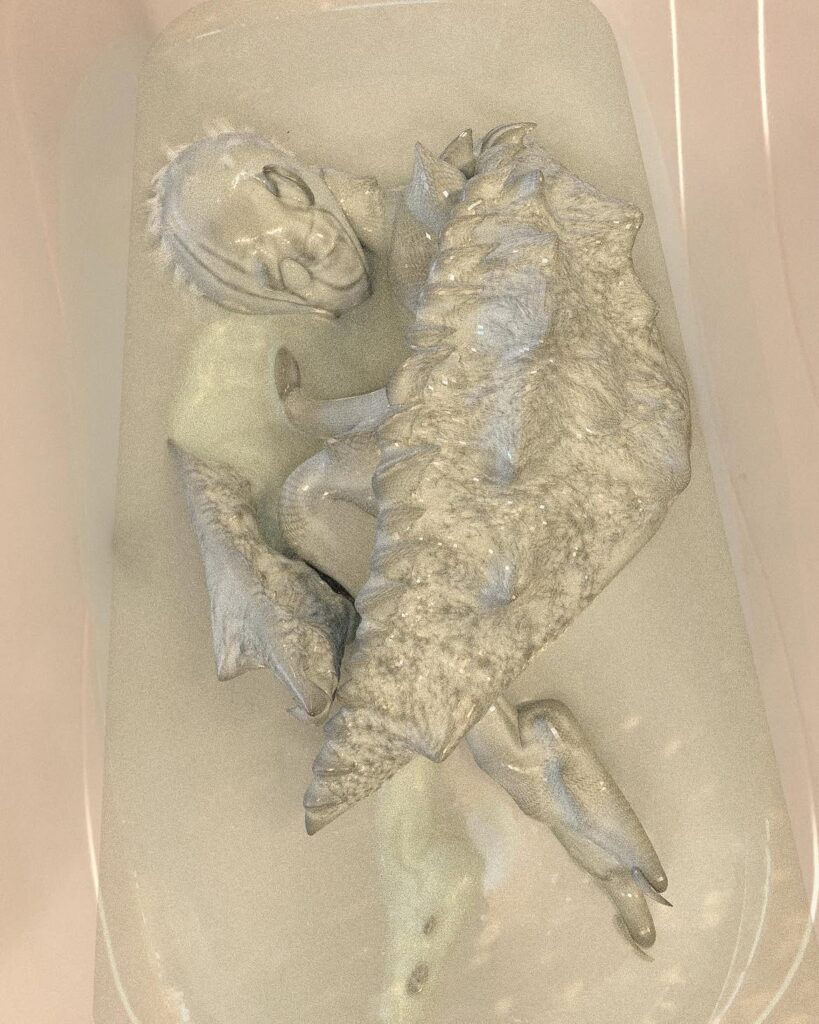
You compare your creative process to “taking a walk without a destination.” How do you know when a piece is finished if you don’t start with a specific goal or narrative in mind?
KOESY: I’m not completely sure either. I don’t usually decide exactly what the finished work should look like before I begin. At first, there might only be a very small image or sensation. Then I keep following it. At some point, I sometimes realize that the reason I want to add something isn’t because the work needs it, but because I’m anxious. I start thinking, “Wouldn’t it be better if I did a little more?” or “Maybe I should keep touching this part.” That’s often the moment when I actually need to stop. A walk might not have a destination, but eventually you go home. I think it’s similar.
Without a master or an art school curriculum guiding your technique, what does your actual trial-and-error process look like on a hard day? What materials or physical tools do you turn to when intuition feels stuck?
KOESY: I just keep going. I don’t know if that’s a good method. I’m not really someone who organizes my thoughts first and then moves my hands. I’m closer to someone whose thoughts begin to follow after my hands start moving. So even when nothing is working, I’ll turn on the computer and touch random things, sand a sculpture, apply putty, or just keep working on a surface. If I repeat some very ordinary action for long enough, sometimes I suddenly see what I need to do next. Earlier I talked about building a kind of muscle for the act of working itself. I think this is similar. When I try too hard to find an answer with my head, it often becomes even harder. At those times, I just leave it to my body.
With this in mind. Can you walk me through your creative process from beginning to end result?
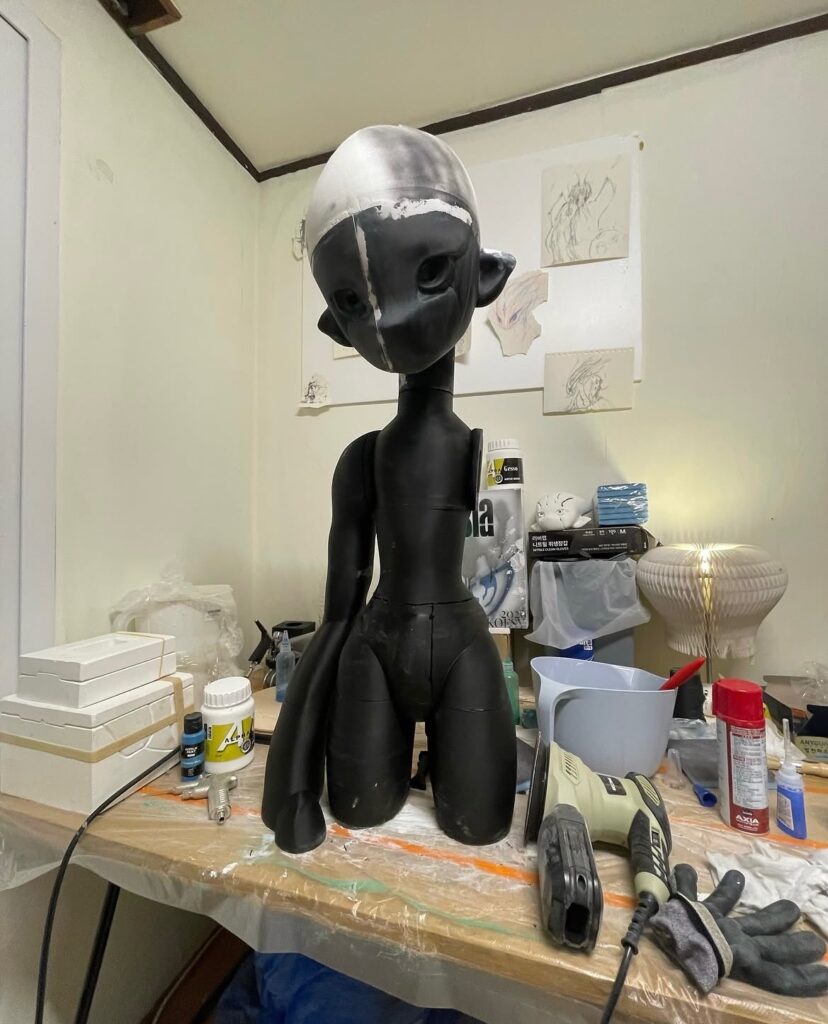
KOESY: There isn’t really a fixed order. Most things begin from a very small image or scene. It might be something I saw while walking, a photograph, or just some strange scene that suddenly appeared in my head. The important moment is usually when I think, “I want to see this.” Then I start making it in 3D. I make it, delete it, change the proportions, rotate the camera, and sometimes go all the way back to the beginning. I don’t really think of that as planning and revising. It feels more like walking around a map in a video game and trying different things. Once the form develops to a certain point, I print it, assemble it, and start working on the surface physically. Then the form becomes slightly different again from what I saw digitally. I accept that difference and make the next decision from there. So it’s very rare for the image I first had in my head to remain unchanged until the end. It feels more like I keep discovering the work as I go.
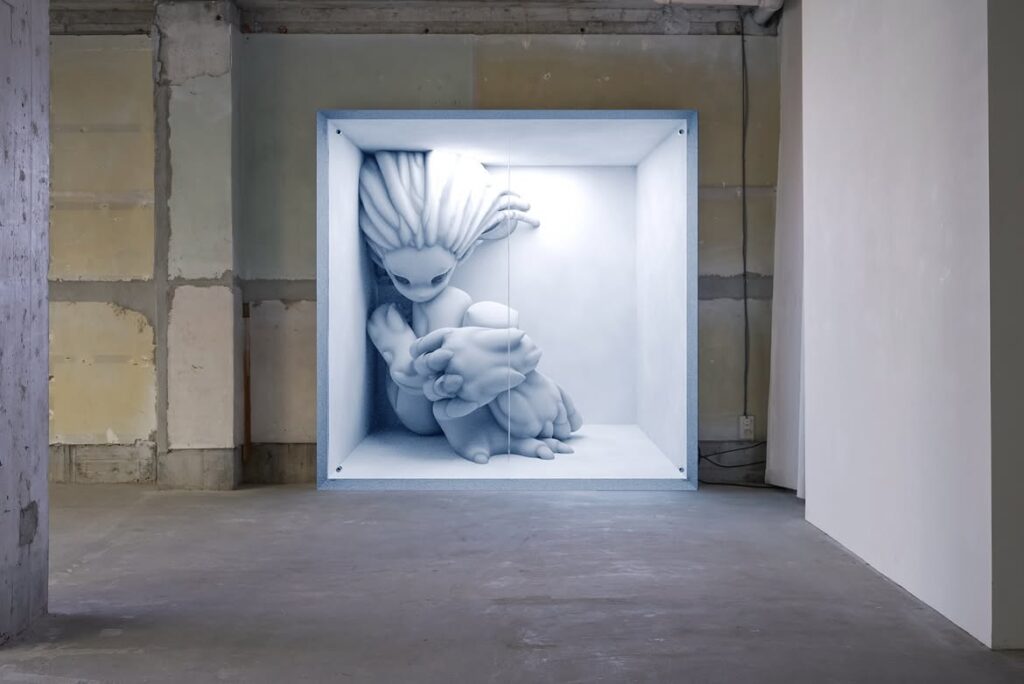
Can you also tell me about your use of symbolism?
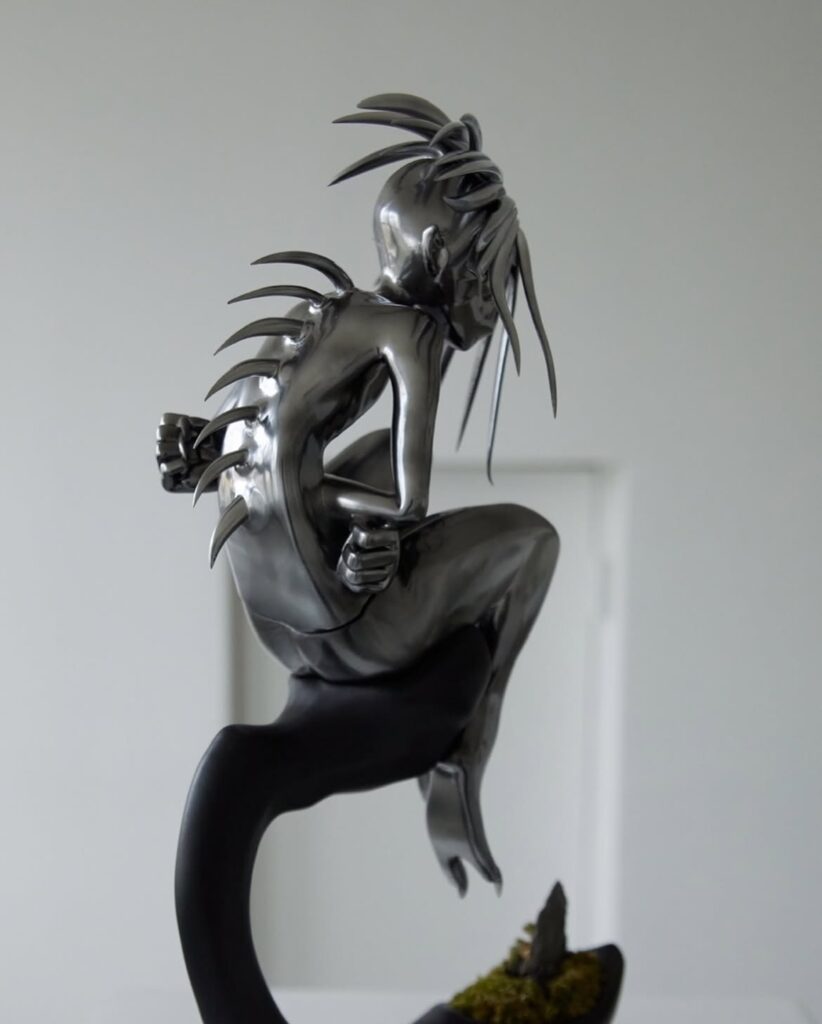
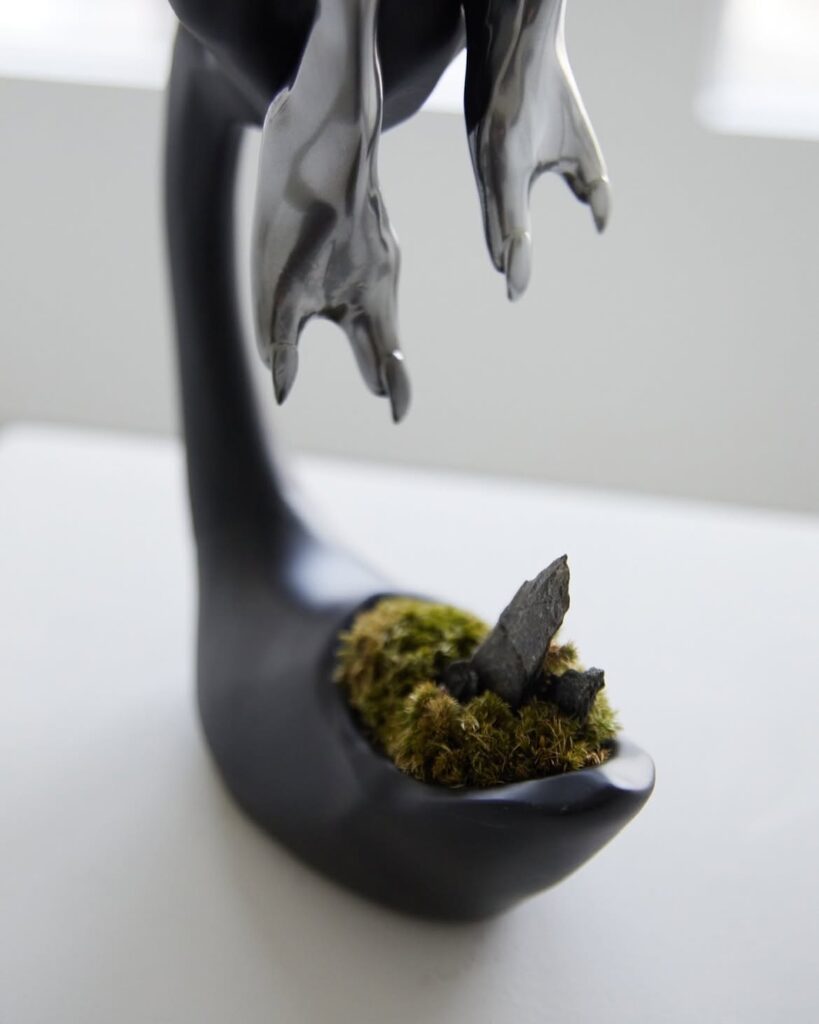
KOESY: I almost never begin by deciding, “This represents this.” More often, I make something first, and at some point I realize that it has gradually become something like a symbol for me. I think I’m drawn to things that are fixed in a certain place but are still constantly, slightly moving. For example, I made a work in Korea called Yuragi. “Yuragi” can describe a wavering, fluctuation, or subtle movement—something that never becomes completely fixed.
But I didn’t begin the work by deciding on that meaning. I started by making an image and a form, and while working, I kept rebuilding my own memories and feelings inside it. Eventually the title and its meaning seemed to flow naturally into the work. Maybe symbolism appears in my work in a way that is closer to shamanism than to planning. When I think about it, the neighborhood where I spent a long time as a child in Ulsan may have influenced me too.
There were people around us who lived with and served spirits, and as a child, unexplained rules and superstitions felt like a completely normal part of life. For example, among the kids in the neighborhood, there was a superstition that if you saw a gold-colored Matiz, you would have a lucky day. It sounds like nothing now, but at the time I took things like that pretty seriously. So rather than remembering when I first noticed an “artistic side” of myself, I think I remember moments when I first realized, “Maybe the way I look at things is slightly different from other people.”
So with what we just talked about, what are you hoping to convey?
KOESY: To be honest, I don’t think very much about “conveying” something. I’m not particularly interested in having an answer first and then explaining that answer to the viewer. If I started making something because there was a sensation I couldn’t understand, I don’t think I necessarily need to understand it even after the work is finished. The viewer can feel something completely different from what I felt. It’s also okay if they feel nothing. If they stop for even a moment and think, “What is this?” that’s enough for me.
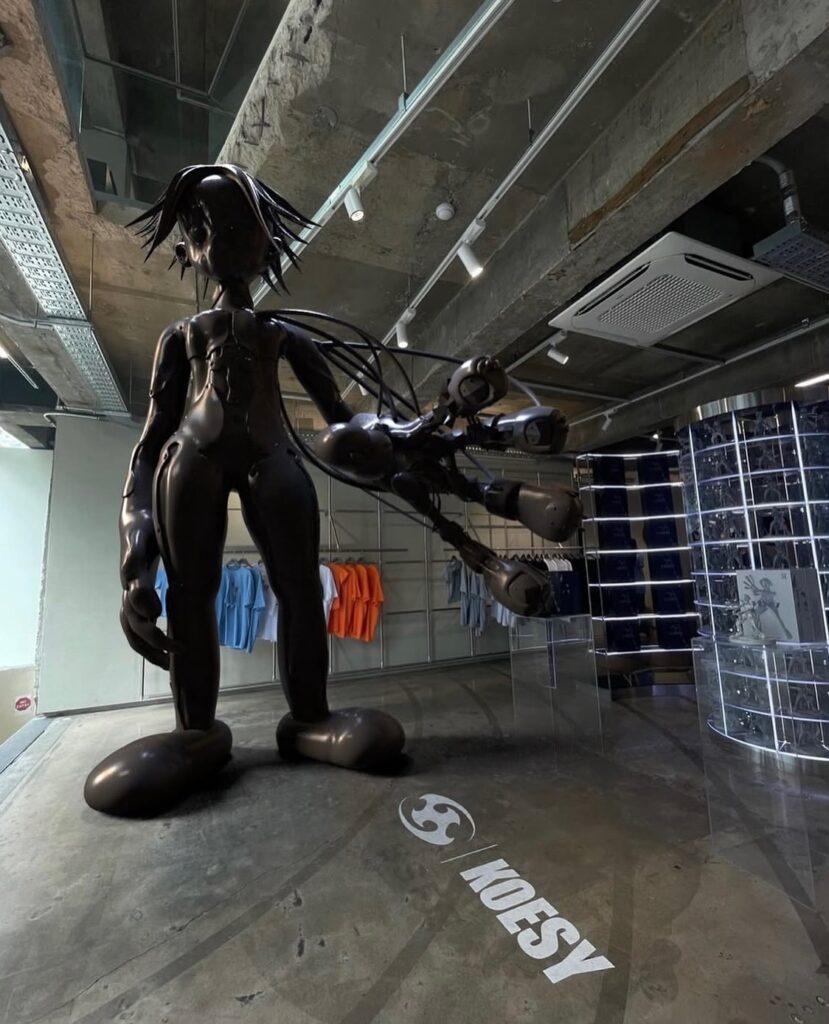
Ok KOESY, now to something totally different. In a parallel universe who would you be? and what would you be doing?
KOESY: I think I’d like to be born as someone’s dog. About a year ago, I adopted a dog from an animal shelter. At first, I couldn’t understand his language at all. I had no idea why he was doing certain things, and I’m sure he had no idea why I was doing certain things either. Sometimes there was this strange tension between us, and it could be frustrating. But the longer we lived together, the more I felt that we gradually started understanding each other. I once read somewhere that dogs can detect changes in smell or hormones associated with human emotions. I don’t know whether that idea has influenced the way I see him, but these days there are moments when I feel like my dog is actually being considerate of me. I find that really fascinating. I still can’t fully understand his language, but sometimes I wonder if he understands much more about me than I realize. So in a parallel universe, I’d like to be a dog. I want to completely understand this little guy’s language.
Outside of art, what’s something you’re obsessed with right now, maybe a hobby, a show, or even a food, that keeps you grounded or inspired?
KOESY: Hmm… Seungmin. Seungmin is my partner, and we’ve lived together for ten years. Her language is very complicated. Even while I’m writing these interview answers right now, she seems a little grumpy about something, and I have no idea why. But I love that language. One of the things that made me interested in language was the film Arrival. My older sister works as a literary critic in Korea, and after I watched Arrival, I remember talking to her about all the things I had felt while watching it.
I don’t really think of Arrival as an alien movie. For me, it’s about what we do when something we can’t understand appears in front of us. How do we find a way to communicate with it? That question really fascinated me. And strangely enough, when I look around me, a lot of the beings closest to me seem to speak languages I can’t completely understand. My dog does, and even Seungmin, after ten years together, sometimes does too. For a long time, I thought I understood Seungmin almost one hundred percent. It was only fairly recently that I realized using the same words doesn’t necessarily mean we’re speaking exactly the same language. We’ve been using the same words, but somehow holding and caring for each other through different languages.
Can you tell me a story about a time when a connection with someone had a big impact on you?
KOESY: It’s difficult for me to choose just one person. I think the people I’ve met throughout my life have all changed me little by little. Sometimes I suddenly understand something someone casually said to me years ago. Sometimes a meeting that didn’t seem important at the time becomes a very important memory much later. My conversations with my sister are probably one example. She works with literature, and I work with images, so sometimes we can look at the same thing and talk about it in completely different ways. Especially when we talked about language after watching Arrival, I was able to look at ideas I had only vaguely felt from an entirely different direction. When I think about both people and artworks, I think I’m probably someone who understands things a little late.
What qualities do you find most important in the people you choose to spend time with?
KOESY: I like people who don’t think we have to understand each other perfectly. This might sound a little strange, but I think a relationship can actually become dangerous the moment you think, “I know everything about you.” Even if we use the same words, we’ve all had different experiences. And even if we see the same scene, we might remember it in completely different ways. So I like people who can accept that maybe we’re speaking slightly different languages, but still keep trying to understand each other. I want to be that kind of person too.
Anybody you look up to?
KOESY: Tanaka from Afro Tanaka. He’s a manga character, but I feel like I grew up alongside him. Tanaka has this very pure spirit, even though he always seems like he has a screw loose somewhere. His life keeps going in strange directions, but he continues living in his own way. Someday I’d like to live a little more like Tanaka. Even though he’s fictional, sometimes he feels more human to me than people who actually exist.
What motivates you?
KOESY: I think it used to be a sense of lack. I didn’t know exactly what was missing, but I constantly felt like something was, and because of that I felt I needed to make something, achieve something, or prove something. I think that drove me for a long time. But if you keep moving only because you feel something is missing, then no matter where you arrive, you have to create another lack in order to keep moving. So now I’d rather move through curiosity. “What would happen if I made this?” “How would I feel if I actually saw this form in front of me?” “Why does this particular scene keep staying with me?” These days, I think those small questions are enough.
How would you describe a perfect day?
KOESY: A day where nothing happens. I wake up, eat, go for a walk, work, drink some coffee in between, work some more, and then the day ends. Nothing amazingly good has to happen, and I don’t have to meet anyone special. In the past, I probably would have thought a perfect day had to be something extraordinary. Now I feel almost the opposite. I like a day where I can think tomorrow will probably look a lot like today.
Alright KOESY, I always ask these two questions at the end of an interview. The first is. What’s your favorite movie(s) and why?
KOESY: I actually like manga more than movies. Is it okay if I answer with a manga? My favorite is the Afro Tanaka series. But I think I love it less because of the actual story and more because of the memory of the day I first discovered it. When I was in high school, because of some family circumstances, I stayed by myself for a while at my aunt’s house in Seoul. I had an older cousin who was quite a bit older than me, and when I was young I was really afraid of him. He loved rock stars, played guitar, and seemed like this incredibly free-spirited person.
Looking back now, he seems cool, but to me as a kid, that freedom somehow looked scary. While I was staying there, he happened to be backpacking in Switzerland, so his room was empty. I was incredibly curious about that room. It felt like somewhere I absolutely wasn’t supposed to enter. I opened this old wooden door. One wall was completely covered with music CDs, and gentle sunlight was coming through the window. Dust was floating through the light, and it felt almost like I had entered another world. For some reason, the sunlight felt like it was inviting me into the room. Next to the CDs was a small bookshelf with manga like 20th Century Boys and Afro Tanaka.
The most striking cover had this man with an afro wearing something that looked like a Bruce Lee outfit. So I opened it without really thinking about it, and I ended up reading the entire series right there. I can still remember that room incredibly clearly. More than the story itself, I remember opening that old wooden door, the sunlight coming through the window, and the dust floating inside it. Those things somehow became part of my memory of Tanaka. I think that’s probably why it became my favorite manga.
The second is. What song(s) are you currently listening to the most right now?
KOESY: The piece I’ve been listening to the most lately is Maurice Ravel’s Boléro. I think I first heard it when I was a kid. I happened to turn on the TV, and Digimon Adventure, directed by Mamoru Hosoda, was playing. The Digimon Adventure TV series I knew at the time was relatively bright and made very much from a child’s point of view, but that film felt incredibly dark and strange to me. When I was young, I sometimes imagined myself walking alone through the city in the middle of the night while everyone else was asleep. Of course, I was too scared to actually go outside. When I imagined it, I would picture myself walking through those empty nighttime streets alongside enormous creatures that could never exist in reality. That was often the kind of thing I imagined while falling asleep. And that Digimon Adventure film felt almost exactly like the world I had been imagining. Everyone else was asleep and unaware, while only I and these creatures I knew were awake, moving through the same city together. So even now, whenever I listen to Boléro, I feel like I’m entering that private city from my childhood again. It feels like all of us—me and those creatures—are slowly marching through it together.