
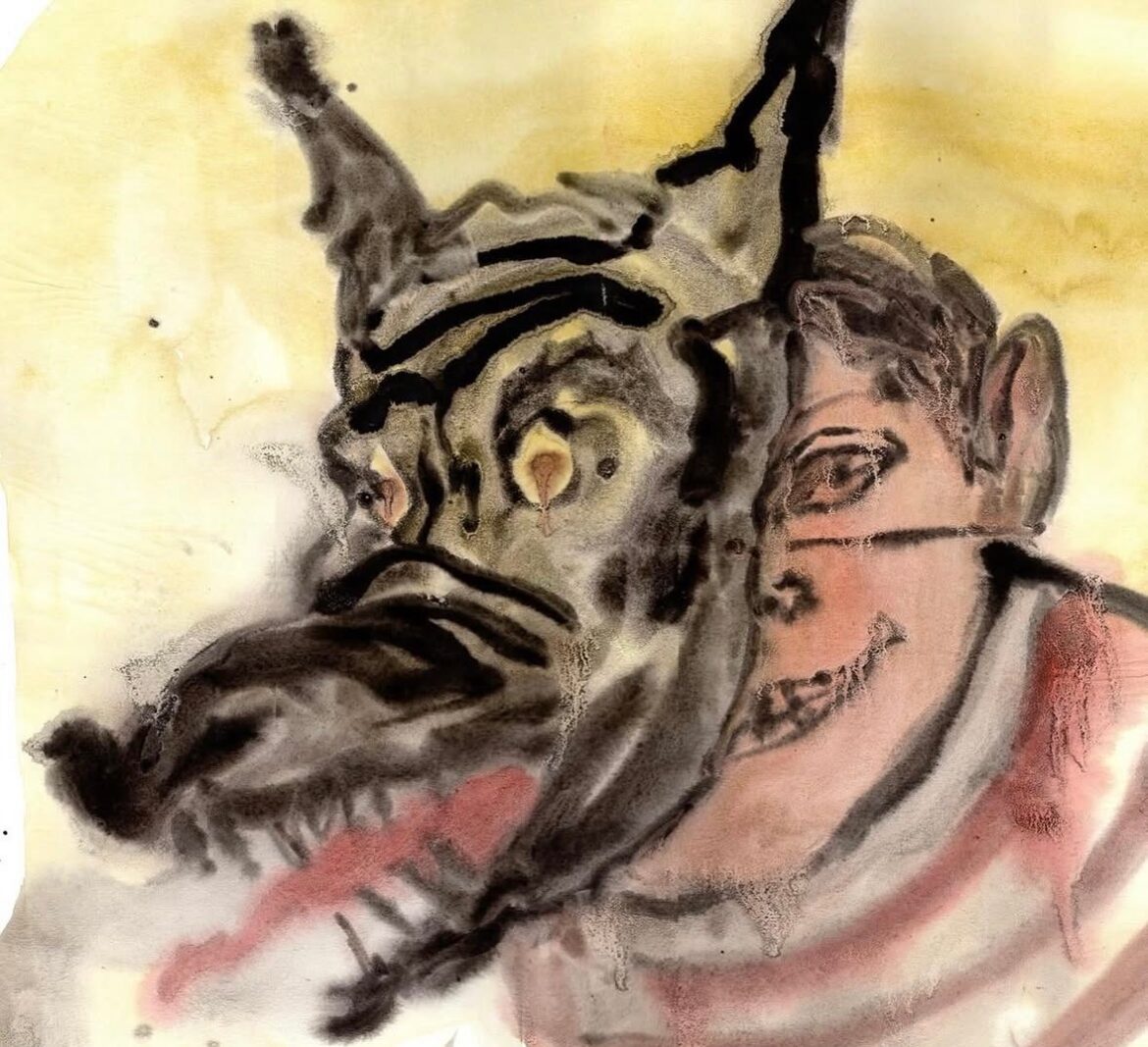
Beppe Stasi, born in 1993 in Longobucco. Self-taught, initially approaching sculpture and later theater where he began to collaborate with local theater companies as a set designer. After high school he moved to the Academy of Fine Arts in Rome where he finished his studies. In Rome he came in contact with the record label Esordisco and with Squilibri Editore with which he began a long collaboration creating covers for records, books and illustrated albums. He also created the sculptures and sets for the film Constitutional Circus. In 2021 he lent some of his works to the Netflix television series Incastrati by Ficarra and Picone. Since 2016 he has lived and worked in Rome.
Hi Beppe! It’s a pleasure to sit down with you! First question that I always ask. How does a regular day look like for you in Rome?
Beppe: Hi, the pleasure is mine. Rome is a city that incredibly drains your energy, even just moving from one neighborhood to another. So, i’m lucky because I have a big studio that I made at home. If I have no other appointments early in the morning, I like to paint during the night. I usually start at 11 p.m. and I like to finish around 5. a.m. Otherwise, when I have other commitments, I need silence to organize my toughts and start so I wake up at 5:00 AM, make myself a coffee and lock myself in the studio until around 10:00 AM. After that, the calls will start coming in. The rest of the day isn’t interesting. All the energy of the rest of the day is focused on the next 5.00 a.m.
I’m curious, growing up in Longobucco, what was life like there? And what kind of kid were you? What did you enjoy doing?
Beppe: Longobucco is a tiny village perched in the Sila mountains. Boredom accompanied me until I left at 18, and now I happily return a couple of times a year. Boredom means having to find something to do and that’s why I began to love literature. That’s where I began to love music. And that’s where art came to me.
Do you remember approximately at what age your creative side started to show? And when did you start taking being an artist seriously?
Beppe: I was a very precocious drawer, like all the artists I know. But I realized I had talent when I was 17 or 18, and since then, I haven’t stopped.
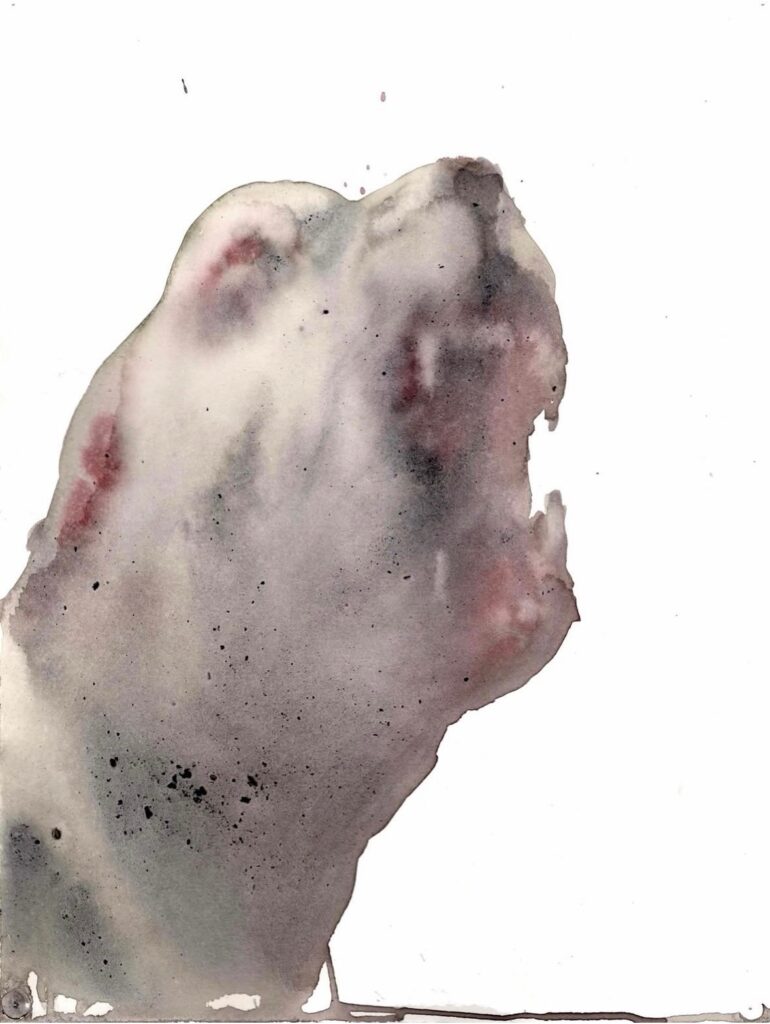
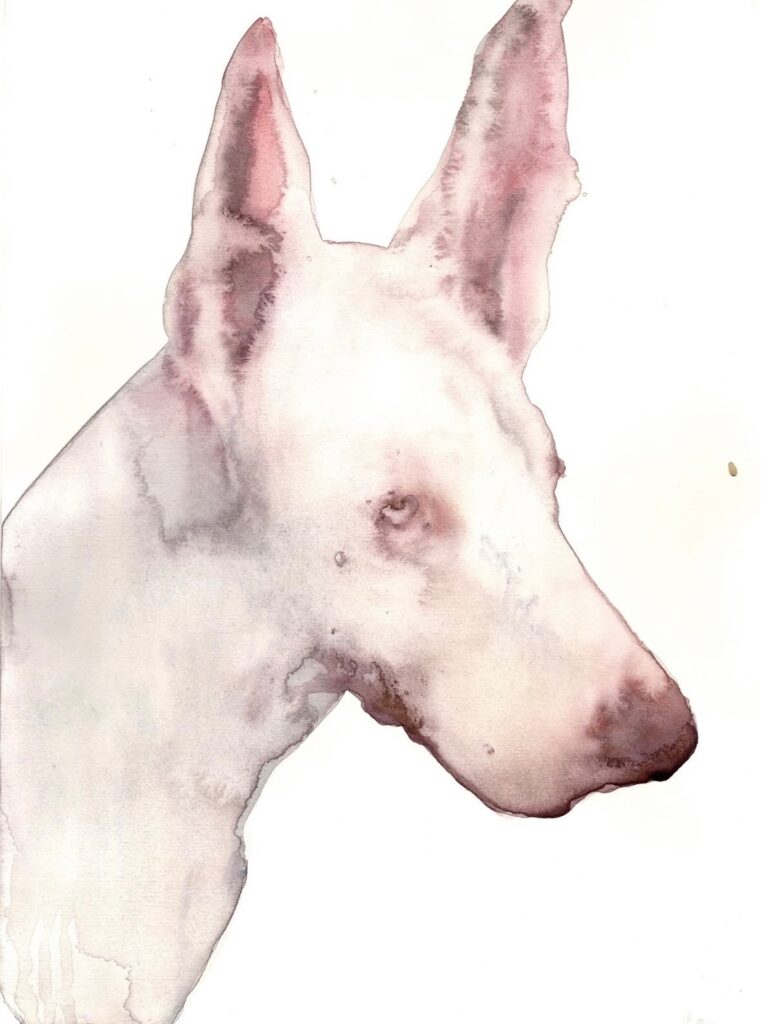
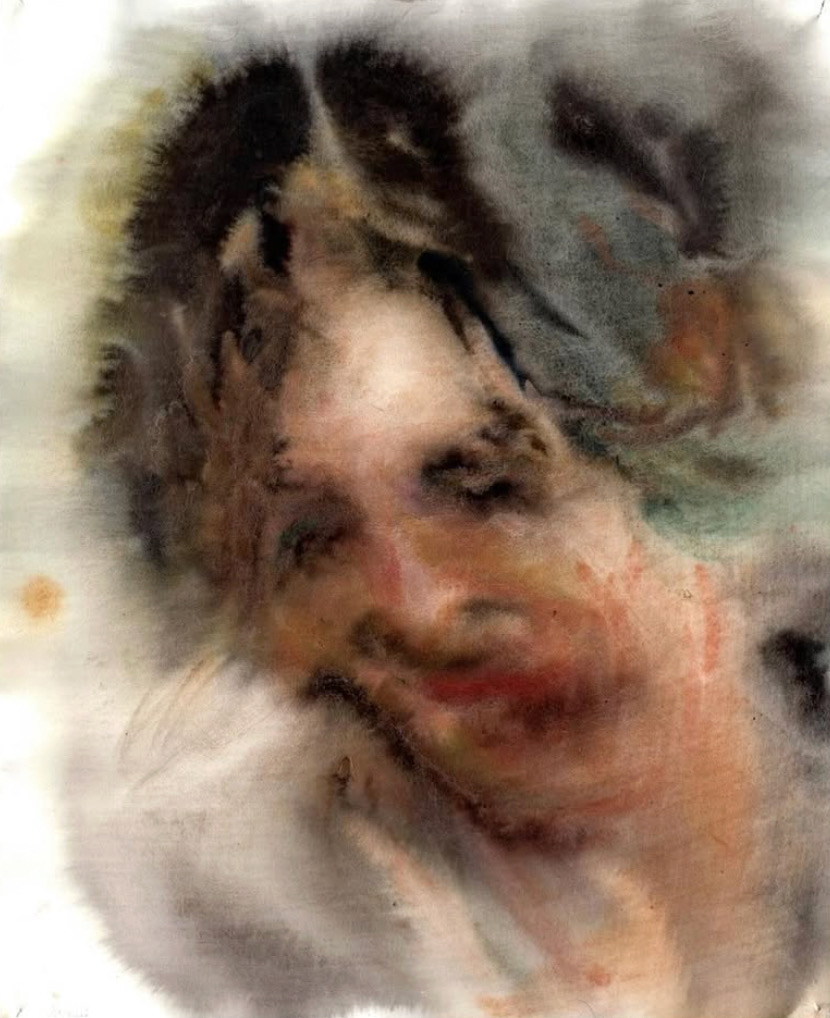
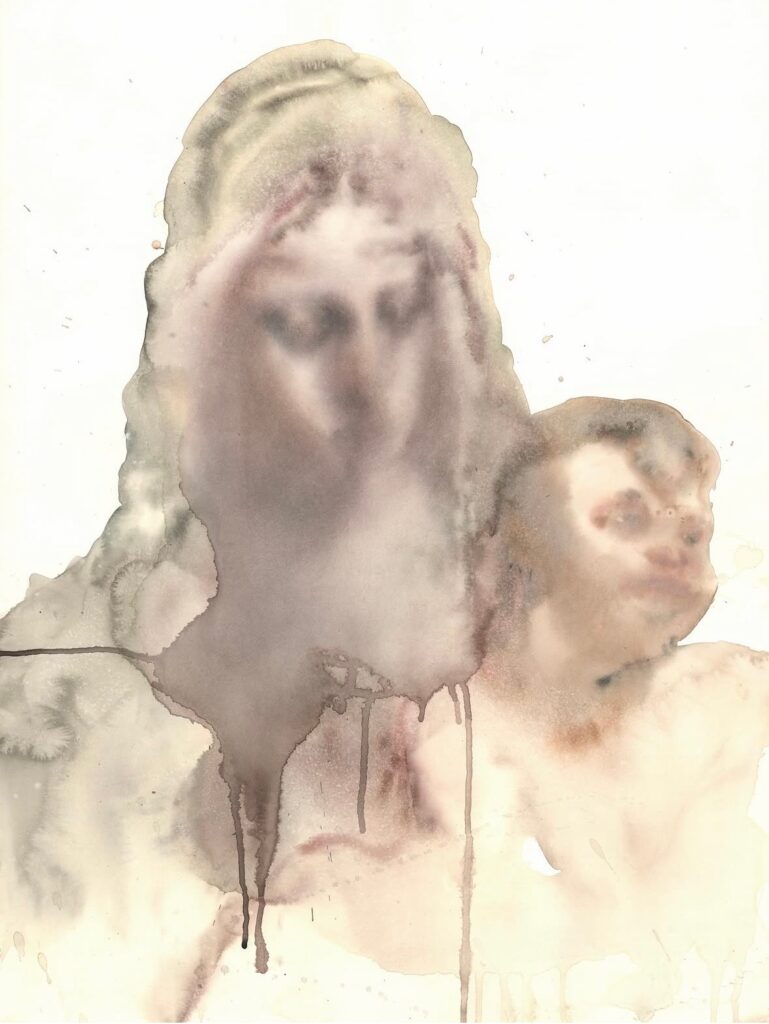
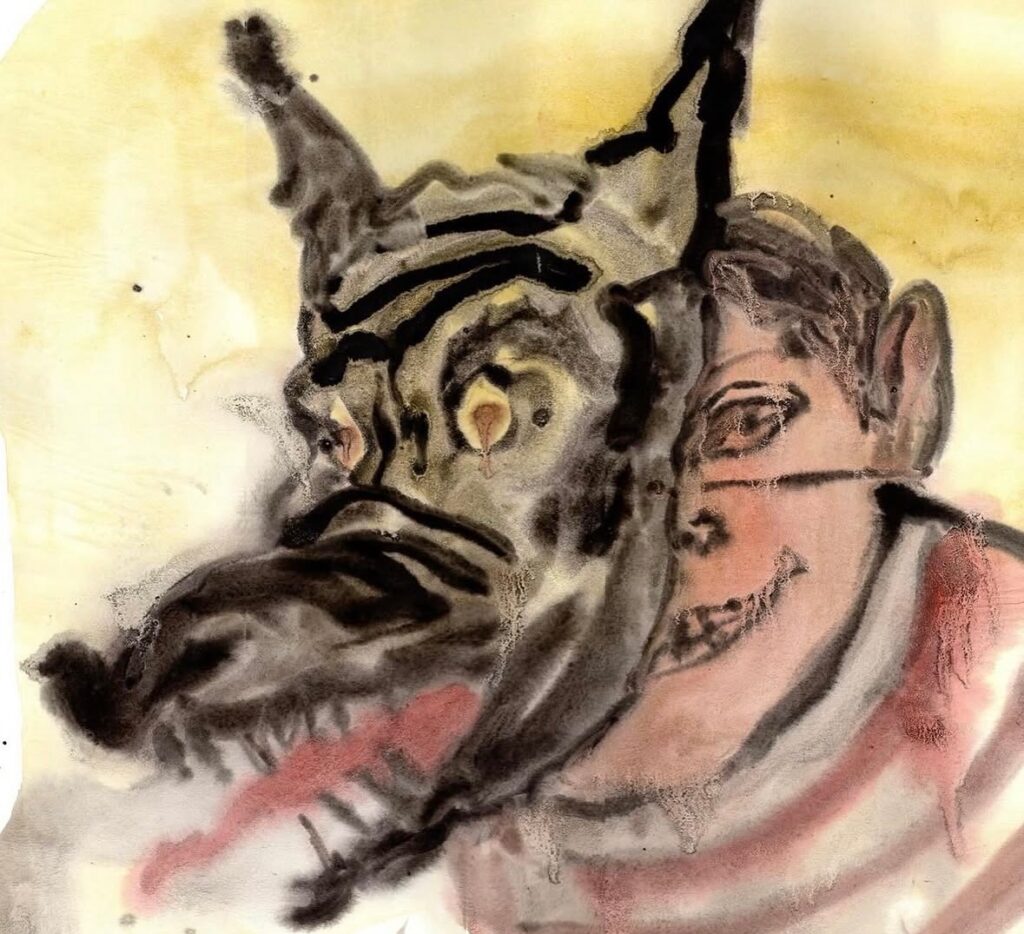
Who are the people or creatures in your paintings?
Beppe: If I knew, I wouldn’t draw them. Also when I want to start from people that I know, every time, the process keeps me away from the real features of the figure.
You began with sculpture before moving into theatre and set design. What initially attracted you to making physical objects and constructing spaces?
Beppe: Boredom again. With some friends of mine, I experimented with everything that could occupy our time and calm the restlessness we have at that age. I stumbled on scenography by chance, because some friends were involved in theater. My interest in sculpture was born because the only artist living in town—and the only one I could actually talk about art with—was a sculptor. And when I went to visit him in his studio, I was fascinated by that place. If I had the time, I’d like to dive back into sculpture—who knows…
You are largely self-taught, but later studied at the Academy of Fine Arts in Rome. What did formal art education give you that you could not have found on your own?
Beppe: The degree I never used. I went to the academy of Fine arts when I was already working with galleries and in publishing. I did it because I had promised it to my dad. At the academy, especially in those years, there were few painters and many performers. So technically, I learned nothing. But two or three people encouraged me, and helped me understand myself and my work. But none of it is worth five years of study.
Sculpture, set design, illustration and image-making can seem like very different disciplines. Is there a common language running through everything you make?
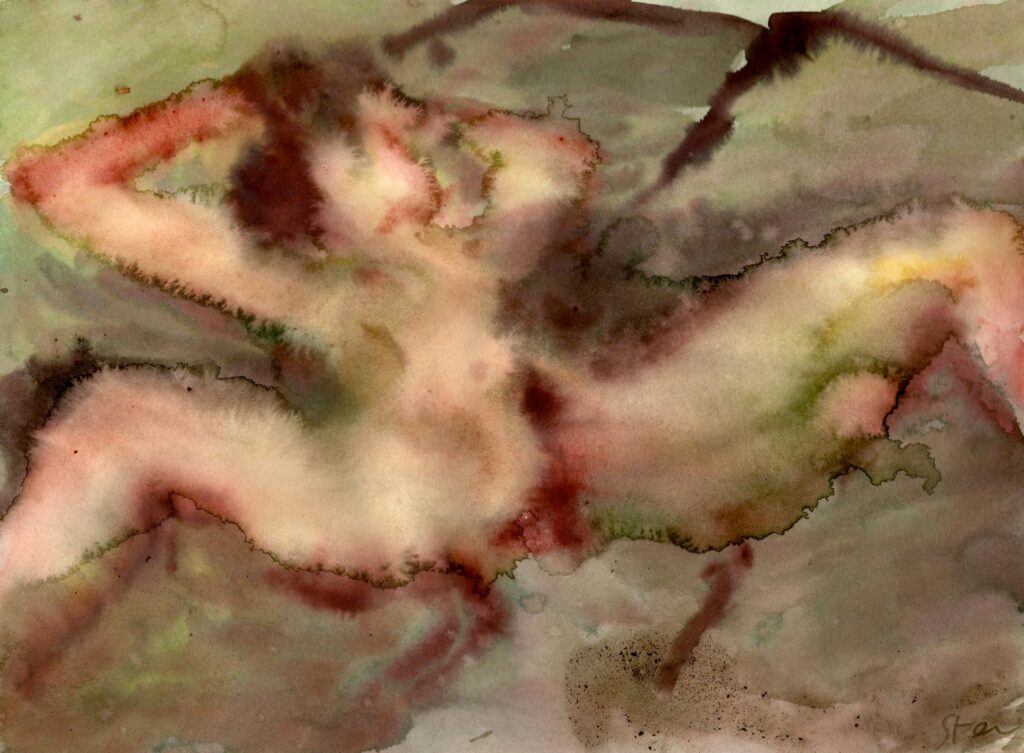
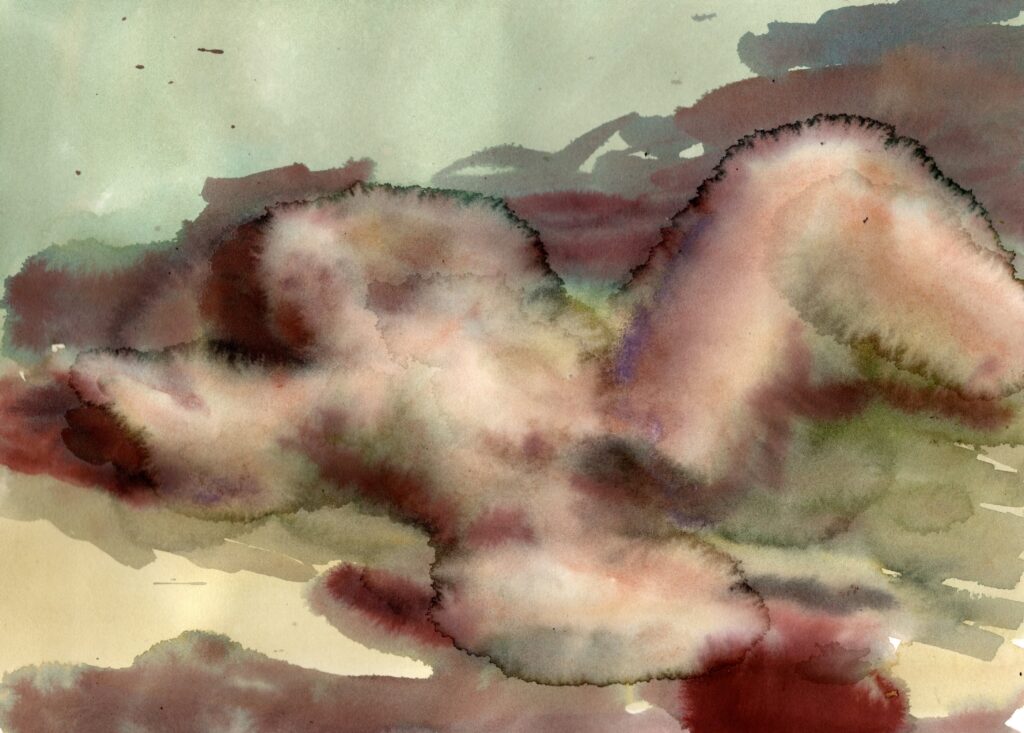
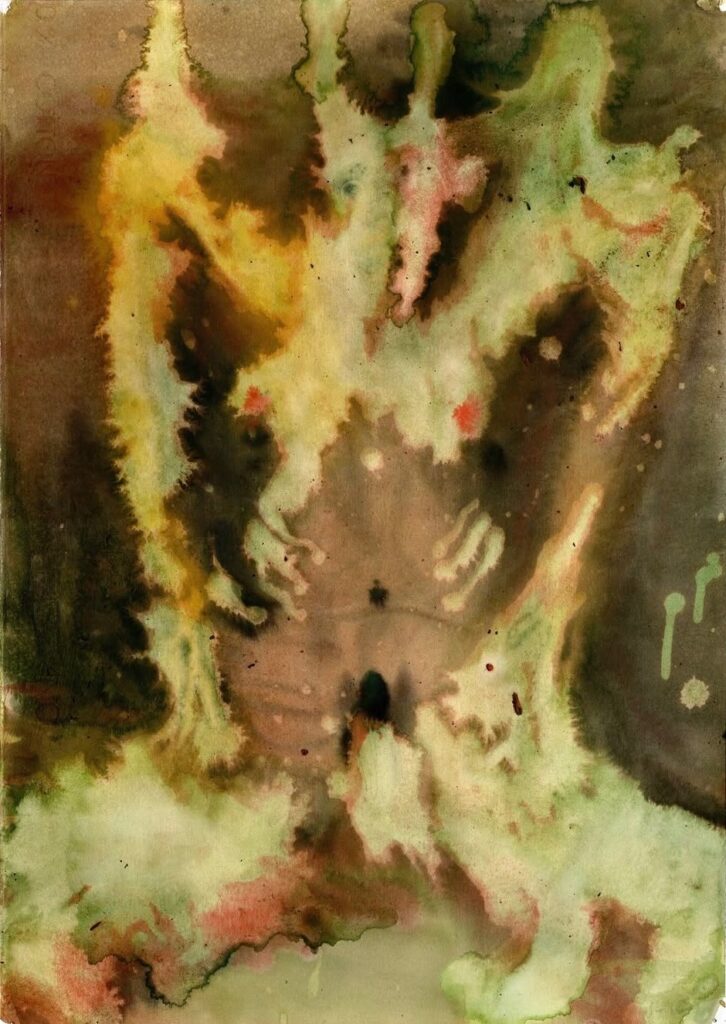
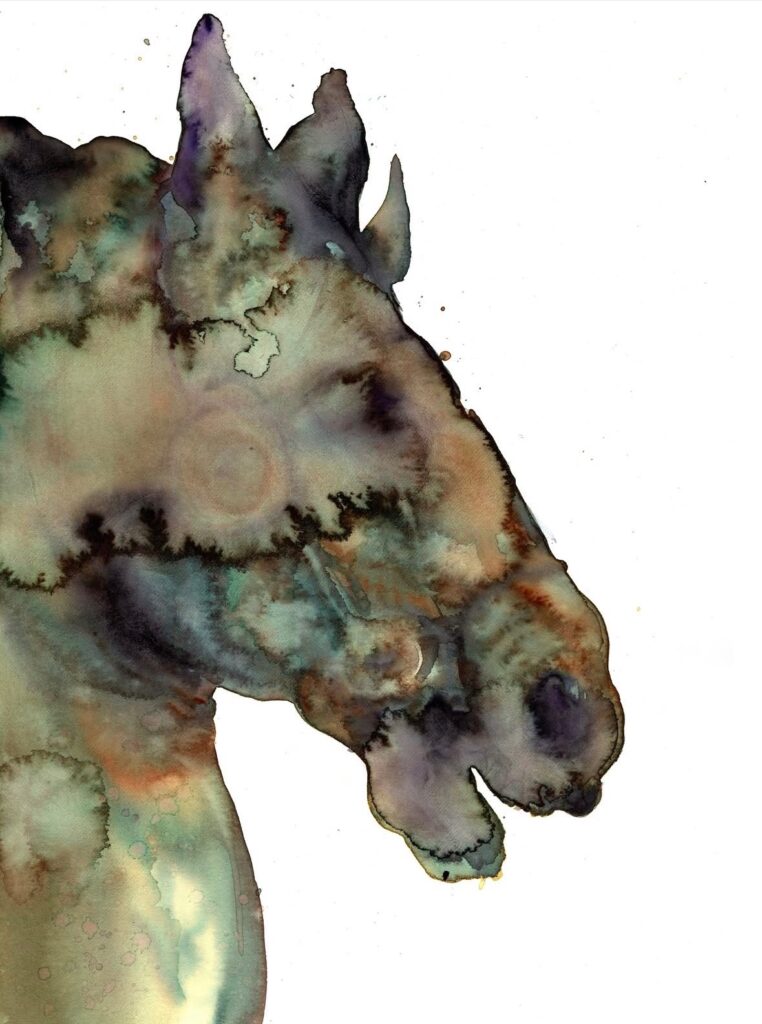
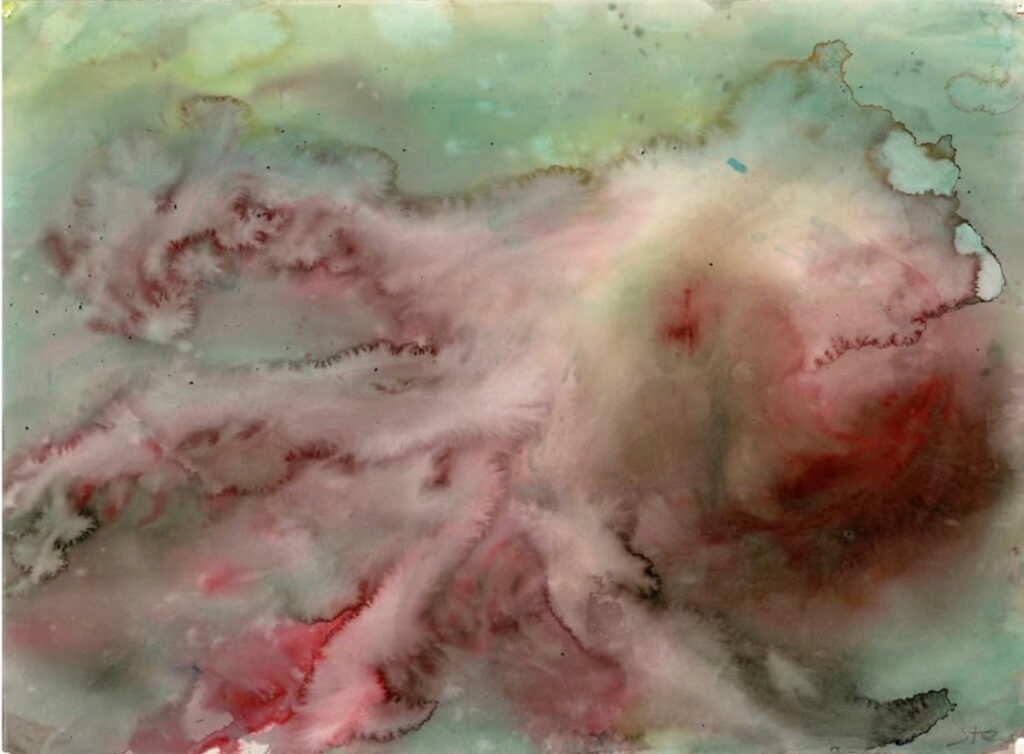
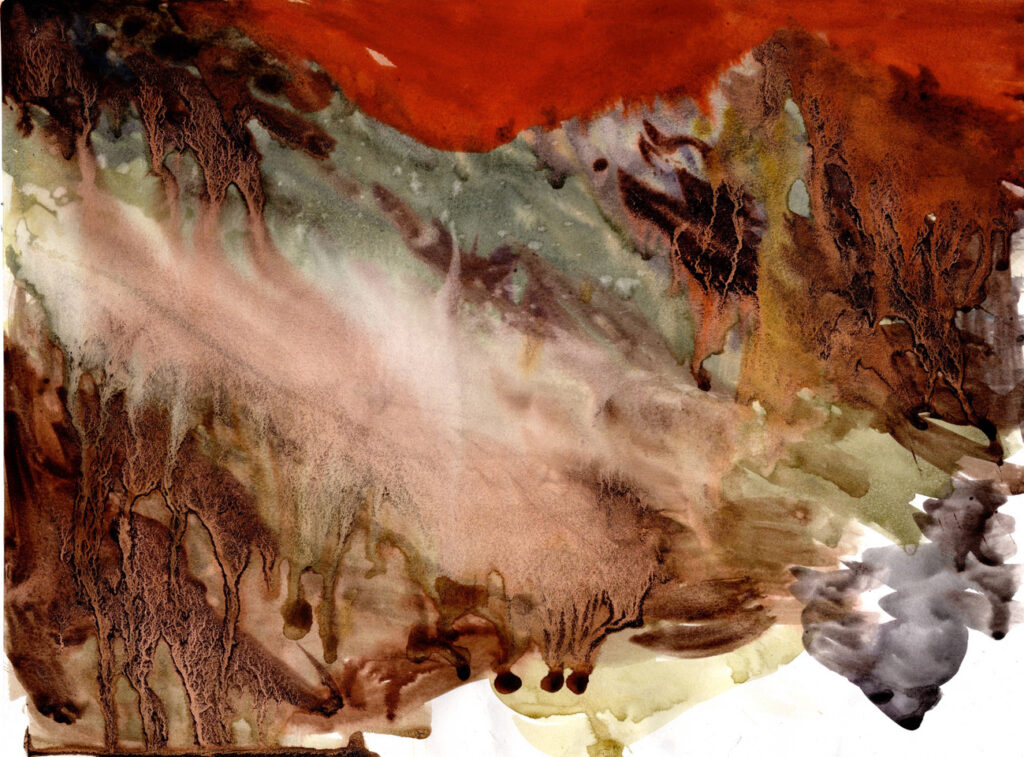
Beppe: I don’t think so. If I start thinking consciously about what I have to do, nothing happens. I always try to let the new medium and materials flow through me. I need a moment in which the material I have in my hands automatically reveals the image , and for doing that I need to be focused on the process, I need energy, because everything can change during the process. That’s why I’m obsessed with water; it’s a powerful medium, alive. Water gives me the possibility to have a short circuit when I paint.
You have created artwork for records, books and illustrated albums through your collaborations with Esordisco and Squilibri Editore. How does your process change when the artwork has to respond to somebody else’s music or writing?
Beppe: Musical collaborations have become a bit rarer lately, because when it comes to album covers or artwork, I want absolute freedom. Otherwise, I decline. Not for some other reason but because it means constantly mediating and clashing over stupid things like, “This red is too red.” And this often happens, unfortunately, especially with Italian musicians, because they often just need a few images to fill their album, and when I sense this, I decline completely. And then, it’s not a given that my images have the right feeling with their music.
I’ve done too many reluctant covers in the past, partly because it was something that intrigued me anyway, but also because I needed to work;I’m not talking about great artists, but simply musicians. The global music industry is full of musicians who generally make a living doing other jobs, are over forty, give few concerts, and if they do, they go for free, and the fewer copies they sell, the more problems they create. They’re afraid to let you do it, almost as if you might distort their work, or at worst, they’re afraid your work will overshadow their music. So as soon as I sense this stench, I decline with a beautiful smile.
But if we agree on this freedom that I need, working with music is one of the things I love most. Seeing your work printed on vinyl is still one of the most beautiful feelings I’ve ever felt, especially because as a boy I was convinced I’d be a musician for a living.
What interests you about the relationship between an image and something intangible like music?
Beppe: The enormous responsibility of those who create the cover. The image comes first. Choosing the wrong picture means ruining the album.
Your work has moved repeatedly between autonomous art and work made for theatre, publishing, cinema and television. Do you make a distinction between “your art” and commissioned or collaborative work?
Beppe: No. Making a distinction, in some way, would mean having the ability to rationally analyze what you do. I just want the images I create to be true and powerful. And to achieve that, I would be able to do anything.
You created sculptures and sets for Constitutional Circus. What interested you about translating your visual language into a cinematic environment?
Beppe: Often, the paintings that you see in the movie aren’t originals, but perfectly printed copies. I must say, however, that the set designer who often asks me to collaborate, Biagio Fersini, has a unique taste.
So when he asks me to collaborate, I’m always happy to do it. For example, in a Riccardo Grandi movie for Amazon Prime Italia,Biagio asked me for a large collection of artwork to build a set featuring an exhibition of my work. In the film’s fiction, these paintings were created by the protagonist’s mother. It was fun.
Some of your works later appeared in the Netflix series Incastrati. What is it like seeing an object you created leave the context of your studio and become part of somebody else’s fictional world?
Beppe: Actually, if the work were to become a prop, to interact with, I need some artisan to help me give it a function. I work in such a visceral way that knowing that the sculpture will have to open up in a certain setting could inhibit the process, this is the reason why I leave the scenography. You need to work on something that will be used, in a certain sense. And all my images are stronger because they are useless.
Is there something about an artwork becoming a prop that changes its meaning for you?
Beppe: Actually, if the work were to become an object used on the scene, to interact with,I need some artisan to help me give it a function.I work in such a visceral way so knowing that the sculpture will have to open up in a certain setting could inhibit the process, this is the reason why I leave the scenography by now.You need to work on something that will be used, in a certain sense.And all my images are stronger because they are useless.
You have lived and worked in Rome since 2016. How has the city affected your work, visually, culturally or psychologically?
Beppe: There’s no other city in the world where I’d live. Maybe in a few years life will take me elsewhere, but Rome is a special place, even if it’s recently lost some of its rage and poetry. If you weren’t born there, it’s a city that forces you to fall in love with it right away—otherwise, you wouldn’t last two days. If you live in Rome, you live among its marvelous ruins, and I think I’ve settled in here as a painter. The beautiful painting I loved so much has slipped from my fingers, melted, and become something else.
Are there particular materials that you repeatedly return to, and what determines the material a new work eventually takes?
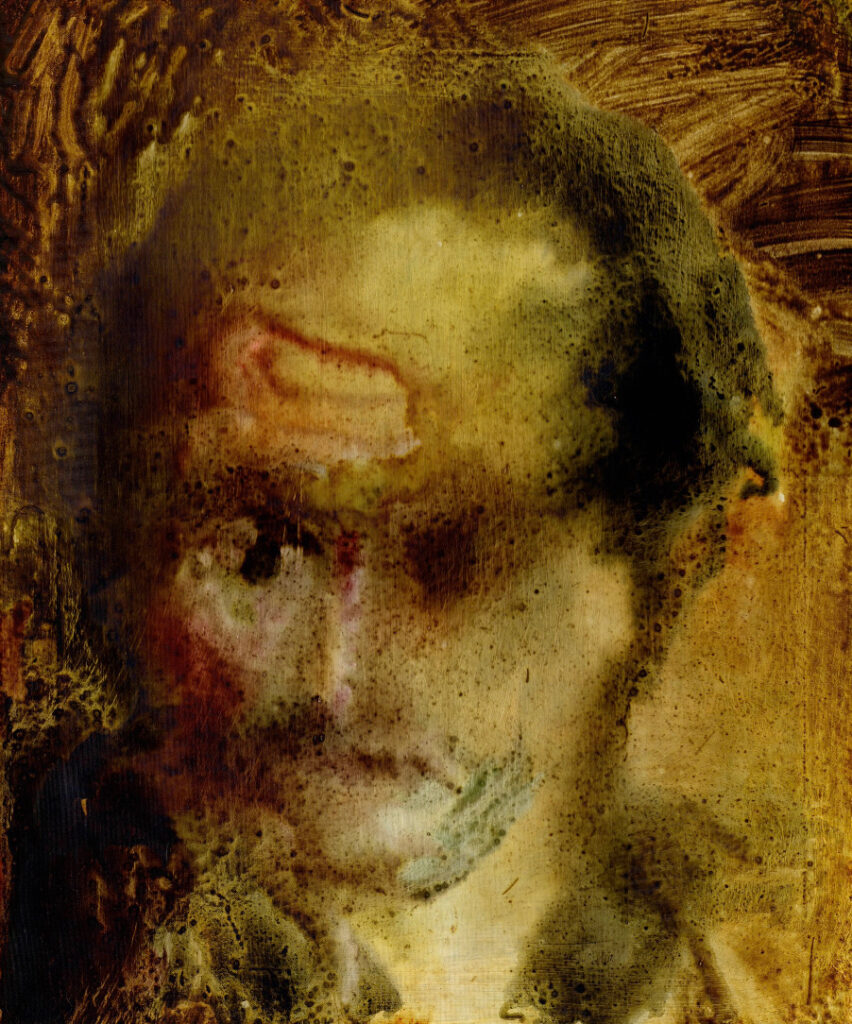
Beppe: If I can dilute it enough, I can paint with it. I started with watercolors, inks and paper and for years I did nothing but use that. And I think that even in my sculpture and drawing, the key to understanding lies in all the synonyms of transparency, impression and indefiniteness. For a while, however, I’ve needed to express something else, something more solid. I needed the same approach to things to be applied to a solid medium. So I brought a similar approach to canvas and oil painting and it taught me to be slower, more focused, and more incisive.
Over the years and with work, I’ve learned to communicate with watercolor, understanding how to record an impression quickly, but watercolor used in this way is short-lived. Creating a dialogue between figures, landscapes, and elements with a similar approach is incomplete. Oil, for now, meets this need of mine. I’ve also tried painting on canvas with watercolor, but the gesso of the canvas makes the watercolor breathless. Oil, on the other hand, lives anyway on the canvas. Even diluted to the extreme, it manages to convey its power, and somehow its history. Watercolor has the sprint of 100-meter runner. Canvas often has that of a marathon runner. And I love running.
With that in mind. Can you walk me through your creative process from beginning to end result?
Beppe: It’s hard and tiring to explain but I will try. Also because I think that doesn’t exist a process but different ones. Since I started, I’ve been asking different things of my process, and it changes from one painting to another. But probably there are, in this last period, part of the process in common. The first part is trying to turn on the painting. I have a lots of little glass jar full of selfmade colours, and I use some of them very watery with water or oil. I move around the canvas as a box fighter is moving around the punching bag, training with hardest and strongest touches to add colours and fix it on the canvas.
When something starts to appear on the surface I start to follow it. In this second part I became more thoughtful, also because energies start to going down. When I feel that I’m arriving directly at the image that I feel without surprise I stop. Usually this happens different times for a painting on canvas, less with a watercolor. It is a way to leave the tension alive before finishing the painting. Somethimes I feel tension for a week, or 10 days. I sleep less, I look angry to other people. I’m silent and restless. My girlfriend now recognizes moments like this, and she knows when I’ve finished a painting because for a short while I feel happy and the world becomes a wonderful place again. Until the time of the new painting The process reaches its final stage when I feel the right moment is approaching: while I’m painting, that sudden ‘short circuit’ we talked about hits the canvas, bringing a moment of intense consciousness; and in that case non one other brushstrokes are needed. It’s alive.
Can you also tell me about your use of symbolism?
Beppe: You know, I’m always wary of paintings where symbols are used too explicitly, without evoking something open to multiple meanings. As I told you before, I don’t like preparing anything, let alone symbols. I don’t spend much time thinking about them, And if they come out it’s because of the process. When I work I like to start from the idea that my painting is much more intelligent than I am.
How do you approach color?
Beppe: Instinct. I study and love different color theories, but in my way of working instinct prevails. Also because the word instinct carries with the Latin meaning of “to excite.”
So with what we just talked about, what are you hoping to convey?
Beppe: Nothing. If I started thinking about what I wanted to communicate, I’d stop painting. I alwais paint who I am and what I know, and In my case images develop like a karst river. They grow up silently, and then, there’s a moment when they emerge. It’s a physical urge. Like peeing. I paint pictures for being the first to see them. If someone else feels the same way, and can be inspired it means I’ve done a good job. But that’s not my priority.
Ok Beppe, now to something totally different. In a parallel universe who would you be? and what would you be doing?
Beppe: A painter.
Outside of art, what’s something you’re obsessed with right now, maybe a hobby, a show, or even a food, that keeps you grounded or inspired?
Beppe: Reading and playing music. But those are thing that I mix in my works. Probably one of the things that has shaped my painting the most is reading. Essays written by artists themselves or about artists like Picasso, Munch,Guston or Bacon. The essays of Berger, for example. And then fiction, how do you still remain the same after reading Kafka?
Can you tell me a story about a time when a connection with someone had a big impact on you?
Beppe: When I knew The Romans. You can also discover a molecule that makes you immortal; they’ll never be surprised by anything. I recommend Roman indolence to all artists. It keeps you grounded. Have you ever read A Martian in Rome by Flaiano?
What qualities do you find most important in the people you choose to spend time with?
Beppe: People are like paintings, there are paintings that I like but I don’t know why. I use instinct with them too, and for now people that I have chosen in my life continue to be there.
Anybody you look up to?
Beppe: Me as a child.
What motivates you?
Beppe: Hunger
How would you describe a perfect day?
Beppe: A day in bed with my girlfriend.
Alright Beppe, I always ask these two questions at the end of an interview. The first is. What’s your favorite movie(s) and why?
Beppe: Unfortunately, at the top of my list, I don’t have a film tied to the history of cinema but to a sentimental event: Totò, Eva and the Forbidden Paintbrush. I love Totò for three reasons. The first is because I fondly remember the exasperated laughter that took my father’s breath away while watching the film. He was the only one who could make him laugh like that. The second is because Totò is a legend in Italy, though he made many terrible films and frequently squandered his talent driven by his obsession with nobility.
He made over 100 films, but very few are worth seeing, for example Pasolini’s Uccellacci e uccellini or Monicelli’s Cops and Robbers. I would to say also that also if the movie was terrible, the moment where totò appear is a moment full of magic. He was real a pure talent. The third is because in the film: Totò, Eva and the Forbidden Paintbrush, Totò has to make an authentic copy of a Goya, and I wrote that quote in my study: “Everyone are able to do something, it’s copying that’s difficult!”
The second is. What song(s) are you currently listening to the most right now?
Beppe: st Elmo’s Fire by Brian Eno