
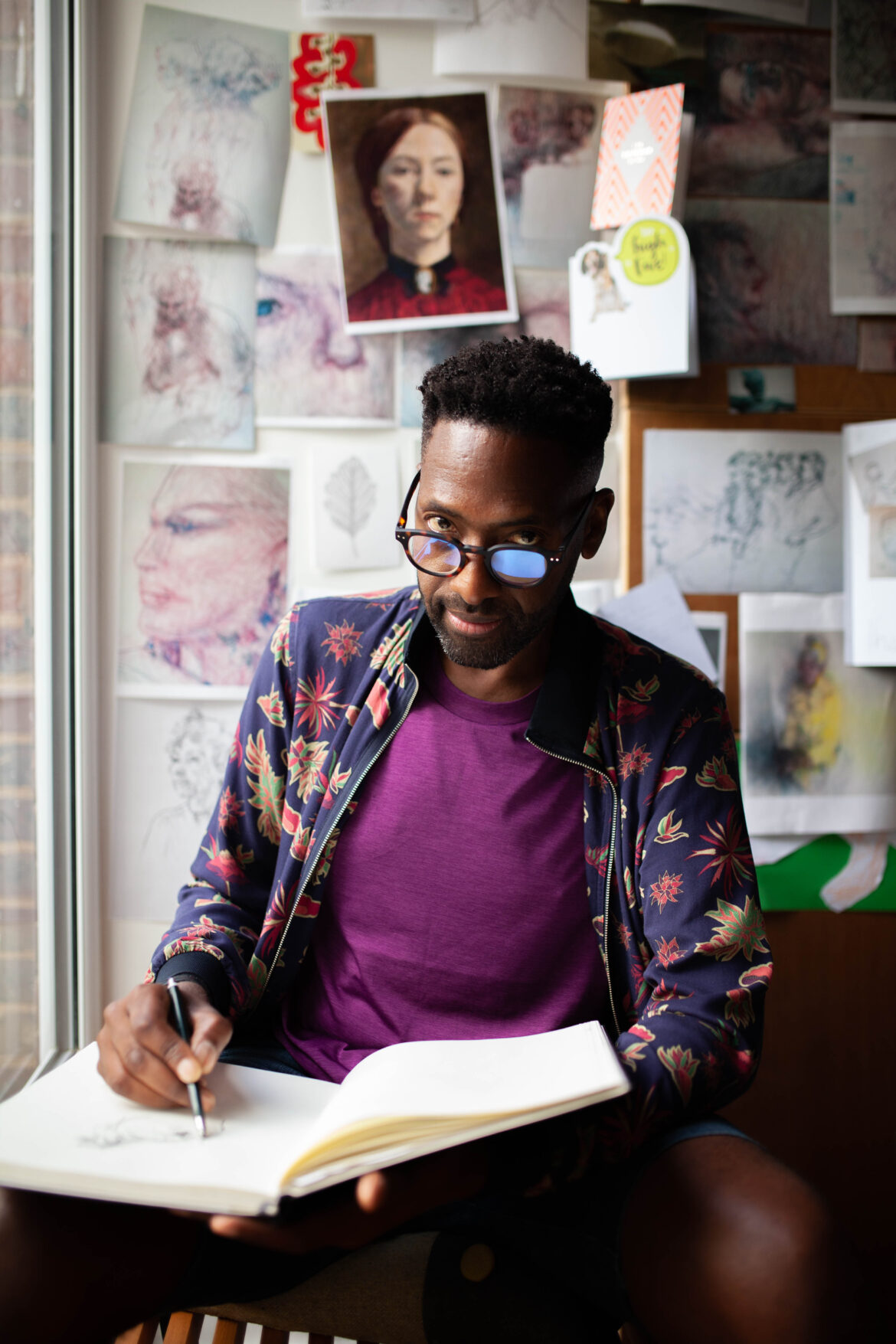
I first met Curtis Holder in 2021, when I visited his home in South London. At that point in my photography career, when I was photographing lots of artists, I would usually spend around an hour and a half with someone. Half an hour getting to know them, followed by an hour taking photographs, before saying my goodbyes and heading out the door.
With Curtis, things were different. I found myself spending almost the entire day at his house. I think we spent around eight hours together, talking about life, getting to know one another and sharing stories. It was a genuinely lovely experience that I remember well.
We even discovered that we had a mutual connection. My uncle Alan attends the same life drawing class as Curtis in South London. Despite this being our first meeting, it felt more like catching up with an old friend.
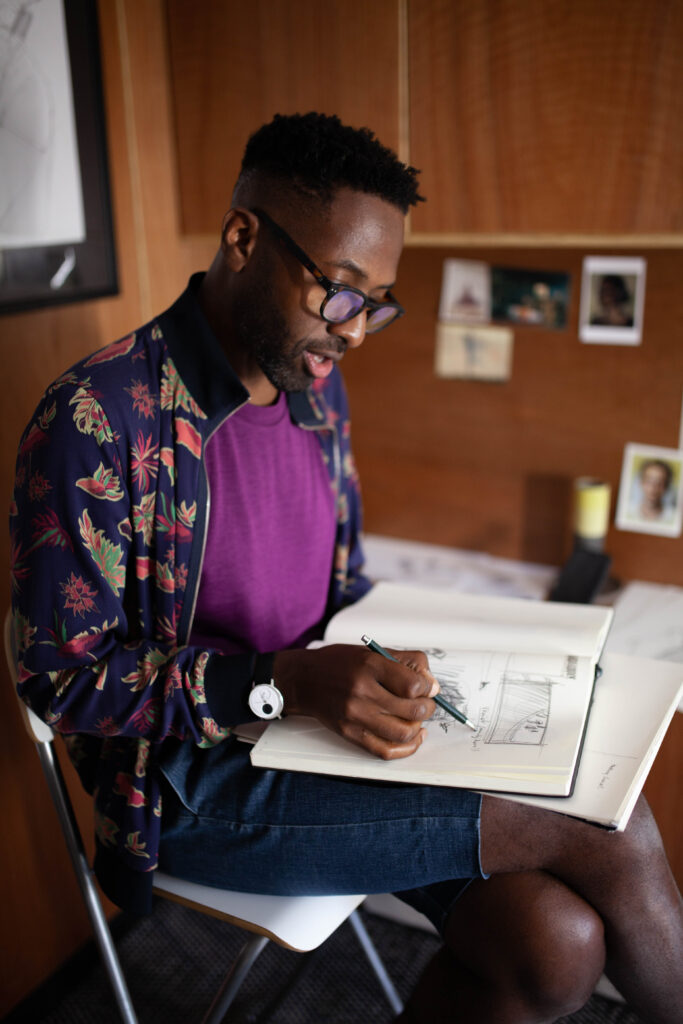
Spending that time with Curtis, it became instantly clear why he is so deeply respected, not just for his extraordinary ability as an artist but also for the person he is. Just a year earlier, in 2020, Curtis had won Sky Arts’ Portrait Artist of the Year, bringing his work to a huge audience across the UK.
Having spent two decades working as a primary school teacher in South London while continuing to draw every day, Curtis had finally made the transition into becoming a full-time artist. Since then, he has gone on to receive numerous commissions and present his work through major cultural institutions, including the National Theatre, Leeds Art Gallery and the National Portrait Gallery.
It’s been wonderful to see Curtis’s career flourish over the years, while knowing that the same lovely, charming and funny person I met back in 2021 remains at the heart of it.
Thanks for taking the time to do the interview, Curtis!
You come across as very calm and centred. Was there a point in your life when things began to click, when you felt you understood who you were and the direction you were moving in?
Curtis: I think that sense of clarity arrived gradually rather than through a single moment. There were periods earlier in my life where I struggled with serious mental health issues and was trying to figure out where I fitted, both personally and creatively. Over time, drawing became the thing that kept bringing me back to myself. The more I committed to it, the clearer things became. It was not just about developing a skill. It was about understanding that this was the way I made sense of people, memory and identity. So the calmness people sometimes notice probably comes from that long process of working things out through practice and reflection, something that is essential to my drawing practice.
You’ve spoken openly about being dyslexic. When did you first understand that, and how do you think it shaped the way you observe and communicate?
Curtis: I understood fairly early at school that reading and writing were more difficult for me than they seemed to be for other people. At the time it could feel frustrating because the education system is built so heavily around written language. But looking back now, dyslexia pushed me towards visual thinking. I became very attentive to details, expressions and physical presence. Drawing allowed me to communicate in a way that felt natural rather than forced. In many ways I see drawing as my primary language. It is how I observe, process and record the world.
Drawing seems almost instinctive for you now. What does it actually feel like when you’re working, physically and mentally?
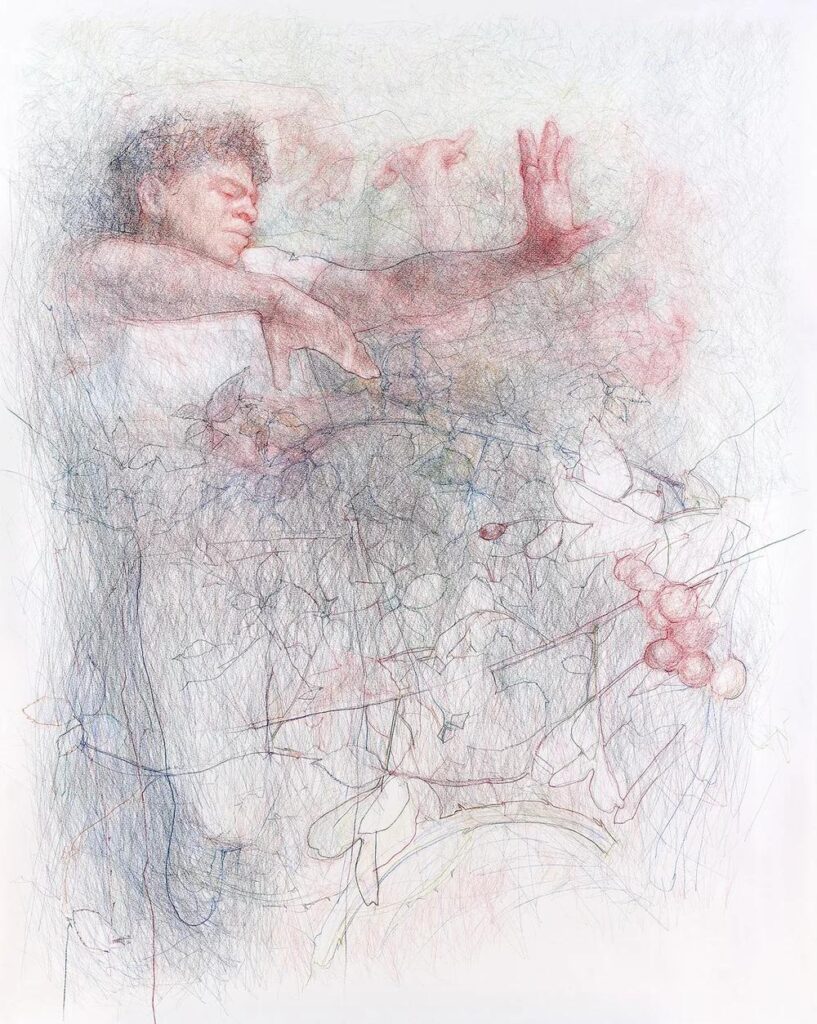
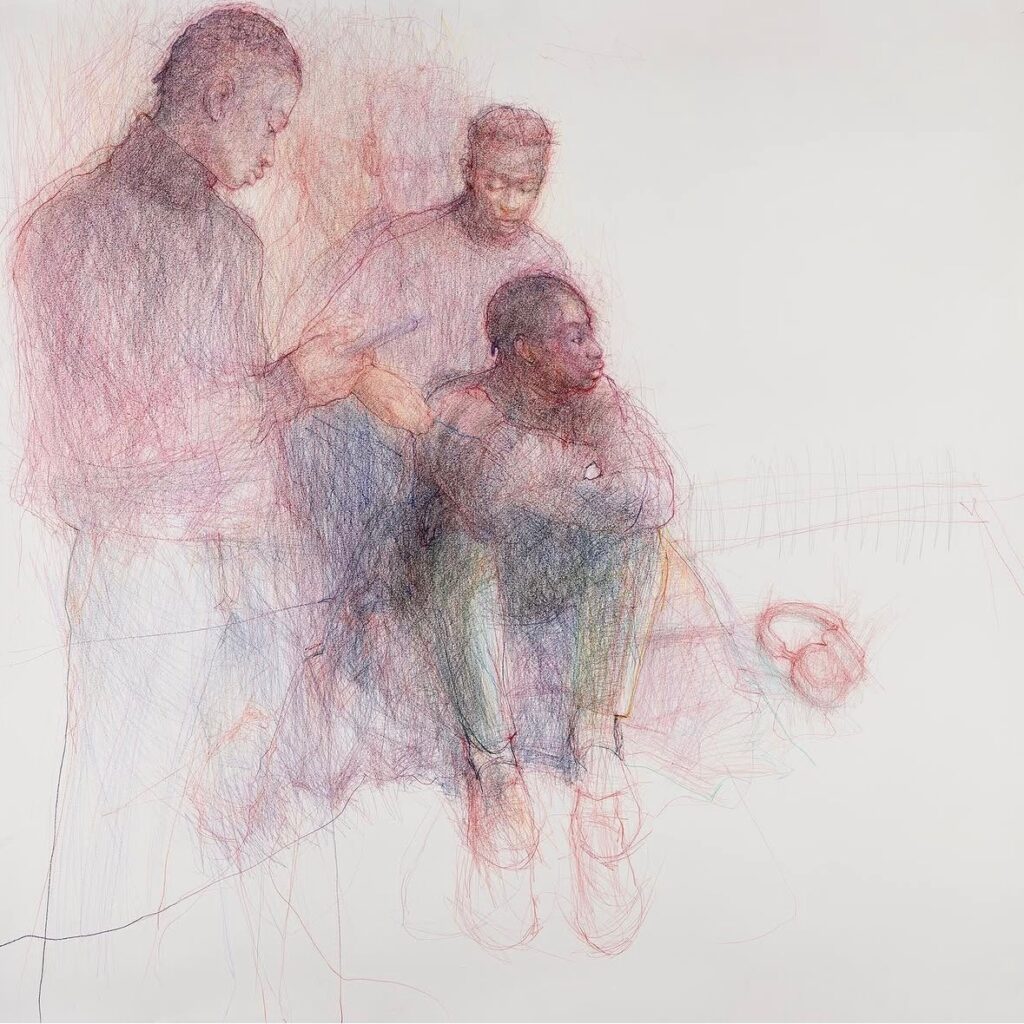
Curtis: When I am drawing there is a kind of quiet concentration that takes over. Physically it can sometimes seem quite frantic and very physical. I have seen myself drawing and it can look almost like some kind of choreographed dance, moving back and forth. However, inside it feels quite still, calm and controlled, especially with coloured pencil where the process involves many layers built up gradually. Mentally it is both focused and open. I am paying attention to very small details, the shift of a line, the temperature of a colour, but at the same time I am also responding to the person I am drawing and the atmosphere in the room. It is a slow process, and that slowness is important. It allows time for observation and reflection.
You draw constantly, especially when you’re around other people. What does that habit give you? And how do you feel in moments when you don’t have a pen or paper with you?
Curtis: Drawing has become a way of being present. When I am drawing people around me I am not trying to make finished works. I am simply observing and recording small moments. It keeps my eye active and it helps me stay connected to the act of looking. When I do not have something to draw with I sometimes feel slightly restless. It is like missing a familiar sense for understanding what is happening around me.
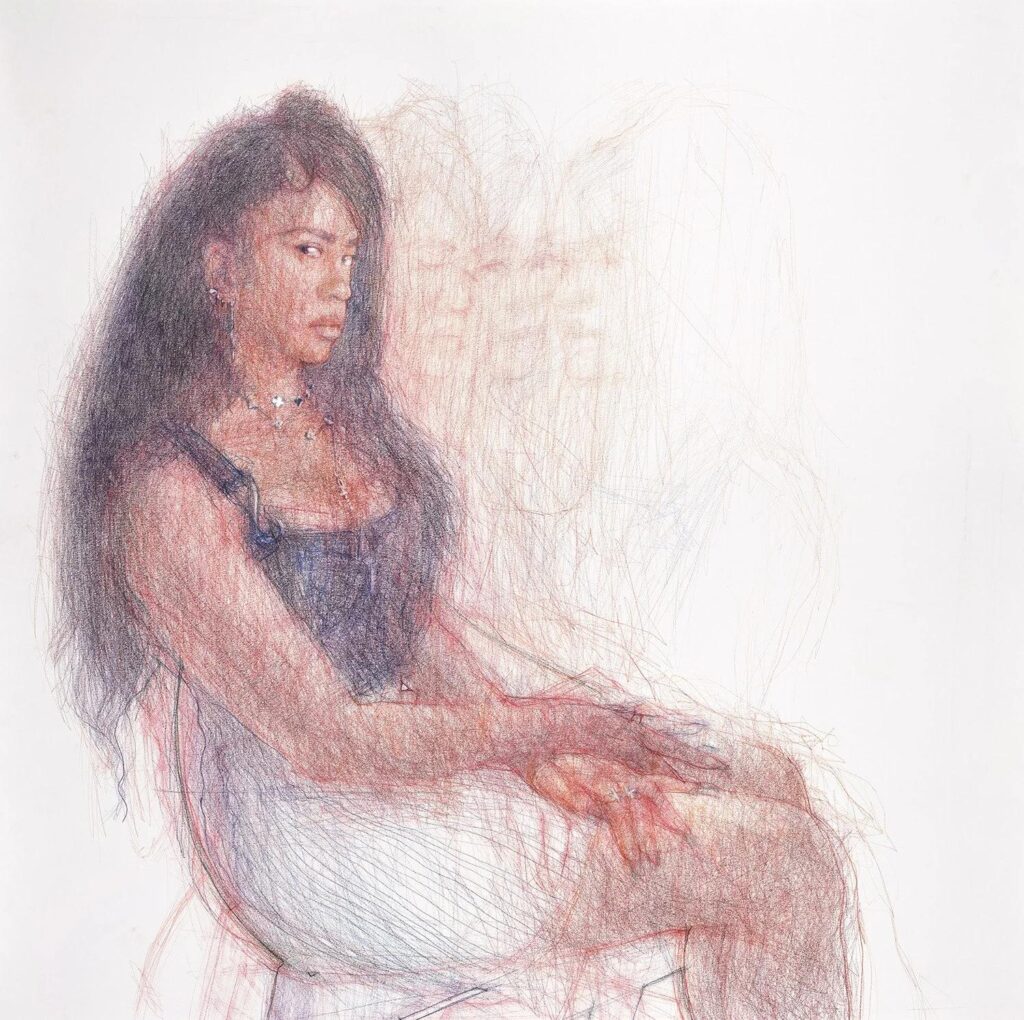
After all these years of making work, why do you think drawing still gives you so much pleasure? What does it give you that nothing else does?
Curtis: Drawing still gives me the same sense of curiosity that it did when I was younger. Every face is different and every person carries a unique history within them. The act of trying to understand that through line and tone never becomes repetitive. It remains endlessly interesting. There is also something very direct about drawing. A pencil touching paper creates an immediate connection between thought, hand and image. That simplicity is incredibly satisfying.
Life drawing has clearly been central to your development. Why do you keep returning to it, even as your career has grown?
Curtis: Life drawing is like returning to the foundations of the practice. It keeps your eye honest. Working from the live body reminds you that drawing is about observation rather than assumption. Even after years of doing it there is always more to learn from the human form. It also connects me to a long tradition of artists who have used drawing as a way of studying humanity.
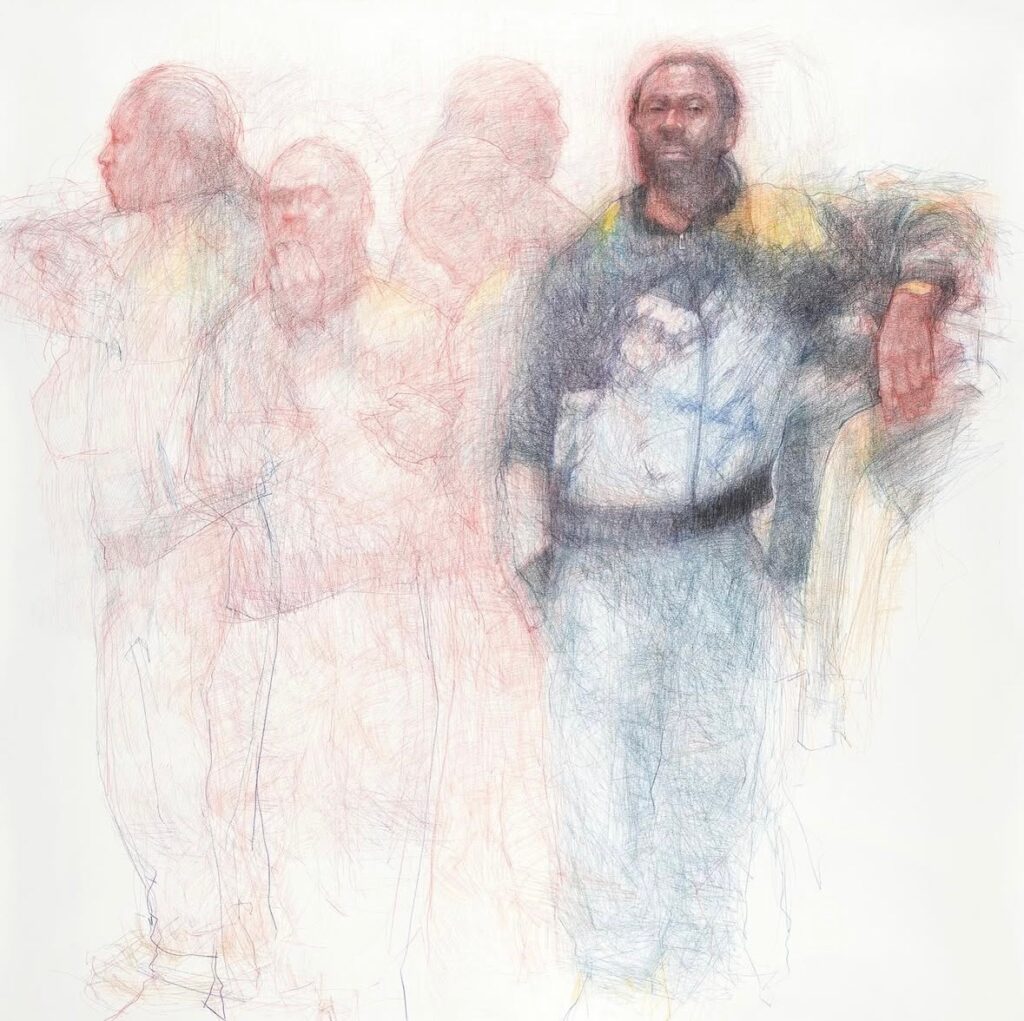
You spent many years building your skills quietly before wider recognition arrived. Why do you think that long period of preparation was important for you?
Curtis: That time allowed me to develop without too much external pressure. I was able to focus on the work itself rather than on expectations or visibility. It also meant that when opportunities did begin to appear I already had a strong foundation in the practice. Drawing is something that benefits from patience and repetition. In hindsight I see those years as an essential apprenticeship.
Portraiture plays a central role in your work. What does it feel like to spend so much time looking closely at other people? Do you think about it as a kind of archive?
Curtis: Looking closely at someone for a long period of time is quite an intimate experience. You start to notice small things that might otherwise go unseen. In that sense the drawings do become a kind of record. They capture not only how someone looks but also something about the moment of encounter between the sitter and the artist. I am interested in the idea that these drawings form a quiet archive of people, relationships and shared time.
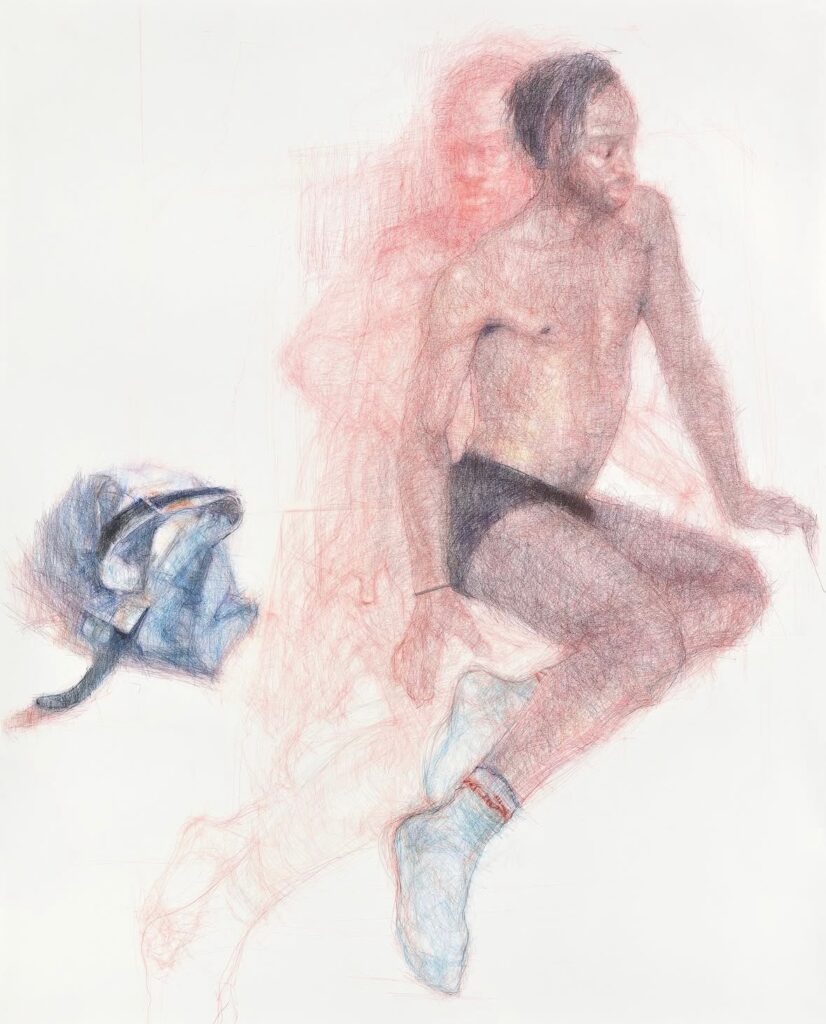
Do you ever experience burnout?
Curtis: Yes, there are definitely times when I need to step back. Drawing people requires a lot of attention and emotional presence. When I feel that energy becoming depleted I try to give myself space. That might mean spending time alone, cycling, or simply allowing a pause in the work. During those times I usually find myself being drawn to landscapes. The compulsion to draw never goes away, and if it did I would be very worried. What happens instead is a shift from the human figure to nature. In doing that I feel more able to reflect on my inner thoughts in a way that is harder when drawing individuals.
You seem to maintain a lot of steady, positive relationships. What does it take to move through the world that way?
Curtis: I think it comes down to listening and paying attention to people. The same qualities that are important in portraiture are also important in relationships. Trying to understand where someone is coming from, being patient, and giving people space to be themselves. Those things create a foundation of trust. And when people are truly allowed to be themselves without judgement it becomes a space of safety, and who does not want to feel safe?
You meet many well known people these days, and increasingly you’re seen as a significant figure yourself. How does that visibility feel to you?
Curtis: It is still slightly surreal at times. I do not think of myself in those terms when I am working. What matters most to me is the process of drawing and the conversations that happen through that process. The visibility is something that comes with the work reaching a wider audience, but I try to keep my attention on the practice itself.
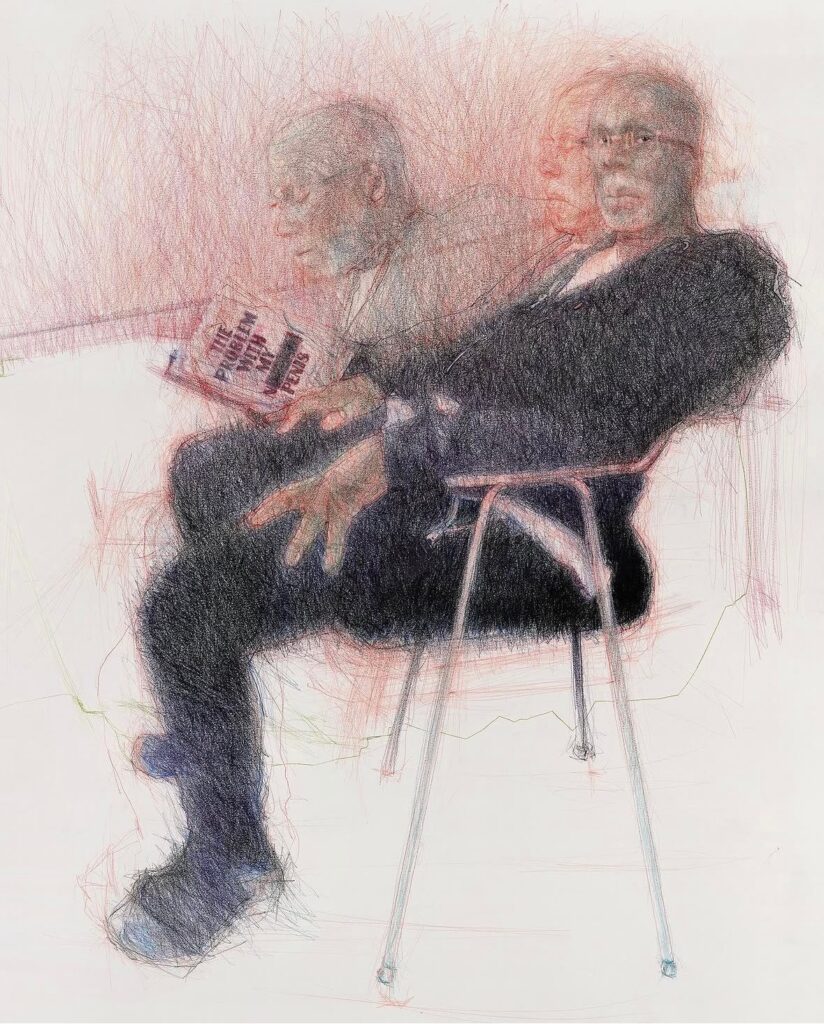
What do you find most difficult about being an artist?
Curtis: One of the most difficult aspects is the uncertainty. The path is not always clear and there can be long periods where you are working without knowing how things will unfold. It requires a lot of patience and belief in the value of the work itself. Making work that may never be seen by anyone apart from you can sometimes be quite challenging.
And what do you love most about being an artist?
Curtis: What I love most is the freedom to explore ideas through making. Drawing allows me to stay curious about people and the world around me. It also creates opportunities to connect with others in meaningful ways.
If you could spend a day drawing anyone, living or dead, who would you choose?
Curtis: There are so many possibilities, but if I had to choose one individual it would be someone whose presence carries a strong sense of honesty, history and humanity. Someone like James Baldwin would be fascinating to draw and speak with. His thinking about identity, society and the human condition feels deeply relevant, and I imagine the conversation would be as rich as the act of drawing him.
As your work reaches a wider audience, how do you think about where it sits?
Curtis: I try not to overthink it. Once the work leaves the studio it begins to have its own life and people will encounter it in their own ways. What matters most to me is remaining honest within the practice and continuing to draw with the same curiosity and attention that first drew me to it. This means quite simply drawing people I feel the need to have a conversation with. People who need to be heard.