
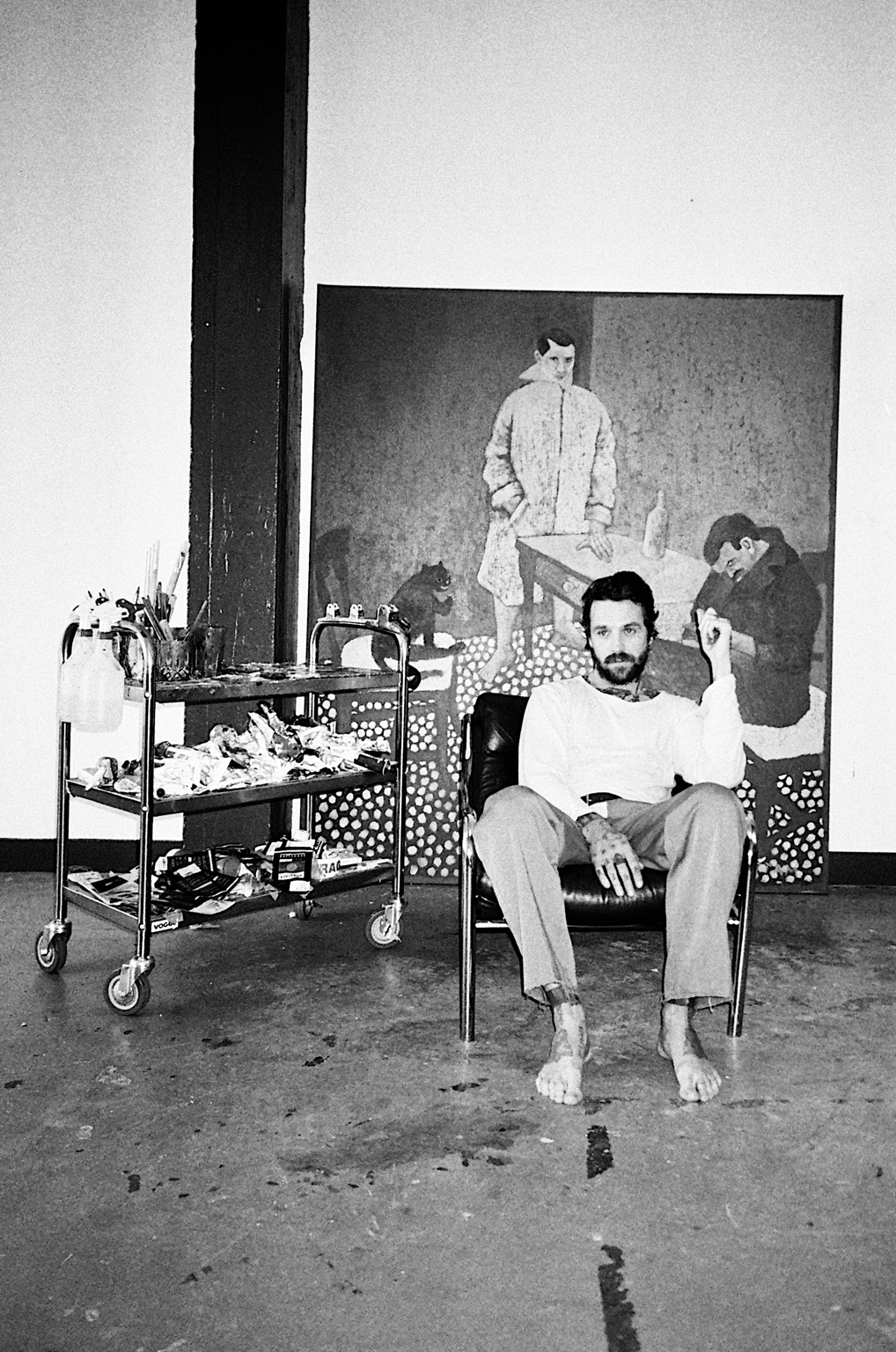
In 1981, Raymond Carver published a book in which nobody managed to explain what love is, and in which, while trying, they talked about everything else. What matters is never said outright: it stays underneath, in what the characters do while talking about something else. A line like this is enough: “He never knew what moved him, and after he started, he couldn’t stop”*
Something similar happened to me with Elliott Pittam. I asked him about the grotesque, about nostalgia, about rogues, and his answers always returned to the everyday: ordinary, monotonous moments that anyone has lived through or witnessed. Therein lies the mastery of his work: Elliott Pittam manages to transform those quiet, everyday scenes into theatrical stages loaded with tension. It is a contemporary costumbrismo that looks both to the past (Victorian echoes, pubs, persistent class divisions) and to the present, capturing the British psyche through an affectionate, non-judgmental eye.
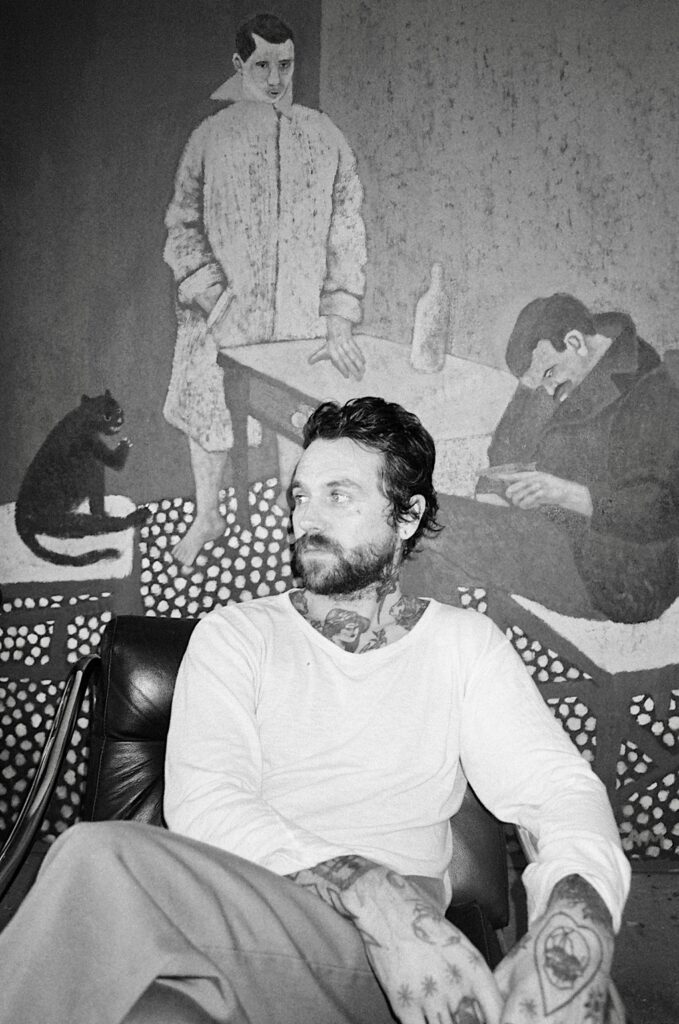
His paintings are a single frame taken from something longer. Key images with a backroom behind them, or perhaps simply windows for voyeurs. He sets the stage and leaves the rest to us: what happens before and after, what is sinister and what is harmless, is decided by whoever is looking.
London, an everyday theatre, and a painter sitting in the audience. This is our conversation:
To start, tell me: what fascinates you about painting, about making things? What do you find there that you can’t find anywhere else, and how has the process been to get to this point? I don’t feel like this is a conclusion, more a stretch of the road, and it’ll be great to look back on this answer in a few years’ time.
Elliott: I like that painting gives me the freedom to create something and express myself through an image. There’s something incredibly satisfying about taking an idea from my head and turning it into something real. It’s okay if some people don’t connect with it, while others might understand exactly what I’m trying to say.
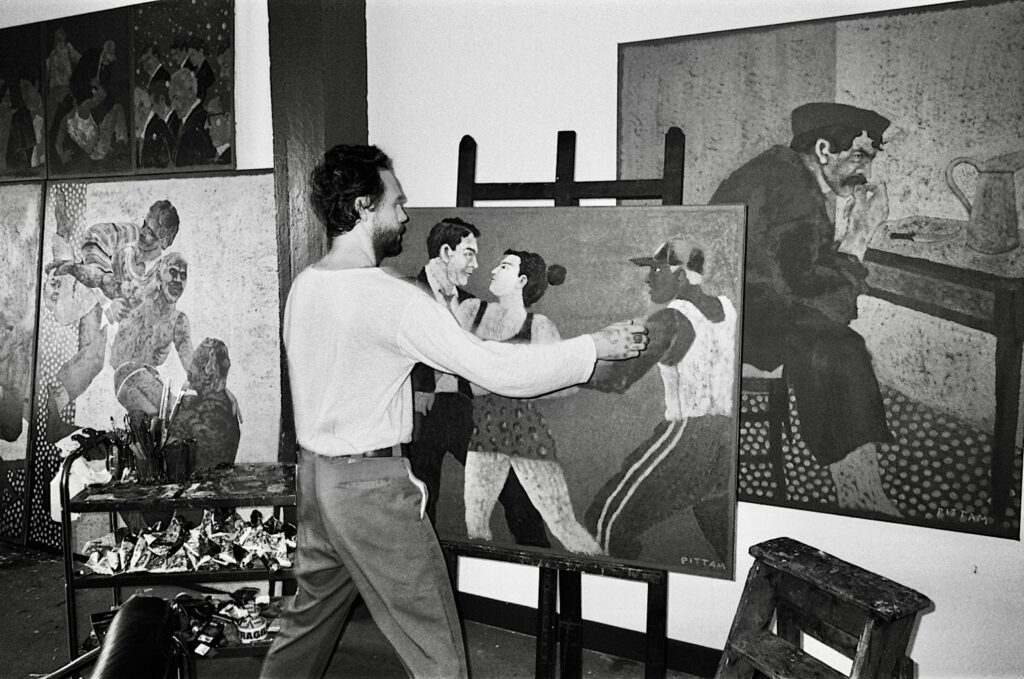
In your scenes there are card players, rogues, people who seem to be plotting something or hiding it. What do you see in those moments?
Elliott: I’m not necessarily drawn to any particular type of character. I think I sit somewhere in society where I brush shoulders with people from all walks of life. I find the differences between people and how they interact fascinating. There’s often humour in those interactions, whether it’s social awkwardness, people putting up barriers or others having their guard completely down. Those little moments of discomfort, exaggerated behaviour and unpredictability are what catch my attention.
You’ve described London as an everyday theatre. Do you feel people still perform for each other in public? Cities are increasingly designed around individual comfort (delivery apps, headphones, everything remote): do you think that changes how Londoners relate to each other, and does it show up in your paintings?
Elliott: I think as people get older, the social connections they had in their twenties can become less prominent. Family, work and everyday responsibilities take over. But beneath it all, the bones are still there. Public houses, theatres, parks, people coming together to celebrate life, others simply trying to get by, and those who see opportunities in the shadows. I tend to observe it all from a bit of a distance, and I think those same human behaviours have echoed through society for generations.
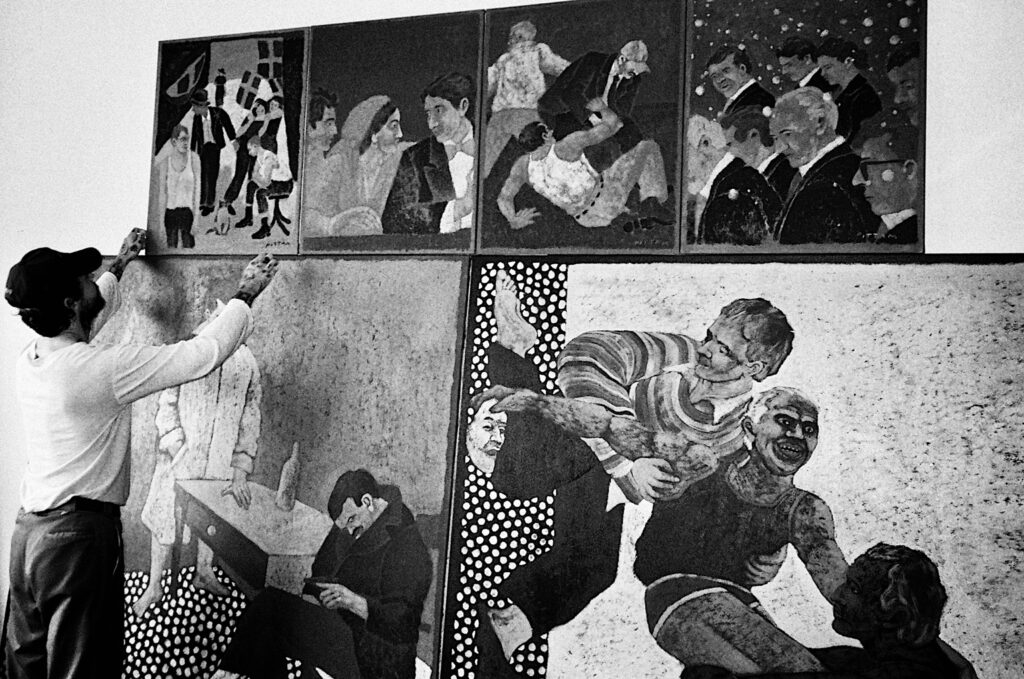
There seem to be Victorian echoes in your work, not as history but as something still being performed: politeness, class signals, indulgence, indifference. Do you see those rituals alive in today’s London, in different clothes and in front of different screens? And how do you translate them into paint without it becoming historical?
Elliott: I imagine the divisions between classes were much greater in the past, but despite how closely we all live alongside one another, we’re still very much divided. It can be difficult to find where you fit into society. I’m definitely drawn to the aesthetic of older times, but also the associations that come with it. The lack of progression in certain aspects of society, and the behaviours and attitudes passed down through generations, are what really interest me.
Some people read your work as melancholy for a better time. Others place you alongside painters who looked at the city without flinching, like George Grosz or Otto Dix. Did that better time ever exist? Do you feel closer to a chronicler or a critic, to satire or irony, and where do you sit between affection and judgement?
Elliott: I think we’re probably living in the best era there’s ever been. It’s easy to glorify a golden age, but the struggles people faced back then were almost certainly much harder than ours. Of course, I enjoy romanticizing things, but I do that with today’s society just as much as the past. I paint without judgement. The characters who might be perceived as villains or oddballs often find themselves in humorous situations, but I can assure you I’ve probably walked in their shoes to some extent.
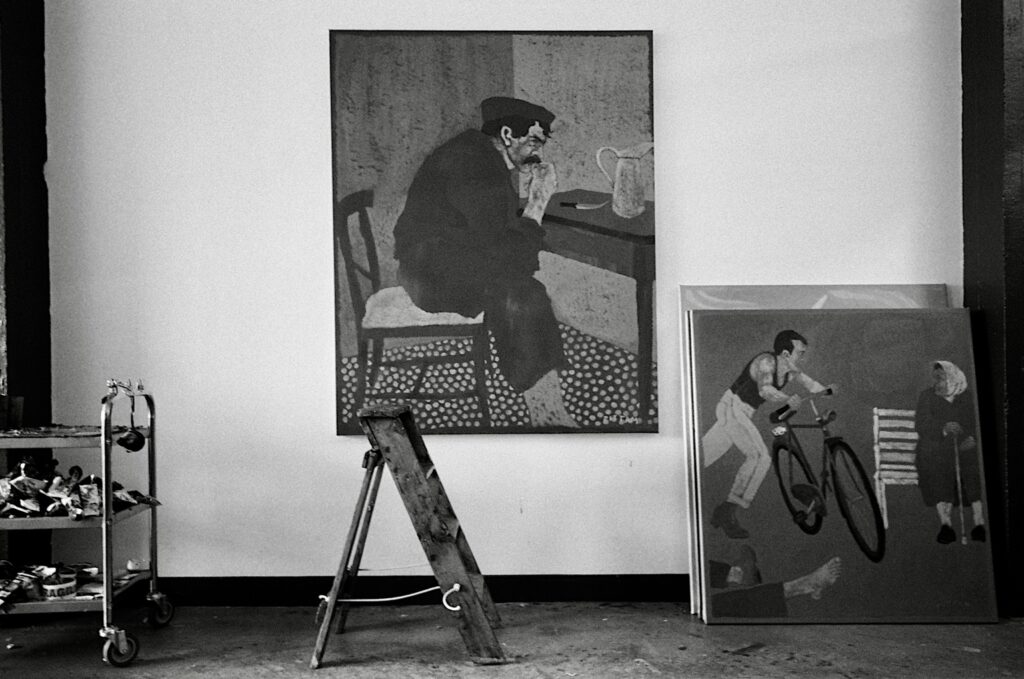
In the art world, people sometimes say an artist “lacks street”, that they haven’t lived what they paint. Your work clearly doesn’t, it understands social choreography from the inside. Where does that come from, and can it be learned, or do you have to have been out there?
Elliott: I wouldn’t say the situations I paint are particularly extreme. They’re often quite ordinary, monotonous moments that most people have probably experienced or witnessed in some form. I enjoy romanticising those situations, finding something humorous or dramatic in what might otherwise go unnoticed. I don’t think you have to look particularly far to find these things.
Each painting starts with a color ground that sets the atmosphere and stays present throughout. How do you choose it: from the scene, from a feeling, or before you know what you’ll paint?
Elliott: The ground color is actually the first thing I put down, before sketching out the composition. Once I’ve mapped out the stage, so to speak, I start figuring out the layers of colour that will bring everything together. I have certain palettes I naturally gravitate towards, but I also enjoy the unknown. There’s always an opportunity to follow the mood of a scene or throw in a curveball and take it somewhere unexpected.
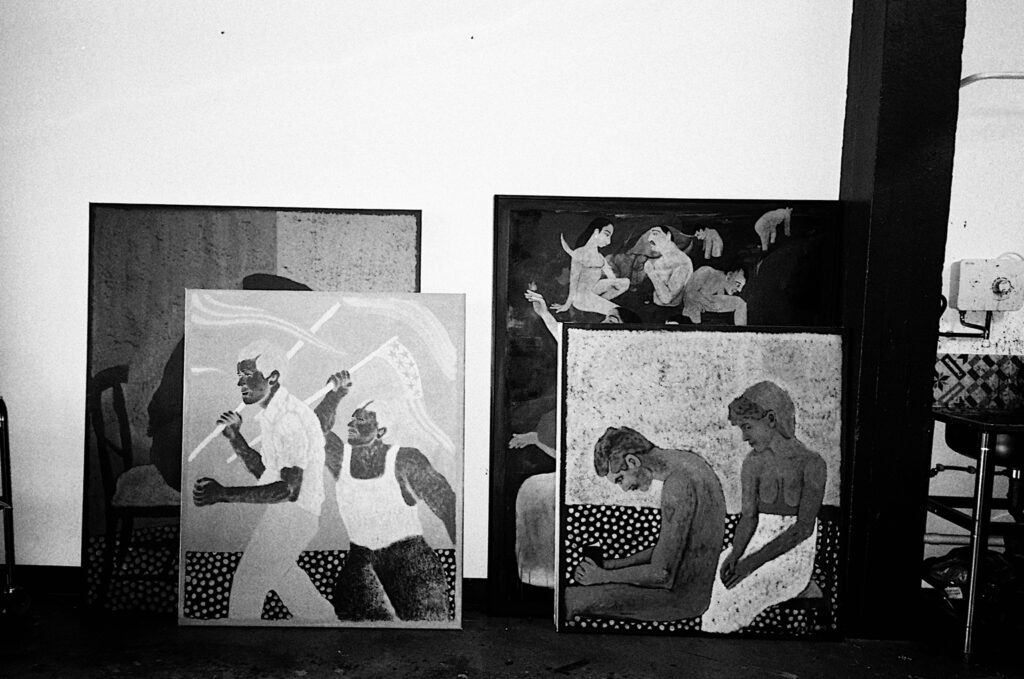
Your paintings read like a single frame taken from something longer, with that atmosphere that hangs in the air when something is about to happen, or when it’s been happening so long that it has become the result. Do you know what happens before and after?
Elliott: It’s usually the frame itself that interests me. What happens before or afterwards is out of my control, and I quite like that. Not every painting needs suspense or tension, but I enjoy introducing something that might shift the atmosphere of a scene, a potential turning point that could end up controlling the entire narrative.
The everyday and the grotesque live side by side and feed each other. Where does the grotesque begin in an ordinary scene? And despite the romance of your painting and its degraded atmosphere, every scene makes us wonder what lies beyond it.
Elliott: One man’s trash is another man’s treasure. I think to view something as grotesque can come from quite a privileged position. What’s interesting is how quickly people assign roles to the characters in my paintings, and I sometimes deliberately play into those assumptions. The paintings can feel quite charged, but ultimately the narrative is open to interpretation. What one person finds sinister, another might see as completely harmless.
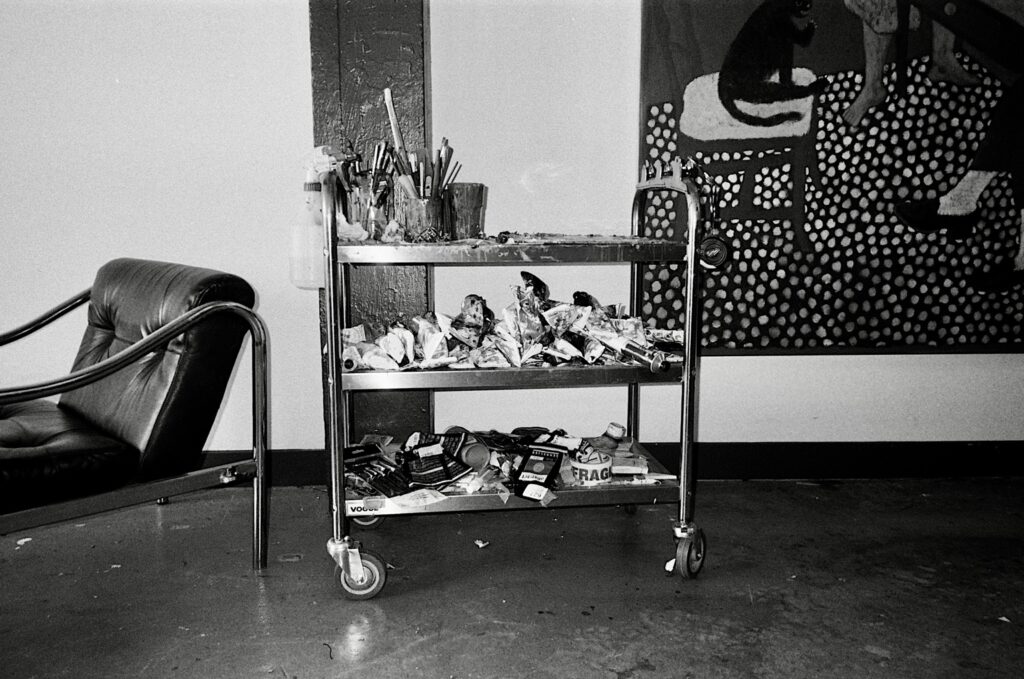
You’re about to show in Spain, in a group exhibition at Yusto/Giner in Marbella! When you think about how your work might be seen in other places, what do you think could happen here? What would you love people to perceive?
Elliott: I’d like the paintings to be read as quite British, whatever that means these days. There’s certainly a British character and humor to them, but I hope the situations themselves are universal enough for anyone to relate to, regardless of where they’re from.
And to close: What do we talk about when we talk about painting, Elliott?
Elliott: Being able to make something beautiful while having it described as grotesque is quite an achievement, haha. But seriously, being able to pursue something I’ve always wanted to do, and to start receiving some recognition for it, is incredibly fulfilling.