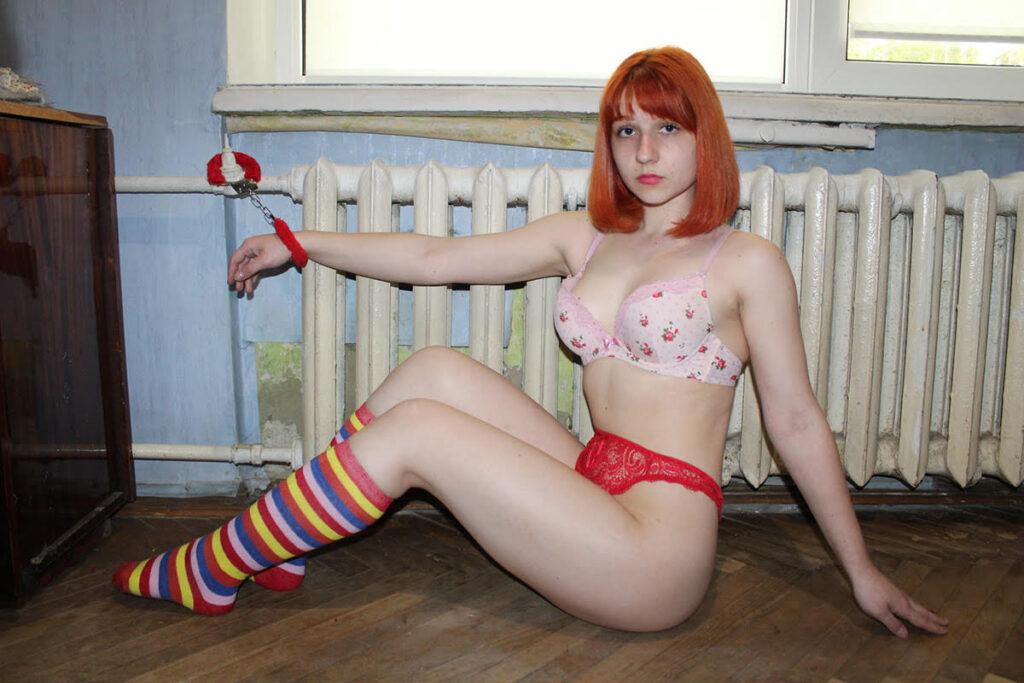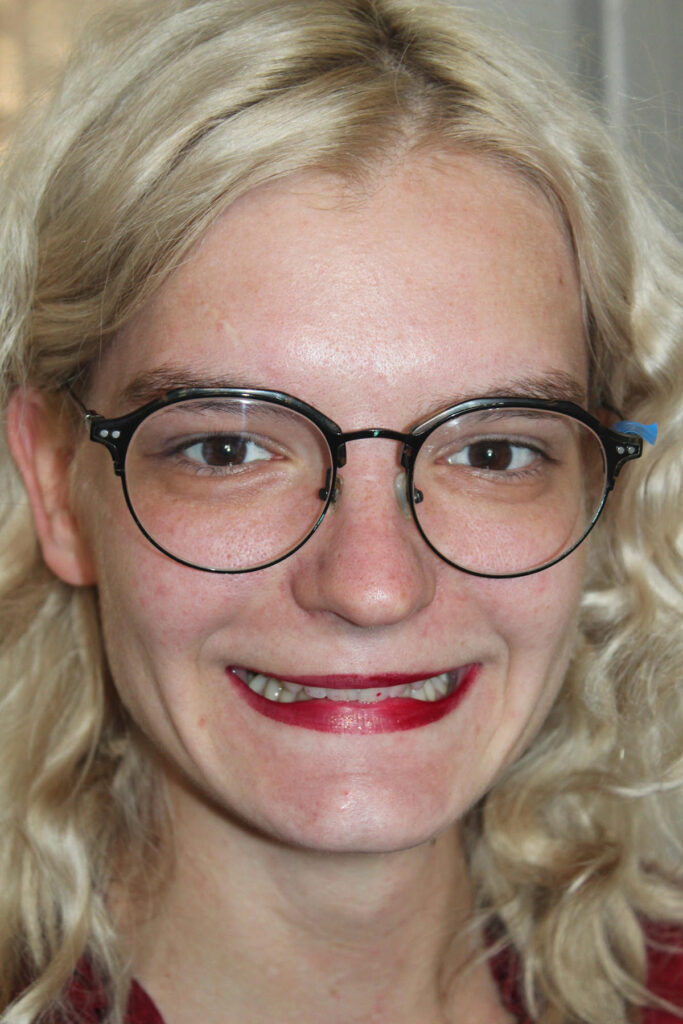
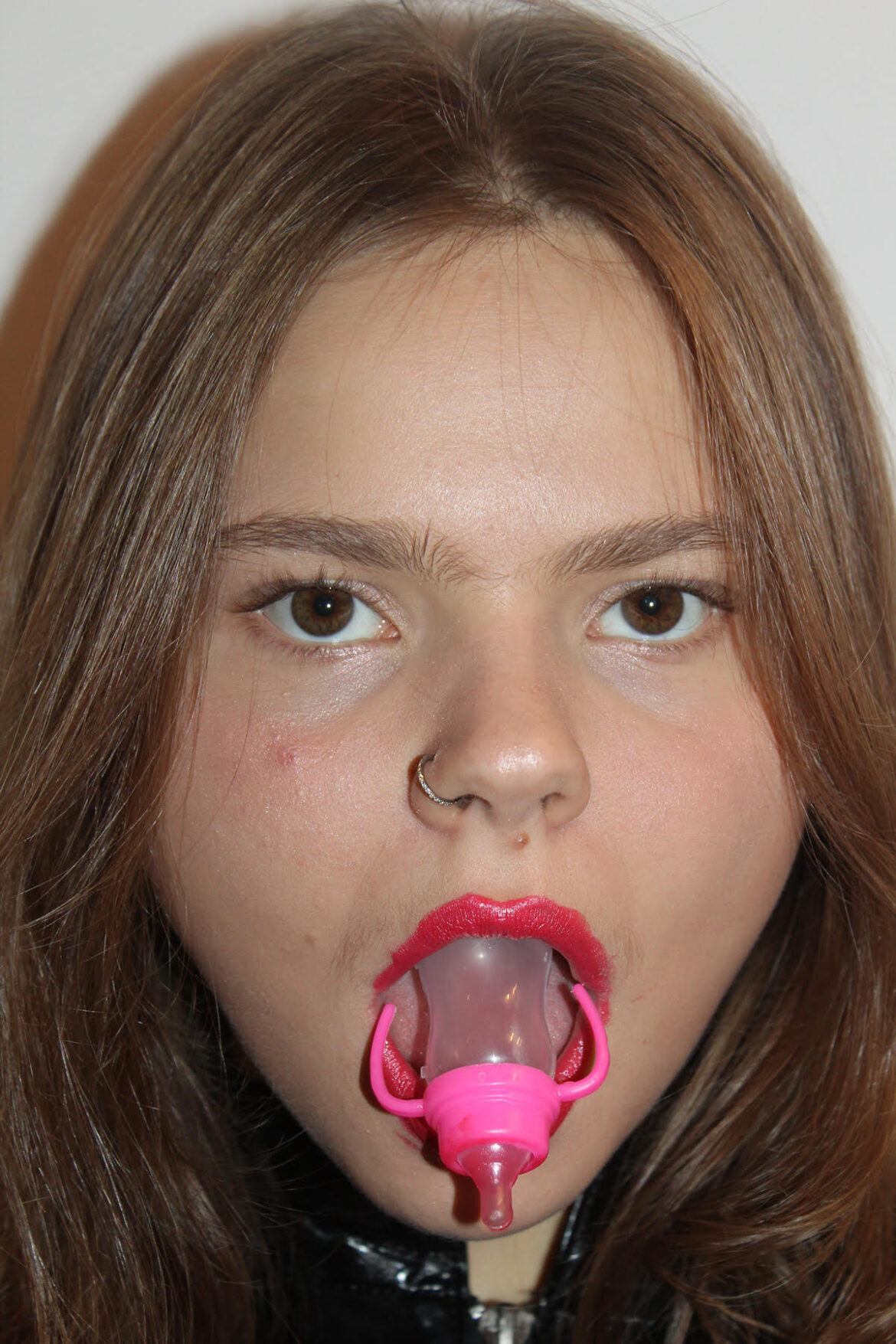
Hristina Novykova is an artist from Mariupol who works with photography and video. She lives and works in Kyiv. In her work, she often refers to the image of the human body, exploring aspects of corporeality that are inherent in humans but unacceptable in society. In Novykova’s practice, these images exist on the edge of the disgusting and the attractive, often based on personal experiences. Girlhood, mental disorders, first love, sex, family stories – all of these are depicted in Hristina’s works with tenderness and extreme acceptance.


Your work often sits between tenderness and discomfort. What draws you to images that feel both intimate and slightly unsettling?
Hristina: It seems to me that behind every beautiful feeling there is always a fear of losing it. Tenderness and fragility always exist side by side with anxiety and unease. In my work, I want to create space for both of these contrasting states without privileging one over the other, in order to get as close as possible to the layered nature of love.
You return often to the body — not as something polished or idealised, but as something strange, vulnerable, and alive. What does the body allow you to say that language maybe cannot?
Hristina: Having a body is what unites all of us. Everyone has their own unique experience of inhabiting it, but from my observation, nothing brings people closer than speaking about the physical sensation of oneself in the world. I have never met anyone without illness, aging, wounds, injuries, or asymmetries — and I don’t want to sing optimistic hymns about acceptance or say that everything is beautiful. Instead, I want to not be afraid of being afraid of my body and its limitations. It is frightening to have a body; it is truly strange and vulnerable. Looking at yourself in the mirror or in a photograph is a radically unsafe act.
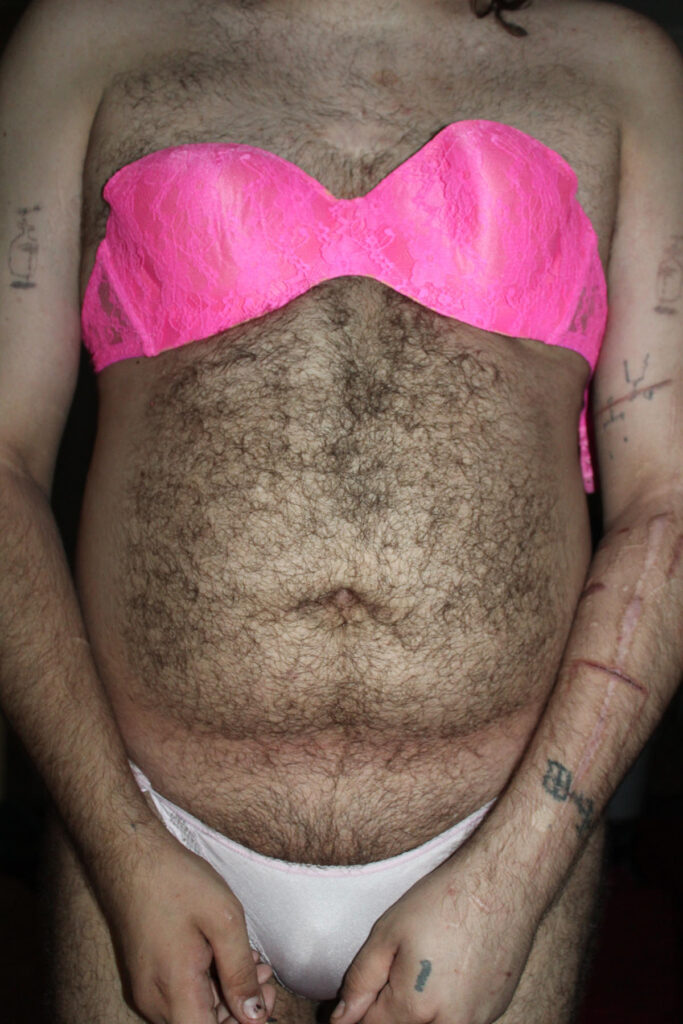
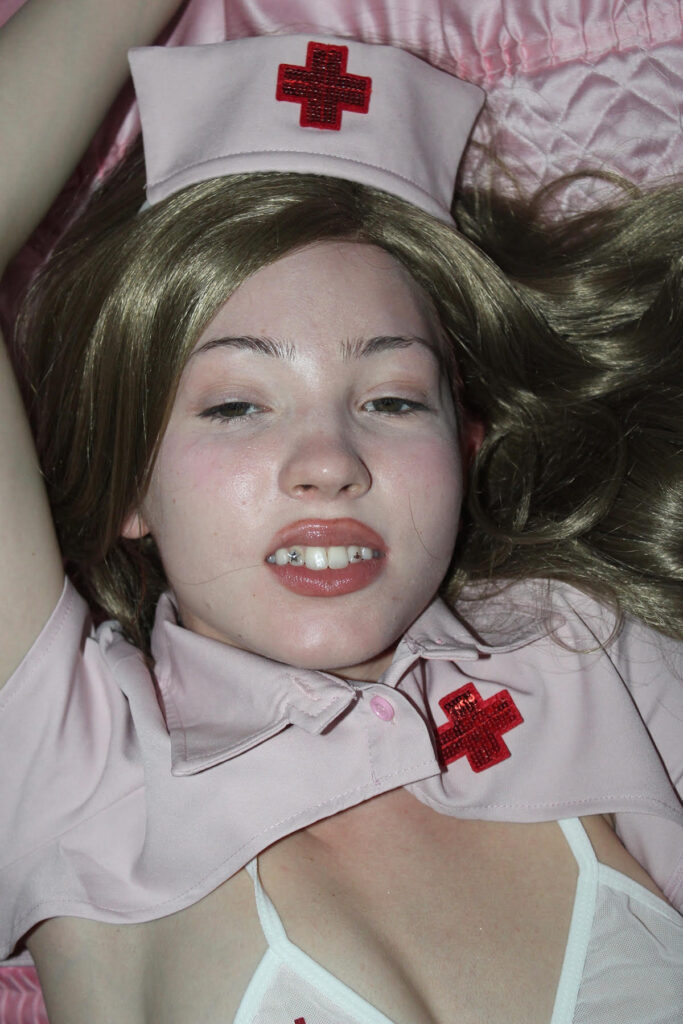
Girlhood appears as an emotional space in your work. How do you understand girlhood now — as memory, identity, wound, freedom, or something else?
Hristina: I want to believe that girlhood will stay with me forever, especially in old age. Perhaps it is a form of escapism from everything frightening. No matter what happens, I can always return to rhinestones and pink lace — and somehow that changes something. It is also my response to my younger self: back then I was afraid of everything “girly” and tried to shut it out completely. Now I see freedom and lightness in it. I always have a choice: girlhood or horror — and I want both at once.
Your images seem to accept things that society usually asks people to hide: mental disorder, desire, shame, sex, bodily awkwardness. Is acceptance something you consciously try to create through your work?
Hristina: I don’t think I consciously try to create acceptance through my work, and in general I try not to think about the “social function” of art. I simply don’t hide what concerns me in my personal life, and I tend to act openly. The impulse to create a work almost always comes from my personal anxiety, unresolved questions, or some acute feeling. Of course, on a broader level, art can help foster acceptance of difference, and that’s wonderful — but it is not my primary goal.

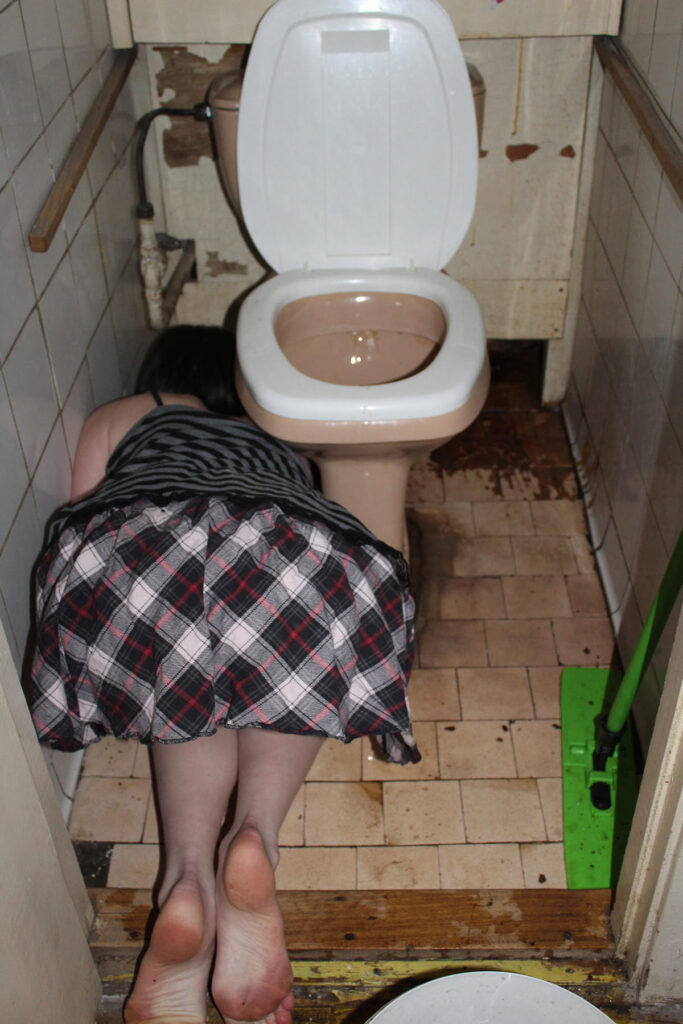
A lot of your practice is rooted in personal experience. How do you decide what can become an image, and what should remain private?
Hristina: I don’t think I really keep anything “private.” Almost everything that feels important and intimate to me eventually becomes a project. Usually, the people close to me share a similar philosophy, so there are no issues. But if someone involved were to object, I would of course keep it private, just for us — or shift the perspective to focus solely on my own role in it. Art is my way of producing memory. I like to think of my life as a project made up of many projects.
You are from Mariupol and now live and work in Kyiv. Has displacement, war, or the instability of recent years changed the way you look at intimacy, the body, or memory?
Hristina: I actually began making art with the start of the war. Before that, I was studying acting and was more often an executor of my friends’ ideas. The intensity of my experience reached a point where it became impossible not to turn it into work. Of everything I have “accumulated,” I only really have my body. I cannot return home, but I can preserve the memory of that place. And in this impossibility of fulfilling the desired, there is both something deeply beautiful and deeply sad. Perhaps the theme of Mariupol is the most intimate thing I have.