
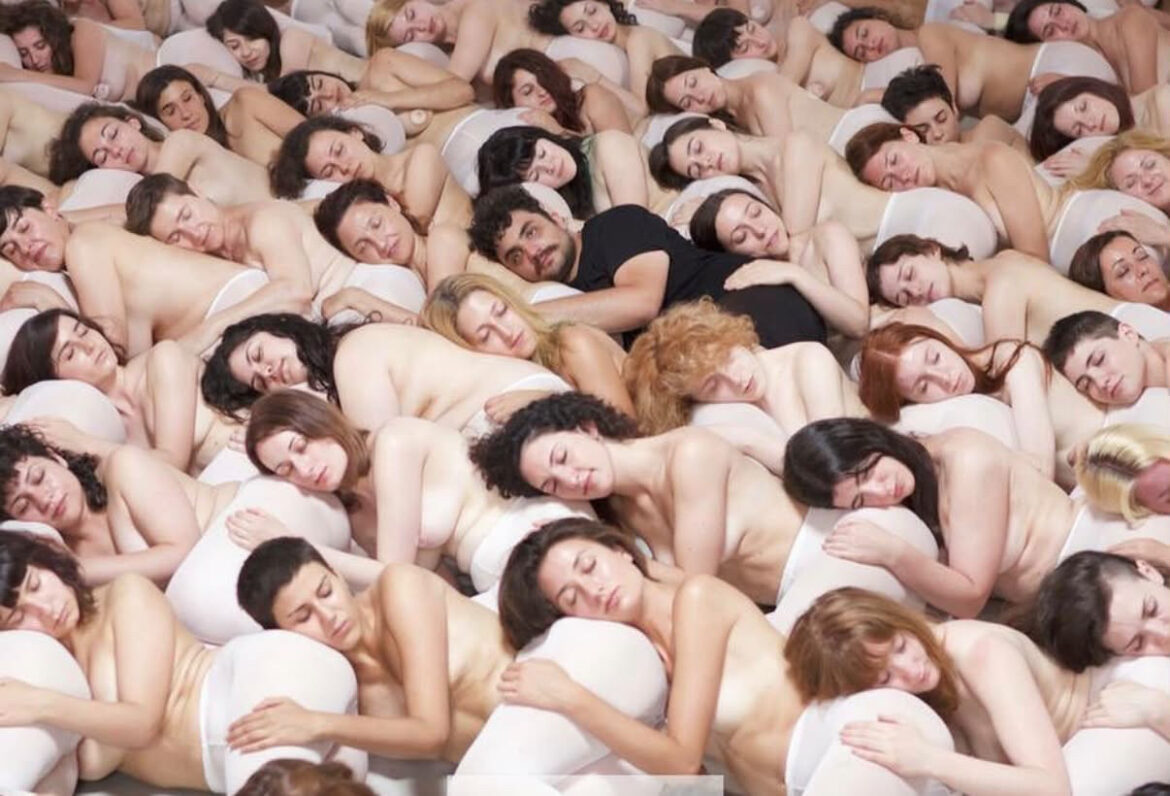
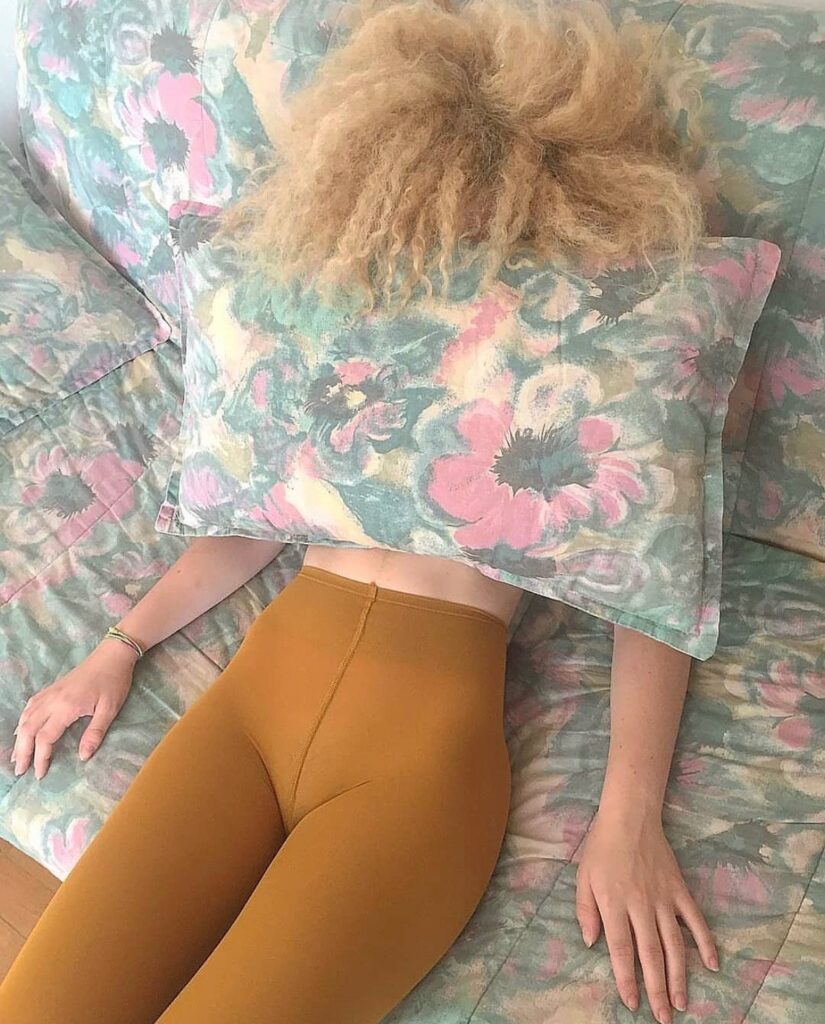
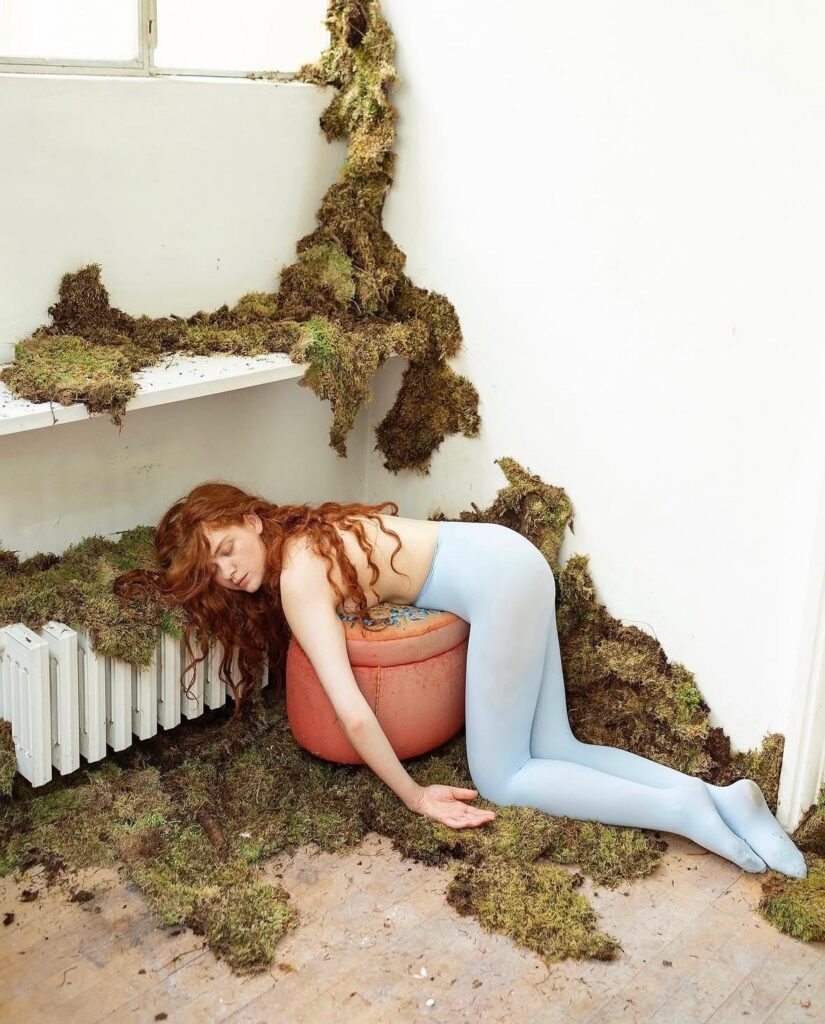
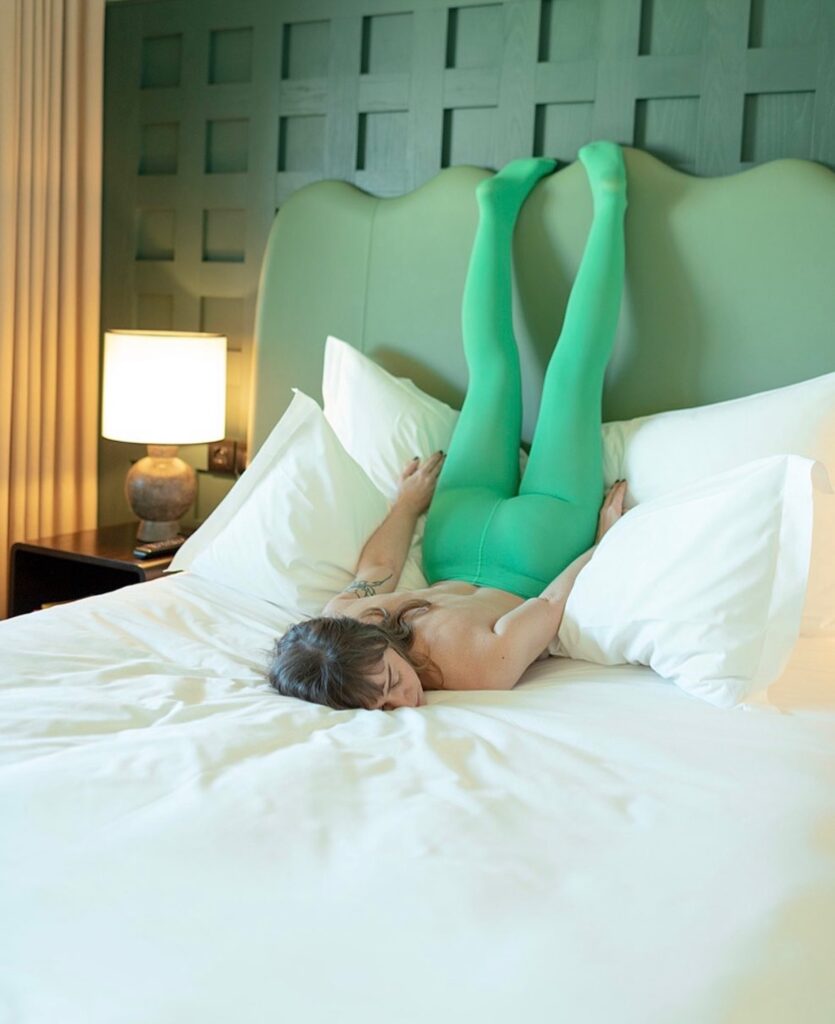
Giuseppe Palmisano, also known as iosonopipo, is an Italian photographer and visual artist whose work moves between photography, performance, theatre and the surreal. Known for images in which bodies become entangled with furniture, domestic spaces and everyday objects, Palmisano creates carefully staged scenes that feel at once playful, intimate and slightly disorienting.
Originally coming from a background in theatre, he approaches photography less as an act of documentation than as a form of direction, using gesture, space and collaboration to transform the familiar into something strange. The female body has long been central to his practice, alongside recurring ideas of intimacy, identity, absurdity and the relationship between photographer and subject.
In 2019, Palmisano pushed questions of authorship even further by selling iosonopipo — the artistic identity he had spent years creating — turning his own public persona into part of the work. Since then, his practice has continued to evolve across photography, participatory projects and performance, while retaining the distinctive visual language that first made iosonopipo immediately recognizable.
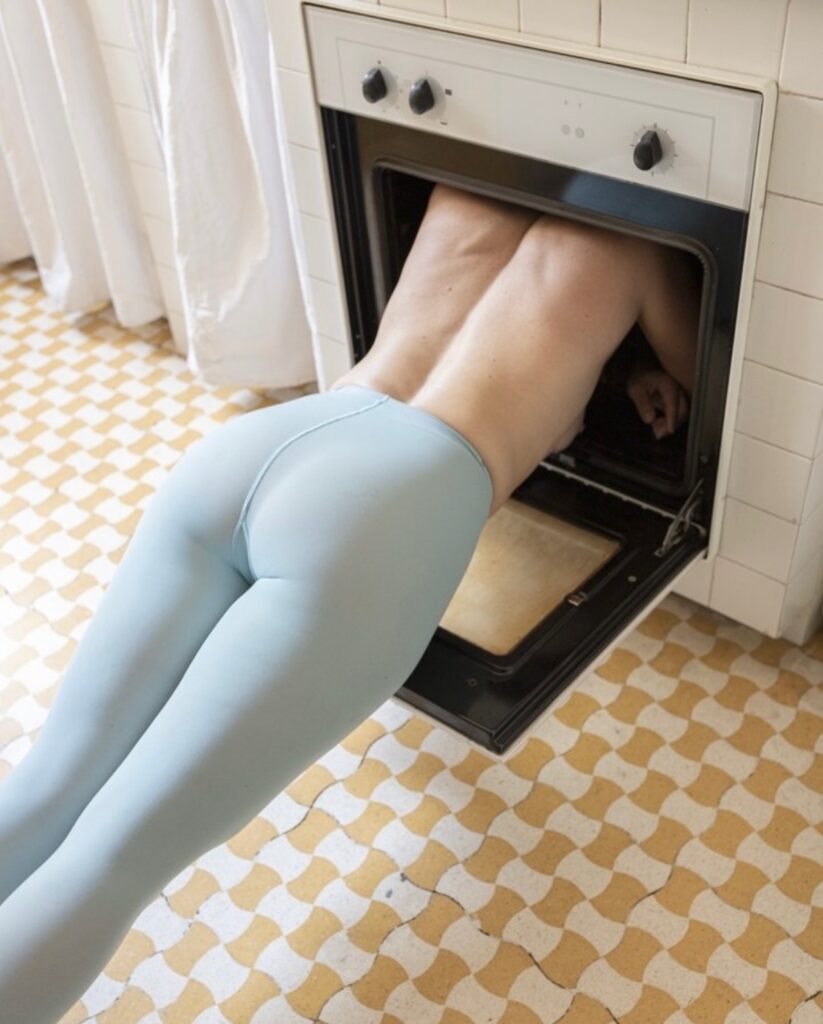
Hi Giuseppe! It’s a pleasure to sit down wot you! First question that I always ask. How does a regular day look like for you in Milan?
Giuseppe: Over the last two years, my days have basically been about turning on an oven, making dough, ordering food supplies, and selling pizza slices.
I’m curious, growing up, what kind of kid were you? What did you enjoy doing, and how did you spend your time?
Giuseppe: Basically, I grew up in a small town in the south of Italy. My days were spent going to school and playing football in the street with my neighbors, until we damaged someone’s car and had to stop playing for a while. As we got older, we would go out and spend our days walking around, almost like long, day-long drifts. At some point, after I had started doing graffiti, we began putting our tags up everywhere.
So how did you get introduced to photography? And how did you first start out practicing with your camera?
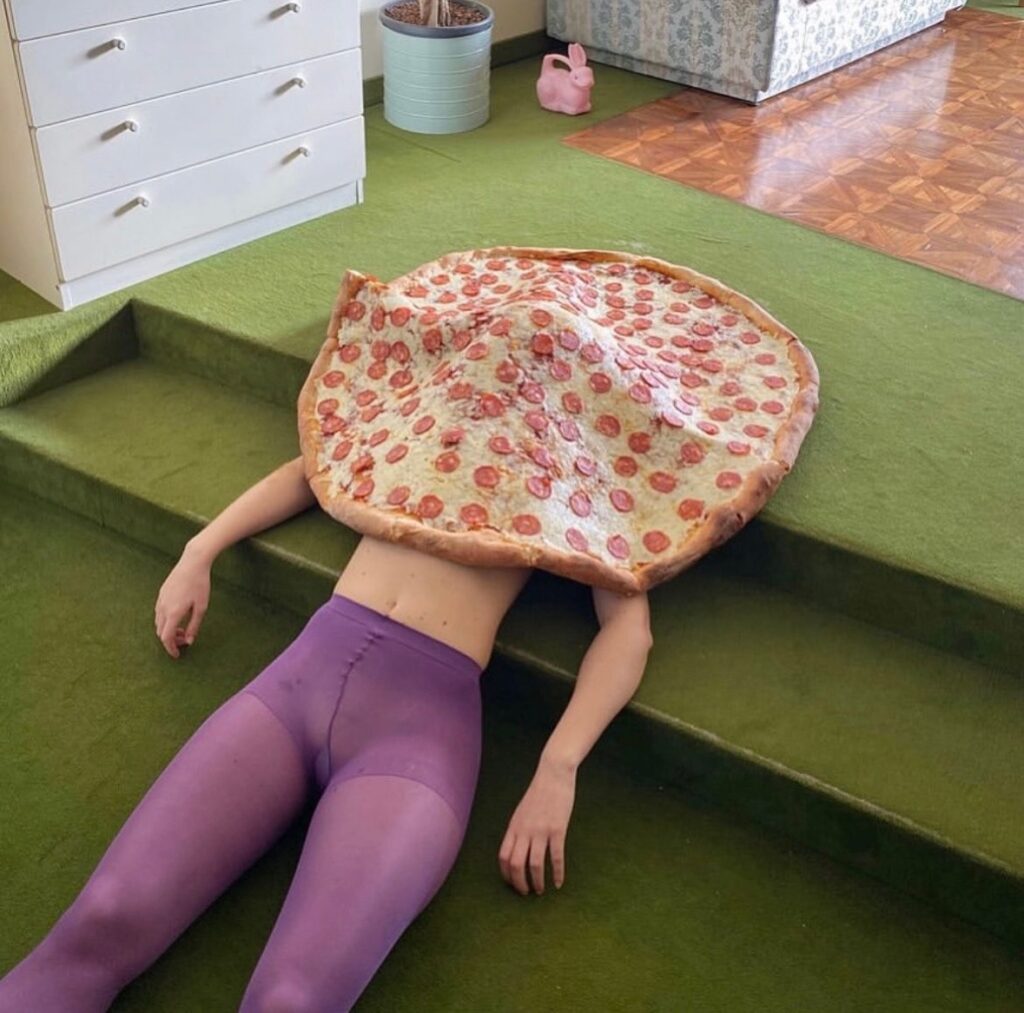
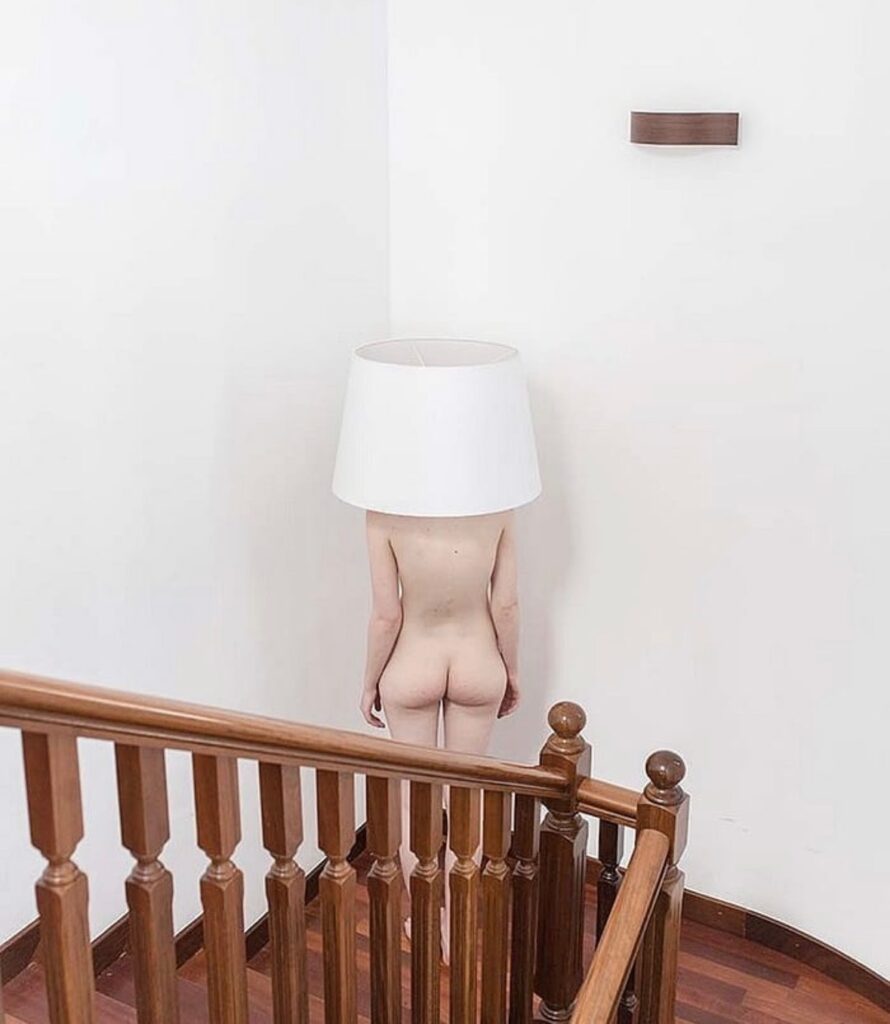
Giuseppe: Actually, I was doing theatre, and I had bought a reflex camera to take some theatrical self-portraits and post them on MySpace. Then, all of a sudden, I photographed Mariella, the first stranger I had ever photographed, in her apartment in Milan. I asked her to put a lampshade on her head. And when I looked at the picture, boom. I said, “This is the kind of photography I want to make.”
How important is authenticity in your work? And can a picture still be good, if it does’t have any?
Giuseppe: I firmly believe that an image is never authentic. Our entire way of seeing is derivative and the result of layers upon layers of what we have seen before. So if you ask me when I started taking photographs, I’ll tell you November 4th, 1989.
What is truly authorial is the action, the decision. That is why deciding to embark on a journey, or to stop it, whether forever or just for a while, as I did when I sold it, is perhaps the most authentic thing you can do.
Of course, there is a superficial layer of an image that can make you consider it beautiful, even if it isn’t authentic or has already been seen before. The eye is grateful for shapes, colors, and things that comfort it. But if by beautiful we mean interesting, profound, transversal, that’s another matter. That’s where the question of what becomes art and what doesn’t comes into play.
You have moved between photography, performance, writing and participatory projects. Do you still consider photography your primary medium, or is the camera simply one tool inside a much larger practice?
Giuseppe: It’s one of the tools, the most immediate one for me and for the person looking at the work, and that’s why it has probably been the most appreciated or, at least, the most widely shared. Using social media to convey other projects is much more difficult and requires participation. In the end, though, it is precisely because I made those photographs that I was able to receive participation in other projects. And perhaps that is one of the few valid reasons why I decided to return to directing the iosonopipo project.
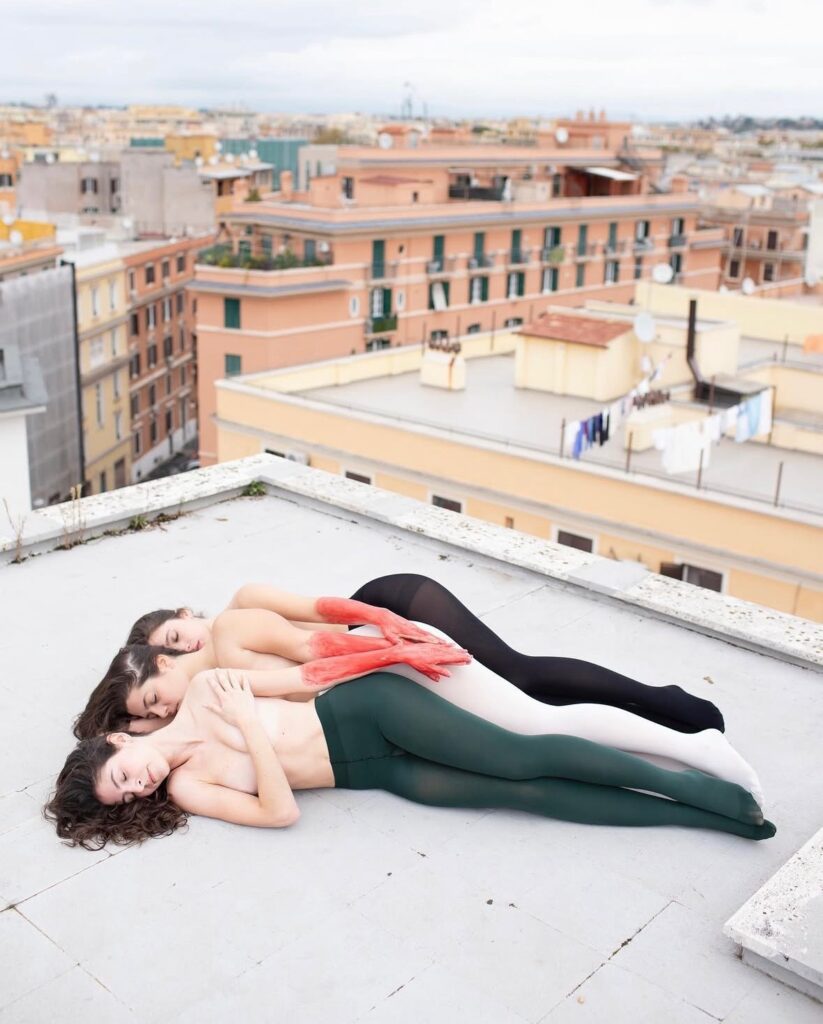
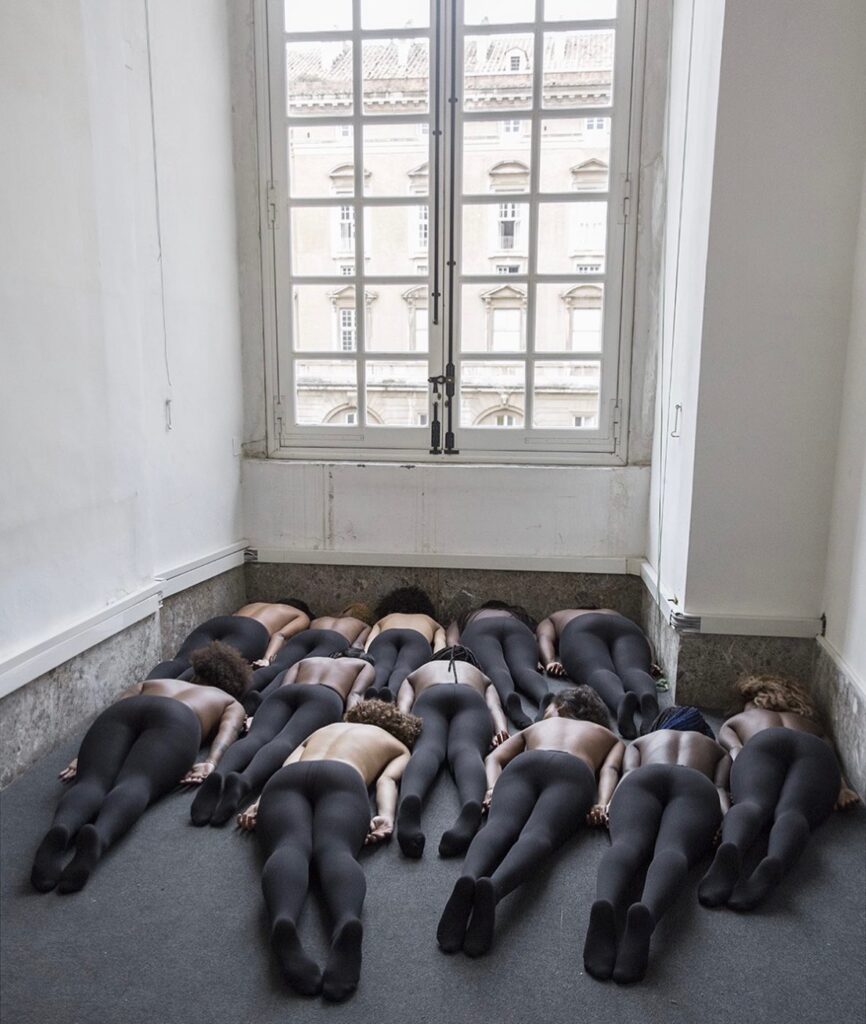
You originally came from theatre rather than photography. Do you still think of yourself as directing a scene when you make an image, rather than photographing something that already exists?
Giuseppe: My approach hasn’t changed that much. I’ve taken many breaks precisely so I wouldn’t fall too deeply into repeating the same pattern. In theatre, every new show is like starting from zero, and that is one of the things I tried to bring onto a photographic stage.
Certainly, the fundamental thing is to work with the person who is on stage—not just to direct them, but to know how to observe what is happening. That is the basis of theatrical improvisation: staying open to the inconvenience, to the mistake, and perhaps following it.
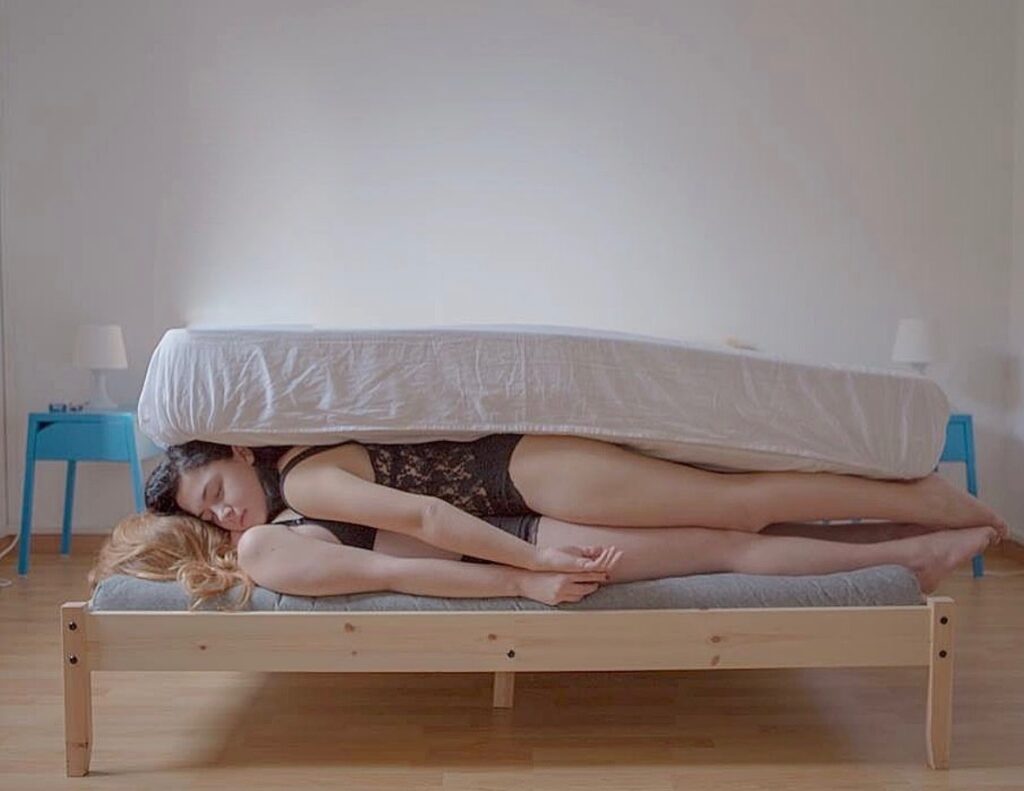
Your photographs often make the body feel somewhere between human, object and sculpture. What interests you about disrupting the way we normally recognize a body?
Giuseppe: The questioning comes from a misunderstanding. What do we look like when we forget that we have a body, because of a situation of total discomfort or total relaxation? Every now and then, in my opinion, we should detach ourselves from the burden of our body. That’s when we start having fun.
I’m speaking from my own direct experience. I didn’t start from a direct and conscious position about the perception of the body, but from a practice and a concrete action: not considering it more important than everything else in the scene. Naturally, it’s an attempt. An act of removal, a utopia. But that is precisely where the misunderstanding comes in.
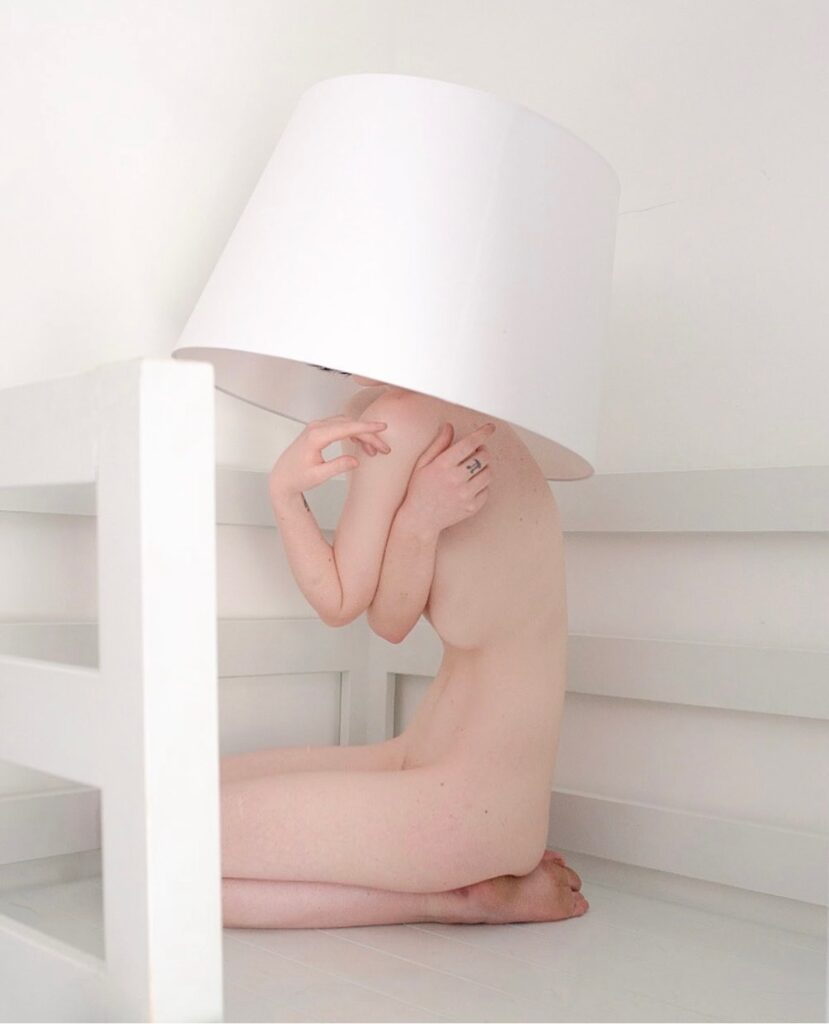
There is something funny in your images, but also something slightly uncomfortable. How important is that tension between humor and unease to you?
Giuseppe: I think it’s fundamental. I’ve never let go of the clown and actor part of myself, which was the first thing I encountered in theatre. Being an idiot and taking it seriously. Putting something completely opposite and unusual into a calm, serious context, even one full of meaning, like a home that brings back memories and emotions, can create that discomfort, but also that kind of tragicomedy that I have always loved. And it’s incredible how different viewers have described the very same photograph to me as either funny or creepy.
You’ve said that you never looked for models, but for people; never backgrounds, but spaces. What has to happen between you, the person and the space before an image feels right?
Giuseppe: Even though we are retracing a certain style, it always starts from a truth, which I believe is necessary as a human foundation. First of all, there has to be trust in what is being done. That is why, almost every time, the person I photograph already knows my work, and in almost every case they have volunteered to be part of it.
It may seem absurd, but the human side of images that can appear static and sometimes cold, except for their colors, is fundamental. I think the most beautiful things happened precisely when I photographed people in their own homes. Leaving a beautiful memory inside them, I think, is a wonderful thing.
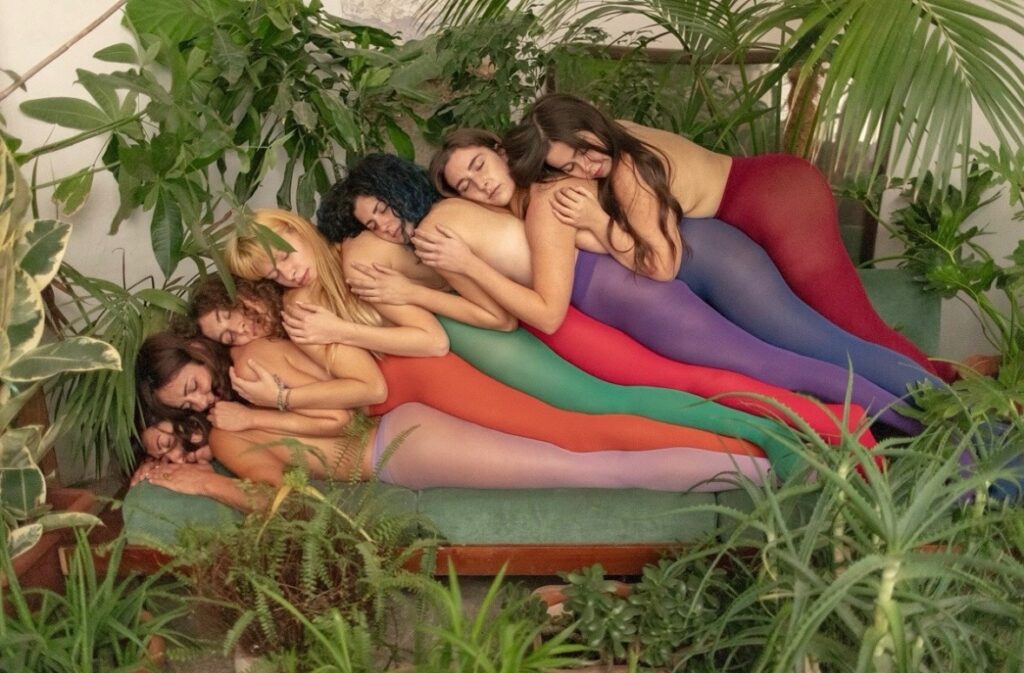
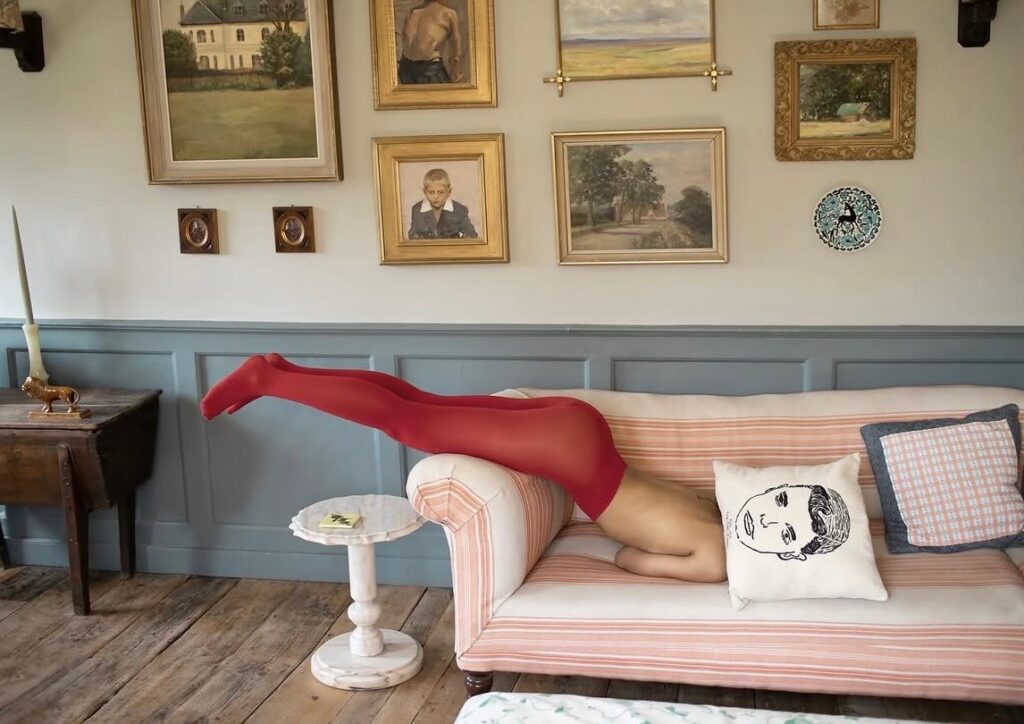
Women have been central to your work for years. You have spoken about wanting to remove the automatic eroticization of the female body, yet your photographs can also feel intensely sensual. How do you understand that contradiction today?
Giuseppe: Everything is always an attempt, an aspiration toward something. I simply don’t overthink the subject while I’m photographing. I would like it to be something that happens naturally in everyday life. Not looking at a body with that particular meaning.
You can’t control people’s sexual fetishes, so it’s an incredibly difficult attempt. What I can do is not act upon the selection of bodies, accept all the applications I receive, and not emphasize particular physical characteristics or differences. I’m simply not interested in that.
Has your relationship to photographing women changed as conversations around the male gaze, consent and representation have become much more visible?
Giuseppe: The debate has definitely changed. I’ve found myself discussing it many times, precisely because there is an ambivalence, a contradiction that can emerge. These are photographs that are simultaneously loved and hated by women who reflect on these important issues. Again, this is why it is important to me that they are the ones who put themselves forward.
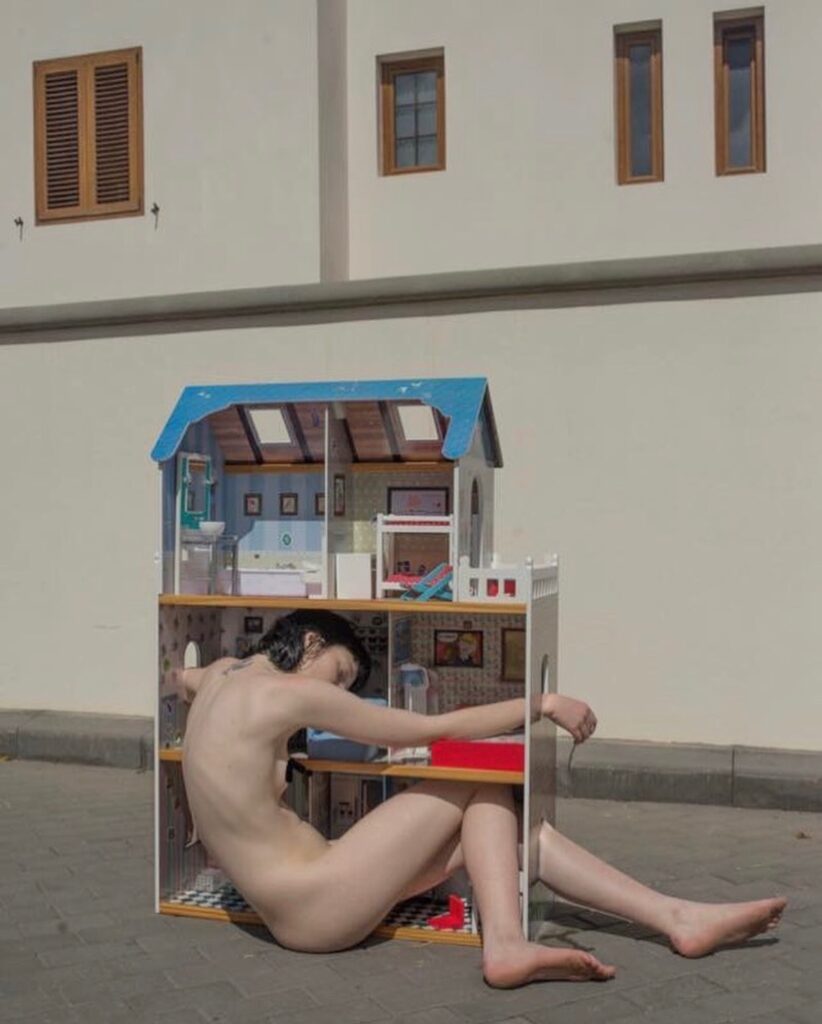
Faces are often hidden, cropped or obscured in your work. Does anonymity make the body more universal, or does it allow the person to become something else entirely?
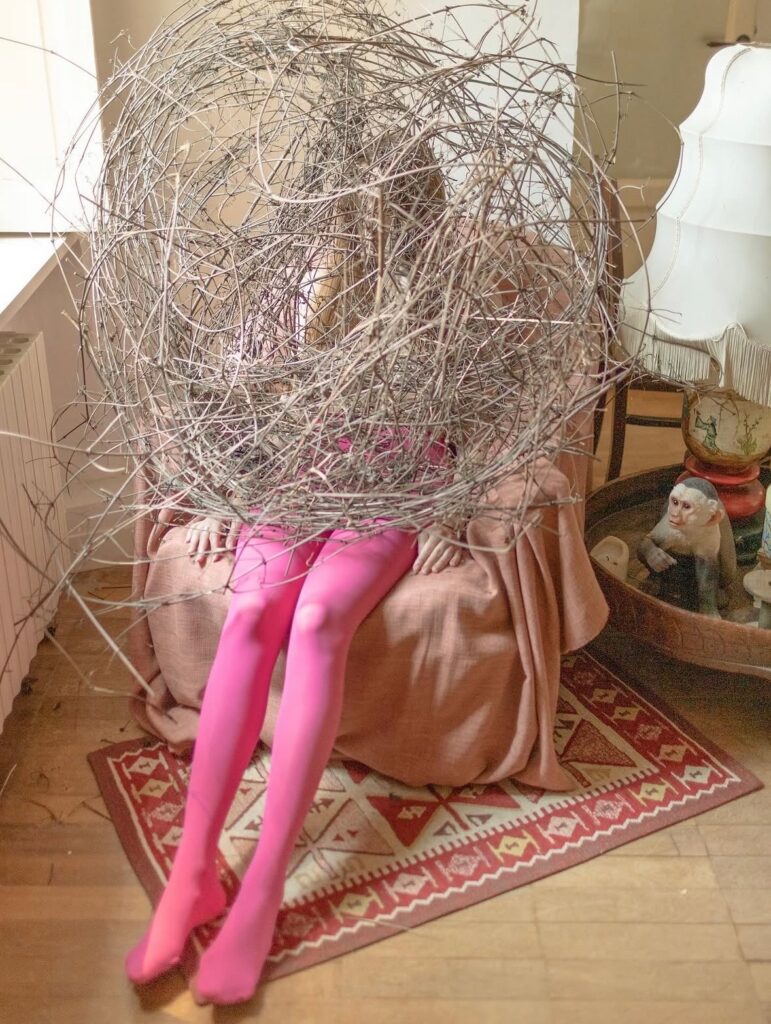
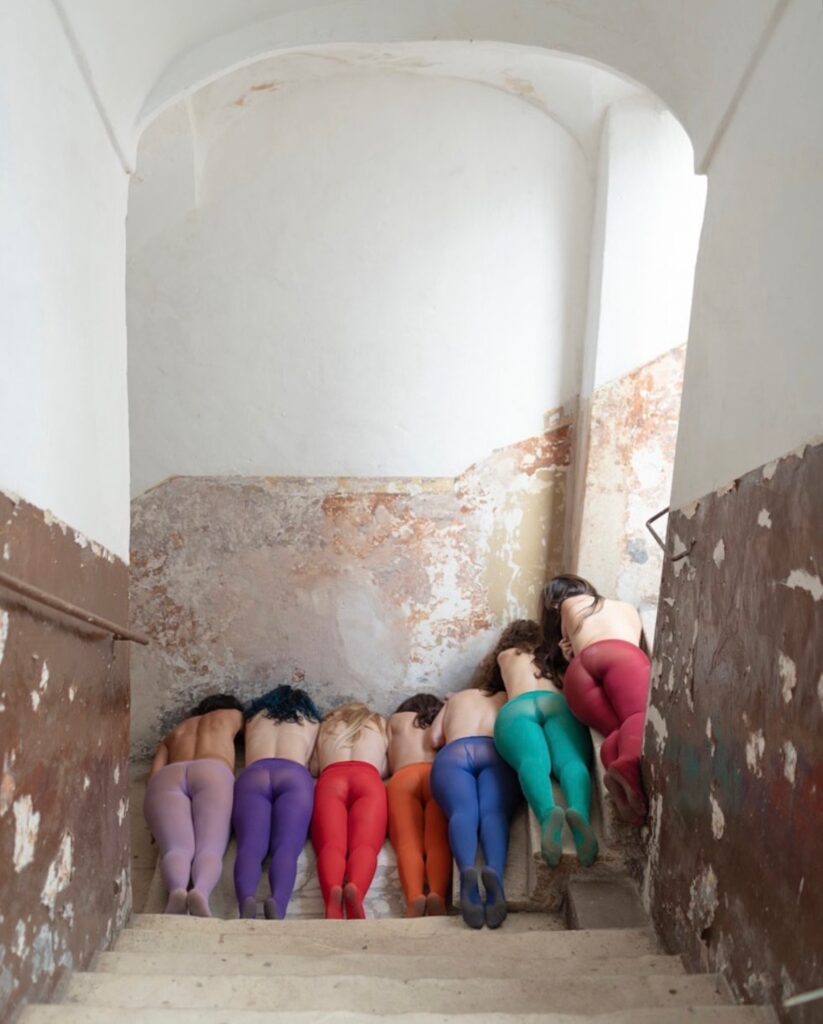
Giuseppe: Both things. First of all, it gives many people who have never posed, and especially never posed half-naked, another reason to participate. They can expose themselves without exposing their identity. And then, while the person who immerses themselves in the photographs can get lost and dissolve into them, the person looking at them can find themselves.
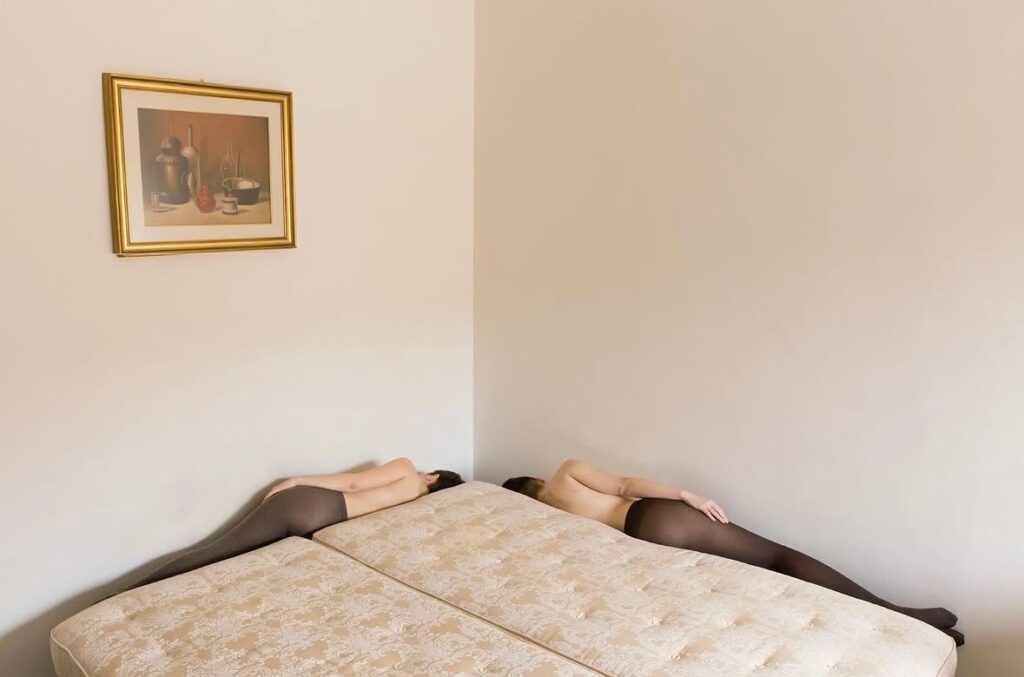
Your images often take very ordinary domestic objects — chairs, beds, lamps, curtains — and make them feel surreal. What attracts you to transforming familiar spaces rather than constructing completely fantastical ones?
Giuseppe: The reason I mentioned earlier: there is a layer of everyday life, of belonging, that hovers over the images. I like to think that within those scenes, those bodies are sometimes memories, smells, and emotions that have remained trapped in a piece of fabric, inside a drawer, or underneath a lamp.
You recently used the title Absurdism. What does absurdity allow you to say that realism cannot?
Giuseppe: Mainly, I wanted to give the viewer an indication, and once again give myself a reminder. And that is: relax! Don’t necessarily try to find a meaning. Instead, let go of your senses and your sensations. Trying to explain something doesn’t really work when it comes to images. After all, to paraphrase (maybe) Frank Zappa: Talking about photography is like dancing about gastronomy.
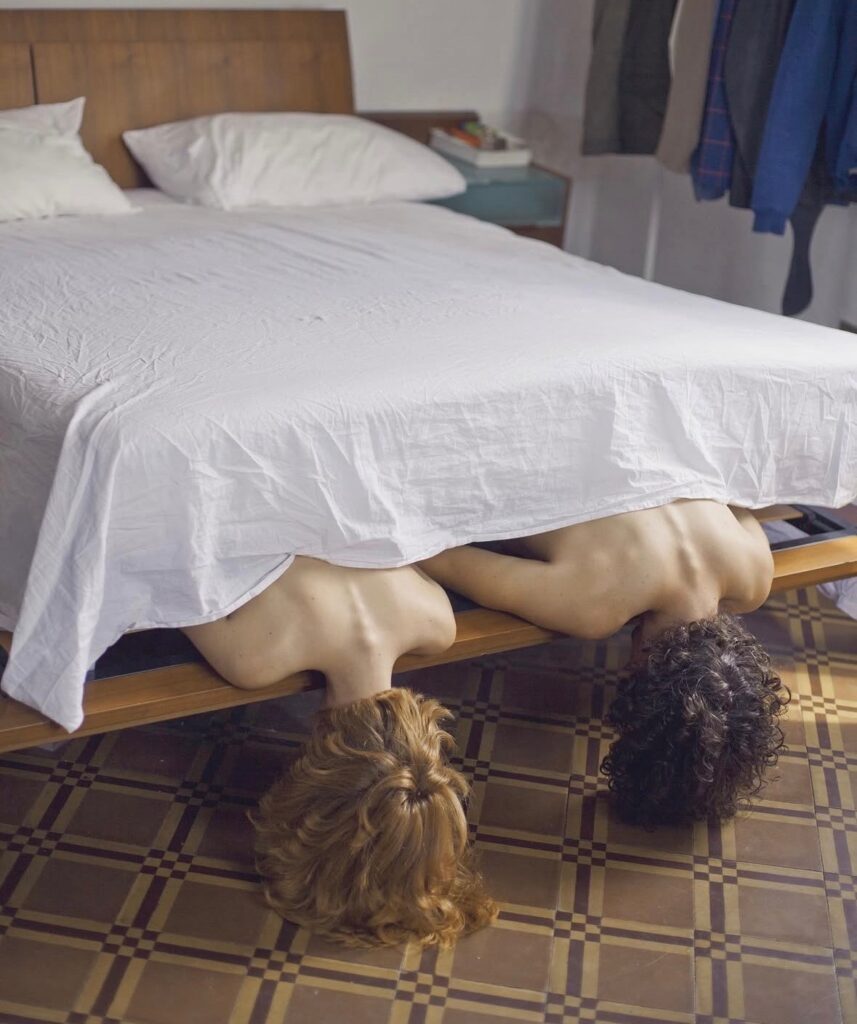
In 2019 you did something very unusual: you sold “iosonopipo,” the artistic identity you had created. At what point did that identity begin to feel separate from Giuseppe Palmisano?
Giuseppe: It’s difficult to explain this briefly. I didn’t really want to separate the two; it was part of me. But it was no longer mine. I felt it had become distant. I needed to detach myself. Of course, doing it in the most tragicomic and performative way possible was something that really excited me from within. At first, in 2017, I only wanted to sell the Instagram profile, at the height of its “popularity,” when it had almost 100,000 followers, so that I could dedicate myself to and have the money to develop my other project, @vuoto.vuoto.vuoto. Then it took two years of reflection to arrive at the decision to sell the entire identity through an auction on eBay.
Was selling iosonopipo an attempt to escape your own success, or an attempt to discover whether the work could survive without you?
Giuseppe: Not escaping from success, but from what success requires. The repetitive production of something that works. In theatre, there is a rule: if something works, you repeat it and it becomes a line. The problem was that, from my side, at a certain point, it wasn’t funny anymore! Over those two years, I couldn’t find any motivation that made me vibrate as much as the idea of selling my alter ego as if it were a person in its own right. I had to distance myself for three years to understand that the real force behind all my work is human connection. And that project contained it on several levels, starting with its ability to transcend language.
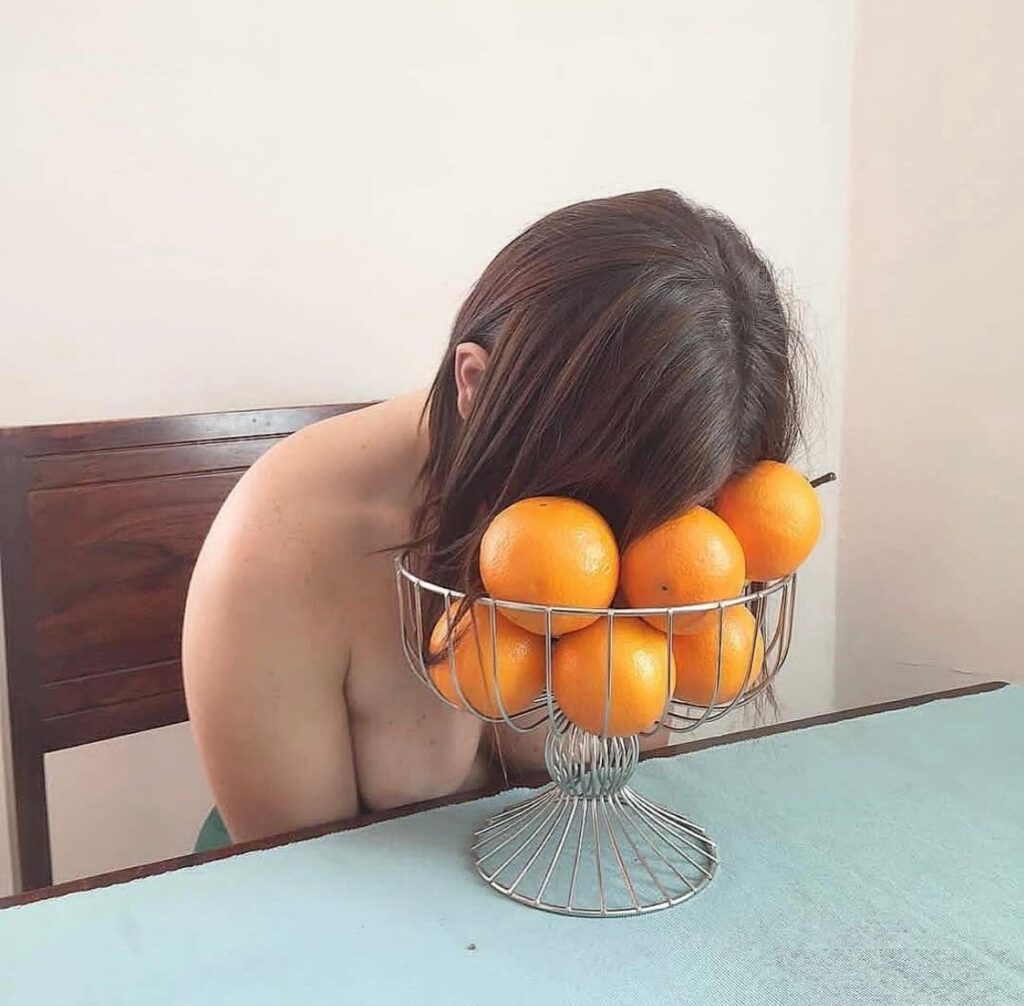
What did you learn about yourself once you were no longer, at least symbolically, the owner of “iosonopipo”?
Giuseppe: I was ready for anything, including the possibility that it might be destroyed and that I would never become part of the project again. In the end, this separation really led me somewhere else. I went to live in a restaurant that had closed during the pandemic. I became a kitchen assistant. I worked in a few different restaurants and cities. Eventually, I opened a pizzeria in Milan. I don’t know yet what I learned, but perhaps I learned how to run a place and make dough. And maybe I also realized that I don’t want to do it.
You later returned to iosonopipo in a different relationship to it. Does it now feel like your alter ego, your archive, a brand, another artist — or something you work for?
Giuseppe: Today, I see it as a photographic strand, a project, a small artistic movement that I hope and wish others can become part of. In the end, it has already become somewhat collective through the sale, and my intention is to expand it and open it up even further to anyone who is interested in working on it.
Social media helped turn iosonopipo into a recognizable visual identity. Do you ever feel that Instagram taught audiences to expect a certain kind of image from you?
Giuseppe: Absolutely. And that’s the double-edged sword. A blessing and a curse. I remember very clearly that whenever I posted something slightly different, I would lose a huge number of followers or feel a certain resentment. Instagram doesn’t allow you to work with an audience; it forces you to work for an audience.
Your work can look spontaneous, even accidental, although the images are often carefully constructed. How much of an iosonopipo photograph is planned before the camera comes out?
Giuseppe: It is never planned. As I said, improvisation is everything. You can imagine a photograph as much as you want, but it will never be easy to make it exactly as you imagined it. That’s why I skip that step. I see if there are things that catch my attention, and the rest happens on site. What is obsessively constructed is the composition once I start taking a photograph. I spend a huge amount of time moving furniture and objects by millimeters, rotating chairs, or even just tilting an arm or moving a foot. It’s fundamental.
So what do you hope that we, the observers, take with us after viewing some of your photos?
Giuseppe: You know, I’ve never really worried about that. As I said, what I hope is that the only thing people want to take away from the photographs is a practical and real feeling, a meaning that comforts them. But even this prolonged exercise can be interesting from an artistic point of view. So, why not.
Ok Giuseppe, now to something totally different. In a parallel universe who would you be? and what would you be doing?
Giuseppe: I don’t want to sound pretentious, but I’ve changed jobs so many times that, even though I can imagine something science-fictional, I still like to think that I could become something different once again, right here in this world. 🙂
Outside of photography, what’s something you’re obsessed with right now, maybe a hobby, a show, or even a food, that keeps you grounded or inspired?
Giuseppe: At the moment, I don’t have any projects that have already become obsessions. I’m in a phase of relaxation after pizza and dough were my obsession for the last two years. Now I’m on a solo trip through the Balkans, without any real reason or expectations.
What qualities do you find most important in the people you choose to spend time with?
Giuseppe: The simplicity of facing things even though we are all complicated universes. Being present and enjoying the moment. They sound like clichés, but perhaps that is precisely where the truth of banality lies.
Anybody you look up to?
Giuseppe: People who manage to find light in difficult circumstances. And inevitably, my thoughts go to those people who are now in war zones, in situations of genocide, who keep a hope alive, a light, however faint, that allows them to stay alive with the hope that things might genuinely get better.
What motivates you?
Giuseppe: Staying in motion, moving physically. For me, the day only really begins once I’ve left the house.
How would you describe a perfect day?
Giuseppe: Waking up without an alarm, going to meet someone for breakfast, and somewhere along the way deciding to take a car or a train, or go for a long walk, to get somewhere for lunch. Naturally, it would be somewhere that one of us had previously found online. Alternatively, leave everything to chance: the destination and the place to eat, found by asking the locals. The rest can only end well if that is how the day begins.
Alright Giuseppe, I always ask these two questions at the end of an interview. The first is. What’s your favorite movie(s) and why?
Giuseppe: I have a problem: I forget the things I watch, which is sometimes also a strength. So I’ll go with the first one that came to mind while I was reading the question. “La Science des rêves”, by Michel Gondry.
The second is. What song(s) are you currently listening to the most right now?
Giuseppe: I’m not a regular music listener. But strangely, I have AirPods now, and I’m listening to a rap record by some artists from my hometown: “Nessun Dorma” — Aleaka, Zeboh, GentleT.