
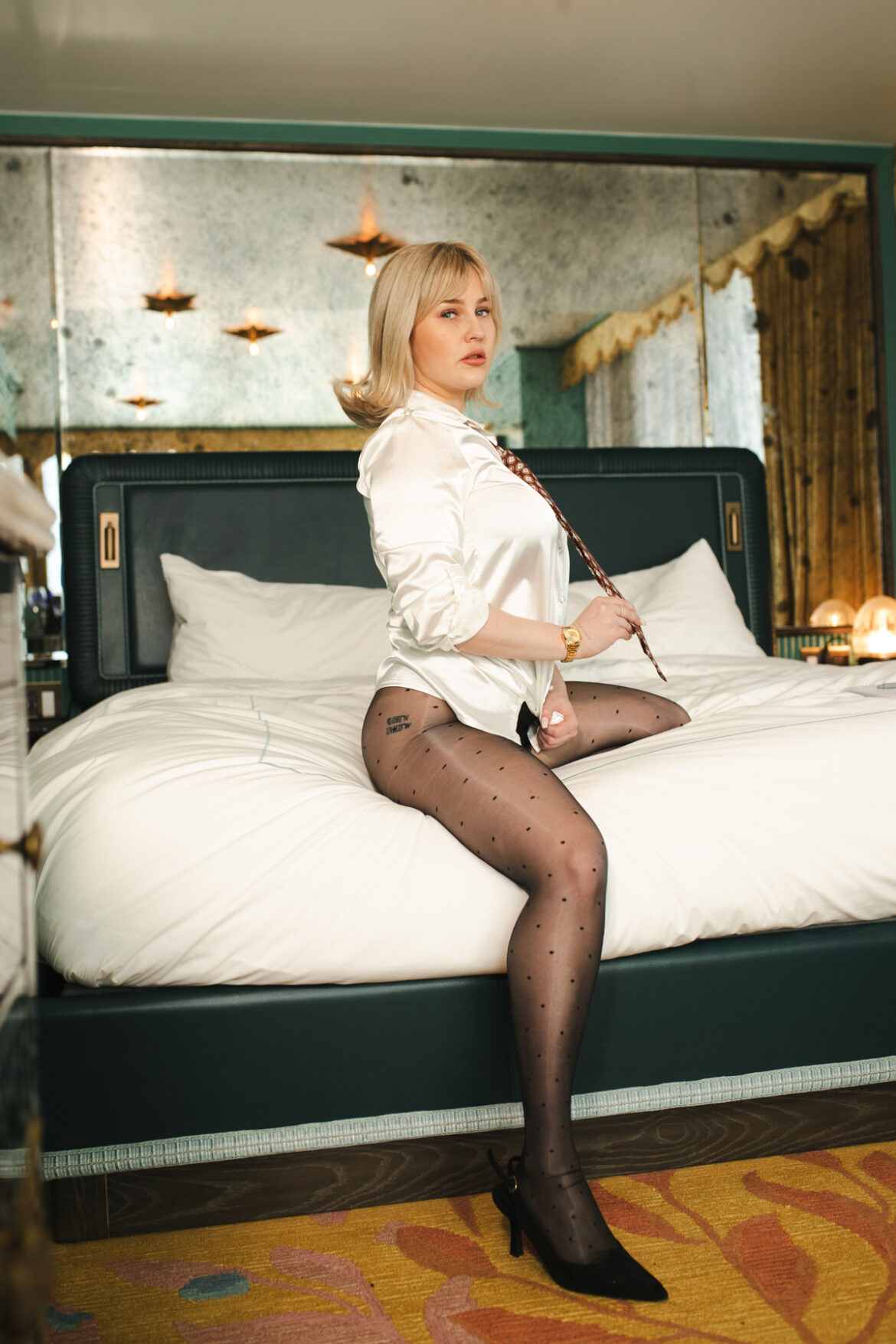
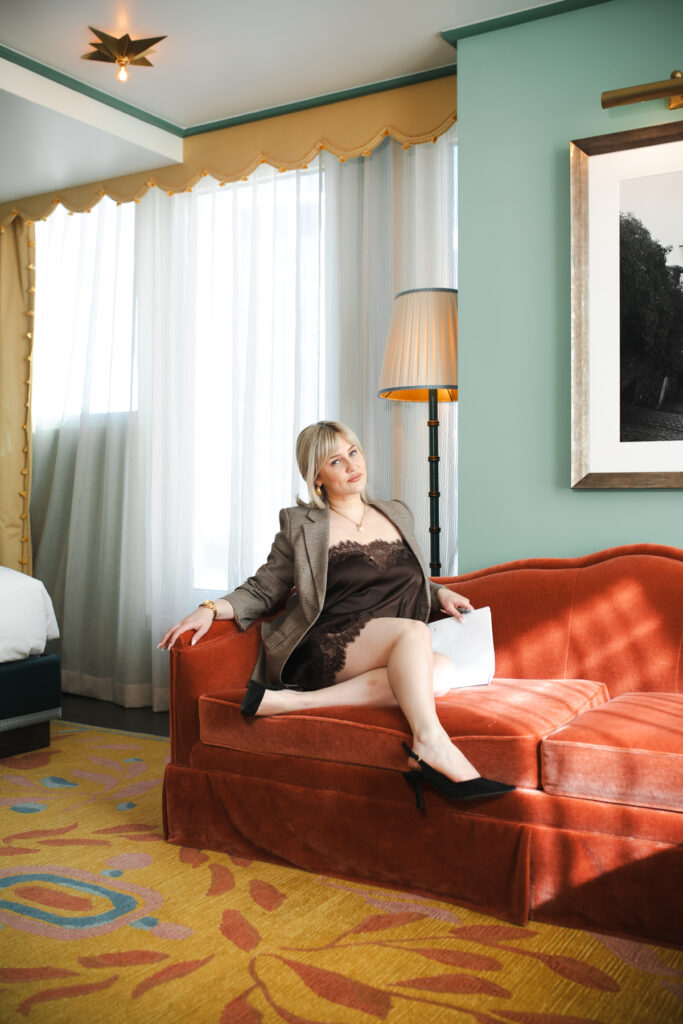
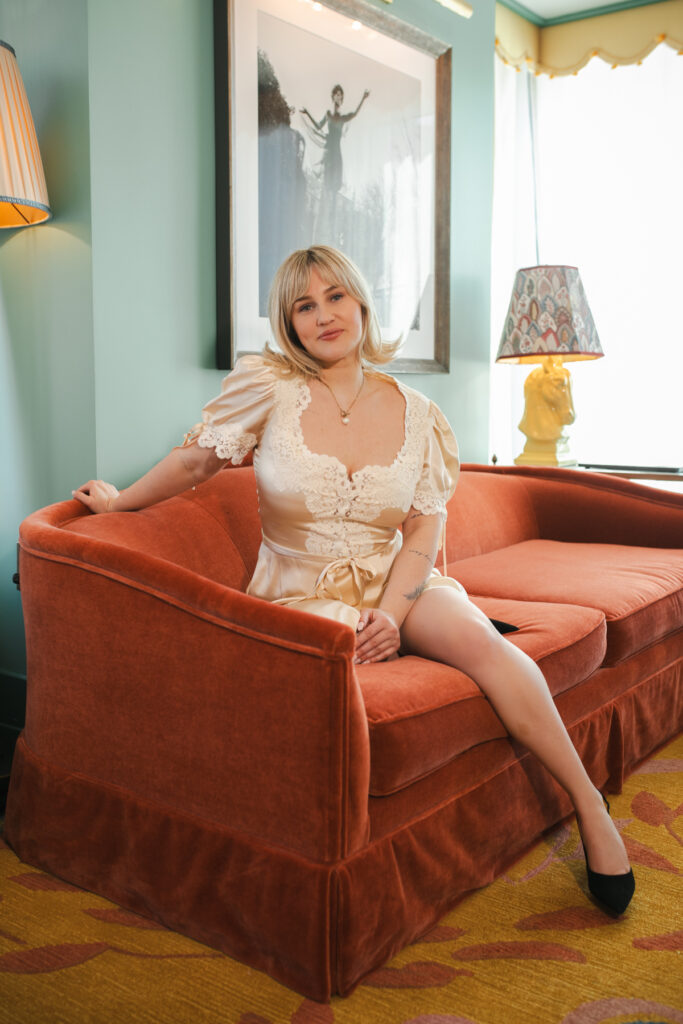
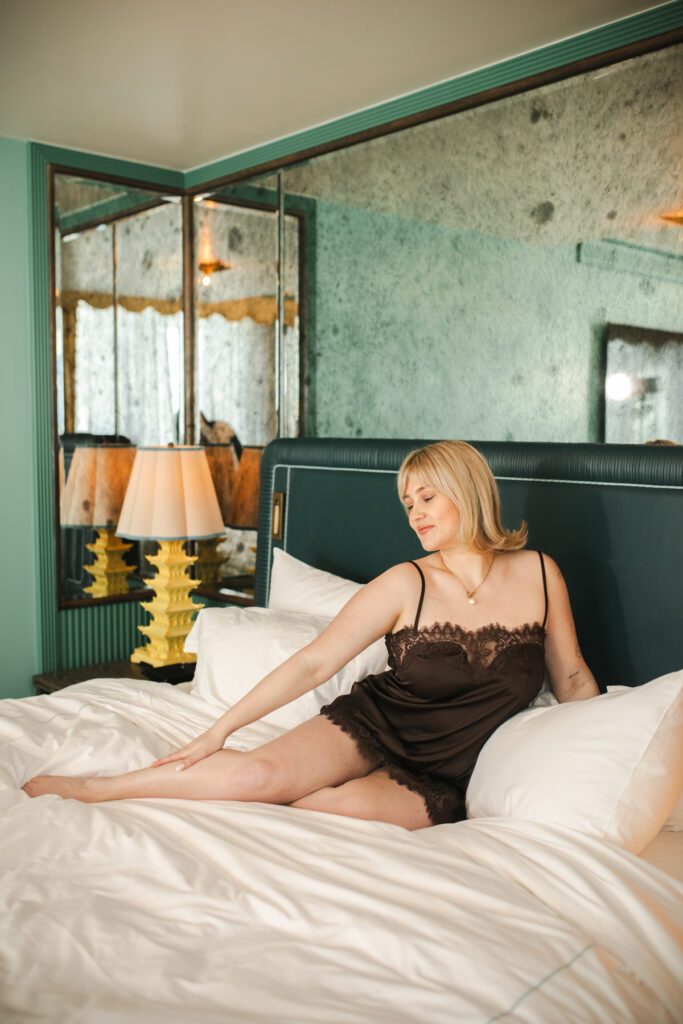
For Thea Rose, talking about sex has never been just about sex. As the founder and host of Seggs Talk Radio, the entrepreneur and sex-positive advocate has built a platform dedicated to breaking down taboos, challenging sexual shame, and encouraging honest conversations about desire, intimacy, kink, and everything in between.
Drawing from her own experiences with sobriety, sexual exploration, and self-discovery, Rose launched the podcast in 2023, creating a space where sex educators, adult performers, therapists, and unconventional voices could discuss the complexities of human sexuality without judgment. Alongside her work in media, she has built several businesses, including sexual-health startup Testie, bringing her entrepreneurial ambitions into an industry still shaped by stigma and censorship.
More recently, Rose has publicly opened up about her work as a high-end escort, sparking further conversations about sex work, financial independence, and the double standards surrounding women’s sexuality.
Through her podcast, business ventures, and willingness to share her own story, Rose continues to question society’s relationship with sex, shame, and personal freedom.
We caught up with Thea Rose to discuss her journey, the origins of Seggs Talk Radio, sexual empowerment, and why some of society’s most uncomfortable conversations are often the ones worth having.
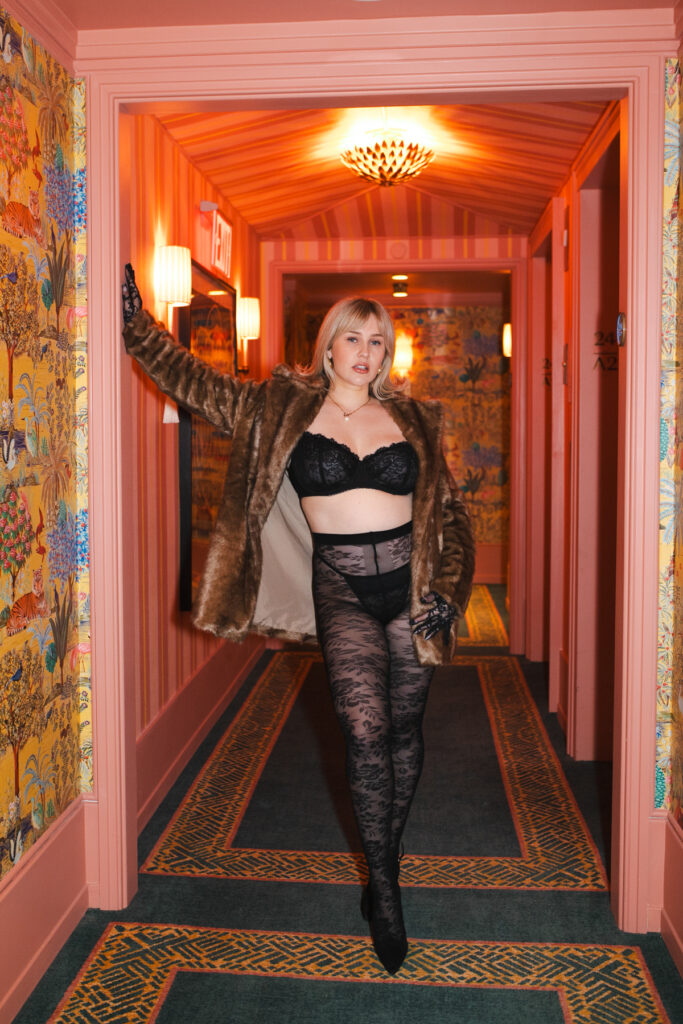
Hi Thea! It’s a pleasure to sit down with you! First question that I always ask. How does a regular day look like for you in New York?
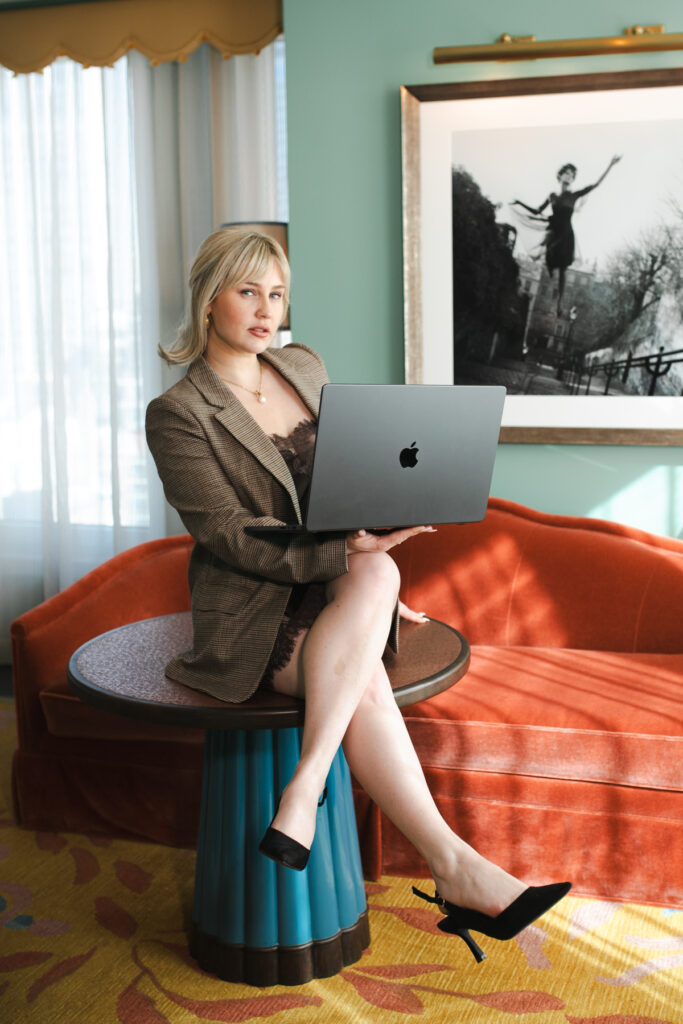
Thea: A regular day for me is mostly spent in my cozy Upper East Side Manhattan studio apartment with my two tabby cats, Sophia and Charlie. I love the freedom that being an entrepreneur has afforded me, like being able to work from bed in my PJs, get hyperfixated on a new project, or leave the house at noon if I want. My days lately are filled with lots of caffeine, spreadsheets, fundraising meetings, and Zoom calls. I usually venture out to see friends, eat good food, or go to some sex-related event around the city.
I’m curious, growing up in Alaska, what was life like there? And what kind of kid were you? What did you enjoy doing?
Thea: I grew up in small-town Oregon and rural Alaska, and while I’d never live in either place as an adult, they were both great places to be a kid. When I think about my childhood, I mostly think about running around in the forest and using my vivid imagination to make up stories that I was a part of. I also loved playing store and selling things to people, which in hindsight, was probably an early sign of where I was headed. I’m an only child, which could definitely feel lonely at times, but I also credit that solitude with a lot of my creativity and with how comfortable I am being by myself. I went to an alternative elementary school where nature, team-building, and creativity were treated as some of the most important parts of learning. We didn’t have big textbooks or sit at desks all day. I think that environment and spending so much time on my own, had a huge impact on how I think now. I’ve never fit very neatly into a traditional mold.
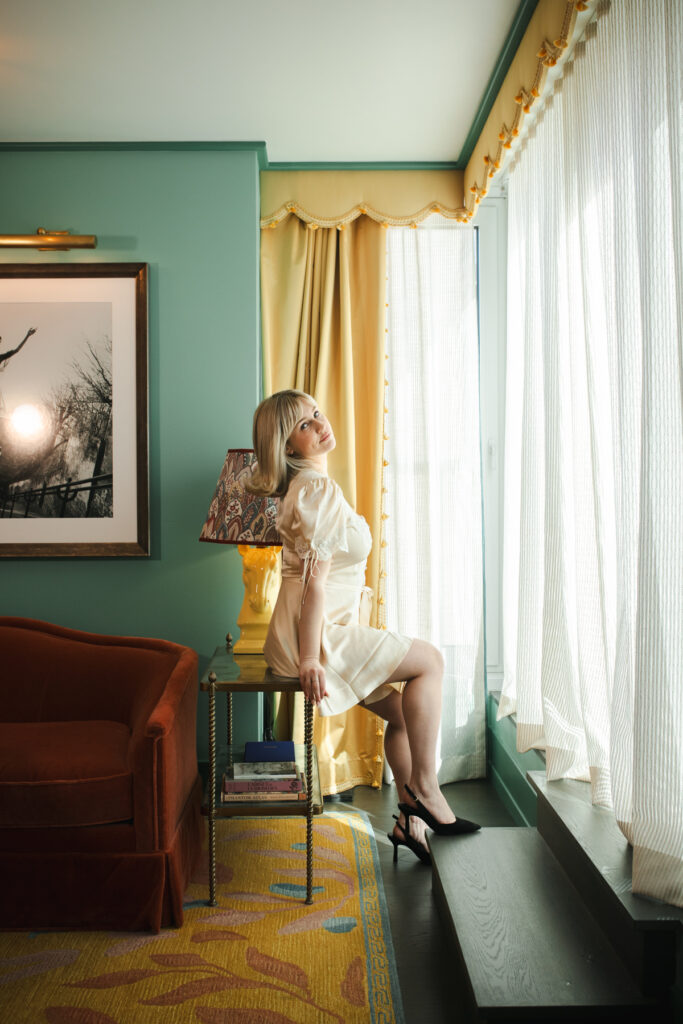
Alright Thea, let’s jump right into it. You’ve built companies around cannabis, sobriety, sex and sexual health. Looking back, do you think you are drawn to industries that society is slightly uncomfortable talking about?
Thea: Absolutely. People are constantly participating in taboo stuff behind closed doors. Whether it’s getting high, or getting laid, it’s happening. It’s always perplexed me, why can’t we talk about this stuff!? As a serial founder, something I noticed was a lack of infrastructure and good user experience in taboo categories.
Think about porn sites, they look awful, but they work and they make a lot of money. I want to make stuff like that look better. Also, I have a high tolerance for talking about stuff that would make a lot of people uncomfortable, and have been deeply curious about sexuality for a long time. I think I’m drawn to the places where people are already doing something in private, but culture hasn’t caught up enough for us to talk about it normally yet.
You’ve described yourself as someone who loves creating companies more than maintaining them. What is it about the beginning of something that excites you?
Thea: I like a challenge, and the reward of completing something really difficult. I’m 34 now, and wasn’t diagnosed with ADHD until I was 30. Once I had that diagnosis, a lot of my likes, behaviors, and desires made sense. I’m very motivated by novelty and urgency which is probably why I love the building and launching phase of a company so much more than the long, steady work of scaling it. A lot of traditional structures have never really made sense to me, like a 9–5, monogamy, or doing the same thing every day for years.
The two past companies I built were packaged product companies. Once I got them to market, I felt like the hardest part was complete, and with my second company I really struggled to stay engaged and excited about it. With Testie, my STI testing company that I launched nationwide in the United States in April 2026, I feel less worried about staying focused and passionate. With tech, I can get hyperfixated on new product launches and new test panels. There’s a never-ending list of challenges with building a healthcare solution.
Before Seggs Talk Radio, did you feel there was a version of yourself you were not yet allowing yourself to become?
Thea: Before the podcast and what I consider a sexual awakening, I was a much more contained version of myself. I was curious about sex and sexuality, but I hadn’t really given myself permission to explore how big of a part of my identity that curiosity would become.
You have spoken about once wondering whether you might be asexual while in a relationship that lacked sexual chemistry. How did discovering kink change the way you understood yourself?
Thea: Discovering kink helped me find a way as an adult to explore creativity, control, surrender, and play. Exploring my submissive side helped me find peacefulness, and exploring my dominant side helped me find confidence. Once I understood that power dynamics were key to my arousal, I realized I was far from asexual. I think being in a comfortable relationship without much sexual chemistry has made me lose touch with that part of myself. Kink helped me find it again.
Was there a particular experience in the kink community that made you realize sexuality could become something you wanted to explore publicly rather than privately?
Thea: Going to my first play party, which was a Shibari workshop, was my “aha” moment with kink. That experience showed me how many hot, naughty people are out there approaching kink thoughtfully and intentionally. I was having some really transformative experiences with kink in my personal life, and I was realizing how healing it could be. I wanted to share that journey publicly, specifically to inspire women to explore more of their own sexuality and pleasure more.
When you started Seggs Talk Radio, what did you feel was missing from the way sex was being discussed in mainstream media?
Thea: The main thing that inspired me to start the podcast was watching men with podcasts interview adult content creators and ask them the most obnoxious questions for rage-bait content. It pissed me off, and I thought to myself: why isn’t there a well-spoken woman having these conversations with creators?! I wanted to highlight important conversations about sex, kink, and sex work without reducing people to clickbait. Honestly, a lot of my entrepreneurial inspiration comes from being pissed off about how stuff is currently being done.
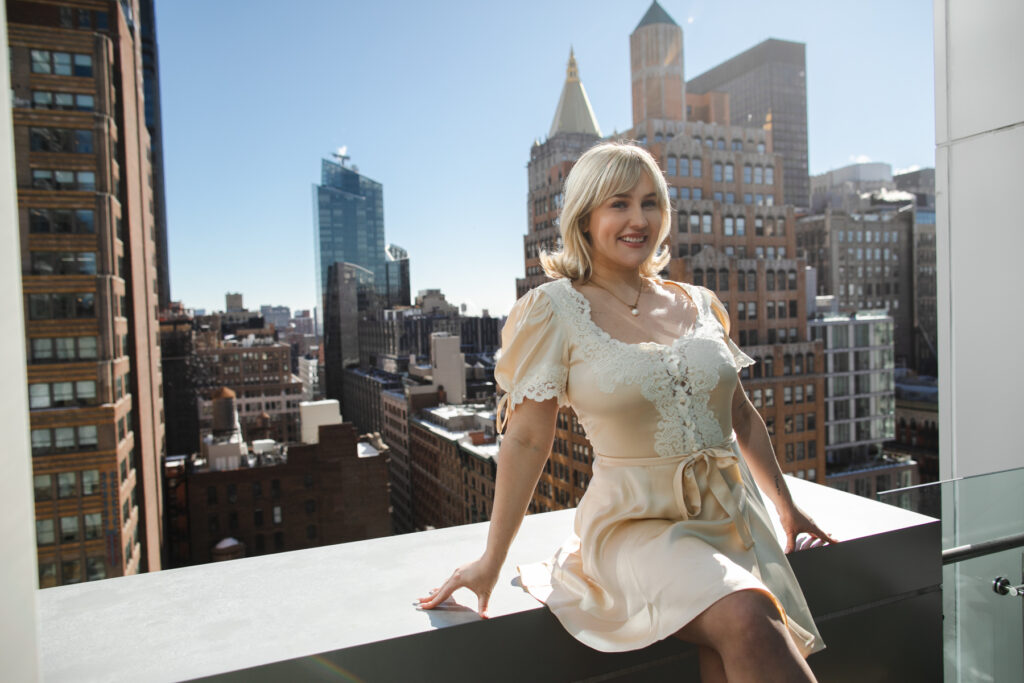
You have been unusually open about parts of your life that people are quick to judge. How has being perceived so intensely online changed the way you see yourself?
Thea: Sharing so much of myself online has helped me break my people-pleasing tendencies. I truly cannot make everyone happy. I think as humans we really want to be accepted, but breaking through that has helped me become the most authentic version of myself. It can still be really difficult to be picked apart online for how we look as women, though. Being called fat or ugly gets hard, no matter how thick your skin gets.
Do you think being visible online eventually creates a version of you that belongs partly to the audience, and if so, how do you protect the parts of yourself that are still yours?
Thea: I think there’s a persona element for all people with audiences. For me it’s kinda fun. Similar to sex work, it can be fun to step into an exaggerated version of yourself. While I share a lot online, I most certainly don’t share everything. My family, who I’m dating, and the things most precious to me, I keep to myself. My personal audience has grown a lot in the past few months, and things I used to feel safe or comfortable sharing with a few thousand people are no longer things I want 45,000 people to know.
After speaking with so many people about their sex lives, what do you think people are most ashamed of unnecessarily?
Thea: People experience a lot of shame surrounding their kinks, fetishes, and desires. This feeling of isolation makes people feel shame. It sucks to think you’re the only one who likes the idea of something, and it can be profound and super hot when you find others with shared desires. I believe that someone’s entire worldview can change, and their confidence when they move from shame to acceptance.
I also think the desire for sexual novelty needs to be talked about more. We are not really wired to have sex with one person for 50 years. When the institution of marriage came about, the average lifespan was 35, or something like that. Couples need to be having more realistic conversations about monogamy, and if it’s what they both want – finding ways to bring sexual novelty into that relationship.
And what do you think people are not ashamed enough of?
Thea: Men should be more ashamed of not understanding consent. We put so much shame around what people desire, but not nearly enough around whether they know how to communicate, read boundaries, and make sure the other person actually wants to be there.
Do you believe sexual liberation has genuinely made people freer, or have we simply created a new set of expectations about how sexually adventurous we are supposed to be?
Thea: Sexual liberation has absolutely made people freer. What I’ve seen and experienced in the kink community, though, is that there can still be a lot of rigidity around certain dynamics or identities, and I can see how that can become its own kind of limitation. For example, I was very attached to my identity as a sub, then later as a Domme, and now I’m kind of like: I like what I like. I don’t need every desire to fit neatly into an identity or category.
You have spoken publicly about working as a high-end escort. What ultimately made you decide that hiding that part of your life was more uncomfortable than revealing it?
Thea: I decided to come out about my two years as a sex worker as I started having conversations with larger investors and VC funds about Testie. It was something that could potentially come up during due diligence for an investment, and I realized how taxing it would be to disclose this huge part of my story over and over again.
Beyond that, I felt strongly that I wanted to advocate for sex workers, speak freely about my own experience, and talk about how important I think decriminalization is. Coming out meant I could tell the story once, instead of treating it like something I needed to privately confess every time it became relevant.
Before you disclosed it publicly, what were you most afraid people would think about you?
Thea: I wasn’t worried about people calling me gross or a whore. I was actually more worried that people would assume I was less competent as a CEO and founder. But that’s kind of the point. I want to show people that they can be whoever they want. Society’s desire to put women into one of two boxes, aka the Madonna-whore complex, is alive and well. I worried I might not be taken as seriously while fundraising for Testie, but my LinkedIn messages are telling a different story. If anything, people seem more intrigued and more interested in talking to me because of it.
You’ve said escorting helped finance the period in which you were building Testie. Do you see that simply as a practical economic decision, or did the experience fundamentally change the company you ended up building?
Thea: It was mostly a practical economic decision! I knew what I wanted to build when I started escorting, and the model hasn’t changed much since then. What sex work did solidify was the need for discretion and ease with STI testing. I could have launched Testie a year earlier if there had been a quick virtual doctor’s visit at the beginning, but interacting with clients who valued discretion so highly made me realize that even one extra step can be enough to make someone avoid getting tested. With Testie you just go straight to the lab, no awkward questions.
What did escorting teach you about men that you had not understood before?
Thea: As someone well versed in the kink lifestyle, I assumed being an escort would involve a lot of niche kinks and fetish requests. There is plenty of that in sex work, but people seeking those experiences often seek out professional dominatrixes rather than escorts.
My experience as a sex worker taught me less about sex and more about how many men are experiencing loneliness, burnout, and a lack of feeling seen or understood. Because sex work happens behind a veil of privacy and trust, it can create a pretty vulnerable space for clients to share their thoughts, feelings, and desires with someone.
People often assume men pay sex workers primarily for sex. From your experience, how often were they actually paying for intimacy, attention, reassurance or permission to be vulnerable?
Thea: The dates I had were often longer, and while sex was usually a part of them, there was a lot of time for talking, going to dinner, and getting to know each other. My experience was very much in the high-end companionship side of sex work, so I don’t want to imply that this is what all sex work looks like.
In my experience, intimacy and attention were just as much a part of what someone was paying for as the sex itself. Sometimes it felt like they wanted a space where they could relax, be listened to, feel desired, or talk about things they didn’t feel comfortable sharing elsewhere.
Did you ever find yourself becoming emotionally protective of clients?
Thea: A bit. I’d say so with a couple of clients who had very limited sexual experience. I felt protective of their vulnerability and wanted the experience to feel safe, affirming, and free of judgment. For the most part though, I was able to disconnect energetically from the client once we parted ways, and I wouldn’t hear from them again until they wanted to book time with me again, those boundaries are a pretty cool part of sex work.
Sex work involves an unusual negotiation between authenticity and performance. Did you ever feel that “Sophie” was a character, or was she simply another part of you?
Thea: When I first started, I didn’t think anyone would hire me. I didn’t think I was tall or skinny enough, and I had made up this idea in my head of what an escort was supposed to look like. When I started getting clients, I was pleasantly surprised by the demand, especially for curvy women.
Sex work helped me build confidence, but until I did, there was definitely an element of faking it until I made it. I got really dressed up and explored being someone’s fantasy, so there was a component of playing a character. But Sophie was never completely separate from me.
Did escorting ever change your relationship with sex in your private life?
Thea: It made me feel more confident in my sex life. Sex work also taught me a lot about boundaries, so I got better at saying hell no to people in my private life if I wasn’t being treated with a certain level of respect or attentiveness.
What was more difficult to separate from work: your body, your sexuality or your emotions?
Thea: For me, sex work really was work. I was able to go see a client for a couple of hours, come home, and log off. I actually experienced more emotional chaos from the games that can happen in regular dating. The more complicated part was sometimes disclosing that I was a sex worker to people I was dating, but it was usually received well.
Do you think your credibility as a sexual-health founder is strengthened by you also being a sex worker, or does the stigma still force you to prove yourself more aggressively?
Thea: I think it adds credibility. When it comes to proving myself, I think being a woman means I have to prove myself more as a founder regardless of also having been a sex worker. Women get around 1.5% of venture capital funding. Men will ask me things like, “How is your little project going?” Oh, like my nationwide healthcare company, you mean? We face a lot of condescending bullshit as women in business, so coming out was also kind of like: why not add one more disadvantage while I’m at it?
You’ve said that being a CEO and having been a sex worker should not be contradictory identities. Why do you think people still find that combination so destabilizing?
Thea: The response has been more well-received than I anticipated so far, but I do think people struggle to see someone who holds multiple identities. Women can be sexual, but not too sexual. Ambitious, but not too much. I think having been a CEO prior to becoming an escort, and now being back in the CEO seat, makes people short-circuit a bit. But hey, that’s kind of my mission: shatter glass ceilings.
Did investors treat you differently after you spoke publicly about escorting?
Thea: I’ve actually had more investor leads since coming out than ever before. The downside is that I now have a lot of men messaging me on LinkedIn, and sometimes I have to figure out whether they actually want to invest or whether they’re hitting on me. Men are drawn to sexual women, but I’m not on LinkedIn to date, I’m trying to raise money.
Silicon Valley talks endlessly about founders having “lived experience.” Do you think that enthusiasm has limits when the lived experience happens to involve sex work?
Thea: I think there are definitely limits to investors wanting a founder to have lived experience. They love it when it fits a familiar founder story of someone working their ass off, but sex work still carries a lot of stigma. At the same time, sex work is having a bit of a cultural PR moment, so we’re in this weird place where people are more comfortable talking about it conceptually than they are with sex workers themselves.
Testie grew partly from your frustration with STI testing. What is fundamentally wrong with the way sexual healthcare currently talks to people?
Thea: Testie was inspired by a conversation I had with my Seggs Talk Radio audience two years ago. I asked them to share sex-negative things doctors had said to them when they asked to get tested for STIs. The answers were shocking. Doctors told people things like, “You seem like a nice girl, you don’t need to get tested,” or acted surprised that someone didn’t have an STI after they disclosed a certain number of sexual partners. That kind of patient treatment is going to make people less likely to get tested, so I decided I was going to build something where folks could skip that initial doctor visit.
Do you think shame is actually one of the hidden costs built into healthcare?
Thea: Totally. Shame creates friction in this category, and that makes people avoid care. It’s also costing insurance companies a lot when people delay testing. Most STIs are asymptomatic, and untreated infections can lead to major health issues. I want to remove as much of that as possible. While I wish sexual health shame could just be reduced overall, I want to meet people where they are, which is desiring privacy and speed.
There is something strange about the fact that people can order almost anything from their phones, yet STI testing can still feel bureaucratic, embarrassing and medicalized. Why has sexual healthcare been so slow to adapt?
Thea: Healthcare overall is slow to adapt to what people actually want user experience wise. It’s often more about what works for institutions and insurance companies than what works for patients and consumers. That’s why so many people turn to telehealth in moments of need or crisis: their priorities are speed, privacy, and getting a solution with as much ease as possible. Sexual healthcare seems to be overlooked in general, and it’s super fragmented with people often getting tested at urgent care because they simply don’t know where to go because there isn’t a prevalent brand, I want to change that.
Sex tech is often marketed with the aesthetics of liberation while still being built around fairly conventional assumptions about gender and sexuality. What do you think the industry still gets wrong?
Thea: Great question! I totally agree that sex tech still builds around pretty traditional ideas of sex and gender. We’re trying to keep Testie’s marketing gender-neutral, and our STI panels are the same regardless of gender. We’ve also seen how much of the responsibility for sexual health tends to fall on women. I want men to feel just as responsible for testing, and for Testie to feel equally built for them.
If you’re kinky, non-monogamous, a sex worker, queer, or just having sex in a way that doesn’t fit a heteronormative mold, you can still feel like the exception. I think the industry needs to do a better job of building for how people actually live, not just marketing itself that way as inclusive and sex-positive.
You have criticized founders for adding AI simply because investors want to hear about AI. Do you think venture capital is currently making companies less imaginative rather than more?
Thea: Absolutely. VC wants your business to grow as quickly as possible so they can have the biggest exit. I’ve had a few pitches where investors followed up asking for more detail on how I planned to build AI and data products. Where I’ve landed is that I don’t want to put out a bunch of AI tools just because that’s what investors want to hear, and I won’t do it just to get a check. I want Testie to do volume and become the go-to consumer brand for STI testing. The right investor will see the opportunity in that.
You grew up in Alaska and later entered the worlds of tech, kink, podcasting, sex work, and entrepreneurship. That could hardly seem further removed from that environment. Do you still recognize the person you were growing up there?
Thea: I am a lot of things, and an outdoorsy gal is definitely one of them! My dad still lives in Alaska, so I try to get back when I can. I love nature, camping, and being around trees. In fact, it’s one of the only places my nervous system really feels good. I moved to NYC to make money as an escort and get Testie live, which I did. I’m not sure where I’ll end up next, but I know I’ll always need nature somewhere in the mix.
You have also spoken about sobriety. Alcohol is so deeply embedded in dating and hookup culture. Do you think many people use it to access desires they do not feel permitted to express sober?
Thea: They definitely use alcohol to access other parts of themselves, but if there’s something you can only share when you’re drinking, I think it’s important to look at why. Alcohol can give people permission to express desires they already have, but ideally people learn to access that stuff sober too. Alcohol also massively decreases pleasure and our ability to actually be present during sex.
Is there anything about sexuality that you now believe should remain private?
Thea: I’d say there’s a difference between privacy and shame. I hope to see a world someday where people feel less shame about sharing their desires and sexuality with others, but I don’t think anyone owes the world that truth either. As time has gone on and my personal and podcast audiences have both grown, I have felt more protective of my private and intimate life and shared less and less with my audience. As I’ve become more public I’ve realized that some things are just for me.
What is something you believed about sex at 25 that you would completely disagree with today?
Thea: At 25, I believed eventually you’d find someone you had such good sex with you’d want to only do it with them for the rest of your life. I think that societal perception is very puritanical, and that most folks crave a certain level of sexual novelty in life, or at some point in a long-term relationship. I now have much more realistic expectations about monogamy.
What is something you believed about entrepreneurship at 25 that you would completely disagree with today?
Thea: That you have to be burnt out and miserable to succeed as a founder. I did that with my first company, and at 25 I had the energy to go hard all the time, but I don’t anymore. These days I’m learning that sleep, rest, and not running myself into the ground actually make me much better at what I do.
Do you think loneliness is becoming a sexual-health issue?
Thea: Loneliness is a major issue. People, myself included, often count DM chats and Zoom calls as human interaction, but we’re meant to be physically around other people, and sexual or not, human touch is important to us. Our comfort with living so much of our lives through a screen is absolutely messing with us, and overall, younger people, especially Gen Z, are having less sex than previous generations. On a positive note I feel like we went too hard with technology, and now are working our way back to some type of middle ground where we are trying to prioritize IRL connection and community more.
If you could remove one source of shame from people’s relationship with sex, what would it be?
Thea: I’d remove the shame people feel about what turns them on. People can spend forever thinking something is wrong with them. I wish people felt more permission to explore what they like without judging themselves so harshly for it.
What part of your life do you think people misunderstand most because they reduce it to a headline?
Thea: Probably that because I am a sex nerd and used to be a sex worker, those are the only things I think about. More than being a kinkster, I’m truly just curious about sexuality in more of an anthropological way. Sexuality is an interesting lens in which I view the world, but it’s not my whole personality and at the end of the day I’d actually rather talk about business than sex.
Ok Thea, now to something totally different. In a parallel universe who would you be? and what would you be doing?
Thea: I love animals, and after building and selling a company or two, I’d love to have some type of farm or animal rescue.
Outside of everything we just talked about, what’s something you’re obsessed with right now, maybe a hobby, a show, or even a food, that keeps you grounded or inspired?
Thea: Always having some type of trip booked keeps me sane as an entrepreneur. I have to have pleasure-focused adventures to look forward to, otherwise I will burn myself out. Oh, and lot’s of 90 Day Fiancé.
Anybody you look up to?
Thea: Passionate people inspire me. Most of my friends and those that inspire me don’t have a 9-5 or a life that looks particularly traditional. I love people who want to change the world, and have the balls to do it. I look up to outspoken businesswomen who are committed to creating change regardless of the obstacles and the odds against them.
What motivates you?
Thea: What motivates me is building in categories other entrepreneurs avoid because of stigma, and having the uncomfortable conversations that make people feel less alone and less ashamed. Pissing people off also motivates me. When I see hate comments about sexuality, sex work, or sexual health, my reaction is basically, “Yeah, this is exactly why I’m going to keep doing it.”
How would you describe a perfect day?
Thea: Caffeine, cat cuddles, human cuddles, a fireplace, working on my business, and getting a good sweat and laugh in.
Alright Thea, I always ask these two questions at the end of an interview. The first is. What’s your favorite movie(s) and why?
Thea: Forgetting Sarah Marshall. It’s my comfort watch. I think it’s hilarious and also highlights a lot of the pain and humor of romance and breakups.
The second is. What song(s) are you currently listening to the most right now?
Thea: Apocalypse by Cigarettes After Sex, in my feels lately.