Share this
Born in Northampton in 1993 and now based in Lewes, East Sussex, Ant Hamlyn has developed a sculptural practice centered on fragility, impermanence and the emotional possibilities of softness. Working primarily through meticulously hand-sewn forms, he draws on botanical structures, historical references and metaphorical imagery to explore the tensions between vulnerability and control, the organic and the manufactured, and memory and materiality. His tactile sculptures often appear suspended in a state between growth and decay, familiarity and estrangement, inviting the viewer to pause and look closely.
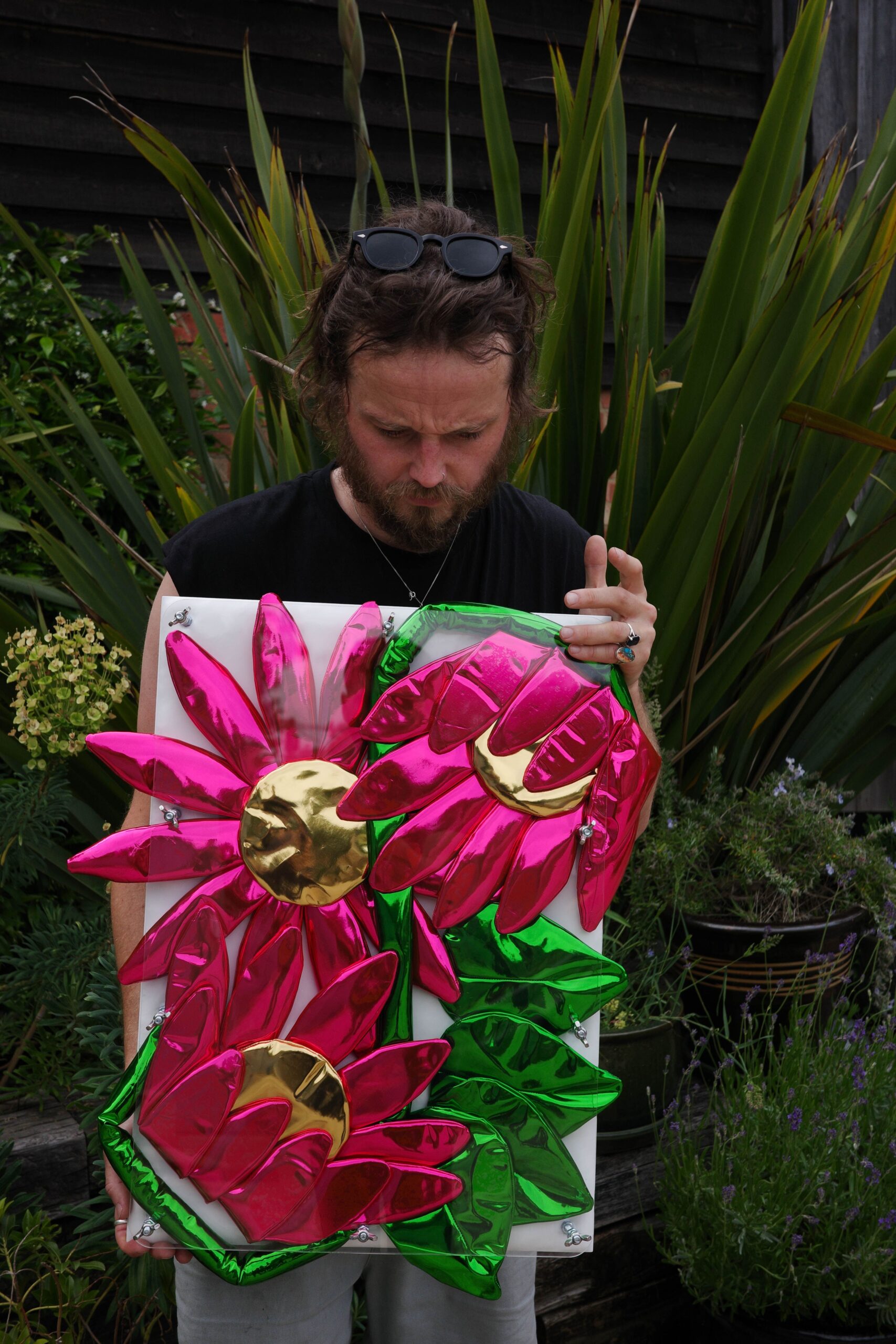
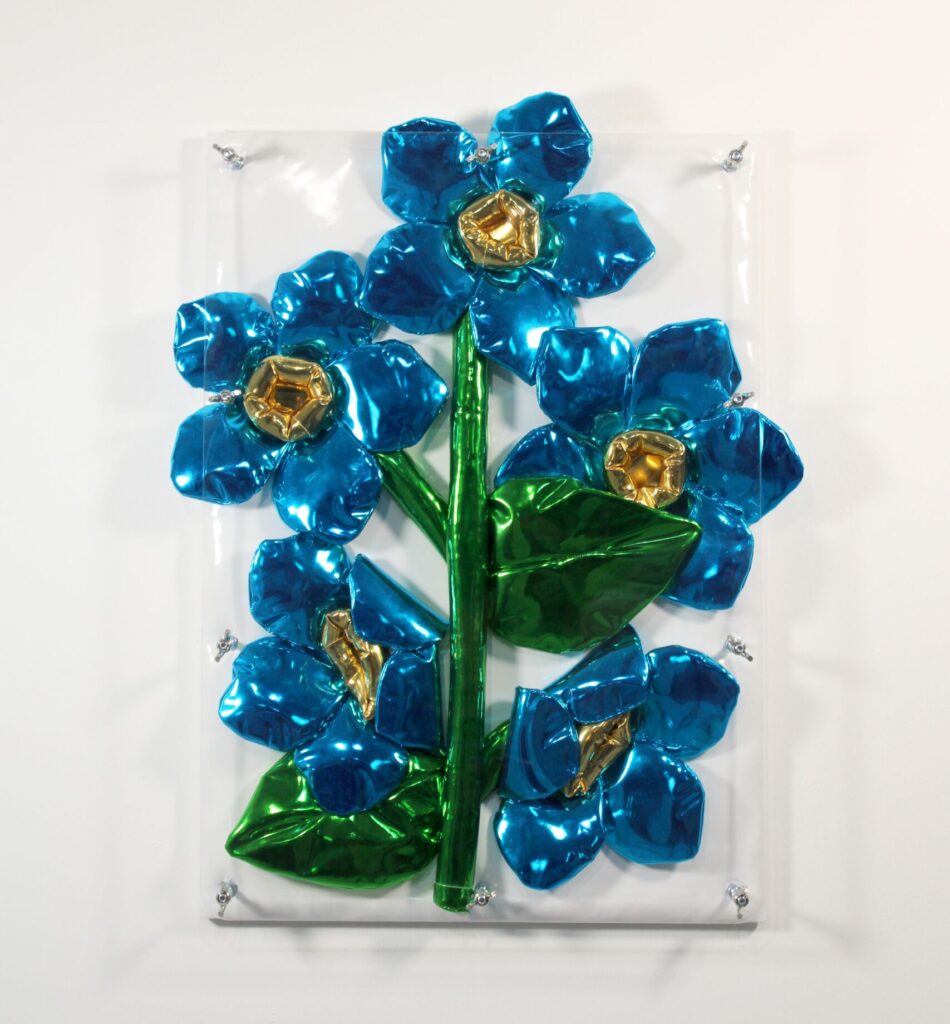
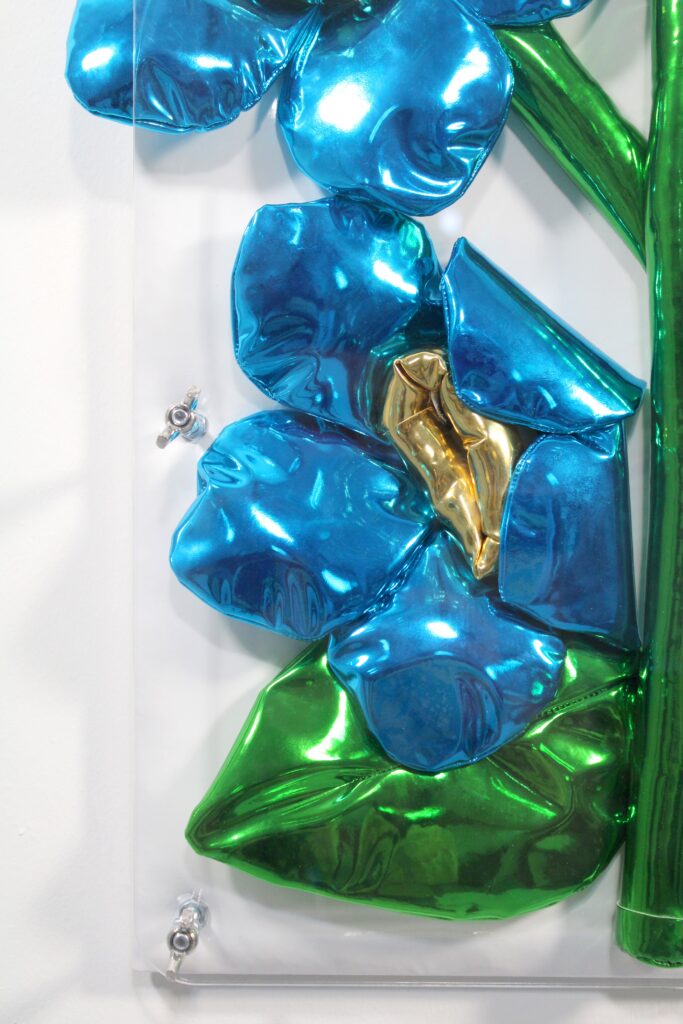
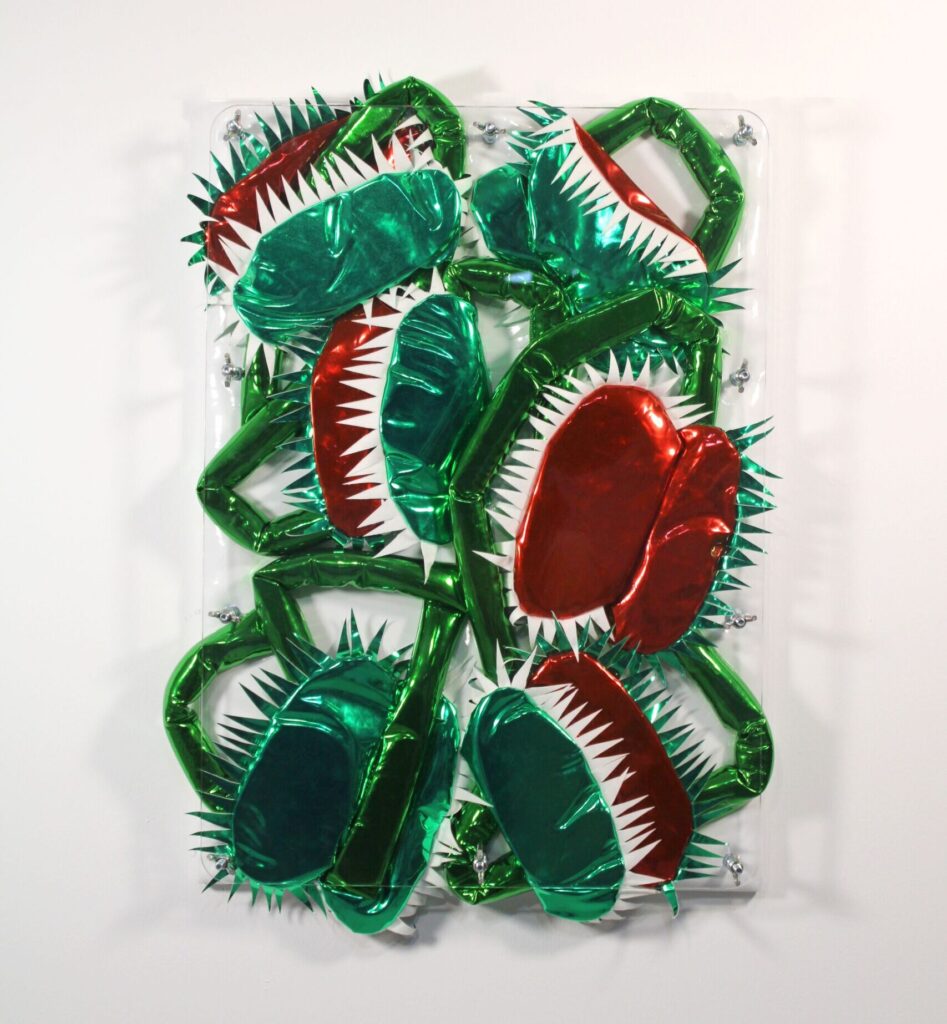
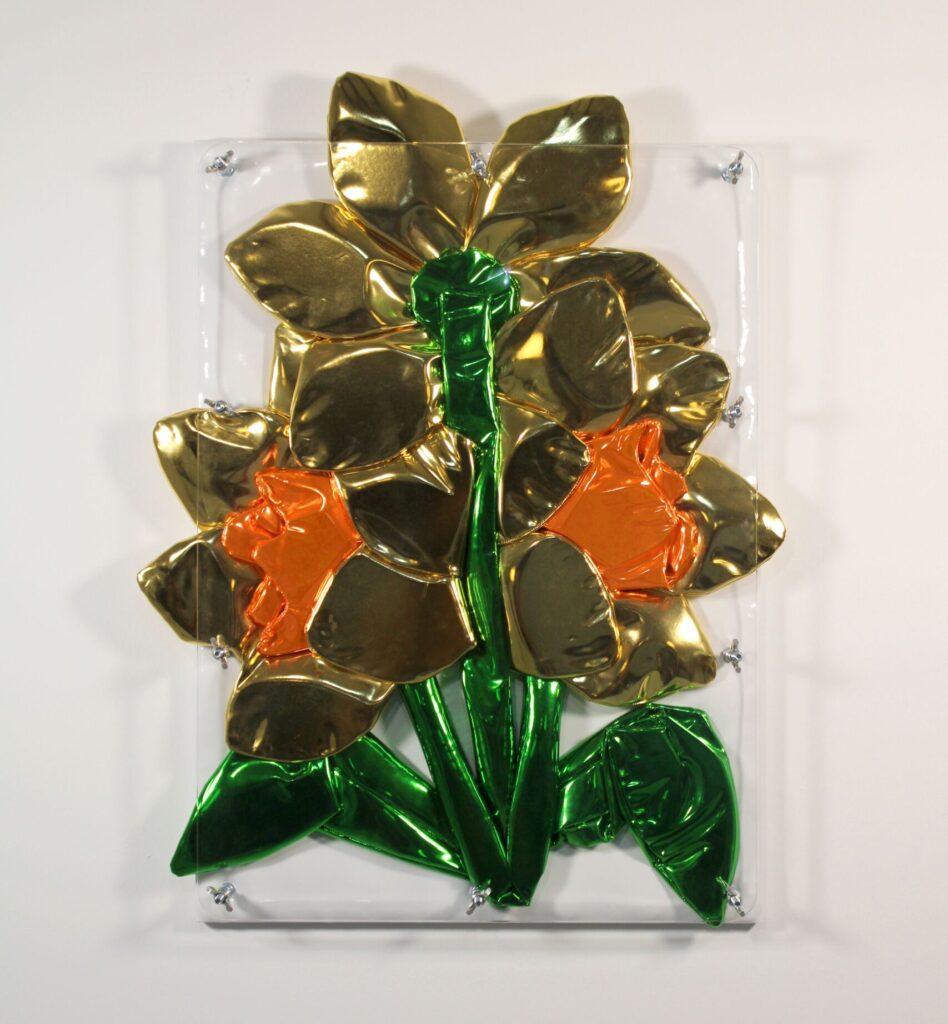
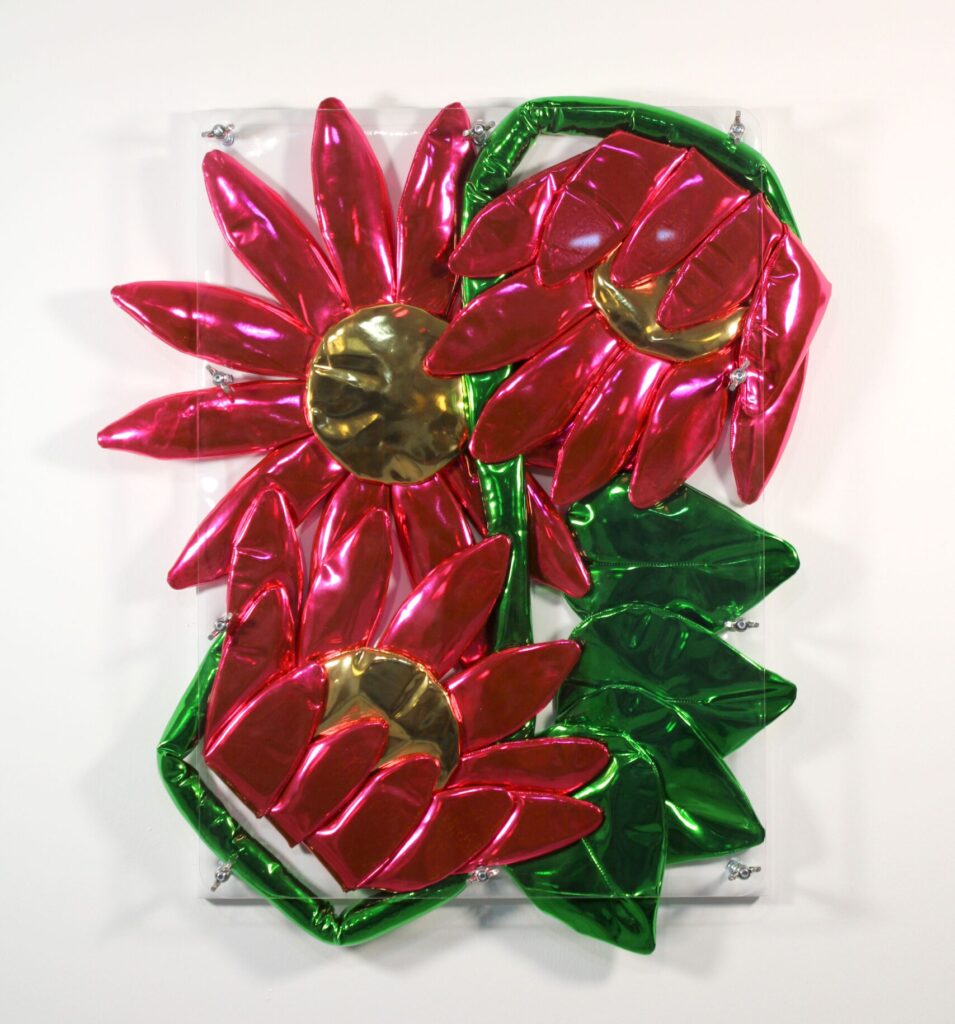
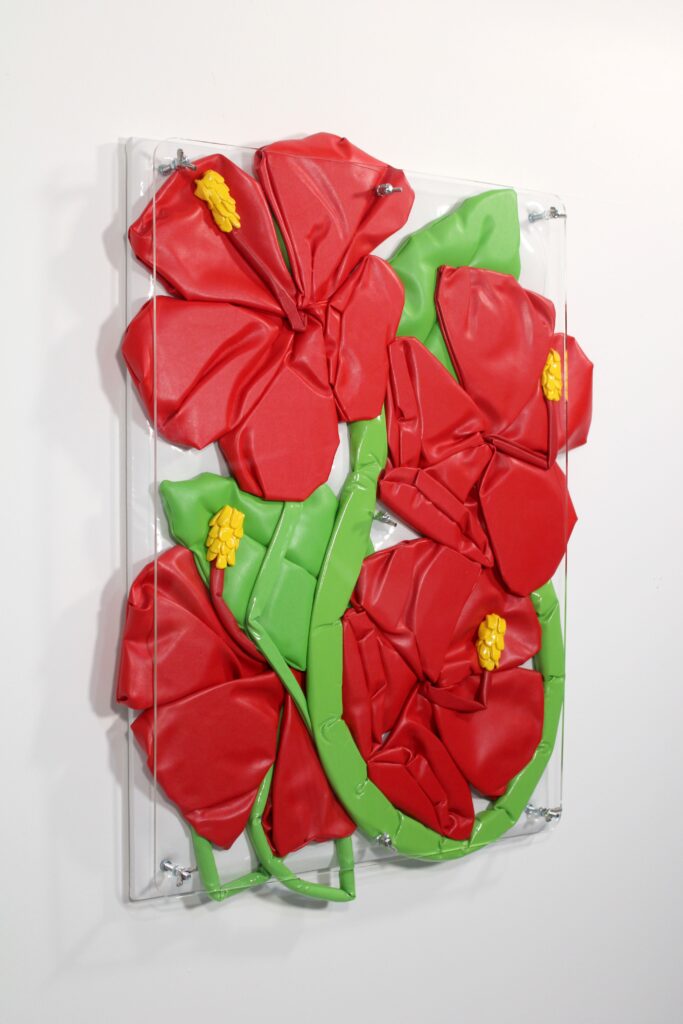
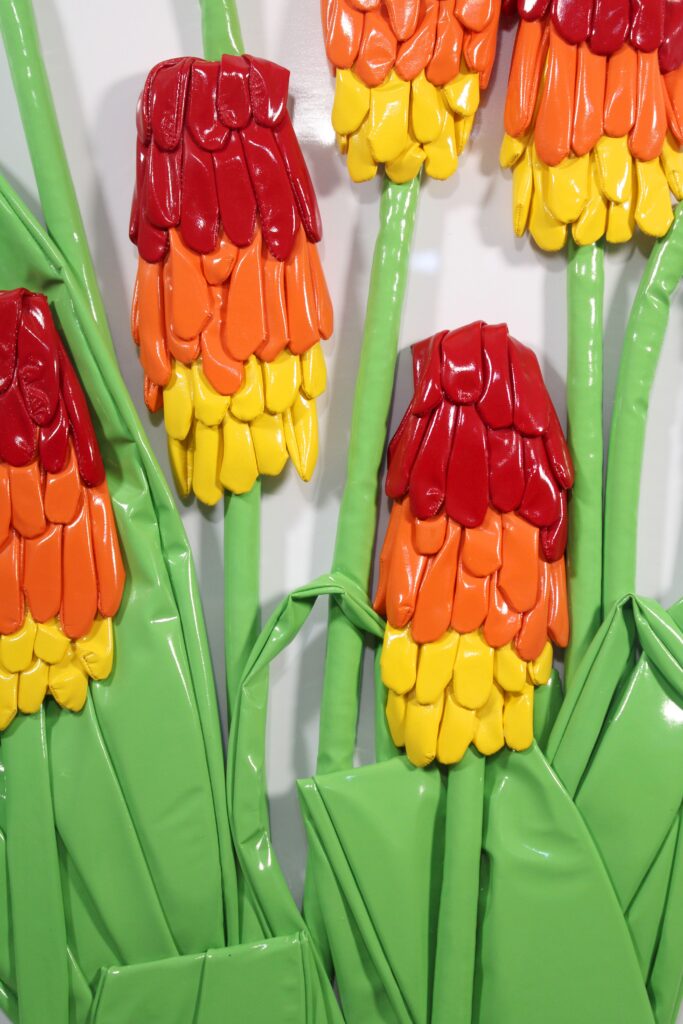
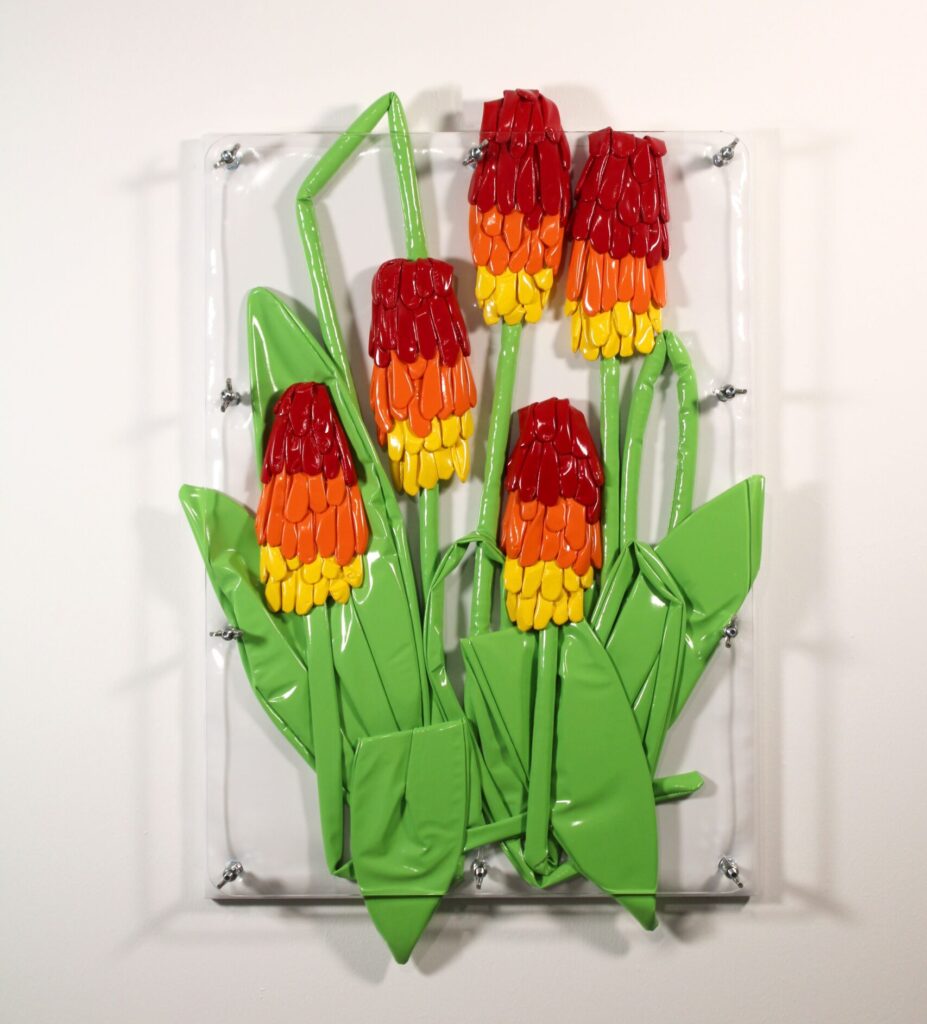
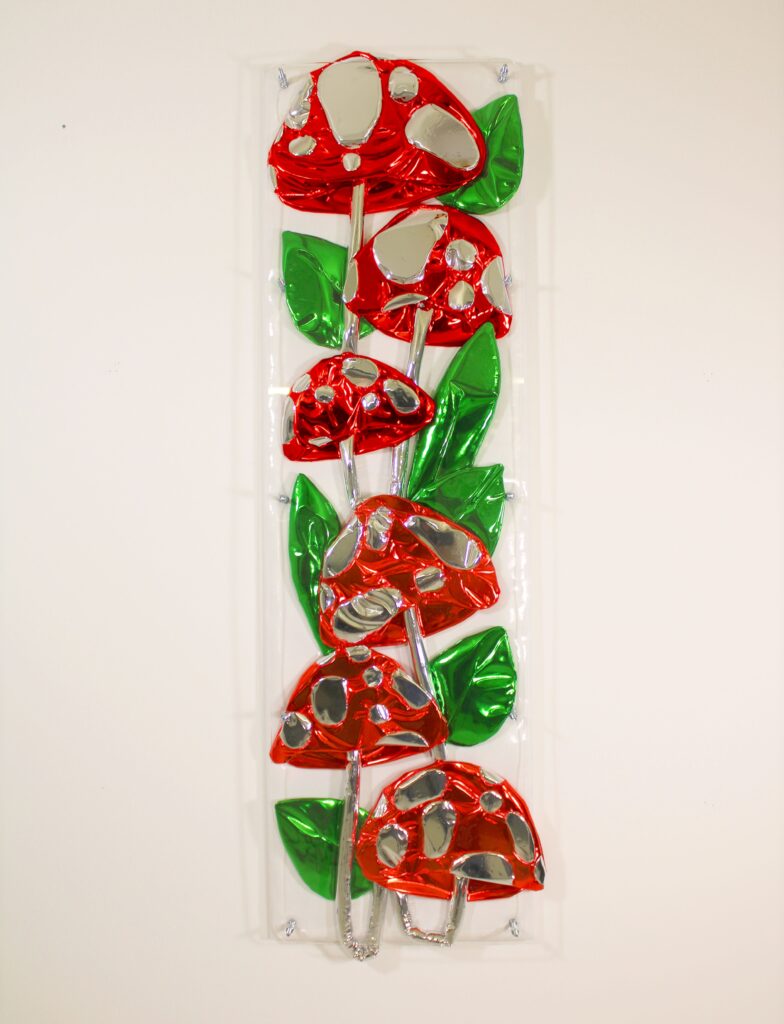
Hamlyn recently wrapped up his solo exhibition SOFT//CHROME at Better Go South, where he presented a new body of pressed botanical sculptures made from metallic textiles and high-shine polyurethane. Inspired by the liquid-metal futurism and iridescent optimism of the early 2000s, the exhibition reflected on how that period’s excitement about technology has gradually given way to the anxieties of the post-digital age. Flowers were transformed into controlled, seemingly frozen objects, their synthetic surfaces preserving something ephemeral while resisting the natural passage of time.
Yet beneath their industrial appearance, the works remained unmistakably handmade. Through the repeated acts of sewing, stuffing and pressing, Hamlyn placed human labour, imperfection and touch at the centre of the exhibition. In this conversation, he discusses the material paradoxes of SOFT//CHROME, his nostalgia for a more tactile technological era, the emotional weight carried by artificial objects, and the importance of preserving softness and human presence within an increasingly automated world.
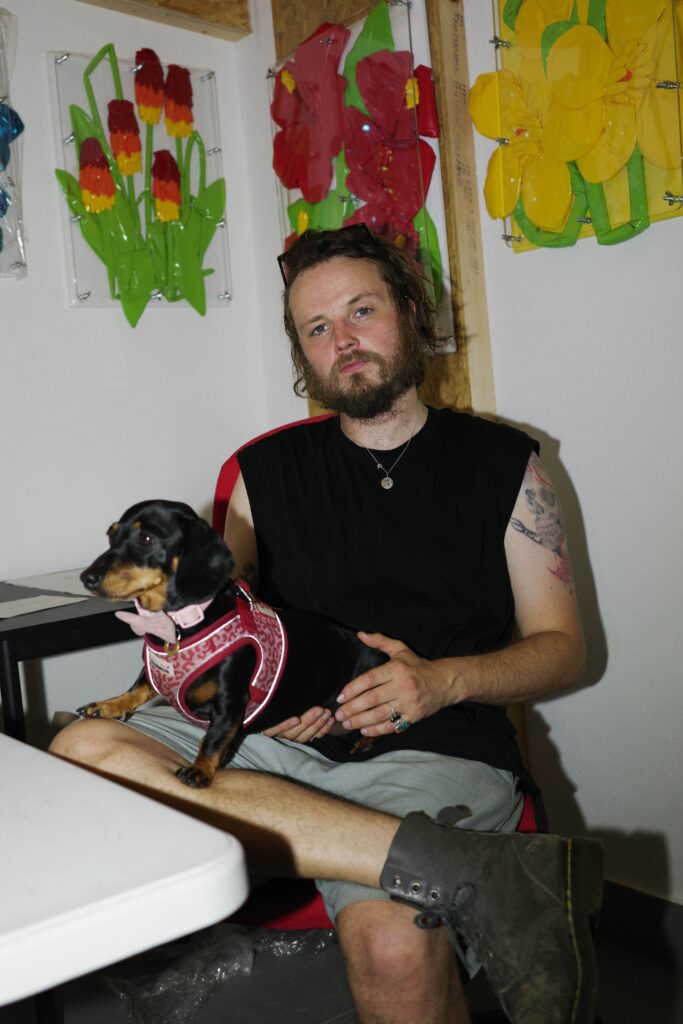
Profile picture by Brynley Odu Davies.
Ant! It’s been about a year since I had you in the hot seat. It’s a pleasure to sit down with you again my friend. What have you been up to since then?
Ant: The pleasure’s mine Ruben! It’s always so good to chat with you mate. So, I’ve moved house! Me and my fiance Beci moved from London to Lewes in East Sussex, it’s a really lovely place. I also moved my studio down here and opened a larger one in a converted barn. In the studio I’ve been working on a lot of private pieces, some I can talk about and share, some I can’t! It’s all been very exciting, a bit of a whirlwind but a good whirlwind.
Is there anything you were convinced about a year ago — materially, emotionally, or artistically, that you now see differently?
Ant: I’m becoming a tidier person, I’ve learned that the old saying ‘a tidy desk is a tidy mind’ is so true. I’m finding myself taking on a lot of ambitious projects and getting everything in order and organised has become completely essential to my life. This is filtering into my personal life as well, so yeah I like things to be tidy and neat. Which 5 years ago I wouldn’t have said that was my thing. Maybe i’m just growing up.
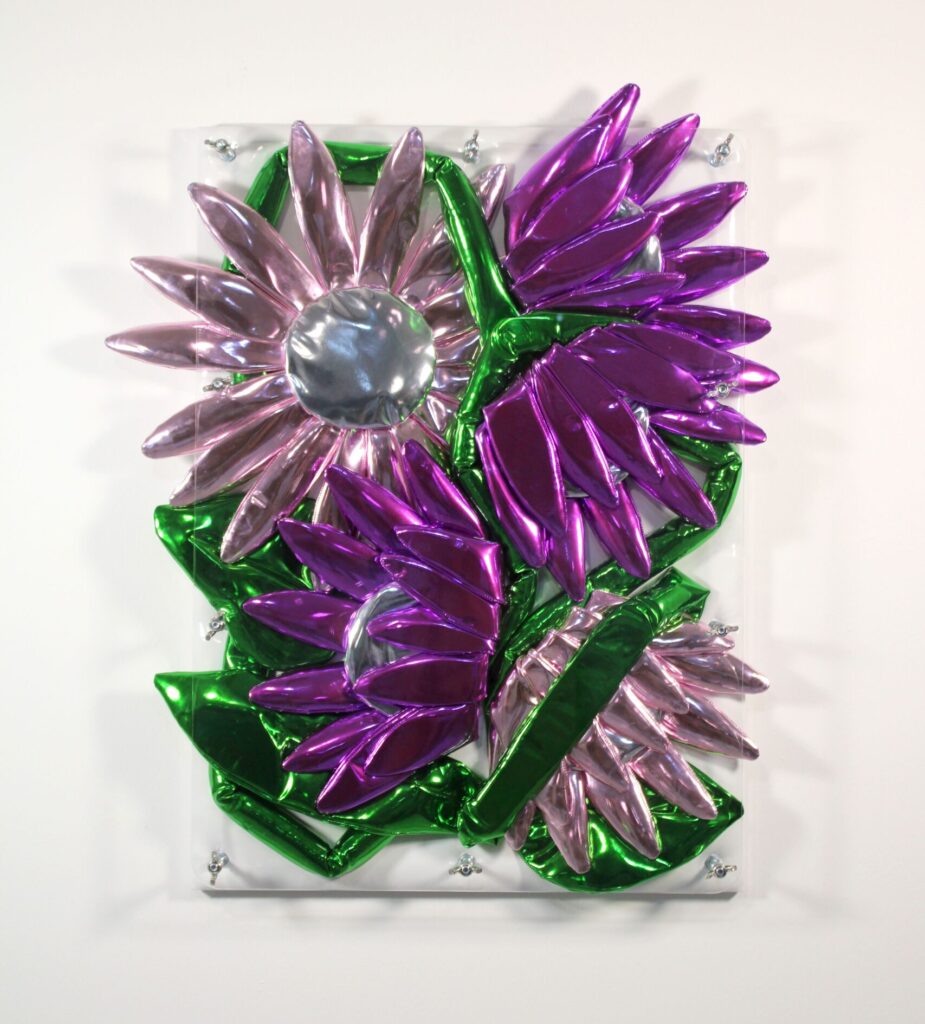
You recently wrapped up your solo with Better Go South,. What was your inspiration behind this new body of work?
Ant: Yes! So the show was called SOFT//CHROME and that is a bit of a material paradox really, it’s the idea of something that is chromatic and appearance yet soft and tactile in its physicality. I think that this is a sort of evolution of my thought process around me as a human living in a kind of industrialized world and moving out to the countryside. You know there’s a softness and a fragile nature to the human condition operating within a manufactured technological industrial kind of world.
“SOFT//CHROME” . What was the story behind that title?
Ant: When I’m thinking about the aesthetic nature of chrome, it brings me back to the early 2000s. I was very young in the early 2000s and mainstream tech was just really advancing, it was like walkmans, gel pens, shiny Pokemon cards and dial up internet and things like that and everything was high shine, high glisten, iridescent and in your face. It was the precipice of analogue digitisation and it was a very culturally rich time to be alive. It was this kind of anything was possible sort of period, but then now I think that we’ve kind of come through that excitement of it and I think we’re now going into anxiety a little bit and I think that by using Chrome in this way as this uplifting material, but then pairing it against this idea that they’re being squashed or pressed behind perspex as an idea of a memory of something that needs preserving.
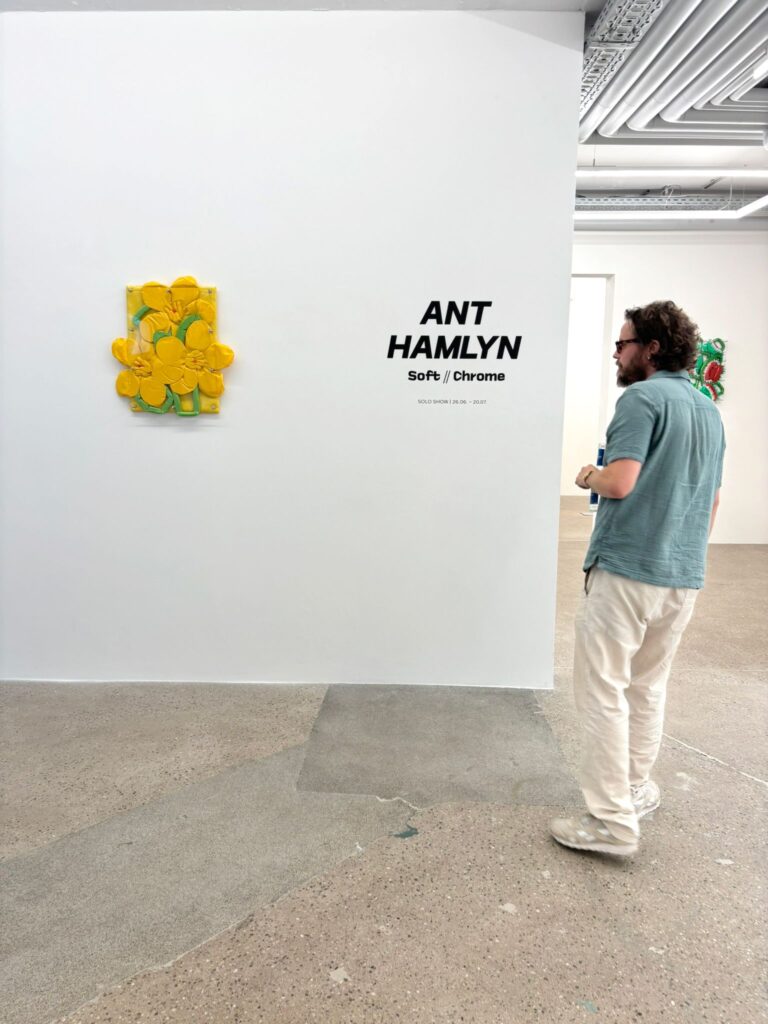
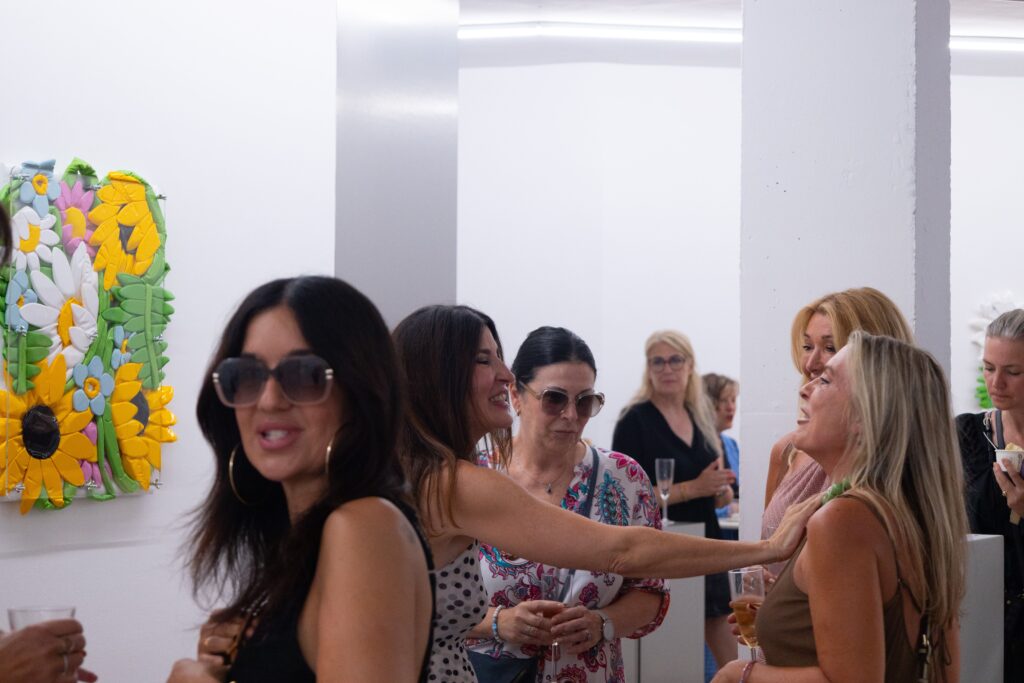
In SOFT//CHROME, you describe the works as “pressed botanical sculptures. ” What interests you about turning flora into something suspended, controlled, or almost frozen in time?
Ant: Because the botanicals are trompe l’oile, they function less like real nature and more like a manifestation of memory. Using the timeless symbol of the flower to navigate our transition from childhood wonder to modern anxiety. I use these stylizations as a metaphor for the past, present and future all at once. The past anchors us in nostalgia and reminds us of the tactile, innocent optimism of youth. The present talks about consciousness, industry and anxiety on the one hand and joy, colour and a return to simplicity on the other. The future projects into a manufactured, hard industry, artificial intelligence era where softness feels threatened. When we think of flowers, they in themselves talk about life. They grow, they require nurturing energy, they die. And I think that using flowers as a way in which to talk about this fragility of human existence and memory is a perfect metaphor. Encasing the floral forms behind perspex leaves a longing for something that has passed, whilst realising yourself in the present.
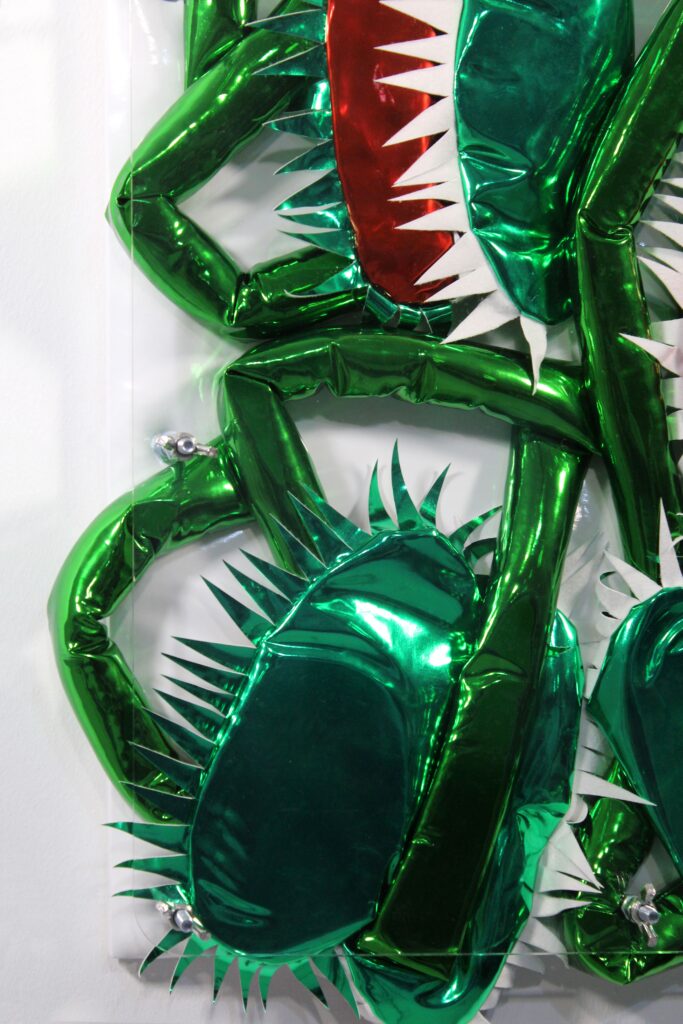
What first drew you to soft sculpture as the language for exploring impermanence and vulnerability?
Ant: I like the idea that we are made of soft, tactile material yet we exist in a hardened, industry led, heavy world. The human body is vulnerable, yet we craft and manipulate the world around us to our needs. I like this kind of strange, neo-romantic idea of an inflatable or a soft sculpture having a similar energy to breathing or lungs, to me soft forms talk directly about the human condition.
Your work seems to hold together two very different feelings at once: softness and hardness, fragility and control, the organic and the synthetic. Is that tension something you consciously seek out?
Ant: The works are both hard and soft, intimate and distant, happy and sad all at the same time. For me it’s about creating this cocktail of contradicting experiences, because that’s how we experience life.
Botanical forms usually suggest growth, decay and transformation. In your work, they seem caught between life and objecthood. What kind of emotional state are you trying to capture there?
Ant: I think there’s a language of the universe that is nonverbal, which I think is really interesting. There’s this nonverbal synergy in the universe that we don’t learn. Language came far after the idea of consciousness and you really see that in the stillness of the earth and flowers. You just sit there and you think, oh, there’s no words for this. This is amazing. And then you think about the way that it just happens, the trees just grow. And I think trying to capture that as a human with a consciousness and trying to put that into some form of physical manifestation is essentially what making art is.
Do you feel nostalgia for the future that the early 2000s imagined?
Ant: I do and I don’t. As a millennial, I feel a nostalgia for the fun and curiosity of that era. I was ten in 2003 and fifteen in 2008, so that period completely shaped my worldview. I vividly remember rushing home to watch music videos on Kerrang and waiting for the dial-up internet to connect so I could get on MSN and set up MySpace or Bebo profiles. Visually, everything was so bright and tactile; neon shoelaces, Velcro, iridescent finishes, and the excitement of the first Sony Ericsson Walkman phones.
There was a primitive, manual nature to technology then that made it feel super exciting. It felt like pure optimism; we were curious about the future rather than anxious about it. While the world has progressed for the better in many ways, like medicine and global connectivity, we’ve also crossed a threshold into a space of collective anxiety.
What’s beautiful is seeing the current resurgence of that y2k culture. People are buying CDs and cassettes again, searching for that lost simplicity. I think that quest for the tangible is returning, and that’s exactly what I’m tapping into with my work, capturing that lost, iridescent collectable optimism and holding onto it.
The works seem to challenge the idea that synthetic materials are cold or empty. Do you think artificial surfaces can carry tenderness?
Ant: It depends if we look at the face value of the material alone. If we look at it the same way we would look at sentimentality then I think it’s more interesting. A small seemingly insignificant cheap plastic object like a keyring can be the most important item in the world because of who gave it to you, where it was from or how you got it. So if we take the keyring itself at face value, there is no tenderness, It is a piece of formed plastic. But if we apply the layer of humanity, memory and meaning to the keyring it carries an extremely rich emotional attachment and human tenderness.
The exhibition offers what you call “a hopeful testament to the enduring presence of the human in an increasingly automated world. ” Where does that hope come from for you?
Ant: For me it’s about making things by hand in an increasingly artificially creative world. The hand made, the human error, the dropped stitch. The imperfections that make things important, valuable and real.
In a time when so much visual culture is slick, fast and digitally produced, what does slowness mean in your practice?
Ant: That is a great question, especially because on a personal level the act of making work and hand-sewing is the only time I truly feel still and patient. Taking a roll of fabric and taking the time to meticulously build something entirely from scratch with my own hands is a deeply meditative process. It forces a necessary stillness in my life.
Ok Ant, now to something totally different. In a parallel universe who would you be? and what would you be doing?
Ant: A Firefighter.
Outside of art, what’s something you’re obsessed with right now, maybe a hobby, a show, or even a food—that keeps you grounded or inspired?
Ant: I am obsessed with miniature Dachshunds. Thankfully I have two. One is three years old and the other is three months old. They are both girls called Pickle and Tofu – or Slugworth and Phillip depending on how I’m feeling. Spending time with my fiance Beci and our two dogs, eating nice food and drinking nice drink keeps me happy and grounded.
What qualities do you find most important in the people you choose to spend time with?
Ant:I tend to gravitate towards naturally optimistic and enthusiastic people, also people that show a genuine interest in others, loyal people, people who have a dark sense of humour, people who show vulnerability and affection, people that like dogs and people that can take the piss out of themselves.
Anybody you look up to?
Ant: Paul McCartney
What motivates you?
Ant: Honestly, that one day I won’t be here anymore.
Alright Ant, I always ask these two questions at the end of an interview. The first is. What’s your favorite movie(s) and why?
Ant: Off the top of my head I always go to The Dark Knight. Not because it’s necessarily the best film ever made, but a 15 year old me watched this film in the cinema when it came out in 2008. Heath Ledger’s Joker was the first time I felt uncomfortable every time he came on screen.
The second is. What song(s) are you currently listening to the most right now?
Ant:
The Strokes – Falling Out Of Love
Melody Gardot – My One and Only Thrill Album
Devildriver – Dig Your Own Grave
Roy Orbison – A Love So Beautiful
David Bowie – Slip Away
My Chemical Romance – I Don’t Love You (just saw them at Wembley, nostalgia trip)