
Share this
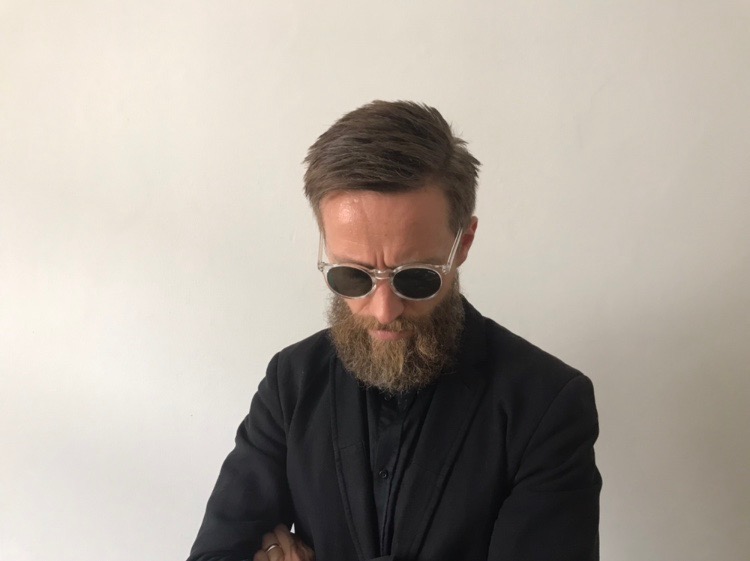
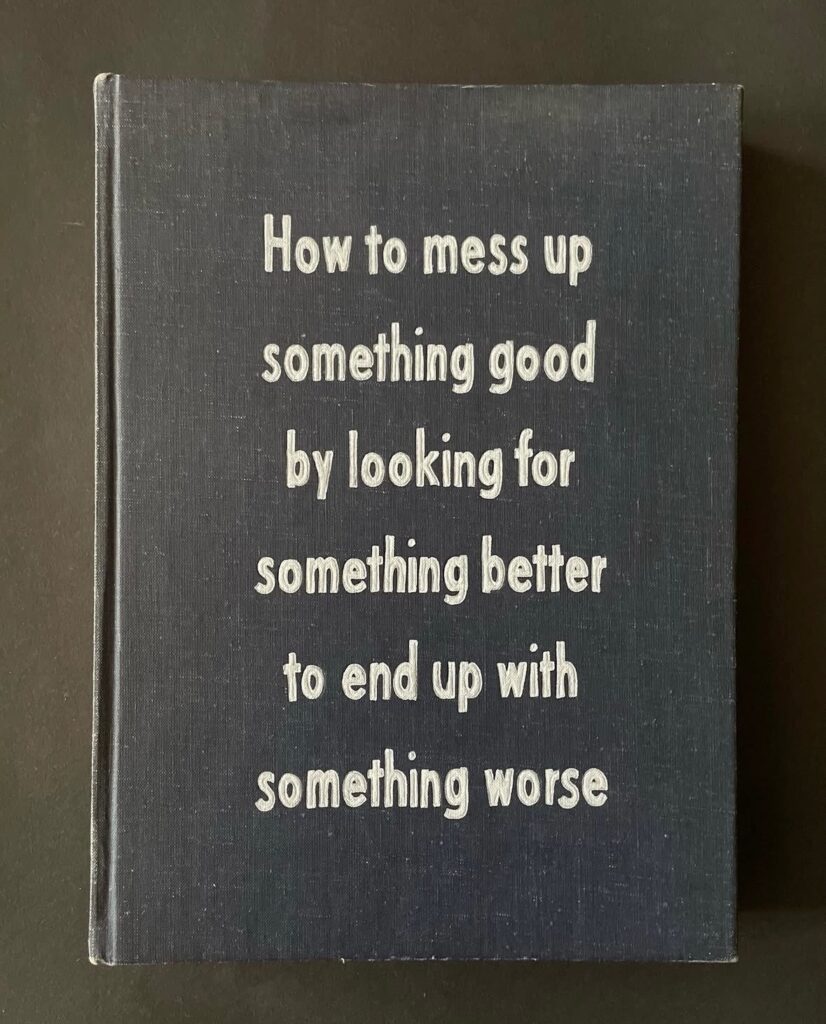
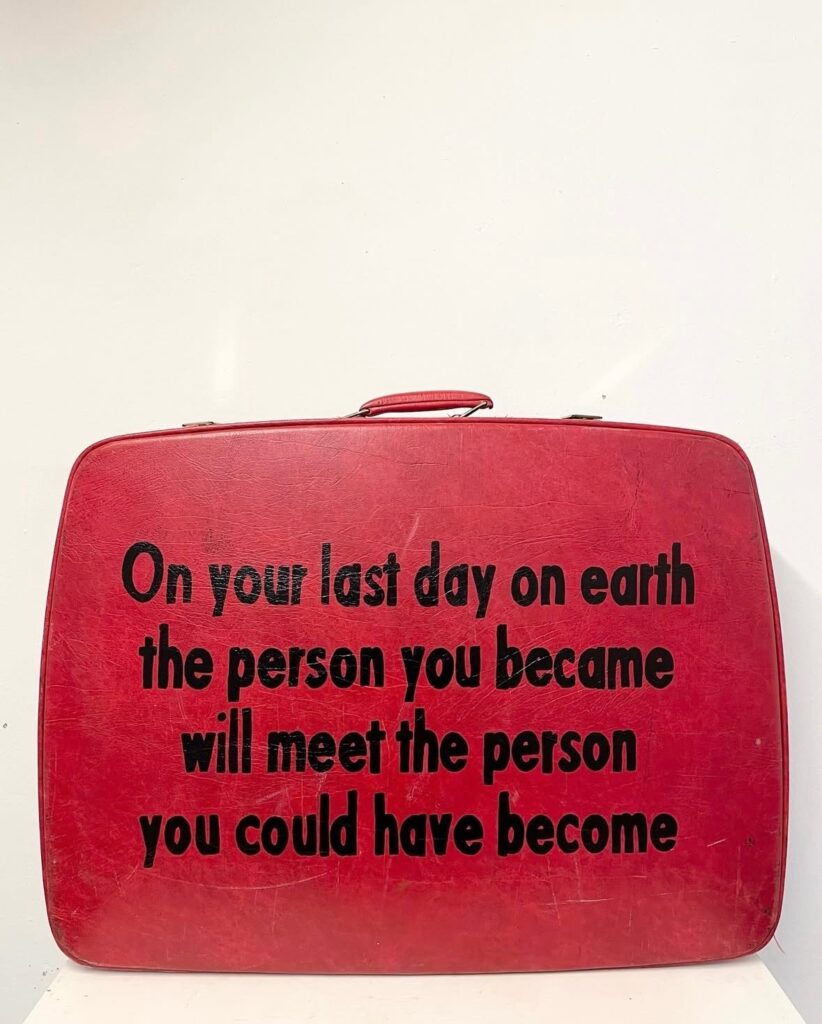
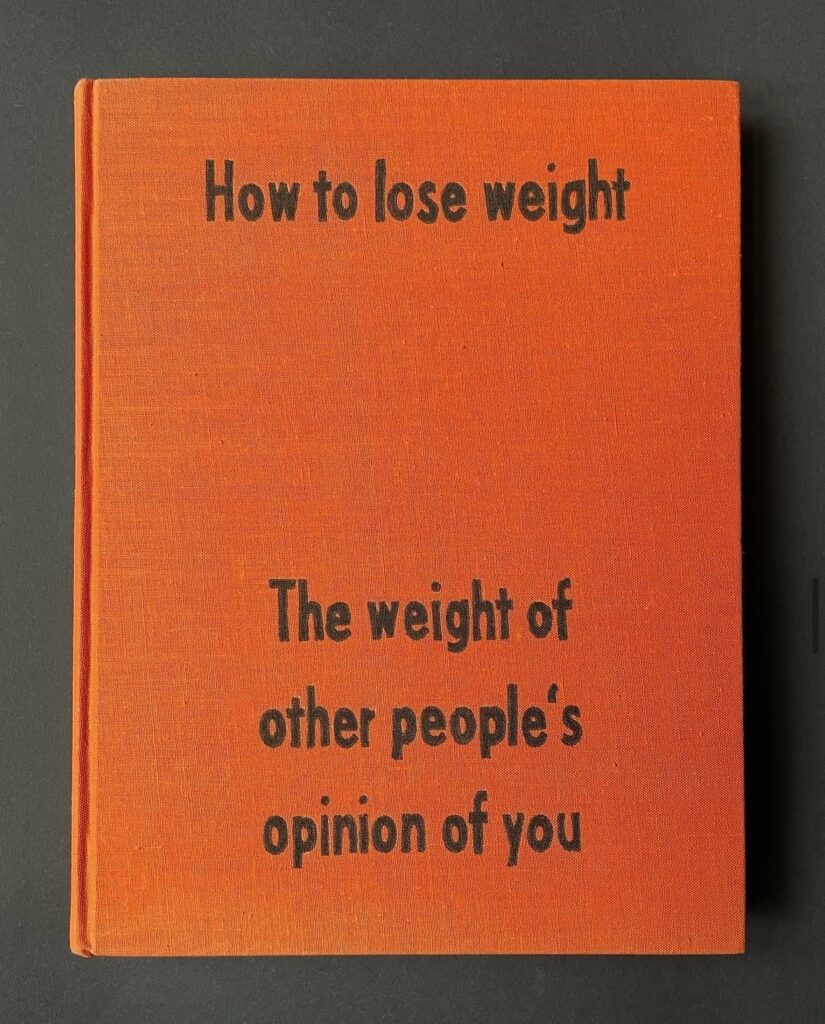
Johan Deckmann (b. 1976, Copenhagen) is a Copenhagen-based artist, a psychotherapist, and a writer. Deckmann creates works that probe life’s complexities through amusing, wittily fabricated book titles and other phrases painted onto fictional self-help books and canvases.
The result is a hybrid of painting, poetry, and psychology that uses the power of language in therapy and art to prompt self-reflection; drawing on strengths from both fields, creatively and intellectually, he forges a synergy that drives the work. His psychological background and practice are fundamental and central, providing content and keeping personal responsibility in view.
The titles are strikingly relatable across nationality, gender, cultural background, and age, and some pieces temper darker themes with playfulness by adopting instruction-kit language, reflecting his belief that humor is essential to staying not only sane but also happy and that humor is the instrument of the light-hearted. The connection between his work, psychology, and life is rational and deliberate, and the pieces mirror his perception of existence with its beauty, humor, fear, meaning and lack of meaning, while above all maintaining ruthless honesty.
Hi Johan! It’s a pleasure to sit down with you! First question that I always ask: What does a typical day look like for you in Copenhagen?
Johan: I start my mornings taking care of my children. Once my youngest has been dropped off at school, I usually go for a quiet walk around my neighborhood while listening to music. Copenhagen has a calm rhythm that I love. From the very beginning of the day, I can already find myself writing down thoughts and observing my surroundings. A sentence can arrive while I’m walking, talking to someone, buying groceries, or avoiding an email I should probably answer.
So I guess I spend a lot of time thinking about existence and human behavior while trying to turn that into a profession. My days move between being a father, making art, answering messages, and dealing with practical things. Sometimes a single sentence takes weeks before it finally falls into place.
A lot of people imagine artists waiting for inspiration. My experience is that inspiration mainly comes from within. Small impulses emerging from the conscious and subconscious mind alike. Like a garden where both flowers and weeds grow naturally. For me, it’s about being sensitive enough to notice what’s already floating around inside your own mind and in ordinary life. Being receptive to the natural creativity and innate expression that I believe we’re all born with. I think that’s far more important than learning creativity through theory. That’s the quality I’m most drawn to and fascinated by in other artists. Not their education or their narrative.
I’m curious—what was it like growing up in Denmark? And what kind of kid were you? What did you enjoy doing?
Johan: Growing up in Denmark was safe in many ways. I was sensitive, introspective, and imaginative. Humor also became important to me from a very early age. I loved drawing, writing short stories and cartoons, making music, and simply trying to understand people. I think I was both very sensitive and very observant quite early on. Not necessarily the loud creative kid. More the one quietly studying the room.
I was also fascinated by understanding people. Which sounds noble, but it’s also a survival strategy. Many children become emotionally intelligent because they have to develop that ability. I was also very imaginative. I could disappear into my own thoughts for hours, which luckily turned out to be useful professionally later in life.
Do you remember roughly when your creative side first began to show? And when did you start taking being an artist seriously?
Johan: Creativity was always there in one form or another. Even as a child, I was constantly making things. My mother, who was a painter, also inspired me. I think becoming a psychotherapist helped me become the artist I am today. Therapy taught me that human beings are incredibly predictable and incredibly mysterious at the same time. That tension became my material. At some point I realized that the short phrases I was writing affected people very deeply, sometimes more deeply than long explanations. That changed something for me.
Your works often look like self-help books that promise answers, but they usually expose the impossibility, absurdity, or pain behind those promises. What drew you to that format?
Johan: I think self-help books somehow reveal what a culture secretly suffers from. They promise transformation, relief, clarity, and control. They speak directly to our vulnerability. I became interested in the tension between those promises and the reality of being human. The covers look reassuring, but the titles often reveal something much more uncomfortable underneath.
If millions of people buy books about boundaries, confidence, stress, authenticity, relationships, anxiety, or purpose, that tells you something profound about modern life. Most people secretly long for a sentence that will remove uncertainty forever. But uncertainty is the price of consciousness. The self-help format fascinated me because it already contains hope, desperation, denial, humor, suffering, capitalism, vulnerability, performance, and loneliness all at once. It’s an incredibly efficient object.
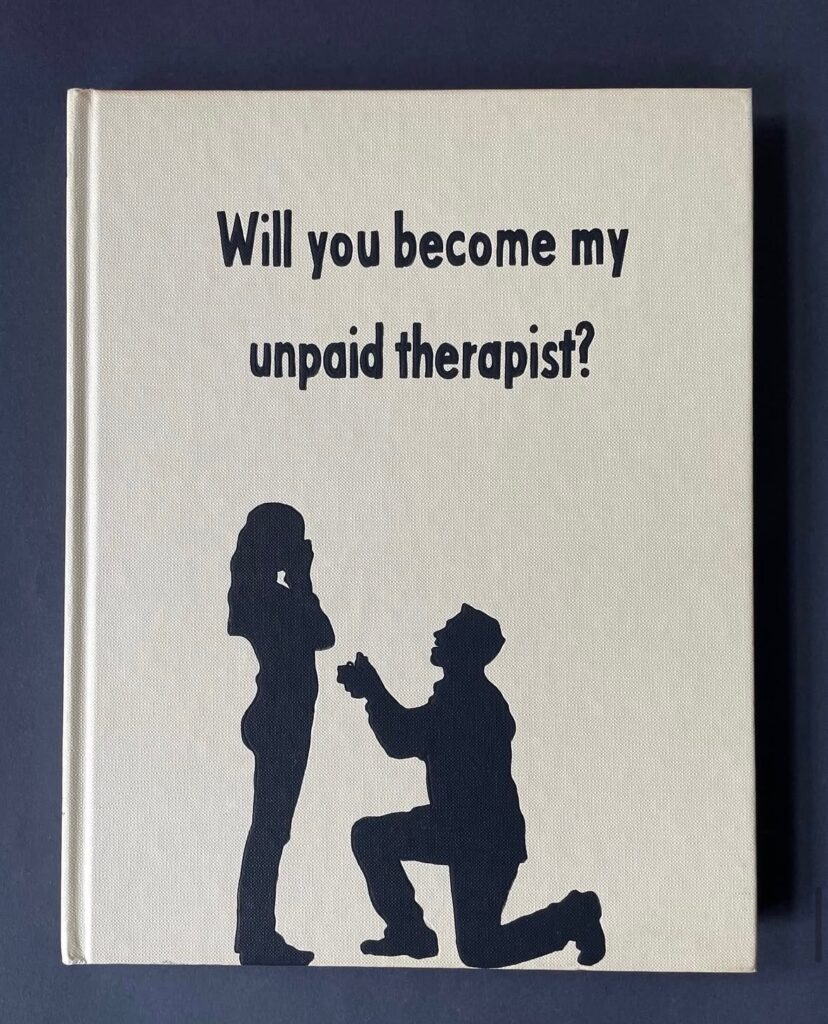
A lot of your pieces are funny at first glance, but become more uncomfortable the longer you sit with them. Is that delayed emotional reaction something you consciously aim for?
Johan: Yes, very consciously. I love it when a work changes while you’re looking at it. First there’s recognition, then humor, then perhaps discomfort, and finally reflection. Ideally, the work keeps unfolding psychologically, because that second moment is often where the real artwork begins.
Humor lowers our psychological defenses. It sneaks truth past the inner layer. If something is too direct, people instinctively protect themselves. But if they laugh first, the sentence can reach them more deeply before the ego has time to react. I think good humor is psychologically dangerous, in the best possible way.
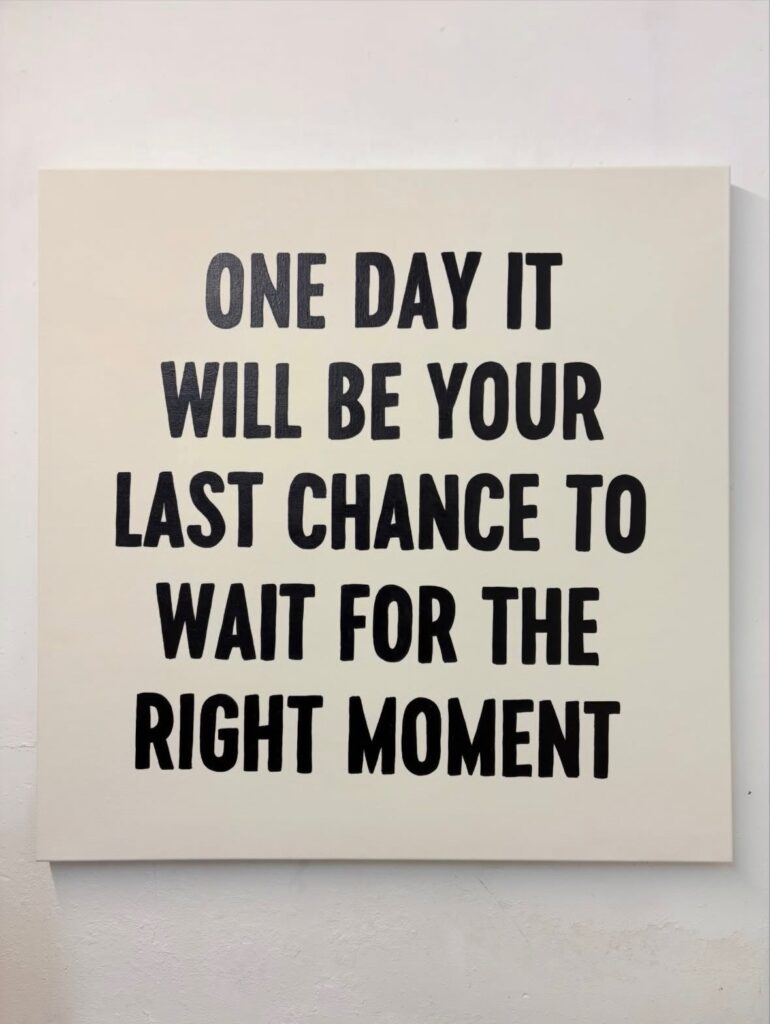
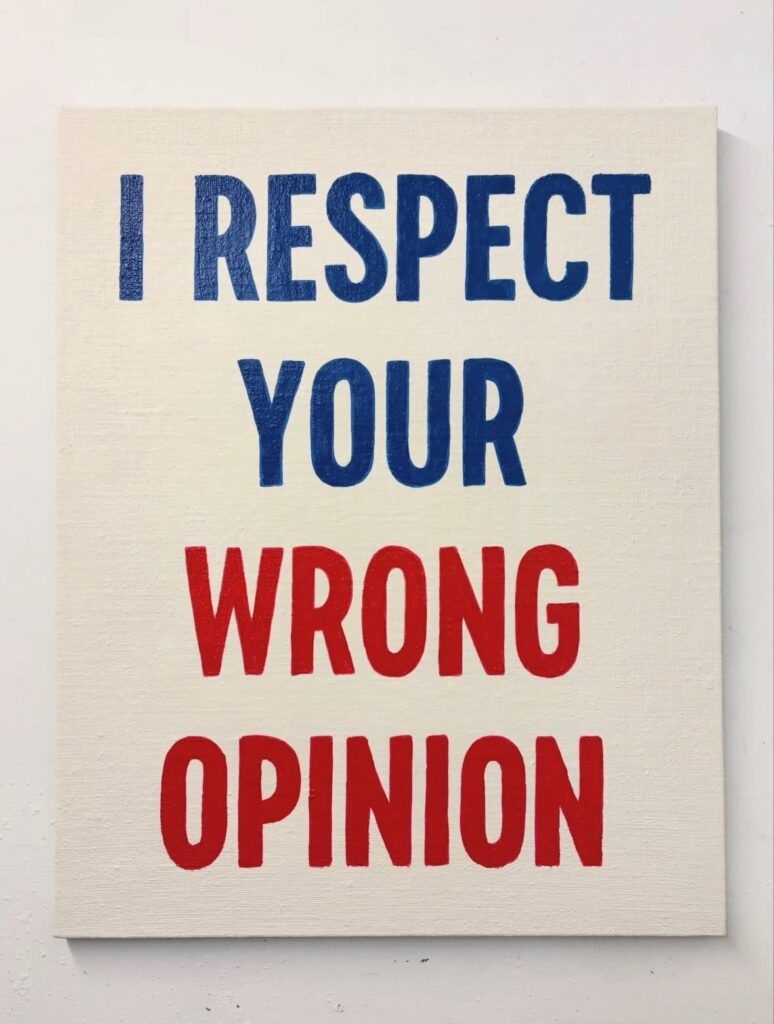
You work with very few words, yet the phrases often feel like entire psychological situations compressed into a single sentence. How do you know when a phrase is finished?
Johan: Usually it’s about compression. I keep reducing a sentence until removing one more word would destroy the tension. The final phrase has to feel inevitable, almost as if it already existed before I wrote it. Whenever possible, I want a sentence to hold several emotional truths at the same time. I usually know it’s finished when taking away just one more word weakens the tension. A single word can make something feel profound, pretentious, honest, fake, funny, cruel, or completely lifeless. Minimal language is unforgiving. There’s nowhere to hide. Sometimes a phrase feels finished because it suddenly becomes slightly bigger than me. As if it starts belonging to other people. That’s usually a good sign.
Do your titles usually come from observation or personal experience?
Johan: Both. Observation and personal experience constantly overlap. The work comes from paying close attention to human behavior, including my own and the people around me. But my works are not autobiographical. Many of my works begins with an uncomfortable moment of recognition. I think the more honestly you observe yourself and others, the more universally recognizable the work becomes.
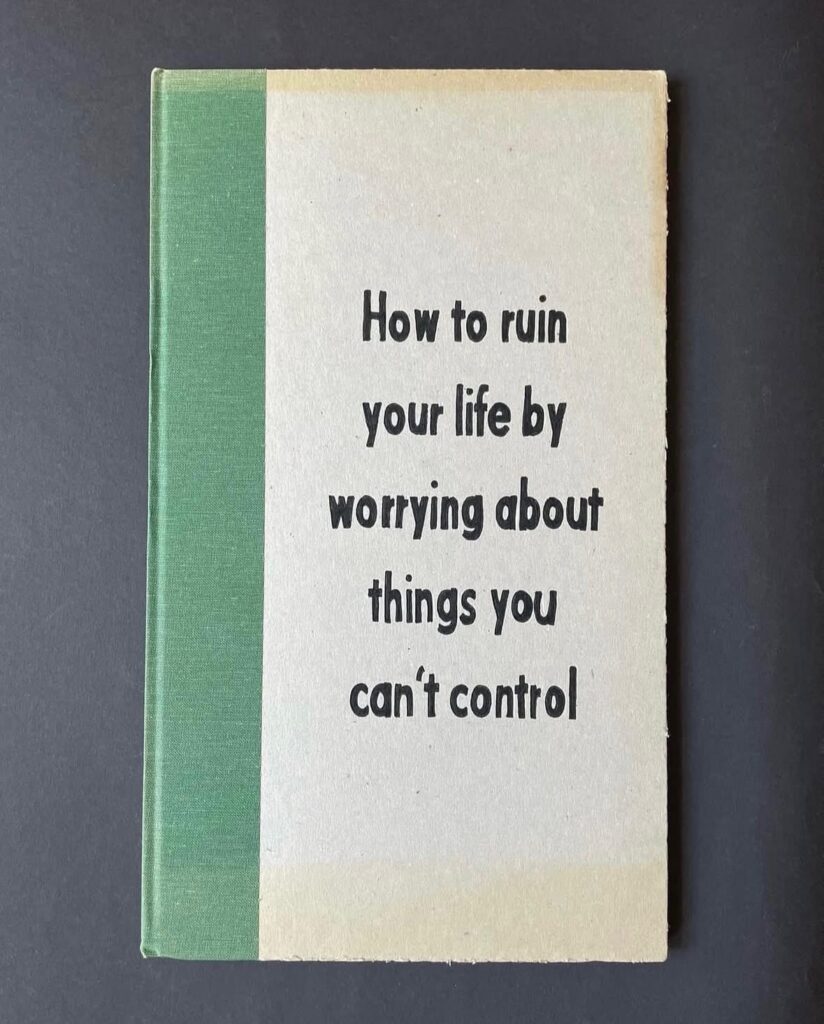
There’s something almost brutal about the simplicity of the format: a book cover, a title, a direct emotional hit. Do you think restraint makes the work more honest?
Johan: Yes, I think restraint demands responsibility. You can hide a weak idea inside complexity. You can’t really hide inside a simple sentence. A simple sentence can become incredibly direct. I’m interested in saying as much as possible with as little as possible. The world is constantly screaming for attention, so I became interested in reduction rather than escalation.
You are both an artist and a psychotherapist. Do those two practices ever feel in conflict, or do they naturally feed each other?
Johan: They definitely feed each other, but they also carry very different ethical responsibilities. Psychology taught me to listen carefully to language and contradiction. Art allows me to transform those observations into something poetic, visual, and public. Therapy tries to help a person move forward in life. Art doesn’t necessarily solve anything. It simply makes something visible.
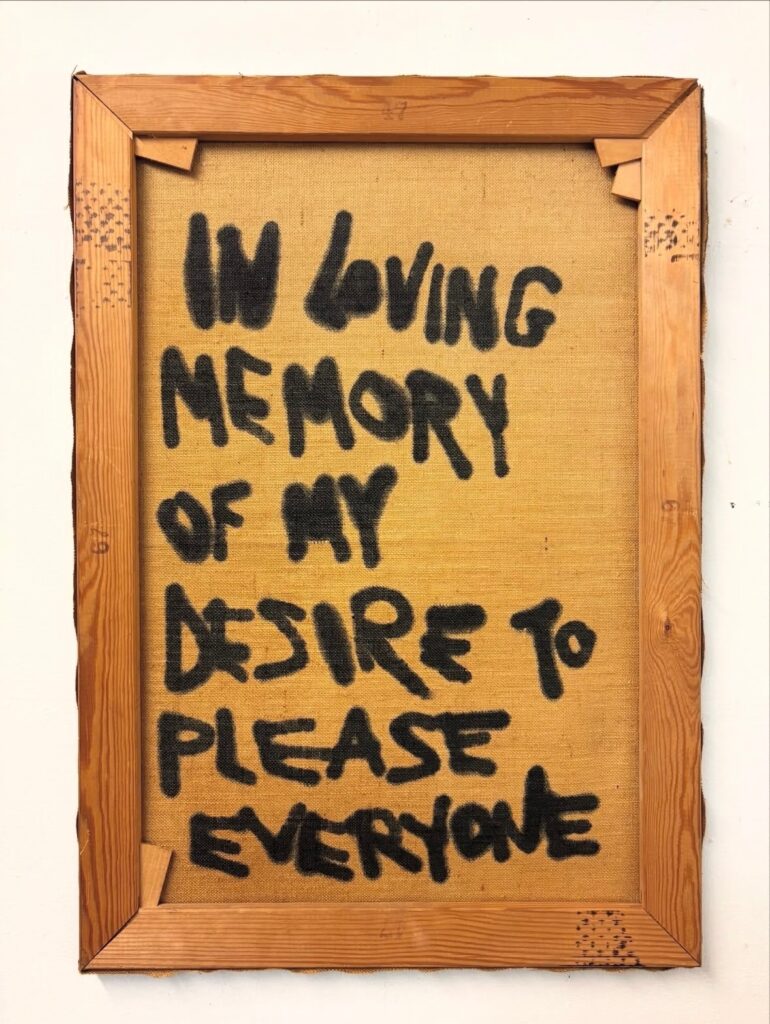
In therapy, language can open things up, but it can also become a defense mechanism. How do you think about the power and danger of words?
Johan: Words are incredibly powerful because they shape perception. A sentence can liberate someone or imprison them. In therapy, language can create awareness, but it can also become a form of avoidance. People can intellectualize themselves a very long way from their actual emotions. I think that’s true culturally as well. Many people today are trapped inside highly sophisticated explanations of their lives instead of actually living them. Sometimes language becomes emotional camouflage. I’m interested in sentences that interrupt that process, even if only for a moment.
You’ve mentioned personal responsibility as central to your work. What does responsibility mean to you psychologically—and when does it become too heavy?
Johan: Responsibility is frightening because it takes away certain excuses. But it also creates freedom. I think many people unconsciously want freedom without responsibility, which is psychologically impossible. At the same time, responsibility becomes unhealthy when people start believing they should be able to control everything, their emotions, relationships, future, success, or identity. That becomes self-violence disguised as self-improvement.
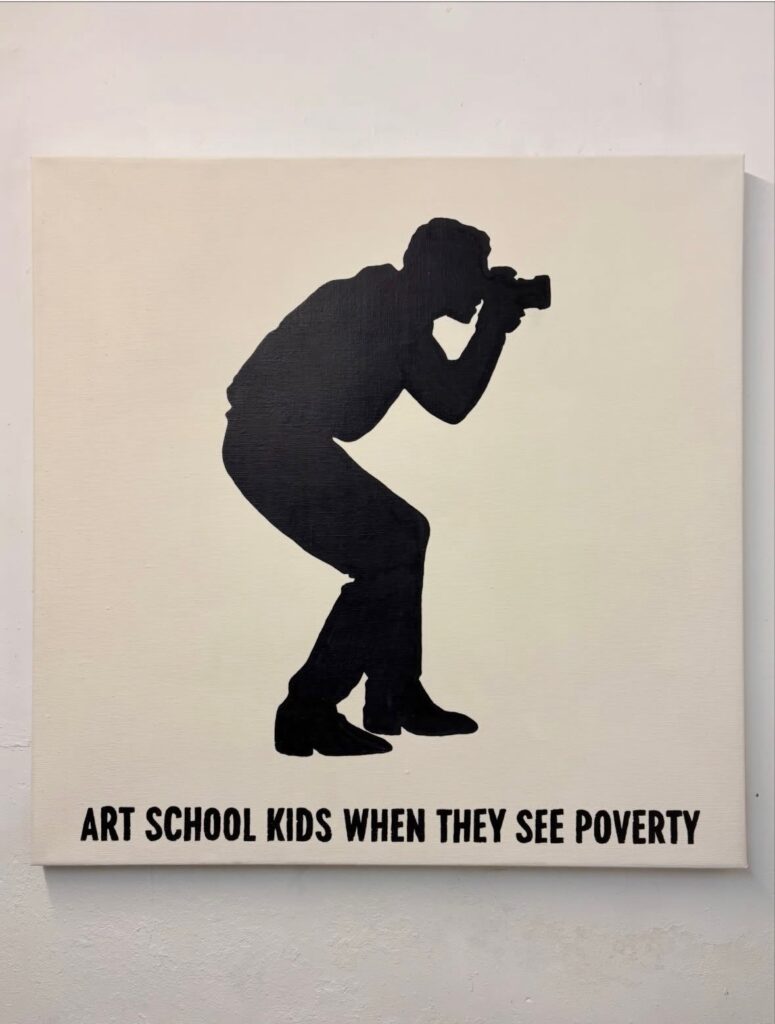
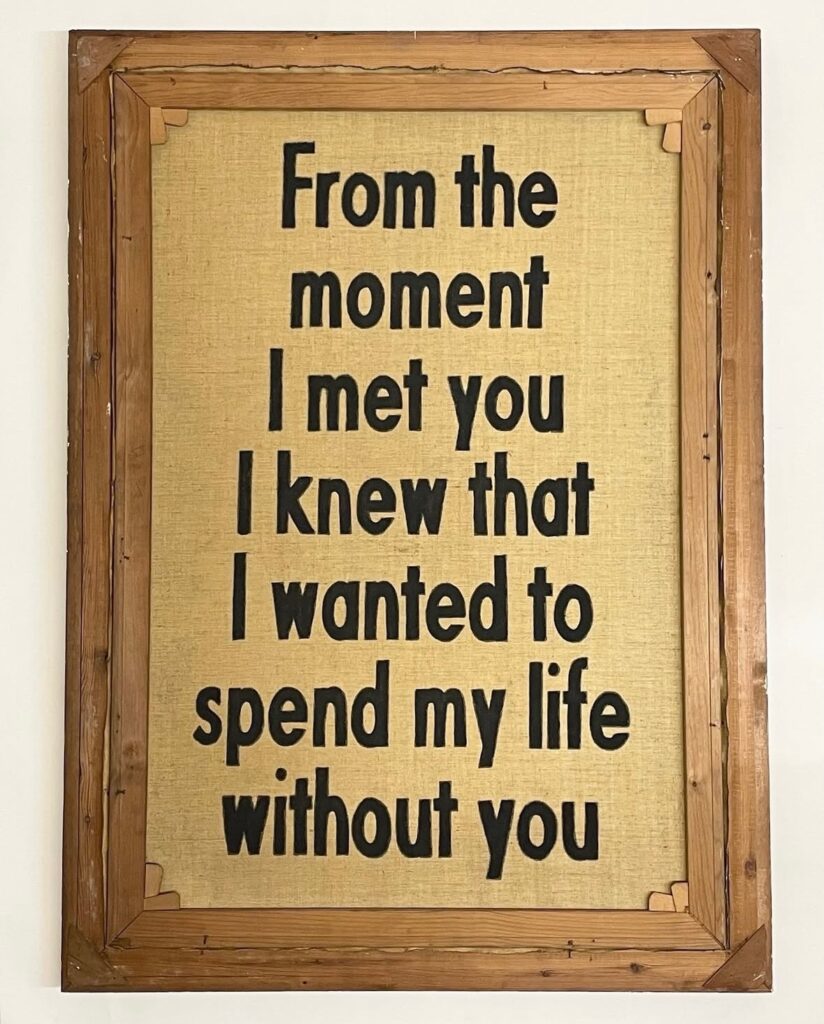
A lot of contemporary culture encourages us to explain ourselves, diagnose ourselves, and optimize ourselves. Do you see your work as a critique of that culture, or as part of it?
Johan: Both. My work participates in that culture because it uses psychological language, but it also questions our obsession with endlessly optimizing or sabotaging ourselves. I’m inside the very culture I partly critique. I use many of the same language structures, and I think that contradiction is important.
As a therapist, you encounter people’s private contradictions. As an artist, you turn contradictions into public objects. How do you protect the ethical boundary between those two worlds?
Johan: That boundary is extremely important to me. I never use private therapeutic material directly. Ever. The work comes from universal human patterns, not from exposing individuals. Human contradiction belongs to all of us. The goal is recognition, not exposure.
Do you believe art can have something close to a therapeutic effect, or is that too simple a way to talk about it?
Johan: I absolutely believe art can have something therapeutic about it, but not in the simple sense of “healing.” In fact, I believe almost anything has the potential to be therapeutic, from a kind look at exactly the right moment, to a particular scent, a piece of music, or simply walking through a city.
Sometimes art comforts you. Sometimes it confronts you. Sometimes it simply makes you feel a little less alone inside your own mind. That can be profoundly powerful. I think art creates recognition, and recognition can genuinely change people. For me, the purpose of art isn’t necessarily to comfort you. Sometimes the most loving thing a work can do is confront you honestly, like a sincere, well-intentioned friend.
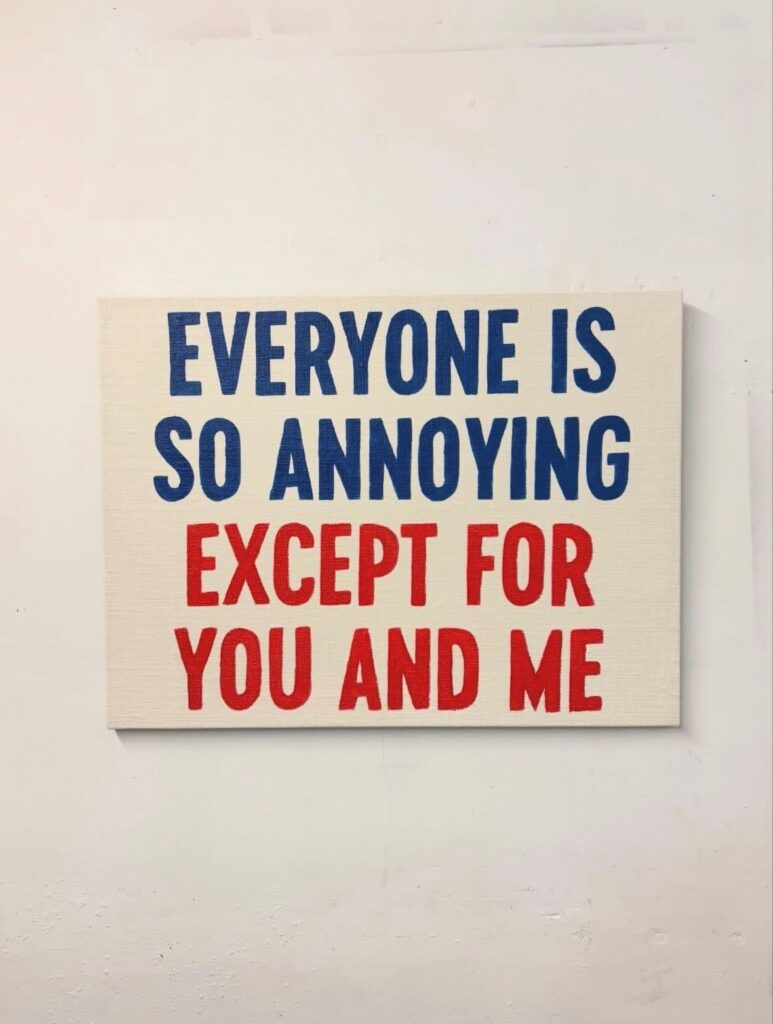
Your work often uses humor as a way into fear, shame, loneliness, or failure. What can humor say that sincerity sometimes cannot?
Johan: Humor can simply bypass our defenses. If something is too sincere too quickly, people often resist it. Humor opens the door quietly. Then, almost before they realize it, people find themselves looking at something true. Humor also contains humility. Pure sincerity can sometimes become self-important very quickly. Humor quietly admits, “We all behave ridiculously sometimes. Me included.” That creates intimacy, and perhaps even a sense of shared humanity.
You’ve described humor as essential to staying sane and happy. Has humor always been a survival tool for you personally?
Johan: Yes, but not as a form of avoidance, more as a way of seeing the world. There’s something deeply human about being able to laugh while fully recognizing the tragedy or absurdity of existence. I also think humor often reflects psychological flexibility. The ability to laugh at yourself is deeply connected to wisdom.
I grew up in a family with a wonderful sense of humor, and I learned a great deal from that. I especially remember three of my cousins, who were incredibly funny. Some of the funniest people I’ve ever met are also the ones who are most psychologically aware of suffering.
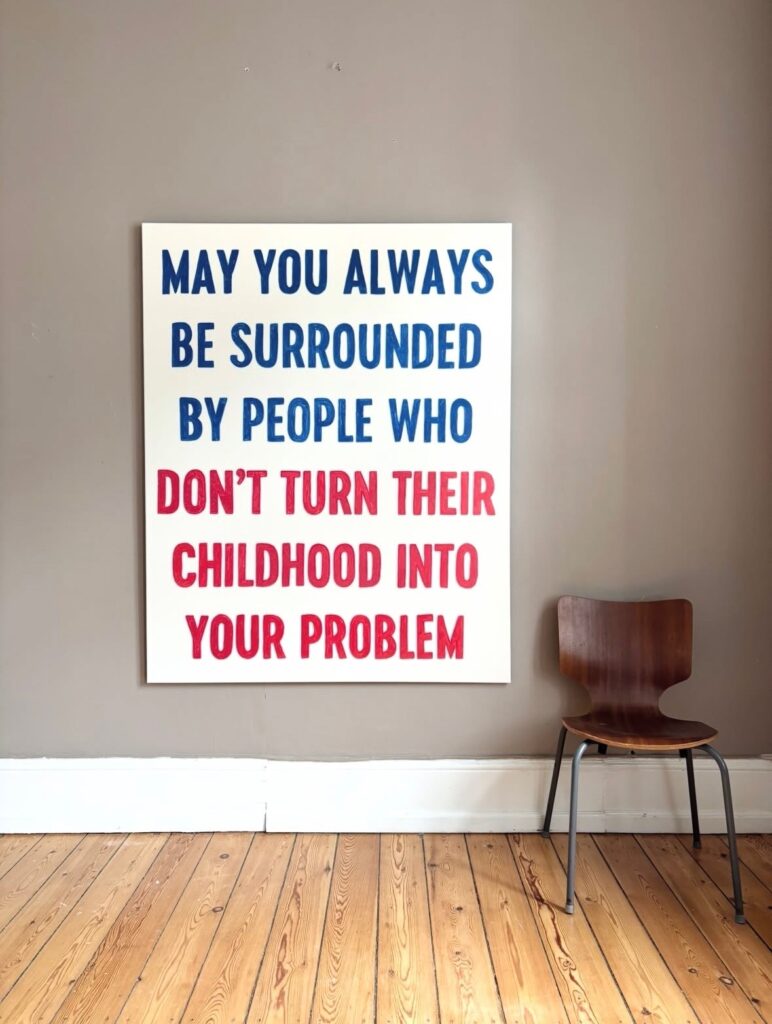
Because your pieces are so relatable, people probably project a lot of themselves into them. Has anyone’s reaction to a work ever changed your understanding of it?
Johan: Yes, many times. Sometimes people cry over works I thought were funny. Sometimes they laugh at works I thought were tragic. I find that fascinating. At the same time, I always have my own understanding of a work. Even if I believe a piece is successful and it’s misunderstood or poorly received, that doesn’t necessarily change my opinion of it. It’s still a good work to me.
Do you ever worry that being very good at observing human behavior can make it harder to simply live?
Johan: Observation can sometimes create distance. If you become too analytical, you risk standing outside your own life while examining it. I think balance is essential. You still have to participate emotionally in life, not just study it. Otherwise, you can accidentally become a spectator in your own existence. At the same time, I feel that my psychological understanding has become so integrated into who I am that I no longer experience it as something separate. I feel like I simply observe the world from the person I’ve become.
What are you personally still trying to understand about fear?
Johan: I’m still trying to understand why fear so often disguises itself as certainty, control, perfectionism, overthinking, avoidance, staying busy, repeatedly choosing the wrong partner, or aggression. Fear is remarkably creative. It wears many different masks.
Do you think your work comes more from compassion for human weakness, or frustration with it?
Johan: Compassion, definitely. Even when the work is sharp or dark, it comes from recognition rather than judgment. I see fear, and human weakness more generally, as something deeply universal.
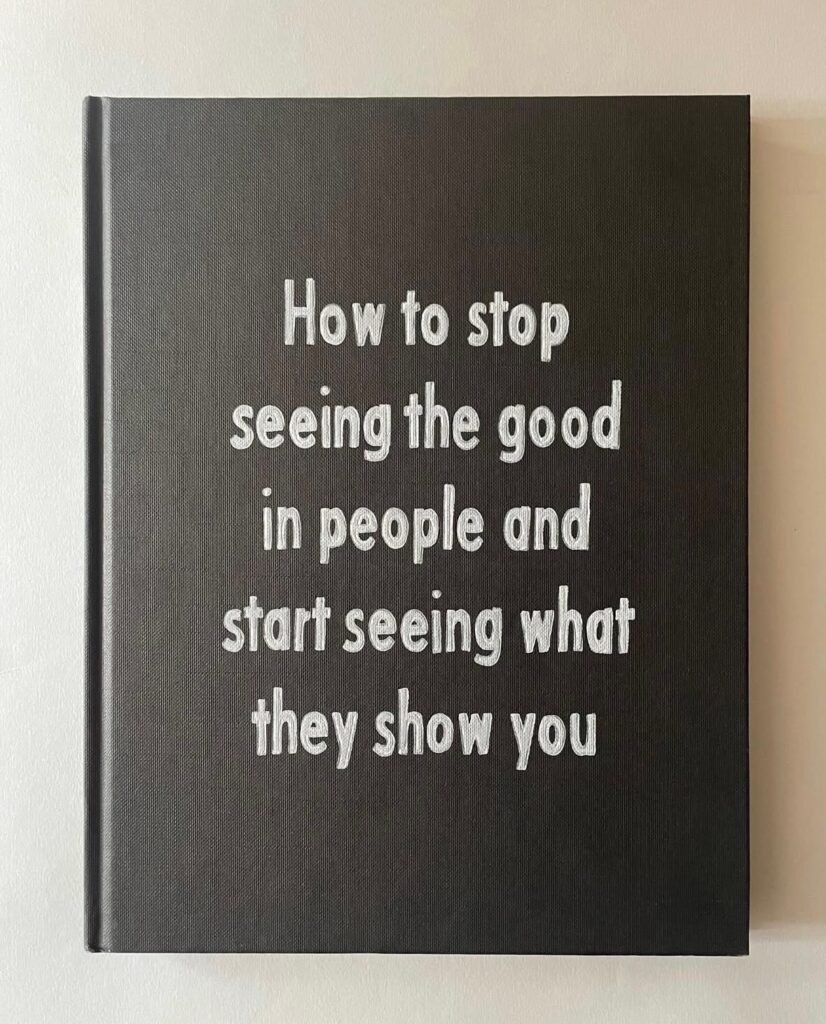
What do you think people are most afraid to admit about themselves today?
Johan: I think many people are afraid to admit how uncertain they really feel. There’s enormous pressure to appear emotionally coherent, confident, successful, optimized, and mentally in control all the time.
Can you walk me through your creative process from beginning to end?
Johan: I write regularly, almost every day. The process usually starts with a thought or an observation. The next step is a sentence fragment. Then I reduce, restructure, and refine the sentence. After that comes the physical execution of the work with typography, spacing and scale. I think people often underestimate how much visual psychology exists within simplicity.
So, with everything we’ve talked about, what are you ultimately hoping to convey?
Johan: I’m hoping to create recognition. Moments when people suddenly feel seen, exposed, understood, amused, or emotionally interrupted. I want the work to function as a kind of psychological mirror.
Okay Johan, now for something completely different. In a parallel universe, who would you be, and what would you be doing?
Johan: In a parallel universe, I think I’d be doing almost exactly what I’m doing now. I’m very honest with myself about the life I live. I genuinely love my days. I love being able to give something of myself to the people I love, and I love creating. The only difference is that I’d probably have greater financial freedom, simply so I could give even more to the people I love and travel more with them.
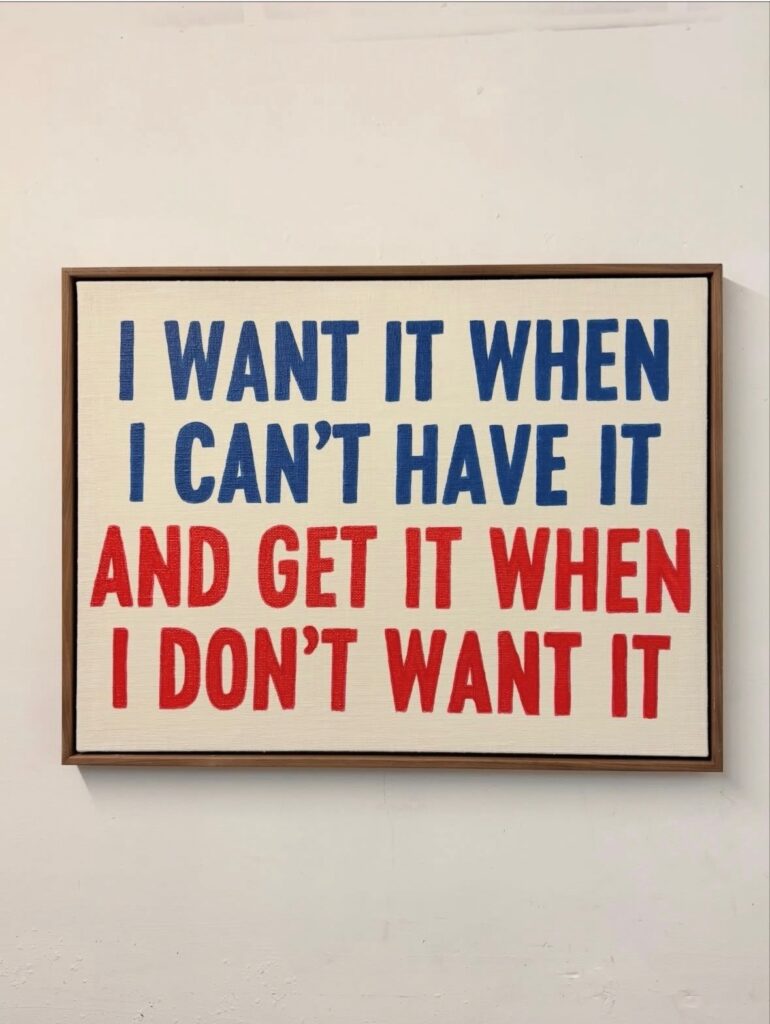
Outside of art, what’s something you’re obsessed with right now? Maybe a hobby, a show, or even a food that keeps you grounded or inspired?
Johan: Besides my family and being a father, music has always been a huge part of my life. I’ve been writing songs since I was e teenager. It’s something much more intimate and private than my visual art, but it means a great deal to me.
Can you tell me about a connection with someone that had a profound impact on your life?
Johan: When I was studying psychology, I had a mentor who became incredibly important to me. Growing up, I didn’t have a father who was interested in being a father or who was able to communicate on a personal level. My mentor was in his eighties and had spent decades working as a therapist. He taught me the importance of being honest with yourself, having healthy boundaries, and seeing things clearly. Most importantly, he taught me the art of being genuinely present with another human being. That has influenced me profoundly, both as a father, a husband, and an artist.
What qualities matter most to you in the people you choose to spend time with?
Johan: First and foremost: kindness, humility, respect, and empathy. Those qualities can be found in every part of society, regardless of background. But when they’re missing, I see it as a significant absence. After that, emotional intelligence and creativity. I don’t mean creativity only in an artistic sense. I mean the ability to think creatively, whatever your profession or background may be. I’m naturally drawn to people who possess that quality. And finally, conscientiousness.
Is there anybody you particularly look up to?
Johan: Above all, I admire people who possess those qualities I just mentioned. Those are the people I truly look up to, people I would trust with something important. Sometimes you can recognize those qualities within just a few seconds of meeting someone. As for artists, I’ve long admired Louise Bourgeois, Domenico Gnoli, Marisol Escobar, Claes Oldenburg, Morris Louis, Sam Haskins, and Allen Jones.
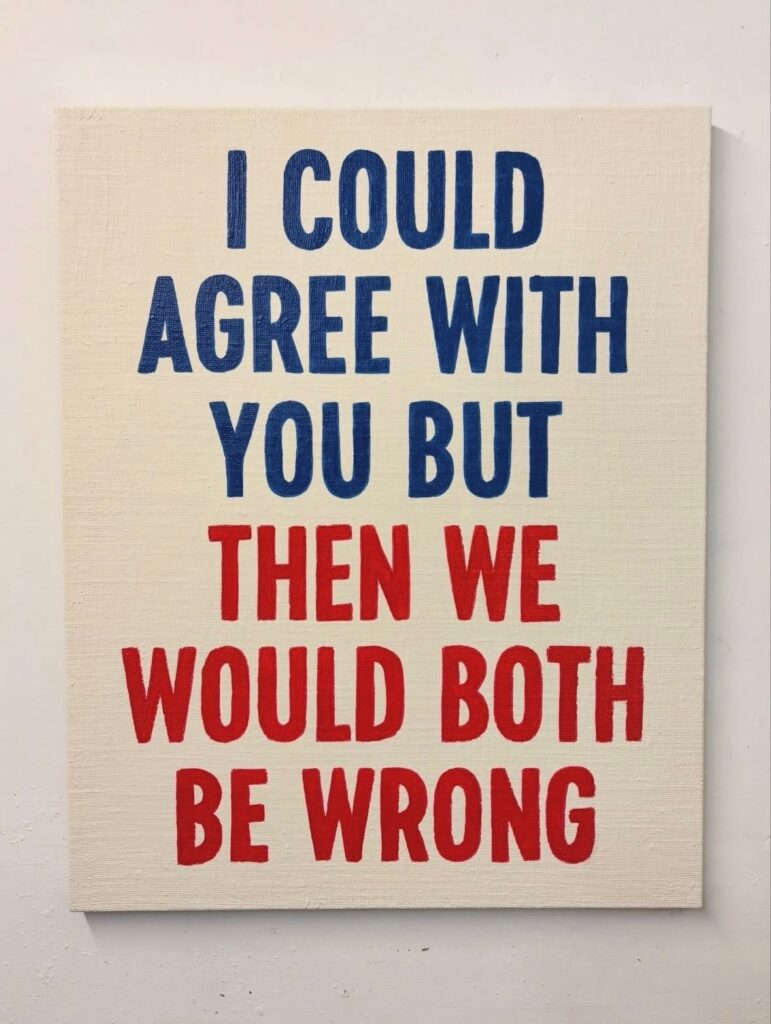
What motivates you?
Johan: Curiosity, the desire to create and the desire to understand people, existence, and meaning. And honestly, my children motivate me enormously. They’ve taught me the most important lessons of my life simply by being themselves. And then there’s the hope of creating something that gives another person a brief moment of clarity in the middle of a disturbed world.
How would you describe a perfect day?
Johan: Feeling at ease despite the state of the world. Spending time with my children. Being there for the people I love. Making something that surprises even me. And listening to beautiful music.
Alright Johan, I always end my interviews with the same two questions. The first is: What are your favorite films, and why?
Johan: The first films that come to mind are The Revenant, because of the extraordinary lengths it portrays a human being willing to go to in pursuit of a goal. The Deer Hunter, for its psychological depth and the fate of its characters. The Godfather Part 1 and 2, for its portrayal of family, loyalty, and honor. Hitchcock’s Vertigo, for its perfect balance between suspense and a deeply sympathetic protagonist. And Into the Wild, because it beautifully captures both the longing for adventure and the quiet frustration that can exist within a young person.
And finally, what songs or artists are you listening to the most these days?
Johan: That changes constantly. I’m always searching for new music and artists who move me or surprise me. Just as with art, I couldn’t care less about a musician’s background. Someone could spend their entire life alone in a cabin outside Seattle and still create something beautiful and deeply relevant simply because of who they are. To me, that’s genuine art. Not something learned or manufactured to fit an ideal. I’m often drawn to music that contains both beauty and a certain melancholy at the same time. Right now, I’ve been listening to the band See You Soon.