
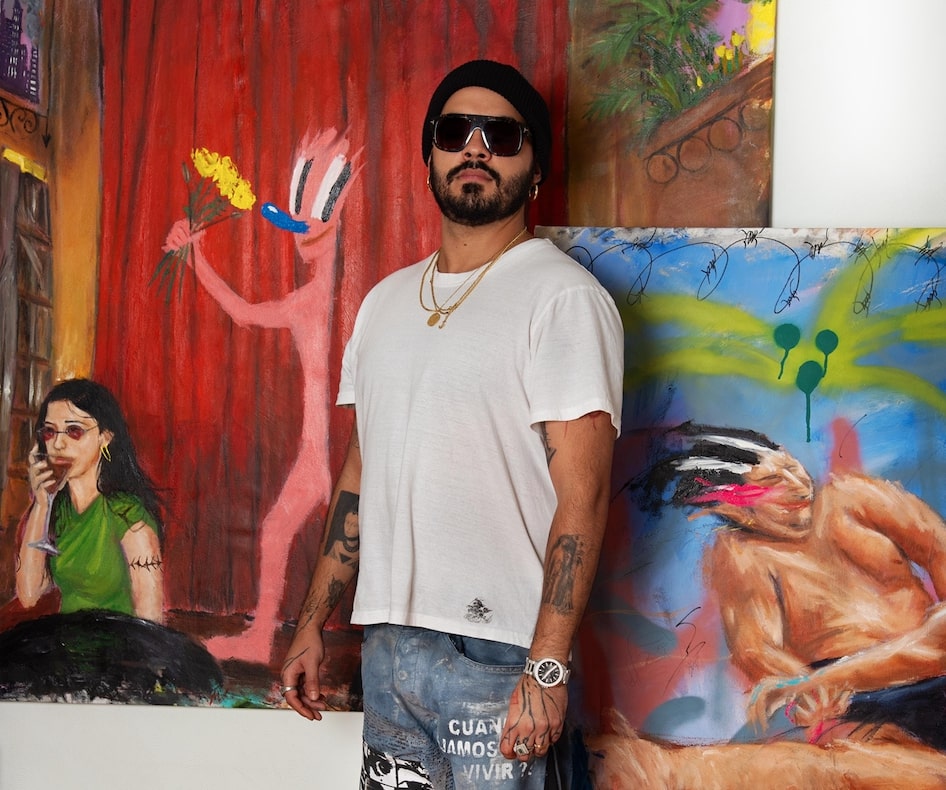
Jordi Alós (1993, Mexico City) studied Advertising Design at the Institute of Marketing and Advertising in Mexico City. During his university studies he realized that there was a shortage in the inclusion of art in advertising design, where he discovered that the limits of “what has to be” and “ought to be” gave a special space for pictorial expression. At that same time he met artists such as Henrik Uldalen and Sara Sanz, who motivated him to continue his path as a professional artist.
Jordi Alós’s work operates as a narrative exploring themes of liberation and identity, beginning with life in underground street cultures and culminating in a reflection on how individual and collective experiences shape us. His paintings—ranging from abstract representations and depictions of everyday scenes to his signature “Machangos”—are deeply personal, drawing from his origins and his current life surrounded by abundance. Alós aims to merge these realities through his art.
Profile picture: _guedea
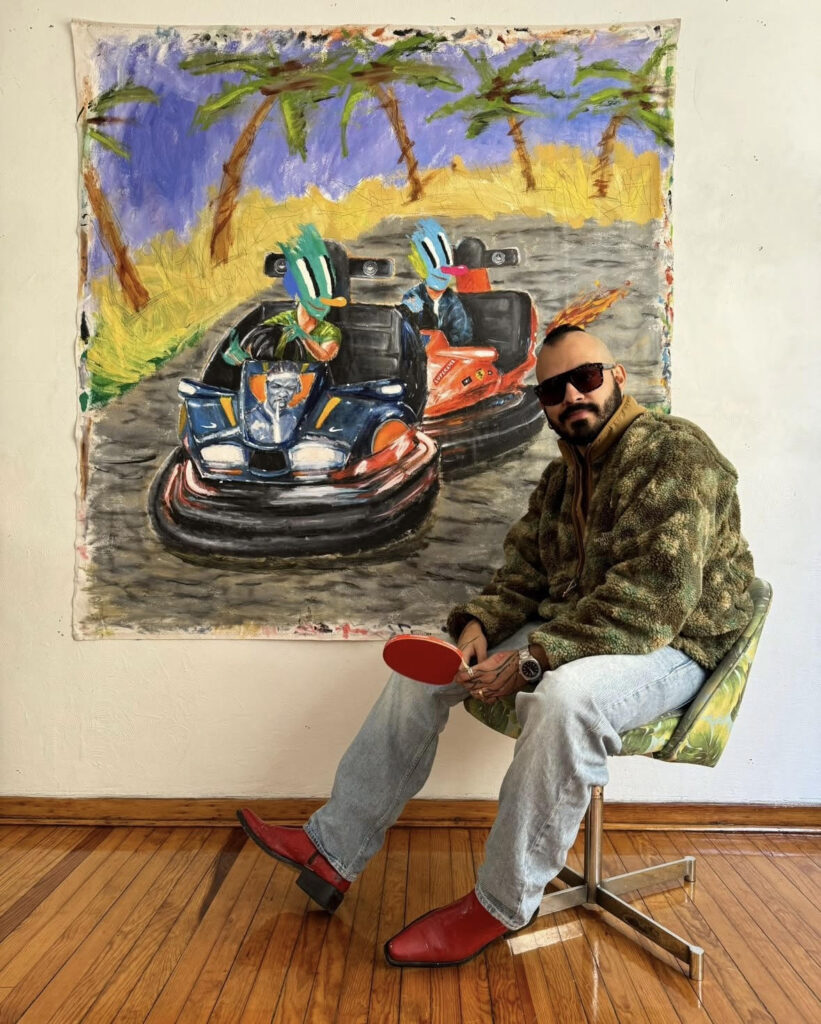
Hi Jordi! It’s a pleasure to sit down with you! First question that I always ask. How does a regular day look like for you in Mexico City?
Jordi: Hi Ruben, first of all I want to thank you for giving me this moment the pleasure is all mine. A normal day? Well, I really don’t have one; my days vary one to another In Mexico City. An example of a day in my life is, waking up a bit late, having a slow morning, enjoying my space. I like to look out the window, and take a look at the chaos happening outside. I grew up here between Roma and Condesa, I walk these streets every day, I get inspiraHon from those moments that life has given me. I visit my family, they live a few blocks away, we drink and eat together. AIer that I walk back to the apartment and get to work. I let the music play loud and paint part of the aIernoon and evening alongside my dog. I like to be nocturnal for painHng. Everything transforms, and the atmosphere changes. Sometimes there is an event or a party, or friends come to the studio.
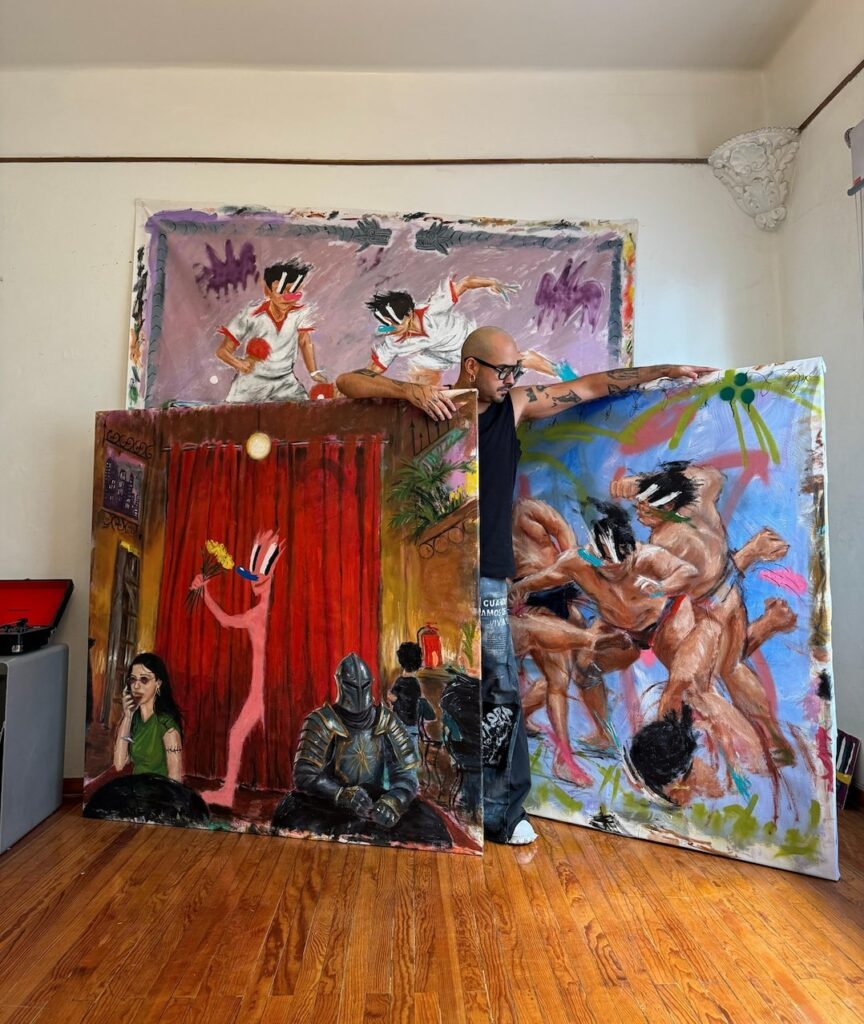
I’m curious, growing up what kind of kid were you? What did you enjoy doing, and how did you spend your time?
Jordi: I always tried to be as normal as possible, but I couldn’t; there was a lot of curiosity to know more about the world around me. I think I was introverted; I was the first grandchild in the family, my parents were teenagers when they had me, so basically, I grew up alongside them in parHes and their adolescence. As a child spent a lot of time in my uncle’s café, where my grandparents and family worked. I would spend hours flipping through art books and magazines, drawing and replicating some brochures and painHngs, listening to jazz, ambient, and other genres that played in the background. My childhood was surrounded by art, I loved listening to my grandfather stories and enjoyed going to very bohemian family gatherings. All of my experiences as a child have gotten me where I am today, sitting here having this interview with you. The only normal thing about me as a kid was that I liked drawing pictures and playing Gameboy.
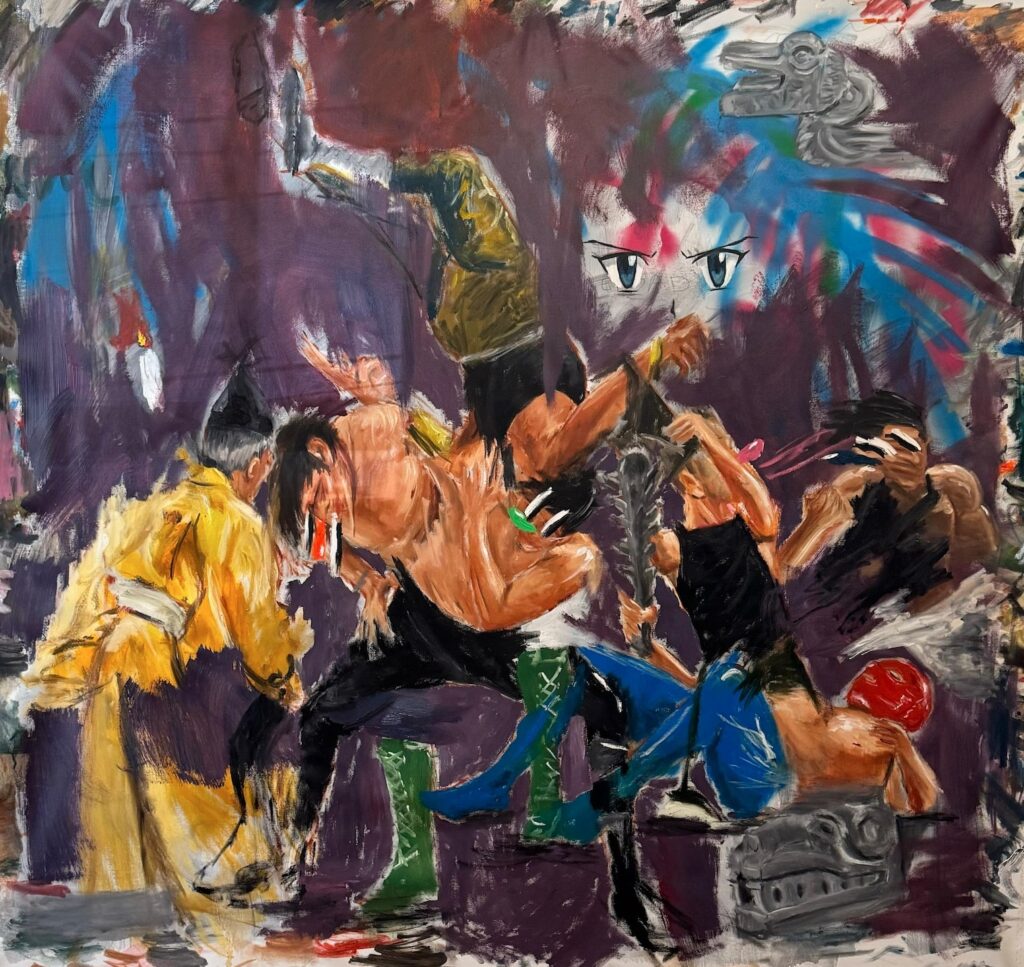
Alright, so when did you start to paint, and when did you start taking being an artist seriously?
Jordi: Well, interestingly enough, I started painting as a child, but I gave it up for many years. I took it up again about 10 years ago, at the time, I was half way through college as a design and advertising major. This is where I discovered that I was missing a main piece in my life, that authenticity and way of expression that only art could give me. I met people who inspired me to believe in my talent and I began to follow that dream I had set aside as a child. I took my work seriously about 7 years ago, and since then I haven’t stopped.
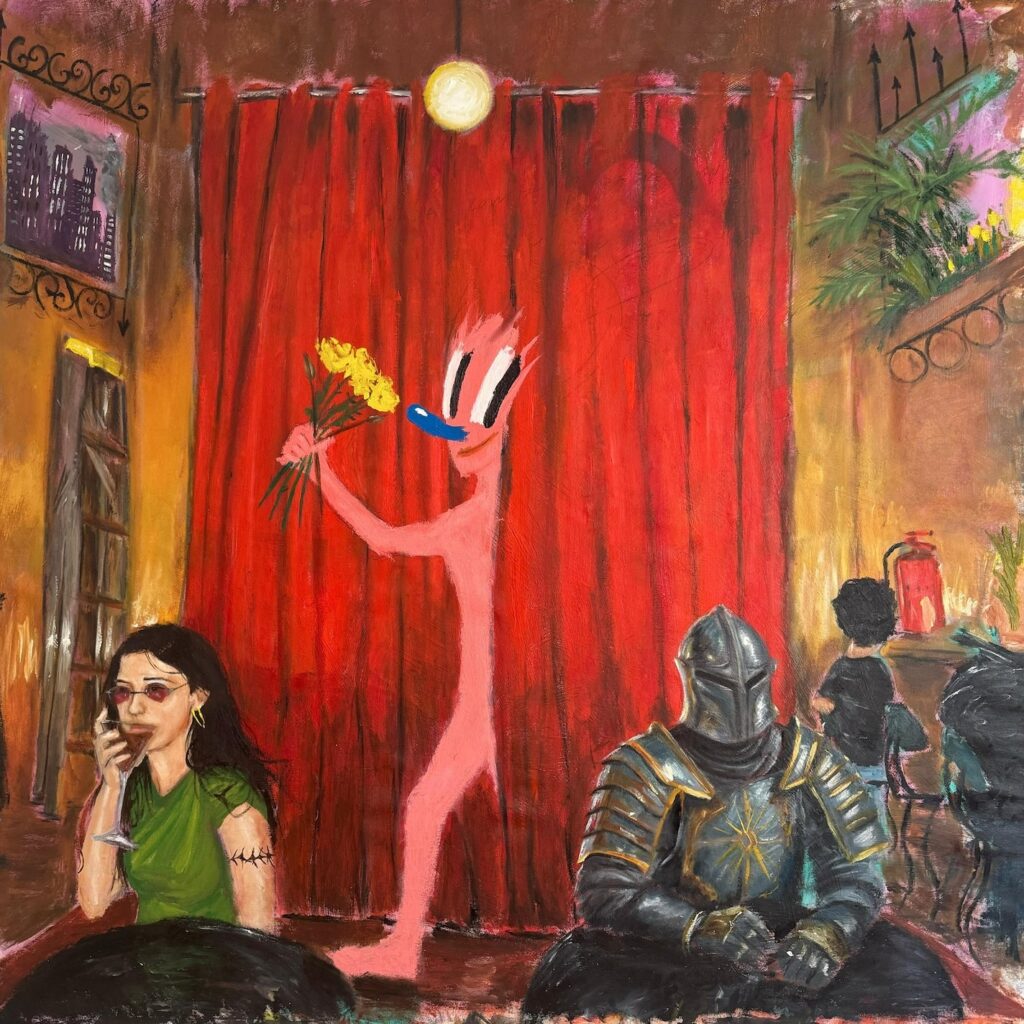
Ok Jordi, with these next series of questions, I will try to delve into your work as best as possible… Your work reflects a journey from underground street cultures to a focus on liberation and identity. Can you tell me about how your personal experiences shaped this narrative in your art?
Jordi: As I mentioned earlier my childhood experiences are key in my art; In general, my life has been unreal. I got lost in my adolescence, in girls, I switched high schools many times, I was somewhat problematic, I spent most of my time on the streets, I was very lazy, searching for my own identity. I was doing things that were not suitable for a kid my age; everything in excess brings problems, hahaha. During university, I got a part-time job in a hangar in La Guerrero, Tepito. I would ride my bike there; they did old-school screen prinHng. I had to do everything from sweeping to retouching some screen prints, seeing pieces of art from great Mexican artists, antiques; it was a surreal place. My coworkers would call me “fresón” (a term for upper-class or posh) as a joke, haha. I wasn’t rich, wa. Just around the corner, there was a two- meter-tall Santa Muerte; the whole atmosphere around me felt like an intense world of madness. Everything started to take shape over the years; there are events that mark your life, and that’s why I like to narrate in a certain way the contrasts of the street, the underground, and nightlife—a narrative that I need to express from my current self with all these resources I have at my disposal. I have lived a bit of everything, and that’s what I want to paint and mix until I create pieces that remind me that we are all part of everything.
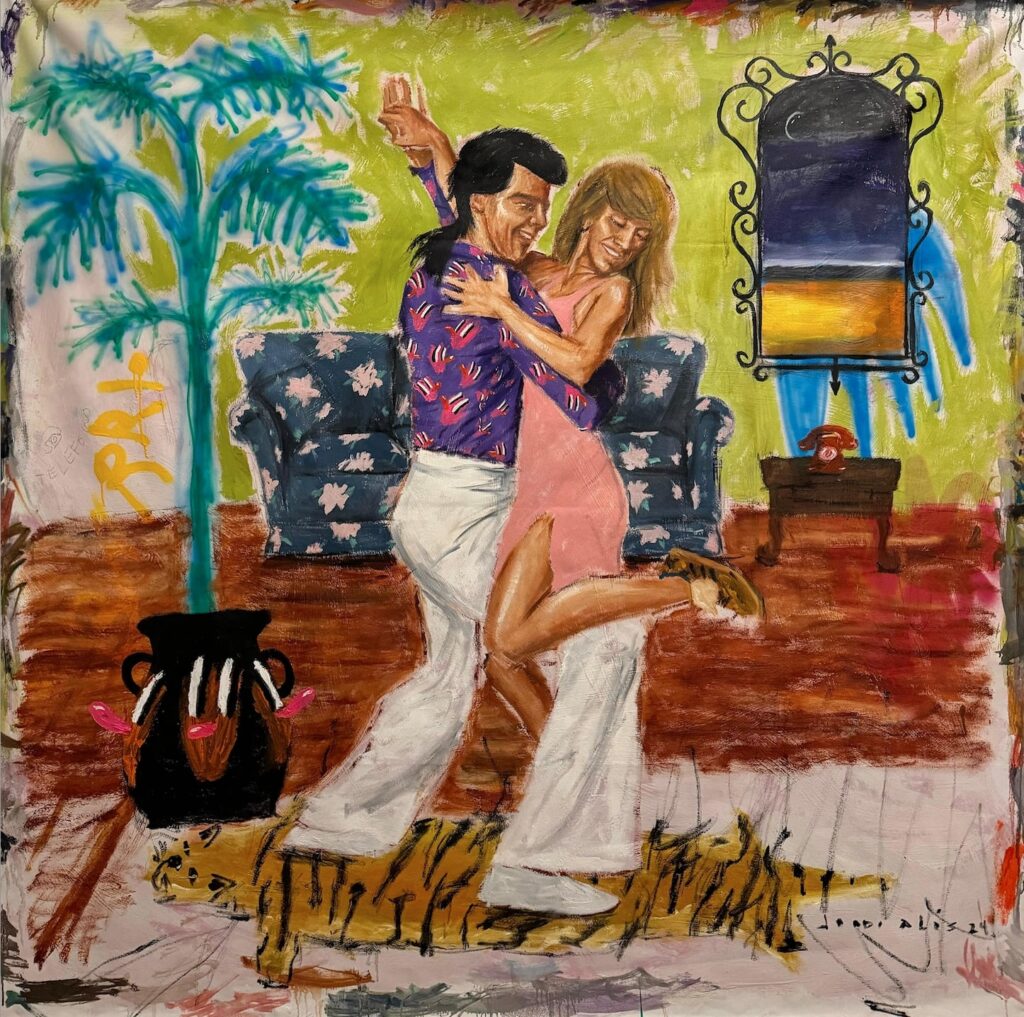
Liberation and identity. Why are those themes important for you to document?
Jordi: Liberation is a constant in one’s life… for me it was a process of braking free from generational fears and societal expectations. I learned how to shed myself of limiting beliefs, things I had learned or ideas that were not my own. I had to let go of other people’s frustrated dreams, and leave behind a future that didn’t wasn’t for me. It is freeing yourself from anyone who tells you: ‘You can’t!’ Whether through words or examples. It is about finding yourself and doing what you love, breaking molds. Now that you mention it, it’s important to document it because as an artist your work will have a social or visual impact that may inspire or help others through your stories or madness. Seeking your identity and liberating yourself means leaving behind what doesn’t do you good, letting go of hazardous things and cycles that need to be broken in order to move forward. Liberation hurts, but it is that nostalgia that makes you human and helps you grow in the direction you want to go. My work is that constant search and experimentation; identity is cultivated.”
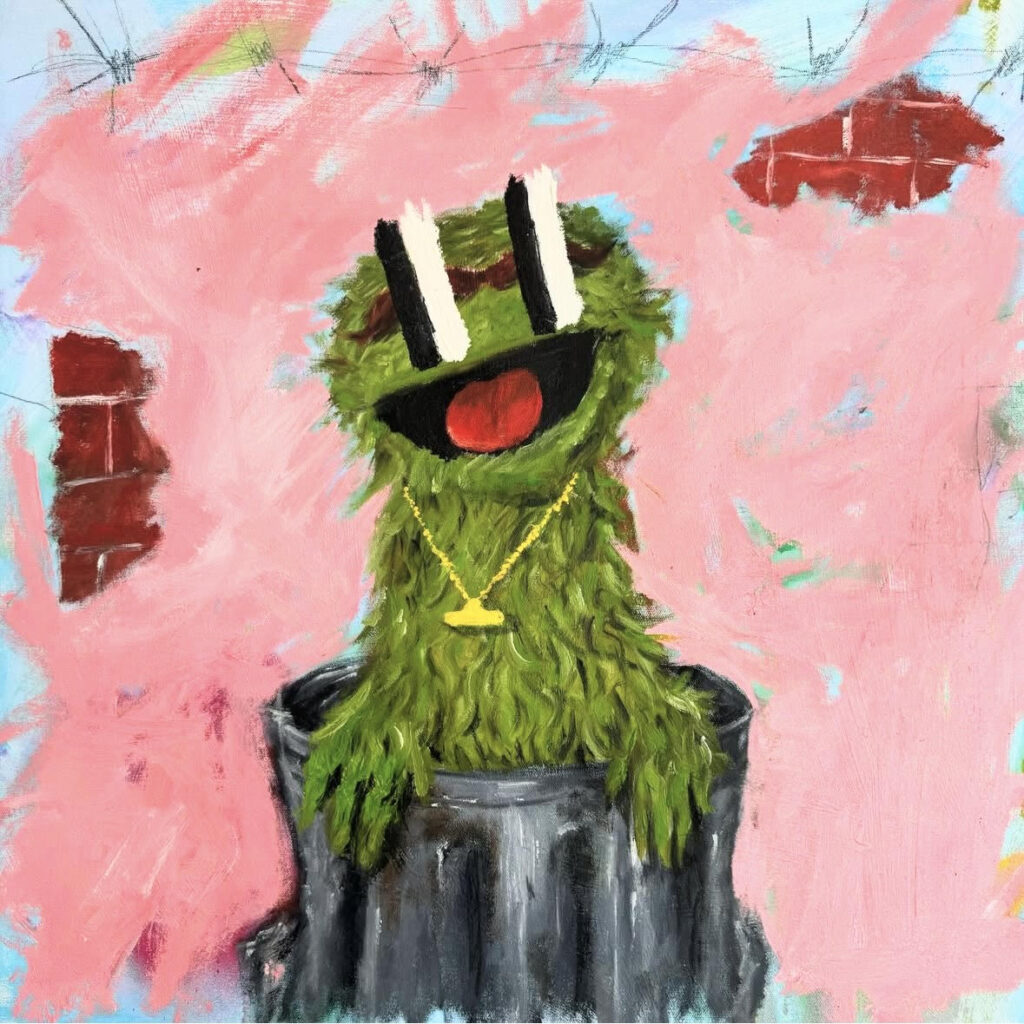
You often explore dualities, such as freedom versus societal constraints. Can you tell me more about that?
Jordi: I use painting to break those social barriers and limitations. I play with the street and luxury. With the before and the now. It is a whole. The ‘limitations’ are a fear imposed many times even by ourselves.
Your new pieces are inspired by the surreal and globalization, nightlife, music, video games, as well as your personal life. Can you tell me about that?
Jordi: Of course, Rubén; as I mentioned, my life has influenced what I paint, but so has my contemporaneity. My paintings are influenced by the places I have visited around the world and the friendships I have made from different cultures. There is a before, a now, and perhaps a later. I enjoy playing with all these worlds; the music I listen to while painting has a great influence. When I was a child, I had some video games like the N64 or Game Boy, and a few months ago, I bought a Game Boy SP to enjoy it now as an adult. I often visit various bars and speakeasies with my brother or my wife, art events, social gatherings; I am absorbing everything through my eyes, hahaha.
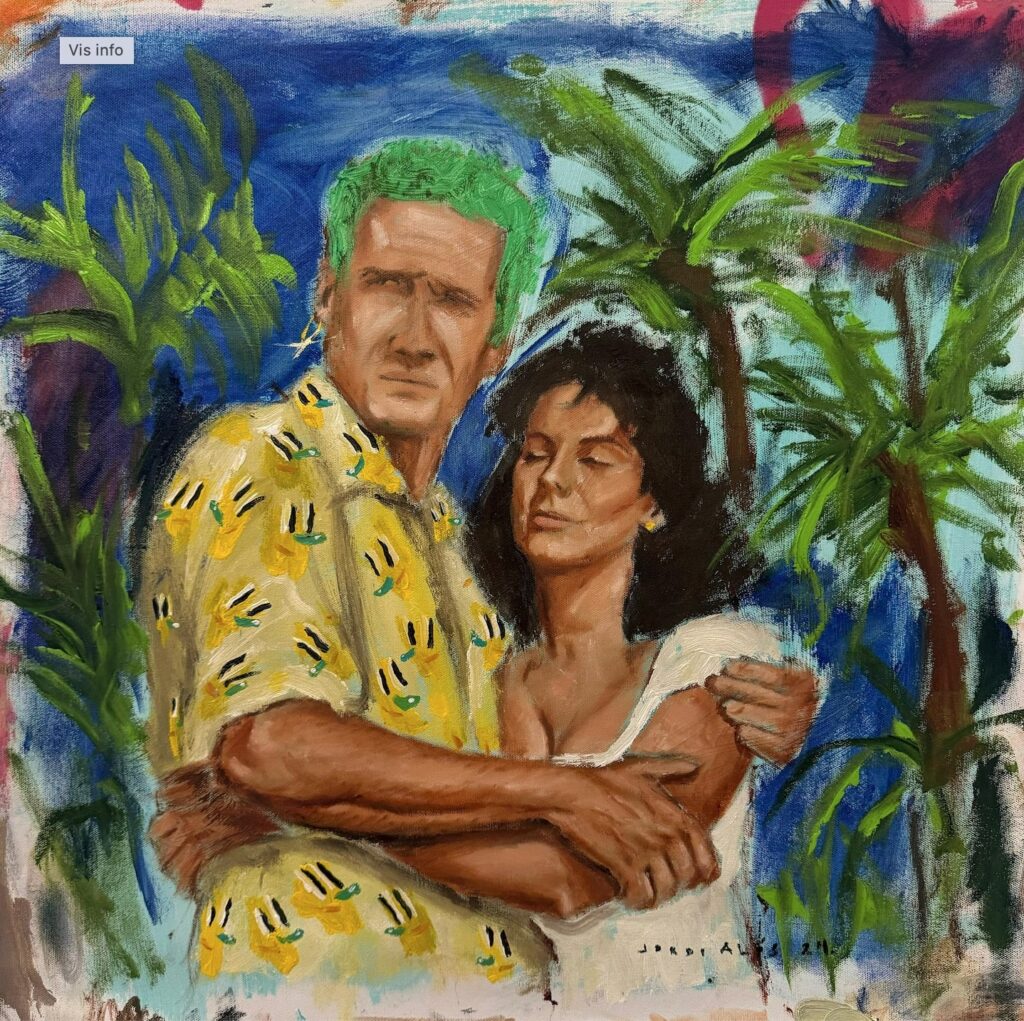
Your raw, childlike strokes align with art brut. How does this aesthetic choice influence the emotional or philosophical messages in your work?
Jordi: I love to play with realism; but I really enjoy incorporating this primitivism and carefree attitude into my work, making it dual by mixing worlds that, when combined, break established parameters of what is considered correct. This non- institutional primitive touch gives me that freedom and wildness that the streets teach you, which a school cannot. It allows you to perceive the work with attention and dialogue. It adds a quality that unintentionally becomes part of the piece, without prior study. That’s when I know the piece is finished.
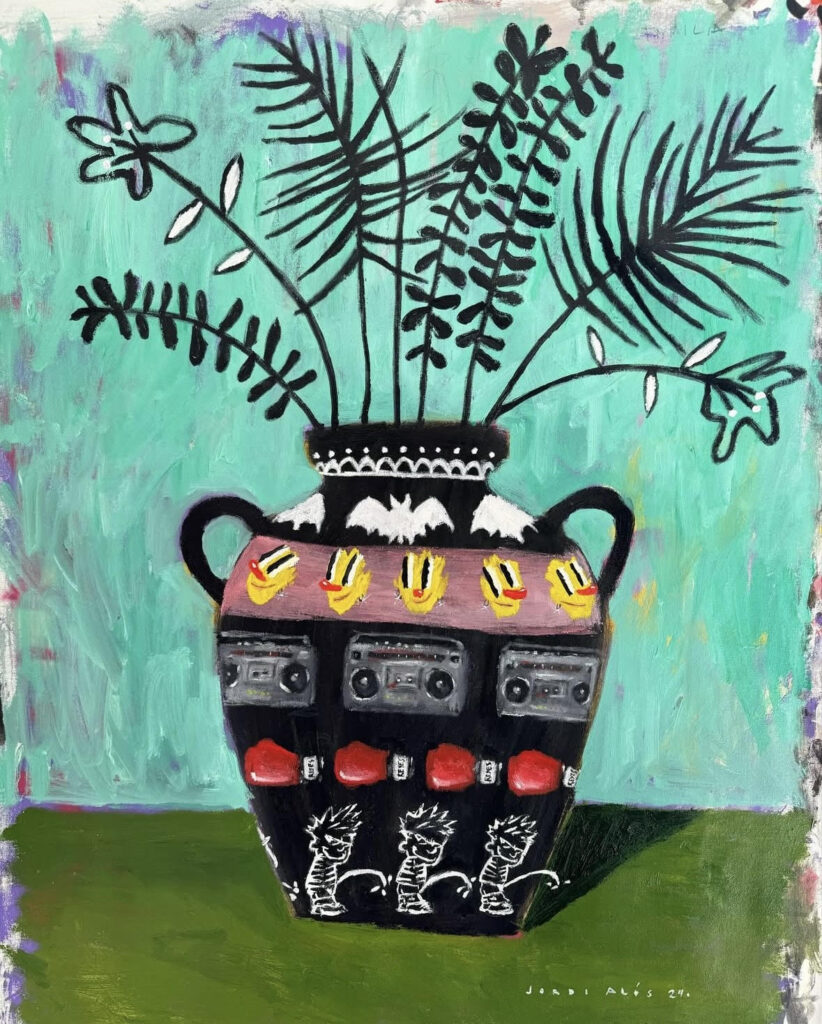
How do music genres like rock, rap, and electronic music influence the composi8on or energy of your paintings?
Jordi: I consider myself a music lover; I can’t paint without music. I don’t use headphones; I turn up the volume on my speaker, especially because it gives me energy and euphoria when I’m working. As I am about to finish a painting, I often play a lot of rap, sometimes trip hop, and a lot of flamenco and salsa, depending on my mood. I will always paint to the rhythm of the music.
Could you describe the process of blending Mexican culture with other influences in your work?
Jordi: Well, as you say; I mix ideas, experiences, memories from some trips, the street, the jungle, there is influence from music, nothing concrete as such. I am Mexican but I have a blend of other cultures, I don’t confine myself to just what happens here. Sometimes I incorporate Mexican culture in my paintings by adding elements of prehispanic civilizations and by adding reference to the Mexican everyday life. The process of blending cultures merges in an organic way, from sketches or thoughts. There is inspiration from many things all at once.
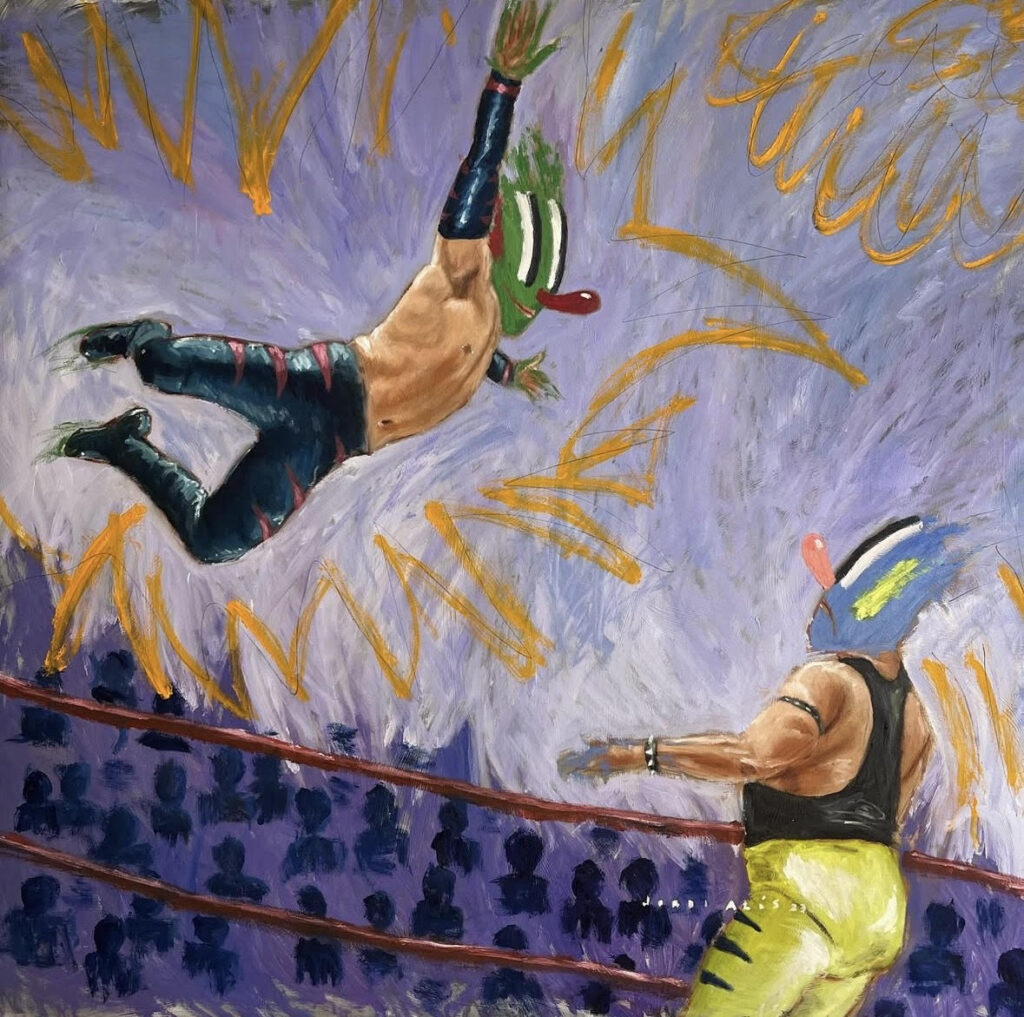
Can you tell me about your time in the Canary Islands?
Jordi: Wow, it was an enriching experience in many aspects; the culture is very similar to Mexican or Latin culture, which I can relate to and it made me immerse myself in their culture. What I enjoyed the most was seeing the Pyramids of Güimar and getting to visit the house of Thor Heyerdahl the Norwegian adventurer and ethnographer. So many moments lived there were so random and that don’t happen again.
With that in mind. The “Machango” has become a central figure in your work. What is it about them that appeals to you so much?
Jordi: The Machango is born from frustration and disillusionment, and that is what attracted me the most to paint them. It started as a mistake in realism and gradually took center stage in my work, whether in the foreground or background.
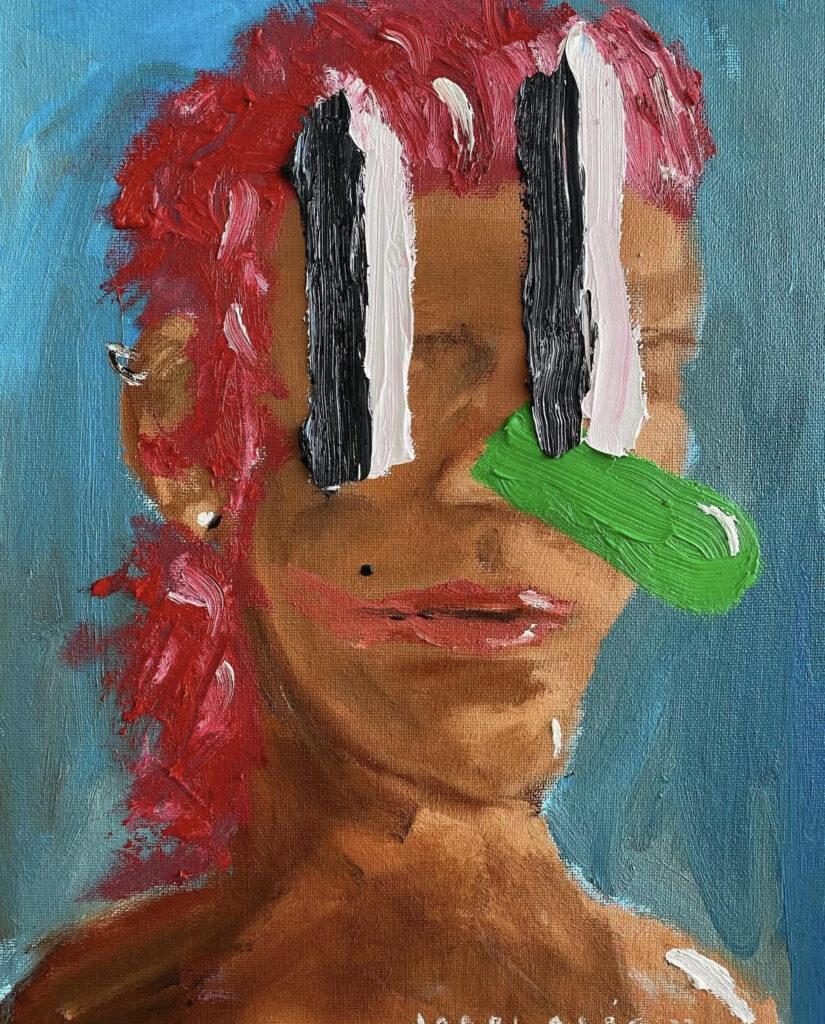
You describe “Machangos” as existing in ritual, fiction, reality, and art. Tell me more about that please
Jordi: It came as a source of inspiration to break standards and to exist in different realms with in my paintings. It plays with irony and irreverence. It is the conceptualization of humanity in different existential planes, a representation something that blends us all together. It represents worlds coming together, places we visit or situations we often find ourselves in. Unintentionally, it made people turnaround to take a look, they felt a connection with it; we are all part of this human collective. Sometimes we share very similar experiences—fun, romantic, ironic, satirical. The Machango is also a Homeless alter ego that flows depending on the moment.
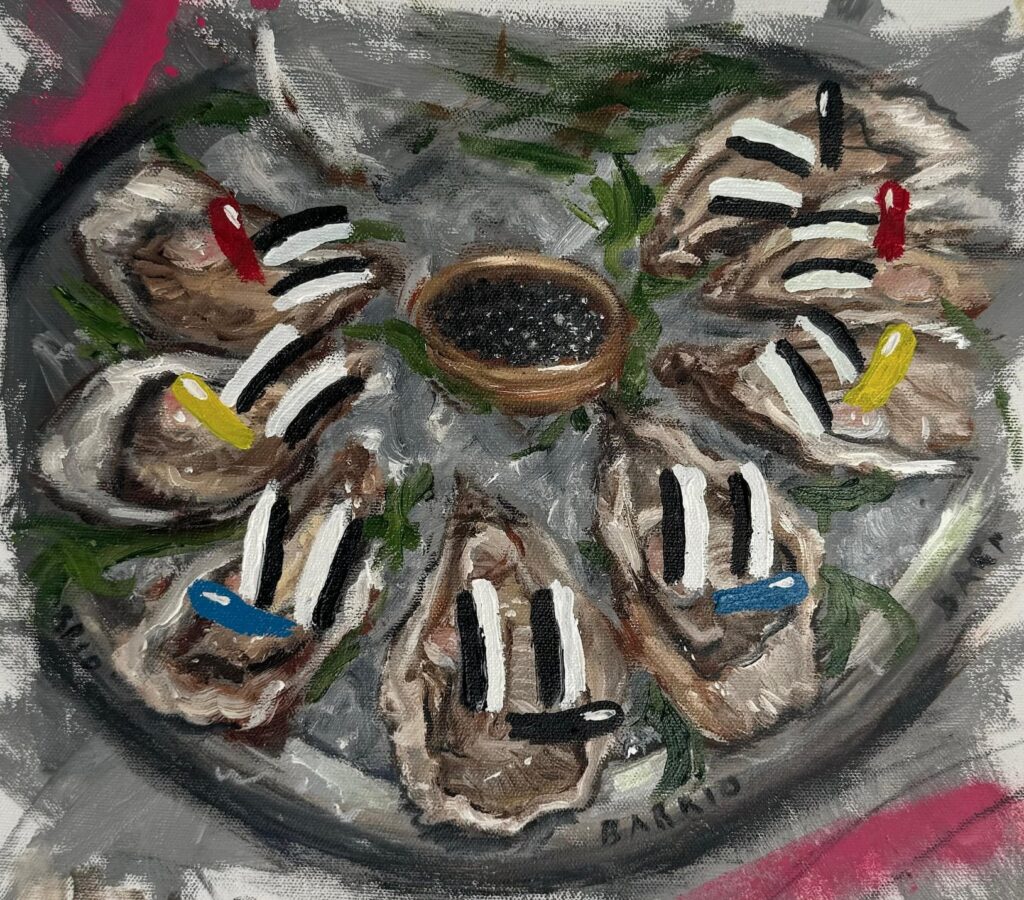
So with what we just talked about, what are you hoping to convey?
Jordi: That painting can be used as a tool to tell stories. To create dialogue and stur up questions, to inquire and go beyond what is established as correct. To enjoy.
Alright Jordi, I always ask these two questions at the end of an interview.
The first is. What’s your favorite movie(s) and why?
Jordi: Chunking Express, the story and the well-thought-out and irreverent sequences seem almost surreal to me, even though they are not. I really like its cinematography.
The second is. What song(s) are you currently listening to the most right now?
Jordi: Canserbero- Ponme a Prueba, Rick Slick- Street Talkin, Israel Fernandez- Rosa de Jericó, Bomb the Bass- Bug Powder Dust, Conjure One- Tears from the Moon, to mention just a few.