
Share this
Cities like to imagine themselves as permanent. Their squares, theatres, roads, monuments, and traffic systems all pretend to be fixed. Théo Mercier knows better. Everything is sediment. Everything can be buried. Everything eventually becomes strange enough to look ancient.
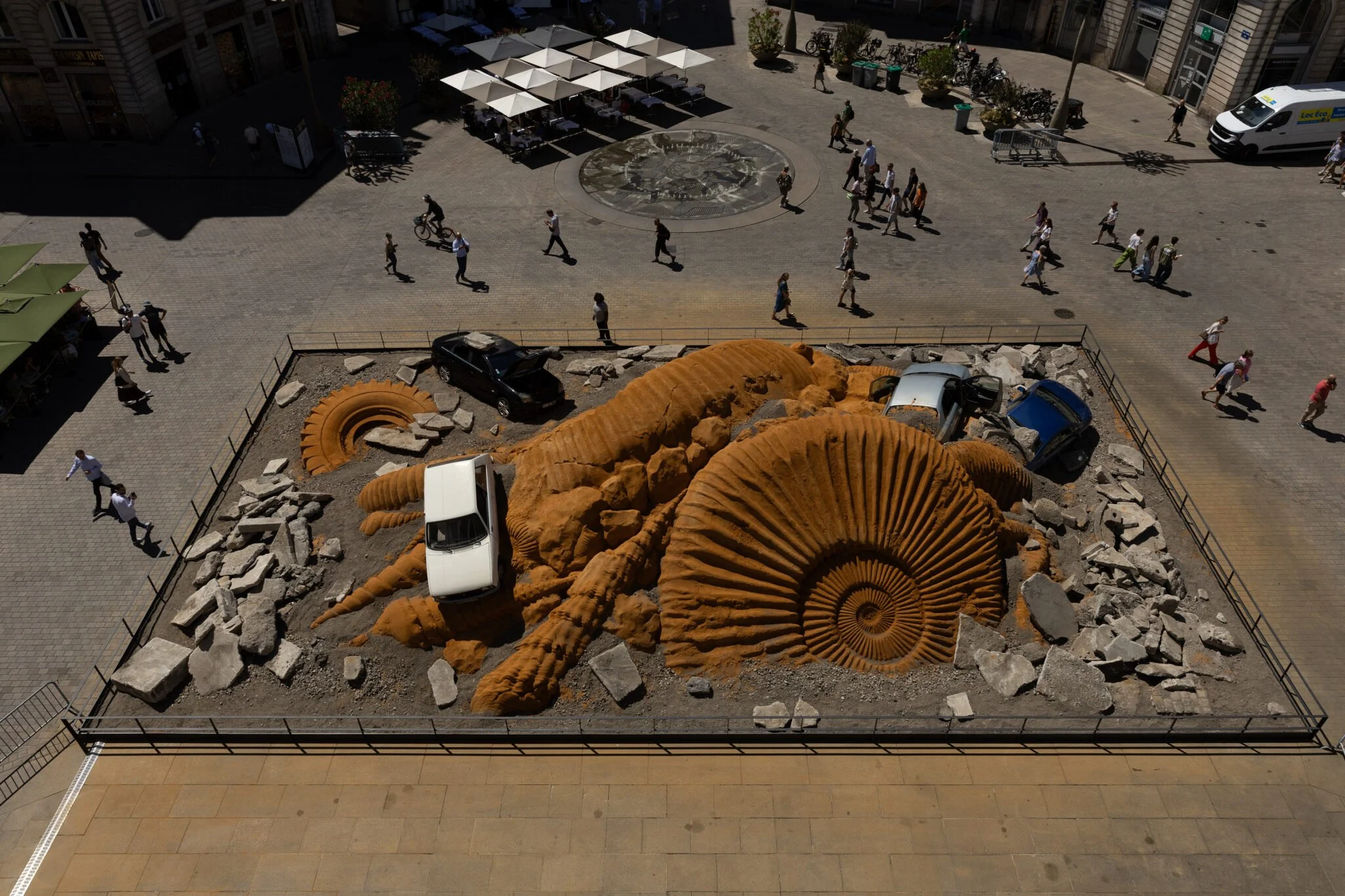
For Le Voyage à Nantes 2026, the French artist has created Fossil Opera, a monumental public installation in Place Graslin, outside the city’s neoclassical opera house. Running as part of the summer art trail from July 4 to September 6, 2026, the work transforms one of Nantes’ most recognisable urban spaces into a surreal excavation site, where sand erupts from the ground like a memory the city failed to keep buried.
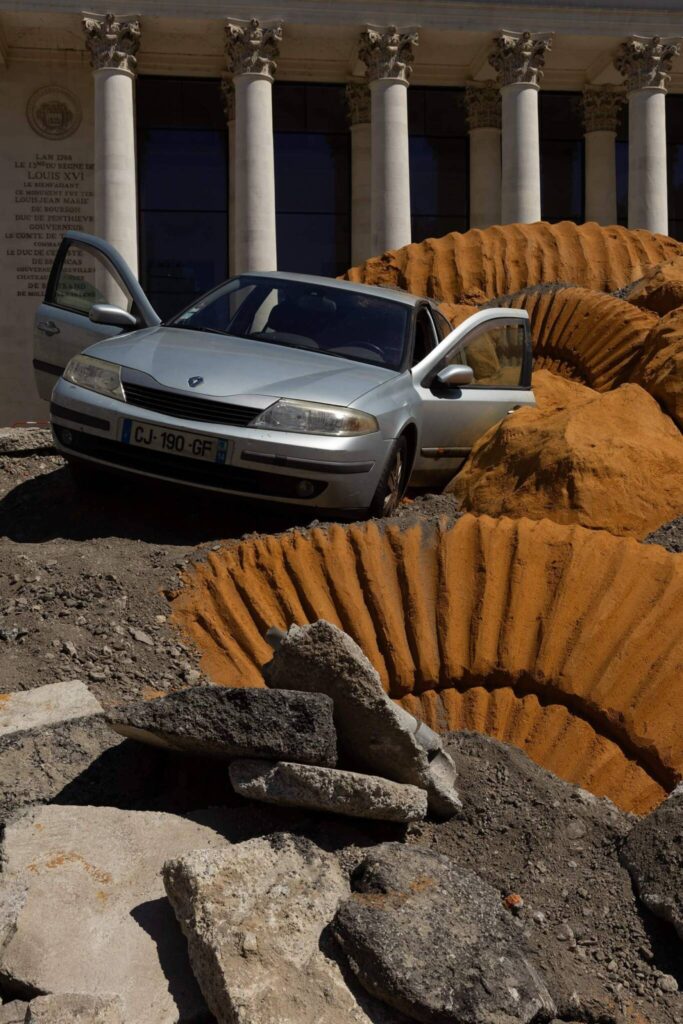
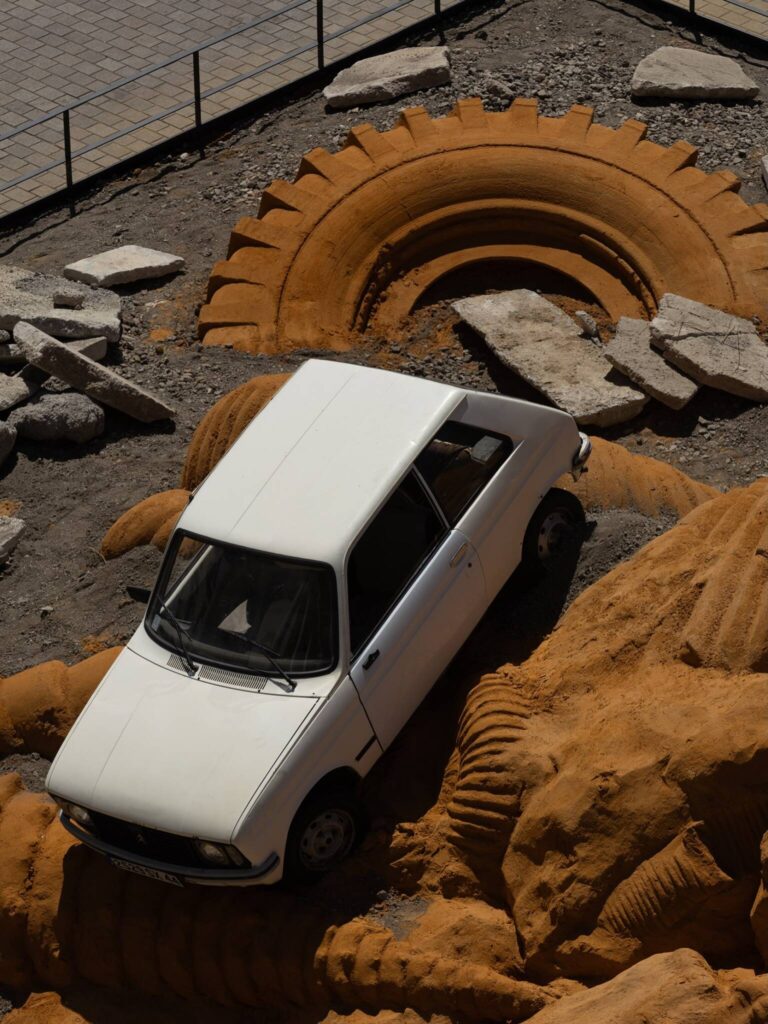
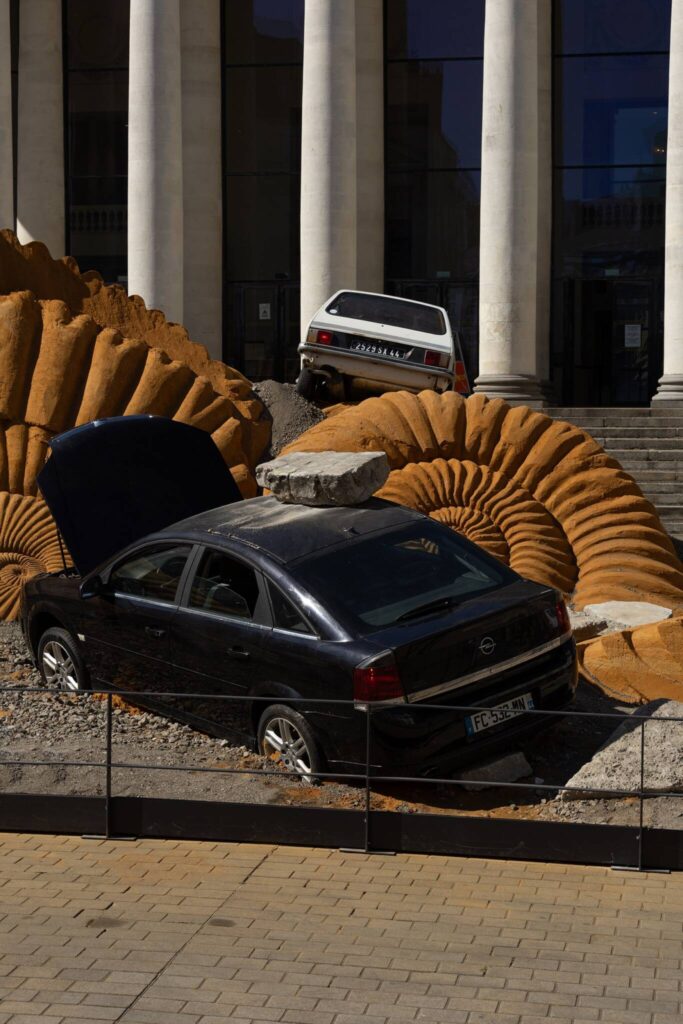
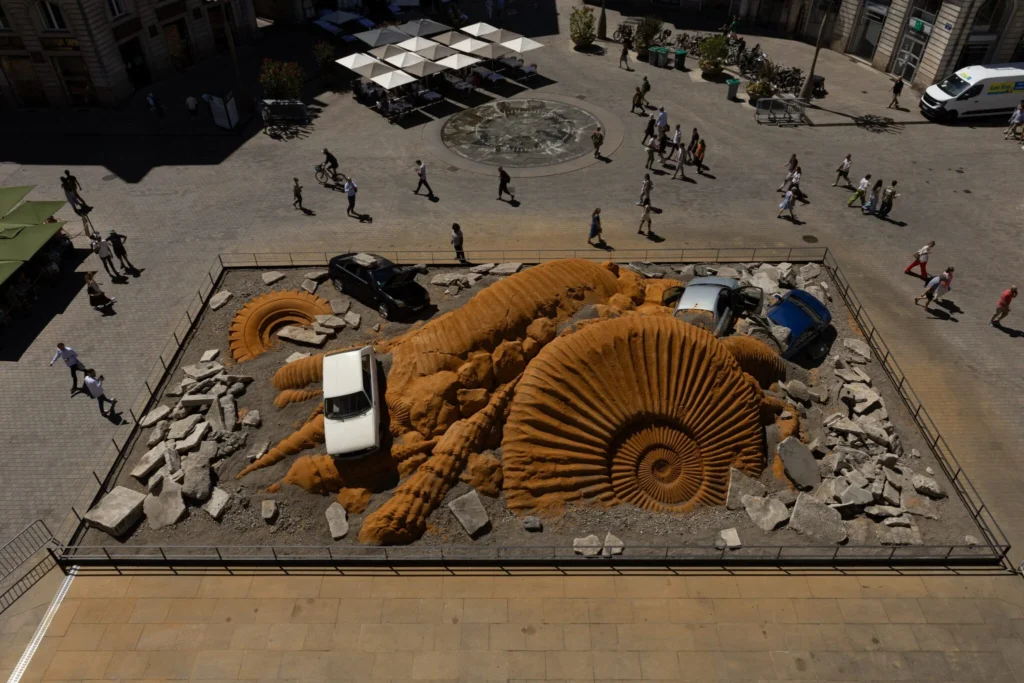
At the centre of the installation is a vast landscape of compacted sand, shaped into giant ammonites and scattered with rubble from Nantes construction sites. Half-buried cars emerge from the surface like fossils from a future archaeology, pointing back to a recent past when the square was still open to traffic. The result is both prehistoric and very contemporary: an opera of extinction performed by urban leftovers.
Mercier has long worked with sand, water, ruins, ritual, and the strange dignity of objects that seem to come from another civilisation. Here, he brings that language outdoors at civic scale. The square becomes less a public plaza than a dream after a flood, a desert, or some slow geological revenge.
What makes Fossil Opera so compelling is its treatment of time. The cars are not presented as sleek machines of modern movement, but as relics already swallowed by the future. The rubble is not waste, but evidence. The ammonites, ancient marine forms, suggest a deep past surfacing inside the city’s present. Everything collapses into the same material field: architecture, transport, construction, memory, and extinction.
There is also a theatrical intelligence in the location. Placed outside the Théâtre Graslin, the installation becomes a kind of silent performance. No actors, no music, no curtain. Just sand rising in front of the opera house, turning the square itself into a stage where the city’s past and future appear to sing without voices.
In the context of Le Voyage à Nantes, which turns the city into an open-air route of contemporary art, Mercier’s work feels especially precise. It does not decorate Nantes. It interrupts it. It asks passers-by to look at familiar public space as if it were already an archaeological site, already being misread by someone centuries from now.