
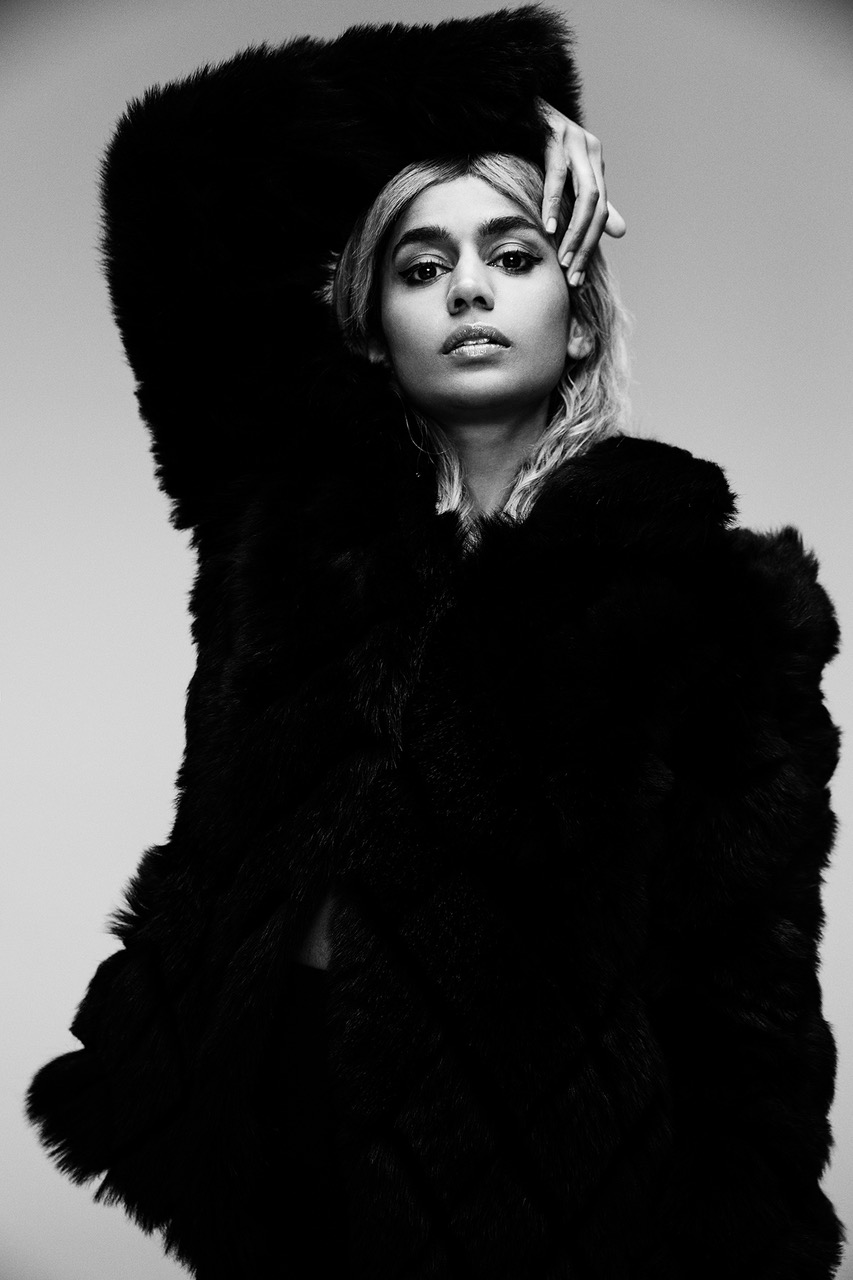
Through her roles in Netflix’s Global phenomenon Stranger Things and Alex Garland’s acclaimed science-fiction series Devs, Linnea Berthelsen has established an international screen presence.
With Darkling, her stage debut at London’s Bush Theatre, Berthelsen took on a significant new challenge: a solo performance written by Titas Halder, Associate Artistic Director of the Donmar Warehouse, and directed by Olivier Award-winning director Matthew Xia (Tambo & Bones, Skeleton Crew).
I sat down with Berthelsen to discuss her journey into acting, what Darkling revealed about her as a performer, and the work she hopes to explore next.
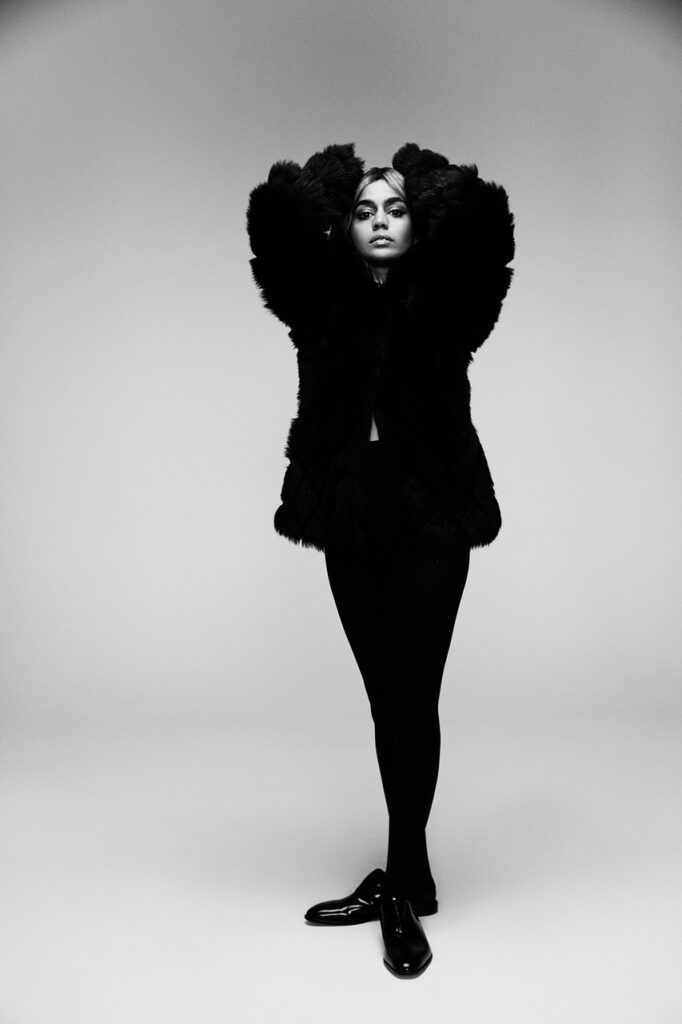
Hi Linnea! It’s a pleasure to sit down with you.
Linnea: Likewise! I’m so grateful we are doing this! I love OVERSTANDARD!
Let’s start with something simple. What does a regular day look like for you in London?
Linnea: At the moment, my days revolve around Darkling. I’m on tour, so I’ll work out in the morning or go for a walk, and then head to the theatre for the show in the evening. Or, if it’s a two-show day, it’s a full-day commitment. I’ll arrive for my warm-up around 1 pm, and try to sleep between performances, but I won’t be finished until 9 pm. I’m currently running on scheduled naps and throat honey.
You grew up in Denmark. How do you think that shaped you, both as a person and as an actor?
Linnea: Growing up in Denmark was wonderful. I’m from a mid-sized Danish, harbourside town. It shaped my taste in cinema. I grew up during the Danish Dogme 95 wave, watching the work of Lars von Trier and Thomas Vinterberg. Handheld cameras almost became normalised during that period, as did the dark, provocative humour you find in von Trier’s The Idiots and The Kingdom. This definitely shaped my admiration for, and love of more unrestricted storytelling. As a teenager, I discovered a lot of French New Wave films. I still love the improvised dialogue and Godard’s jump cuts. The last ten years of my life have been shaped by British film, television, theatre and cultural references and, naturally, my participation in the never-ending national debate between PG Tips and Yorkshire Tea! I’m team Yorkshire, by the way.
What kind of child were you? What did you enjoy doing and do you draw on that today?
Linnea: I was quite an adventurous and energetic child, I’d say, and then I became shyer and more introverted as I grew older. I started gymnastics when I was three. I can’t remember not doing it. I think it instilled discipline and an ensemble-mentality early which has been really helpful for this work, especially for Darkling, which is such a marathon every night.
You subsequently moved to England to study at East 15 Acting School. What did those years teach you about the work?
Linnea: I took away a sense of spontaneity and resilience. East 15 is a method-based school and, among other things, runs a two-week improvisation intensive. Ours was set in a gulag, which was pretty intense. It taught me how far you can take the work and the stamina required to be fully immersed in something. I’ve of course drawn from many different kinds of training since then, but I’ve never forgotten the demands of the work that East 15 presented to me.
You’d wanted to work with director Matthew Xia for years, and then he approached you with Darkling, a one-woman play inspired by the 1984 Bhopal disaster. What made you say yes to such a demanding role?
Linnea: Matthew approached me shortly after I finished press for Stranger Things 5. Taking on a solo show felt terrifying. I’d seen incredible solo performances of Jodie Comer in Prima Facie, Carey Mulligan’s astonishing work in Girls and Boys, and Rosamund Pike in Inter Alia and I remember thinking that these were opportunities you must earn through years of amazing theatre work, rather than doing as a stage debut.
That wasn’t my path, but Matthew Xia (director of Darkling) asked me not to overthink. To just do the work and get on with it. Which he was right about. When I read the script, I fell deeply in love with the main character, SHE. She’s a mesmerising, sassy, completely disarming six-year-old. She was a huge reason why I said yes. But also the complexity of Titas Halder’s wonderful script played a part. The play is a 50-pages long poem, written in free-verse. It’s the most challenging text I’ve ever worked on, and such an extraordinary challenge as an actor. It asks of you to bring everything you have to the table and this may be the biggest reason why I said yes.
You embody numerous characters and carry the story for 90 minutes. How did you prepare, and what proved most difficult?
Linnea: I do some basic weight training, to be able to sustain the run. I did some drawings as a visual exploration of the concepts that felt more uncertain to me, particularly the heavy themes of miscarriage and deep grief, which took longer to uncover.
I built on my foundational training by working with Kate Sagovsky, a brilliant London-based movement director, and my voice teachers, Jamie Matthewman and Naja Maanson. And then, Matthew brought in Anjali Mehra for movement work and Zabarjad Salam for voice, and we explored the characters together.
I spent two and a half months learning the lines before rehearsals began. But the most challenging part was probably learning the blocking for an entire 90-minute play. I’m terribly confused by left and right, so something that looks incredibly simple on paper turned out to be the hardest part.
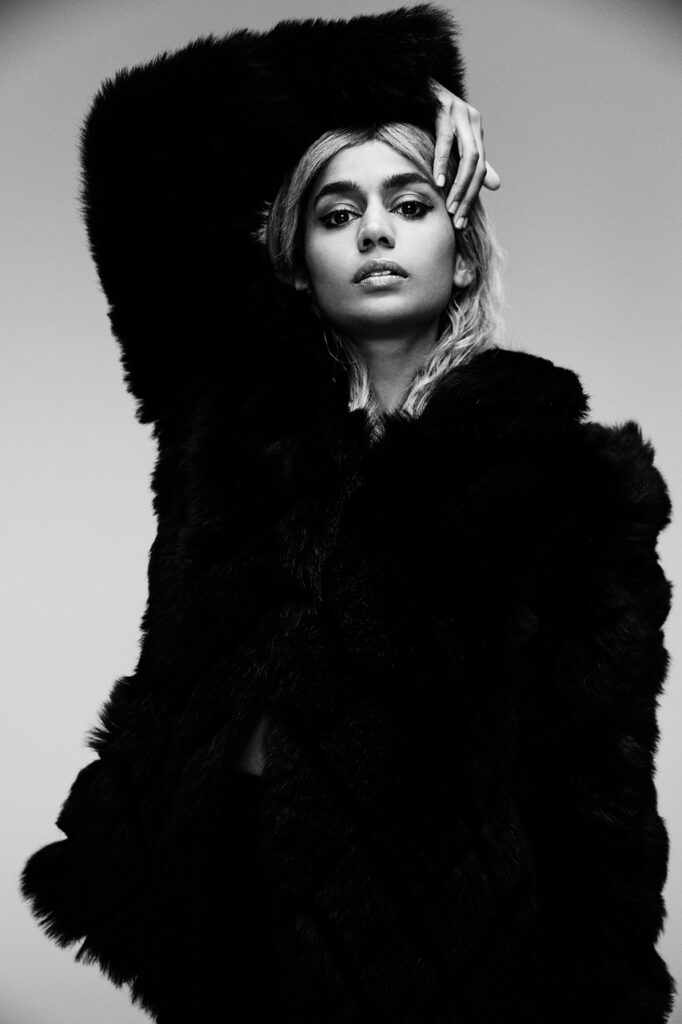
Was there anything you discovered about the character or the play during rehearsals that you hadn’t understood when you first read the script?
Linnea: I didn’t fully appreciate how Titas, to a large extent, had written SHE as a reflection of all of us as children and how impactful that would be. And also, that everybody who sees this piece will, to some extent, get a glimpse into my soul.
The play deals with environmental catastrophe, corporate negligence and lives that are often overlooked. What did you know about the Bhopal disaster before joining the production, and what have you learned since?
Linnea: I knew very little about the actual circumstances. I knew about the international landscape, the UN’s responses and the legal attempts to address what happened, but I hadn’t understood the human impact in the way I do now. We’ve had survivors of the disaster with us for some performances. Talking to them has been one of the most surreal and heartbreaking experiences.
Were there performances you thought about while preparing for Darkling?
Linnea: I looked at different approaches to classical characters, including Ruth Negga’s Hamlet, directed by Yaël Farber, and spoke to the wonderful John Macmillan about voice work. I was nervous about sustaining my voice over more than 60 performances, but that turned out to be one of the biggest surprises of the experience, discovering what my voice was capable of. I became ill towards the end of the run and temporarily lost both my upper and lower registers, but my voice recovered much faster than I expected. It was incredible to discover what it could do.
Tilda Swinton and Cate Blanchett are two of my favourite actors, and they were both performing in London while I was doing Darkling. I would have loved to see them on stage before starting rehearsals, to learn from how they filled those spaces.
What has performing a 90-minute monologue taught you about yourself as an actor?
Linnea: That there is never a blueprint for creating a role. You’re always starting again from scratch, drawing on experience you’ve hopefully accumulated over the years. I’d never held an audience for 90 minutes before. The biggest discovery was the relationship with the audience. You can prepare everything meticulously, but the audience can change everything. I’ve also learned a lot about sustaining a performance over a long run. That’s been a really important lesson.
Has carrying a live performance changed anything about how you approach acting for the camera?
Linnea: I’ll take with me the level of spontaneity and presence that a 90-minute monologue demands, for sure.
THE NEXT THING
You’ve completed the London run and are soon finishing the tour. What has this experience changed for you, and where do you go from here?
Linnea: The audience has changed my relationship with performing and helped me understand more clearly the kinds of projects I’d love to pursue. I love that direct contact with an audience, and the challenge of remaining completely open to people throughout a performance. Holding an audience’s attention for 90 minutes is a real responsibility. I think I want to keep following that feeling.
You did DEVS and Stranger Things. Being part of something that big, what did you take away from that?
Linnea: Both felt daunting, completely humbling and were just fantastic. And big in terms of eyes looking at you. You learn a lot very quickly. Overall, I think those experiences made me more focused and reassured me about what I wanted to bring to a workspace, and how I’d love to work within one.
GOING FORWARD
You now seem to be drawn towards European work, too. What is it about European cinema and theatre that draws you?
Linnea: I think I’m drawn to the pace, the humor and, naturally, the kind of filmmaking I grew up with. I also deeply admire Europe’s avant-garde theatre traditions, as well as those that emerged from New York’s experimental theatre scene in the 1980s. I remember seeing the Berliner Ensemble’s Much Ado About Nothing and being completely floored by their energy and commitment to sheer absurdity. A lot of that work demands spontaneity and precision. I find it daunting and incredibly exciting at the same time.
Exactly what kind of work would frighten you in the best possible way?
Linnea: Some of the classical roles would frighten me in the best way possible. Some of Shakespeare’s characters, Rosalind in As You Like It, Cornelia in King Lear, but also Puck in A Midsummer Night’s Dream and, of course, Hamlet, all feel like terrifying territory because of the physical stamina and emotional commitment they demand. Working with certain European directors would be really terrifying in the best way, particularly those who aren’t afraid to make things a little uncomfortable.
THE IMAGE THAT STAYS
Something a little different. What makes an image stay with you long after you’ve seen it?
Linnea: When you ask that, I think of Christian Schad’s Agosta, the Pigeon-Chested Man, and Rasha, the Black Dove. His pointy ribs. And how many times I’ve wondered, “What makes ribs curvy?” If your mind keeps returning to an image, almost subconsciously, trying to find an answer, I suppose that’s what makes it stay with you. I’ve seen it at Tate so many times, and I’m still wondering. Is it love? A hard punch? Does heartbreak make your ribs grow weird?
Do you need to understand everything, or are you comfortable with uncertainty?
Linnea: As an actor, ideally, I’d love to know the work inside out in order to let go. In life, I guess we all have to learn to live with a certain amount of uncertainty.
You’ve worked on globally successful television series, yet you seem drawn to independent, more intimate art-led projects, too. Has your definition of success changed?
Linnea: I love doing both. I love the scale and aspirations of these large productions, as well as the intimacy and spontaneity that independent projects often provide. And of course, I love theatre. I don’t think my definition of success has changed very much. I’ve never been particularly good at measuring it through other people’s eyes. The sharp turns and jumps in my work so far have always been intentional. Ultimately, I think all you can do is try to do work that you feel proud and passionate about.
What careers inspire you?
Linnea: I’m very inspired by actors who make bold jumps between different types of work, between genres, mediums and strengths.
You have an upcoming collaboration with Danish musician Kwamie Liv. How did that come about, and what excited you about working together?
Linnea: Kwamie is someone I’ve often turned to for advice and who’s become a dear friend over the years. We’ve exchanged ideas and discussed our work many times, but we never really talked about collaborating, until last year. She invited me to take part in the visual world of her new album, Yesterday for Tomorrow. Kwamie is a master of her craft. Her creative process is soft, wild, intuitive, and deeply connected, which made working with her incredibly exciting.
She shared early demos from Yesterday for Tomorrow with me, and I found myself returning to those tracks again and again. We shot our part in the snow on a beautiful, crisp January day, while I was promoting Stranger Things Season 5. I’m really excited for people to experience this side of her work. It’s raw and heartfelt, carrying some of the qualities that people loved in Lost in the Girl, but it also opens up a completely new chapter for her.
What do these types of collaborations offer? Are there other collaborations you’d be interested in exploring?
Linnea: These collaborations can offer inspiration, rawness and spontaneity. I love art, visual design and performance-art installations. Marina Abramović and, here at home, Jesper Just are among my favorite visual artists. And yes, I’d love to do more cross-disciplinary collaborations.

What qualities matter most to you in the people you choose to spend time with?
Linnea: Kindness.
What would your perfect day look like?
Linnea: Going to Tate with my mum, then having coffee with both my parents. And a big dinner party with friends in the evening.
What motivates you?
Linnea: Progress. I’m not a perfectionist, but setting the bar high is important.
Can you tell me about a connection with someone that had a profound impact on you?
Linnea: The birth of my goddaughter completely changed my worldview. Professionally, working with Frank Darabont on Stranger Things 5 was profound. I’ve never felt so alive in a work situation. That is, until I did the Press Night for Darkling. That was a mad experience that I’ll never forget.
THE LAST THREE QUESTIONS
What’s your favorite film, and why?
Linnea: Pierrot le Fou by Jean-Luc Godard. Jean-Paul Belmondo and Anna Karina are endlessly charismatic and alive. The Boss of It All by Lars von Trier, because it’s singular, chaotic and just mad stuff. The Shawshank Redemption. Its emotional arc is something I always return to.
What music are you listening to most at the moment?
Linnea: Kwamie Liv’s new album, Yesterday for Tomorrow, on repeat in my dressing room. “Daddy I’m a Star”, “Youth” and “September Snow”.
Lastly, moving forward, can you tell us about what’s ahead?
Linnea: Darkling and some recent collaborations have made me more curious about the kinds of risks I’m willing to take. I think I’ve found my next step in that direction. I can’t wait to come back and tell you more about this.