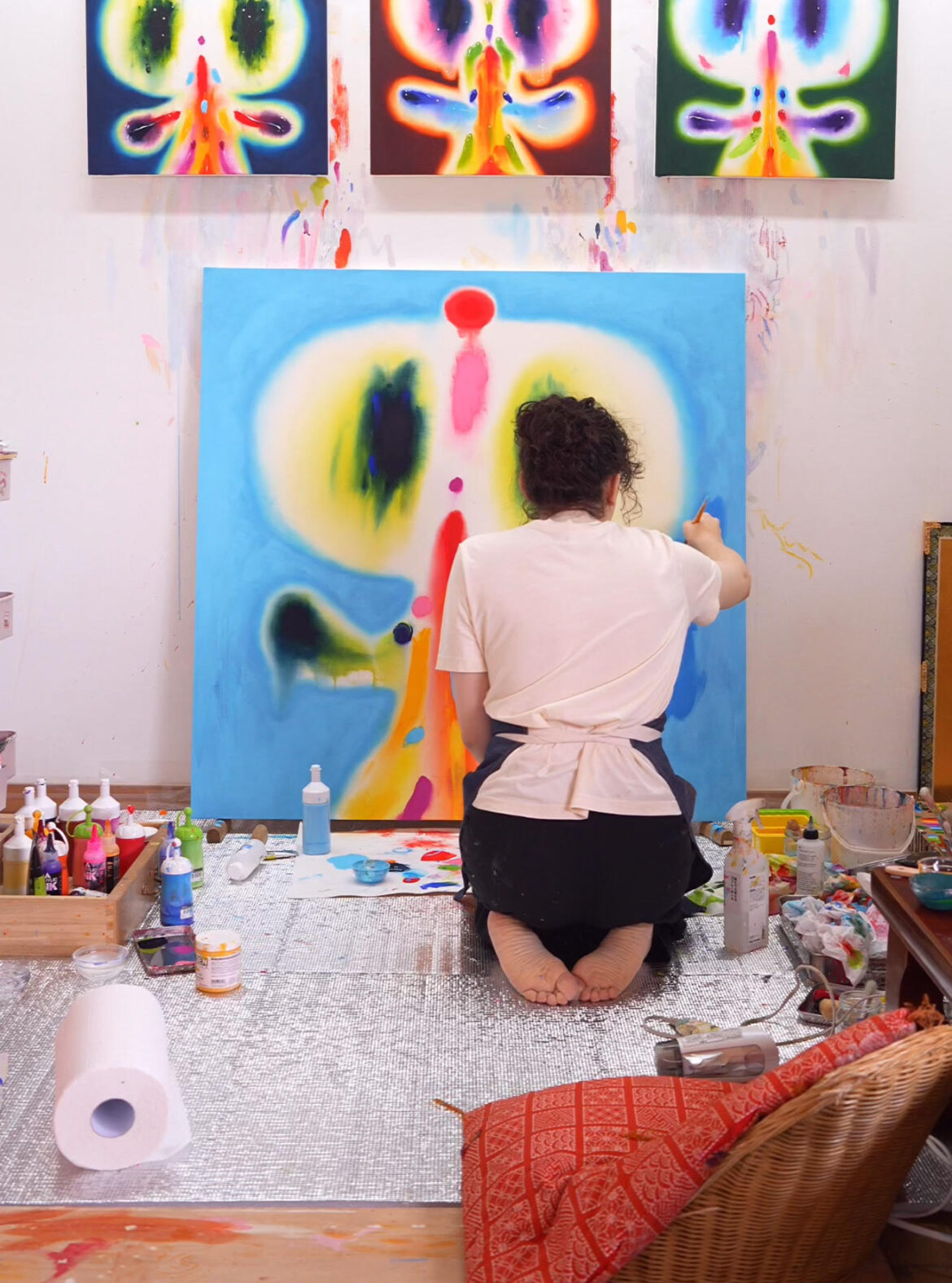
Mila Useche is a Colombian-German painter whose work explores the tension between fluidity and constraint in contemporary identity. Born in Bogotá and based in Japan, she immigrated to Berlin in 2013, where she completed a BFA and spent several years working as an artist and character designer in the entertainment industry.
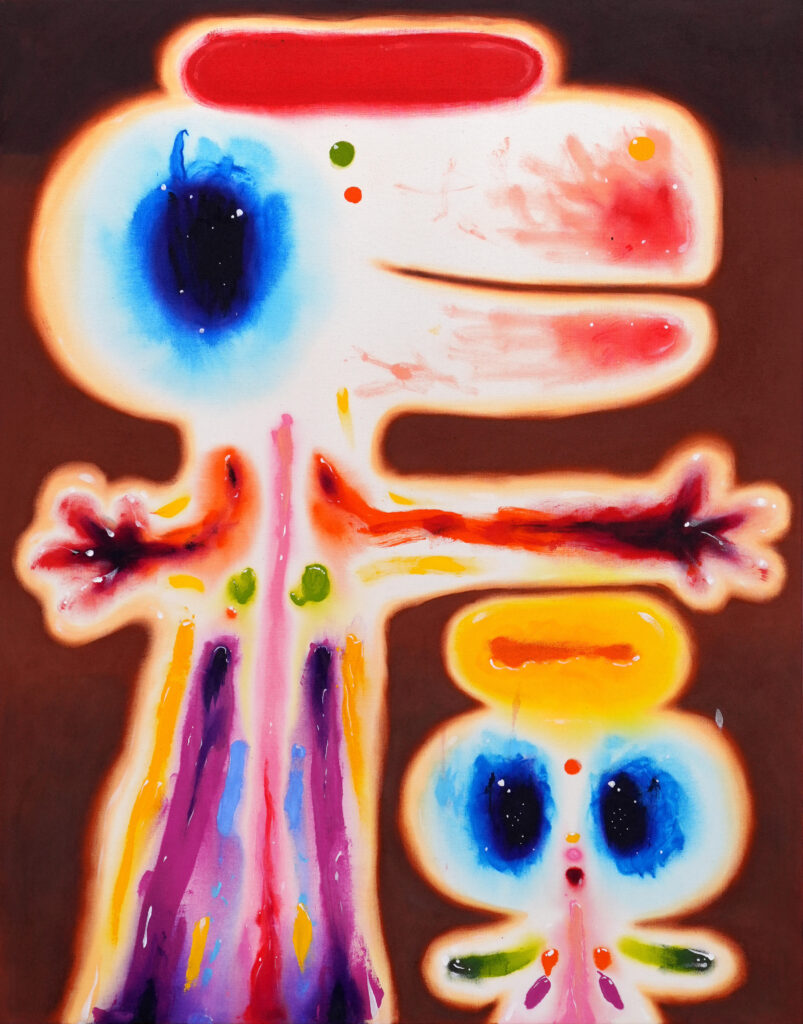
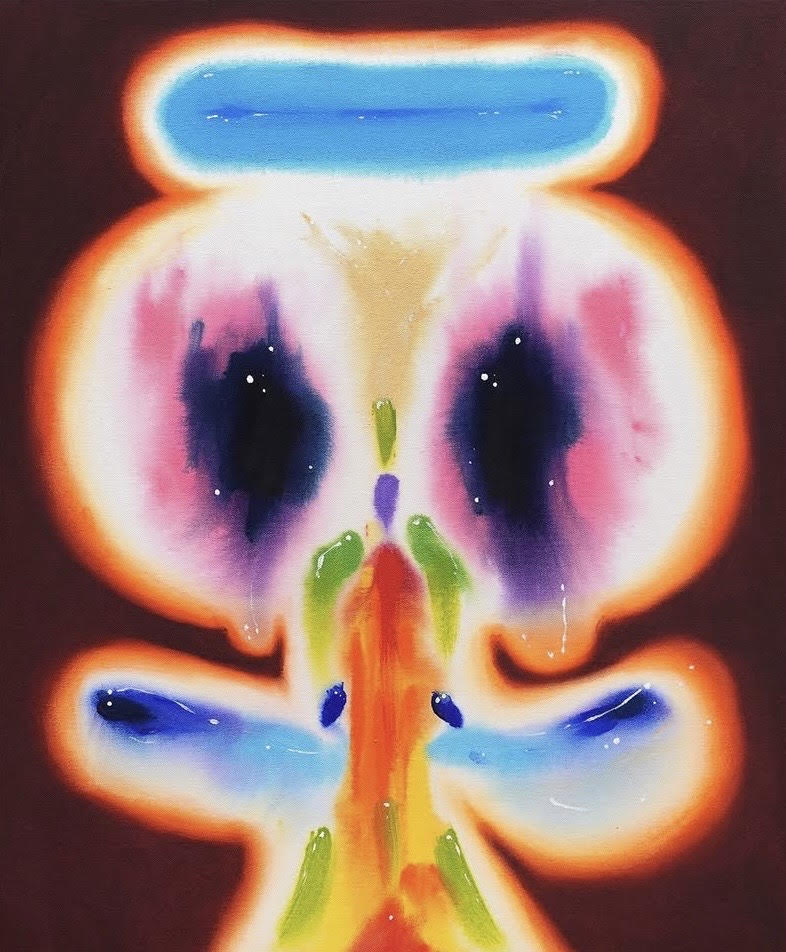
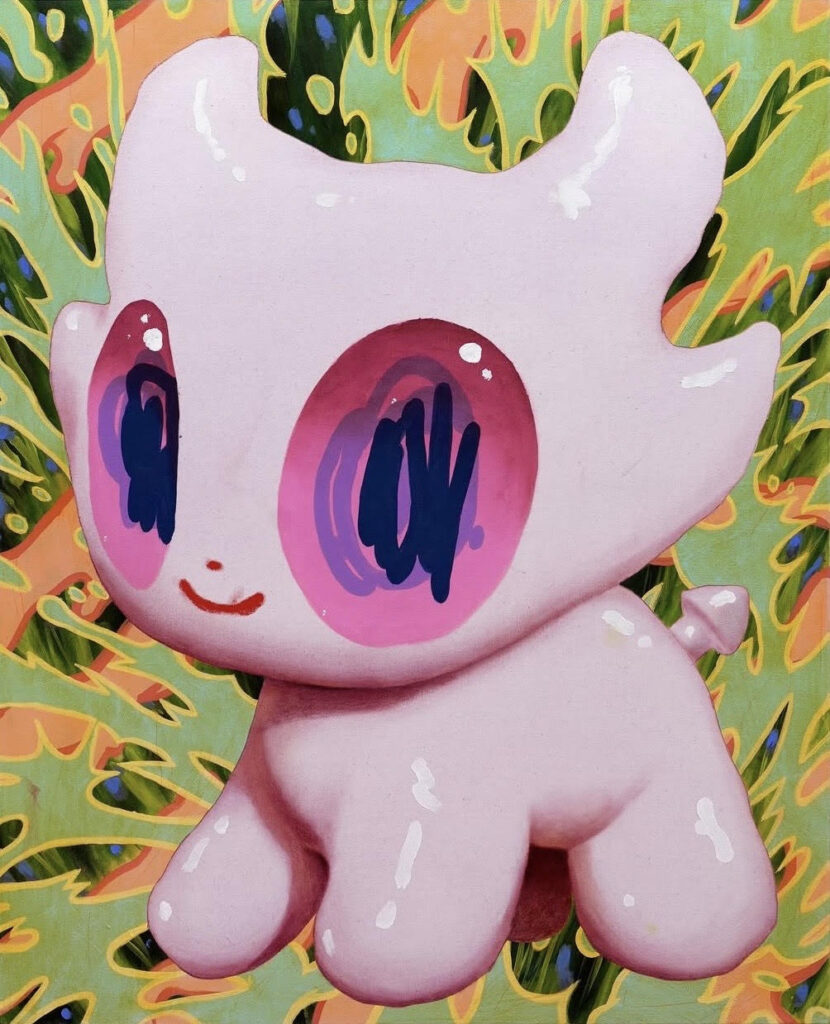
Drawing on her background in animation, Useche blends pop-inflected aesthetics with deeply personal narratives, referencing Japanese Superflat, pre-Columbian Colombian art, Catholic symbolism, and internet culture. Working primarily in acrylic on canvas, she embraces a raw, playful visual language that contrasts instinctive mark-making with moments of precision. Her avatar-like figures function as fragmented extensions of the self, allowing questions of gender, sexuality, cultural identity, and nostalgia to unfold through exaggeration, ambiguity, and humor.
Now based in Ehime, Japan, Useche continues to develop a hybrid visual language shaped by migration, reinvention, and an evolving personal mythology..
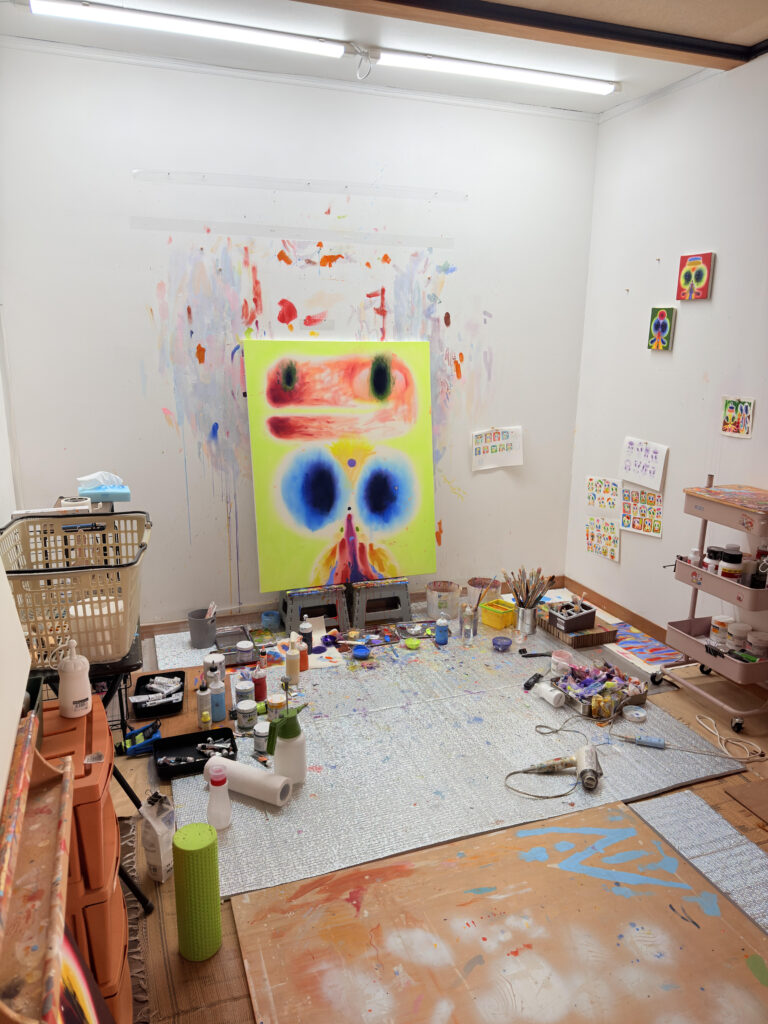
Hi Mila, It’s a pleasure to sit down with you. First question that I always ask. How does a regular day look like for you in Ehime?
Mila: Hi! Thank you for having me! I have a very slow-paced life most of the time. Where I live, near the countryside, is very quiet and peaceful, and I don’t really have many reasons to leave my home/studio other than walking my dog and doing errands.
I’m curious, growing up, what kind of kid were you? What did you enjoy doing, and how did you spend your time?
Mila: I was a very curious kid. I loved learning about biology and science in general, and I spent a long time doing what I called “researching and inventing,” which was basically catching bugs or plants or building cardboard devices. I was also very much into animated shows and video games. I guess you could say I was nerdy.
Do you remember approximately at what age your creative side started to show? And when did you start taking being an artist seriously?
Mila: I started drawing hyper-realistic animals and portraits back in middle school. Still, it wasn’t until the last year of high school that I got interested in illustration/animation and contemporary art. It was hard to choose a path back then, but I went for illustration first because I thought it would be easier to survive that way, I just had to get good. That’s when I started getting really serious about becoming an artist of some form.
So, last year, you moved to Japan. Why did you decide to move there?
Mila: I lived in Berlin for 11 years before that, and while I was there, I met my wife, who is Japanese. Berlin was pretty great, but it got complicated for many reasons. We decided to move to the place where my wife is from, closer to her family, and live a more relaxed life here.
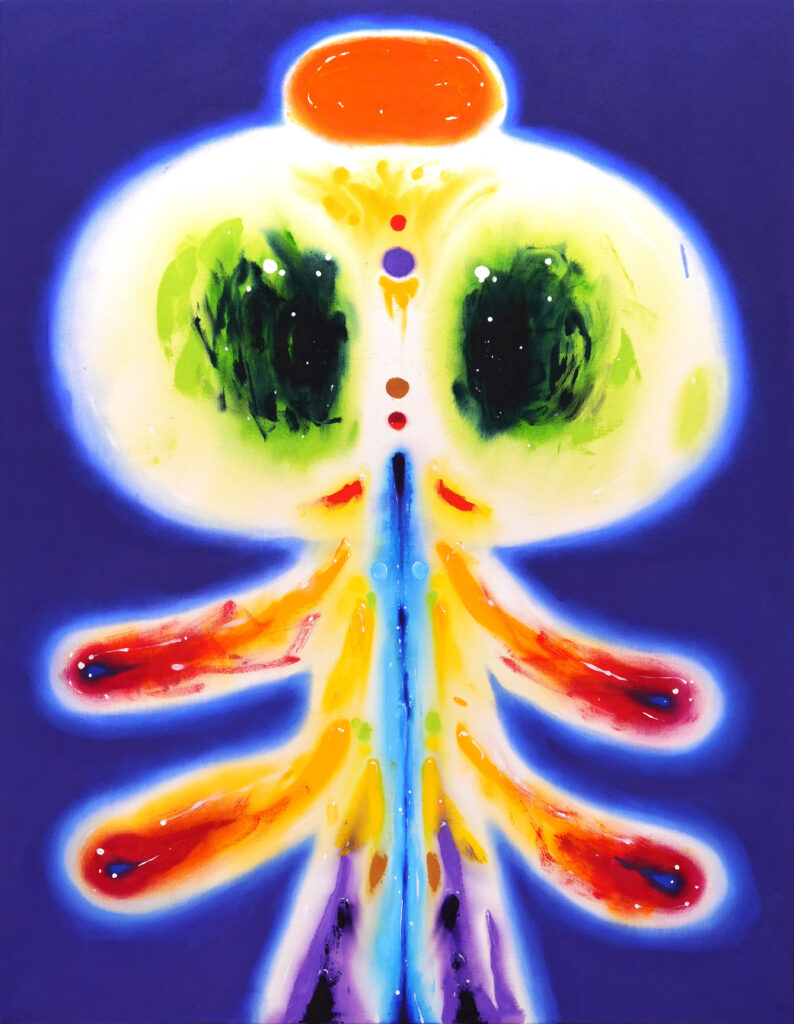
Ok Mila, let’s talk about your work now…. So your work navigates the friction between fluidity and constraint. What’s the earliest moment in your life when you became aware that your identity was something unstable — something shifting?
Mila: Yes. Well, I always felt like I had to pretend to be someone else, depending on the environment I was in. I think many queer people and immigrants share a similar feeling throughout their lives. At 19, when I immigrated from Colombia to Germany, I felt very aware of how malleable my self-identity was, how free I could be to be whoever I wanted to be. Later, during the pandemic, when I came out, I also realized how constraining that gendered identity I formed for myself was and how difficult it was to break those societal or self-imposed limitations.
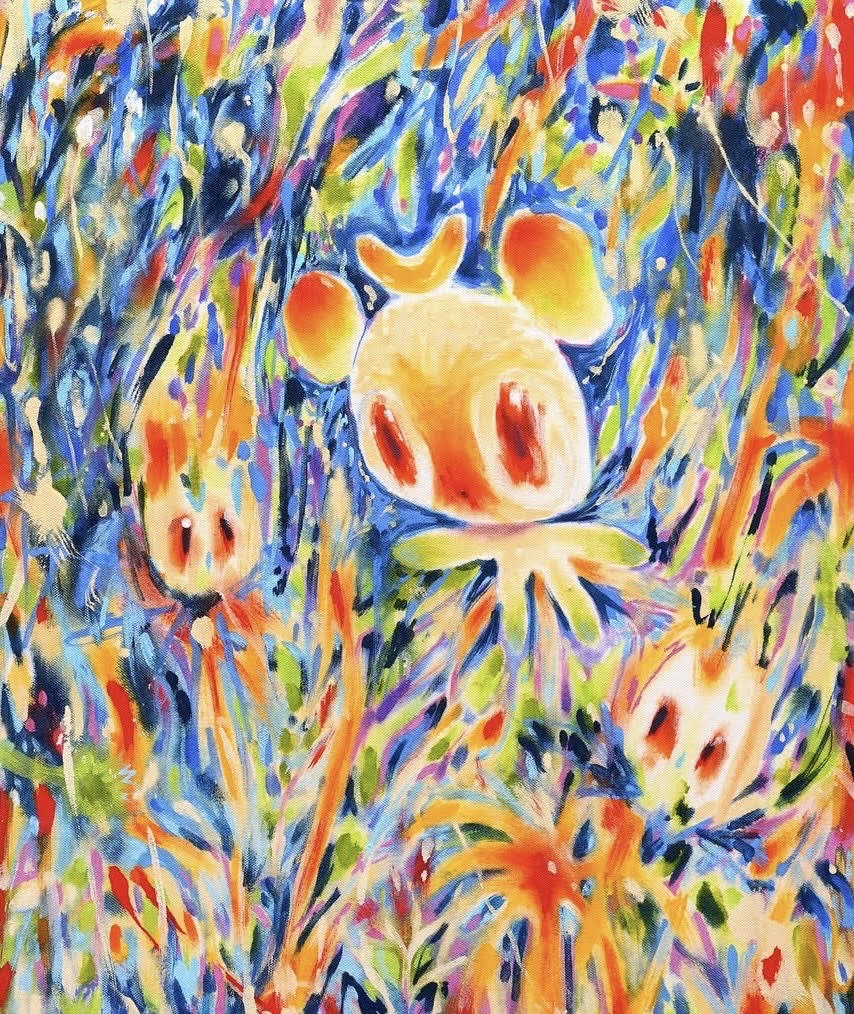
You describe your avatars as modules of the self. When you’re painting, how do you decide which “version” of yourself gets to speak the loudest?
Mila: I don’t feel I have control over that. It changes every time. I have to create a space in which all voices are heard and see who has something to say in that moment.
You mention current world events feeding into your process. What global anxieties are currently altering your visual vocabulary?
Mila: I’m currently curious about how my overconsumption of social media and short-form content influences my self-identity. In particular, how doomscrolling feeds into my fears, and how algorithms influence how we perceive ourselves and the world. It’s been a particularly crazy year for world events and for how we digest them online. I think that’s worth documenting in my work.
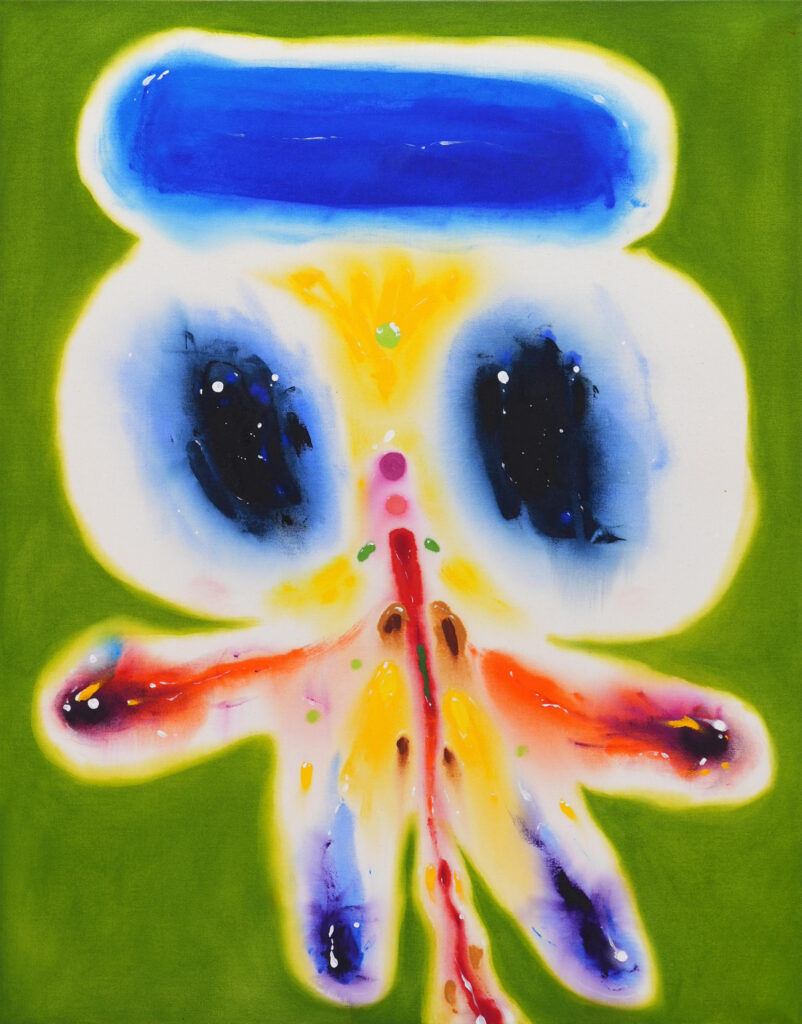
Your paintings speak from multiple “modules” of the self — younger, older, intuitive, logical. How conscious are you of choosing which version of yourself gets to appear on the canvas, and which ones you deliberately leave out?
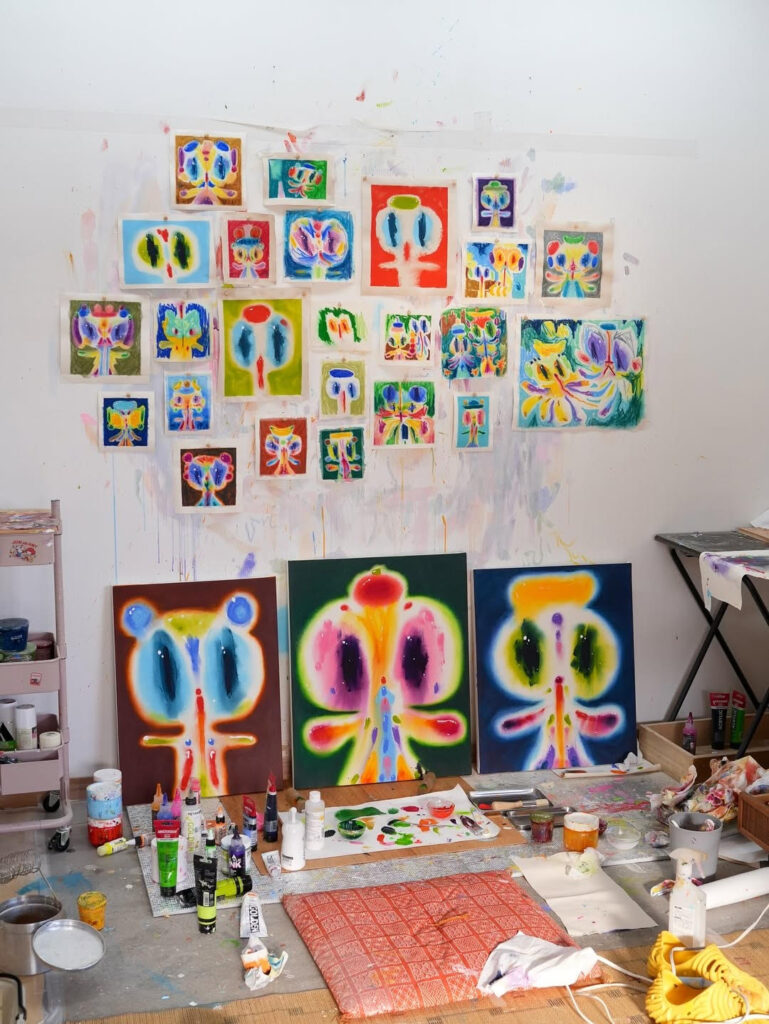
Mila: The beginning of my process is chaotic and uncertain, almost subconscious and automatic, and that’s probably the most “child-like” aspect of myself, playing and having fun. At some point, my well-trained artist and designer brain steps in and is like, “This is cool, but we need to make some sense out of this. That’s when I start thinking about what I want to say and using more elaborate techniques to render a character from the abstract expressionistic mess.
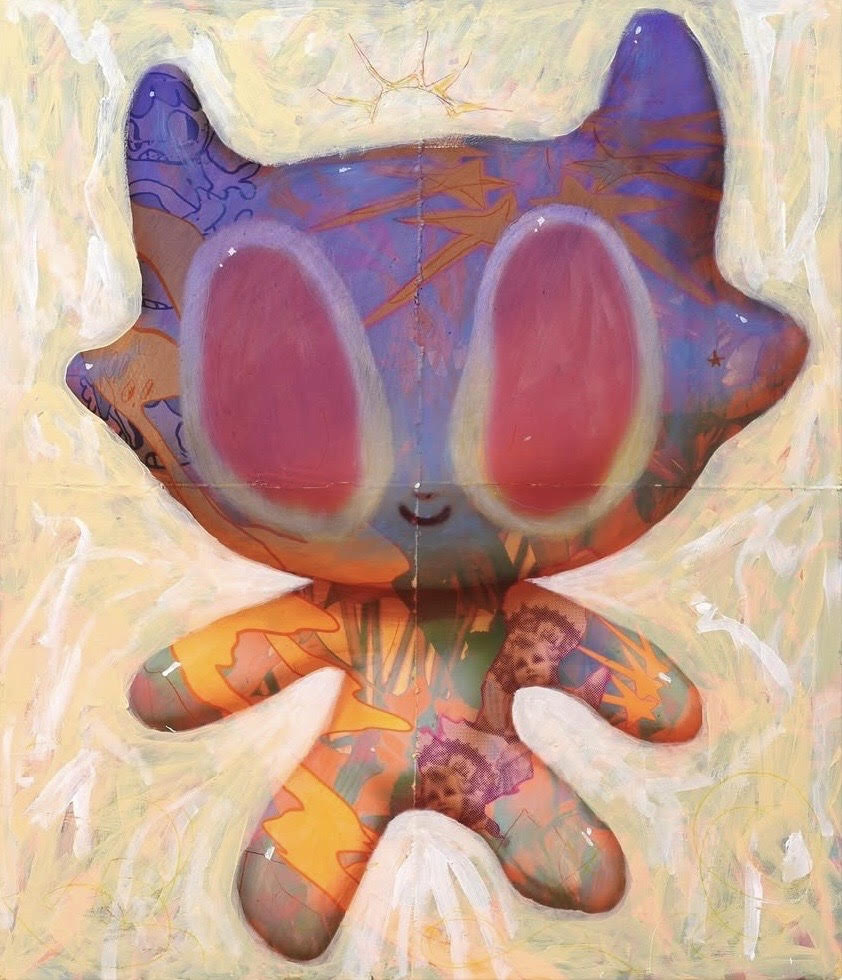
Your figures often inhabit an in-between space — funny, unsettling, genderless, exaggerated. What do these “impossible bodies” let you articulate about identity that a realistic body never could?
Mila: I think it is very similar to the way we choose our personal profile pictures on social media. The act of curating an image that reflects your online persona is, in a way, a means of self-expression, and in most cases, choosing a realistic representation of ourselves doesn’t fully articulate the way we want to be seen online. That’s why we resort to well-chosen, often exaggerated pictures of ourselves or things we like that really convey how we want to be perceived. My character figures operate similarly. Even if the process of creating them is unpredictable and naive, the act of curating and choosing the ones I see myself in is how I feel I can fully express my sense of self-identity.
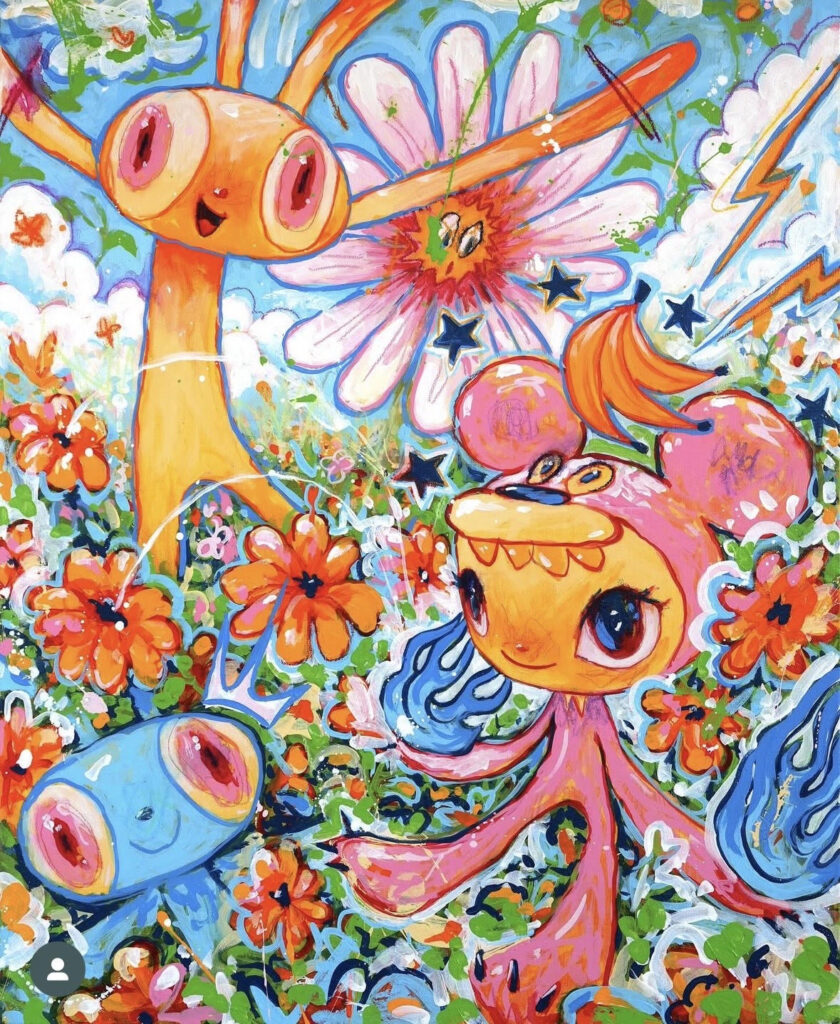
With that in mind, your characters feel both playful and unsettling. Are you painting them as companions, as mirrors, or as masks?
Mila: I would say it’s a bit of all of those. They are companions in the way that I care for them and remember them. Mirrors, too, because they remind me of how I saw myself the moment I created them. And masks also, because they are never a straightforward way of communicating, there’s a layer behind them that makes me somewhat uncomfortable. A sort of hidden mystery that needs to be interpreted.
Gender ambiguity in your figures is central. Is this ambiguity a shield, a liberation, or simply the most honest depiction of how you experience selfhood?
Mila: For me, it comes naturally. I often see people choosing what they want to see and assigning a gender to my characters on their own. I notice it by the way they refer to my characters. I don’t feel the need to give them any labels; in a way, that’s liberating, but I wouldn’t say that’s the intent, so it’s more about what I’m experiencing at the moment with my own identity.
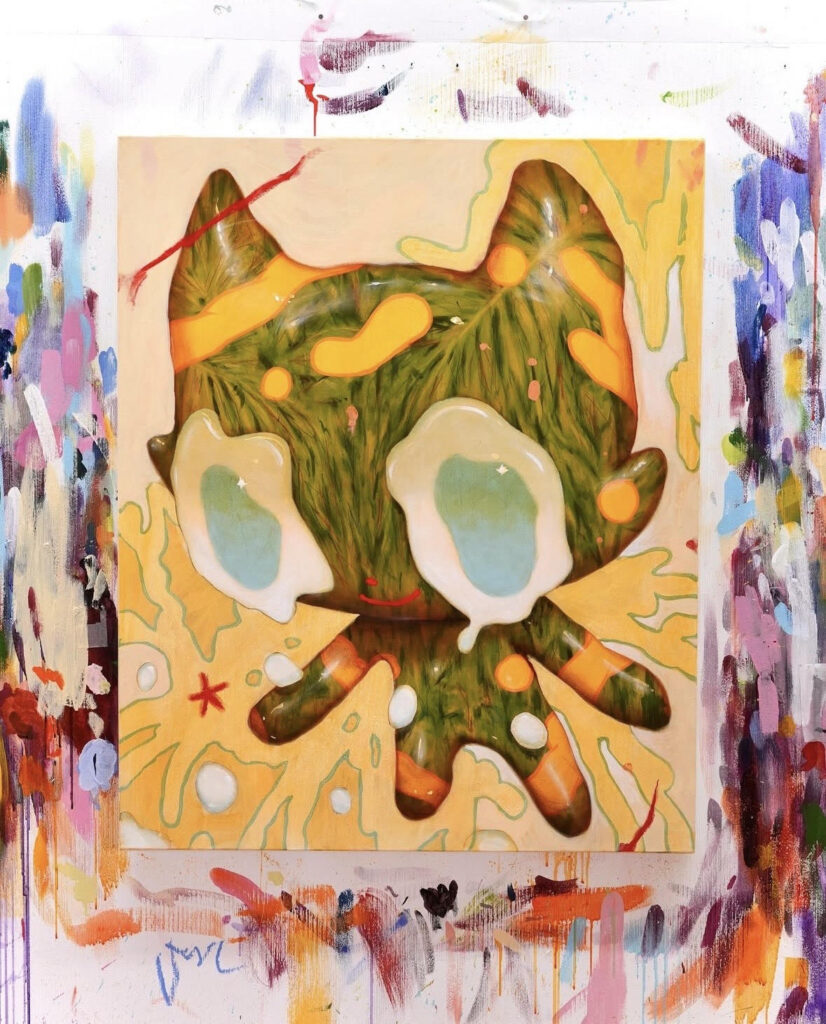
You’ve mentioned bringing your animation background into painting. Is time still part of the work — do you think of each piece as a frozen frame from an unseen film?
Mila: That’s certainly an interesting way to see it. Motion, gesture, and character design are important elements in my work today, and that is definitely something that I got from animation. Maybe each painting is a frozen frame, and the unseen film is just who I am.
How do you approach color?
Mila: Opposite to my brush strokes and composition work, which are very intuitive and unpredictable, my use of color is very intentional and selective. I use a limited palette of about 12 colors that I premix before I start any series. During the painting process, the part that takes the most brainpower from me is choosing how these colors would work together. It’s like writing a well-structured paragraph that makes sense, but using colors instead of words.
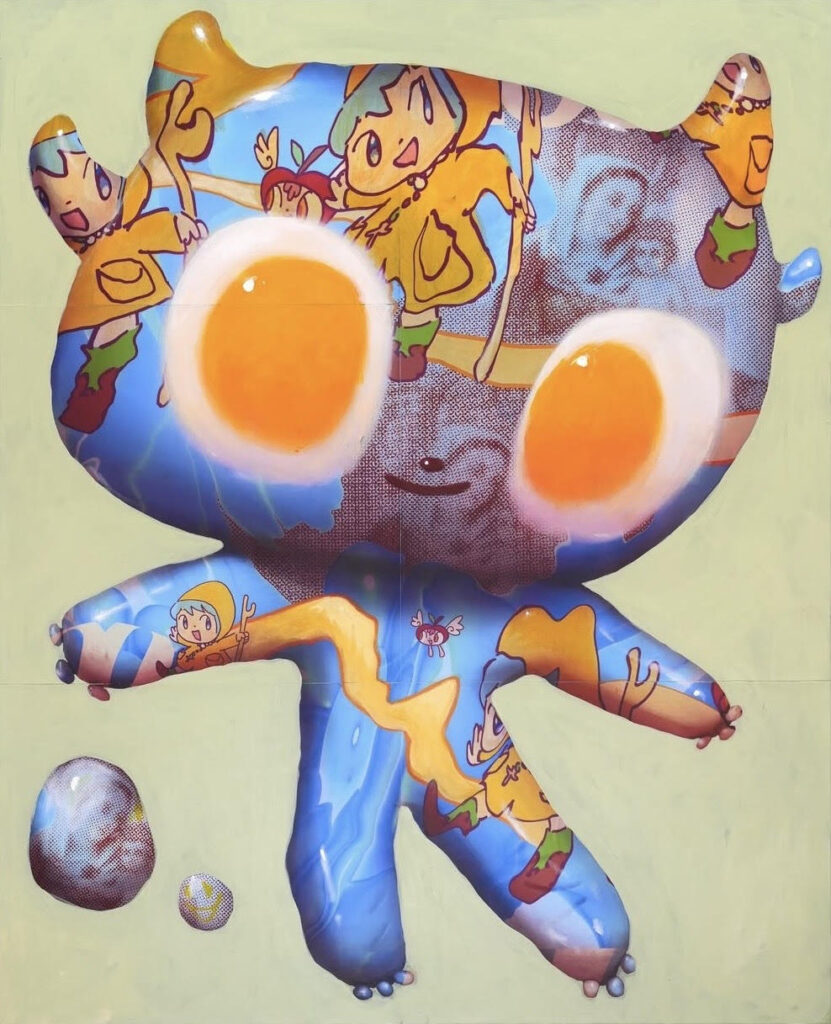
So, based on what we just talked about, what are you hoping to convey?
MIla: In a way, I want to be seen and connect with other people through the paintings. I think a lot of us in my generation have this craving for genuine connection and community, including me. So, what I’m trying to convey is a feeling of empathy, a genuine bond between the painting and the observer.
For younger or emerging artists watching your journey, what advice would you give about staying true to a voice or body of work while still evolving?Mila: Something very important to me is taking risks and not getting completely comfortable with any style or subject. I’ve tried different things and pushed in different ways repeatedly, and with time, I started noticing recurring ideas and aesthetics that would later become a voice. I also took quite some time to figure out what I wanted to say with my voice and write it down. Once you have that, you can keep pushing in any direction, but the core essence stays the same. So basically, challenge yourself, be intentional, and have a consistent message.
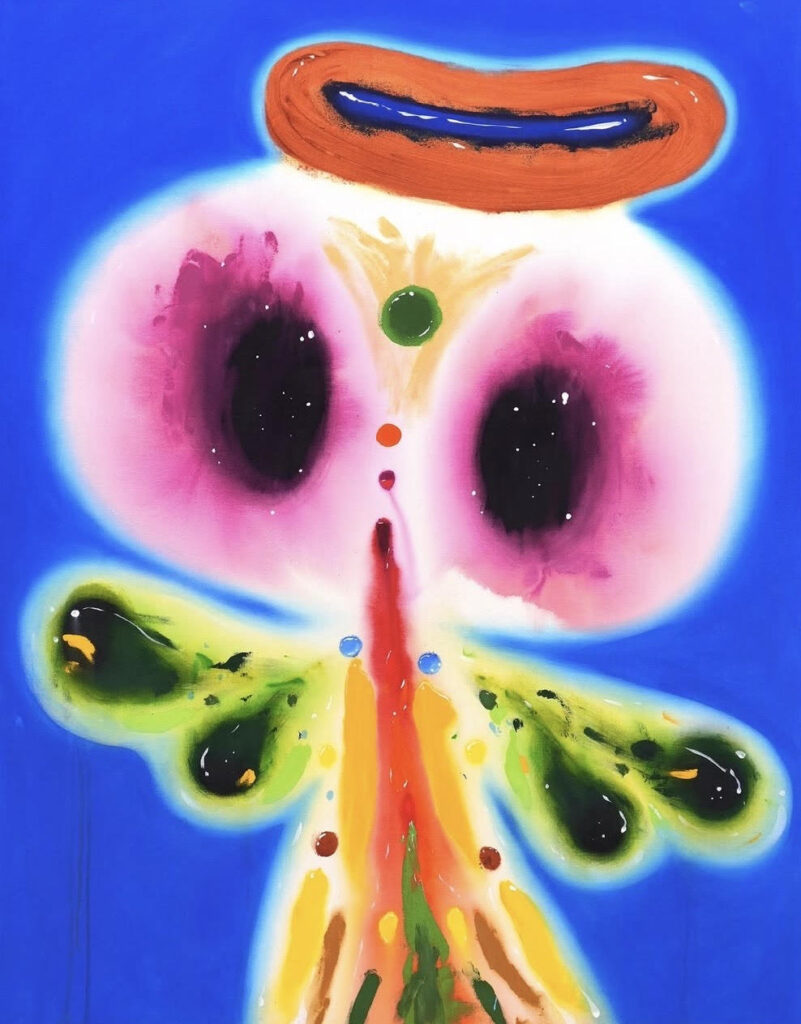
Ok Mila, now to something totally different. In a parallel universe who would you be? and what would you be doing?
Mila: I think about this a lot. I would probably be some sort of engineer or industrial designer, maybe working in the automobile industry or designing furniture. I also fantasize about owning a cute cafe or a fancy bakery.
Outside of art, what’s something you’re obsessed with right now—maybe a hobby, a show, or even a food—that keeps you grounded or inspired?
Mila: I’m very into tangible design in general. That includes architecture, interior design, fashion, furniture, cars, and any beautiful and functional object; I’m very into it. I love looking around design shops or antique markets, or even just at magazines or watching videos about that.
Can you tell me a story about a time when a connection with someone had a big impact on you?
Mila: Maybe the most recent would be my wife. She is the one who got me back into physical painting after working in digital and entertainment arts for many years. I was always fantasizing about painting in large formats and having a studio. She is the one who convinced me to stop daydreaming and start pursuing that goal.
What qualities do you find most important in the people you choose to spend time with?
Mila: Probably curiosity. I’ve noticed that I get along better with people who ask a lot of questions and enjoy learning.
Anybody you look up to?
Mila: I do, mostly filmmakers and painters. Like Hayao Miyazaki, Guillermo del Toro, Yoshitomo Nara, and Fernando Botero… It’s a big list, really.
What motivates you?
Mila: Probably curiosity and wonder. I feel like I’m already living most of the dreams I had, and I’m very grateful and proud of that. What keeps me going these days is just continuing to live and enjoy where I am right now, and seeing where things go. My goal right now is to get museum exhibitions and get a bigger studio.
How would you describe a perfect day?
Mila: Being at home on a sunny day, working a bit on our garden, no deadlines, no worries, drinking tea and reading a book next to my wife and my dog, maybe go eat outside or cook something nice at home.
Alright Mila, I always ask these two questions at the end of an interview. The first is. What’s your favorite movie(s) and why?
Mila: My favorites are basically all of Miyazaki’s films. But my favorite is Spirited Away. The first time I saw it as a teen, it blew my mind. That film really showed me how powerful animation is as an art form and sparked my interest in working in the industry.
The second is. What song(s) are you currently listening to the most right now?
Mila: I listen to a lot of music in Spanish. Karol G, Bad Bunny, Rosalia, or my favorite, Shakira, are always in my playlists.