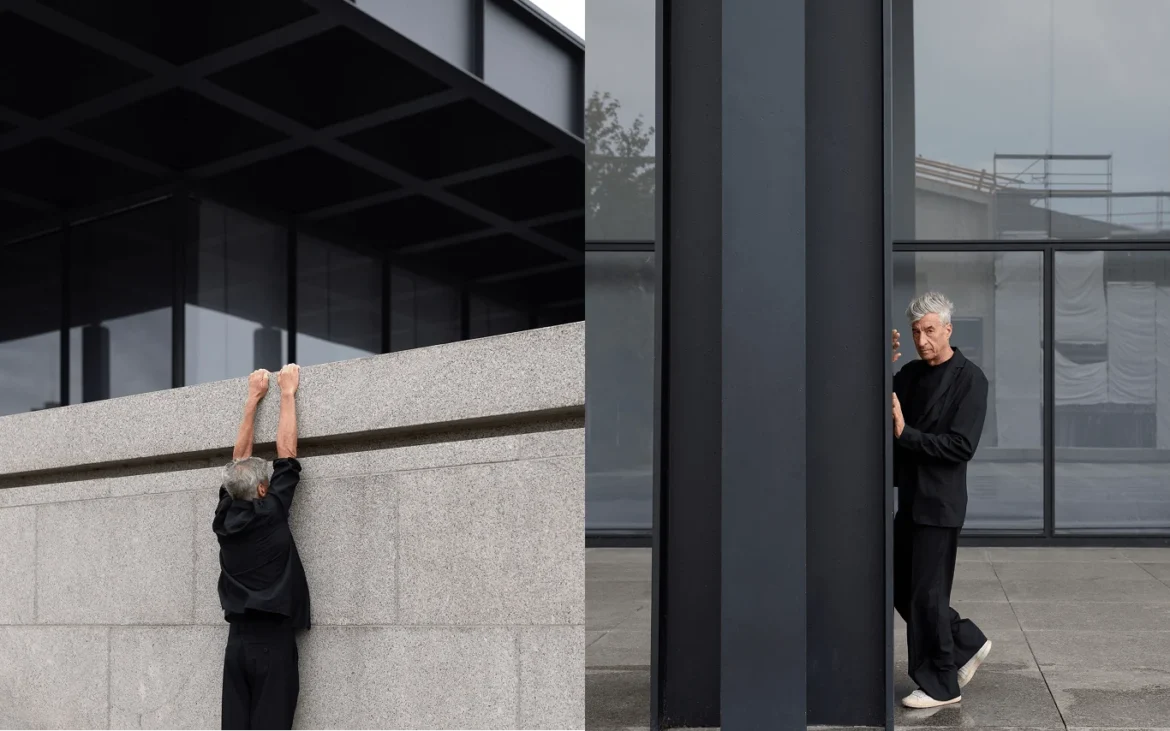
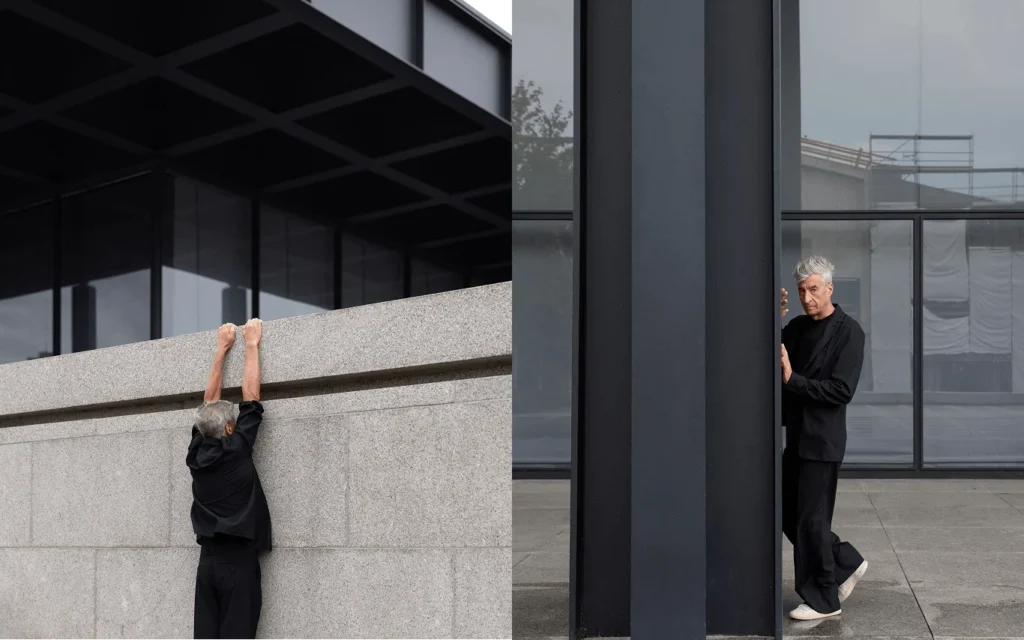
Contemporary art’s ultimate provocateur, Maurizio Cattelan, is making his long-awaited solo debut in Germany—and he isn’t playing it safe. Taking over Mies van der Rohe’s iconic glass hall at Berlin’s Neue Nationalgalerie for his major showcase titled NIGHT, the Italian artist has effectively transformed the modernist architectural temple into a vast, shadowy, contemporary church.
Awarded the prestigious 2026 Preis der Nationalgalerie, Cattelan uses the show to interrogate faith, authority, historical memory, and existential dread. Rather than treating the open-plan museum as a basic container for art, he turns the architecture itself into a collaborative co-conspirator.
The exhibition weaves together seminal historical masterpieces and unsettling new site-specific commissions into a seamless, melancholic landscape. At the center sits Purgatory (2026), a scaled-down replica of the Brandenburg Gateplaced inside the hall that repositions one of Germany’s most charged symbols as a space of passage, reflection, and political ambiguity. Nearby, All (2007) presents nine shrouded, life-sized bodies sculpted from Carrara marble laying flat on the floor as a chilling monument to anonymous loss, while classic works like Him (2001) and Novecento (1997)continue to confront institutional power and historical violence. Extending beyond the glass walls onto the outdoor terrace, Scar (2026) positions an engraved cast-iron manhole cover directly into the floor, anchoring the exhibition’s themes into street-level urban soil.
Curated alongside Klaus Biesenbach and Lisa Botti, the show isn’t merely about darkness—it’s about the loss of certainty. By shifting familiar symbols just enough to rupture their original meaning, Cattelan forces visitors to wander through a twilight realm where irony, grief, and beauty collide.