In Chokehold, Lucy Luckovich and Rebekah Rubalcava become directors of female obsession. They conquer the voyeuristic gaze of both man and machine. The paintings in this show depict a subject position that is not static, but in constant struggle — resisting, mutating, and repurposing subjugation.
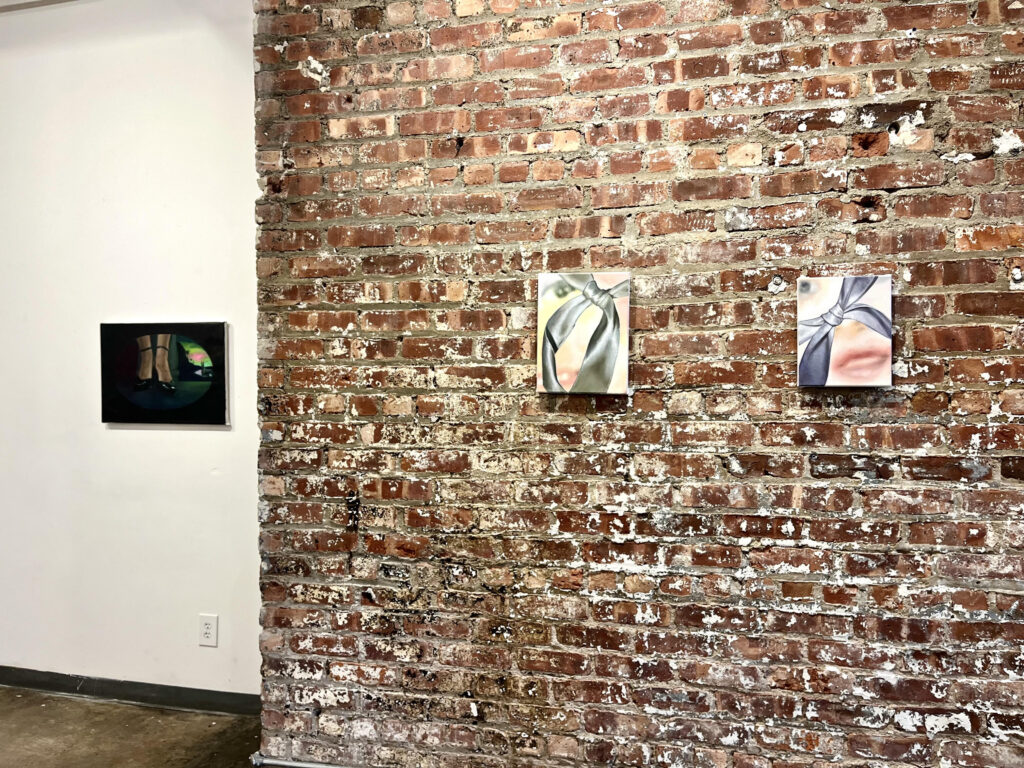
Luckovich’s paintings depict layers of AI-generated faces and fluids posed in the liminal. She paints a kind of contemporary still life, merging the uncanny reality of girls who exist on the internet with the girl who watches. The obsessive impulse is tactical: glitches for big lips, smooth skin, bright eyes. A disturbing sensation of control — and the desire to reclaim it — dominates these works.
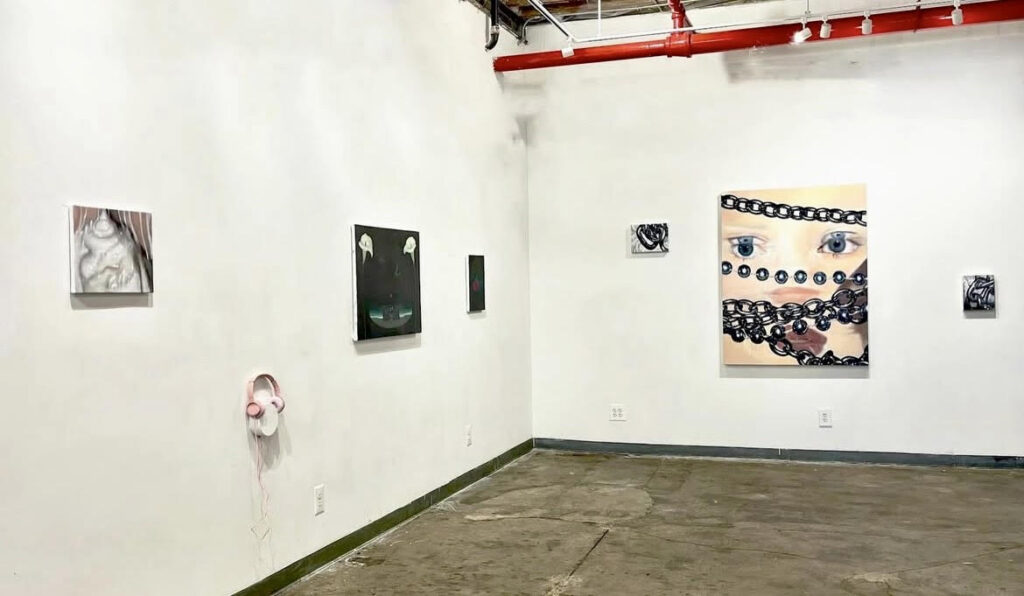
Rubalcava’s fantastical paintings deal with voyeurism as well, though in a different light. In her world, danger arrives with a dark anonymity, relished like a divine act of contrition. Motifs such as a Venus flytrap, a threatening Doberman, and sets of predatory eyes heighten this tension. Eat me, drink me, watch me. Her paintings aestheticize the push and pull of attraction and repulsion.
By playing with internal worlds, the works in Chokehold place the viewer directly in the muck of erotic fixation. There is fantasy, insatiable infatuation, and a touch of romance. For both Luckovich and Rubalcava, Chokehold is the sexual pleasure of giving up control — possessing you before letting you go.
Devon Gordon, founder of Zepster Gallery, sat down with Rebekah and Lucy, to hear about the exhibition, and their thought process behind their new works.
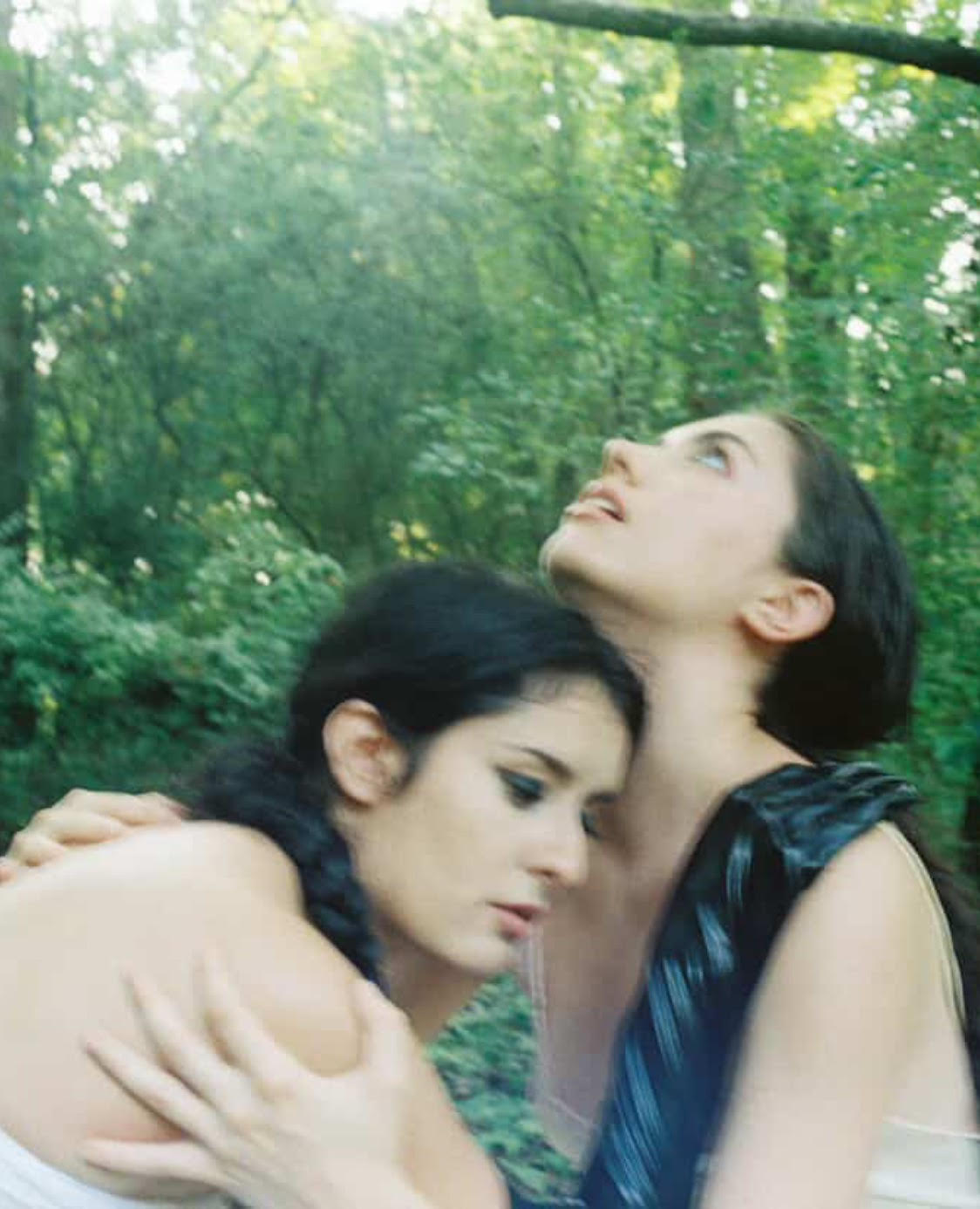
Profile picture by Addison Thornton.
Exhibition text by Iz Horton.
A conversation with Rebekah Rubalcava.
Why the name Chokehold?
Rebekah: It had a certain seduction to it, a feeling of being captivated, claimed. That tension was the pulse of the pieces , so the name came naturally.
What was the initial planning for the exhibition?
Rebekah: Lucy and I had been circling the idea of a show for a long time, but the timing never felt right. One night, I had a dream of the two of us exhibiting together. I told her the next morning, and something clicked for both of us. From there, the plan began to form almost on its own.
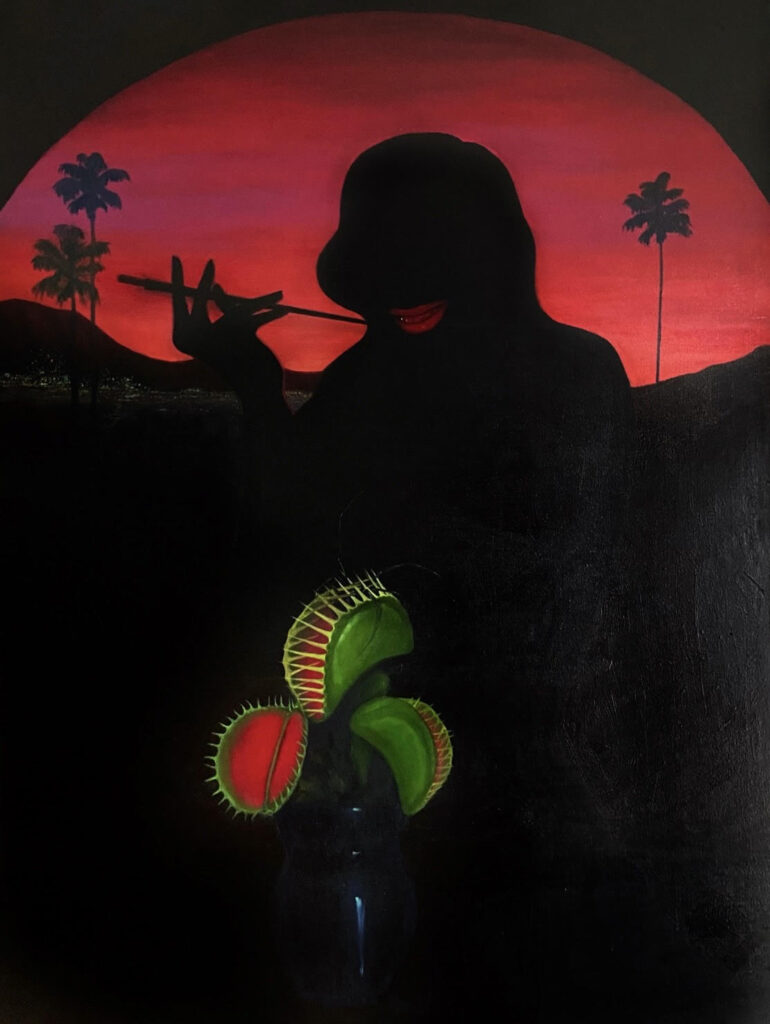
How does your work change contextually when shown together?
Rebekah: There’s a strange chemistry between our pieces. We speak in different visual languages, but when they’re placed side by side, they amplify one another, It creates a shared atmosphere we couldn’t achieve alone.
What research went into this new body of work?
Rebekah: Lucy introduced me to the panopticon, a theory about surveillance that has nothing to do with desire on the surface, yet everything to do with the feeling of being watched. It struck a nerve. It echoed the sense of a silent “eye” that shapes us, seduces us, unnerves us. I followed that thread. It helped crystallize themes I’d felt but never named: obsession, desire, exhibition, voyeurism. Not literal sexuality — more the subconscious compulsions beneath it.
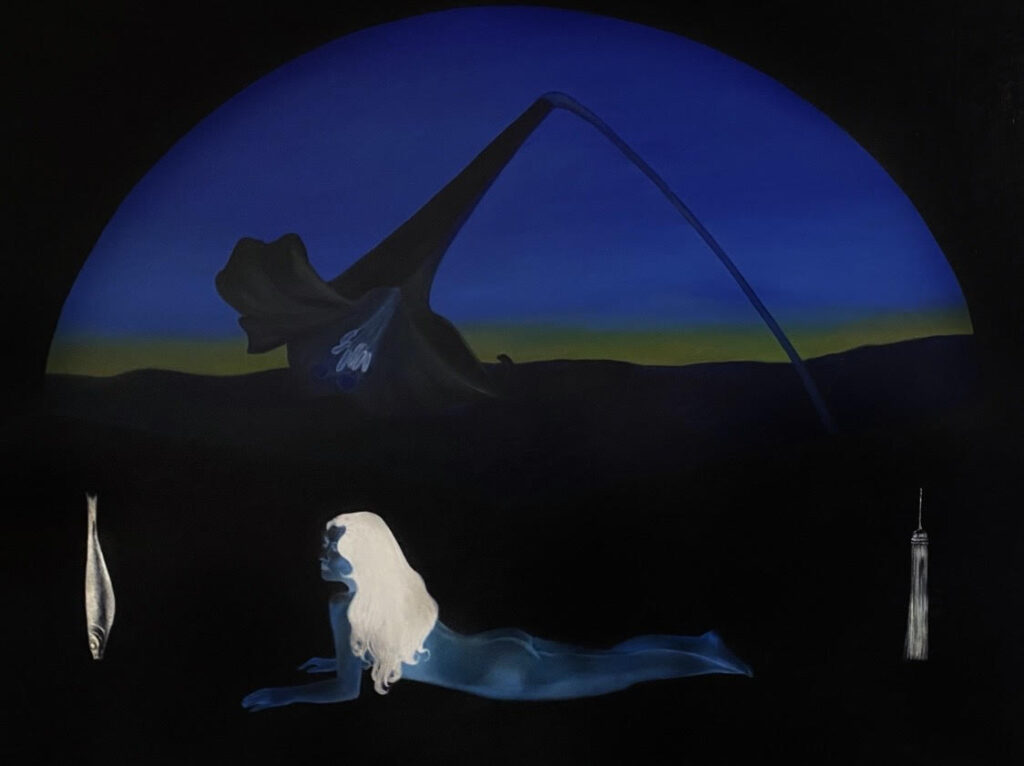
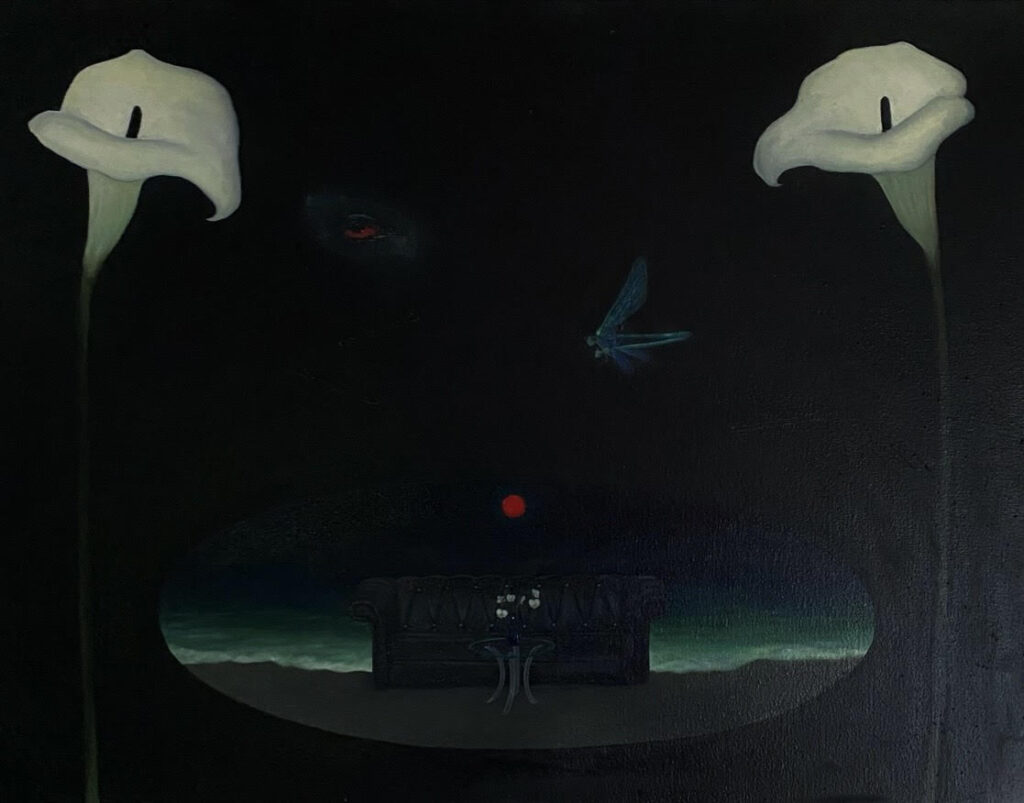
What inspired this body of work?
Rebekah: While I was painting these pieces, I was steeped in watching Giallo films, 80s luxury interiors, Clarice Lispector, and the nocturnal natural world. Each painting became its own vignette- small fever dreams
How does the zine extend the meaning beyond the show?
Rebekah: The zine allowed the show to be more immersive, The writing is raw, fragments of moments where I felt possessed by something and needed to release it. I didn’t edit them. I let them stay flawed, impulsive, human. For both of us, the zine was a way to show that the exhibition wasn’t just meant to be seen, but felt from the inside out.
Any suggestions? Films ,books, movies?
Rebekah: Nothing really honestly but I do think pastel colors need to be appreciated more
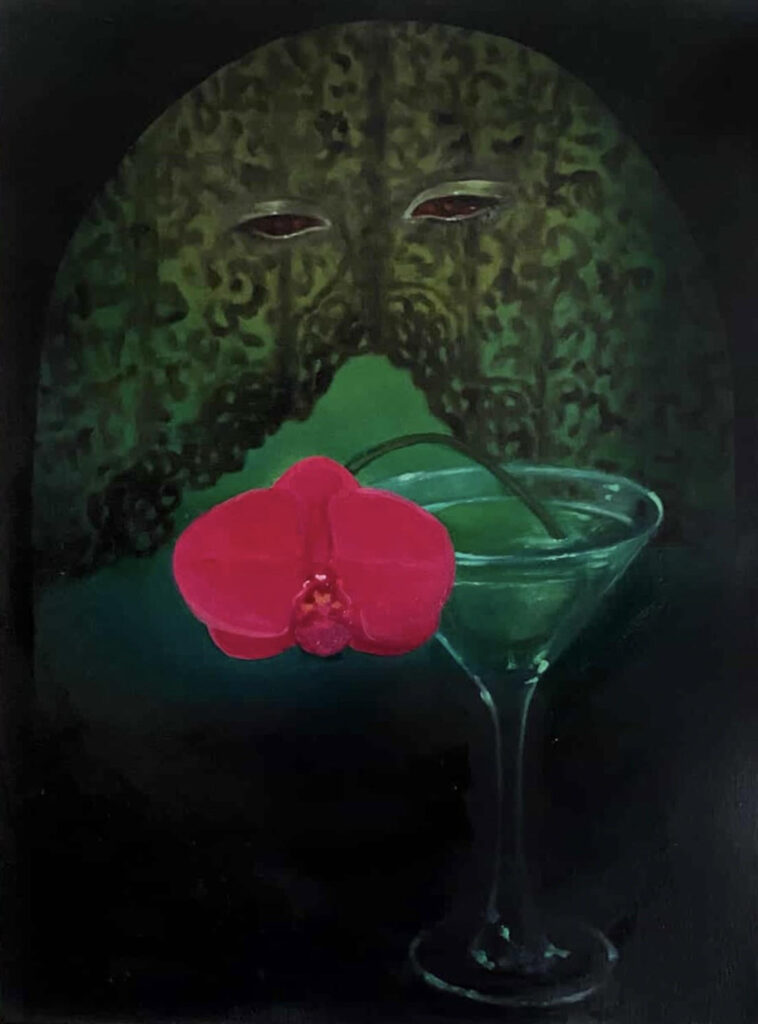
A conversation with Lucy Luckovich.
Why the name chokehold?
Lucy: We wanted a title that could touch on a few different things at once. So ‘Chokehold’ brings up this idea of when something or someone just has you in its grip or it’s possession and you’re so obsessed and infatuated with it, but it also could allude to power and misuses of power and authority. It can also kind of be a combination of those two things and be reminiscent of like choking someone during sex which is interesting and brings up power and desire in a different way.
What was the initial planning for the exhibition?
Lucy: So me and Rebekah talked a lot in the months leading up to the show, and we knew that visually our work carries a lot of contrast— I tend to paint blown out, overexposed images that relate to the screen and artificial light, and Rebekah’s work tends to be much darker and contain more depth. We liked this contrast, and we leaned into it a bit, and then conceptually we were experiencing sort of similar things in our life at the time the show idea was born, so I think the themes grew naturally intertwined because of that.
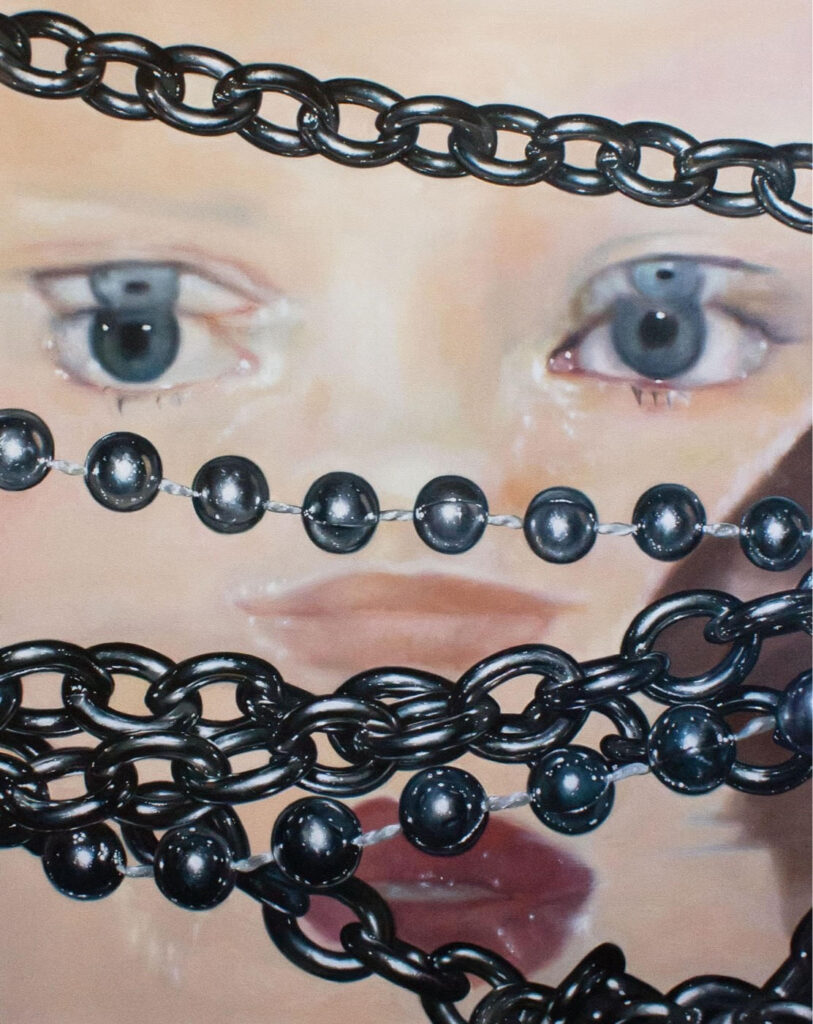
How/ does your work contextually changed when shown together?
Lucy: Speaking for myself, I find my work to lean a bit cold and leave out how much of my own personal desire is implicated in it, so I think when paired with Rebekah’s very sultry, seductive, dark paintings, those aspects in my own work are able to be emphasized more too.
What if any research went into this new body of work?
Lucy: We had both discussed Foucault’s writing on Panopticism and how we can use these big ideas of surveillance and invisible control to relate to the feeling of obsession or having a crush which was kind of a fun and somewhat lighthearted twist on that. At the same time, I think it brought that conversation to a level of intensity or darkness in the sense of asking ourselves why obsession can be so crippling and why as women we might fabricate systems of control within our own minds to satisfy wants or desires within ourselves. I like how it relates all this stuff to exhibitionism and voyeurism and asks which desires are our own and which are somebody else’s.
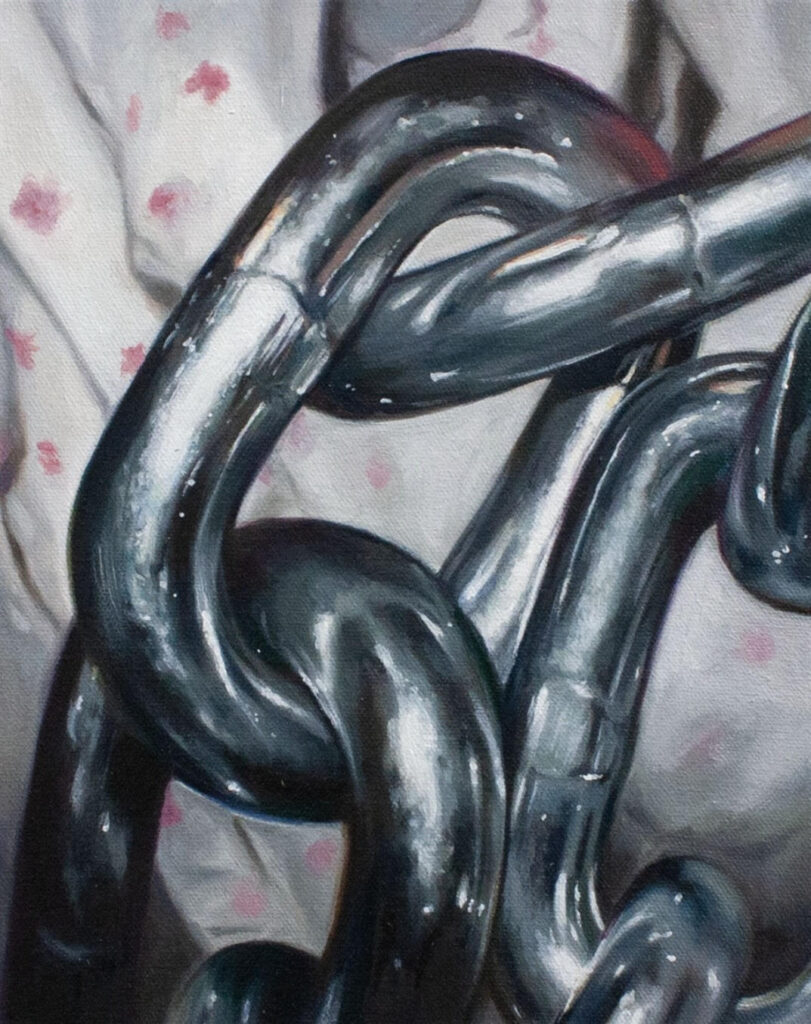
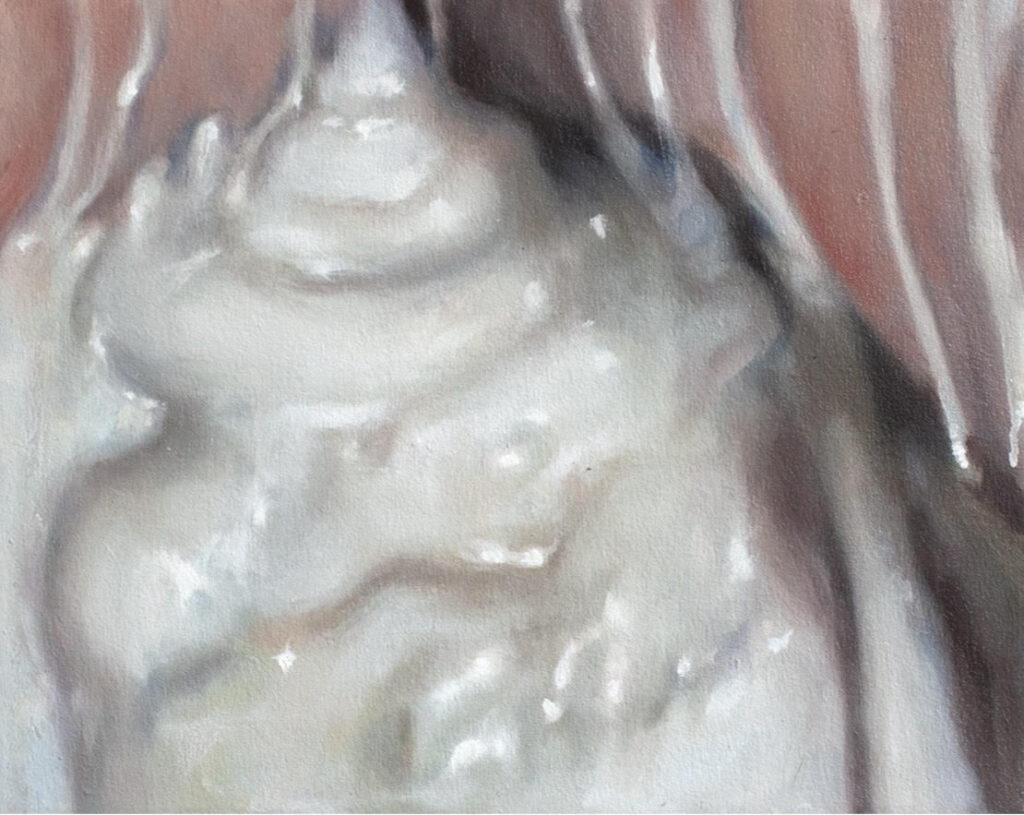
What is some inspiration for your work?
Lucy: I am deeply inspired by AI videos I see on Instagram reels which ask me to choose which bed I would prefer to lay in and then show me AI-generated clips of women falling into beds of clouds, marshmallows, flowers, etc. Also AI videos of young, child-like women with massive tits dancing uncannily like they’re in a TikTok. I’m inspired by this stuff because it’s like extremely concentrated depictions of collective desire, and it’s often bizarre and scary and strange, but it’s also honest. I try to tap into this kind of thing in my work from my point of view and also that of the general masses.
I think AI is not inherently “bad” but that it is ultimately being used and going to continue to be used for evil, but I can at least appreciate the way it’s showing us our asses like as a human race, and I think it’s good if my paintings do that too in terms of exposing my own shame and/or darkness and maybe, therefore, expose those things that I’m implicated in but that resonate on a more cultural, societal level.
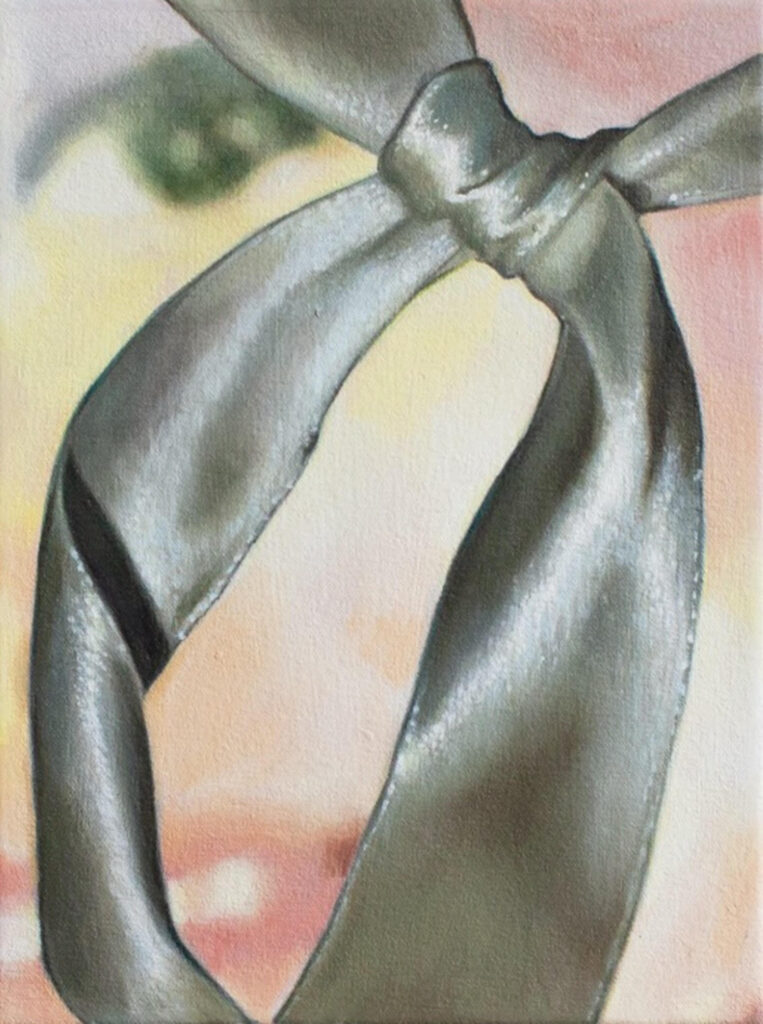
How does the zine extend the meaning past a show?
Lucy: The zine was such a great way to add some of the stuff going on in the periphery of the paintings. For me, the writings I put in there are very telling of the last year or so of my life although they’re a bit surreal and the first piece I wrote ‘Tank Battle’ is a totally fictional short story. I also included some of the digital collages and reference photos that I use to prepare for my paintings, so it was fun to give a little ‘behind-the-scenes’
What’s something you’ve watched, read, or listened to lately that you’d recommend?
Lucy: Lately I have been listening to a lot of electronic music in the studio that I’ve noticed helps me focus more than almost anything else. Tokyo Ghetto Pussy, U96, Dune, and Snow Strippers all deserve special recognition for that…