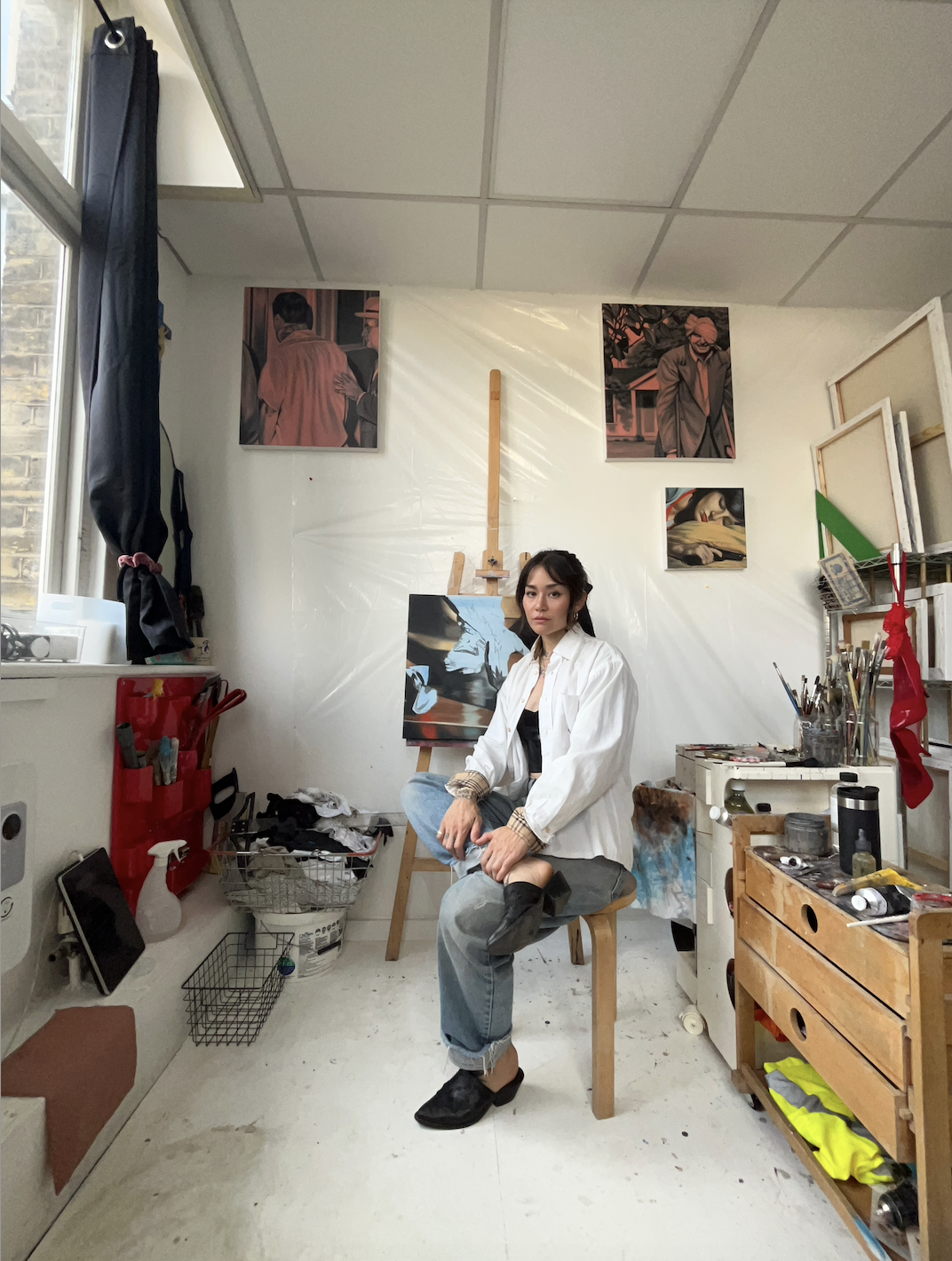
We caught up with Marina Inoue (b. 1985), a Japanese-American artist born and raised in New York City and now based in London, ahead of her first solo exhibition with Shug Gallery opening this Saturday, 20th September.
A renowned tattooer for nearly two decades, she carved her path in a male-dominated field while sustaining herself full-time through the craft. Since relocating to the UK in 2023, she has turned to painting in oil, developing a visual language that explores displacement, identity, and the “shadow-self” through a distinctly feminine gaze.
Her canvases examine sexuality beyond social norms, the unease of the familiar, and the balance of fragility and power, marking Heaven is Closer as a pivotal bridge between her tattoo legacy and her emerging voice in contemporary painting.
Heaven is Closer is on view at Shug Gallery from 20–27 September. For the catalogue, drop them a DM or email contact@shug-gallery.com.
You grew up in New York City surrounded by art: your mother was a commercial still‑life photographer and your father a graphic designer. How did their creative careers influence your early interest in art?
Marina Inoue: My parents have likely been the single most influential figures in the trajectory of my life. I was extremely lucky to have grown up in an unconventional home that really fostered autonomous creativity. I was surrounded by art and design books, encouraged to draw and paint, and introduced to art house cinema and avant-garde/alternative music early. My parents were -and are- very cool in that respect. And of course the particular dynamic of the domestic landscape I grew up in shaped me. I was an only child left to my own devices, and carry that solitude into my adult life. Emotional repression, dysfunctional partnership, patriarchal aggression, et all of course have contributed to the structure of my emotional interior that inherently manifests in my artistic practice.
You were part of NYC’s punk/hardcore scene and even started writing graffiti. How did that underground, rebellious energy shape your artistic identity?
Marina Inoue: Actively rejecting conventional society has always been an energetic driving force for me. Tattooing was certainly a direct reflection of growing up in the punk scene, and though it is more mainstream than it ever has been and I have been able to be financially stable up until moving to the UK, it still remains a relatively fringe modality of labor. Now, exploring an art career as someone who does not come from generational wealth, well, if there is anything less stable than being a freelance, self-employed commercial artist, it’s likely a career in fine art.
At just 21, you began your apprenticeship at Fly Rite in Brooklyn, after working as a personal assistant there. Can you tell us about that early period, what lessons or experiences were pivotal in becoming a tattoo artist?
Marina Inoue: I do think that there is something to be said for having experience in customer service and learning how to work hard, which are definitely a parts of being a tattooer. They’re good life skills for surviving capitalism. But I suppose if I could take any real lessons from that time period, it would be to not assimilate into a culture that you don’t necessarily agree with in order to survive. I find myself constantly struggling to unlearn a lot of toxic masculinity that I adopted. This isn’t a direct comment on my apprenticeship, or the people I worked with at that time. The industry in general at that time just sort of sold the lie of scarcity for people learning how to tattoo that weren’t white, male, and straight, and in order to succeed you had to be “one of the boys”. This was a theme experienced in graffiti and the hardcore scene as well, so it really got drilled into me. I regret falling into that trap to this day.
After NYC, you moved to Richmond, Virginia in 2011, then later started traveling and working on the road. What motivated that shift to a more mobile lifestyle?
Marina Inoue: I started climbing and it totally changed the trajectory of my life for about a decade. I just wanted to be outside and travel and climb. It brought me to a lot of places that remain so close to my heart, like Fayetteville, West Virginia, the town of Rifle on the western slope of Colorado, the west Texas desert outside of El Paso, and the Eastern Sierras of California. I thought a lot less about art and tattooing then, but I learned a lot about the land and myself during that time.
You balanced tattooing and climbing, even living full-time in an Airstream and doing guest spots while pursuing climbing adventures. How do these two passions, tattooing and climbing, intersect in your life and creative process?
Marina Inoue: They don’t. I get so hyper focused on one thing that I’ve never been able to really balance anything very well. When I was climbing and living on the road, I was mentally checked out of tattooing. When I started living in a city again and focused on tattooing more, I was mentally checked out of climbing. Now that I’m painting, I’m relatively mentally checked out of both climbing and tattooing, though I am now a little better at dispersing my energy across the things I do.
Your website and catalogue highlight your paintings and designs, how does creating on canvas or in design differ from tattooing? What challenges and freedoms does it bring?
Marina Inoue: It’s funny, I’ve actually recently re-done my website and removed the design portfolio section on it. While I still tattoo full time and take on design jobs, I’d like to divorce what I do as labour and my artistic practice of painting. Tattooing and design are both commercial art. Someone hires you because they like your work, but ultimately you’re delivering a product to a client. I am so, so lucky that I have work that is creative, that I take a lot of pride in, and that I can scrape by on. It’s afforded me a lot of freedom and flexibility in my life and I’m so grateful. But painting is very much a personal endeavor in a way that tattooing or illustrating never could be. I generally don’t take commissions unless it’s something I feel personally engaged with, and I don’t paint taking into account what people may or may not like looking at.
Was shifting toward painting and design a conscious move, or is it more of a natural evolution arising from your background and experiences?
Marina Inoue: Painting is a part of tattooing, but it is with the intent of presenting tattooable designs to the customer, so there are limitations because it needs to be something that can last as a tattoo on skin. I’ve painted for a long time in the style of tattooing- hard, black ink outlines with gouache or liquid acrylic shading, with the sole purpose of creating tattoo design flash sheets. It’s quite rigid, really, and I never really liked it that much. In 2020 I started experimenting a little bit more with gouache and painting monochromatic sheets of designs that echoed tattoo flash sheets, but weren’t meant to be tattoo designs. That definitely led to thinking a lot about oil painting.
In climbing culture, you’ve spoken about how “both tattooing and climbing are lengthy processes” that demand time and dedication. How does that philosophy reflect in the way you create as an artist?
Marina Inoue: I suffer from, and/or am blessed by, some sort of seemingly clinical condition that allows for relentless, obsessive hyper-fixation. That was tattooing, then climbing, and now painting. I gain the most satisfaction from the process of learning and struggling to excel at something. Truthfully, I am not that happy unless I am pathologically working towards figuring out how to do whatever I am focused on.
As you balance tattooing, painting, design, and climbing, what can we expect next from you?
Marina Inoue: Tattooing and design work are the things that allow me to have the time and resources to paint. I’m very fortunate in that- having a career I can pay my bills with significantly reduces the pressure to “make it” as a painter. My motivations to paint are able to remain more true to my own desires, and I can worry less about whether or not I can pay my bills with selling work, or how I can make things more commercially appealing.
How do you see your identity evolving, are you primarily a tattooist who paints, or an artist who tattoos?
Marina Inoue: I’ve tattooed for 18 years, so it would be hard for me to leave that identity behind, as much as I would love to claim that I am not defined by what I do for work. I would like to thing the two things can exist as facets of my identity simultaneously without having to be tied together in one sentence. That being said, I would love to focus on continuing moving further and further into my painting practice.
What inspired the title “Heaven is Closer”? Can you share the concept or emotion behind this theme?
Marina Inoue: As I touched on before, an intrinsic aspect of my personality, both very intimately and more functionally, is being driven to search. My desires perpetuates themselves by always finding a new official object of satisfaction. One could ask whether that is self-sabotaging for my mental well-being, or what keeps my creative practice in motion, and the answer would be both. The title references the agony and the ecstasy of never quite reaching the zenith.
What can visitors expect to experience when they step into the exhibition?
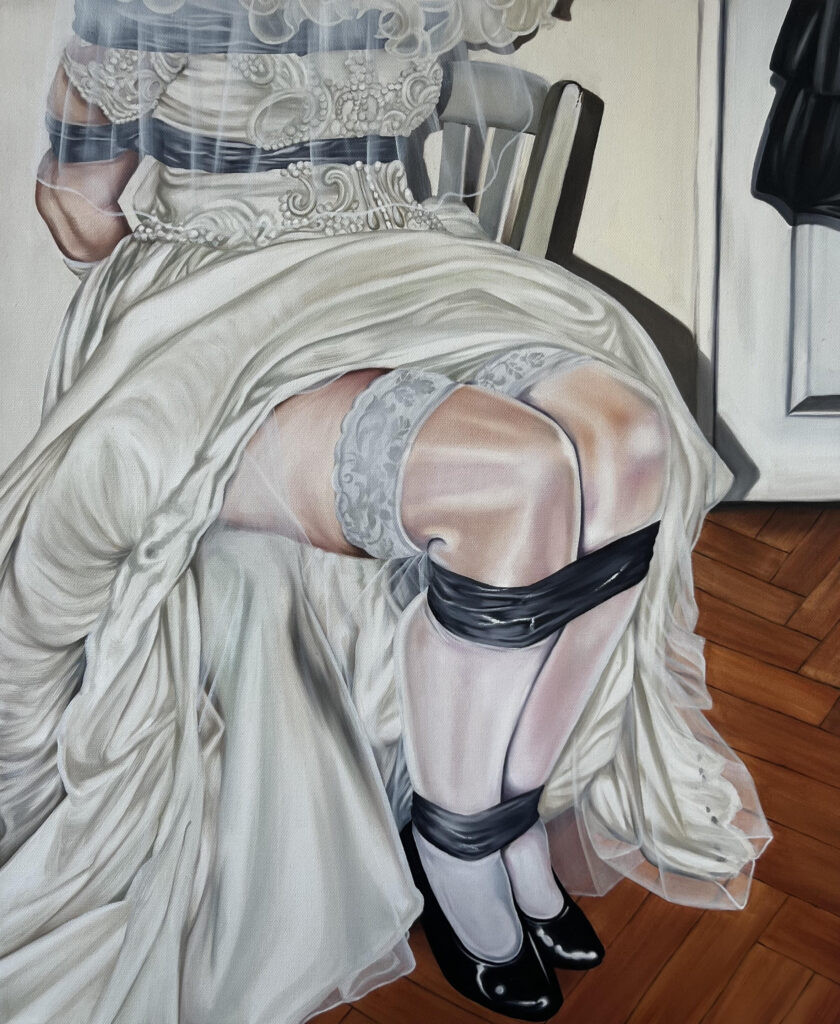
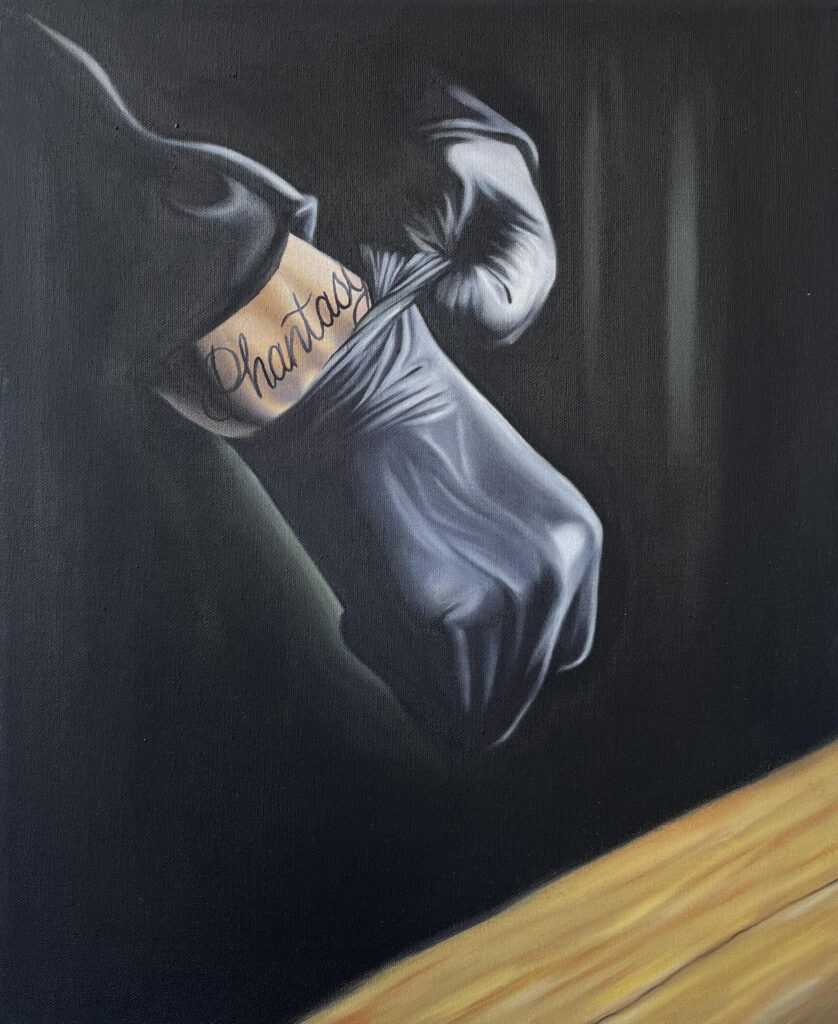
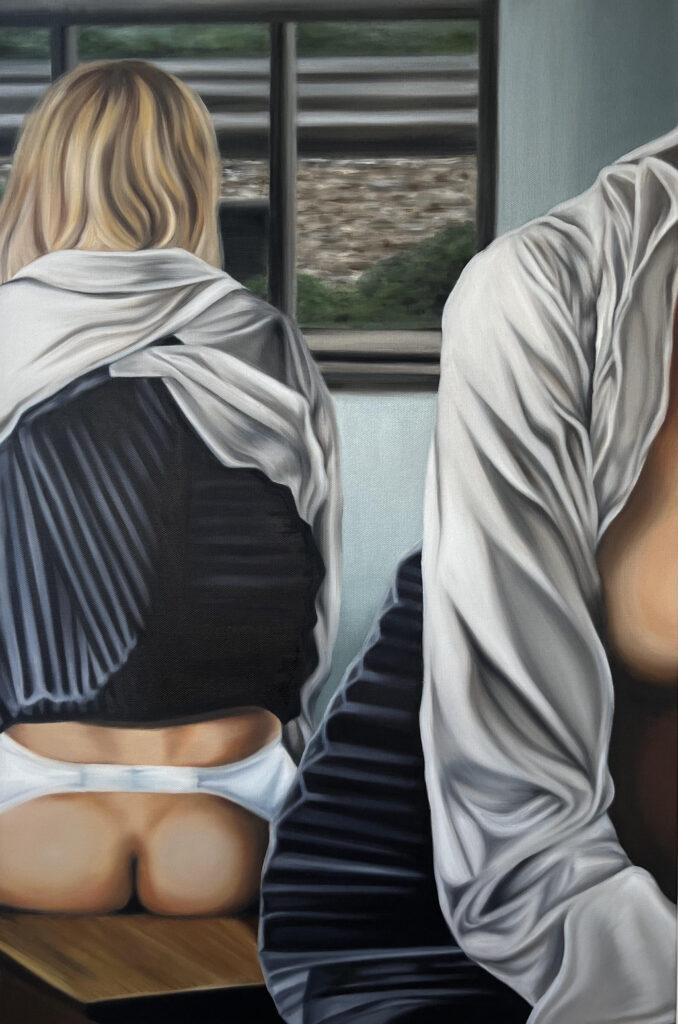
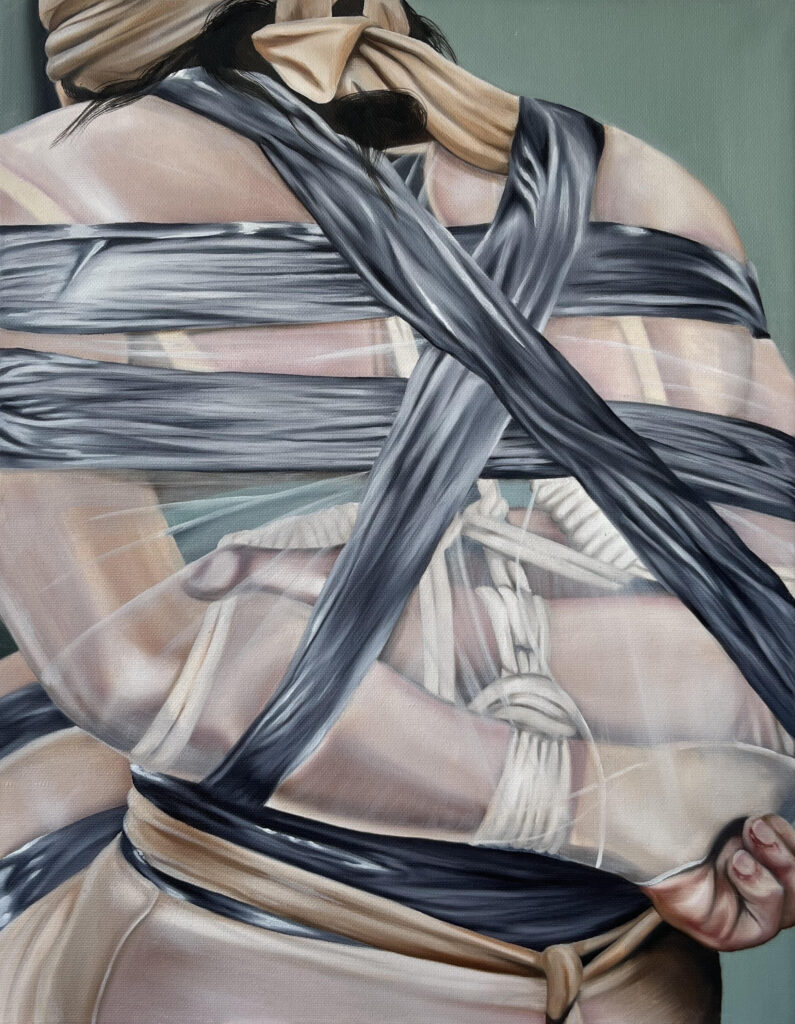
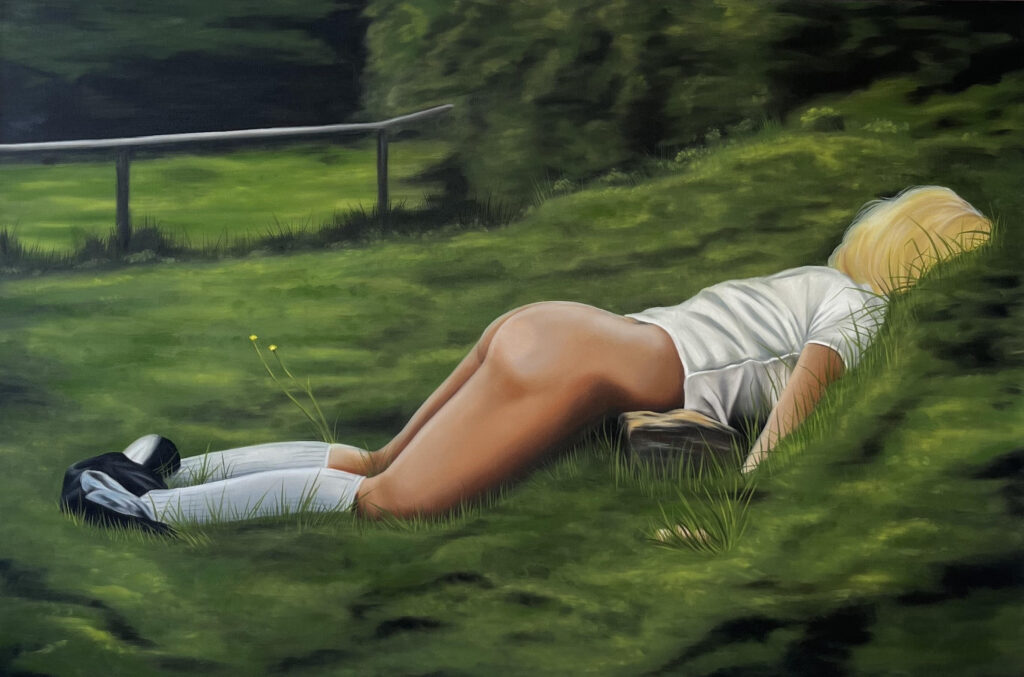
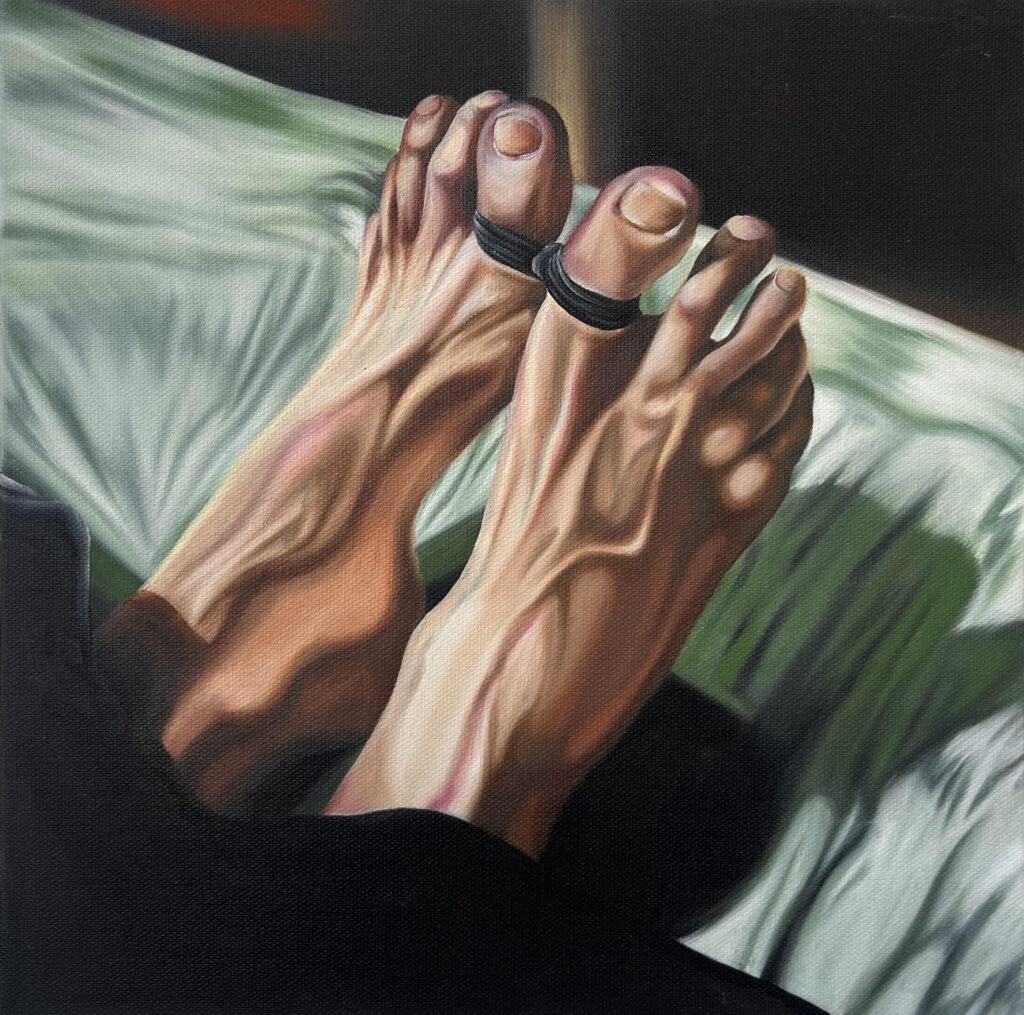
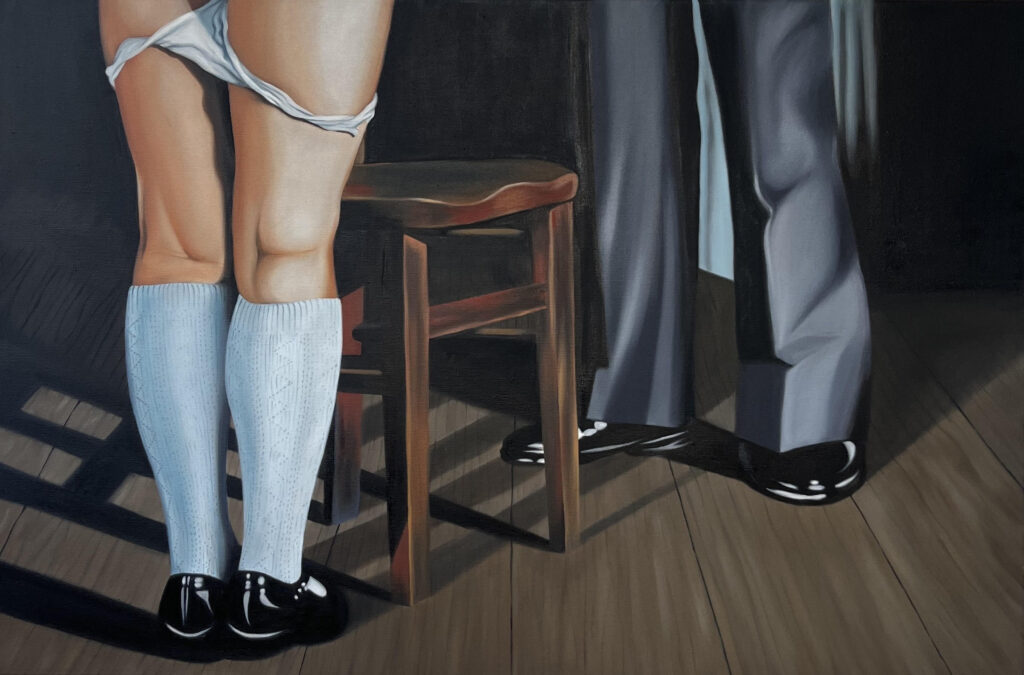
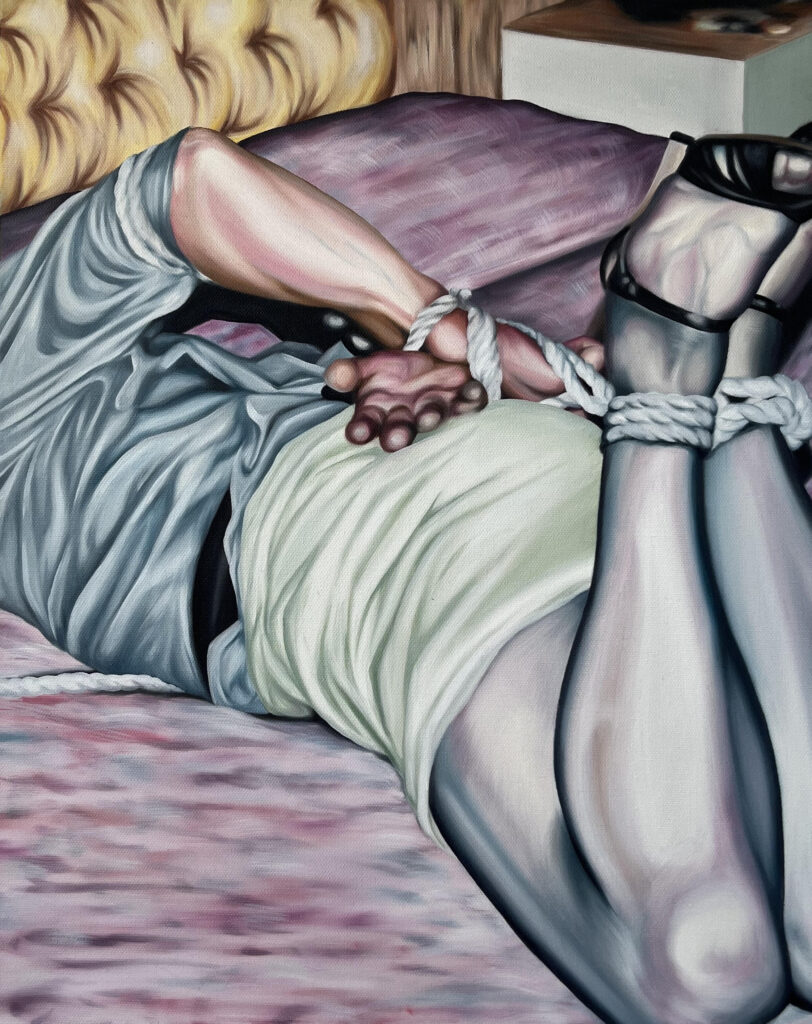
Marina Inoue: I’m interested in creating visual fragments of a scene- an anticipation of violence, the thread between desire and restraint, the potential for fear, an implication of fervor. Some of the scenes could be innocuous, but enough of the context is left out in a very intentional way to allow the viewer to wonder. Some of the more overtly sexualized representations do leave less to the imagination, but are cropped in a way to force the audience to look closely at images that may be uncomfortable.
Is there a narrative arc or progression throughout the show?
Marina Inoue: There isn’t necessarily a linear story told through the work, but the theme of power and belief is a constant throughout.
Which works are you most excited for people to see, and why? Are there standout pieces, perhaps new directions in your style or technique?
Marina Inoue: This will be my first solo show- I’ve barely shown at all in fact. I’ve been in a handful of group shows to this point, so I’m excited for people to see a collection of work all together. This really feels like a significant milestone for me. My personal favorite painting of the collection is “House Rules”, which depicts a woman’s legs in the foreground with her underwear pulled down, and a man’s legs in the background. The tone of the image forces a lot of questions around power dynamics.
How does this solo show reflect your evolution as an artist?
Marina Inoue: In what ways does it build on or diverge from your tattooing and climbing background?
Can you discuss any specific techniques or mediums featured? Are there new approaches you explored in this collection?
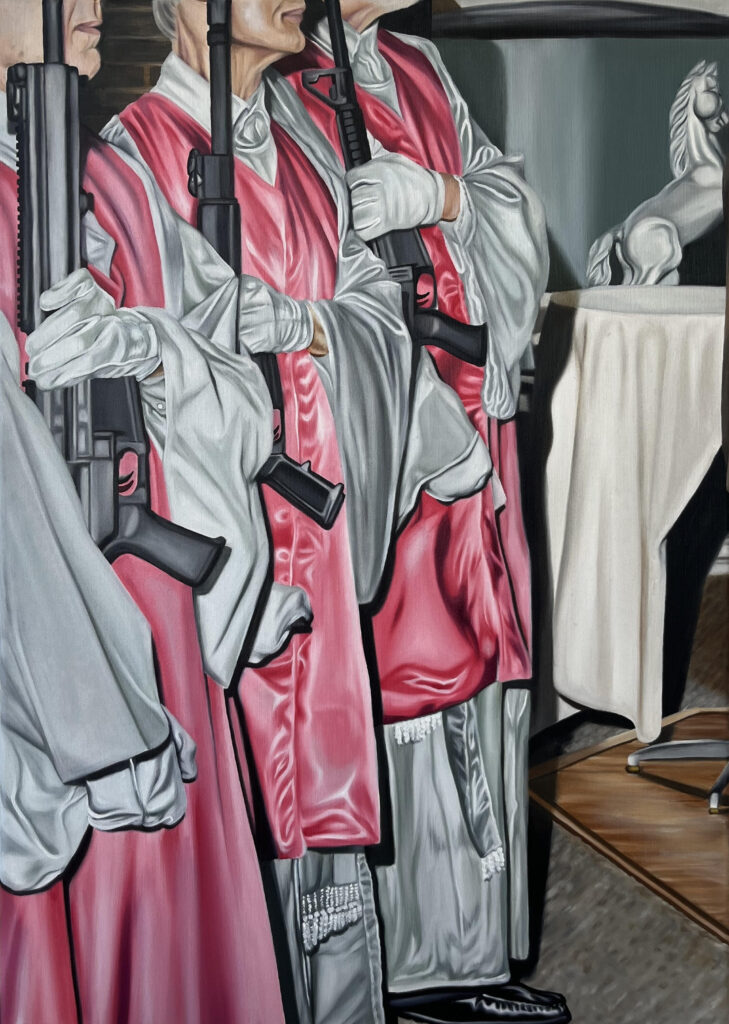
Marina Inoue: I’ve been painting with gouache and liquid acrylic on paper for a long time, but I started oil painting in 2024. I’ve been totally self-taught, and it has been a brutal and humiliating learning curve, which has only increased my appetite to continue painting. My tattooing style is very rigid, and the earlier paintings I’ve done definitely reflect that rigidity. I’ve been trying to loosen my hand and surrender to a more painterly approach, but basically my entire painting career is one big new approach for me.
What do you hope viewers take away from “Heaven is Closer”? Is there an emotional or intellectual takeaway you aimed to evoke?
Marina Inoue: I like the idea of people looking at the paintings and imagining their own storylines around them, of their own reimagining of what control, submission, beauty and belief looks like in context to the work. I know where and why I manifested these paintings, and I’m confident in that, but releasing the work and letting it no longer be in my control is exciting and interesting to me.
Are there particular painters, tattooists, or even musicians or writers that shaped the way you see and make work?
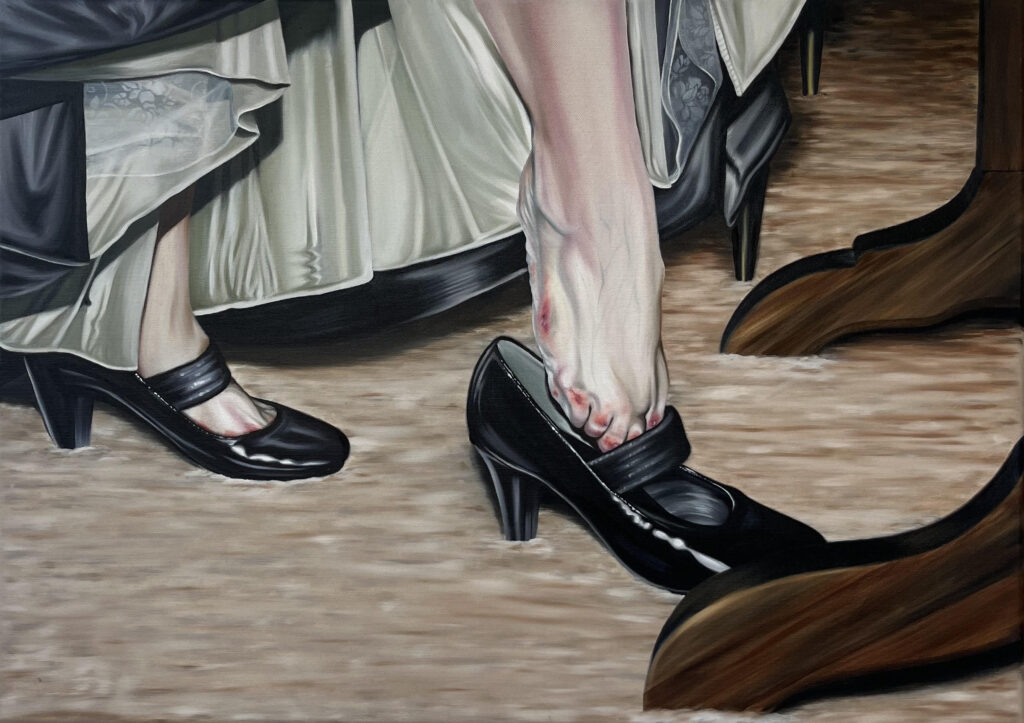
Marina Inoue: I actually find that cinema has shaped and driven me more than anything else, as well as certain novelists and theorists. Giallos, body horror, 90s psychosexual thrillers, new queer cinema, films bordering on experimental, really the broader umbrella of art house I suppose. When I first moved to London in 2023, I read a book of interviews with Tarkovsky that I found so profoundly affecting that it actually was the reason I decide to find a studio space and start oil painting.
Georges Bataille, Theodore Reike and Gilles Deleuze- specifically their books on eroticism and masochism have been big influences on me. Heather Lewis is an author I’ve read a lot of recently who has stuck with me deeply. Noir novels like In a Lonely Place, Blackwings Has My Angel and Paul Auster’s more surreal New York Triologies… I’m desperately attracted to both suspense and yearning, which I feel are two sides of the same coin. I’m very, very driven by fantasy. That manifests by creating worlds, narratives and storylines that are molded specifically to my particular fixations on tension, fear, crime, sexuality, power, consent, and mystery. I tend to treat painting as a way to exorcise that, so to speak.
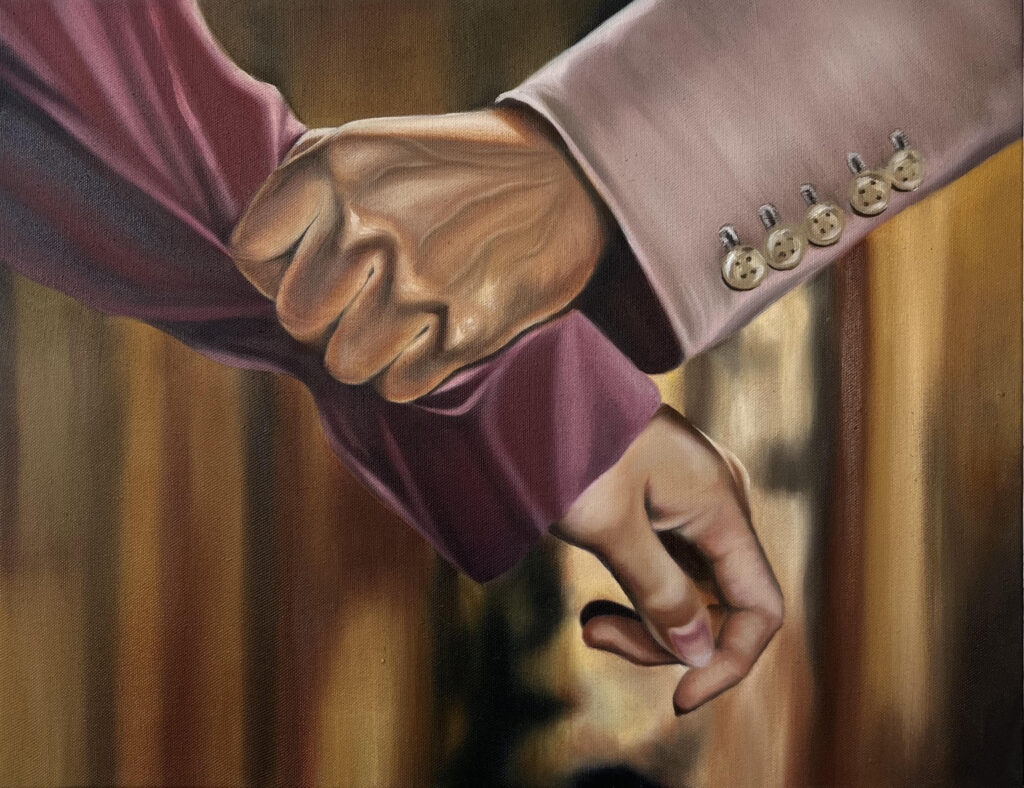
Has relocating from the US to London introduced you to new artists or scenes that have shaped this new body of work for Heaven is Closer?
Marina Inoue: The move from the US to London has been, of course, a huge, deeply altering experience for me. As a person who has spent the entirety of my adult life moving from place to place and who never suffered from homesickness or nostalgia, I desperately overestimated my ability to assimilate, and underestimated the cultural gap.
I found myself having to completely reassess my career as a tattooer- it was slow, I was making no money, and having hours and hours of dead time sitting at work with nothing to do. It did cause fissures in my identity, and I was lonely, isolated, and broke. I found myself homesick not for the States itself, but for familiarity and stability. But with that forced period of self-reflection and time, I gave myself the opportunity to start oil painting, which is something I’ve always wanted to do.
Because London is new to me, it feels exciting in a way that a city like New York never could be. Everywhere I turn in New York, I see gentrification creating a gaping cultural void, and for me it feels unlivable. I’m sure many people who are from London and have seen it change over the decades feel the same, but I have the privilege of everything being new, and having to constantly seek out things to do and see in order to keep myself occupied. I’ve found that I’ve been able to dive further into a personal exploration of my own sexuality here. From niche magazine and bookshops, to other artists who’s practices also intersect with kink, to specific apparel shops, to parties.
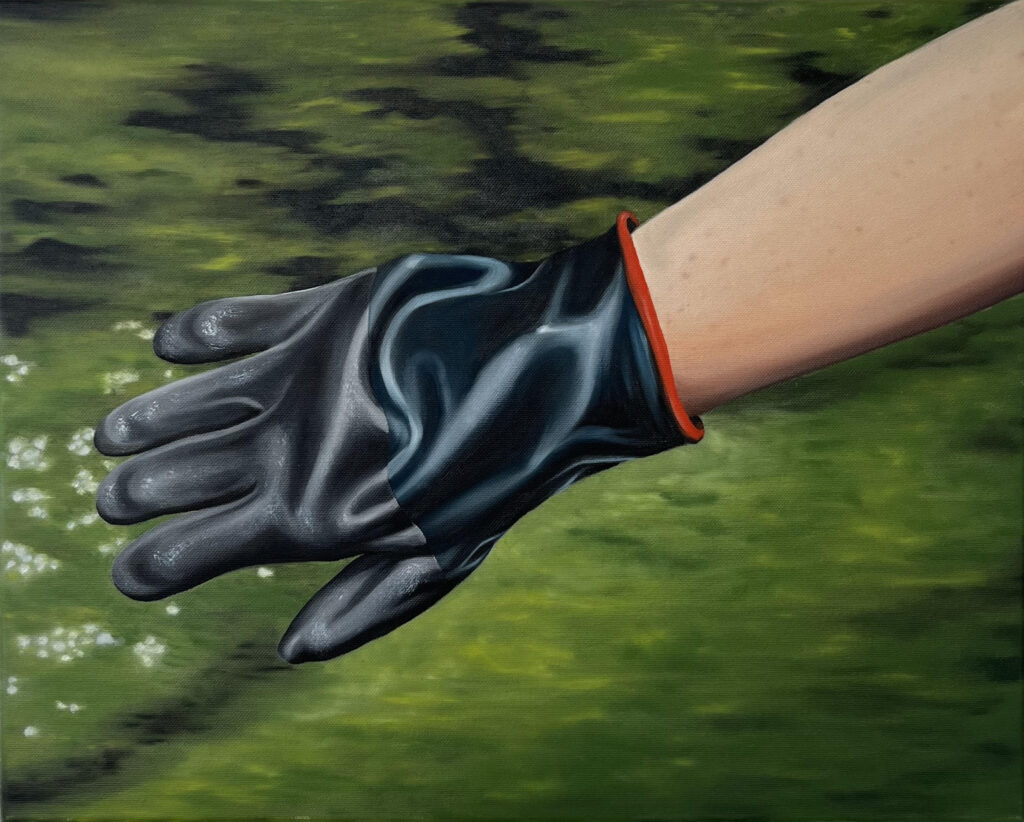
If you could sit down with one artist, past or present, and have a long conversation about practice, who would it be?
Marina Inoue: I would have to pick director Michael Hanneke. I feel that he has a remarkable way of capturing the brutality of society with an incredibly slick, stylishly cold aesthetic, yet he never loses sight of the humanity of his characters.
As an artist who came up in the tattoo world and now fine art, how do you feel about the pressure to keep up with Instagram and social media?
Marina Inoue: I don’t use TikTok or X or anything else, but I do use Instagram. I understand the need for it, especially as an “emerging artist”, so I do want to utilize it as a tool. However, I use it almost exclusively as a portfolio, and as a point of contact with galleries, other artists, potential buyers, people who just like to look at art, and friends. It has been genuinely helpful in those respects, and I appreciate it on that level. I’m just not interesting in creating content for people, and am unwilling to be flexible on that unless it is something I truly feel organically aligned with. I’m not naive enough to claim that the internet doesn’t reflect or affect what happens in real life, but I’m just not willing to sacrifice my energy for it.
Do you see posting photos and videos as part of your practice, or more of a distraction from making the work?
Marina Inoue: It is not a part of my practice and I do find it distracting.

Has Instagram helped you connect with collectors, collaborators, or new audiences you might not have reached otherwise?
Marina Inoue: The answer to that is definitely yes. And I find that if you can suffer the endless algorithmic hellscape that it has turned into, it is a really excellent platform for that. I’ve fostered a few incredibly meaningful friendships that started off as a message. One of my closest friends and most cherished collaborators- painter K.T. Kobel- was a person I basically forced to be my friend via direct message because I was a fan of his work. Just that relationship alone is worth any and all grief social media has given me. I’ve also been contacted by a few collectors and galleries, applied to grants or open calls, etc., and I do genuinely enjoy finding other artists whose work I like and find inspiring. That part is nice.
Do you think the demand for constant visibility affects the way artists create, or even the way we value art?
Marina Inoue: Probably. Definitely. There’s a lot of bad art out there made by people who look cool, and that’s not even a matter of taste or being bitter- I mean objectively really bad art that gets a lot of attention exclusively because the person who has made it is an influencer type. I don’t think there is any way that can’t be devaluing art, and taking the focus off of the work and putting it so much more onto presenting a persona as an artist. But I guess every generation complains about not understanding contemporary art.
How do you personally balance the need to stay “relevant” online with the slower, more reflective pace of painting and tattooing?
Marina Inoue: I just do what I feel like. I think it’s more exciting to make work interesting enough to keep people wondering what you’re doing in real life, rather than exposing every little detail for a like. If anyone wants to see the minutiae of what I’m up to or how I paint or what kind of outfit I’m wearing, my studio door is always open for a visit.