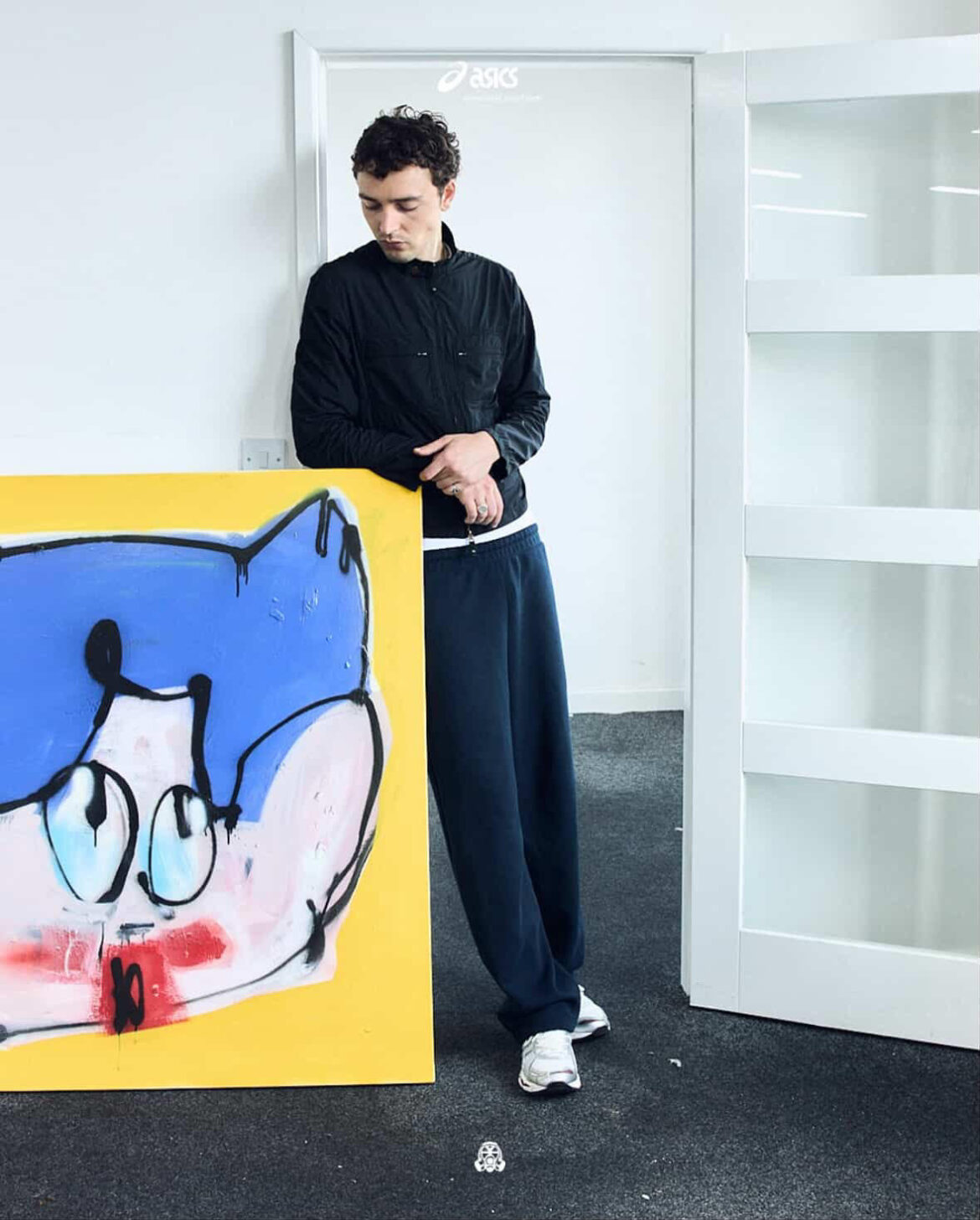
Tomas Gittins is a Brazilian-English artist based in Manchester (b.1996), he is one of the leading voices in a new wave of UK artists redefining the art scene from the ground up. Rather than seeking validation from the traditional white-wall gallery world, this movement thrives in the streets, across social media, and in the spaces where culture is actually happening. It’s raw, unfiltered, and deeply connected—not just to local communities in the UK but to a global network of artists pushing the boundaries across different cultures.
This isn’t just about aesthetics—it’s a statement. A challenge to outdated ideas of what ‘serious’ art should be and where it should exist. Instead of chasing the old-school establishment, Tomas and his peers are carving out something new, building a scene that’s accessible, relevant, and unapologetically modern. This is more than a trend—it’s a cultural shift, and Tomas is right at the heart of it.
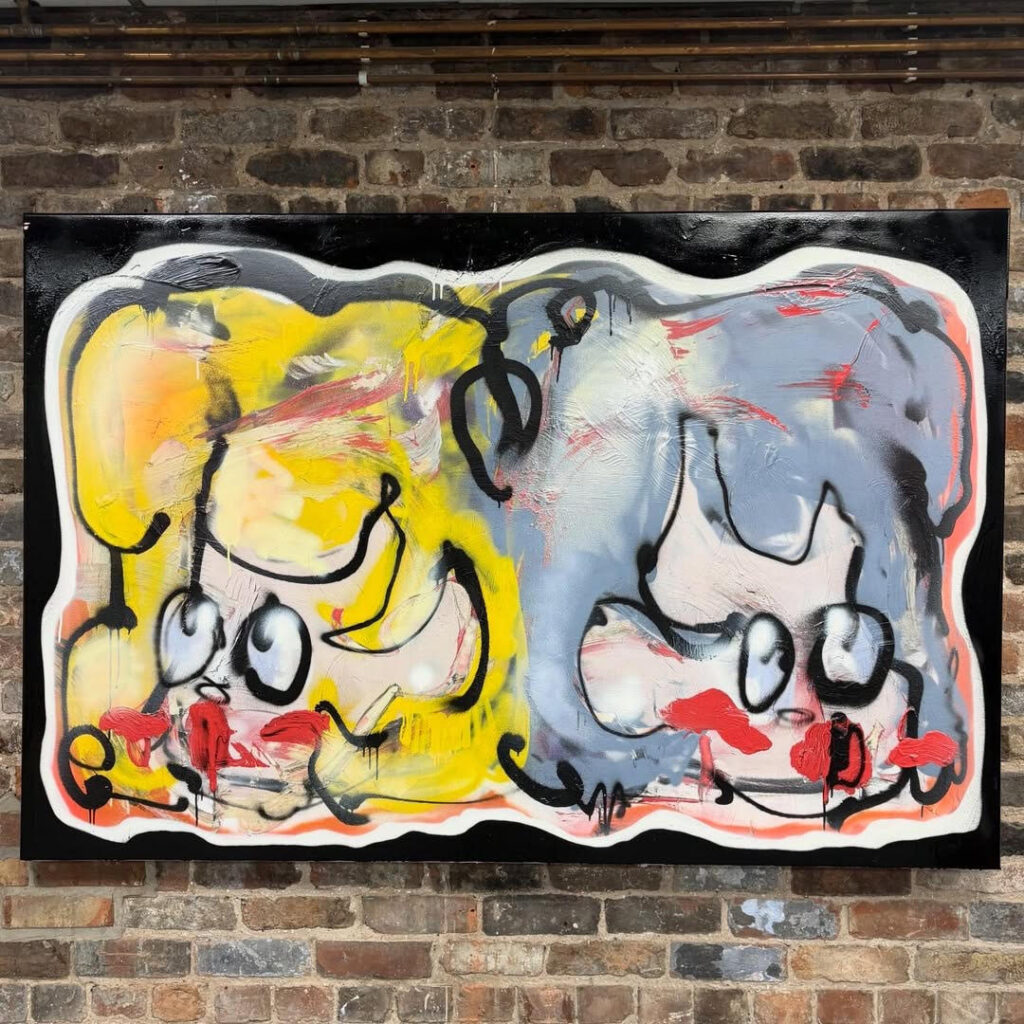
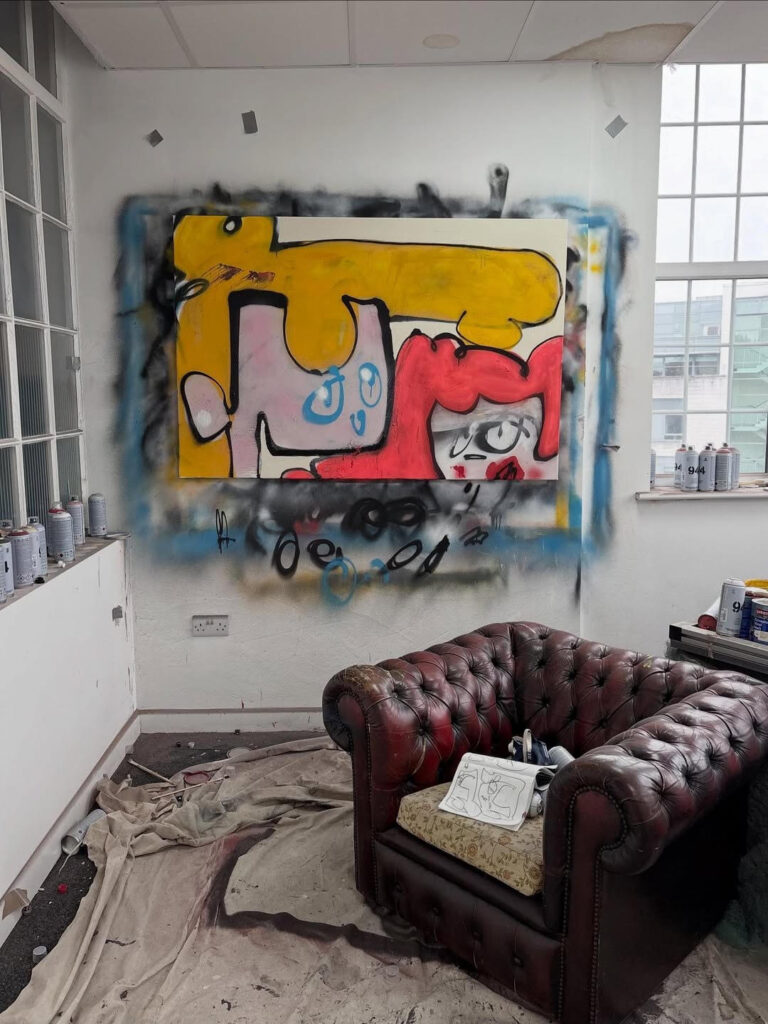
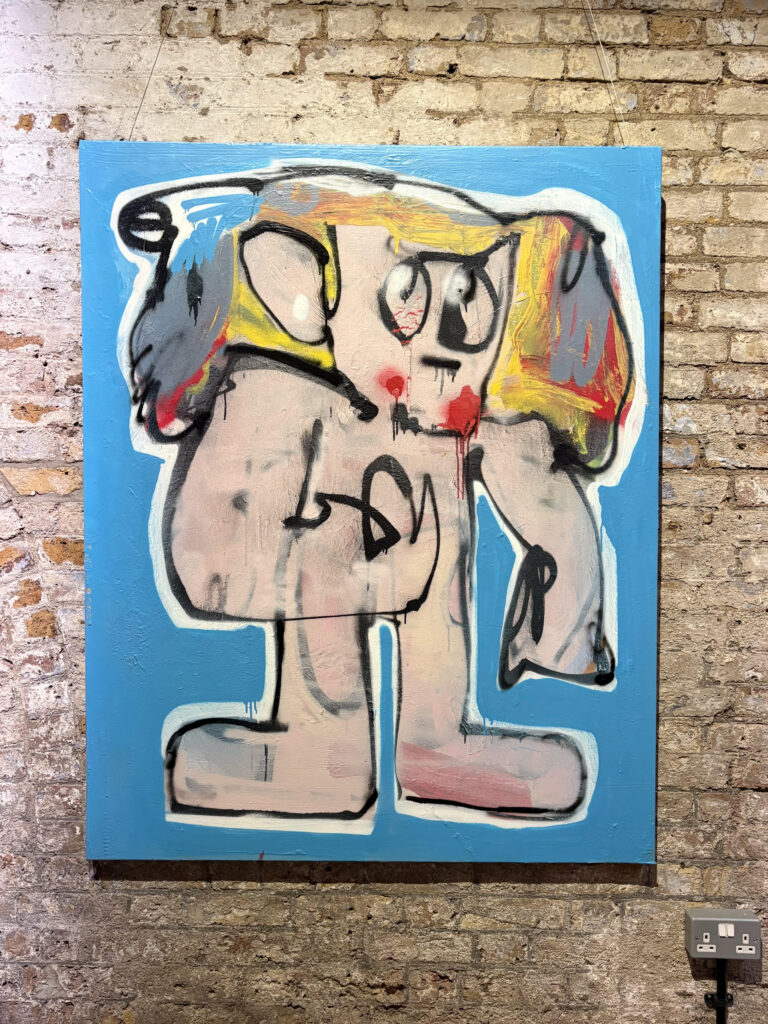
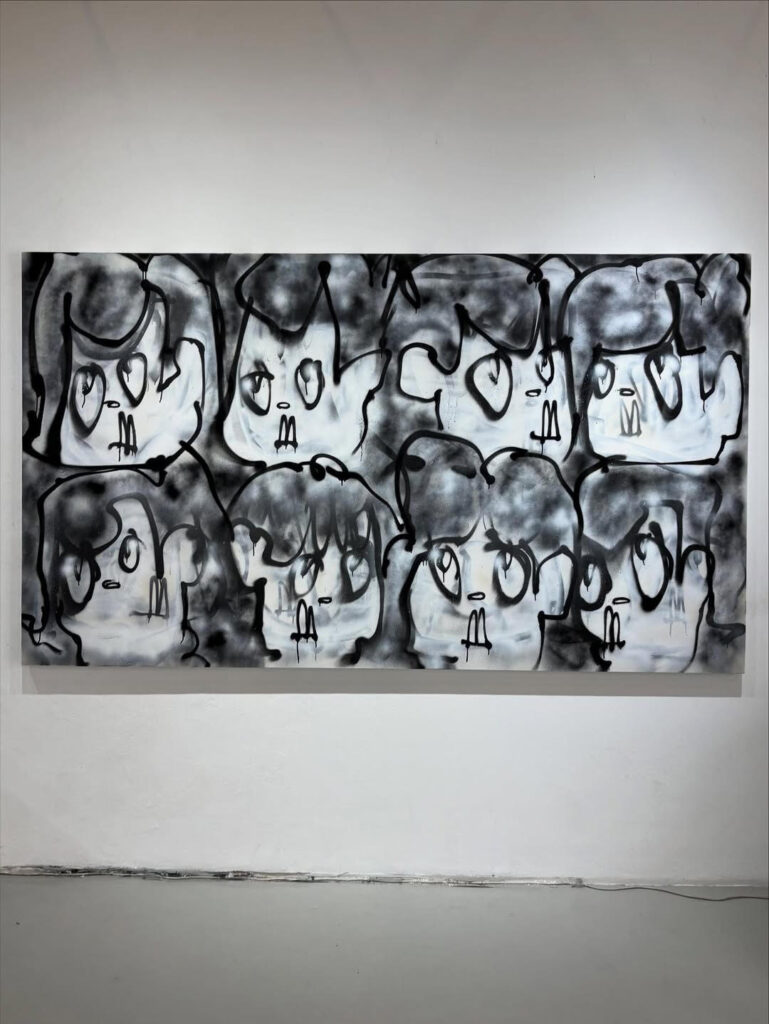
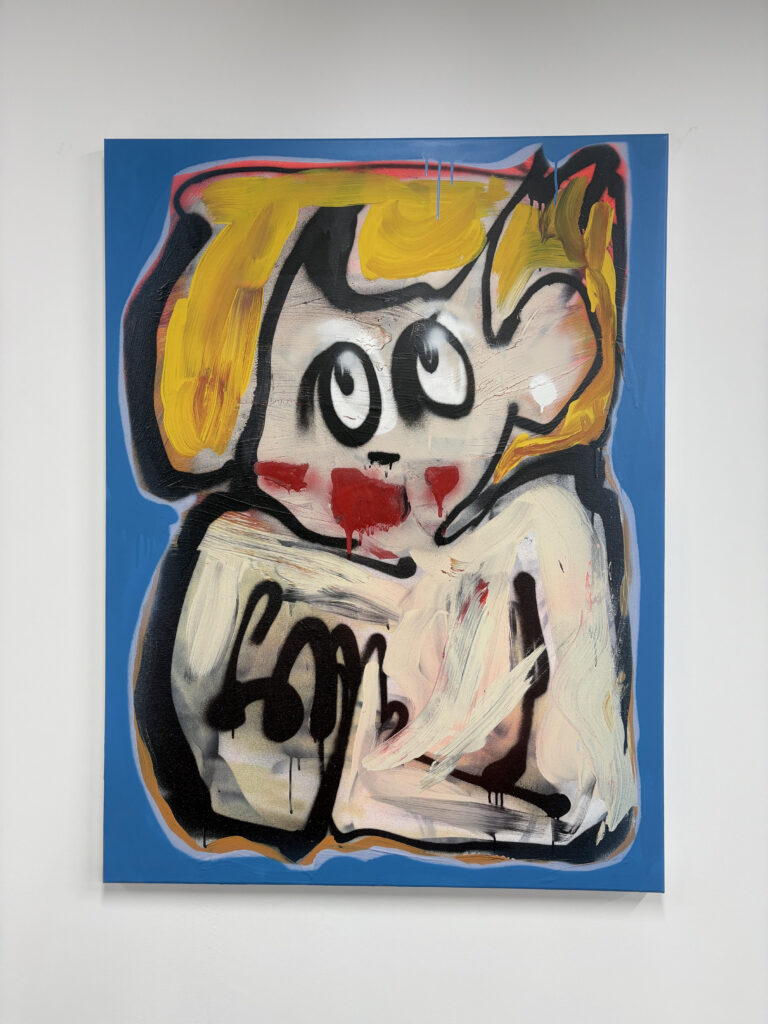
Tomas brings a bold, rebellious energy to every piece, blending street art, pop culture, and raw emotion into a distinct visual language. His work is instantly recognisable—thick black outlines, vibrant colour blocking, and a balance between controlled precision and chaotic expression. There’s a playfulness to his style, but also an underlying tension, as if his characters and compositions are caught between nostalgia and disruption.
Whether working on canvas, large-scale murals, or mixed media pieces, he thrives in that sweet spot between fine art and street culture—where high and low art collide.
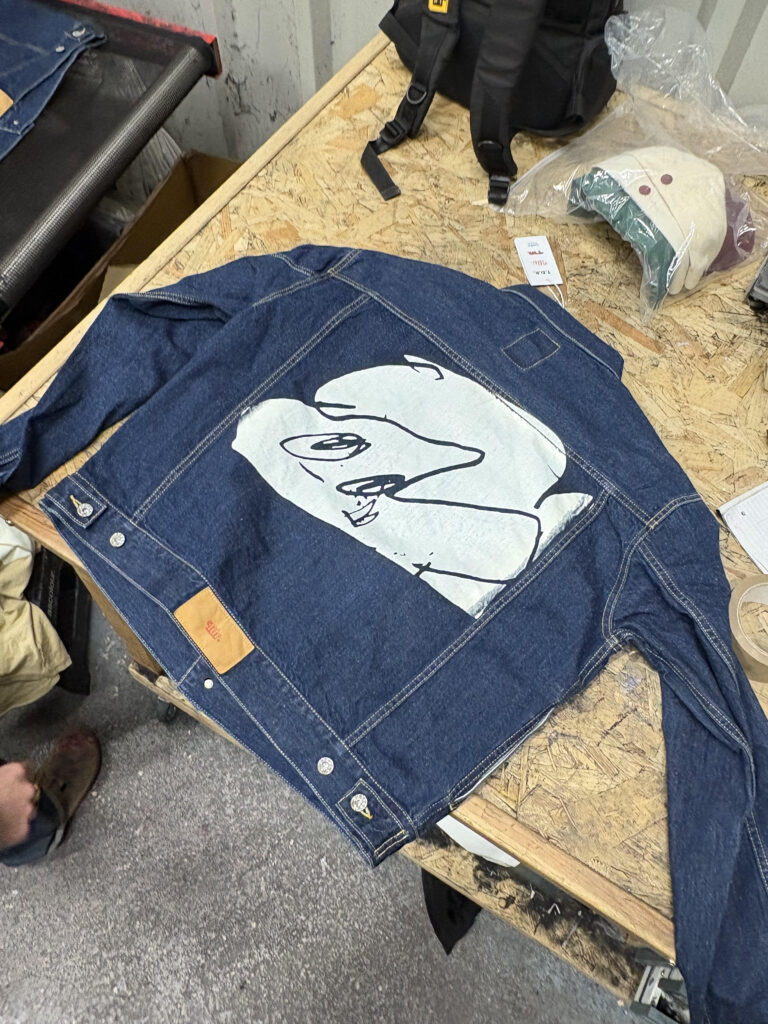
Beyond the conventional artworks, Tomas has made a seamless transition into the fashion world, collaborating with major global brands such as Fanatics, Umbro, Adidas, Salomon, and more. His ethos centers around spreading joy and growth, using his artwork to infuse positivity and energy across a variety of mediums.
Profile picture by Luke Pickering.
Hi Tomas, It’s a pleasure to sit down with you. First question that I always ask. How does a regular day look like for you in Manchester?
Tomas: It’s a pleasure speaking with you as well. A regular day in Manchester usually starts with waking up and grabbing a coffee, then coming back to my flat to sketch down some ideas and do any admin work I need to take care of. After that, I’ll get the train to Macclesfield and head to my studio. Once I’m done there, I come back to the flat, think through more ideas, do some additional sketches, and plan for the next day.
I’m curious, growing up, what kind of kid were you? What did you enjoy doing, and how did you spend your time?
Tomas: When I was a kid, I was very active and a bit mischievous. I liked to think I was a secret agent. When I was about 10, all my friends and I did was dress in full camouflage and garden-hop. When I wasn’t doing that, I was watching cartoons and anime and trying my best to copy the characters I saw.
Do you remember approximately at what age your creative side started to show? And when did you start taking being an artist seriously?
Tomas: In primary school, I used to watch a lot of people making animations. From the moment I saw that, I always tried to copy the art styles and had dreams of making things like the ones I was watching. That’s really where it started for me.
You’re often associated with a new wave of artists operating outside traditional gallery systems. What feels broken about the old white-wall model, and what feels genuinely exciting about building something parallel to it?
Tomas: I think there’s less of a gap now between unorthodox gallery styles and the traditional white-wall model. There’s been a shift in what people like to see and how they want work presented. We’re in an age where artists really dictate how they want their paintings to be shown. It’s no longer just about the painting itself, but the full feeling of the concept. That’s really exciting to see, and I think you can do that in both traditional and non-traditional gallery spaces right now.
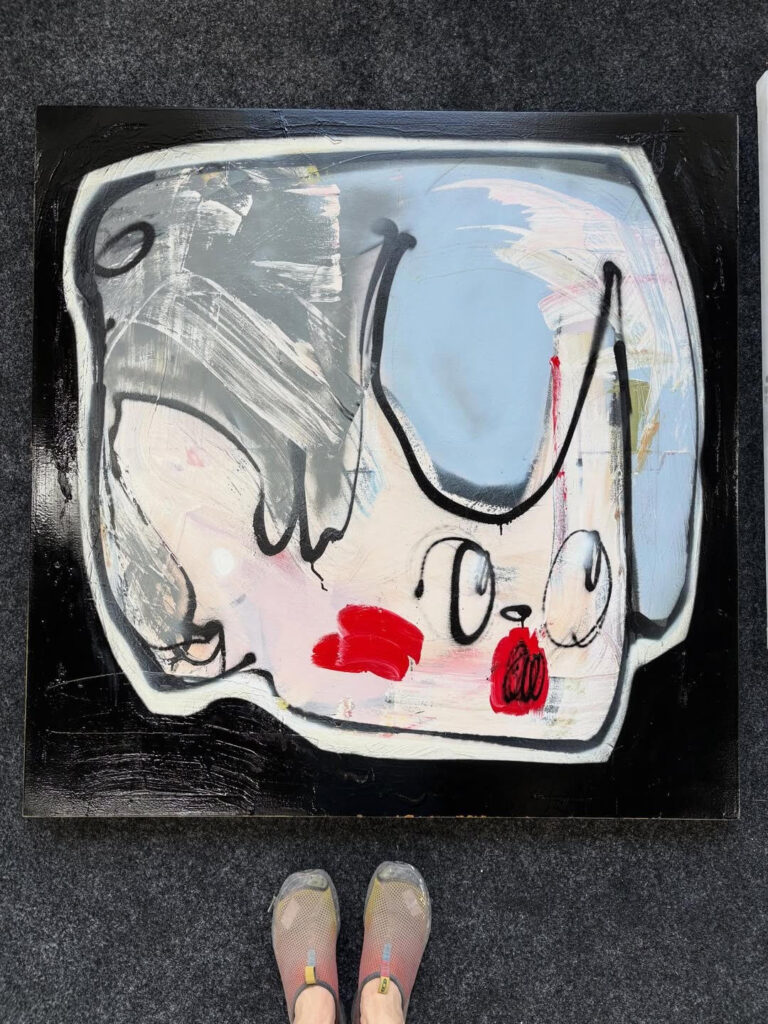
Do you see this movement as anti-institution, or simply uninterested in waiting for permission?
Tomas: I think it’s less about being anti-institution and more about free expression. Some people don’t just want to put a painting on a wall — they want to create a whole space. Whether that works within a gallery or something you’ve set up yourself comes down to personal preference. Some people want full creative control, while others prefer leaning on an institution that already supports that kind of work.
Social media has become both a gallery and a battleground. How do you navigate visibility without letting the algorithm dictate your voice?
Tomas: With Instagram, you can drive yourself insane trying to meet the algorithm or fit into what’s trending. I try to make my page something I’d enjoy looking at myself and not worry too much beyond that. Of course, you still think about content and make sure you’re putting something cool out there, but it’s such a good platform for expressing yourself and showing people what you can do in a format that’s easy to digest.
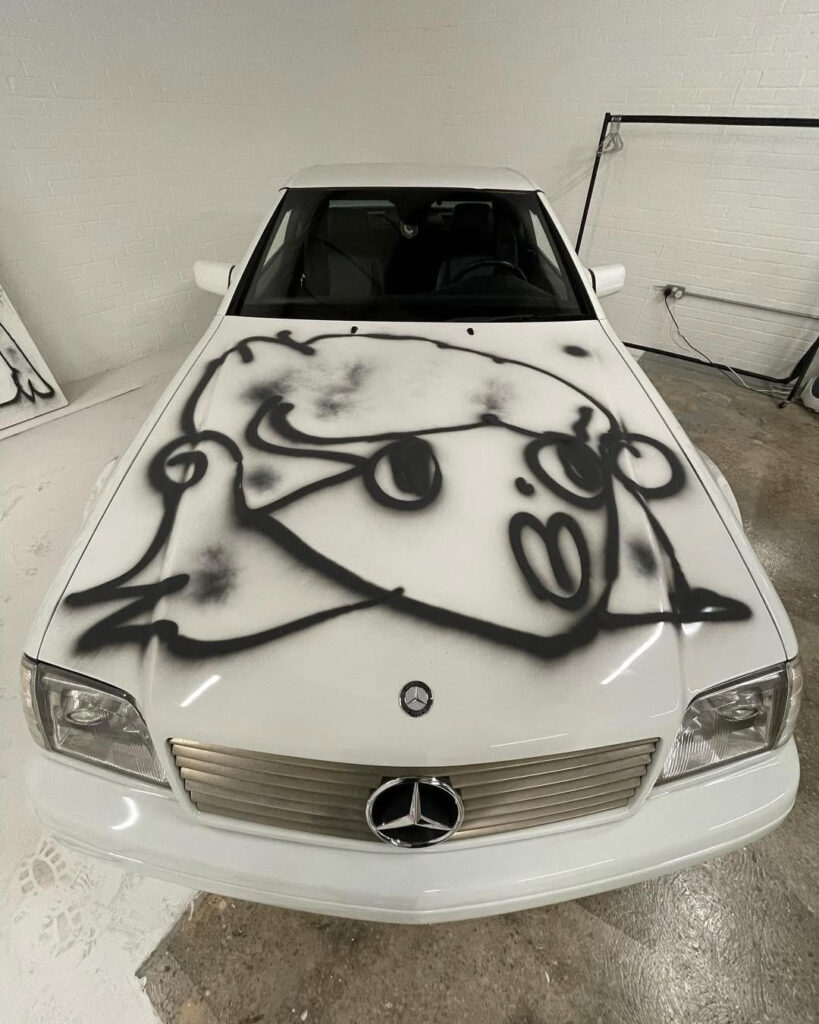
Ok Tomas, let’s talk about your work now. So… Your work balances playfulness with tension — thick outlines, bold color, cartoon energy, but also disruption. What emotional state are you usually in when those worlds collide on the canvas?
Tomas: Usually it’s excitement, but a lot of the time I’m just in a zone. I don’t listen to music — I just hear the hum of my extractor fan. I release whatever feels right and almost have a battle with the character until I can stand back and feel like it’s looking back at me. Then there’s a sense of relief.
So what is it about this look that resonates with you?
Tomas: It feels very nostalgic to me because of the cartoons I watched as a kid. It’s also something that’s naturally come out through hours and hours, and years and years, of constantly drawing. I’m really happy with how my paintings look to me, but I still feel like there’s so much development to come, which is exciting.
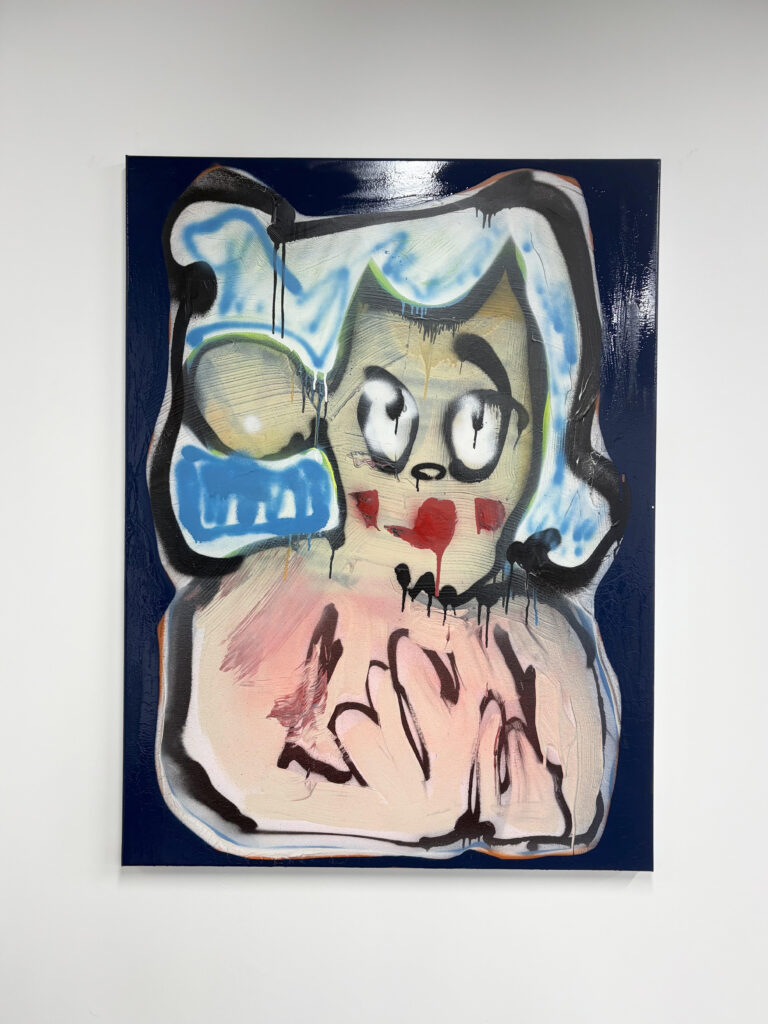
Your characters often feel caught between nostalgia and instability. Are you consciously working through memory, or does that friction emerge instinctively?
Tomas: It emerges instinctively. I never really know what’s going to come out until the end, and I think that’s the beauty of it. I might know the general colours or the shape of a face, but everything else is fair game. That’s what I love about it.
And who are those characters?
Tomas: I wish I could tell you — I’m honestly not sure. They kind of manifest themselves.
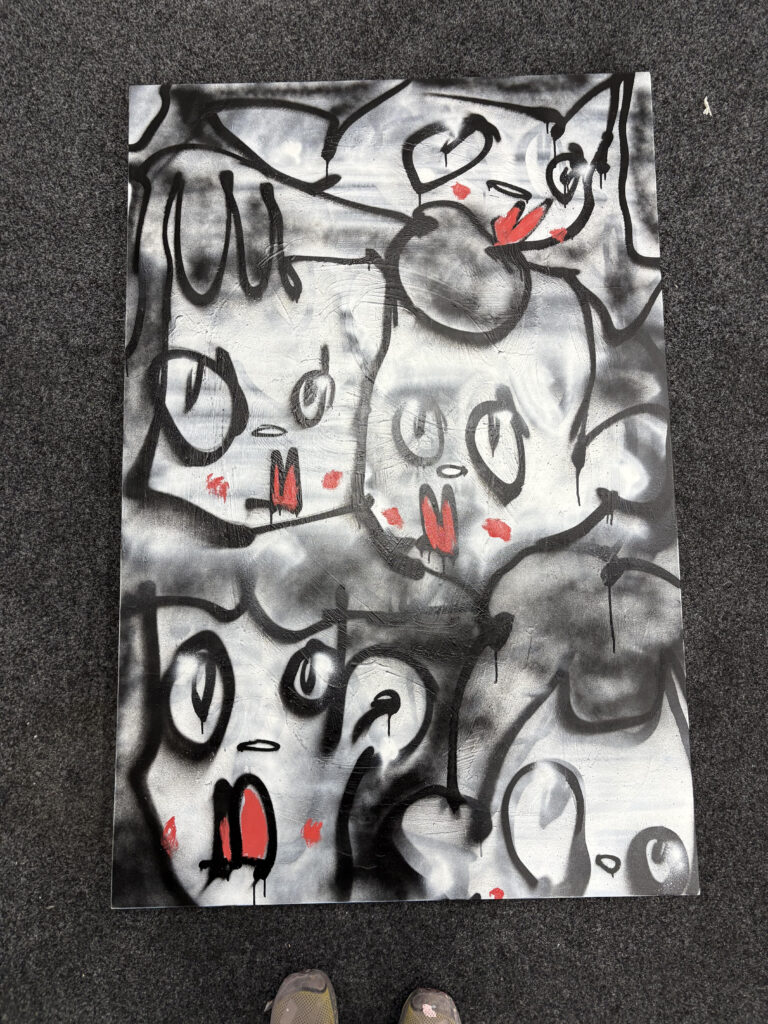
Where does chaos enter your process, and where do you step in to control it?
Tomas: The chaos is always there, but so is the control. It’s about channelling the mayhem and making it work for you, and I think that’s what brings out the best in a painting.
How does working on the street versus a canvas change your sense of responsibility?
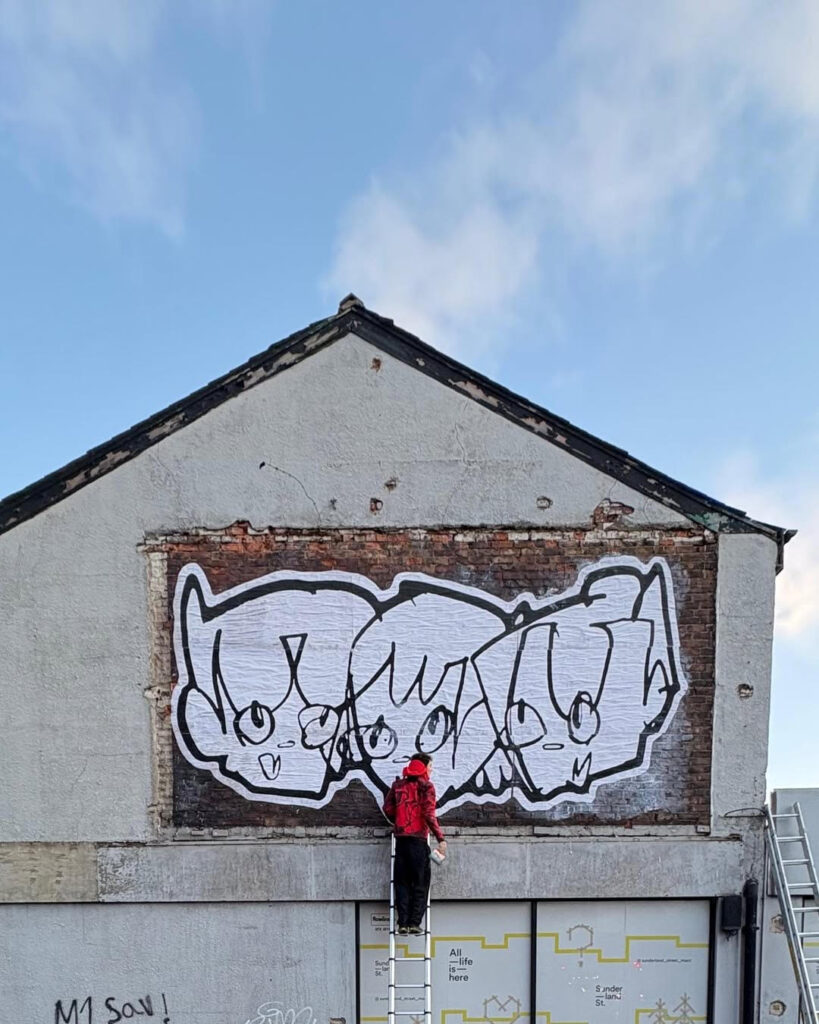
Tomas: When working on the street, things need to be more immediate and planned, whereas in the studio it’s much more free and fluid. What I like about street work is that you get to choose where your art lives and what surroundings suit the piece best.
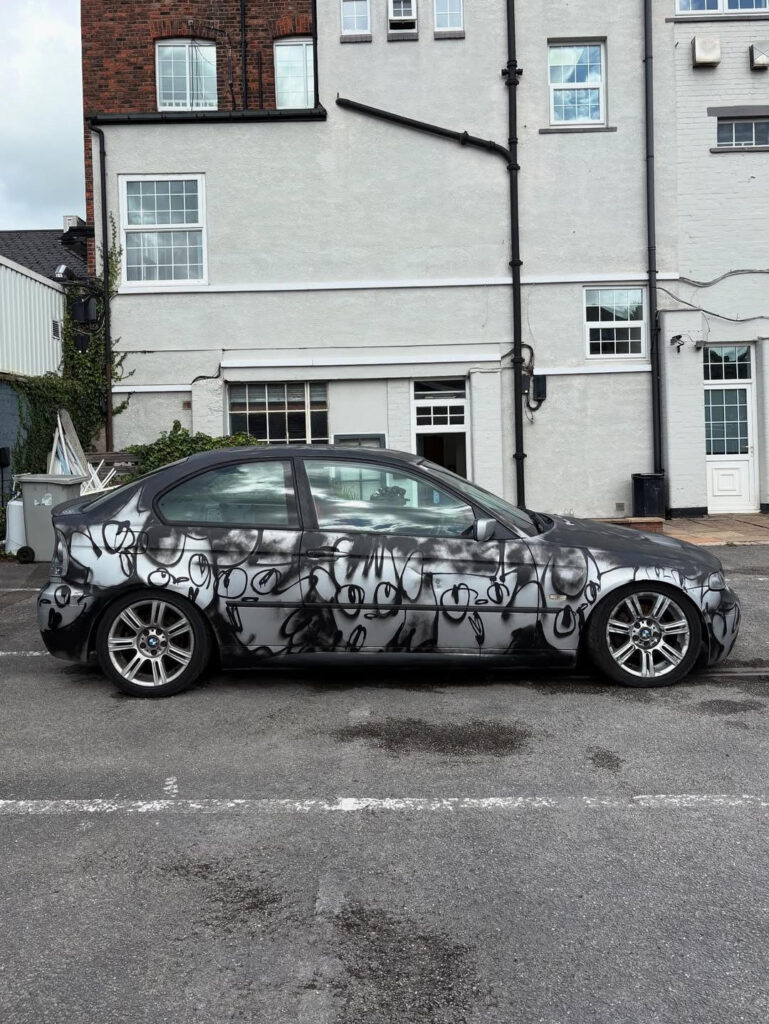
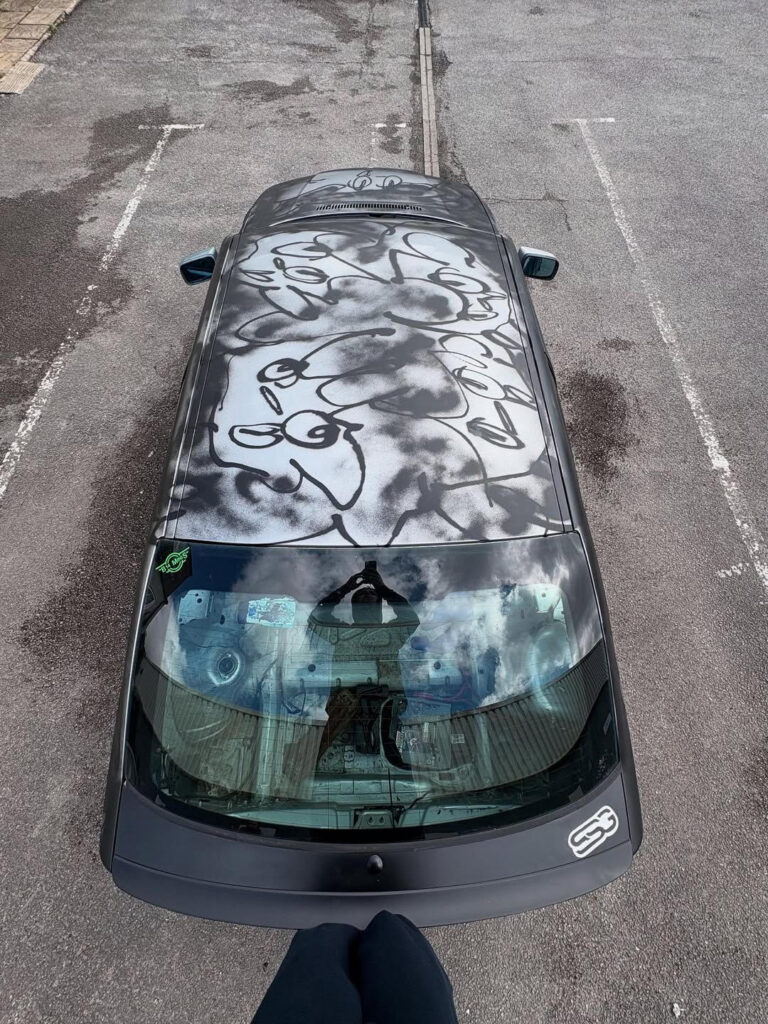
Murals live in public space and can’t be paused, edited, or archived in the same way. What does that immediacy give you that studio work doesn’t?
Tomas: With large wheat-paste works, it’s really about the whole process being enjoyable. Studio work is limited by scale and surroundings. On the street, it’s the full experience — being up there, out in the open — and combining that with expression through art is a great feeling.
How does your Brazilian heritage show up in your work — not visually, but emotionally or rhythmically? Is it something you feel more than consciously reference?
Tomas: It’s definitely something I feel more than consciously reference, whether that comes through fluid movements or subtle visual elements rather than bold, obvious comparisons.
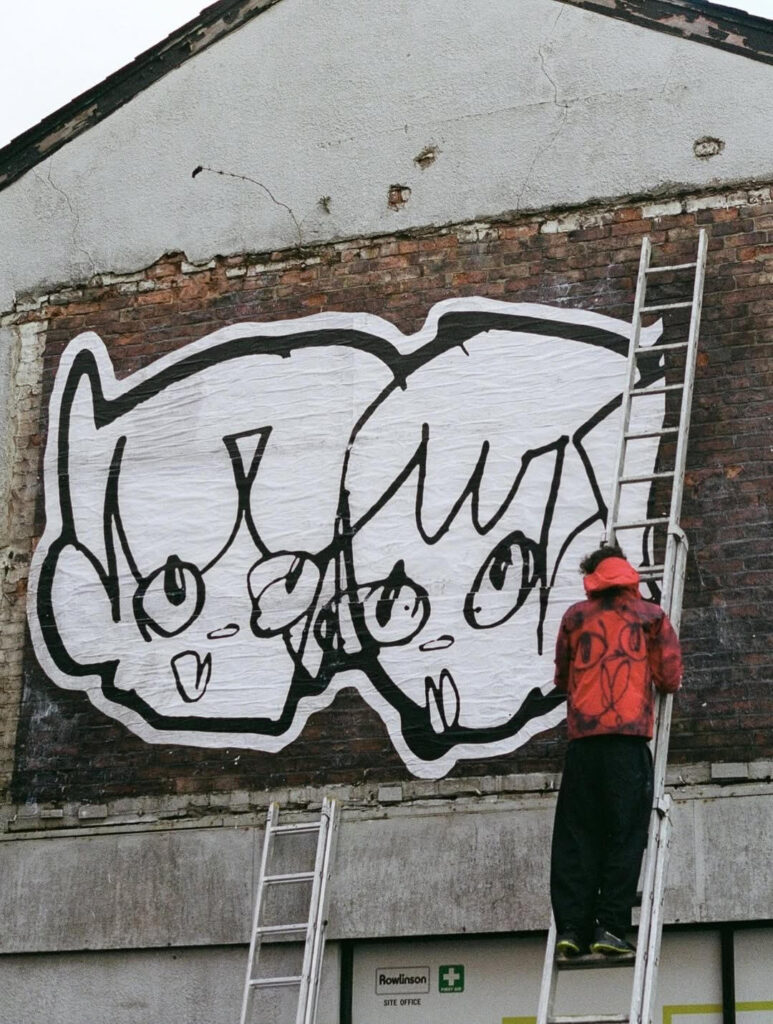
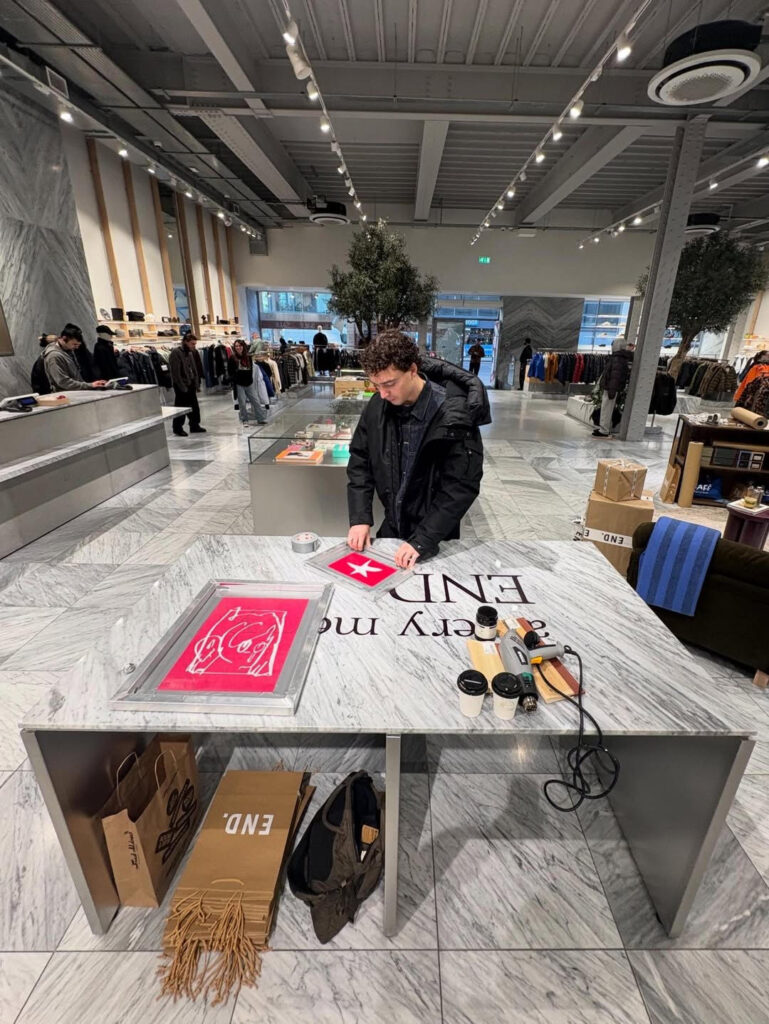
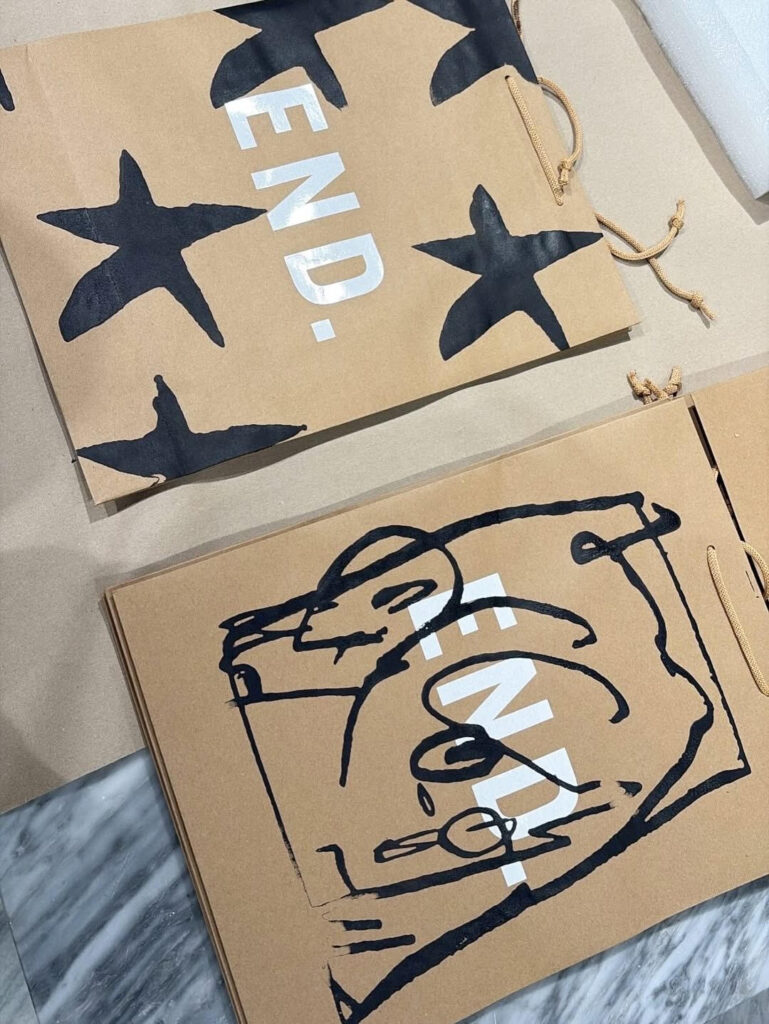
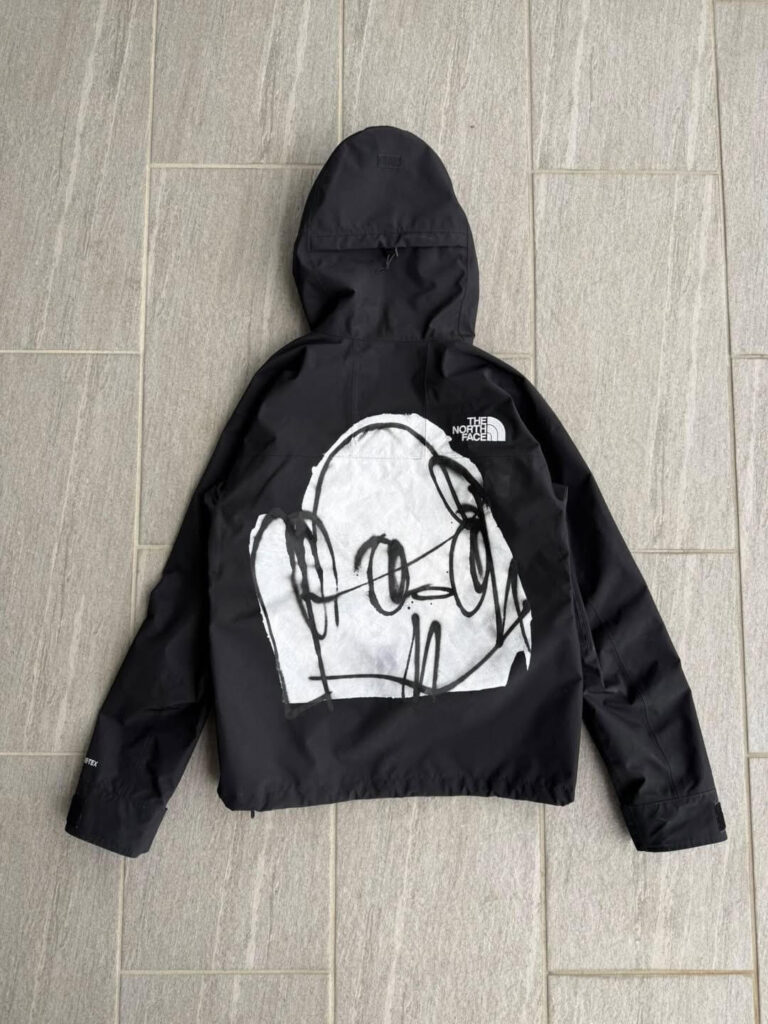
You’ve moved fluidly into fashion collaborations with major global brands. How do you protect the emotional core of your work when it enters commercial systems?
Tomas: I feel like my work can translate across different collaborations — from fashion to art — because I’ve worked hard on developing a style that can be stripped back or built upon depending on the medium, without losing its integrity. Working on different projects helps expand my creative process and allows for more exploration and free expression.
So how did some of those collaborations come to life? Like, did they discover your work, and wanted to work with you? Or how did that come about?
Tomas: Most collaborations have come from talking with like-minded individuals who take an interest in my creative process. Sometimes I’ll reach out to a brand, or I’ll already be in close contact with someone from one, and we’ll talk through ideas together. From there, things usually move forward. I try to show my best work, and hopefully people connect with it enough to want to collaborate.
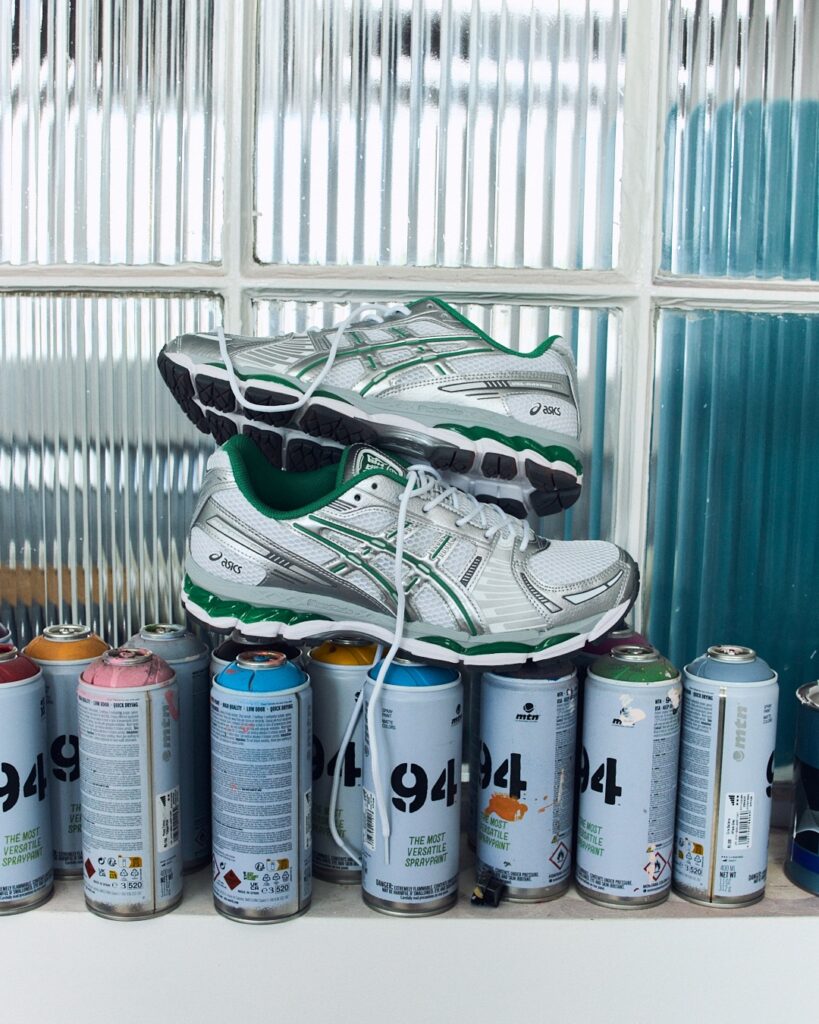
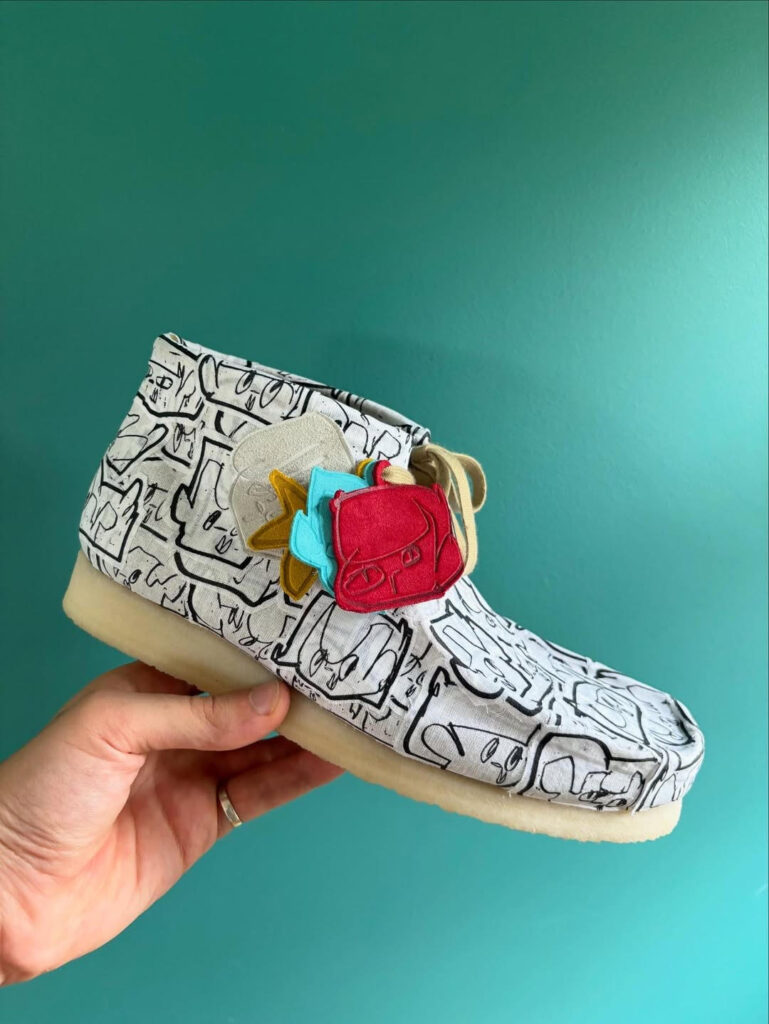
Do you see fashion as another canvas, or a completely different language you’ve had to learn?
Tomas: I see it all as creating. It’s just different mediums and different shapes, but the goal is the same: to make something you’re proud of and can step back from in amazement — whether that’s a canvas, a garment, or anything in between.
You often talk about spreading joy through your work. In a time marked by burnout and cynicism, do you see joy as a form of resistance?
Tomas: I see joy more as a way of coping. “The joy must grow” means taking things day by day and putting yourself in a position to feel happiness, even when it’s hard. Some might see that as resistance, but for me it’s about coping and hopefully helping others during a time marked by burnout and cynicism.
Is there a risk that joy gets misunderstood as softness, and if so, does that concern you?
Tomas: No. Joy is a personal expression. Some people might see it as soft, others might feel it’s just right. I know what joy means to me, and that’s how I’ll portray it. How people interpret it is up to them.
Are there any specific topics or themes you try to document throughout your work?
Tomas: I love anime and old cartoons, and I think that naturally comes through in my work. Even when I don’t intend it, the exposure and impact they’ve had on my artistic style and who I am today shows up.
What’s the one thing you’re most afraid of as your career grows, creatively or personally?
Tomas: I think my biggest fear is not achieving the goals I’ve set for myself. I believe that if I put in the hard work, anything is possible, so not reaching those goals would be tough for me.
Ten years from now, what would success look like for you?
Tomas: A happy life, a happy wife, and working on all the things I’ve dreamed up. Creating whatever I put my mind into, working with brands on a large scale, having gallery shows all over the world — just creating freely. That’s success to me.
Can you walk me through your creative process from beginning to end result?
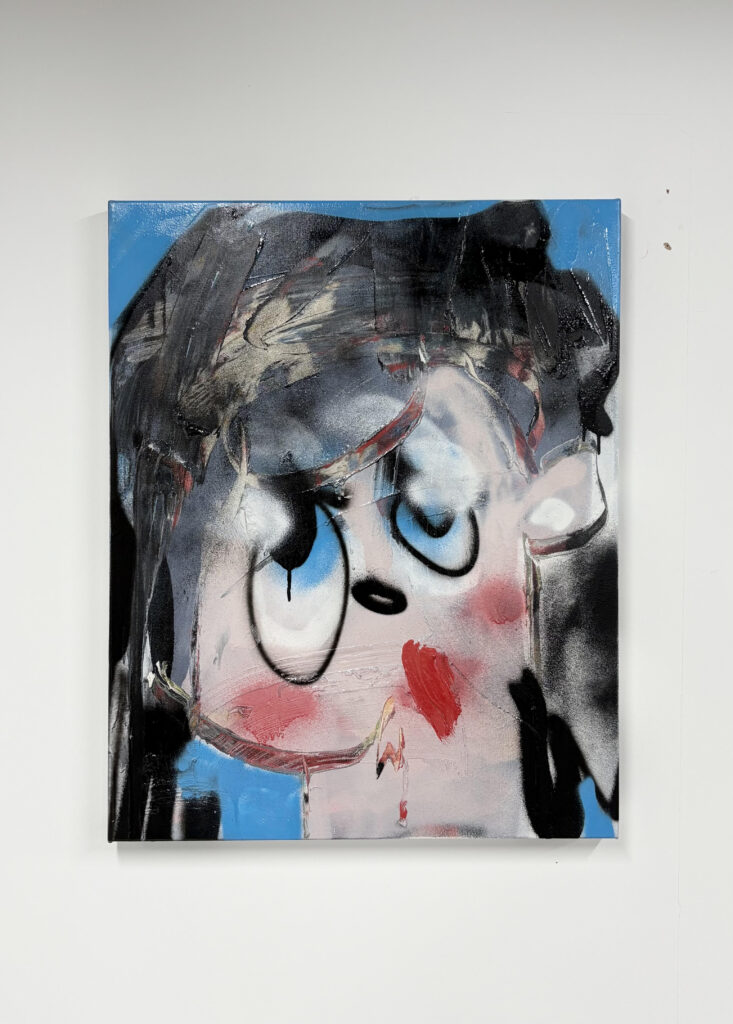
Tomas: I start by sketching, then head to the studio and throw expressive, rough black lines onto a canvas using spray paint. From there, I build colour and texture as different components of the face slowly reveal themselves. I take bits from each layer until I’m looking at the canvas and it feels like it’s looking back at me. That’s when I know the piece is complete.
Can you also tell me about your use of symbolism?
Tomas: I don’t really think I use symbolism intentionally. It’s more about feeling. Sometimes it might look like symbolism, but to me it’s just raw expression.
How do you approach color?
Tomas: I approach colour in a very blasé way. I’ll throw different combinations onto the canvas as I work through layers and see what sticks out to me. The palette builds slowly, and the colours reveal themselves in the final piece.
So with what we just talked about, what are you hoping to convey?
Tomas: I just want to make work I’m proud of. I hope that along the way people feel an emotional connection, or even just a sliver of joy, from looking at what I’ve made — whether it’s fashion, fine art, street pieces, or small sketches in a book. If people love what I do as a result, then I’ve conveyed what I wanted to.
Ok Tomas, now to something totally different. In a parallel universe who would you be? and what would you be doing?
Tomas: I’d probably be living out in the wilderness, in a cabin on top of a mountain — exploring hills, swimming in streams. Or maybe I’d be an athlete or something like that.
Outside of art, what’s something you’re obsessed with right now—maybe a hobby, a show, or even a food—that keeps you grounded or inspired?
Tomas: I’m a big runner, and it really helps keep me grounded. When life gets stressful, I can find solitude running through the hills where I grew up. It pushes me in different ways, not just creatively, and gives me space to think about new ideas outside of the creative industry.
Can you tell me a story about a time when a connection with someone had a big impact on you?
Tomas: There have been many people in my life who’ve shaped who I am today — people who believed in me, pushed me forward, gave me opportunities, or just helped when I needed it. It could also be meeting a loved one who inspires you and keeps you focused. I don’t think it’s ever just one person, but an accumulation of connections that have had a big impact on me.
What qualities do you find most important in the people you choose to spend time with?
Tomas: Understanding, kindness, and a good soul. People who don’t take life too seriously but are still passionate about what they do.
Anybody you look up to?
Tomas: I look up to my friends and people I know who are doing cool things. Seeing them create their own worlds gets me excited and motivated. It’s inspiring to look up to people while doing what you love yourself.
What motivates you?
Tomas: I’ve wanted to do something like this since I was a kid. The fact that people give me opportunities to do this as a job motivates me to keep progressing and improving. I have so many ideas and things I want to create, and knowing it’s possible pushes me forward.
How would you describe a perfect day?
Tomas: I wake up, the sun is shining, I go for a run in the hills, make some art in the studio, and then spend time with the people I love.
Alright Tomas, I always ask these two questions at the end of an interview. The first is. What’s your favorite movie(s) and why?
Tomas: “Disturbia:” Because I like those early 2000s high octane horror action movies with that sort of feel.
“Way way back.” I love those sort of movies coming of age movies with a quirky feel.
“Angel Egg.” Colours and the artistry are immaculate even though the story is a bit hard to follow the overall concept and visual capabilities suck you in.
The second is. What song(s) are you currently listening to the most right now?
Tomas: 四季 唄 – Shiki no Uta
MINMI
Burgundy
$uicideboy$
Looking For You
Nino Ferrer