Share this
A choir is often imagined as something pure. Voices rising together, bodies aligned, discipline transformed into beauty. But Hart Lëshkina is interested in what sits underneath that harmony: the rehearsal, the repetition, the pressure to belong, and the quiet violence that can hide inside collective order.
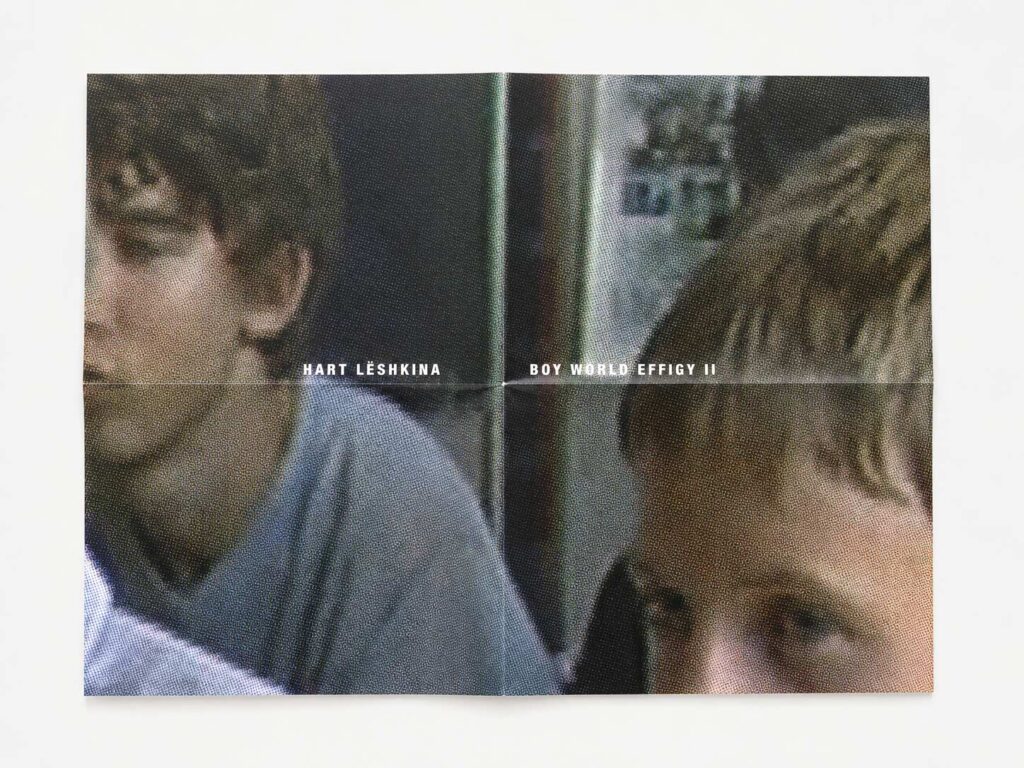
With Boy World Effigy II, presented at Dover Street Market Paris, Lëshkina turns the rituals of choral performance into a charged study of identity, discipline, conformity, and resistance. On view from July 22 to July 26, 2026, the four-channel video installation fills the space with synchronized moving image and eight-channel sound, pulling viewers into a world where ceremony and unease begin to blur.
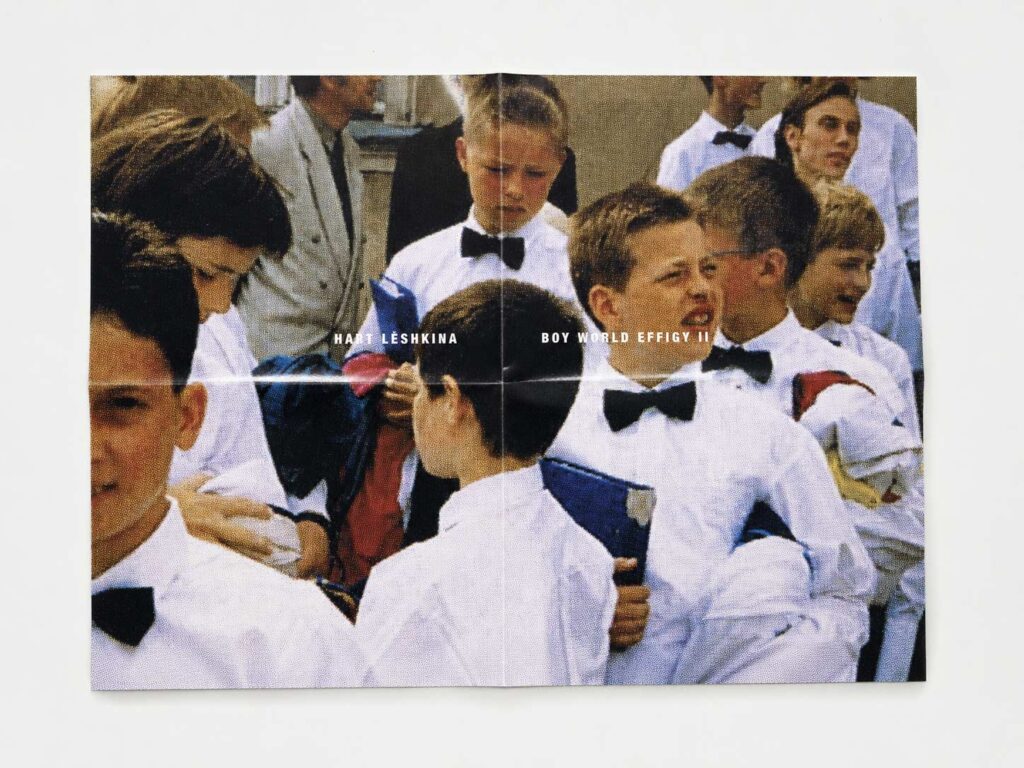
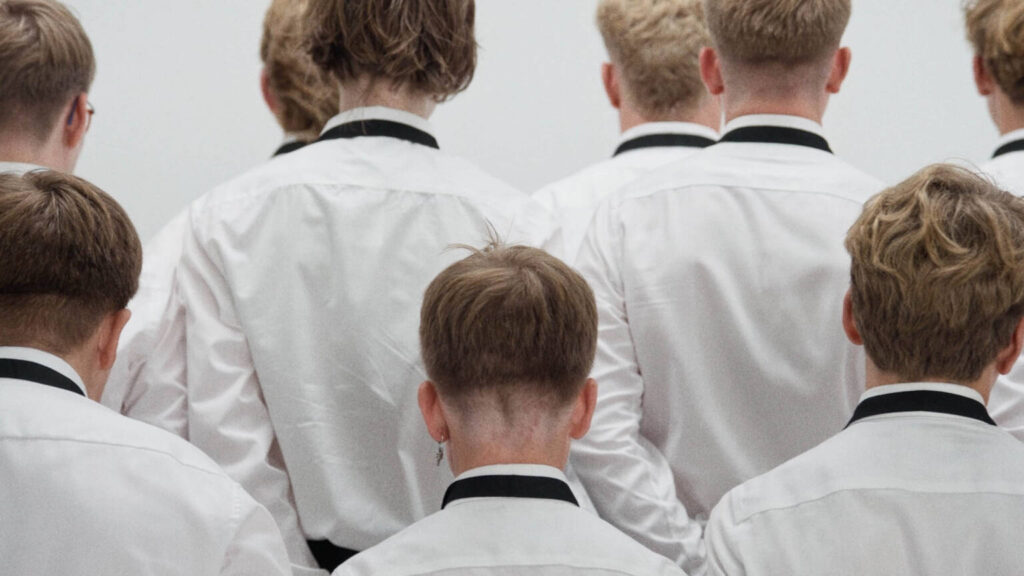
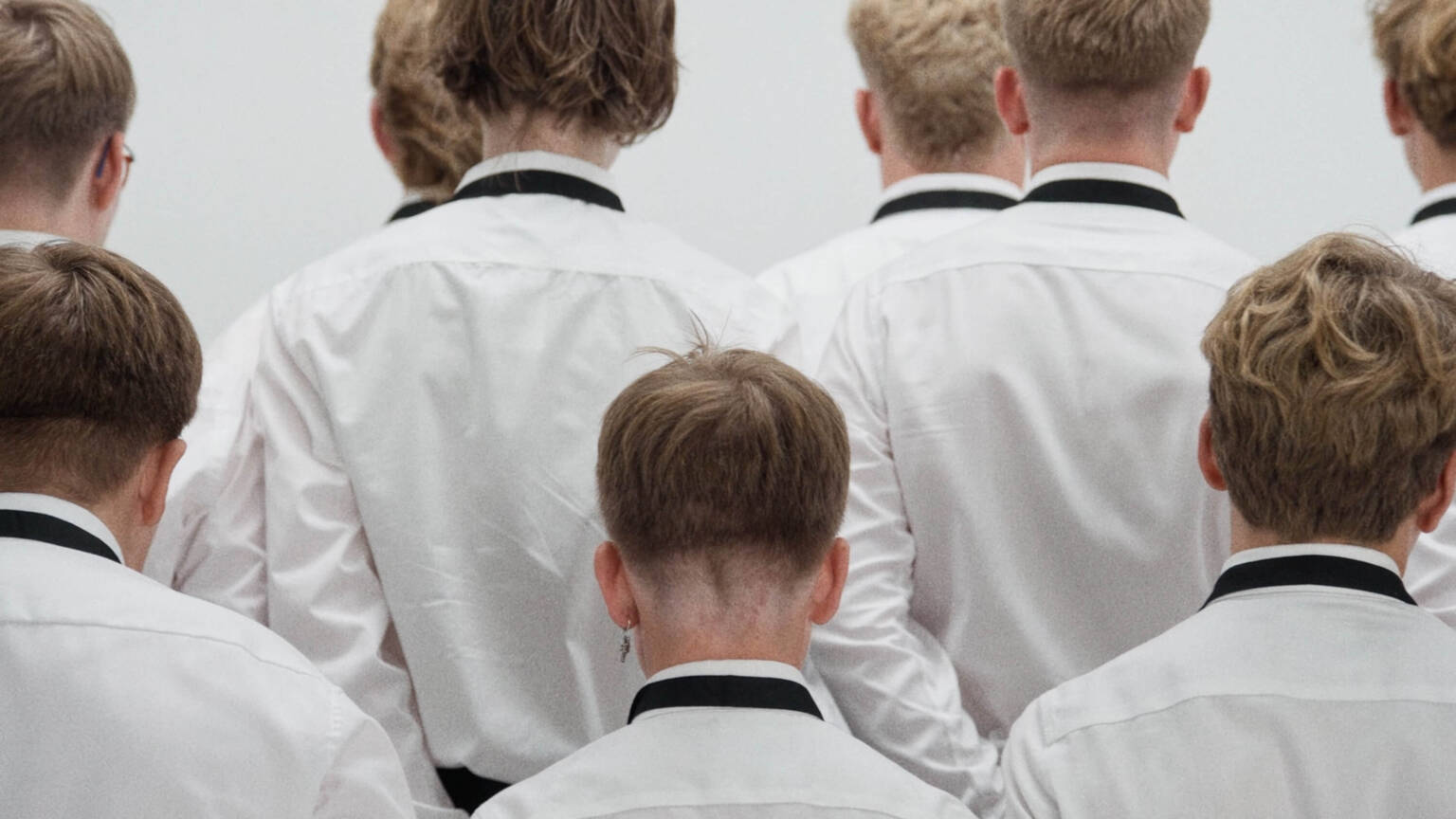
At the centre of the work is Herning Kirkes Drengekor, one of Denmark’s oldest boys’ choirs. Lëshkina does not treat the group as a simple documentary subject. Instead, the choir becomes a symbol: a structure where young voices are trained into unity, where individuality is folded into the collective, and where beauty depends on control.
The installation moves between rehearsals, concerts, and staged scenes from the choristers’ everyday lives. Actors quietly slip into the group, disturbing the boundary between observation and fiction. What first appears as a portrait of musical discipline begins to feel more unstable, as if the institution itself were being gently taken apart from within.
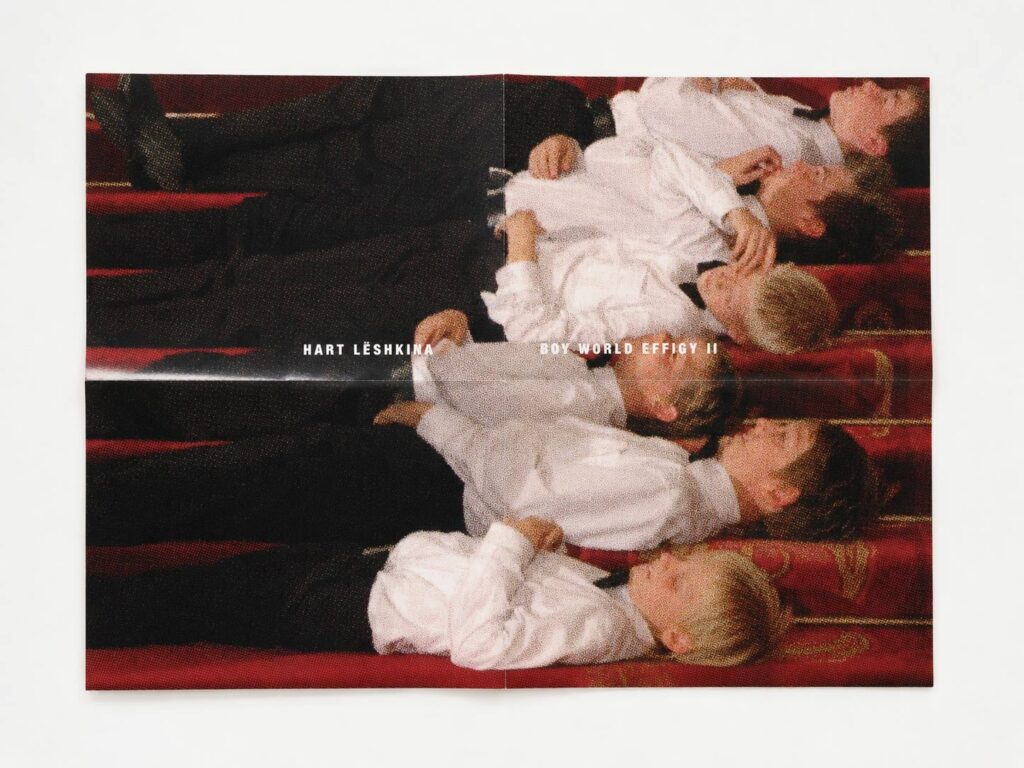
That instability is where the work finds its force. Across four screens, the viewer encounters gestures of precision and moments of hesitation, ceremonial movement and subtle discord. The boys’ voices form a system, but the system is never completely smooth. Small interruptions begin to matter. A pause, a look, a deviation from choreography becomes a sign of something private trying to survive inside a public order.
Based between Paris and Los Angeles, Hart Lëshkina works across photography, film, installation, and mixed media, often examining constructed realities and the visual codes through which power organises contemporary life. In Boy World Effigy II, those concerns become intimate and bodily. The question is not only how institutions shape people, but how people continue to tremble inside them.