Share this
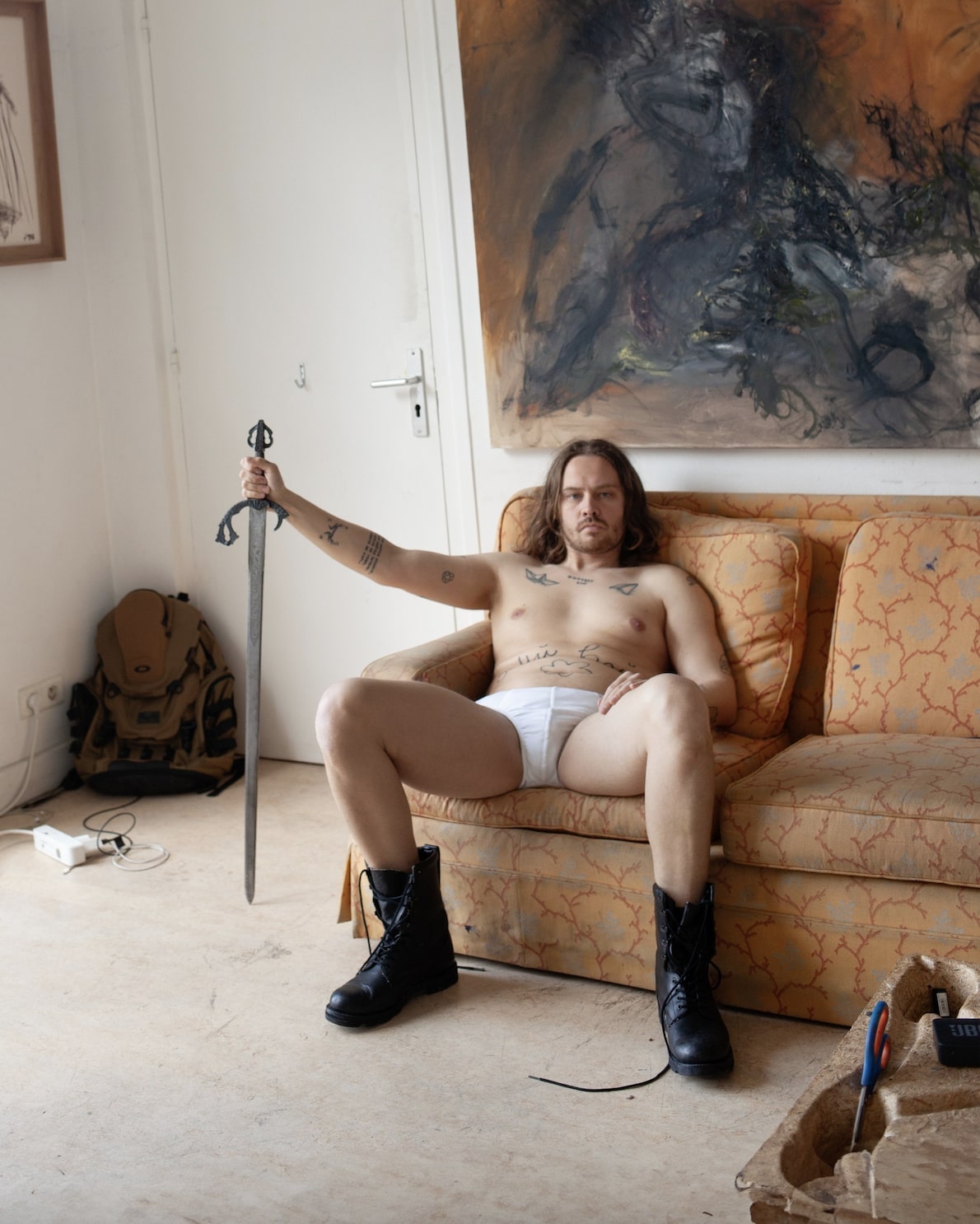
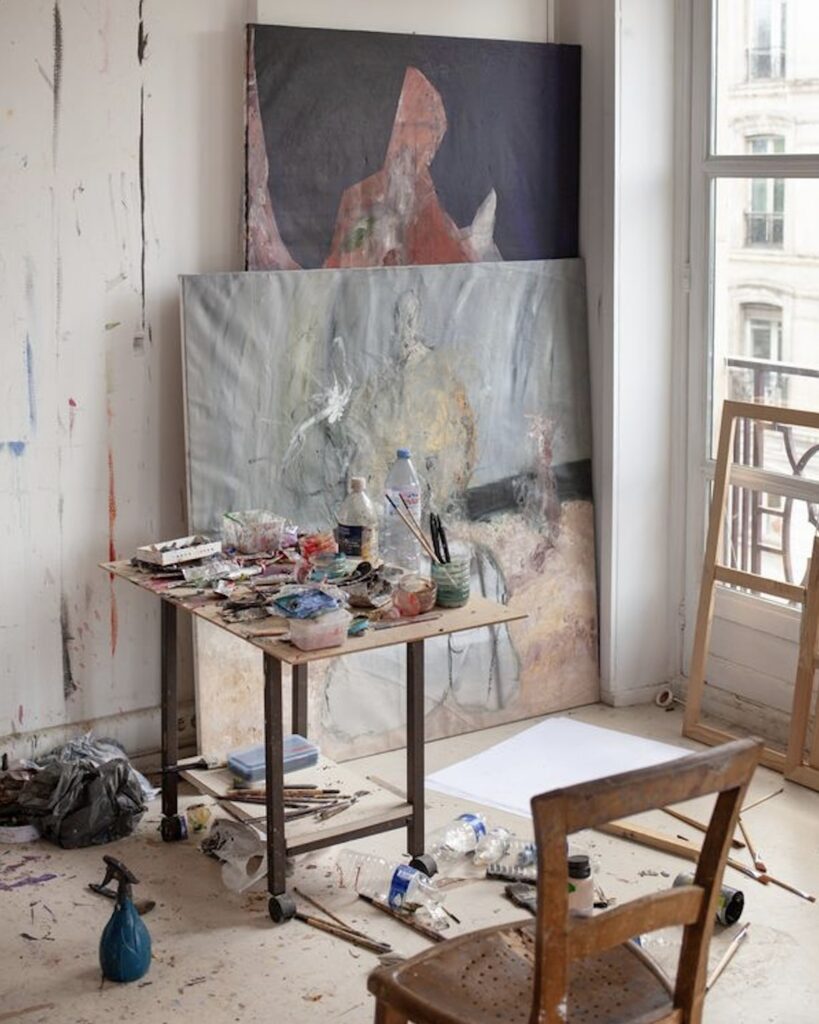
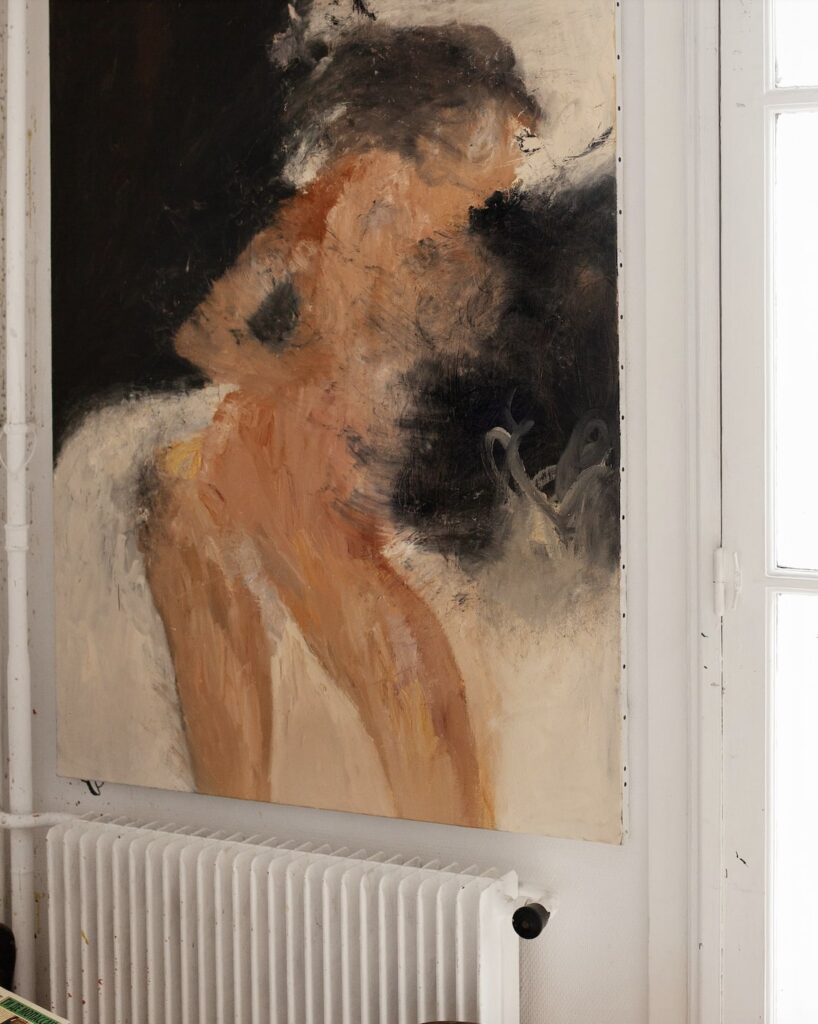
Stanislav Falkov’s art traces a restless, borderless path—moving from Parisian basilicas to Alpine train stations, Neapolitan chapels, and hazy memories of home. Yet this journey unfolds less in geography than in psychology: a dreamlike terrain of shifting impressions, dislocation, and perpetual motion.
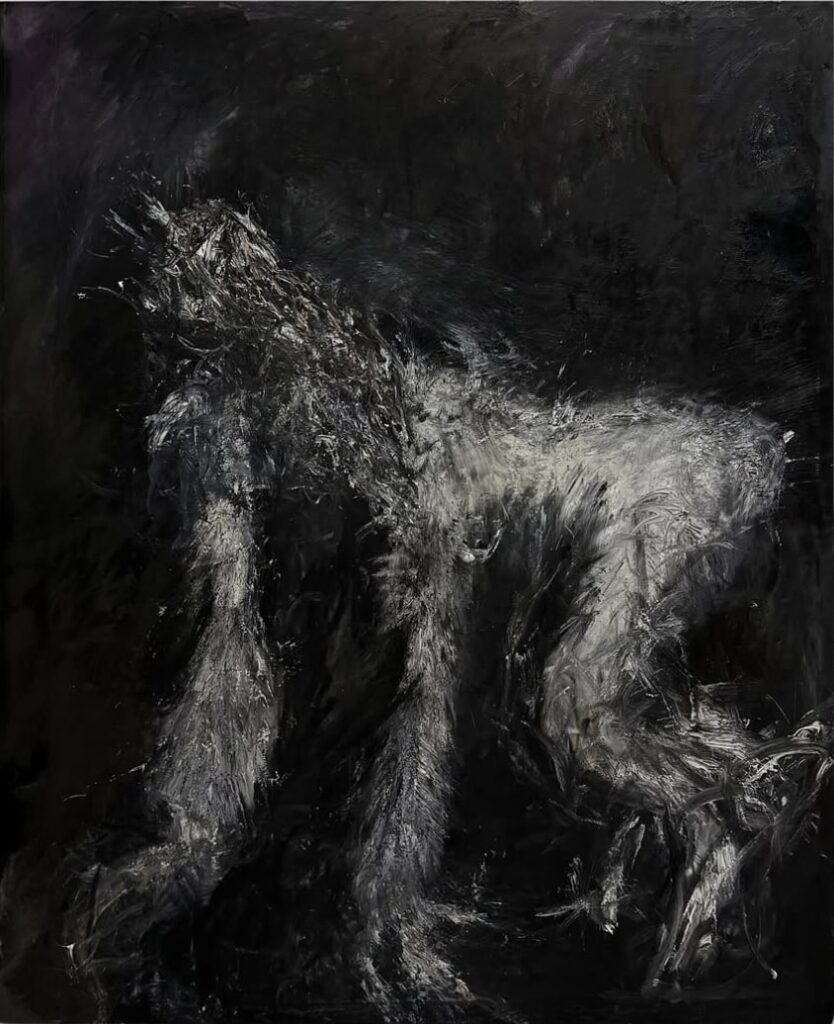
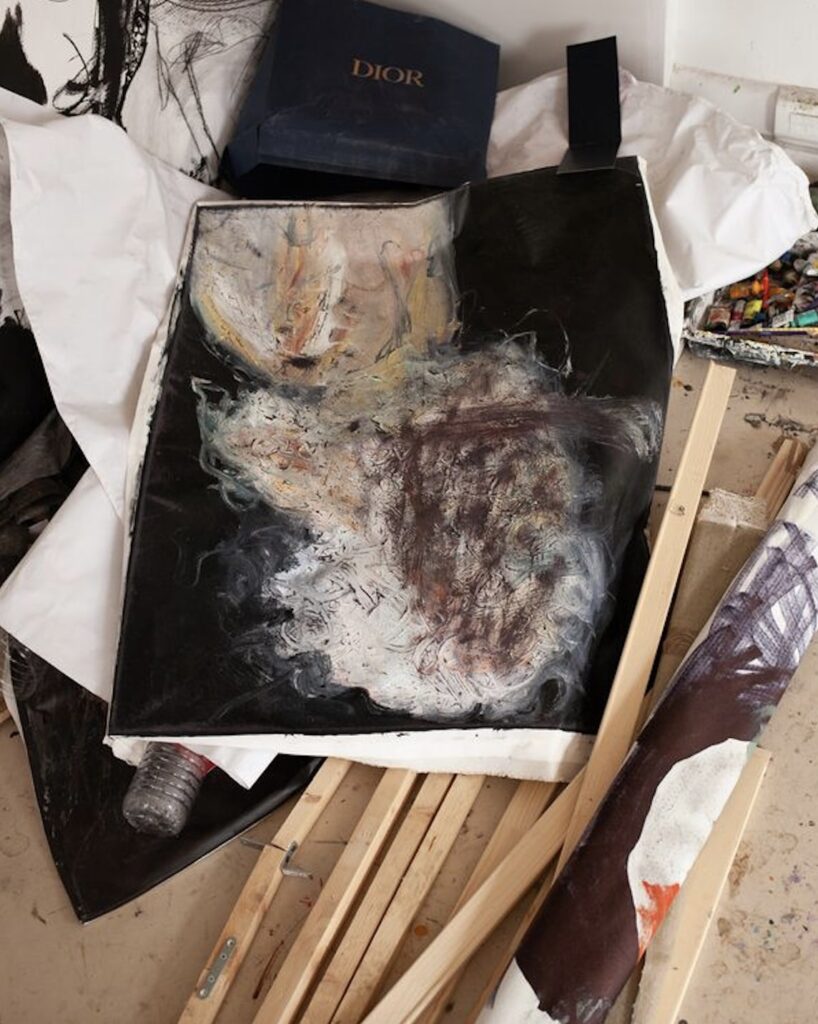
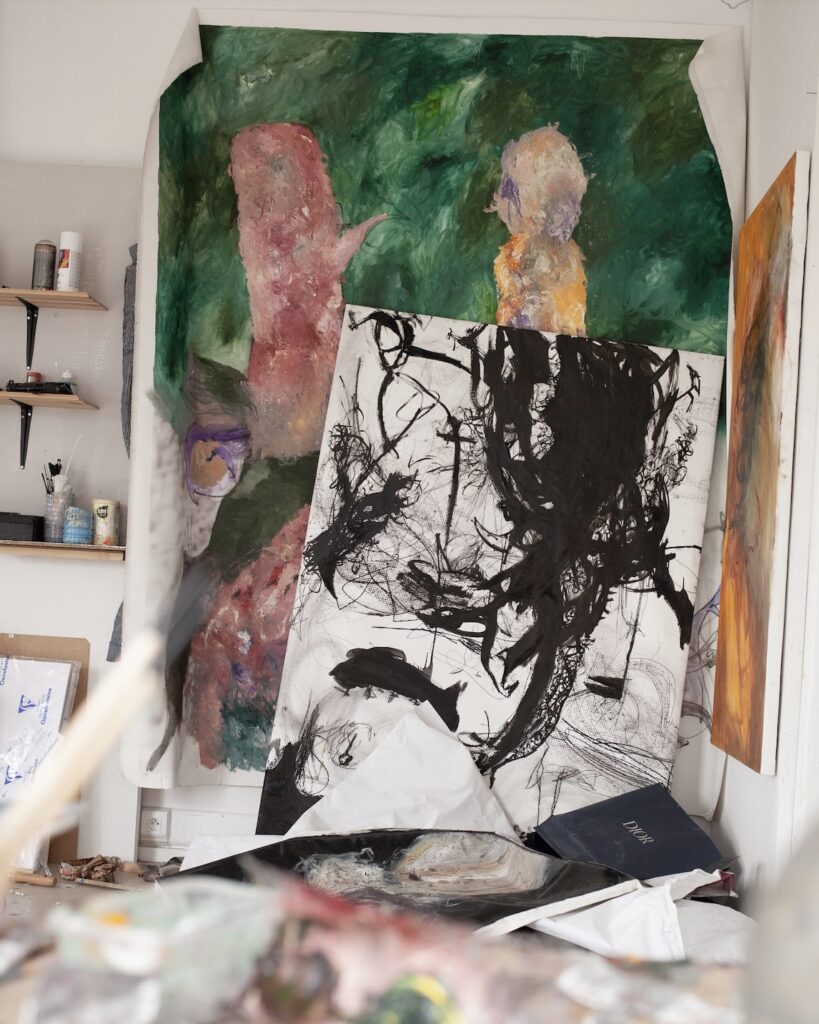
His latest project, Un Voyage Sans Fin, reflects this ethos of endless travel, merging raw expressionism, surrealist automatism, and a pop-art sensibility with a picaresque spirit. Through erratic figures, mismatched contours, and roaring palettes, Falkov channels the unfiltered subconscious while disrupting the traditional art historical timeline. The result is an open-ended, recursive body of work—defined less by polished outcomes than by process, vulnerability, and transformation.
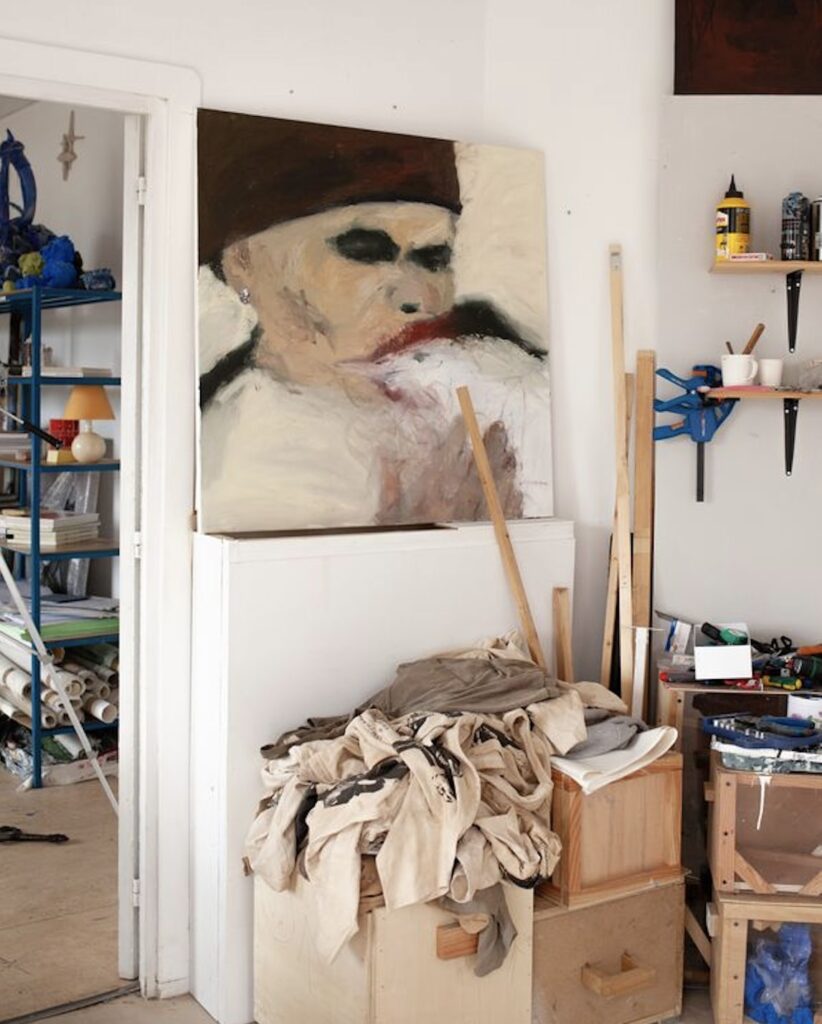
Falkov is also the founder of Faux—a rhizomatic project encompassing a Paris-based gallery, music label, and upcycled post-apocalyptic clothing brand. Themes of homelessness, exile (voluntary or forced), and constant reinvention run through both Faux and his painting practice, rooted in personal experience and collective unease.
Originally from Tyumen, in what he calls the “United States of Siberia,” Falkov co-founded the Russian creative collective Kruzhok, a utopian community that dissolved amid political disillusionment. After emigrating to France in 2022, his work turned even more inward, grappling with themes of war, loss, and ideological collapse.
In 2024, Falkov graduated with highest honors (Félicitations) from ESADHaR (École Supérieure d’Art et Design Le Havre-Rouen), where he earned his DNSEP, the French equivalent of a Master of Fine Arts. Now based in Paris, Falkov continues to build a deeply personal, genre-defying narrative—one that mutates with every stop along the way.
Hi Stanislav! It’s a pleasure to sit down with you! First question that I always ask. How does a regular day look like for you in Paris?
Stanislav: I wake up, walk to IKEA, buy a one-euro coffee, and steal a frozen cake—then let the rest unfold as the gods decide.
I’m curious, growing up, what kind of kid were you? What did you enjoy doing, and how did you spend your time?
Stanislav: I had night-time hallucinations until I was seven, so my family took me to local shamans. I spent my summers in a village in Siberia—the same region Rasputin came from.
Do you remember aproximately at what age your creative side started to show? And when did you start taking being an artist seriously?
Stanislav: In third grade, my friends and I started drawing our own comic books— our town only had three Ninja Turtles issues for sale, so we had no choice but to invent our own characters and create entire series. We took it seriously: multiverses, crossovers, collaborations—everything.
Ok Stanislav, with these next series of questions, I will try to delve into your work as best as possible. So…. Your work has been described as picaresque, with a nomadic anti-hero at its center. Do you see yourself as that picaro figure? How does this identity shape your movement through life and art?
Stanislav: This character isn’t explicit—it’s just your interpretation of what you see. What’s inside, even I don’t fully know.
You often blur the line between parody and sincerity. How important is irony in your practice—and how do you avoid falling into pure pastiche?
Stanislav: Irony is the foundation of everything; cynicism is the death of the spirit.
Your paintings embrace non finito—the unfinished—as a central technique. What does incompleteness mean to you? Is it rebellion, freedom, vulnerability?
Stanislav: It’s a kind of invincibility— you place the flaw right in plain sight. No one can say it’s a mistake, because that was the intention all along. As an artist, my goal is to make it even worse.
You draw from subconscious and biomorphic impulses. What does your preparatory process look like? Do you begin with a narrative or let form lead the way?
Stanislav: I sit down in front of a blank canvas and start with abstraction—then I search for figurative forms, or maybe they search for me. No sketches, ever. The process is part of the painting.
From zines to installations to clothing—your projects span many media. How do you decide which form a project will take, or do forms evolve intuitively?
Stanislav: I just start working on everything and never finish anything.
Much of your work centers on dislocation, exile, and wandering. How did leaving Russia affect your practice—not just politically, but emotionally?
Stanislav: It’s a reverse process— through my artistic practice, I’m trying to affect my physical and mental state.
How does France, especially Paris, appear in your inner cartography? Is it a stable base or another transient stop on your ‘voyage sans fin’?
Stanislav: It didn’t just affect me—it changed my life. It feels like I’ve stepped into an art-house film directed by Leos Carax or into a novel by Limonov. I want to stay in this state, though sometimes it scares me.
When did you start showing an interest in fashion and design?
Stanislav: When I moved from Siberia to Moscow, it was my first encounter with a completely new world. At first, I worked in an auto parts warehouse and a bookstore. But through my passion for documentary photography, I eventually found myself working with fashion brands.
Your project FAUX merges gallery, clothing, and sound. How do you navigate the friction between the raw/underground and the structured world of fine art institutions?
Stanislav: It’s a way to integrate into a new society — if you’re not invited to the gallery or the fashion magazine, then build your own gallery, your own magazine. You can do anything — it’s like Minecraft. And yes, I do plan to become a Doctor of Philosophy. Right now, I’m looking for the right institution to pursue that path.
With that In mind, what inspired you to start FAUX?
Stanislav: Disillusionment with people — and with myself.
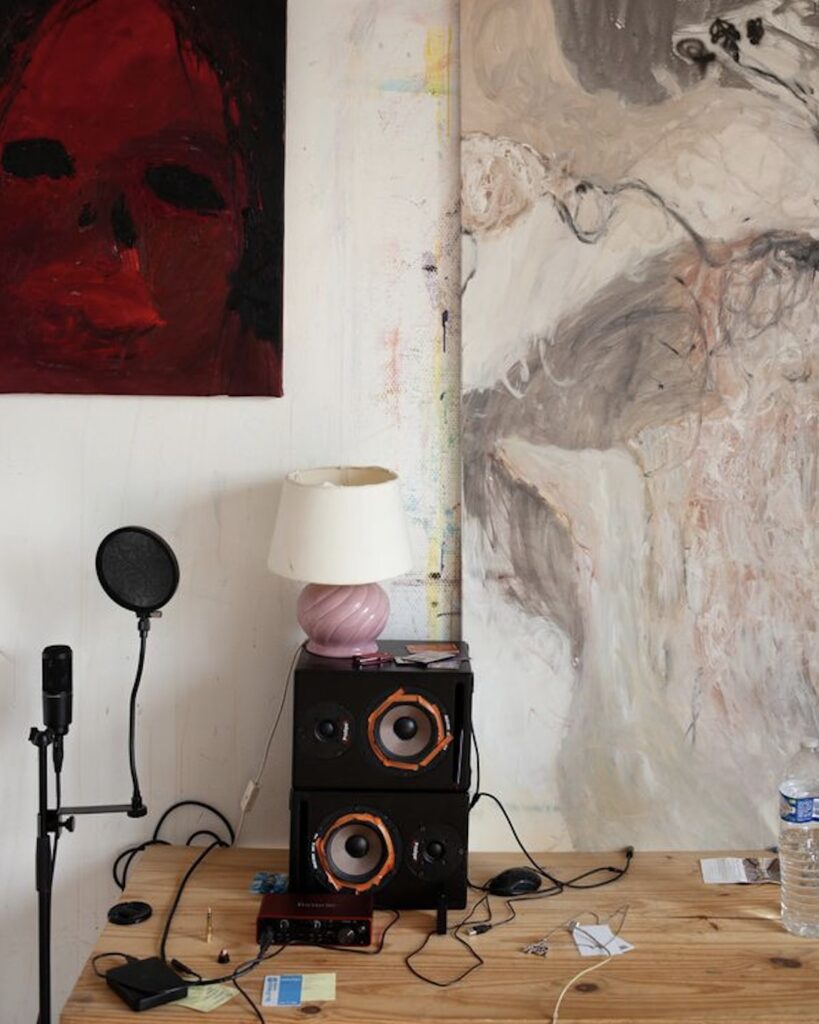
Is FAUX a platform, a persona, a critique, or all of these at once?
Stanislav: It’s a mystification — none of it really exists.
You emerged from the Kruzhok collective in Russia. Looking back, how do you reflect on the utopian aims of that group—and what lessons did you carry forward?
Stanislav: Any ideological community, sooner or later, leads to fascism — that’s what I’ve come to understand.
The war in Ukraine, your emigration from Russia—these are heavy personal-political events. How do you transform such weight into aesthetic language without it becoming overly didactic?
Stanislav: It’s the tragedy of everyone who’s been through it. Now I’m just trying to hide from it all in a world I’ve made up.
What myths or histories are you currently reworking in your next series or exhibition?
Stanislav: I’m working on a concept called the “United States of Siberia” — a project imagining a country that doesn’t exist.
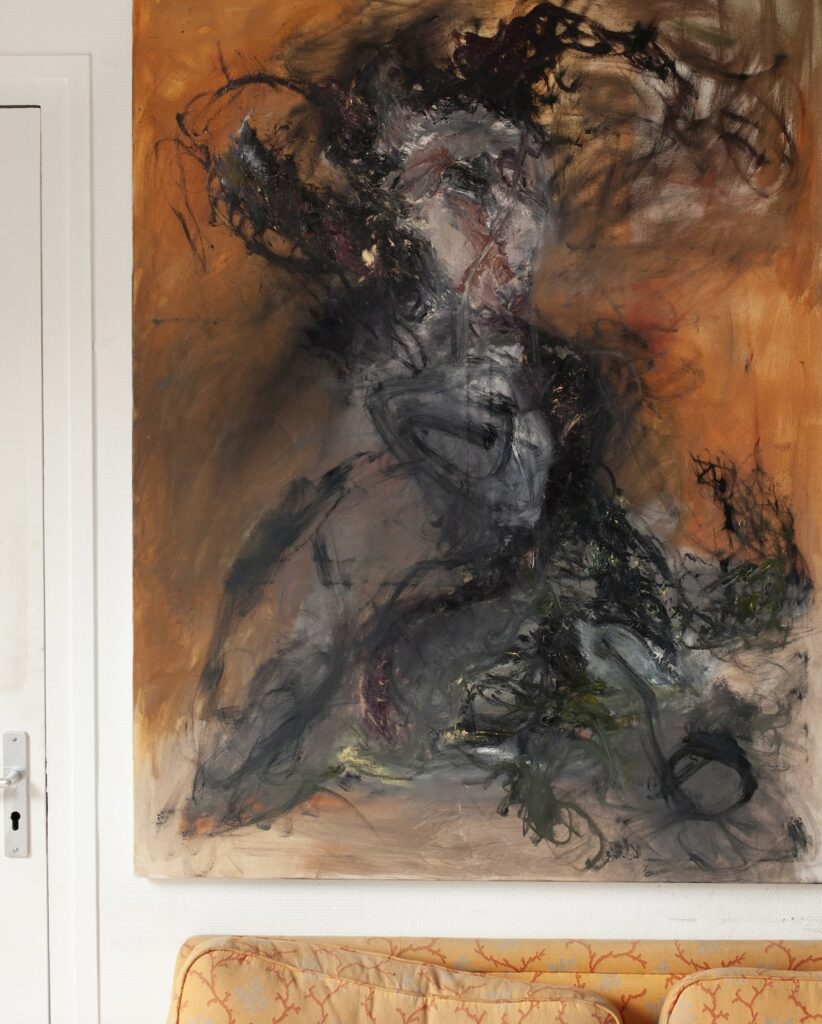
Do you still believe in the possibility of utopia—or is the ruinscape the only honest landscape left to paint?
Stanislav: Utopias are for someone else to chase; I will stay here, rooted in this landscape.
If your journey really is endless, what would be your dream stop along the way—geographically, creatively, or spiritually?
Stanislav: My dream is to never stop moving forward.
Can you walk me through your creative process from beginning to end result?
Stanislav: No.
Can you also tell me about your use of symbolism?
Stanislav: It’s a fascinating game — creating symbols, and even more captivating to watch how they can affect people. Yet, in the end, it’s just an image or a sound, nothing more. Crafting a true symbol is a complex challenge, and honestly, I struggle to master it.
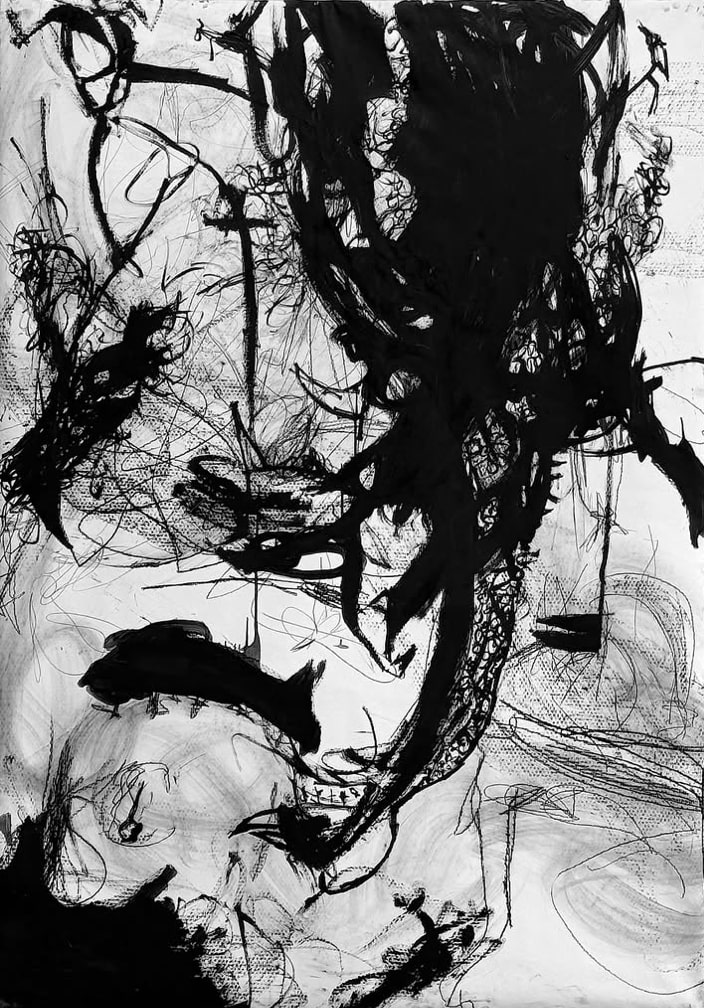
How do you approach color?
Stanislav: If I’ve worked with paint and it doesn’t end up looking like a mere blotch of dirt, I thank my lucky stars.
So with what we just talked about, what would your ideal viewer take from your work? Confusion, empathy, discomfort, reflection?
Stanislav: I want him to feel everything you’ve described.
Outside of art, what’s something you’re obsessed with right now—maybe a hobby, a show, or even a food—that keeps you grounded or inspired?
Stanislav: First, one must understand what art truly is. To me, it’s intertwined with every aspect of my existence — though maybe I’m just overthinking it.
Ok Stanislav, now to something totally different. In a parallel universe who would you be? and what would you be doing?
Stanislav: LOL, I’m already living in a parallel universe — definitely don’t want any more sudden shifts like that!
What qualities do you find most important in the people you choose to spend time with?
Stanislav: It’s their sense of humor.
Anybody you look up to?
Stanislav: Leo Tolstoy
What motivates you?
Stanislav: Bicycle trips.
How would you describe a perfect day?
Stanislav: Read my answer to your first question.
Alright Stanislav, I always ask these two questions at the end of an interview. The first is. What’s your favorite movie(s) and why?
Stanislav: “Les Amants du Pont-Neuf” — that bridge is visible from my studio, though the film itself didn’t use the real bridge. This, too, reflects the essence of the FAUX project.
The second is. What song(s) are you currently listening to the most right now?
Stanislav: Kanye West – Water