Share this
Born in London in 1981, Alexander Wilby discovered a love for drawing and art at an early age, although his creative focus often came at the expense of his performance in other subjects. He studied art through college until the age of 18, but rather than pursuing a university education, he followed another passion: music.
After spending nearly a decade away from visual art, Wilby returned to painting in his late twenties with renewed commitment. Largely self-taught, he developed his practice through workshops, weekend painting courses, online learning, countless hours of drawing, and an ongoing process of independent study.
His career gained further momentum after joining the Cane Yo art collective through fellow UK artist Milo Hartnoll. Since then, Wilby has participated in group exhibitions across the UK and Belgium, alongside presenting a solo exhibition in Margate, steadily establishing a distinctive voice within contemporary painting.
Hi Alex! It’s a pleasure to sit down with you! First question that I always ask: How does a regular day look for you in London?
Alex: I was born and lived in London for 30 years, but moved to Margate on the East Coast 5 years ago. I work part-time in the Stüssy store here, but a typical non-work day is a beach walk with my dogs and then into the studio to work on whatever I have going on.
I’m curious, growing up, what kind of kid were you? What did you enjoy doing, and how did you spend your time?
Alex: A bit of a nightmare, to be honest HaHa! I was always in trouble, but I was able to focus on art from a young age. I grew up in the 80s and definitely had undiagnosed behavioural and/or learning issues. I wasn’t a mean kid, just very distracted. My time was spent drawing, skating, reading comics, graffiti, and video games. I went out a lot and did kid stuff, but I was very happy to be by myself drawing.
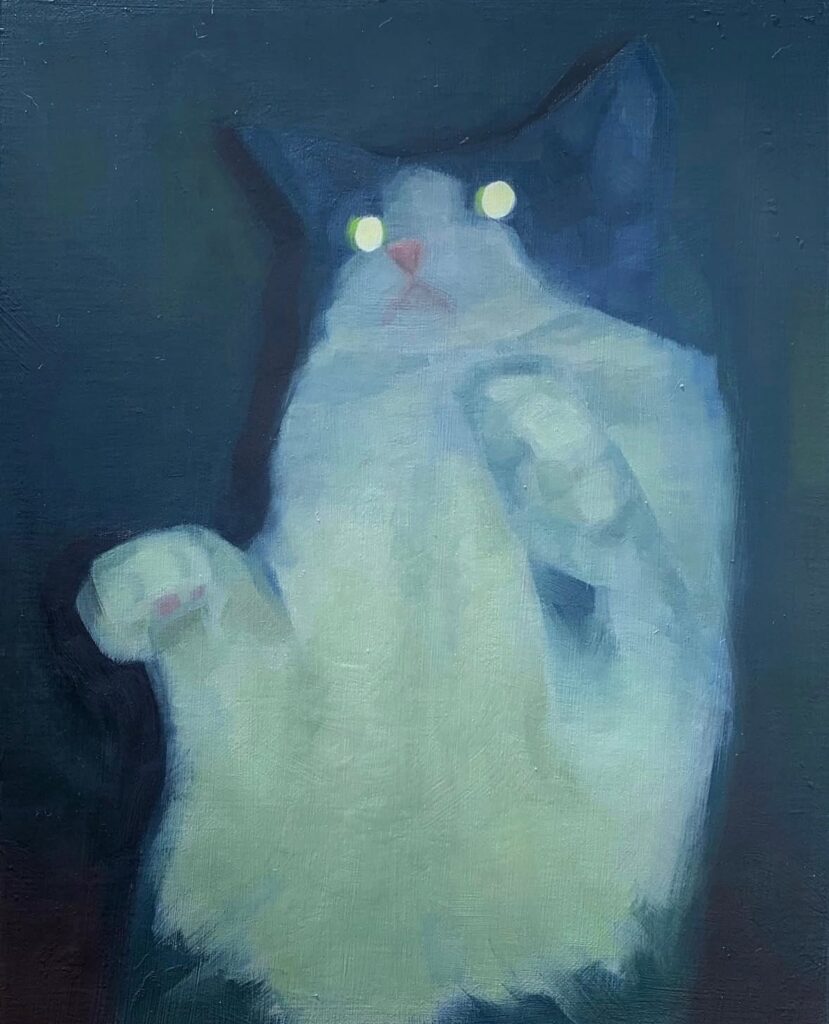
So when did your creative side start to show, and when did you start taking being an artist seriously?
Alex: From an early age I was showing some talent for drawing, and that sort of became my personality. I was the guy who was good at drawing. By the time I was leaving secondary school, I had decided that art would be my thing, which was probably my only choice as I had completely flunked out of school. I got an A in art and that’s it!
Ok Alex, with this next series of questions, I will try to delve into your work as best as possible. So… Your work often feels introspective and emotionally charged, even when the gestures are restrained. Are there particular emotional states or psychological spaces you find yourself returning to again and again?
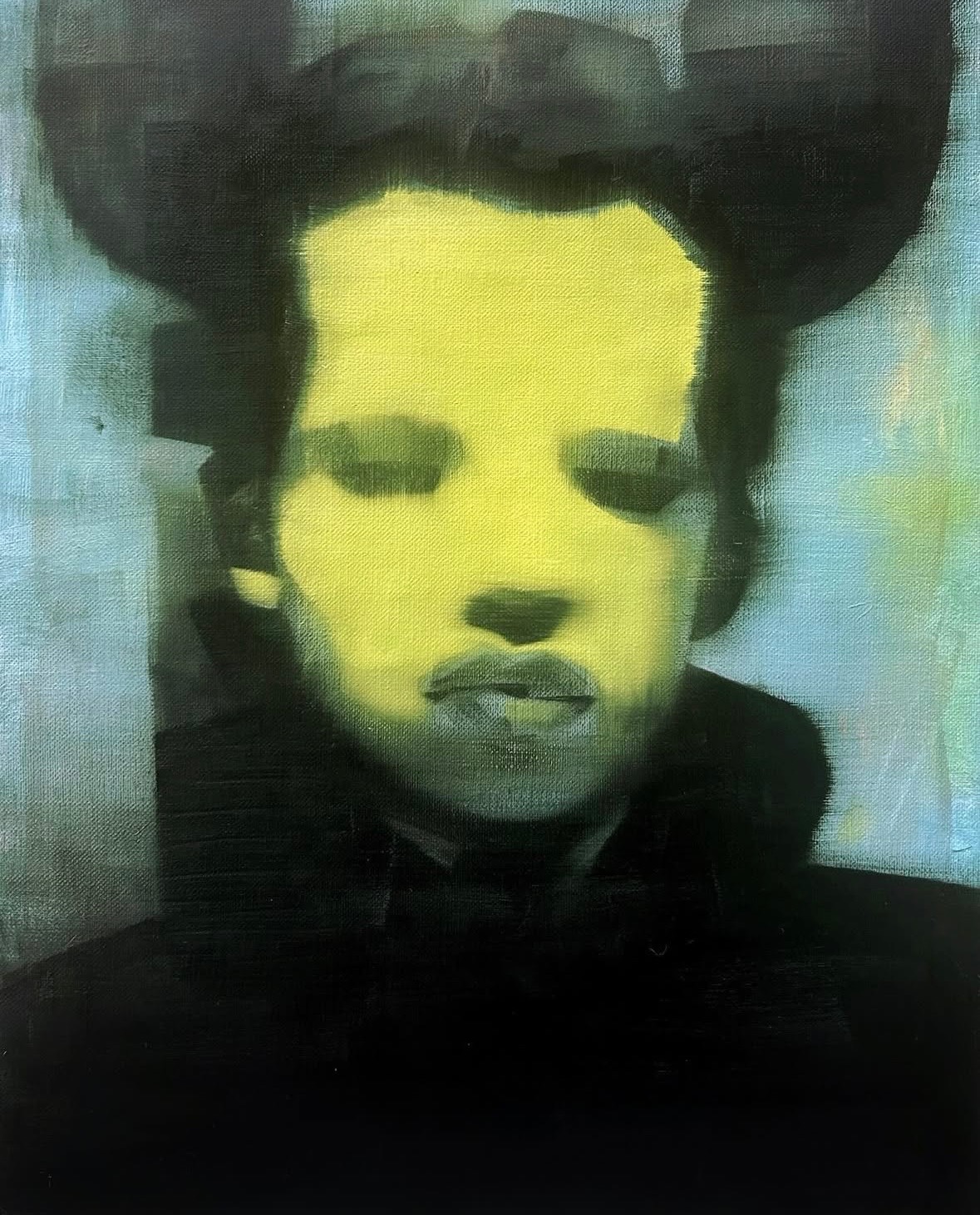
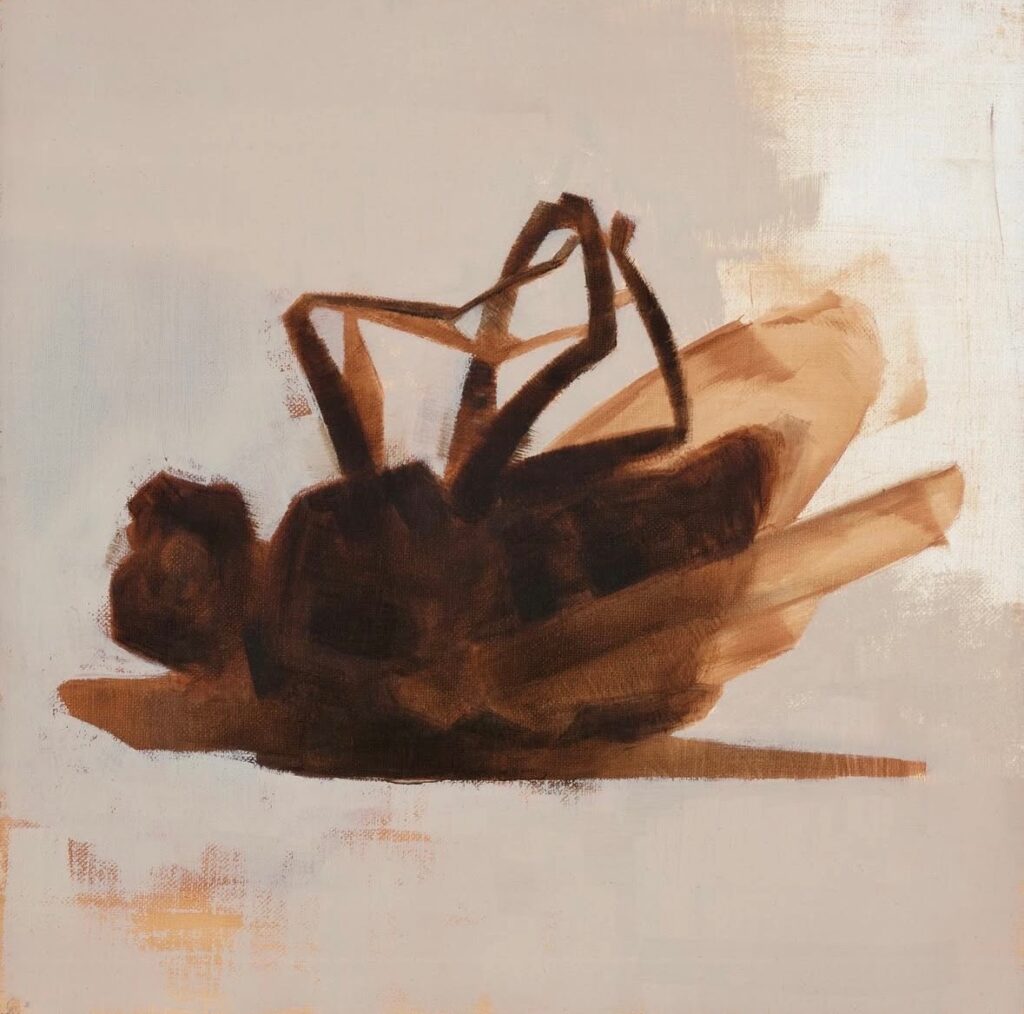
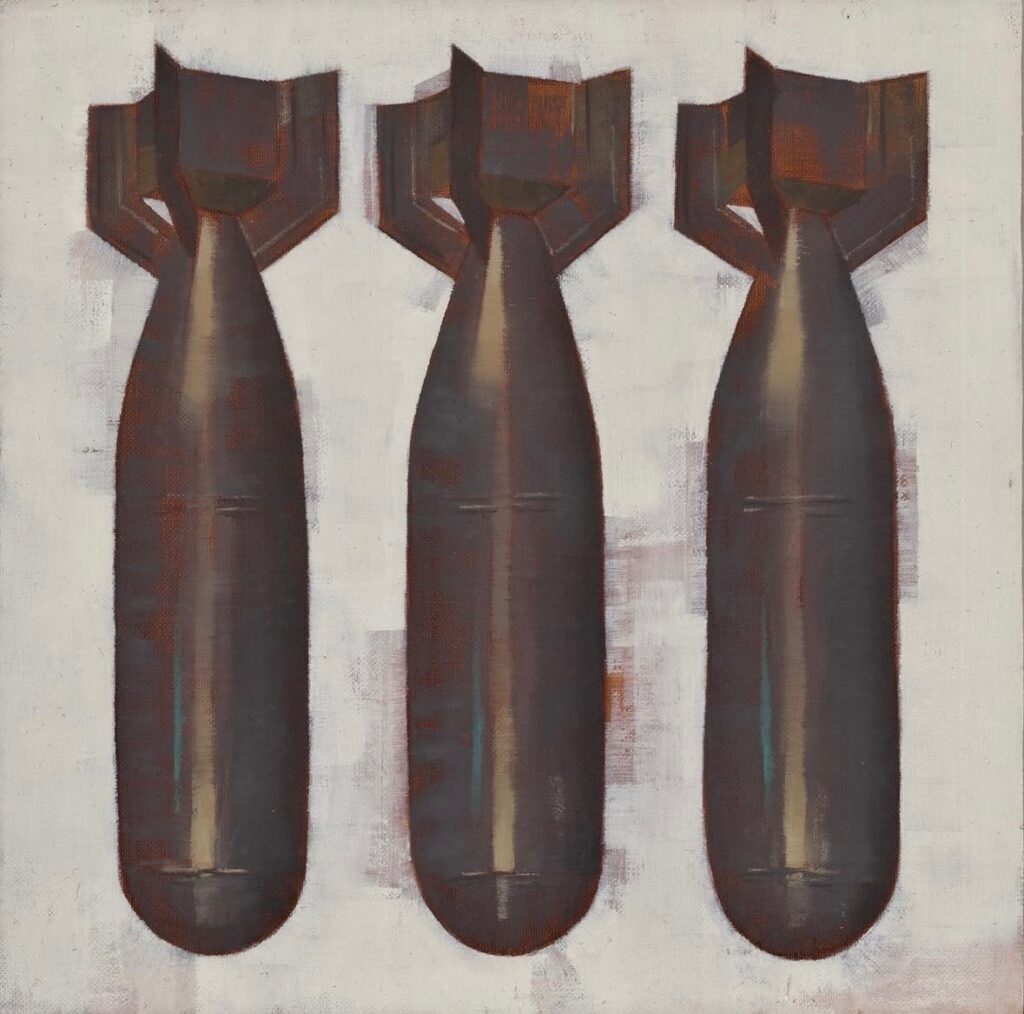
Alex: I do return to similar moods and subjects, but it’s not a conscious decision. I’m just a cynical person Ha! I prefer dark imagery, but to me it’s not just dark. To me there’s a humour to it as well, like a black comedy. Sometimes people mention this and it makes me happy, but other people seem to only see the gloomy side. But shape is king. Graffiti was a huge part of my life for many years, and the flow of line and shape in tags and pieces makes its way into my work.
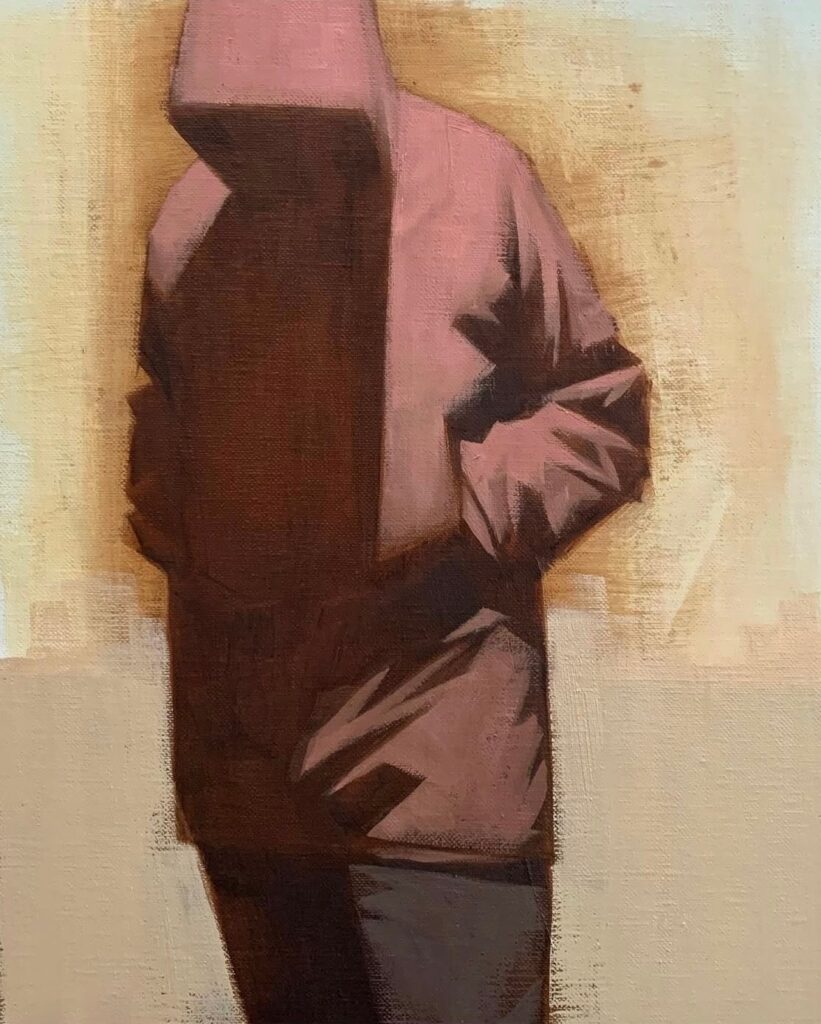
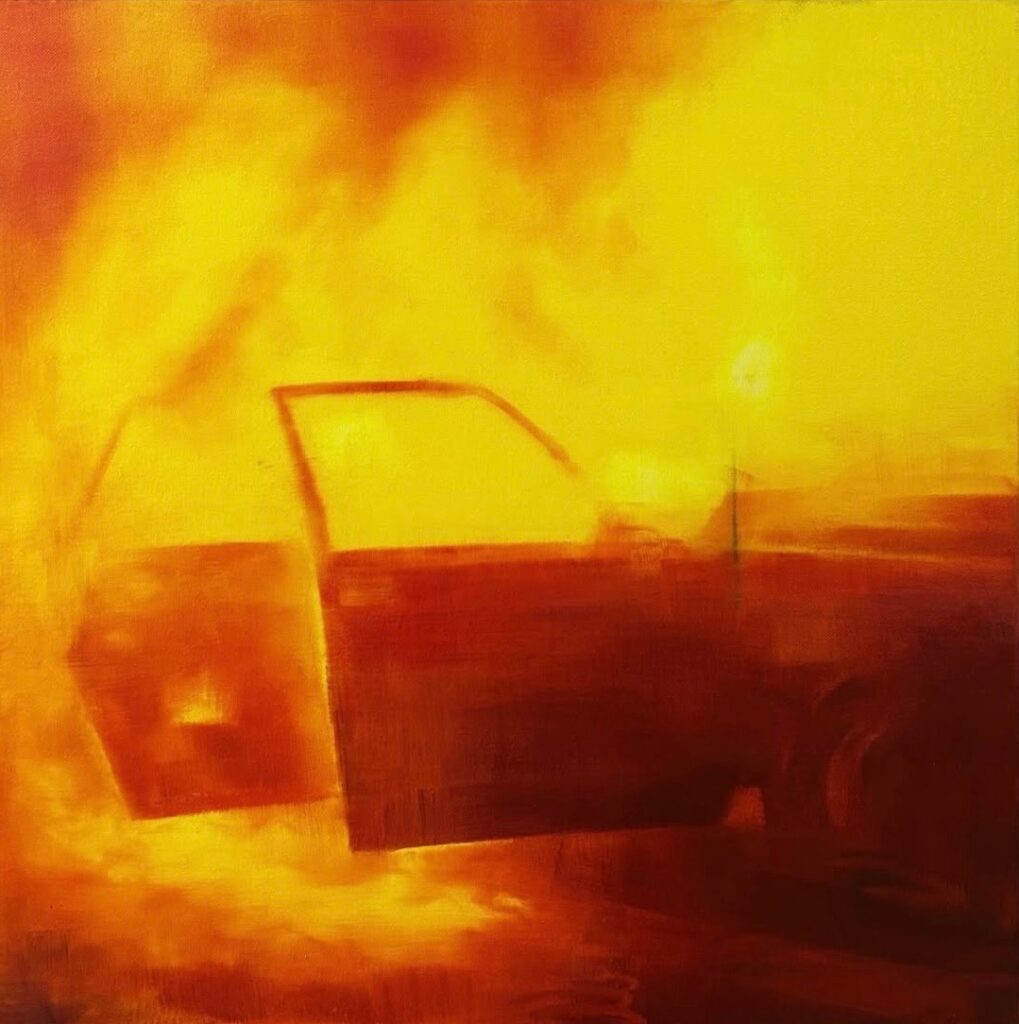
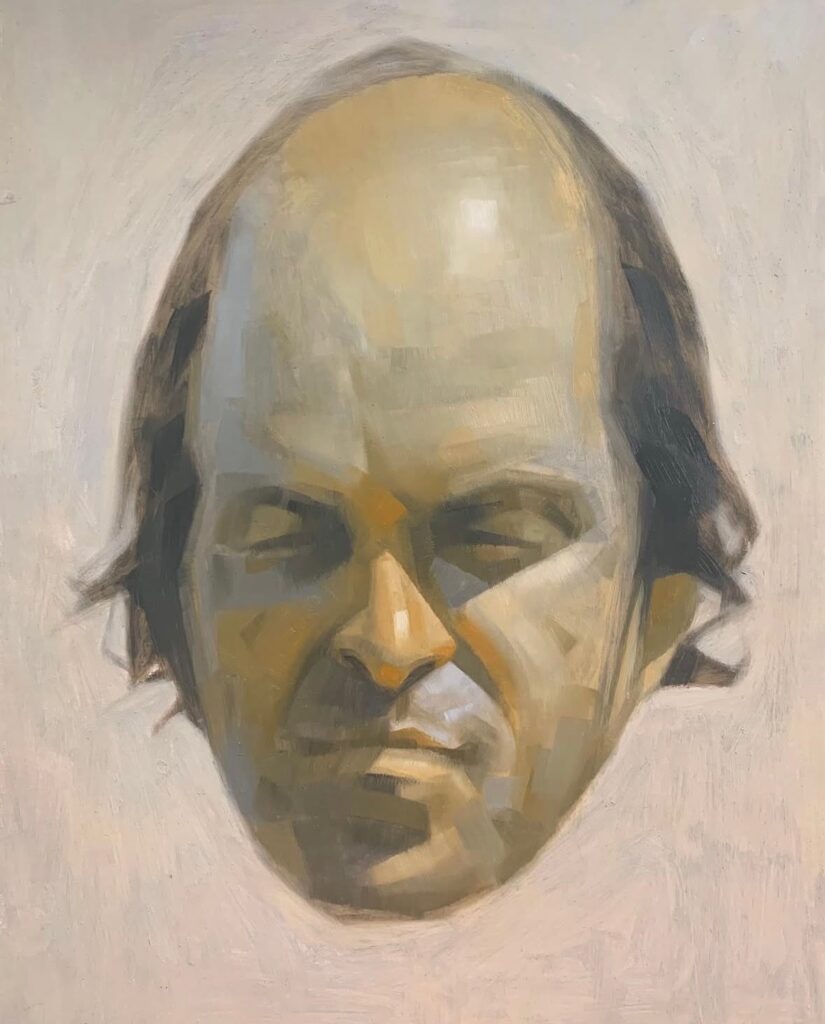
You return to portraiture frequently. What do faces allow you to explore that other subjects wouldn’t – tension, vulnerability, projection, or something else entirely?
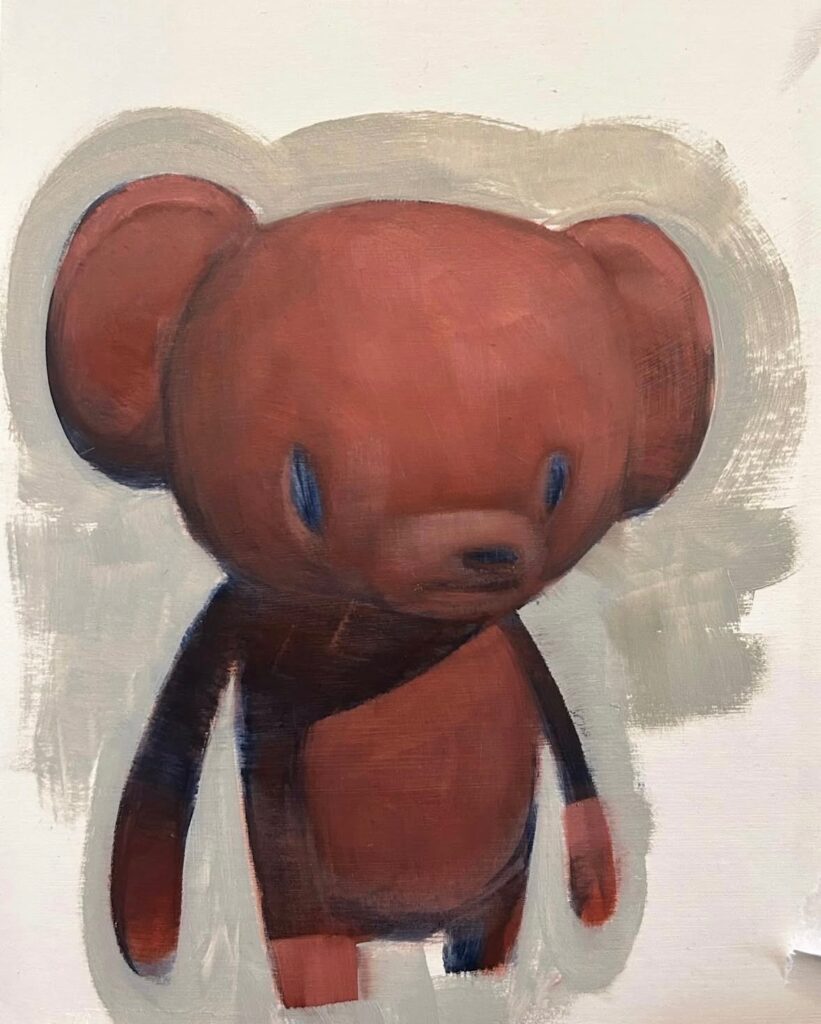
Alex: Faces do fascinate me. I remember when street art was kicking off in the early 2000s and hadn’t become the mess it is now, and seeing faces on walls really struck a chord with me. I’d always been more into letters, but something about faces got me wanting to make my own. Not draw a perfect likeness of someone, but create my own characters. The idea of being able to create faces from my imagination was magical to me.
Your portraits feel emotionally loaded, even when they’re quiet. What draws you to faces as sites of tension or vulnerability?
Alex: It’s a good question and one I don’t fully know the answer to. But I am drawn to certain archetypes. I draw and paint people who would be considered outsiders from mainstream beauty standards—the old, overweight, and peculiar characters. They interest me, but it’s also a small rebellion. Pretty young girl portraits will rack up millions of likes, so I like to paint an overweight middle-aged man in his underwear or something. Knowingly limiting my potential audience and sales dramatically.
When you’re working on a portrait, are you trying to understand the subject, or yourself?
Alex: There is definitely something cryptic going on. I am working through something. I think I’m drawn to certain people because they reflect parts of myself. They don’t necessarily look like me, but they represent how I see myself, how I’d like to see myself, or even how I imagine others see me. Both positive and negative qualities.
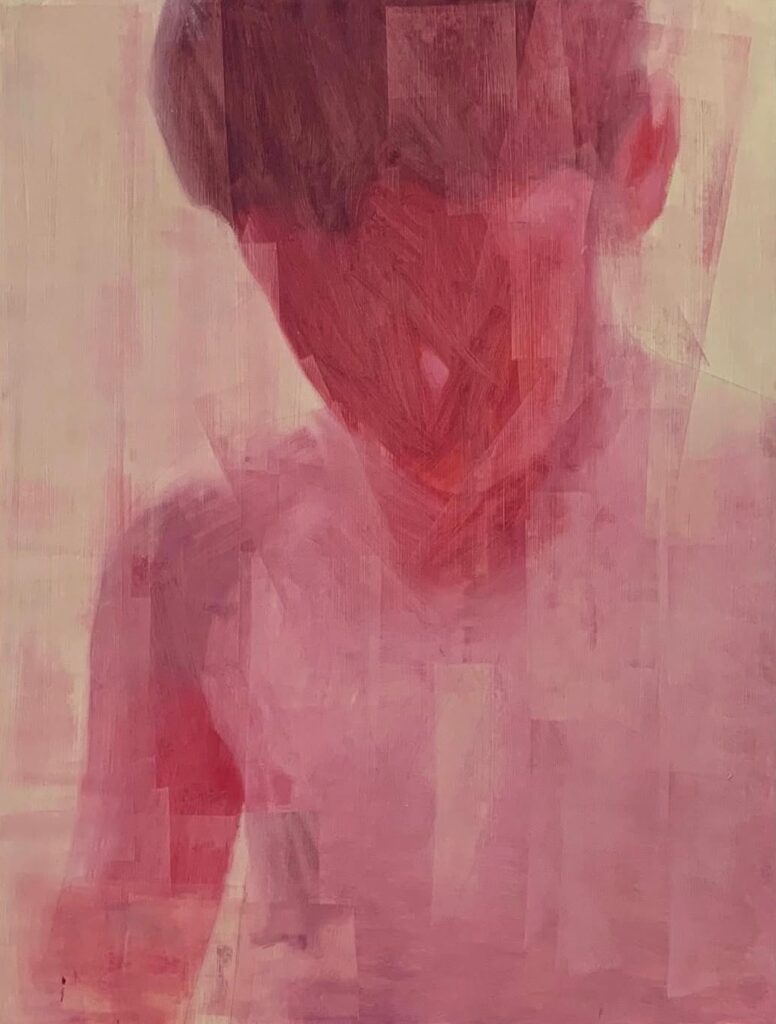
Do you enter a piece with certain themes in mind, or do they only become visible to you after the work is finished – when you look back and notice patterns forming across different pieces?
Alex: I lack a proper art education, so I have never learned a traditional process of developing work. I usually have ideas first. A lot of it happens in my head before I get the paints out
You stepped away from art and pursued music instead. What did music give you at that time that art couldn’t?
Alex: It gave me a tribe. Making art is an isolated and lonely existence a lot of the time, but making music was the opposite. I had been introduced to a friend circle through a girlfriend at the time who was part of a local punk scene, and playing in bands and getting wasted became more important than drawing and painting. So for almost 10 years, art got pushed to the back burner. I thought about it a lot and was still doing graffiti. But any serious art practice had died.
Did leaving art feel like a failure, a relief, or simply a practical decision back then?
Alex: I still had ambitions to pursue art, I just never seemed to actually do any. And the more time that passed, the more anxiety I had about not making art.
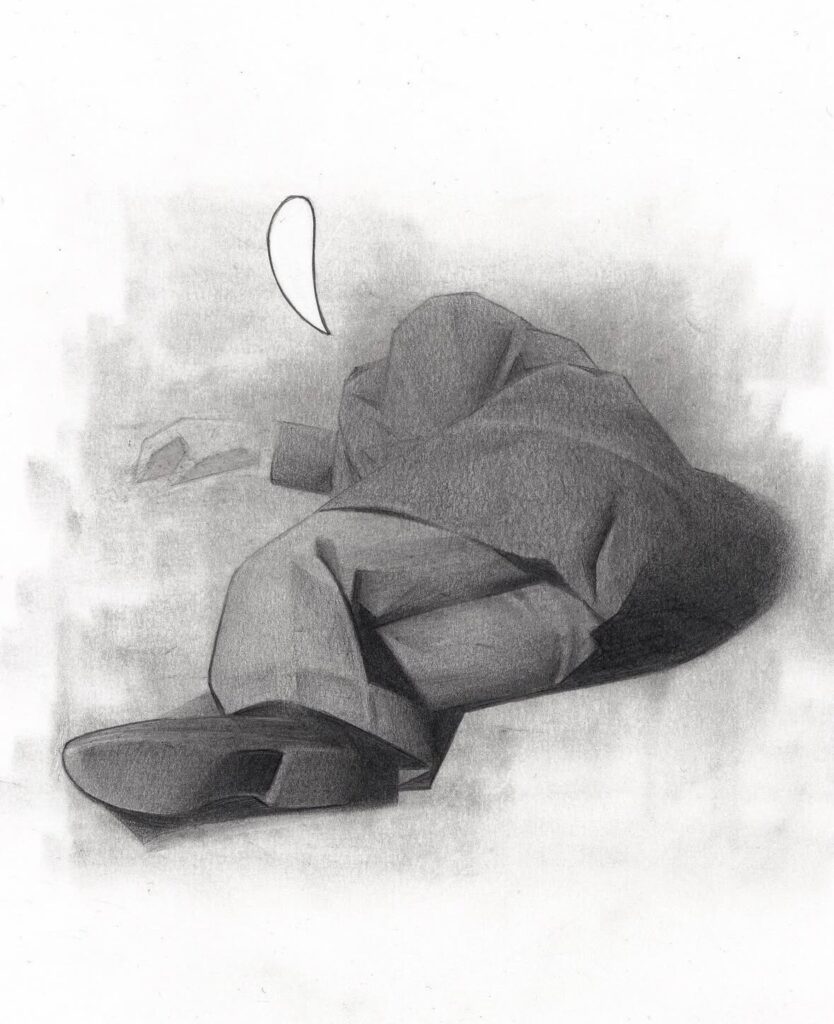
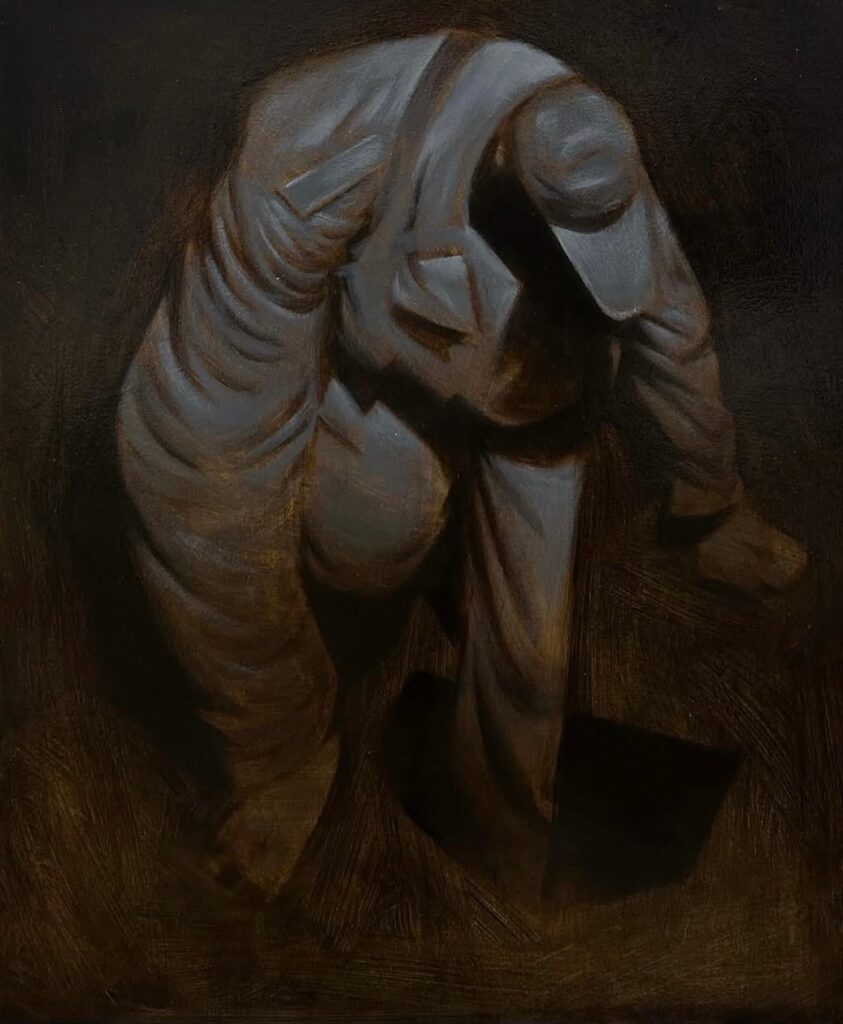
You took almost a decade away from making art seriously. What stays dormant in a person during that kind of break, and what quietly keeps growing?
Alex: This might sound a bit far-fetched, but I painted in my mind a lot. I would lie in bed thinking about painting, or looking at art I admired and imagining the process that was used to create it. The layers, the order in which things must have been laid down. Nothing beats actually doing work, but I honestly think I managed to learn a lot about painting by looking and thinking deeply about it.
Was there a specific moment in your late 20s when you realized you had to return to art, or was it more of a slow pressure building?
Alex: Yes. It came in the form of an iPad that my father-in-law purchased for me. This opened up a method of drawing that would defeat all the anxiety I had accumulated from not making anything for so long. I had stressed myself to the point that if I did try to draw something, it often didn’t go very well and there would be physical evidence of it, and I hated that. I knew I could make better work, but I couldn’t push through those failures to get there. By this point in my late 20s I was quite depressed. A failed drawing would be such a kick in the balls. But I downloaded some art apps on the iPad and this was the key. I could draw and draw and, if it didn’t go well, I would just clear the screen. And I started to draw again. A lot!
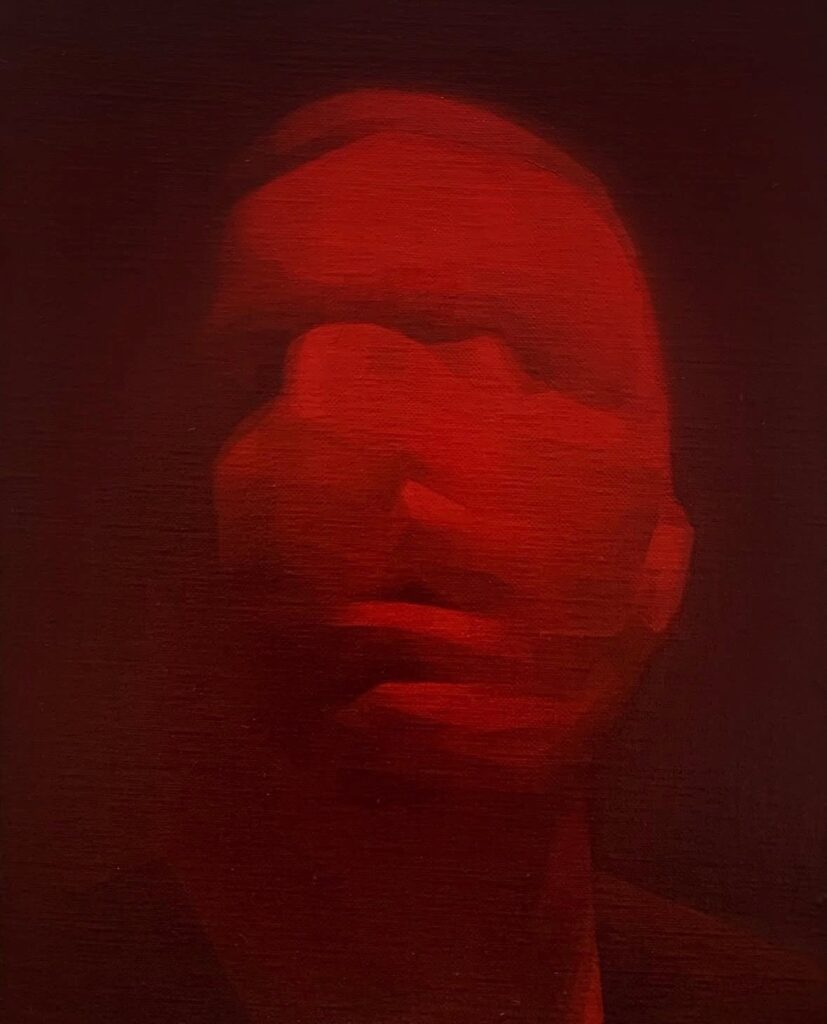
You didn’t go to university, instead learning through workshops, online courses, YouTube, and obsessive drawing. How did teaching yourself shape your relationship to authority, rules, and technique?
Alex: It was probably for the best. I had started doing abstracts and getting a bit conceptual, and if I had done a fine art degree, the graffiti, comics, and illustration that I loved would have probably been forced out of me. God knows what I would have been doing after 3 years. I wouldn’t have made it if I’m honest. I’ve never responded well to authority
Do you think starting “seriously” later gave you freedom – or did it come with a different kind of fear?
Alex: I think it gave me confidence. Being young is confusing, and getting a bunch of life experience under my belt meant I didn’t have to second-guess myself. I’d decided what I like and don’t like.
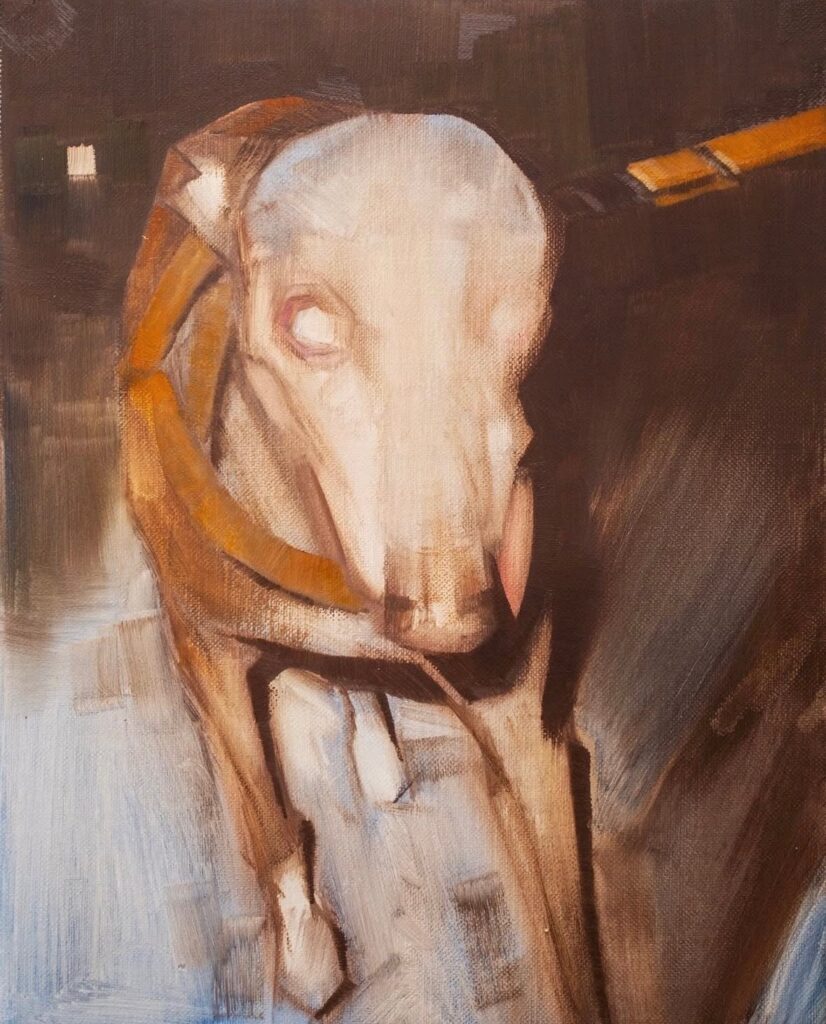
Getting involved with Cane Yo through Milo Hartnoll seems important. What did finding that community unlock for you creatively or personally?
Alex: It really was the beginning of everything, to be honest. My original friend circle was still made up of either musicians, graffiti bums, or drunks, and I didn’t really have anyone to share the things I was getting into with. But all of a sudden I was surrounded by like-minded people who shared a similar aesthetic. The crowd was also not your usual art crowd. Cane Yo is a bunch of misfits, and that suited me. While other painters were still droning on about how you must paint from life, these guys were painting from photos, memes, selfies, video game screen grabs. Disgraceful behaviour.
How has being part of a collective changed the way you think about making work in isolation?
Alex: For one, it was great to have people love what I was doing. I had validation, and that was enough for me to think bigger and be more ambitious.
Coming back to art later in life, did you ever feel “behind” – or did age give you a sense of urgency and clarity?
Alex: I did, but graffiti, skating, and punk had also taught me that being original is more important. I had to work hard to catch up on some basic skills, but ideas are better than pretty pictures. Getting wasted had also got out of hand, and things had got ugly. The start of my second wind with art was also the start of my sobriety. I’ve been completely straight edge now for almost 9 years, and it felt like I was picking my life up from the point where I stopped making art. The 10 years in between were just this ridiculous detour, and now I was back on the right path.
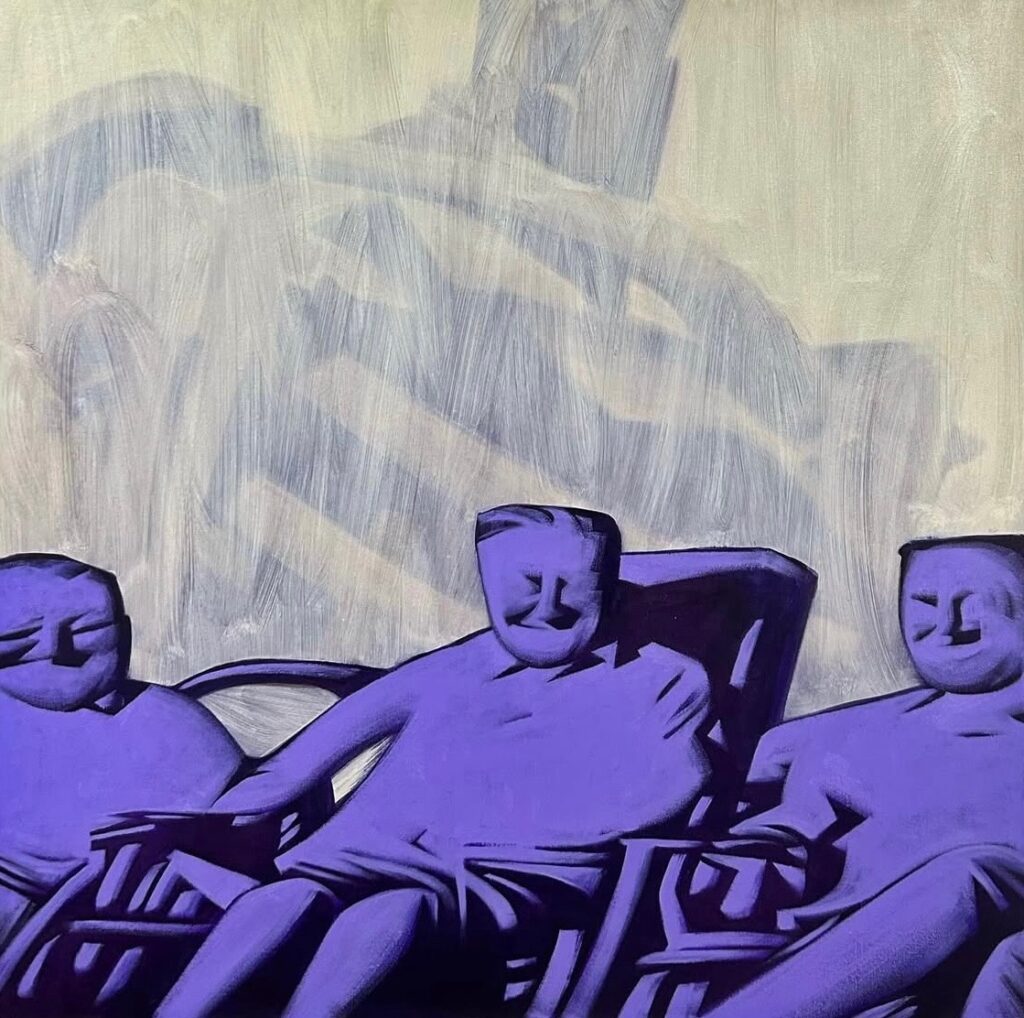
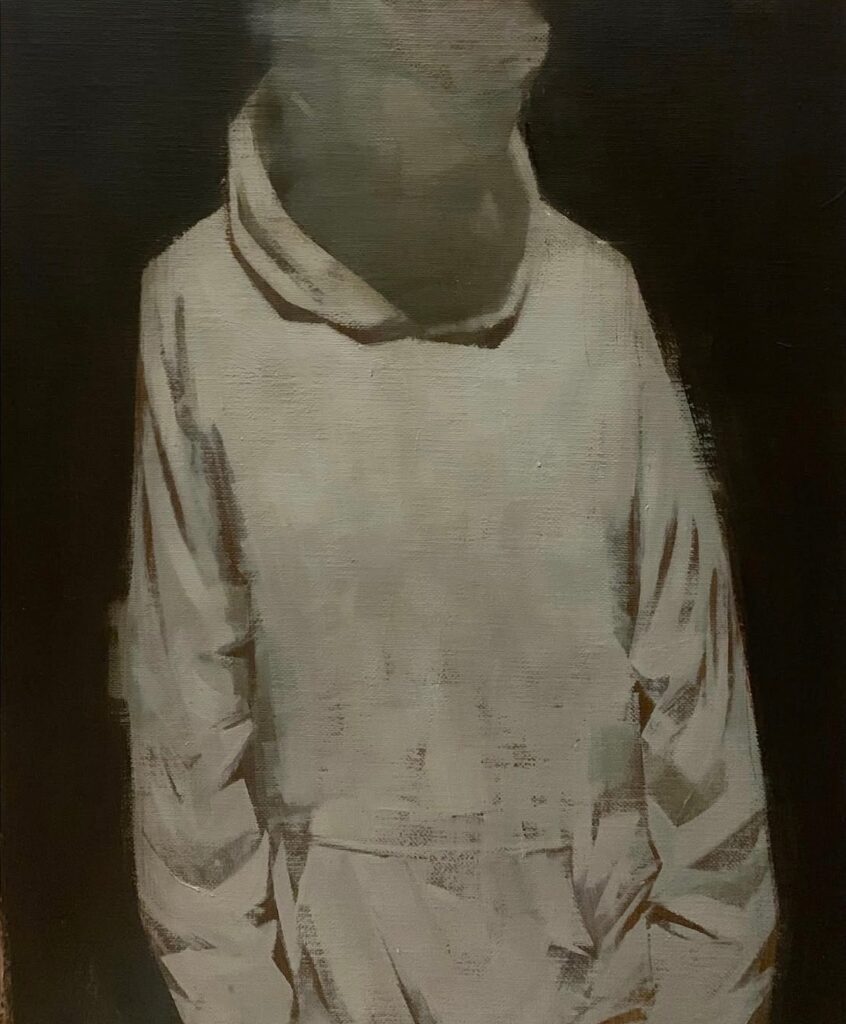
What does legitimacy mean to you now?
Alex: I am always seeking peer approval. Having my fellow artist friends get excited by what I’m doing. I don’t enter competitions or prizes. I did once enter the Royal Society of Portrait Painters show and had a painting selected. It was all very exciting, but after I went to the opening I realised that it was not for me. It’s all networking and ass kissing. I haven’t entered anything since. Much happier to do my own thing on my own terms.
How do you work through doubt when there’s no institution or degree behind you telling you you’re “doing it right”?
Alex: With difficulty HaHa! I sometimes hit a home run and I’m happy with what I’ve made, but those moments are few and far between. You just need to keep pushing through. I’ve never been someone who finds the process of making art this freeing and enjoyable experience. It just isn’t. You’re constantly putting yourself out there to be judged. By yourself and others, and that can be hard. Forcing myself to make art has been a valuable lesson in self-esteem.
With that in mind, can you walk me through your creative process from beginning to end result?
Alex: I’m always on the lookout for interesting visuals. weird films, ephemera, postcards, old books, obscure documentaries, charity shop finds. Always looking and consuming. That hunger for imagery is what sparks ideas, usually by combining them. I have hundreds of images saved in folders and physical images ready to go. Nothing worse than getting the itch to paint and you don’t have any reference. It’s then one of two things. Either I thumbnail and sketch out 5–10 versions of the image onto A4 office paper, then project the one that works best to canvas. Or I go straight in with paint and feel it out. It depends on the image. Sometimes I feel I need to work out some snags before I make the plunge. Other times I’m ready to go.
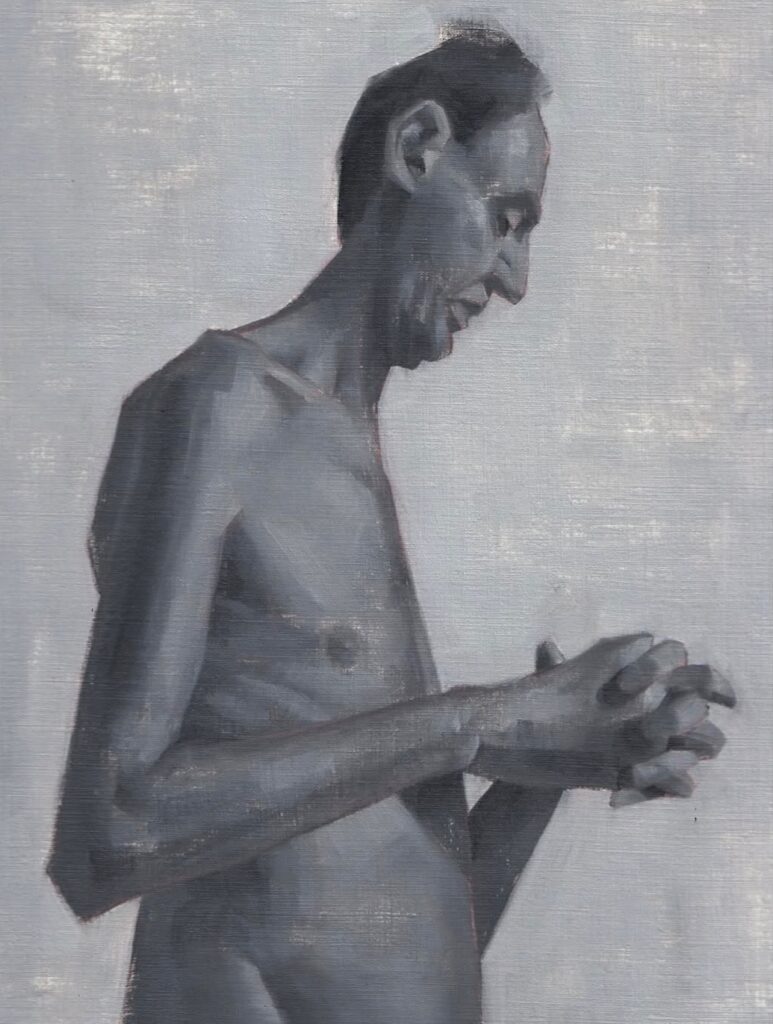
Can you also tell me about your use of symbolism?
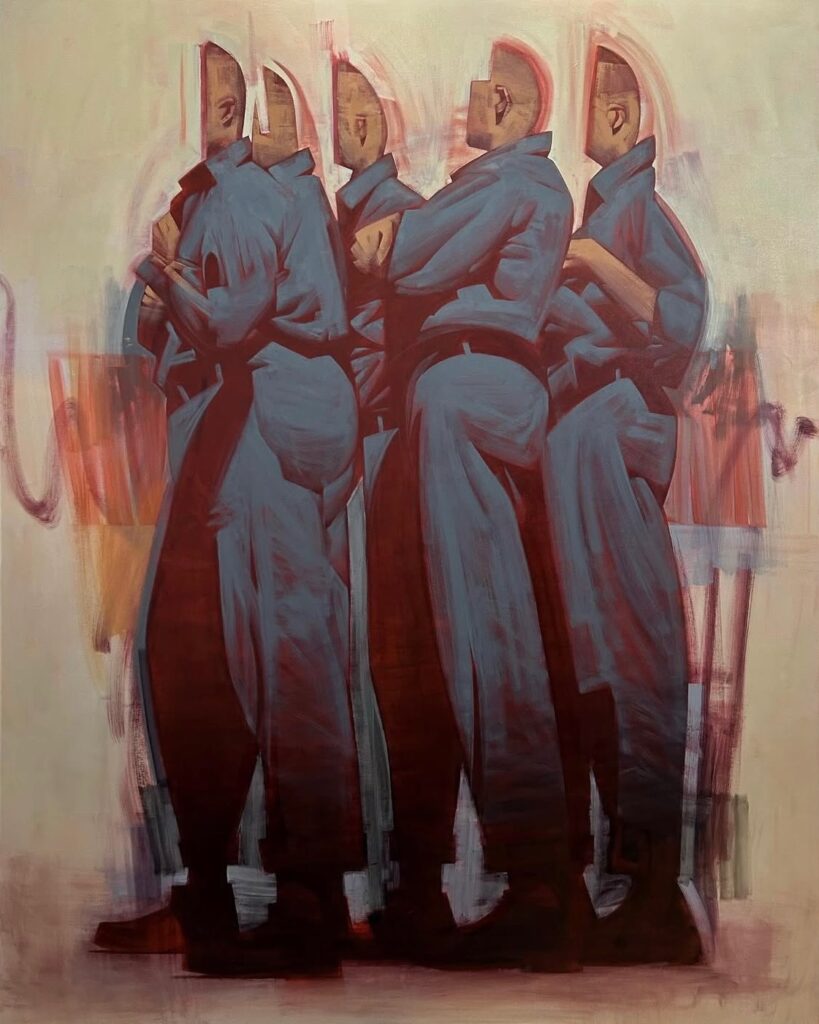
Alex: Symbols and shapes are magical. The idea of an eye, the almond shape with a circle in it, is more powerful than a fully rendered one. There’s something about the filling in the gaps your mind does from a symbol that it doesn’t do with realism. It’s the same as the moments between panels in a comic book, where your brain gets to work. I want to get more 2D and simpler with my work. I love the illusion of 3D created by very little, but symbols and shape are my true loves.
How do you approach color?
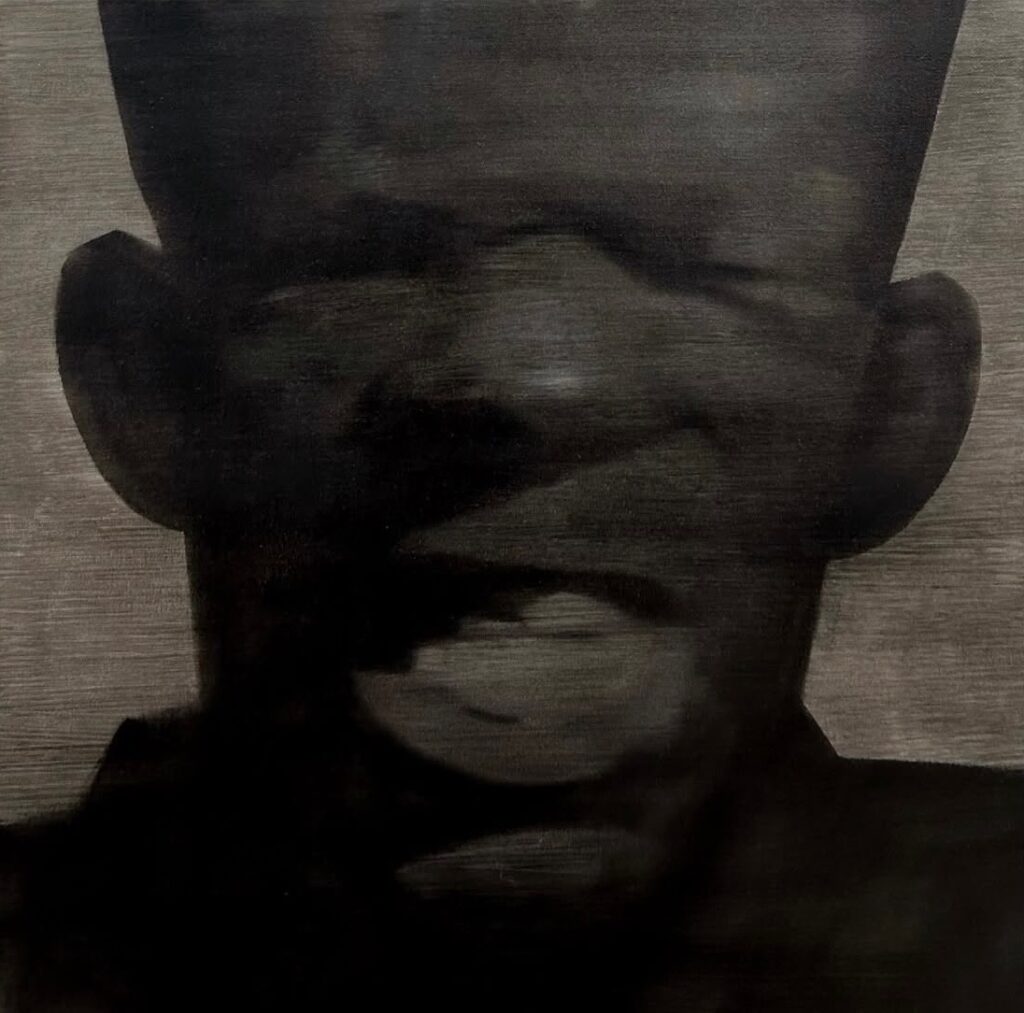
I’m drawn to monochrome and B&W images so much more than I am to lots of colour. In graffiti, you can often be bamboozled by color and tricked into thinking a piece is really good. But if you take away the color and look just at the shapes, it can often be trash. In a similar way, it’s like the symbols mentioned before. I want to get to the core of the thing. The meaning of it, not the surface, and so colour is often not my priority.
So with what we just talked about, what are you hoping to convey?
Alex: Hopefully a mood. A sense of recognition, but one that is incomplete. I’m a huge David Lynch fan and I love how he created these scenes that are recognisable, uneasy, and pleasant all at the same time. I sometimes think I’m striving towards that.
For younger or emerging artists watching your journey, what advice would you give about staying true to a voice or body of work while still evolving?
Alex: First you’ve got to try everything. People often ask me about how they can get their style. But that’s quite easy. You keep trying things and ticking off the ones you don’t like. Once you have narrowed it down to what you do like, you have a style. A style is as much about what you don’t do as what you do.
Ok Alex, now to something totally different. In a parallel universe, who would you be? And what would you be doing?
Alex: Hopefully making something with my hands. If I had the time and funds, I think I could pack this art thing in and be a carpenter. That would be amazing.
Outside of art, what’s something you’re obsessed with right now – maybe a hobby, a show, or even a food – that keeps you grounded or inspired?
Alex: The anime Dorohedoro blew my mind. The art in that program is insane. The band Chat Pile are massively inspiring. They’re a sludge noise band from Oklahoma, and I thought getting this excited about music is something you do in your younger years, and not as a 40-year-old man. And I’ve been eating an unhealthy quantity of honey-roasted cashews.
Can you tell me a story about a time when a connection with someone had a big impact on you?
Alex: My wife’s dad. He passed away unfortunately, but he was an amazing person. He bought me the iPad that changed my life around, but he was also the most encouraging and supportive person. I’d spent my whole life not really getting that support. He wasn’t an artist, he was a doctor. But very much a patron of the arts. The first time he saw my drawings, he was walking around the house showing everyone and praising me. He then immediately gave me my first paid art job to illustrate a medical paper he was writing. And continued to employ and encourage me to pursue art seriously. I had been beaten down by life by this point and was discouraged and depressed, and I don’t know if I would have gotten very far with art had it not been for his support.
What qualities do you find most important in the people you choose to spend time with?
Alex: I’m definitely drawn to weirdos HaHa! Not by choice, but I do seem to like the company of interesting characters. People with stories that are outside the norm.
Anybody you look up to?
Alex: Oh, of course! So many. My Cane Yo family, Milo Hartnoll, Denis Dalesio and 30 others, Nicolas Uribe, Ashley Wood, Phil Hale, Ruprecht Von Kaufman, Toshihiro Kawamoto, JC Leyendecker, Käthe Kollwitz, Charles Dana Gibson, Simon Bisley, Catherine Kehoe, Benjamin Bjorklund, Jim Jarmusch, Ingmar Bergman, Genndy Tartakovsky, Thomas Fluharty, Mike Mignola, Katsuhiro Otomo, Al Columbia, Liam Sparkes, Björk, Richard D James, Chris Cunningham, Margherita Premuroso, Limmy, Adam Curtis, GG Allin, Norman Blamey, Mœbius, Jennifer Pochinski. Off the top of my head. I know I’ll kick myself later for all the people I should have said.
What motivates you?
To be honest, I can’t stand feeling like I am not moving forwards. I need to be doing something. I’m motivated by not wanting to feel useless.
How would you describe a perfect day?
Alex: Walk with my dogs and wife, snoop around an antique shop/book shop, Korean fried chicken, and then sitting on the sofa watching anime with my wife while I draw and she does whatever craft project she has going on. Bliss.
Alright Alex, I always ask these two questions at the end of an interview. The first is: What’s your favourite movie(s) and why?
Alex: Akira. It’s not like I watch it often, although I did see the 4K restoration in the cinema a few months ago. But nothing quite has made as much of an impact on me than that film. It blew my tiny mind when I first saw it. Other worthy mentions: The Devil Rides Out, Night of the Hunter, Down by Law, Once Upon a Time in the West, The Man with Two Brains, Persona, and Gummo.
The second is: What song(s) are you currently listening to the most right now?
Alex: No one song, but the two bands with the most plays currently are Chat Pile and Crippling Alcoholism. In the studio, I mainly listen to chill instrumental stuff