Share this
Anna Choutova doesn’t talk about addiction in the language of spectacle. In her world, it feels more like a quiet hum: something that moves through habit, repetition, camouflage, and the small rituals that make life feel manageable. That sensibility runs through Kitchen Party, her new show at Milosc in London, where the kitchen becomes more than a domestic setting. It is a space of aftermath, intimacy, boredom, concealment, and conversation, where bad behaviour leaves residue and private moods take visible form. Drawing on everything from Soviet ideas of the kitchen as an unmonitored space of exchange to the emotional debris of late-night gatherings, Choutova’s work finds tension between comfort and danger, humour and melancholy, solitude and exposure.
It also speaks to a contradiction at the heart of her practice: making deeply personal work while resisting straightforward self-disclosure. Long associated with Bad Art, the platform she founded to champion accessibility, relatability, and anti-pretension in contemporary art, Choutova is more interested in the familiar than the grandiose, in stagnation rather than spectacle, and in the objects, habits, and domestic fragments that quietly take over a life. I spoke to her about Kitchen Party, the aesthetics of quiet addiction, the politics of domestic space, and what remains once the party is over.
Hi Anna! It’s a pleasure to sit down with you! First question that I always ask. How does a regular day look like for you in London or Cyprus, or wherever you are at the moment :D?
Anna: I love these types of questions. My days remain very similar no matter where I’m at. I usually wake up, get out the house for a walk and get a coffee, maybe walk to the nearest park. I come back and hang out with Al a little bit before I start painting.
I often paint to music, most of the time hip hop or reggae, but if it’s close to the weekend I’ll listen to experimental house or techno or put on Rinse FM or Kool FM. I usually paint until about 4 or 5pm, then I go have a drink on Lark Lane or at some sports bar.
Come home, have dinner and watch (at the moment) Walking Dead or reality TV. Weekends are a bit different, usually more football centric. I also try and get a drive in every day because it relaxes me being behind the wheel. A big part of my day is communication though — that probably takes up most of my mental energy. I keep in regular contact with my family, close friends and artists. My circle means a lot to me and because I’m a bit of a hermit most of my interactions are over the phone.
I’m curious, growing up, what was life like there? And what kind of kid were you? What did you enjoy doing?
Anna: I grew up in Lidingo a suburb in Stockholm. It was quiet but very idyllic. Spent my time outdoors, making up mad fantastical narratives to play out in the woods alone or foraging.
I was pretty outgoing to a certain age but then became shy! I was also super into Pokémon cards and a total gamer kid. As I got a bit older I loved the Sims and those tycoon games, I idealised my older sister who was (is) a generation older and was into Nirvana and had a Sid and Nancy DVD. I liked drawing and fantasising. I also loved eating cereal.
Do you remember approximately at what age your creative side started to show? And when did you start taking being an artist seriously?
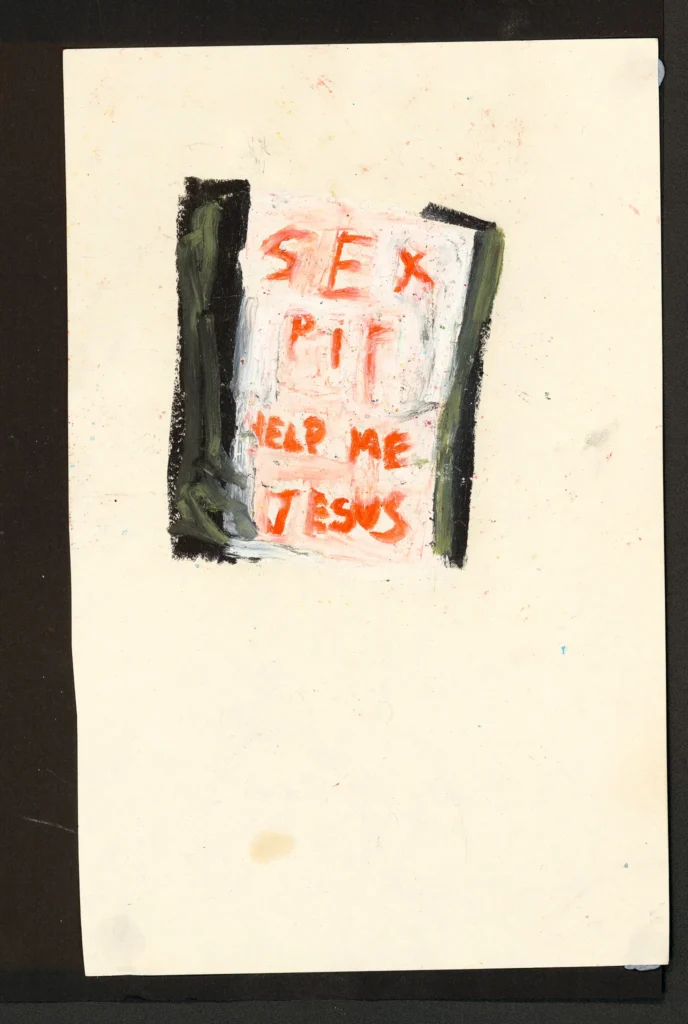
Anna: It’s tough because I think I’ve always had the traits that pushed me into creativity. Before drawing or any creative expression I remember my OCD coming out as a child, rearranging tables and such.. a lot of my art is kind of a tool to manage these behaviours and transpose them onto something else. So… since forever.
I started painting properly when I was around six or seven. I remember going to art classes and discovering metallic paints for the first time—I was completely obsessed. I’d walk into the classroom thinking, “Where’s the gold paint at?”
I always liked making things look a lot more spectacular than they are. You know that expression, “all that glitters ain’t gold?” Says who?
Ok let’s talk about your upcoming show, “Kitchen Party”, at milosc gallery, in London. First. What’s the story behind that title?
Anna: The story is that all parties tend to end up in the Kitchen. It became such a staple phrase between me and my friends. Probably because a lot of us are victims of the early noughties starvation trend that saw 11 year olds on Atkins, so perhaps free eating is still a bit of a transgression for us. I think this is at its core, but also practically – its where the bottles are and you can turn the ventilators on. It’s at the heart of the house so usually tucked away where you feel some comfort and privacy.
It also gestures at the fact that the kitchen is a loaded space, it’s where the food is made, it’s where sharp objects are stored, it’s where most conversations are had, where most arguments are fought. Historically it’s a space for discussion, the Soviet communalka (apartment block, (harking back to my ancestry here)) was one of the few unmonitored spaces where experimental and boundary pushing conversations could be had. I like to think that ideas that changed the world could be conjured up at 2am in your mother’s kitchen.
And what was your inspiration behind this new body of work?
Anna: So, I joke that this show is almost like a premature retrospective of an artist who hasn’t hit the big time yet—a concept I first saw explored by artist Esben Holk.
I say this because, the new body of work spans for over a decade. The inspiration are the things around me. And it always has been. What a boring answer, but it’s the truth! Kitchen Party hones in on a chapter of my life that wasn’t exactly a happy one, this is where the shtick of the title kind of lies. The party I reference in the title wasn’t a party at all, it was the most isolated period of my life. All I really had around me was myself, and cigarettes.
So what brought you “out of retirement”, cause you’ve been focusing on Bad Art, for a while now right? Not really painting?
Anna: Gosh, it’s a good question. But essentially it comes down to the encouragement of others.
Aleks encouraged me to start painting again when we re-met this summer. Aleks found it mad that I hadn’t done a solo show during my years in the industry — and offered me one! I’ve never considered myself a solo artist, more so a cog in a complex, ever-morphing art machine. So much of what I do and what I’ve accomplished is due to the effect of other people — being inspired or encouraged by a teacher, a tutor, an artist, my parents, or a friend. I would pick up on their words of wisdom, which would give me momentum, a sort of push, kind of pinballing me all over the place, with the subsequent tracks leaving behind a painting or concept.
Does that make sense? Bad Art will always be my proudest accomplishment because it started with no bigger ambition than putting my friends’ work on a wall. It had a pure intent from day one. But Bad Art also became a kind of cloaking device. I could champion other artists while working quietly in the background.
Bad Art doesn’t require me to expose myself. I’m behind the curtain sending emails and tracking packages. With painting you have to show face (just about).
The honest answer though… what really brought me out of retirement is that I got fired from my job, and I handed over the directorship of Bad Art to Tom (via a giant cookie). I retired from everything else so I could un-retire from painting!
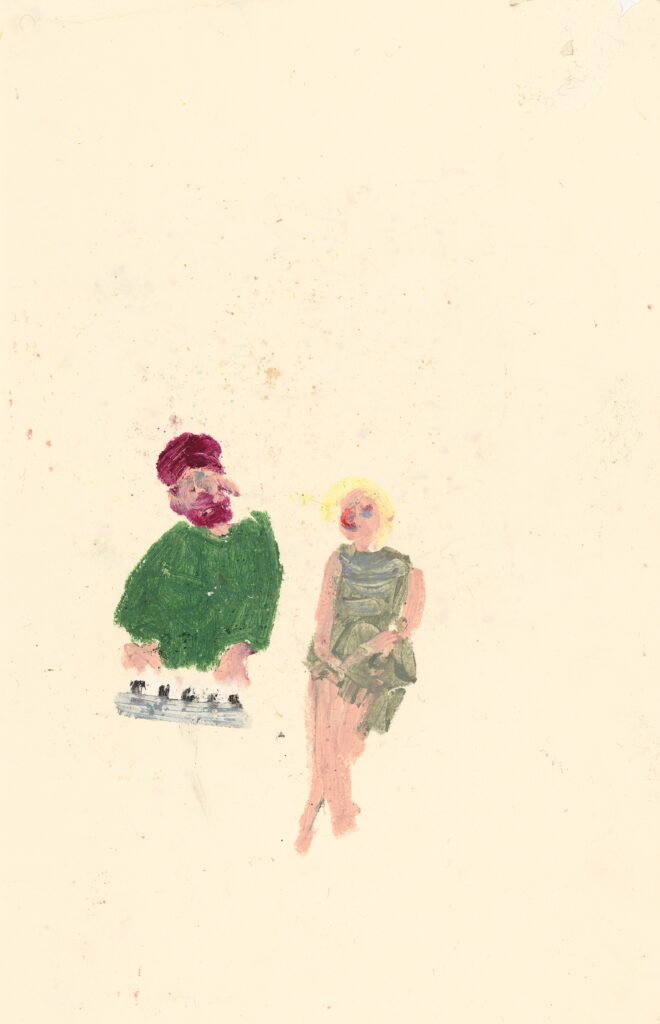
So what sparked that itch to star exhibiting and painting again?
Anna: I was asked to do a solo show! And I just thought, well I better get cracking! 😀 Happily this also coincided with the moment I found my studio in Cyprus.
Alek’s and me got talking about it back in September when I was showing some work with Milosc for the Cherry Bomb! show. I resonated with Aleksandra’s approach to curation and running a gallery and she understood the symbolism behind my work. There is great value put on ‘hosting’ with Milosc. Aleks and I both pride ourselves on being great hosts and speak about how it has become a lost art in our culture. We want to bring it back. I think when I hosted my artist dinner last summer Aleks saw what it meant to me.
(I feel like I need to shout-out to Harriet Richardson here as well, a real hostess with the mostess)
Also, I missed it. I needed to get out of London, I needed a studio again, I needed some peace. I also needed an escape from a bunch of shit I was going through – is another very honest and important factor of it. When you’re concentrating on how to paint scrumpled up tin foil it’s hard to think about anything else!
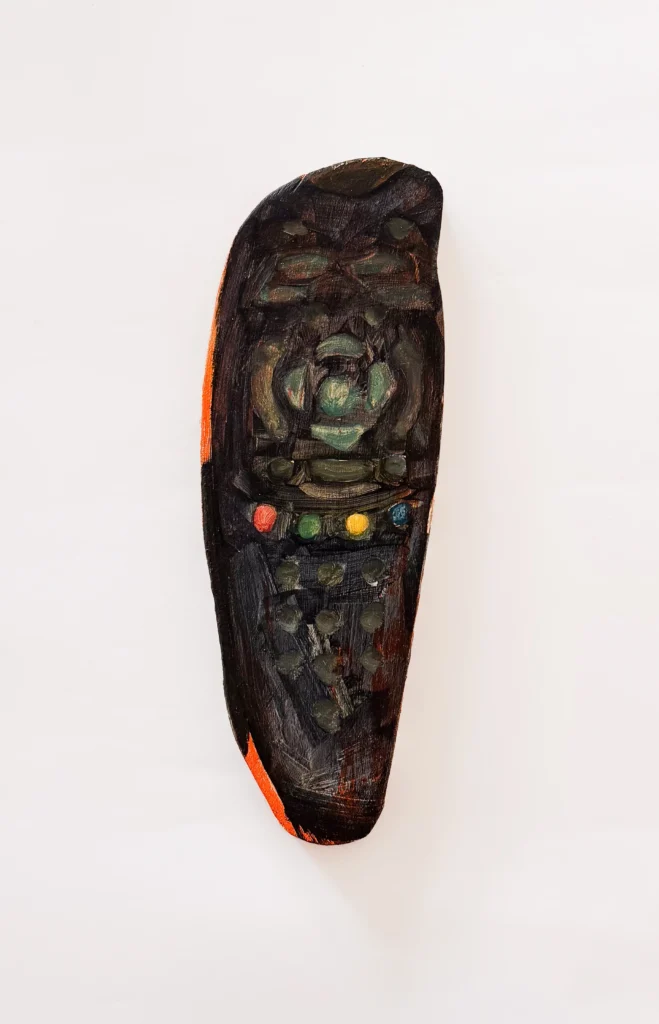
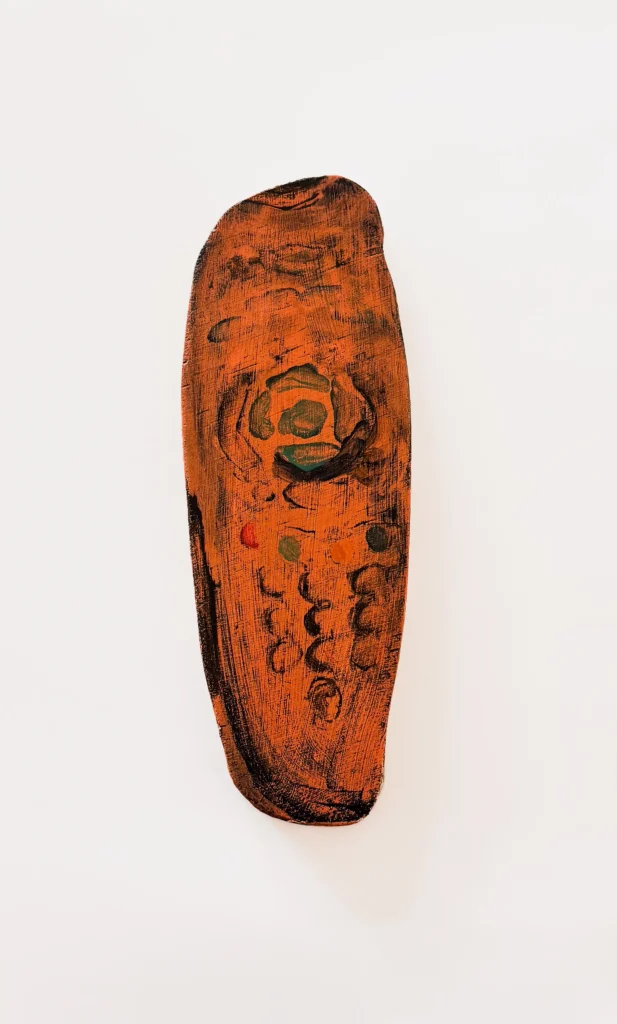
You describe the show as being “really about addiction,” but not in a sensational way, more like a lifelong hum. What does that quieter version of addiction look like day-to-day, and how do you translate it into images without turning it into a confession?
Anna: That’s a really good question!
Biting my cheeks.
Isolating.
Eating cereal.
Browsing supermarkets.
Wearing the same clothes.
For about two years I ate variations of the same two meals.
Driving also became addictive at one point. I would drive up and down the country to calm my nerves.
I think any rigid pattern of living that quietly overtakes your realistic and healthy needs sits somewhere near addiction. Sure, I have habits that fall more into the ‘unhealthier’ category but I’m not interested in detailing them. Not that there’s anything too sinister but I don’t want to start painting what I drink, it’s just not very interesting. Instead, I carefully pick the behaviours that at face value seem harmless, but can become all consuming.
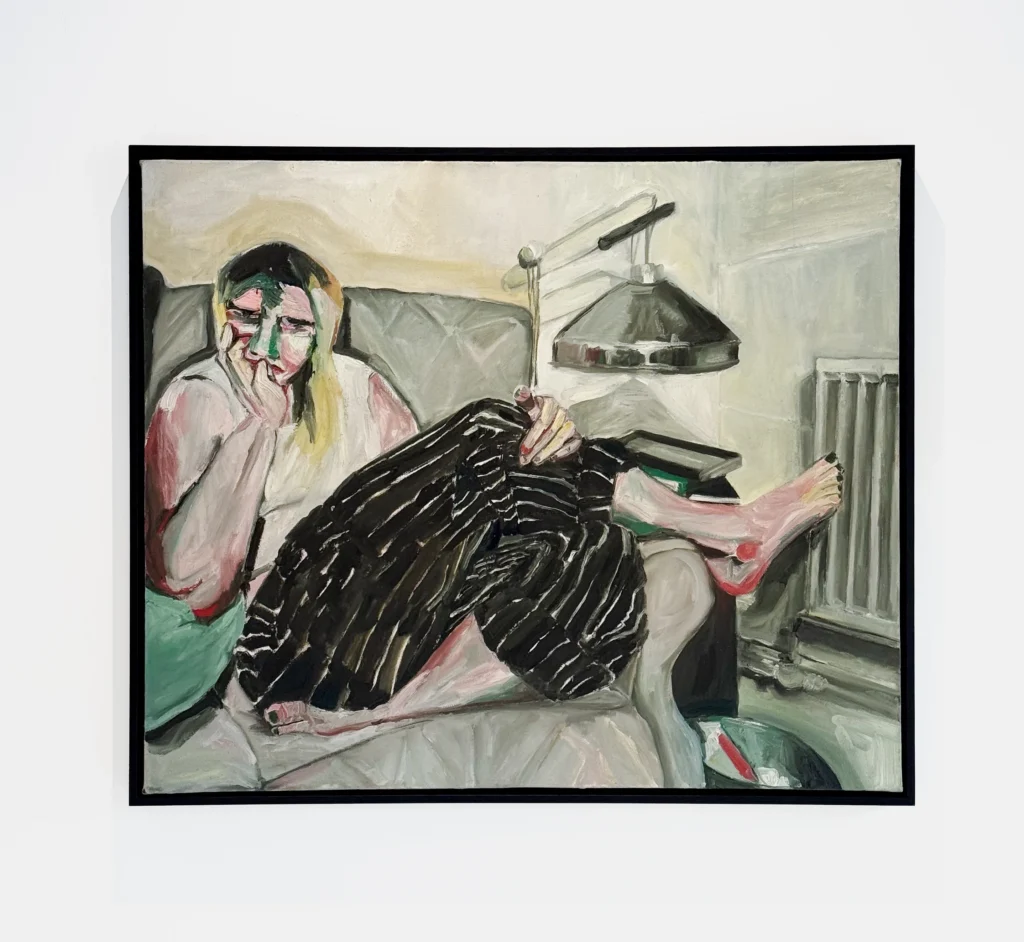
You mention being fascinated by where the impulse “relocates itself.” Can you map a few of those relocations, drink to something else, attention to something else, and how they show up formally (color, repetition, framing, scale)?
Anna: Sure! Like I said driving. References to driving shows up in a new series of work I’m making. I’m drawing speed signs, motorway moments and certain roads from memory – I’m actually getting a lot of inspiration from those playmats you used to have as a child of a birds eye view of streets weaving through a town.
I’m starting a painting of the moment I was caught speeding. The evidence photo is quiet beautiful – I’m just about to hit Manchester and the sunset is creating these fantastic shadows – it’s very Luc Tuymans. FYI it wasnt reckless driving, I just didn’t notice the variable speed limit.
Repetition is probably the main formal device I use to talk about addictive or rigid behaviours. When something becomes habit or routine any sensation behind it is lost, you crave it because it’s become integrated in your day to day, it becomes like breathing in air. I think that’s why I liked to dress up my compulsive behaviours as much as I can – it takes a long time for the appeal of a Piña Colada to wear off, I like to apply this logic to my paintings, paintings are such coveted items, what happens when you recreate the same one over and over again? It’s like counterfeiting your own work.
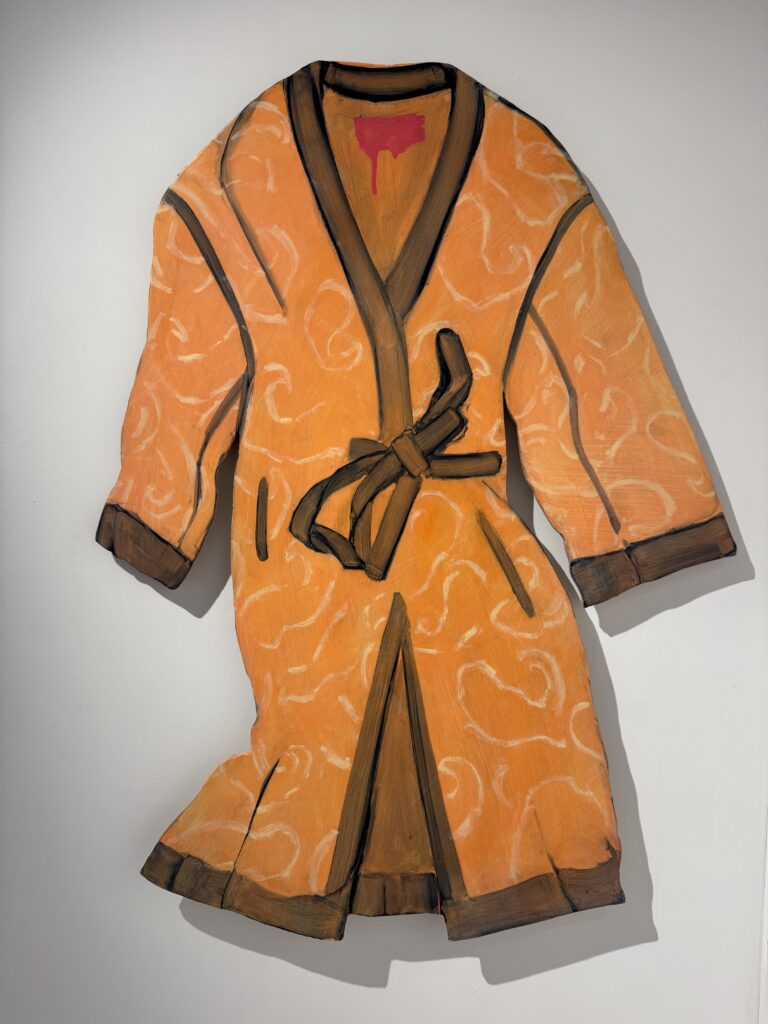
At one stage, I became obsessed with high-end items of clothing, particularly boots, not as a consumer but as a voyeur. I was fascinated with ‘statement’ pieces, things that were so exclusive and on trend, and how quickly that revolving door could throw them right back onto the curb.
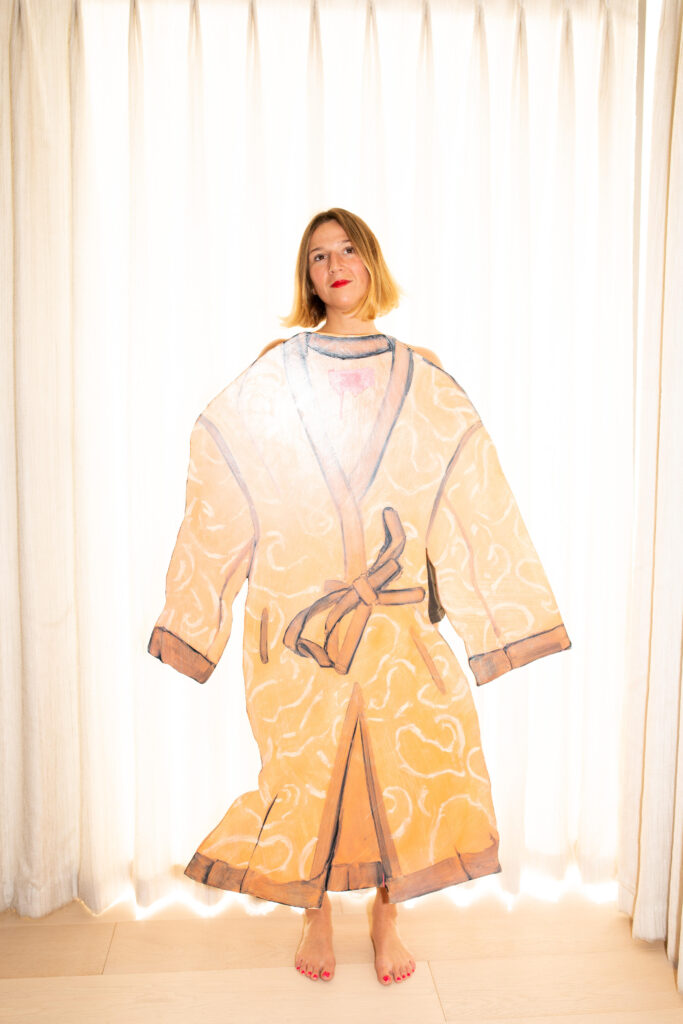
But anyways, I would paint these items, I would cut out the silhouettes from wood, making almost life-sized versions of designer boots and coats. (almost resembling those paper doll outfits) and by doing so, I was admiring them and de-valuing them at the same time.
The piña colada rule is such a specific act of aestheticizing risk “technicolor” as camouflage. What other “cute” or comic disguises have you caught yourself using, and do you think art can be one of those disguises too?
Anna: Another great question, I once saw someone using a Ferrero Rocher for lurid purposes.
When does humor function as harm reduction, and when does it become another way of avoiding the truth? Where’s that line for you?
Anna: These are great questions! It can go very far, especially if you’re one of those high functioning self-destructive people. Joking about your spiral is something that can get a lot of laughs but it’s risky to glamourise it too much. The line is where you start romanticising damaging behaviours. Once I see myself doing that it’s time to stop.
You say the real stuff is in the towel-on-the-bed moment—stillness, lethargy, stagnation. What’s your visual language for stagnation without romanticising it?
Anna: For me stagnation is any image of me lying in bed. When that becomes the most prominent activity in your life it means something is wrong. It’s not a dramatic image, but it represents depression or a sickness for me — no energy, just stillness. Ironically those moments became useful source material. Sometimes when I catch myself lying there too long I think, oh shit, this is that moment I always draw. Time to get up. Those drawings seemed to really resonate with people. As well as becoming a bit of an antidote for me.
I sometimes joke that making work about nothing has been my most successful material.
You frame making work as “clocking down the hours,” even like scratches on a prison wall, both chore and mental saviour. Do you want viewers to feel that labour/time-pressure in the work, or is it something you try to hide?
Anna: No I think this is something I want to be evident. The first visual artist who really inspired me was Tom Friedman who made a whole practice around (what I can only describe) as an OCD approach to making. I loved seeing the time, control and ritual rigidness it took to create an artwork. For example he would draw until the ink ran out of his pen (the evidence of time was the artwork), he would create great, omnipresent sculptures using chewed gum, his process was unimaginably meticulous. His work and ‘style’ bypasses any trend or categorization because it is fueled by a totally different kind of energy.
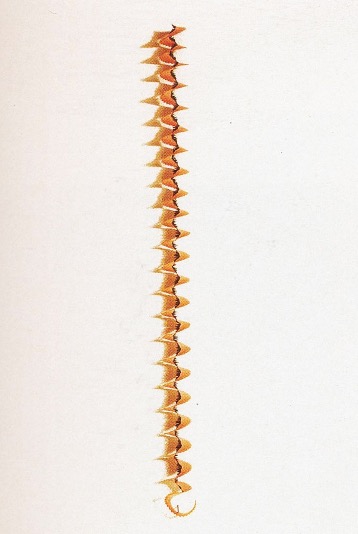
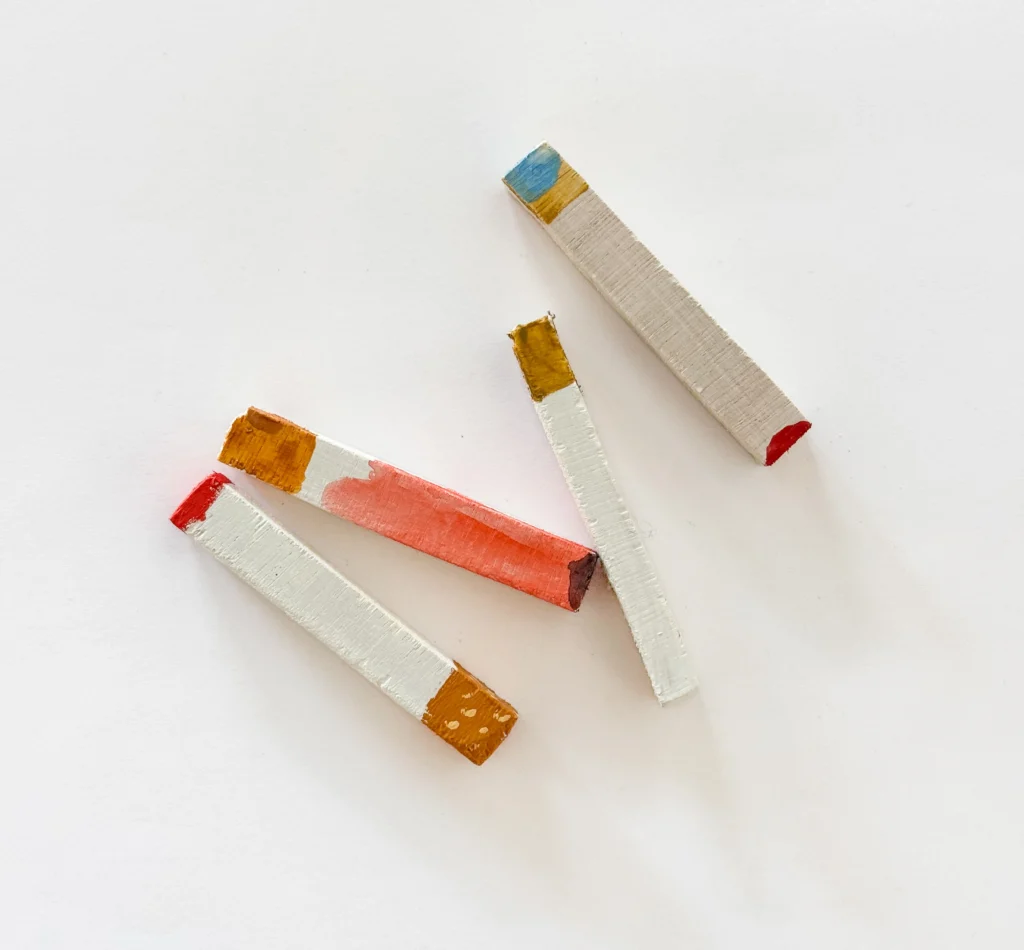
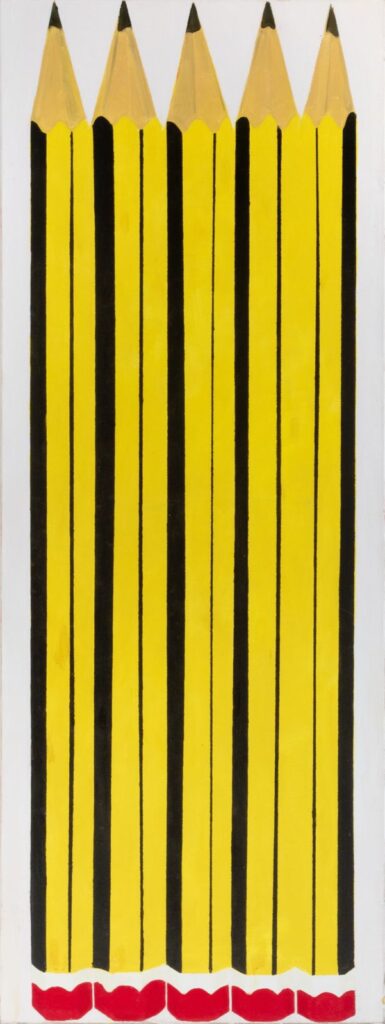
Untitled, Tom Freidman (An entirely of a pencil shaved, kept in tact and displayed as a sculpture in its own right) I also think there’s something about impressing people with labour — the idea that the more time visibly spent on a work, the more impressive it feels. I probably carry quite a sterile admiration for that kind of art-making. But I also love the fuck you of making some quickly, with little to no formal skill being used in the execution and it making it onto the gallery walls (cough cough Bad Art)
You’re not interested in “fetishizing” trauma. What do you consider ethical context vs. trauma-as-aesthetic, especially in an art world that often rewards the “headline-worthy”?
Anna: I just think there should always be at least one degree of separation between the trauma and the work. Give the audience the respect of unearthing it on their own accord, if they even want to.
You talk about making work about yourself while not wanting to be seen, and rarely showing your face unless you’re with someone else. What does “not being seen” mean here: privacy, shame, control, or something else?
Anna: It’s a bit of control and shame. It’s also a bit too obvious. I am trying to build a universe of the things I have encountered, living or inanimate that have shaped who I am. If I just plop my face into the middle of it all, it threatens to collapse the whole thing.
I rather people see everything that makes me – me rather than just me me. You know what I mean?
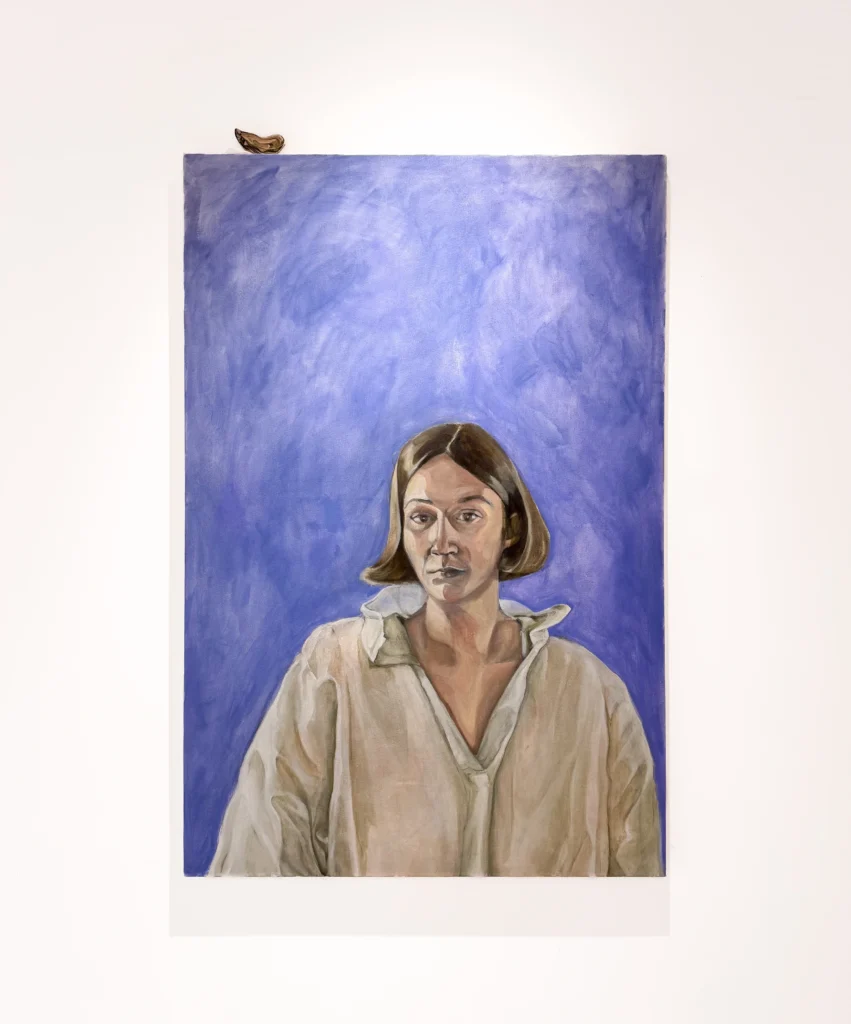
A good example is the big blue self-portrait included in the show. I couldn’t stomach it. It felt empty. It got such a good response but I couldn’t figure out what made it interesting. Yeah it’s me, and then what? What happens next? Where’s the humour, the narrative. I needed to add a little oyster shell to the top of it, to at least give it a further life and a bit of je ne sais quoi.
When you do include yourself with someone else, what changes psychologically? Is it protection, witness, alibi, collaboration, what’s the role of the “other” in those images?
Anna: The role is that I have someone there with me. I have someone to riff with, to share the responsibility with, share the exposure, the blame. I liken it to going out alone, I love it! But if you’re alone you need to be a bit undercover, or at least have some props – this is something I also reference in my portraits. How we move through life as individuals, what props we pick up along the way.
Do you experience exhibiting as a kind of exposure hangover? What’s the emotional rhythm: making alone → showing publicly → returning to hermit life?
Anna: Ruben I love your questions! Exposure is really tough to endure and recover from. It’s not what I do best, I love putting out a lot of waves and noise but then ducking for under when the retaliation comes. The rhythm is…
burn out – cry – isolate – paint – sheepishly reconnect with my community – find my footing – restore confidence – finish my paintings – cook up a bad art concept – execute 3 massive projects in the same space of time – exposure – over exposure – Cyprus – sunburn
“Bad Art Presents” began as a rejection of highbrow/trendy content. What does “bad” mean in your vocabulary: sentimental, domestic, unpolished, too earnest, too easy?
Anna: Bad is something totally, unflinchingly universal. Something that is impossible to add any pretention or exclusivity too.
For example, Sainsbury’s is Bad
The northern line is Bad
Taylor Swift is Bad
And in my experience, it is this that is the biggest problem of the artworld, exclusivity! What I try and do with Bad Art and with my own work is to celebrate simplicity and accessibility – yet still strive to make work relevant and vulgar.
You mention getting slated for painting portraits of your newborn nephew, and thinking, “why would I want to paint anything else?” How did that experience shape your relationship to approval, and to your own instincts?
Anna: It was a sad and confusing experience. Because the instinct to paint my nephew was so genuine it made me question myself as an artist, my worth and my intellect. But I couldn’t think of anything more relevant in my life that I’d want to paint, so I created a space for myself where I wouldn’t feel judged for it – Bad Art.
I remember my friend Olivia introducing me to the work of Apolonia Sokol, an artist based in Denmark I believe – anyways she just described that the work she made was about her friends, and I thought that was so punk rock and liberating.
Accessibility and relatability can be treated like guilty pleasures in contemporary art. Do you feel you’re smuggling those values into the gallery, or openly declaring them?
Anna: Exactly, going back to the earlier question these are the goods that I’m, trying to smuggle across the gallery borders. And in terms of how covert I’m being… well it’s a bit of both. There’s a bit of a ‘nothing to declare; approach because the concepts themselves are very simple and straightforward: a touchable exhibition, a destroyable exhibition, an inflatable exhibition.
From afar it might look cute. But the truth is – and the beauty is, we are very serious about our Bad Art. Each show has a lot of depth, we approach each concept with the same amount of theory and research as you would a show with a far more complex execution.
I’ll compare it to Talking Heads, or even Björk’s first record. Both are musicians who are highly revered in the music world, and referencing them might read as slightly artsy taste. But the beauty of their work is actually the incredible simplicity of it.
I remember being blown away when I first heard Talking Heads’ Air — a song about breathing. Why not? Or Björk’s very straightforward descriptions of falling in love.
Something can be artsy and accessible at the same time.
Why is the kitchen the “most accessible interior space” for you, what does it allow that a bedroom, studio, or living room doesn’t?
Anna: You can always find something to do in the Kitchen. It’s an active & activated space. For people who like doing one thing while doing another, it’s perfect. Like talking on the phone whilst shaving your legs. While in the kitchen, there is always something there to move you through time, you could pick something up, pour a drink, pour THEM a drink. You kind of have these house hold aids to see you through the evening. The bedroom or living area are still spaces, interactions are far more structured – and harder to get out of. Personally, I’m only ever in those spaces for sleep. If I’m being honest I don’t even use the living room much unless I’m watching reality TV. Which is essentially a welcome lobotomy.
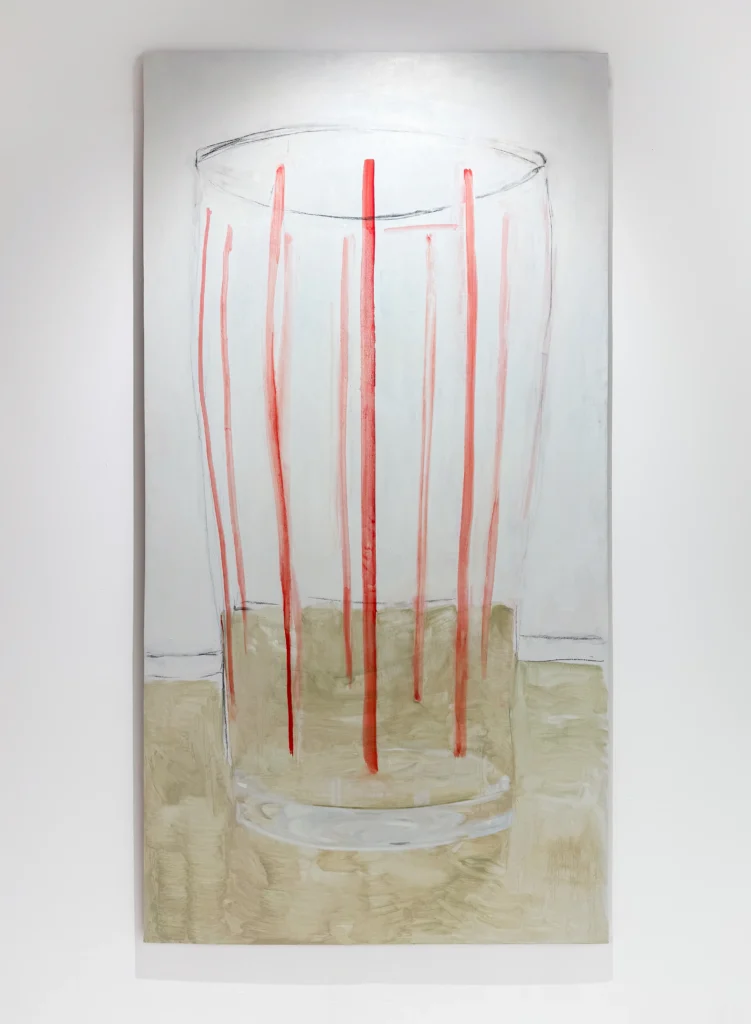
Kitchen Party is also about after-hours gatherings and the question “Where do those weird moments get stored?” If the morning cleanup erases the evidence, what does the artwork preserve, mood, dialogue, intimacy, regret?
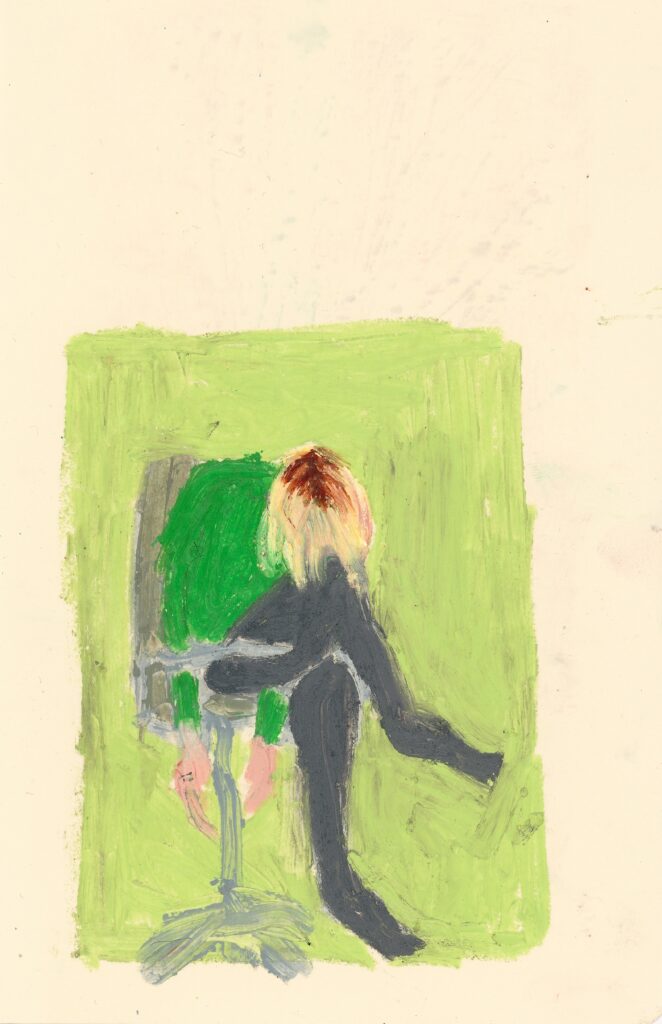
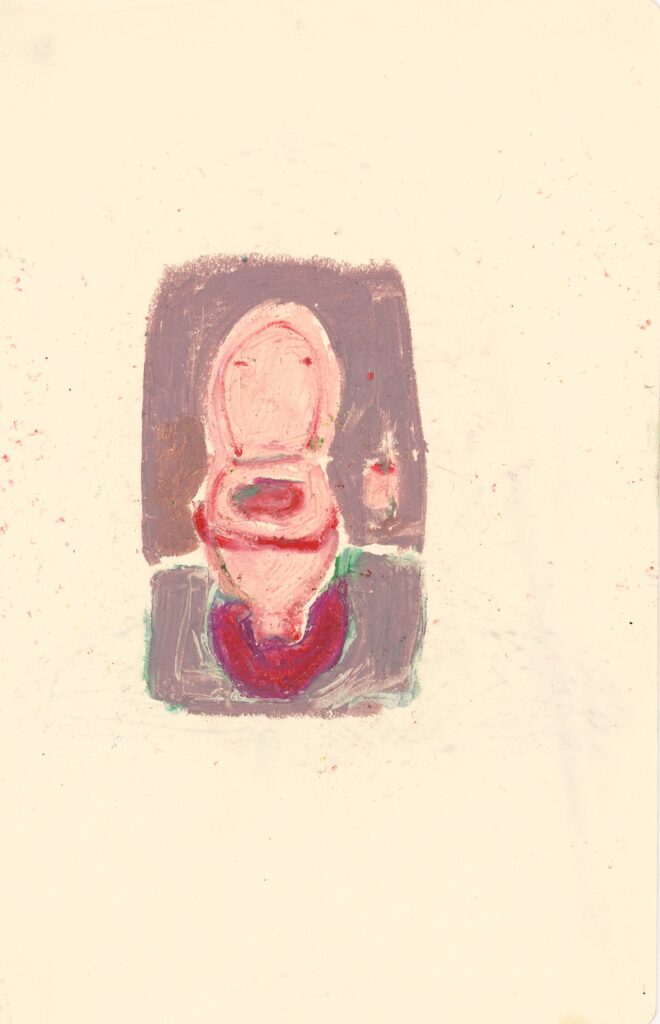
Anna: The artwork preserves the mess. It preserves the bad behaviour, the transgressions, the hilarity, the ashtrays the late night snacks. Stuff that you don’t want to see ever again I make permanent in my sketchbook. (The one that always rattles me the most is seeing the most recent Spotify selection the next morning. It always just degrades to those usual suspects)
You reference social space as art (Tom Marioni) and Warhol’s Factory. What do you take from them, and what do you reject? Is your “kitchen” a counter-myth to the Factory?
Anna: What I reject is any cool factor. I also reject anyone being a superstar or someone having more merit than anyone else. The space I want to create is egalitarian, god damn it! ;D That’s why I resonated with Tom’s piece “The act of drinking beer is the highest form of art”, because it was so grunge, spontaneous, and uncontrived in its genesis, and continues to function as a performance art piece for the purpose of gathering people around a fridge to drink beer and chat in a gallery setting.
For those who don’t know this piece, this iconic, long-running performance work began with Tom organising a gathering with friends and artists at the Oakland Museum of California in 1970. After the night, Tom decided to leave the empty bottles, glasses, and mess from the party. The residue remained in the gallery as a sort of evidence that something unreplicable and indescribable had happened there. And now all that was left was the debris to do the talking! (This is essentially the moment I try to capture in many of my works.)
You connect the kitchen to your Russian/Soviet ancestry, kitchens as semi-unmonitored zones for discourse. What does that history change about how you see domestic space now?
Anna: Interesting question, and one that’s difficult to answer broadly. Listen—whether you’re in the Soviet Union, 1950s America, or present-day England, the kitchen still ends up being the place where people gather to have their most private, hidden, intimate conversations. Can you imagine some of the conversations had between housewifes hidden under the sound of steam of a boiling kettle on the stove. In the Soviet context, the kitchen was one of the spaces where people could speak more freely. Friends would discuss experimental thought, philosophy or literature, probably a ton of garbage as well, but I like to imagine always with a bottle of vodka sitting right in the middle of the table, fuelling the evening. A sort of soviet spin the bottle.
Your figures and scenes feel stripped down, almost blunt, but emotionally charged. How do you decide what stays and what gets eliminated, what’s the rule for “familiar only”?
Anna: What I always try and do with my work is include just enough information to understand what or who something is. If I can make something look alive with a few crude brushstrokes – nothing else is required.
What gets eliminated or rather avoided entirely is any detail that feels romantic or contrived. I try and only include facts. For me the texture of oil paint, the natural painterly moments that develop through process (like drips or erasure) is where the romance lies.
Are these works made quickly, like entries in a diary, or slowly, like a constructed set? What does time do to the emotional temperature of a piece?
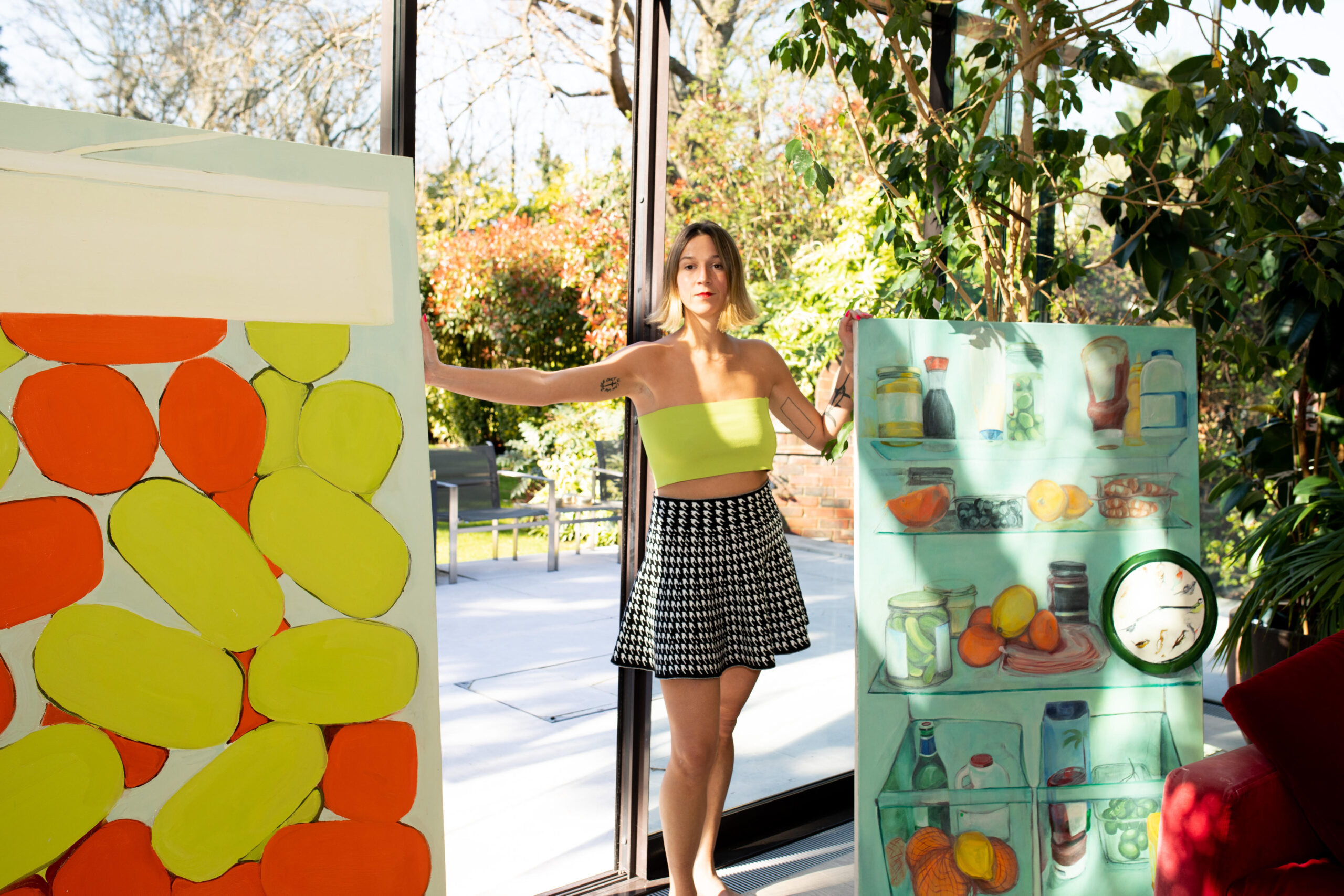
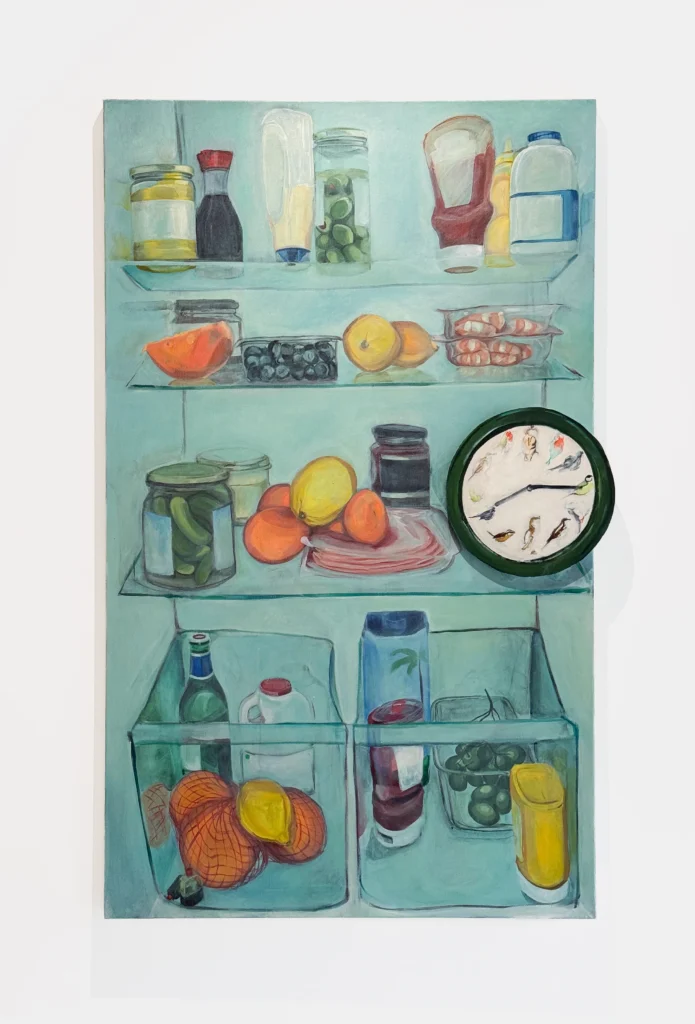
Anna: The drawings take seconds, some paintings have taken years. I’ve slowly learnt that painting has become like building, rather than colouring in. Often I will finish the initial painting, and years later bits, drawings, fragments, debris scattered across the studio, will peak through, and find their way onto the painting (like the blue portrait with the oyster sitting on the frame or the fridge with the clock superimposed onto it – these decisions were made long after the completion of the initial painting)
You say online life looks bright and busy, but you’re a “proud hermit” on a mountain island—spaghetti, driving around, occasional raves. What does solitude give you that the art world can’t, and what does it cost you?
Anna: The artworld wants a character, you have to give yourself in a lot of ways to survive it. You have to be on it – you have to recognise your network and community, you have to work to sustain it and you have to build on it. It’s a full time gig and there’s no real guidebook on it.
You need to keep yourself culturally refreshed. Go to shows, go see the music, do things – not to tick off any social boxes for your the sake of understanding what’s going on around you and where your practice sits within that – if anywhere!
There are those who don’t have to do all the fluff work and can put out wicked art and let that sail them through – It’s just not how it worked out for me, I had to hustle and I continue having to hustle.
Now when I’m in London, at some point this ‘hustle’ overtakes the creativity, that’s when it’s important for me to isolate. There comes a point where I stop painting full stop, my life revolves around social obligations, work obligations, teaching, shows, seminars, it’s all energy expenditure and masking. I could never find the peace of stillness in the city that it requires to paint. Retreating to my spaghetti mountain in Cyprus grants me that. Now once the solitude turns into isolation, it’s important to recognise that and act on it.
That “itch” to rave: do you recognize it as the same addictive/compulsive current, just in a different outfit? And how do you know when it’s nourishment vs. relapse?
Anna: The itch is a funny one because it’s not really an urge to do something reckless. It develops more as a result of keeping myself at bay, if that makes sense. That’s why I’m a bit wary of the mindset around dry/veganuary or strict cleanses and periods of restriction — they can actually be quite dangerous. My itch usually shows up after a few weeks or months of living in my spaghetti routine, and the rave becomes a kind of sensory release. Being surrounded by incredibly high energy, a sea of faces, strange conversations, and obviously tuning into the musical landscape almost acts as a mental reset. It’s something I only discovered a few years ago, but I’ve found it to be very beneficial.
Can you walk me through your creative process from beginning to end result?
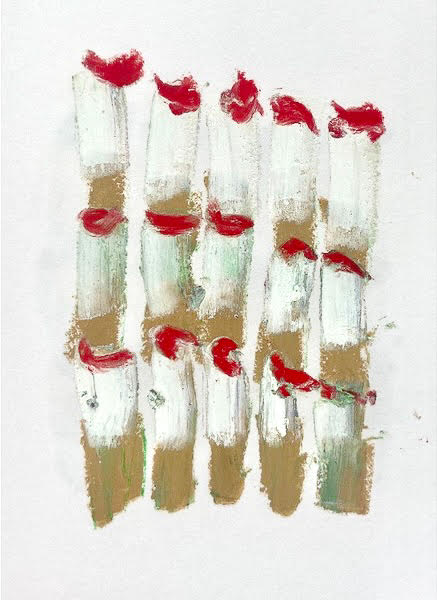
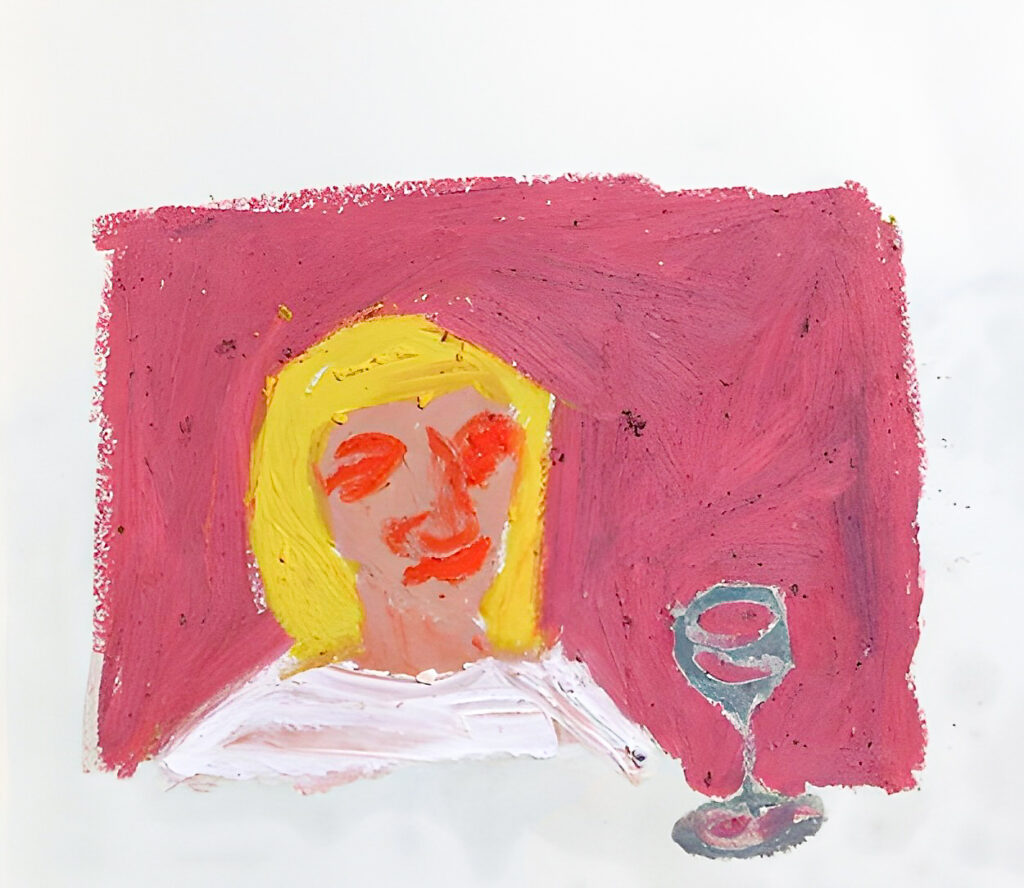
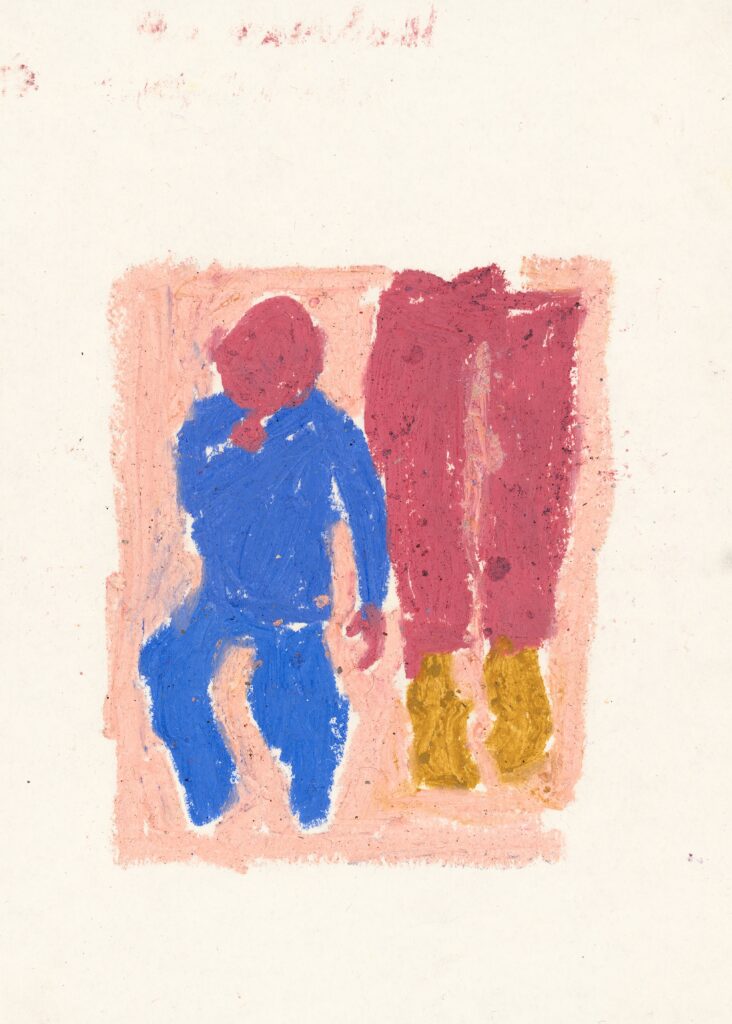
Anna: Great question! Usually I start by drawing in my sketchbook, I’ll do a few cigarettes drawings because it’s a great way to play with composition. It’s how I get my eye and my hand into the rhythm. Sometimes, I’ll look through the photos on my phone (I take about 100-200 a day) and see what’s piqued my interest. I then transfer some of the reoccurring imagery onto paper with oil pastel. I make note of what looks effective and desirable, and then I make it a lot bigger! Sometimes it’s a bit less robotic and I choose to paint someone or something that I’ve fallen in love with.
Can you also tell me about your use of symbolism?
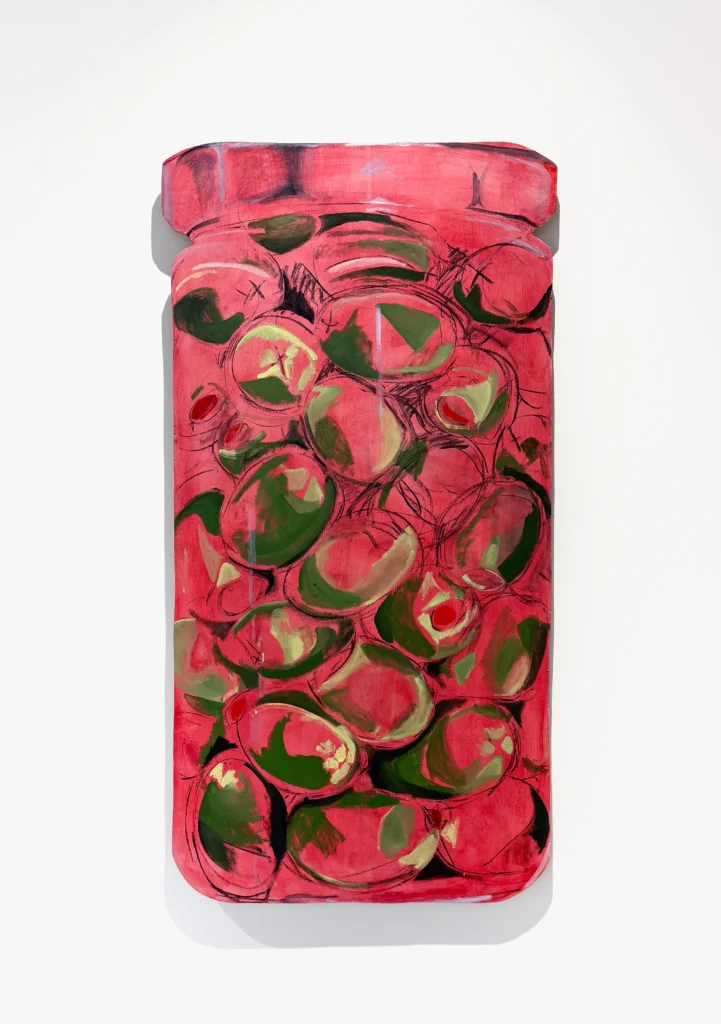
Anna: I describe it as a ‘browse through a forgotten section of a duty-free shop’. I definitely focus on consumer products, and usually ones that can be digested in some way or form, and ones that have an ever so slight whiff of nostalgia, but a forgivable nostalgia. Like a Ferrero Rocher, which had such a strong approach to marketing that keep a relevant product even though it has become a bit of a dinosaur upon the shelves.
I like when an object still carries the weight of its original glamour, even as it starts to get covered by the sands of time.
How do you approach color?
Anna: Start with my favourite colour pink and go from there! (Usually a dark olive green) 😉
So with what we just talked about, what are you hoping to convey?
Anna: I want it to feel like a slightly sad but memorable party—where you can sense both the pleasure and the pain that went into making the paintings. Ideally the party conveys both emptiness and excess. In a sort of Malevich meets McCarthy interior.
Ok Anna, now to something totally different. In a parallel universe who would you be? and what would you be doing?
Anna: I’d be a car mechanic or an archaeologist. Id be living in some of Mad Max landscape, excavating fantastic vases and fixing up my 4×4 to have a state of the art sound system and a really high-definition rear view parking camera.
Outside of art, what’s something you’re obsessed with right now—maybe a hobby, a show, or even a food—that keeps you grounded or inspired?
Anna: Spaghetti, crossword puzzles
Can you tell me a story about a time when a connection with someone had a big impact on you?
Anna: Loui Miles is my best friend and plutonic soulmate. I remember my first day in Brighton university, nervous as hell with no friends. I walked into the pub right by the school, dead early in the morning, and I’ll never forget the moment I saw Loui with his silver boots at the bar. Being as shy as I am, (and especially during my first day of schoo!l) never have I had the courage to walk upto somebody and been like hi! Do you want to be friends?
I felt kind of like a kid on holiday approaching another kid asking if they wanted to play.
Anyways, me and Loui to this day have remained the best of friends. He has inspired me to no ends and taught me its okay to have self-belief. We painted side by side in Brighton, we travelled together, lived together, went through the shit and the sunshine. Whenever I need a chat about the golden ratio of painting mixed in with a bit of lurid obscenities – Loui’s the one to call! I should also add he has a great painting show coming up in Bruton at No6 Gallery on the 7th of April!
What qualities do you find most important in the people you choose to spend time with?
Anna: People who like music, who have a dark ass sense of humour but are also optimistic at heart. People who can hold a drink or who don’t drink at all.
Anybody you look up to?
Anna: Bowie my Dad my Mom my Sister my Brother, my Baba, grandparents, Als Parents Vee & Steve
What motivates you?
Anna: My husband, my art,
How would you describe a perfect day?
Anna: Perfect day is getting a rare full night of sleep, waking up in Liverpool, going to Lark Lane, going round the pubs with Al, Steve and my Dad watching my team do well. Throw in a great DJ set by or a rowdy gig and I’m happy! Waking up the next day somehow in Cyprus and feeding the cats with my mom and getting a morning hug from Lucian.
Alright Anna, I always ask these two questions at the end of an interview. The first is. What’s your favorite movie(s) and why?
Anna: One Flew Over the Cuckoos Nest, a stone cold classic you can’t argue with Jack Nicholson. Umm… Romi and Michelle’s High School Reunion, so many fantastic one liners, a great demonstration of a different kind of a best-friendship. The soundtrack is cool, the clothes are fantastic and I love Lisa Kudrow Withnail and I… sort of for the exact same reasons as listed above (minus Lisa)
The second is. What song(s) are you currently listening to the most right now?
Anna: Gorillaz – MI A1
Dr Dre
Specials (Friday Morning Saturday Night)
Disco in Sochi – Differences
Roman Flugel
Kool & The Gang – Ladies Night
The Smiths