
Share this
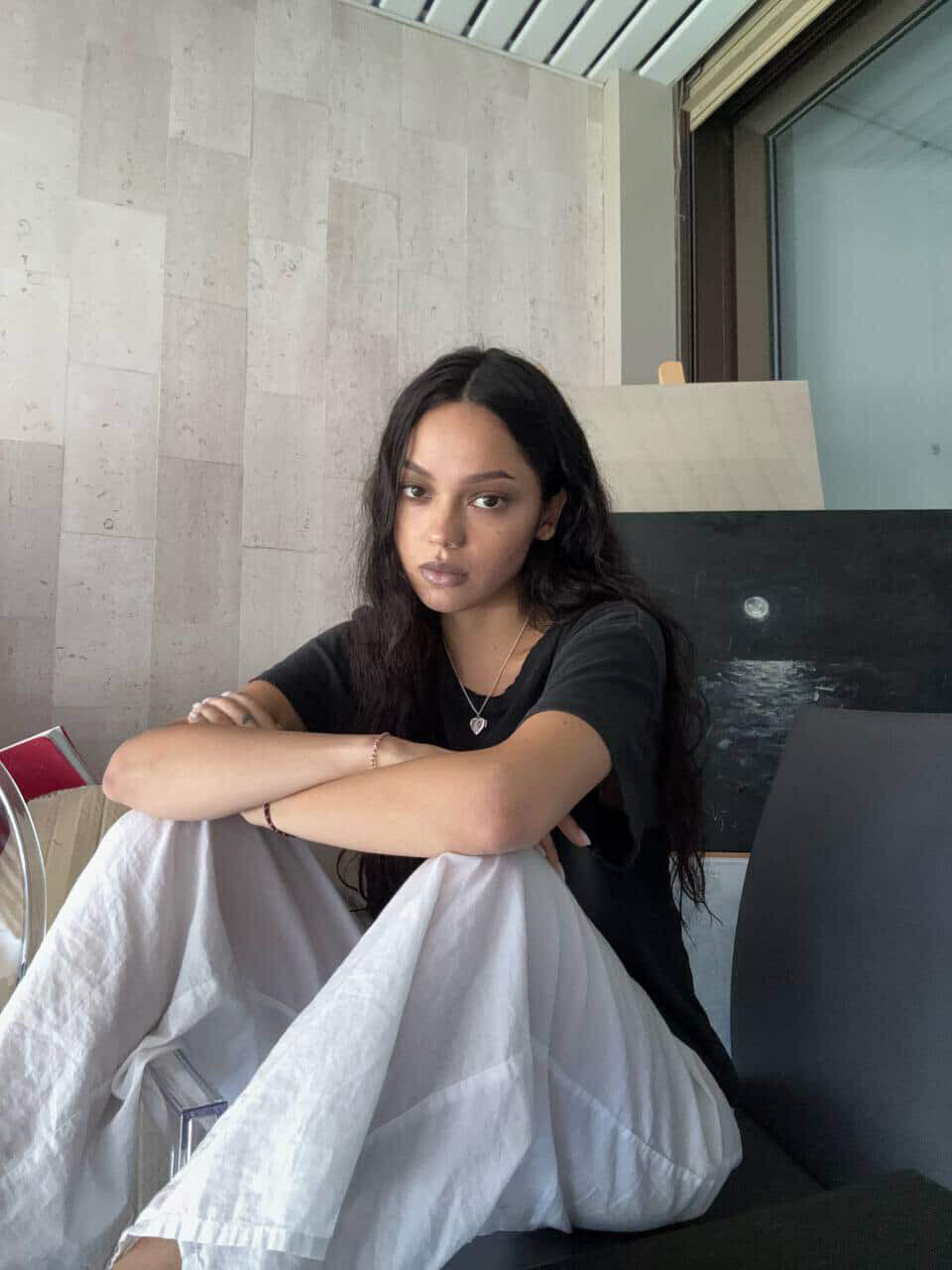
Aziza Dzhanzakova (b. 1994, Kaniv, Ukraine) is a multidisciplinary artist with Uzbek roots based in Paris/Moscow. Her prectice centers on the complexity of human relationships, the interplay between the physical and metaphysical body, and the symbolic potential of everyday objects. Born in Ukraine and raised between Europe, Russia and Uzbekistan, Aziza’s multicultural background informs her exploration of identity, memory, and emotional perception.
With qualifications in violin, literature, and sculpture, she studied Environmental Design at the Stroganov Academy of Art and Design, graduating in 2017. She later continued her studies in free painting in Berlin, where she began developing her distinct visual language.
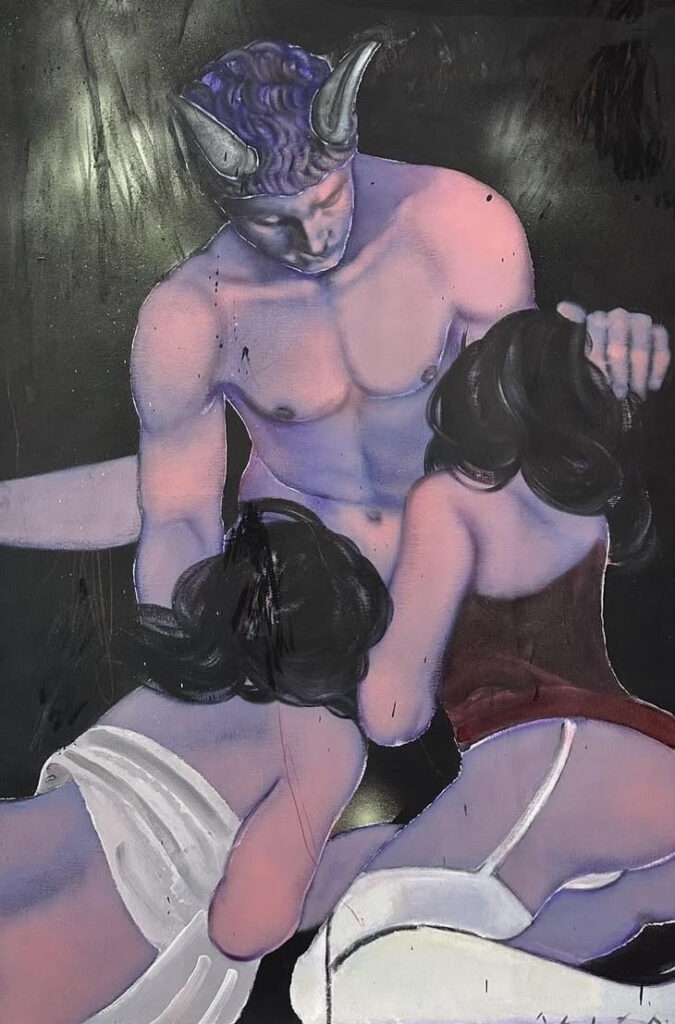
Aziza’s work is rooted in a figurative tradition, yet often borders on abstraction. She experiments with unconventional materials—spray paint, graphite, wax, phosphorescent pigments, and modeling paste—applying them to surfaces as varied as corrugated paper, furniture parts, and wooden panels. Her paintings frequently examine the spiritualized object and the objectified human, merging bodily presence with existential inquiry.
Since 2020, she has actively participated in exhibitions and performances in Moscow and St. Petersburg. In 2021, she founded Hide – an independent gallery space in Moscow. Her work is held in private collections across Europe, Eastern Europe,and the U.S.
How does a regular day look for you?
Aziza: I usually wake up early and take my dog for a walk—those morning minutes together help me clear my head. Back home, I do a quick core workout (five to ten minutes of crunches) and then prepare my matcha; I haven’t touched coffee in four years. Breakfast is often avocado toast, syrniki (cottage cheese pancakes), or a bowl of porridge. While I sip my matcha, I catch up on the news, read a little, scroll through my phone—basically getting myself into a creative mindset.
Mid-morning I head to the studio, sometimes with my dog in tow, sometimes alone. If I’m at home, I might sketch or paint in my apartment. Dinner is usually at home by 7 pm; I prefer a simple meal and another walk afterward, either solo or with friends.
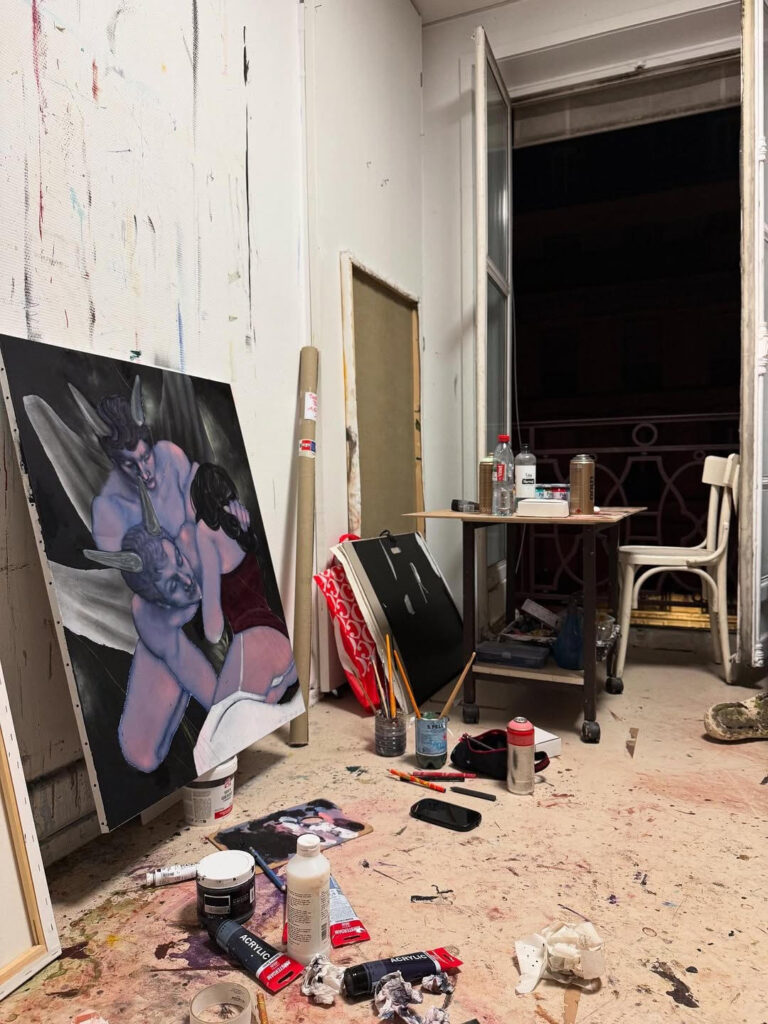
Late in the evening, around ten or eleven, I often feel the urge to paint again. I’ll stay up late working by audio book or music, sometimes putting on a film and dozing off in front of it. That’s my typical day in Moscow.
When I’m in France, the rhythm is similar: wake up, core exercises, matcha, avocado toast, and a leisurely stroll before settling in to work. On my days off there, I love visiting museums or roaming the streets with friends, and of course ending the evening with a film at home or a lively get-together.
Growing up, what kind of kid were you? What did you enjoy doing?
Aziza: I was anything but quiet—if the house suddenly fell silent, my parents knew I’d been up to mischief again. Academically, I struggled in most subjects, except literature; that was always my greatest passion. Sitting still in class was a challenge, and I often earned reprimands for poor behavior and inattentiveness in both art school and university.
Outside of academics, I trained in rhythmic gymnastics for seven years and studied classical violin, completing music school. Even as a child, I was entrepreneurial: at seven I painted greeting cards and tried to sell them door-to-door in my neighborhood. I also skipped a lot of classes—at art school, I skipped drawing, painting, and art history in favor of sculpting, which fascinated me the most.
When I applied to university, I was admitted primarily on the strength of my drawing portfolio. But once digital tools were introduced into the curriculum, I lost interest—though I remained deeply drawn to anatomy lessons.
At what age did your creative side start to show, and when did you begin taking art seriously?
Aziza: I can’t pinpoint the exact moment, but I know it blossomed around age five, soon after our family moved to Uzbekistan. My mother noticed my constant doodling—I was drawing assignments meant for my older brother, and once we even covered our walls in scribbles together. At twelve, she enrolled me in art school, which felt like a turning point.
I’d always dreamed of working in film—as a production designer or director—because I love cinema so much. But it wasn’t until I spent six months in Berlin, fully immersed in painting every day, that I truly saw myself as an artist. When I returned to Moscow afterward and sold my first works, everything clicked into place.
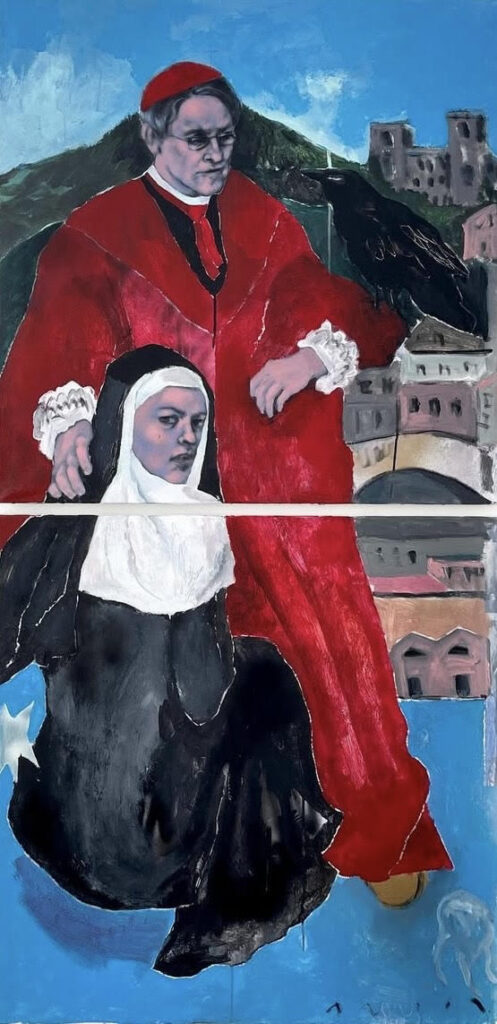
How does your upbringing across Ukraine, Russia, Uzbekistan, and Europe shape your approach to identity and memory?
Aziza: My nomadic childhood left me feeling a bit rootless—I’ve never had a singular “home,” which paradoxically makes it easier for me to adapt and feel unmoored. Still, I warmly remember the riverside in Ukraine—mulberry trees everywhere, forests, campfires, and especially the rustling reeds. That landscape often reappears in my dreams and in my paintings as a personal symbol.
In Uzbekistan, I felt the weight of not speaking the language fluently and of having an “Arab” name in a conservative Uzbek family. Yet that period also gave me my musical training and rhythmic gymnastics background. Returning there after twenty years filled me with profound nostalgia; I was moved by the new local art scene and emerging brands.
Ultimately, I rebelled against the conservative expectations of my upbringing—my work became a secret act of defiance. And yet, that heritage is fundamental to who I am: it fuels my desire to portray women as independent, powerful, and unabashedly sensual.
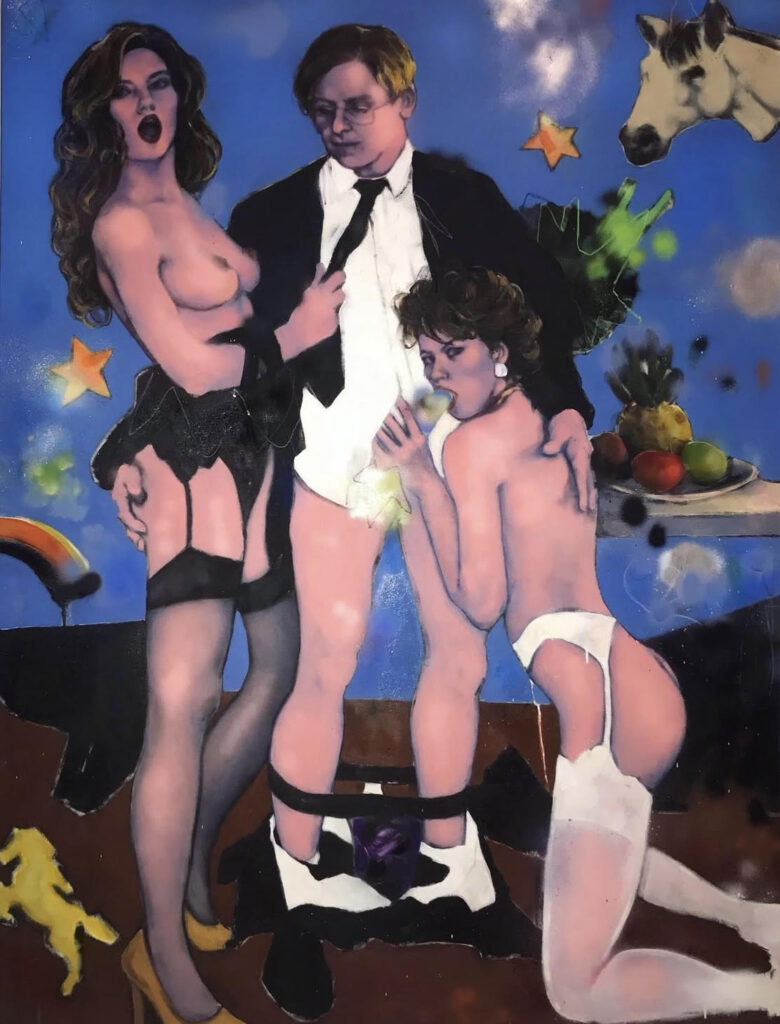
Do you see your Uzbek heritage as a visual or symbolic presence in your work?
Aziza: In a way, my paintings are my rebellion against the conservative values I inherited from my father. Every canvas is a provocation, a challenge to rigid norms. At the same time, I celebrate Uzbek culture through color and pattern: the deep burgundy of cherries and pomegranates, traditional ornamentation, fruit motifs. I’d love to return there someday and paint on-site, bringing those elements directly into my compositions. Ultimately, my heritage is both the impetus for my rebellion and the source of my aesthetic vocabulary.
How did studying in Moscow and Berlin influence your visual language?
Aziza: Moscow felt restrictive—it placed me in a narrow framework I never quite fit. I learned most things on my own by reading, watching documentaries, and studying past and contemporary artists. Still, Moscow gave me my first encounters with Picasso, Francis Bacon, Cy Twombly, and installations like Matt Collishaw’s Exhibit of Infanticide, all of which left a lasting impression.
Berlin was the opposite: they didn’t teach me how to draw, compose, or use color theory—they simply handed me a canvas and said, “Paint what you want.” That freedom was terrifying but essential. It forced me to confront myself and break free from years of imposed boundaries. I was also inspired by the work of fellow students there and the way they articulated their artistic voices so confidently.
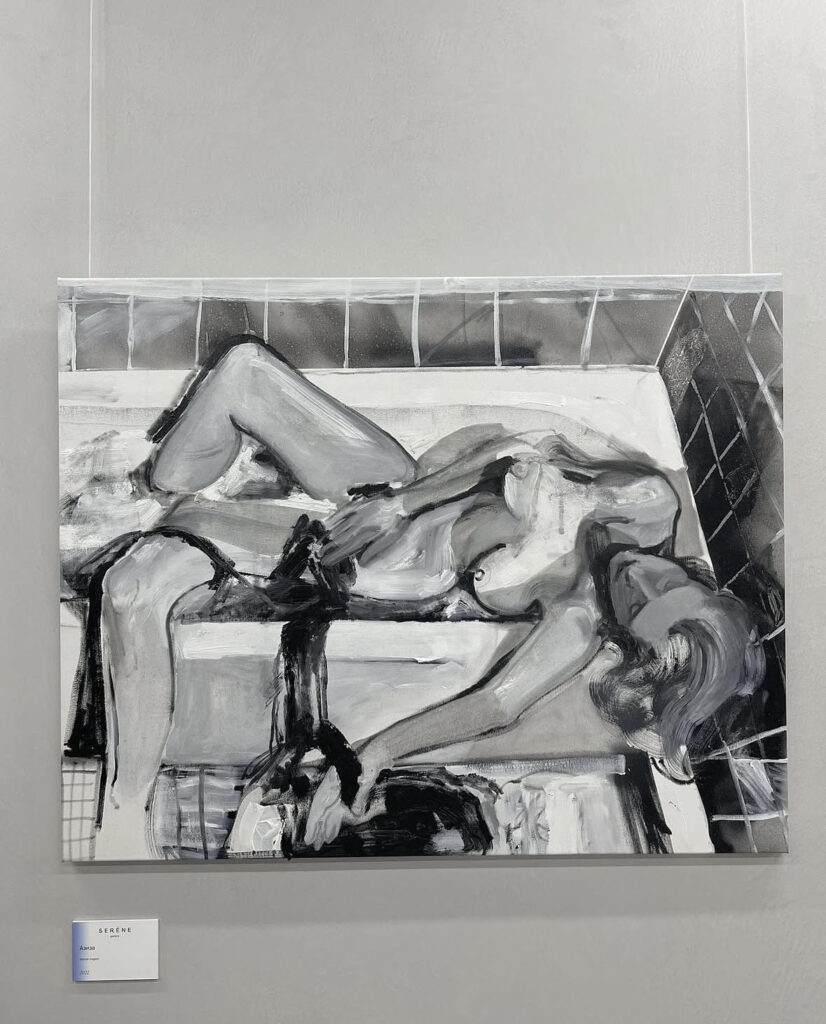
You explore emotional perception—how do you express emotional states through texture, form, or gesture?
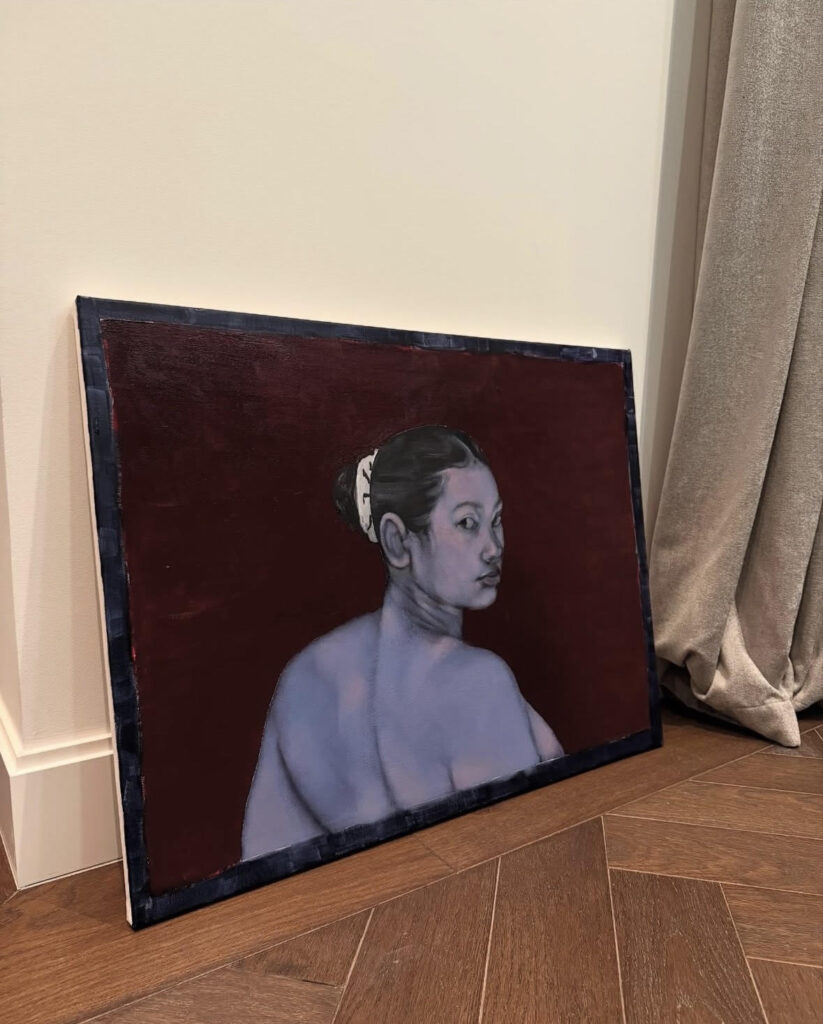
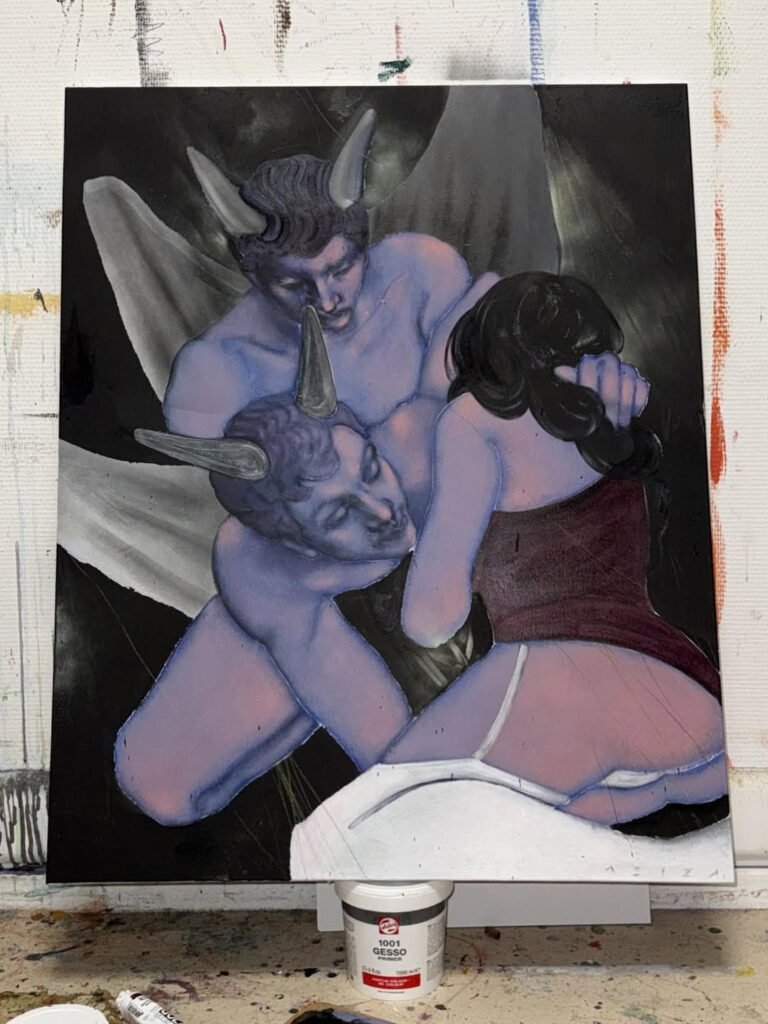
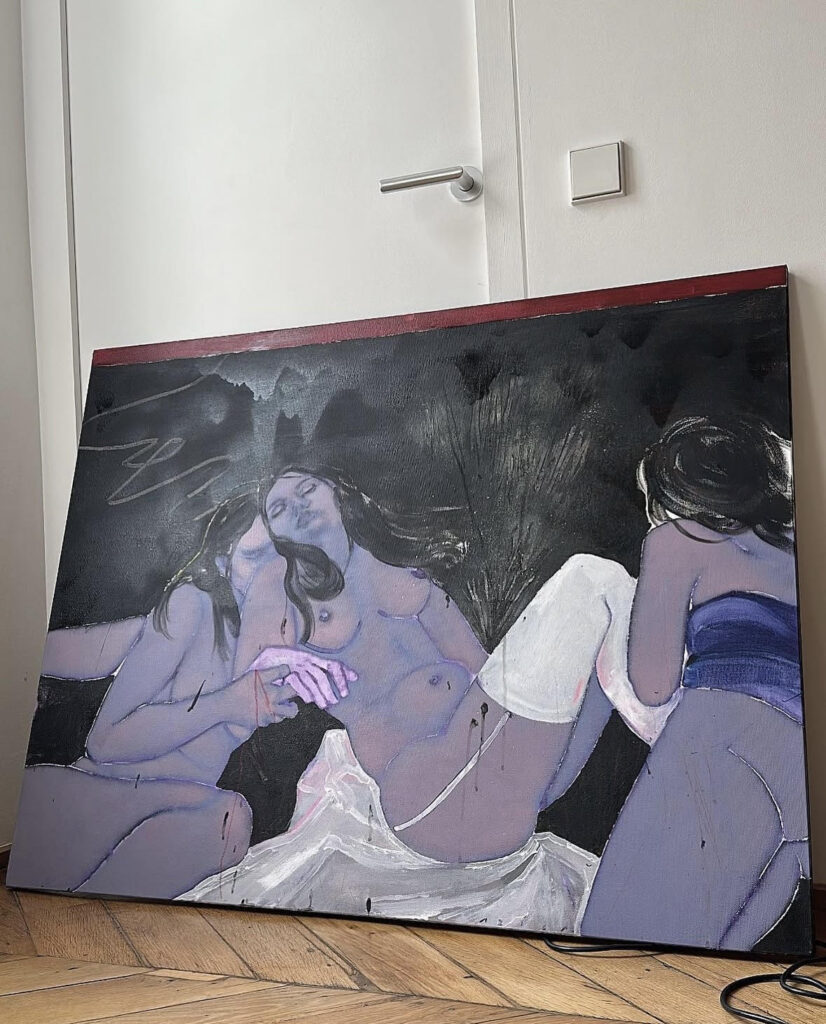
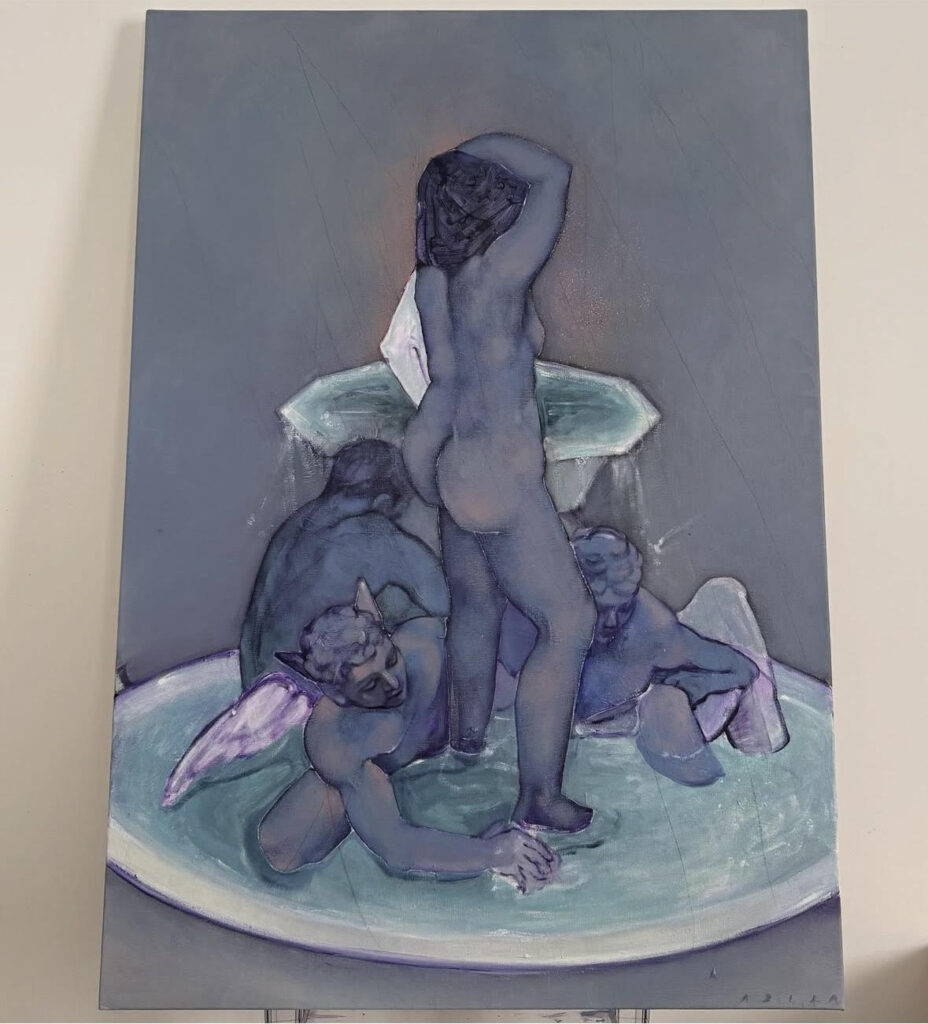
Aziza: I love juxtaposing textures and techniques: the naïveté of a loosely rendered background against a more tactile depiction of skin. For eight years, I’ve been painting flesh using only two pigments—a grayish-blue and a soft pink—under the influence of a rose-colored studio lamp. This limited palette imbues my figures with a mystical quality: the pink conveys warmth and vitality, the blue, a cold or introspective tone.
I’m not interested in anatomical precision; lately my forms have grown ever more abstract—sometimes I emphasize just a few key features, like the spine. Sculpture taught me to “see” a form through light and shadow, and I translate that directly onto the canvas. In my backgrounds, I spray translucent layers of paint to create an expressive counterpoint to the sensuality of the flesh. And then I weave in personal symbols—reeds, shells, stars—that carry their own emotional resonance.
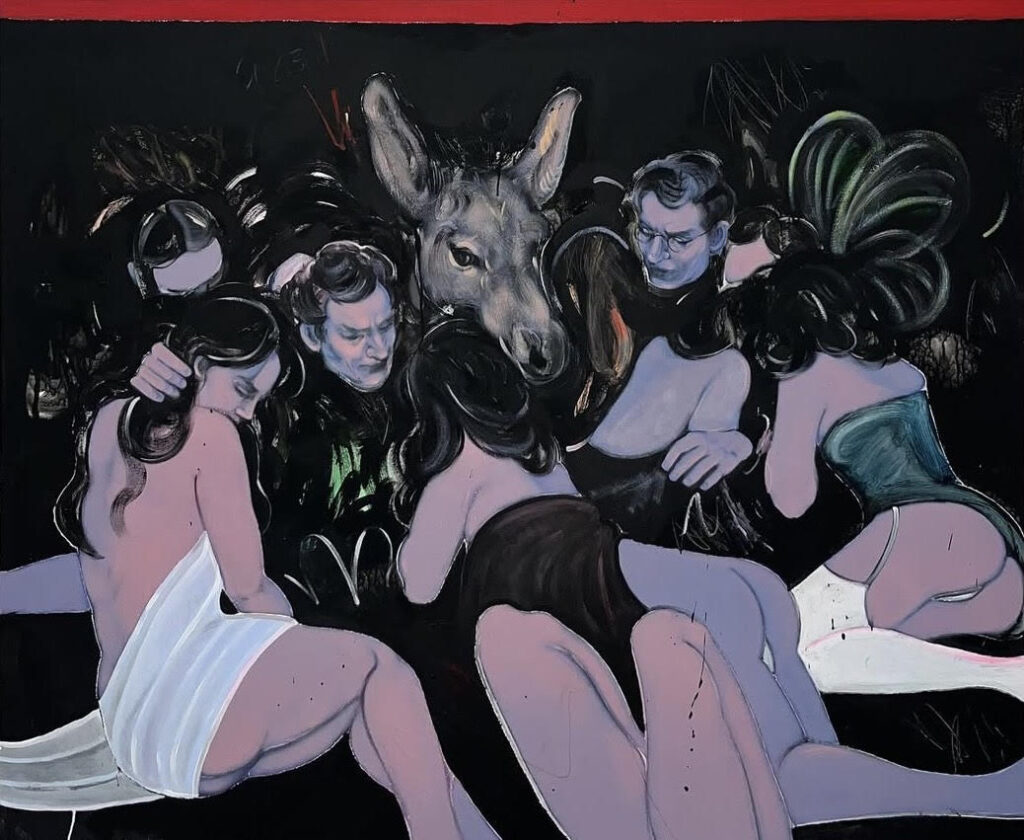
Your work feels deeply personal yet universal—how do you balance intimate experience with shared meaning?
Aziza: My paintings emerge from personal narratives: desire and its contradictions, the animalistic impulses we conceal, the paradoxes of human behavior. I explore women’s solidarity and male hypocrisy, truth and self-censorship. Though I’m shy in real life, I find my voice through the canvas, laying bare emotions I struggle to articulate face-to-face.
I also emphasize the objects around us—bracelets, amulets, talismans—because our identities are deeply entwined with the things we choose. By merging personal motifs with archetypal imagery, I create work that resonates beyond my own story: it invites viewers to confront desires and experiences they, too, have buried.
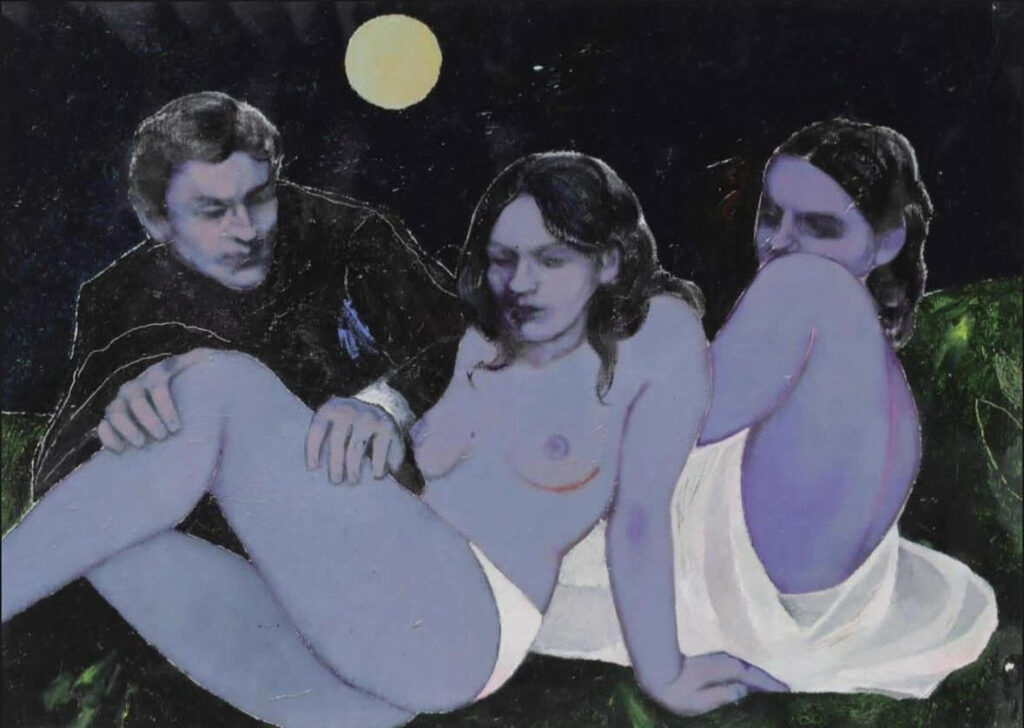
How do you define the metaphysical in your practice, and how do you make it visible through material?
Aziza: I treat the body like a still life, creating invented personages rather than portraits. I value ambiguity—unfinished, expressive elements set against more realistic ones. The metaphysical emerges in these tensions: in contrasts, in the half-spoken, in objects that hover between the sacred and the everyday. By layering paint, wax, phosphorescent pigments, and found materials, I materialize that in-between space where memory, myth, and materiality intersect.
How do you choose everyday objects for their symbolic potential, and what transformations do you aim for?
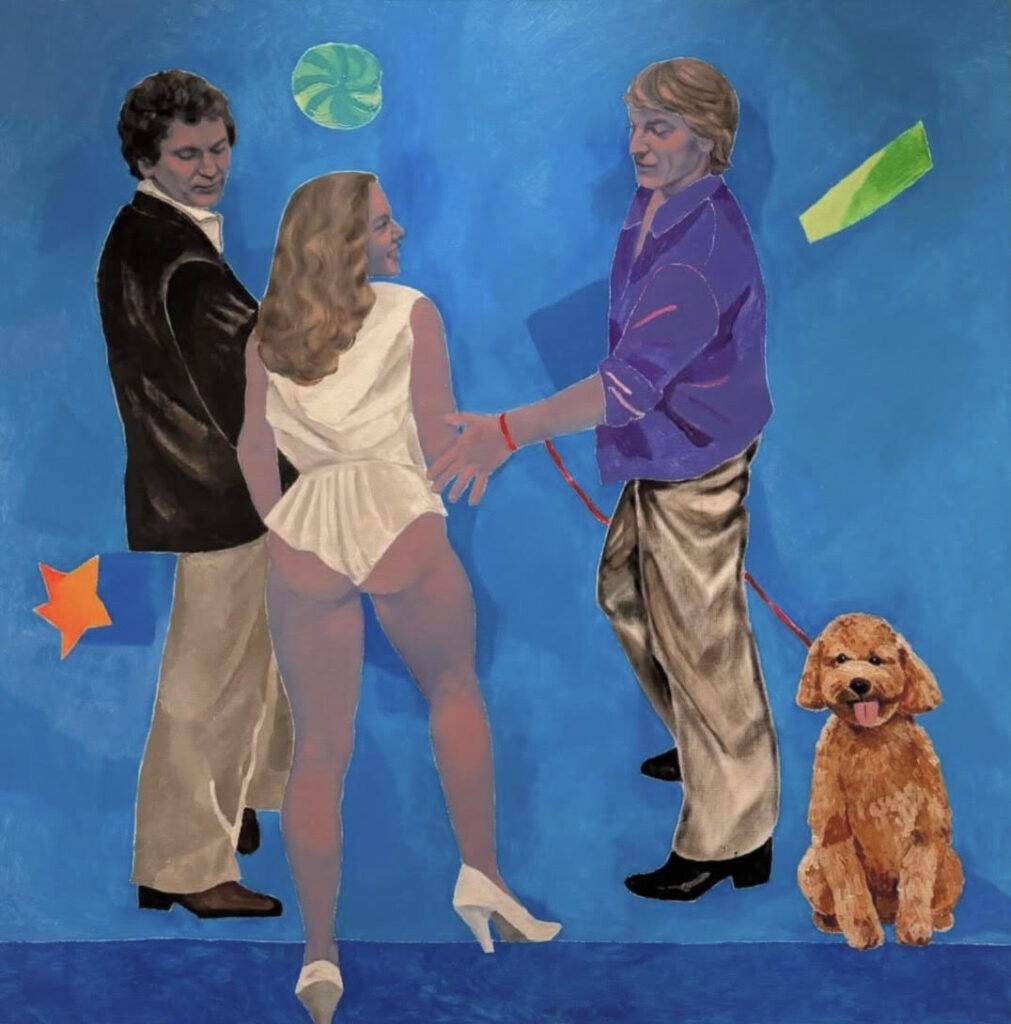
Aziza: Objects in my paintings often outshine the figures themselves: I render them in vivid hues so they dominate the composition, nudging the human form into the background. Each object carries a private symbolism—stars appear in nearly every work, a horse’s head watching over the scene as the “observer,” reeds, shells, a protruding spine. In my daily life, I collect bracelets, trinkets, stones—my personal talismans—and these find their way onto canvas, charged with memory and meaning.
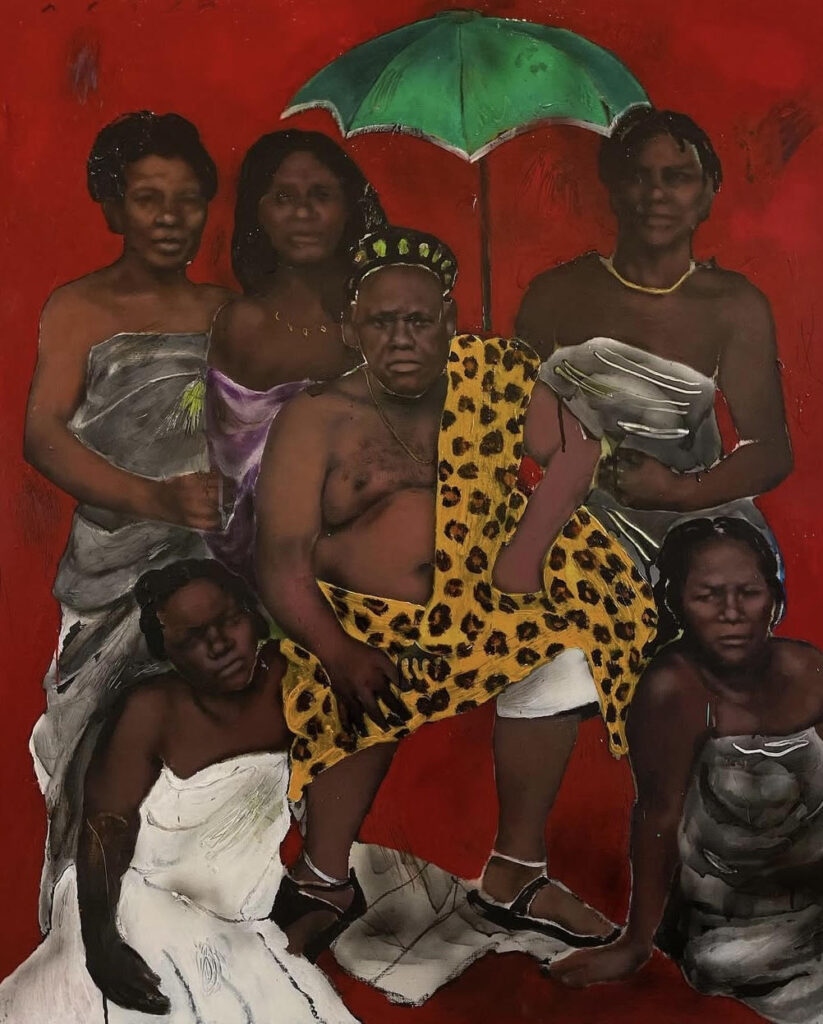
Can you talk about the “spiritualized object” and the “objectified human”?
Aziza: The “spiritualized object” in my work is imbued with an inner life—it becomes a vessel of memory, desire, or myth. The “objectified human,” conversely, is made strange through fragmentation or stylization, inviting viewers to question their own gaze. These opposing forces play out in my compositions, where everyday items gain poetic weight and the figure becomes at once present and elusive.
Where do you position yourself on the spectrum between figuration and abstraction—and is that ambiguity intentional?
Aziza: That ambiguity is precisely my goal. I paint quickly, often crafting figurative elements faster than abstract ones, yet both are vital to the final piece. I assemble each work by balancing detailed and naïve forms until they cohere into a unified composition. Sometimes the most understated, child-like marks carry more emotional heft than the most refined areas. Eventually, I hope to translate this same blend of clarity and mystery into sculpture.
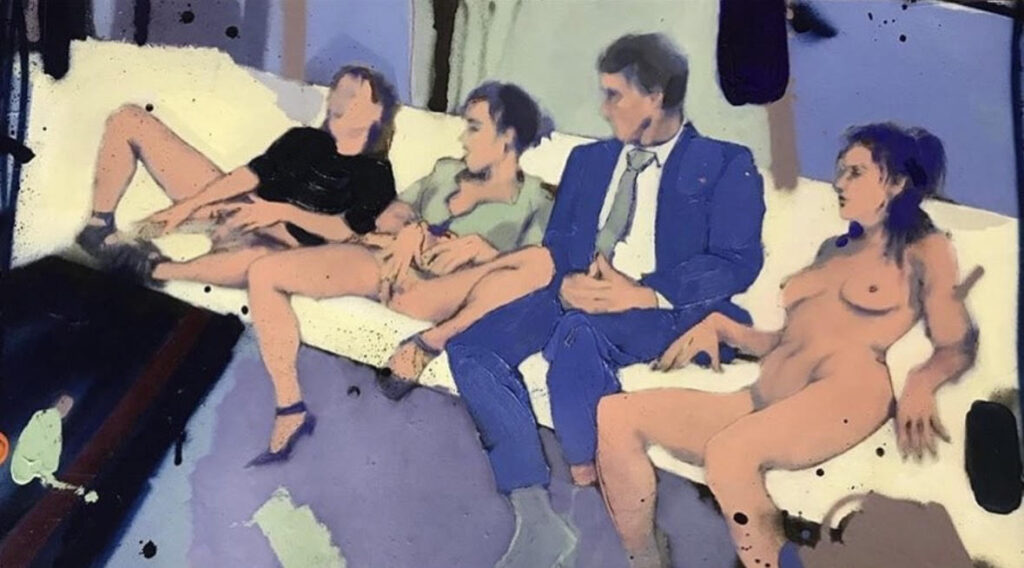
What draws you to unconventional materials like spray paint, wax, phosphorescent pigments, and corrugated paper?
Aziza: We live in an era of incredible material innovation, and I’m endlessly curious. Spray paints offer semi-transparent layers and unique drying times, while wax and phosphorescent pigments add depth and light. Corrugated paper brings texture and structure. Mixing these techniques keeps my process fresh and experimental.
Do the surfaces you choose—wooden panels, furniture parts—carry conceptual weight or is it intuitive?
Aziza: It’s primarily intuitive. Yet each surface has its own resonance: a worn door panel evokes domestic memory, a discarded tabletop hints at utility and decay. I let these associations guide me, then lean on intuition to inform the final composition.
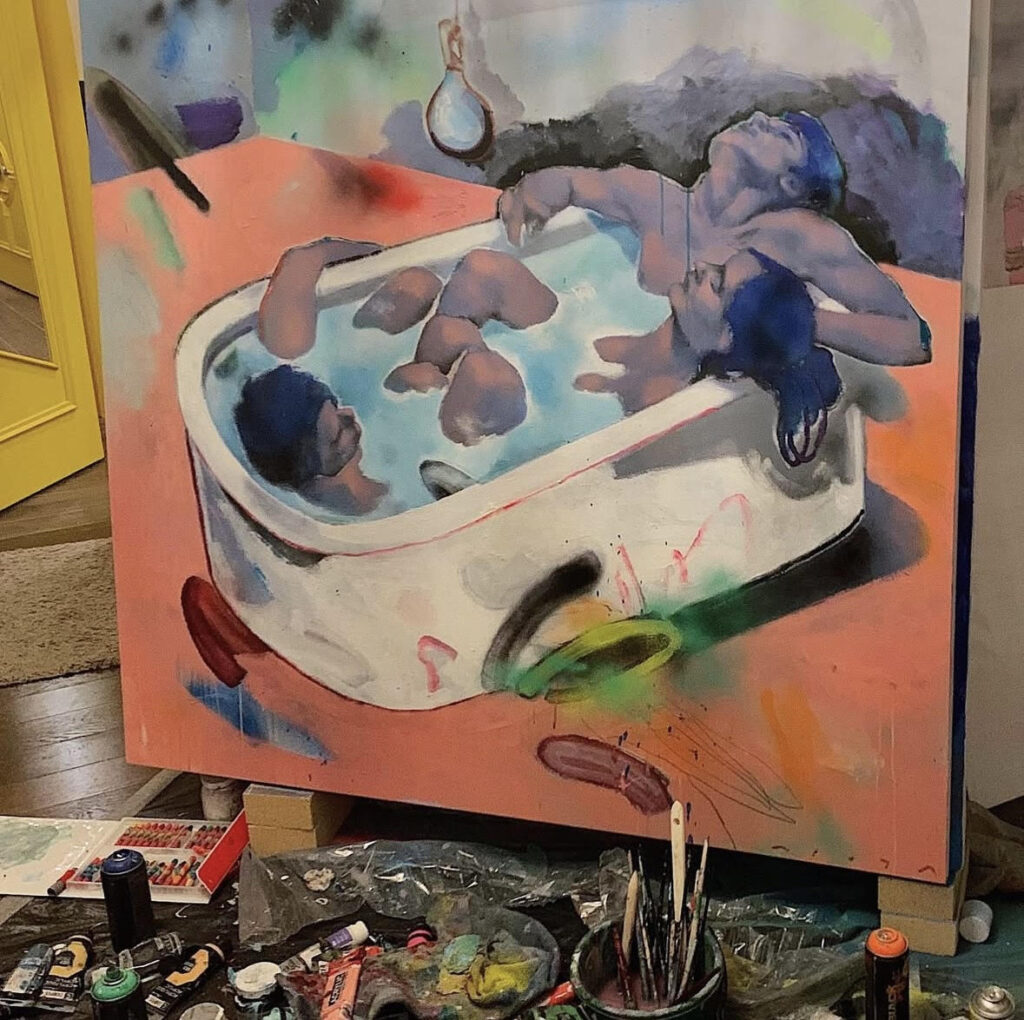
Is your process more experimental or ritualistic, and what role does intuition play?
Aziza: It’s a fusion of both. Routine matters: the playlist I choose, the lighting in my studio, the audiobooks or films I keep on loop—all shape my mindset. But once I begin, I surrender to intuition. I never plan every step; when a sudden idea strikes, I follow it, even if it sends the painting in a completely unexpected direction. Often a single bold gesture forces me to rebuild the entire piece around it.
Can you walk me through your creative process from start to finish?
Aziza: I start by selecting canvases of various sizes, then prep them with a grayish ground and a few spray-painted blobs to prevent the intimidation of blank space. Inspiration might come from a photo, a film scene, or an image conjured while reading. I stare at the canvas until a rough composition emerges. I usually listen to classical music—Ravel’s Boléro on repeat is a favorite for inducing a trance-like state.
When everything aligns, I add layers intuitively: shapes, colors, symbols. Some paintings “click,” flowing effortlessly; others stall, and I scrape them back. If I leave a piece untouched for weeks, I might abandon it altogether. Throughout, I often have an audiobook or radio playing. When a painting finally feels complete, I sit before it in silence, sign it, add any final pencil or brushstrokes, and consider it done.
Tell me about your use of symbolism.
Aziza: My symbols draw on dreams, mythology, and the dualities of existence. Reeds might signify memory or transition, stars hint at aspiration, shells at origin and vulnerability. Each motif carries layered meaning, inviting multiple readings.
How do you approach color?
Aziza: My color choices are deeply intuitive, honed through years of experimentation. The rose-toned lamp in my studio biases everything toward pink and blue, which have become my signature hues. I’m naturally drawn to certain palettes and combinations, and over time, they’ve come to define my visual voice.
What are you hoping to convey with your work?
Aziza: Above all, I want to expose hidden truths: the tension between desire and restraint, the poetry in everyday objects, the power and vulnerability of the feminine. I hope viewers feel both provoked and comforted—challenged to confront what they keep buried, yet moved by the beauty of the images.
Outside of art, what are you obsessed with right now?
Aziza: When I’m between paintings, I love cooking and binge-watching culinary shows. I’m also passionate about film, enjoy long walks, and am learning to play piano. Board games with friends are another favorite pastime.
In a parallel universe, who would you be and what would you be doing?
Aziza: I’d be Stitch—from the Disney film—because I relate to his sense of always feeling a bit out of place and longing for connection. Plus, he’s adorable.
Tell me about a time when a connection with someone had a big impact on you.
Aziza: My personal dramas inevitably bleed onto canvas, but it was my relationship with my father—his strength, his complexity—that profoundly shaped me. His presence continues to influence every aspect of my life and work.
What qualities do you find most important in the people you choose to spend time with?
Aziza: I seek those with whom I feel utterly at ease—people who are open, genuine, ambitious, and dreamers like me. My closest friends are exactly that.
Is there anyone you look up to?
Aziza: My father has always been my greatest role model. Beyond him, I admire friends who pursue their visions fearlessly, though no single figure compares to his influence.
What motivates you?
Aziza: Beauty in all its forms—nature, art, the unexpected details of everyday life—drives me. I visit museums to recharge my creativity and find inspiration everywhere I look.
How would you describe a perfect day?
Aziza: A perfect day unfolds effortlessly: productive work, delightful surprises, good news, and simply feeling well-rested. When everything clicks and I go to bed with a sense of accomplishment, that’s perfection.
What’s your favorite movie(s) and why?
Aziza: Cinema deeply informs my art. Polanski’s Bitter Moon resonates with my exploration of intimacy and darkness—I even painted a piece inspired by it. Yorgos Lanthimos’s The Killing of a Sacred Deer is another favorite for its unsettling beauty. I’m drawn to the MacDonagh brothers’ films for their unique tone, and Polanski’s Repulsion captivates me with its visual daring. And of course, Woody Allen’s films—his sharp dialogue and insight into human relationships continue to inspire me.
What song(s) are you currently listening to the most?
Aziza: Right now I’m obsessed with Young Lean’s “Bliss” and Stereophonics’ “Maybe Tomorrow,” which I seem to have on repeat at the moment.