
Share this
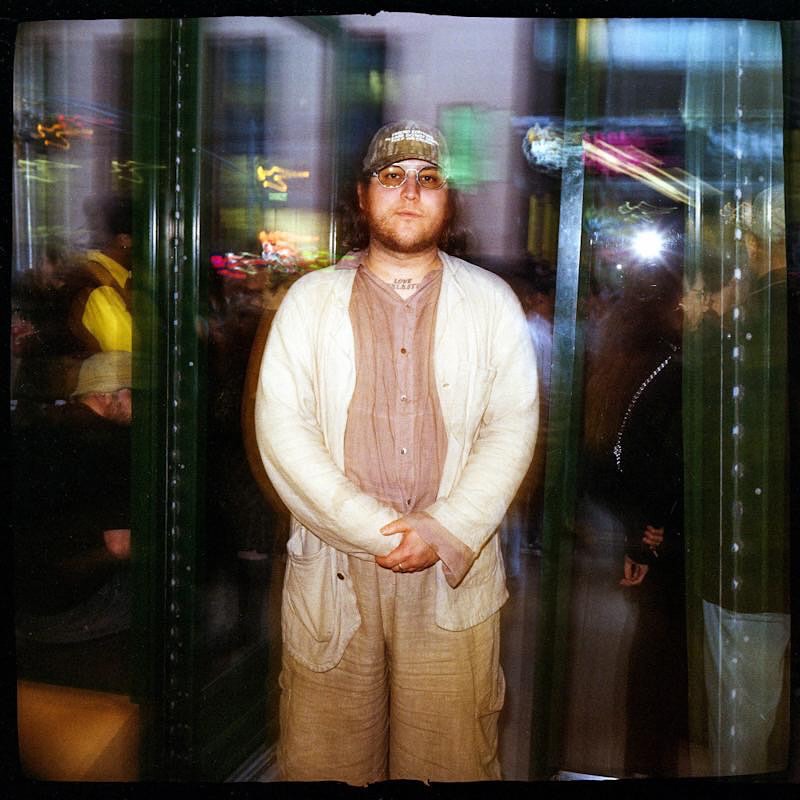
Christian Michael Filardo is a Filipino American artist whose work blends photography, poetry, sound, and sequencing into layered visual narratives that feel both intimate and otherworldly. Based in Brooklyn, Filardo uses the camera not as a tool for documentation, but as a means of exploring the emotional and symbolic structures beneath everyday life. Their latest work spans themes of human happiness, climate change, transhumanism, theology, alien myth, and ancestral history—charting a deepening engagement with memory, meaning, and transformation. With the release of Christian (Friend Editions, 2025)—a sold-out photo book collecting a decade of images—Filardo has further blurred the line between reality and the surreal. In this conversation, we delve into the stories behind the images, the philosophy that drives their work, and the cosmic questions guiding their next creative chapter.
Profile picture by Phillip Thompson
Hi Christian! It’s a pleasure to sit down with you! First question that I always ask. How does a regular day look like for you in New York?
Christian: A regular day in New York for me starts with a shower, and more likely than not if it’s a work day I am headed for the subway. I live off the J,M,L trains. If I am at my apartment I’m usually hitting the J and if I am at my studio it’s likely the M. Only the L if the other two trains are down, which is more often these days haha. I work as an optician in the city so I’m usually heading into Manhattan to help people see.
Growing up, what kind of kid were you? What did you enjoy doing, and how did you spend your time?
Christian: Growing up I was constantly moving and really ended up in my imagination or absorbed in cartoons and video games. I have slightly severe asthma so I wasn’t outside all that often, though I wasn’t a bubble boy by any means.
Your work is deeply personal, yet open-ended. How has your Filipino-American identity shaped the way you see and photograph the world?
Christian: I am severely lucky to be a person who is able to live a multicultural existence and life. Being a mixed race person has put me at odds with the world while simultaneously enabling me to see both sides of most situations. I think it influences my work by expanding my world view. My eyes and ears are open and I value that.
You began in performance and intermedia art—what led you to settle into photography as one of your primary mediums?
Christian: Performance is a medium I find deeply engaging and intimate but the rigorous nature of developing a performance practice doesn’t align with the way I live my life. Photography enters my life in a more passive way. If I am aware of my world I can make a photograph. It’s a bit spontaneous. The photographic well is replenished every moment on this planet. As time moves so does photography. That’s the exciting part of the medium. The casual severity of it.
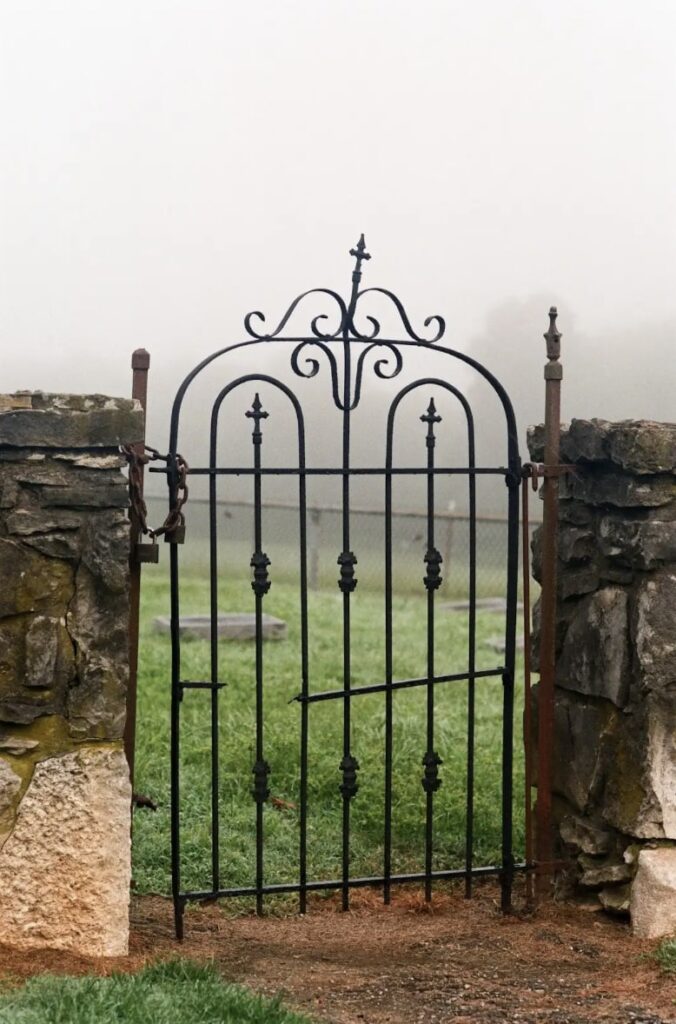
Alright, so what made you want to start documenting everyday people, objects and scenes?
Christian: It’s an easy way to have a practice that engages with your lived experience. If you make a photograph, that photograph is just as much a photo of you as it is of the subject. It’s to remember the self. Everything is self indulgent to an extent and photography is perhaps high up the list of most haha.
You often shoot on 35mm film and emphasize patience. What draws you to analog over digital in an age of instant imagery?
Christian: It’s how I know the medium. One isn’t better than the other to me really. I know film, it’s how I like seeing my images most. I have a very specific camera setup. It’s not the flashiest (no pun intended) or sought after rig but it is uniquely mine. If a camera helps you realize your images, that’s the one for you. Even if you make one or one million photographs, it doesn’t matter.
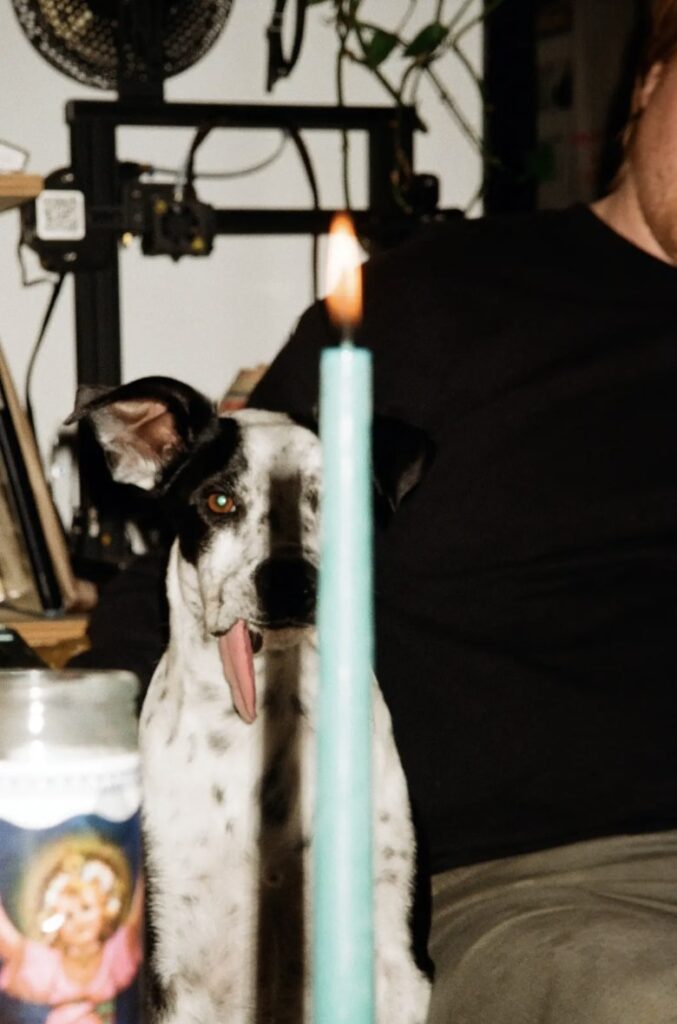
With that in mind, what do you look for when you’re out looking for your next motif to capture?
Christian: I look for something imbued with a spiritual presence. Not necessarily as if it was touched by the hand of a God or Goddess, more so that something divine has had a chance or purposeful encounter with a person, place, or thing. It’s about having a relationship with your surroundings. I open myself to spirit and spirit opens itself to me.
How does your own lived experience influence the way you engage with your subjects and the communities you document?
Christian: It is truly everything. It’s my life.
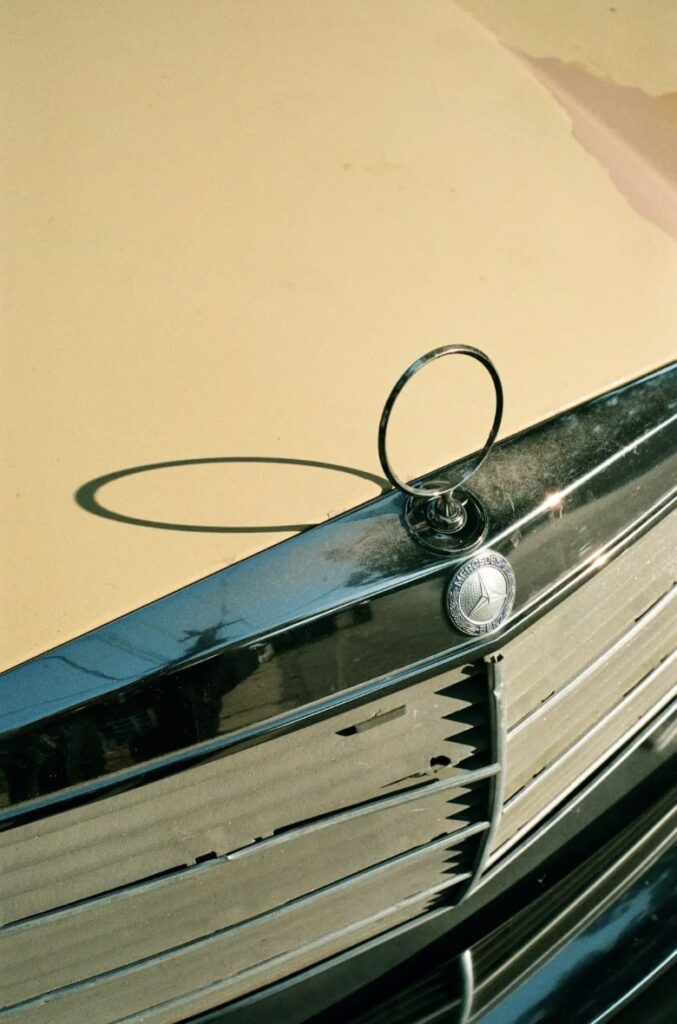
Much of your work seems to transform the mundane into the surreal. Is there a specific philosophy or influence behind how you frame everyday life?
Christian: We exist in a world of capital. Our lives are thrust into a mathematical equation of value. I think for me, I wish to turn that value system sideways. To me everything is equal. It all goes on the pedestal. Value is based on the market and I want the market to cease to exist.
You’ve spoken about sequencing photographs the way one might compose music. How do sound and silence inform your visual rhythm?
Christian: This is a difficult question for me. I would like to think that sound is the exhale of the world and that photography is a result of the inhale. Do with that what you will.
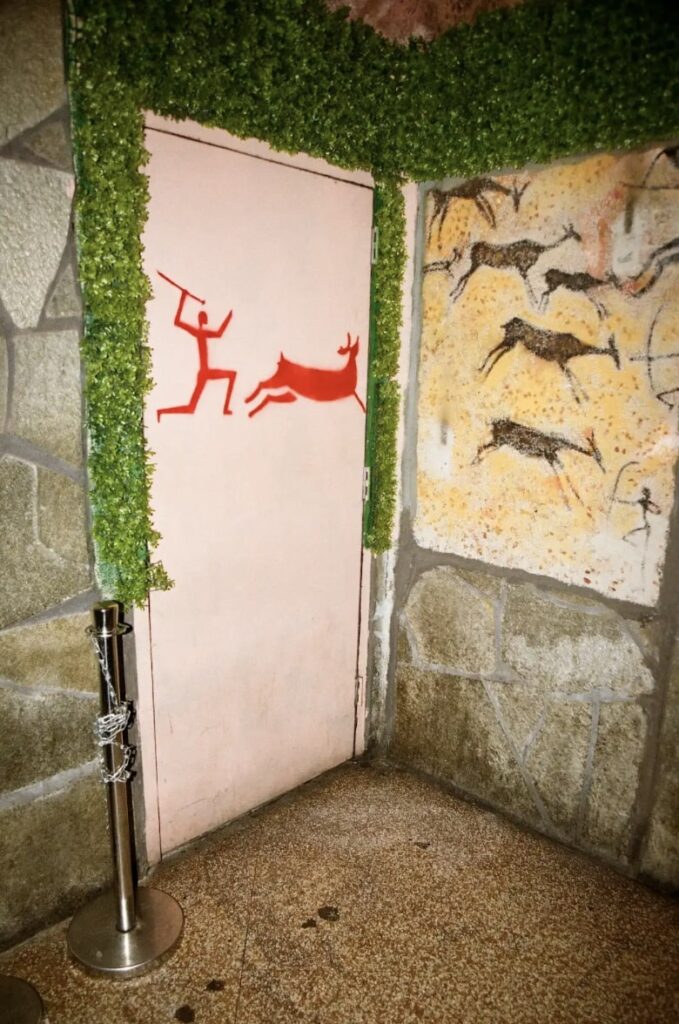
In your installations, you sometimes present photos close to the ground or surrounded by organic materials. What’s the intention behind breaking away from traditional display formats?
Christian: Tradition is for lived cultures. To me the art world is based in a market. Therefore by presenting my work with organic materials I make the market an even playing field. You could look at an image I’ve made and have no idea what to do with it. You could look at a watermelon and know it is a watermelon.
You’re also a poet and clarinetist. How do these disciplines overlap in your creative process? Do you ever feel pulled more strongly toward one than the others?
Christian: I would say I am a decent poet at the best of times and I am quite terrible at clarinet. I was once told that the clarinet is the instrument that most resembles the human voice. Do with that information what you will.
What does performance art allow you to express that photography can’t?
Christian: Performance allows me to access pain in a way I can’t do with photography. Though I think the theme is pretty tired and trite in art. While relatable I find it to be a bore.
Your new body of work deals with theology, alien myth, ancestral history, and drug use—what led you to explore this constellation of ideas?
Christian: The question answers itself I feel. It’s quite a constellation, more of an Orion less of a big dipper.
There’s a spiritual throughline in your current themes—from theology to myth and ancestry. Why are those themes important to you?
Christian: They are important to me because of my place in the world. I am a mixed race first generation American who grew up overseas and has struggled to define my place on Earth my entire life. Therefore the histories and stories of being resonate with me. It’s where I go to find answers.
Your new book “Christian” spans over ten years of work. What does it feel like to look back at that decade now that it’s bound in a single object?
Christian: It’s the most important thing I have ever done. Hopefully, there will be something more important.
You describe “Christian” as blurring the line between reality and the surreal. What does “reality” mean to you in the context of your photography?
Christian: This is a good question, it’s also a subjective term “reality”. Not sure why I felt ownership over it enough to say that I knew what it was at all. Reality to me is the things that inhabit such a pertinent place in your life that they become ignored. How does my work take that idea and flip it upside down. Does that make sense?
You often work in book and show formats. What do books allow you to do with photography that a wall or screen doesn’t?
Christian: Books are democratic. People in my economic tax bracket can afford them. They are one of the only fair ways to distribute art. Books are generous. Books are neutral. you have to open them, you have to close them.
Looking back over a decade of images in Christian, what surprised you the most about your own artistic evolution?
Christian: That I still have time to get better. That I’m indebted to so many people. That I could have been kinder, more graceful, more eloquent. That I am not perfect.
Can you tell me about some of your favorite memories from being on shooting in the field?
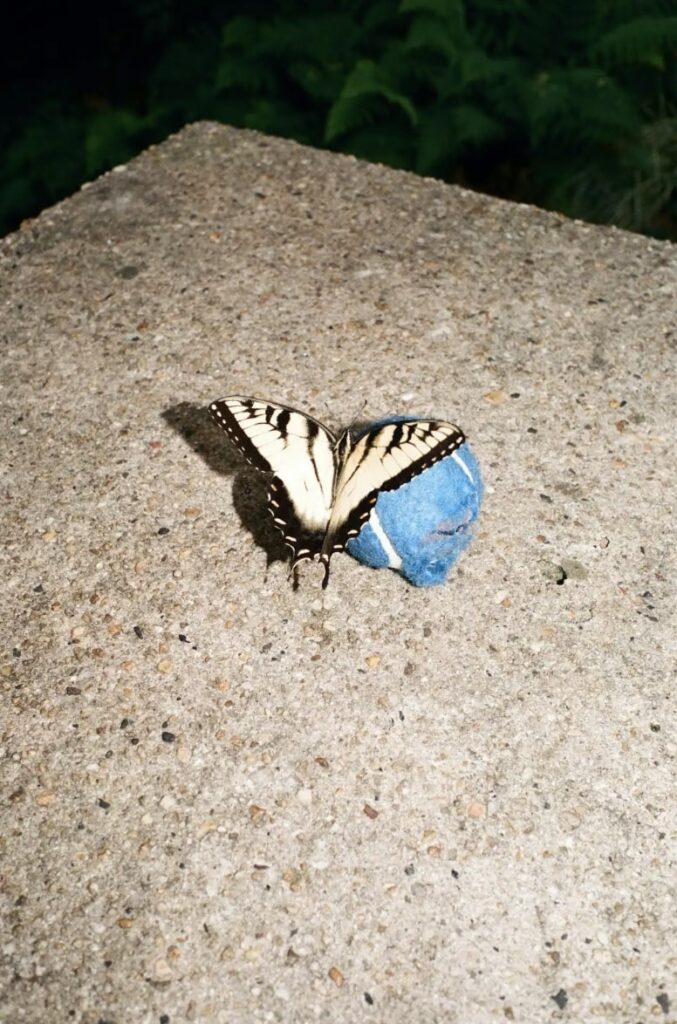
Christian: There was a butterfly on a blue tennis ball in Baltimore. A cornfield in Treviso, Italy. A dog in a glass box in New York city. Really, my favorite photographic moments are made surrounded by people I love and care about. The photographs may be absent of people but it’s what we saw together that remains. It’s much less solitary. What’s outside of the frame is what I remember. I remember each moment. Every photograph.
Other than the camera and lens. Are there any essential items that you always bring with you when shooting?
Christian: FLASH!
So what do you hope that we, the observers, take with us after viewing some of your photos?
Christian: That you are happy to have invested your time in them and that they opened the world up. That you made the photographs mean more and in turn they did the same.
Ok Christian, now to something totally different. In a parallel universe who would you be? and what would you be doing?
Christian: I would be in rural Ireland. At the pub, drinking Guinness, happy with all my life affords me.
Outside of photography, poetry and clarinet, what’s something you’re obsessed with right now—maybe a hobby, a show, or even a food—that keeps you grounded or inspired?
Christian: The list is long. Right now I have a tab open about the Colossi of Memnon.
Can you tell me a story about a time when a connection with someone had a big impact on you?
Christian: My friend Richie changed my life. He published my first zine. He believed in me when I thought there was nothing to believe in. May he rest in peace. My community changes my life.
What qualities do you find most important in the people you choose to spend time with?
Christian: I find the people I spend time with must believe in something. That they have passion or desire for passion. That they are open to light and dark. That they want to explore the mystery of being. That they have the courage to be themselves around me.
Anybody you look up to?
Christian: There are countless people who inspire me but I look up mostly to animals. They are pure and have the immense ability to show forgiveness and love endlessly. I hope to learn from them. I hope I can be more like the animals.
What motivates you?
Christian: There is no motivation. It is a fundamental need to express myself to live. If no one was looking or listening I would still be doing it. Without expression I would be dead.
How would you describe a perfect day?
Christian: A perfect day is walking, eating, drinking, walking, talking, nature, staying up all night.
Alright Christian, I always ask these two questions at the end of an interview. The first is. What’s your favorite movie(s) and why?
Christian: I watch too many movies to have an answer here. I just watched “Bird” on the plane. I liked that one.
The second is. What song(s) are you currently listening to the most right now?
Christian: Khotin, DA Crimson, EZ Company, Angelo Harmsworth, Theodore Schafer, Barely Real, Half Day, to name a few.