
Share this
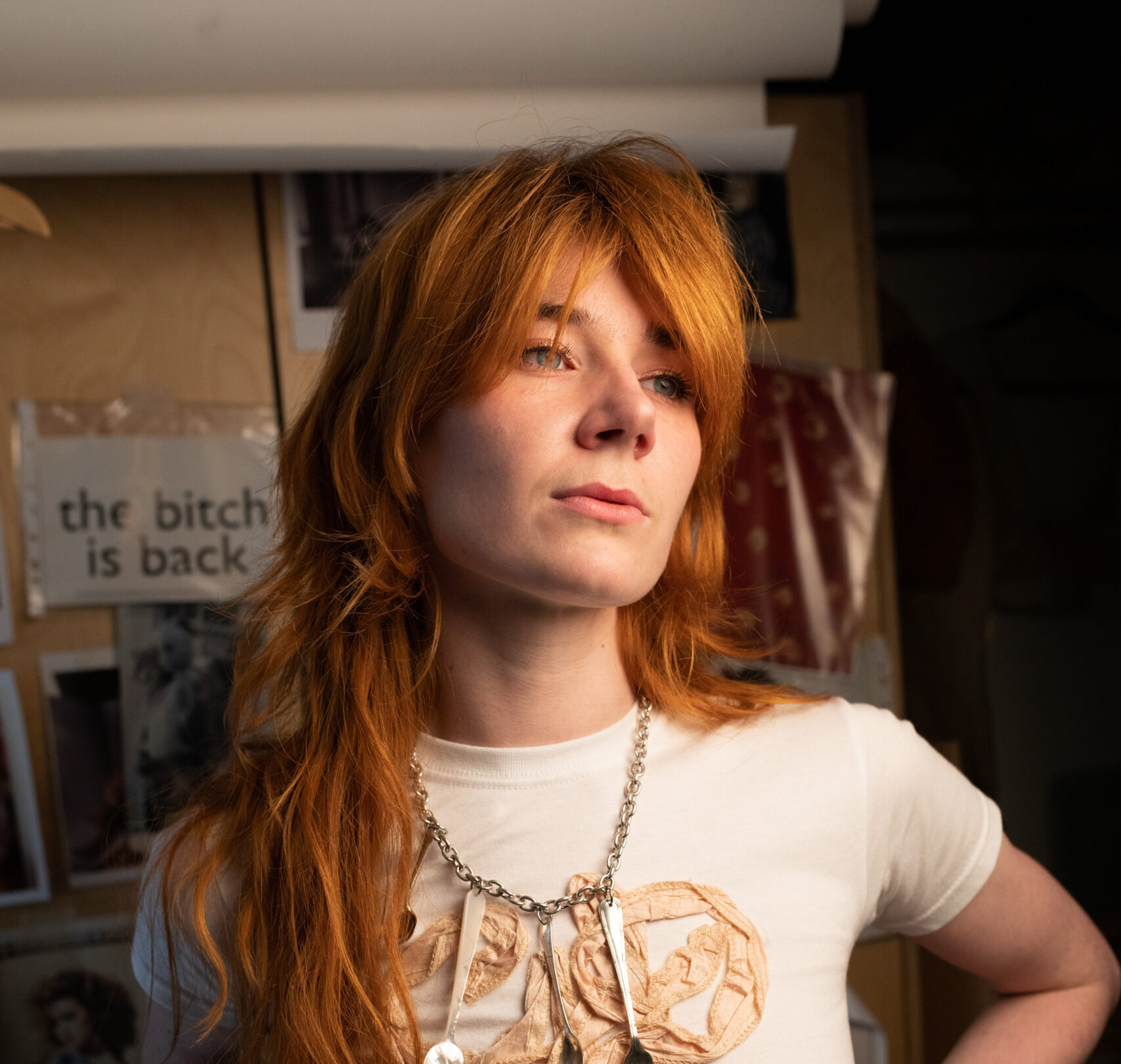
Genevieve Devine is a British fashion designer known for transforming found objects into striking, playful garments that blend history, humour, and instinct. I caught up with her after her most recent fashion show, Devine Interventions, at The Colony Room Green, to talk about her creative process, backstage moments, and the stories behind her work.
Interview by Brynley Odu Davies
Photographs by Brynley Odu Davies
Was it always your dream to be a fashion designer?
Genevieve Devine: To begin with as a child I think I decided that I was going to be a fashion designer before I even really knew what it was. I always just loved making things, especially some kinds of adornment – I have a kind of foundational myth from my childhood where after watching One Million Years BC I ripped up my underwear and declared that I was an early girl like Racquel Welch. To this day I’m not even sure how real that memory is but it feels emotionally true…
I grew up in the north east, mostly in Newcastle where I did my BA in fashion. After my degree from Northumbria I spent some time in the industry and wanting to react to the innate throw away nature of production I applied to the Womenswear MA at central Saint Martins. Most of my time on the degree coincided with the covid lockdown, but actually that reset gave me the isolation and the space to find and explore my personal design language. This led to the birth of my own label that I have been growing organically since!
How does the community of creative people around you inspire your work?
Genevieve: The people around me are the lifeblood of my practice. They fuel my imagination, ground my values, and expand my reach. My community isn’t just a backdrop, but a living, breathing part of my design process. They remind me to stay intentional, sustainable, and soulful. I often design with people in mind, garments don’t exist in the same way without people to give them life, and I am very lucky to have so many incredibly vibrant creatures in my orbit.
What was the inspiration behind your recent show Baby Born in Hell? [CORRECTION – ‘Devine Interventions’ is the name of the show]
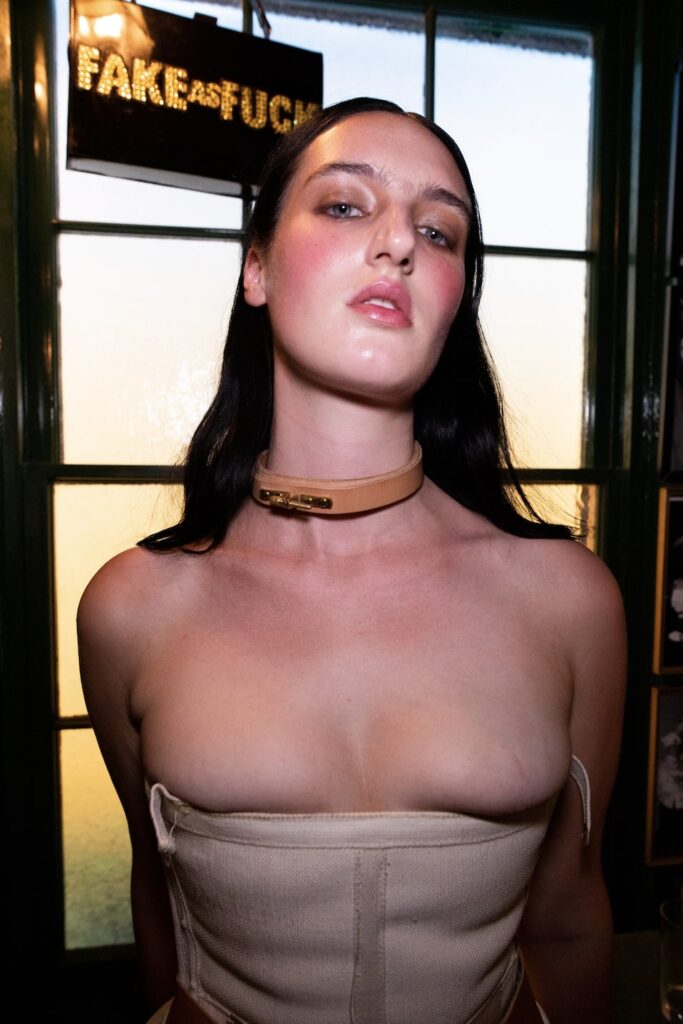
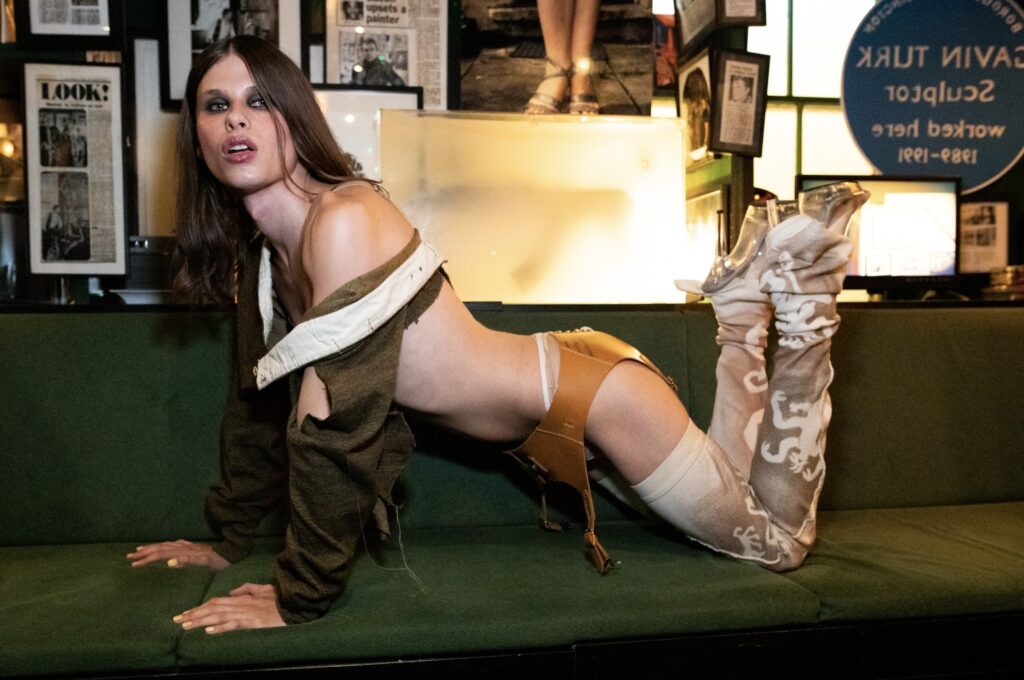
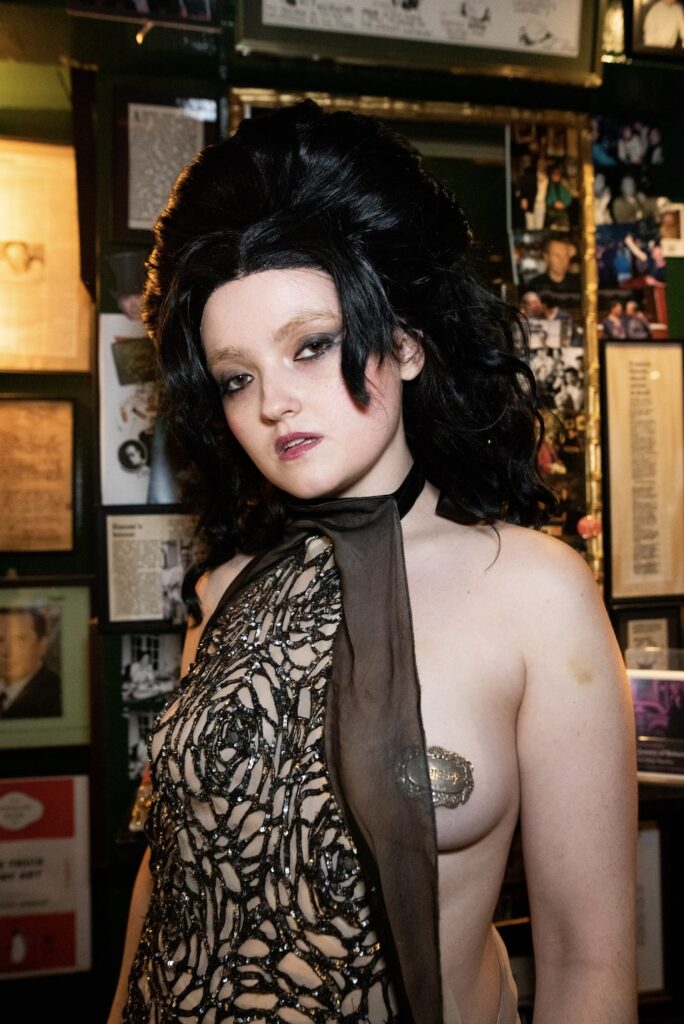
Genevieve: I was invited earlier in the year to stage something at the venue by the artist Darren Coffield that would sort of intersect with the end of an exhibition of photographs of the punk icon Jordan. We were already working on a loose collection with the punk artist Dave Baby and the storied nature of the Colony Room felt like a really fruitful place to host a capsule of some of the ideas that were being expressed in the studio.
It had a real feeling of synergy. In general I don’t tend to start a collection with specific named inspirations but work through the process organically and let the collection emerge intuitively. The title of the show was the same in the sense that it came out of a conversation about the process of intervening with preexisting garments and that the show was in a way itself an intervention in the space.
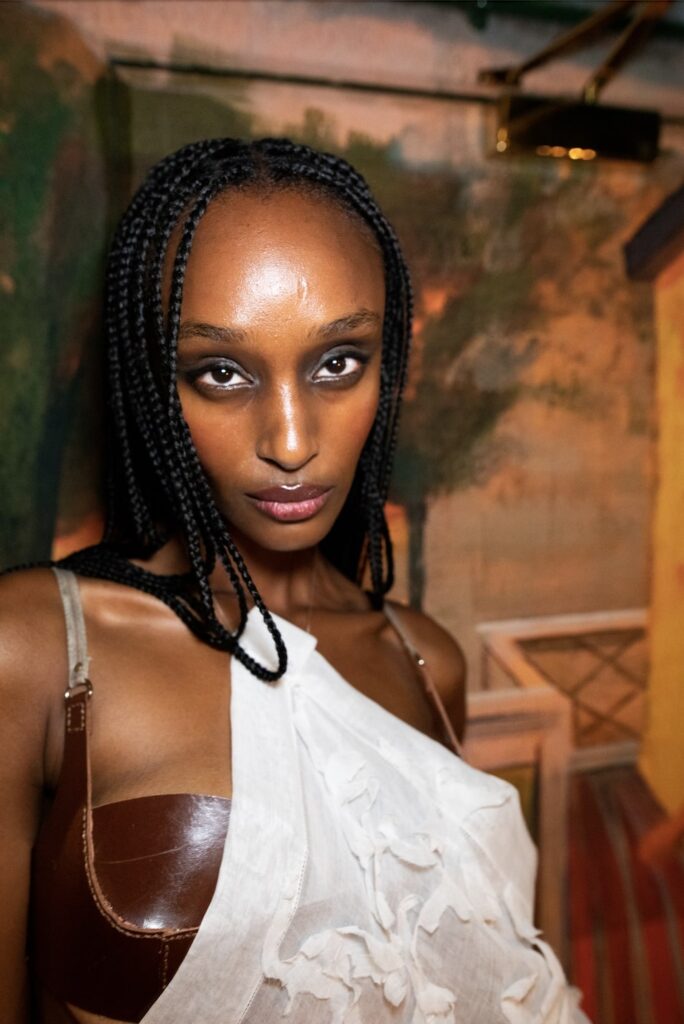
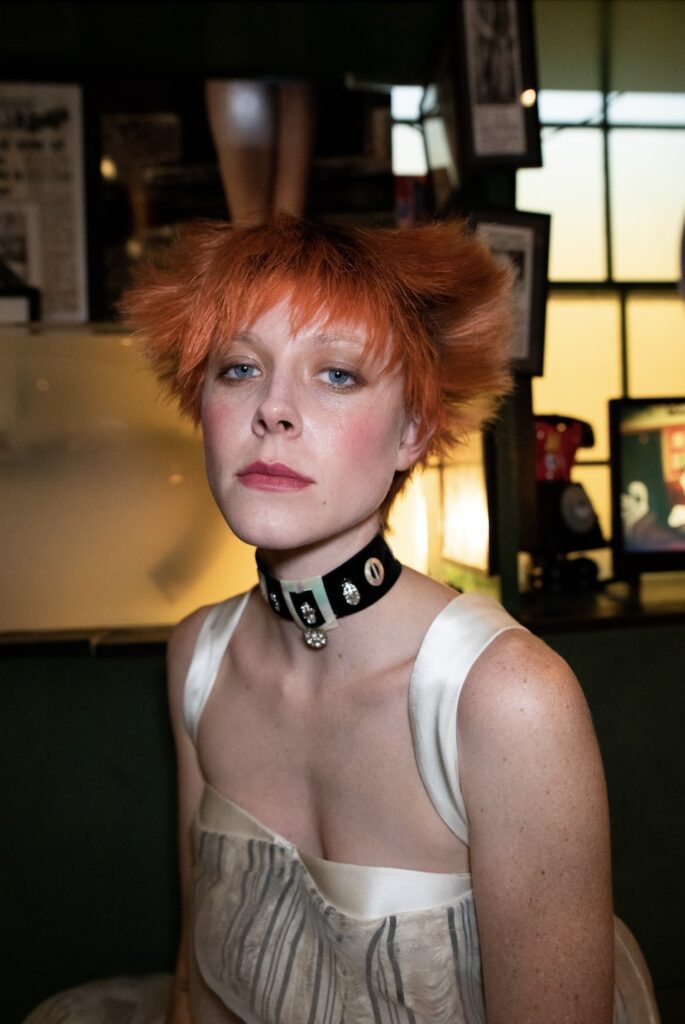
Your jewellery is incredible—how did the spoon and fork pieces come about?
Genevieve: My material selection feels very instinctive. I try to keep my eyes open to the beauty that’s present in the world around me, I never thought that you had to buy the most luxurious fabrics to make something that can evoke those same feelings.
I’m more enamoured with some yellowed silk that’s 100 years old, stained and shattered, or some mysterious coins or novelty cutlery than anything you can buy off of the shelf. The first time I used the spoon motif was from some antiques I picked up in Sicily from a totally out of the way tiny shop. They had a certain charm that I only picked up on months later as an idea to make something from, it was the instinct that drew me towards them but then after you start to think about the deeper ideas of like the basic fact of these tools that enable nourishment in some form or another.
These objects have a history and life force that can’t be replicated and they stoke my imagination. I’m obsessed with the idea of palimpsests – these medieval manuscripts that would be scrubbed so they could be reused, retaining traces of the previous text – this is how I see my work, something that retains its past as it still creates something new, every-thing was something before. There is something fascinating in the idea of giving a discarded object of garment a new audience, an antique linen that spent its years in a storage cupboard can have a new outing in a nightclub… I’m constantly searching charity shops, markets and vintage fairs, I trawl eBay and anywhere else online for strange and wonderful things. The unexpected serendipity of it is what inspires me and there’s an immediacy and a collapse of the boundaries between research and practice that I find more honest and truthful.
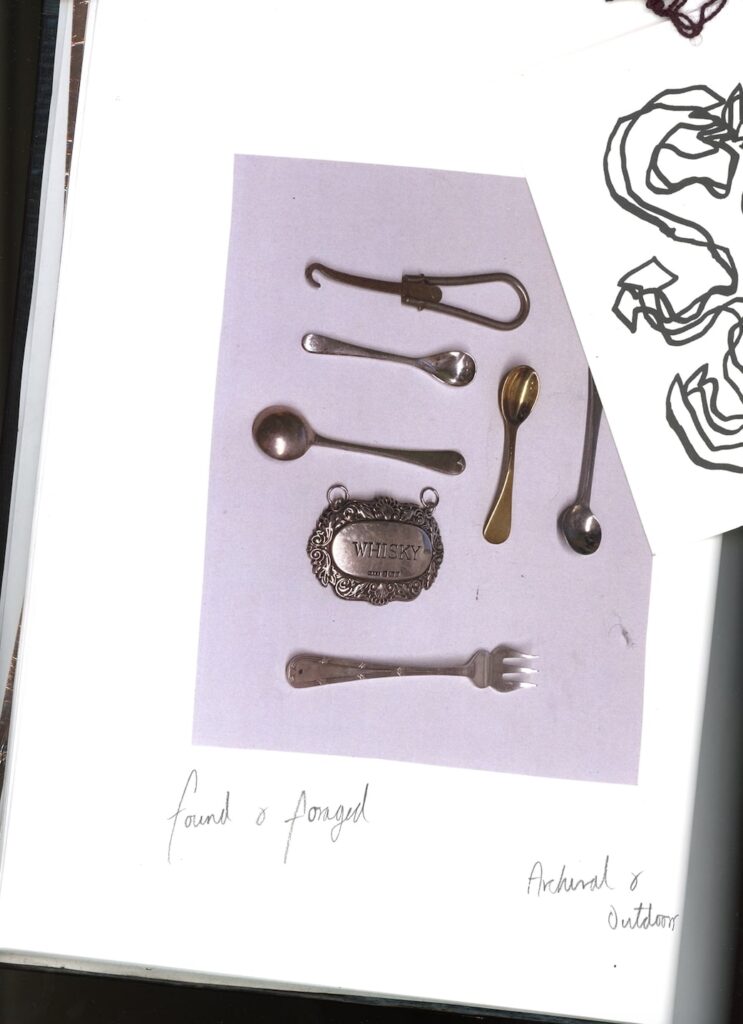
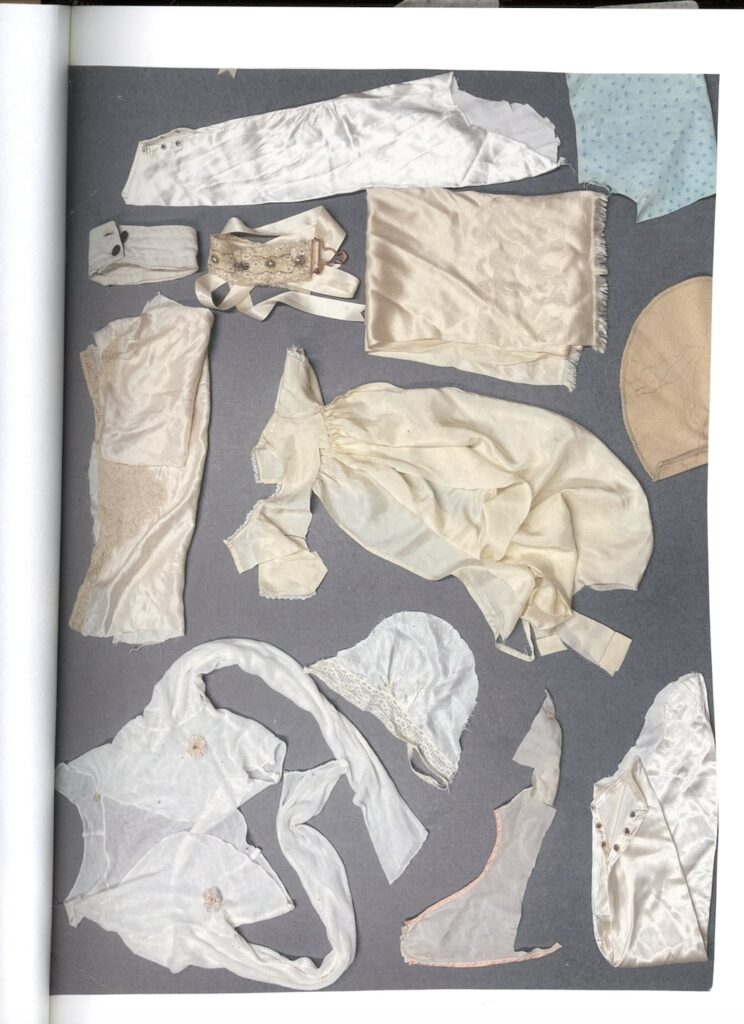
How do you research and develop your designs?
Genevieve: When I set out to design I don’t do sketches or plan things out in any formal way, it’s very much driven by the process and I like to invite chance and randomness as much as possible. I guess you could say that this lends itself to making garments that don’t always seem like traditional clothes, they have a sideways glance at fashion that have a kind of dadaesque provocation or conversation with the idea of what clothes are and how they operate. I like to make them as real as possible though and this is where the art and craft of fashion techniques plays a big part, making something wearable that has beauty but also teases the line between those competing ideas. The process of making the pieces is as important to me as the final outcome, the artist Cornelia Parker has been a huge influence on me and the way I approach my work.
It’s very difficult to describe the process as every piece kind of takes its own path, even the repeats have their own quirks that have to be accommodated. The easiest way to describe it is to say that I let the object itself be my guide, it will have its own internal logic that I can go along with or resist, depending on what feels right to me. I like to drape and invert something, open it up and manipulate it until it feels like something new and exciting. For this reason I make a lot of the drapes on myself in the mirror. That period of openness and play is really important for me to have a sense of what I can find in the piece that might not be obvious at first, it’s a very instinctual process that requires me to balance a lot of competing ideas and emotions at the same time, it’s has to feel honest and have a point.
I don’t like to just do something for the sake of it. If I manage to find what I’m looking for then it becomes about fleshing it out and making it real. How do I turn this idea into a real thing? something that has beauty and immediacy but also functions. For this purpose I use a combination of traditional sewing and handwork techniques as well as more unconventional approaches that I enlist to make the piece work as it needs to. where possible I also love to incorporate small details of handwork that embellish and beautify the construction, the functional art of stitching.
What does a typical day look like when you’re building a collection or preparing for a show?
Genevieve: In the past it has been fairly chaotic… but I made the decision that I needed to be better organised for my own sake, so in the run up to the collection I made sure that I arrived at the studio with a few hours alone to organize the day before my assistants came in. A lot of the day is then filled with troubleshooting construction issues, draping garments for handing over and meanwhile there is the art direction, casting and admin to cover. Also you must run the business side and be on top of editorial loans, orders and commissions!
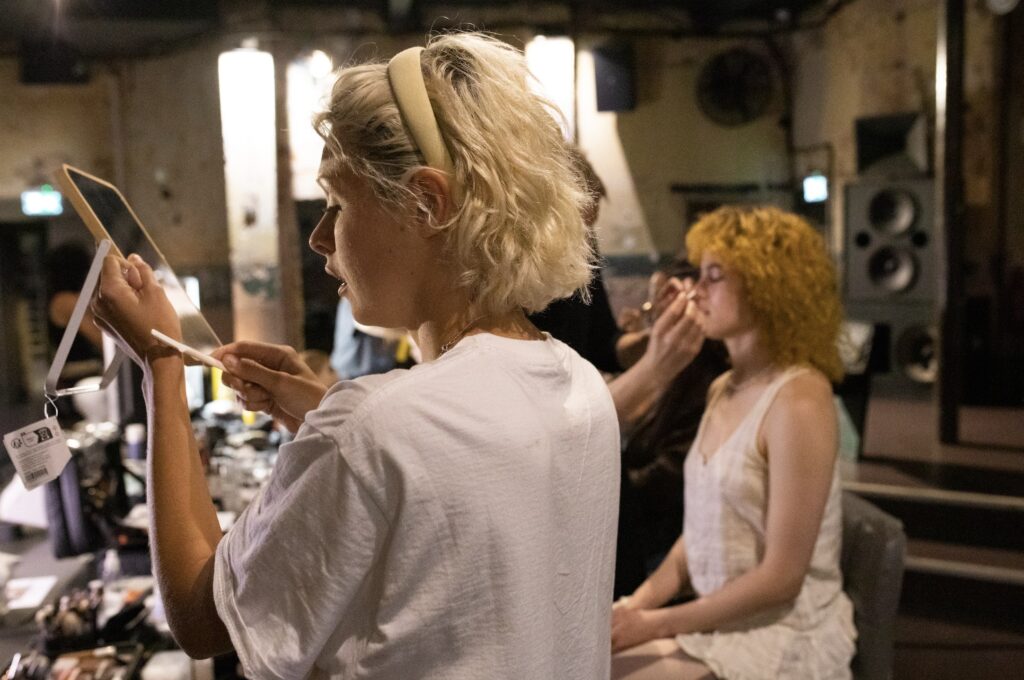
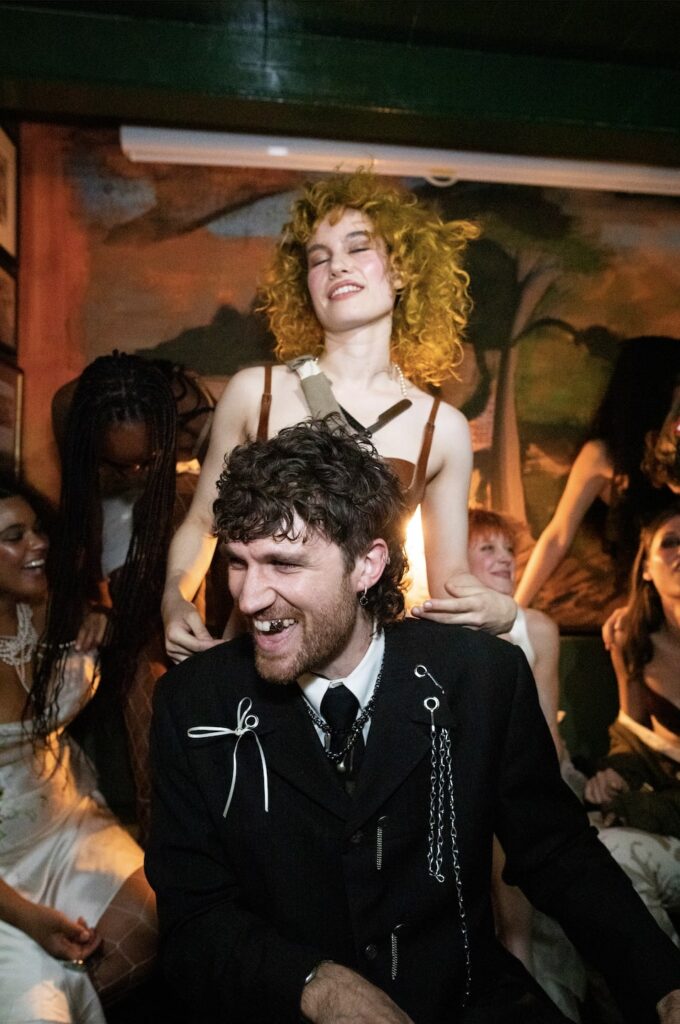
Running a fashion business takes a huge amount of work that doesn’t always feel particularly creative, so you have to hold tightly to those brief moments of romance and inspiration as a reward and a motivation for the work. Having the help of my incredible studio team and friends has made the build up to this presentation the smoothest process it has ever been. Being open to ask for help has been a real game changer, Alice Riley who is a multi talented polymath was the producer for the show, whilst also modelling, styling and art directing for the event. Caitlin Walsh helped with the casting remotely whilst she was home up North and modelled during the presentation, the show would not have been the same without the help of these forces of nature.
How did your Northumberland roots influence your approach to fashion?
Genevieve: Going back to my story about the early girl, I think there was an expansiveness and a feeling of beautiful mystery among nature that fostered a sense of magical potential in the world that I try to hold on to. This, coupled with moving to the city of Newcastle and encountering a much more urban and harsher environment, the noise and the nightlife as – I grew older – created a tension in me. Both longing for the idyll as well as drawn to the grit, I find myself pulled in two directions in a way that informs my sensibility as a designer. Within me lives both the forest nymph and the gutter sylph.
Do you feel like you’re living the life you dreamed of as a young designer, and what excites you most right now in your work or life?
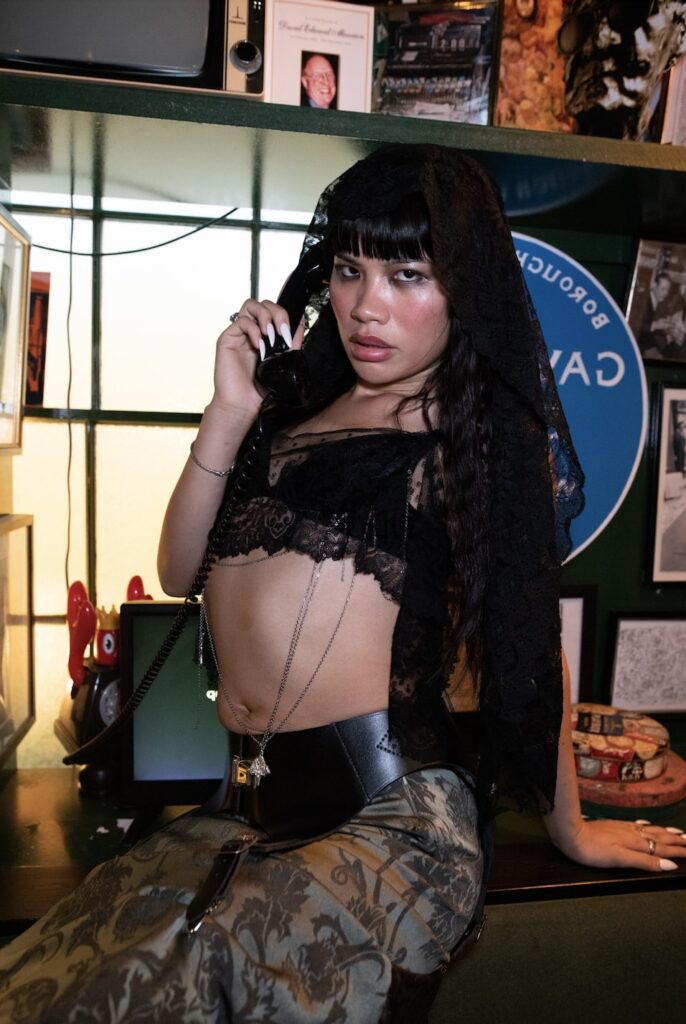
Genevieve: There are definitely times when I feel very blessed to have the opportunity to do what I do, as well as have so many talented people on my team and around me. I’m not sure that the younger me really knew about what it takes to be a designer, but it is always a dream to nurture a feeling or an idea and see it grow and change as it emerges into a reality. I am continually excited by the next idea and the chance to see what it can become.