
Share this
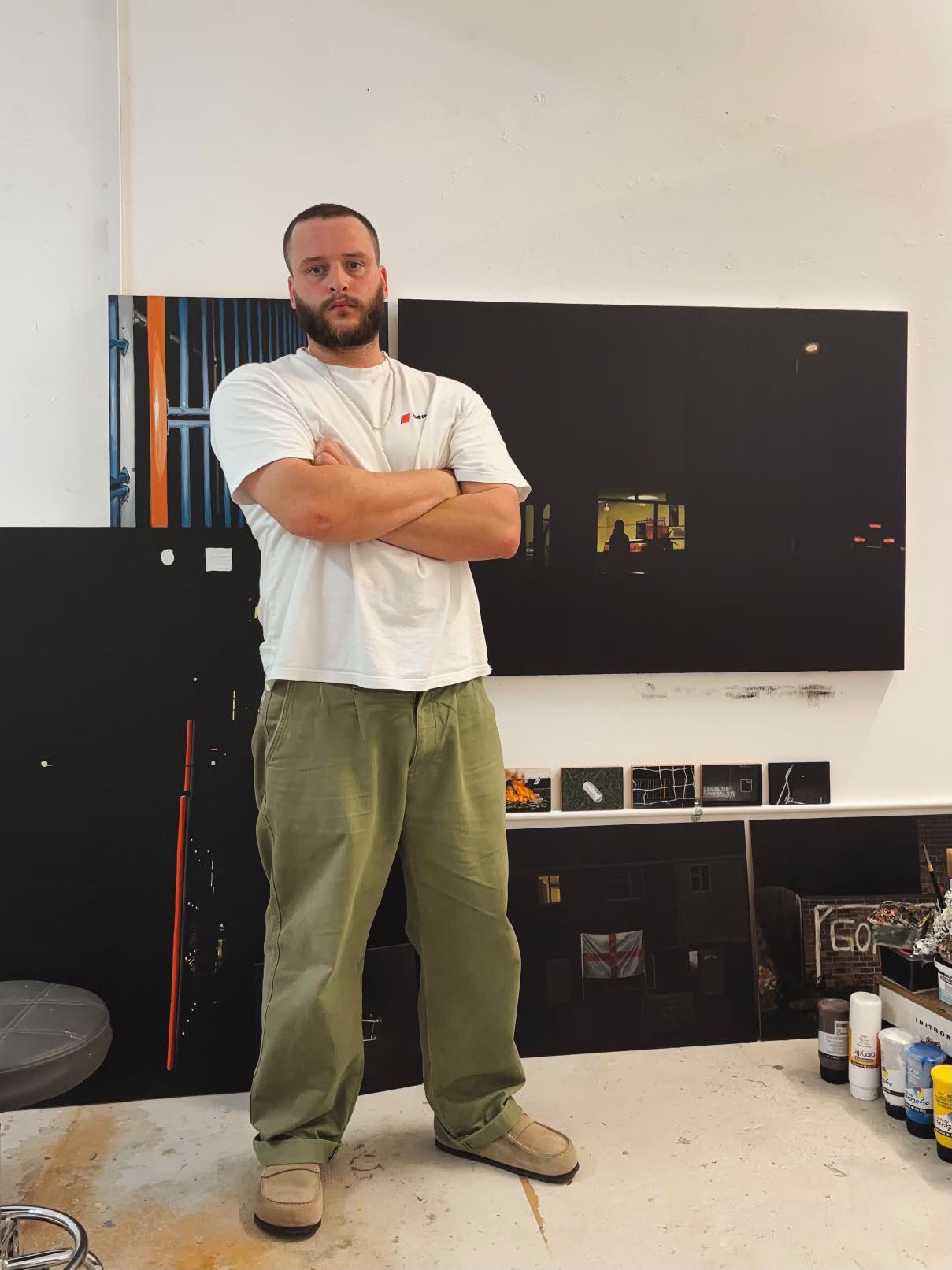
Based in London, Louis Wootton-Davies (b. 2000) is a Shrewsbury-born artist and Oxford Brookes University graduate whose multidisciplinary practice explores themes of personal and working-class identity, class dysmorphia, and masculinity. His work has been exhibited in galleries across the UK, with paintings held in private collections internationally.
In August 2025, Wootton-Davies presented his debut solo exhibition at the Soden Collection, Shrewsbury. He is currently preparing for his first London solo exhibition, scheduled for November 2026 at Twilight Contemporary, Islington. Wootton-Davies draws directly from his working-class experience, using the term class dysmorphia to describe the tension and disorientation felt in relation to his class identity. Through a combination of family archives, self-conducted photography, and recorded interviews, he explores the process of recognizing and accepting one’s social position. His work is often described as uncanny, carrying a strong sense of nostalgia and emotional distance.
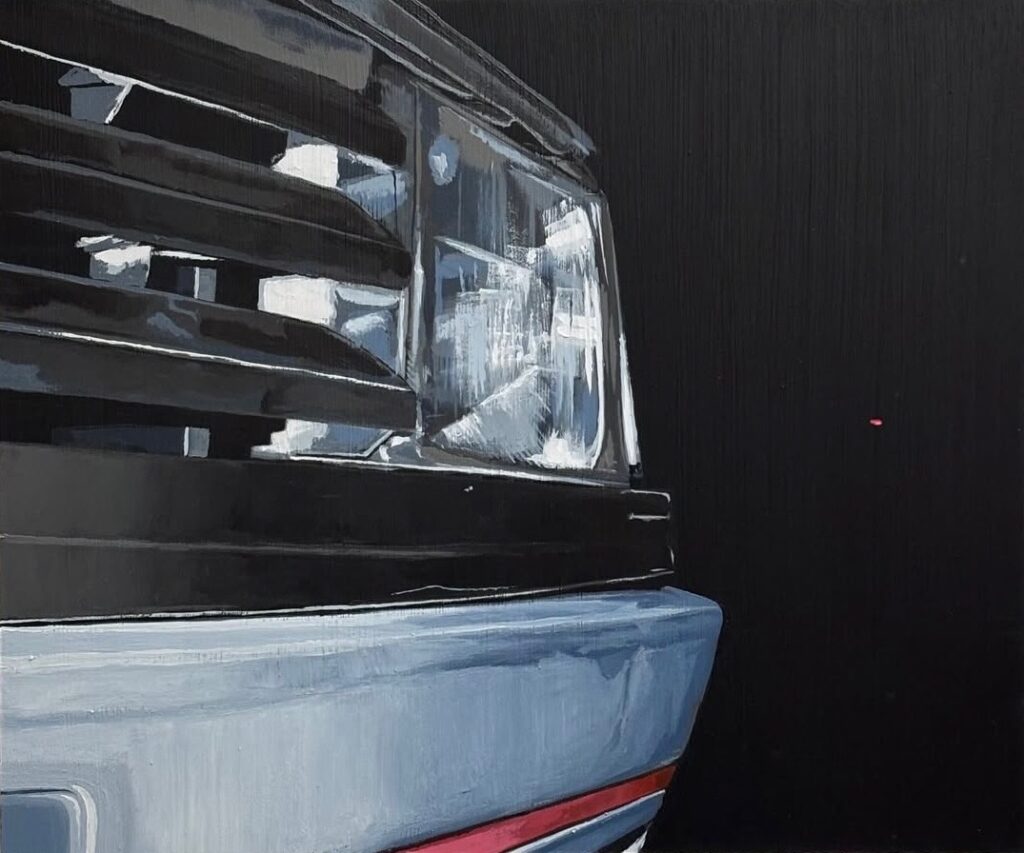
Recent work has increasingly focused on the materials depicted within his paintings, incorporating sections of metal as a reference to his father’s trade in car breaking yards. These material gestures function as both autobiographical markers and symbols of labour, grounding the work in lived experience.
Hi Louis! It’s a pleasure to sit down with you! First question that I always ask. How does a regular day look like for you in London?
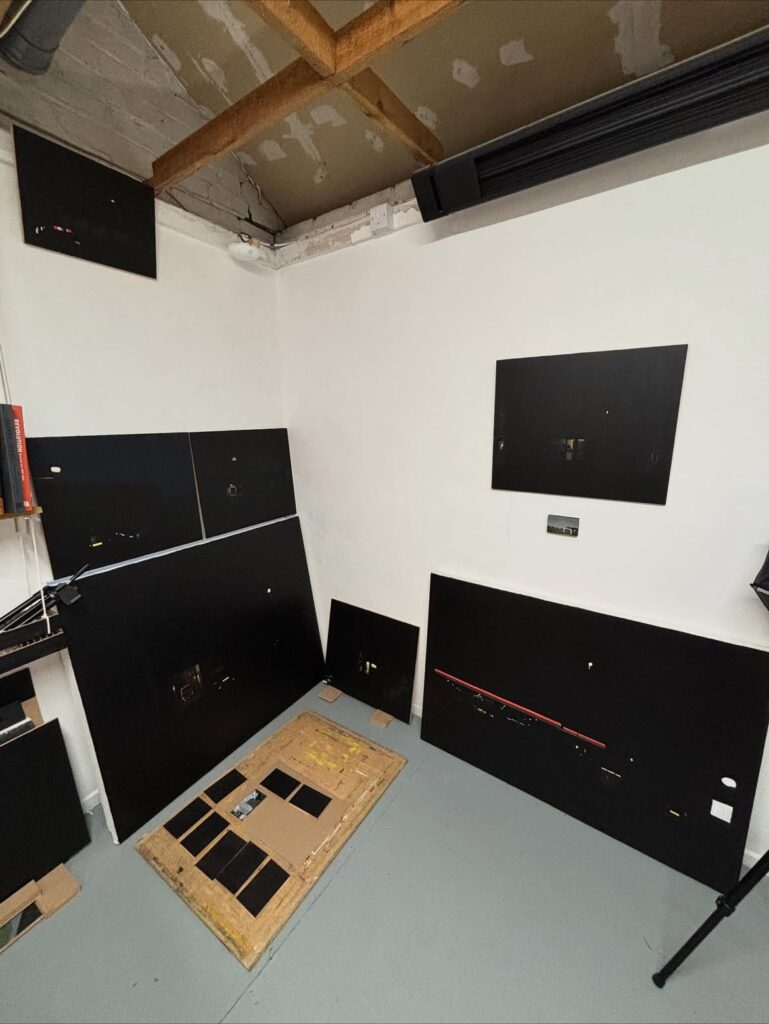
Louis: I get up, get myself ready, then hop on the tube, it’s a 25/30 minute journey so I do some reading. That way I feel as though my day starts from when I sit down on the tube. At the moment I’m reading a book called Underdogs by Joel Budd. When I get to the studio (around 10am), I’ll usually take a seat and reflect on the previous day’s painting, looking at it with a fresh eye. It’s not long before I’m picking the paintbrush back up. If/ when I finish a piece, I’ll make a start on a new one, I usually have an image in mind but I like to flick through my archive of photography in case something jumps out. I’d say I’m relatively quick at painting but I spend a lot of time standing back to absorb the work. At around 5pm I’m ready to leave the studio, I’ll hop back on the tube and continue my reading. When I get home, I’ll catch up on final pieces of admin then maybe head out to a private view if there’s an opening.
I’m curious, growing up, what was life like there? And what kind of kid were you? What did you enjoy doing?
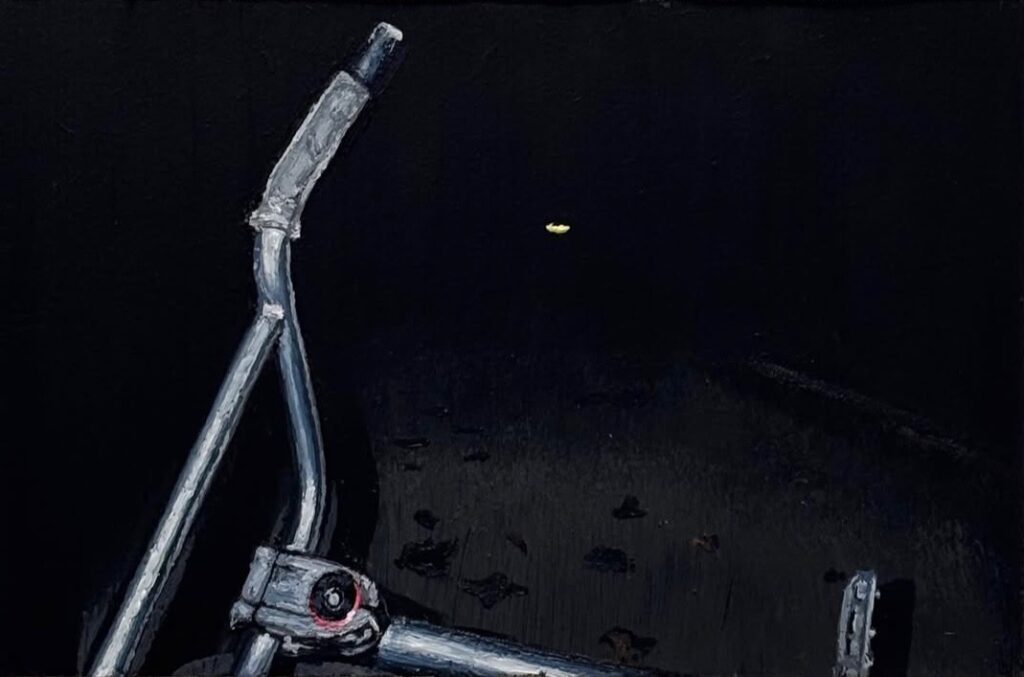
Louis: Life was good growing up, we were always on our bikes or playing football. I grew up in a rural village in the West Midlands, just outside of Shrewsbury, the village is quite large so there were a few kids the same age, we’d just mess about around the village all the time. I’ve described my childhood a bit like a doctors waiting room though, it always felt like we were waiting around for something to happen, looking back it felt quite repetitive and sort of all blurs into one, I now think of that as a sort of like to the repetitive nature of my dads work.
Do you remember approximately at what age your creative side started to show? And when did you start taking being an artist seriously?
Louis: I was thinking about this the other day. Close to my house were some woodlands, we’d go into there with some shovels “borrowed” from our parents or the nearby allotment. At the start of the summer, we’d map out a plan for an elaborate bike track then spend the rest of the summer building it. The track had big jumps and tight corners through the trees. In the end it was a bit too ambitious and impossible to ride, but this sort of made it a big sculpture, we could only look at it to my knowledge it’s still there, I’d say that’s one of my first artworks.
I think I’ve always had the intention of being an artist, my parents are super supportive of everything my siblings and I do, but I think I struggle to classify myself as an artist, I set goals for myself, it started off by telling myself I’m a proper artist once I sell a painting, then I achieved that but still didn’t feel like a real artist so kept moving the goalpost of what I needed to achieve before I was an artist. I’m still constantly moving this goalpost and I think that’s solely down to imposter syndrome. I think especially when you come from a working class background and you don’t have a safety net to fall back on, you can’t really allow yourself to get comfortable because you know how easy it is for that to disappear.
You use the term class dysmorphia. Is it primarily about how you see yourself, or about becoming conscious of how other people see you?
Louis: I think it’s a bit of both, i use it in terms of comparing myself to other people. I spent so long spending every penny I had on making myself look richer than I was. I’d save up the money from my paper round to buy a designer T-shirt in the sale that wasn’t even nice and might not even be the correct size, but at least it was designer. By doing this (trying to make myself look richer) I’d make myself poorer. I also think that when I left Shrewsbury to go to university, it really opened my eyes, it made me realise that I thought middle class people were upper class and working class people that were slightly better off than me were middle class. It really made my question exactly where I sat on the socioeconomic scale.
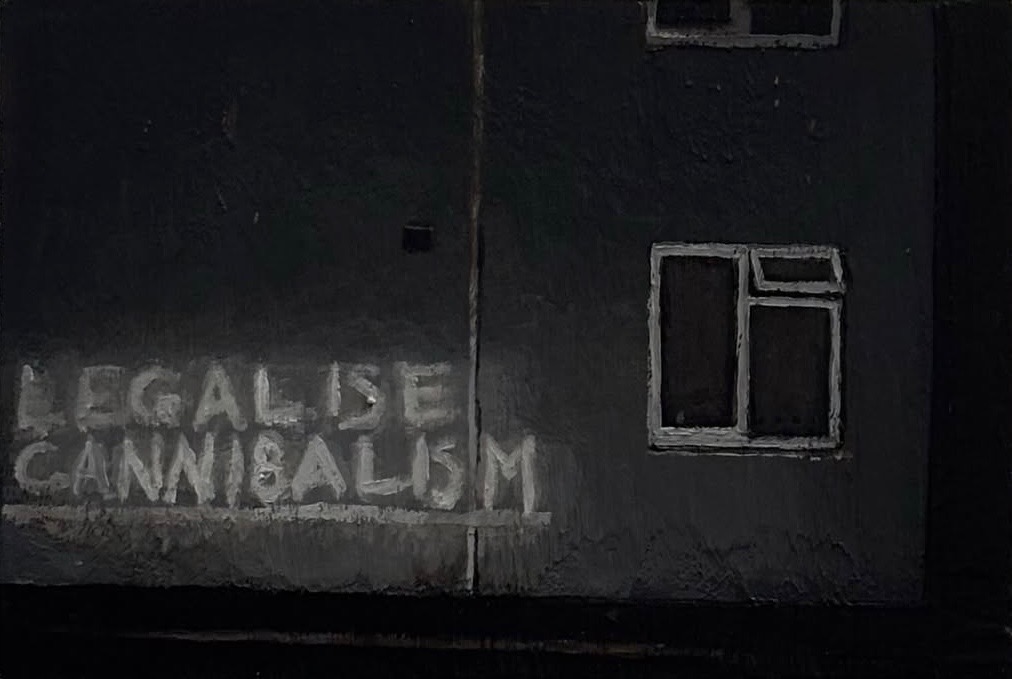
You have said that you did not really become aware of your class position until you went to university. Do you remember a particular conversation or moment when that realization first hit you?
Louis: When you go to uni, the topic of money comes up quite quickly, whether that’s what your parents do for work, or what car you drive, or in most cases, how much your student loan is. As I come from a low income household, I got the maximum student loan, as did my brother and sister and most of my friends from home. When they heard that I was getting just over £9000 some people would tell me how lucky I was and would proceed to complain about only getting a couple thousand or not getting a loan at all, but this was due to them coming from a high income household and having parents that could afford to support them financially. If felt so wrong to be told how lucky I was for being tens of thousands of pounds in debt whilst they would leave uni owing nothing but a thank you to their parents.
There is something strange about class in Britain: people often know exactly where somebody belongs socially without ever explicitly discussing it. What were the codes you suddenly became aware of at university?
Louis: Quite soon after starting uni, I had to get myself a part time job. I remember being told that you shouldn’t work over 12 hours per week as any more than this would affect your studies, but these few hours simply wouldn’t provide enough money. In comparison to some of my peers, they wouldn’t get a job at all, apart from maybe something towards the end as work experience.
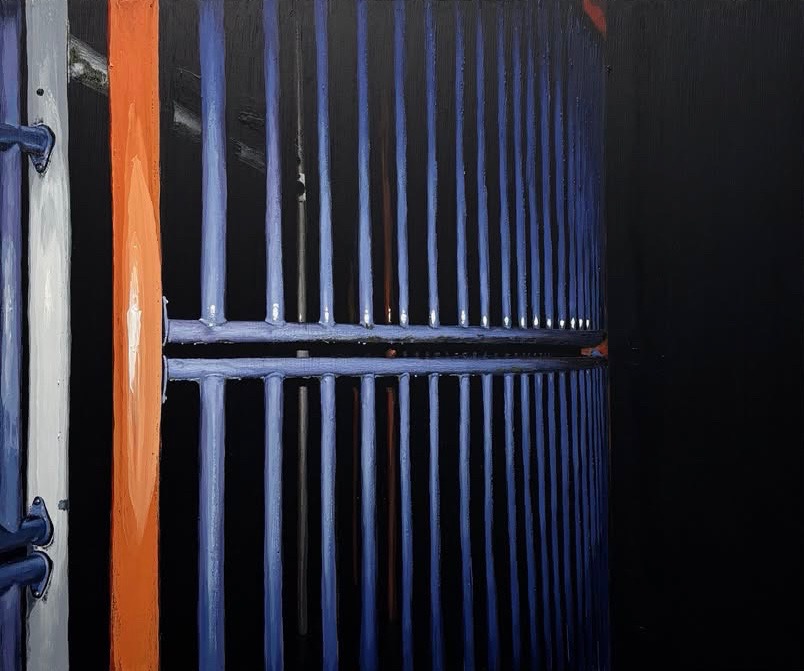
Is class dysmorphia something you think can ever disappear, or does becoming conscious of class make it impossible to stop seeing yourself through that lens?
Louis: I think class dysmorphia can disappear, but I think it also goes hand in hand with imposter syndrome. As we know, the art world is heavily middle and upper class, so quite often I’ve felt out of place, this might be because I’m standing in a Mayfair gallery or because I’m chatting with people that have been surrounded by art their entire lives. I think defining one’s class can be a way of labelling and justifying those feelings of imposter syndrome.
As your career progresses and you enter galleries, collectors’ homes and parts of the art world that may once have felt foreign to you, has your relationship with your own class identity become easier or more complicated?
Louis: I think my relationship with my class has got more complicated, in terms of feeling out of place. But at the same time I’m so proud of being able to say that I’ve done it all by myself. Although my parents weren’t necessarily able to support me financially, they have more than made up for it with their support for my career as an artist. I think my class relationship will always be something I find complicated, especially if success is involved. In the UK we’ve been told by various governments that social mobility is possible and that working class voters can easily become middle class if they put the work in. I don’t feel this is true, but with success, this is something I’m starting to battle.
The phrase pub money is fascinating because it transforms financial necessity into something casual and almost humorous. Do you think humor was a way your family protected themselves from the embarrassment associated with not having enough money?
Louis: Humor is a big part of my family life, my parents are some of the funniest people I know. I think there’s definitely a certain level of humour that’s needed during hardship, both as a way of deescalating and processing almost as a way of protecting yourself from embarrassment.
Do you remember understanding as a child when money was tight, or were adults particularly good at hiding it?
Louis: I think my parents were quite good at hiding if money was tight. I remember when my dad closed the car breakers yard, it was one of the first times i properly acknowledged a sort of struggle, before then it was just how things were and maybe jokingly put down to my dad being tightfisted.
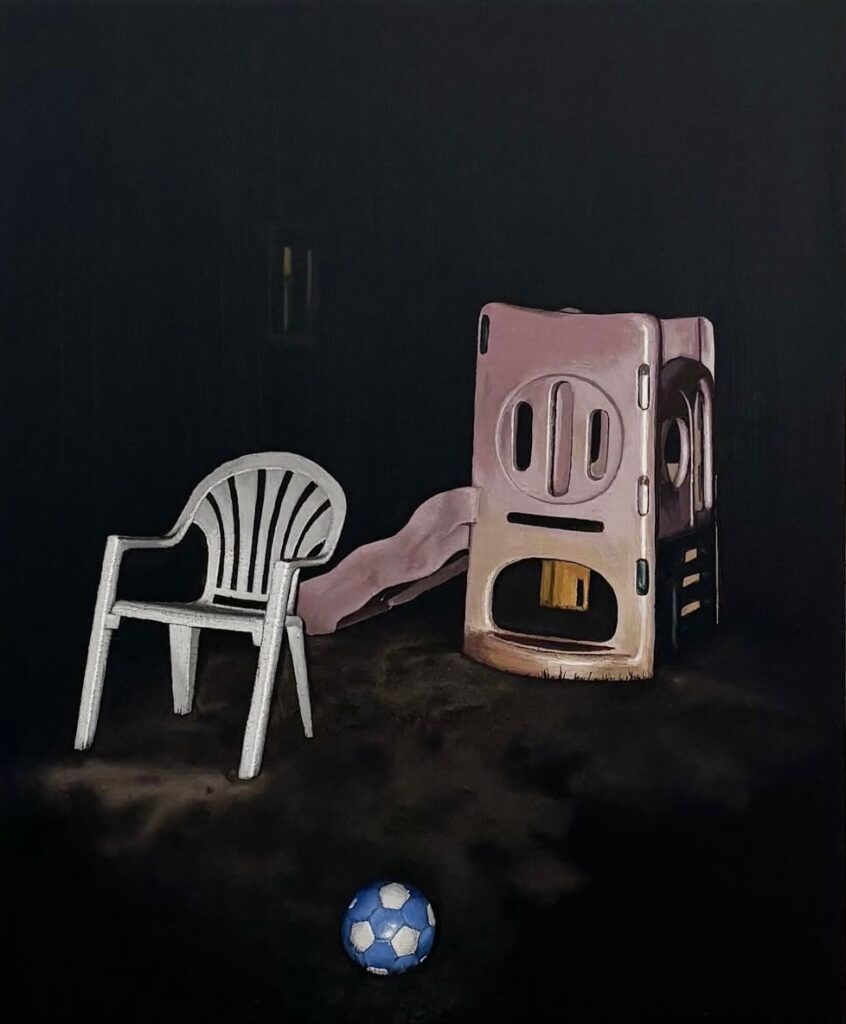
Your work appears affectionate towards the world you grew up in without romanticizing poverty. Is that balance something you consciously have to protect?
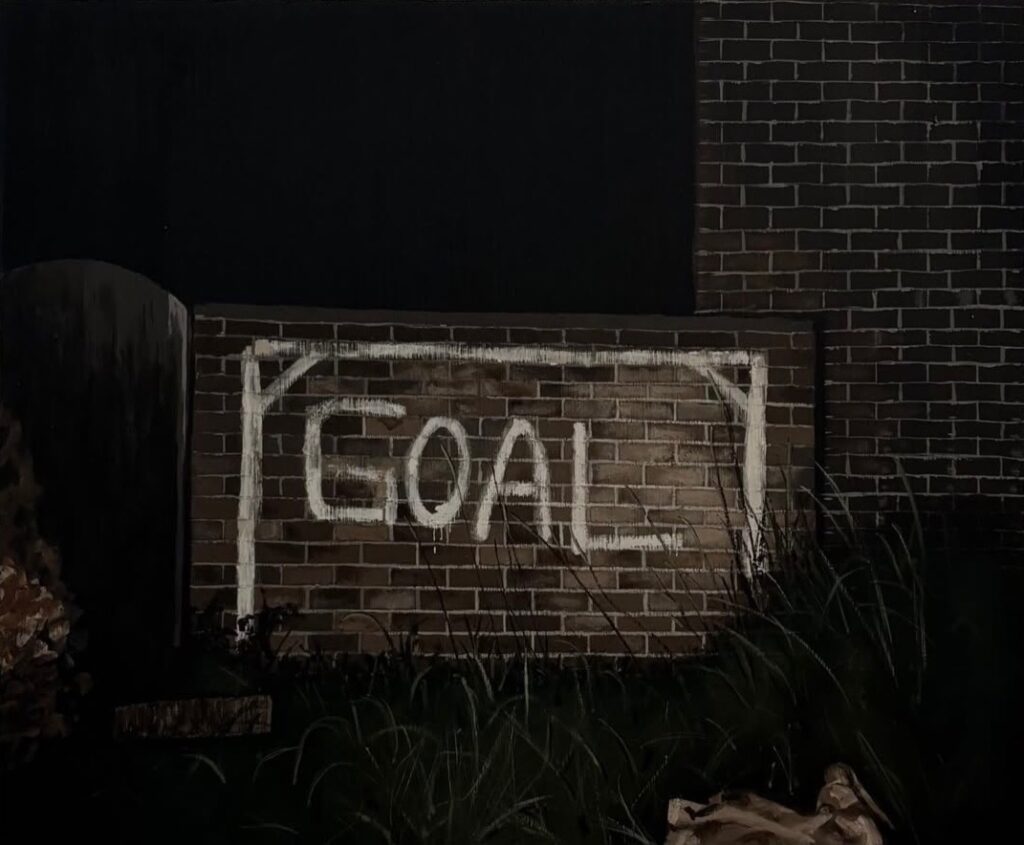
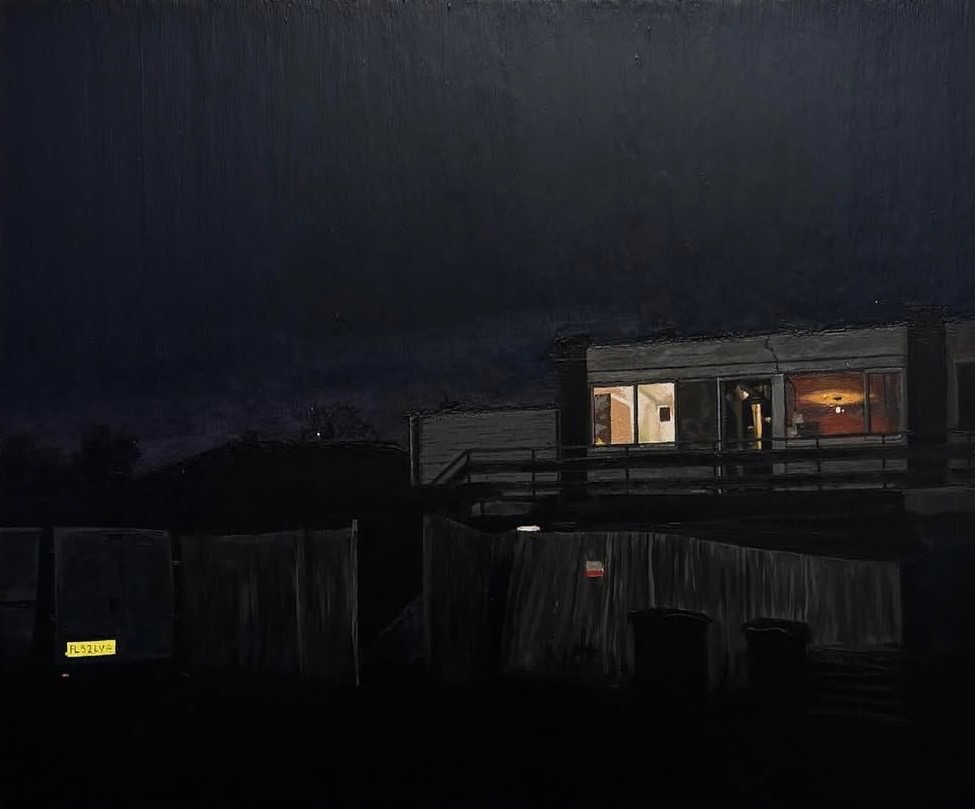
Louis: I think it comes quite naturally to me, part of my recent work is looking at where I grew up but with adult eyes. There are aspects of playfulness but then also the rougher and sometimes darker edges. I’m almost trying to blur the line between viewing the area through my childhood eyes and my adult eyes. I feel as though my pieces could all be situated within the same street or even within the same patch of grass. I’m proud of where I grew up so I’m conscious of portraying the feeling of the space as accurately as possible.
Your father’s labour seems to be becoming physically embedded in the paintings through your use of metal. Is this a way of collapsing the distance between his kind of work and yours?
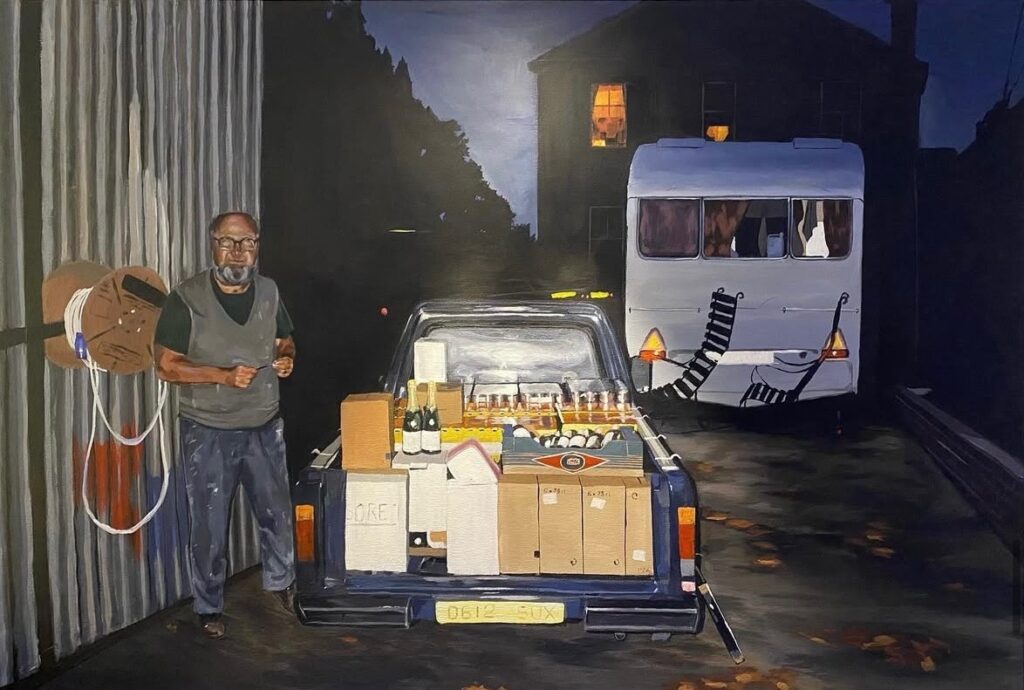
Louis: Obviously given my dad’s trade as a car breakers yard owner, it’s a heavily material based job, they’d remove anything they could sell out of the car then scrap the rest. My dad didn’t want my siblings and I to be involved in the breakers yard though as he knew there wasn’t much money in it and he wanted us to do better. It’s now, when I’m thinking about my class identity that I’m really jealous of the fact I was pushed away from the yard. So yes, I guess my use of material within my work is a way of me trying to connect with my dad’s trade.
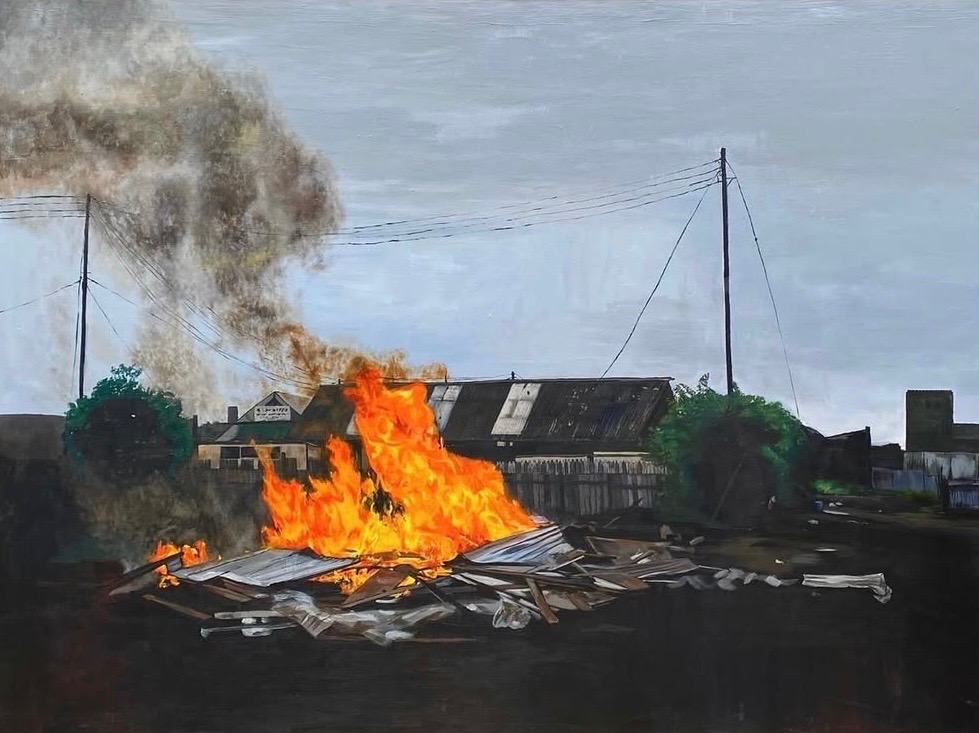
Has interviewing your parents changed your relationship with them?
Louis: I think interviewing my parents has made us closer. When you’re a child, you just accept things for how they are, so it’s eye opening to circle back and delve into my immediate family history, even as a refresher to my childhood.
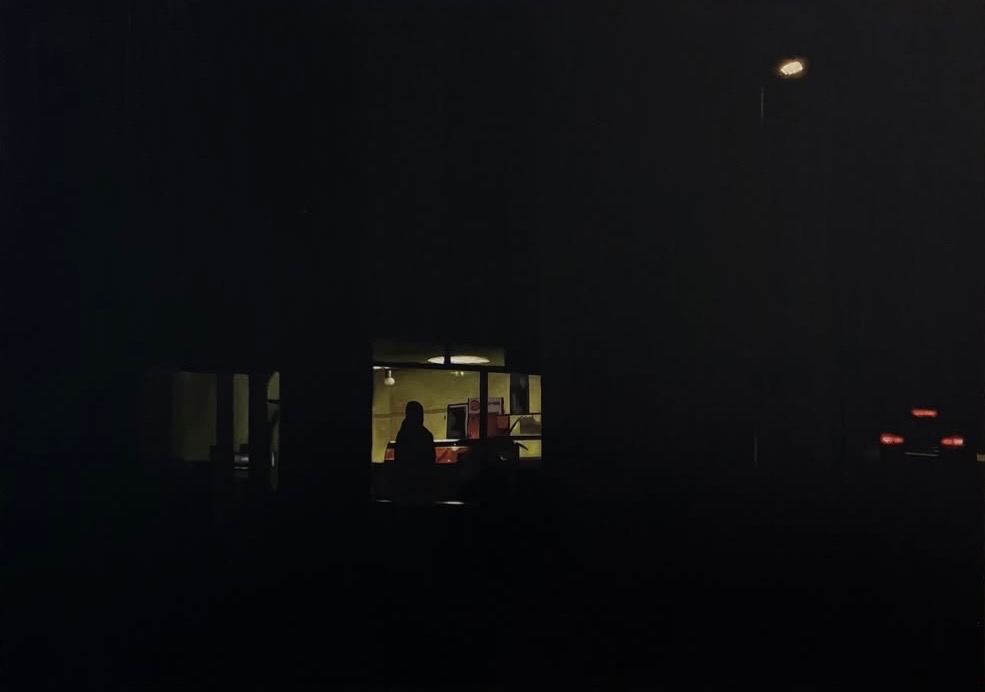
A lot of your paintings seem to emerge from darkness, almost like memories that are only partially accessible. Is darkness a way of painting memory rather than simply painting night?
Louis: I definitely see the darkness as more of an emerging memory, or even a blend of memories. As I said earlier, my childhood feels like it all blends into one, that along with comparing the area I grew up in through the eyes of my childhood and my adult eyes. The pieces could almost be situated anywhere.
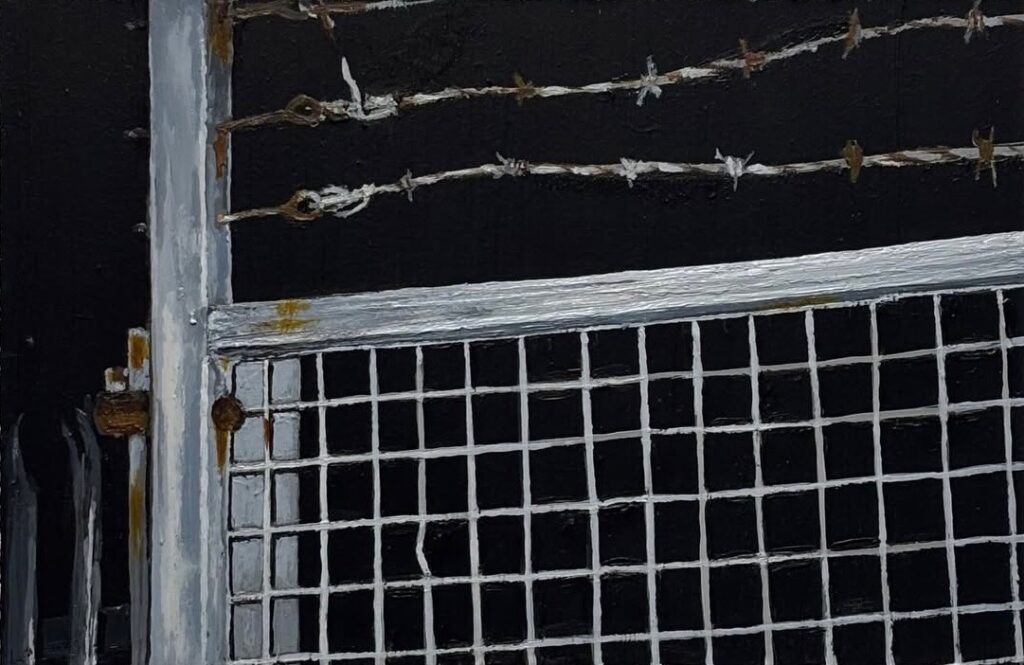
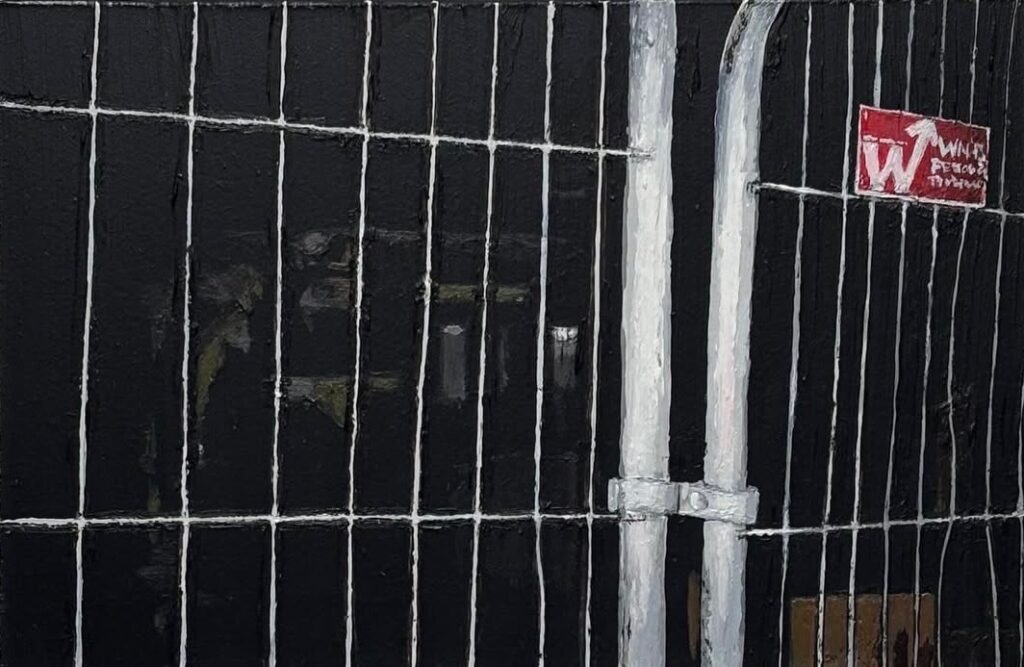
Your work is often described as nostalgic, but there is also something unsettling about it. Do you trust nostalgia?
Louis: I think nostalgia is part of the reason I return to Shrewsbury to take my reference photos, I have small glimpses of memories but when I return to take photos, the spaces look the same but feel so different. I can only put this down to no longer being a child, I’m noticing more of the rough edges.
The places you paint, takeaways, suburban houses, scrapyards, pubs, are extraordinarily ordinary. What makes one particular ordinary place suddenly feel worthy of becoming a painting?
Louis: Because in some way all of them are connected to a memory or a feeling. I’m shining a light on the overlooked corners of life. I think people resonate with that and maybe they’re common and transferable enough memories that people make their own links too. I also feel like my process acts as a gateway for people – I take my reference photos on a disposable camera. It’s such a nostalgic form of photography, that you take an everyday object and the saturation or the flash of the film camera triggers a memory.
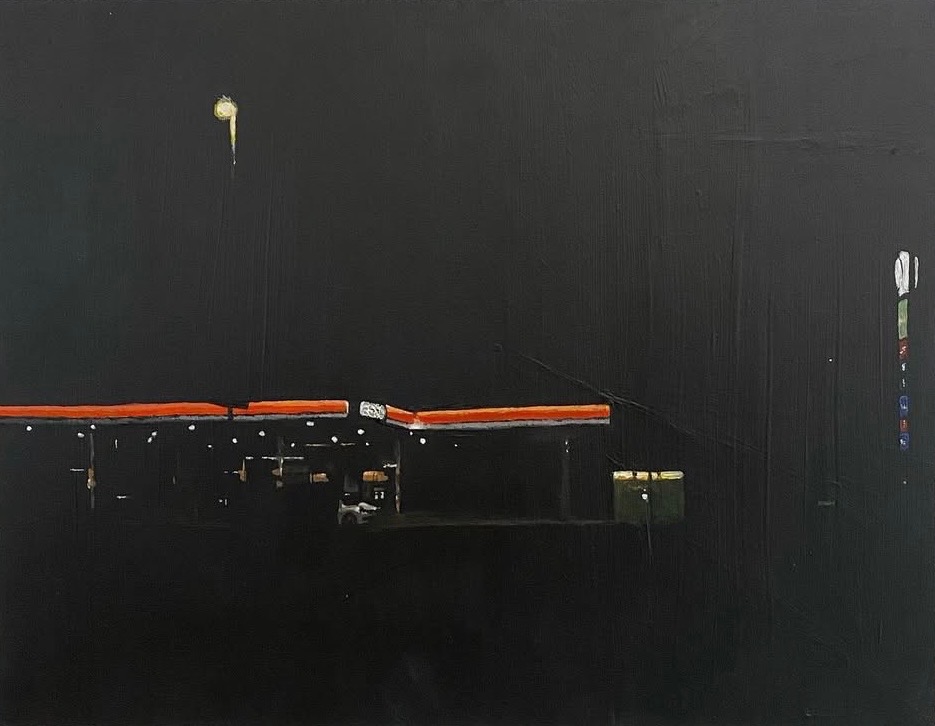
Do you ever worry that somebody looking at the work might see a quaint image of working-class Britain where you see something much more complicated?
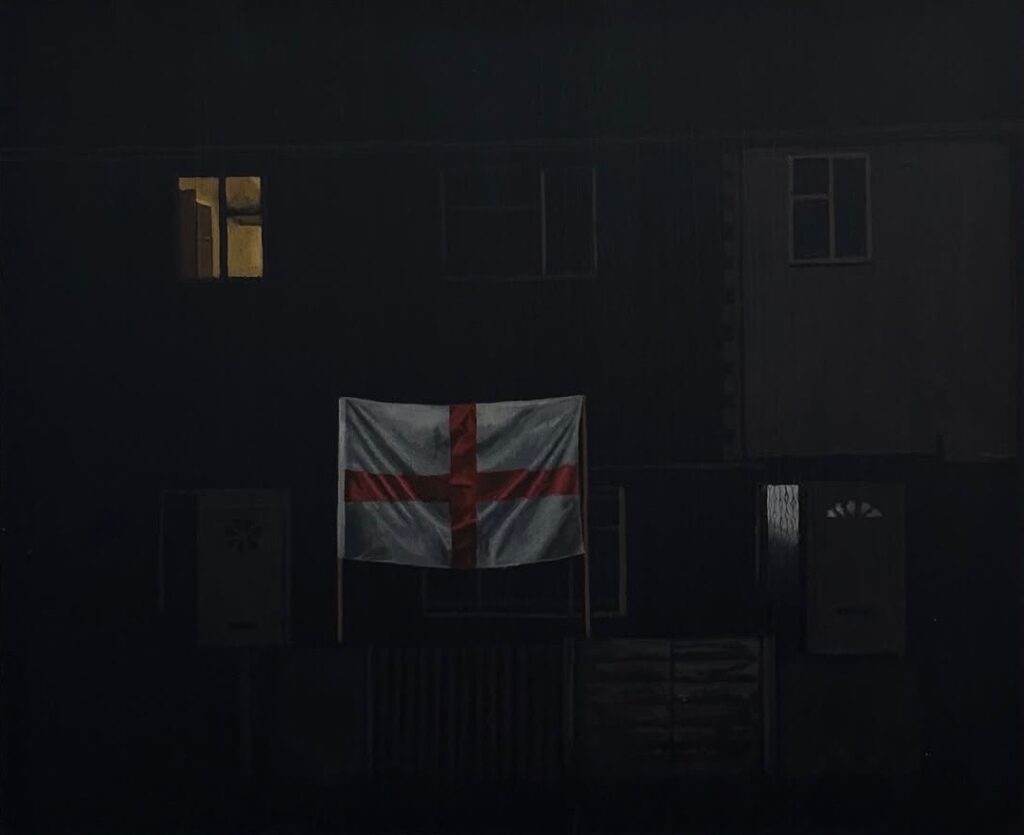
Louis: Because my pieces emerge from the darkness, you as the viewer are only given a very limited view of the subject, it allows you to almost fill in the gaps, so I think if someone resonates with the piece it’s because of a shared experience or feeling. I love the area I grew up in and try to paint it through a lens of fondness, but I’m not sure it can be described as quaint. I’m essentially merging two very complicated topics, one being class, then another being my feeling towards my class.
You are taking experiences associated with financial insecurity and putting them into paintings that become valuable commodities. Is that contradiction something you think about?
Louis: This is another area where imposter syndrome creeps in, sometimes I lean into that as I think the contradiction can be quite funny. I’ve painted a couple of rubbish bins and I like the thought of them being on someone’s wall.
Do you think the contemporary art world genuinely wants working-class voices, or does it sometimes prefer the aesthetics of working-class life without the people themselves?
Louis: There’s definitely a working class ideal or aesthetic that some people try to emulate, but it doesn’t compare to the real thing. I genuinely believe that the contemporary art world wants working class voices, but it’s just so much more difficult for us to break through, most of the time our practices are having to be supplemented by a ‘normal job’ meaning the amount of time we have available to spend on creating is much lower than our wealthier peers.
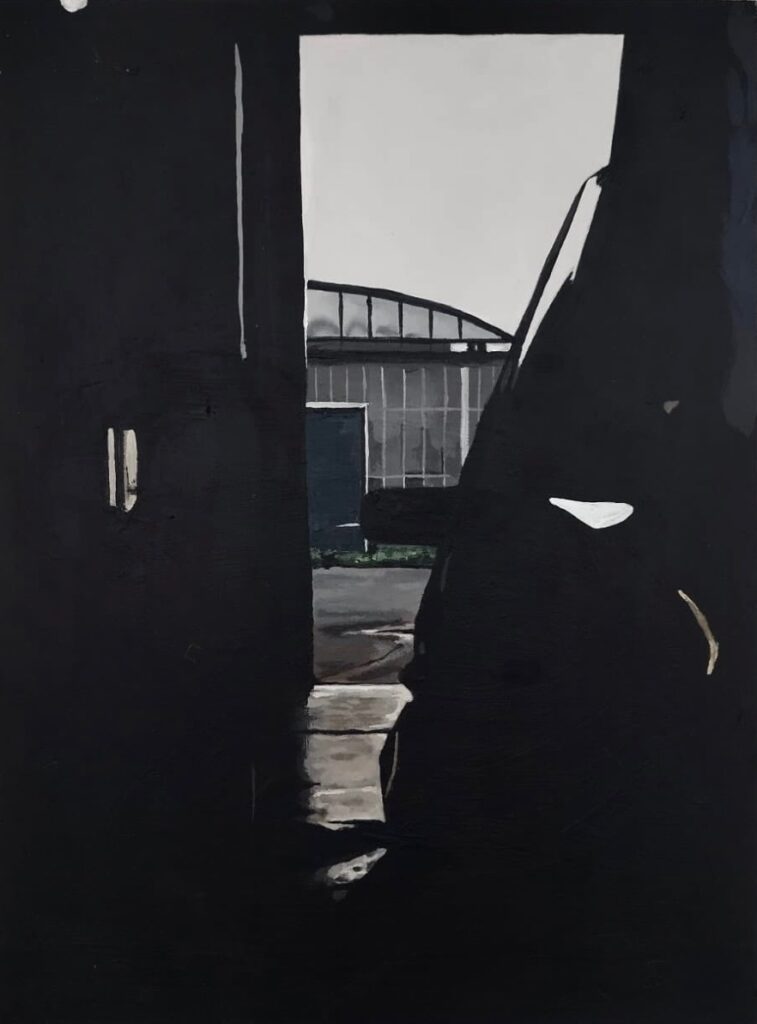
Have you ever entered a space in the art-world, where you immediately felt that you were not supposed to be there?
Louis: I have, I’ve definitely felt the need to make myself seem more intellectual. I can’t count the amount of times I’ve been in conversations with people that have grown up surrounded by art and are super knowledgeable, whereas my knowledge of art pretty much started at university, meaning most people in the art world have 18+ years more experience than me.
Can you walk me through your creative process from beginning to end result?
Louis: I’ll start off by roaming the streets of my home town/ village, places that have a significance. I take all of my reference photos on a disposable film camera, taking them quickly, they’re very candid and immediate, most of them end up having my finger in. I don’t usually have an idea in mind of what I want to capture, I like the process of exploring for the perfect composition, I also like being limited to around 30 photos, it means that I can’t afford to take lots of photos of the same thing, I take one then move on. When I get the photos developed I usually have an idea of which one I want to paint. I’ll start by painting a board or canvas black then build the paint up, going from the darkest point to the lightest. I tend to stay quite consistent with the reference image but sometimes make adjustments to the composition.
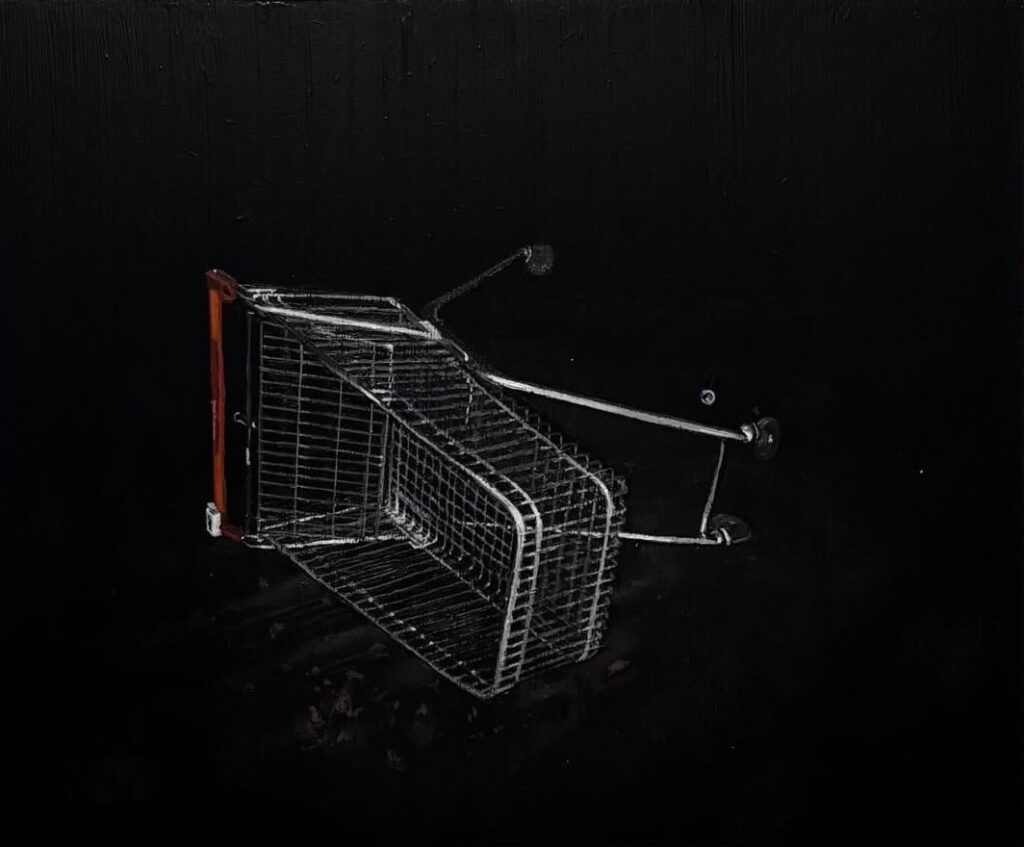
Can you also tell me about your use of symbolism?
Louis: I often try to include abandoned pieces of metal and cars in my pieces as a nod to my dad’s trade, I like the idea of continuing the business in a way but through painting. It’s like the very last piece of profit to be salvaged from the car.
So with what we just talked about, what are you hoping to convey?
Louis: I want people to relate to my work where possible. I want people to acknowledge the overlooked corners of many people’s lives and my community. I also think that working class communities have been misunderstood and demonised so I want to add another perspective.
Ok Louis, now to something totally different. In a parallel universe who would you be? and what would you be doing?
Louis: In a parallel universe, I think it’s safe to say that if the family business was successful, I maybe wouldn’t have been discouraged from being involved in it. I’d like to think that I’d be working alongside my dad, crushing cars every day.
Outside of art, what’s something you’re obsessed with right now, maybe a hobby, a show, or even a food, that keeps you grounded or inspired?
Louis: I’m big on golf at the moment, it’s definitely a middle/ upper class hobby that I’ve picked up but I love it. I think also growing up in a rural village and now living in London, It scratches that itch for some greenery.
Can you tell me a story about a time when a connection with someone had a big impact on you?
Louis: I’d posted a picture of a painting on Instagram, the piece was of my aunties council flat, I had quite a few people contacting me with heartfelt messages of how it reminded them of their parents or grandparents. It was heartwarming to see, but equally devastating to think that there are millions of people in the same situation.
What qualities do you find most important in the people you choose to spend time with?
Louis: People definitely have to be funny, I don’t want to be in serious art mode all the time. They also need to have ambitions, it doesn’t matter how big or small, they need to have goals.
Anybody you look up to?
Louis: I look up to my family, they’re so important to me and my practice.
What motivates you?
Louis: The thing that motivates me the most is that I have nothing to fall back on, I can’t afford for art not to work.
How would you describe a perfect day?
Louis: A perfect day would be a full day in the studio, followed by an evening meal out.
Alright Louis, I always ask these two questions at the end of an interview. The first is. What’s your favorite movie(s) and why?
Louis: Whiplash – the ending is just incredible, sometimes I’ll just watch the last 20 minutes.
The second is. What song(s) are you currently listening to the most right now?
Louis: I’ve had Noah Kahan’s The Great Divide Album on repeat for months now, any song from there.