Share this
Over the past few years, I’ve had the pleasure of photographing artists during my visits to Vienna, getting to know the city’s art scene through the people who shape it. This archive brings together a selection of those portraits, alongside conversations with the artists about their practices, what they love about making art and what they hope for the future.
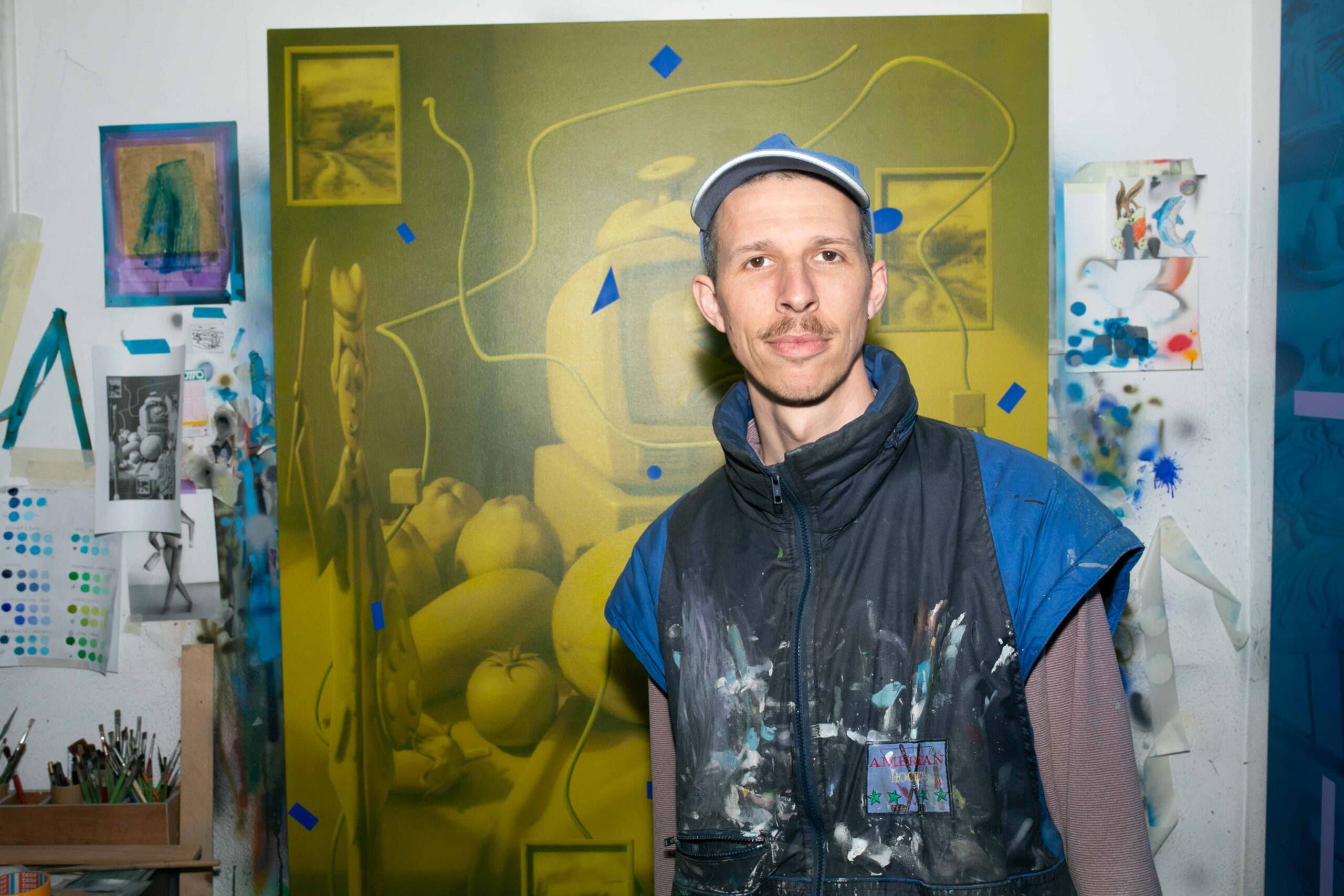
Sacha Grandemange
Brynley Odu Davies: What made you want to become an artist?
Sacha Grandemange:
I remember when I was fifteen years old, we went to visit the Berlinische Galerie during a holiday. It was one of my first very conscious encounters with works of art in a museum.
After walking around the space, I stood in front of a painting, and at that moment I felt that it was having some sort of magnetic effect that was pulling me toward it.
There, it got so interesting because — let me just add that I was sober in that moment — the interior that was depicted became alive. I could see the movement, and I felt as if I could hear music and smell something coming out of the painting. As I was witnessing a kind of life coming out of this piece, I realized I was experiencing something unique. Perhaps it was similar to the feeling you get while listening to a song and you know, it hits perfectly: you get goosebumps, your whole body activates, and your mind starts to open to something new.
So this happened, but visually. I was mind-blown, and I wanted to keep experiencing the mystery of that instant. From that precise moment, I decided that I wanted to be an artist.
Brynley Odu Davies: What do you love most about being an artist?
Sacha Grandemange:
What I love the most about being an artist is that I keep having these moments where I’m playing, just like I was playing in my bedroom as a child.
I used to love making images, getting lost in them, and wondering what was happening in the depths of my mind. Now, after 15 years of practice, my works have gained another scale and meaning, and I’m so glad that I can write my ongoing visual story while processing deep emotions. I think that being an artist allows you to always learn and experiment more, which eventually leads to personal development and growth. Keeping this in mind brings me joy, and I hope that I will always keep creating.
Brynley Odu Davies: What do you dream of for your future as an artist?
Sacha Grandemange:
For my future as an artist, I dream of a successful artistic career which can allow me to keep doing what I love. I wish to keep painting and get surprised by all the things that are possible to create. I also hope that my path will allow me to meet a lot of people and that my work will have a positive impact on the lives of others.
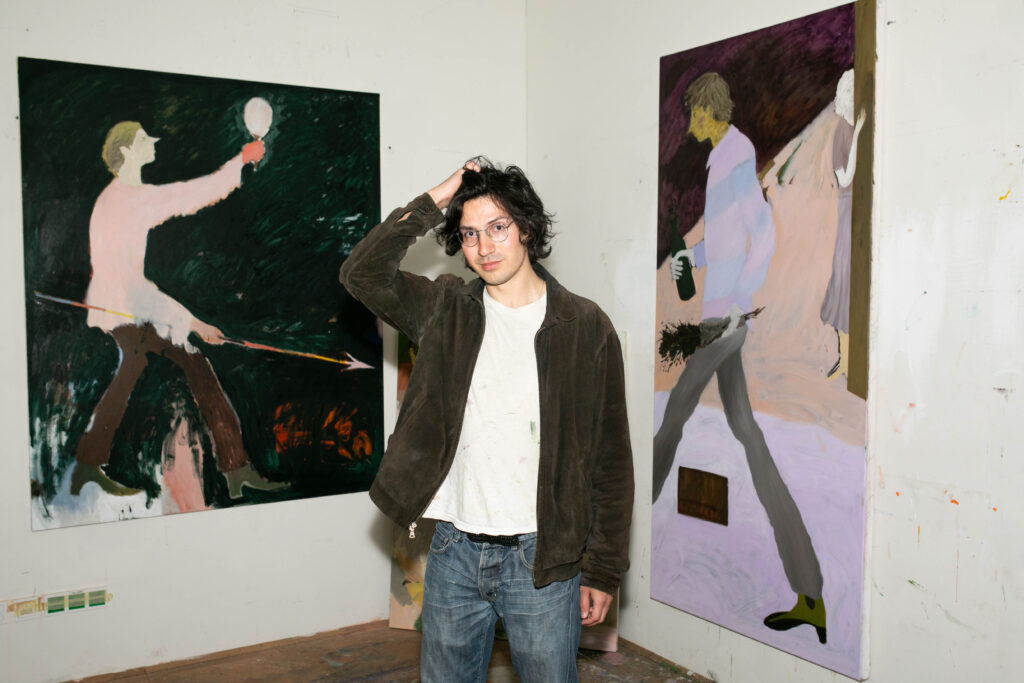
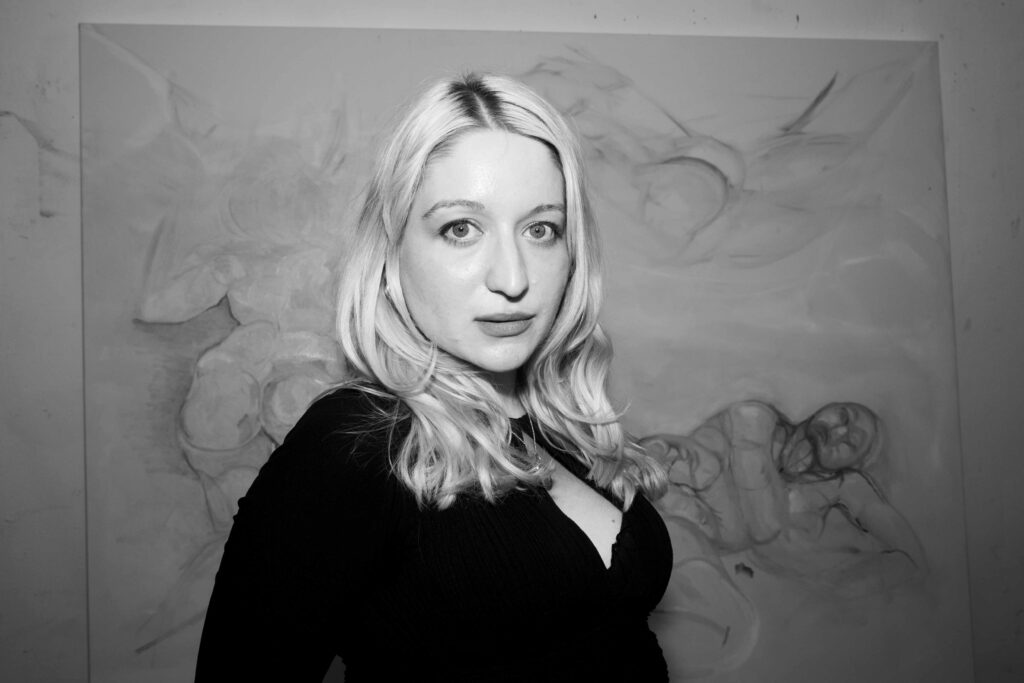
Laura Raimo
Brynley Odu Davies: What made you want to become an artist?
Laura Raimo:
I never really planned on becoming an artist. Growing up, I did not even understand that being an artist could be an actual career. I was simply always drawn to painting, drawing and filming, so it never felt like a conscious decision. It was something that developed naturally because I kept returning to it.
There is also a very particular need I have to paint. I miss it when I am not doing it, and if I go too long without it, I notice that I do not feel quite right. In that sense, there is almost a dependency on painting. It is where I process experiences and emotions that I cannot always make sense of in other ways.
As I became more conscious of my practice, I also began to understand why painting was so important to me. Growing up as a woman, I became increasingly aware of how much of my behaviour had been shaped by the expectation to be understanding, accommodating and attentive to other people’s emotions. Painting became a place where I did not have to filter what I was feeling through somebody else’s needs. It allowed me to return to memories and relationships and question not only what I had felt, but why I had behaved in certain ways, and how much of that behaviour I had learned from the expectations placed on me.
Brynley Odu Davies: What do you love most about being an artist?
Laura Raimo:
What I love most is a particular moment that sometimes happens while I am painting. After working on it for a while, I reach a point where I no longer feel as though I am looking at it from the outside. I begin to live inside it.
I become completely absorbed in its colours, figures and spaces, and each part of the painting starts to carry its own memories and emotions. Every patch of colour becomes connected to a thought, a memory or a feeling, and the world of the painting slowly develops around me.
For me, this is the peak of the painting process. It is almost like entering another reality that has slowly been created through the act of painting. I stop thinking about the work as an object and simply exist within it for a while. There is something almost addictive about reaching that state, and it gives me an enormous sense of satisfaction.
Brynley Odu Davies: What do you dream of for your future as an artist?
Laura Raimo:
I wish to never feel completely satisfied with my painting. I want to keep struggling with it, keep thinking about it, and keep finding reasons to return to the studio every day. I hope I never lose that feeling of restlessness, of wanting to stay up thinking about my work and waking up with the need to paint again. I want to keep challenging myself and never feel as though I’ve reached the end of what I can do.
David Hafer García
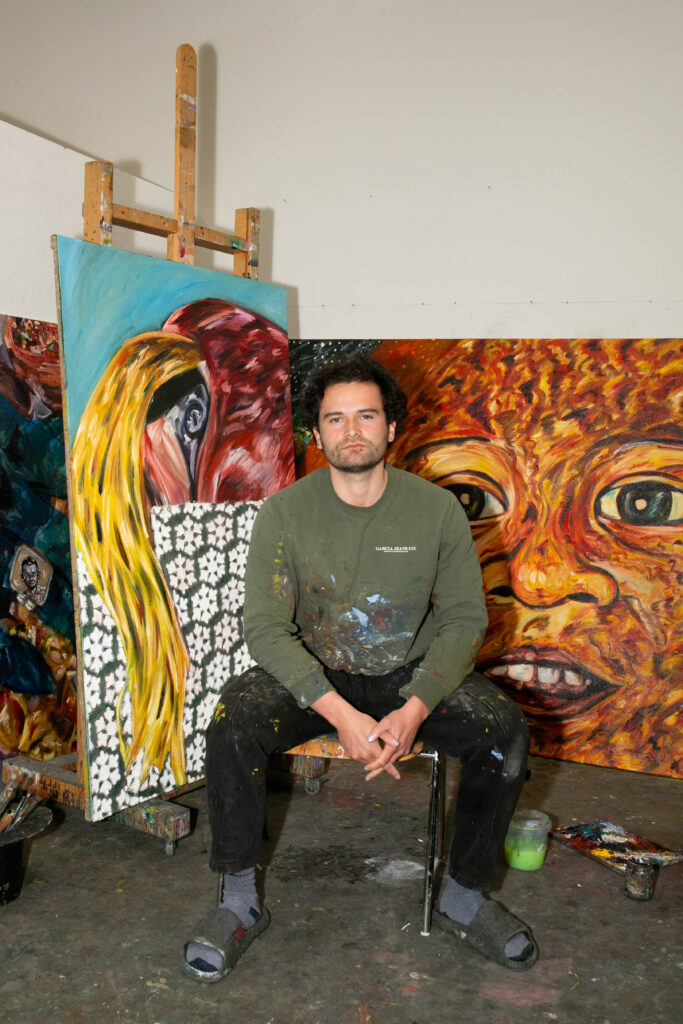
Brynley Odu Davies: What made you want to become an artist?
David Hafer García:
The total freedom offered by the medium of painting has always held a great attraction for me. Unlike other media, such as film or game design, you are completely alone with your work: you are neither subordinate nor superior to anyone else. At the same time, working in an artistic medium that many people have declared to be “dead” or outdated seemed to offer a certain kind of freedom to be a fool—to work without having to worry too much about expectations. Compared to more commercially viable media, where sales figures and questions of what is currently in the zeitgeist seemed to exert greater pressure on the creative process, painting offered me a kind of freedom to simply do what I wanted.
Brynley Odu Davies: What do you love most about being an artist?
David Hafer García:
What I love most about what I do is that there is no separation between my “work” and the rest of my life. Everything can find its way into my practice: whether it is growing up between Germany and Guatemala, my idiosyncratic and sometimes rather crude sense of humour, current political events, or simply my love of food. The process of painting often feels like a therapy session to me. In the end, I discover things about myself that I didn’t know before, or that I had suppressed for a long time. I think it is this constant element of surprise that keeps me going back to the studio, allowing myself to be surprised by what emerges.
Brynley Odu Davies: What do you dream of for your future as an artist?
David Hafer García:
I would like to expand my practice—to move beyond my paintings, so to speak, and use my work to connect with other artists and other media. Perhaps it has something to do with growing up in Germany, but the idea of the “Gesamtkunstwerk”—the total work of art—is something that really fascinates me.
Over the past few years, I have also been fortunate enough to participate in numerous exhibitions in Latin America and to meet many young artists, particularly from Mexico and Guatemala. I would therefore like to develop projects that could create connections between young artists there and the art scene here in Central Europe, and vice versa. Especially in light of the increasingly strong political shift to the right on both sides of the Atlantic, I believe that this kind of artistic exchange is more important than ever.
Robin Lütolf
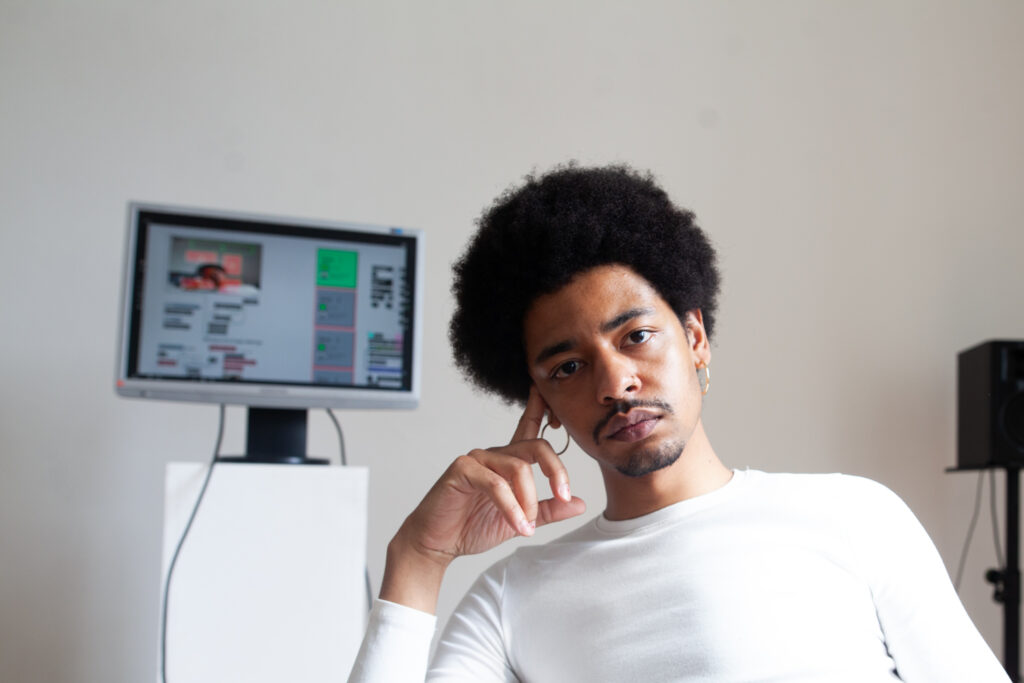
Brynley Odu Davies: What made you want to become an artist?
Robin Lütolf:
I’m not sure I ever really decided to become an artist. I think everything we can perceive – every object, material, image, gesture, or situation – contains questions that are often difficult to see and even harder to answer. Being an artist allows me to bring some of these questions to the surface, to give them a form, and sometimes simply to make them harder to overlook. That is what keeps me interested in art.
Brynley Odu Davies: What do you love most about being an artist?
Robin Lütolf:
The freedom to take things seriously that might initially seem too small, too ordinary, or too ambiguous to deserve much attention. I like being able to follow an observation without knowing exactly where it will lead – and to move between research, making, writing, conversations, and sometimes very impractical experiments. Art gives me a reason to remain with a question for longer than would normally be considered useful.
Brynley Odu Davies: What do you dream of for your future as an artist?
Robin Lütolf:
I would like to get better at starting over. Being an artist means constantly entering unfamiliar territory, not knowing enough, learning something new and then beginning again. That can be exhausting, but I also think it is unavoidable – and perhaps something I would like to become more comfortable with.
But if we are really talking about dreams, I dream of an art form in which the rules of time and space no longer get in my way. Oh, and of a world in which being an artist is defined more by making art than by making a career.
Mafalda Figueiredo
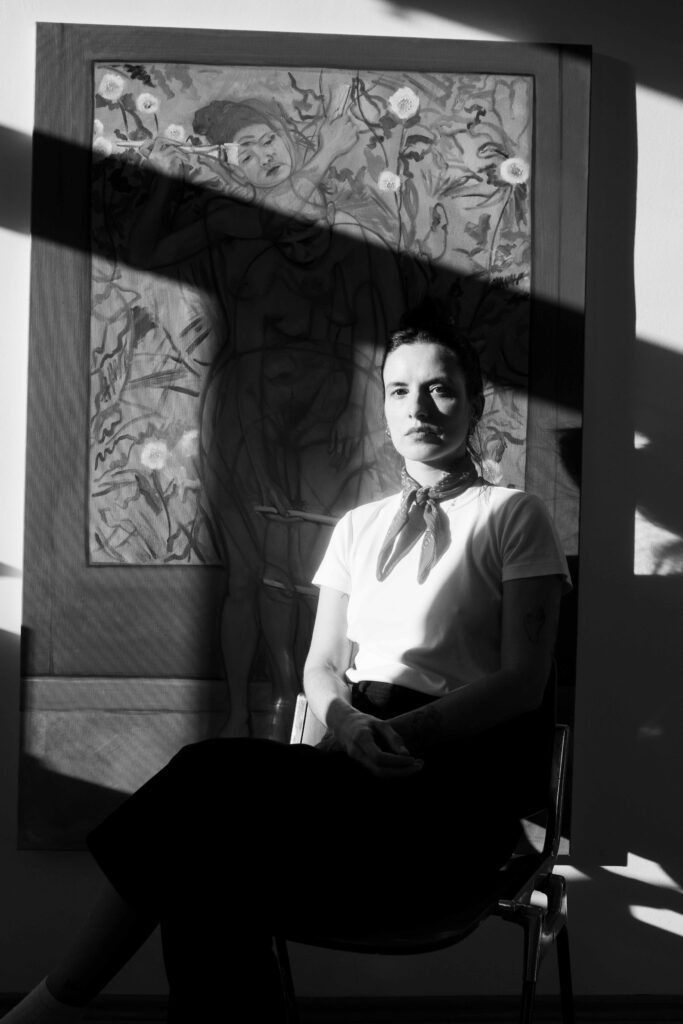
Brynley Odu Davies: What made you want to become an artist?
Mafalda Figueiredo:
I feel like it was a path that presented itself to me over time. Although I drew quite obsessively from a very young age, I didn’t envision my future as an artist when I was a child – I didn’t know that was even an option so I thought maybe I should become a designer or something like that. When I applied to uni to study design I didn’t get in and happened to get into my second option (picked only as a formality) which was painting. After a month in the painting course I felt I should continue – I didn’t quite understand why at the time, but I had a feeling that finding a visual language would help me find myself. I also realised later that I wanted the ownership that comes with making something of my own, rather than working for others.
Brynley Odu Davies: What do you love most about being an artist?
Mafalda Figueiredo:
I love watching a blank canvas become the representation of my inside world and that I can turn it into an object outside myself to contemplate. I think this is quite a magical process.
I also love how an image can evoke a multitude of stories as it’s observed by different people. I think being an artist can bring this sort of connective power with others, almost as if we can reveal things about them that they hadn’t been able to see before.
Brynley Odu Davies: What do you dream of for your future as an artist?
Mafalda Figueiredo:
I dream first of all of being able to continue painting until I die. I want to reach as many people as possible with my work and continue growing, searching, experimenting. I want to keep finding excitement with every new painting and showing up even when I don’t.
Melanie Thöni
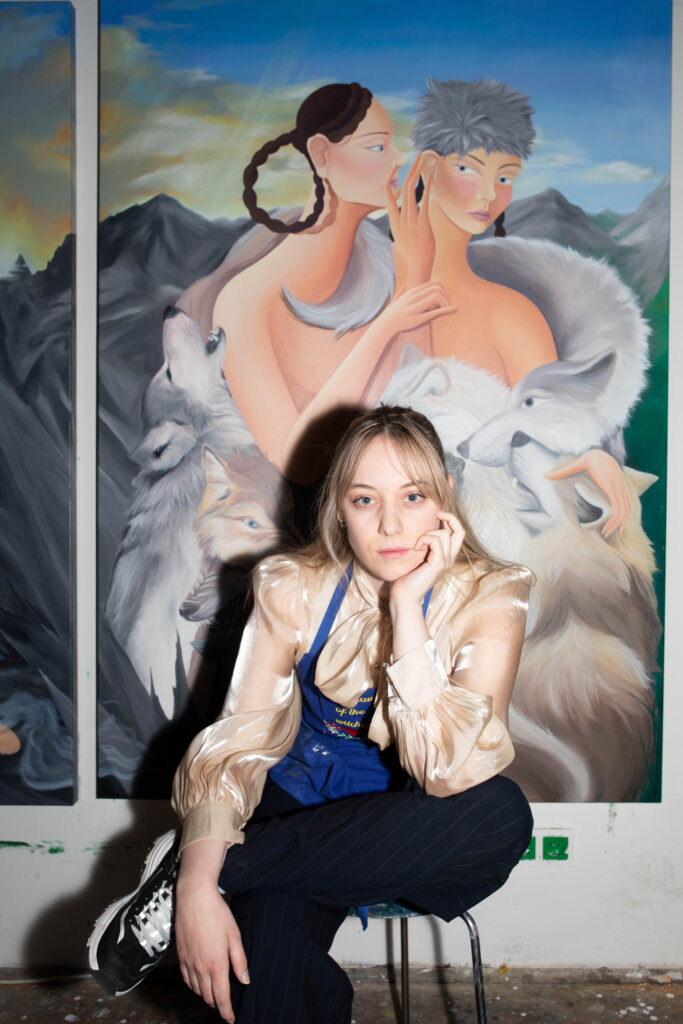
Brynley Odu Davies: What made you want to become an artist?
Melanie Thöni:
Ever since I was a little child, I have been drawing and painting. It is something that has been a constant part of my life for as long as I can remember. What started as a simple fascination and a way of expressing myself gradually became something much more meaningful to me, a passion that I have carried with me throughout my entire life.
Growing up in a small village in the countryside, I was quite disconnected from the art world. For a long time, I didn’t even know that being an artist could be a profession, or that there was a whole world built around creating art. When I eventually discovered that this could actually be a path in life, something immediately clicked for me. It felt obvious that this was what I wanted to pursue.
Brynley Odu Davies: What do you love most about being an artist?
Melanie Thöni:
What I love most about being an artist is how incredibly diverse this profession is. No two days are quite the same, and I really enjoy the contrast between the different sides of being an artist.
On one hand, I deeply appreciate the quiet hours I get to spend alone in my studio, where it is just me and my work. There is something very special about having the time and space to completely immerse myself in the process.
On the other hand, being an artist also means meeting people, exchanging ideas, and constantly finding yourself in new places and situations you might never have expected. I love these encounters and the unexpected paths that art can open up. You suddenly find yourself having conversations with people you might otherwise never have met, often talking about subjects and ideas that your work has brought to the surface.
Brynley Odu Davies: What do you dream of for your future as an artist?
Melanie Thöni:
I dream of having the freedom to make the work I believe in, to create exhibitions that bring people into dialogue, and to encounter new places and perspectives through my art. And maybe most importantly, I hope that years from now I will still have that same feeling I had as a child when I started drawing: the excitement of sitting down with a blank surface and not knowing yet where it will take me.
Paul Riedmüller
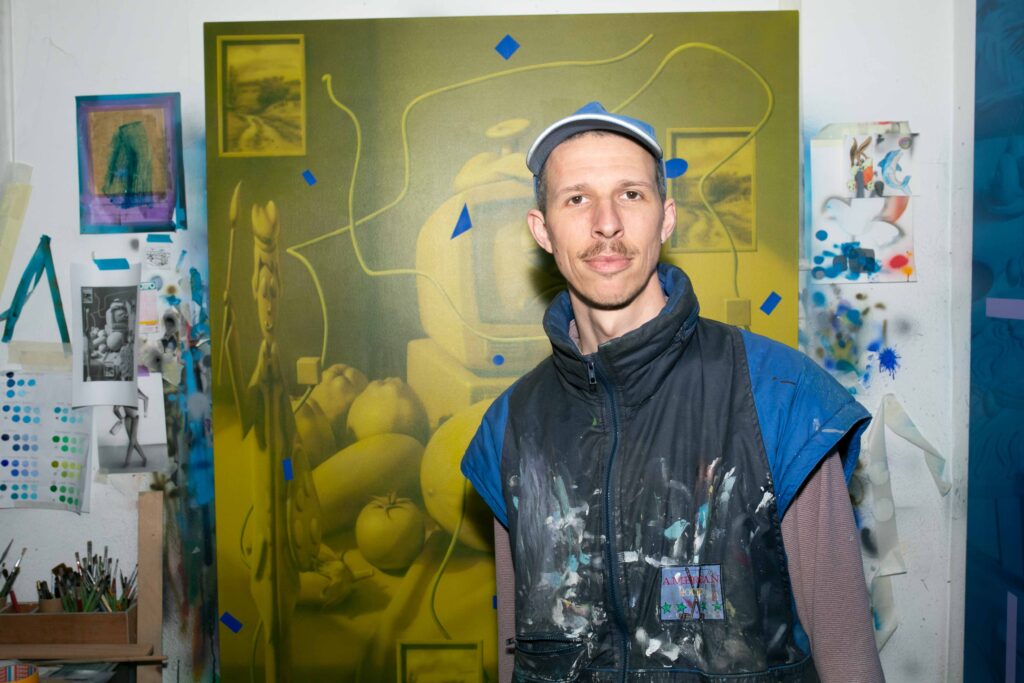
Brynley Odu Davies: What made you want to become an artist?
Paul Riedmüller:
I think it was the looking. Looking at things, noticing things, and realizing that there were so many possibilities in making art.
Then there was art school. I liked the freedom of it. I could make almost whatever I wanted and find my own way of doing things. And people seemed to like what I was making. So I thought, why not give it a try?
Brynley Odu Davies: What do you love most about being an artist?
Paul Riedmüller:
I think it’s the freedom, but also the variety. There are so many different things I can do as an artist.
I can be a graphic designer, make sketches on the computer, paint in completely different techniques, make videos, build things out of wood, promote my paintings, pack them, talk to people. There’s always something different to do. I like that I don’t have to do just one thing. There’s always something new to figure out.
Brynley Odu Davies: What do you dream of for your future as an artist?
Paul Riedmüller:
I dream about a future of possibility. I want to keep having the freedom to explore different things, but also have more time to focus on the things I really enjoy. I’d like to build more sculptures and installations, and do more collaborations with other artists, like Max Freund. I want to experiment more and make bigger things. And honestly, I’d also like to spend less time writing emails and making Instagram posts and reels, and more time actually making things.
Max Freund
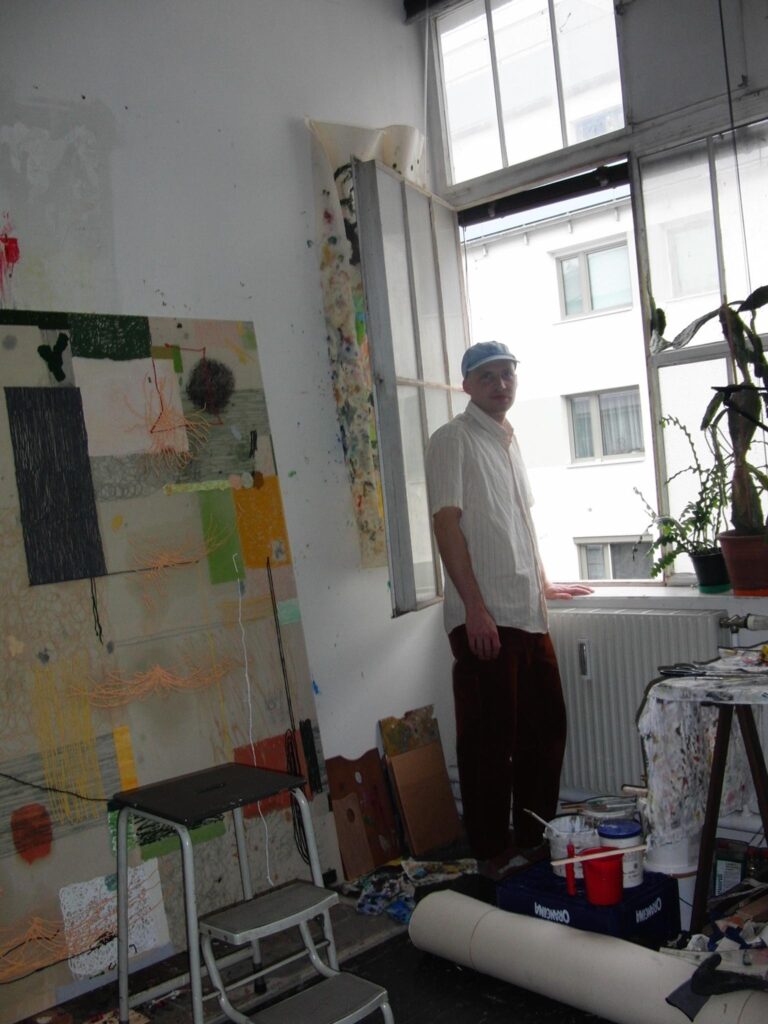
Brynley Odu Davies: What made you want to become an artist?
Max Freund:
I never planned on becoming an artist, and even today I feel more comfortable saying that I’m just a painter. Until shortly before graduating from school back then, I didn’t even know that you could study art or that it could be a professional career option. I never really thought much about it. I simply wanted to dive into painting, have a studio and explore what other people had explored before me.
Brynley Odu Davies: What do you love most about being an artist?
Max Freund:
Being able to engage as much as possible with the absurd, completely abstract, and non-normative things in human life. And of course, listening to loud music all day.
Brynley Odu Davies: What do you dream of for your future as an artist?
Max Freund:
Sometimes I wish I had plans or clear goals, but I don’t. At most, I have ideas for the next paintings.