
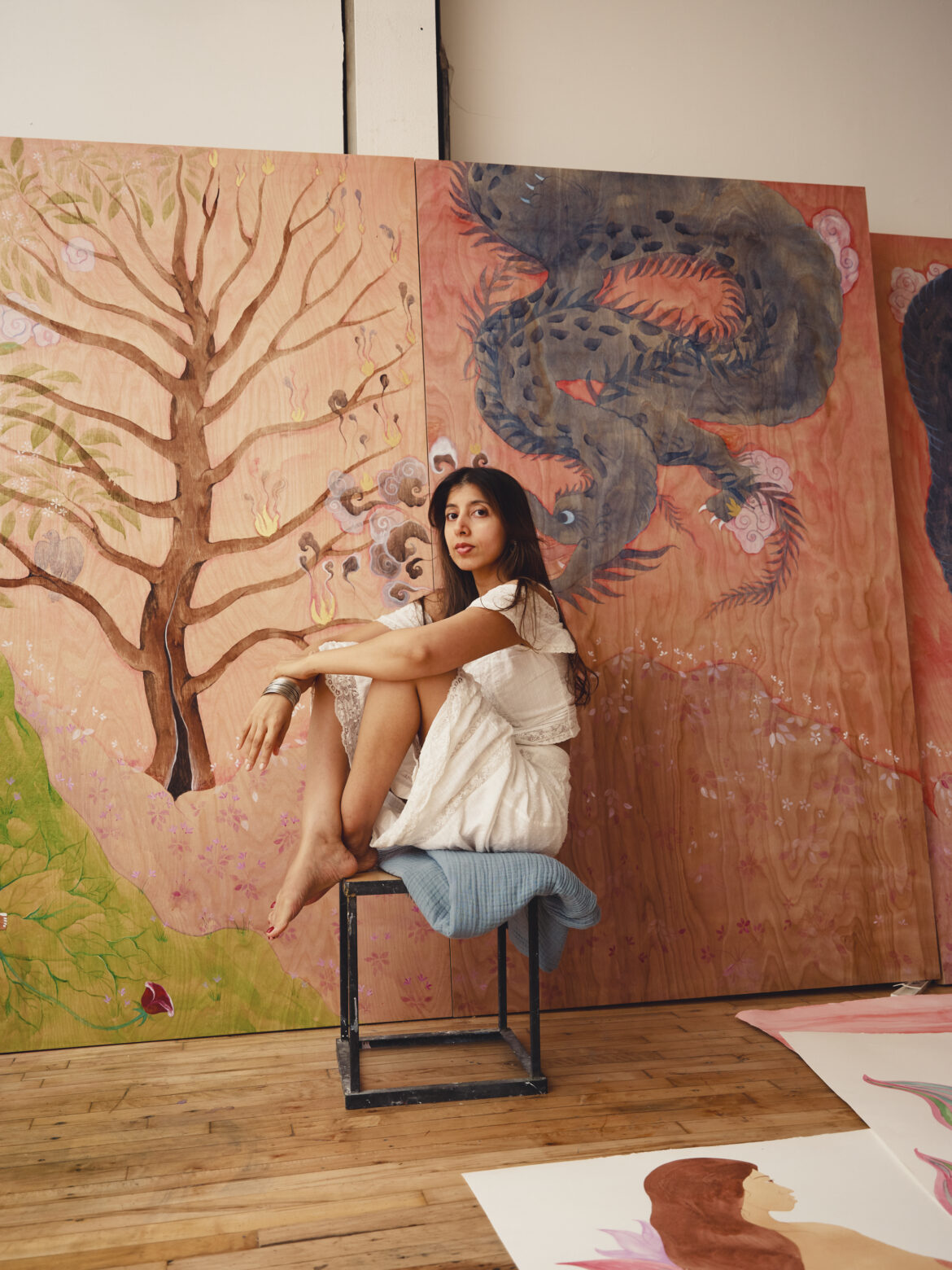
Both life and being an artist have made me attentive to what cannot be seen, only felt. To the subtle energies that connect us beneath language, geography, or history. It is in that invisible space, somewhere between intuition and memory, that Hiba Schahbaz’s work unfolds.
Born in Pakistan and trained in the tradition of Indo-Persian miniature painting before relocating to New York, Schahbaz carries within her practice a dialogue between worlds: intimacy and monumentality, fragility and protection. Her paintings construct spaces of tenderness and refuge, not as naive escapes, but as deliberate acts of transformation.
Just as her name suggests, her artistic universe feels like a gift offered without demand. Expansive, protective, and quietly transformative.
Text: Lucia García Martín
Profile picture by Charlie Rubin
Lucía: Hello Hiba, how are you, and where are you receiving us from in New York?
Hiba: I’m currently in Brooklyn, although I’m actually leaving tomorrow for a one-month residency at the Hermitage Artist Retreat in Sarasota County. I’m very excited about it, it’s been extremely cold here, so the idea of spending a month focusing on making work somewhere warmer feels like a gift.
Lucía: So what are you preparing for today?
Hiba: Mostly preparing for the residency. I’m deciding which art supplies to bring and whether I should travel with a large suitcase. I don’t drive, so I’m still figuring out what will be practical. Part of me wants to bring a bigger bag in case I make work I want to carry back instead of shipping.
Lucía: What is a day in the studio like?
Hiba: It depends a lot on the season because I paint during daylight hours. In winter the days are shorter, so my working time is more limited. In summer, when the light lasts longer, I spend much more time in the studio and can work on larger, more ambitious paintings. During winter I often focus on smaller works that I can return to more easily. Large paintings require long stretches of time, sometimes ten hours just to build a single layer, so my rhythm naturally follows the light. I try not to impose a rigid structure and value the flexibility that comes with being a full-time artist.
Lucía: Do rituals, as opposed to fixed schedules, play a role in your creative process? While schedules impose structure, rituals seem to activate a different kind of engagement.
Hiba: I do have personal rituals. Every morning I meditate before speaking to anyone, and I keep my phone on airplane mode overnight. I wake up, meditate, journal, sometimes use red light therapy in winter, exercise, and then begin my day. These rituals help me arrive in the studio grounded and emotionally prepared. I’m very conscious of the energy in that space, so taking care of myself first allows me to enter the work in a more focused and elevated state.
Lucía: Do you think you are protective of your time?
Hiba: Very much so, although it changes depending on the moment. Some years I become extremely protective of my time and withdraw almost completely – I don’t go out much and focus only on work.
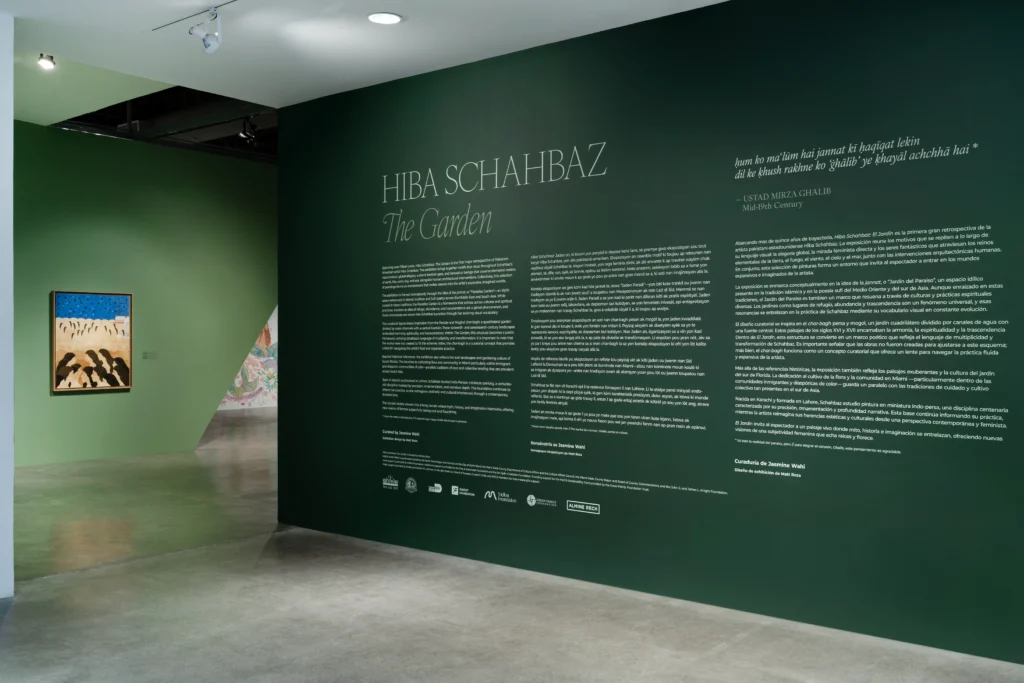
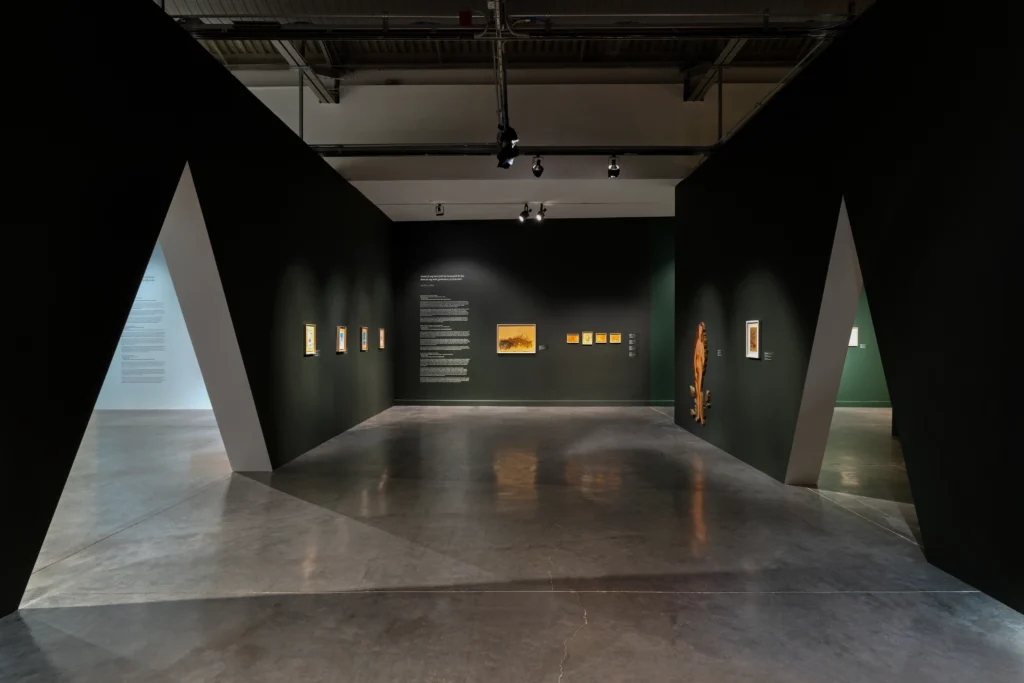
Other periods require a more outward presence. For example, this past year with the large show at MOCA, I had to be present with collectors, openings, and events. During those times the energy goes outward rather than inward toward the studio.
Lucía: Do you consciously think about where your work is going or is it something instinctive?
Hiba: It is mostly instinctive, although I do try to think about it consciously. I might begin with a plan, but once I’m in front of the canvas the work often changes, and I have to remain open to that shift.
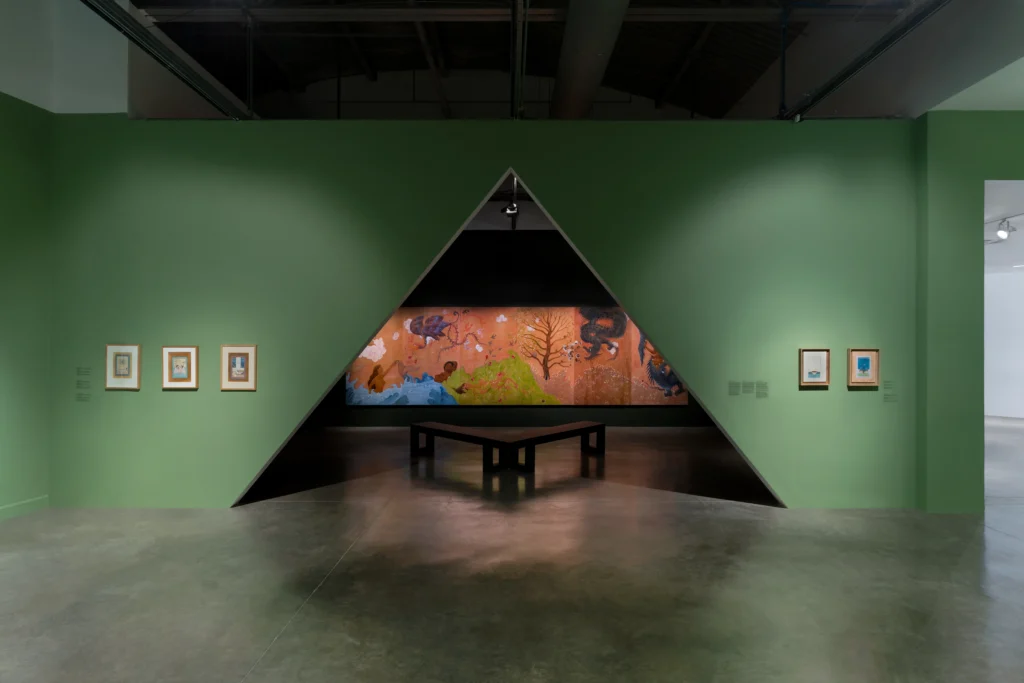
I try not to over-plan, because being too attached to a fixed idea can limit the process. That said, some works require a much more structured approach. For example, large multi-panel watercolor paintings demand precision, since there is very little room for correction. In those cases, everything, timing, color, and imagery, needs to align across the panels, so the process becomes far more controlled.
Lucía: What’s the latest book that you’ve read?
Hiba: I’m actually reading several books at the moment. One is Art Work: On the Creative Life by Sally Mann, where she reflects on coincidence and luck in an artist’s career, and how timing often shapes who is able to sustain a practice.
I’m also reading The Garden of Truth: The Vision and Promise of Sufism, because my exhibition The Garden takes its title from similar ideas and I wanted to explore Sufi thought more deeply.
And, somewhat unexpectedly, I’ve been listening to The Closer’s Survival Guide by Grant Cardone. Running a studio requires another set of skills beyond making art, and after my last show I realized I needed to better understand the business side of things.
Lucía: Miniatures often represent scenes that allude to mythology or literature. I also sense a storytelling in your representations. Is this something central in your own work?
Hiba: Yes, storytelling is definitely present. Miniature painting has a long narrative tradition, so that quality is embedded in the medium itself.
At the same time, the process is deeply meditative. Because the works are so small and detailed, the paper, the pigments, the brushes, everything is intensely handmade. That level of attention draws you into a very focused state. Often the miniatures become more narrative in content, while the larger paintings allow for a more expansive movement of energy.
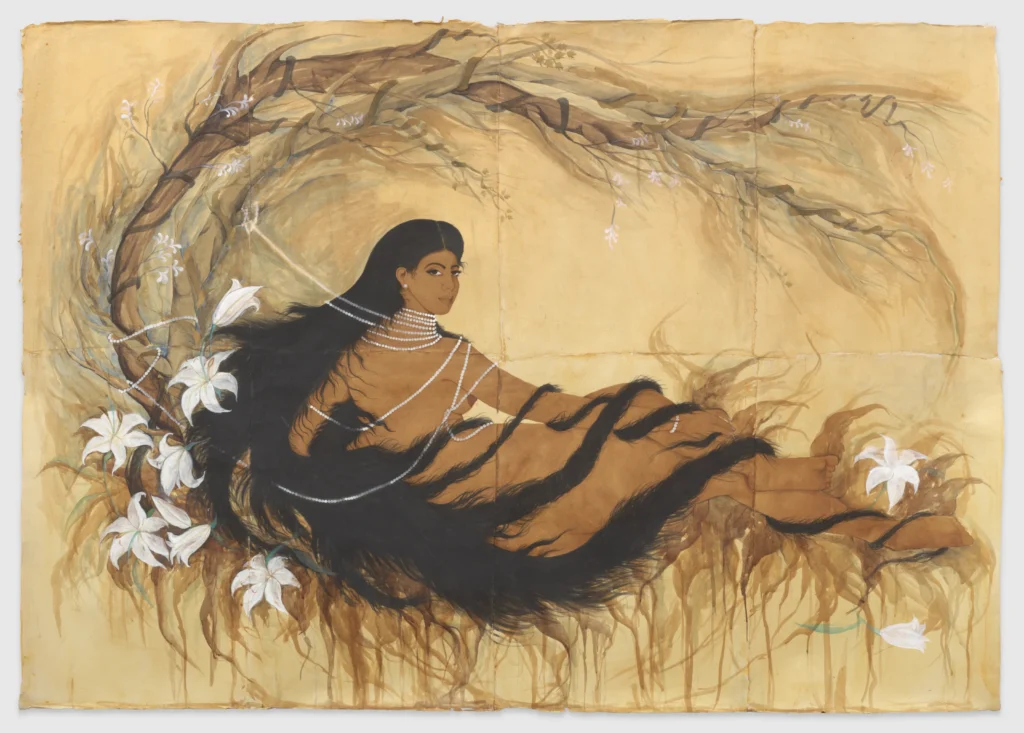
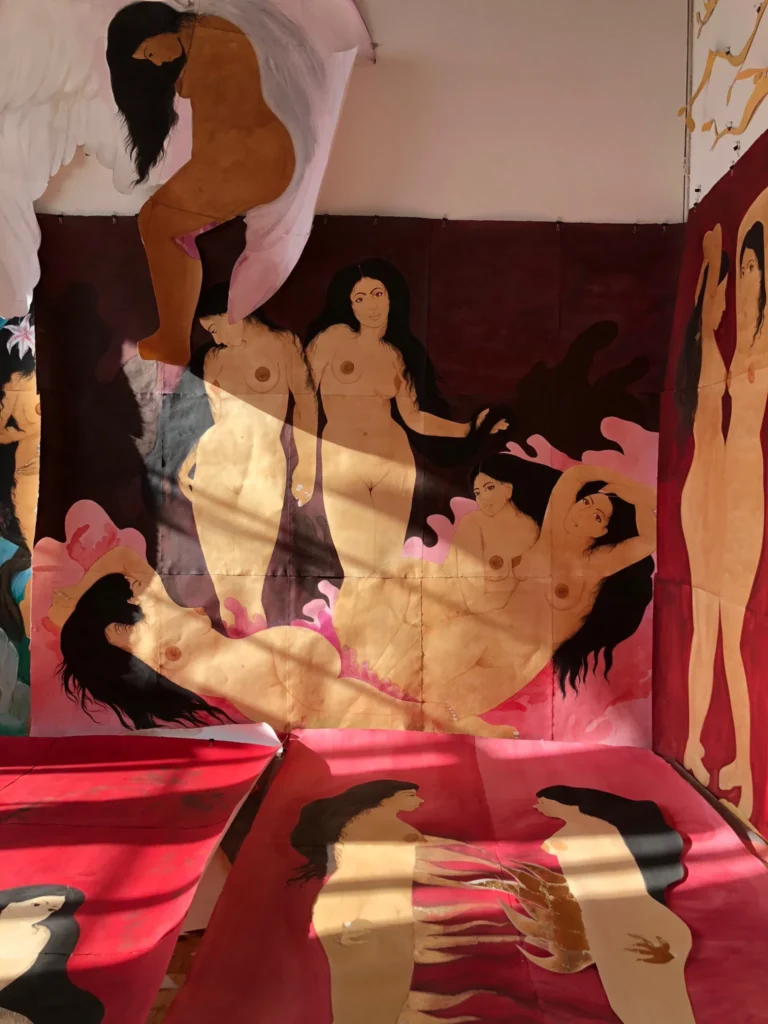
Lucía: The figures in your paintings feel intimate and autobiographical, yet they also seem universal. When did “she” (the woman in the paintings) stop being only you and become something more collective?
Hiba: I began by drawing myself when I was very young, as a way of learning how to paint the body. At that stage the work was very autobiographical. Over time, especially after moving to the United States and encountering Western art history more directly, the figure began to change. As the paintings grew larger, she gradually became less specific, more like an avatar or a symbol.
That said, some works still feel deeply autobiographical, while others do not at all. Because my life has been surrounded by women, friends, collaborators, visitors to the studio, their stories naturally entered the work. Eventually the figure began to hold many different women’s experiences at once.
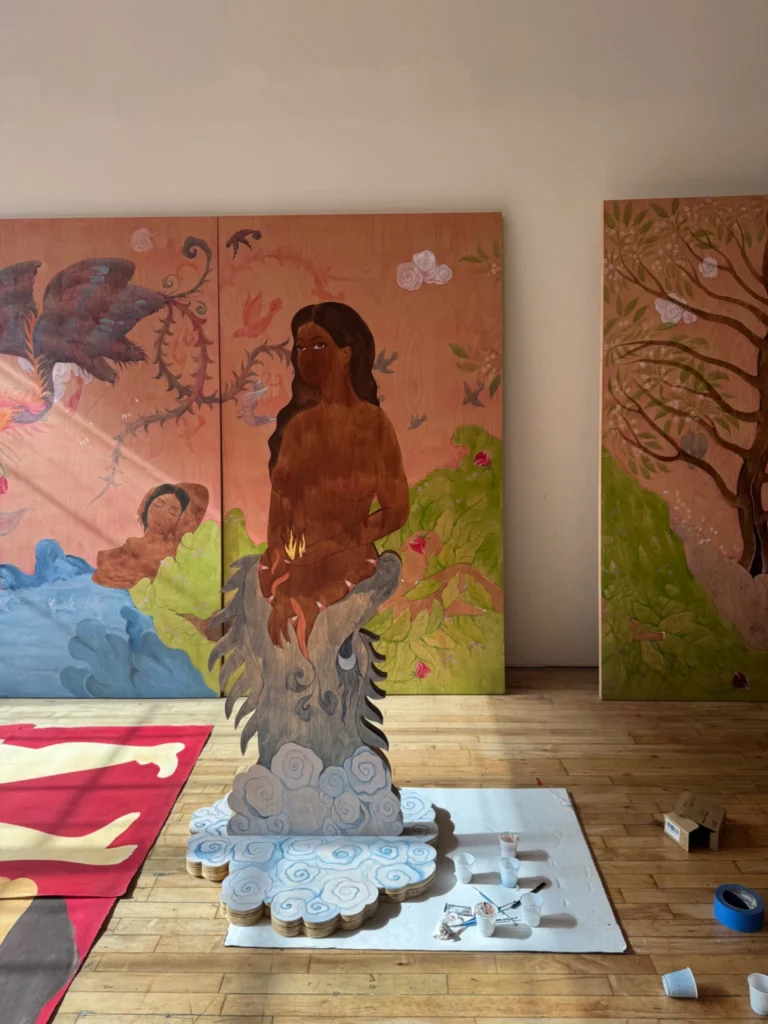
Lucía: Yeah, it’s like it doesn’t matter where we come from, there’s an international vulnerability, a shared way of raising women, that connects us all.
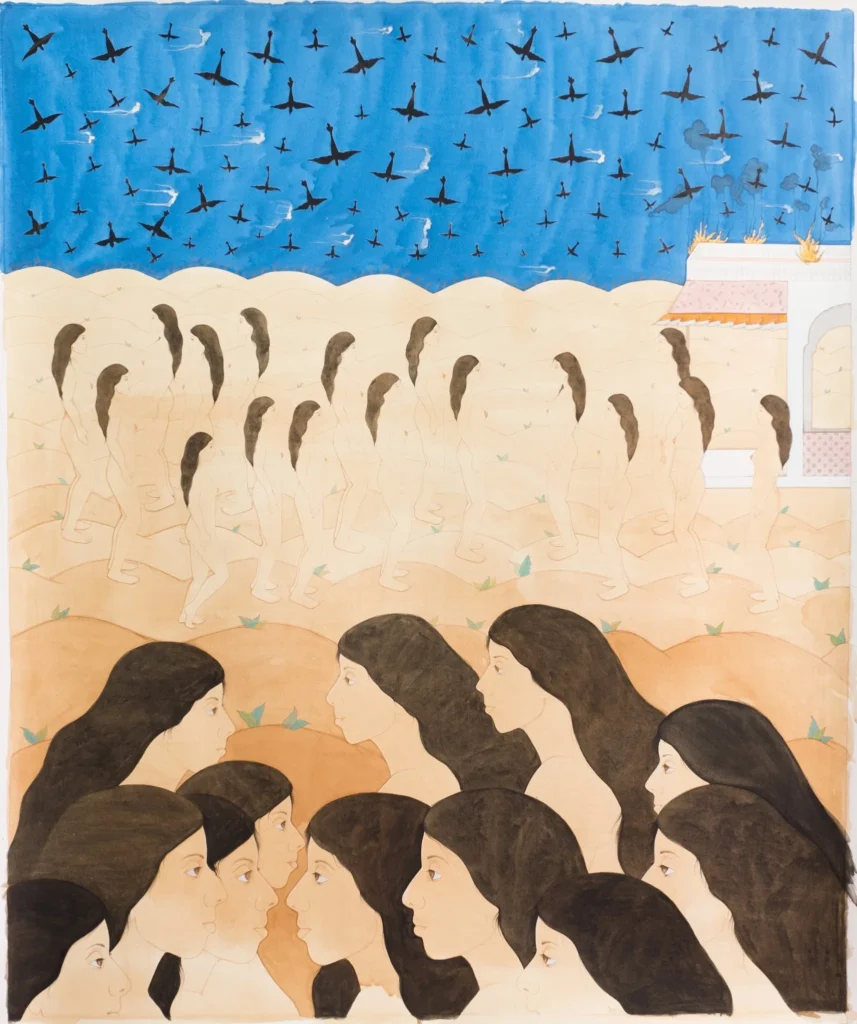
Hiba: Yes. At a certain point it became very clear to me that, despite different geographies, women often share remarkably similar emotional realities. The female figure in my paintings gradually came to embody many women, fragments of different people I had met and their stories. It wasn’t a conscious decision; it simply evolved through the experience of being in the studio and listening to others.
Lucía: You’ve spoken about wanting to create a safe space for women through painting. Why do you think this idea of refuge resonates so strongly?
Hiba: I think it comes from personal experience. I’ve spent many moments in my life not feeling entirely safe. Through painting, I wanted to transform that energy into something protective and beautiful. It became a way of processing emotion. I also believe many women share a collective experience of vulnerability. I remember the morning after Trump was first elected president. Two female curators were visiting my studio, and both of them unexpectedly began to cry.
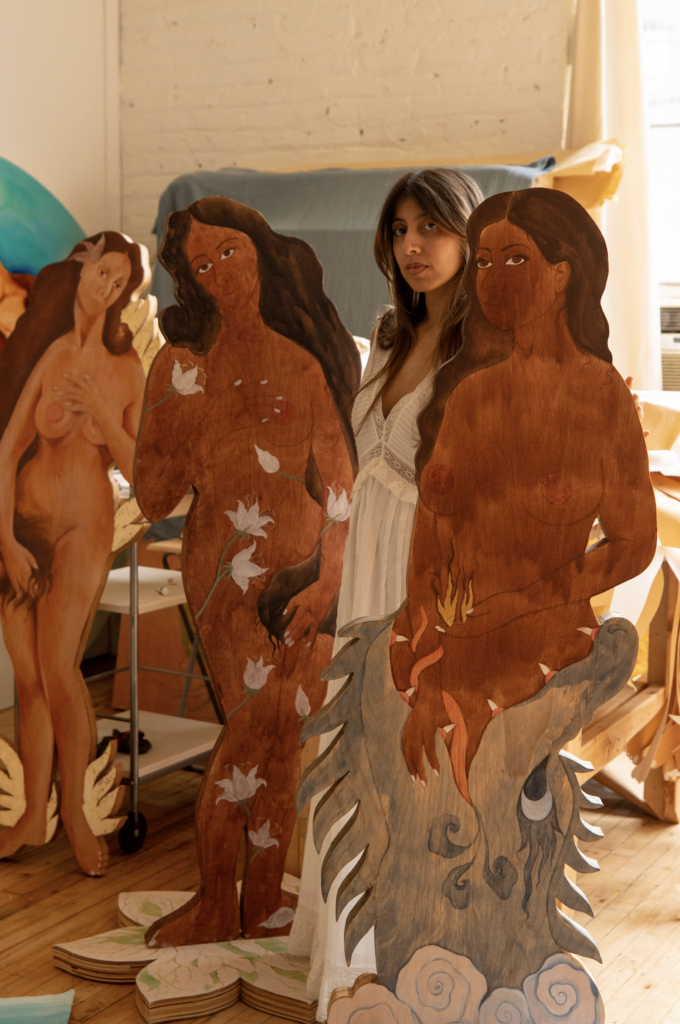
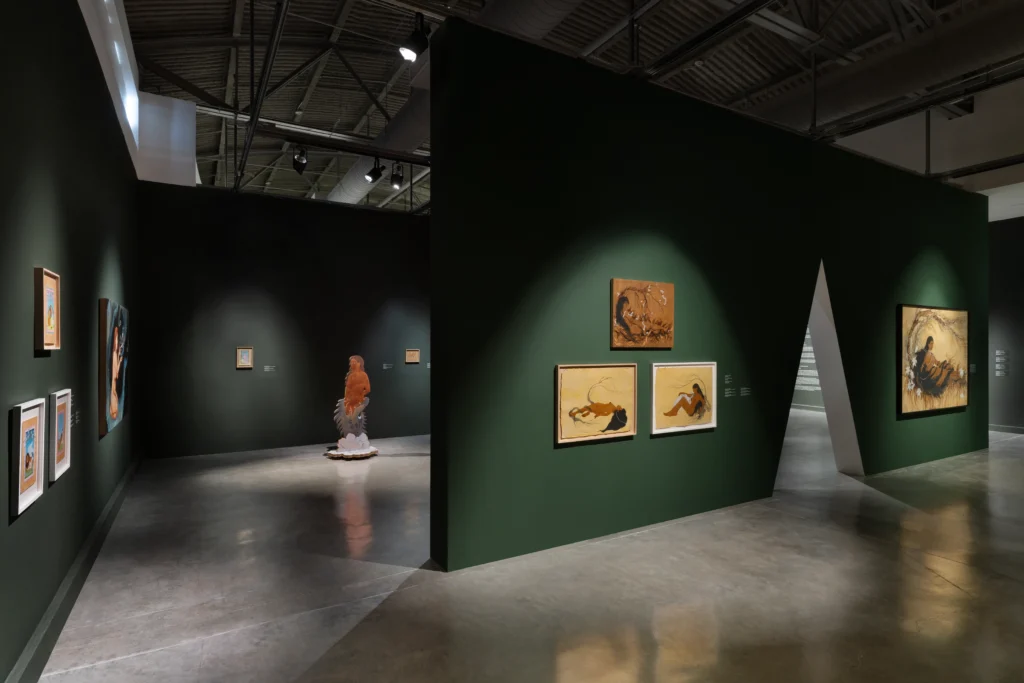
It wasn’t only about politics, it reflected a deeper sense of disappointment about how women are perceived and valued. That moment stayed with me, and around that time I began creating the cut-out works in the studio: women in gardens, birds, flowers. They were never intended for sale; they were simply a way of shifting the atmosphere toward something softer and more protective.
Lucía: Your work comes from a historical miniature tradition with a strong cultural heritage. Does its meaning change when shown in the US or Western context?
Hiba: Possibly. Although I use the visual language of miniature painting, my approach is more contemporary. My subjects are different, I paint women, whereas historically miniatures often depicted men, court life, or war in manuscripts commissioned by kings. The genre remains, but the context has shifted.
Lucía: Do you think living in the US has shaped your artistic practice?
Hiba: Yes, it has shaped my practice in many ways. I was already painting the body before moving here, but I didn’t paint faces at that time. The face, and eventually the gaze, appeared later. In Pakistan there was always a certain need for ambiguity when painting the body, as if it should not be explicitly identifiable as a self-portrait. Adding the face changed that dynamic.
Living here also meant exhibiting more and receiving feedback. That exchange is important for many artists. Access to art history was also transformative, seeing paintings like Olympia or the odalisques in person changed my sense of scale and possibility. Access changes everything.
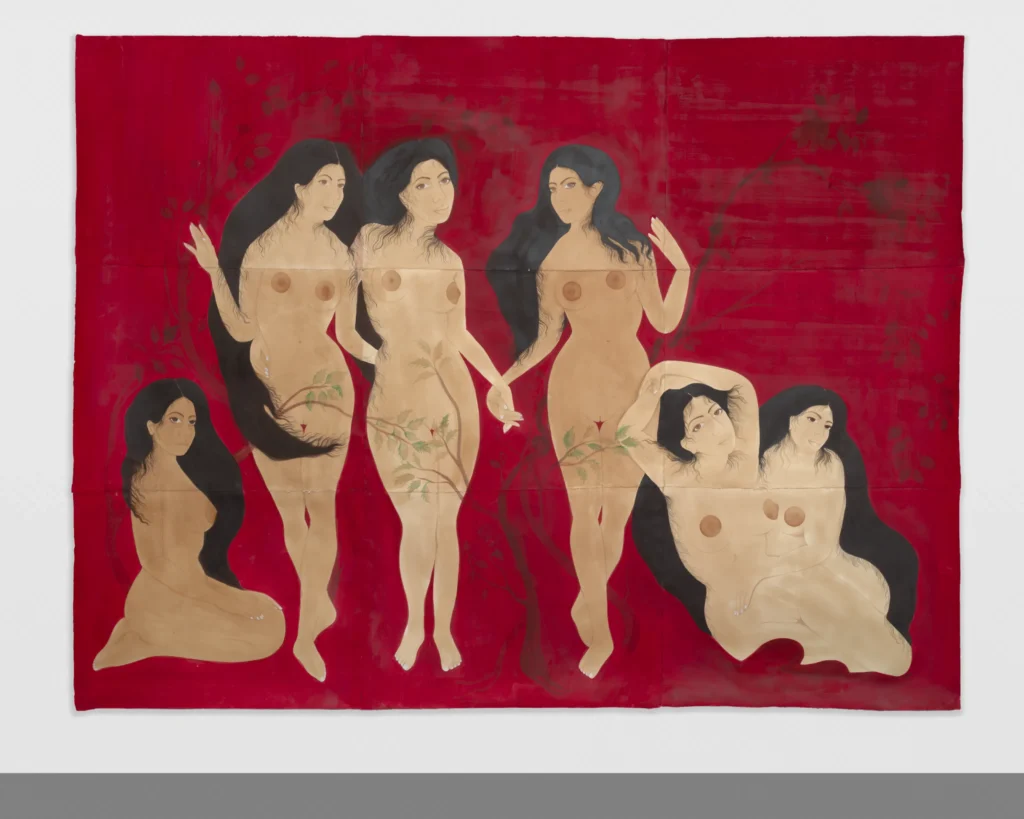
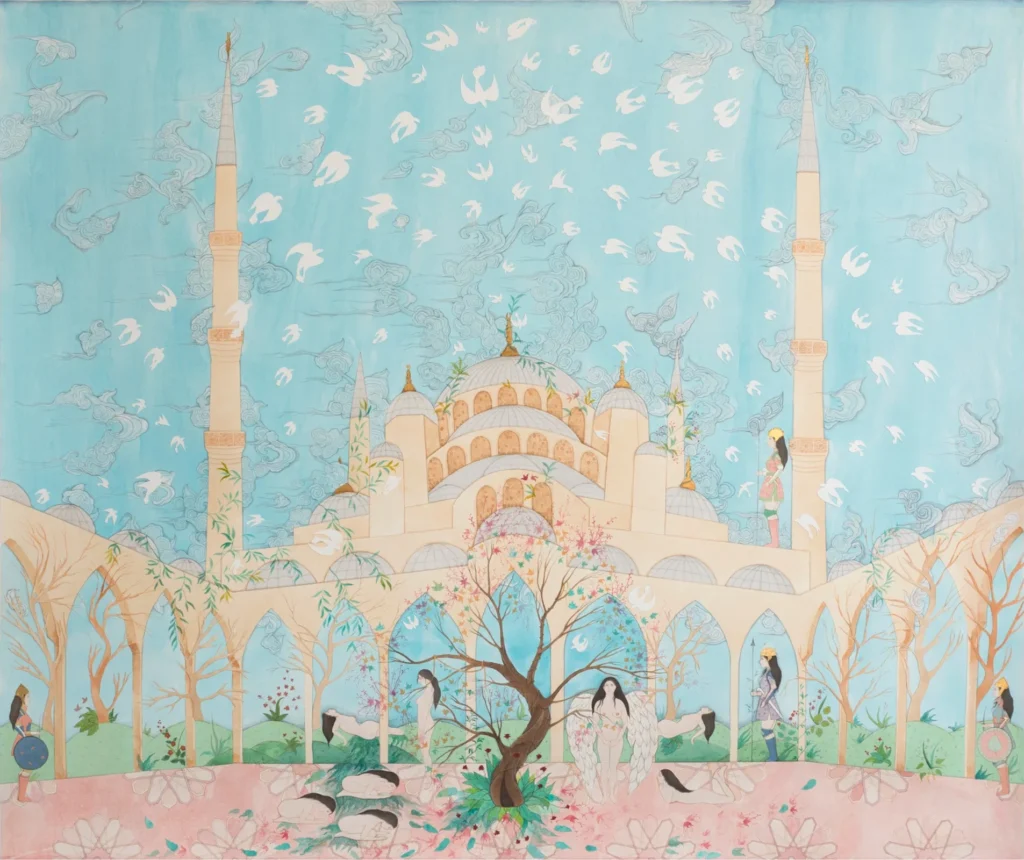
Lucía: What kind of narrative about womanhood or girlhood do you think your work is building? Do you feel responsible toward younger women who see your work, girls from Karachi?
Hiba: Yes, I do feel responsible, in all ways. When I began painting the nude body, it was not something many South Asian women artists were doing. The female body was not a central subject within the context I came from. Today I see more South Asian women working with the body in powerful ways, and I think that shift is natural. If my work has contributed, even in a small way, to making that space feel more possible, I’m comfortable with that.
Lucía: Hair appears strongly in your work, what does it mean to you? What relationship do you have with hair?
Hiba: Hair has always been deeply personal for me. I grew up with very long hair, my father never wanted me to cut it. He would brush it in the mornings and oil it regularly, so it became a very strong part of my identity. That’s why many of my early large paintings feature women with long, expansive hair. A few years ago I went through a period of anxiety and lost a significant amount of hair. That experience made me realize how closely the body reflects our emotional state. In many cultures hair is connected to memory, energy, or spirituality, and I do feel it carries something of that nature. That’s why it continues to appear in my work.
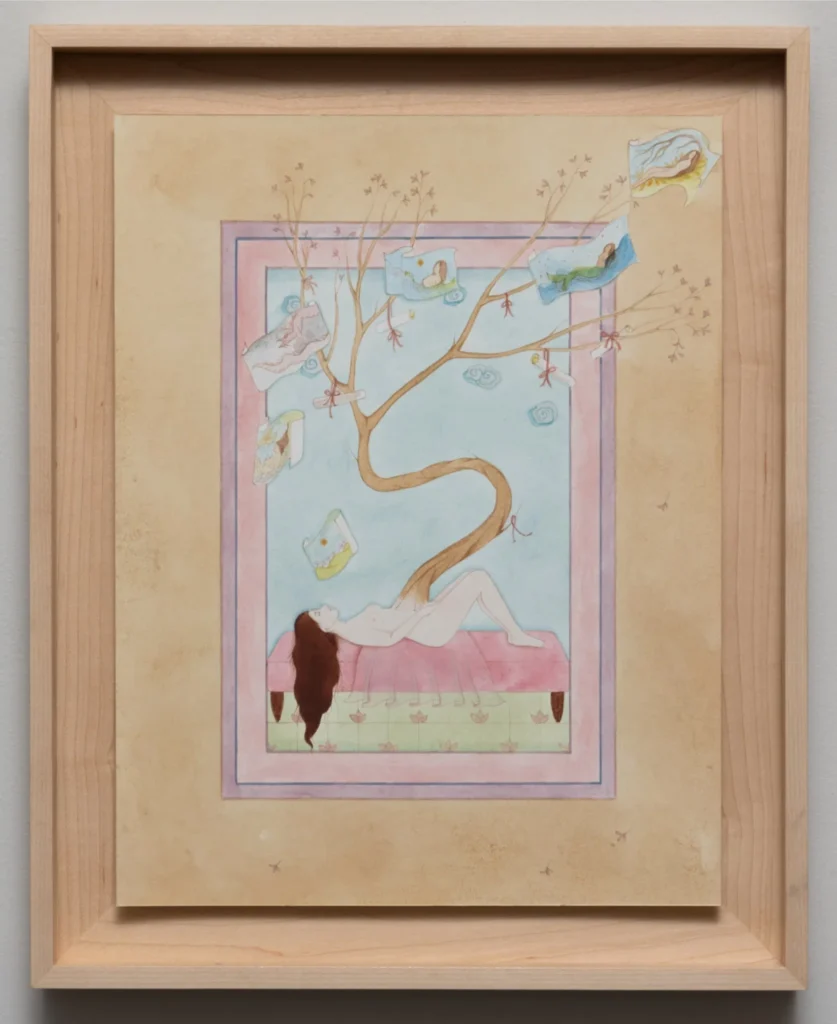
Lucía: And what about like animals and fantastical creatures? What do they represent?
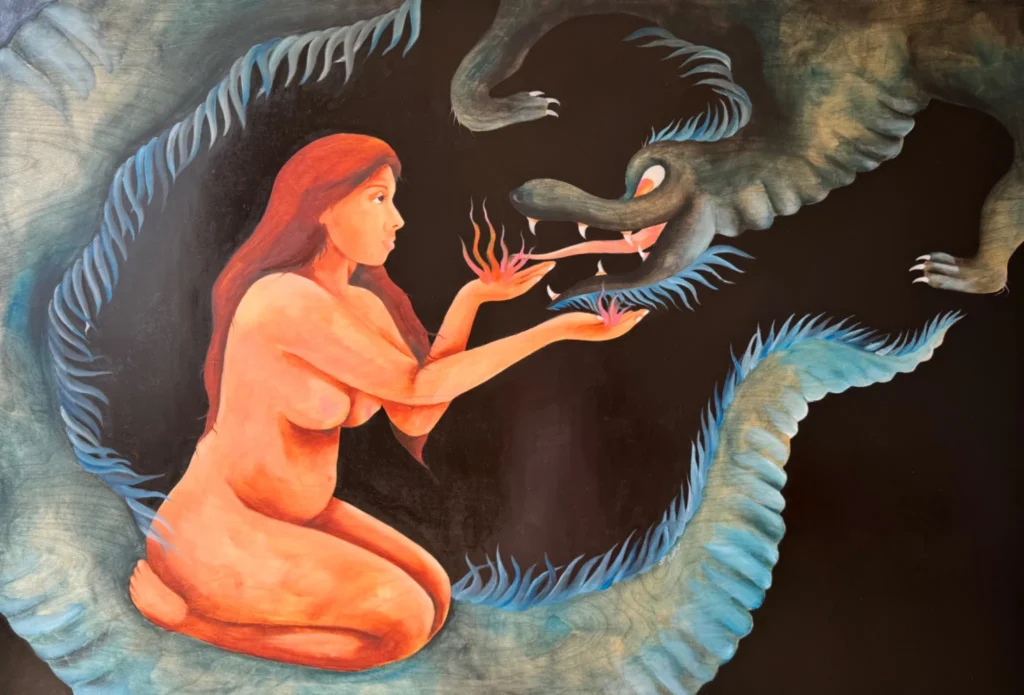
Hiba: I love including animals. For me, the dragon is a symbol of protection rather than something threatening. Miniature painting historically includes dragons, phoenixes, and other mythical beings. I’ve always been fascinated by how different cultures imagined similar creatures, such as mermaids and unicorns, even before the internet connected us. It suggests a kind of collective imagination. In my work these creatures exist in relation to the female figure. They help complete her world, making it feel more protective, more beautiful, and more loving.
Lucía: Do you like to listen to music while you paint?
Hiba: Yes, especially when working on large paintings. Music is part of my ritual. Sometimes I listen even before starting to paint because it helps shift my mind into a studio state. Certain songs almost reprogram the atmosphere of the room. I’m very attentive to the energy in the studio and try to keep it positive. Transforming emotion into something more beautiful, both for myself and for whoever eventually lives with the painting, is important to me.
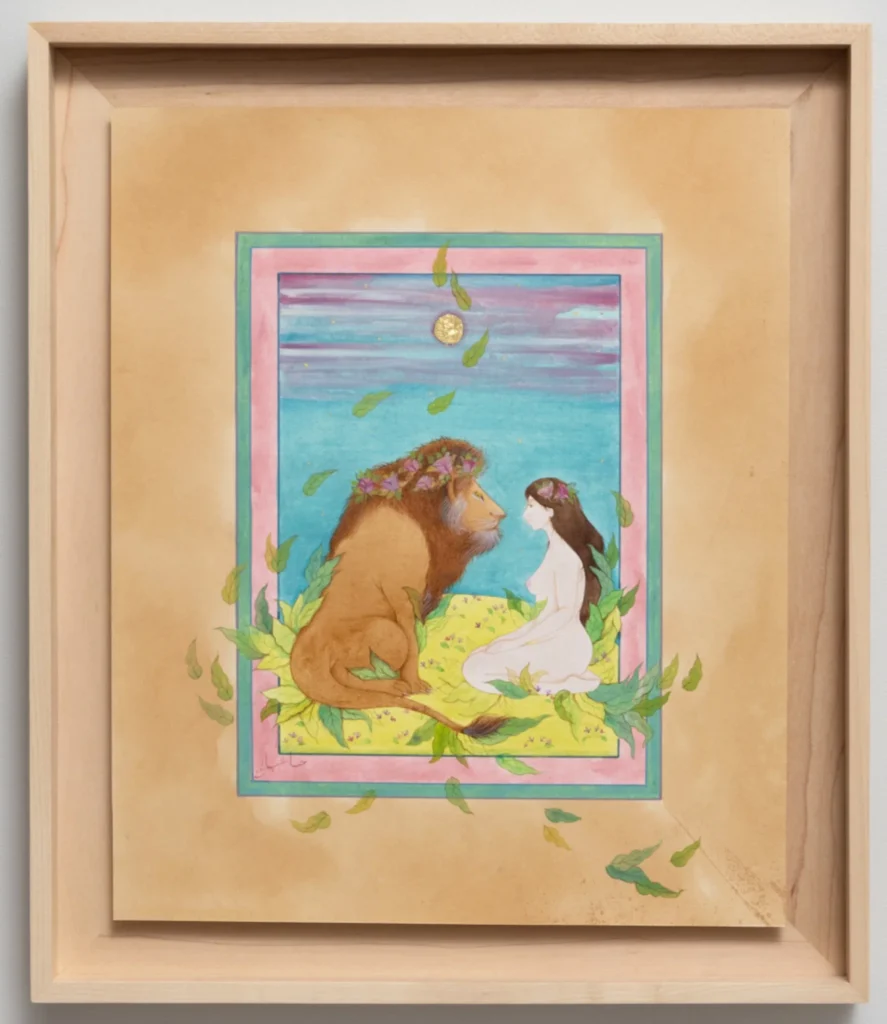
Lucía: You’re leaving tomorrow for a residency. Why is it important for you not to stay in the same place?
Hiba: Residencies are important because they shift your mental space. Even when painting full-time, it’s easy to become fixed within your routines and surroundings. A residency removes you from daily life and social obligations. That kind of focus can accelerate or redirect your work. Sometimes the results may even feel like failures, but those experiences still plant seeds that inform the work later. For that reason, I believe residencies are one of the most undervalued tools an artist can have.
Lucía: Last question. What does your work ultimately say about yourself?
Hiba: That’s a difficult question. I tend to leave my work open to interpretation. When meaning becomes too fixed, it limits the viewer’s imagination. I prefer for people to enter the work through their own experiences rather than only through mine.