

There’s a quiet shift happening in how people want to meet. Less scrolling, more presence. Less spectacle, more intimacy. In the middle of New York’s relentless momentum, Isabel Münter has been paying attention to that change — and building around it.
Through Pawn Chess Club, she’s turned a centuries-old game into a social language, creating rooms where strangers sit across from each other and, somewhere between strategy and silence, start to connect. What began as a small gathering has since grown into something larger: Homes&Studios, an invitation into artists’ private worlds, and Galla, a new platform aiming to reshape how we discover and experience culture beyond the screen.
But beneath the projects is something more personal. Raised between Copenhagen and New York, Münter’s work is driven by curiosity, instinct, and a long-standing fascination with how environments shape behavior — how the right setting can open people up, and how connection can happen almost effortlessly when the conditions are right.
Here, she reflects on growing up between cultures, finding freedom in anonymity, and why creating space for real-life interaction feels more urgent than ever.
Profile picture by Luis Garcia.
Hi Isabel! It’s a pleasure to sit down with you! First question that I always ask. How does a regular day look like for you in New York?
Isabel: I like to start my mornings slowly by making coffee and doing a game of sudoku. It wakes up my brain, keeps me off my phone and it’s a good indicator of how well rested I am. I’m an early riser, and I genuinely look forward to the day ahead. Salvador Dalí once said “Every morning upon awakening, I experience a supreme pleasure: that of being Salvador Dalí, and I ask myself, wonderstruck, what prodigious thing will he do today, this Salvador Dalí.” I am no where near the narcissist that Dalí likely was but I like the sentiment and energy.
On a typical day, I try to balance three things: something physical, something creative, and something social. That might mean playing tennis or going for a long walk, visiting a gallery or making jewelry, and spending time with friends or going to an event. Living in New York, there’s always something happening, so the real challenge is being selective about how I spend my time. The rest of my day is focused on work, and I try to bring the same intention and energy to that, as well.

I’m curious, growing up in Copenhagen, what was life like there? And what kind of kid were you? What did you enjoy doing?
Isabel: In many ways, I had a dream childhood. I grew up in a multicultural home with an American mom and a Danish dad, so I was always navigating two different cultural perspectives. I went to a Rudolf Steiner school, which meant I got to spend a lot of time in nature and being creative. There was also a strong emphasis on community and collective responsibility.
We were taught that thriving meant taking care of the people around you. I think growing up in Denmark, where there’s a strong sense of looking out for one another, reinforced that way of thinking. I was an extremely energetic, curious and happy kid. I loved throwing myself into new things even if they were way beyond my skill level.
I’d jump into pools without ever having taken a swimming lesson (giving my parents minor heart attacks) and auditioned to enroll in the Royal Danish Ballet Academy with minimal ballet experience. I think I was less afraid of failing and more motivated by my own curiosity and wanting to experience and understand things. My parents really encouraged that mindset.
At the same time, my parents made a conscious effort to show my brother and I the world beyond Denmark, which is a relatively homogeneous country. We traveled a lot, and during my teenage years, my parents also did pro bono legal work for the Red Cross and became legal guardians to two Afghan boys, Raziq and Yama. They became part of our family, and getting to know them really shaped how I understand the world and my own perspective and privilege. It taught me early on how much you grow when you step outside of what feels familiar. The combination of curiosity, structure, and exposure to very different experiences had a huge influence on who I am today.
So what brought you to New York?
Isabel: My parents met in New York in the 80s, and my grandparents have always lived here, so I grew up visiting every year. It always felt like a second home. My grandparents would take me roller skating in Central Park, teach me about the Yankees, and order me Shirley Temples at the Carlyle.
As soon as I graduated high school in Copenhagen, I moved here. I bought a one-way ticket and figured I’d work the rest out once I arrived. I was 18 years old, walking around dropping off my résumé at different stores until I landed a job at American Apparel on the Lower East Side. What I remember most from that time is the feeling of anonymity. For the first time, I could just exist without expectations, which was both freeing, exciting, and a little scary.
And when did you start playing chess?
Isabel: I started playing chess when I was about six years old. I was on my school’s chess team and had a great relationship with my teacher, Peter. He was especially encouraging, partly because I was the only girl on the team, and not all the boys were eager to play with me.
I remember one moment when I managed to get a stalemate against the strongest player on the team (who was also the biggest bully), and he burst into tears. That felt like a small but very satisfying win. I eventually stopped playing because of the social dynamic, but I came back to chess during university, when I started teaching it to kids at an international school in Hellerup, just north of Copenhagen. That’s when I realized how much I enjoy teaching.
Gotcha, I’m asking because in 2023, you start Pawn Chess Club, what sparked that idea?
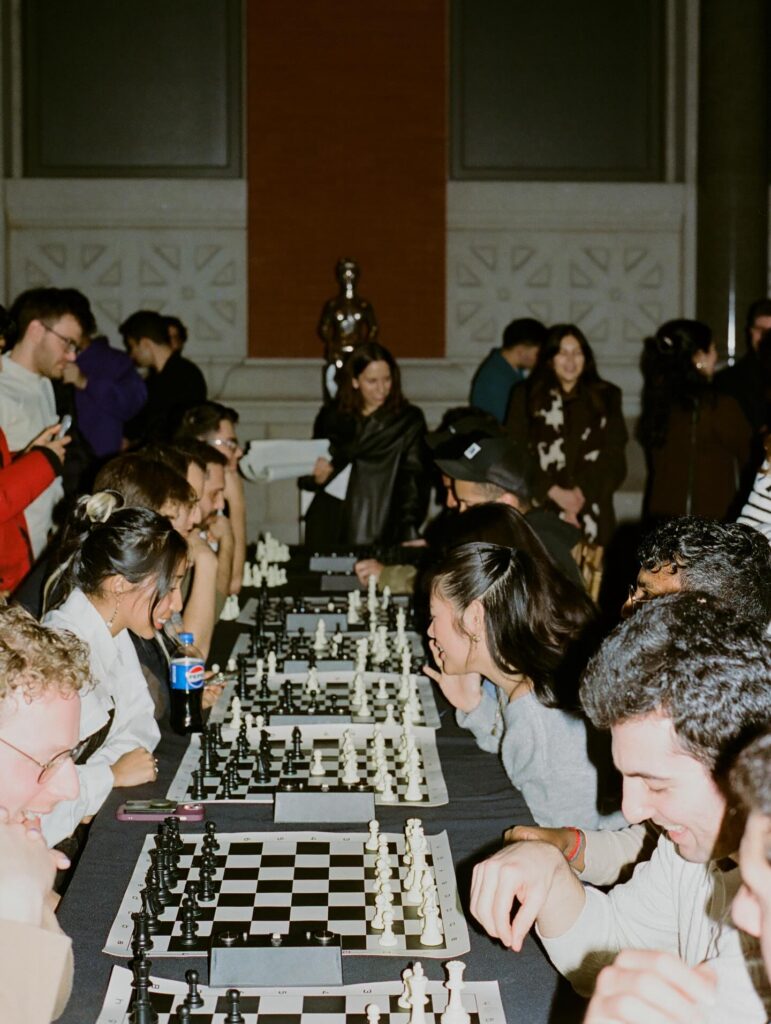
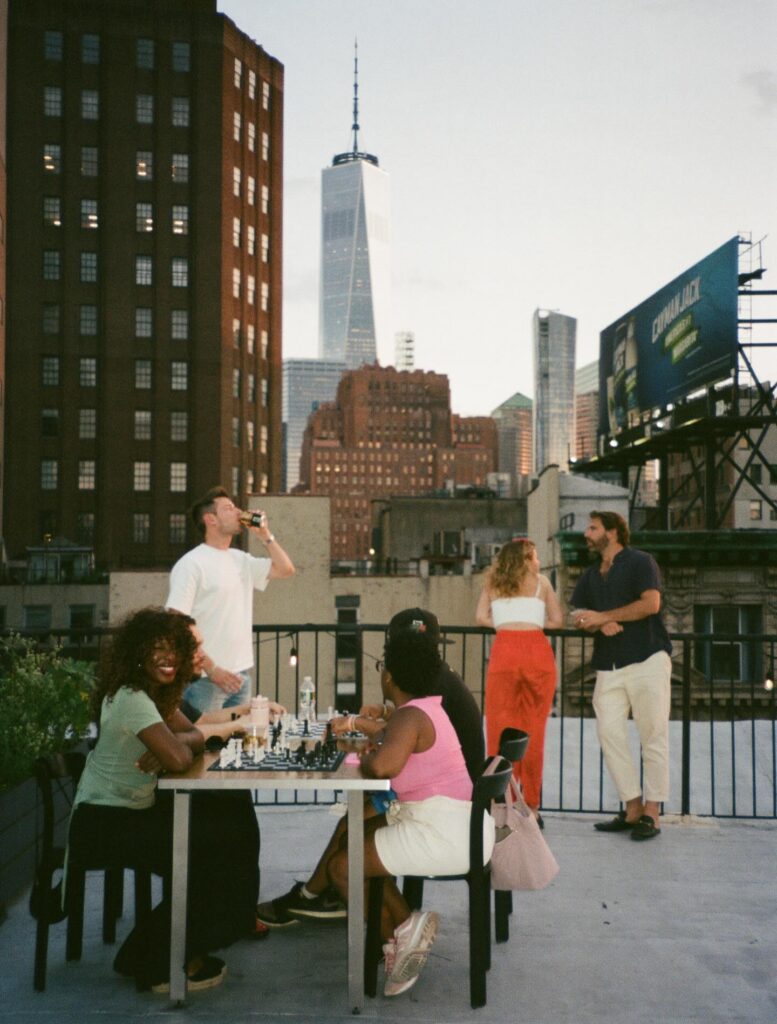
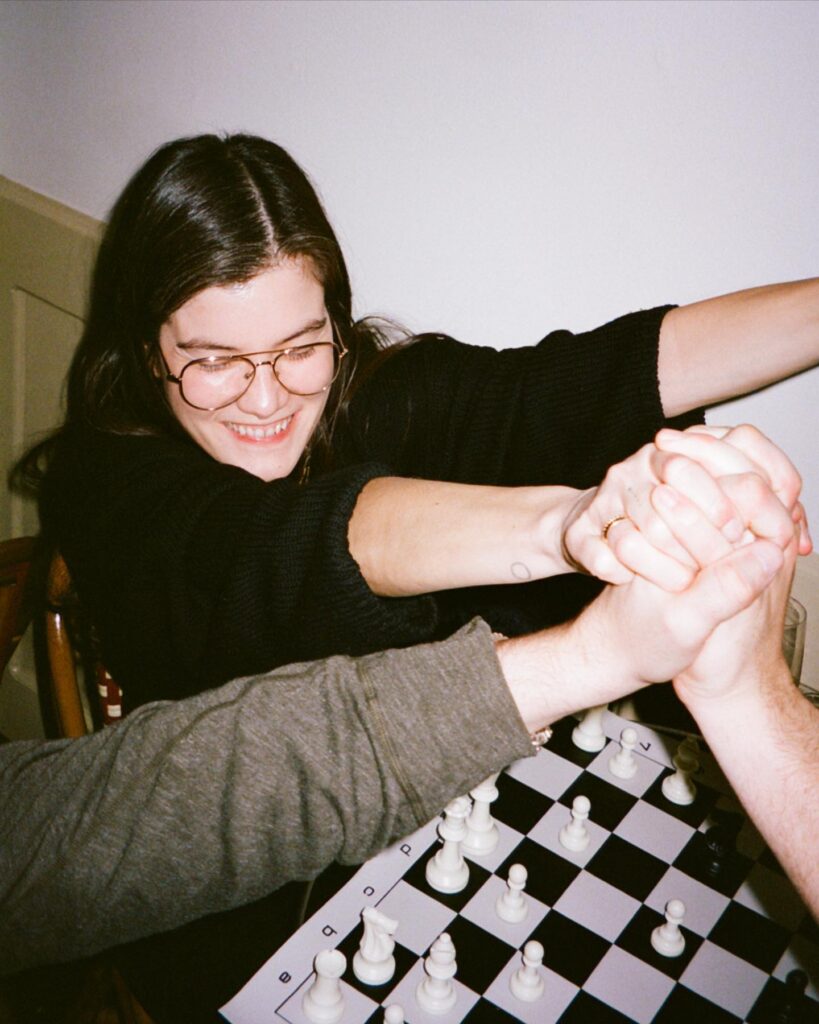
Isabel: I wanted to get back into chess, but I wasn’t drawn to traditional chess environments because they can feel a bit intimidating and not very social. So my friend Simone and I decided to create something we would actually want to go to. A small, welcoming chess event for friends that was open to all levels, especially beginners, in a more intimate setting. A friend offered to host our first event at his restaurant, Casino, so we ordered ten chess sets, posted an invite on Instagram, and about 50 friends showed up. That was in May 2023, and it really grew organically from there.
So what was your initial idea for PCC? And what has been some of the biggest obstacles building PCC so far?
Isabel: The initial idea was to create a welcoming space where people of all levels could come together and play chess. We quickly realized there was a real need for in-person connection and learning a new skill, so it grew organically, and we were surprised by how quickly it took off. The main challenges have been logistical. As we’ve grown to 200 plus people at some events, finding venues that are large enough while still maintaining the intimacy we care about has become more difficult.
We’ve started to experiment with different types of spaces. For example, we hosted an event at the Metropolitan Museum of Art in January, and we’re now in conversations with other museums, which has been one way of approaching that challenge. At the same time, Pawn wasn’t originally intended to be a business, but there’s increasing demand for private events, so we’re figuring out how to balance that with our public programming.

You are now deeply embedded in New York’s cultural scene. What differences do you notice in how creative communities form in those two cities?
Isabel: New York has a very immediate and open energy when it comes to creative communities. People are willing to show up early, before something is fully formed, which creates this feeling that you’re building something together in real time. That’s been really special to experience. There’s also a strong sense of mutual support. People are genuinely excited about what others are doing.
I haven’t lived in Copenhagen for over a decade, so I don’t want to generalize too much. But one thing I really respect about Denmark is the level of public support and funding for arts and culture. There’s a shared understanding of their importance, and you see that reflected in public spaces through access to art, cultural programming, and how people engage with it in everyday life. It creates a different kind of foundation and makes cultural life feel more accessible and integrated.
Before Pawn Chess Club existed, what was missing in the cultural spaces you were moving through in New York?
Isabel: Pawn came out of a personal need. After the pandemic, there was a real desire to get offline and be around people again, and we definitely rode that wave. What felt missing were spaces where connection happened more naturally. You often have to make a conscious effort to meet people outside of your immediate circle, and there weren’t many environments that made that easy. That’s what I’ve always loved about things like chess. It gives you an immediate way to connect, without needing a shared background or introduction.
Do you remember the moment when Pawn Chess Club stopped feeling like a small experiment and started feeling like a real cultural project?
Isabel: I think it shifted around our third event, when we realized we didn’t know the majority of the people attending anymore. That was the moment it started to feel bigger than us. Around the same time, venues started reaching out to host us, and there was interest from press. Then in our second year, we were featured in The New York Times, which felt like a real milestone. Since then, it’s been about responding to that momentum and being intentional about the opportunities and partnerships we pursue.
A lot of people frame projects like Pawn Chess Club as responses to the loneliness epidemic, but I’m curious if you think something deeper is happening culturally. Are people actually craving slower, more meaningful interactions again?
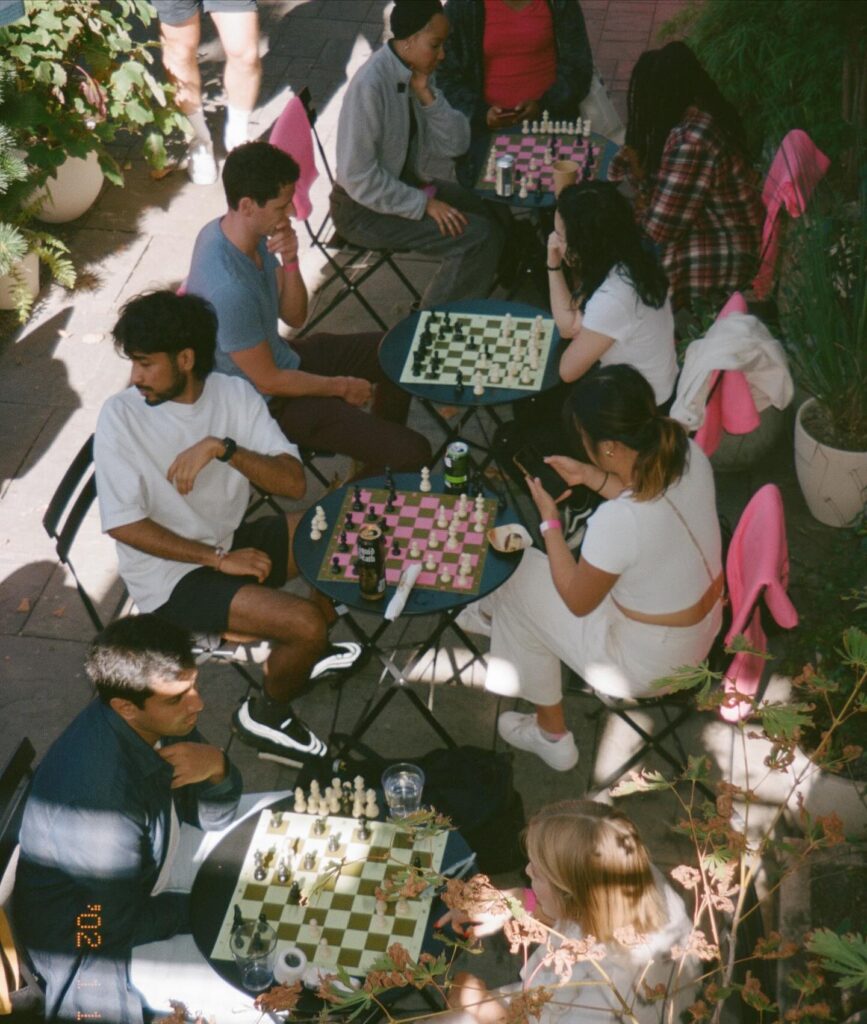
Isabel: I think the need for belonging is fundamental. It’s always been there, but we’ve spent so much time online that a lot of people are now craving real, in-person connection again. What I’ve noticed as a host is that it’s not just about wanting connection, it’s also about knowing how to engage. Socializing is a skill, and for some people, it doesn’t come naturally or hasn’t been practiced as much. At the same time, there’s an overwhelming number of things happening, especially in New York. So people are also looking for more curated spaces that encourage you to slow down and actually talk to each other.
Chess is such an interesting choice as a social format. What do you think chess does to a room of strangers that a normal social event doesn’t?
Isabel: It’s less about chess itself and more about having a shared activity. It takes the pressure off when you’re meeting someone new. You can sit in silence and focus on the game, or you can end up having a full conversation and almost forget you’re playing. It creates a more natural way to connect. People also come for different reasons. Some want to learn or compete, others are there for the social aspect, so it allows for multiple ways of participating. At the end of the day, I don’t think it has to be chess. You could build this around almost any activity. It’s really about the context and the curation.
When you host a chess night, what moment do you enjoy observing the most?
Isabel: Most of the night I’m busy hosting, but there’s always a moment where I step back and just watch the room. I’ll look at how people are moving through the space, where conversations are forming, what’s working and what isn’t. That’s the part I really enjoy. Everything feels like an experiment. I’d much rather execute on an idea early and learn from it than spend too much time perfecting it in theory.

Real quick… What’s your favorite thing about the game of Chess? And who’s your all time favorite player, dead or alive?
Isabel: What I love about chess is the balance between strategy and psychology. You can have a plan, but you constantly have to adapt based on how your opponent responds. It’s not just about the moves, it’s about how people think. I’ve always been fascinated by understanding why someone makes a certain decision, and chess becomes a really clear expression of that. Mikhail Tal is one of my favorites. He played with this fearless, almost chaotic creativity. You watch his games and it feels like he’s breaking all the rules, but somehow it works. He really turned the game into something expressive and almost artistic.
I’m also really inspired by Judit Polgár and the story of the Polgár sisters. Their father believed that “geniuses are made, not born,” and raised all three daughters to become elite chess players from a very young age. Judit went on to beat Garry Kasparov, which was a huge moment and challenged the idea that women didn’t belong at the top level of the game. I’ve also been lucky enough to play Magnus Carlsen, sit next to Garry Kasparov at a dinner, and discuss a potential event collaboration with Susan Polgár. What stands out is not just how brilliant they are, but how generous they are with their thinking.
Your events often happen in very specific spaces: galleries, cinemas, museums. How important is the atmosphere and aesthetic context to what you’re building?
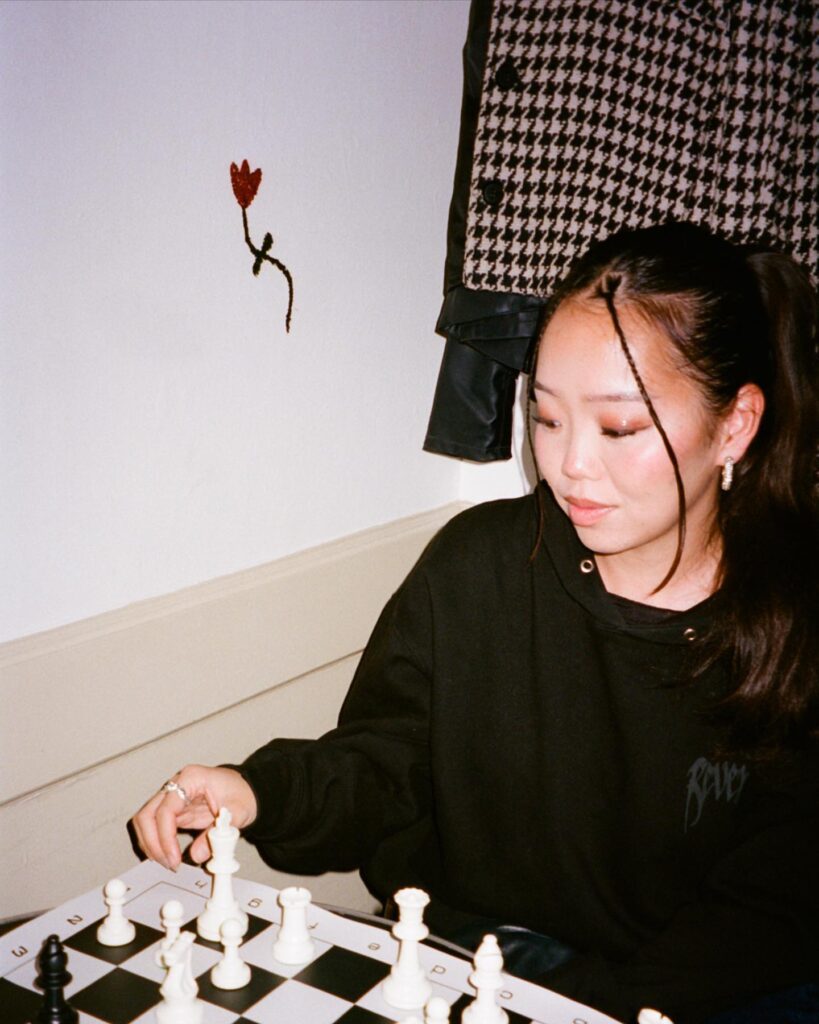
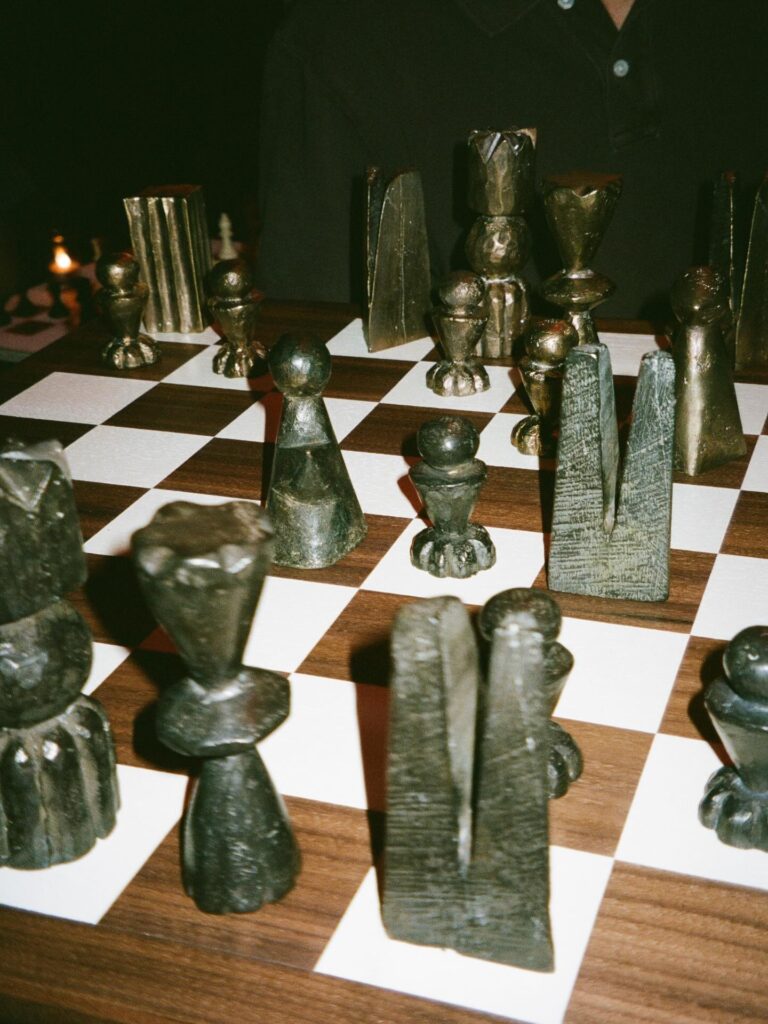
Isabel: Atmosphere is really important. The space shapes how people feel and how they interact. Chess has always had a relationship with art, and since Simone and I are interested in art and design, Pawn has naturally moved in that direction. I’ve been especially inspired by the Julien Levy Gallery exhibition in the 1940s, The Imagery of Chess, organized by Marcel Duchamp, where artists like Man Ray and Noguchi reimagined chess as a creative medium. For me, it’s about placing chess into a contemporary setting. If you can place chess in a context that feels relevant today, you can completely change who engages with it.
With that in mind… Pawn Chess Club has collaborated with artists and even hosted talks about figures like Man Ray. How do you decide what cultural references or artistic voices belong in that world?
Isabel: My mom is an artist, so art and culture have always been a big part of my life and education. From that, I’ve developed a certain instinct for what resonates. As a family, we were always traveling around art, whether it was visiting craft villages in India, going to the Venice Biennale, or even protesting for the release of Ai Weiwei. That kind of exposure shapes how you see things and how you develop taste.
When it comes to Pawn, we try to follow our instinct. I really believe in being your own audience first. If something feels exciting and meaningful to us, there’s a good chance it will resonate with others as well. At the end of the day, Pawn is still an experiment and an exploration, and that’s what guides how we choose who and what to bring into it.
Do you see Pawn Chess Club as closer to a game night, a salon, or a cultural institution?
Isabel: I see it as a social club built around chess. It’s also constantly evolving, and I’m open to it becoming something different over time.
Gotya! Let’s move on to Homes&Studios, which is built around visiting artists’ private spaces. What sparked that idea?
Isabel: The idea came quite organically. My friend Rachael Yaeger and I were already traveling to visit homes and studios, both together and individually, and people kept asking us for recommendations. So we started building an index of places you could visit around the world, which became the foundation for Homes&Studios. At the same time, I’d always done studio visits with artists, and friends began asking to join. Organizing small, intimate group visits and artist talks felt like a natural extension of the project.
What do you learn about an artist when you see where they actually live or work?
Isabel: Being in someone’s space is an inherently intimate experience. You’re surrounded by visual clues that tell you a lot about how they think and work, often without having to ask direct questions. It also creates the conditions for a different kind of conversation. You’re not meeting an artist briefly at an opening, you have the time and space to actually sit, observe, and engage more meaningfully. And because the groups for the studio visits are usually made up of people from different creative backgrounds, the questions and conversations tend to be more thoughtful and unexpected.
Was there a studio visit that completely changed how you thought about an artist or their work?
Isabel: I think the first version of that for me was actually my mom’s studio. She had a beautiful space in our home, and stepping into it felt like stepping into her world. She’d play loud music, and I’d sit on the floor for hours drawing, painting, and making small sculptures. She’s a petite woman but makes large, abstract works, so there was a real energy to the space. It felt sacred, and I always felt lucky to be invited into it.
The studio visits I’ve done through Homes&Studios have carried that same feeling in different ways. You meet people you really admire, but in a much more intimate setting. What stands out is how human it all becomes. You hear about their process and start to understand how they think and see the world. You also get to know them on a more personal level, where some artists share their doubts and are very honest about what it really means to be an artist. It adds a deeper layer of understanding and, if anything, even more respect for their work.
You’re about to launch Galla, which brings galleries, studio visits, and events together on one platform. What do you feel is broken or fragmented about the art ecosystem right now?
Isabel: There’s a sense that parts of the art ecosystem aren’t working as well as they could. You see established galleries closing, a concentration of attention and revenue, and for emerging artists, it can feel like success depends either on social media or being picked up by the right gallery. There’s a bit of a misalignment in how value is created and distributed, and it doesn’t always feel sustainable.
I’ve always been around the art world, but I never saw myself working within the traditional system because of how it’s structured. Building Galla is, in many ways, my way of trying to create something that feels more open and supportive of the community I care about.
I’m building it together with my co-founder, Josephine Weidner, who’s a software developer, and that technical perspective has been a big part of how we think about the platform. What’s also interesting is how little the art space has embraced technology compared to other industries. There can be a resistance to change, whether that’s driven by tradition or exclusivity.
With Galla, we’re building something flexible that can evolve quickly and respond to what artists, galleries, and audiences actually need.
A lot of cultural discovery still happens through Instagram. Do you think platforms like that are helping the art world. or flattening it?
Isabel: Instagram is an important tool for visibility, but it comes with limitations. Most galleries aren’t selling work there, but they still feel the need to stay active and navigate the algorithm to remain relevant. That creates a flattening effect, where art is reduced to something you scroll past, even though the real experience happens in a physical space. With Galla, we’re trying to take a different approach. It’s a discovery tool, but the goal is to guide people offline and into galleries, studios, and exhibitions, where the work can be experienced as it’s intended.
You spend a lot of time creating spaces where other people meet and connect. What kind of spaces make you feel most at home?
Isabel: The tennis court. That’s where I feel most at home. Tennis became a big part of my life from a young age, and especially during my teenage years. I spent a lot of time on the court, and traveling to compete, so it’s a space that feels very familiar to me. It’s also one of the few places where I fully trust myself and can be completely present. It brings me back to being a kid, playing competitively, where nothing else mattered except the game. That feeling of focus and adrenaline is something I still come back to.
When you’re visiting a new city, what is the first kind of place you look for?
Isabel: Smaller, emerging galleries, and if possible, artists’ studios. They’re often located in neighborhoods that are still developing, where there’s more experimentation and a younger creative energy. That’s typically where you also start to see new restaurants, bars, and other cultural spaces.
What artists, writers, or thinkers have shaped the way you think about culture and community?
Isabel: Gertrude Stein, especially her salons in Paris, has shaped how I think about bringing people together around art. Louise Bourgeois for her deeply personal approach to making work. Peggy Guggenheim in how she lived with art and built a world around artists. There’s a story I love, told by Gaetano Pesce, about her using a Giacometti sculpture as a coat rack after hours.
It says a lot about how she related to art. Isamu Noguchi, particularly his interest in designing playgrounds and creating spaces people can move through and interact with. Christopher Alexander’s A Pattern Language, Jane Jacobs’ The Death and Life of Great American Cities, and Robert Putnam’s Bowling Alone have all influenced how I think about space and social behavior. And then David Byrne and David Bowie for their openness and constant experimentation.
What is something people misunderstand about community-building?
Isabel: I think people underestimate the impact of community. It’s often seen as something social or optional, but it’s actually foundational. It shapes how we feel day to day, but also bigger things like well-being, happiness, and longevity, and how we show up for each other as a society.
You can see that in places like Denmark, where there’s a strong sense of social cohesion and collective responsibility. It creates a system where people are supported, which has a real impact on overall quality of life. For me, community-building isn’t just about bringing people together. It influences how people feel, connect, and support each other.
What do you think makes a cultural space feel truly welcoming rather than exclusive?
Isabel: I think a space feels welcoming when there’s a real sense of care in how people are received. It’s often the small things, being remembered, being acknowledged, picking up a conversation where you left off. That familiarity builds over time. The atmosphere and the people also play a big role. When there’s a sense of openness and curiosity, it naturally makes it easier for others to feel comfortable. At the end of the day, it has to feel human.
If everything works exactly the way you imagine over the next five years, what would the ecosystem around Pawn Chess Club, Homes and Studios, and Galla look like?
Isabel: Ideally, it becomes a connected ecosystem of physical and digital experiences. Pawn creates the social layer, Homes&Studios offers more intimate access to artists and spaces, and Galla acts as the infrastructure that makes it all visible and accessible.
The goal is to make it easier for people to discover culture and engage with it in a more direct and personal way, both locally and as they travel between cities. And hopefully, it creates a kind of ripple effect. That people feel inspired to engage more deeply with art and culture themselves, or even start their own spaces and projects.
What was the last artwork, exhibition, or space that genuinely stopped you in your tracks?
Isabel: The cultural scene is probably one of my favorite things about living in New York. We’re very spoiled here. Recently, a few experiences really stayed with me. Seeing British artist Tracey Emin, known for her autobiographical work, in conversation with Martina Droth was incredibly powerful. There’s something about hearing an artist speak so openly about their work and life that shifts how you see everything.
Noguchi’s New York at the Noguchi Museum, especially the unrealized projects, was also really inspiring. It gives you a sense of how expansive an artist’s thinking can be beyond what actually gets built.
I also did a studio visit with artist Pat Oleszko in her Tribeca loft just before her participation in the Whitney Biennial. Being in her historic space and hearing her speak about her work and career was incredible. One of my favorite galleries at the moment is Galerie Sardine, which is currently showing Dutch artist Joline Kwakkenbos. Her work explores identity, memory, and self-representation in a really interesting way.
And the newly opened Calder Gardens in Philadelphia is amazing. The way the space is designed around Alexander Calder’s work creates a very calm, immersive experience.
Ok Isabel, now to something totally different. In a parallel universe who would you be? and what would you be doing?
Isabel: I’d be working with my hands. Gardening, painting, woodworking, maybe sailing. I’d probably open a small cheese shop or build a modern version of Black Mountain College, an experimental space for artists.
Outside of everything we talked about, what’s something you’re obsessed with right now, maybe a hobby, a show, or even a sport, that keeps you grounded or inspired?
Isabel: I’m currently taking oil painting classes. It’s a humbling but really rewarding process, and it’s nice to be a beginner again and feel that sense of progress. One day I’d love to paint my friends, but for now that might be an offending pursuit.
Can you tell me a story about a time when a connection with someone had a big impact on you?
Isabel: When I was six, we went on a family trip to Kenya, and my brother and I played soccer on the beach with a group of local boys. We couldn’t communicate, but we played for hours. I remember feeling a strong connection with one of the boys, and the next day he found me and gave me a beautiful seashell that I still have to this day. That moment has always stayed with me. It was the first time I understood how immediate a connection can be, even without words.
What qualities do you find most important in the people you choose to spend time with?
Isabel: Curiosity, kindness, and a desire to live a big life. I’m drawn to people who are interested in the world around them, who have a good heart, and who want to build something meaningful with their lives, often by questioning or challenging expectations.
Anybody you look up to?
Isabel: Honestly, my friends. I’m surrounded by kind, generous, curious, and ambitious people who are all doing their own thing and building lives that feel meaningful to them. There’s nothing more inspiring than having a front-row seat to that and getting to cheer them on. I also feel very lucky when it comes to my family. My parents and grandparents have all lived incredibly interesting lives, taught me a lot, and continue to inspire me to live a big life.
What motivates you?
Isabel: I’ve always been motivated by my own curiosity and a genuine excitement for life. I want to experience as much as I can and meet people who will shape how I see the world. There’s something really exciting about not knowing who you’ll meet next and how that might change you. All my fundamental needs are more than met, so everything else feels like a win when the goal is simply to experience.
How would you describe a perfect day?
Isabel: I wake up in my family’s summer house in Rørvig, with the bedroom overlooking the ocean, so I wake up to the sound of waves. I have a simple breakfast outside in the sun with poached eggs, sourdough bread, cheese, jam, butter, and a cup of coffee, followed by a few hours of reading. I’m a loyal reader of the Financial Times weekend print edition.
Then I’ll play tennis with friends on my neighbor’s grass court, followed by a swim in the ocean. If I’ve time, I’ll sneak in a visit to a local artist’s studio. The afternoon is spent peeling Danish fjord shrimp and drinking cold white wine in the sun with friends. The shrimp are tiny, so it takes hours, and you end up drinking quite a bit. The day ends with a big dinner and a midnight swim to enjoy the long summer light. I’m lucky enough to experience this every summer in Denmark.
Alright Isabel, I always ask these two questions at the end of an interview. The first is. What’s your favorite movie(s) and why?
Isabel: Babette’s Feast by Gabriel Axel is one of my favorite films. It says a lot about generosity, community, and the idea of creating something meaningful for others. I also watch a lot of movies with my Grandpa. He introduced me to classics like Doctor Zhivago, Casablanca, Taxi Driver, To Kill a Mockingbird, Midnight Cowboy, and The Godfather, so it’s become a shared experience that I really value.
The second is. What song(s) are you currently listening to the most right now?
Isabel: I recently watched the Icelandic film The Love That Remains, directed by Hlynur Pálmason. There was a Q&A afterward where the director spoke about the soundtrack, which features the album Playing Piano for Dad by UK artist h hunt. I’ve been listening to it a lot lately, and it’s kind of the perfect music to move through the day.