
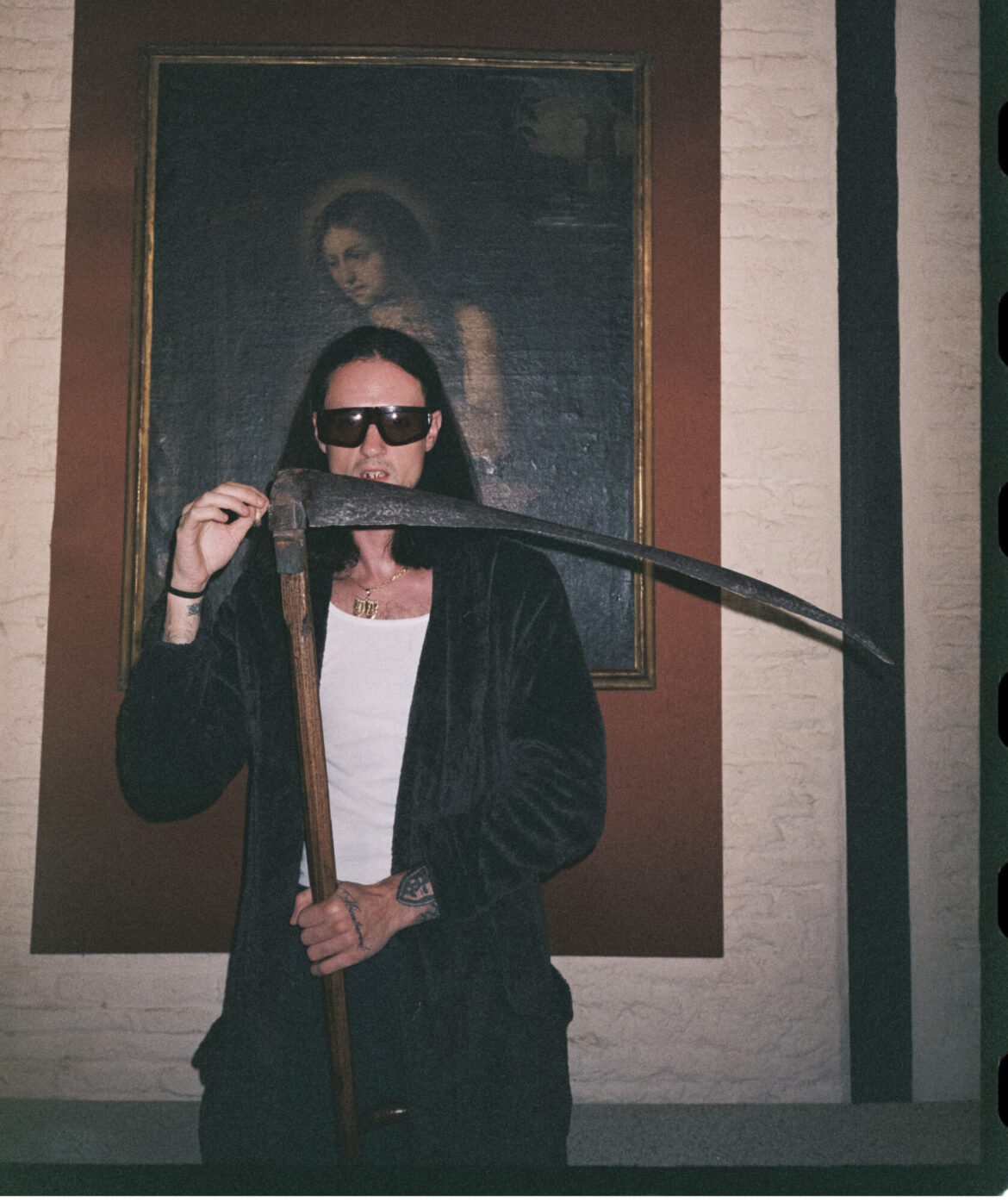
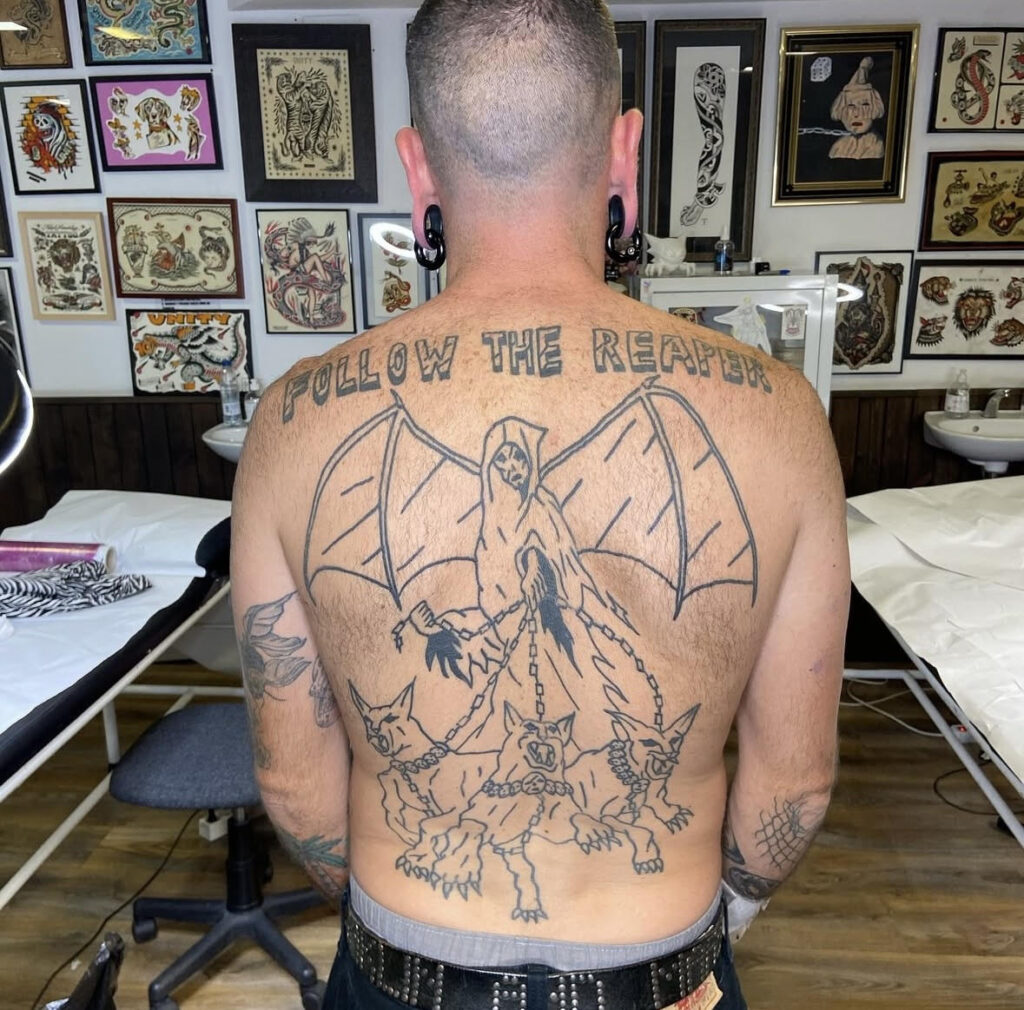
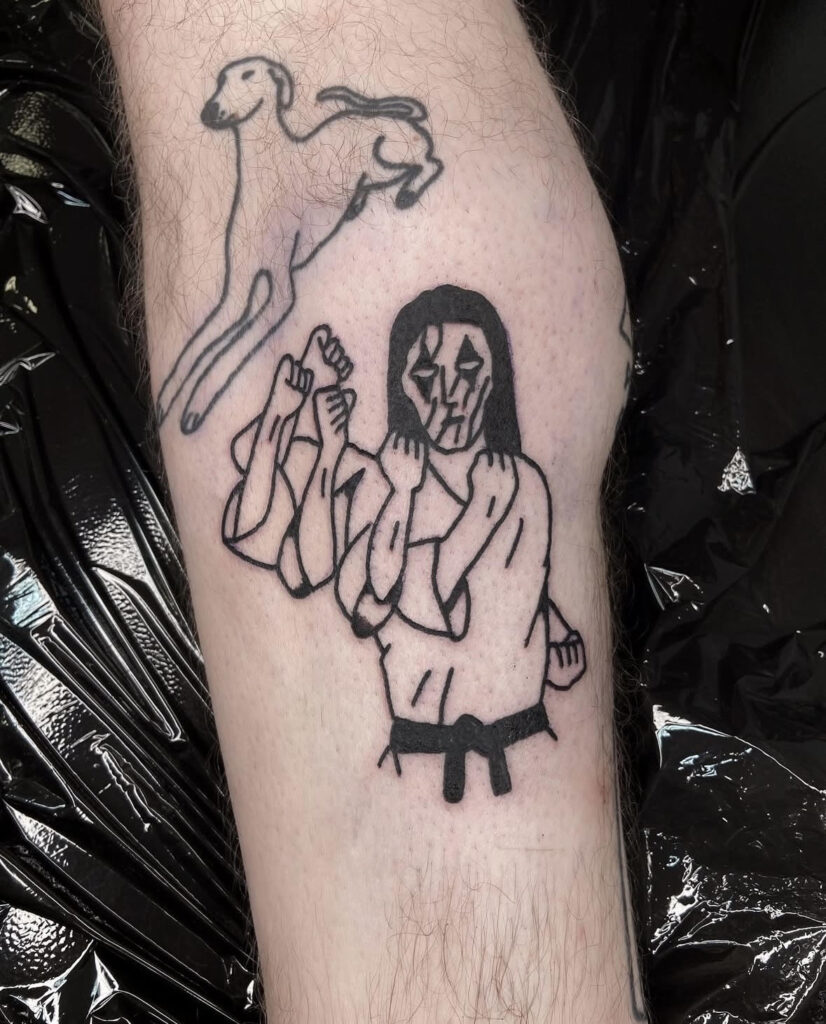
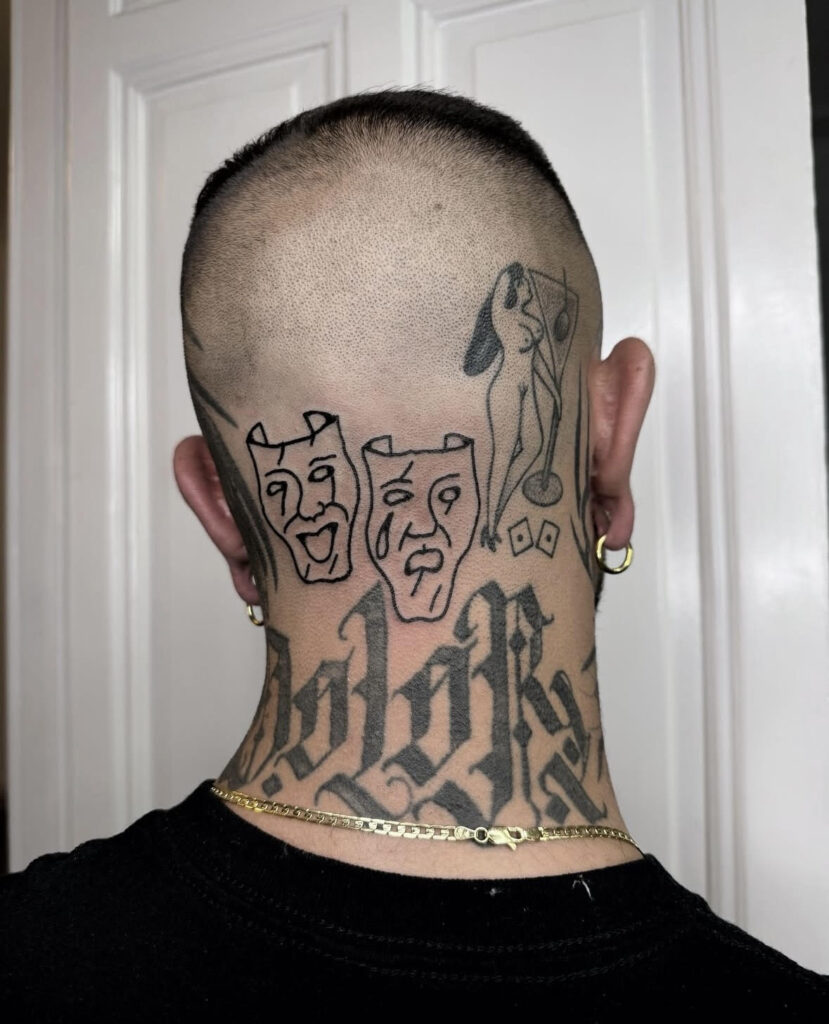
Javier bueno, aka KASHMIR, Born was born Almería in 1992 and after camping for some years in Granada, he now lives and works in Madrid. KASHMIR uses occultism and obscure symbolism as a starting point to develop his artistic view. His compositions take us into saturated darkness painted in black, exploring both the outsider’s side of art and naivety. Line tattoos and paintings express a cry to the existential emptiness of hedonism and an echo of terror imagery. The original KASHMIR pieces are a constant pursuit of a seductive death that eludes us with every waking day and chain us to our vices.
Hi Javier, it’s a pleasure to sit down and talk with you. I always start with the same question: What’s a typical day like for you in Madrid?
KASHMIR: I usually wake up between 8:00 and 9:00 a.m, have breakfast, and head out to the train. I spend about two hours at the gym, then return home to eat. If I have a tattoo appointment, I walk to the studio where I currently work—it’s about a 15-minute walk from my place. I tattoo, hang out with the guys, and enjoy the time until dinner. If I don’t have clients, I usually stay home drawing or painting—or I’ll meet a friend for drinks and talk about horror films, music, or whatever else comes up.
I’m curious—what were you like as a child growing up in Almería? What did you enjoy doing? How did you spend your time?
KASHMIR: I loved hanging out with my friends, who lived nearby. I was lucky enough to grow up in an environment where everything was close by and far away from the stress of the big city.
Do you remember when your creative side started to show? And when did you begin taking being an artist seriously?
KASHMIR: Honestly, I don’t think I’ve ever taken anything seriously. I’ve always liked painting and drawing. I was a quiet, highly observant kid with a vivid imagination.
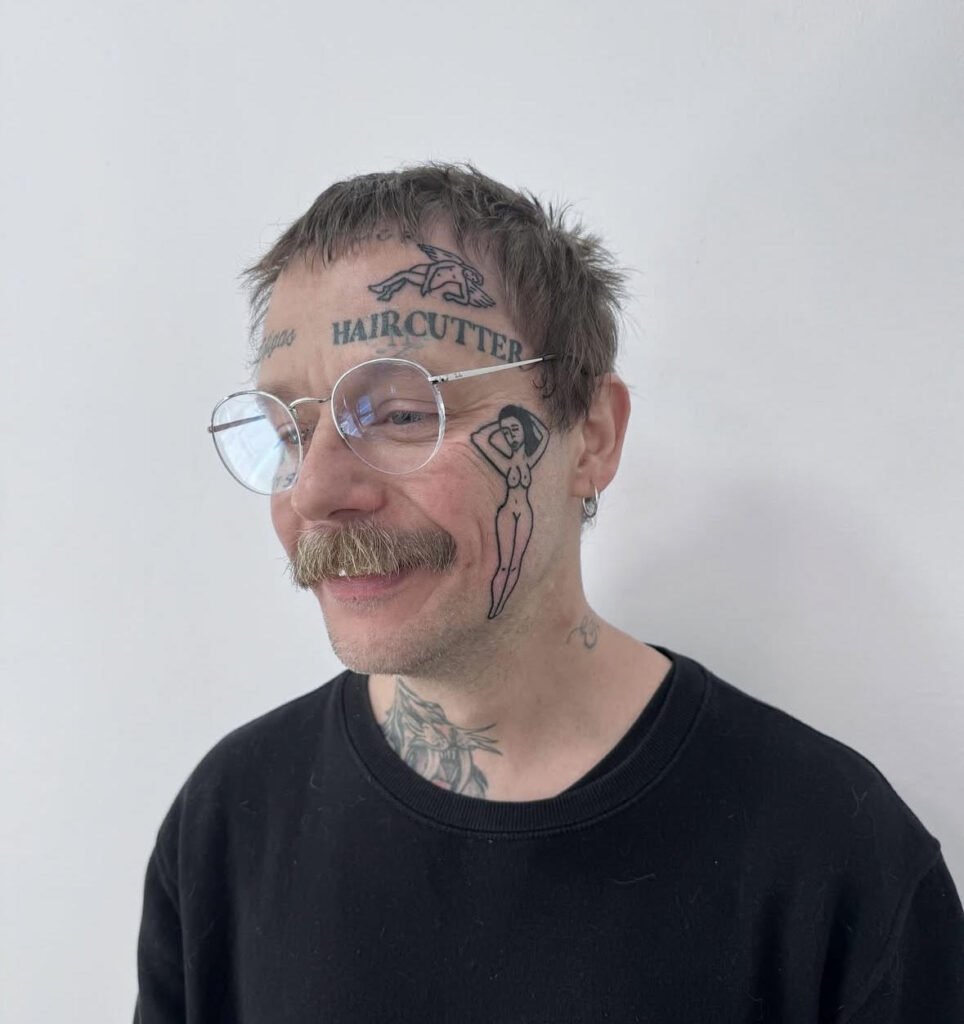
Let’s go back a bit—when and how did you enter the world of tattooing? What drew you to it?
KASHMIR: My fascination with tattoos goes way back to my childhood. I was drawn to the tattoos my uncle David and his friends had or those worn by people in my neighborhood in Almería. You can imagine, those faded, sun-washed classic tattoos: tribals, Japanese dragons, wolves howling at the moon, ’90s-style witches and fairies. That aesthetic left a mark on me.
The first time I tattooed myself I was 14. I took a sewing needle and Indian ink and did it during class in school. Later on, I built my own makeshift tattoo machine but I didn’t trust it enough to use it on myself or anyone else. Eventually, a friend of mine—four years older—gave me one of his machines and that’s how I started tattooing friends and neighborhood kids for 20 euros.
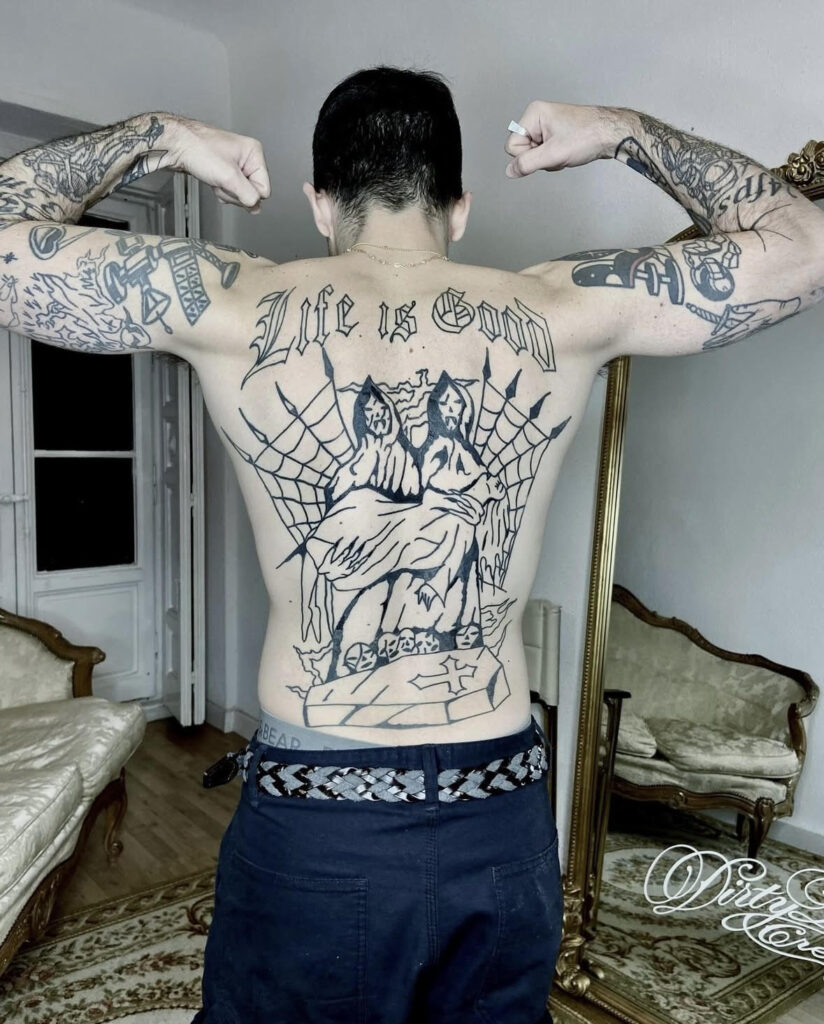
Who taught you or mentored you to get to where you are today?
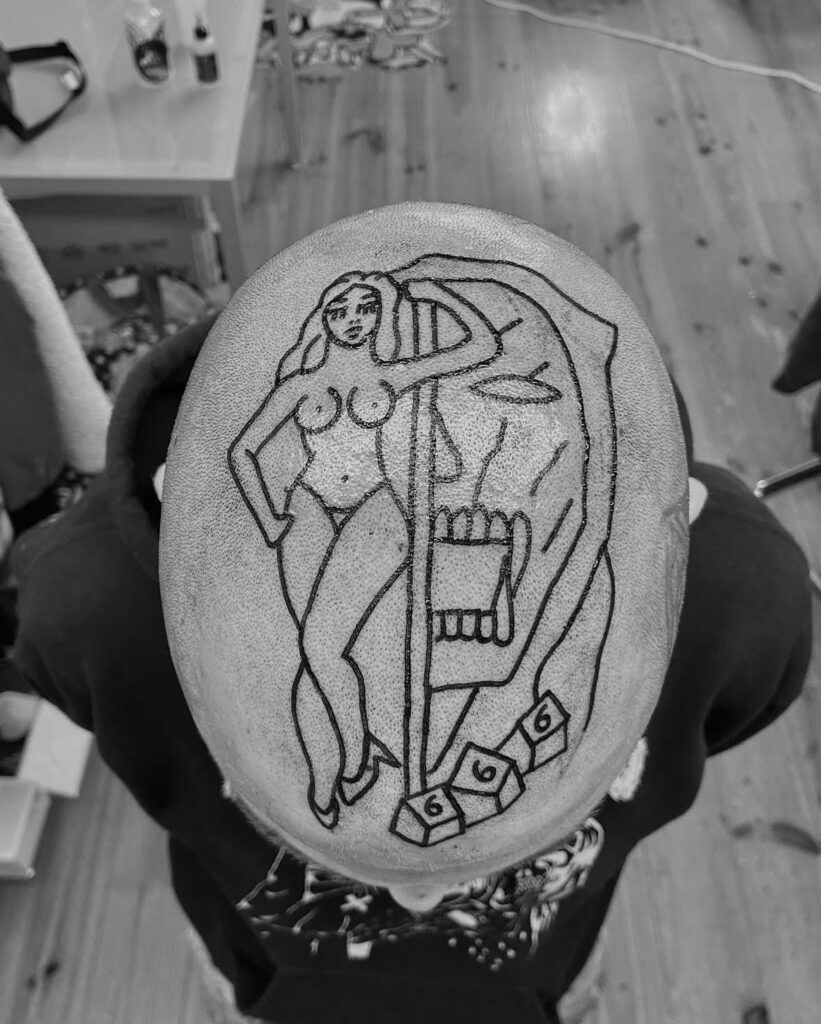
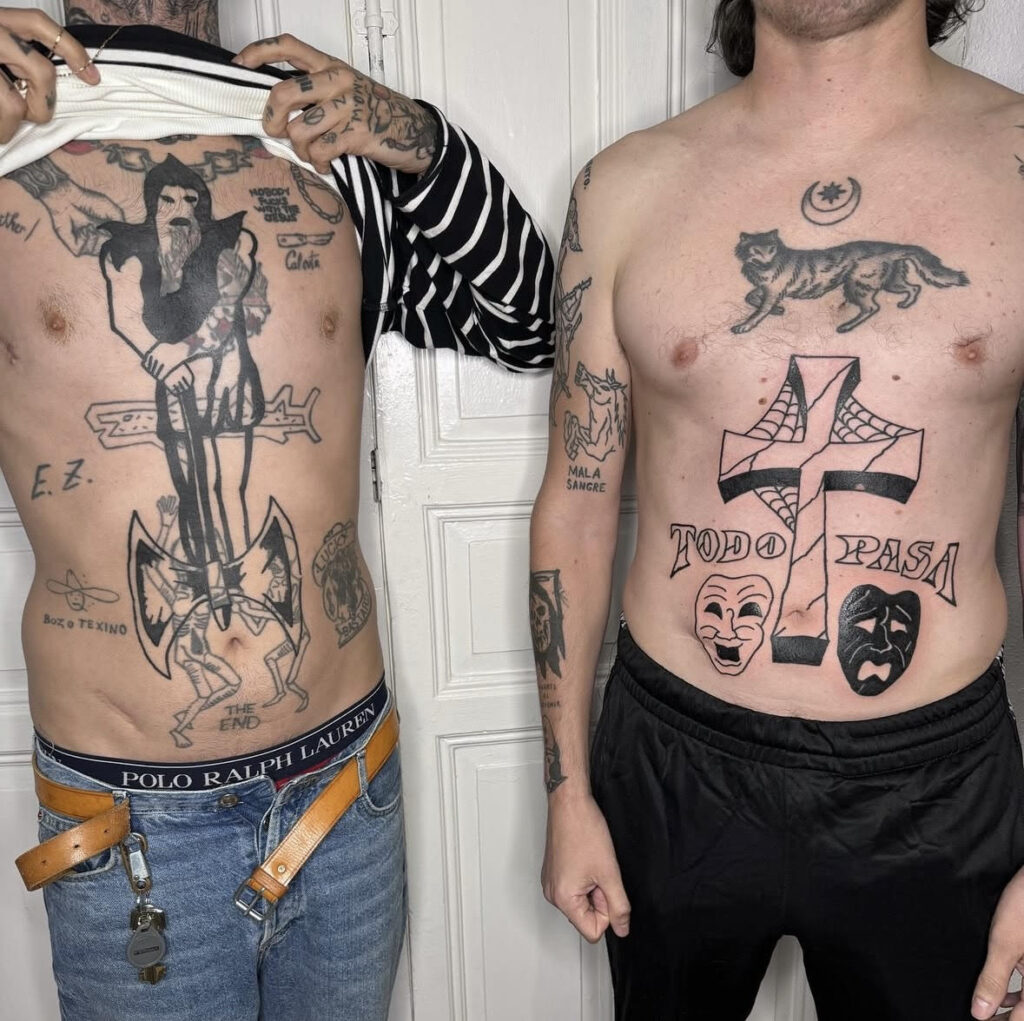
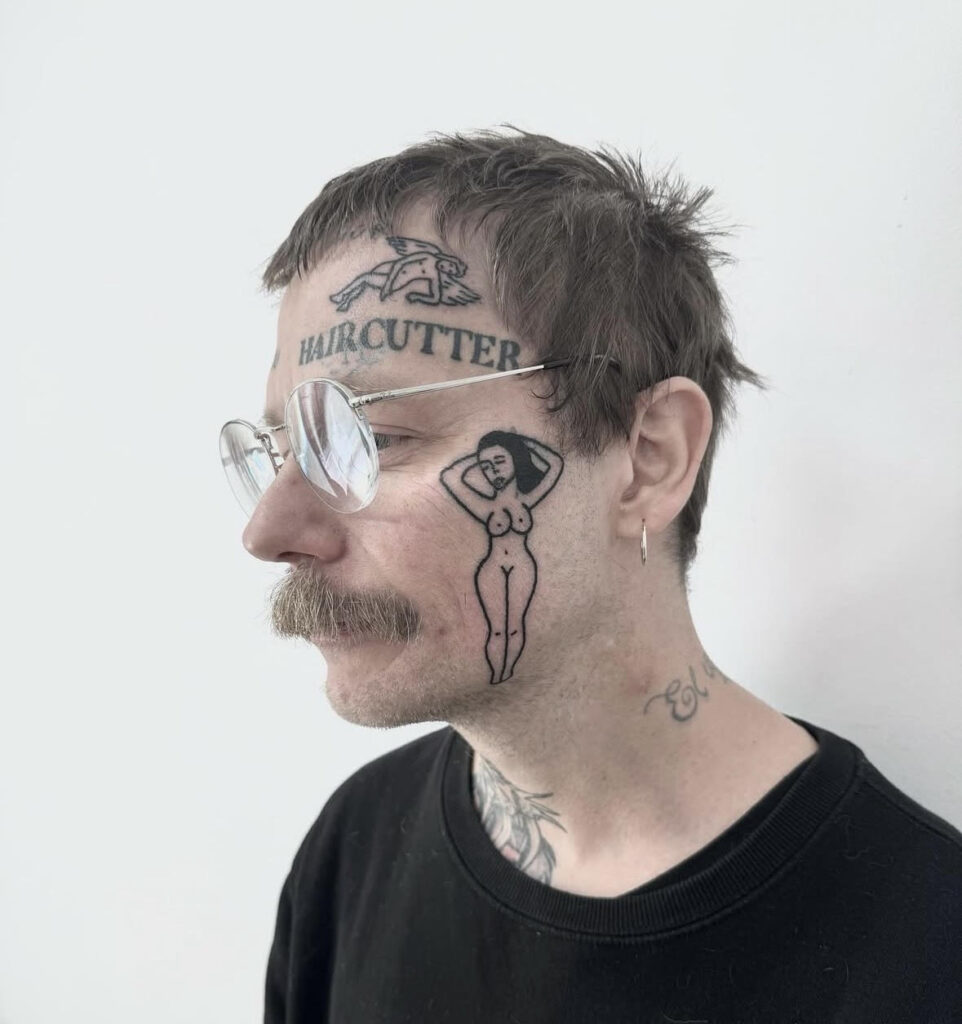
Kashmir: I don’t consider myself a technically skilled tattooist. I’ve nurtured a recognizable and personal style,but my tattoos are pretty straightforward. I’d say it’s a mix of 30% technique and 70% of feeling and concept. I don’t think they’d have the same soul if they were super-clean, by-the-book pieces. That said, I’ve definitely improved a lot thanks to friends and the people I’ve worked alongside.
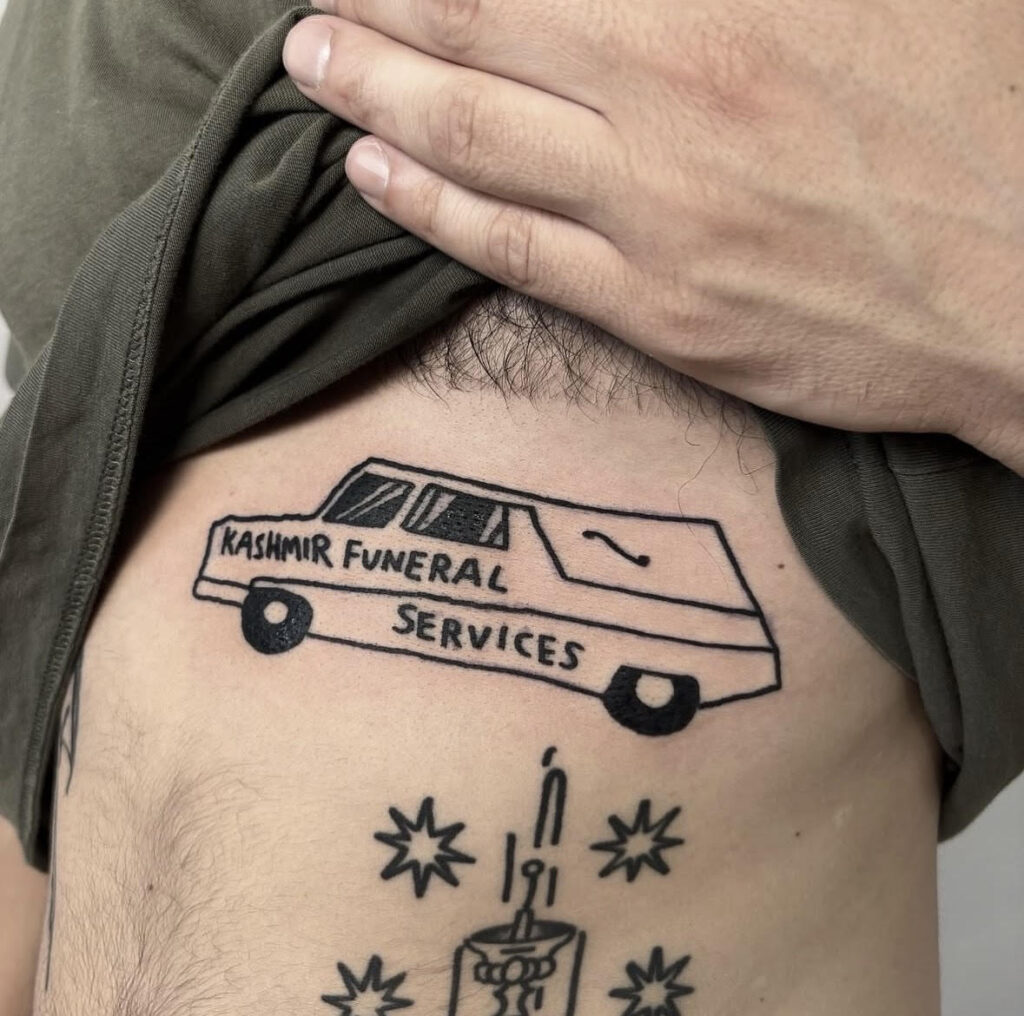
KASHMIR: Your work is steeped in occult and dark symbolism. Why are those themes so important to you?
KASHMIR: What lies in the bright light of day is clear and easy, what hides in the shadows, is intriguing and only lends itself to be discerned through symbols, hints of its real nature. I like exploring the B-side of life, the side only the ones connected to the supernatural, the horror, the shock, the repugnance, are willing to pass through. That would be the poetic interpretation of it. On the other hand, it just looks good .
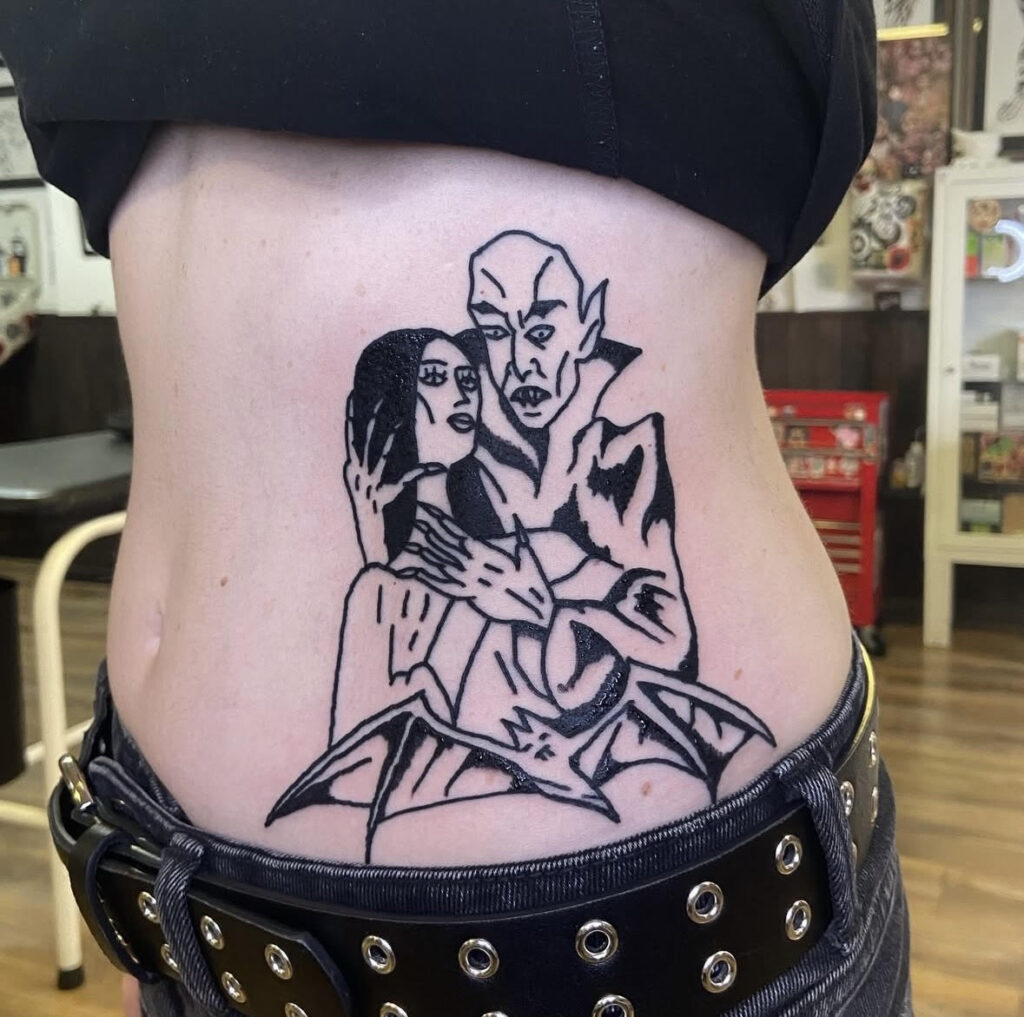
Besides tattooing, you also paint. Which of the two do you enjoy more?
KASHMIR: I don’t think they’re comparable. Tattooing is social—there’s a person in front of you, a dialogue, a body that reacts. Painting, by contrast, is intimate and solitary. The mind space I inhabit is completely different and so is the reward I get.
What does “saturated darkness” mean to you? Is it emotional, aesthetic—or both?
KASHMIR: Visually, I’m interested in a kind of darkness that has weight, texture, density, makes noise. Emotionally, it’s a way of expressing excess: anxiety, violence, desire, guilt… all of it packed tight, with no escape, pressing hard from within.
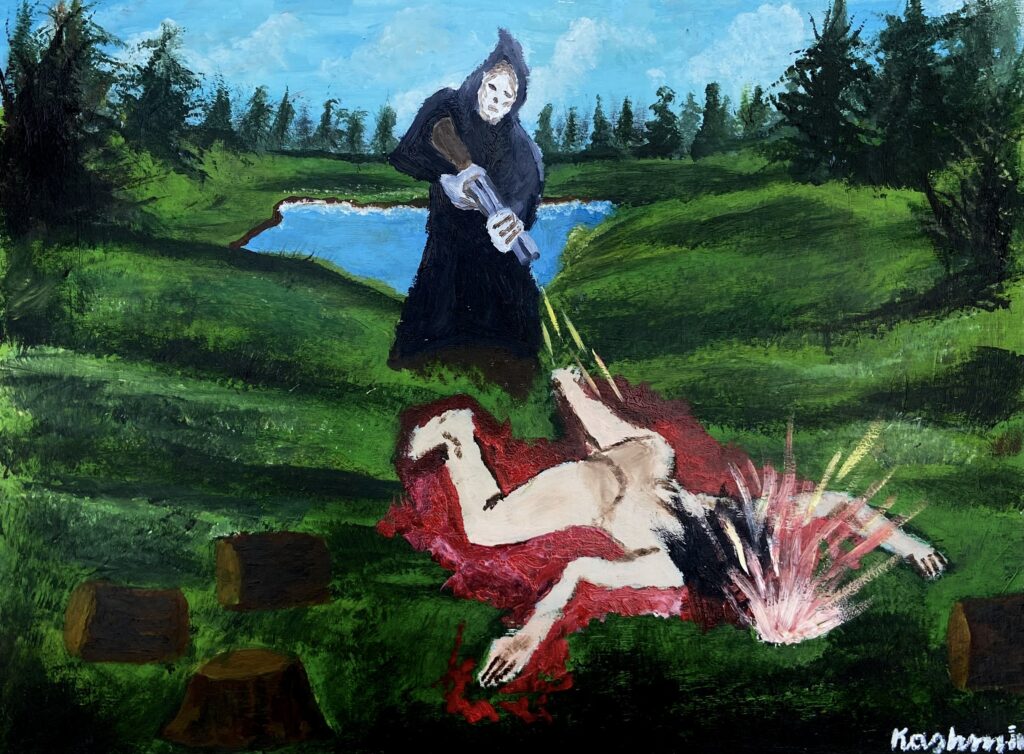
Your visual world moves between the naïve and the horrific. Can you elaborate on that?
KASHMIR: The moment innocence turns unsettling, when the monstrous becomes almost tender it’s utterly fascinating. I work with visual codes that might seem simple or even childish—flat colors, basic shapes—but there’s something broken underneath. That fracture is what interests me. The kind of horror I’m drawn to isn’t explicit—it’s the one that seeps into the soft spots, the places that should feel safe. Naivety serves as the entry point, the hook.
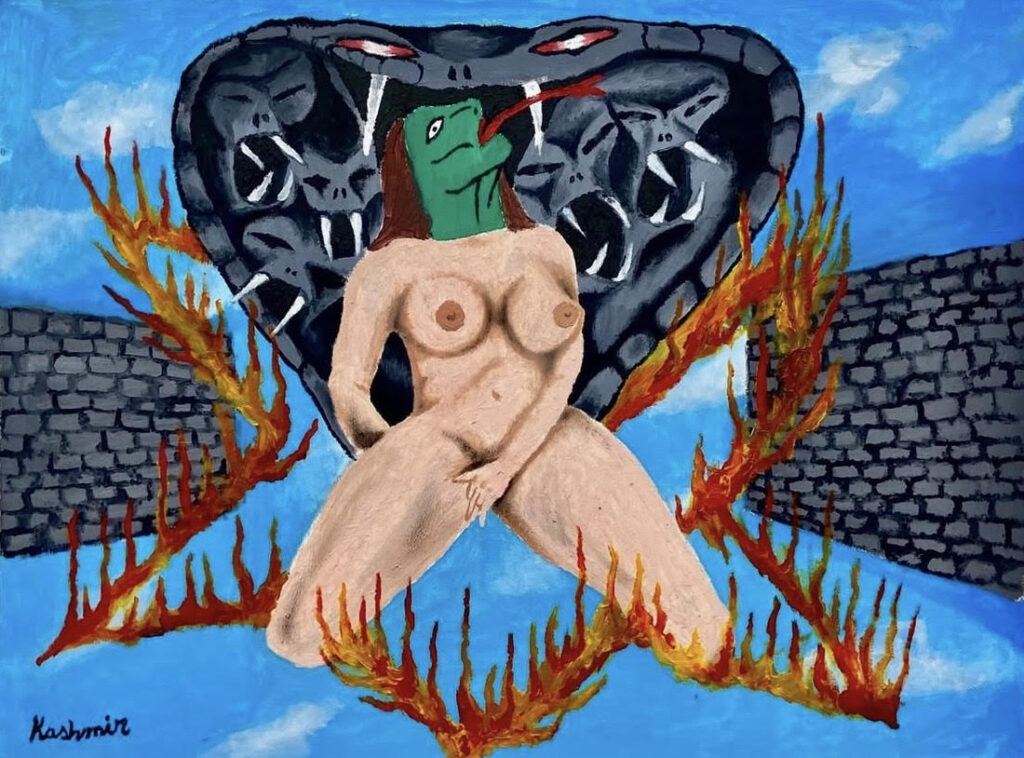
You’ve described your work as “a search for a seductive death.” How would you define that seduction?
KASHMIR: I’m drawn to that peculiar beauty emerging on the precipice of collapse. Consider Dario Argento’s films: scenes filled with blood and tension, yet bathed in a light that renders them exquisitely beautiful. This sharp contrast utterly captivates me. Both my oil paintings and tattoos explore this tension—composing images that are visually alluring, while subtly concealing a darker undercurrent.
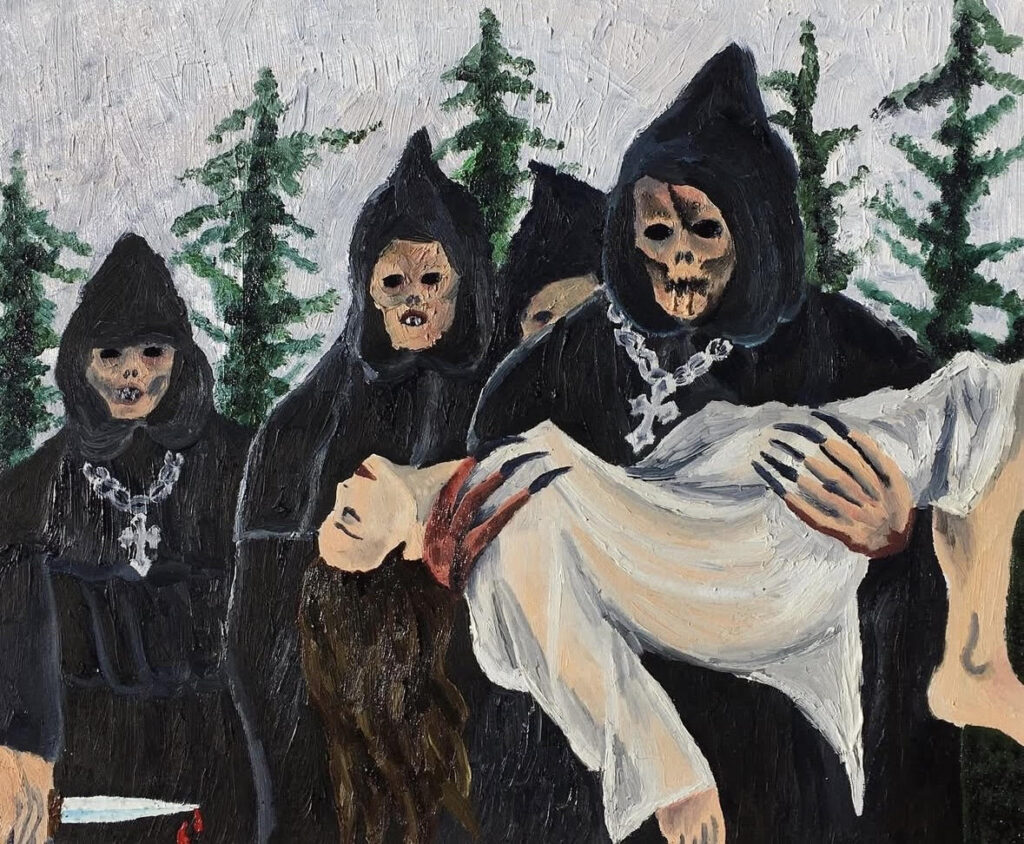
Existential void and hedonism are recurring themes in your work. Are you exploring them as critique, confession, or something else? How have your personal experiences shaped the darker psychological tones in your art?
KASHMIR: From childhood, the recurring specter of sleep paralysis has visited me, engraving vivid imagery into my mind: static figures, crushing presences, and a silence that menaces. These visitations have become my lexicon, enabling me to translate deeply felt emotions and atmospheres into tangible forms. They allow me to navigate concepts of anxiety, fear, violence, loss, obsession, and desire from a uniquely symbolic vantage point.
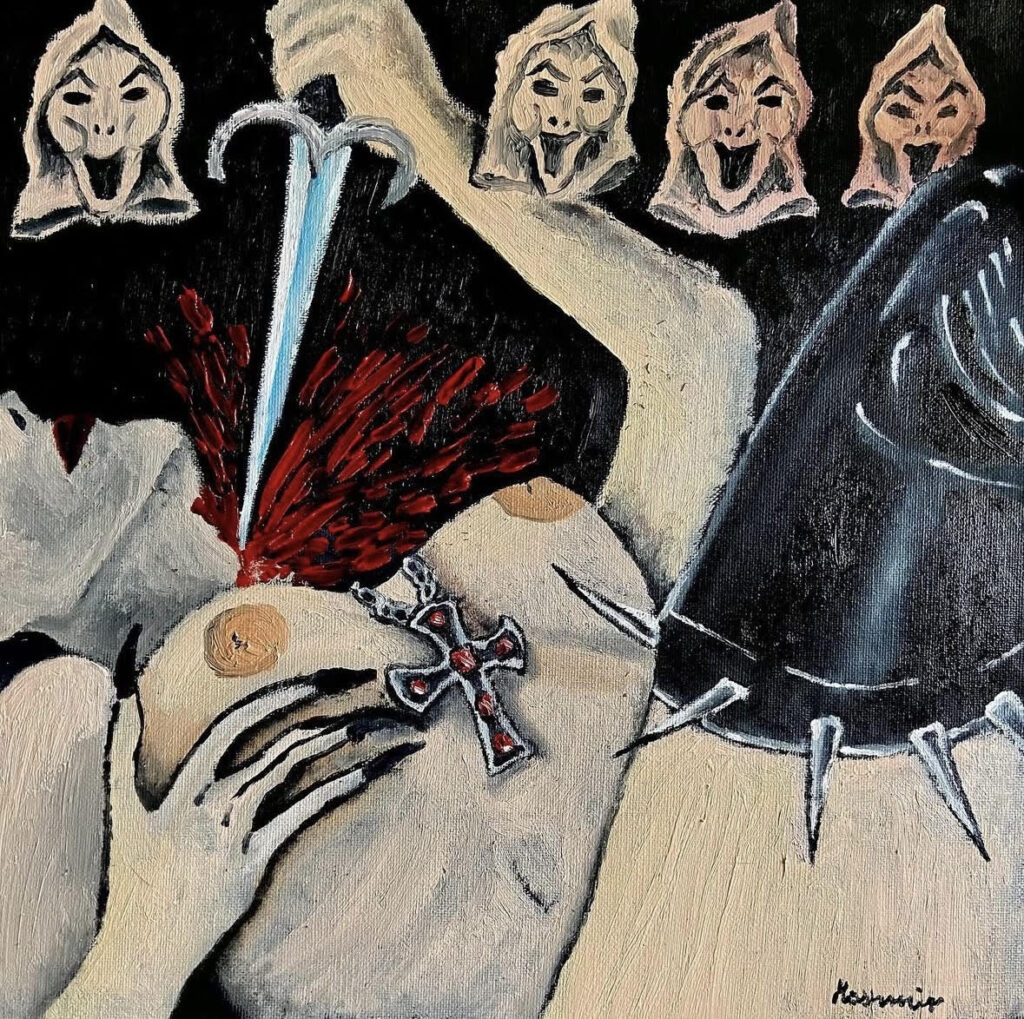
Your paintings seem to hold the same darkness as your tattoos, but with more complexity. What can you express in painting that tattooing doesn’t allow?
KASHMIR: Everything. A tattoo carries an almost ancestral commitment with the person receiving it. It’s ritualistic, physical, a direct bond between artist and recipient.
But painting is a different realm entirely. My relationship with the canvas—or any surface I use—is deeply introspective. There are no intermediaries; only what I hold within, confronting the void. That gives me unfettered freedom, a raw conduit to transmit more. In painting, limits vanish: no other, no appointment, no ticking watch. Just pure surrender.
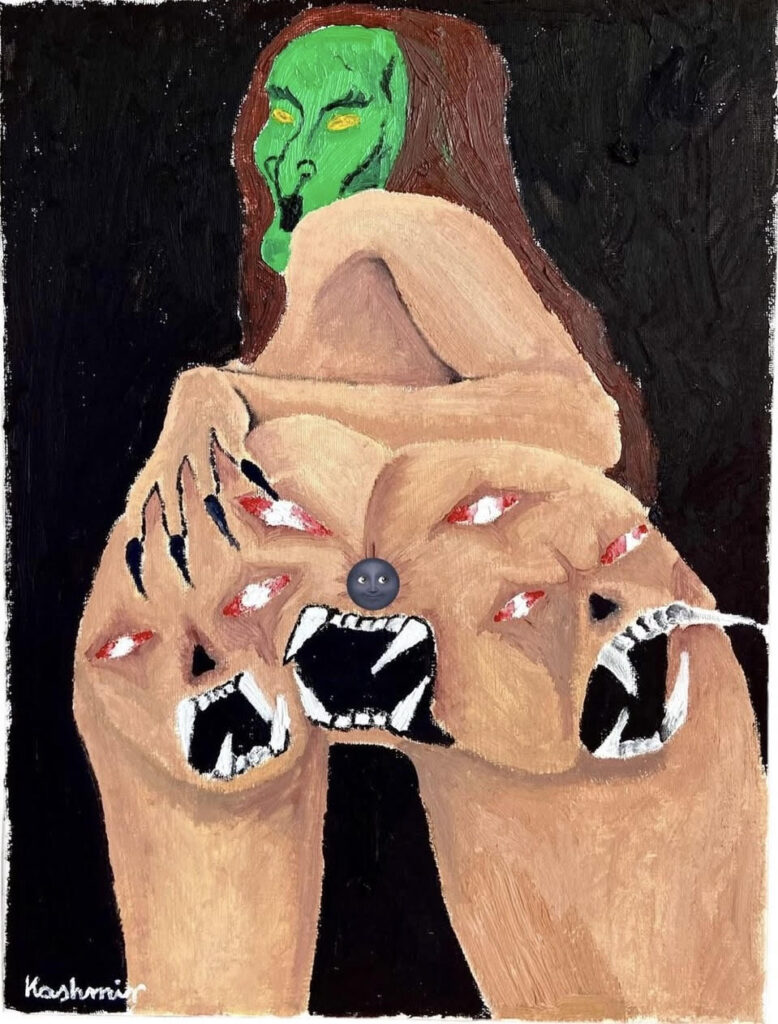
Have you ever created a painting and then turned that concept into a tattoo—or the other way around?
KASHMIR: All the time!
Black is central to your work. Why black? What emotional or philosophical weight does it carry for you?
KASHMIR: Black is a state of being, the very skin of our innermost selves. It is the genesis and the ultimate cessation; from its depths, all things emerge, and to its embrace, all inevitably return. My embrace of black is not a pursuit of edginess or theatrical darkness. Rather, it’s chosen for its unique capacity to absorb, reflecting nothing, devouring light. It becomes my lexicon for pain, for the nameless, the formless. A canvas for terror, yes—but equally, for the profound peace found in ultimate surrender.
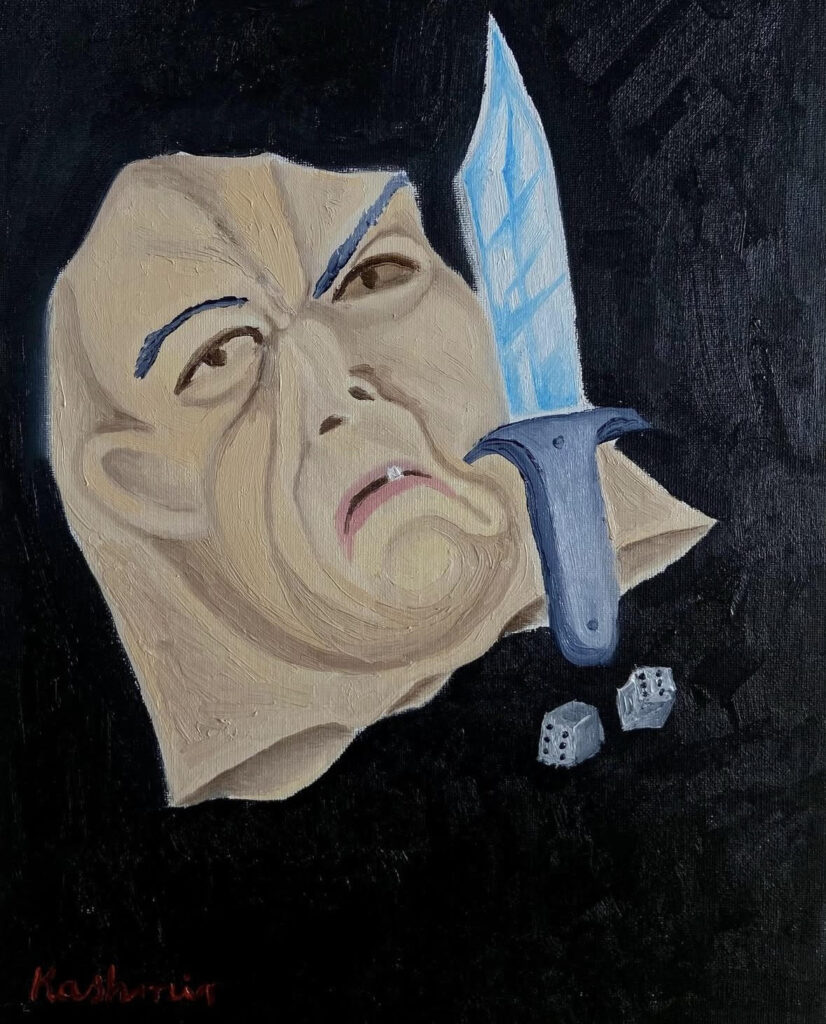
Is your use of occult imagery purely symbolic, or is there a deeper spiritual or ritualistic practice behind it?
KASHMIR: The occult is far more than a decorative motif or an appealing aesthetic, although, visually, its potency is undeniable. It functions as a spiritual compass—a language rich with history, danger, timeless myths, boundless prospects— but it’s not linked to any public or recognizable religion, practice or cult.
With that in mind, could you tell me more about your use of symbolism?
KASHMIR: I’d rather let you ask and answer that yourself. Explaining certain things—especially those rooted in deeper traditions or systems—can strip them of their weight. The more you break something down, the more ordinary it begins to seem, until whatever power it held disappears in the process.
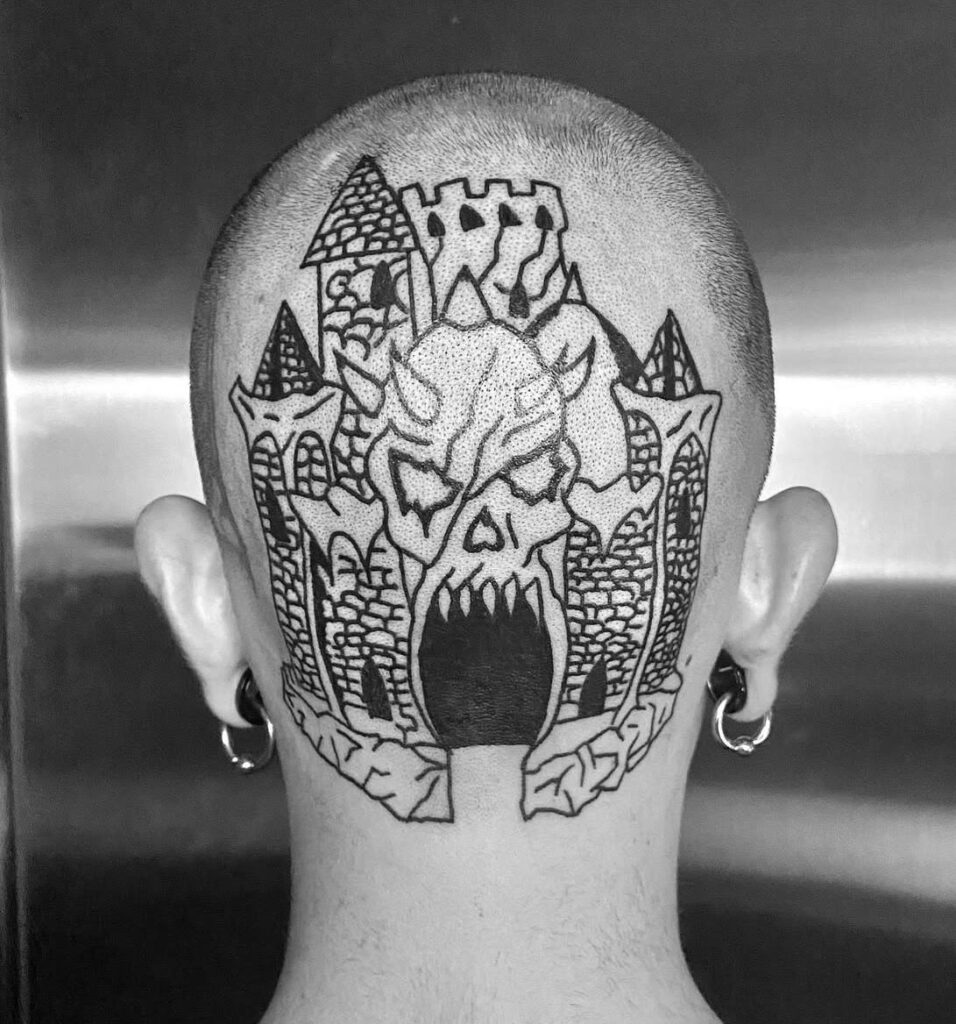
What does the name “KASHMIR” mean to you?
KASHMIR: It could be anything—from a halal butcher shop to a Led Zeppelin song. Honestly, nothing special. I just like how it sounds.
Could you describe your creative process, from idea to finished piece?
KASHMIR: An image often gets stuck in my head, or I’ll thinking about something quite specific for days. I usually just go straight in with a marker, no pencil sketch first—I feel like that captures the emotion and personality of the stroke better. I add the finished page to my flashbook and wait for someone to fall in love with it and get it tattooed! Check them all at @kvshmirt and DM me!
Tattooing has its limits; with painting, I can really build a whole atmosphere and put more of my intent into it. I can’t completely avoid improvisation, but there’s always an intention behind what I do—even if the final result surprises me.”
Okay, Javier—now something completely different. In a parallel universe, who would you be and what would you be doing?
KASHMIR: It’s hard to answer the question even in this universe, I can’t even bear in mind having to think about it in the parallel one! I hope a parallel me is wiser.
Outside of art and design, is there anything you’re obsessed with lately? A hobby, a show, food—something that grounds or inspires you?
KASHMIR: I’m obsessed with good food. I love true crime, bad energy objects and cat videos.
If you could tattoo one phrase on every person in the world, what would it say?
KASHMIR: “RIP Ozzy”
What qualities do you value most in people you choose to spend time with?
KASHMIR: During a Madrid summer? I’m fond of proud owners of a pool.
What motivates you the most?
KASHMIR: I’m usually not very motivated when I sit in front of a canvas. In fact, I feel most creative when I’m saddest. Art doesn’t always come from being okay or having some specific inspiration. That’s why I can go months without creating anything—and that just means life is being kind to me.
How would you describe a perfect day?
KASHMIR: Sun, nice food, countryside, friends, Black Sabbath, beer, and weed.
And finally, the two questions I always end with: What are your favorite films, and why?
KASHMIR: “Rosemary’s Baby”, “The Texas Chainsaw Massacre” and “House of 1000 Corpses”. The three of them share the same brutal truth: true horror doesn’t radiate from the monstrous, it pours out from the human.
And what are you listening to most these days?
KASHMIR: Viagra Boys, Julio Iglesias and Los Tigres del Norte.