Share this
For Liu Wei, a place is never only a place. It is a material. A memory system. A pressure. A surface where personal history, architecture, landscape, and cultural imagination begin to fold into each other.
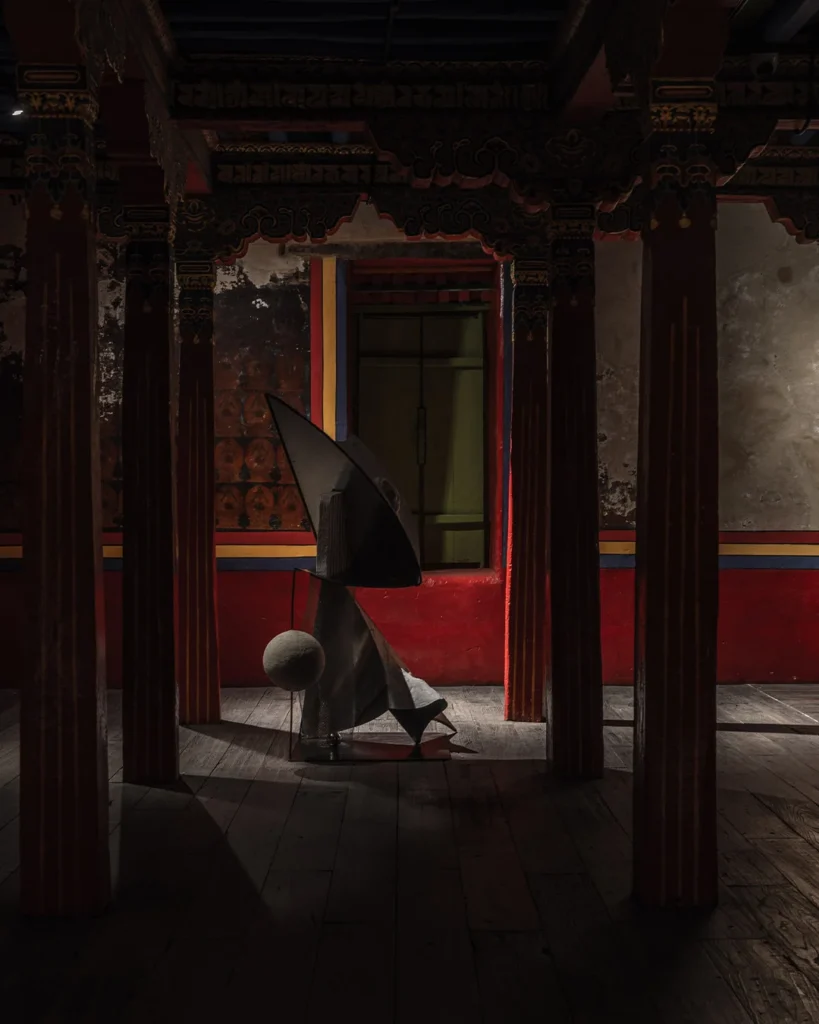
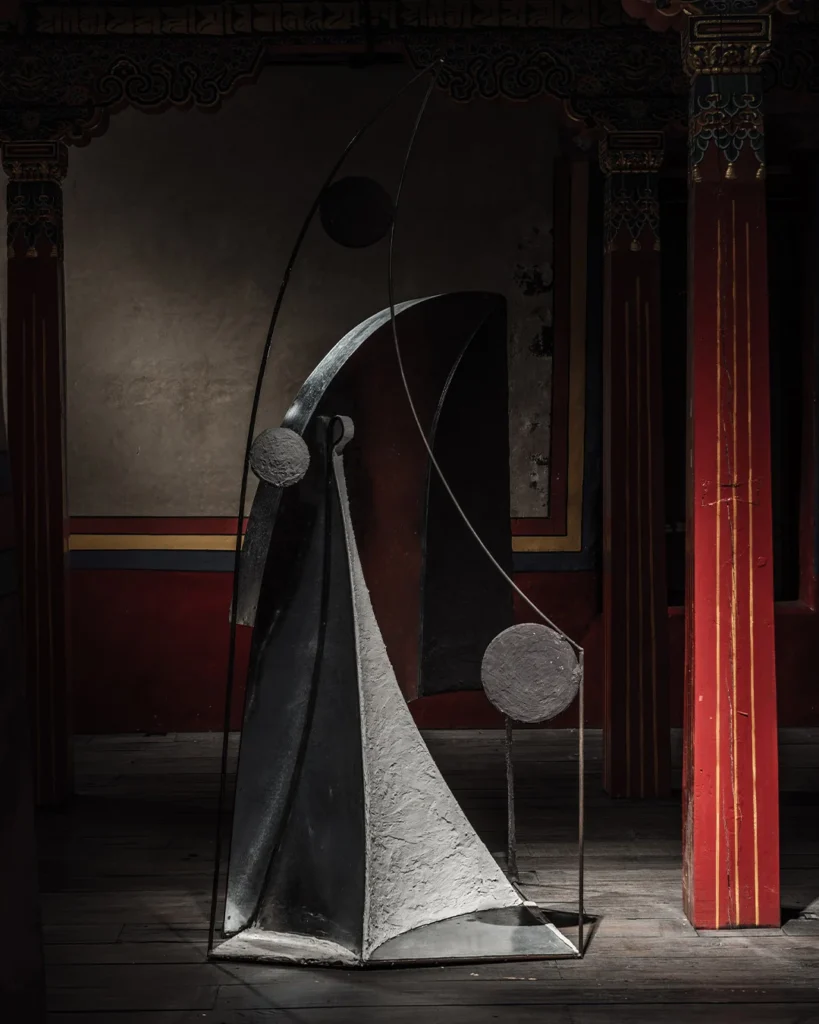
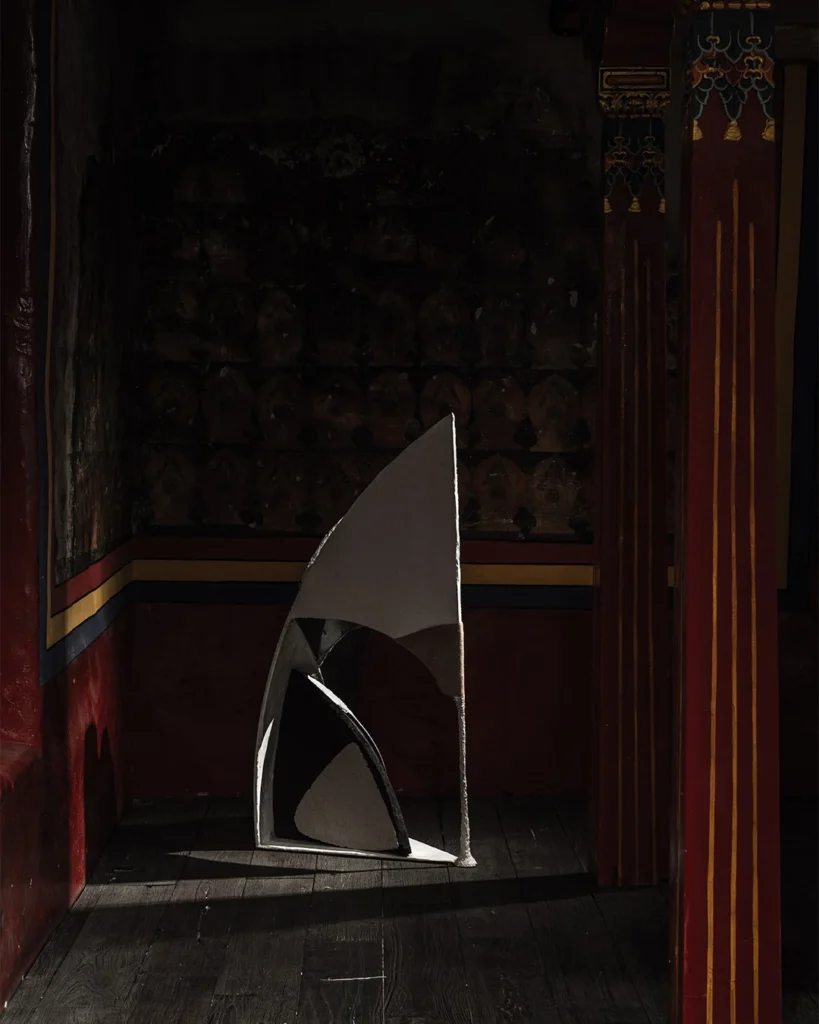
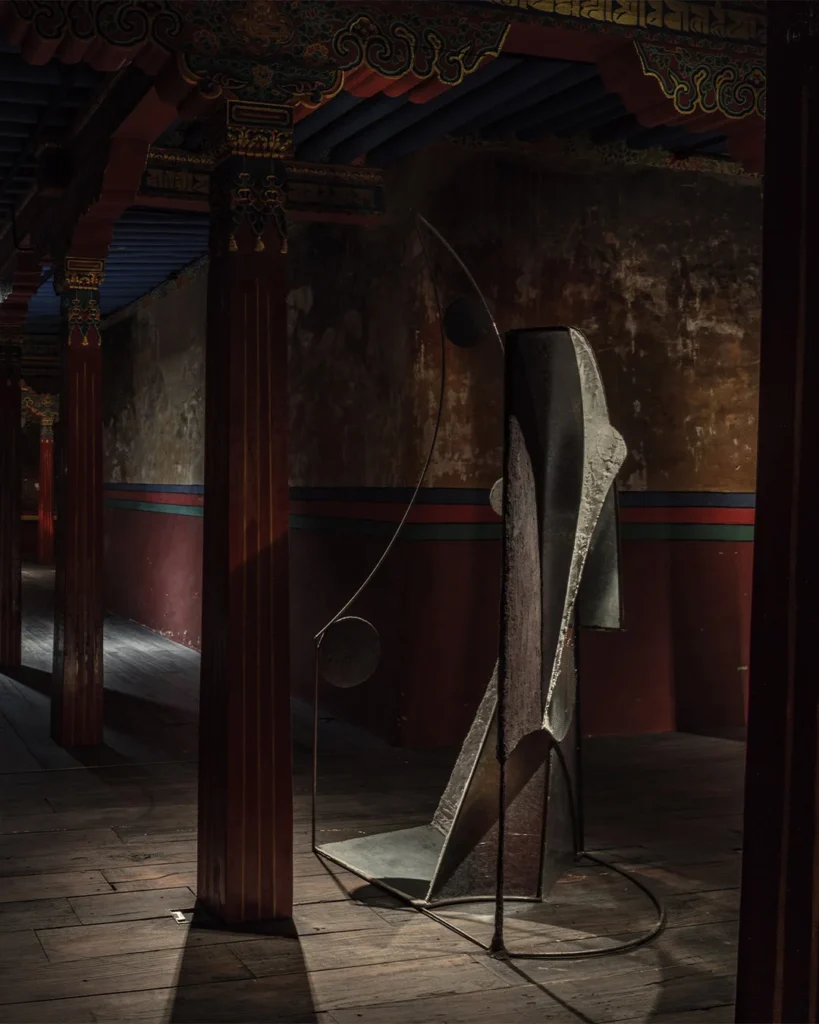
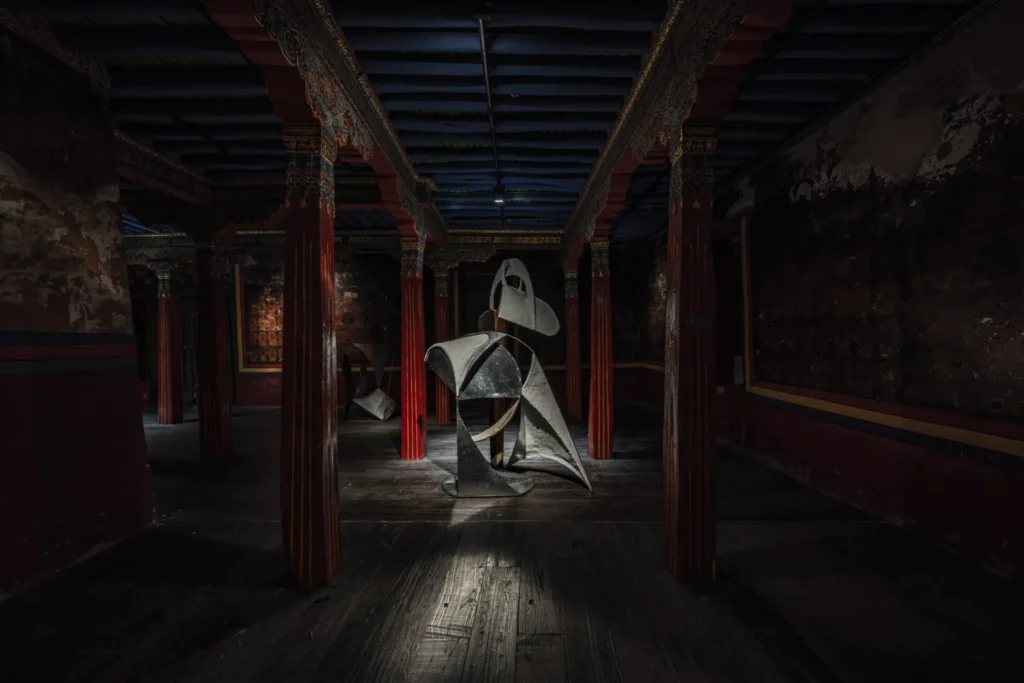
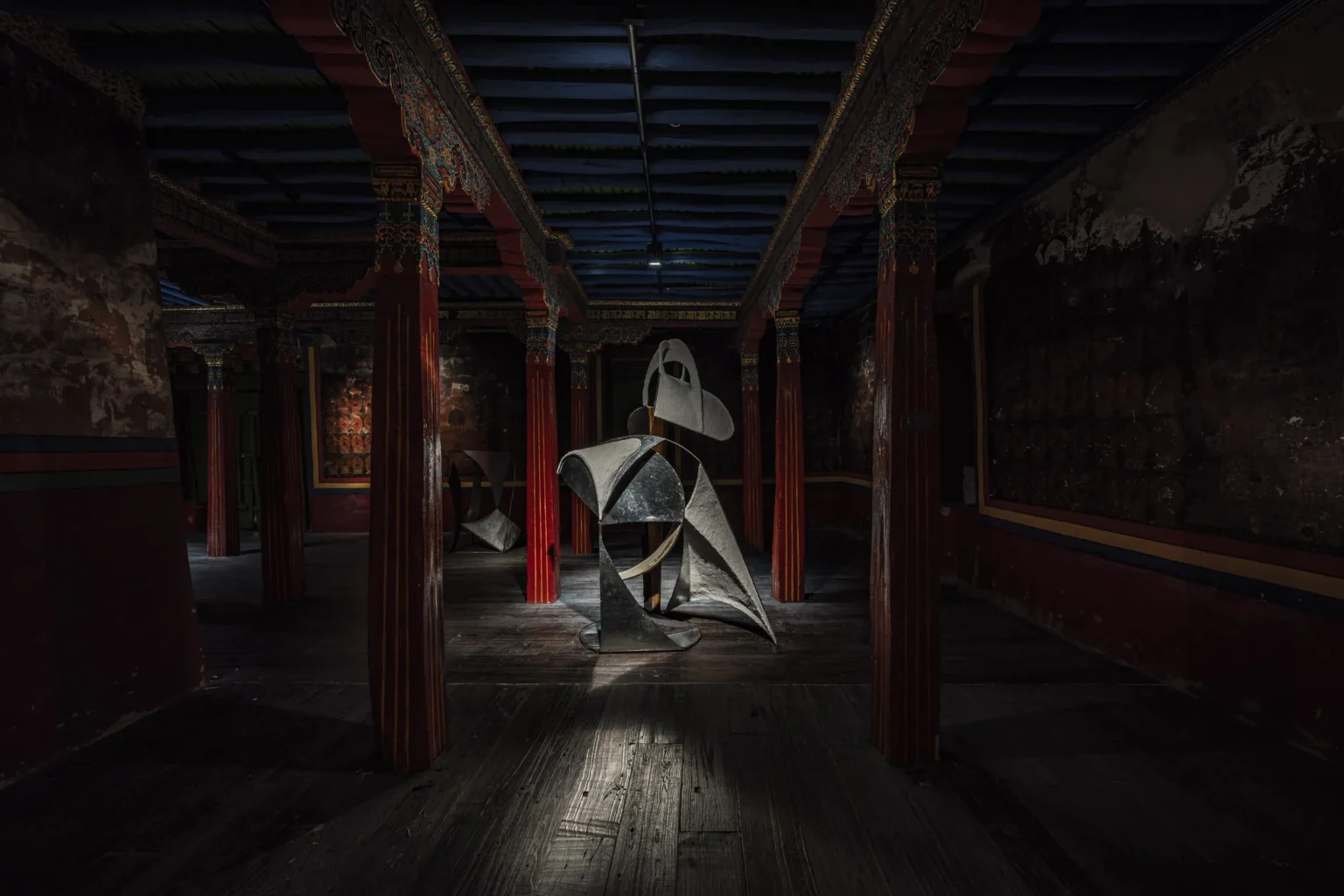
With Tulips, now on view at Jebum-Gang Art Center in Lhasa, Tibet, the Chinese artist presents his first solo exhibition in the region. Running until September 19, 2026, the show occupies a restored 19th-century temple, bringing Liu’s contemporary language into direct contact with a site shaped by centuries of Tibetan architecture, spirituality, and cultural memory.
The title begins with something unexpectedly intimate. For Liu, tulips are connected to childhood memories and to an imagined relationship with the Himalayas. Rather than treating Tibet through familiar external symbols or postcard-like mysticism, the exhibition starts from that private association, using memory as a way to approach landscape from the inside.
That is what gives the project its quiet force. Tulips is not only about Tibet as geography. It is about how a place enters the mind, how it changes perception, and how memory can transform a landscape into something both real and imagined. The restored temple does not simply host the works. It becomes part of them, giving the exhibition an atmosphere where architecture, history, and spiritual residue are impossible to separate from the art itself.
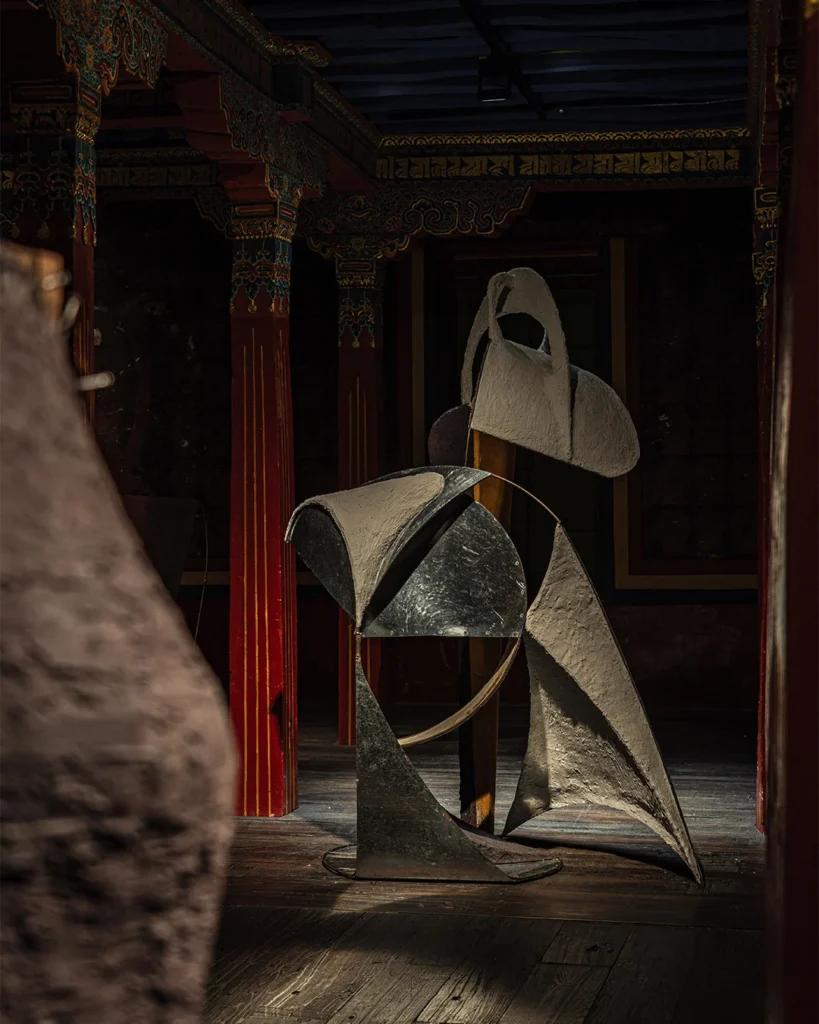
Material plays a central role. The exhibition brings together new and recent works made from Tibetan butter, milk, wax, stone, leather, and galvanized steel. These materials create a charged dialogue between softness and hardness, the organic and the industrial, the fragile and the enduring.
That combination feels deeply Liu Wei. His practice has often examined how objects carry social, emotional, and historical pressure. Here, the materials are not neutral. Butter, milk, wax, stone, leather, and steel each hold a different relationship to body, ritual, labour, environment, and time. Together, they make the exhibition feel less like a display of objects and more like a field of transformations.
What makes Tulips compelling is its refusal to fix Tibet into a single image. The exhibition does not flatten the region into symbolism. Instead, it allows contradiction: tenderness and weight, devotion and experimentation, local material and contemporary process, childhood memory and monumental landscape.
Inside Jebum-Gang Art Center, Liu Wei’s work seems to ask how memory becomes matter, and how matter becomes a way of thinking. A tulip, a temple, a mountain, a childhood image — each becomes part of the same unstable system.