

Johnny Nghiem is a Toronto-grown, Berlin-based photographer and videographer of Chinese and Vietnamese heritage, as well as co-founder of @yung_eldr. Raised in one of the world’s great cultural crossroads, he found early comfort in people who understood the immigrant experience and the quiet tensions that come with it. That sense of community, alongside the influence of Almost Famous and a tendency to take the less conventional path, continues to shape the way he moves through the world and the images he makes.
For Johnny, photography is a way of speaking through experience and of creating memory with intention. His practice moves between portraiture and exhibition work, each driven by a different emotional logic. In his portraits, he aims to humanise his subjects and build an atmosphere of trust and curiosity, guided by the belief that “a good portrait is capturing someone how they want to be seen versus how you see them.” Elsewhere, his more personal work turns inward, exploring loneliness, duality, and the subtle dislocation of growing up between cultures: Asian at home, something else outside.
Some of the images in this series centre on Johnny’s two grandmothers, Ama and Ba, who each left a different mark on him. From Ama came curiosity, adventure, and inner strength; from Ba, compassion, love, and an understanding of how to tell a story without words. The photographs were taken during their first meeting, when Johnny and his sister brought Ama to Ba as a surprise. After their parents’ divorce, the siblings became a kind of bridge. What remains in these images is not just memory, but tenderness made visible.
Profile picture: Jaewon Chung

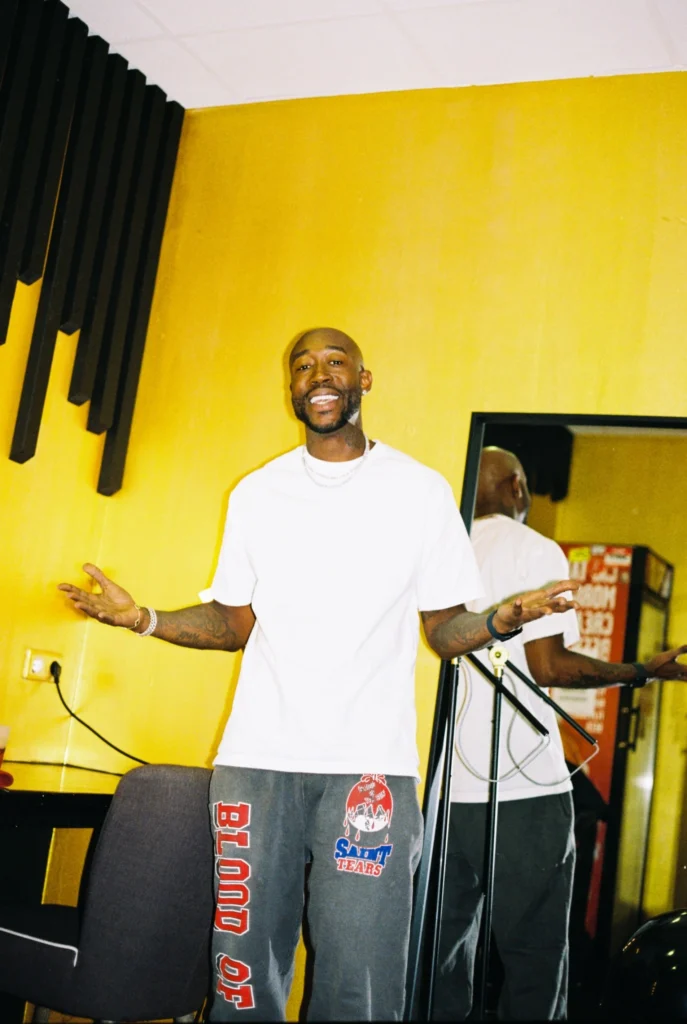
Hi Johnny! It’s a pleasure to sit down wot you! First question that I always ask. How does a regular day look like for you in Berlin?
Johnny: My typical day in Berlin starts off with a cigarette in the kitchen, a bit of sunshine, and one thought,
I’m curious, growing up, what kind of kid were you? What did you enjoy doing, and how did you spend your time?
Johnny: Growing up, I was and still in someways a very shy kid. I spent a lot of time walking our dogs Charlie and Lulu while imagining that we were somewhere completely different armed with proton cannons fighting whatever evil was in front of us. Maybe it was a way for me to deal with the fact that I felt alone and by dreaming of an alternative reality, it made my own existence easier to comprehend with.


With that in mind, growing up between Vietnamese, Chinese, and Canadian worlds, when did you first become aware of this “third culture” feeling — and how did it shape the way you saw yourself?
Johnny: The first time I was fully aware of this “third culture” feeling was when my mom started putting banh mi ingredients hidden within two slices of Wonderbread to help us (my sisters and I) assimilate better with Canadian culture whatever the fuck that was.
You describe the isolation of dual identity not as something tragic, but contextual. What does that context look like for you today, as an adult navigating Berlin?
Johnny: Being someone with a dual identity, it took what felt like another lifetime to nuture it and to empower myself. It’s become important deep into my adulthood to help me understand me and I wouldn’t have it any other way. If it wasn’t for the bullying, if it wasn’t for being alone, I’d still be that kid with the proton cannons even though the thought comes up every now and then.


Real quick, what brought you to Berlin?
Johnny: Nothing really brought me to Berlin but an everlasting curiousity to explore the world and to start off alone.
So how did you get introduced to photography? And how did you first start out practicing with your camera?
Johnny: My introduction to photography, or my disdain, was due to my parents obsession with capturing every moment my sisters and I existed. It didn’t stop there either – there’s a treasure trove of old VHS and Mini-DV tapes which my grandma puts on every time I visit her. To see it now though, it’s absolutely beautiful. I was never into photography, I never thought it was something I’d be remotely good at. I’m still not very good, I just have my perspective and it somehow can create a connection to someone who finds it interesting too. And how it all started? Just like anything else, I did it as a way to save memories that I know I’ll lose one day as my family tree suffers from dementia and it evovled to bringing me some of the best experiences anyone could ask for.

Alright, so what made you want to start documenting everyday life — the streets, the people in them, and all these small human moments?
Johnny: What made me want to start documenting everyday life is actually a bit midleading as I don’t generally have my camera on me daily. I only really document when I’m abroad and the reason, that I can think of, is that the more I capture a lot, it becomes boring and I don’t want my home to be boring.
With that in mind, what do you look for when you’re out looking for your next motif to capture?
Johnny: I generally like to feel like I co-exist with what’s in front of me. It stems from being someone who grew up very quiet, alone a lot of the times. Just to listen, to observe, and to see what nobody understands but me.
How important is authenticity in your work? And can a picture still be good, if it does’t have any?
Johnny: I feel it’s very important to be authentic with your work. It’s like the idea of taking or giving and I feel you always have to give more than you take with especially cultures. An image can be anything and it doesn’t need to mean anything as whomever is looking at it will come up with their own connection and it’s not on us to tell them how to feel. “In the Mood for Love” can be the greatest film ever to some and the worst to others.

What makes photography and video your prefered medium of expressing yourself?
Johnny: When I was younger, I spent a lot of time drawing the front of an Oldsmobile Cutlass Supreme, my absolute dream car. And when I realized I couldn’t draw for shit, I had to find another way to express myself and it evolved from that to journalism to what you see today. I’m still shit at drawing by the way.
The story of your grandmothers meeting for the first time is incredibly cinematic. What did photographing that moment teach you about love, tradition, or the role of the family storyteller?
Johnny: Bringing my grandmothers together after my parents divorce is still the highlight of my life, even more so that my mother’s mom passed away a few months later. My other grandma still tells me that that was one of favorite days. All I wanted to do was to save what was left of our family and to simply spend time with them as they posed with so much joy at every photo. I remember when my grandma had a heart attack and I sent out a mass message to my cousins (there’s over 20) and none of them went to visit her while I flew in halfway around the world to. It’s my role to keep the family history together, but it is my role to continue it for myself.
You’ve said your Ama taught you curiosity and inner strength, while your Ba taught you compassion and non-verbal storytelling. How do those two emotional inheritances show up in your images?
Johnny: With both my grandmas, I harnessed the feeling of curiosity and compassion. When I document whether a person or a space, I want it to feel like you were there too where there’s a certain distance surroudning the piece whether it’s tight or wide, I want it to feel like it’s what my grandmas saw.


Does documenting your family ever feel like reclaiming or reconstructing a narrative that was interrupted by immigration, divorce, or distance?
Johnny: Documenting my family is re-building what was lost. Growing up in Canada and seeing all my friends travel with their families, celebrate holidays, and just spend time together gave me more fuel to see it our own way. Our Christmas tree was a decoration piece with fake presents that sat on top of the TV and our Thanksgiving was pekking duck. What I see now is our version of our life that doesn’t need to be compared to anyone else.
Your work keeps returning to themes like dual identity, loneliness, and family memory. Why are these the stories you feel compelled to document, and what do they allow you to understand about yourself?
Johnny: A lot of my work deals with accepting and understanding a memory and that really stems from seeing all life as a process and growth. We must always spend a minute to think about where we are as one day we’re going to forget.


While we’re on the topic… So much of your photography centers on quiet emotional spaces — belonging, displacement, the in-between. Why is it important for you to give those experiences a visual language?
Johnny: I love the idea becoming a space and being apart of it regardless of the distance. I always felt and still feel like an outsider and I’ve totally accepted it as my superpower because it’s easier to get lost in it all than to never be in it to begin with.
You’ve said, “a good portrait is capturing someone how they want to be seen versus how you see them.” What does that require from you emotionally and ethically?
Johnny: I truly believe that the best photo is an honest one. That can be one with a pose, with a set, or simply where it feels you’re in the same space as them, listening, absorbing, understanding.
How do you create a space where people feel safe enough to show you the version of themselves they want preserved?
Johnny: What I try to do is treat each subject like they are just another friend where you can enjoy conversation or simply embrace the silence together. It’s really not that deep.

Are there moments when a subject reveals something unexpected — something neither you nor they knew would appear in the image?
Johnny: When I photographed Erykah Badu, I didn’t ask for a pose but I simply asked her to look at me with intention and what happened was it felt as if we were talking without words for a very long minute. It wasn’t about her pose, it was all about her intention.
Your exhibition work explores loneliness without victimhood. What draws you to that gray area between solitude, displacement, and quiet resilience?
Johnny: It’s simply a way for me to see a perspective that’s left unnoticed like how I preceived myself growing up. I remember when I was young I woke up and nobody was home. My parents left me at home alone with the dogs and only took my sisters out for grocery shopping because they forgot about me.
Do you see your work as a way of documenting your past, or as a way of rewriting it?
Johnny: Everything I do is for my grandma who can’t travel anymore due to her age. She gave me eyes and a heart to be curious and I’ll honor that forever for her.

When you look at the images over time, what changes first — the memory or the meaning?
Johnny: When I look at my images over time, the first thing I notice with change is the meaning. I’m not saying that photos or any visuals needs to mean anything at all, but that usually changes with time probably because we get older and wiser and then shit starts to make sense. A photo of a landscape isn’t just a landscape anymore, you know?
Toronto shaped your sense of multicultural community. Berlin has its own, very different ecosystem. What version of “community” does Berlin give you now?
Johnny: What Berlin has given me compared to other cities I’ve lived in was the idea that communities exist and it’s totally okay to be apart of them whenever you want or to simply coast along alone. There’s no pressure here to be part of anything and that’s what is kind of beautiful about the city. Mind you, wearing all black and casually enjoying techno is a must, something I’ve yet to give into.

You grew up around a lot of immigrant experiences. How do you tell those stories in your work without repeating clichés or reducing people to stereotypes?
Johnny: I think you can group a lot themes with my work whether that’d be diaspora or being Asian and I try not to lean into it. I simply tell my own story first, however the audience sees it is up to them. I’m not trying to make anyone believe my story, I’m just trying to make them think about their own.
Do you feel a sense of responsibility toward representing Asian diasporic experiences, or do you resist that kind of burden?
Johnny: I do feel some responsibility towards representing Asian diasporic experiences but it isn’t the core of my work. Everything I do is for grandma and she doesn’t even know what diaspora means or could care less. I think ti’s a burden to constantly think about it and there are layers to it, what people generally see now is very surface level.

Can you tell me about some of your favorite memories from being on shooting in the field?
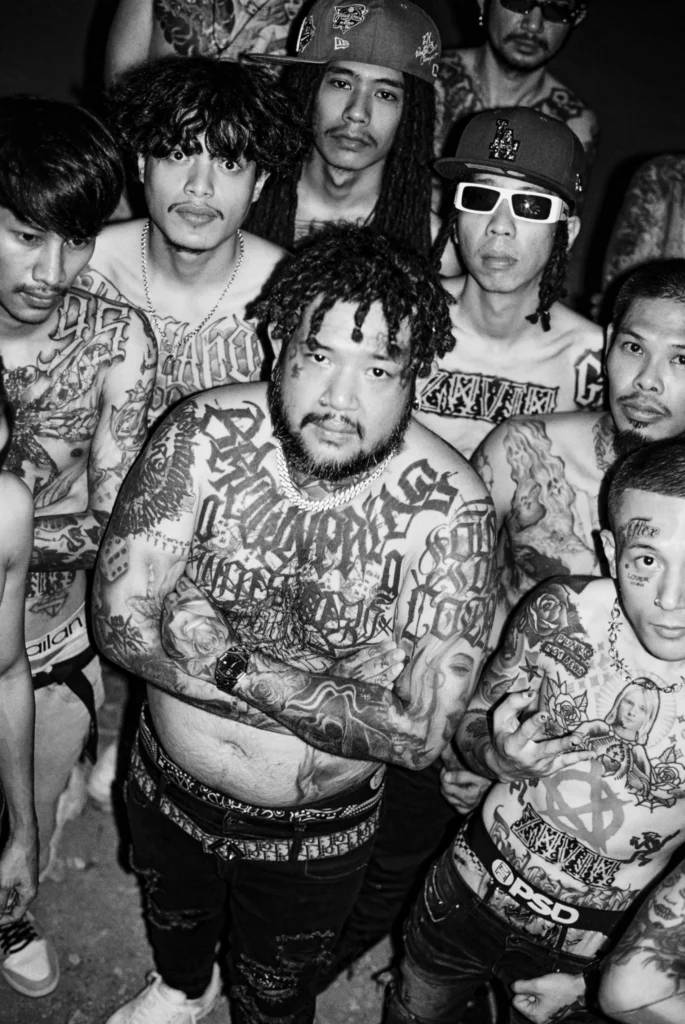
Johnny: One of my favorite memories from a shoot was when I was put on a river boat and taken to a trap house in Bangkok. Another fleeting moment was when I was in Vietnam for the first time documenting the papermakers in the region with Alexa Kumiko Hatanaka. We were staying in the middle of the jungle in a very rustic house and when I was falling asleep underneath a child sized mosquito net, I was graced with the presence of a giant hornet, a creature I’ve always feared and was now my roommate for the night.
Other than the camera and lens. Are there any essential items that you always bring with you when shooting?
Johnny: Besides a camera and lens, I always bring a notepad and a pen along. It’s not even that I use it often but when you find yourself in a place you truly feel at peace, it’s nice to write something physical.
So what do you hope that we, the observers, take with us after viewing some of your photos?
Johnny: I hope that whomever looks at my work, generally just enjoys it and feels like they were there. There are so many beautiful docu-style photographers out there and everyone has their way story and mine? Is to feel invovled and not to admire as that removes yourself from the photo too much for my liking.


Ok Johnny, now to something totally different. In a parallel universe who would you be? and what would you be doing?
Johnny: I would be a marine biologist or a basketball player with a 7 foot singspan and a 40″ vert.
Outside of photography and filmmaking, what’s something you’re obsessed with right now—maybe a hobby, a show, or even a food—that keeps you grounded or inspired?
Johnny: Outside of my work, there are a couple of things I’m really into. Collecting Pokemon cards is one, playing chess is another, and making the best bagel on my block.
Can you tell me a story about a time when a connection with someone had a big impact on you?
Johnny: I recently met Greg Girard in Hong Kong at his show. He took time out of his day to talk to me, to tell me that I’m already there, and to tell him about some of my favorite places in Japan that I’ve gatekept.
What qualities do you find most important in the people you choose to spend time with?
Johnny: I like to surround myself with people who are just good people – it doesn’t matter what you do.
Anybody you look up to?
Johnny: The only person I look up to is my grandma.
What motivates you?
Johnny: What motivates me is doing something my parents didn’t have the opportunity to do and that’s to see the world and to do what makes you happy.
How would you describe a perfect day?
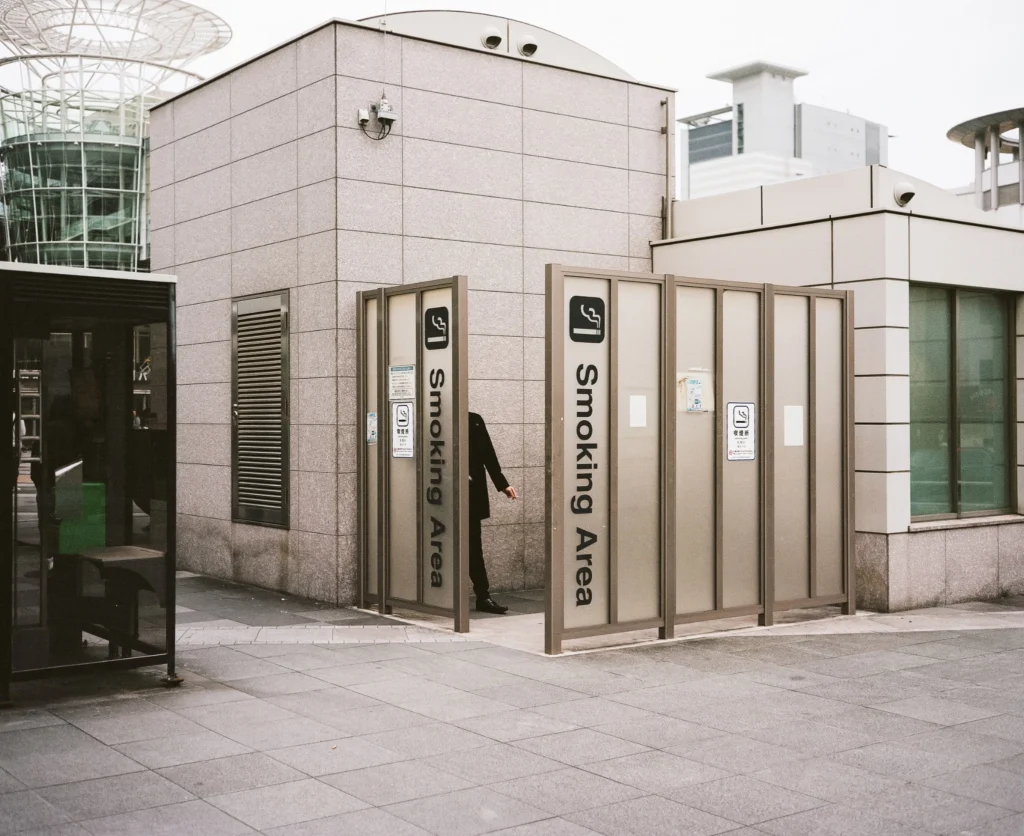
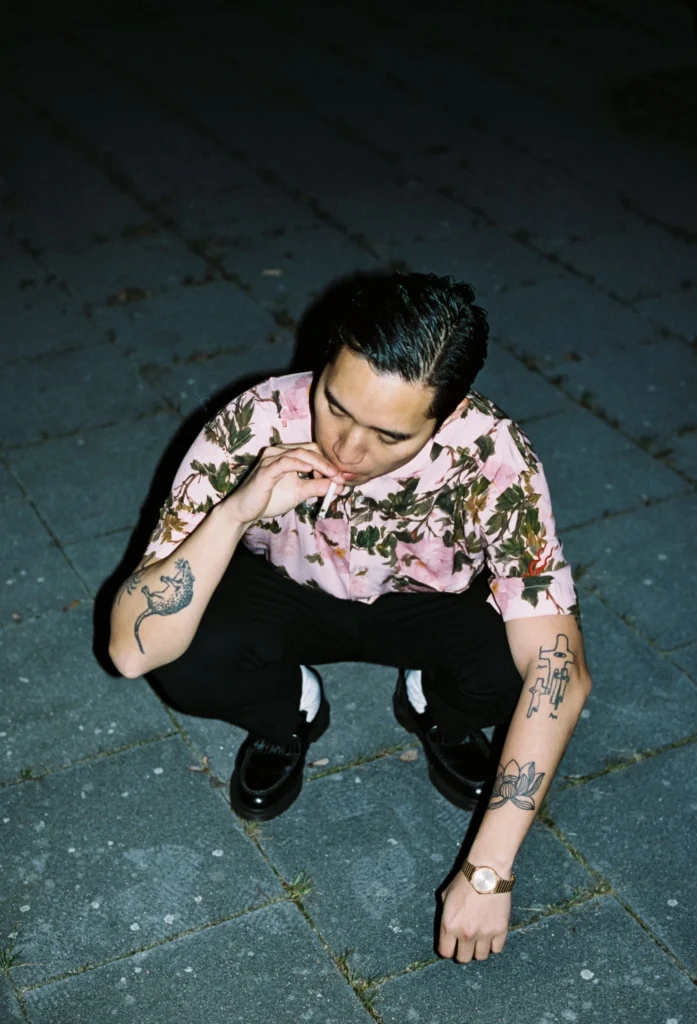
Johnny: The perfect day for me always begins with a good record, a bit of sunshine, and to know that the day is open to any experience. I like to imagine that I’m riding a scooter across some southeast Asian city while smoking a cigarette and it all sounds great, except I don’t know how to ride a scooter.
Alright Johnny, I always ask these two questions at the end of an interview. The first is. What’s your favorite movie(s) and why?
Johnny: My favorite film is “Young and Dangerous” or “In the Mood for Love” and both are wildly different but it’s more for nostalgic reasons. In Toronto, there used to be a cinema in Chinatown and I remember going there with my cousins to watch Hong Kong films and Young and Dangerous was the first when I was just 12. “In the Mood for Love” hits on themes that are still very relevant to me such as missed connections, nostalgia, and unfulfilled desires which, in a nutshell, feels like it’s a bit about my life too.
The second is. What song(s) are you currently listening to the most right now?
Johnny: The songs that I’m currently listening to are “Tra Lai Em Yeu” by Le Thu and “Au Pays du Cocaine” by Geese. It’s always a mixed bag of what I’m listening to since I used to be a music and playlist curator.