
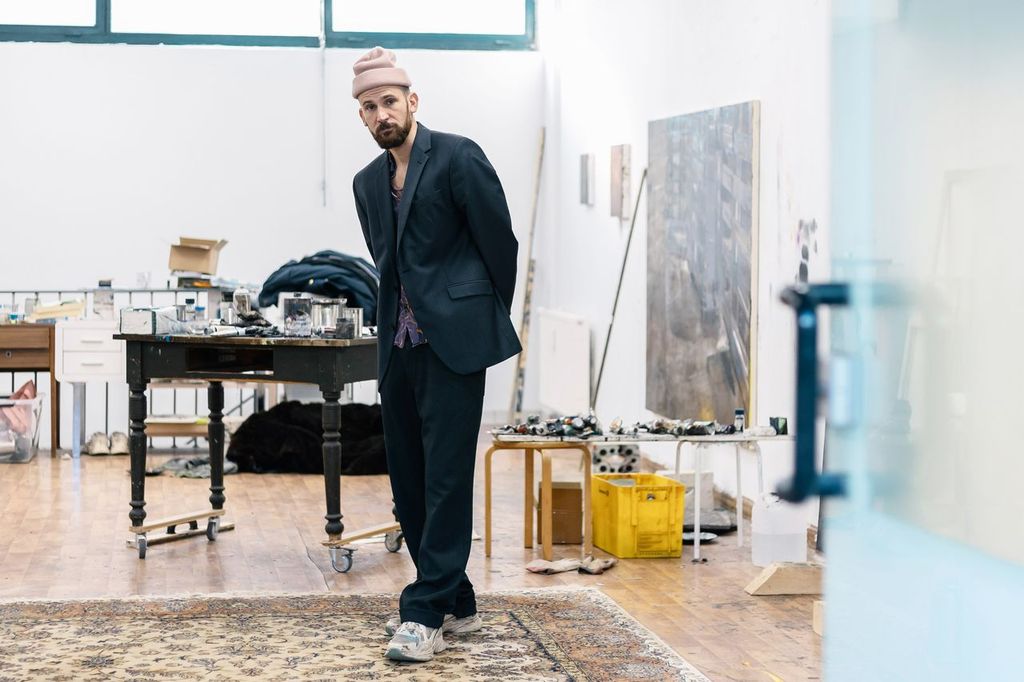
Born in 1988 and based in Wuppertal, Germany, Tim Sandow makes paintings that draw from the quiet tragedies, tensions, and strange humor of everyday life. His imagery is rooted in a careful observation of human gestures and social situations, often unfolding like cinematic fragments: deliberately staged, emotionally charged, and suspended somewhere between fiction and memory.
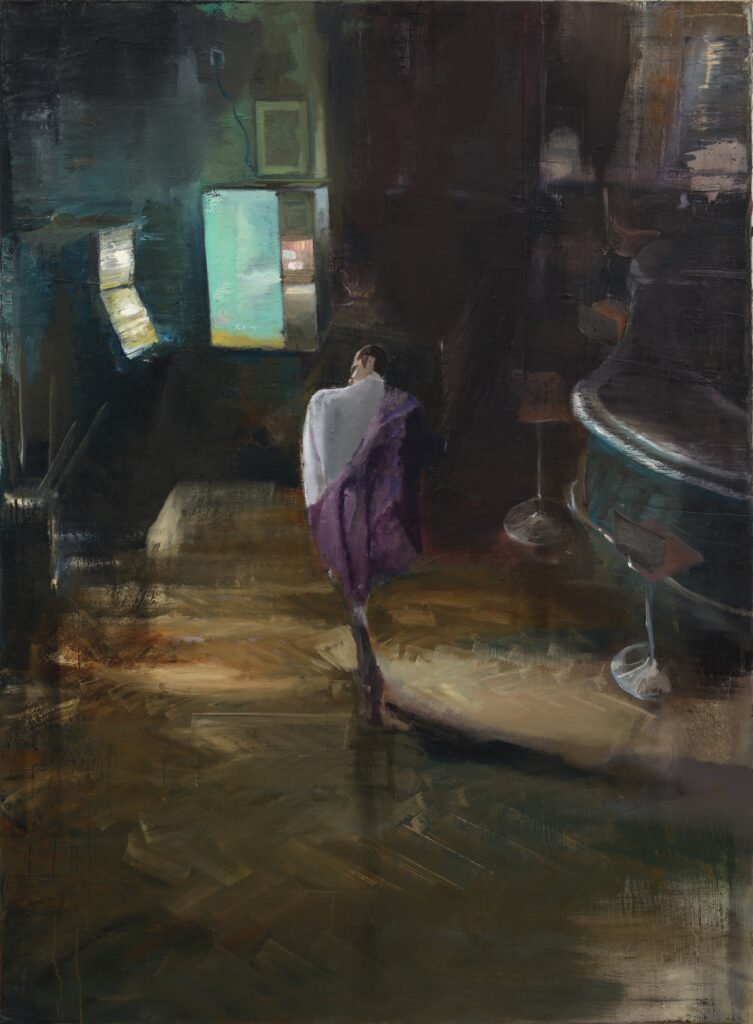
Through his unsettling depictions of protagonists, Sandow creates a position for the viewer that feels both distanced and implicated. Rather than offering clear judgement or classification, his paintings open up ambiguous in-between worlds, where social clichés are approached with both gentleness and radical clarity. His narratives often emerge from the smallest nuances of daily interaction — moments that might become, depending on the viewer, a politically incorrect pub joke, a personal anecdote, or something closer to a cinematic memoir. Inspired by film and photography, Sandow constructs scenes that invite the viewer into a fictional script.
Each painting carries the charged stillness of a film still, allowing us to feel not only like spectators, but like participants in the imagined production itself. Sandow graduated in 2019 from the Kunstakademie Düsseldorf and the Akademie der bildenden Künste Wien, where he studied with Daniel Richter.
Tim currently has a solo show titles “Krefeld”, at Droste Galladé.
Hi Tim! It’s a pleasure to sit down with you! First question that I always ask. How does a regular day look like for you in Wuppertal?
Tim: I wish it sounded more exciting or more poetic. But I get up, take the compost out, make coffee, walk the dogs, and meditatively vacuum the apartment. Then I head to the studio and work, make mistakes, fix them, make even bigger mistakes, start over, and eventually go home. Every day. Seven days a week.
I’m curious, growing up, what was life like there? And what kind of kid were you? What did you enjoy doing?
Tim: Those kinds of self-assessments are probably always a little unrealistic. Looking back, I think I was a nice, funny kid. Other people would probably say that “nice” wasn’t exactly my defining quality. I loved playing soccer, and I was a goalkeeper because I thought it was cool to wear a jersey that looked different from everyone else’s on the team. When I was a kid, my family moved from Greifswald in East Germany to Gelsenkirchen in West Germany. The biggest promise my father made about Gelsenkirchen was that I’d be able to see horses from my new bedroom. In my imagination, the horses would stick their heads right through my window. The fact that our apartment was on the third floor, with a parking lot between the building and the pasture, turned out to be a bit of a letdown.
Do you remember approximately at what age your creative side started to show? And when did you start taking being an artist seriously?
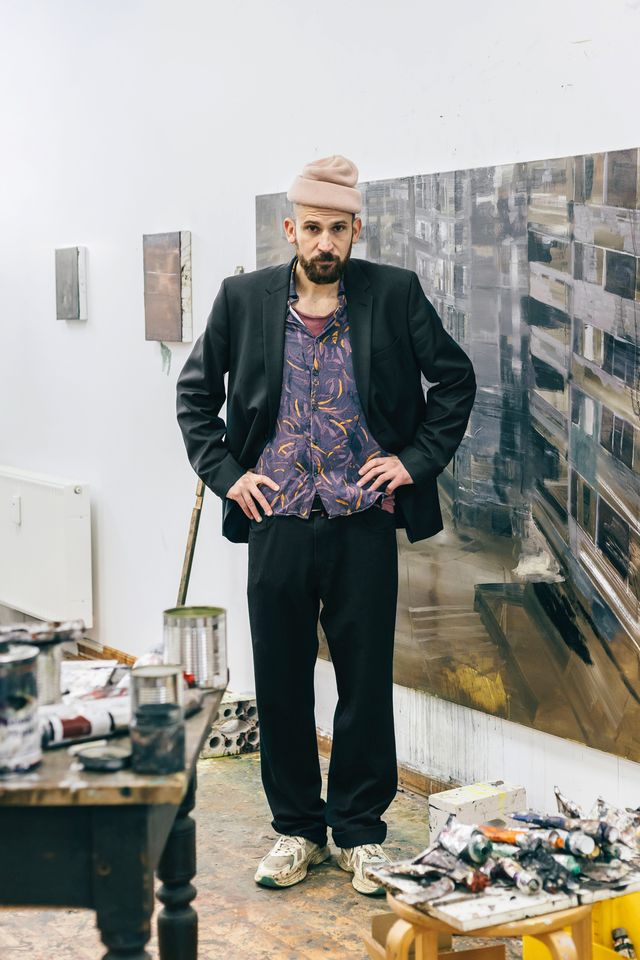
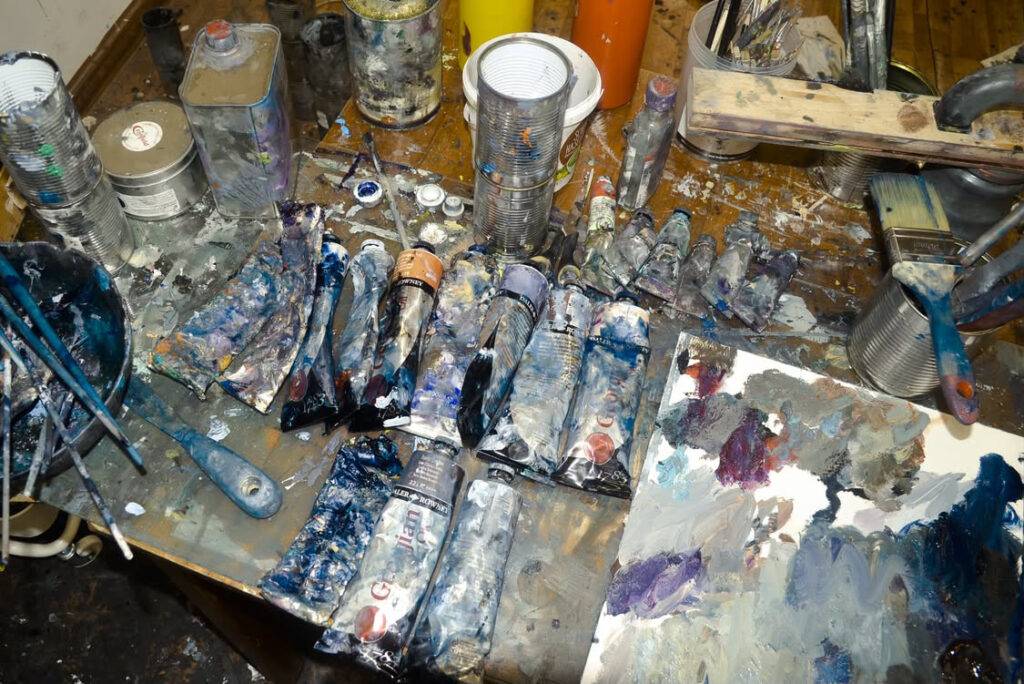
Tim: Every child is creative. Leaving traces, telling stories, drawing things, inventing symbols. I think that’s simply part of being human. So I don’t think there’s a single moment where you can say, “That was it! That’s when everyone knew I was creating something.” At least not any more than for anyone else growing up. What may have been a little different in my case is that my grandfather is also a painter. So in my family, being an artist was never anything particularly exotic, and I’ve always taken painting itself seriously.
Ok Tim, with these next series of questions, I will try to delve into your work as best as possible. So…. Your paintings often feel like something has just happened, or is about to happen. Are you more interested in the moment before a story begins, or the moment after it has already gone wrong?
Tim: Has it gone wrong, though? I think maybe it has failed a little but only a little. Failed in a very ordinary way. The kind of failure people can relate to. Not catastrophic failure, just the kind most of us experience from time to time. Then again, maybe the whole idea of failure only exists because we’re constantly comparing real life to the social media version of life. The moments in my paintings are always in-between moments. It’s intentionally left open what happened before or what will happen next. There’s no grand spectacle. But if I had to choose between your two options—”before a story begins” or “after it’s already gone wrong”—I’d choose the former. The moment before contains more hope, more expectation, more fear, and more possibilities.
You’ve mentioned “tragedy of the everyday.” What does tragedy mean to you?
Tim: Tragedy assumes there are heroes whose stories are shaped by conflicts they can’t resolve. I think, in our own lives, we’re all those heroes. Usually just with a little less grandeur. Remember those horses in my Gelsenkirchen story, for example. They never could stuck their heads through my bedroom window, which meant the romantic image I’d built up in my mind could never be fulfilled. That makes me a tragic hero. I think a lot of people experience life that way. We fail to live up to the ideas and imagined pictures we’ve created for ourselves, and then we end up sitting in reality, disappointed because, compared to the fantasy, it all feels rather ordinary.
Many of your scenes feel cinematic, almost like stills from films we cannot fully access. Do you imagine a larger narrative behind each image, or do you prefer the mystery to remain unresolved?
Tim: Not really. If I were good at telling larger stories, I’d probably be writing novels or screenplays instead. Having to decide exactly who someone is, why they became that way, what kind of relationships they have, how those relationships change, and which pivotal moments lead to which outcomes, I think that would be incredibly difficult for me. And, honestly, it doesn’t interest me all that much. What interests me is constructing scenes in a way that allows the people looking at them to project meaning onto them to recognize something, or identify with them. Of course, I have my own ideas about what’s happening in a painting and why, but they’re not meant to be definitive.
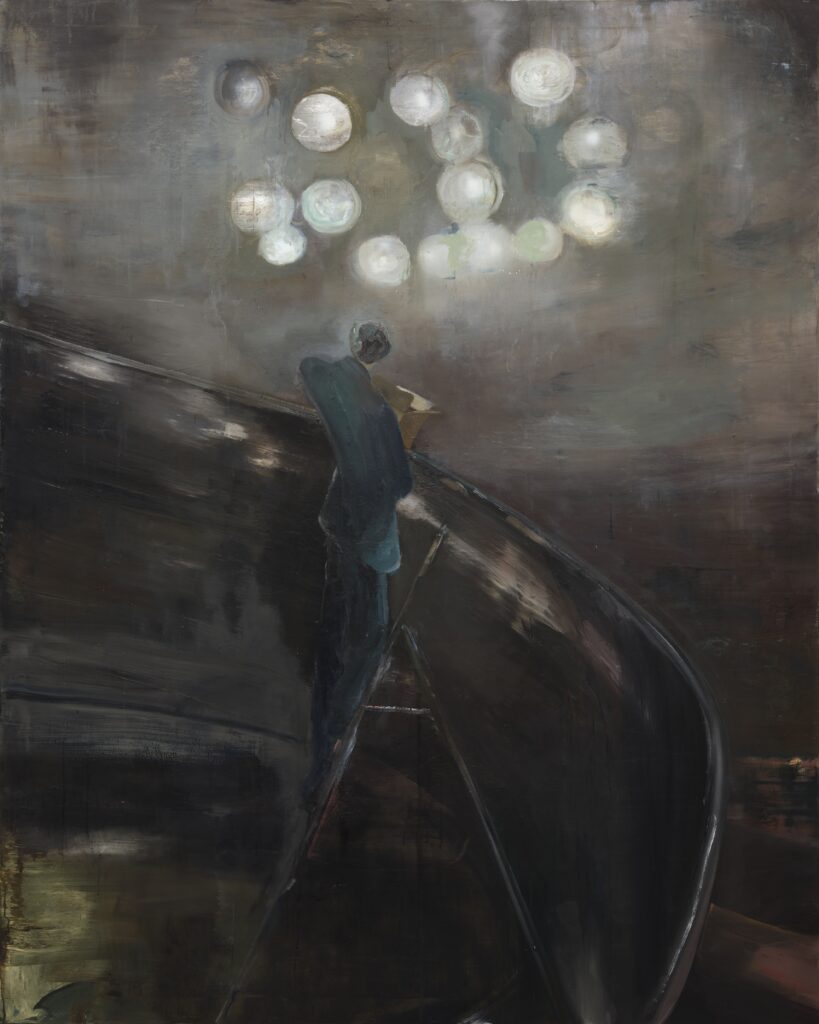
Your protagonists often seem caught in awkward, vulnerable, or disconcerting situations. What draws you to people in those slightly uncomfortable moments?
Tim: I think they’re relatable. That said, I also think the sense of unease you’re picking up on is a form of interpretation. No one’s being threatened with a weapon or anything like that. The people in my paintings are really just doing fairly ordinary things. They’re simply not the kinds of moments we’re used to seeing represented. Because they’re suddenly placed front and center, they begin to feel awkward or strange. Maybe because none of us would actually want to be seen or portrayed that way. It doesn’t fit the more romantic image we tend to have of ourselves.
So who are these people in your work?
Tim: You. Me. Everyone we know and everyone we think we know. Everyone we’ve ever seen and reduced to a collection of clichés, only for them to reveal little quirks that don’t quite fit the picture.
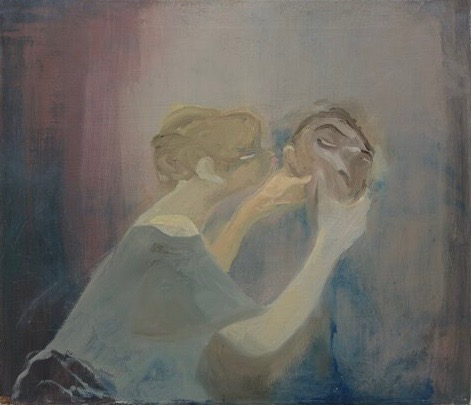
There is often humor in your work, but it is not simple comedy. How important is humor as a way of approaching discomfort, and failure?
Tim: Very important. I think life is basically a balancing act between taking yourself too seriously and hiding behind too much self-irony. Both keep us from confronting ourselves honestly. Self-irony is just a little more likable. You know, some of the best moments in life are when you’re swearing and crying because you’ve knocked over your coffee mug and then you suddenly start laughing because it’s ridiculous that something so small could provoke such huge emotions.
Do you think a painting can be politically or socially sharp without making an obvious statement?
Tim: Absolutely. Obvious statements can become didactic and closed off very quickly. There are probably better places to negotiate those kinds of issues than painting. It’s not as though my political views are so uniquely insightful that I think everyone ought to adopt them. I have much more faith in people’s ability to think for themselves to form their own mental images, draw their own conclusions, and then reflect on those conclusions. Painting can perhaps provide a point of departure for that process. But it can’t explain the world.
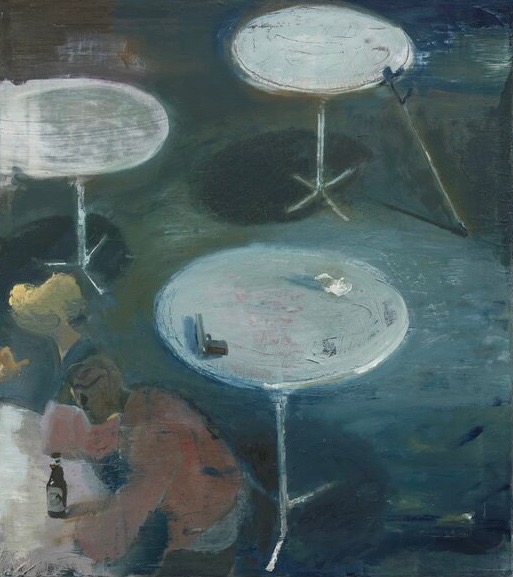
What does painting give you that film or photography cannot?
Tim: Painting feels more immediate to me. I love film and photography, but painting is a medium I can influence directly and physically. The people I need for an image can simply come into existence. I can adjust the lighting, make the perspective questionable, alter everything exactly as I want it. A painting can be as vague or as specific as I choose. When I made my video work Country Crew, it was incredibly difficult to find the right actors and the right locations. I was surprised by how many people I suddenly had to collaborate with. On the one hand, that was wonderful. On the other hand, you constantly have to explain the image you’re trying to create and explain it in a way everyone else understands. Explaining things has never really been my strength. Painting removes that translation barrier. At least at first, there’s nothing standing between me and the work itself.
What role does Wuppertal, or the atmosphere of the places you live and move through, play in your imagery?
Tim: It definitely finds its way into the work. But it doesn’t define my imagery on its own. Films, TV shows, photographs, and everything else I encounter in everyday life all leave traces and eventually surface somewhere in the paintings. That said, I don’t think anyone looking at them could point to a painting and say, “That’s Wuppertal.” The famous suspension railway, for instance, would never appear in one of my paintings. Sometimes I’ll notice something that catches my attention—a group of teenagers waiting at a bus stop near my studio, for example, or a parking lot where people leave their RVs. That observation might become the starting point for a painting, but by the time it’s finished, the scene might take place in the desert or in an American suburb. So it’s less about the city I happen to live in than about those small observations that I could just as easily make almost anywhere in the world.
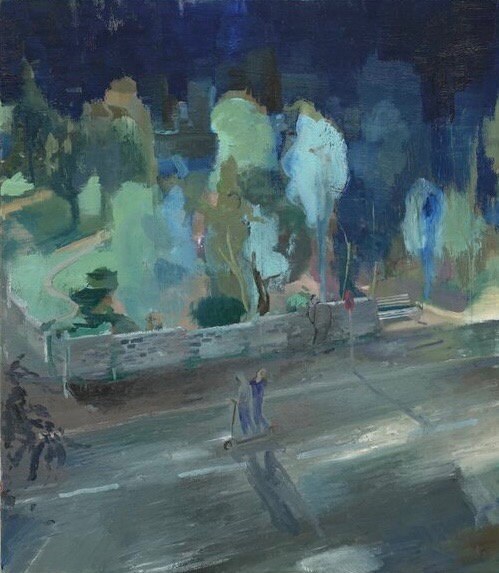
You studied in Düsseldorf and Vienna, including with Daniel Richter. What did those environments give you, and what did you have to move away from in order to find your own language?
Tim: One of the best things about Daniel Richter’s class in Vienna was that everyone worked in completely different ways, and Daniel was able to engage with every student’s work on its own terms. There was never this idea of a school where everyone was striving toward the same kind of figuration, abstraction, or technical perfection. What we had instead was studio space and a great deal of freedom. So I arrived in Vienna already making the kinds of paintings I wanted to make—with my own ideas about scenes and figuration—and those ideas simply continued to evolve. I never felt I had to reject or free myself from anything in order to find my own voice. And they’re still evolving. They still keep changing.
You have solo show coming up in September, at Droste Galladé, titled “Krefeld”. What was your inspiration behind this new body of work?
Tim: Krefeld is a city I don’t really have much of a relationship with. There are lots of cities I don’t have much of a relationship with, but Krefeld feels special in that regard because I honestly couldn’t tell you what defines it. It lives in the shadow of Düsseldorf and Cologne (part of the Rhineland) while also sitting on the edge of the Ruhr Metropol region. Those areas with its’s cities have landmarks, recognizable identities, established art scenes. I mean people immediately associate them with something. Krefeld is neither one thing nor the other, yet it’s too close to both regions to completely reinvent itself. I find that deeply endearing. Krefeld doesn’t stand for anything else. Krefeld is simply… Krefeld.There’s something quietly defiant about that. It’s not the kind of thing you’d post on Instagram. It’s not an Aperol Spritz on a rooftop bar or your feet dangling into the Rhine while looking across to the opposite bank. It’s dinner at home, where no horses are sticking their heads through the window.
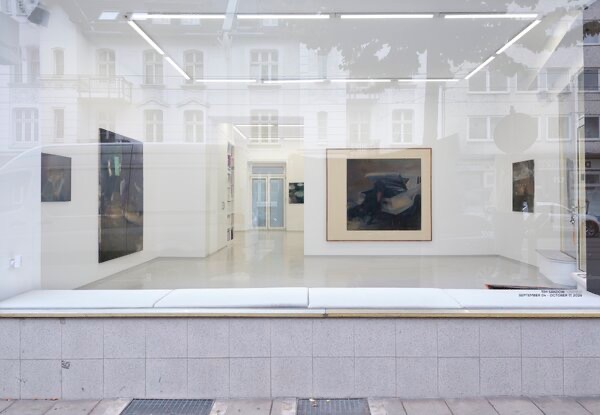
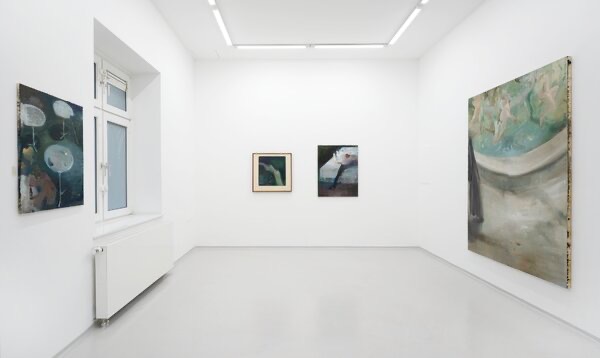
“Krefeld”. What’s the story behind that title?
Tim: Krefeld is a city I don’t really have much of a relationship with. There are lots of cities I don’t have much of a relationship with, but Krefeld feels special in that regard because I honestly couldn’t tell you what defines it. It’s simply there, between Düsseldorf and Cologne. Both of those cities have landmarks, recognizable identities, established art scenes. I mean people immediately associate them with something. Krefeld is neither one thing nor the other, yet it’s too close to both to completely reinvent itself. I find that deeply endearing. Krefeld doesn’t stand for anything else. Krefeld is simply… Krefeld.There’s something quietly defiant about that. It’s not the kind of thing you’d post on Instagram. It’s not an Aperol Spritz on a rooftop bar or your feet dangling into the Rhine while looking across to the opposite bank. It’s dinner at home, where no horses are sticking their heads through the window.
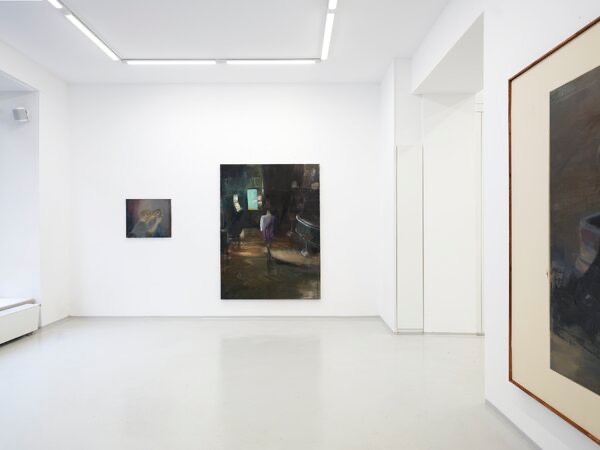
Can you tell me about your use of symbolism?
Tim: I’m terrible with metaphors. Seriously, nobody understands my metaphors when I’m talking. They’re entertaining, and they’re usually very visual, but their connection to the actual topic is often pretty questionable. Symbols work in much the same way. They’re really just shortcuts for communicating something complex. An angry emoji is much quicker than actually explaining anger, and sending someone a little heart is much easier than making a genuine declaration of love. But a lot gets lost in that translation. Symbols aren’t actually very concrete, they only pretend to be. My paintings operate in a similar way. The difference is that they’re incredibly labor-intensive. So, essentially, we end up with something that takes a very long time to make while simultaneously trying to show very little in concrete terms: complex, unresolved situations that rely on the viewers bringing their own frame of reference. I actually find that pretty funny when I think about the way I speak. My metaphors don’t really explain anything any better either. I think they’re just nice to look at.
Ok Tim, now to something totally different. In a parallel universe who would you be? and what would you be doing?
Tim: I’d definitely be my dog. I’d sprint around like I’d been stung by a tarantula every time I finished peeing, drag ticks into the house, and constantly insist that nobody had fed me yet. I’d be completely convinced that I was the single most important member of the household. The self-irony would disappear entirely, and I’d finally be able to devote myself fully to my own overwhelming sense of importance.
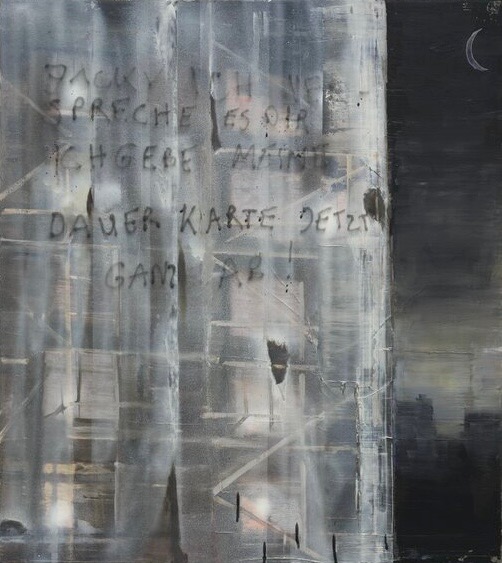
Outside of art, what’s something you’re obsessed with right now, maybe a hobby, a show, or even a food—that keeps you grounded or inspired?
Tim: My girlfriend once told me that I use barbecue sauce like a threat. I guess that’s a form of symbolism, too. Maybe that’ll become my new hobby: turning sauces into symbols. I also really enjoy vacuuming.
What motivates you?
Tim: Vet bills have to be paid.
Alright Tim, I always ask these two questions at the end of an interview. The first is. What’s your favorite movie(s) and why?
Tim: Finding Nemo. I love everything about that movie. Especially Dory.
The second is. What song(s) are you currently listening to the most right now?
Tim: BADBADNOTGOOD – “Confessions.” Back when I was studying in Daniel Richter’s class in Vienna, it was the favorite song of my absolute worst nemesis. The guy was unbearable. We genuinely hated each other. Every single time he showed up at his studio space, he’d blast that song on repeat at full volume. It was as if he only knew that one track and wanted everyone to know he had arrived. Oddly enough, though, it put me into exactly the right mindset to paint. It triggered this almost obsessive urge to work, so much so that I’ve turned it into a ritual in my own studio. Before every painting session, I play that song once. Now the song belongs to me. I don’t annoy anyone with it, and it still motivates me every single time. That said, if I could replace that whole slightly psychotic backstory with another song, I’d probably choose “Nissim” by The Gaslamp Killer.