Share this
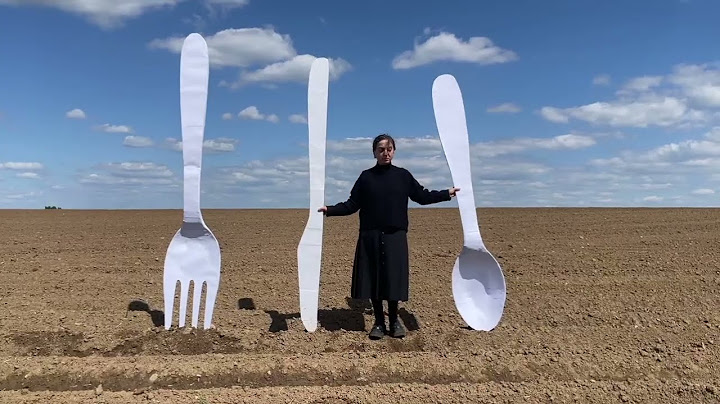
Venera Kazarova works between visual art and performance, treating costume as a conceptual language rather than something made to be worn. With a background in costume design, she began by experimenting with materials and silhouettes before abstracting garments into message-driven forms, closer to songs, poems, or short narratives than fashion. Drawing from dreams and nature’s textures and colour logic, she builds a visual vocabulary that communicates through mood and symbolism.
Her performances are interdisciplinary and collaborative, activating the costumes through movement and embodiment to create a kind of visual theatre where identity, object, and ritual blur. Kazarova also aims to rehabilitate beauty, arguing it can carry conceptual depth — and that visual seduction can sharpen, not soften, an idea.
I’m curious, growing up, what was life like? what kind of kid were you? And what did you enjoy doing?
Venera: I loved my mother very much when I was a child — my mother was my whole world. I also loved flowers, books, and sewing. In general, nothing has really changed.
Do you remember approximately at what age your creative side started to show? And when did you start taking being an artist seriously?
Venera: I’ve always known I was an artist, for as long as I can remember.
Ok Venera, with these next series of questions, I will try to delve into your work as best as possible. So…. You trained formally as a costume designer, when did you first realize you were no longer “designing costumes” but building an art language?
Venera: In my final year at the institute, I started to realize it. My costumes became more than just costumes — they turned into concepts, into my message.
What did your education give you that you still rely on, and what did you have to unlearn to make the work you make now?
Venera: My education gave me a foundation that I can work with however I want. It gave me rules that I can break or use as a starting point to create my own. As for what I had to unlearn — I forgot that the clothes I create are meant to be worn. Even though I was taught to make garments, costumes as functional objects, I completely abstracted them from their practical function.
Was there a specific material, silhouette, or performance where you felt the boundary snap between fashion/function and art/meaning?
Venera: I felt it from within; I don’t remember any external events that might have triggered it.
You treat costume like a song, poem, or novel. What can costumes do that language can’t?
Venera: To impact visually.
Do you ever design starting from an emotion first (grief, desire, shame, euphoria) rather than an image?
Venera: Of course, that’s usually how it happens. Any emotion I feel is immediately visualized in my mind, as if my brain works that way spontaneously.
What part of yourself do you allow into the work that you wouldn’t normally show in daily life?
Venera: Probably my sensuality — I’m shy about it in everyday life. I come from a very conservative family, and it’s a taboo subject, but art is a free space for me where I can express a lot, even though not everything.
Are there recurring psychological states you keep returning to in different forms? If so, why do they keep coming back?
Venera: Yes, it’s helplessness. It comes from the fact that I’m originally from Russia, and the feeling of helplessness follows you relentlessly, even if you are no longer there.
Do you ever worry that translating inner life into beauty risks aestheticizing pain, or is that exactly the point?
Venera: It doesn’t happen intentionally; I sometimes joke that I talk about my problems in a way that makes people start liking them 🙂 Of course, that’s not the goal — it’s my visual aesthetic, and I work with it. But I enjoy addressing painful things through irony and beauty.
When nature inspires you, what are you actually borrowing? Patterns, behaviours, ecosystems, myths, violence, tenderness?
Venera: It’s usually the form, texture, and color combinations. They are simply flawless. How a flower, a coral, or an insect is designed — it’s a work of art in itself.
How much agency do performers have in shaping the costume’s final meaning?
Venera: It’s hard for me to say how much, but there is some. Performers give a lot to the costume — through how they interact with it and what they fill it with, the kind of energy, the mood they bring.
Do you think of your performances as “visual theatre”, ritual, concert, or something else entirely?
Venera: It’s more like a visual performance.
You’ve said you want to rehabilitate beauty, which contemporary art often treats with suspicion. When did beauty start feeling “illegal”, and who taught us that?
Venera: I don’t know, maybe since the time conceptualism entered art. I suspect that’s the case 🙂 I have a complete feeling that I’m working in forbidden territory by creating something beautiful. Beauty is treated as if it’s romantic, infantile, or irrelevant. But I really want to show through my art that beauty can be conceptual, that beauty doesn’t have to be meaningless.
Do you believe beauty can be radical on its own, or does it need conceptual friction to become powerful?
Venera: I think it can be radical in combination with something opposite, not on its own.
So with what we just talked about, what are you hoping to convey?
Venera: My main message is about how the fragile and beautiful survives in an aggressive environment (in reality, with great difficulty). Although I try not to provide interpretations of the symbols I work with or give concrete explanations of my art (not only because I sometimes don’t fully understand it myself), it’s very important to me not to impose anything on the audience. I value a certain ambiguity, because it’s more important for me to affect emotions rather than intellect.
How do you deal with creative block?
Venera: I’ve never experienced that. I’ve had other challenging periods in my creative work and times of rethinking what I do, but I haven’t gone through a creative block yet.
After a performance ends, what happens to the costumes?
Venera: If they are made of paper, I destroy them because they are disposable; if they are made of fabric, I store them in a special rented space until their next use.
Ok, Venera, now to something totally different. In a parallel universe who would you be? and what would you be doing?
Venera: I don’t know, but I hope I would be Venera Kazarova there, creating unwearable costumes.
Outside of art and design, what’s something you’re obsessed with right now, maybe a hobby, a show, or even a food—that keeps you grounded or inspired?
Venera: I love reading, and I really love cinema. I’m genuinely passionate about both. I’m also completely absorbed by my child — he is the most wonderful thing that has ever happened to me.
What qualities do you find most important in the people you choose to spend time with?
Venera: A sense of humor. I try not to spend time with people who don’t have it at all)
What motivates you?
Venera: I don’t need motivation to create, as it is such a vital necessity for me. Outside of my work, I am inspired by strong and talented women (for example, Rei Kawakubo, Pina Bausch, Louise Bourgeois). They were able to shape their lives in a way that I hope one day I can as well. Their strength and freedom motivate me.
How would you describe a perfect day?
Venera: My ideal day would take place in a large white space with floor-to-ceiling windows. I would be creating, while nearby my child, my brother and sister, my mother, and my partner would be going about their own activities.
Alright Venera, I always ask these two questions at the end of an interview. The first is. What’s your favorite movie(s) and why?
Venera: There are many. One of my favorites is Alice in the Cities . I really love its mood.
The second is. What song(s) are you currently listening to the most right now?
Venera: Nothing has changed by Who made who.