Share this
Berlin Art Week has never behaved like a single event. It is more like a temporary nervous system: museums, galleries, project spaces, theatres, fairs, clubs, streets, and independent initiatives all firing at once across the city.
For its 15th anniversary, Berlin Art Week 2026 returns from September 9 to 13, bringing together around 120 museums, galleries, private collections, project spaces, and Positions Berlin Art Fair. This year’s programme moves through shared histories, migration, ecology, geopolitics, and Berlin’s shifting relationship with Eastern Europe and the wider world.
The city itself becomes the exhibition structure. The Berlin Art Week Garten at Neue Nationalgalerie and the Gemäldegalerie at Kulturforum forms the main meeting point, while the Featured section brings around 30 jury-selected independent projects into sharper focus. As always in Berlin, the most interesting energy often comes from the friction between major institutions and smaller, stranger spaces.
History runs through the programme like a pressure point. Gropius Bau looks at migrant histories in Kreuzberg with Kreuzberg: Kunst und Migration seit 1960, while n.b.k. and Schinkel Pavillon collaborate on Projections onto the East. At Akademie der Künste, Metaxy: Between Destruction and Reconstruction enters the uncertain territory between collapse and repair, shaped by war, crisis, and the afterlife of devastation.
That political and historical charge expands at Haus der Kulturen der Welt, where the first German edition of the Bienal de São Paulo arrives under the title Not All Travellers Walk Roads – Of Humanity as Practice. With artists including Forensic Architecture, Cevdet Erek, Leiko Ikemura, Emeka Ogboh, and Wolfgang Tillmans, the exhibition frames travel, displacement, humanity, and artistic practice as questions rather than fixed themes.
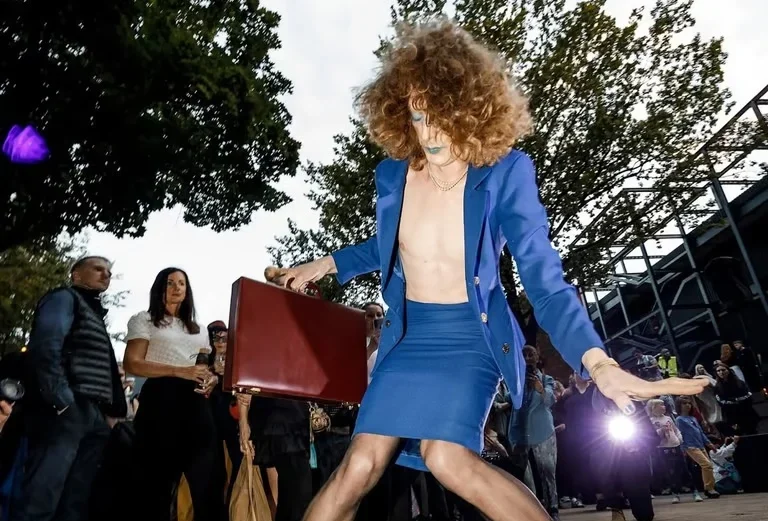
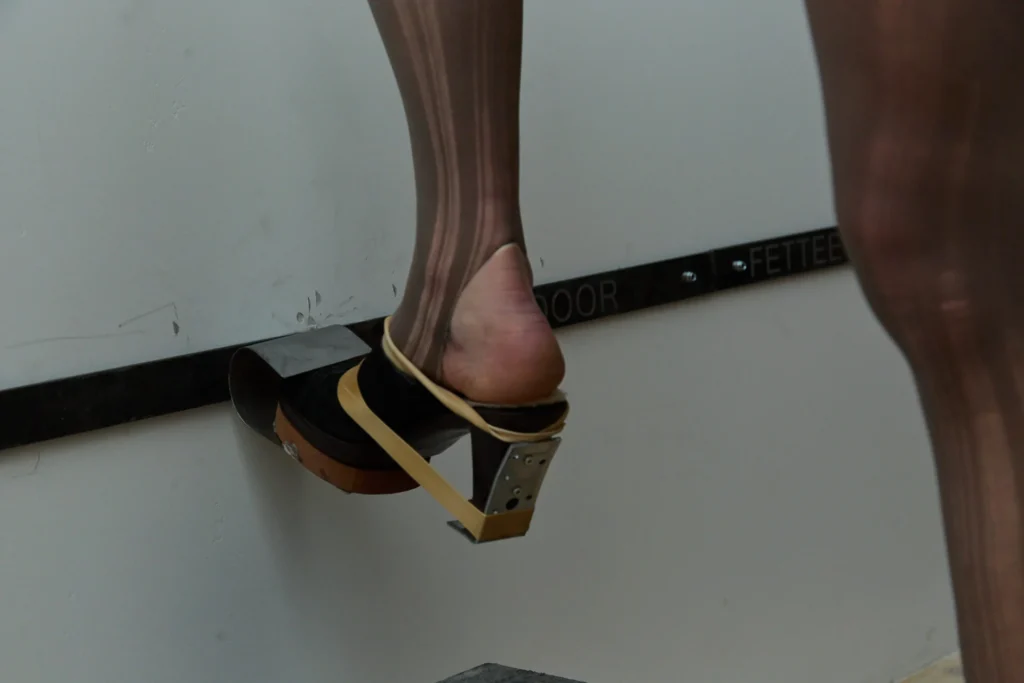
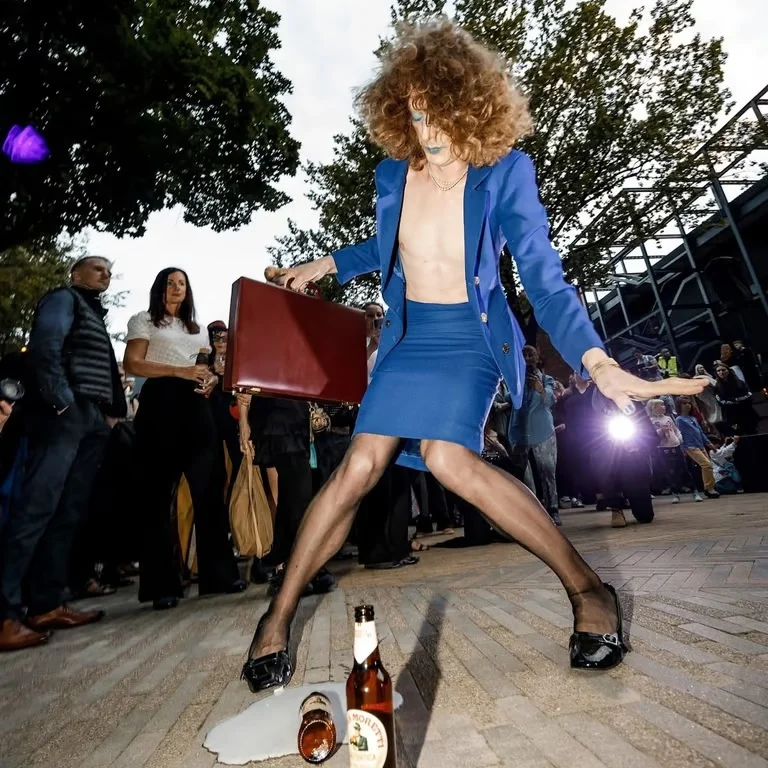
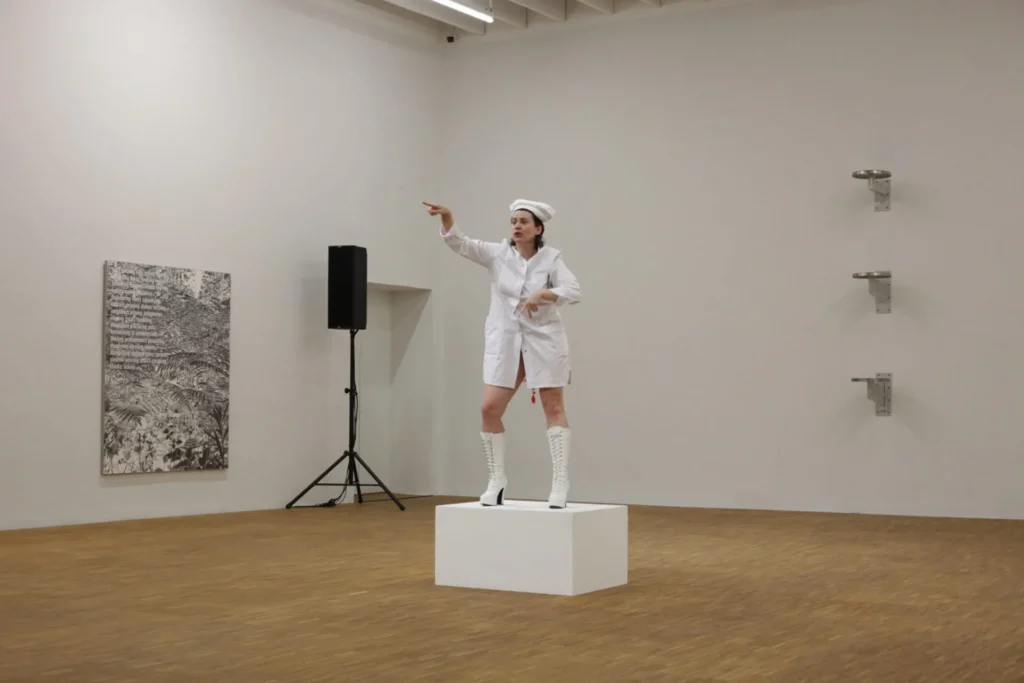
Performance is one of the week’s strongest currents. Neue Nationalgalerie hosts the fifth edition of Perform!, pairing Trisha Brown’s 1971 work Walking on the Wall with a new piece by Kiani del Valle. Elsewhere, KW Institute for Contemporary Art presents Farahnaz Hatam and Colin Hacklander’s Labour: Soft Thought, while Between Bridgesstages caner teker’s b2b / nothing new with performances by Space Afrika, Rayne, Emil Ertl, and Martin Hansen.
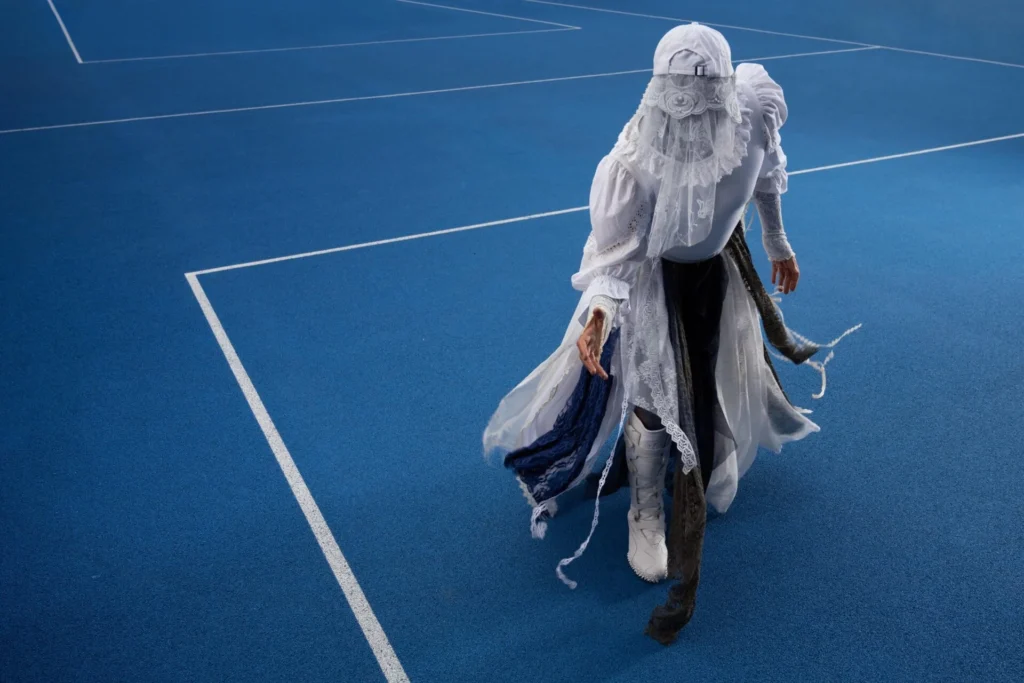
Theatre and sound also pull the festival beyond the white cube. Berliner Ensemble joins forces with Gemäldegalerie for Ersan Mondtag and Nadim Samman’s Alternde Meister, while HAU Hebbel am Ufer hosts premieres by Sophia Süßmilch and Theresa Reiwer. At Hamburger Bahnhof, Ryuichi Sakamoto: seeing sound, hearing time turns the late composer’s work into a major retrospective, while Reethaus presents The Ear is the Eye of the Soul, curated by Hans Ulrich Obrist and Ben Vickers, with Soundwalk Collective, Brian Eno, FKA twigs, Patti Smith, and Kali Malone.
BERLIN ART WEEK 2026
The commercial side is anchored by Positions Berlin Art Fair, opening at Berlin-Tempelhof Airport on September 10, while Gallery Night extends the programme through openings across the city. Among the gallery highlights, Galerie Molitor presents Acacia Bloom, the first German solo exhibition by Georgian artist Nika Kutateladze, whose paintings emerge from a five-year engagement with a depopulated mountain village threatened by landslide.