Share this
For Ai Weiwei, memory has never been passive. It is material. It can be stacked, broken, rebuilt, filmed, carried, repeated, and made impossible to ignore.
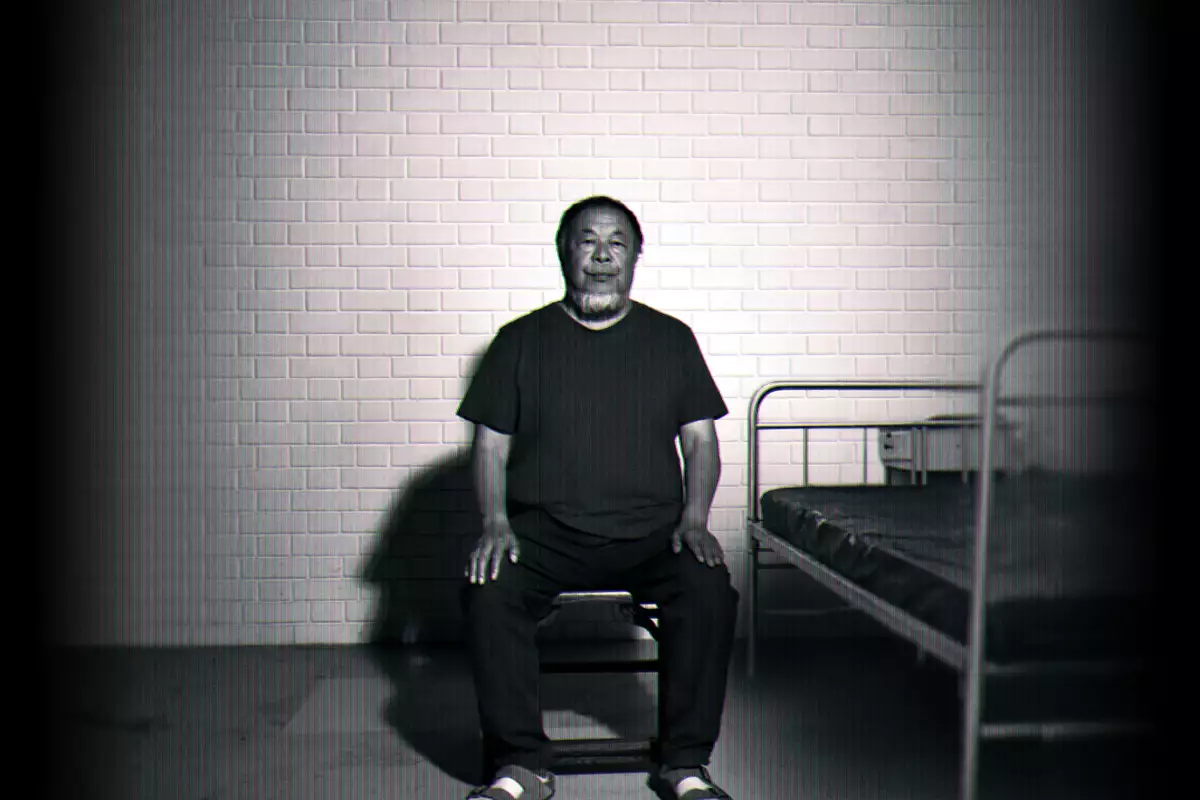
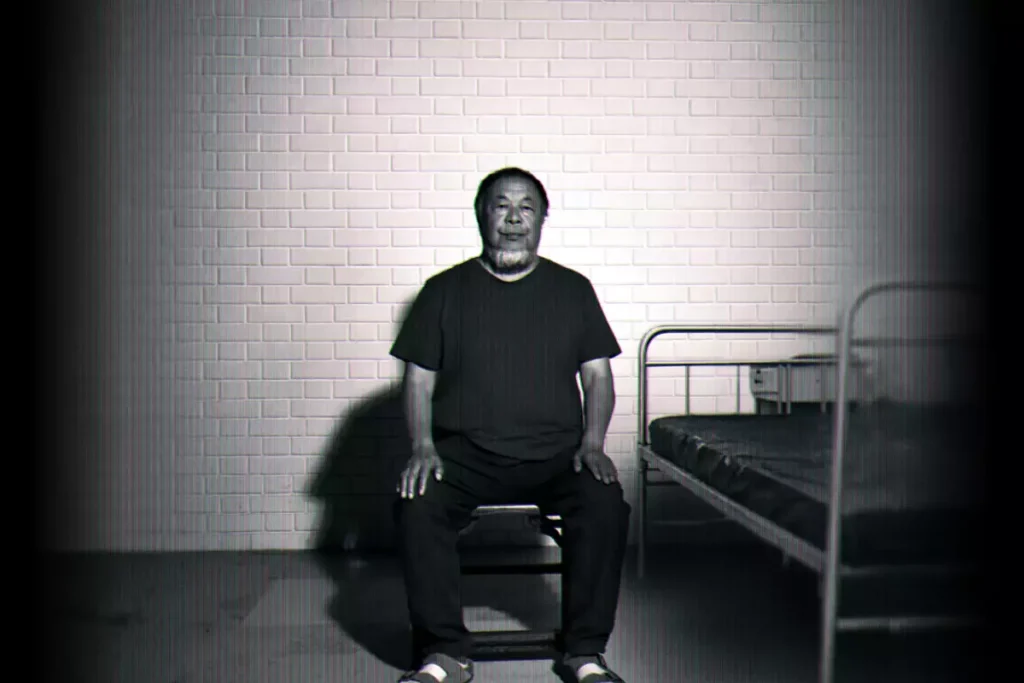
With Sewing a Button, the Chinese artist and activist returns to one of the most brutal experiences of his life: his 81-day secret detention by Chinese authorities in 2011, during which he was held without formal charges. Presented at Aviva Studios in Manchester from July 3 to 4, 2026, the work condenses that period into a 24-hour live performance, staged inside a recreation of the cell where his life was reduced to surveillance, routine, and interrogation.
The performance is simple in outline, but devastating in implication. Across a full day and night, Ai eats, sleeps, washes, writes, exercises, reflects, and is sometimes interrogated. Audiences can enter for two-hour slots, or witness the full 24-hour duration. The structure turns watching into the central mechanism of the work. Visitors do not just observe a performance. They are made uncomfortably aware of what observation can mean when it becomes power.
The title comes from one of the smallest, strangest details of Ai’s detention. After months without a button to hold up his trousers, a guard finally brought him needle and thread. That gesture, almost absurdly domestic inside a system of political control, becomes the hinge of the work. Sewing a button is minor, practical, nearly invisible. But here it becomes a symbol of dignity, humiliation, endurance, and the tiny human acts that survive inside machinery designed to erase them.
There is a cold precision to the staging. The cell is reconstructed; guards observe; interrogation hours punctuate the day. During the performance, the audience watches Ai perform the basic acts of being alive under conditions where privacy has been stripped away. The body becomes archive. The room becomes evidence. Time itself becomes oppressive.
What makes Sewing a Button so charged is that it refuses the safe distance of historical retelling. Ai is not simply narrating what happened to him. He is placing himself back inside the architecture of confinement, making the past physically present. It is not theatre in the usual sense. It is closer to reactivation: trauma returned to the room so that others are forced to look at its shape.
The work also sits alongside Ai Weiwei: Button Up!, his major exhibition at Aviva Studios, described by Factory International as his most expansive presentation in the North of England to date. Together, the exhibition and performance show Ai’s continued insistence that art can confront systems of state power not through abstraction alone, but through objects, bodies, witnesses, and acts of radical exposure.
In Sewing a Button, the grand political machine is reduced to a bed, a chair, a body, a guard, a button. That reduction is what makes it frightening. It reminds us that repression is not only an idea. It is lived minute by minute, in ordinary gestures made unbearable.