Share this
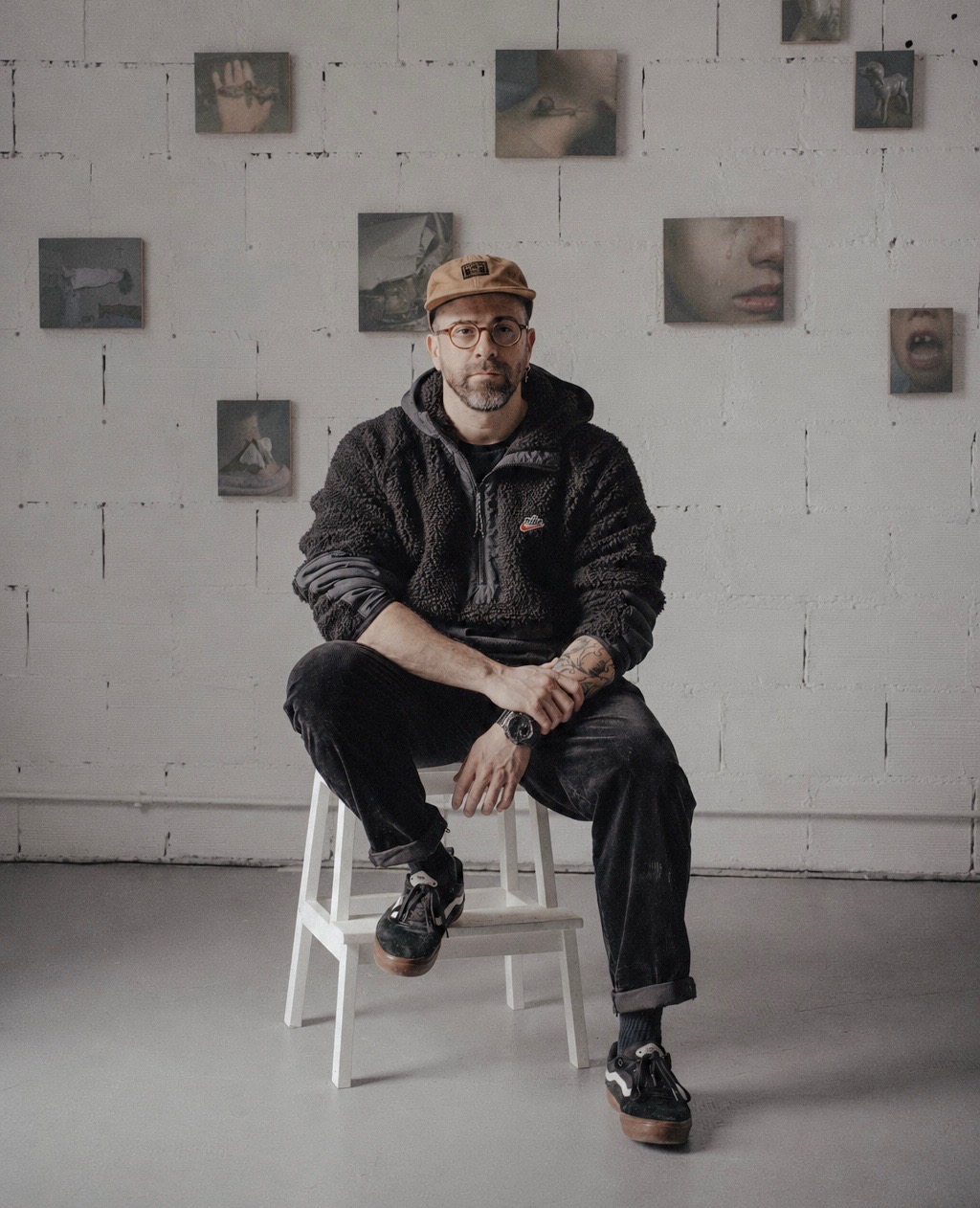
Alejandro Javaloyas (b. 1987, Palma de Mallorca, Spain) is a multidisciplinary visual artist based in Toulouse, France. From the age of six to eighteen, he received extensive academic training in drawing and painting under Majorcan classical painters Ernest, Malena Tous, and Antonia Oliver. He later pursued filmmaking, earning both a BA and an MA (Summa Cum Laude) from the ESCAC Barcelona Film School at the University of Barcelona. In 2022, he further developed his painting practice through the Turps Correspondence Mentorship Course at Turps Art School in London, UK.
His practice unfolds through research-driven projects that move across figurative drawing and painting, expanded painting, and experimental photography. In his figurative drawings in colored pencil and oil paintings, the human body, symbolic objects, and ritual gestures appear within sparse compositions, addressing themes of fragility, violence, and transcendence. In his expanded paintings, Javaloyas reimagines the conventional picture plane by transforming veneered plywood through hot-press bending, cutting, drilling, and polishing, creating curved supports that resemble fragments of an incomplete circumference.
Circular motifs—dots, spheres, ellipses, holes, and gradients—recur throughout these works, exploring the tension between form and figure, object and wall, and presence and absence. In parallel, his experimental photographic projects investigate processes of aging, decay, and disappearance, often pushing the limits of scale, duration, and perception. Across these different mediums, his work maintains a restrained and atmospheric visual language and a sustained inquiry into time, transformation, and mortality.
Alejandro is currently exhibiting his solo show, titled “Un cuchillo que no corta”, at Galeria Reus, in Mallorca.
Hi Alejandro! It’s a pleasure to sit down with you! First question that I always ask. How does a regular day look like for you in Toulouse?
Alejandro: My days are actually pretty structured. I work as a food tour guide here in Toulouse, so most mornings, from around 10 to 2, I’m walking around the city talking about its history and food to a group of 10 to 14 English-speaking visitors. I really enjoy it, but I’m also quite introverted, so afterward I need to disappear for a while. I usually spend four or five hours by myself in the studio every day. That doesn’t necessarily mean I’m drawing the whole time. I might be reading, writing, researching, listening to music or a podcast, or just thinking. Then I’ll usually walk the doggo and spend the evening at home with my boyfriend. It’s a pretty quiet life, which I really like.
I’m curious: growing up, what was life like there? And what kind of kid were you? What did you enjoy doing?
Alejandro: I grew up in Mallorca, in a very conservative environment. I went to Catholic school until the age of 18. I also knew I was gay from the time I was four or five, and around that same age I was identified as a very fast learner and diagnosed with ADHD. So I never really fit in. I often felt like nobody spoke my language, and probably nobody understood me either. I was bullied quite a bit and had a lot of trouble socially. I found safety in the solitude of my room, where I could spend hours drawing. I was very smart, extremely curious, had a terrible temper, and, to be fair, I could also be an unbearably annoying little know-it-all.
Do you remember approximately at what age your creative side started to show? And when did you start taking being an artist seriously?
Alejandro: Very early. I started drawing and painting when I was around three. My mom actually framed my first charcoal still life when I was four—it’s signed 1991 and still hangs in her apartment. It’s weirdly gloomy and creepy, almost like a little memento mori. She saw something in me and enrolled me in academic drawing and painting classes when I was six. I trained with three Majorcan painters—Ernest, Malena Tous, and Antònia Oliver—until I was 18. It was very serious, very traditional training, and I spent most of my afternoons there. I wasn’t sure I wanted to pursue art professionally, which is partly why I went to film school, but if you’re drawing 25-plus hours a week as a kid, I guess you’re already taking it pretty seriously.
Ok Alejandro, with these next series of questions, I will try to delve into your work as best as possible. So…. A lot of your work seems to exist between beauty and discomfort. What interests you about the moment when something beautiful begins to feel slightly wrong?
Alejandro: I think that threshold is probably one of the things I’m most interested in, both as an artist and as a viewer. I’m not particularly interested in making something that is simply beautiful, but I’m also not interested in horror or violence for their own sake. I’m drawn to that moment when an image initially attracts you, maybe because of its color, composition, or atmosphere, and then something starts to feel slightly wrong. You can’t necessarily identify what it is, but suddenly the image isn’t completely safe anymore.
Eugenio Trías writes about this relationship in Lo bello y lo siniestro—the way beauty and the uncanny can exist together rather than cancel each other out. That space between the two really resonates with me. I think an image becomes much more powerful when attraction and discomfort happen simultaneously, because you don’t quite know whether you want to keep looking or look away.
And those are also the images I’m naturally drawn to as a viewer. In cinema, I love David Lynch, Michael Haneke, Lars von Trier, Roy Andersson, and David Cronenberg. In painting, Goya, Francis Bacon, Luc Tuymans, Peter Doig, Justin Mortimer, Jesse Draxler… They’re obviously very different artists, but there’s often something underneath the surface that destabilizes what you’re seeing.
Lynch described this perfectly: “I discovered that if one looks a little closer at this beautiful world, there are always red ants underneath.” I love that idea. The beautiful surface is still genuinely beautiful—the ants don’t negate it. But once you know they’re there, you can never experience that beauty in quite the same way. That tension is exactly where I like my own images to exist.
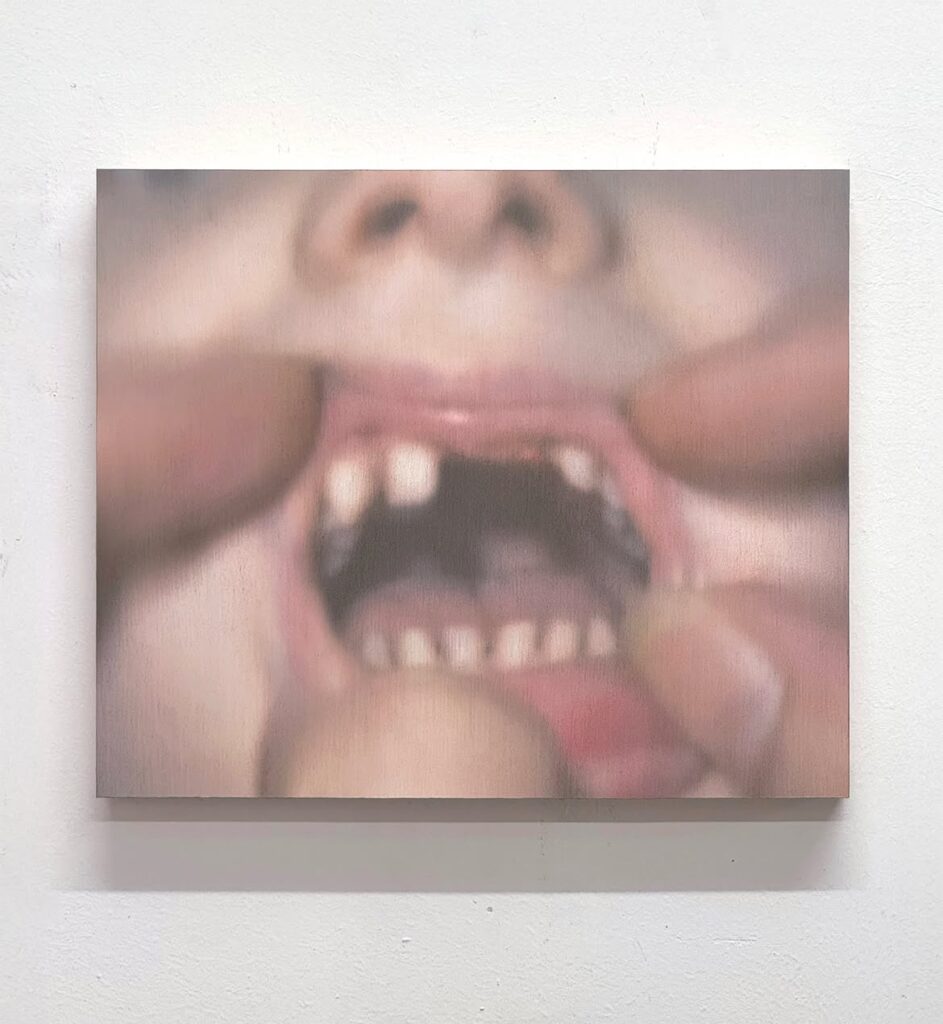
You return to themes like mortality, transformation, ritual and transcendence. What is it about these subjects that keeps pulling you back?
Alejandro: I think the underlying subject in a lot of my work is really the inexorability of time, and the fear that comes with it. Aging, decay, decrepitude, transformation, and ultimately death. These are things I don’t really understand, and I don’t think anyone fully does. Maybe working with them is partly a way of coping with that fact. There’s definitely something therapeutic about repeatedly approaching the things that scare or confuse you and trying to give them some kind of form.
That’s probably also why spirituality and ritual keep appearing in my work. Across cultures, humans have always created rituals, religions, myths, and symbols as ways of dealing with existential questions that have no clear answer. What happens when we die? Why are we here? How do we deal with loss? Is there anything beyond the material world? I find that need to construct meaning incredibly moving, whether or not those systems actually provide an answer.
I don’t think I’m trying to answer any of those questions through the work. If anything, making art is a way of asking them again and again, maybe from slightly different angles. And perhaps of becoming a little more comfortable with the fact that some questions simply won’t be resolved.
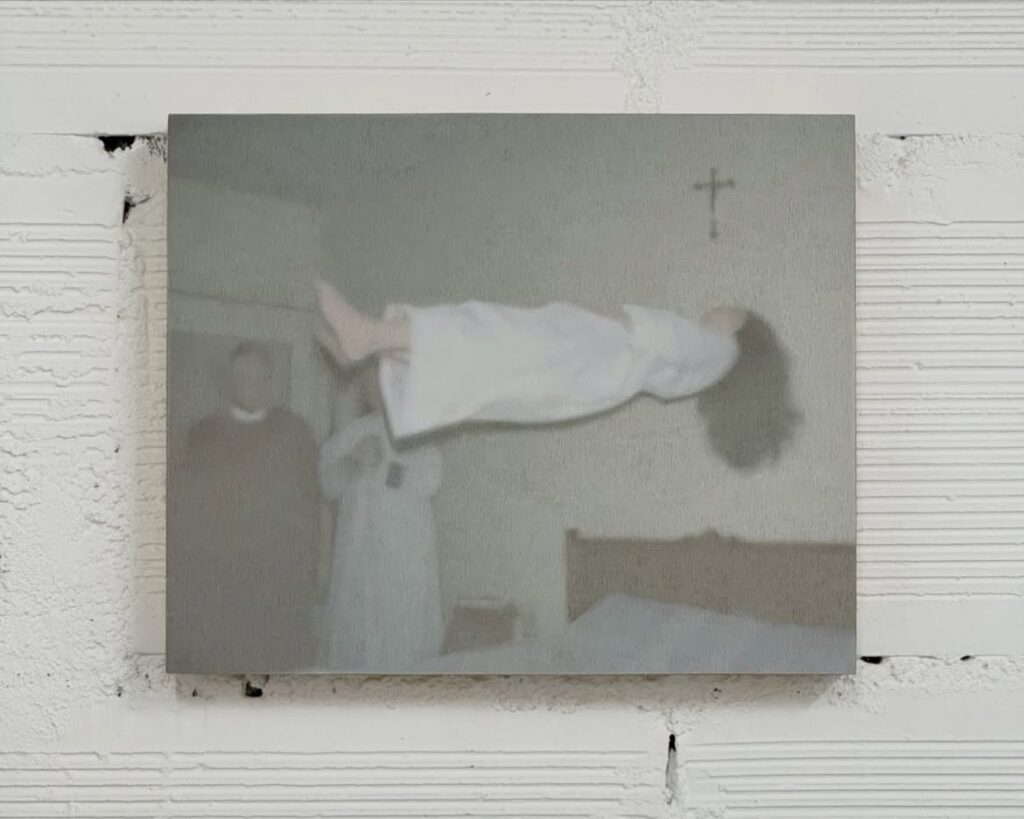
You have described spirituality and latent magic as undercurrents in your work. Do you personally believe there is something beyond the material world, or are you more interested in our need to believe that there is?
Alejandro: I honestly don’t know, and maybe that uncertainty is exactly what interests me. Right before this interview, I watched a video from the devastating 7.4-magnitude earthquake that struck Colombia on August 10, 2026. It was filmed by construction workers on the top floor of a high-rise that was still being built. The images were breathtaking and absolutely terrifying. Buildings around them were collapsing, huge clouds of dust were rising across the horizon, and the exposed rebar coming out of the concrete columns was shaking back and forth like reeds.
And almost immediately, instinctively, the workers started praying. You hear people asking God to save them, asking Him to make it stop. There are thirty-plus grown men standing together, genuinely believing that they may be seconds away from dying, and collectively their reaction is to turn toward God. The video has really stayed with me.
So I don’t know whether there’s something beyond the material world. I really don’t. But I’m fascinated by the fact that, when the material world literally starts collapsing around us, something in us seems to reach beyond it. Maybe I’m less interested in deciding whether God, transcendence, or some kind of spiritual reality exists than in that impulse itself. What happens to belief when death stops being an abstract idea and suddenly becomes an immediate possibility? Why does prayer appear almost automatically in that moment? Is it faith? Fear? Cultural conditioning? Hope? Some ancient survival mechanism? Probably some mixture of all of those things. I don’t have the answer. But that exact space—the few seconds in which thirty people facing possible death instinctively begin to pray—is absolutely a place I want to investigate.
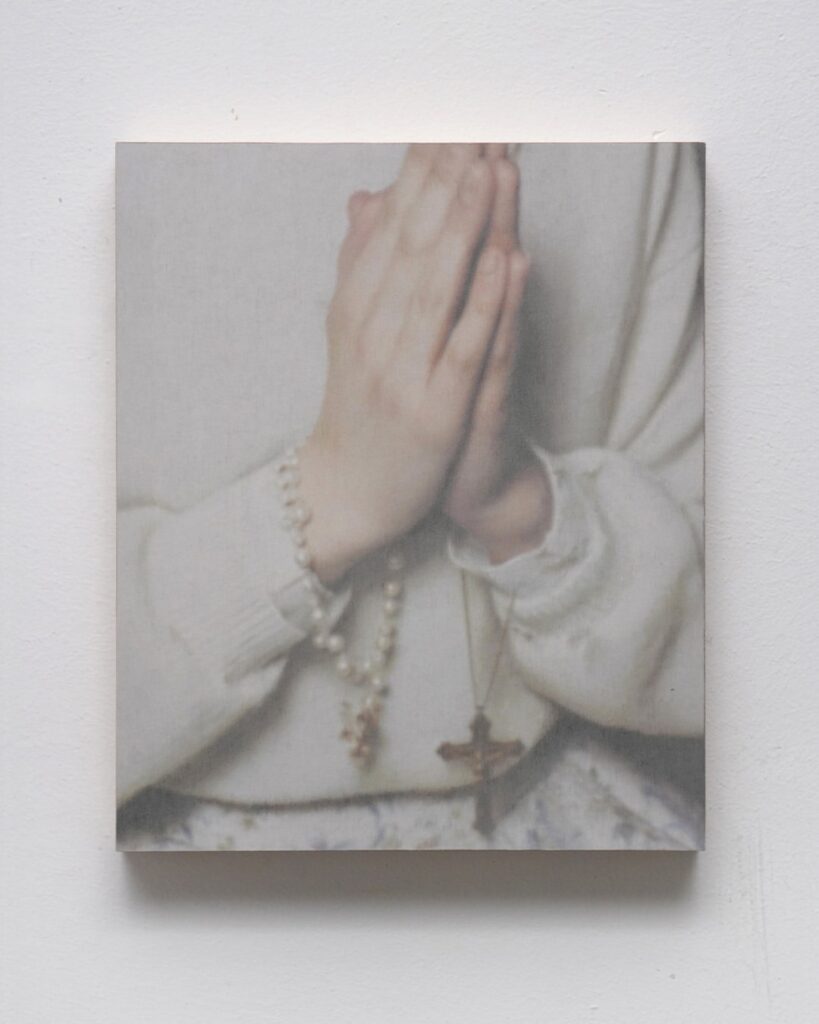
There is often a feeling that something has either just happened or is about to happen in your images. How important is that sense of suspended time to you?
Alejandro: That’s a really interesting question because it’s actually something I put a lot of time and thought into. I’m very interested in images that pull you in, then push you back, and somehow pull you in again. That back-and-forth creates a kind of latency, where the image never completely settles. Obviously, I’m not sure how successful I am at achieving it, but that’s the goal.
Ian McKeever has a beautiful way of talking about this: “Everyone thinks the painting is somehow about space, but I think it’s much more about time. When you look at a painting, you shouldn’t feel a sense of space and physical presence, but rather the latent time inside the painting.” That idea of latent time is very important to me.
I also think a lot about Henri Cartier-Bresson’s idea of the decisive moment: that fraction of a second when the visual organization of a scene and the meaning of an event suddenly come together. Of course, painting works very differently from street photography, but I’m interested in what happens when you translate that idea into a constructed image. Which instant do you choose? Is it the moment before something happens, the moment itself, or the second immediately afterward?
In my work, the close-up framing and the titles are both ways of playing with that. I want the viewer to wonder what happened before the image, what’s going to happen next, and especially what might be taking place outside the frame—fuera de campo, to use a cinematic term. The image is only a fragment of a larger event that you never fully get to see.
McKeever says something else I really love: “I think good paintings don’t give you an answer. They should block you off, seduce you, pull you in, and then push you out again.” I completely relate to that. If everything is resolved inside the image, then, for me, the piece is dead.
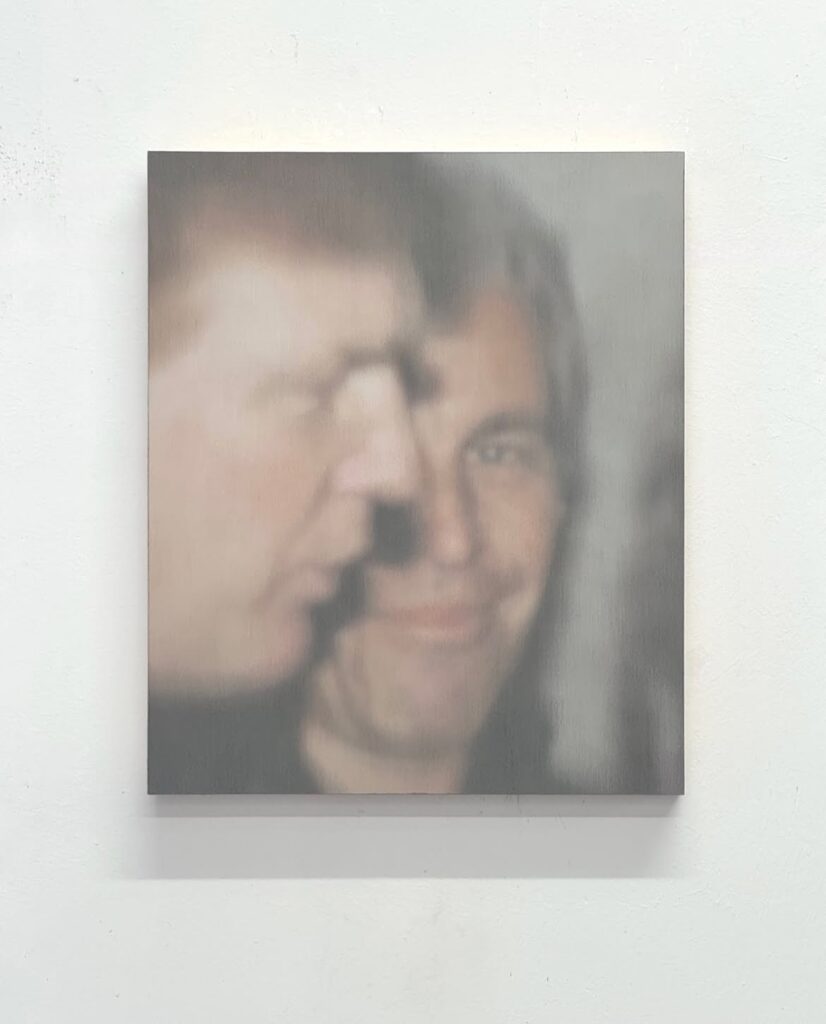
You trained very traditionally in drawing and painting from childhood, before attending film school. What did filmmaking teach you about painting that painting itself could not?
Alejandro: Filmmaking taught me a thousand things that I still apply to drawing and painting—I could probably write a whole book about it. But there’s one thing that really clicked for me in film school. When I was studying drawing and painting as a kid, the focus was very much on technique. You did endless life drawing, still lifes, landscapes, copies of old masters. It was about form, virtuosity, control of the medium. Then I went to film school and realized very quickly that technique is just a tool. You need it, obviously, but ultimately it exists in service of something else: the story, the idea, the takeaway, and, above all, the atmosphere.
That completely changed the way I judge my own work. Nowadays I destroy and redraw things constantly. Whether a drawing is “well made” is almost irrelevant to me if the atmosphere isn’t there. What I’m really looking for is density of mood. Does the image create a world? Does it have tension? Does it leave something unresolved? If it does, then I’m interested. If it doesn’t, no amount of technical skill is going to save it.
Cinema depends so heavily on time and sequence, whereas a painting appears all at once. Do you still think cinematically when making a static image?
Alejandro: One hundred percent. I often think of an entire sequence while I’m making a single image—what happened before, what might happen after, what’s outside the frame.
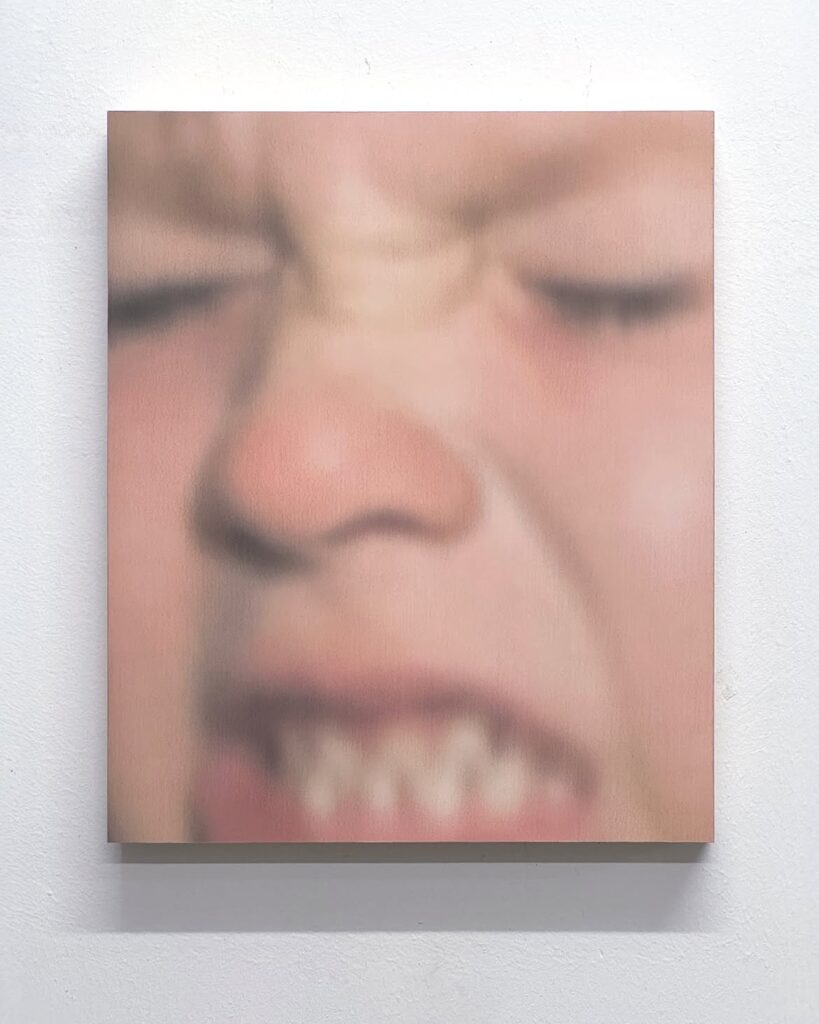
Something I’ve found especially interesting in recent exhibitions is what happens when you juxtapose images that weren’t originally conceived as a sequence. For example, you might have a close-up of a kid with their eyes shut and mouth open, clearly in a moment of panic, and place it next to a close-up of a car crash. Suddenly the two images start behaving like shots in a film. Together they create a new sentence, a new narrative, even though each piece was made independently.
That can happen across an entire exhibition too. The works begin to generate an overall atmosphere that becomes more important than any single image. I really like that idea—that a show can function almost like a broken film, or an experimental video piece made out of still frames.
Your work feels contemplative, but there is also violence running underneath it. Where does that violence come from?
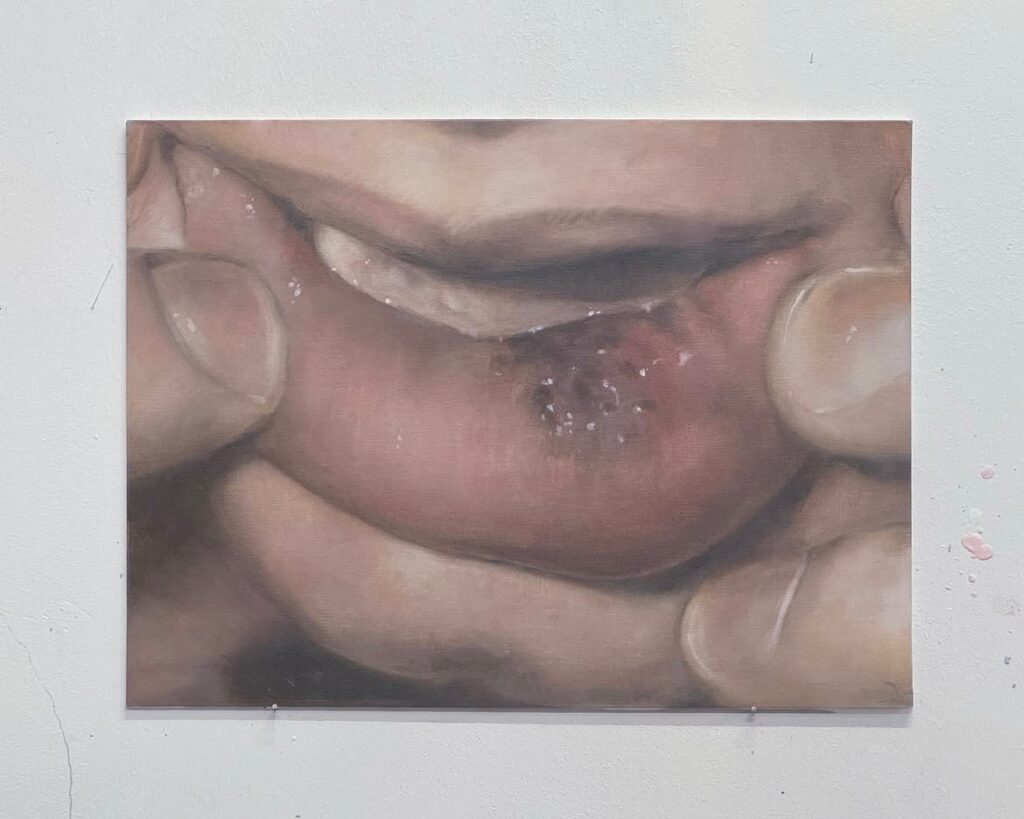
Alejandro: My latest body of work, Un cuchillo que no corta, which I’ve been working on for the past two years, is based on my ongoing, recurrent nightmares. I’ve had nightmares since I was a kid, and I often write down fragments, thoughts, or images from them in a notebook that I always keep next to my bed.
The project is really an attempt to reconstruct the cosmology of my most vulnerable self—my fears, anxieties, and the things that surface when I’m asleep and have much less control over them. I assume that many of those nightmares respond to very real sources of anxiety in my conscious, waking life, even if the connection isn’t always obvious to me. So I’m not sure I would describe the work itself as violent. But it can definitely be disturbing, uncanny, or eerie, because some of the images come from very deep fears and, in certain cases, from traumatic personal experiences in my past.
Do you think fragility interests you because things are beautiful when they might disappear?
Alejandro: Yes, absolutely. I think a lot of beauty comes precisely from knowing that something isn’t going to last. I’ve actually been reading quite extensively about the Japanese concept of mono no aware lately, and I feel very connected to it. It’s difficult to translate directly, but it’s basically an awareness of the transience of things, and the bittersweet emotion that comes from realizing that everything eventually passes.
Cherry blossoms are the classic example: they’re beautiful not despite disappearing so quickly, but partly because they do. Their fragility intensifies the experience of seeing them. That ephemerality is the only source of beauty.
You find that sensitivity throughout Japanese literature too. The Tale of Genji, for example, is full of relationships, seasons, beauty, and lives that are constantly slipping away. And The Tale of the Heike begins from this very Buddhist awareness that prosperity, power, and human life are inevitably impermanent.
I find that incredibly moving. A body aging, a flower wilting, a photograph fading, a relationship ending—there’s sadness there, obviously, but also a strange kind of beauty. So yes, I think fragility interests me precisely because disappearance is already contained within it. Maybe something becomes more precious the moment you understand that you can’t keep it.
Can you walk me through your creative process from beginning to end result?
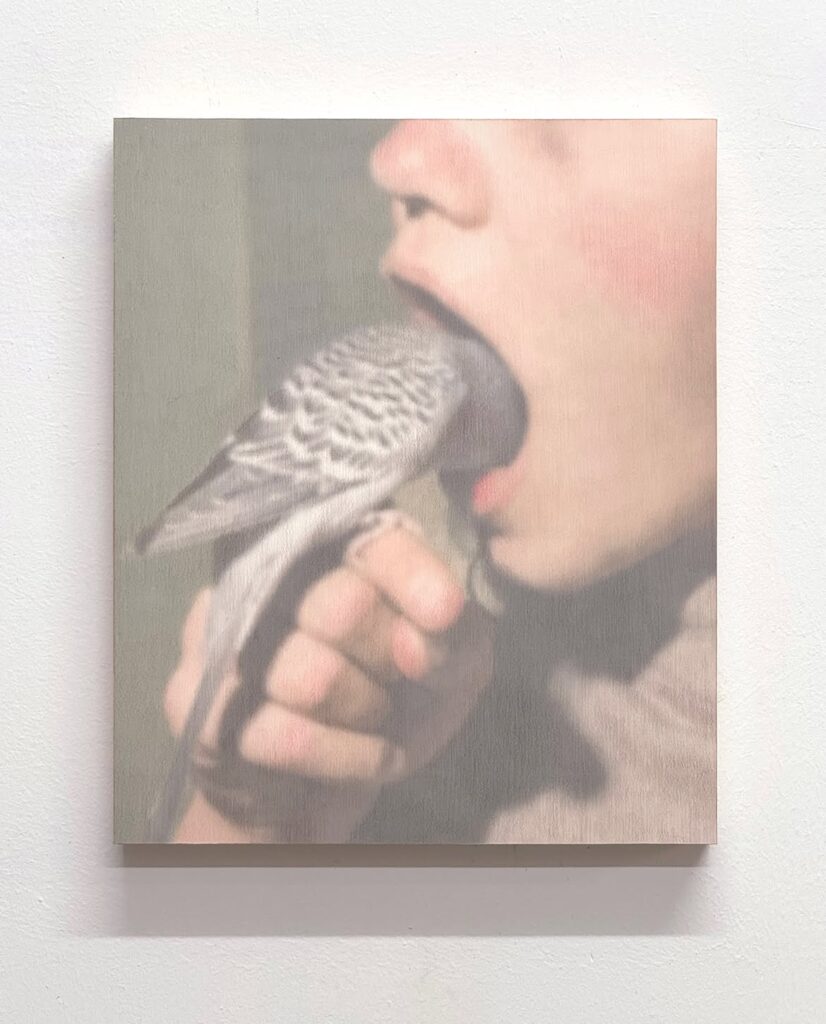
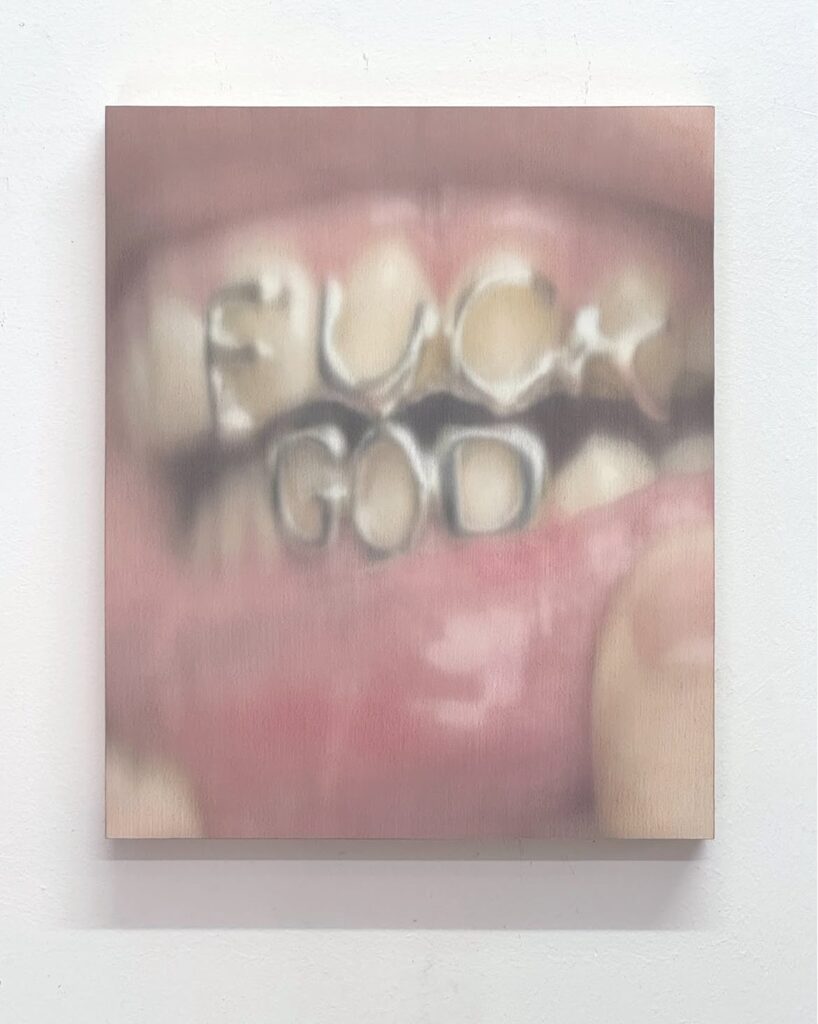
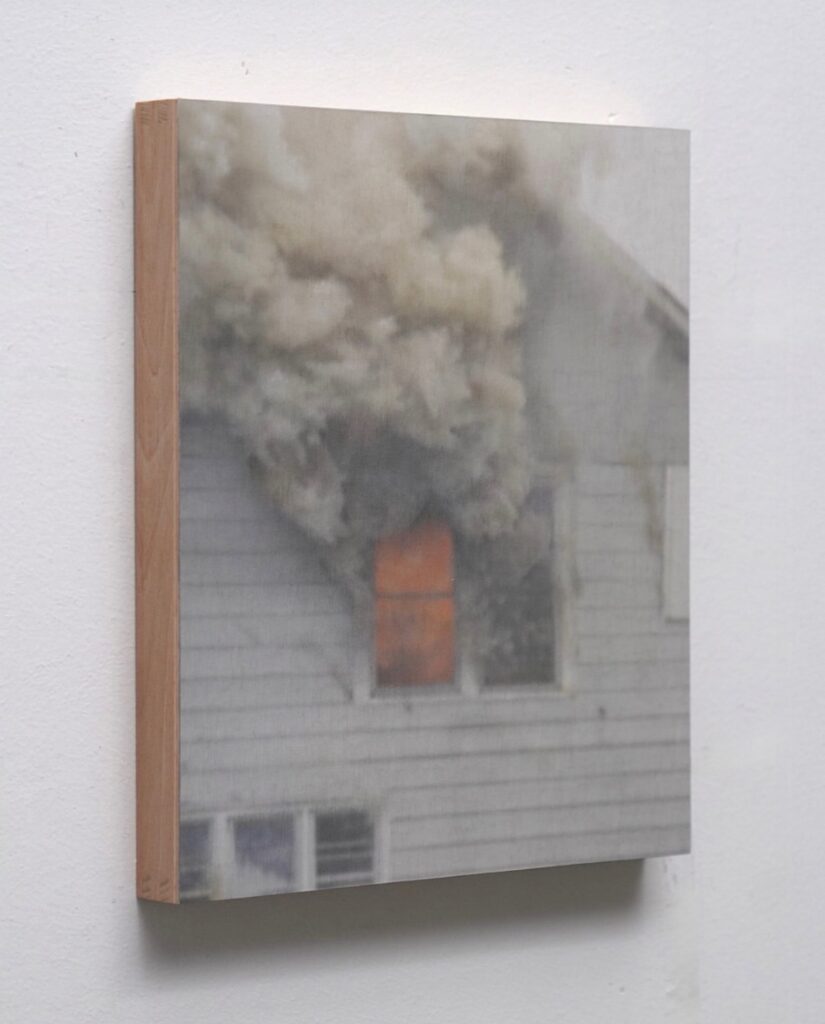
Alejandro: With this current body of work, I start by going through notebooks filled with notes from my nightmares until something catches my attention. The entries are usually very vague—sometimes just a feeling, a color, a smell, or a fragment of a scene. Then I look for an image that can somehow embody that memory. I might take my own photograph, use a prompt-to-image AI model, work from a found or historical image, or even a film still. I digitally edit it—cropping, blurring, removing elements, recoloring—until it feels right. Then I render it with airbrushed acrylic inks and, mostly, colored pencil, before finally mounting the work onto canvas.
How do you approach color?
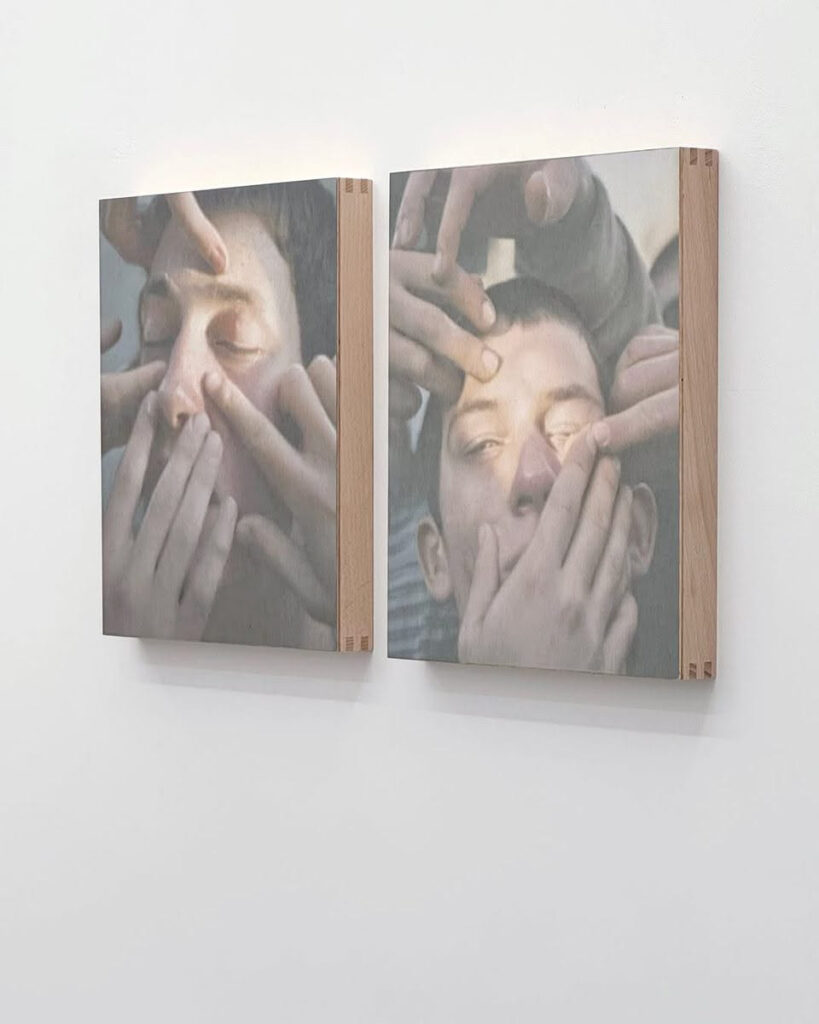
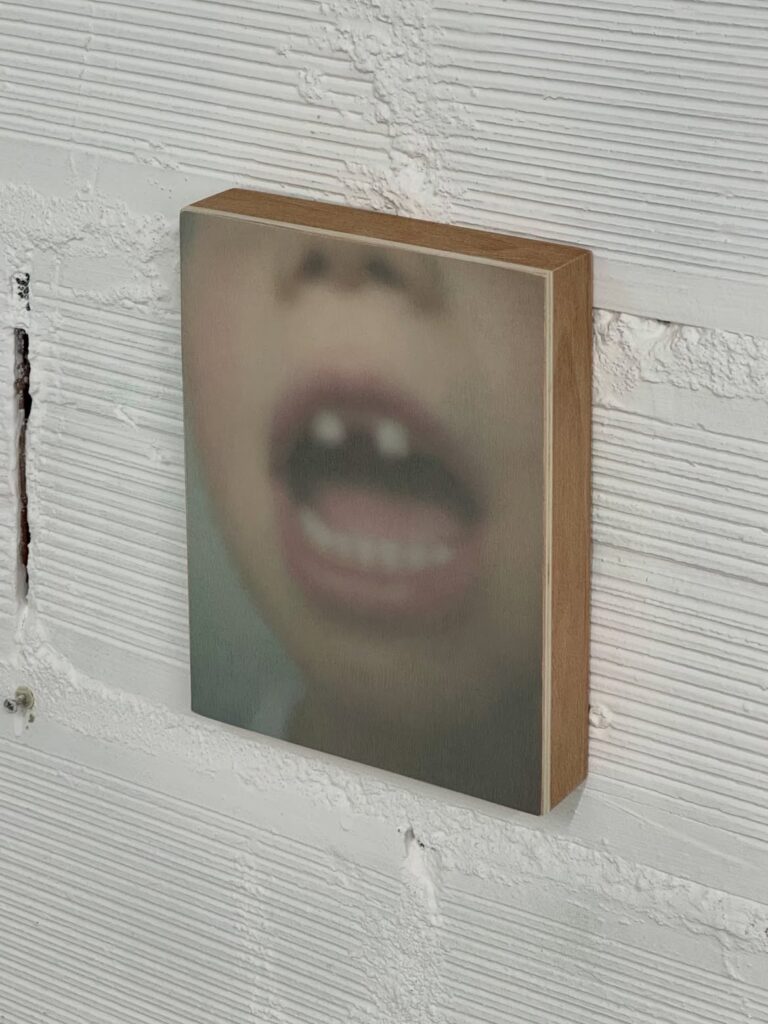
Alejandro: With this series, I wanted the images to have a certain blurriness, halo, and fogginess that would reinforce the fact that we’re looking at dream imagery—something as ephemeral and unstable as the memories themselves.
So I set myself a few restrictions: no hard edges, no strong contrast, and no highly saturated colors. When I’m preparing the photographic reference, I do a lot of digital editing in that direction. I blur contours, desaturate the image, and compress the value range so there are almost never pure blacks or pure whites.
Those limitations are actually very productive for me. They keep the image from becoming too clear or too resolved. The result is softer, more suspended, and slightly uncanny. I like that the color doesn’t describe the scene in a realistic way so much as contribute to its atmosphere.
Ok Alejandro, now to something totally different. In a parallel universe who would you be? and what would you be doing?
Alejandro: I’m extremely curious, so I fantasize about changing careers about five times a day. In one universe I’m a professional countertenor specializing in Baroque music. In another, I’m a criminologist studying serial killers. Then maybe I’m a chef traveling the world and using food to understand the anthropological connections between different cultures. Or I’m working in international relations, involved in diplomatic efforts to resolve a terrible armed conflict. And in another one, I’m training on a bike to race the Tour de France. So yes, I’m pretty eclectic. I think I just like the idea of learning something completely from scratch.
Outside of art, what’s something you’re obsessed with right now—maybe a hobby, a show, or even a food—that keeps you grounded or inspired?
Alejandro: Probably geopolitics. Outside my day job as a food tour guide, the studio, and working out, that’s what consumes most of my time. I try to stay extremely informed about French, Spanish, and U.S. politics, probably to an unhealthy degree. Over the past year and a half, the genocide in Gaza and the war on Iran have taken up a huge amount of my attention. I follow people like Chris Hedges, John Mearsheimer, Jeremy Scahill, Tareq Baconi, Mouin Rabbani, Trita Parsi, and Narges Bajoghli. It definitely doesn’t keep me grounded—it’s usually a major source of anxiety. But apparently my need to understand what’s happening is stronger than my need for inner peace.
Can you tell me a story about a time when a connection with someone had a big impact on you?
Alejandro: The most obvious one is probably meeting Loïc, my partner. We met in Mallorca in 2018 while he was there on vacation. He’s a space engineer working for CNES—the French space agency—in Toulouse. Our relationship became serious pretty quickly, and eventually I moved to Toulouse to build a life with him. That decision changed almost everything for me: where I live, the language I speak, the people around me, and the way my life is structured. Without that relationship, my life would be completely different. I probably wouldn’t live in France, and I definitely wouldn’t speak French. The love and admiration I have for him have shaped my life in a very concrete way.
What qualities do you find most important in the people you choose to spend time with?
Alejandro: Probably honesty, good intentions, generosity, and a sense of humor. I really value people who are straightforward and kind, and who don’t have some hidden agenda behind everything they do. Generosity is important to me too—not necessarily materially, but generosity with time, attention, affection, and curiosity. And humor is essential. Life can get pretty heavy, and I need people around me who can laugh at themselves, at me, and at the absurdity of things. I think those qualities create a kind of trust that makes relationships feel easy and genuine.
How would you describe a perfect day?
Alejandro: A perfect day would probably be a day off from my day job, so I could spend the entire morning and afternoon in the studio, drawing, listening to music, with the dog by my side. Then I’d meet a couple of good friends for apéro—ideally a good vermouth and a proper French cheese board. After that, I’d go home, cook something nice, and have dinner with Loïc while watching a really good movie. Nothing particularly spectacular, honestly. Just enough time to work, good food, people I love, and no need to rush anywhere.
Alright Alejandro, I always ask these two questions at the end of an interview. The first is. What’s your favorite movie(s) and why?
Alejandro: I hate this question, so I’m just going to drop ten titles right off the bat and refuse to explain myself:
● Blue Velvet (1986), David Lynch
● Caché (2005), Michael Haneke
● L’Avventura (1960), Michelangelo Antonioni
● Arrival (2016), Denis Villeneuve
● El Sur (1983), Víctor Erice
● The Shining (1980), Stanley Kubrick
● Mujeres al borde de un ataque de nervios (1988), Pedro Almodóvar
● Vacas (1992), Julio Medem
● Hiroshima mon amour (1959), Alain Resnais
● Salò, or the 120 Days of Sodom (1975), Pier Paolo Pasolini.
The second is. What song(s) are you currently listening to the most right now?
Alejandro: At the studio, I tend to listen to melancholic indie folk on an endless loop. Rather than individual songs, there are a few albums I constantly go back to:
● Carrie & Lowell — Sufjan Stevens (2015)
● For Emma, Forever Ago — Bon Iver (2007)
● Stranger in the Alps — Phoebe Bridgers (2017)
● This Empty Northern Hemisphere — Gregory Alan Isakov (2009)
● Veneer — José González (2003)
Apparently I work best when the music is beautiful and slightly devastating.