Share this
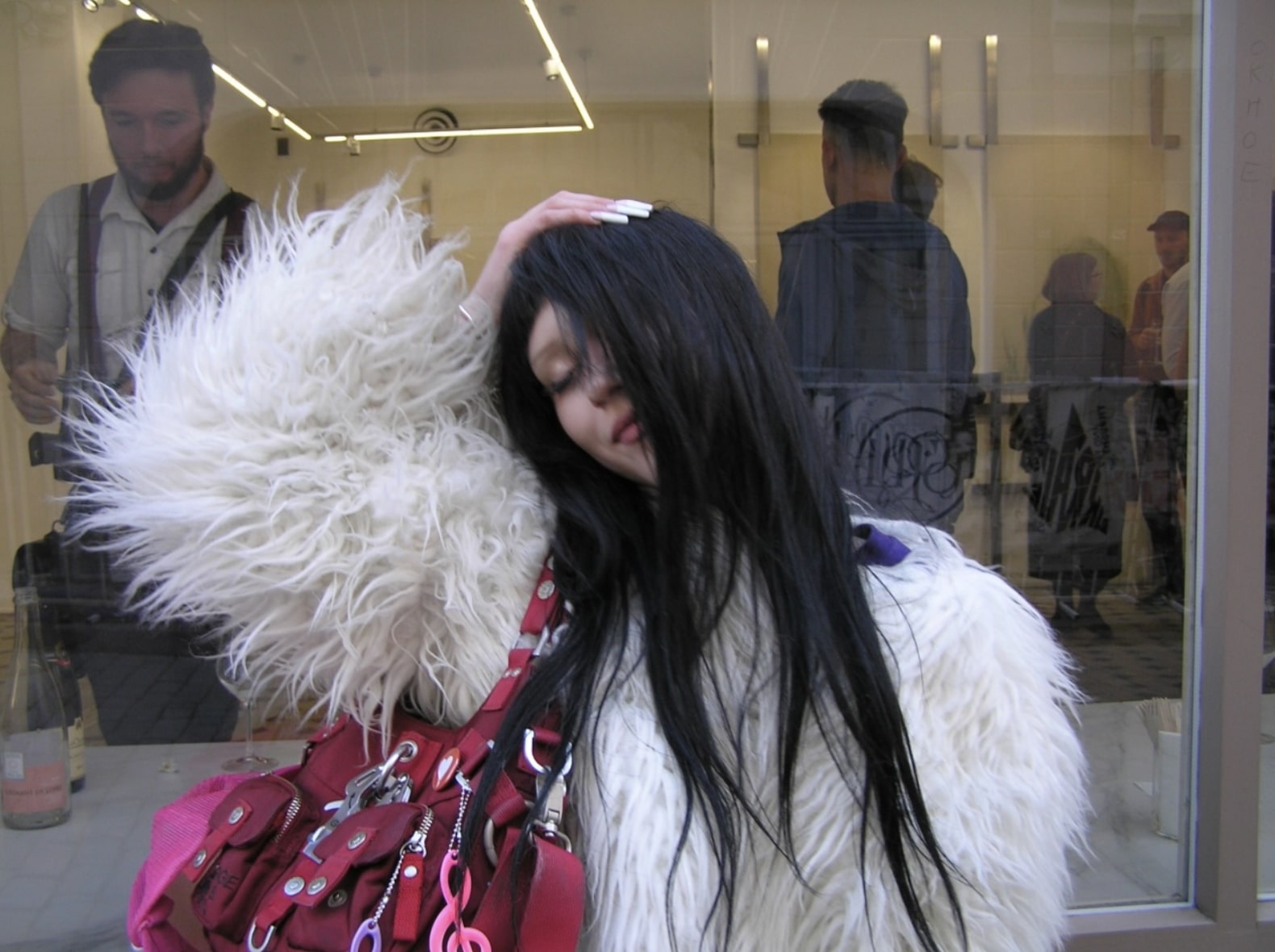
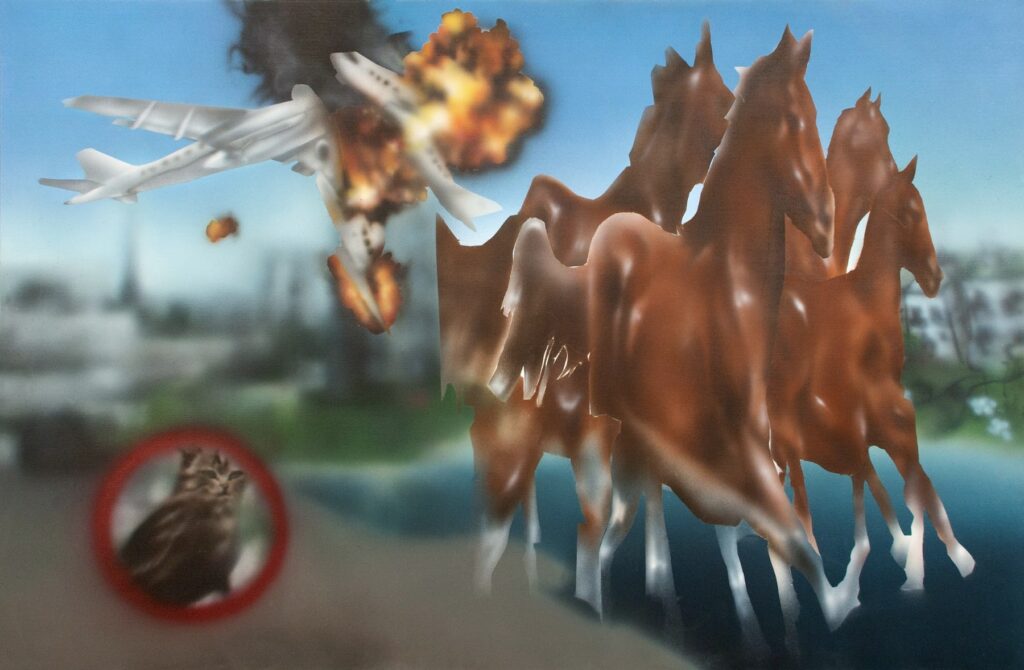
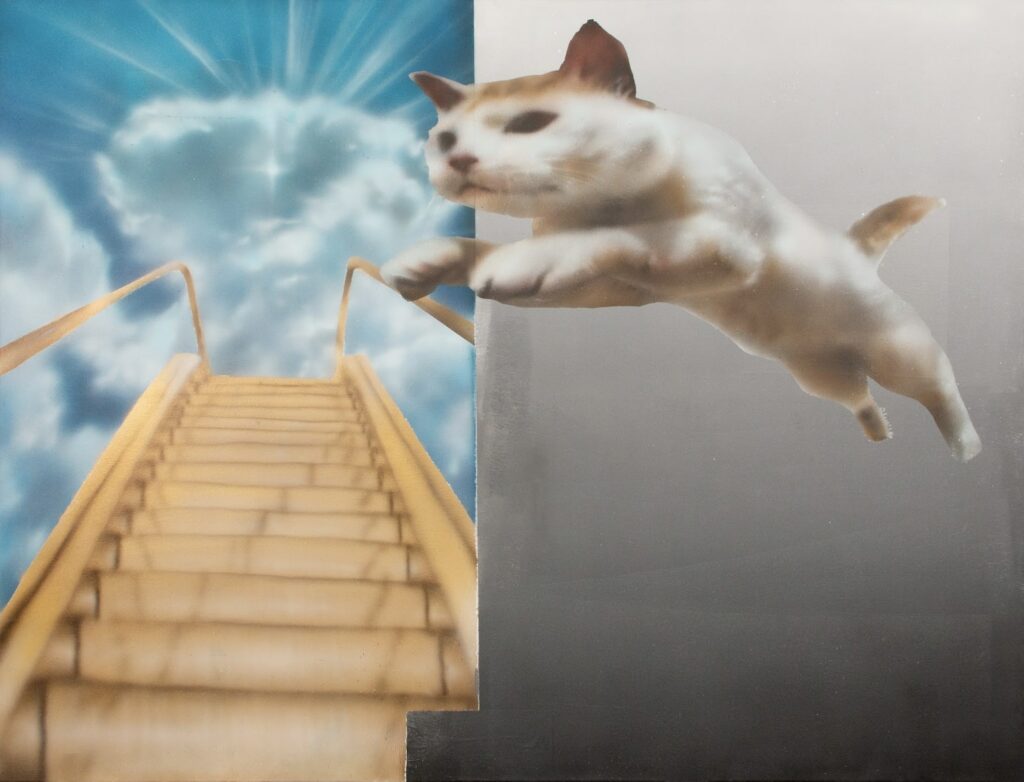
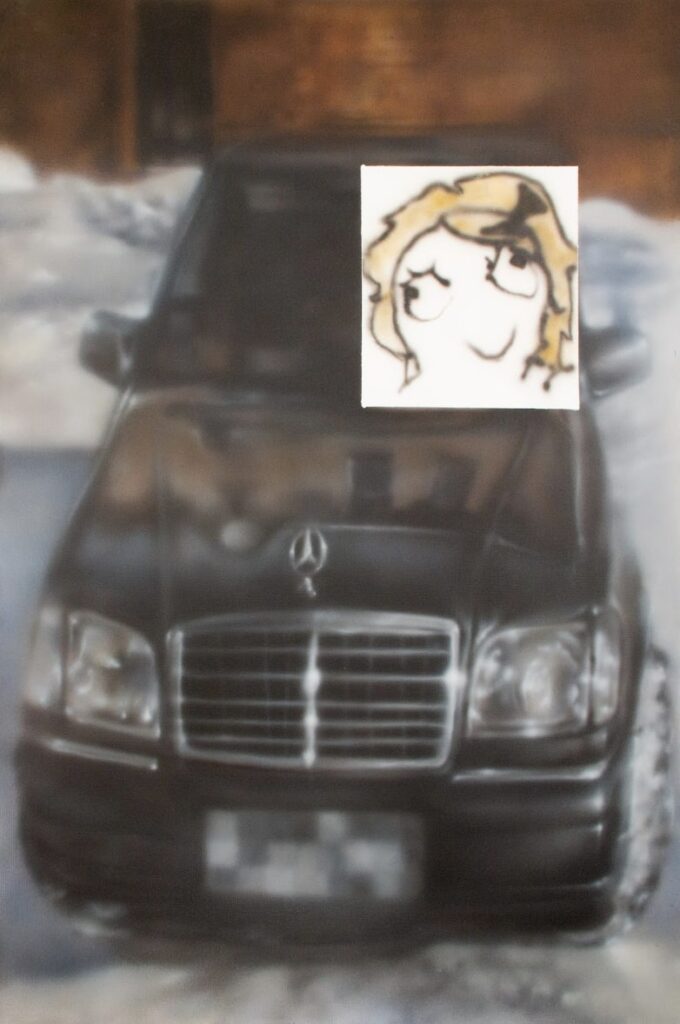
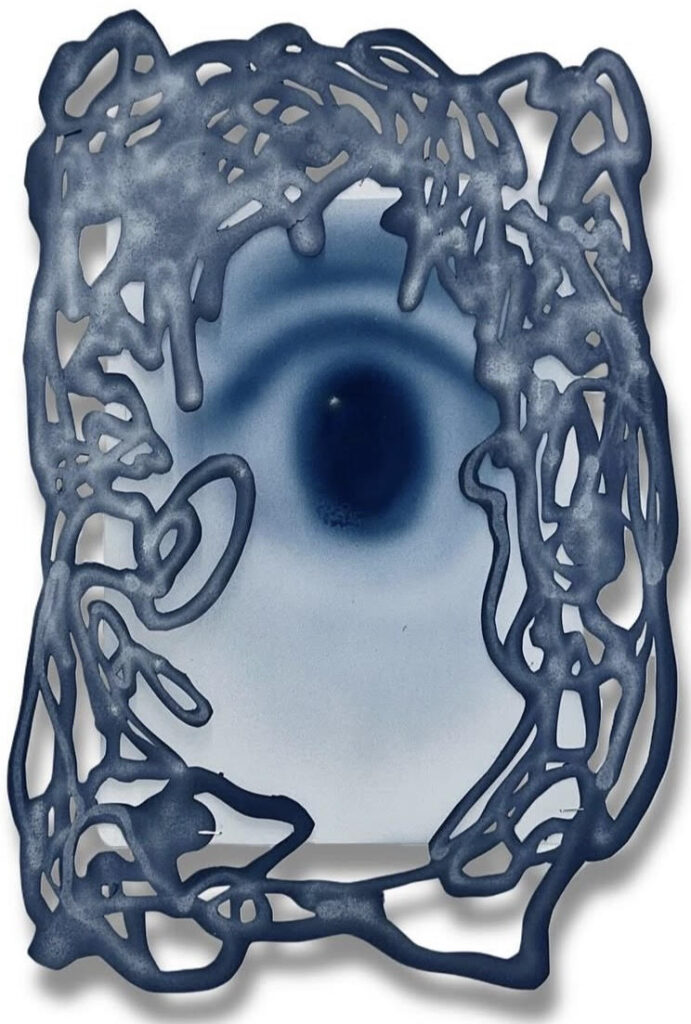
Anu Jakobson (2005) is a visual artist from Estonia, currently in her second year at the Estonian Academy of Arts. Her practice centers on exploring online culture and its visual language, which she approaches through experimental methods of painting mainly with an airbrush, which is chosen for its ability to capture the haziness and fleeting quality of internet imagery. She works from the images she screenshots from the internet and edits them according to her vision in the same ways that memes circulate but conveying the process on a canvas. This process situates her work within the cultural collective, as memes can serve as a lens for understanding current trends and shared states of mind.
Hi Anu! It’s a pleasure to sit down with you! First question that I always ask. How does a regular day look like for you in Estonia?
Anu: The closest thing I have to a routine is going to school, though I still haven’t really figured out the point of it. At least it keeps me from sleeping until noon. Everything else is completely unplanned, which kind of feeds my dopamine-deprivation-driven need for thrill. I never really know if I’ll get my stuff done because I don’t have anything planned out ever and the uncertainty of it is what keeps my adrenaline up, which also makes me even more grateful that I know what my creative outlet is, because otherwise I’d probably be a gambling addict or something:’)
I’m curious, growing up… what kind of kid were you? What did you enjoy doing, and how did you spend your time?
Anu: Being an only child naturally meant I spent a lot of time in worlds I created for myself. As I got older, that turned downside, In a way that I often felt detached from others because of the lack of social skills, which I tried to overcompensate with imitating others. But over time, when I found a way to turn that introspection into something creative, the same imagination that once isolated me, now helps me go really far in my creativity.
Alright, so when did you start to paint, and when did you start taking being an artist seriously?
Anu: For as long as I can remember, I felt like I was supposed to be doing something creative, but didn’t know how. When I was unaware of my visual language and ability to create, the creative energy was still there, but because my inability to use it started turning inward, into criticising myself, to the point where I genuinely thought that the depression i was dealing with was from a chemical imbalance, when in reality, it was the pain of my unused potential.
I went to children’s art school early on, where I learned traditional skills like drawing and painting. But that academic approach made me believe that’s all art could be. It always felt distant, though not so distant that I wanted to give up on art altogether. I just assumed that the best I could ever be was a shadow of an artist, working for someone else, maybe someone working around art.
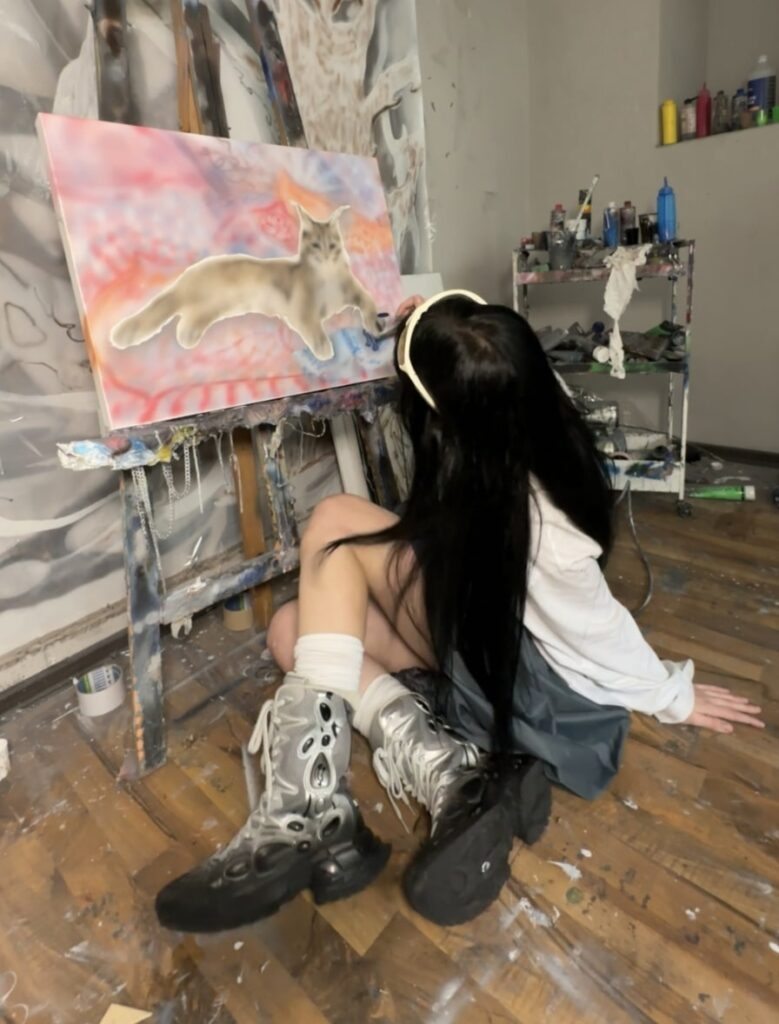
Then, about two years ago, I started building a portfolio to apply for scenography, and I bought an airbrush to try something different. I was so bad at it, but that’s what allowed me to be imperfect. That I could just make whatever. Since then, it’s felt like everything that had been trapped inside me finally found a surface and that fascination still hasn’t left and I genuinely believe now that the light inside me will never die because now that I have access to it, no matter what medium I’m working with.
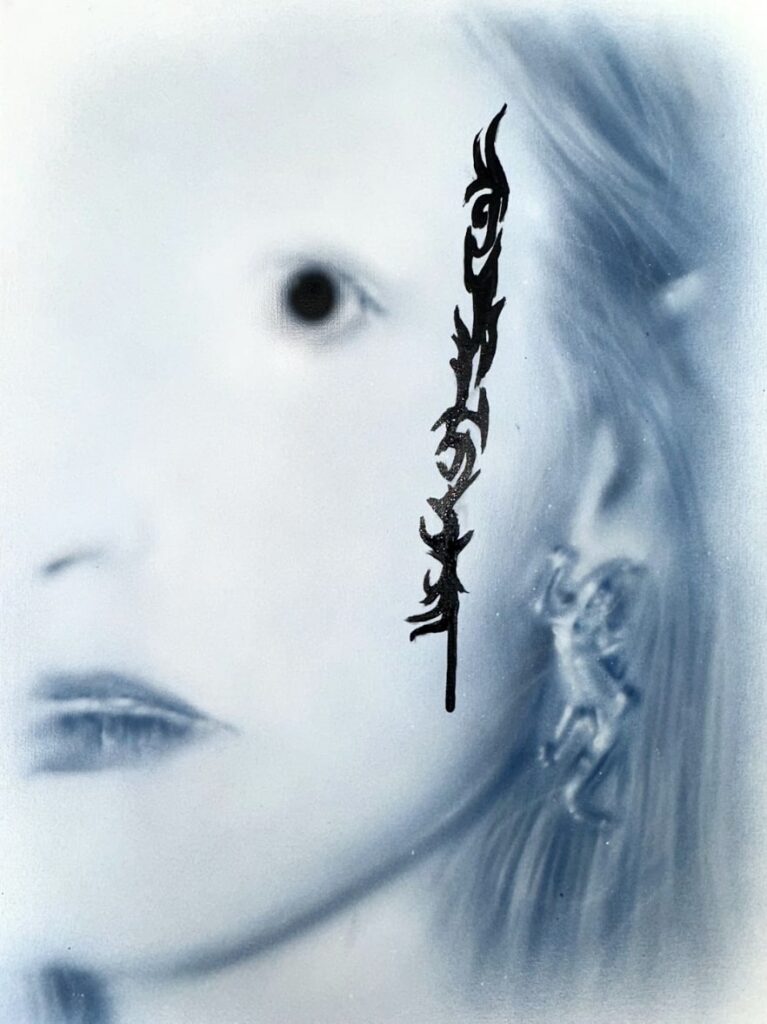
Ok Anu, with these next series of questions, I will try to delve into your work as best as possible. So….You work with screenshots and airbrush—two very different mediums, one digital and one tactile. What does the airbrush give you that the digital screen cannot?
Anu: In a way, even though the airbrush is a traditional, physical tool and the way I use it is definitely shaped by digital aesthetics, I’m not just trying to paint my downloads folder, but more like I’m conveying my vision through online images. I feel like the source inside me acts as a magnet that draws in symbols that resonate. When piecing them together then through the process of painting is what brings out a certain sensitivity through it. So the combination of the two feels like the closest thing to understanding myself, at least right now.
You’ve described the airbrush as a way to capture the “hazy” quality of internet imagery. Is this haziness about nostalgia, impermanence, or the overload of online culture—or all of them at once?
Anu: I think it’s all of them at once. With information and imagery blurring together, everything feels both familiar and anonymous at the same time. For me, the airbrush mirrors that, taking into consideration that to use it, you have to spray from a distance, without a recognizable signature, opposed to painting with a brush, where you can see the brush stroke that every artist has unique to them. That kind of blurring between originality, and influence is very specific to this moment and it’s one of the reasons I feel compelled to document it through airbrushing, which as a tool has this anonymous essence that can be used to create this in-between space that feels very close to how digital images circulate or even how I look back to my memories or dreams.
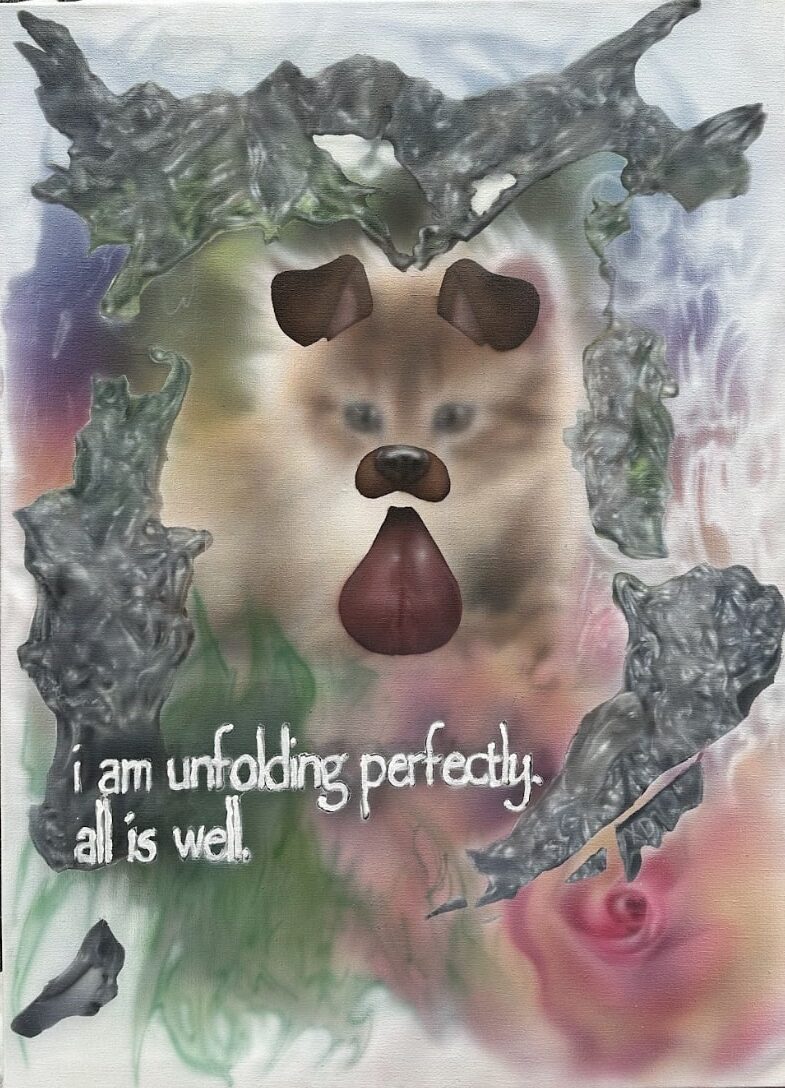
Memes are usually fast, disposable, and anonymous. How does slowing them down into paintings change their meaning?
Anu: For me, painting is a way of processing. When the images I use, memes and screenshots are from a faced paced digital space, then slowing the images down with the process of painting, it gives them emotional weight.
Do you see yourself as preserving the internet’s collective memory, or are you more interested in distorting it?
Anu: It’s out of my control how my paintings will stand the test of time, I’m just deconstructing today’s archetypes and reshaping its context to feel relevant to me.
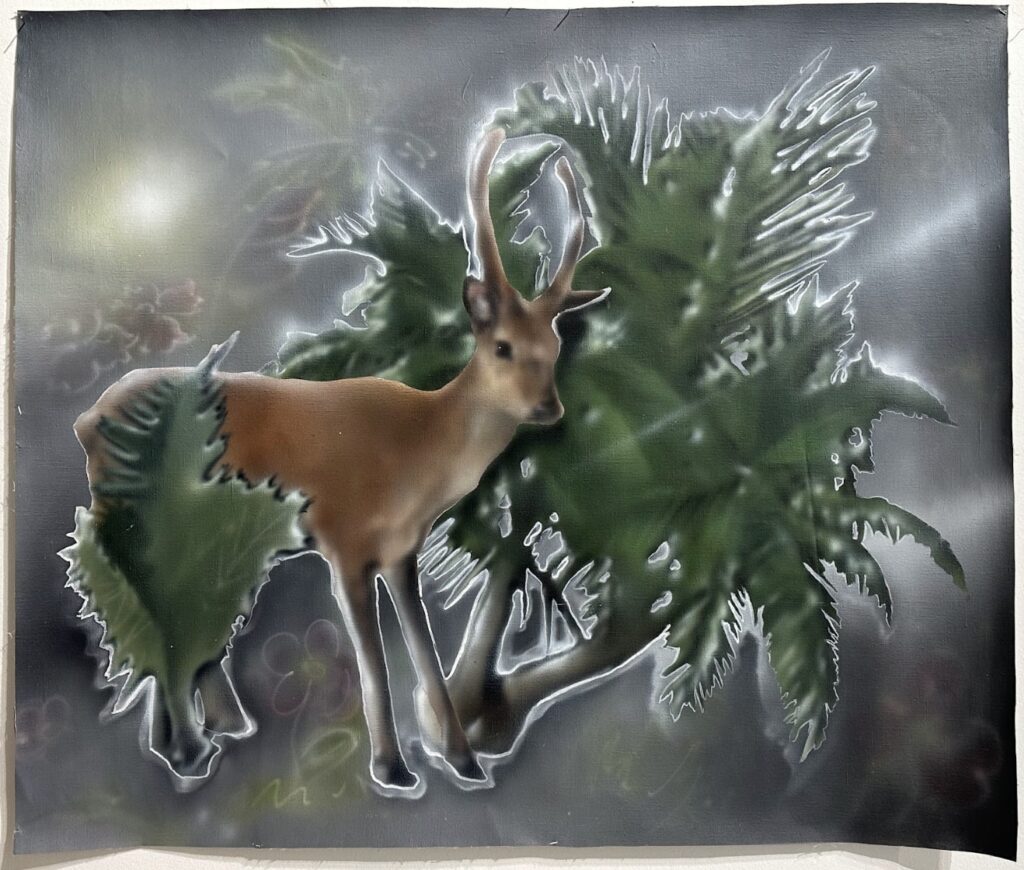
Since memes are often funny or ironic, how does humor, or even absurdity, play into your paintings?
Anu: Irony is a deconstructionist tool, a way to undermine current values for an example. But irony could also be deeply negative, it keeps destroying meaning without offering anything to replace them. It criticizes, but it doesn’t offer an alternative.
So when I use irony or absurdity in my paintings, I’m trying to hold both ends of it. I love irony as a tool to criticize and demonstrate my self awareness, but I don’t want to drown in it either. I feel like with my work I’m making fun of everything and I still care enough to mean it. So that’s why for me using memes through art is a great tool to integrate that sillyness, because it doesn’t cancel out seriousness, it contains it.
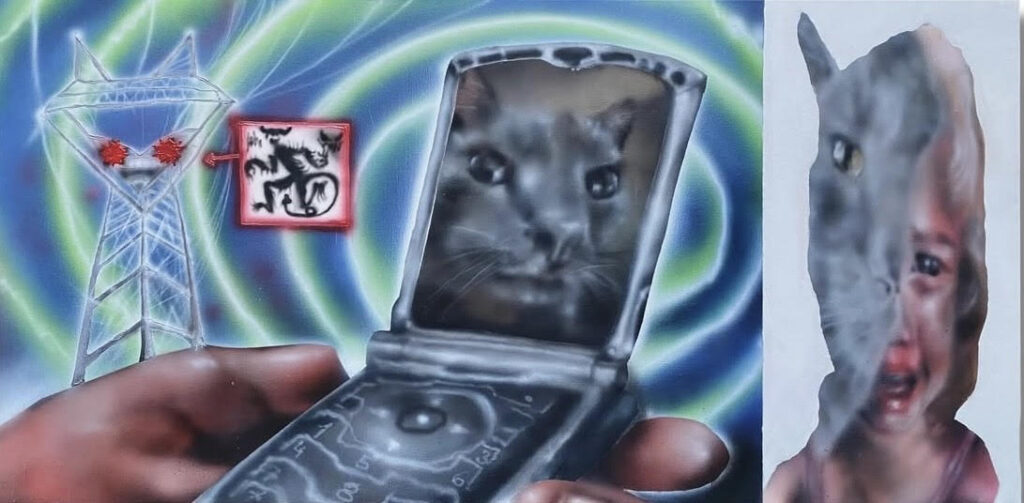
You mention that your work is “situated within the cultural collective.” How do you balance your own vision with the anonymous, collective authorship of online culture?
Anu: Of course I can’t pretend to be objective, so I’m trying to reach somewhat of a universality through a personal perspective. Digital culture feels like the closest thing for me to a cultural collective right now, so being a part of it is also why authorship right now feels more like a formality than anything else. If we are all pulling from the same instagram explore page. Reshaping and reposting the things we see on the internet makes it a collective collaborative process and resonant as cultural expression. So originality and creativity then becomes the skill of picking up on the right signals, the right fragments, and somehow, they collide and coalesce into something that feels like you. But “you” isn’t really so much you anymore. It’s a patchwork of influences that obscure any central, singular “self” or author in this context.
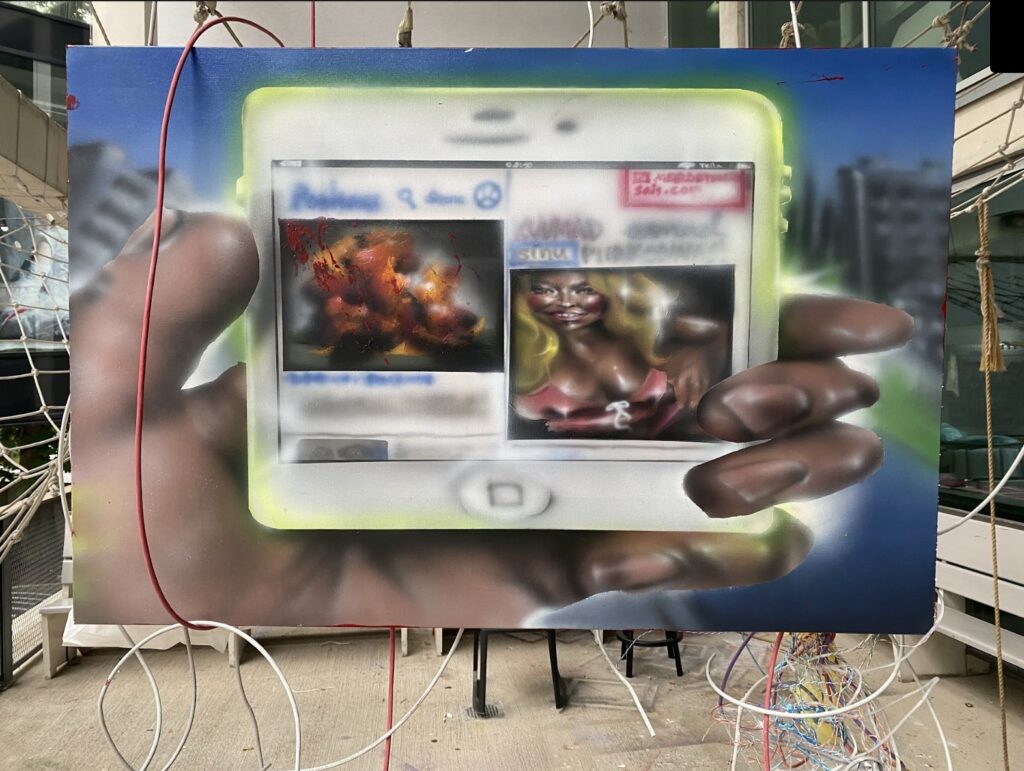
So what do you think it is about online culture, that resonates so well with you?
Anu: I’ve made peace with the fact that I can’t separate being online from being offline. The boundary doesn’t really exist anymore and the internet isn’t just a tool or a subject, but an environment. I’m not making work “about” online culture; I’m making work within the logic it has shaped.
Would you consider yourself a nostalgic person?
Anu: I wouldn’t say I’m nostalgic in the traditional, sentimental sense, I’m more nostalgic for the poor image. For an example when images could accidentally stretch or blur.
For me nostalgia isn’t about wanting to return to the past; it’s about missing that sense of distance, when images carried the feeling of time passing, opposed to my iphone 14 pro max camera which makes pictures better quality than my eyesight.
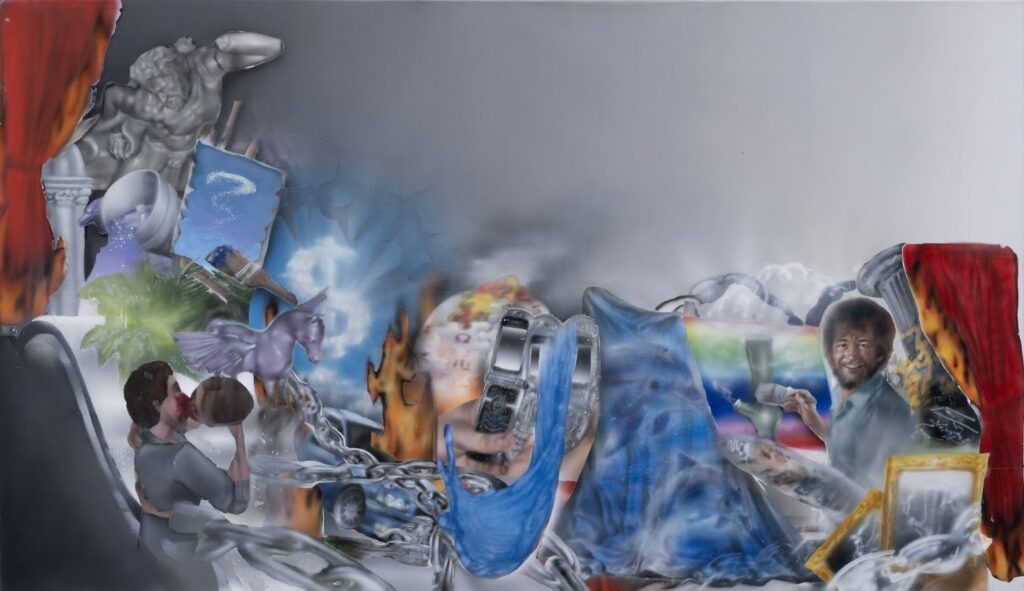
Do you think painting can still be personal when the source material is so public and shared?
Anu: I’m less like the author of my work and more like a vessel. The “me” in the art I make is really just an arrangement of everything I’ve let in, a piece of some collective visual consciousness. I absorb, and I let it all settle somewhere in my mind, hoping that when I get to the studio, it’ll all come together in a way that feels personal—even though, in reality, there’s nothing strictly personal about it. The “me or my creativity” I’m pulling from is as much a construction.
What part of your own sensibility do you think always seeps through, even when you’re working from memes or mass imagery?
Anu: I probably answered to this question already, with how my sensibility seeps through by sharing the filter through which I’m seeing the memes or mass imagery that I’m working with.
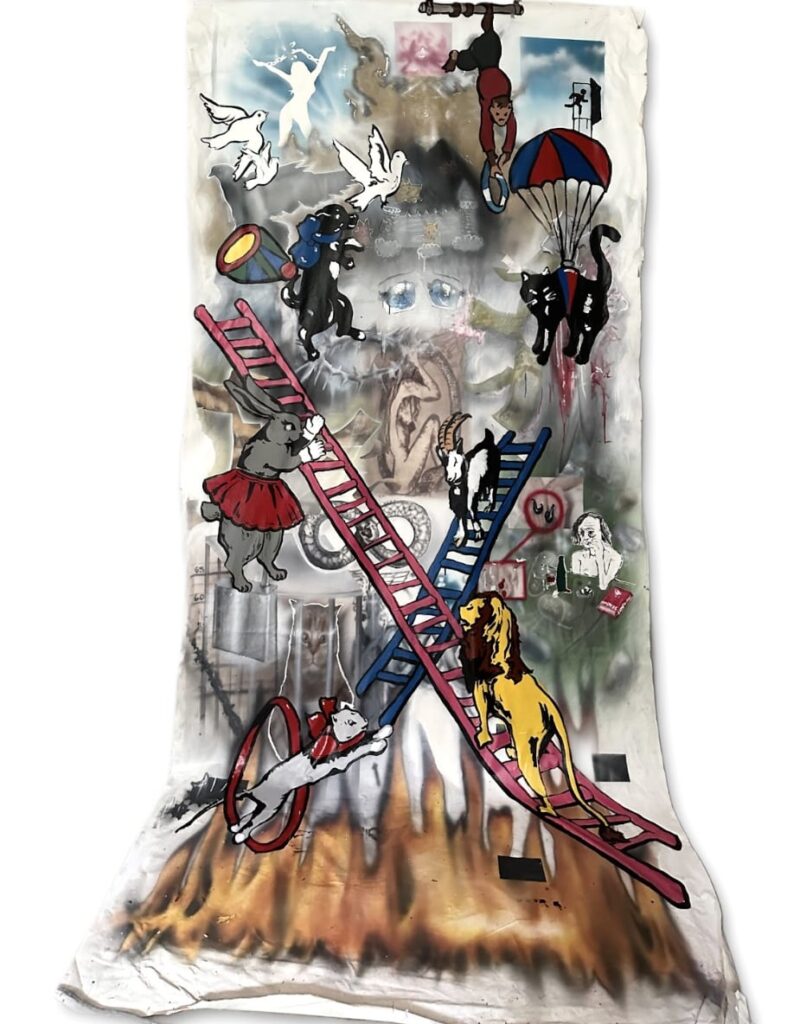
Internet culture moves so quickly—today’s meme is forgotten tomorrow. Do you feel urgency in capturing certain images before they disappear?
Anu: For me, painting is a way of processing. Because the images I use, memes and screenshots are all born from that faced paced digital space, painting them, the material slows the image down. While I still struggle daily with feeling of urgency and time running out it has helped me to ground myself.
Do you see your paintings as time capsules of a certain online moment, or as reinterpretations that detach from their original context?
Anu: I think that the internet’s collective memory, at its core, is so ephemeral, for example memes will lose their original context over time. What matters more to me is capturing the spirituality of it. The feeling of this time, this specific kind of recognition. So even if the reference fades, probably some kind of emotion (at least i hope) still stays. Like memes, paintings age and contexts shift, so what lasts, more than the content itself, is the impulse to respond, to think that it meant something, even if it’s not clear YET.
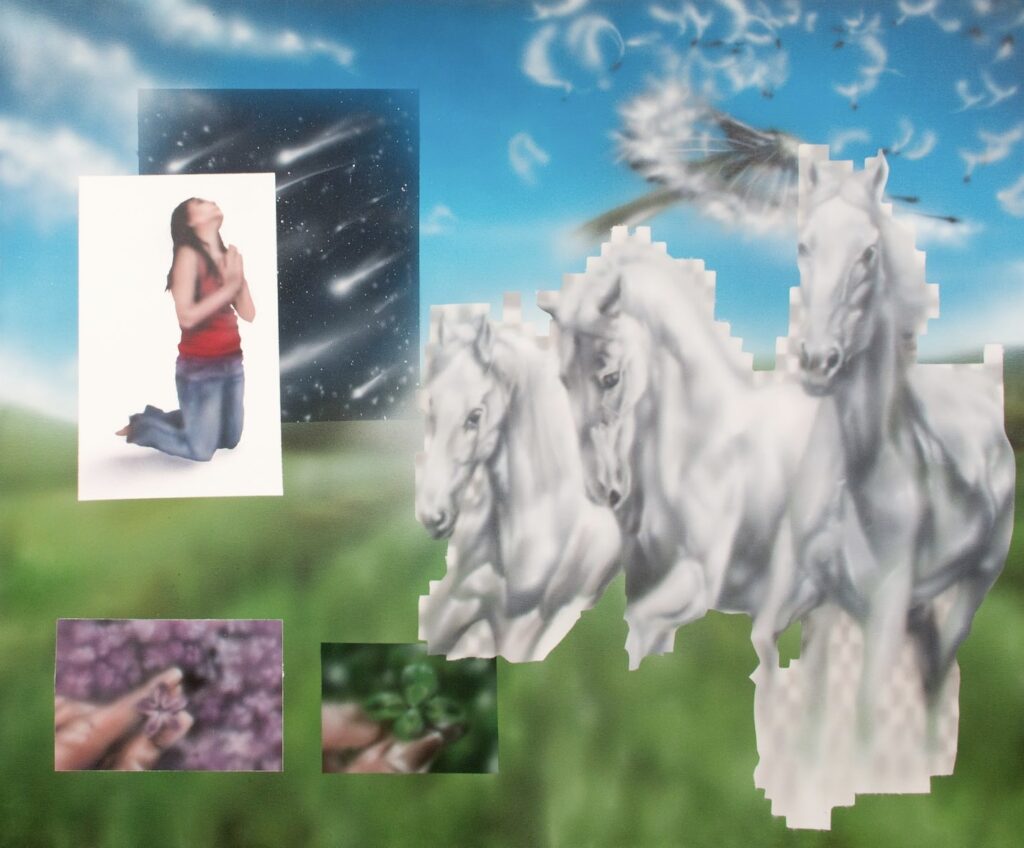
Do you want your paintings to feel familiar to viewers—as if they’ve seen them scrolling—or alien, as if the internet is being shown through new eyes?
Anu: When I use online references in my paintings it could be used as a hint or a guide for the chronically online viewer but at the same time, if I’m using a reference it’s important only because it inspired me to make something in the first place and the rest, the reaction that the paintings will get, is out of my control.
Can you walk me through your creative process from beginning to end result?
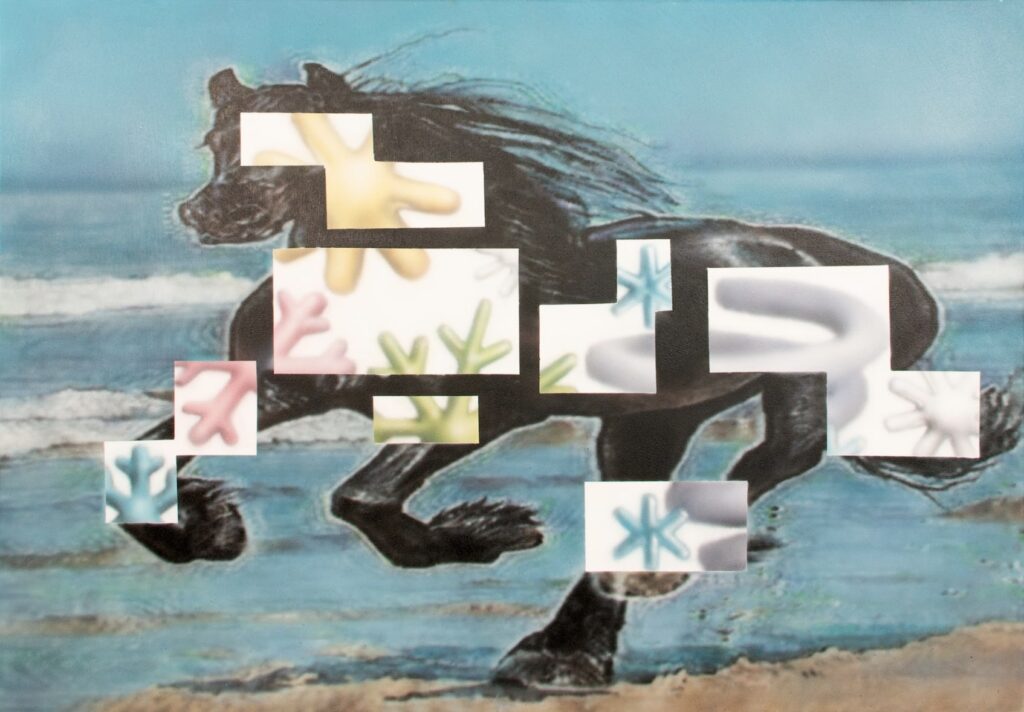
Anu: In case I don’t have a clear vision, my process usually starts when I scroll through my camera roll and come across some screenshot that sticks. I usually start warping it or I save it on photoshop for 5 times to worsen the quality and experiment with different compositions digitally in a collage format, playing around with layout. It gives me more flexibility and a sense of detachment like I’m designing from a distance, which helps before I commit to something physical.
When I move onto the canvas, I use masking tape to block out certain areas, creating those sharp, unnatural edges, like early Photoshop selections. Then I airbrush usually from a distance, to get the blurriness. Gao Hang once described this well, something like, that airbrush, as a medium, can give the most sharp and the most blurry effect at the same time. The technique lets you hold clarity and softness in the same frame depending how the spray is directed.
I try not to over-control the process. I let the paint land however it wants. The unpredictability of imperfections, and uneven textures is what I value the most! It’s the same when I make digital collages. I cut things out carelessly on purpose, leaving rough edges, letting the shape be decided by chance.
Can you also tell me about your use of symbolism?
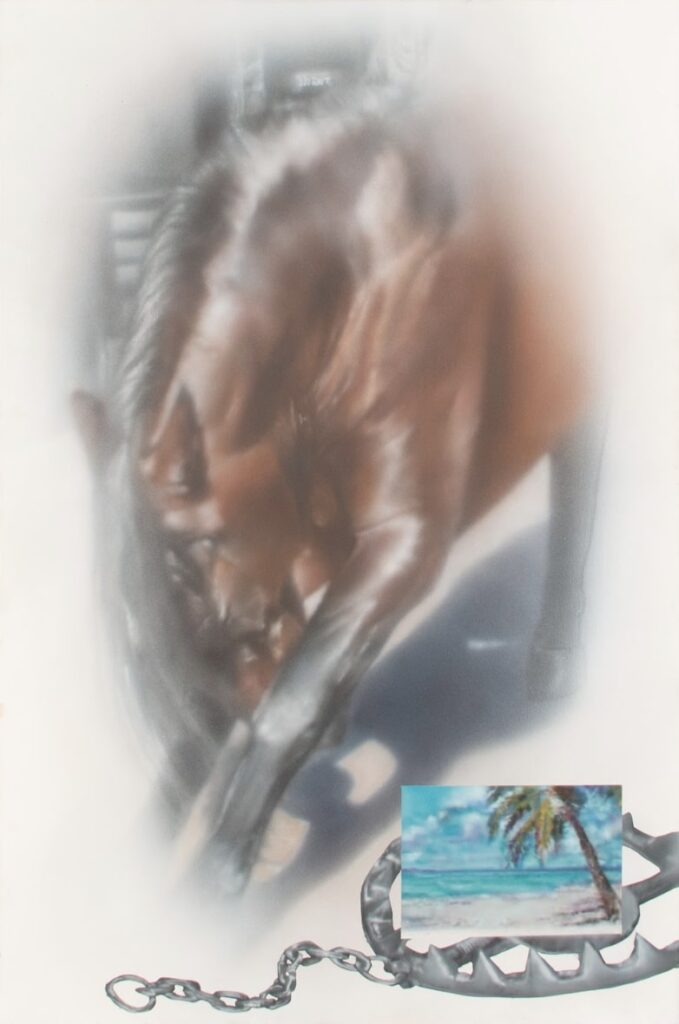
Anu: I’m less interested in fixed symbols and more in how certain images keep resurfacing, both online and in the subconscious. So painting them is like remixing archetypes without realizing it. Most of the time I’m using images or symbols randomly, I try not to overthink it at first. When I begin working with a meme or an image, I make a conscious effort not to make sense why I’m drawn to it. If I try to rationalize it too early, I risk cutting off whatever is surfacing. I’ve found that the images that resonate most are the ones I choose without fully understanding them, where my intuition recognizes it before I can verbally articulate it.
That instinct often leads to the most sincere work, the kind that feels aligned with the inner state or the Self, especially if I don’t see it right away. Later, when I revisit the painting, I can often read it almost like an automatic written diary. The symbols that I used speak directly to how I was feeling or what I was dealing with at the time.
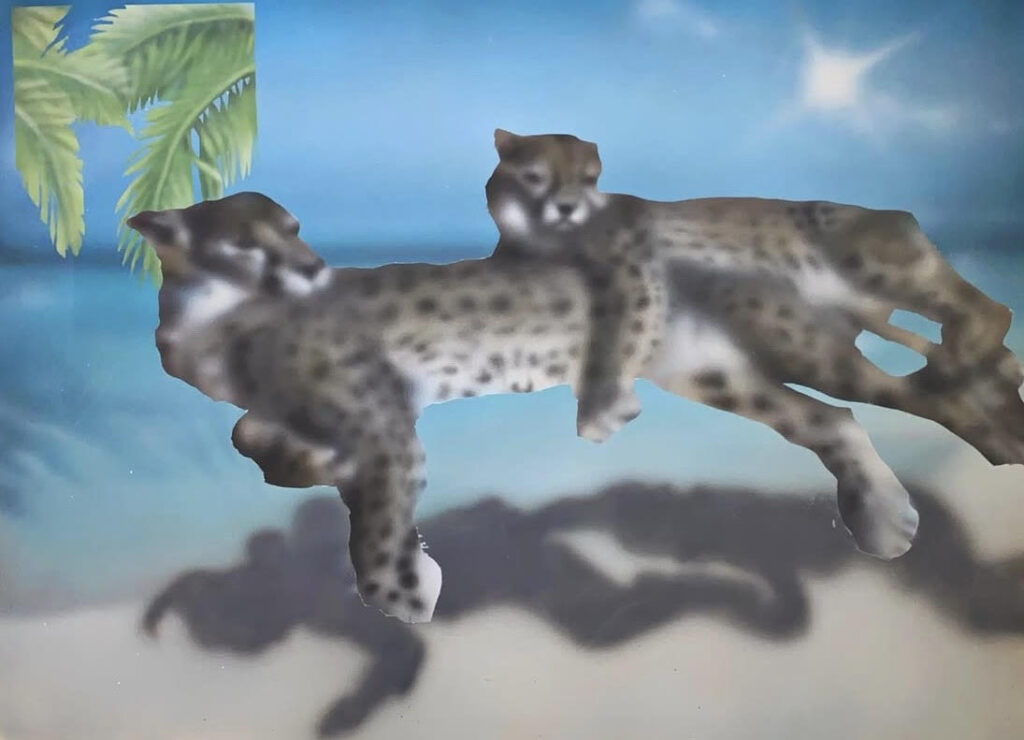
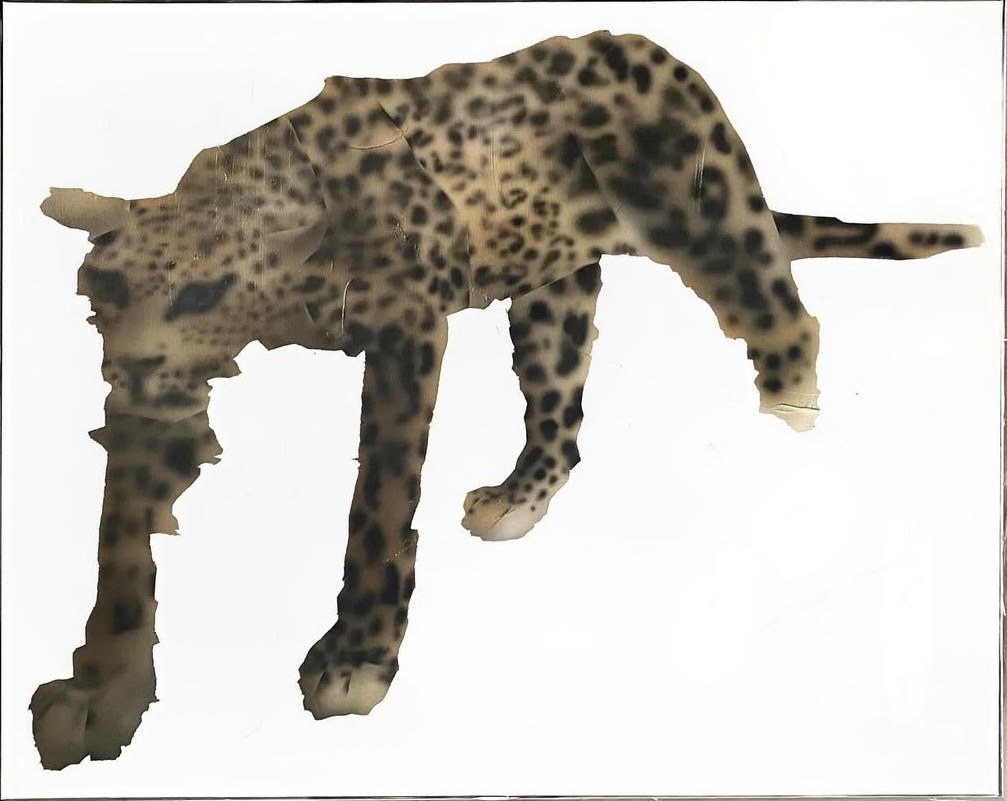
Like my painting “Anima” I had a vision of 2 cheetahs floating that had figures of women as their shadow, started painting it the same night and when it was done I immediately realized that it’s in the most obvious way a direct metaphor to the shadow self concept in Jung’s philosophy. So painting, for me, becomes in some way a retrospective psychoanalysis.
How do you approach color?
Anu: Colors have always existed in a flat hierarchy for me, until recently where I ’ve been using color more intentionally. Colors definitely don’t serve as much symbolic meaning like in medieval art, but I have been working recently with colors to emotional or spiritual states, I’ve started seeing them as layers of the psyche, different shades of consciousness, intuition, or memory. It’s less about aesthetics now and more about mapping emotion.
How do people who are very online respond to your work compared to those who are less immersed in internet culture?
Anu: It’s important to me to go far enough in meaning that even people who don’t recognize the references can still feel something when they see my work. The context might be lost, but the emotion shouldn’t be. I want the images to carry their own charge, to exist separately. And It’s been reflected to me from my tutors or and others, that are not that chronically online.
With that In mind, what are you hoping to convey?
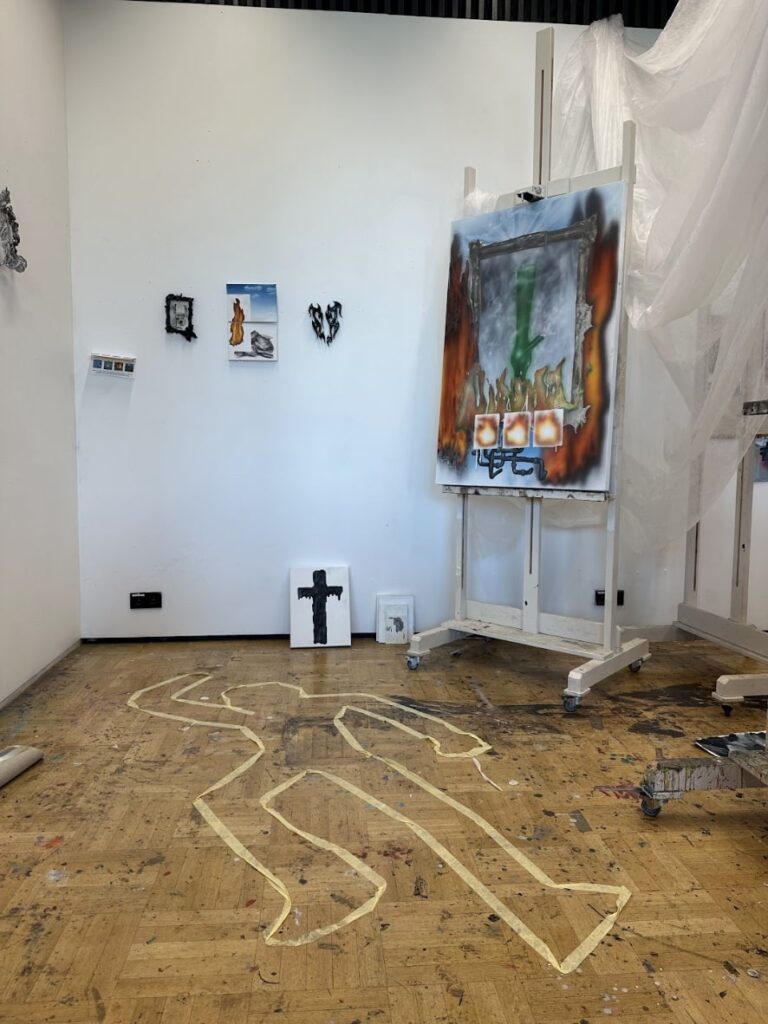
Anu: If I could control it I’d want people to feel the same kind of disorientation or recognition that surrealism once triggered when it first appeared, an eerie mix of something simultaneously familiar and unknown.
That’s similar to what I’m trying to do, in a contemporary context, to hold up a mirror to how it feels to exist inside an endless flow of images and to break through irony, not by rejecting it, but by showing its emotional core.
Ok Anu, now to something totally different. In a parallel universe who would you be? and what would you be doing?
Anu: A florist somewhere in a small village near the Alps.
Outside of art, what’s something you’re obsessed with right now—maybe a hobby, a show, or even a food—that keeps you grounded or inspired?
Anu: I’m currently obsessed with these superficial edits of.hermeticism, alchemy on tiktok when they show various sigils with no apparent context whatsoever, when they would simply show off certain mysterious appearing topics in the hopes of appearing more intelligent than one really is, but by all means this might just be about said imagery and the posts could be just purely aesthetical and habe no supposed deeper meaning. For me this kind of performative intellectualism is so funny in the way that they’re making memes of occultism.
Can you tell me a story about a time when a connection with someone had a big impact on you?
Anu: When I think about impact, it’s always when someone showed skepticism towards me. Like when I was told that I couldn’t choose art as a career, or when one of my professors told me I was too emotional to make art, as if feeling too much disqualified me from expressing it. The friction from this skepticism has been the main force to define myself.
What qualities do you find most important in the people you choose to spend time with?
Anu: I never consciously choose people based on specific characteristics, that would reduce the connection to a kind of narcissism, like surrounding myself with mirrors. But I think my subconscious does it anyway. It recognizes something familiar in them, qualities that already exist in me, just not yet fully integrated. So, the most important qualities I notice in others are often the ones I’m still learning to accept or develop in myself. It’s less about seeking what I lack and more about meeting parts of myself through other people.
Anybody you look up to?
Anu: The person that I could be, my highest potential.
What motivates you?
Haters.
How would you describe a perfect day?
14 hours of painting, no lunch.
Alright Anu, I always ask these two questions at the end of an interview. The first is. What’s your favorite movie(s) and why?
Anu: Probably all of David Lynch’s and Maya Deren’s films. I love how both of them move through logic and dream as if they’re the same. What may seem in their work completely cryptic, fragments that feel like they’ve been pulled out of the subconscious are actually interconnected when analyzing them.
That’s something I really relate to. The symbols that appear without explanation, the moments that feel irrelevant or random, usually end up being the most revealing. It’s like the subconscious KNOWS long before you do, you just have to trust the pattern before you can see it.
The second is. What song(s) are you currently listening to the most right now?
Anu: ‘’Ocean – London Mix’’ by Placid Angels