
Share this
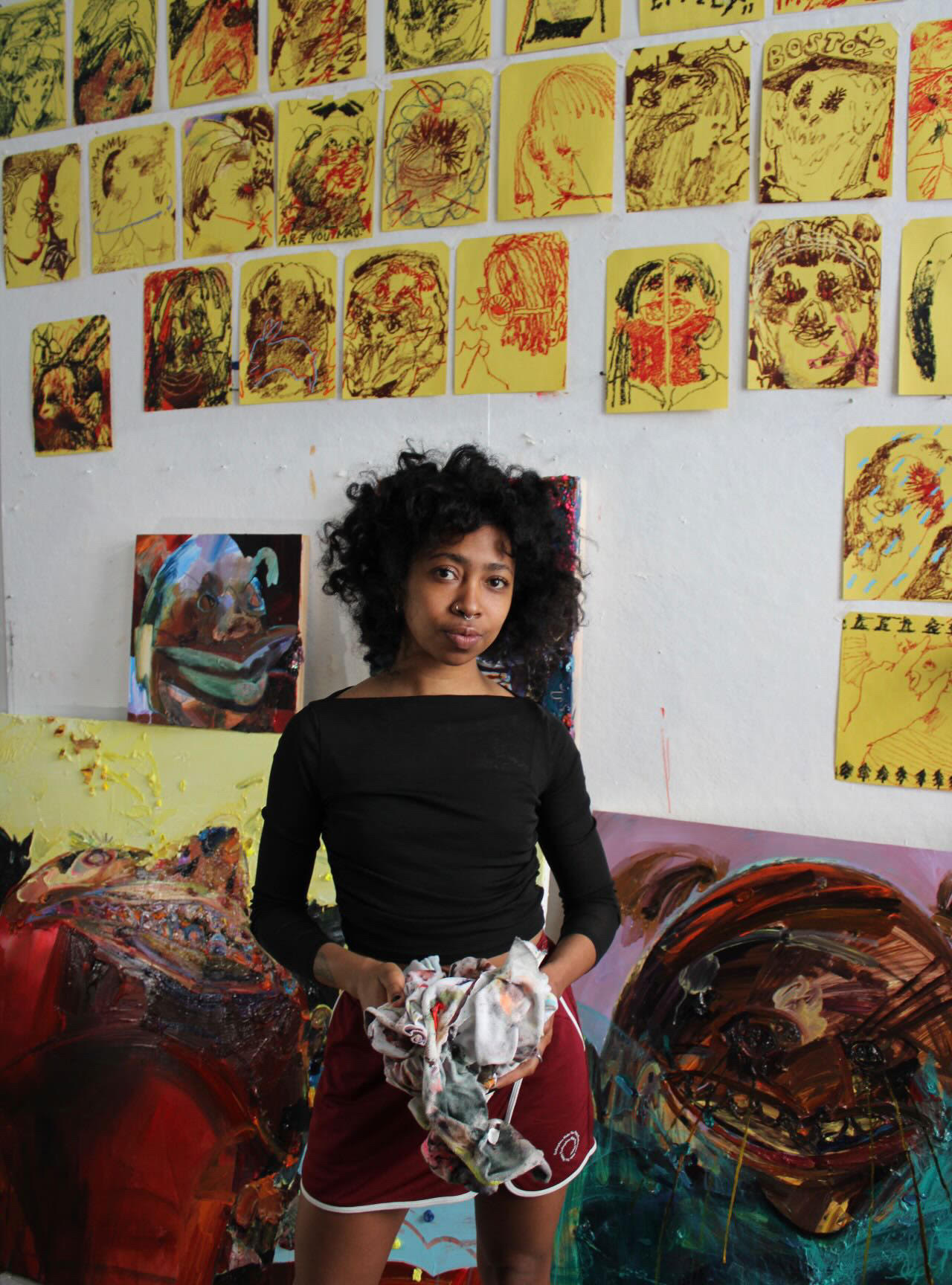
Bianca Fields (b. Cleveland, Ohio 1995) is an artist living and working in Boston, MA. Her work has been showcased in the Armory Show with Steve Turner LA, Ruttkowski;68 Paris, L21 Gallery Spain, Frieze Art Fair London with Carl Freedman Gallery and the Kemper Museum of Art in Kansas City, MO.
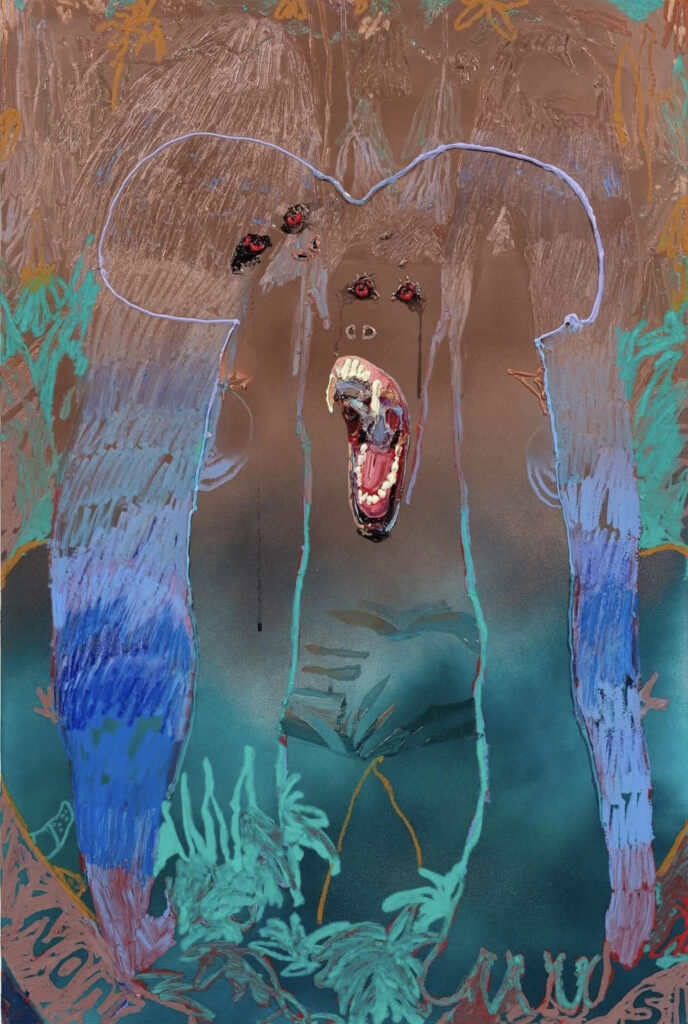
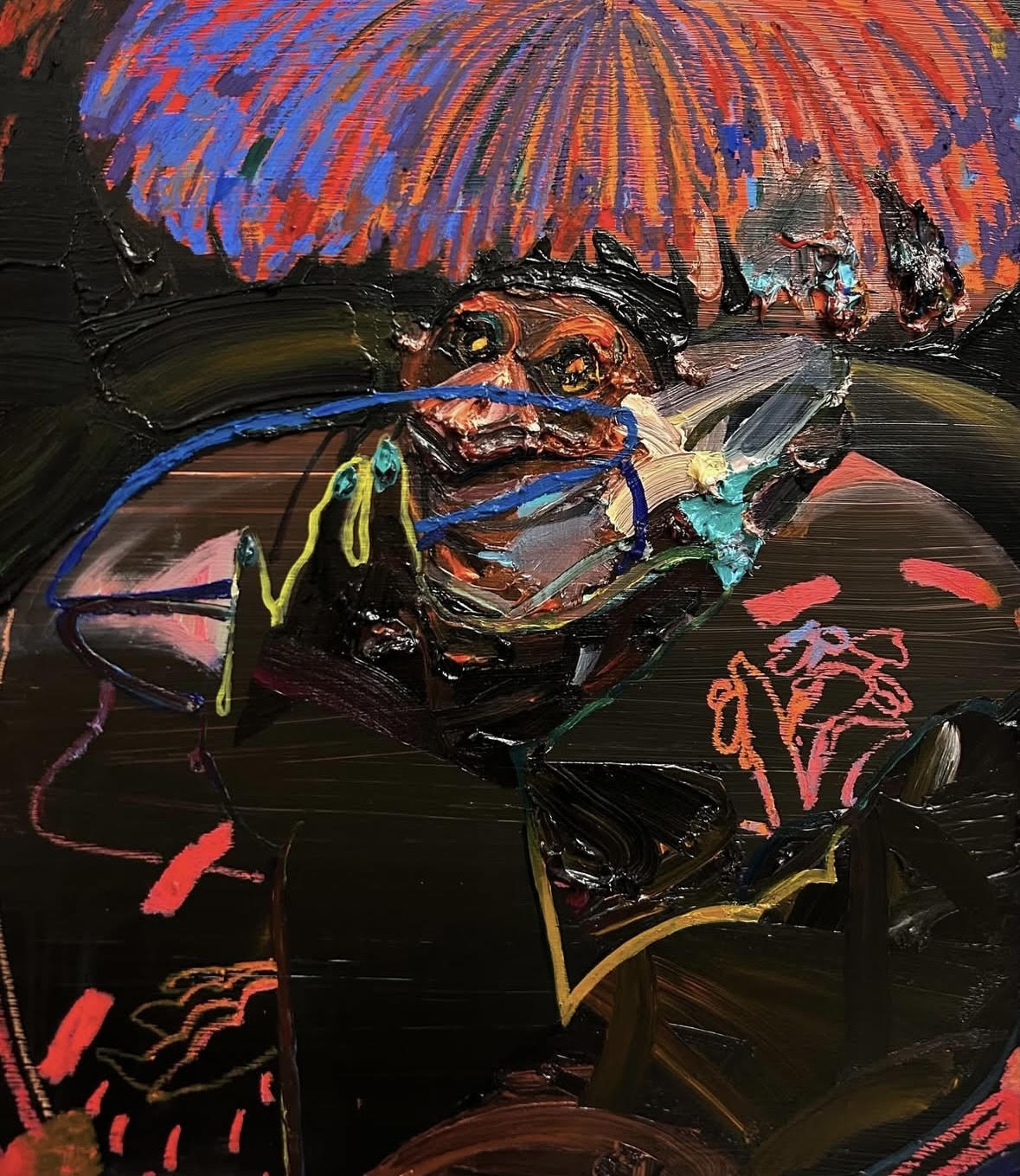
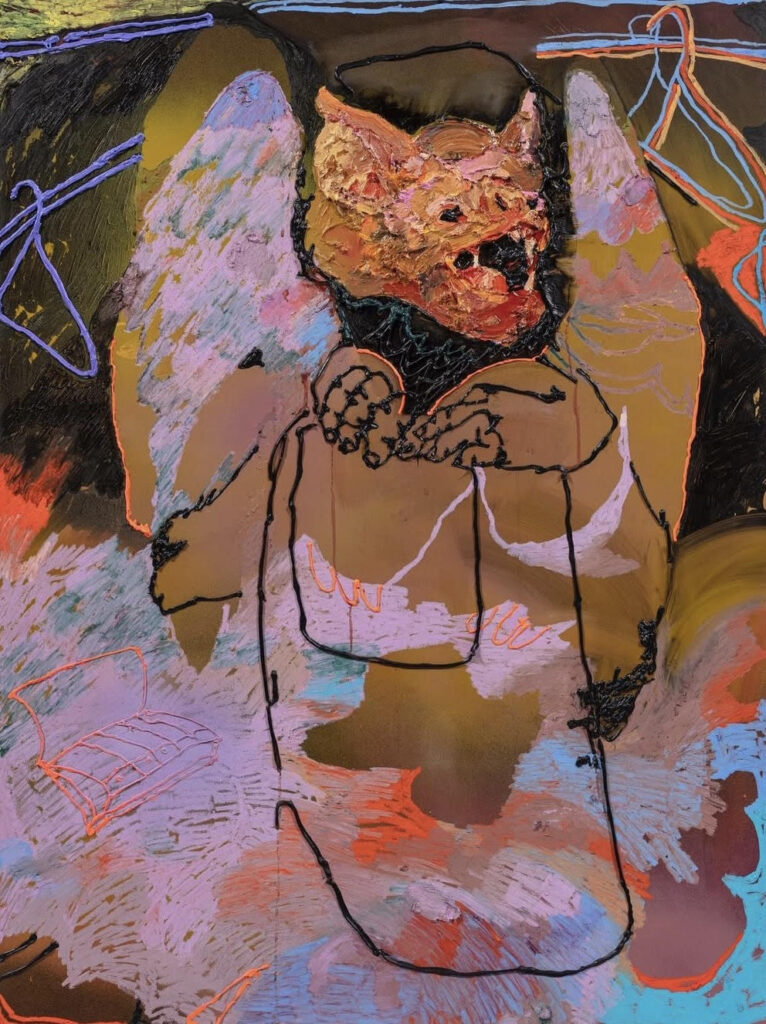
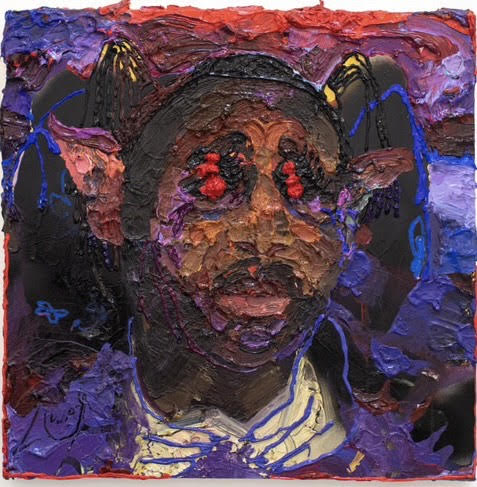
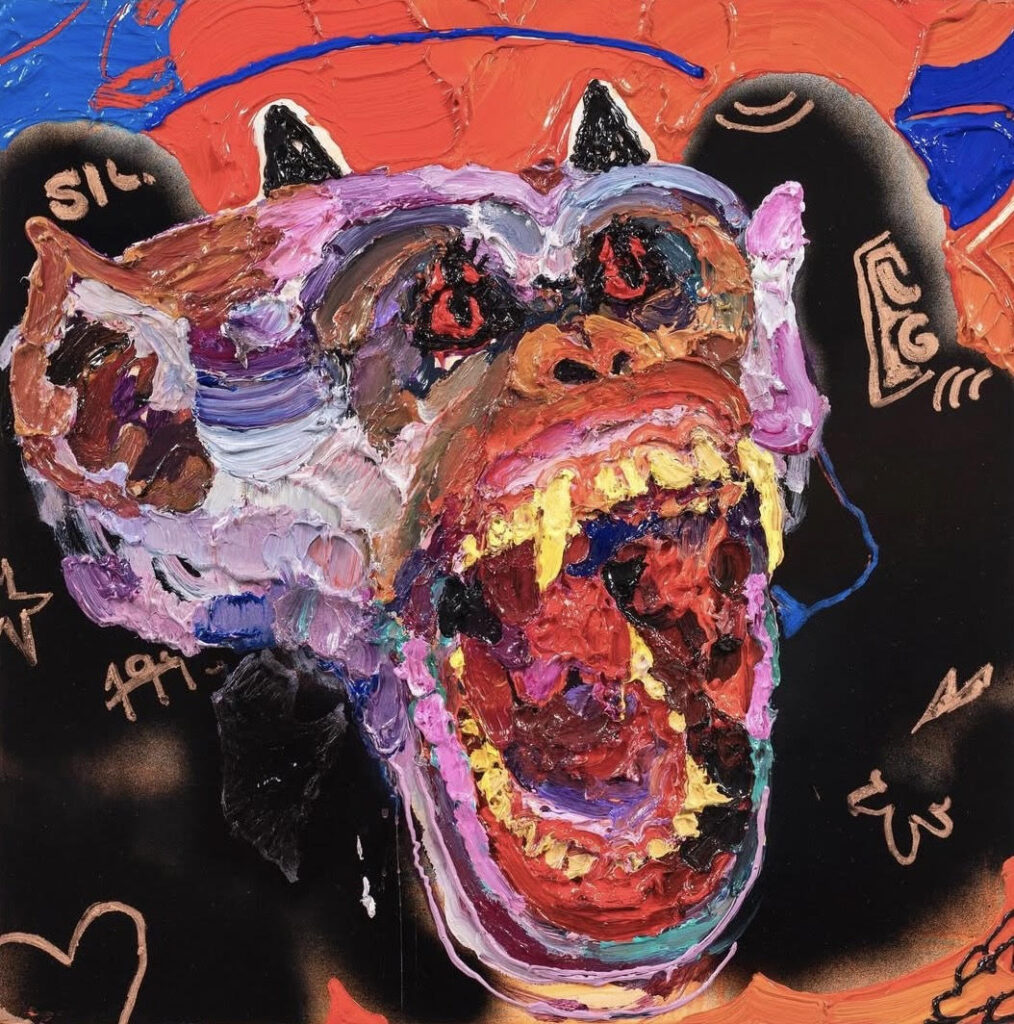
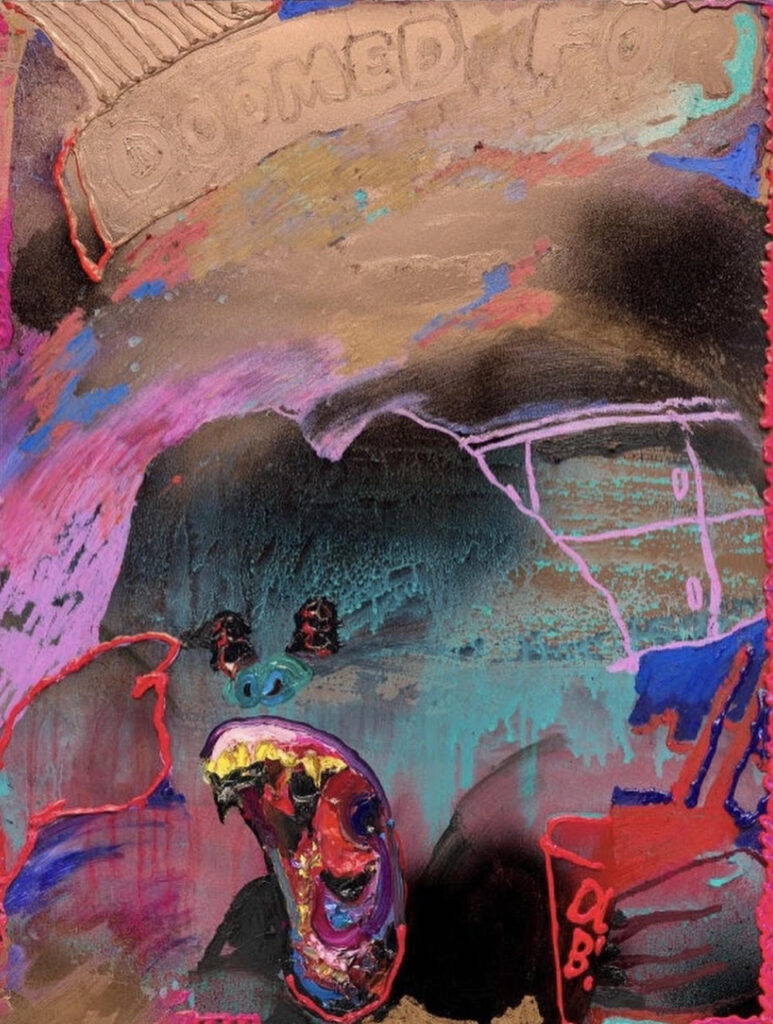
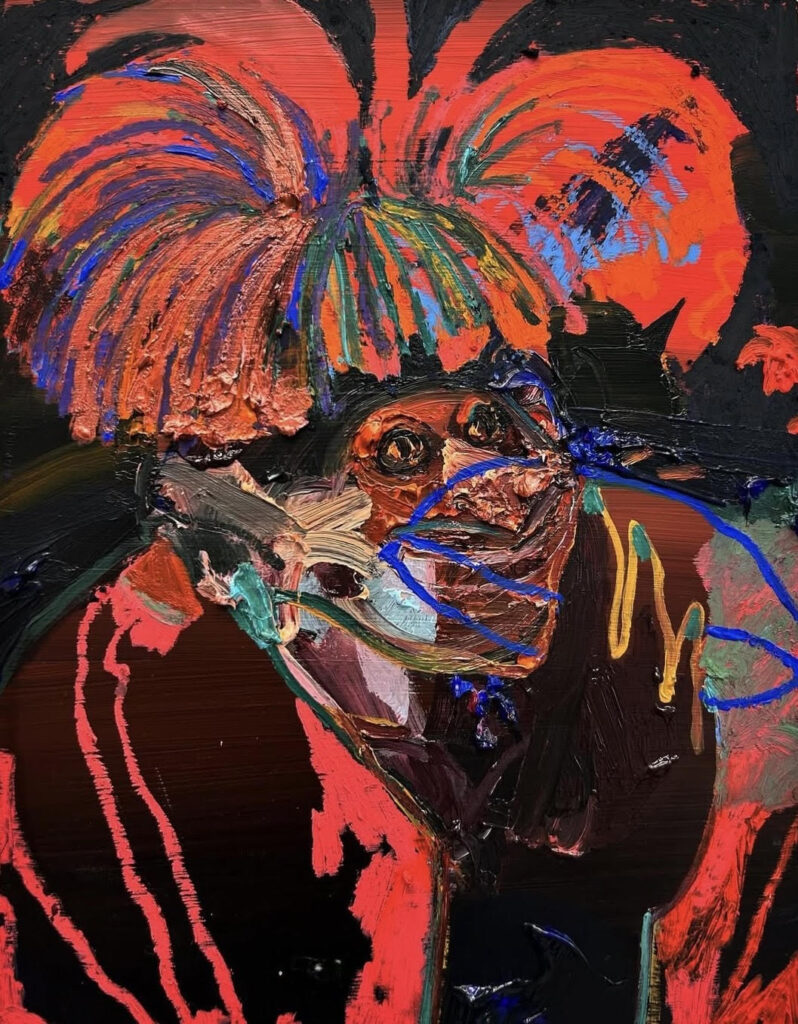
The portraits and figurative painting practice of Bianca Fields manifests a tangible embodiment of repression and mental captivity. She explores this idea with competing forms of archetypes on a slick primed surface, creating a supernatural essence of anguish and isolation. Often in her work, Fields highly renders a candid mix of her vigilant portrayed primates, utilizing her feminized beasts as formidable stand ins for her imagined self. Painting wet-in-wet directly into the mouths of her subjects, she creates allegories of ritual and beauty under the beholding of the misogynoir, seeking to investigate the vicious cycle of emotional truths, abstract sense of self and violence.
Bianca has a show coming up Lamontagne Gallery in Boston, titled “Endships”.
Hi Bianca! It’s a pleasure to sit down with you! First question that I always ask. How does a regular day look like for you in Boston?
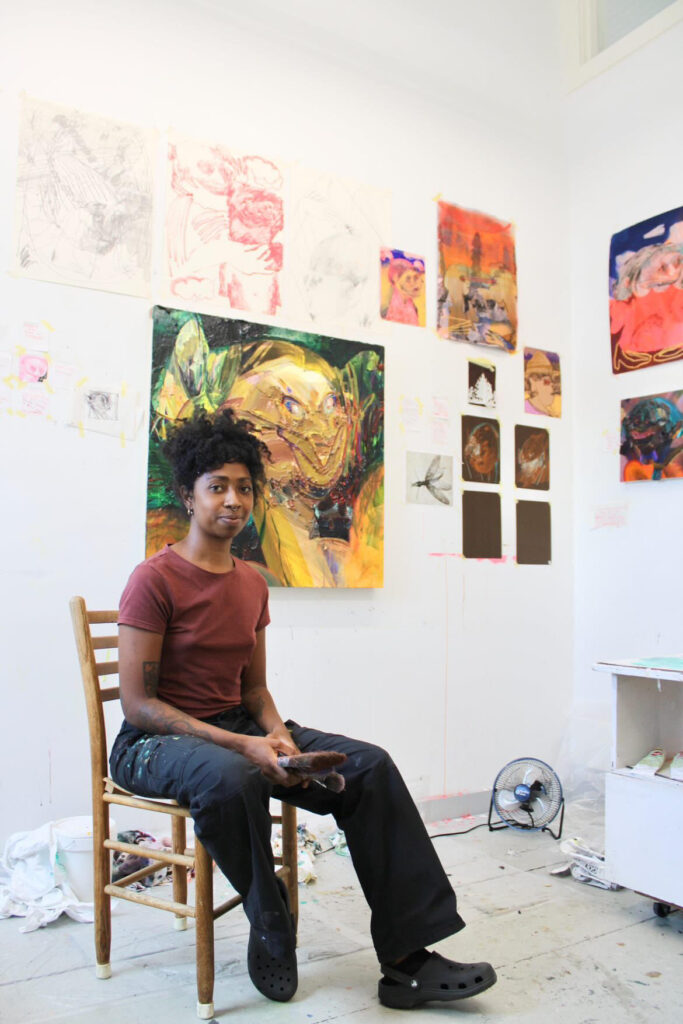
Bianca: Hi Rubén! Happy to be here. Thanks for having me! I’m from Cleveland, OH and currently based in Boston, Massachusetts. I’d consider myself pretty hyperactive. I usually start my days off doing HIIT (high-intensity interval training) workouts to get any pent-up energy out of my system before the day begins. I tend to wake up pretty depressed lol. Other than to sleep or cook, I rarely spend any time at home. After 7am training, I take off to my studio. It’s about a 10 minute walk from training to the studio. I usually pack a lunch, and work away until I head home for dinner at around 6pm. I try my best in following a plant based diet, so I usually have food prepared at home waiting for me.
I’m curious, growing up what kind of kid were you? What did you enjoy doing, and how did you spend your time?
Bianca: A classic triple Sagittarius, i guess. I would have considered baby Bianca generally extroverted but innately curious, which resulted in my appearance looking a bit unkept, I suppose. Sort of a mercurial waver between being whimsical and playful but also kinda bossy, I don’t know lol. I also experimented a lot with my environment and myself as well. I really liked spearheading some sort of idea that exerted some level of ingenuity and play. I liked to problem solve, but also enjoyed being a baby — for as long as I could be a baby. I liked going swimming, playing in the dirt, honestly game for anything that involved company or having a friend. My grandma was one of my closest friends to hangout with and simultaneously drag along in whatever highly anticipated odyssey I was envisioning for the day.
So when did you start painting, and when did you start taking being an artist seriously?
Bianca: I started painting in highschool. Painting still feels fairly new to me. I didn’t know for a while if I was ever going to commit to anything after highschool, but once i started up in school for painting, I’d realized in hindsight that I was misjudging something super important in my life the entire time. I started to approach my creative pursuits more earnestly. I think people often forget that when you sign up for school, the partial incentive is to be able to pay your loans back from your focus of study. I also just saw it as an opportunity. I genuinely tried to shape up my stuff. I wasn’t necessarily aiming for any sort of prosperity in the end, rather understanding what it meant to naturally align with my communities and to prioritize the development of my work. Don’t get me wrong, I’m still kissing a lot of frogs in the process, lol.
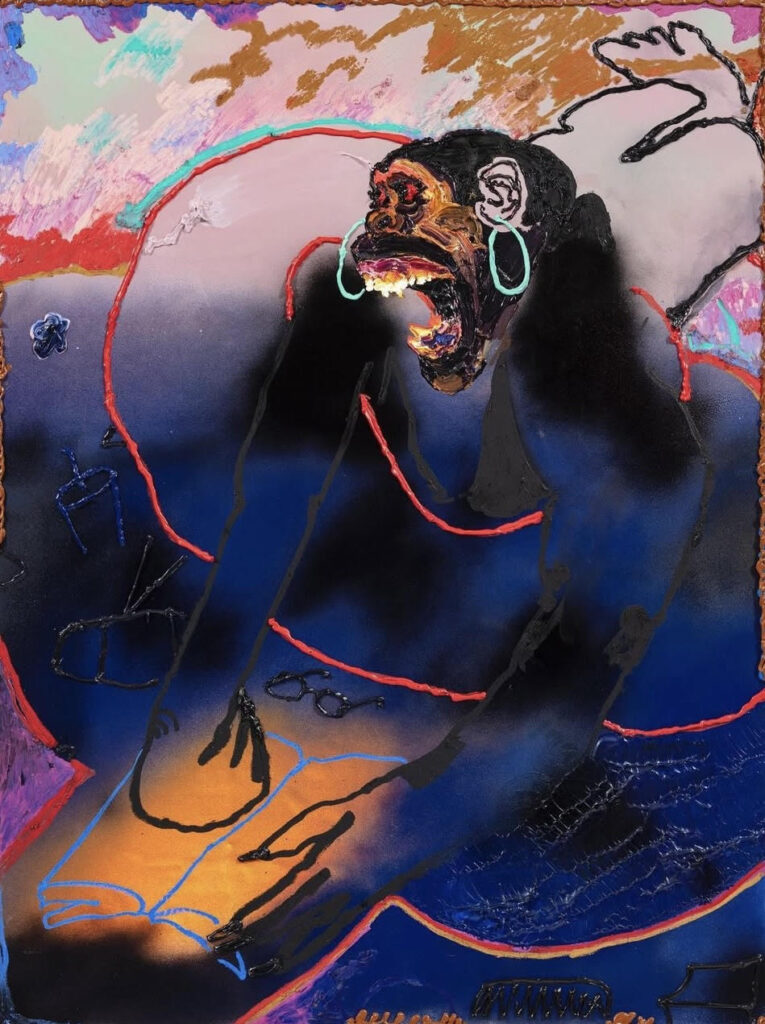
Ok Bianca, with these next series of questions, I will try to delve into your work as best as possible. So, your work often features primates as central figures. What initially drew you to this subject matter, and how has your relationship with these figures evolved over time?
Bianca: It all started off with images. I found myself having a very short lived moment appreciating the tangibility of magazines, most commonly in National Geographic. I was def white knuckling my way through visually digesting any image of a primate. I never really found species of the Old World Monkey genera to be endearing, if anything sort of naive and volatile. I started thinking about middle age era drolleries and their figurative nature, their construction, function and how the means to their intended design was to exist within the margins of illuminated text. I started to apply this idea to my subject, viewing my chimera’s in a more tangential way, and at that point I was inspired to explore the creation of my own entity. I found the intermix of primates and the femme to to sort of intrinsically and aggressively show up in my work. I liked the idea of a peripheral, but fearless character. An entity that is visible — but in essence being a more simplified, or reduced version of itself. This resulted in a figurative body of work that had more of a distorted visual language.
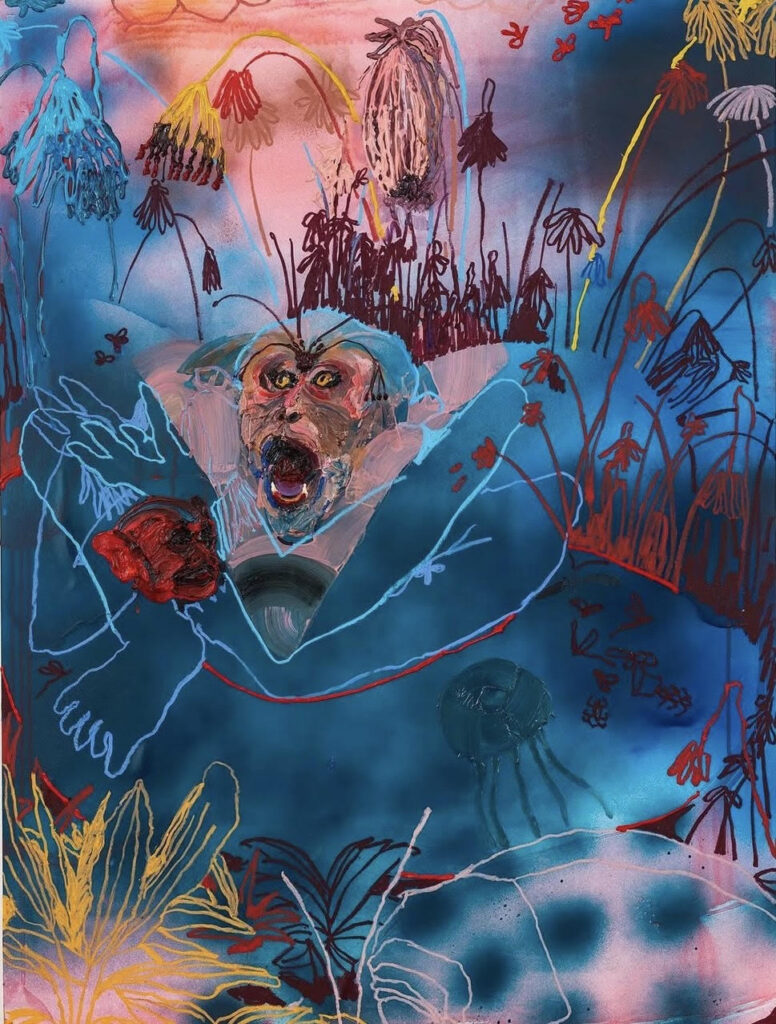
You describe your paintings as embodying “repression and mental captivity.” Can you elaborate on how these themes manifest in your work, both visually and emotionally?
Bianca: Sometimes I like to think of my works as murmurs as opposed to being spelled out. I think the reductive and simplified quality of my illustrations translate very well as paintings. The medium clearly lends itself to functioning as some sort of force field. I am searching for characteristics in the forms that allow the work to breathe. I’ve also been thinking a lot about safety and ruminating on this idea in a much larger societal context. The work is about finding visibility but places to also settle in. There is nothing graceful in the self integration process and doing the shadow work; exploring the unacknowledged parts. The works aren’t about obscuring or obliterating but finding renewal in the transformative process. I like the saying Specificity is always interacting with emptiness.
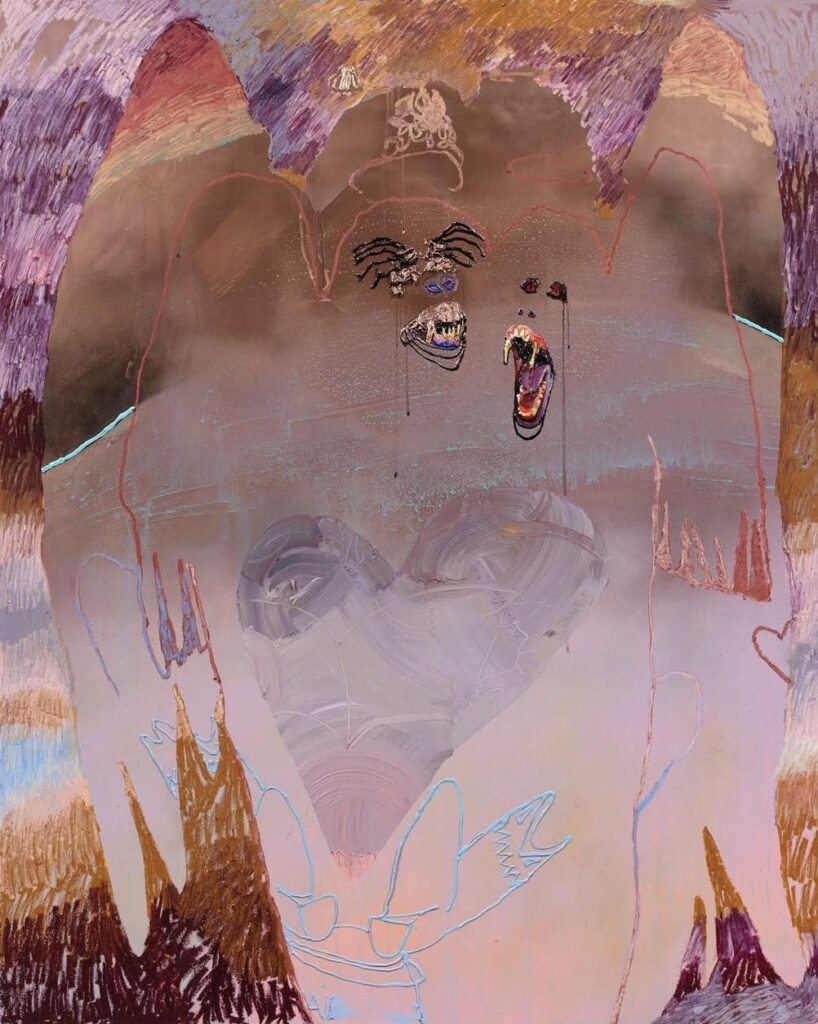
Do you find painting to be an act of catharsis, confrontation, or something else entirely?
Bianca: I still see abstraction as the politic of refusal. Painting for me is about striving for a sense of belonging in my identity. I believe that situating oneself in a place of belonging and safety/understanding — requires confrontation. Whether that be through confronting standards of behavior or perhaps the more intimate ways of accepting oneself and others. Painting is the ultimate catharsis for me. I feel like I am coming up for air when I am painting.
Does the physicality of paint itself—its texture, movement, or layering—play a role in this. idea of externalizing intimate emotions?
Bianca: Yes, I often think about the interior and how it is being materialized into the exterior world. Like social media. Parasocial relationships and preferences being heavily reliant on a sense of acceptance, intimacy and relatability. I am also thinking about gut instinct and how it is fundamentally an external response. It’s also just an opportunity to part ways with something that could be considered unsafe. I think about this in the context of the Lacanian term, Extimacy, being that our most intimate feelings can be externalized onto objects or others while still remaining deeply personal. Extimacy comes to mind especially when thinking about placement: where the more tactile, high rendered moments exist in my paintings — as opposed to conceptually, the more omnipresent qualities that may be felt, but not entirely distinguishable. I always come back to the portrait. The honest portrait in my work is located in the mouths of my subjects; the mouths being an unresolved, moist atmosphere that has no obvious form, no real understanding of its interior, but produces language. I also like to think a lot about thickness and flatness in my work. I view flatness in my work as being reductive and thickness as a more complex, surveilling and self aware entity. Especially in the context of shaping how us female painters are understanding ourselves. I think to be a female painter it is nearly impossible to depict rage or aggression without factoring some level of gendered societal oppression. There is ambiguity and obliteration in the way I depict, but emotionally I want clarification and reassurance.
You have a solo show coming up in May, at Lamontagne Gallery in Boston, titled “Endships”. What’s the story behind the title?
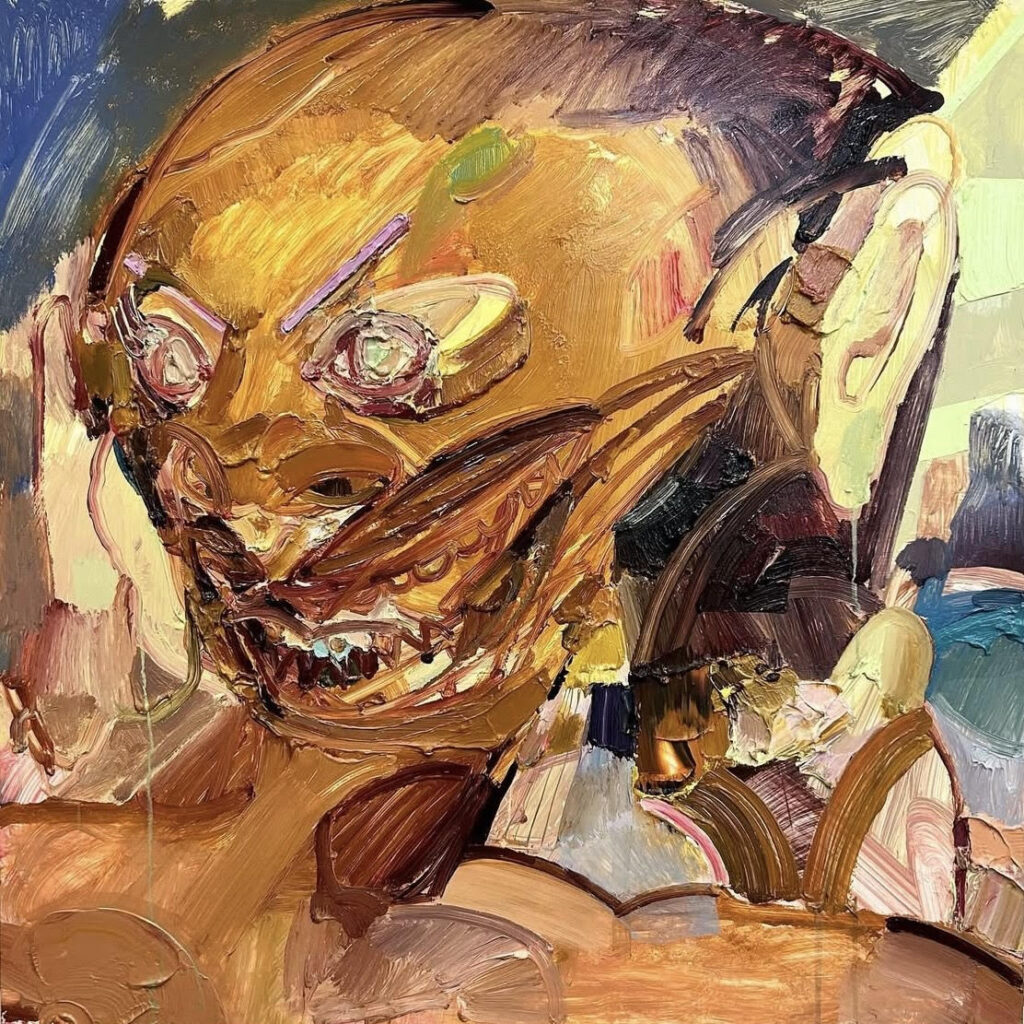
Bianca: Endships came to me last fall. I trimmed the title down from friendships — and it just felt like sort of a dramatic euphemism for some things I’ve been sorting out in my life. I figured the word had already existed. It really doesn’t exist other than on Minecraft which is pretty cool, I like the idea of heartbreak being conjured up or simulated in a dark, endless void within a pixelated universe. The show is about love vs. aggression, and the subservient-natured person that is born out of this disharmony. I’m in a crude modifying stage with my subject matter. I’ve been thinking a lot about the history of caricatures and this commentary it has on moral failure within the character. The figures that I am currently working with are not graceful, and do not strive for perfection.I’m working on the show now and it’s been a thorny little voyage, but also kind of humbling and insightful. It feels like exfoliation or a detox of some sort.
And what was your inspiration behind these new bodies of work?
I’m currently reading Moby-Dick as I am preparing for my solo show 🙂
While we’re on the topic. Did you do any form of specific research these new works?
Bianca: I just recently had an interesting conversation with a friend of mine, as we were both doing a similar thread of research together in terms of thinking about the way docility was used in the classification of primates, and how this became widely circulated in a controversial yet normalized system of oppression. The conception and control of the animal would be based on their readiness or aggressiveness or lack thereof. Some of the early developments in science, such as the microscope in the early 1500s or something, played a part in the Enlightenment period. It was interesting thinking about these tools and how they were used for breaking down features into fragments and examining them. We were both interested in taking a closer look into the much thicker, psychic impact of this type of research. This had me thinking about the representation of the grotesque or abject in my work, and the monster embodying some level of violent resistance.
With that in mind, can you walk me through your creative process from beginning to end result?
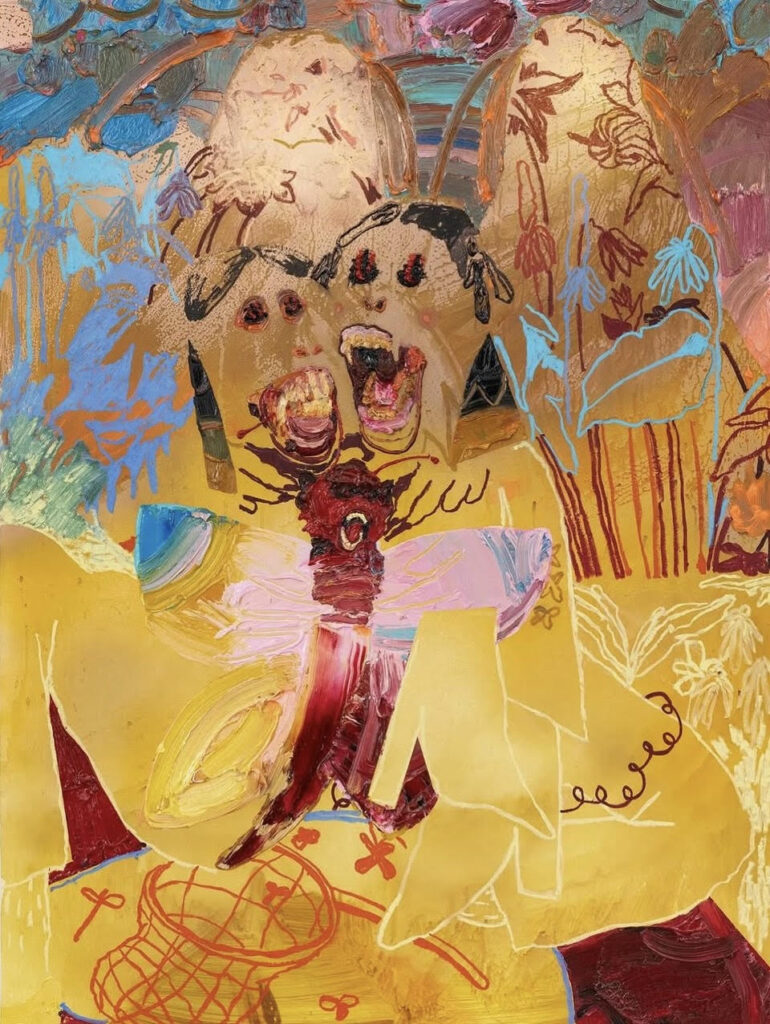
Bianca: I work on yupo paper mounted on a panel, if I get my hands on a canvas that maybe a friend gave to me, I’ll apply about ten to fifteen layers of gesso. Sometimes, even more. Thin application for a super slick surface. As I start building up the surface and adding layers of paint; thin to extremely thick, a hierarchy of forms seems to become more apparent. There’s some fussiness in the beginning stages, but once my figure is refined, it takes on a more geometric form. It feels almost as if the forms are battling against one another for cohesion. It takes me about a week to complete a painting. If I spend too much time away, I have to just tell myself that the painting just won’t work — meaning that I’ll have to start all over, and that involves painting over the initial unfinished work. I’ve found at times that this can actually be a super exciting or even an integral part of the process.
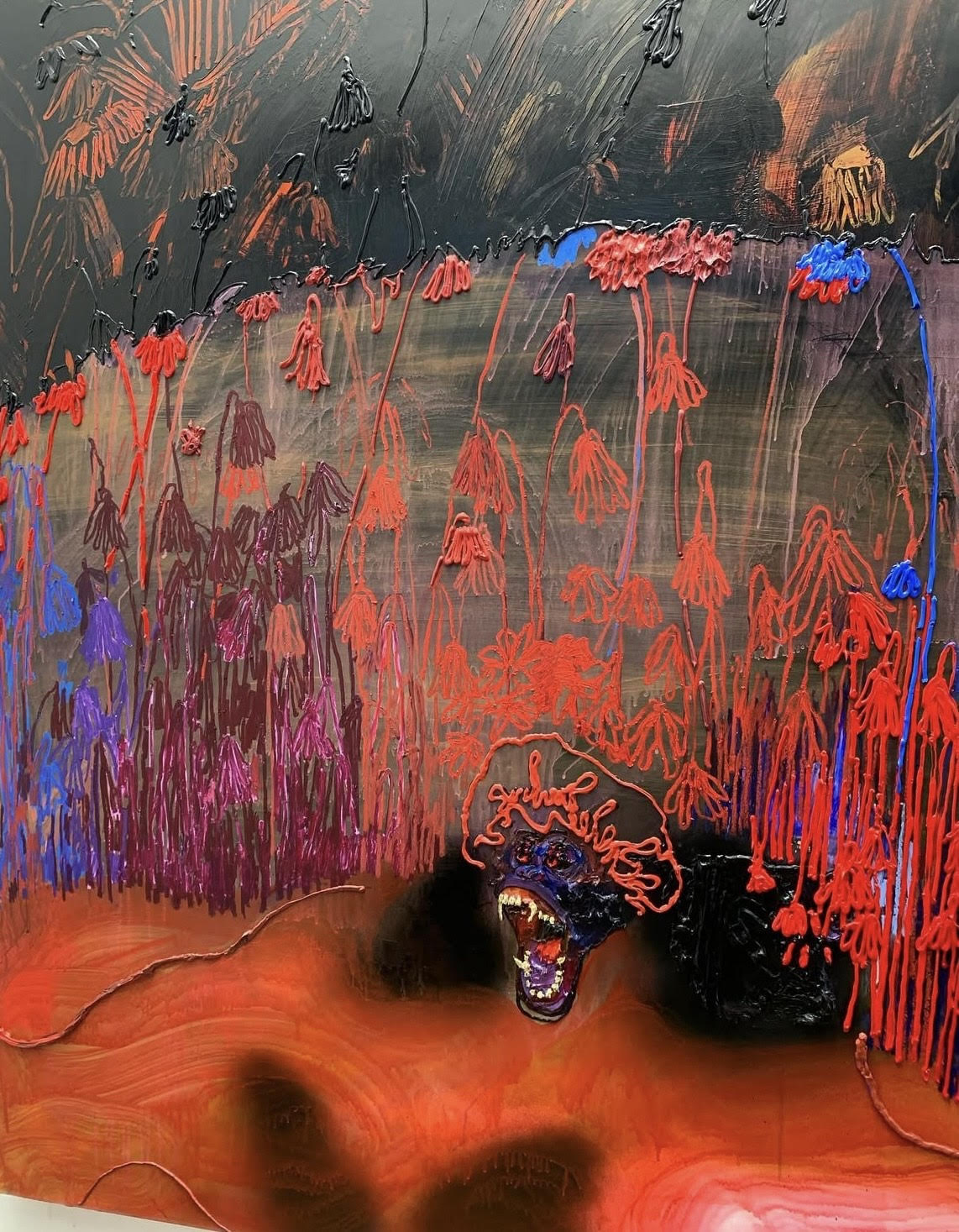
Your use of color is bold and highly expressive. How do you approach color?
Bianca: I love mixing and moving color. I could really mix all day. I don’t settle on one singular color, I tend to process color in a more transient way, almost like moving images. I think I’m much more interested in the color’s potential, in what it could materialize into. I even enjoy the different frequencies of colors based on their proximity. I feel like I’m constantly trying to evoke depth and dark hues through vividness. While working on the painting, I am subconsciously asking myself: how can I get this to evoke the symbolism or feeling of the color black — with these yellows, pinks and cobalt blues? I try and allow each work to sing the way that they want to sing. I will also often ask myself, if I entered this work, what would it sound like? I’m usually striving for something that is starkly silent. If you are only seeing my paintings as images on social media, they may appear as an almost catastrophic ceremony of vibrant color and harmony, but I think in reality they are much more cumbersome and weighed down with putrid hues, to a palpable degree. They’re just dirtier in person. I love to see that people still appreciate art and are indulging in conversations or reactions to color in a way that is impassive and participatory. I’ve been looking at artists Ed Clark, February James and Margot Bergman. I like their usage of color.
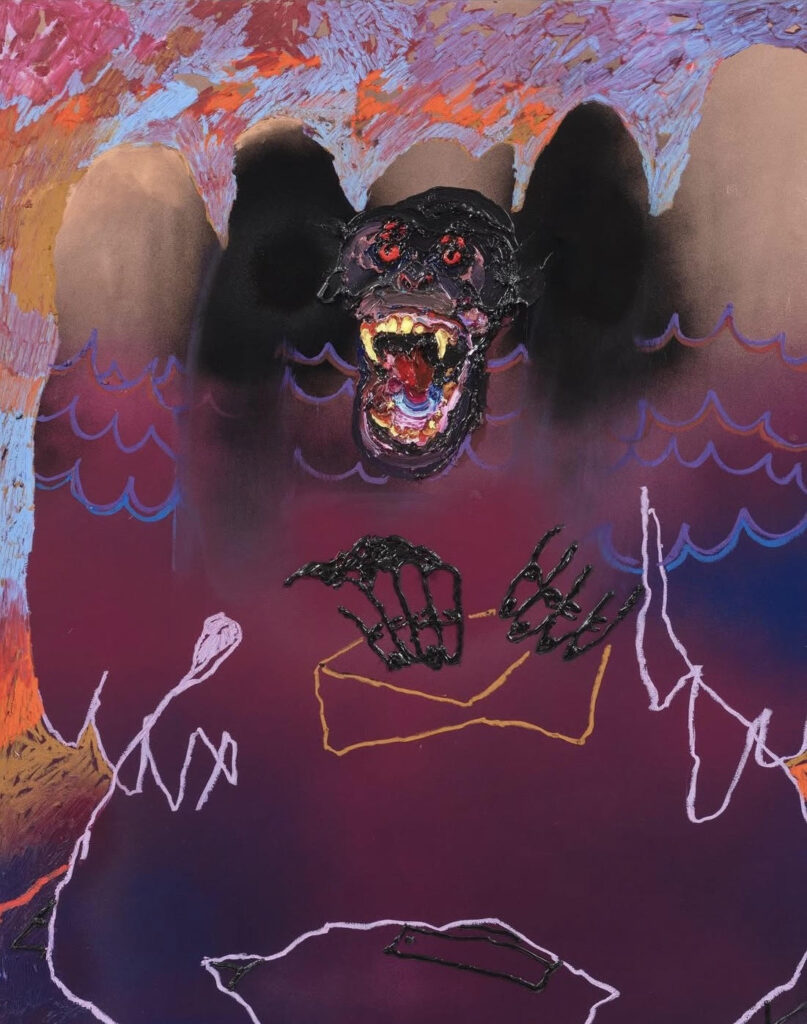
So with what we just talked about, what are you hoping to convey?
Bianca: I am constantly finding ways to invite my viewer to move forward and back — physically and mentally throughout history and situating themselves back into the present. These new works want the viewers to take their time and move at their own pace, just as my figures do. There is a dominating orientation in which my figures are situated and their fragmentation is visible. This work is about fearlessly pointing oneself in a direction and exploring all the possibilities of change and transformation in the process. Shedding skin. Who has the time to prioritize how they’re being seen in a world that is being reshaped by fire?
Ok Bianca, now to something totally different. In a parallel universe who would you be? and what would you be doing?
Bianca: It might just be my angst to sail my way out of New England, but I’d probably be a livea board and let my freak flag fly as a full time cruiser. Lean into the marina lifestyle.
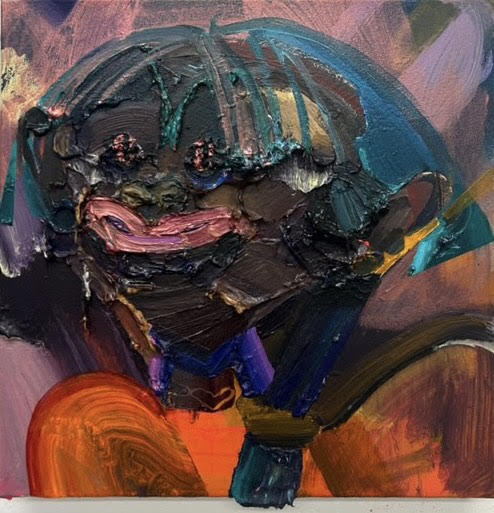
Can you tell me a story about a time when a connection with someone had a big impact on you?
Bianca: This is a hard one because I tend to do a lot of residencies and have met some truly cool people, especially last year in 2024. Katherine Bernhardt is an artist that I had been looking at throughout college, and it was awesome to connect with her while I lived in Kansas City. She gave me my first solo and it was so cool. Her work is pretty insane to see in person, I’m obviously a fan. I also just deeply admire how sort of pragmatic she is about goal setting. She’s also just a very cool person and reminds me a lot of my family. There’s def an intrinsic kinship in the midwestern bond.
What qualities do you find most important in the people you choose to spend time with?
Bianca: Individuality, curiosity, sense of humor, an openness but maybe still slightly judgemental?, capable of being loved.
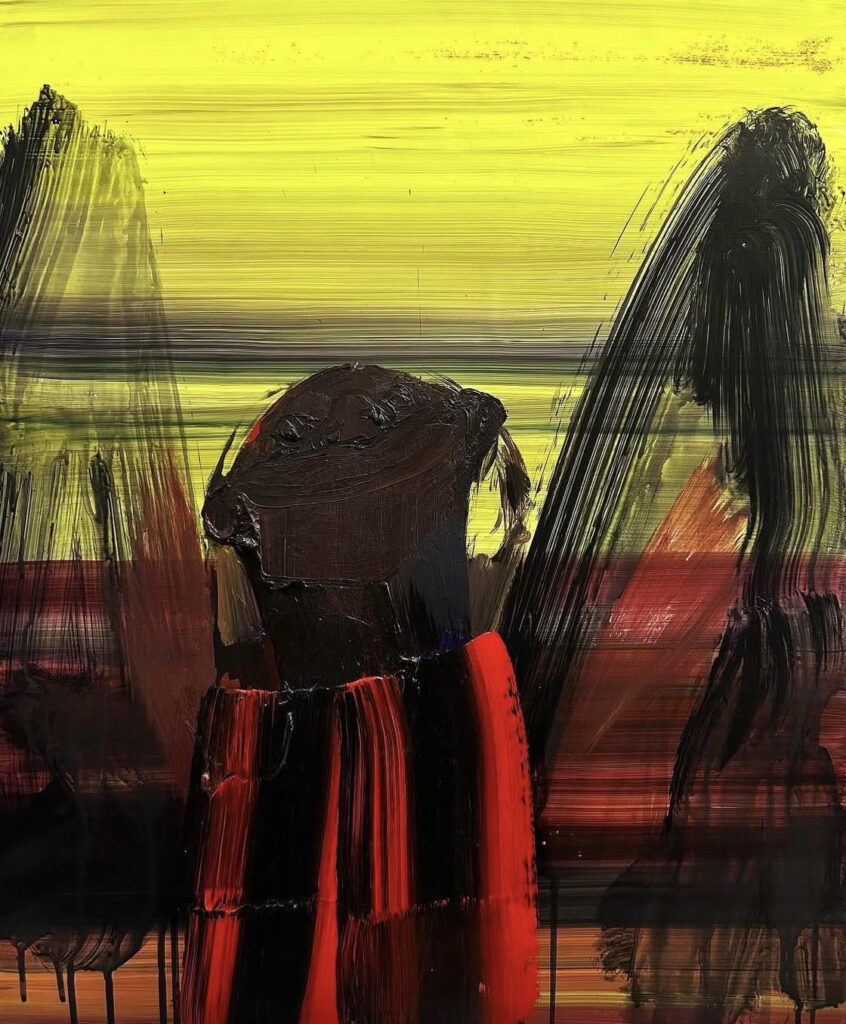
Anybody you look up to?
Bianca: All the women who have raised me.
What motivates you?
Bianca: Music motivates me a lot. I make a lot of demos. I don’t have much time to get into it the way that I once did, but it’s an honest part of me. I think only the friends of mine who’ve stuck around for a long time get the gist of what I’m striving for in my sound-based work. It’s probably the only mysterious thing about me. I sometimes also like to think of sound as a way that prolongs the experience of my paintings.
How would you describe a perfect day?
Bianca: Whenever I think about perfection I think a lot about memory, actually. I don’t know how to get into this without it sounding a bit melancholic, but it has me thinking about how memories are made. Generally, memory is quite a complex process to work through; as we project onto our future experiences, and perhaps even our past experiences with the expectation of it being painstakingly unforgettable. As writer Annie Ernaux says, Like sexual desire, memory never stops. It pairs the dead with the living, real with imaginary beings, dreams with history.Maybe a day where I’m not in much communication with anyone, even if that perfect day is being spent with someone. All the floating conversational tabs that I may have open with people on the internet or through text are closed. no pressure to banter or speak. Going swimming in the ocean is an easy one. Being a sea otter. A day where I still feel a pulse within my environment, but giving myself permission to exist in a way that feels unseen and hidden. I like to feel entirely blanketed in my surroundings and safe. It doesn’t necessarily have to be a beautiful day, but a moment where i’m not overanalyzing whether the heck i’m biding or wasting my time.
Alright Bianca, I always ask these two questions at the end of an interview. The first is. What’s your favorite movie(s) and why?
Bianca: umm, it tends to fluctuate but I guess right now the Florida Project, I love Willem Dafoe. I relate to the movie a lot, it’s about the power and respect of imagination, it makes me cry.
The second is. What song(s) are you currently listening to the most right now?
Bianca: This will be a long answer lol. Come to your Senses by the artist Panda Bear. I’ve been a big fan of Panda Bear for almost a decade, but a good friend recently played this song in their car while driving me around. I love mantras in songs. Funny enough the song is about comparing the way animals and the instinctual nature that they embody, deal with situations — with how humans get lost in their own minds and emotional baggage. I thought to myself, very apropos lol. I dance while working sometimes, so I like this song to start off a studio day every once in a while. I also just love me some ambient dub music, i’ve been listening to this track called The Earth Did a Line by Kallista Kult.