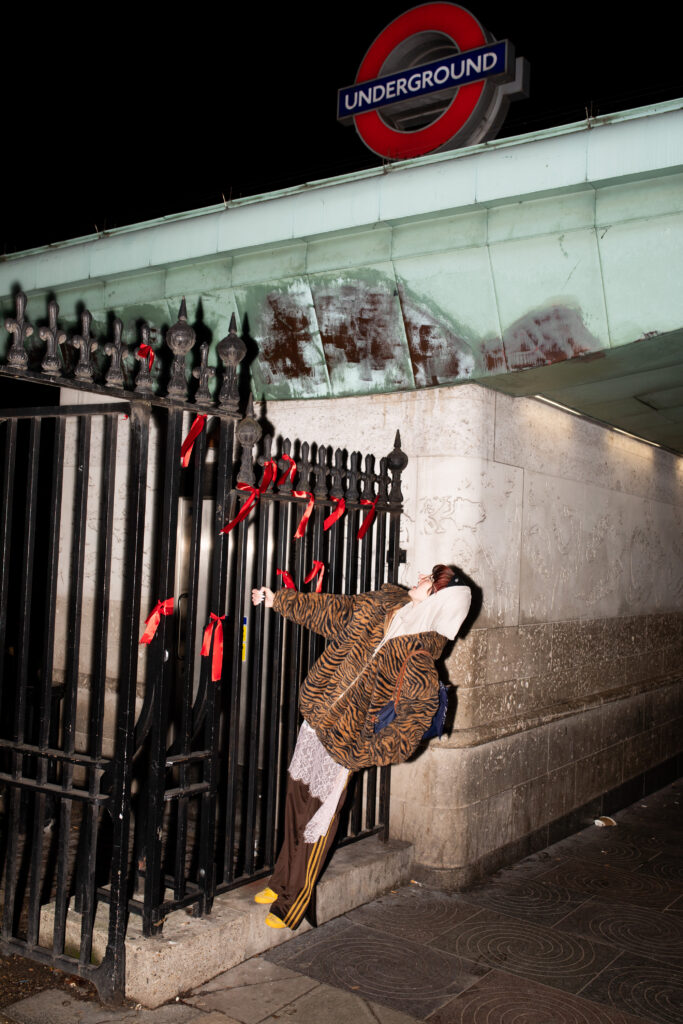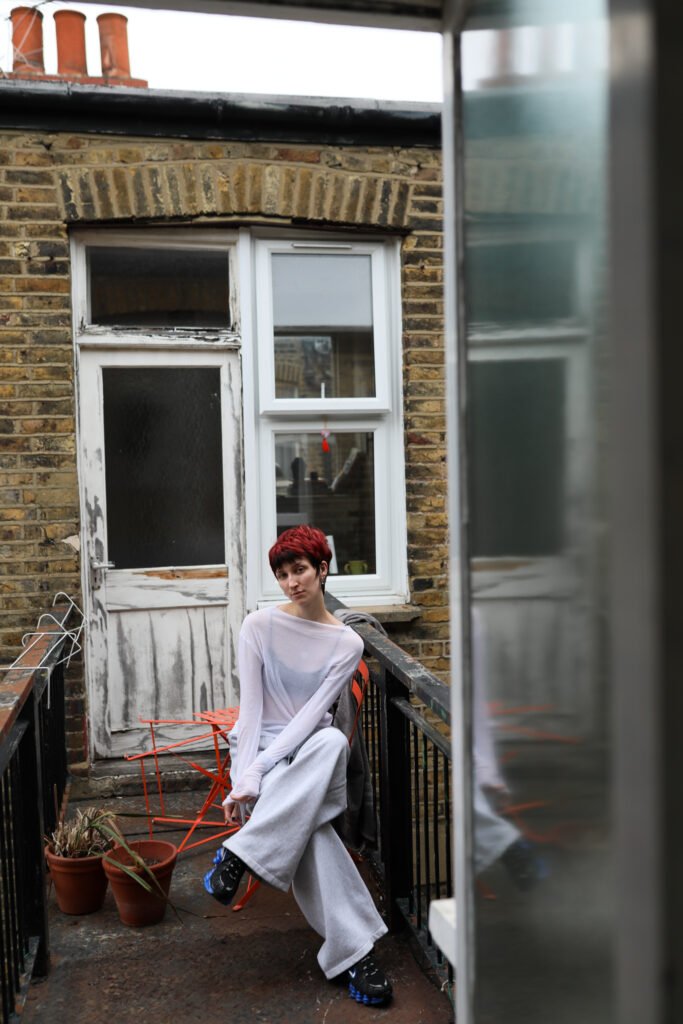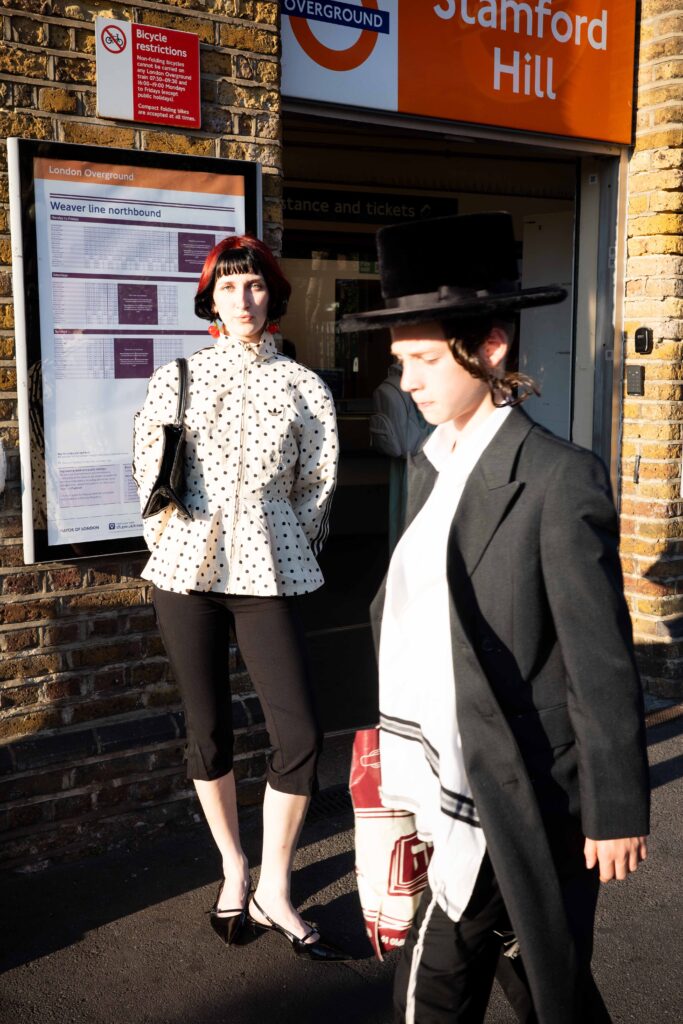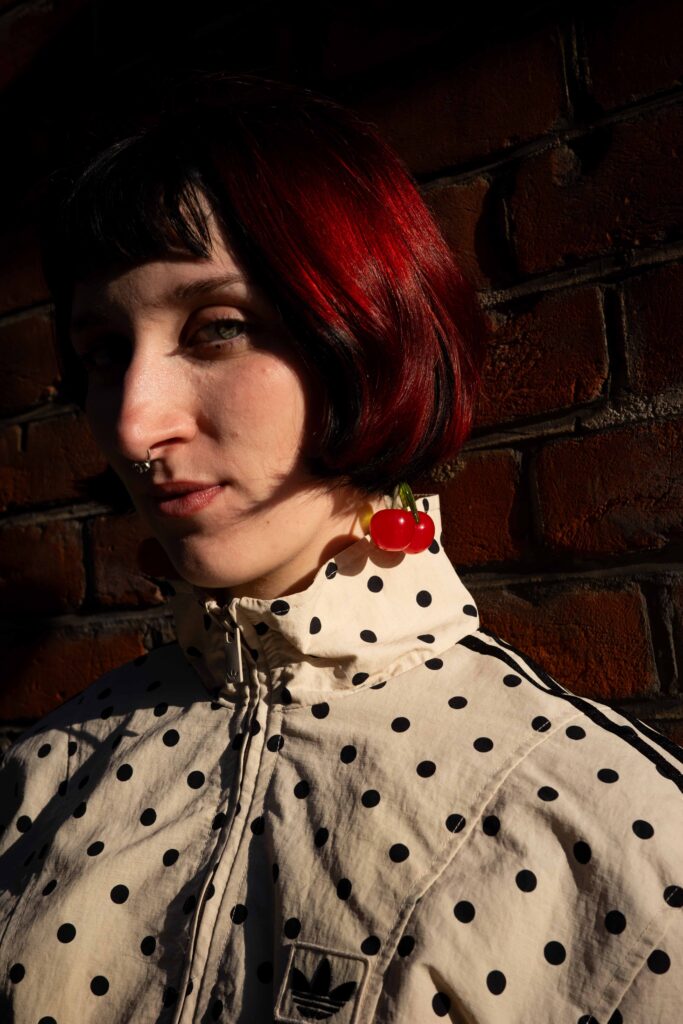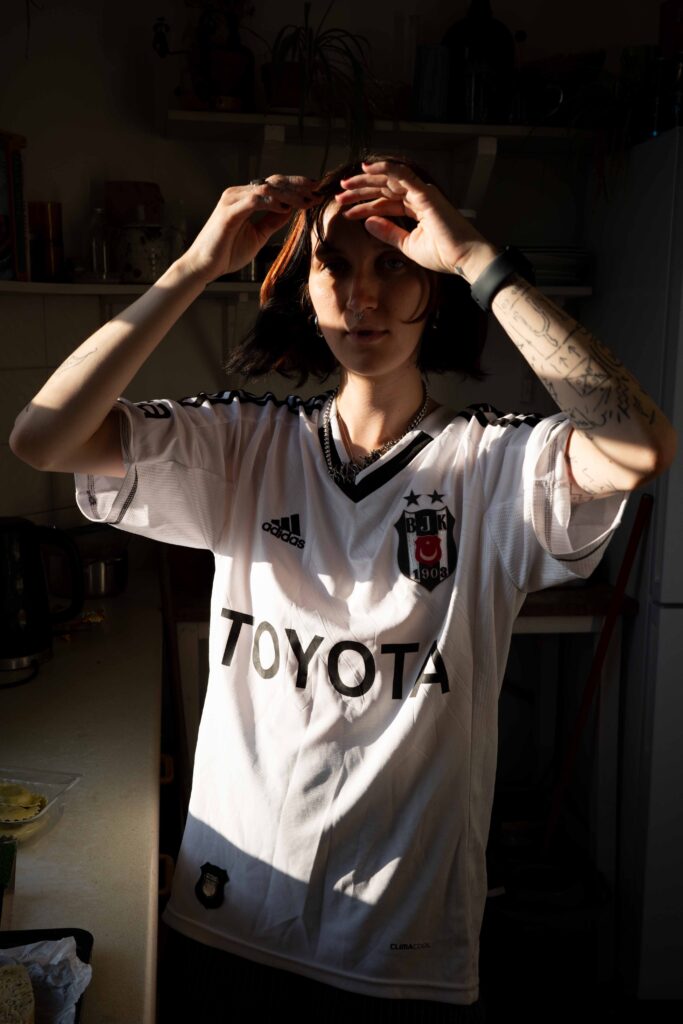
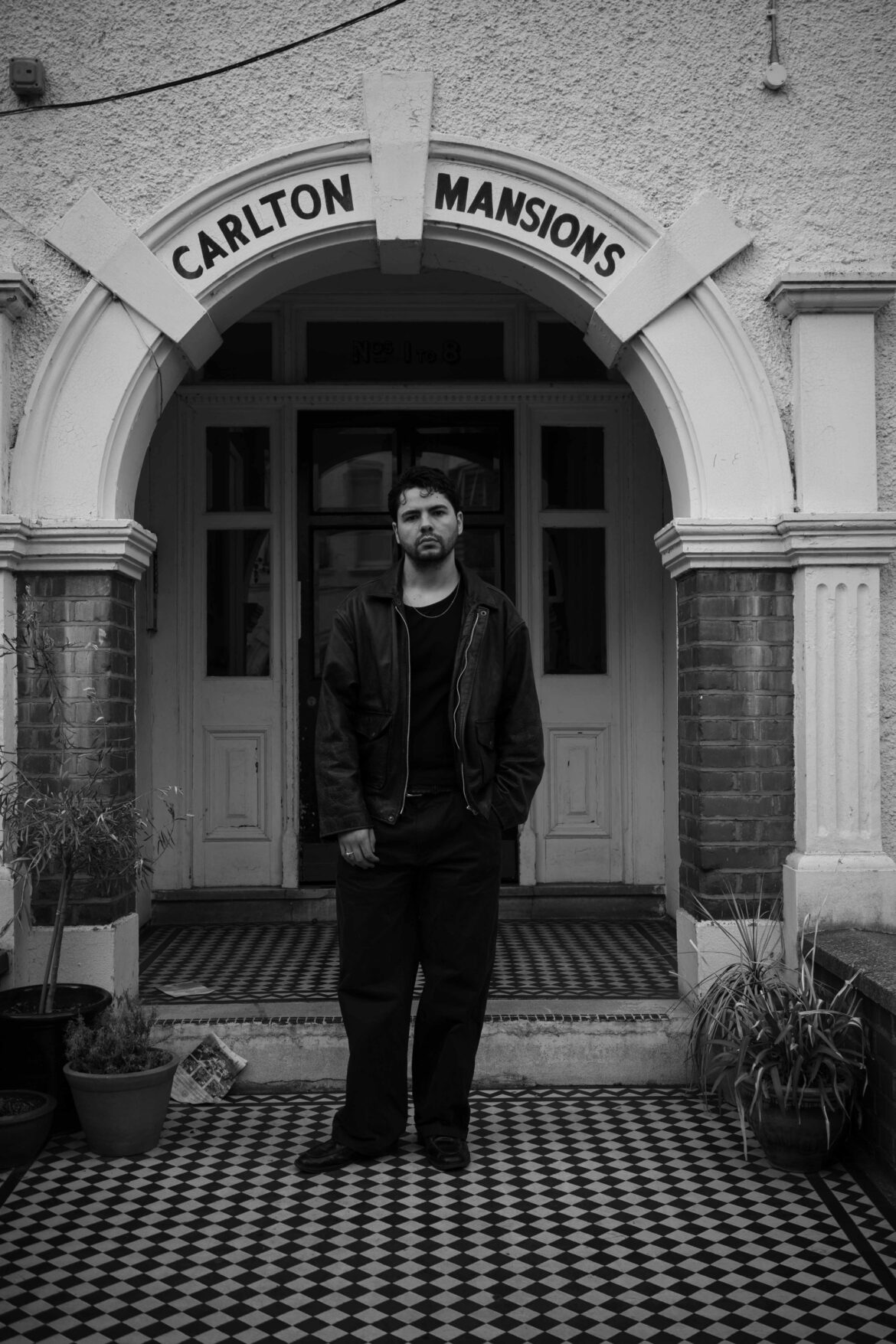
I sat down with photographer Brynley Odu Davies, whom I’ve known for a good few years and actually works with me at OVERSTANDARD as UK Features editor, to talk about his new book, Music, which encapsulates photographs and writing from his time within the London music world between 2018 and 2020.
Brynley describes this time in his life documenting the scene as a time capsule, with photographs and writing capturing that period just before London went into lockdown and everything seemed to change. It’s the perfect moment to explore this book, which captures a defining period of London’s music scene five years later.
Brynley is insightful, inquisitive, calm, and cool, and I always enjoy collaborating, working, and chatting with him. This is a great opportunity to delve into that period of his life and understand what it meant to make photographs of musicians in London during those years.
Excerpts from the book:
Conducta, Hoxton, 2018
I went to a Rinse FM rooftop party, one of the first nights I ever brought a camera out with me. I had this little Minolta I’d found in a Cardiff charity shop when I was a kid. It only cost £1, but it ended up taking me everywhere. It was the kind of cheap camera that had somehow become fashionable again; every photographer seemed to have one back then.
The rooftop was packed. Humid air, bass shaking the floor, that summer glow London gets just before sunset. I didn’t really know anyone there, but a friend had invited me, so I just wandered around with my camera, seeing who I could photograph.
At one point I approached Julie Adenuga, and asked if I could take her portrait. She smiled and said, “What’s your name?” “Brynley,” I said. “Well, nice to meet you, Brynley,” she replied, “but I’m a little too busy right now.”
I remember thinking, ah, fair enough. It was a small lesson: not everyone wants to be photographed, and that’s fine. It also made me realise that how you approach people matters. You should probably introduce yourself first.
Later that evening, someone introduced me to Conducta. I asked, “Can I take your photograph?” and he said, “Yeah, sure thing.” I pulled out the little Minolta and took the shot. A few days later I messaged him, asked for his email, and sent the image over. That’s what I used to do when I first started.
Not long after, he used the photo for his Spotify profile picture. It might seem small now, but at the time it felt massive, like the first sign that what I was doing meant something.
A year later Conducta and AJ Tracey released Ladbroke Grove, and it blew up. I’d be walking through London that summer, hearing cars drive past blaring the song, and I’d think back to that night in Hoxton, taking that photograph.
It was one of the first times I realised photographs could travel further than I ever could, that once you take a picture, it doesn’t belong just to you anymore. It lives out there, attached to someone else’s story.

IAMDDB
Field Day, 2018
By the summer of 2018, London felt electric. I was photographing musicians every week, moving between festivals and small shows. Field Day came next. It was hot, and the site was alive.
Friends of mine were there, DJs and people just starting out in music, all of us moving between stages. I had my camera, and it felt like everything had started to click.
A friend, Sean OD, was DJing between acts on one of the stages, so I went to see him and check it out. Next up that day was IAMDDB. I’d heard her name everywhere that summer; everyone said she was the next big thing.
I was standing side stage when she appeared, long braids, long nails, completely ready to perform. You could feel her energy. As she was about to walk on, I called out, “Hey, can I take your photograph?” She turned around, already posing, and I took two quick frames. That was it.
A few days later I sent her the photos, not thinking much of it. Maybe a year later I was tagged in a tweet by someone in French. I couldn’t really understand it, but I gathered that my image had been used as a reference. Months later, at a party, my friend Ruby was playing End of the World through a speaker. I said, “Is this IAMDDB?” She nodded, showing me the single artwork on her phone. I looked closer and said, “That’s my photograph, that’s the reference image.” She laughed and said, “No way.”
It was strange seeing how far the images had travelled, turning up in unexpected places online and filtering through the world in ways I couldn’t control. That’s what happens with photographs. Once you take them, they start to live their own life.

King Krule
North Greenwich, 2020
One freezing morning in January 2020, my friend Jocelyn asked if I wanted to be an extra in a King Krule music video she was directing. I said, “Yeah, absolutely. Can I bring my camera?” She said, “Of course, go for it.”
I’d loved King Krule since I was seventeen. I remember hearing his music for the first time at a house party and thinking, whatever this is, I love it.
Years later, when I moved to London to study photography, I ended up living in the same neighbourhood as him. I’d see him in pubs sometimes, red hair, cigarette in hand, but I always kept my distance. I liked his music too much to risk ruining the illusion.
When we arrived that morning, the sky was low and grey over the Thames. Jocelyn had asked a few of us to come as extras, so I invited my friends Rob and Ryan. Rob was a photographer too, a few years older. He’d helped me a lot when I was starting out, passing me jobs and giving advice.
We joined the crew on the riverbank, standing just behind Archy as the tide crept closer while filming began. He sang the opening lines of the song, and I stood there watching it unfold, chatting with Rob. You can even see us in the music video.
We both took photographs that morning. Later, Rob posted his image, and Archy liked it. I posted mine, and he didn’t. I was jealous; his photograph was better, and I knew it. Photography is a competitive game.
Standing there that morning felt exciting, but I didn’t know it was the end of something. A few weeks later, the video came out, Alone, Omen 3. And soon after, the world shut down.
Music stopped. London went indoors. Everything I’d been part of, the scene I’d been documenting, just froze. I first heard King Krule’s voice at seventeen. At twenty-four, I found myself standing in front of him with a camera, part of the world I’d once looked up to from a distance.
I hadn’t yet become a well-known music photographer, but I’d been working in the industry, photographing the artists I genuinely loved. It felt like I was getting closer to what I’d always wanted, and then everything stopped.

Lava La Rue & Tyler, The Creator
Brixton, 2019
That year, Tyler the Creator had just been allowed back into the UK after years of being banned over his so-called offensive lyrics. He’d been banned by Theresa May, but when a new Prime Minister came in, the ban was lifted and he was finally allowed to return.
His first attempt to perform was a surprise show in Peckham, just down the road from where I lived at the time. I went along to try and take some photographs, but the streets were completely packed with kids. It was chaos. The show was cancelled before it even started. My friend Ryan, who managed the venue, said he saw Virgil Abloh climbing over a fence to escape.
A few days later my friend Mac Wetha from the collective Nine8 messaged me and said, “I’m DJing today with Lava La Rue, do you want to come take some photos?”
I said yes and met him in Brixton. When we arrived, I realised it wasn’t just any event. It was a Converse and Face Magazine pop-up for Tyler. He’d just done a Golf Wang collaboration with Converse, and it was a small event for maybe fifty of his biggest fans.
I photographed him chatting and laughing with people. At one point he picked up a copy of The Face, flicked through the pages, stopped at a picture of Harry Styles and said, “He used to be so cute, but not so hot anymore.” Everyone laughed. He was exactly how you’d imagine, loud, funny, full of confidence.
Then one of Lava’s managers tapped me and said, “Go downstairs and get a photo of them together.” I didn’t usually take direction like that; I preferred to follow instinct, but I said sure, why not, and went down. I asked, “Can I take a photograph of you two?” Tyler nodded. As I lifted the camera, everyone around us started pulling out their phones too.
For a second it felt strange, like I wasn’t making art anymore, just part of a crowd chasing the same moment. Tyler looked awkward, Lava smiled, and I took the shot. When it was over, he tapped me and just said “thanks” in this kind of half-polite, awkward way, like he wanted to get out of the situation as fast as possible.
A few days later I sent the photos to The Face. A few months after that, they used one in an article about how Tyler had brought out Drake at his Golf Wang festival in LA and how the crowd had booed him for not being Frank Ocean.
They cropped right into Tyler’s face from my photo, cutting out Lava, the room, and everything around him, and used that close-up to illustrate how awkward the whole thing was.
It was strange seeing my image used that way, not to show a moment but to mock it. That was the first time I realised that photographing famous people isn’t always great. You start feeding the machine, and at some point it stops being art.

Biig Piig
Dulwich Park, 2019
Rye Wax was a club that no longer exists. It was tucked down an alleyway in Peckham, half record shop, half basement club. If you went through the narrow doorway and down the steps to the left, you’d find a low-lit room with a bar, DJ decks, and people performing or playing records late into the night.
That evening Jess was outside the entrance with a friend, sitting behind a wooden bench and doing the guest list as people came in. I asked if she was American, and she laughed and said, “No, I’m Irish.”
A few months later I heard one of her songs on the radio and thought, whoa, this girl’s amazing. I found her on Instagram and messaged her about doing some photos together. When she turned up, I recognised her instantly. It was the same girl from that night outside Rye Wax.
We walked around Peckham, talking, getting to know each other, taking pictures as we went. She had such a distinctive energy, slightly messy, pigtails, effortlessly cool. Nothing about her felt artificial. She was just naturally herself.
Out of everyone I photographed during that period, Jess felt like she had the most raw potential, you could sense it. We met a few more times that summer to shoot. One afternoon we went for a walk in Dulwich Park, a place I used to visit often.
She’d just come back from Italy, where she’d been living off-grid with a friend, sleeping in hammocks and hostels. She was telling me stories from the trip, laughing as she spoke. The light that day was bright and strong. Jess was mid-laugh when I lifted the camera and took the shot.
A few weeks later she messaged me asking if she could use it for her new single Sunny. She’d just been signed to RCA Records, and it was her first release with them. Photography’s a funny thing. You drift from people as life moves on, but when you make images together, you stay connected. That shared moment, however brief, becomes something permanent.

INTERVIEW
Hi Brynley! The last time we spoke was around the release of Artists. Since then, you’ve quietly been sitting on a body of work documenting the UK music scene. Can you talk about what you’ve been working on since that book, and why now felt like the right moment to bring Music into the world?
Brynley: Heya Rubén! Yes we did indeed, we spoke back in 2024, not long after I released my first book, Artists. I was living in Vienna then, experiencing life outside the UK for the first time for a prolonged period. Since then, I’ve moved back to London full-time, moved from South to North/East London, and started building new bodies of work. I’m now the in-house photographer for events at The Colony Room and the National Portrait Gallery, which I do alongside my long-term projects. I’ve been shooting Peckham High Street, and I’m also beginning two new projects for upcoming shows in 2026 and 2027.
In terms of the music work, a few months ago I was with my friend Cameron, who’s deep in the music world, and I was telling him about my new projects. He said, “You should bring out some of your early music photography, I’d love to see that.”
During lockdown, I’d actually made an early version of a book from that period, but I never released it. After that conversation, I went home, dug through old emails and hard drives, found the photographs and some of the writing from that time, and thought: fuck it, I might as well revisit it properly and see if I can rebuild the book five years later.

What does a typical day look like for you now, and how does photography fit into your daily routine at this stage of your career?
Brynley: A typical day for me right now, as I write this, is happening in Bath, where I grew up. I’m having a slight break from London and preparing myself to start editing Peckham, a book I’m working on where I walk up and down Peckham High Street throughout 2025 and 2026, documenting what I see. I love that street and its people, so in a way it’s a love letter to Peckham through my photography.
At the moment, I’m getting myself mentally ready to go through all the photographs I made in 2025, to start ordering and editing them, and then to figure out how I’ll approach the work I make in 2026. What’s missing, whether I need to get closer or further away, what time of day worked best, things like that. I’m about to go down that deep, slightly dark rabbit hole, but I’m excited for it.
Photography plays a role in my life all the time now. While I’m in Bath, aside from preparing to edit, I’m spending a lot of time looking through photography books. I’ve been returning a lot to work by August Sander, whose images I really love. Alongside that, I’ve also started making self-portraits for a new series, which feels like a natural extension of everything else I’m thinking about at the moment.

What first drew you to photographing musicians, and what was it about the UK music scene at that time that felt worth documenting?
Brynley: I think I loved music in the way a lot of people do, but subconsciously I’d also always been studying music photography. As a teenager, I spent a lot of time scrolling through books and the internet, looking at images of musicians, watching every video I could find, and immersing myself in the history of music and how it’s visually represented. So when I left university at around 23, I found myself wanting to document it.
At the same time, a lot of my friends were deeply involved in music. Many of them had studied at Goldsmiths and were putting on events, booking artists, DJing, and organising nights. While they were getting decks and throwing parties, I was picking up a camera. It all felt very natural. Music was just in front of me.
One of the first moments that really stuck with me was photographing a friend’s festival set early on. Walking through the crowd towards the stage with my camera, I remember feeling this rush: adrenaline, purpose, a sense of belonging. I think I was feeding off their excitement, but I was also starting to understand my role within it.
I was living in Peckham at the time, and South East London felt like it was having a real moment. Places like Bussey Building, Rye Wax, Canavan’s, Rhythm Section. There were jazz nights, DJ sets, bands, experimental music, artists constantly passing through. I used to listen to BBC Radio 6 Music all the time and hear presenters saying things like, “Tonight at Bussey Building in Peckham,” or introducing a new release from a band from South East London. It felt like that part of London was really alive.
In practical terms, it also started through a bit of luck. I’d just left university and was taking street portraits around Peckham and photographing friends. I heard there was a festival happening in Peckham Rye Park called Gala Festival, and a friend mentioned that their boss was involved in running it. I put together a small portfolio of street photographs and portraits of friends and asked if he’d pass it on. To my surprise, they not only let me shoot the festival, but also asked me to photograph press images of the artists involved to be used for the festival promo. That opened the door. After that, I started messaging other musicians around London, shooting their press photos, and photographing backstage at festivals and clubs.
Looking back now, it feels like I was documenting a very specific moment in UK music, just before lockdown and just before algorithms and platforms like TikTok really took over how music circulates. There was something in the air. It felt exciting, physical, and communal. When lockdown came, a lot of those spaces disappeared and the scene changed completely. Because of that, the work now feels like a document of a time that no longer really exists in the same way.

Do you see your move from music to artists as a departure, or a continuation?
Brynley: I think I see it all as photography, really. When I was documenting musicians, I was fully immersed in that world. I knew a lot about music, I understood the scene deeply, and I could sense who might break through. I was at gigs constantly, photographing young musicians as they were emerging, and in some ways I was leveling up within that world.
When lockdown hit, though, I instinctively knew I couldn’t just wait for things to start up again. I needed to keep moving and keep learning, and I needed something else to photograph so I could continue practising and developing my skills. That’s when I found artists.
At the time it probably did feel like a departure, stepping away from music and into something new. But now, looking back with a book out, it feels more like a continuation. I spent most of my twenties photographing musicians and artists, giving a lot of my life to being around them, following scenes, and using my camera to document them as honestly as I could.
I think as I get older and make more work, it will all start to read as one thing: me, and what I chose to spend my time doing. Photographing people, scenes, and worlds that I found interesting at that moment in my life.

Why publish now?
Brynley: I think I needed a bit of distance. I went straight from photographing musicians full-time in 2020 into lockdown, and then almost immediately into photographing artists. I didn’t really stop with artists until 2025. I just kept going and going. It was only when I stepped back from the art world in 2025 to focus on other projects that I finally had the space to look back and reflect on my earlier work.
It was interesting looking back at the images alongside some of the notes I’d written at the time about my encounters with musicians. It felt like I could understand my own history more clearly: how I’d got to where I am now, and the lessons I’d learned early on about how to behave around people you’re photographing, how to show respect, and how to make people feel comfortable. A lot of my early photographic instincts and people skills were shaped during the years I was making that work.
Looking back, making Music wasn’t just about the photographs. It also involved writing, reflection, and shaping a narrative around a scene.

What did that process teach you about your relationship to writing and authorship, and how has that carried through into the way you now approach editing, features, and storytelling?
Brynley: When I first made a version of this book back in 2020, I wrote about what was happening as I photographed musicians. I reflected on the encounters and the moments, and I made that early version with my girlfriend at the time. I wrote everything down, and she helped me shape it.
When I came back to the book years later, I was doing the writing alone, and I was actually a bit nervous. I’d always assumed I was a bad writer because I’m dyslexic. But once I started writing properly, sitting at my desk, going back through the photographs, revisiting memories, I realised I really loved it. I’d sit there for hours, writing and reflecting, and it felt genuinely beautiful. It tapped into a part of my brain I hadn’t really used before. I’m used to photographing people, curating, and spotting talent, but writing felt like a completely different muscle. I remember walking into the kitchen and excitedly telling my housemate, “I’ve been writing for hours and I can actually feel it in the back left side of my brain!”
When I reworked the book in 2025, my housemate Amelia helped me with the layout. I didn’t have the skills to design it properly, so we’d sit together, go through the photographs and text, and think about pacing and structure. I trusted her instincts, and working alongside another creative in that way made the whole process richer. It also opened the door to future collaborations between us.
What surprised me most was how familiar the feeling of writing was. In some ways it’s similar to photography: instead of observing visually, you’re also contextualising things through language. Since starting to write this book and spending so much time reflecting, I’ve also begun working with you, Rubén, at Overstandard Magazine as the UK features editor. I’ve spent much of my life photographing musicians and artists and wanting to spotlight them. Now, through writing, I’m able to support them beyond the images and help tell the stories of people I genuinely believe are brilliant.

How has your sense of responsibility changed, to subjects, to scenes, to history — now that you’re older and more aware of what disappears?
Brynley: In an ideal world, I’d have a name badge that simply says PHOTOGRAPHER, and I could approach anyone, anywhere, take their picture, and they’d say, “Yeah, that’s fine.” At the core of it, that’s still the impulse.
As I’ve reflected on my work over time, I’ve realised my instinct has always been to photograph people in a way that feels honest, to make them look like themselves. A few years ago, I photographed a young artist for a disabled charity in Peckham. When I showed him the images, he said, “That’s me.” It sounds simple, but that moment really stayed with me. I think that’s what I’m aiming for: photographs where people recognise themselves.
That instinct might evolve as I experiment more, but at my core I feel like I’m building archives of people who existed while I existed. Musicians, artists, people on Peckham High Street, ordinary humans in particular places and moments. Scenes come and go. Worlds disappear. Often, all that’s left are the photographs.
For me, photography is a way of making sense of my life and what’s in front of me day to day, and of preserving something human before it disappears.

The book is simply titled Music. Why was it important for you to keep the title so direct and stripped back?
Brynley: I think it just sums up very simply what the work is about. I was documenting music during that period. My previous book was titled Artists because that’s what I was immersed in then, and right now I’m working on a book about Peckham High Street, which will probably just be called Peckham.
I see my work as moving through periods of my life where I become deeply focused on one world at a time. As a long-term project photographer, I think you have to fully immerse yourself in these worlds to really understand them, and the titles reflect that. They don’t try to explain the work. They just name the world I was in.

How do you feel you’ve changed, both as a person and as a photographer, since making these images?
In some ways I’ve changed a lot, and in other ways not very much at all. When I was making this work, I was operating almost entirely on instinct: sensing who felt important to photograph, who had energy or potential. I didn’t have the technical control I have now, and most of the work was shot on film, but I was excited to be there. I was genuinely addicted to photography, and this was really the beginning of that.
I was also learning how to exist around people with a camera. I remember being backstage at one of Biig Piig’s early shows at Village Underground. I was a few years older than her — she was probably around 21, I was 24, and I was quite loud, confident, maybe a bit brash. She was calm and composed, and I remember internally clocking: this isn’t my show. I’m here to document, to support, and then to step back.
Those moments taught me how to be a photographer: when to engage, when to disappear, how to be respectful, and how to read people. Looking back now, I’m proud of that younger version of myself. I was obsessive, hungry, and completely committed, and the skills I rely on in my work now were being formed back then.

Do you see yourself returning more actively to music photography in the future, or has this book closed a chapter for you?
Brynley: I think this book closes a chapter on music photography, especially that particular period. I love music and I love musicians, but the world is big, and there are so many other things I want to immerse myself in.
In a slightly morbid way, I’m aware that I’m 30 now and I won’t be around forever. I’ve already documented music, I’ve documented artists, and now I’m deep into Peckham. I want to keep moving, keep seeing more, keep committing myself fully to new worlds. Sometimes I wish I had two lifetimes, one probably wouldn’t be enough.
That said, I’ll always photograph musicians when they’re part of my life. Just not as a full-time pursuit, unless I somehow ended up married to one, in which case I’d probably dedicate my life to documenting them.

You now have published work spanning both the UK art world and the music scene. Looking ahead, what kinds of worlds or communities do you feel compelled to document next?
Brynley: Right now my main focus is Peckham, a long-term photography project documenting Peckham High Street. I spent much of 2025 walking up and down the street, and I’m committing to it again throughout 2026, with the aim of releasing a book and exhibition in 2027. I love Peckham, I love meeting people there, and I feel genuinely honoured to be documenting that community. I moved there when I was 19 and lived there for nine years, so it’s a place that’s deeply embedded in my life.
Alongside that, I’m working on a book about the Colony Room through my residency with Daisy Green, and I photograph events at both the Colony Room and Larry’s at the National Portrait Gallery. I’m also working as the UK features editor at Overstandard, which has expanded how I think about storytelling beyond images alone.
When I was younger, I was often searching for something to photograph. Now it feels like I have a clearer point of view. I’m living through my camera, documenting my life, the places I’m in, and the people I believe are important.
When you look back at your early years photographing music, what do you value most about that period of your life and work?
Brynley: I value the hunger, the ambition, and having somewhere for all that energy to go. When I left university, I was completely obsessed with becoming a photographer. If you’d known me then, it was all I cared about. Music gave me something to bite into, something immediate and alive, and it allowed me to throw myself fully into the work. That intensity shaped everything that came after.