Share this
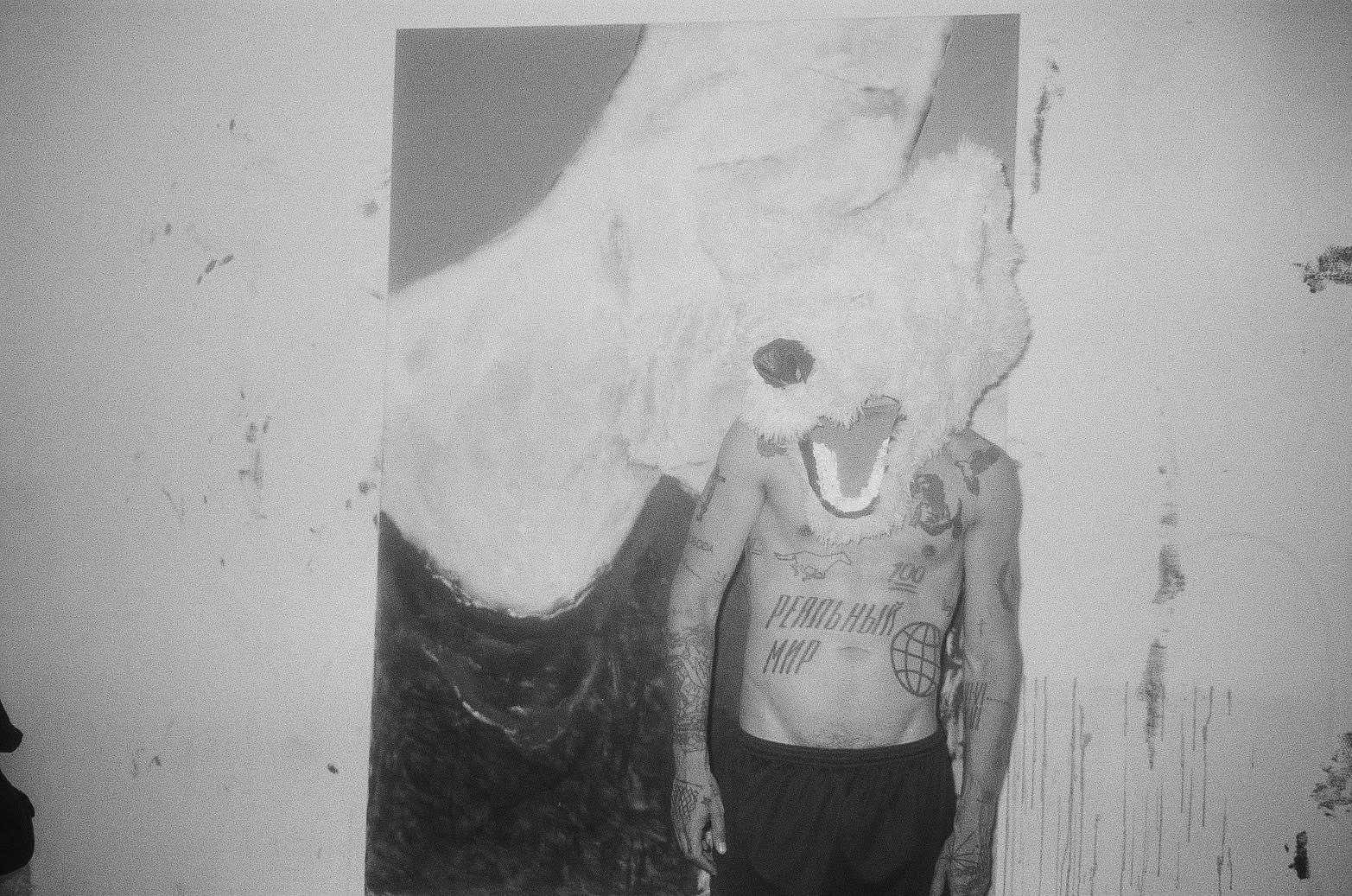
Viacheslav Vladislavovitch Vorontsov (born 1987, USSR) is a contemporary artist living and working in Paris. Born in the village of Tazovsky, located above the Arctic Circle in the Tyumen region of the former USSR, Vorontsov grew up in a family of artists and is the great-grandson of the renowned Russian realist painter Vasily Vereshchagin. After completing his studies in painting at an art school, he specialized in street art, graffiti, and tattooing before expanding his creative practice to fashion design and album cover art. He also directed and produced music videos, releasing 15 solo hip-hop albums and 20 video clips.
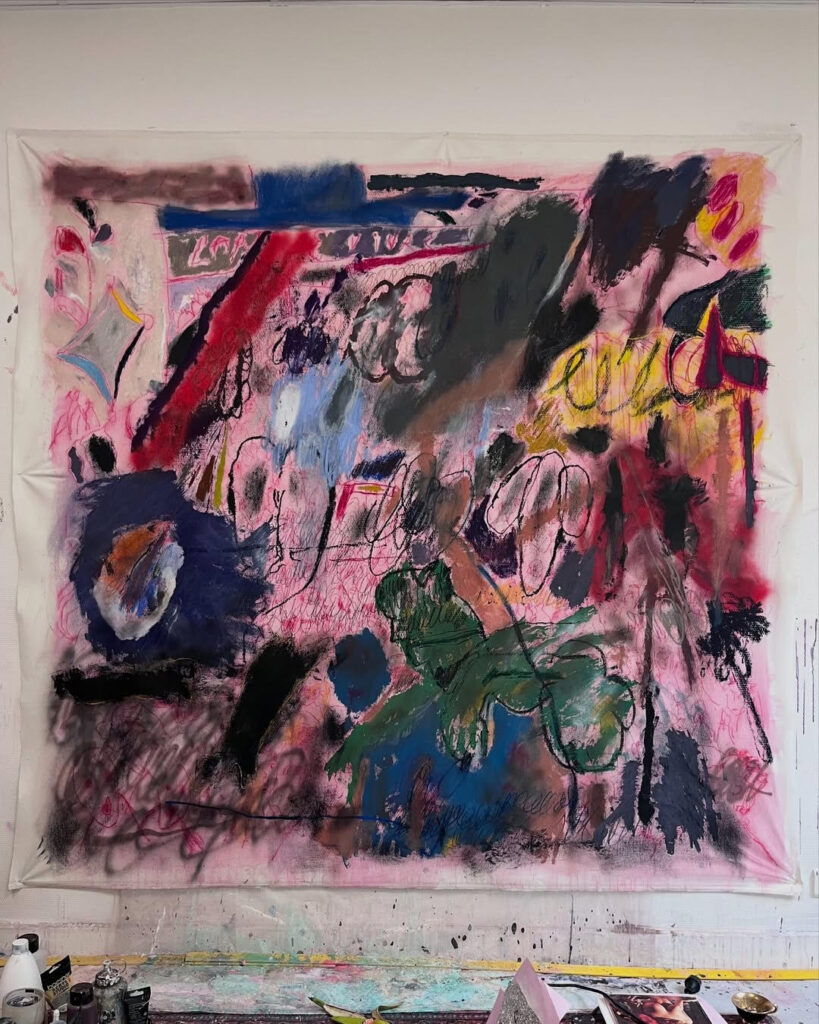
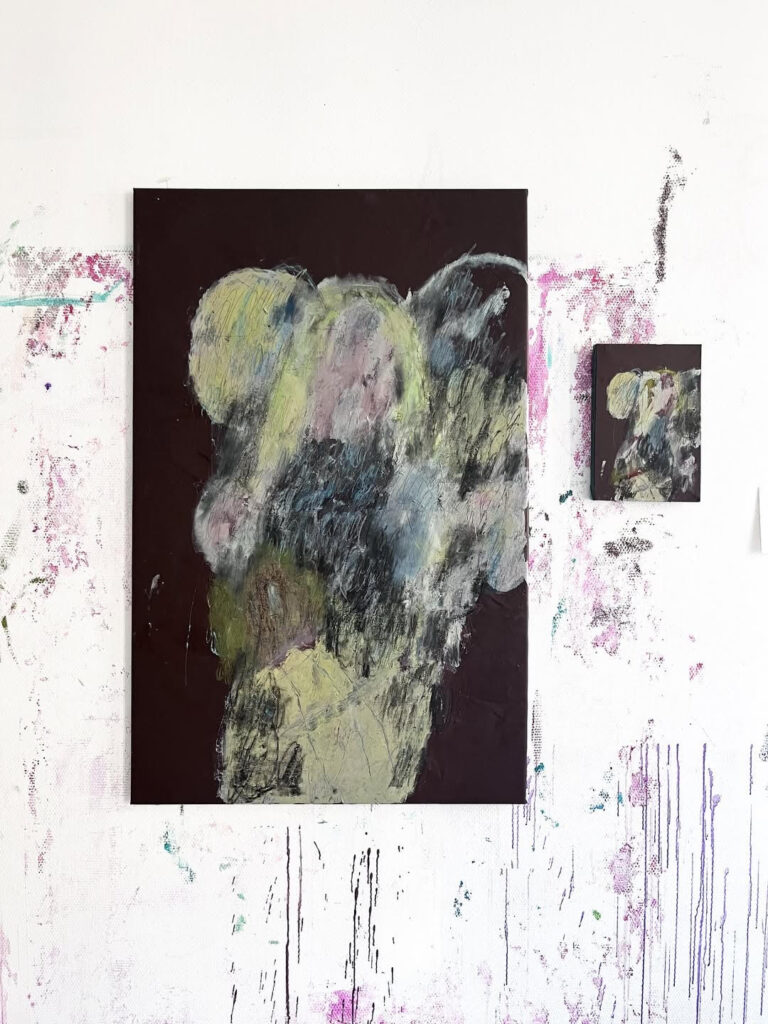
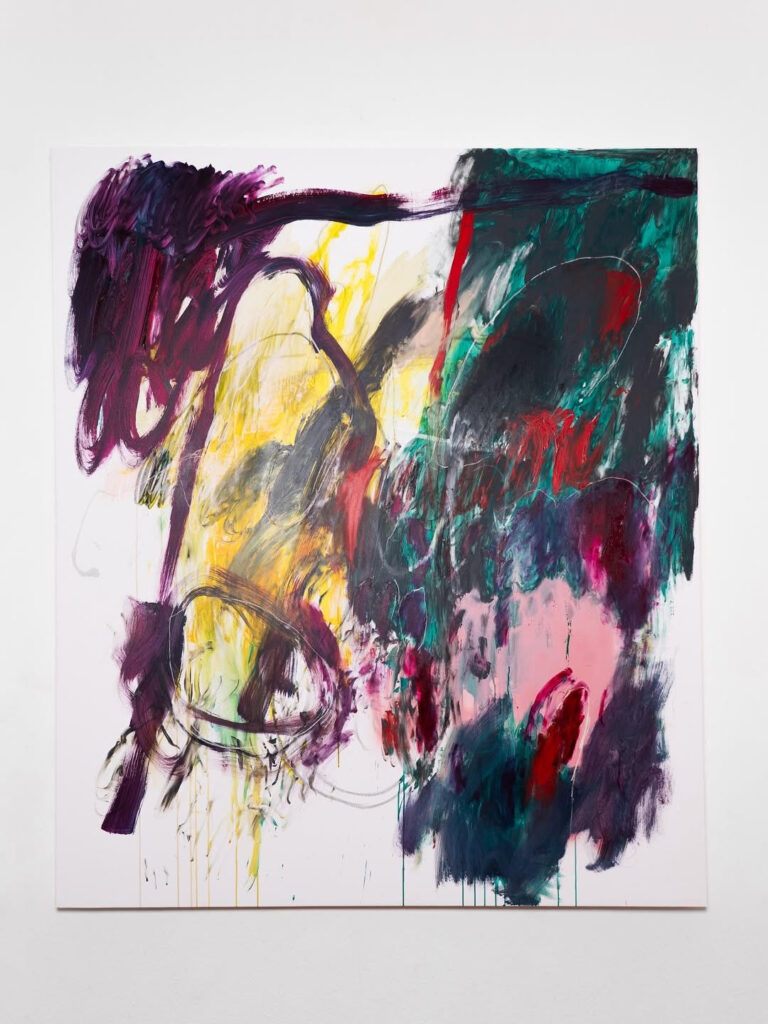
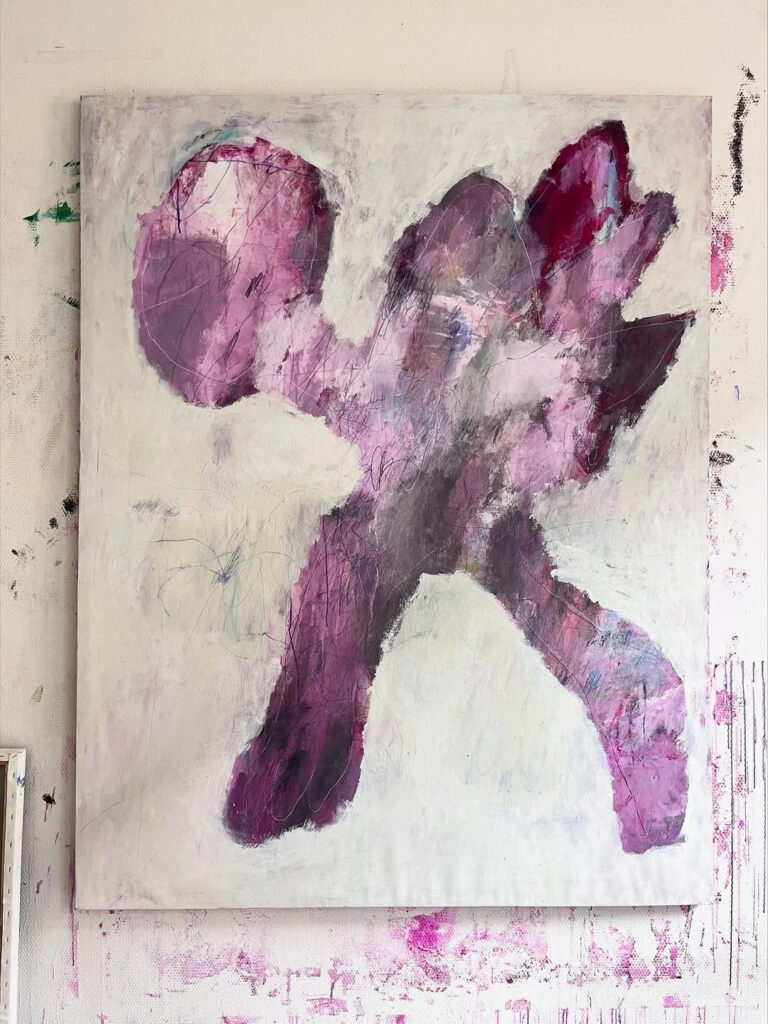
In 2023, Vorontsov was compelled to leave Russia and relocated to France, where he shifted his focus primarily to large- format painting. His style combines expressionism with elements of naivety, figuration, and abstraction. His work is deeply inspired by anthropology, neurobiological philosophy, religious themes, as well as motifs related to war, peace, and the refugee experience.
Hi Slava! It’s a pleasure to sit down with you! First question that I always ask. How does a regular day look like for you in Paris?
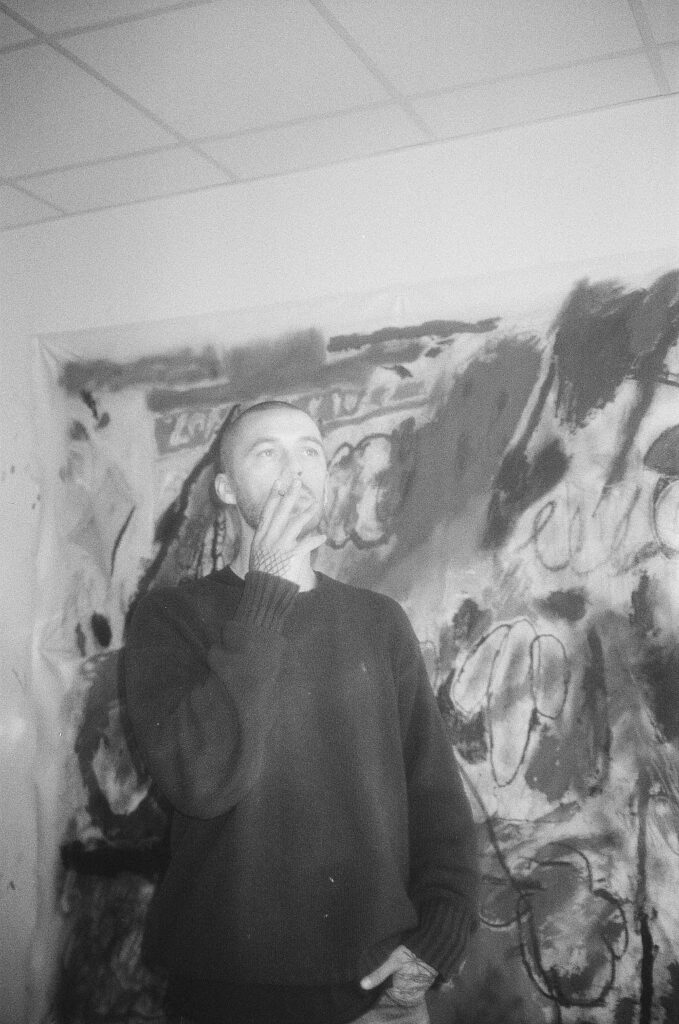
Slava: Merci, it’s a pleasure for me too! Waking up in Paris every morning feels like a blessing, I pray, go out for a coffee, have a funny little chat with the serveuse at the boulangerie, then head to my studio in Le Marais. I smoke, have another coffee, and spend the rest of the day working, researching, sketching, writing down ideas, and painting while reflecting on my recent works.
You were born in the village of Tazovsky in the Tyumen region of the former USSR, and eventually moved to Paris. Could you walk us through how your early environment shaped your relationship to art?
Slava: Yeah, there are different visual matrices that program your vision and shape your mindset. It’s one of the most powerful tools for controlling society, and I’m saying this from experience, from the kind of place I come from, surrounded by those brutalist, conservative buildings where apartments and prison cells almost look the same. Then the Stockholm syndrome hits, you start to fall in love with that dirty, muddy grey palette, and it changes your mind. A lot of people fall into that trap.
When you don’t see different textures, layers, or details, your perspective becomes narrow, and your mind gets programmed in a certain way. I always wanted to escape that. At the same time, I grew up in a family with artistic roots, I had to go to piano school and painting school. Since I was six, I’ve always been creating something, and it made my life brighter. Most of my childhood memories come from that. I was taught about classical painters, from the late 19th century to the Suprematists and modern art, so I was always surrounded by visual culture and I think it saved me.
Back then, I lived through art books. The only difference now is that whenever I want to see great paintings, I can just do it the next morning in Paris.
With that in mind, I’m curious, growing up, what kind of kid were you? What did you enjoy doing, and how did you spend your time?
Slava: I was a very curious kid. I had friends I played football or video games with, but more than that, I loved building things with those old Soviet metal construction sets or complex model kits with a thousand tiny parts. I would just sit under a lamp for hours in my room around the age of ten or twelve assembling different kinds of objects.
I had a favorite microscope, I was always excited about nature and loved studying it, reading books about it. I also had a woodburning tool and absolutely loved using it burning different drawings on the wood pieces. And I used to have a parrot in my early teen ages and it loved to tear up the edges of my notebook where I was drawing leaving a hundreds of little paper pieces on the table and around it.
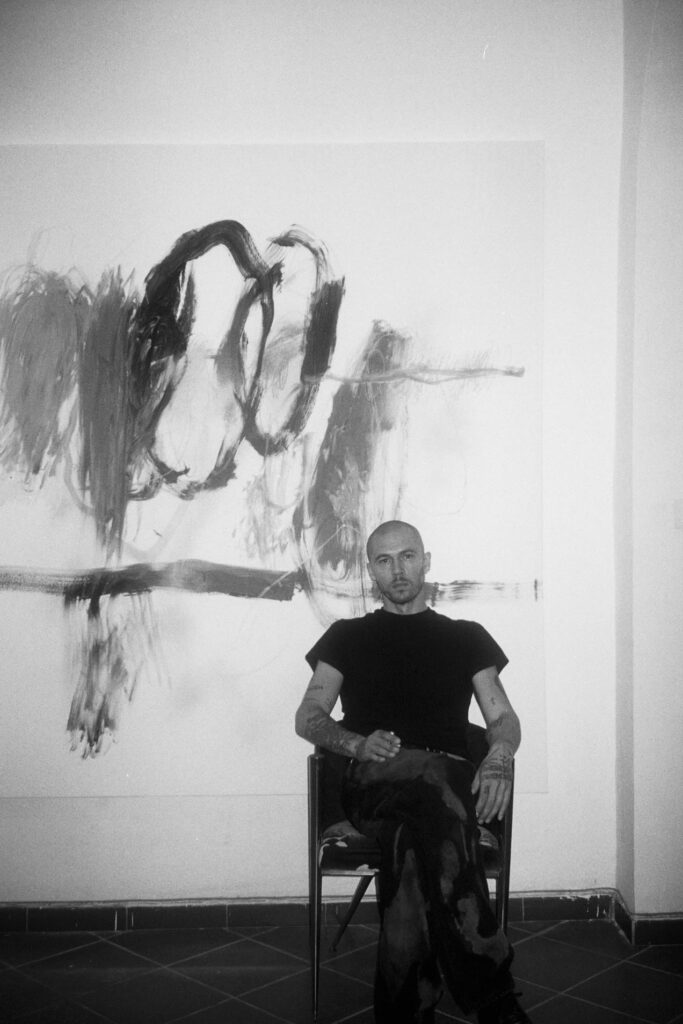
You began working in graffiti, street art and tattooing before transitioning into painting large-scale canvases. How do you see that shift from street/tattoo culture into fine art, impacting the kinds of stories you tell?
Slava: To be honest, when I was doing graffiti as a teenager, I was more fascinated by the bombing side of the culture, that edge where art meets something illegal. It wasn’t just an image; it was an action and a statement. That part of graffiti really touched me, because I always felt the need to share my thoughts, ideas, and perspective, not just visuals.
Years later, I eventually moved to large-scale canvases, maybe that’s where the sense of scale in my paintings comes from. And that same rebel spirit, free from stereotypes, is what I’ve been trying to carry through my work from the very beginning.
Alright, so when did you start to paint, and when did you start taking being an artist seriously?
Slava: I’ve been drawing since I was a kid, even before I started piano school. And ever since, I’ve always been creating, whether it was drawing or painting. I’ve basically been an artist my whole life and never had any other job. I’ve done music, clothes, tattoos, videos, but I never worked for anyone else. When it comes to being a professional painter, though, that took years of life experience. And honestly, I’m still learning. It’s an endless journey of knowledge.
Ok Slava, with these next series of questions, I will try to delve into your work as best as possible. So…. In 2023 you were forced to leave Russia and re-locate to France. How has exile or displacement impacted your work — both thematically and practically?
Slava: First of all it totally changed my main artistic medium from verbal to visual. And its more difficult to tell something with a painting then with words but still visual language is very universal and I chose to speak with it so I can talk to whole world. And for the theme part I’m just sharing my experience and my knowledge.
Your work deals with themes like war, peace, emigration and large-scale formats. Why are those themes important for you to document?
Slava: Because I’m living through it and whatever medium of art I do now its still based on these themes. And my paintings are an honest respons I can come with, when all these things are happening in our world.
So how do you choose which personal or global issues becomes the focus of a series?
Slava: I really believe we as a humanity are one organism. So we are all connected and living through the pretty much same experiences. Like learning yourself and loving yourself is equal to learning and loving others. So to me every personal issue is a global issue.
A lot of your imagery carries the weight of exile, masculinity, and post-Soviet identity. Do you think art can ever escape politics, or is every brushstroke already political?
Slava: People use everything to manipulate other people and that’s what politics is about. Every strong symbol is a tool of propaganda. But people kill people not the images.
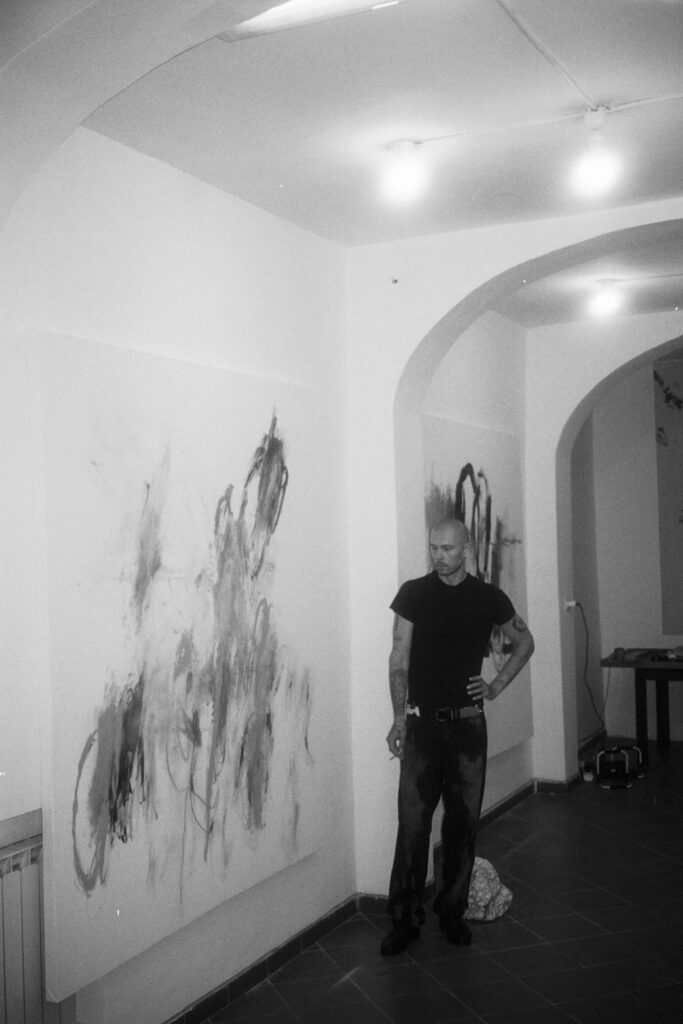
You seem obsessed with the line where faith meets flesh, saints, beasts, sex, and symbols all bleeding into each other. What’s behind that tension between the sacred and the carnal in your world?
Slava: I think its mostly about my contradictory behavior. Even spiritually speaking. I like these kind of tabooed things and some kind of a miracle things that gives this special psychological and physical feeling of existence.
Your paintings swing between violence and tenderness, almost like they’re fighting and embracing at the same time. Do you think beauty needs a bit of brutality to exist?
Slava: Maybe it’s more about a personal approach. I carry both passion and anger, and I sublimate them by putting my energy into creating instead of destroying. But still, we need darkness to see the light.
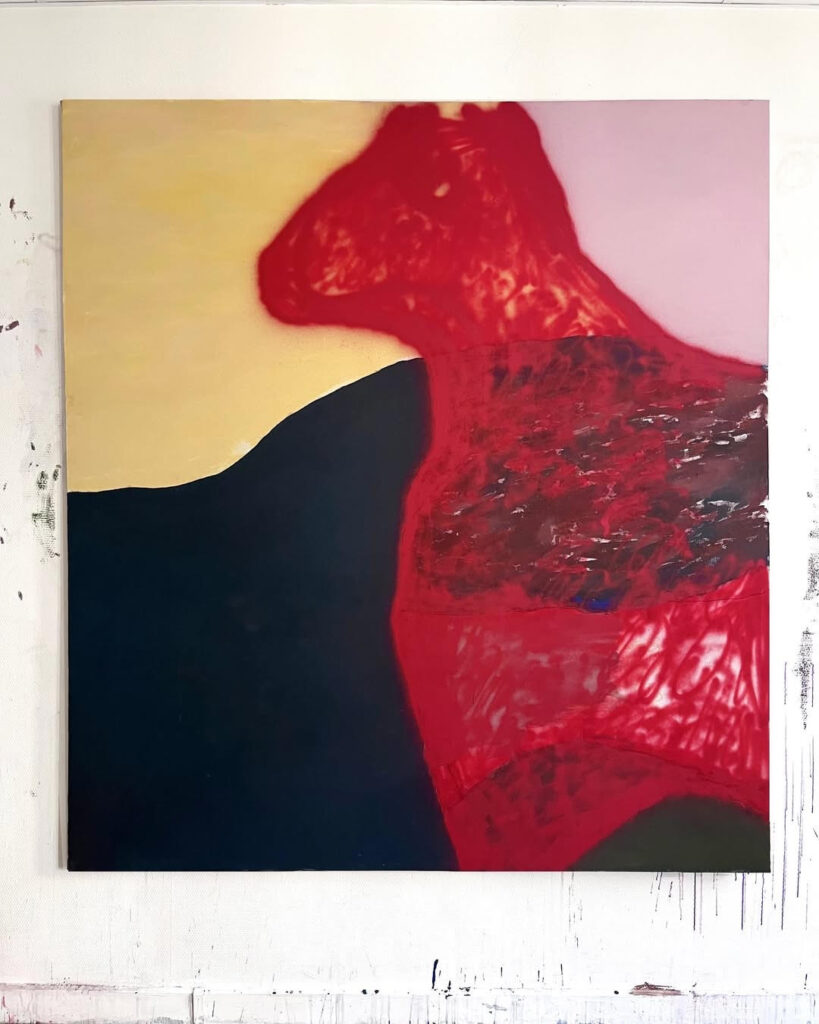
There’s always this mythic, end-of-the-world feeling in your figures. half-human, half-something-else. Are you painting humanity falling apart, or evolving into something new?
Slava: I love religions in anthropological and theological perspective but I still believe humans are part of the animal world and that we are the most dangerous animal. And we keep evolving.
Your technique is described as thick, viscous, a choreography of brushstrokes with an almost primitive energy. How much does the physical act of painting texture, scale, gesture matter compared to the conceptual content?
Slava: It’s like my ongoing research on free will, can I escape my own mind’s prison through my brushstrokes? Am I programmed and trained to repeat the same things over and over? That’s what I’m really trying to find out. And I think the physical act of painting is what connects us; people can feel that energy when they see it.
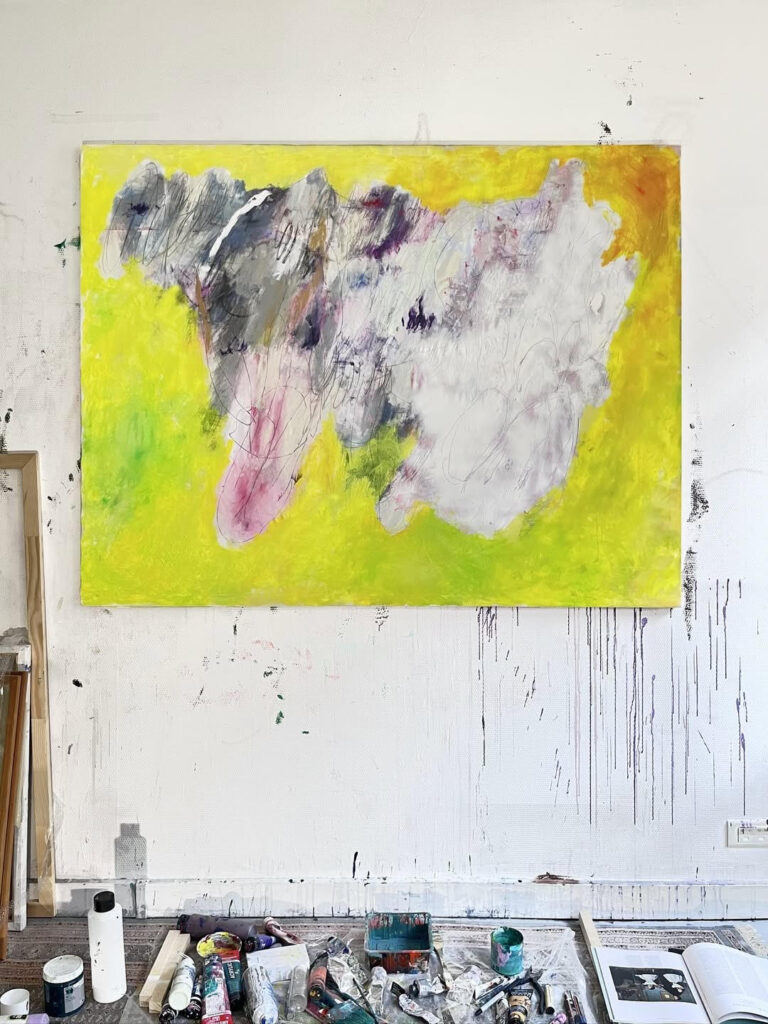
Your paintings feel like they’re searching for something, truth, chaos, maybe even redemption. Do you paint to understand the world, or to survive it?
Slava: I’m disturbed by trying to understand it. I mean, there never was a God, nobody’s going to save us while we’re here; it’s just us. But at the same time, I believe God is love. Every time you do something with love, you win. Every time you do it with hate, you lose. I’m still searching for a solution. There’s so much pain in the world right now, so much anxiety. That’s why we need to look at nature, listen to music, see art, those things give us relief and a sense of belief.
You’ve said before that art shouldn’t comfort people. Can you elaborate on that? And what role do you think discomfort plays in creativity or in seeing?
Slava: It really depends. I think it’s not just about creating discomfort, but about touching the spirit of others. People love people, and when we look at a painting, we don’t just see an image; we see a vision, a way of thinking, the artist’s inner world. Nobody’s here to comfort anyone, but when we share those special moments of appreciating each other’s ideas, that’s when we truly celebrate.”
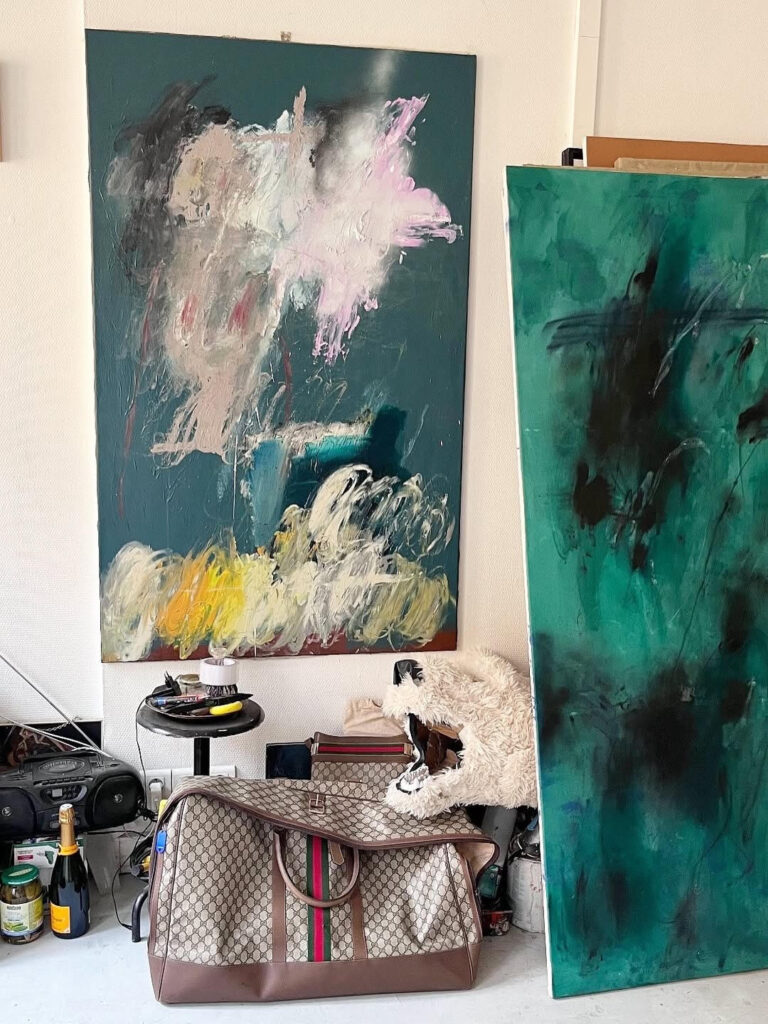
You’ve lived several lives already, from graffiti and tattooing to monumental painting. What do you think you’ve been searching for through all those transformations?
Slava: I don’t know if I ever had a choice really like I mean I only like doing certain things in life. Im just trying to be happy with my everyday life and of course when I make someone else happy with what I do and especially when I inspire others, even with my lifestyle, it gives some nice feelings.
You mentioned being into punk ideology and classical music, two worlds that couldn’t be further apart. How do those energies meet inside you?
Slava: I love classical music, I usually have Radio France Classique playing in my studio all day. I often compare it to abstract painting: there are no words, only colors and stories told through melodies, tones, and shades of sound. The duration is undefined, and the images you form in your mind come from your own imagination and fantasies.
As for punk culture, I don’t really like labels, but I relate deeply to its ideology. And I don’t see any contradiction between classical music and punk philosophy.
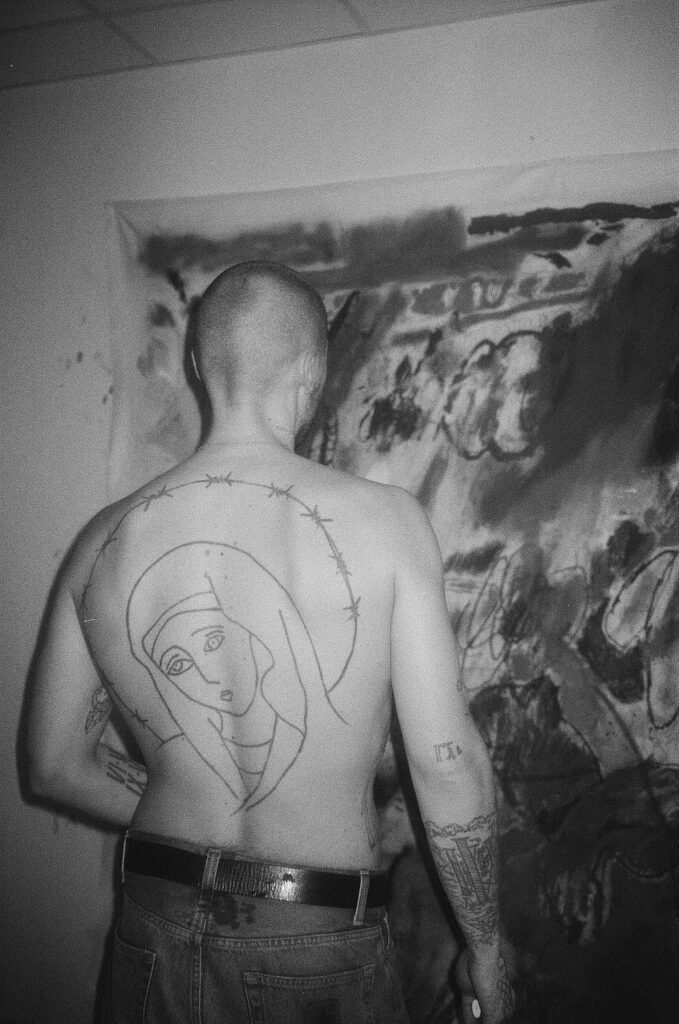
Punk has always been about resistance and not fitting in. Do you still see yourself as an outsider in the art world, or have you made peace with it?
Slava: I mean, you can go live under a rock, but you’ll still be part of the system somehow. My response is my lifestyle, I do what I love, not to be liked or to fit in. I enjoy sharing ideas, and that’s what I do, surrounded by people who have their own. Also, I always write the letter S as a dollar sign, as a kind of irony, no matter how anti-capitalist you are, it all still ends up being sold.
You’ve said your paintings deal with chaos and mythology. Do you approach mythology as something ancient, or something that’s still mutating inside modern culture?
Slava: Yes, I think it’s part of our nature to assign supernatural and mythical meanings, both in ancient times and even now.
You’ve mentioned anthropology as an interest. Do you think of your paintings as a kind of fieldwork, mapping what it means to be human right now?
Slava: Yes, from the very beginning of human history. Art was what set Homo sapiens apart from Neanderthals, we had musical instruments, cave paintings with meaning. We loved ephemeral things, and that’s what makes us beautiful: our ability for abstract thinking.
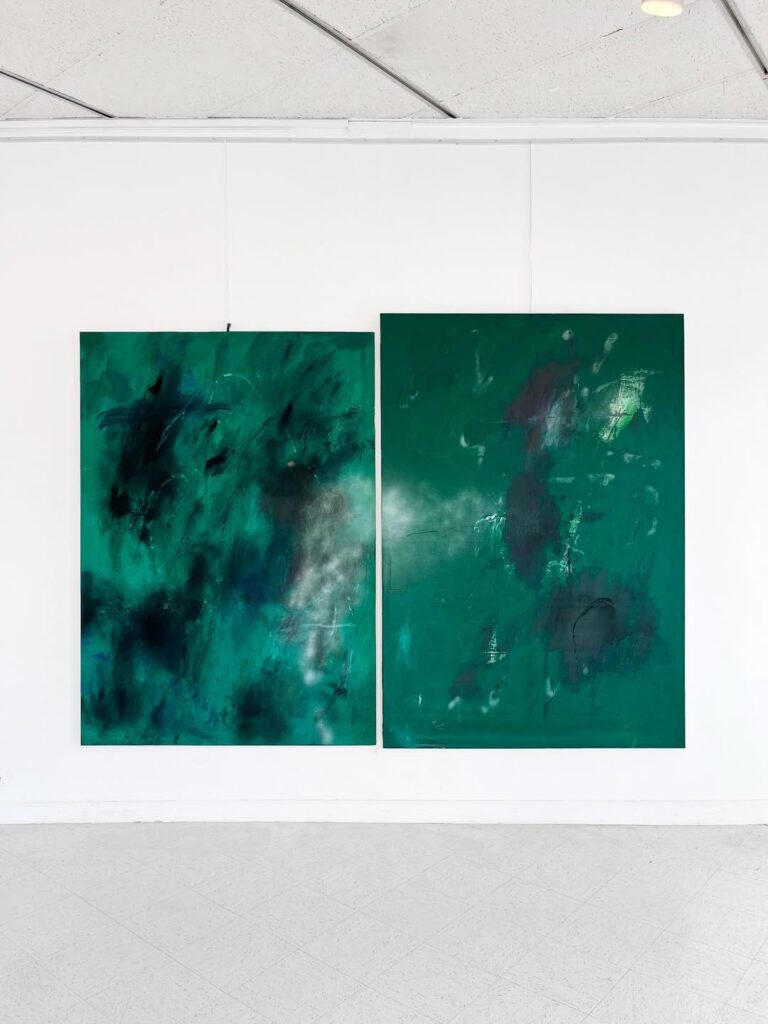
Can you walk me through your creative process from beginning to end result?
Slava: It really depends, because my approach changes depending on where I’m working, whether it’s an art residency, a vacation, or everyday life in the studio. Technically speaking, I’m always researching a few different fields at once, and at some point everything comes together. That’s when I create a painting, or sometimes a whole series.
Can you also tell me about your use of symbolism?
Slava: I believe there are universal natural forms lines and silhouettes that we really love unconsciously. And you find this details when it triggers you somehow. That’s why rituals and symbols are very important to us.
How do you approach color?
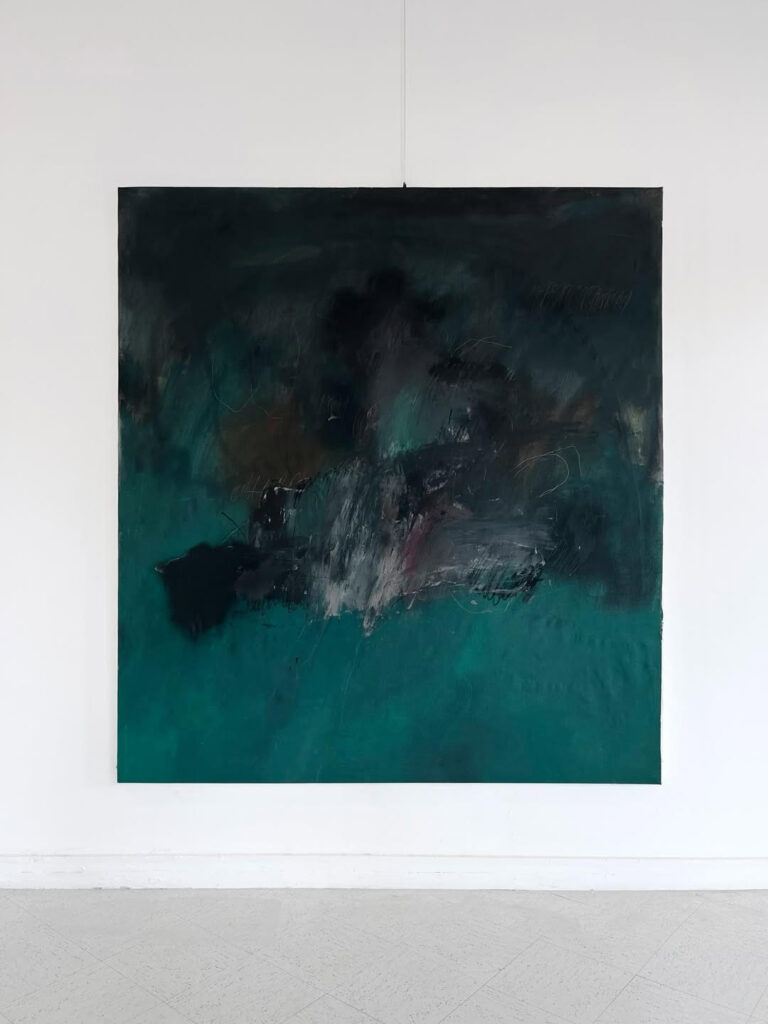
Slava: I don’t know if I can control color. Because I need time to reflect after painting is done to understand why I chose those colors. I mean I have different favorite pallets which are green pallets, grey and brown pallets . But I really love all the colors. And I’m trying to keep it raw to make it unpredictable even for myself.
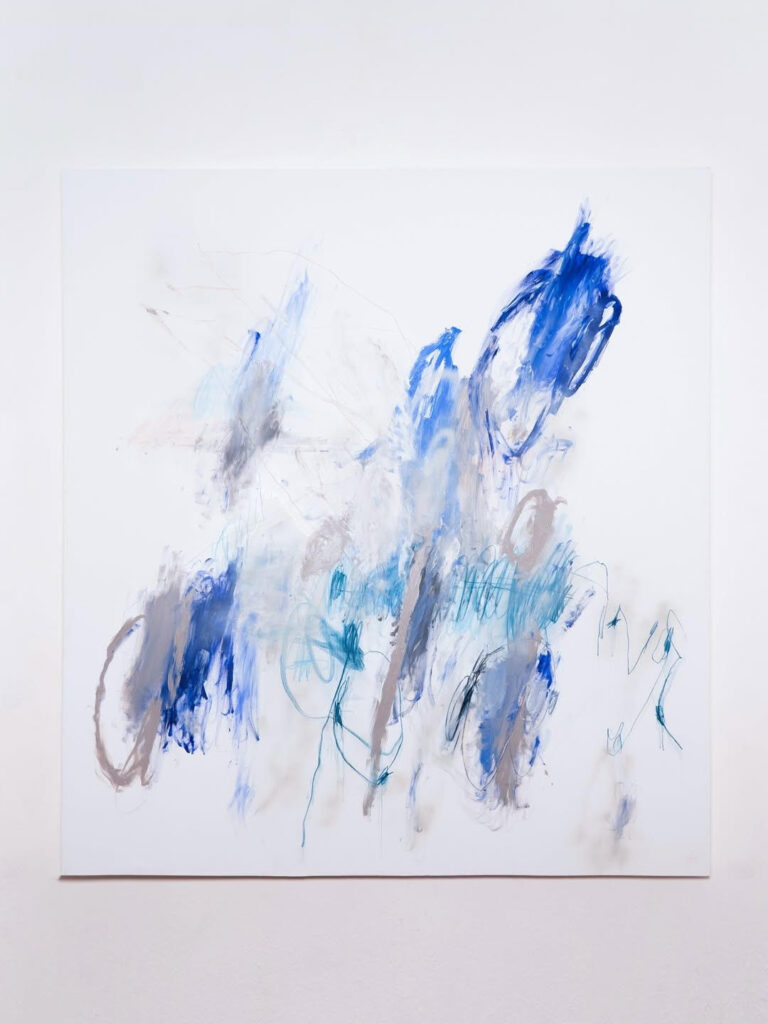
So with what we just talked about, what are you hoping to convey?
Slava: Make love and art instead of doing bullshit!
For younger or emerging artists watching your journey, what advice would you give about staying true to a voice or body of work while still evolving?
Slava: Like your whole life is a journey which is leading you where you should be so be chill and attentive I would say. Appreciate the experience.
Ok Slava, now to something totally different. In a parallel universe who would you be? and what would you be doing?
Slava: Oh I would be a rock on a wild ocean coast just watching sunrises and sunsets playing with waves.
Outside of art, what’s something you’re obsessed with right now, maybe a hobby, a show, or even a food, that keeps you grounded or inspired?
Slava: Animals. My family just adopted a little black kitty named Cutie Kiki. He’s adorable. Animals and nature that’s what really makes me feel peaceful .
Can you tell me a story about a time when a connection with someone had a big impact on you?
Slava: I believe every connection is meant to happen. It’s a chain of unexpected encounters that lead you forward. Every meeting was meant to bring you to where you are now, so I can’t really say which one is more or less important, because they all are.
What qualities do you find most important in the people you choose to spend time with?
Slava: First of all kindness I guess. And I like people being weird.
Anybody you look up to?
Slava: Yes many many of them. But nobody is me so I’m working on myself and the ideas I want to make into reality.
What motivates you?
Slava: Sharing ideas. And I just love creating things.
How would you describe a perfect day?
Slava: You are alive. It’s beautiful every time I try it.
Alright Slava, I always ask these two questions at the end of an interview. The first is. What’s your favorite movie(s) and why?
Slava: Its so hard to choose one. But I would say Holy Mountain. Because of the contrasts I really love which are spiritual visual and visceral.
The second is. What song(s) are you currently listening to the most right now?
Slava: Like I’ll give a playlist on the songs I was listening to a lot lately
Come into My Life
Joyce Sims
Freaks Come Out
Dru Down, Luniz
Mystery of Love
Mr Fingers
Études-Tableaux, Opus 33: Moderato – G Minor No. 8
Rachmaninov
Aram Khachaturian — “Adagio of Spartacus and Phrygia” from the ballet Spartacus
Nirvana – They Hung Him on a Cross
Rachmaninoff: Prelude in C Sharp Minor, Op. 3, No. 2 (Arr. Orchestra)