Share this
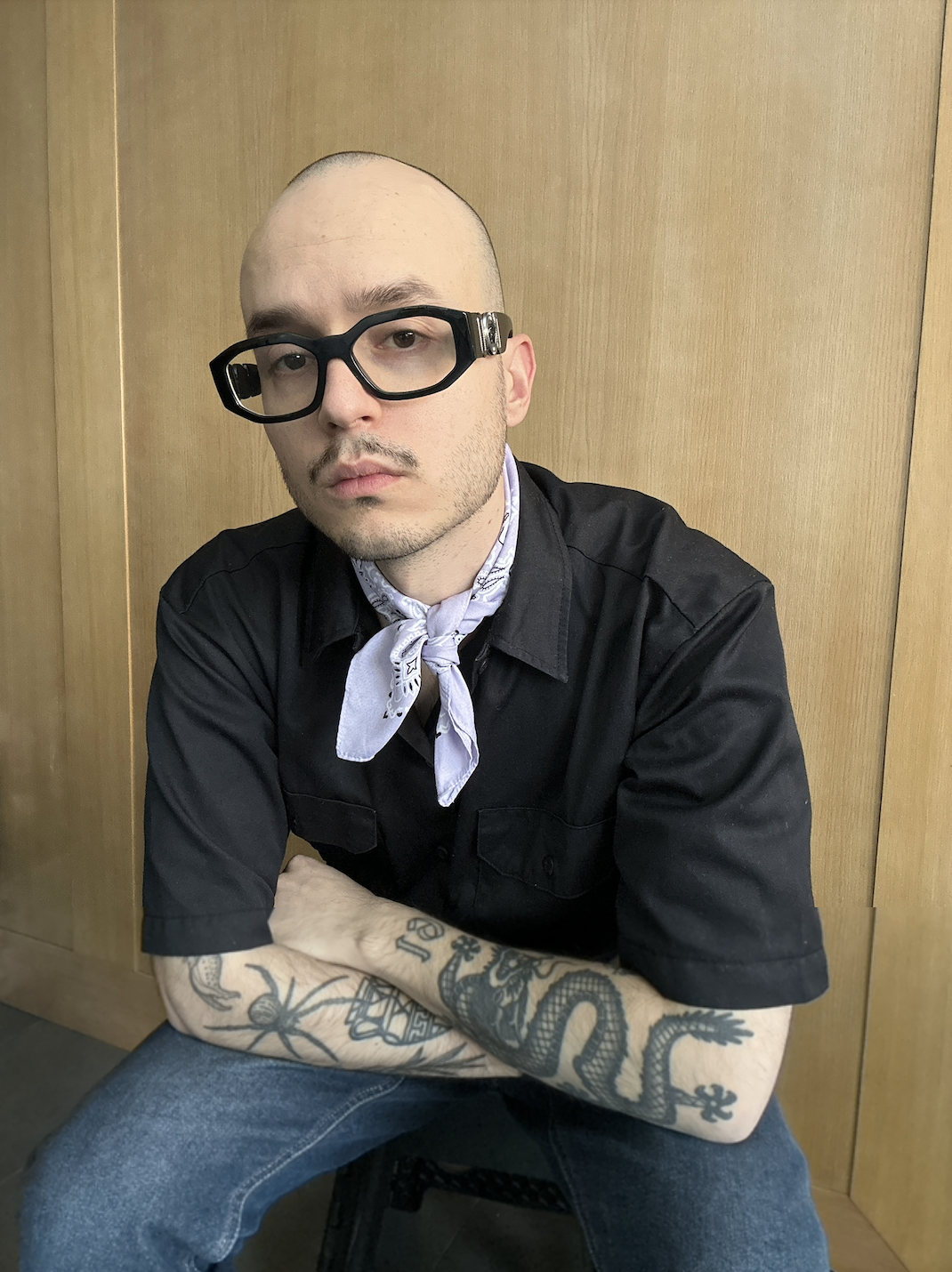
Fernando Cardona (1994, Menorca Island, Spain) better known as Ego Sum Lux Mundi, is a tattoo artist based in between Barcelona and London, who travels monthly
around Europe.
He is resident at Tattox Club (Eixample, Barcelona) and Studio Almost (Hackney, London). His usual guest spots are Berlin, Amsterdam,Vienna, Paris, Zurich and Madrid mainly, but every month he drops new dates, so stay tuned.
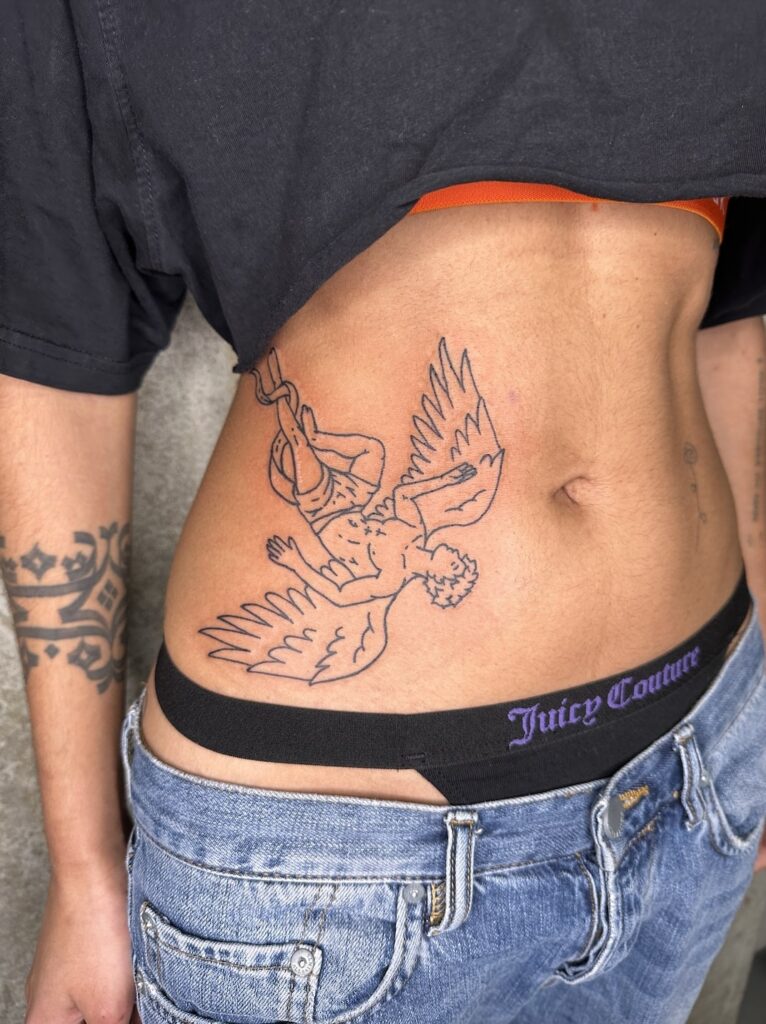
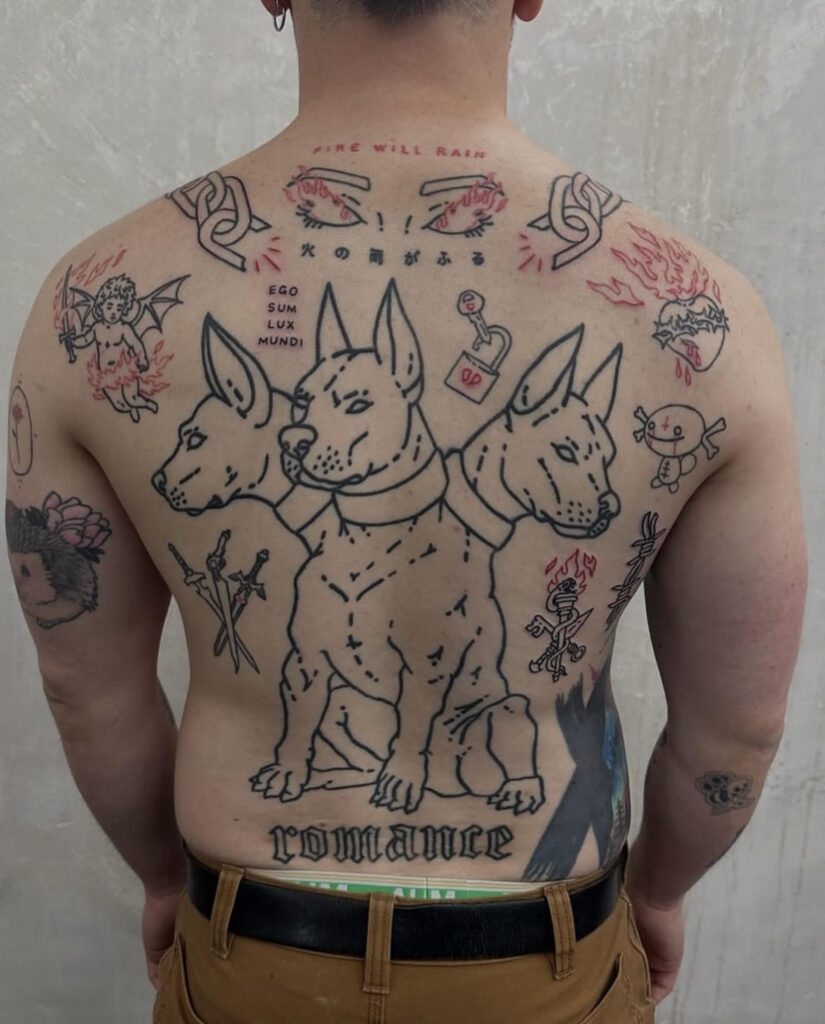
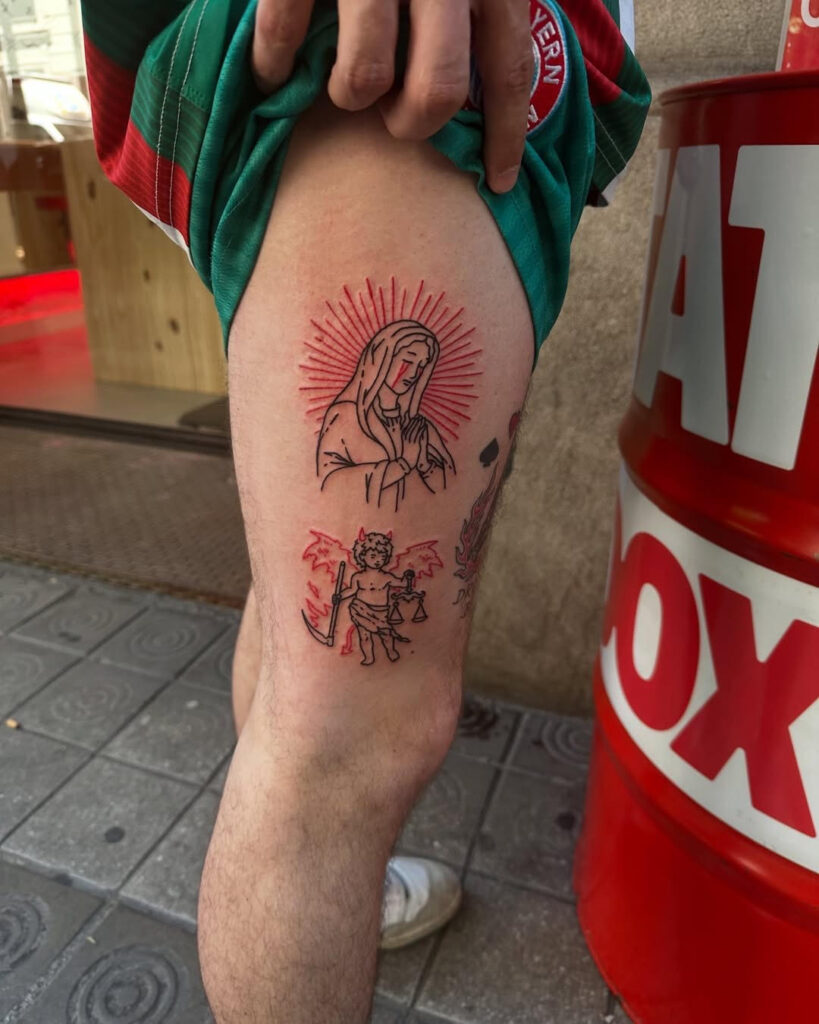
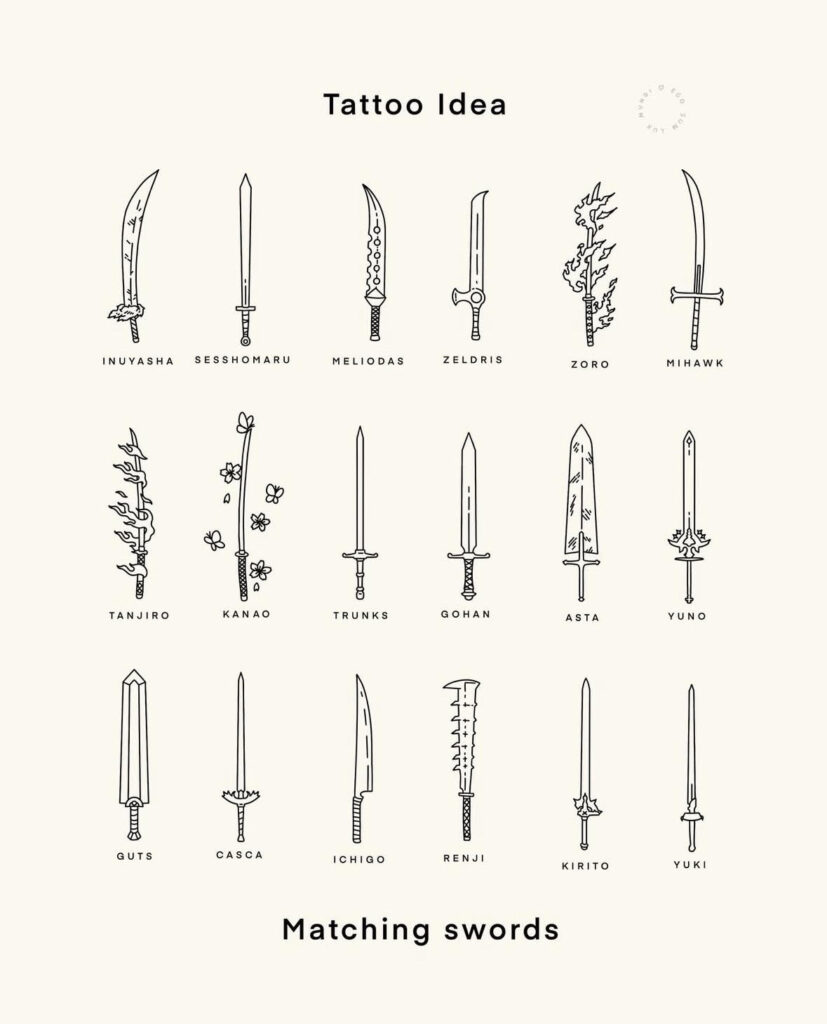
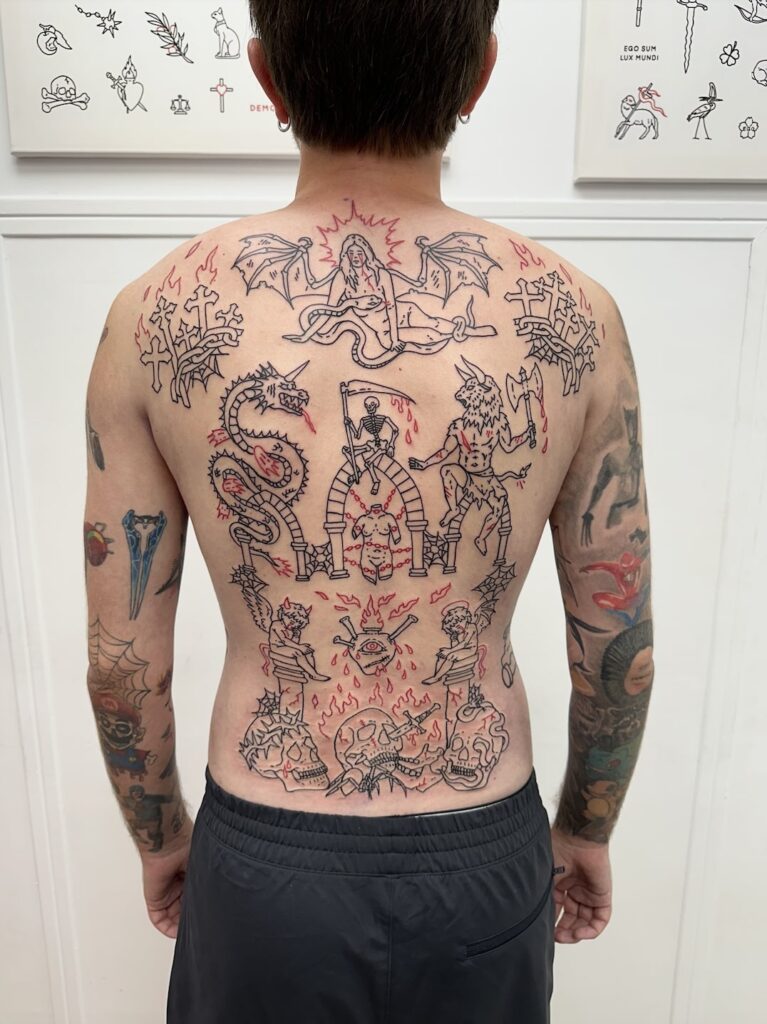
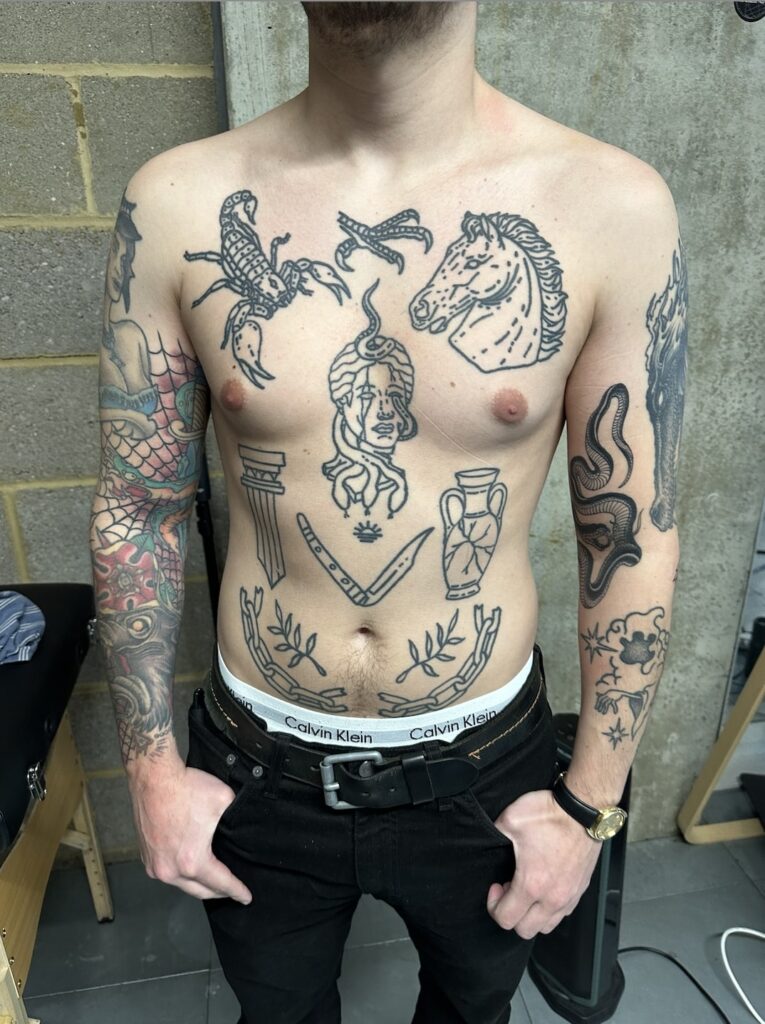
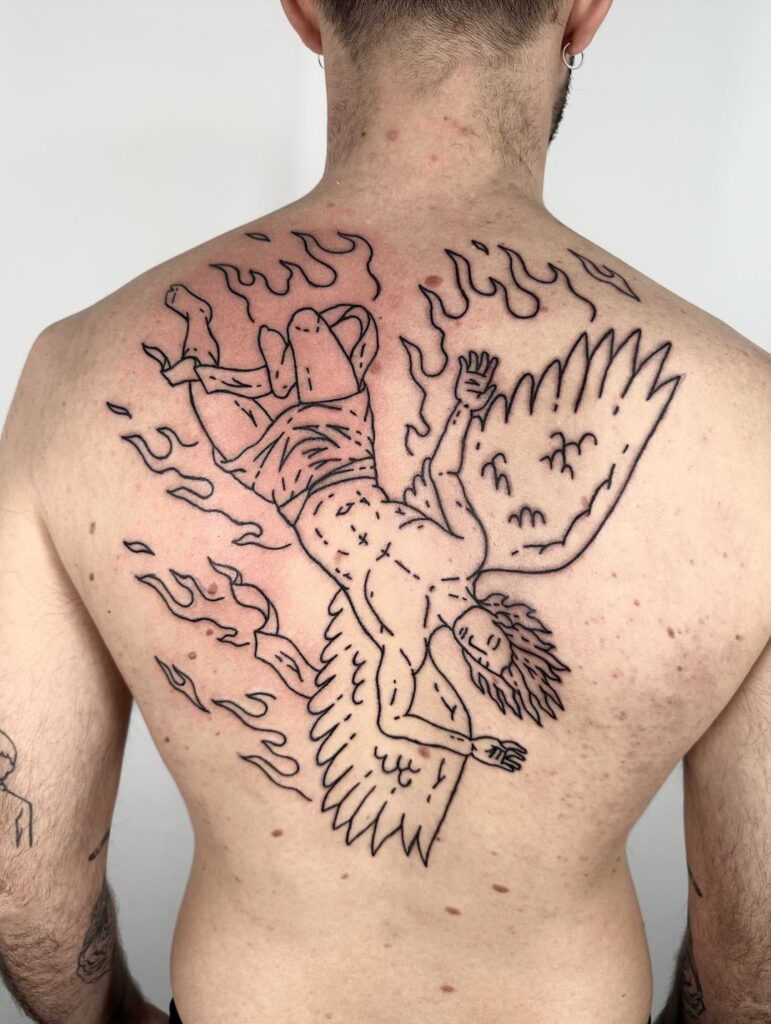
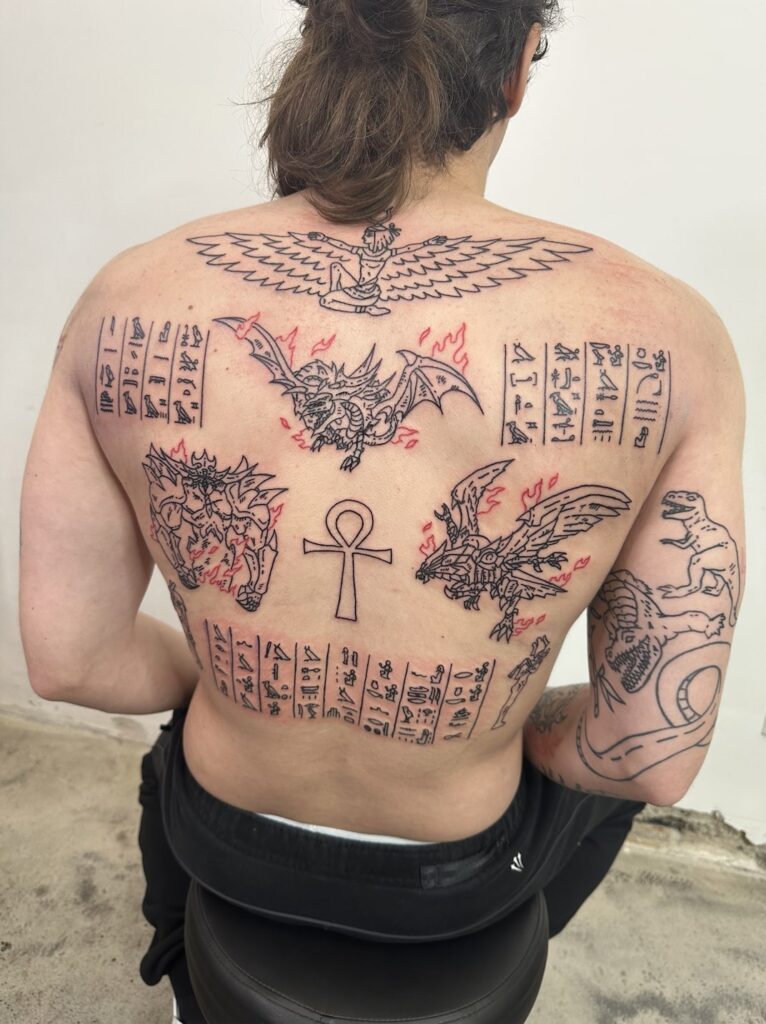
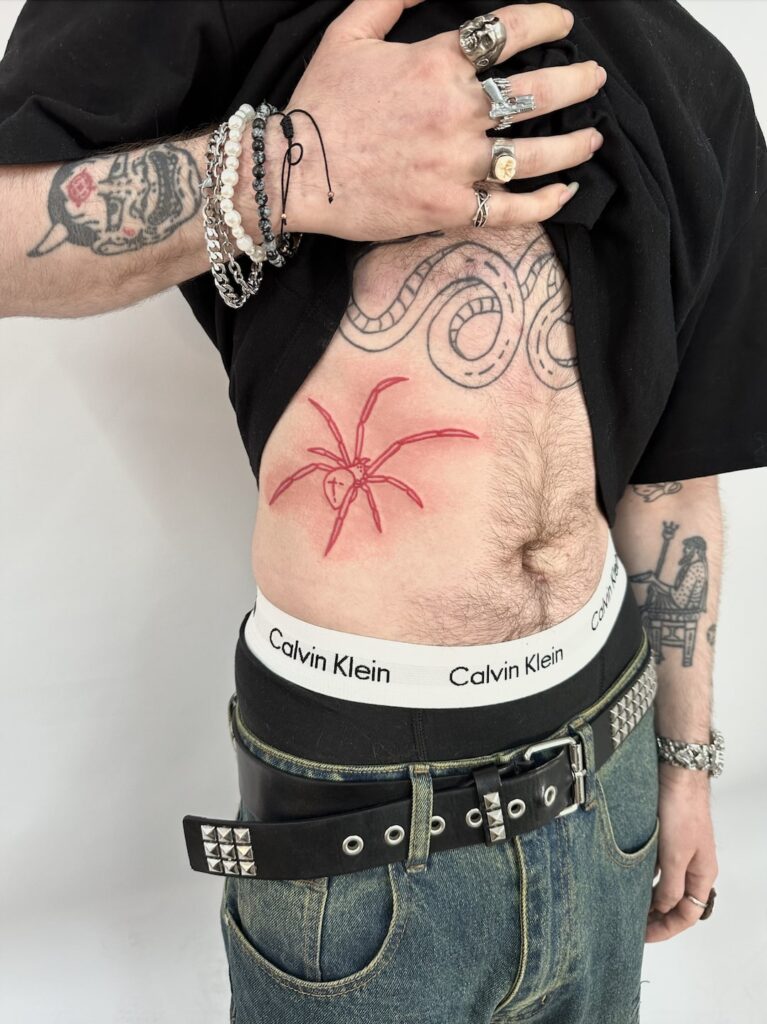
His work is defined by solid lines and clear designs. Furthermore, in his tattoo style there is a combination of different references, from ancient art and history, like mythology and medieval art, Japanese manga culture as well as the fact of growing up in the 90’s, to
the latest contemporary tendencies and internet trends.
Hi Fernando! It’s a pleasure to sit down with you! So, first question that I always ask. How does a regular day look like for you in London or Barcelona?
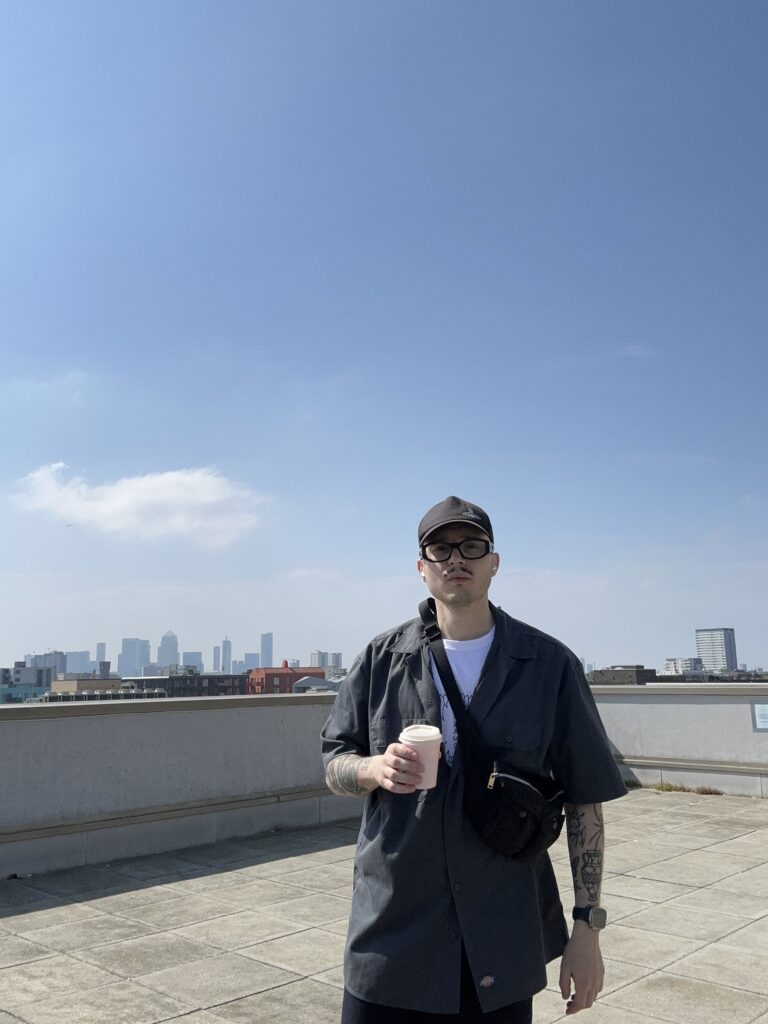
Fernando: My days really change from time to time since I’m constantly traveling, but luckily, when I’m in Barcelona or London I manage to find a bit of routine. I’d say a day in Barcelona is a nice mix between working (tattooing at tattoox) and personal time. I enjoy having time to draw, research topics I’m passionate about, and just slow down a bit. I also love spending time with my girlfriend, peluxicore, and taking walks with our little chihuahua, Biscuit. London, on the other hand, is much more intense. I love the city, but its rhythm is definitely faster, so I spend most of my time at studio.almost, tattooing next to my friend rich.sinner. Between sessions, we try to sneak in a quick coffee here and there, hectic, but inspiring.
I’m curious, growing up in Menorca, what kind of kid were you? What did you enjoy doing, and how did you spend your time?
Fernando: Being born and raised in Menorca is honestly a privilege. It’s a beautiful island, full of history and surrounded by incredible natural landscapes. As a kid, I spent a lot of time outdoors, going on hikes, swimming at the beach, pretty much like any other child growing up on an island. But alongside all of that, I also spent a lot of time drawing and imagining a kind of inner universe. I loved creating, even if it was just for myself. I also enjoyed playing video games, so I guess in the end, I was a mix of the typical and the quietly creative.
What drew you from Menorca to Barcelona, and then to London? Do you feel those cities have influenced your style differently?
Fernando: Moving to Barcelona was a natural step, I went there to study Conservation and Restoration of Cultural Heritage, and it became the place where I took my first steps into tattooing, almost as a hobby or creative experiment at first. It gave me space to explore and slowly shape my personal style, without pressure. London came later, and it was a bit of a shock, in the best way. I was suddenly surrounded by such a wide diversity of genres, styles, and trends. It also allowed me to connect with a broader audience and marked a real shift in terms of professional growth.
Do you remember approximately at what age your creative side started to show? And when did you start taking being an artist seriously?
Fernando: Since I was a child, I felt a strong artistic vocation. I used to tell my parents I wanted to be a painter, and I was genuinely interested in art from an early age. The whole process felt very organic. When I later went to university in Barcelona, I got immersed in both academic and artistic circles, which only deepened that side of me. Tattooing came unexpectedly, but it gave me a medium that somehow brought everything together, drawing, symbolism, history, and real human connection. As for taking it seriously, I’d say I always have. In every stage, I’ve tried to approach what I do with care, focus, and a sense of purpose.
You studied Conservation and Restoration of Cultural Heritage before becoming a tattoo artist. How does that background shape the way you approach tattooing today?
Fernando: Honestly, if I hadn’t studied restoration, I probably would’ve never become a tattoo artist. During my studies, I realized something interesting: when restoring a damaged artwork, you first have to create a mapping of it. That means retracing the entire piece in a schematic, line-based way, marking areas with issues like cracks, missing parts, or wear. So we were constantly redrawing ancient works using clear, precise linework as part of the restoration process. That exercise, tracing and observing, slowly evolved into what would later become the foundation of my tattoo style. It was unexpected, but everything crossed paths at the right time. University also gave me a deep knowledge of art history, symbolism, and meaning. One of my favorite subjects was iconology, which definitely helped shape and solidify who I am today and how I understand visual language.
Alright, so when and how did you get introduced to tattooing? And what was it about tattooing that intrigued you?
Fernando: It actually started just for fun. I was already really into art in general, and one day I got one of those sketchy starter tattoo kits from the internet, just out of curiosity. I didn’t have any clear expectations or long-term plans with it, but as soon as I started trying it, I realized how much I enjoyed the process. There was something immediate and honest about tattooing that really grabbed me. The fact that you’re working directly on someone’s skin, with no undo button, made it feel intense but also meaningful. From that point on, I just wanted to get better and understand it more deeply.
And who trained you, to get to the skills you have now?
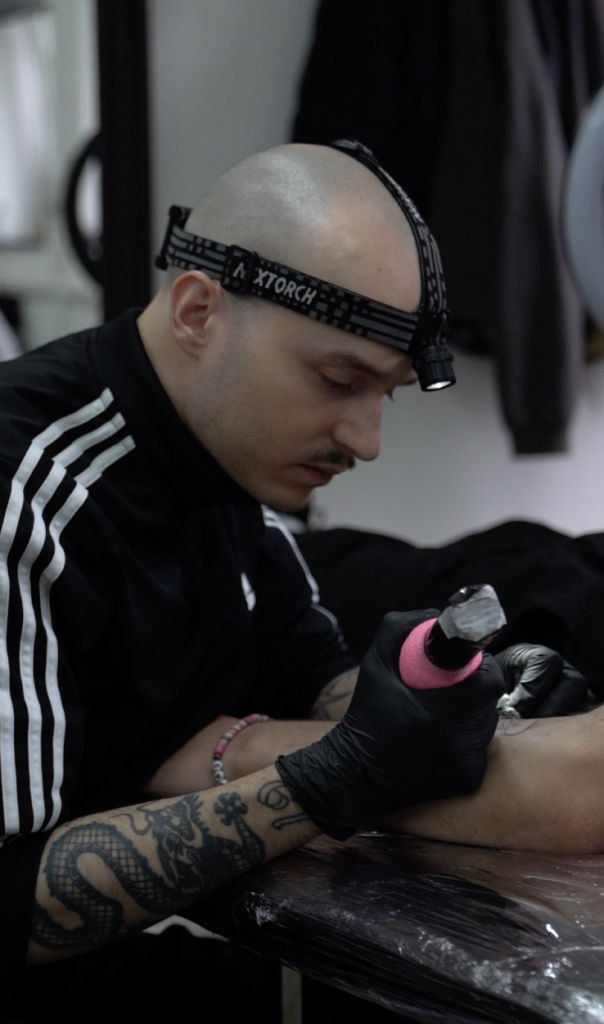
Fernando: Honestly… the internet! I spent a lot of time watching YouTube videos on how to tattoo, how machines work, how to set things up, all of that. And then I practiced on my friends (such good friends, hehe). Of course, it was a very slow process. It took a long time before I started feeling confident with my linework, with the machines, with everything. Along the way, I met other tattoo artists who gave me advice here and there, and little by little things started to make sense. It wasn’t a formal apprenticeship, but it was definitely a long and dedicated learning path.
With that in mind, what role does linework play in your designs, and why are strong, clean lines so central to your practice?
Fernando: It’s really a mix of different influences. Like I mentioned before, the mapping techniques I learned in university had a big impact, reproducing old artworks with schematic, clear linework definitely shaped how I think visually. Also, since I’m self-taught, I was developing my style during a time when trap music and the “ignorant style” aesthetic were really popular. I felt like my drawings somehow fit into that world. But over time, my linework evolved, it became more distilled, cleaner, more intentional. You don’t need complexity to be powerful.
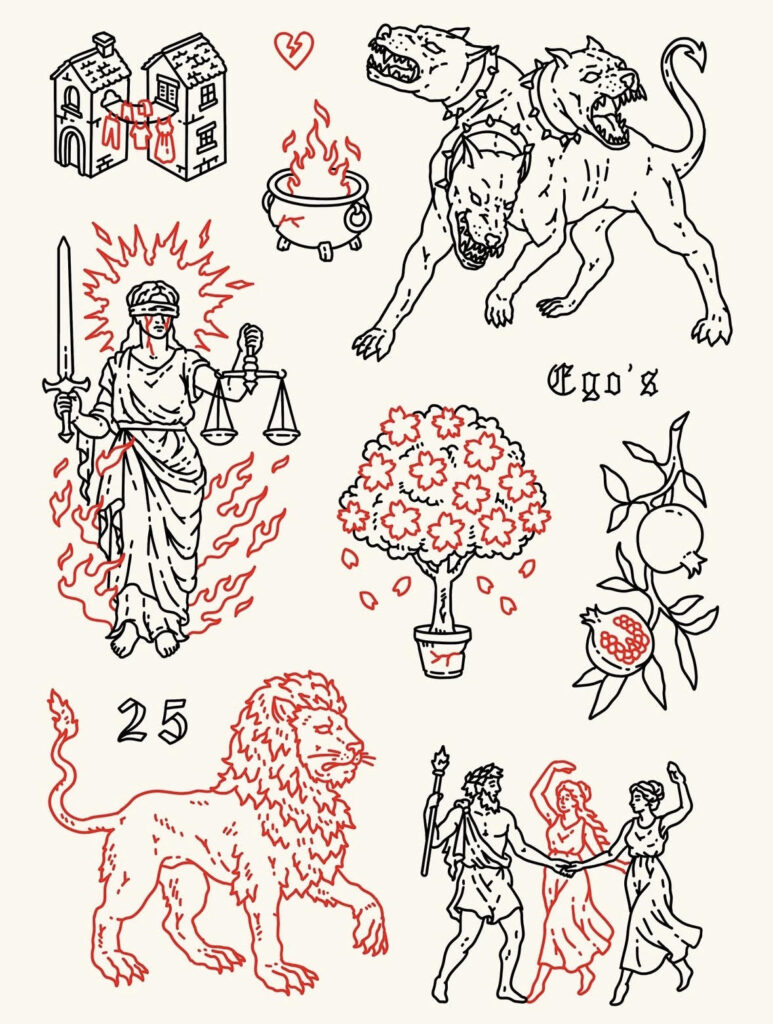
You go by Ego Sum Lux Mundi (“I am the light of the world”). What does that name mean to you?
Fernando: It’s something people ask me a lot. I actually chose the name back in high school, when I first opened my Instagram account, long before I started tattooing. It wasn’t linked to my work yet, I just thought it was a powerful phrase. At the time, we were studying Catalan Romanesque art in school, and I was really struck by the image of the Pantocrator in Sant Climent de Taüll. Christ is shown holding an open book with the words “Ego Sum Lux Mundi,” and that visual stayed with me. Over the years, the name has taken on deeper meaning. In a way, what I try to do through my work is to bring light to ancient ideas, symbols, and narratives, especially those tied to mythology and religion, but reimagined through a contemporary lens and a current storytelling format.
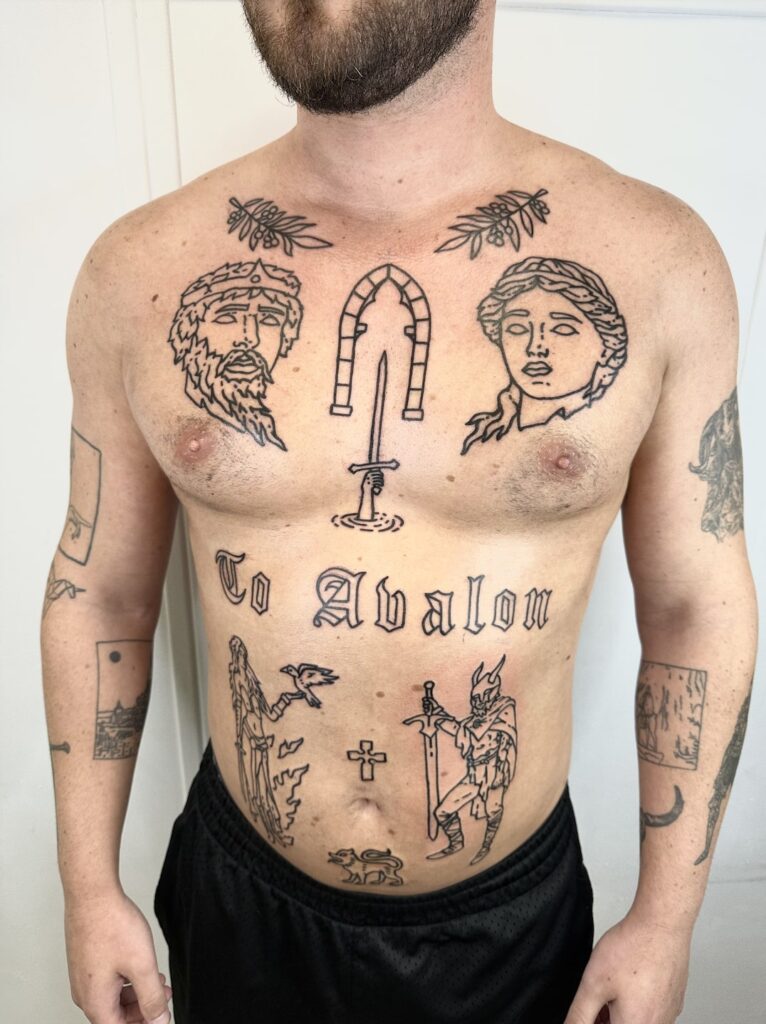
Your work combines mythology, medieval art, and Japanese manga, but also 90s culture and internet aesthetics. Can you tell me about why those eras and topics resonate so well with you?
Fernando: Honestly, these are just the things I’ve always been drawn to. I think many people of my generation share a love for 90s aesthetics, anime, early internet culture, but in my case, I’ve always tried to blend those with deeper symbolic traditions, like mythology or medieval iconography, to create something visually coherent. I’m fascinated by the contrast and harmony between what’s ancient and what’s digital, between sacred images and pop culture. Somehow, mixing these elements helps me reflect on my own identity and the world around me. It’s not a forced concept, it’s just the natural result of the things that shape my imagination.
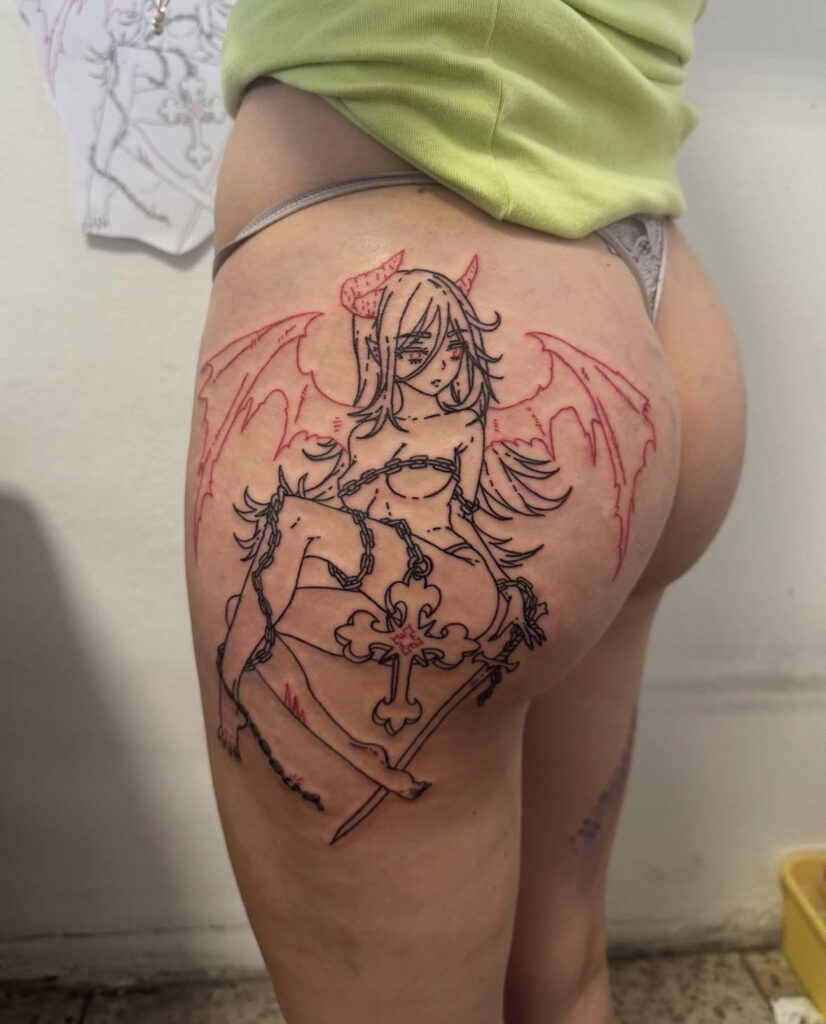
Growing up in the 90s, what visual influences from that era still stick with you when designing tattoos?
Fernando: Definitely the music along with anime like Dragon Ball and many others, and of course, video games. From the Game Boy to the PlayStation, I grew up surrounded by all those amazing visual universes. They shaped my imagination and still echo in how I approach composition, symbols, and character design today.
Do you see your tattoos more as storytelling devices, spiritual symbols, or purely aesthetic works—or all at once?
Fernando: I think that’s really up to the viewer to decide. My intention is often a mix of all those things. Sometimes I draw to tell a story or reflect on something that captures my attention; other times it’s simply because the image feels visually powerful. Some designs carry deeper symbolic meaning, while others are more about the elegance of the line itself. I don’t believe these things are separate, story, spirit, and form can all exist in one image, and that’s what makes tattooing so rich.
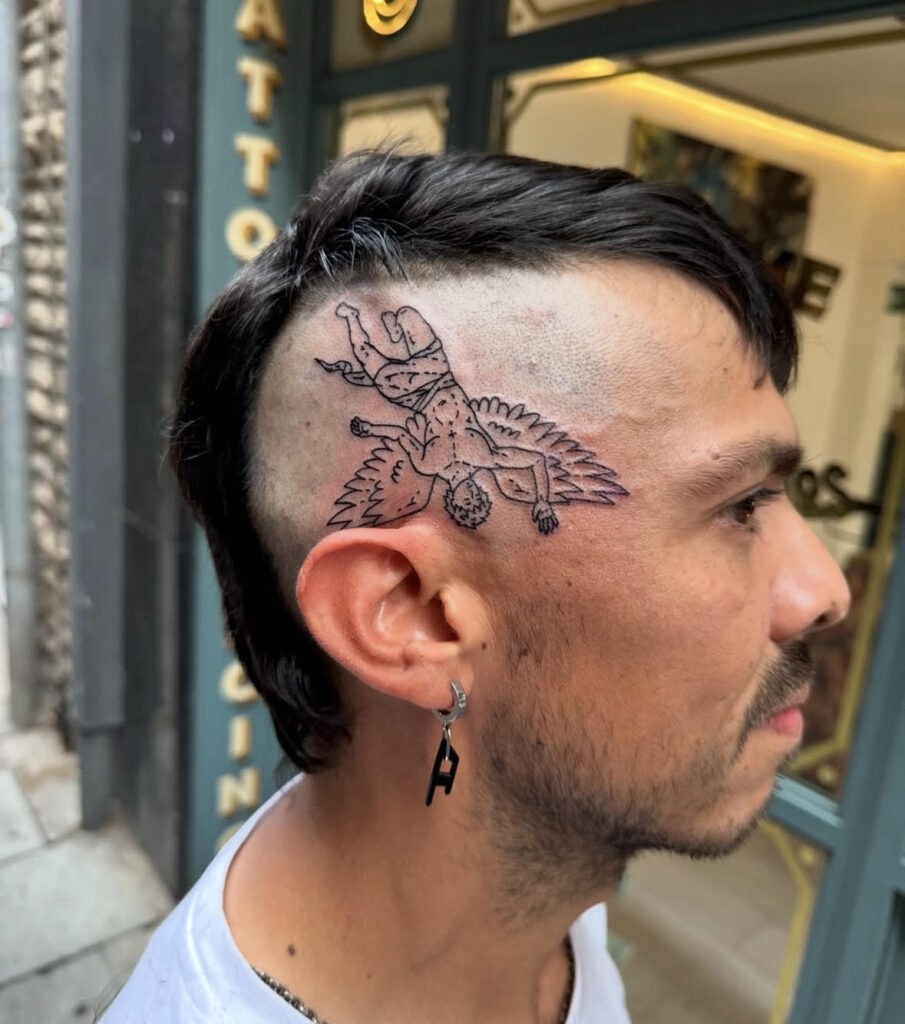
You’re constantly traveling across Europe for guest spots. How does moving between different cities and studios shape your perspective on tattoo culture?
Fernando: Traveling has helped me grow so much—both as a person and as a tattoo artist. It pushes me to break routines, question my own habits, and stay open to new ways of working and thinking. I honestly wouldn’t be who I am today without those experiences. Each trip, each studio, each city has taught me something, and I’m still learning with every new place I visit.
What differences do you notice between the tattoo communities in Barcelona, London, Berlin, and elsewhere?
Fernando: I’d say nowadays, there aren’t huge differences between tattoo communities. Maybe ten years ago there were more noticeable contrasts, but now things feel more connected and global. Of course, there are local elements, London has more bookings simply because it’s bigger, and cities like Berlin have strong cultural scenes, like techno, that influence the vibe around tattooing. But overall, beyond demographics or cultural trends, the core of tattoo culture feels more unified across cities than ever before.
With tattooing becoming so visible on social media, how do you balance online visibility with the more intimate, personal nature of the tattoo process?
Fernando: Nowadays, tattooing is almost inseparable from social media. There’s very little that escapes the spotlight, everything is content, everything is visibility. But there’s definitely a big contrast between the fast-paced, attention-driven world of algorithms and the much slower, intimate experience of a real tattoo session. In the end, that’s just part of the game today. You learn to navigate both sides: creating content and staying visible, while still protecting the quiet, personal space that happens when someone trusts you with their skin.
How do clients’ personal stories influence the way you design a piece for them?
Fernando: It really depends on each client. I’d say most of the time, people choose a flash I’ve already drawn, which makes things easier on a practical level. But when it comes to custom requests, sometimes clients have a personal memory or experience they want to express through a tattoo. That can be more complex. If it’s something symbolic, like a myth, an object, or a historical reference, it’s easier to translate visually. The real challenge comes when what they want to express is more abstract, like a feeling, a memory, or an emotional something. In those cases, symbolism becomes my best tool to help give shape to something that’s otherwise intangible.
Can you tell me about your use of symbolism?
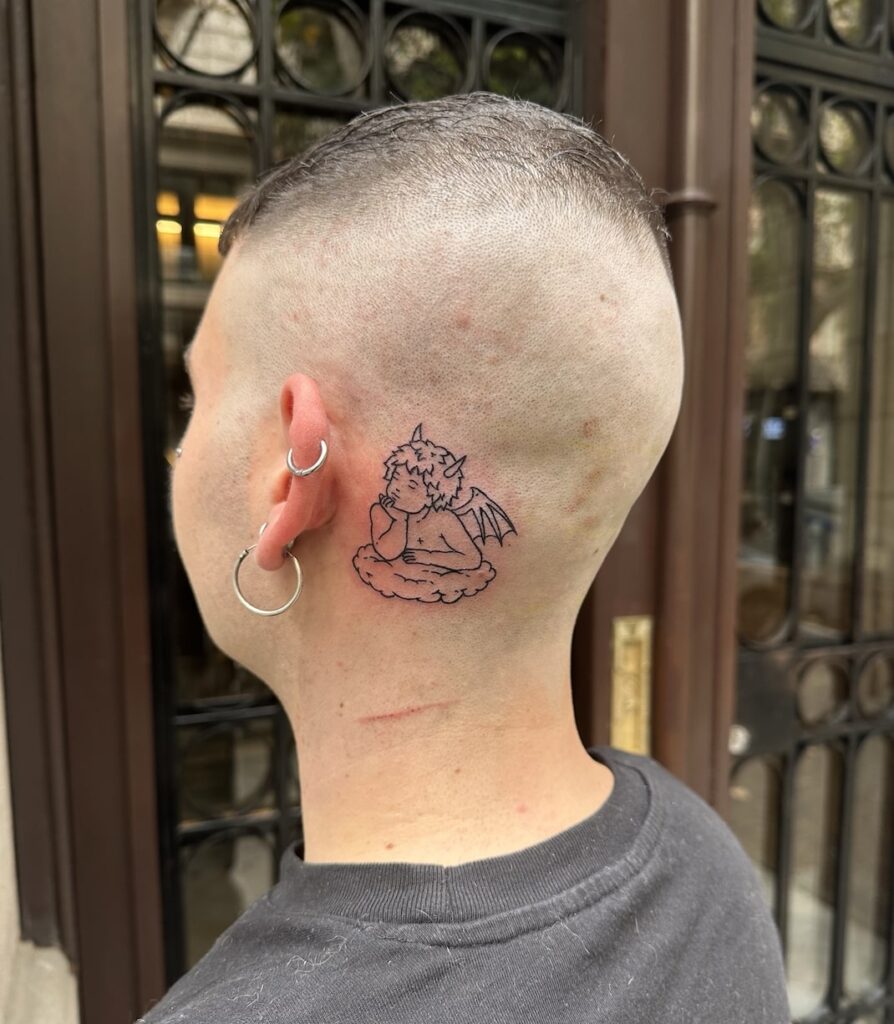
Fernando: Symbols and images are incredibly powerful, they have the capacity to tell a story through a single sketch. I think it’s something deeply connected to human mentality; we’re wired to interpret and relate to symbols constantly. What fascinates me is that symbols transcend borders. Of course, meanings can shift depending on culture, context, or time period, but the human ability to recognize, reinterpret, and even create new symbolic systems is always there. That’s what I try to explore in my work, playing with existing meanings while suggesting new layers of interpretation.
Can you also tell me about your creative process, from beginning to end result?
Fernando: It’s actually quite random, there’s no single formula. Sometimes I just start with a blank page and begin drawing whatever I feel like, then I slowly shape it like a puzzle, figuring out how the elements connect. Other times, I begin with a clear idea or story I want to tell. In that case, I think about which symbols or elements relate to it, and then I start building the composition. And sometimes it’s just a long process of sketching and sketching until something starts to click and I feel it’s taking the right path.
Ok Fernando, now to something totally different. In a parallel universe who would you be? And what would you be doing?
Fernando: Wow, this feels like real anime Isekai mood! But if I had to choose something different within our world, I think I’d stay close to the study of religions. To me, the history of religions is the most beautiful story, full of rituals, sacred texts, symbolic systems, and narratives that shaped entire civilizations. I’d probably be some kind of researcher or professor, focused on the ancient history of religions. Honestly, I already read about these topics all the time, so it wouldn’t be too far off.
Outside of tattooing, what’s something you’re obsessed with right now—maybe a hobby, a show, or even a food—that keeps you grounded or inspired?
Fernando: Honestly… like 200 things at the same time. I watch a lot of anime, I’m constantly reading books, and I listen to tons of history podcasts. Inspiration comes from everywhere, all at once, it’s kind of chaotic, but that’s how I like it. Even just living life, traveling, discovering new cities, or something as simple as gardening, watching plants grow and seasons shift. I know it sounds very NPC, but all those little things keep me grounded and curious.
If you could tattoo one sentence on every person in the world, what would it say?
Fernando: Honestly, I’d probably change my answer every week, but if I had to choose one sentence right now, it would be: Omnia vincit amor. — “Love conquers all.”
Can you tell me a story about a time when a connection with someone had a big impact on you?
Fernando: More than one specific story or person, what really impacts me is the everyday connection I have with people who trust me. It still fascinates me how complete strangers give me their skin, their time, and their attention, and how they support my work, follow my sketches, and value what I do.
What qualities do you find most important in the people you choose to spend time with?
Fernando: I tend to keep close the people who make me feel calm, inspired, and challenged in a good way.
Anybody you look up to?
Fernando: There isn’t one specific person I idolize, but I deeply admire people who stay true to their vision, especially artists or thinkers who create with depth and intention, without rushing to follow trends. I also look up to people who keep learning no matter their age or experience. That kind of humility and dedication is something I always try to hold on to.
What motivates you?
Fernando: What keeps me going is learning every day, especially discovering stories from the past, researching ancient myths and histories, and finding connections between those narratives and today’s world. Also, simply drawing and sharing what I find interesting, and knowing that others resonate with it, is a constant source of motivation for me.
How would you describe a perfect day?
Fernando: I think all days are perfect in their own way. I see life as a long path made of days with ups and downs, and that’s part of the beauty. Perfection isn’t about everything going right, it’s about being present and finding meaning in whatever the day brings.
I know you like to read.
Fernando: Yes, reading is a big part of my life. It’s one of the things that constantly feeds my imagination.
What’s your favorite movie(s) and why?
Fernando: I’m not really into movies, I usually prefer watching anime episodes rather than full films. But if I had to choose one, I’d say Pokémon: The First Movie, the one with Mew vs. Mewtwo. I’ve always loved the philosophical contrast between those two characters.
What song(s) are you currently listening to the most right now?
Fernando: Lately, I’ve been listening a lot to the latest songs by @metrikazf and @l0rnasf. I think both of them have a very personal and creative universe, they’re artists with a lot to say and share, and I really connect with that energy.
What’s your favorite book(s), and why?
Fernando: The Bible, for sure. Not just as a religious text, but as a collection of so many stories, layers, and symbolic meanings. It holds echoes of ancient myths and offers points of connection between Mesopotamian culture, Ancient Egypt, Judaism, and Christianity. To me, it’s like a coded text, you can always find something new to reflect on, no matter how many times you go back to it. It’s a book that stays alive through interpretation.