

Share this
The Japanese streetwear pioneer reworks four of the Danish audio house’s most recognizable designs through gloss, shadow, and the quiet power of a double lightning bolt
Some collaborations arrive shouting. Hiroshi Fujiwara’s tend to do the opposite. His best work often comes from the smallest possible intervention: a symbol, a colour shift, a removal, a restraint. The object is already there. He just changes the temperature.
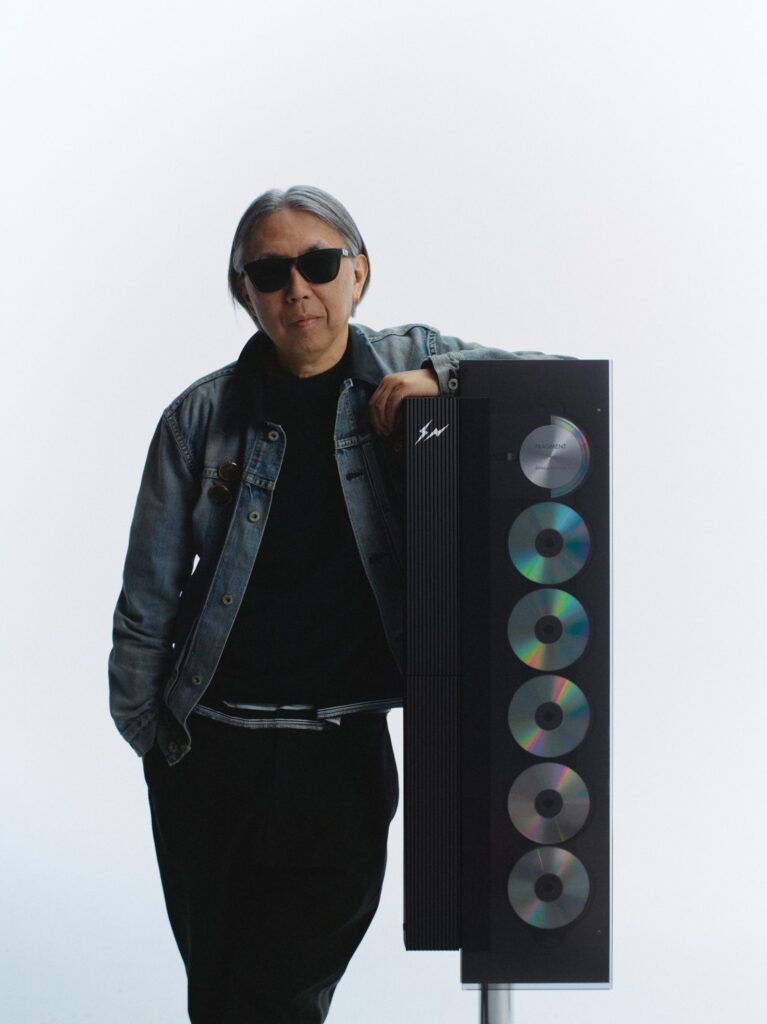
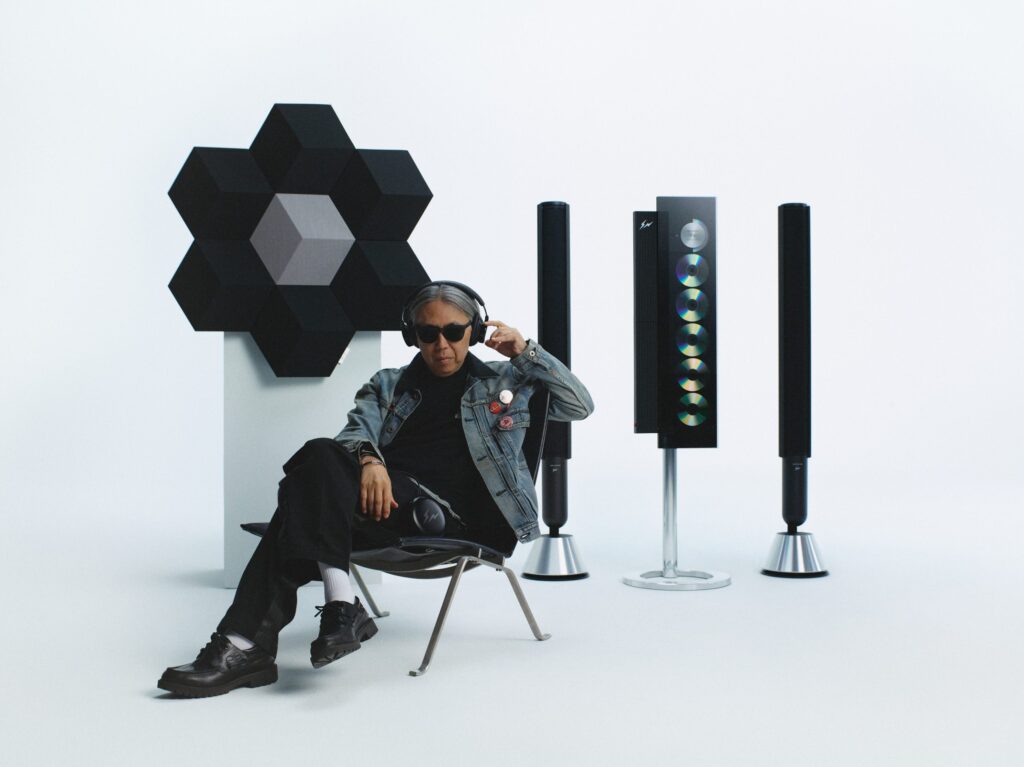
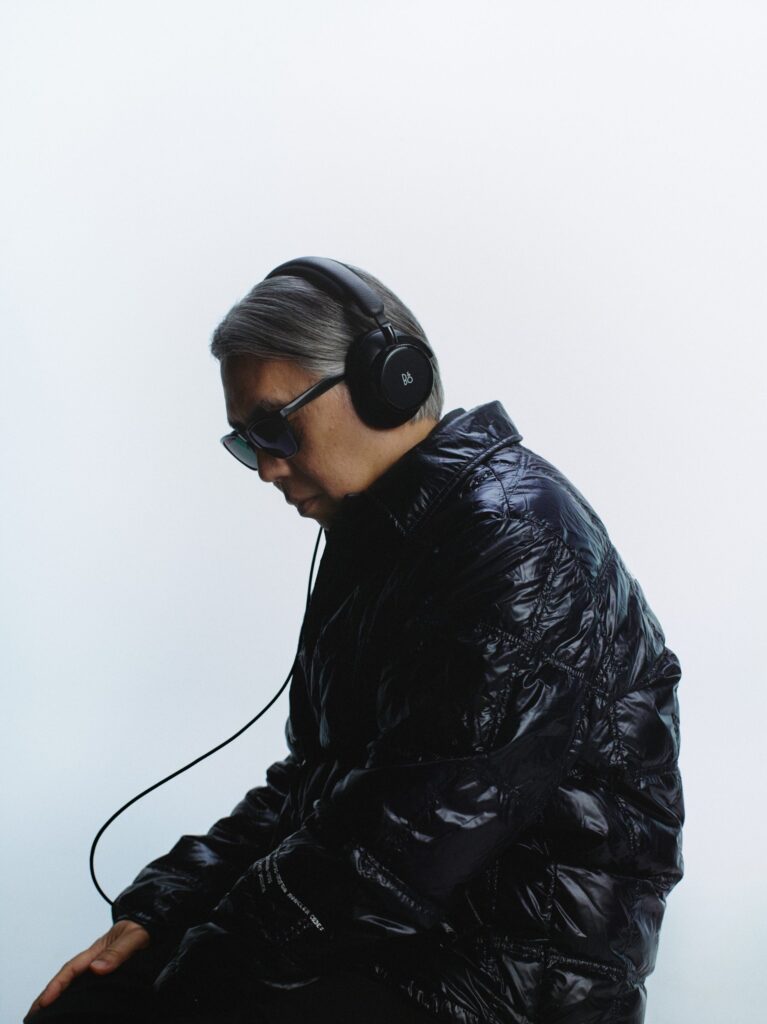
For his latest project, Fujiwara’s Fragment Design has teamed up with Bang & Olufsen, bringing the Tokyo studio’s monochrome minimalism into the world of high-end Danish audio. The collaboration reimagines four B&O staples: the Beosound A1, Beoplay H100, Beosound Shape, and Beosystem 9000c, each filtered through Fragment’s signature all-black language.
The result is less a redesign than a kind of controlled disappearance. Bang & Olufsen’s precision-milled aluminium is treated with a high-gloss anodised finish, developed through hand-polishing and specialised surface work, giving the objects a black reflective quality that feels both technical and strangely ceremonial. The machines remain recognisably B&O, but they now carry a darker, sharper atmosphere.
That tension is what makes the collaboration work. Bang & Olufsen has built its mythology around sound, craft, and domestic design objects that refuse to look disposable. Fragment, meanwhile, has spent decades proving that a logo can behave like a cultural signal when used with enough discipline. Together, they make audio equipment feel less like home tech and more like a set of private monuments.
The Beosound A1 becomes a small portable object with almost talismanic force, topped with Fragment’s double lightning bolt. The Beoplay H100 turns headphone design into something sleeker and more nocturnal. The Beosound Shape brings the collaboration into modular wall-mounted sound, while the Beosystem 9000c carries the most archival charge, linking B&O’s design history to Fujiwara’s own obsession with music, collecting, and cultural memory.
Fujiwara has often been called the godfather of streetwear, but that title can flatten what he actually does. His influence has always moved between music, fashion, design, retail, and taste itself. With Bang & Olufsen, the collaboration feels especially natural because sound sits close to the origin of his world: DJ culture, records, listening rooms, the private ritual of choosing what fills a space.
What makes this release compelling is its refusal of novelty for novelty’s sake. There are no loud graphics, no forced futurism, no desperate attempt to make audio equipment look “street”. Instead, Fragment does what Fragment does best: it reduces, darkens, signs, and lets the object carry the weight.


Photos: Bang & Olufsen x Hiroshi Fujiwar