
Share this
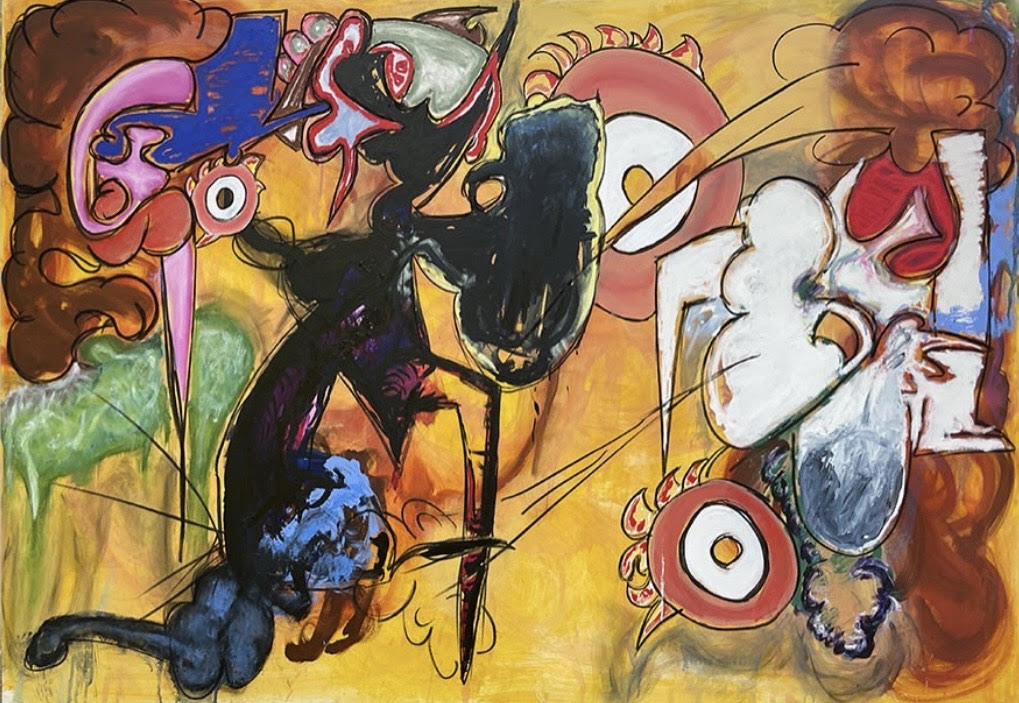
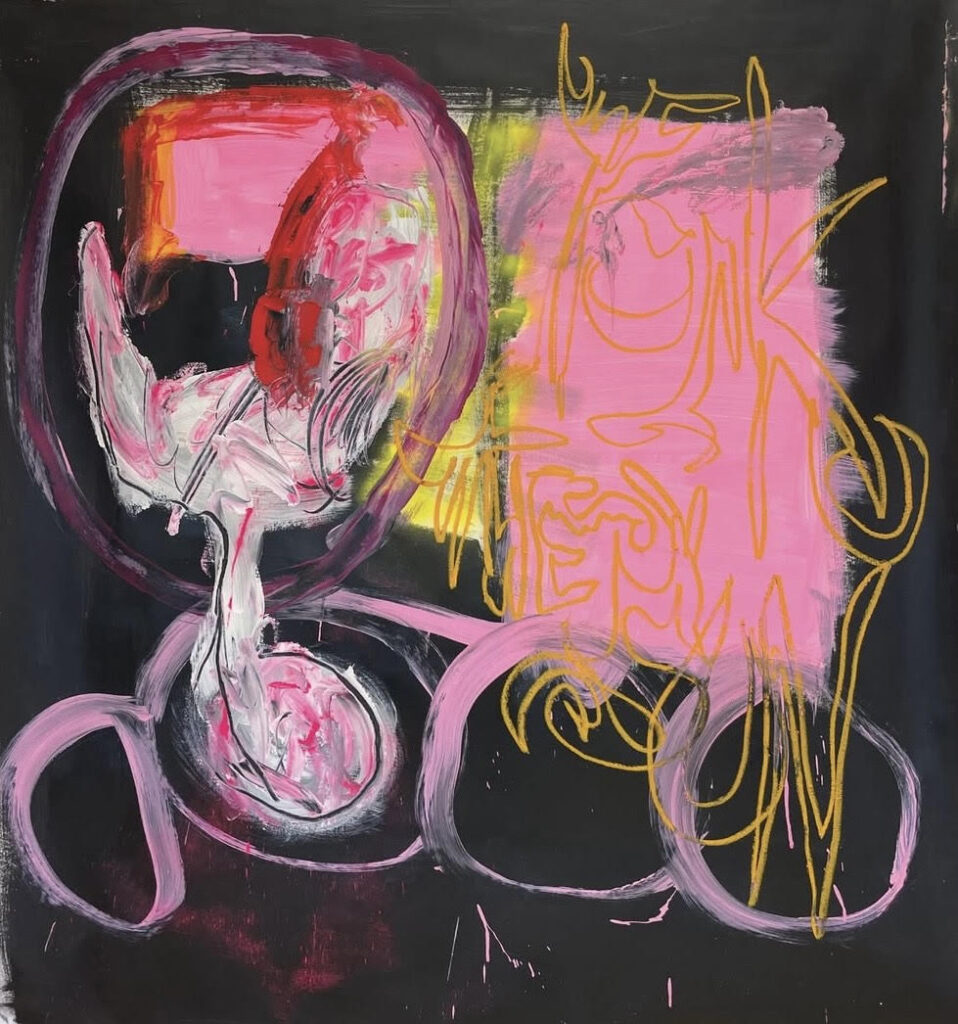
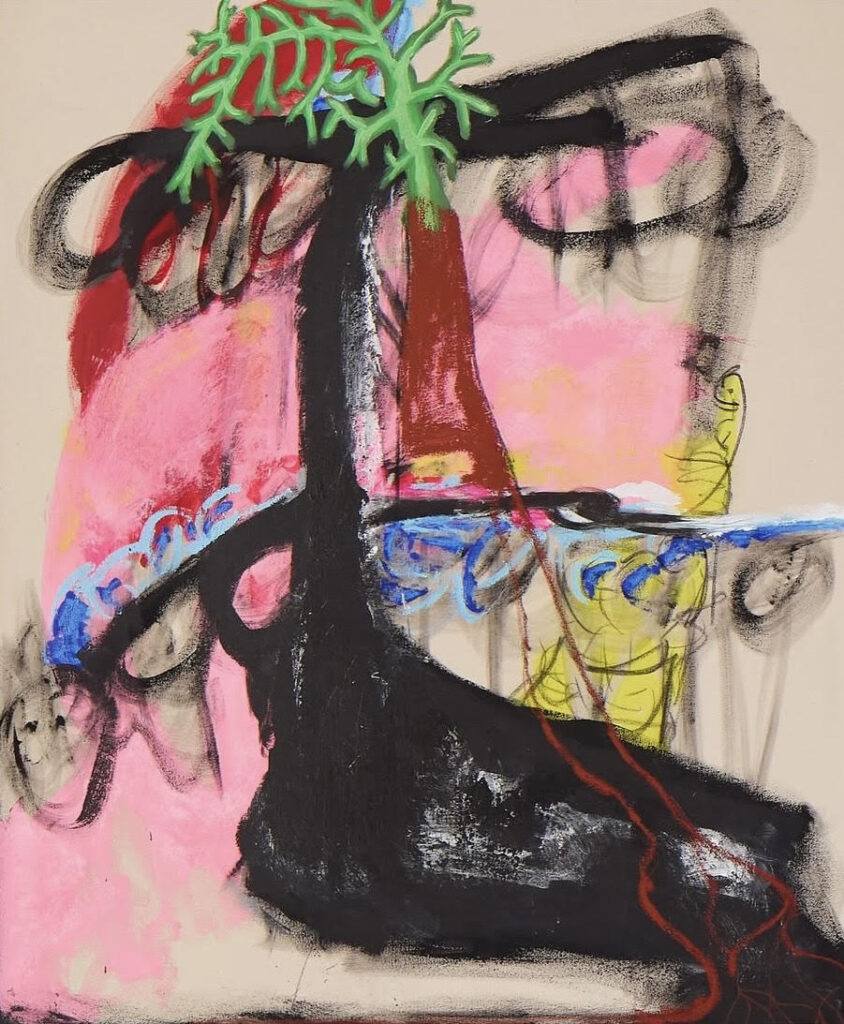
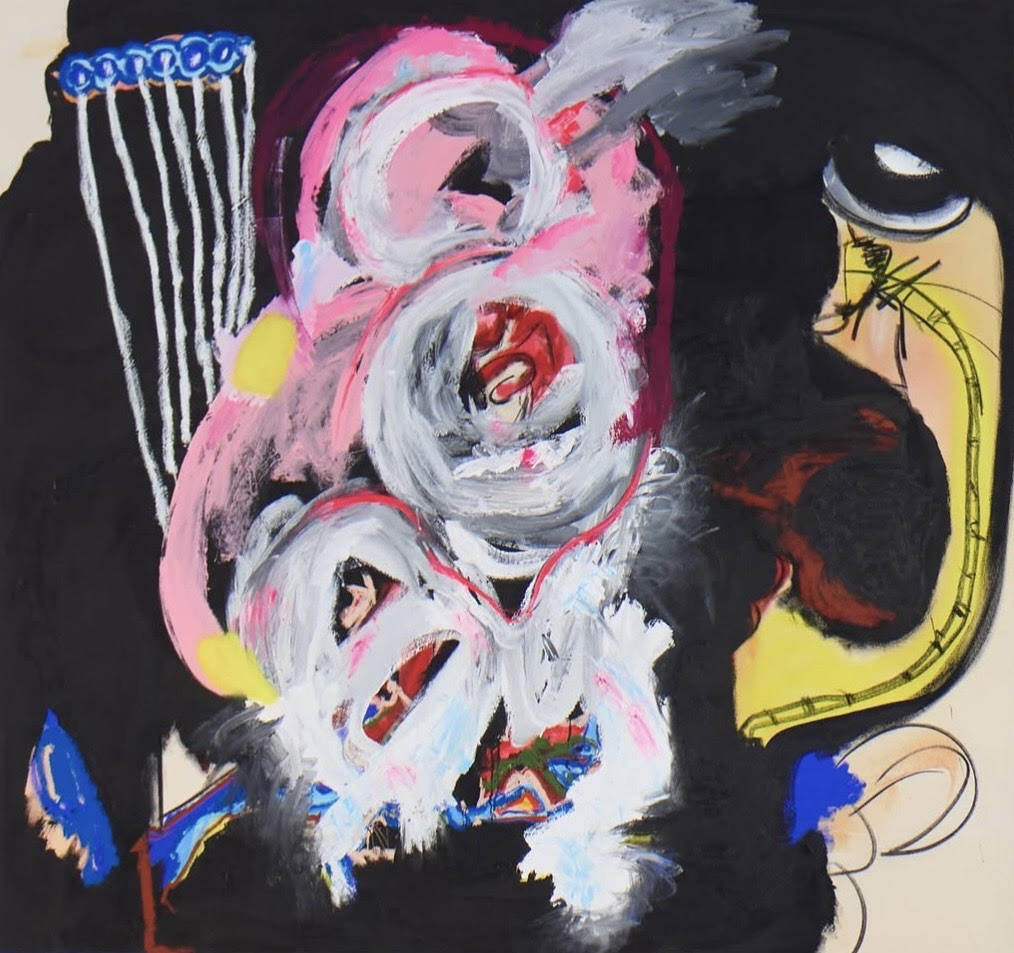
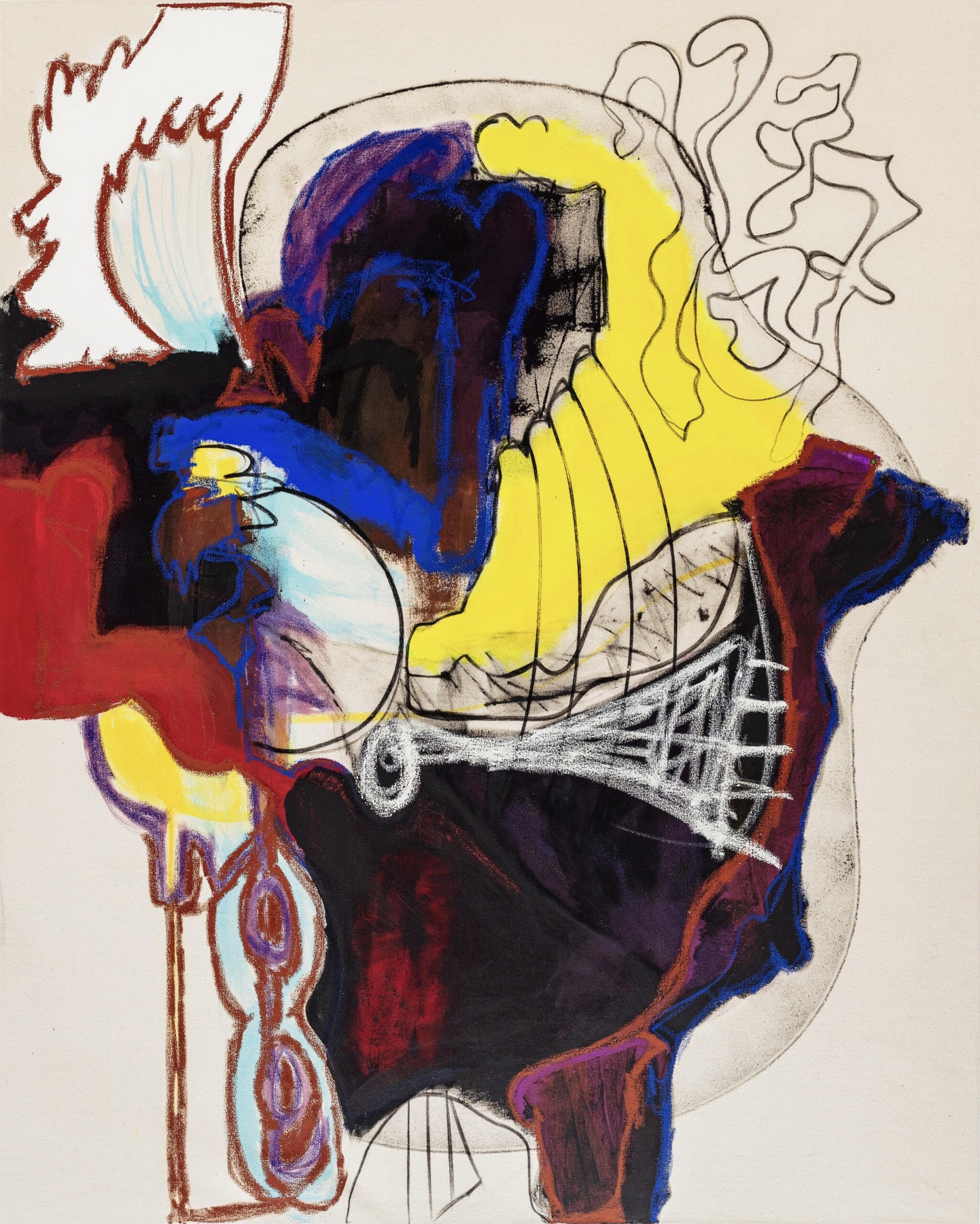
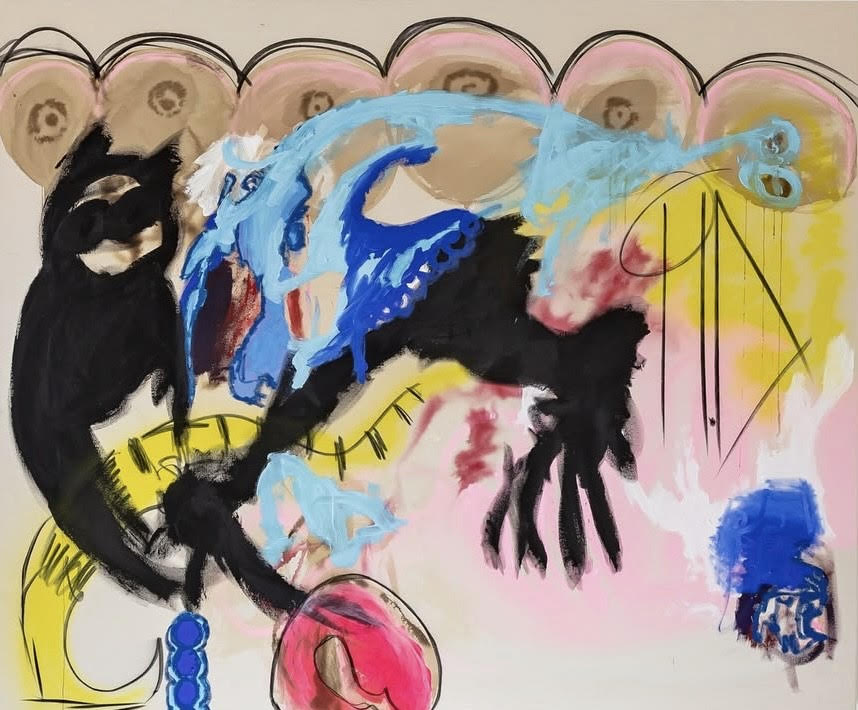
Hetty Douglas (b. 1992) is a London-based painter whose raw, emotionally-charged abstractions explore the messy terrain of heartbreak, shame, vulnerability, and personal repair. Raised in Nottingham and trained in illustration at the University of the Arts London, Douglas rejected clean lines early on, instead building a practice grounded in gestural immediacy and tactile experimentation. Her work fuses the urgency of street tagging with studio ritual, using spray paint, charcoal, cement, and oils on unprimed canvas to construct layered surfaces that feel equal parts ruin and release.
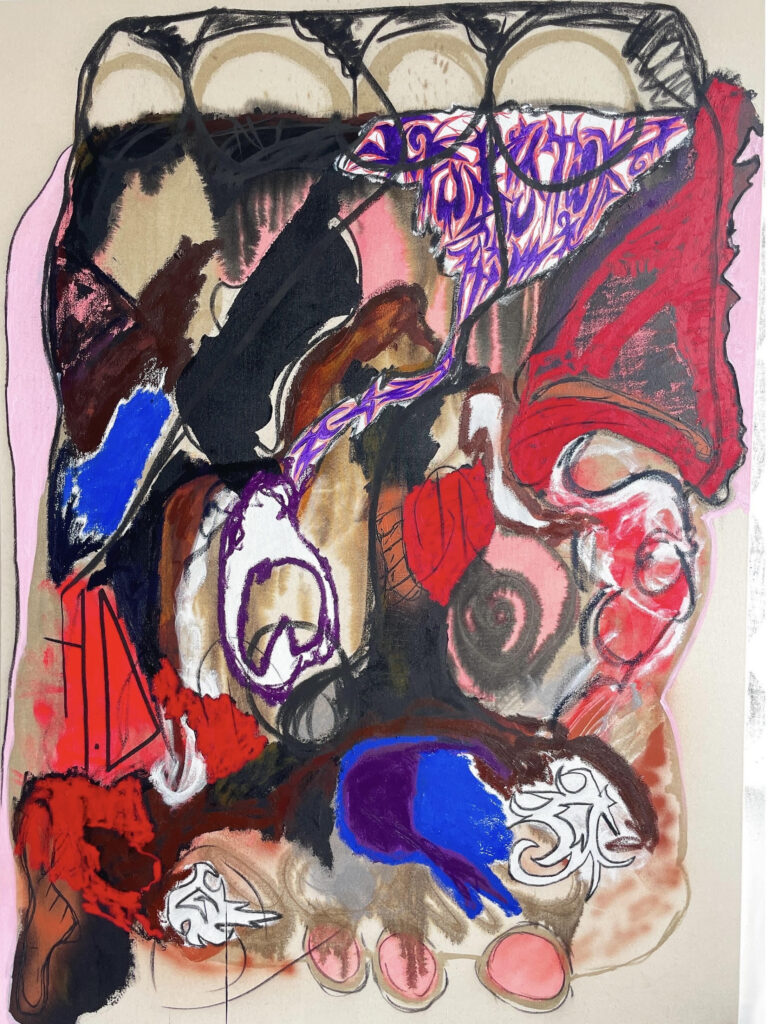
Emerging from a generation of British artists pushing against polite painting, Douglas first gained recognition for her text-based works—acerbic, diaristic fragments scribbled across acidic pastels—that blurred the line between confession and confrontation. In recent years, her paintings have shifted toward stripped-back abstraction, exchanging blunt phrases for obscure numerals, voids, and symbolic tensions. Across solo exhibitions in London, New York, Stockholm, and LA, she has built a visual language rooted in emotional residue—what remains after the high fades and the party ends.
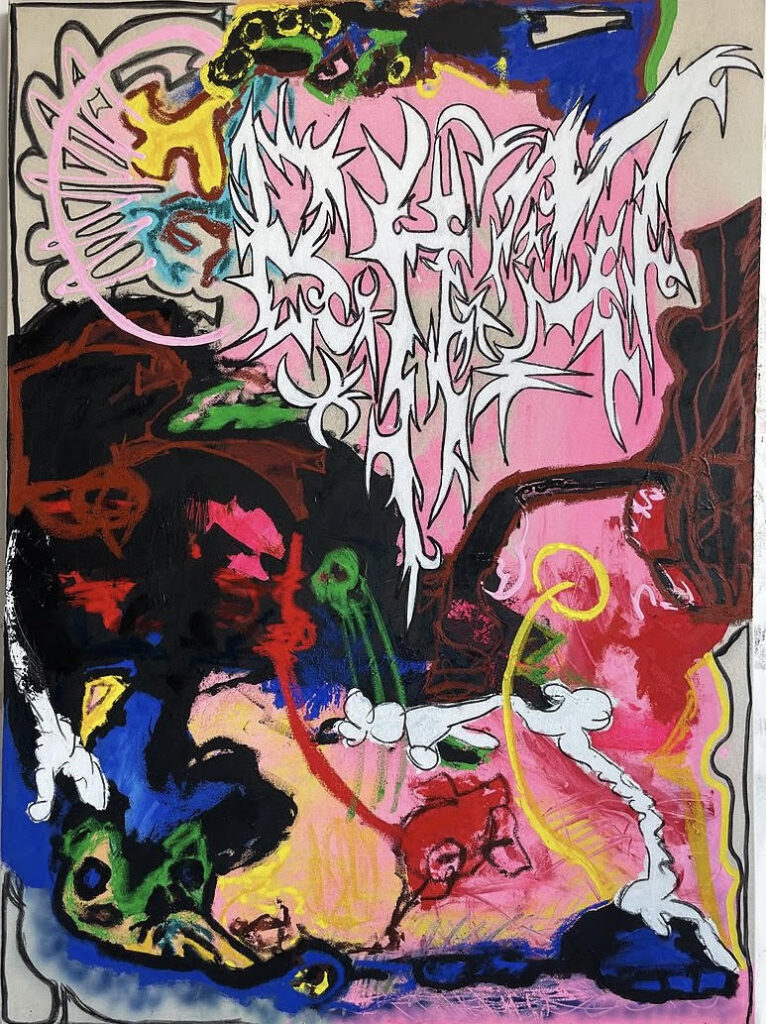
Douglas’s practice is at once deeply introspective and defiantly unpretty. Whether scrawling “NO ONE CARES” in toxic pink or dragging cement across a canvas with a builder’s trowel, her work insists on presence—on showing up for yourself, even in fragments. She paints like someone who knows the cost of hiding.
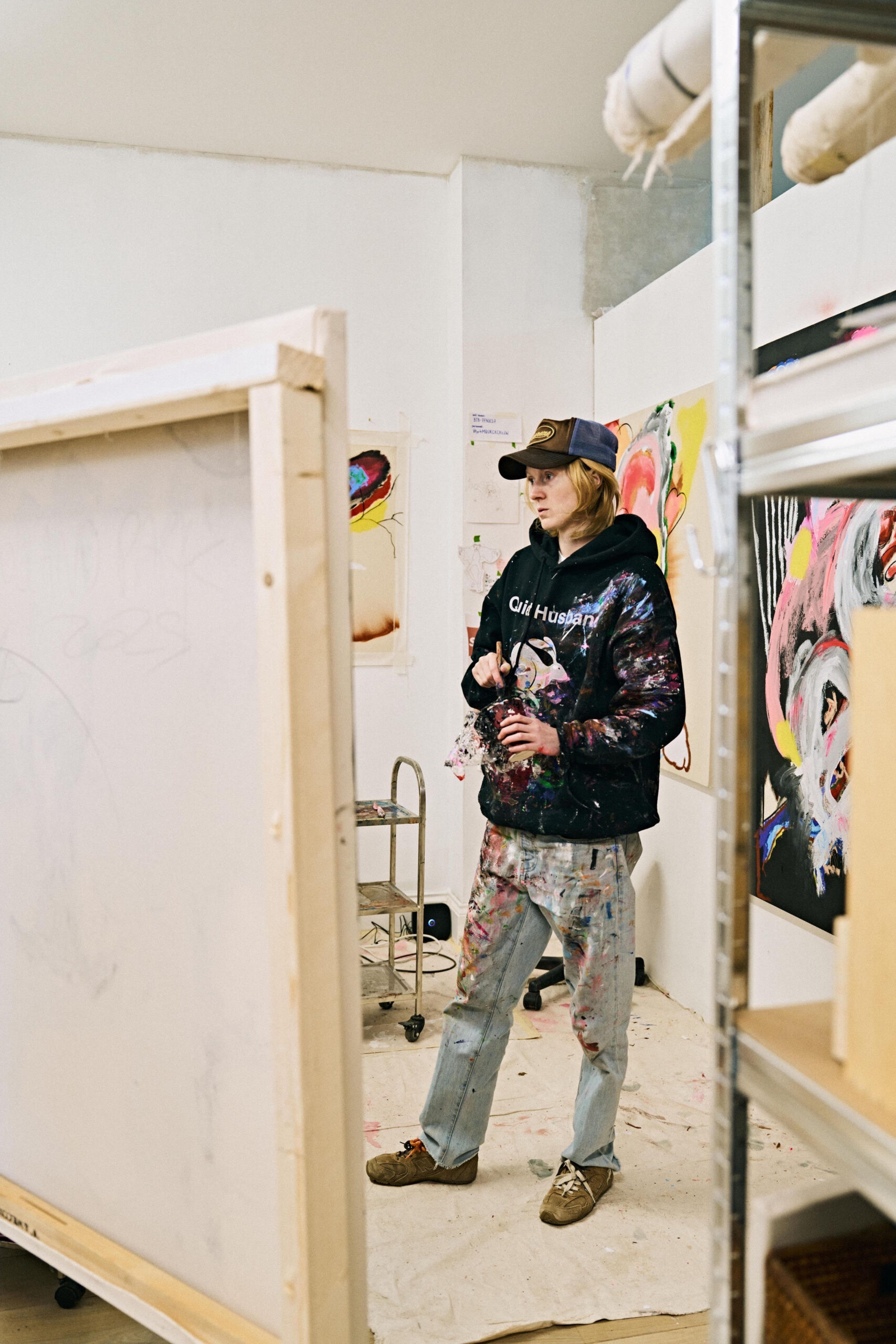
Profile picture by @kateprophoto.uk
Hi Hetty! It’s a pleasure to sit down with you! First question that I always ask. How does a regular day look like for you in London?
Hetty: Hey! Honestly, it’s not that mad… gym, studio, walk dog, home. Repeat. the rhythm suits me.
I’m curious, growing up in Nottingham, what kind of kid were you? What did you enjoy doing, and how did you spend your time?
Hetty: Hmm, I was a bit of a little shit to be honest. I found school tough, and things at home weren’t always easy either. I spent a lot of time outside, at the park, making stuff, getting muddy, just disappearing into my own world. I was really into sports and martial arts. Then, when I hit my teenage years, I went abit emo.. gigs, hanging out in town, getting drunk etc
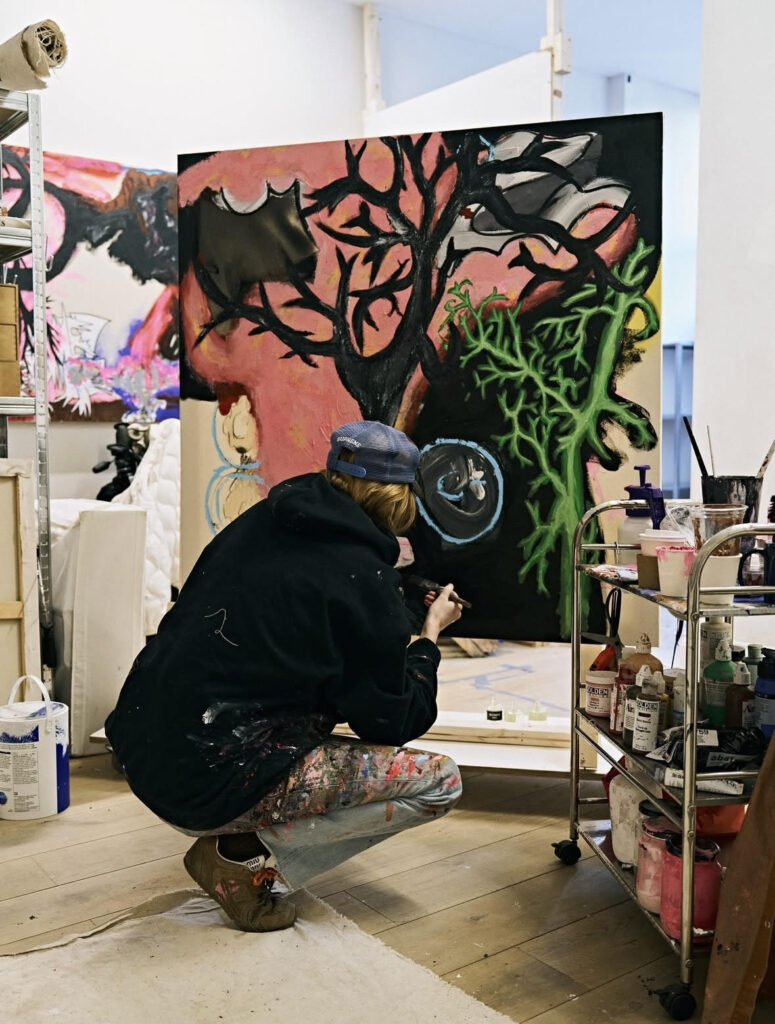
Alright, so when did you start to paint, and when did you start taking being an artist seriously?
Hetty: I often find this one hard to answer. I’ve always made things.. my mum and other family members are artists, so I grew up around creative minds. I remember going with my mum to her art college when I was about 10 years old once, and I just fell in love with the energy there. So, I knew early on I’d end up doing something creative. “making” or “creating” in any capacity has always provided me with a deep sense of peace since such a young age and I’ve continuously chased that peace. I started building my own practice around 13 years ago, and I’ve been full-time painting for the last 2-3.
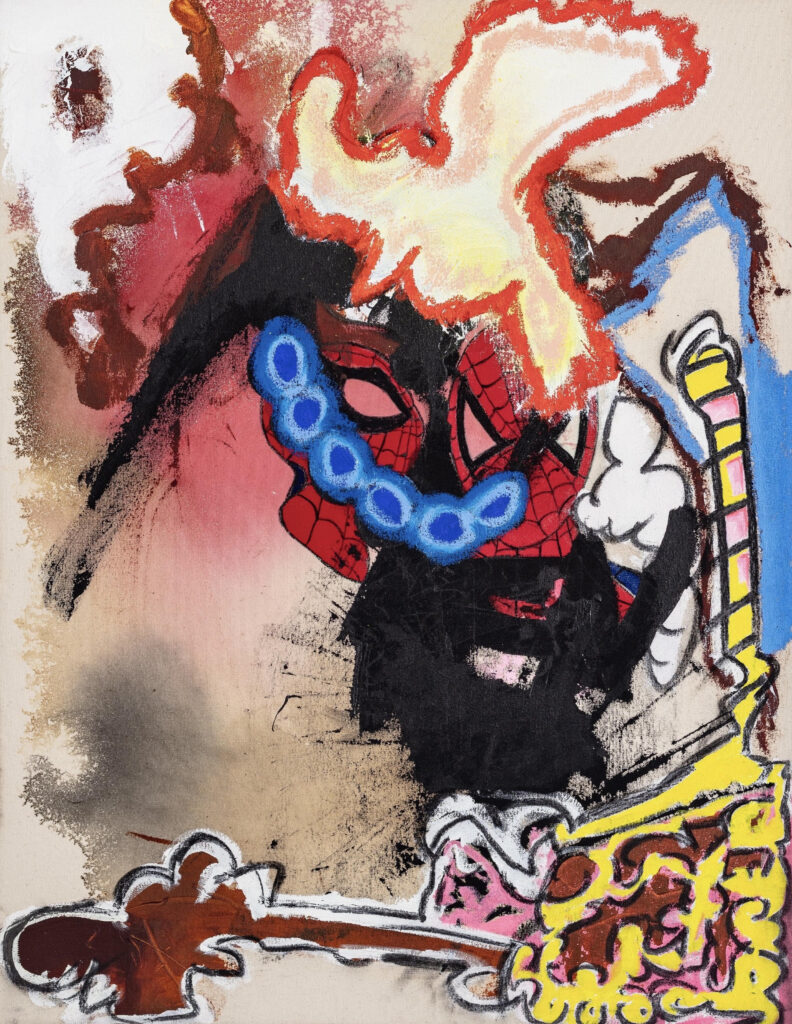
Ok Hetty, with these next series of questions, I will try to delve into your work as best as possible… So… A lot of your work comes from personal experience — moments of shame, heartbreak, confusion, or love. How do you navigate emotional exposure when making or exhibiting your work?
Hetty: I think my work often begins with personal experience, but the themes themselves are universal. I like to create space for the viewers to reflect on what something like shame means for them, rather than making it all about me/ my lived experience.
My last solo show looked at where shame lives in the body, and how we might return to our ‘miracle state’ (who we were before shame, life events, or societal expectations got in the way) Each painting focused on a different part of the body where feelings of mortification might sit: the liver, the stomach, the nervous system, psoas etc…
So in that sense, I wasn’t painting my shame directly, or at least, that’s what I’ll say as the artist. My internal world (and probably yours too) – is far too big any beyond my consciousness to even begin to expose in full. I take comfort in that.
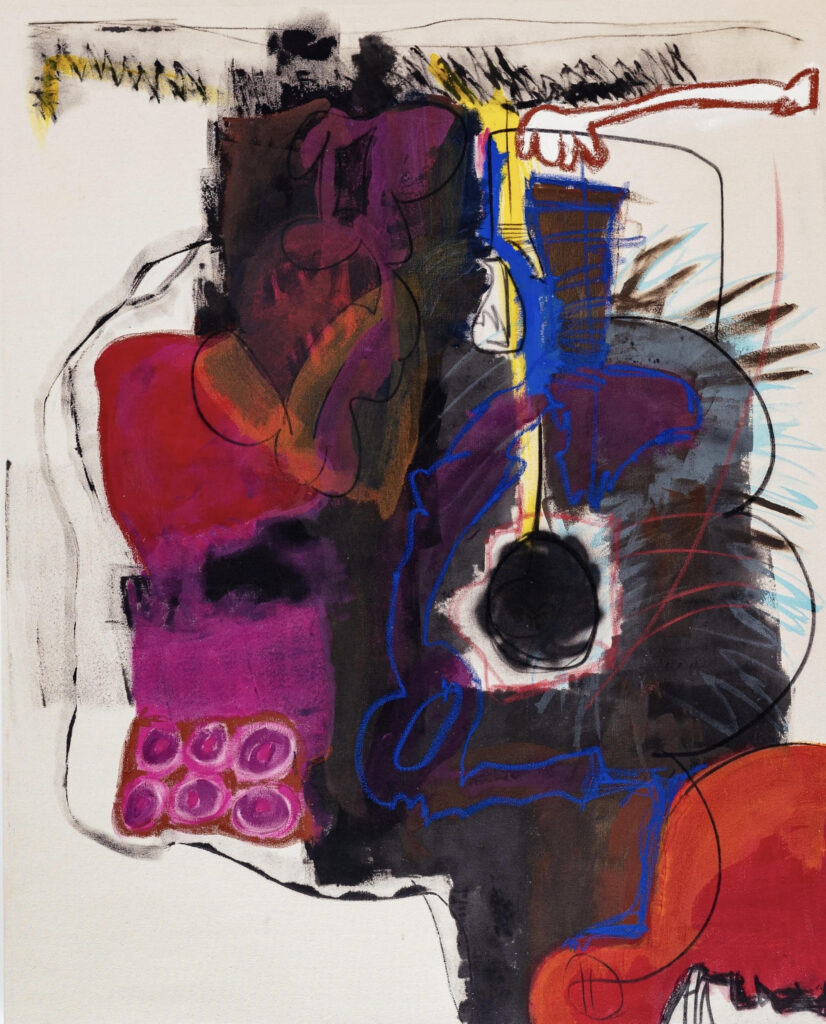
With that in mind, themes like trust, boundaries, and romantic failure often surface in your paintings. Why are those topics important for you to document?
Hetty: Cause they fuck me up!!!
How do you approach painting when you’re processing something difficult emotionally — does painting clarify things or complicate them?
Hetty: When I’m going through something difficult, painting is often the only time I feel truly at peace and connected to myself. It’s a rare kind of stillness for me. I don’t know who I’d be without it. It both clarifies and complicates everything.
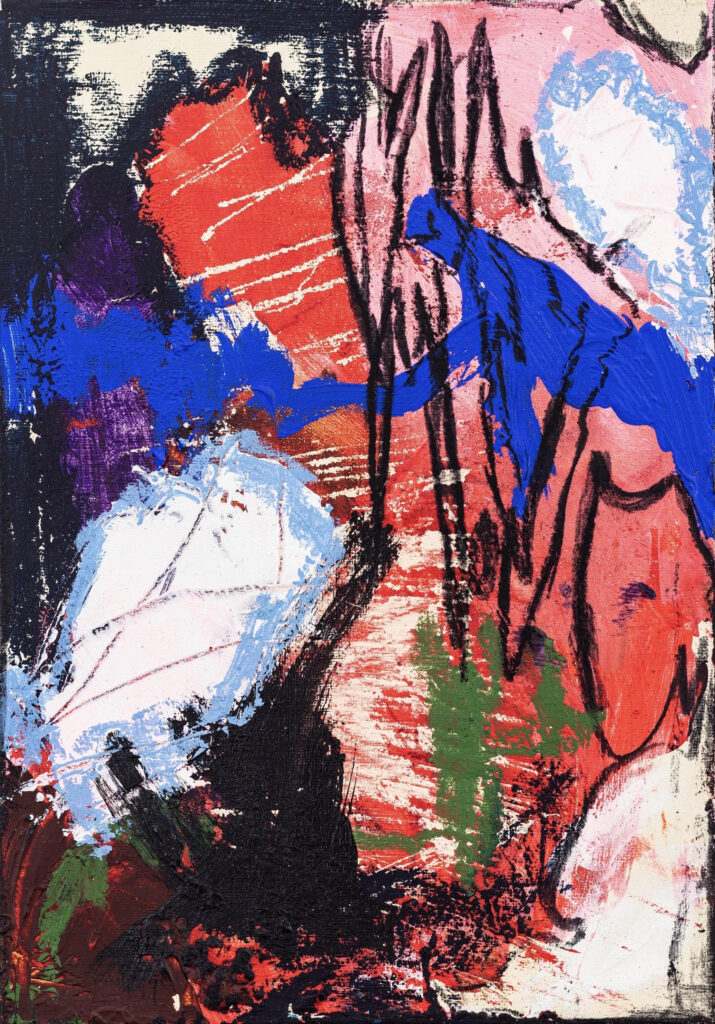
You’ve mentioned before that vulnerability is central to your work — how do you decide what to share and what to protect?
Hetty: It’s really important to me that I’m not the only one getting something from the work. If I make it too personal, too specific, it can start to feel like I’m telling the audience what to think or feel. So I try to hold certain things back, not really out of fear, but to leave space. I still work with key emotional themes, but I tend to conceptualise them in a way that invites reflection rather than confusion.
Am I tripping, or is there’s a tension in your work between softness and aggression, sincerity and irony. Can you tell me more about that?
Hetty: You’re not tripping I think you’re spot on. One of the biggest challenges in my life, and in my work, is trying to reach softness and keep a consistent balance of it within my daily life. I suppose another way to word it would be, the tension between self-acceptance, and the critical self. Sincerity and irony live together happily within me, and in turn, my work.
What boundaries have you had to set — personally or professionally — in order to sustain your practice?
Hetty: The boundaries I set are mostly internal. For me, the biggest ones are reminding myself not to fall into the trap of comparing my work or progress to others, and of course reframing “rejection” so that I don’t see rejection as failure but rather as part of the process, and to have avid faith in the process. These particular boundaries help me to maintain resilience and authenticity – which are for me, essential for sustaining a creative practice.
You came up in an era where young British painters were getting attention for breaking tradition. How do you feel your voice has evolved since that early Dazed 100 recognition?
Hetty: That’s an interesting way to look at it. Back then I was very young, and it felt more like the focus was on me as a person rather than the work itself. Looking back, I find it hard to really connect with that early work, it feels quite distant now. Since then, my voice has grown quieter but more focused, much more about the work and less about me/ which parties I’m at. yawn.
Has being perceived as a “text artist” or “young woman painter” ever felt limiting to you?
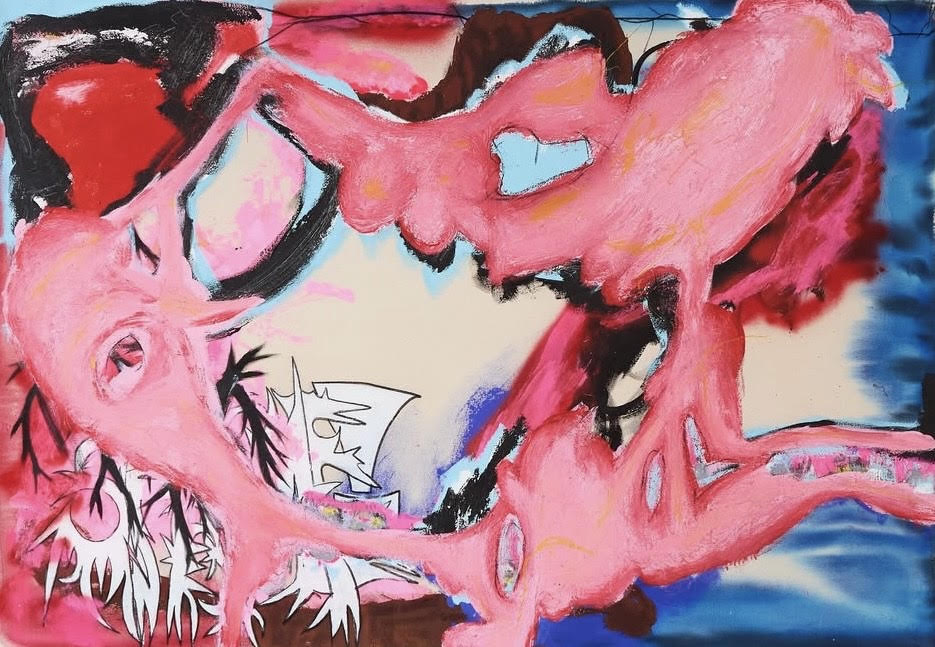
Hetty: I don’t really use literal text in my work anymore sometimes there’s distorted code or fragments, but I’ve been moving away from text for quite a few years now, sometimes I play around with it for fun.
And thanks for calling me young..
I think people will always try to put artists into neat little boxes because it feels easier for them maybe, it doesn’t bother me and kind of makes sense. My work speaks for itself and connects with those who are meant to connect with it. Some people may feel more comfortable with certain limitations, and that’s fair, but when painting limitation doesn’t really exist.
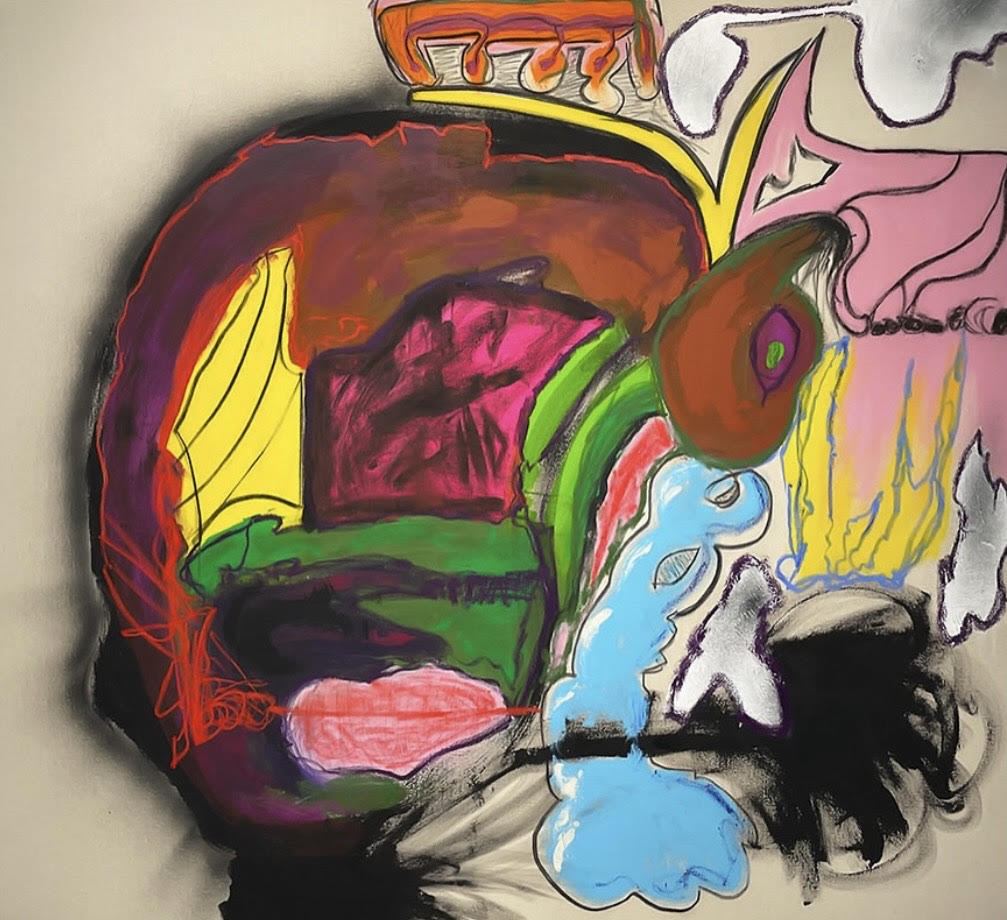
With that in mind, when you do include text now, it often feels like code — distorted, hidden. Is that a protective gesture or a conceptual shift?
Hetty: Conceptual shift
Are you still writing or journaling alongside painting? Do words still inform your process even when they’re not visible?
Hetty: Yeah, most of my work starts with writings. I like to write about what I’m planning to expel before I begin painting sometimes, not every time.
What’s something about your work or your practice that you think people often misread?
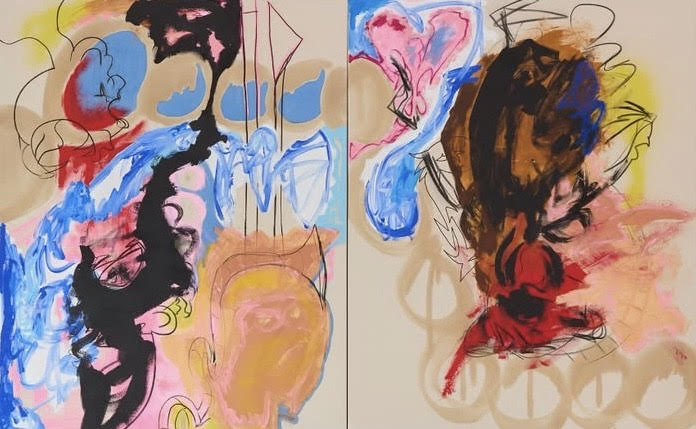
Hetty: People often see boobs in my work. I’m a gay woman, but I’m not that bait. Those forms are actually embryos oh maybe I am that bait! loool. Anyway, as for most, there’s a lot beneath the initial mark that isn’t immediately obvious.
Does your environment still play a role in your practice — whether the studio in London or just walking through the city?
Hetty: Environment plays a role for sure, I’ve noticed my work changes so much when I’m on a residency – in a different country. The use of colour, composition, the way I paint.. totally changes. It’s so fun.
Can you walk me through your creative process from beginning to end result?
Hetty: Impossible
How do you approach color?
Hetty: I have my set favorites, light magenta and cobalt blue but they come in and out of my work. It just depends on the body of work. And like I mentioned above, I find environment can have a big effect on use of colour.
Ok Hetty, now to something totally different. In a parallel universe who would you be? and what would you be doing?
Hetty: A normy being normal.
Outside of art, what’s something you’re obsessed with right now—maybe a hobby, a show, or even a food—that keeps you grounded or inspired?
Hetty: I’m bang into gardening right now; it keeps me so grounded and blows my mind. I love all objects, curating my home and tinkering around with it, moving things I’ve collected over the years around. I’m also working on some clothes right now, that’s fun.
Can you tell me a story about a time when a connection with someone had a big impact on you?
Hetty: I once did some ~work~ with a woman, for a while, she helped me to see myself as lovable and it changed my life.
What qualities do you find most important in the people you choose to spend time with?
Hetty: Loyal, honest, see themselves as equals, funny, authentic.
Anybody you look up to?
Hetty: Bruce Lee.
What motivates you?
Something much bigger than me.
How would you describe a perfect day?
Hetty:
Stay sober
Eat good food
Make a painting that feels connected to self
Someone smiles or says hello / a positive connect with another human or/and animal
Get an exciting email preferably regarding art
A small – medium sized dog walk in 25 degree heat
Dinner date with my beautiful girlfriend
A good sleep
Alright Hetty, I always ask these two questions at the end of an interview. The first is. What’s your favorite movie(s) and why?
Hetty: Natural Born Killers – the costume, aesthetic, music is just so good and its twisted
The second is. What song(s) are you currently listening to the most right now?
Hetty: I bet so many people lie on this question. I won’t (like I said, sincerity and irony live happily within me) I keep playing Justin Biebers new album on repeat, YUKON is so good lol.