
Share this
Before technical fashion became a category, Massimo Osti was already taking clothes apart to see what they could become. Not fashion as decoration. Not fashion as seasonal mood. Fashion as research, experiment, function, material obsession, and an almost scientific curiosity about how the body moves through the world.
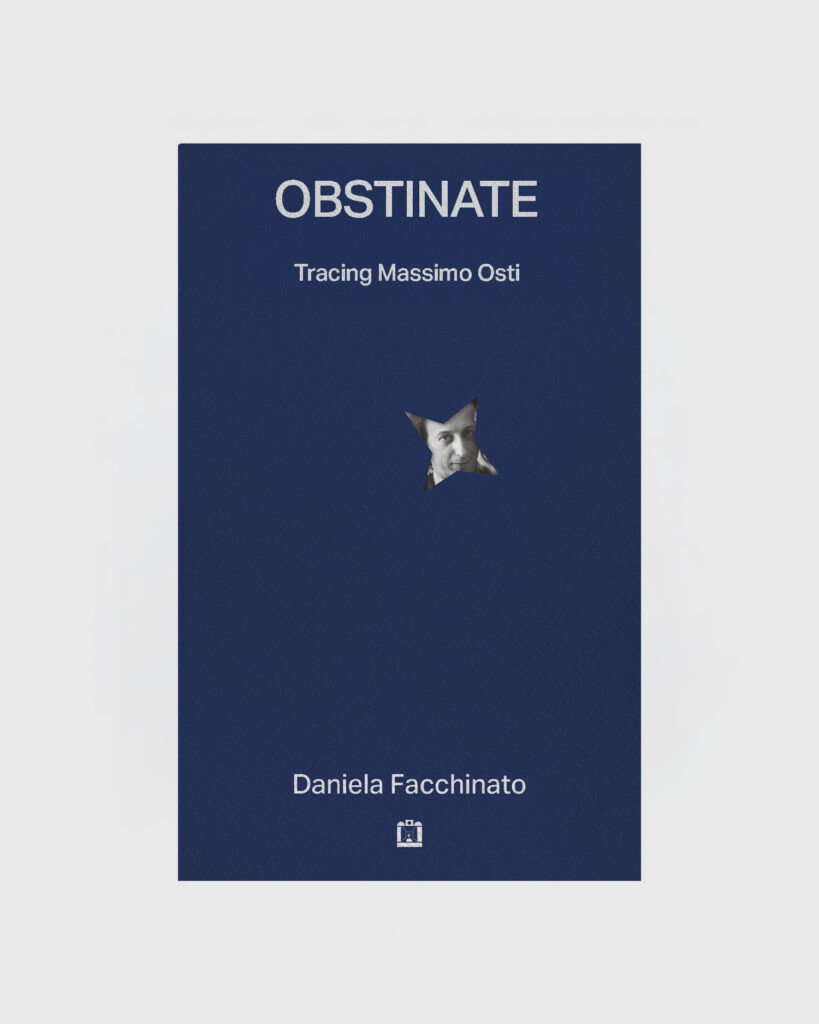
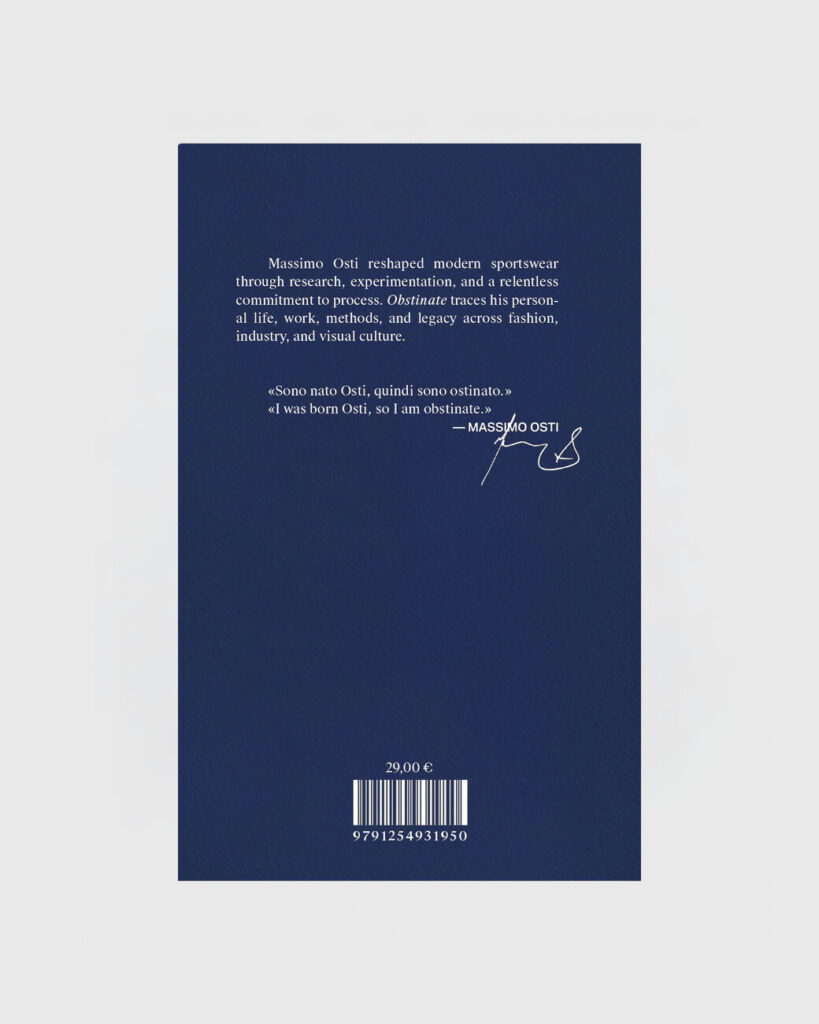
That restless mind sits at the centre of Ostinazioni. Sulle tracce di Massimo Osti, the new book published by Corraini and written by Daniela Facchinato in collaboration with Alberto Coretti. Across hundreds of pages, the volume traces the life, work, and creative method of the designer behind C.P. Company and Stone Island, moving beyond the usual fashion monograph into something more intimate, archival, and human.
Osti is often described as the godfather of contemporary urban sportswear, but that label only partly explains him. His real territory was the space between military clothing, workwear, graphics, industrial research, dyeing techniques, and everyday life. He was less interested in fashion’s polite surface than in what a jacket could do, how a fabric could behave, how a garment could carry memory, utility, and invention at once.
The book returns to Bologna in the 1970s and 80s, the city that shaped Osti’s imagination through activism, visual culture, politics, music, art, comics, and collective experimentation. Rather than presenting him as a solitary genius floating above his time, Ostinazioni places him inside a living network of people, ideas, materials, obsessions, and friendships.
That matters because Osti’s work was never only about clothes. It was about method. Trial and error. Archive and accident. The courage to treat a garment like a laboratory. His use of garment dyeing, experimental textiles, innovative printing, and functional details changed the language of menswear, helping create a visual world that still feels contemporary decades later.
What makes Ostinazioni compelling is that it also looks at the man behind the mythology. Through Facchinato’s perspective and the voices of friends and collaborators, Osti appears as reserved but generous, obsessive but open, someone driven by curiosity and by a deep belief in sharing knowledge. The title itself suggests that spirit: persistence, stubbornness, devotion to an idea even when the industry has not yet caught up.
Today, when every brand wants to sound technical, archival, or future-facing, Osti’s influence feels almost too large to see clearly. C.P. Company and Stone Island did not simply produce iconic garments. They helped invent a way of thinking about clothing as design intelligence: something between protection, identity, engineering, and culture.
In that sense, Ostinazioni is not just a book about the past. It is a map of how the future was assembled by hand, fabric by fabric, mistake by mistake, in the mind of a designer who understood that the most radical garment is often the one that works.
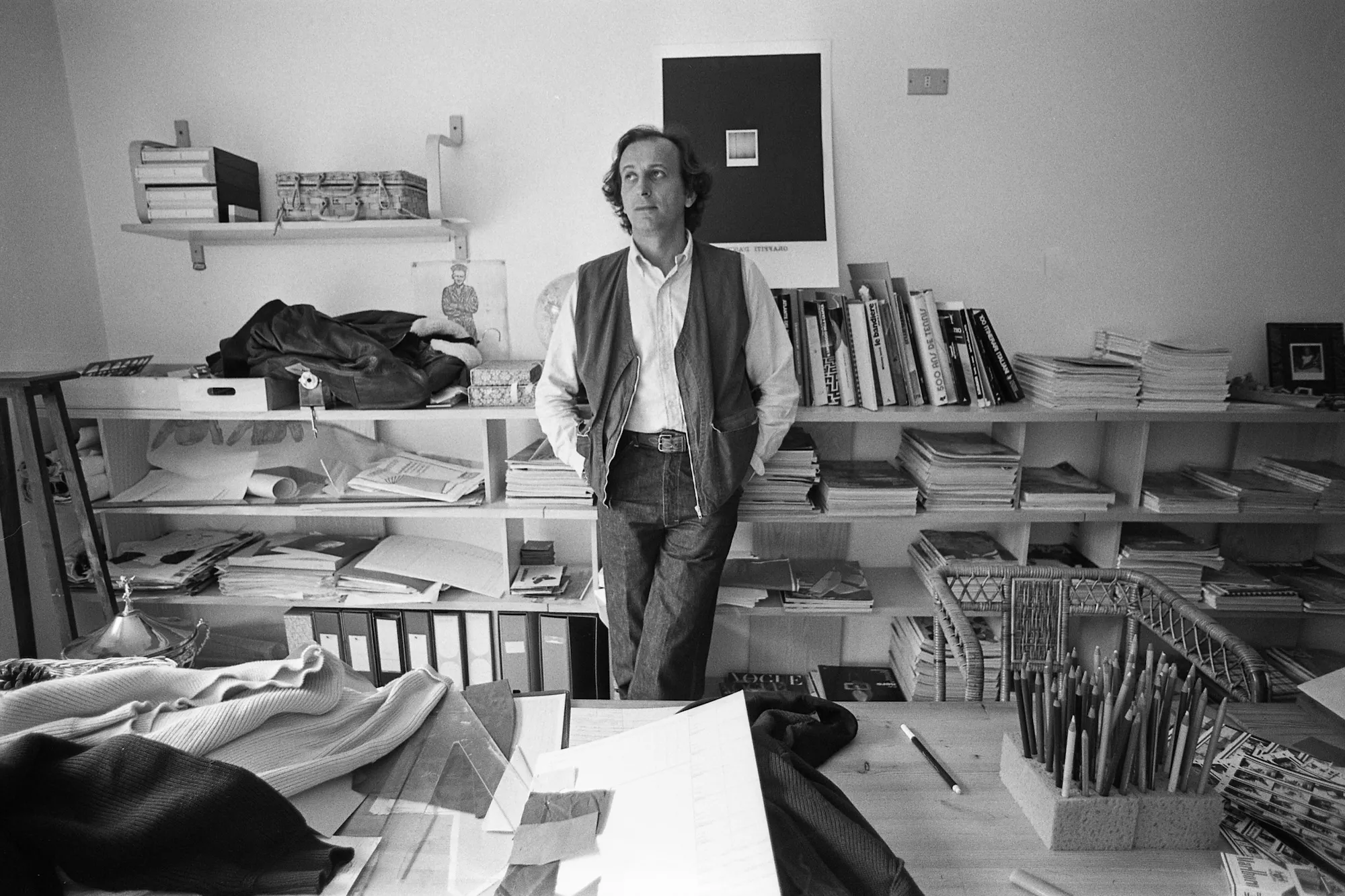
Photos: Massimo Osti