
Share this
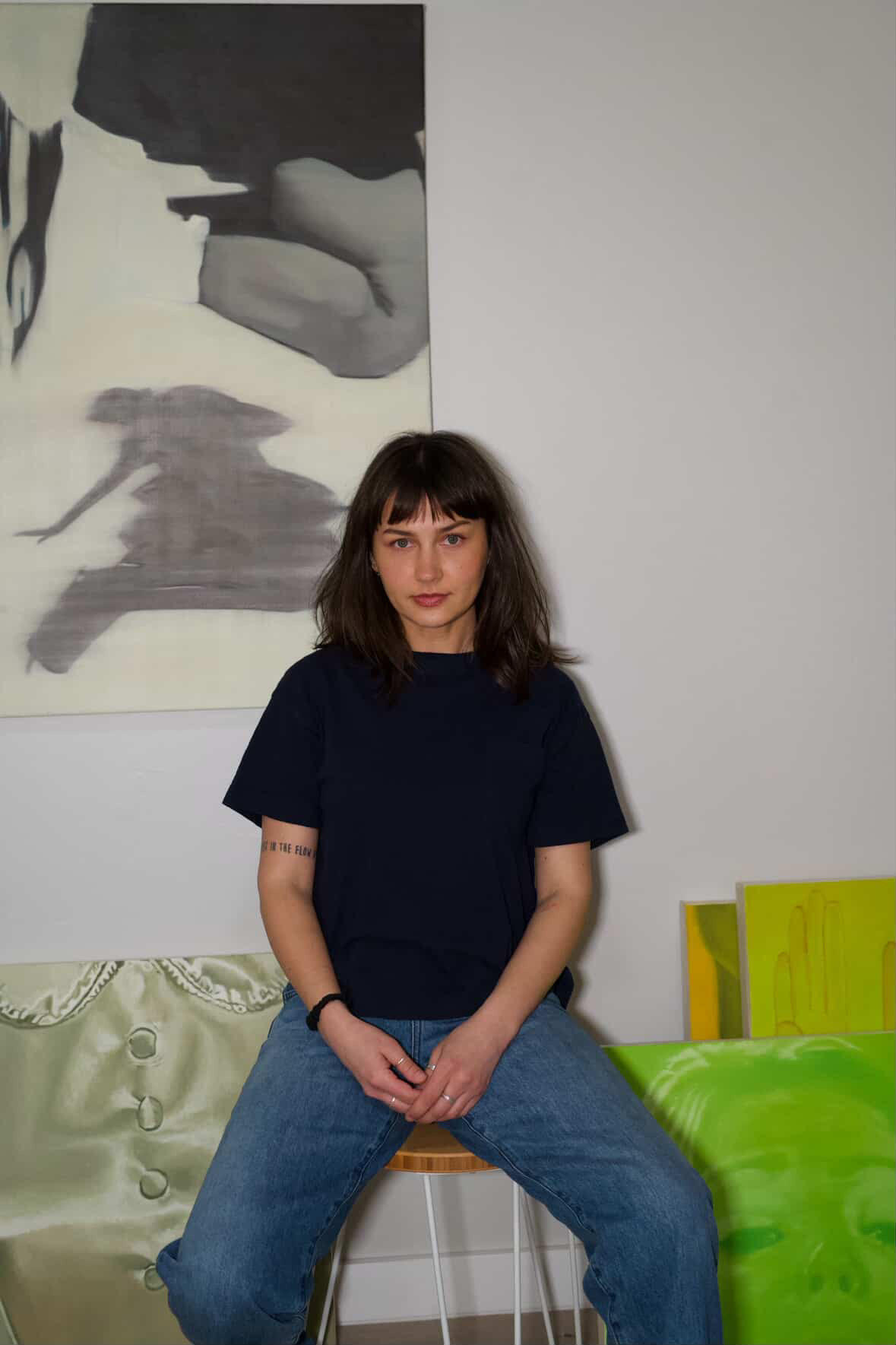
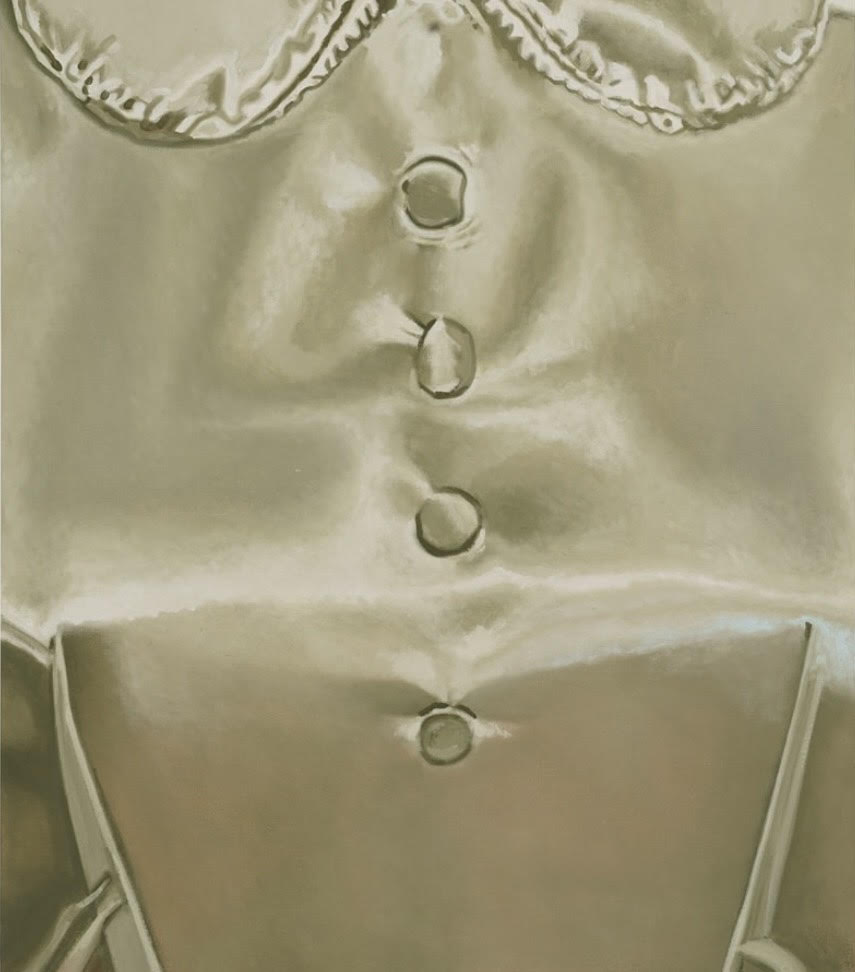
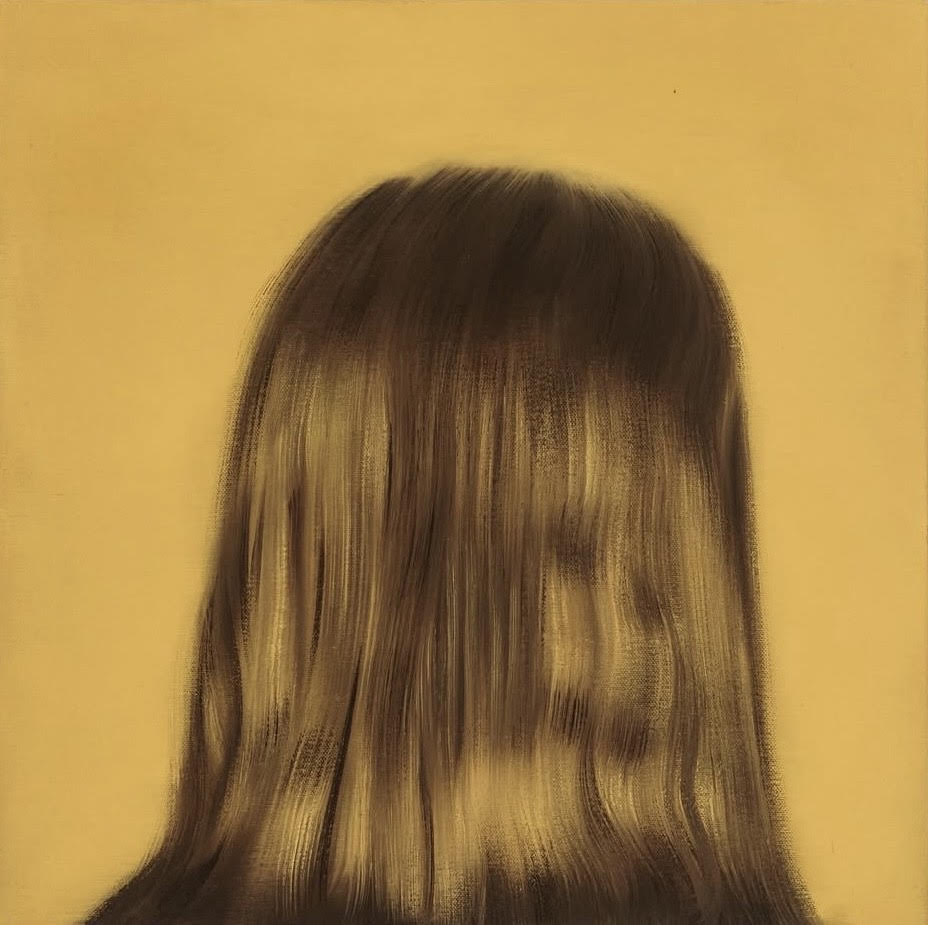
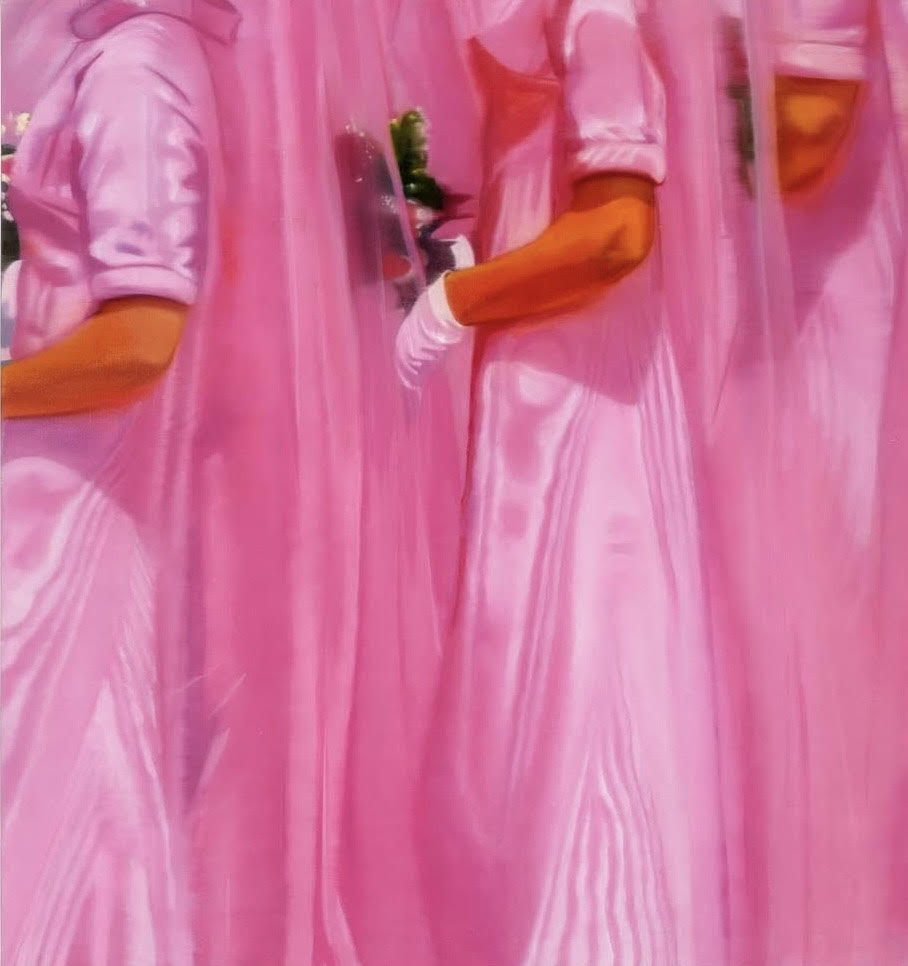
Jordan Sears (b. 1993) is an oil painter based in Virginia whose work navigates the intersection of image, memory, and materiality. Drawing from an archive of found imagery, she explores the tension between representation and abstraction, manipulating color, texture, and atmosphere to push painting beyond a representational tool and into a space that challenges perception.
Her work has been exhibited at galleries such as Vulpes Bastille and United Colors Gallery, with recent placements at Painters Painting Paintings. Continuously expanding the possibilities of image-based painting, Sears investigates how material and technique shape and transform the visual experience.
Hi Jordan! It’s a pleasure to sit down with you! First question that I always ask. How does a regular day look like for you?
Jordan: A regular day in studio usually consists of shuffling back and forth between paintings. Lately, I like to have 3-5 paintings going at once, and I work on them in the order that they dry so that I’m jumping back and forth between layers. That will last for about 2-3 weeks depending how large I’m working, and then I will spend a week or so sourcing and manipulating imagery, researching, and prepping surfaces before I get back to painting again. Sometimes I’m doing all of it at once, but I would say that’s the general flow.
I’m curious, growing up, what kind of kid were you? What did you enjoy doing, and how did you spend your time?
Jordan: I was very curious, passionate, and observant. I enjoyed singing and writing songs, being creative, and playing soccer. I spent a lot of my time reading, but I was also really into sports and was very active physically, as well as in my social life. I had a lot of different interests, which led to a lot of different friend groups – I was always curious to learn about myself and others. I don’t think much has changed except for the hyperactive social life. I am definitely more to myself as I have gotten older.
Alright, so when did you start to paint, and when did you start taking being an artist seriously?
Jordan: I started painting when I was about 14 or so. I took an art appreciation course as a blow off class so that I didn’t have to play sports anymore. I was suddenly very self-conscious and painting ended up becoming a substitute for sports. It was something that I could share, but no one needed to see me in the act of doing it. Which is ultimately how I describe my work: both revealing and concealing. As far as when I started taking it seriously, I’d say it was almost immediate. Around my junior or senior year in high school I was thinking of ways to turn it into a career. So I kind of picked it up and never put it down.
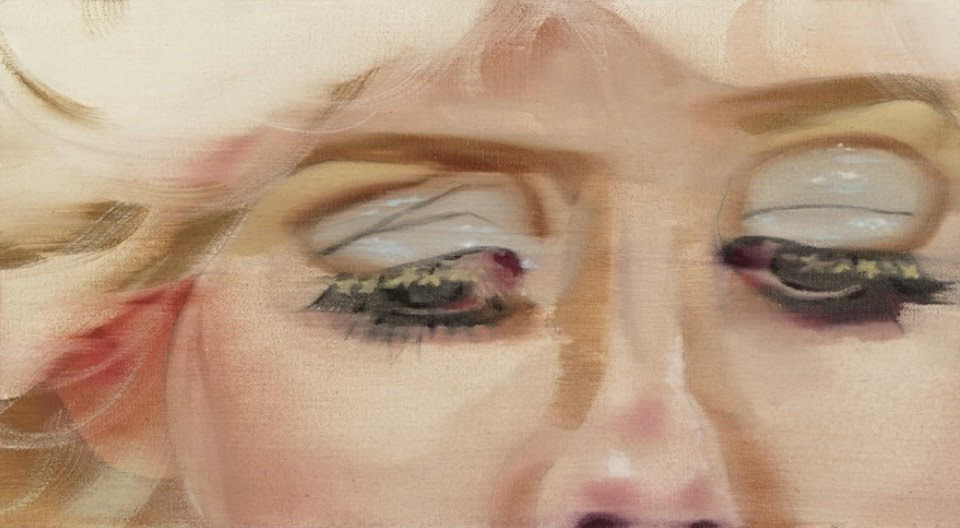
Ok Jordan, with these next series of questions, I will try to delve into your work as best as possible… So… You often work with found imagery — what do you look for, in a specific image before you translate it onto canvas?
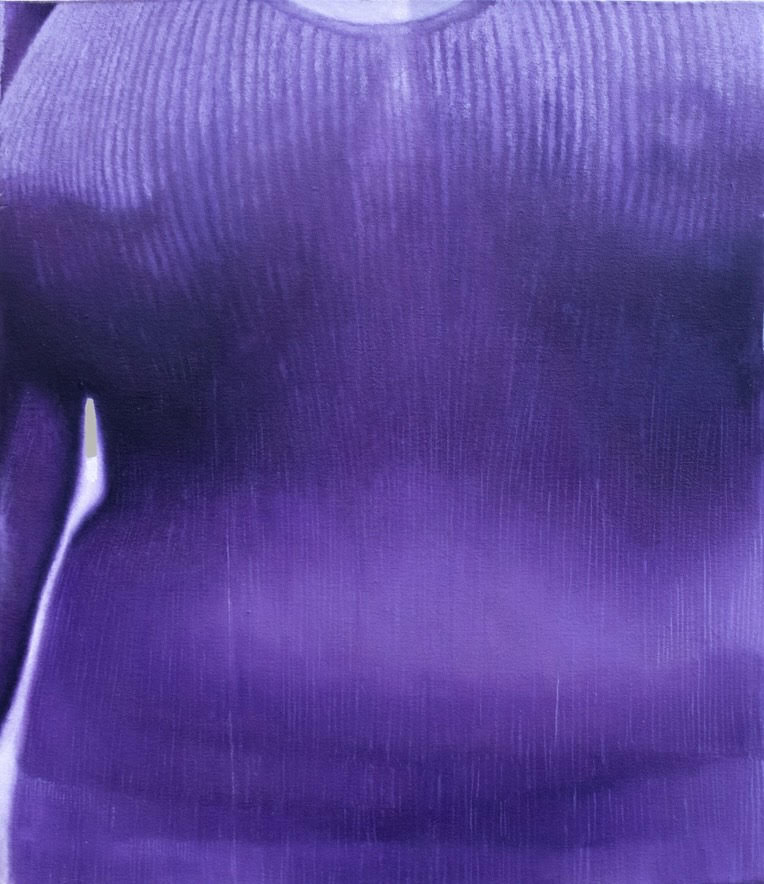
Jordan: Generally speaking, the images I am most drawn to resist clarity and translate well to the more formal qualities of painting. Most of the images I accumulate usually hold a balance of shape, light, and color that almost feel inevitable. Beyond the formal pull, I look for a kind of emotional residue, or something left over in the image that feels charged or unresolved. It might be a gesture, or a fragment, or the way light falls across a surface, but there’s usually a sense that the image carries more than what it literally depicts.
You explore the instability of images — do you see your work as a reflection of how memory itself functions?
Jordan: Absolutely. Memory plays a large role in what I paint, how I paint it, and how I hope the viewer experiences it.
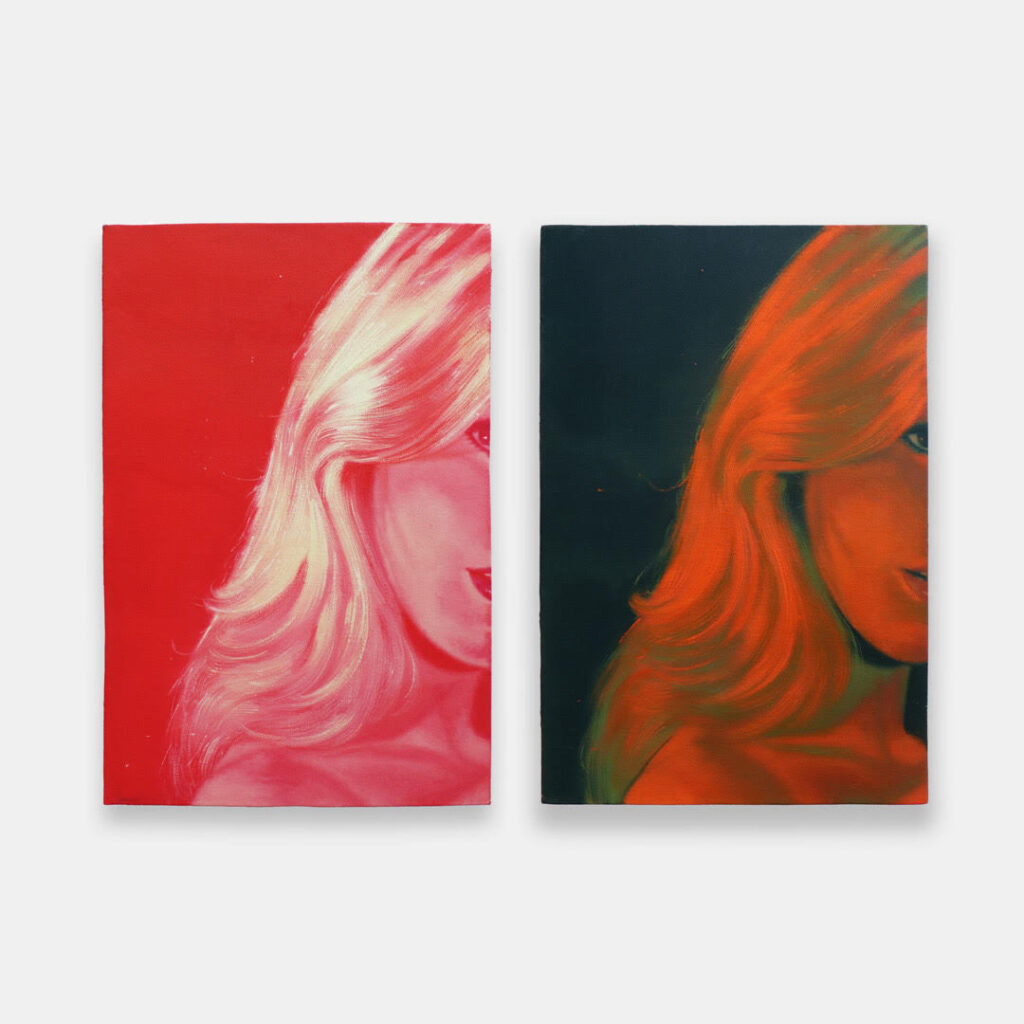
How do personal versus cultural archives play different roles in shaping your paintings?
Jordan: If I’m using an image from my personal archive, it usually has a quality to it that feels less accessible to the general public and/or my audience, and it ultimately has quite a bit to do with lighting and less to do with subject matter. However, so much of my interest lies in the audiences memory of an image, so the less recognizable the image, the less impact it has. There’s a strange set of circumstances that makes a personal image work, and lately, I have used very few of those.
When you obscure or crop figures, is it about concealment, intimacy, or ambiguity? Or a mix of all three?
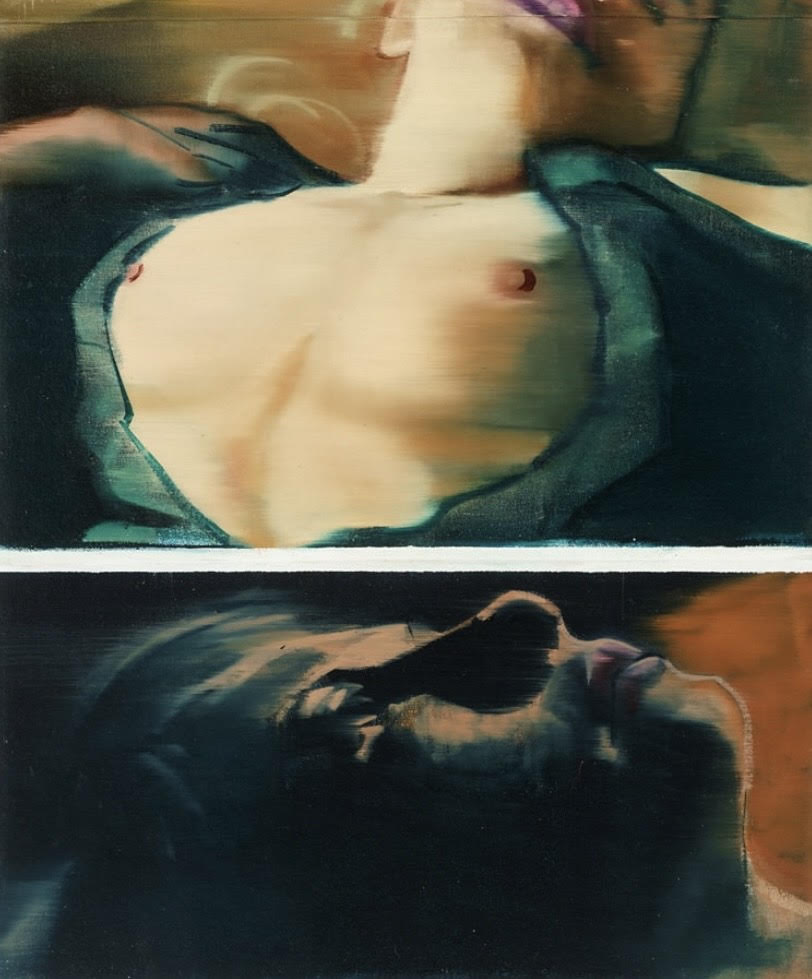
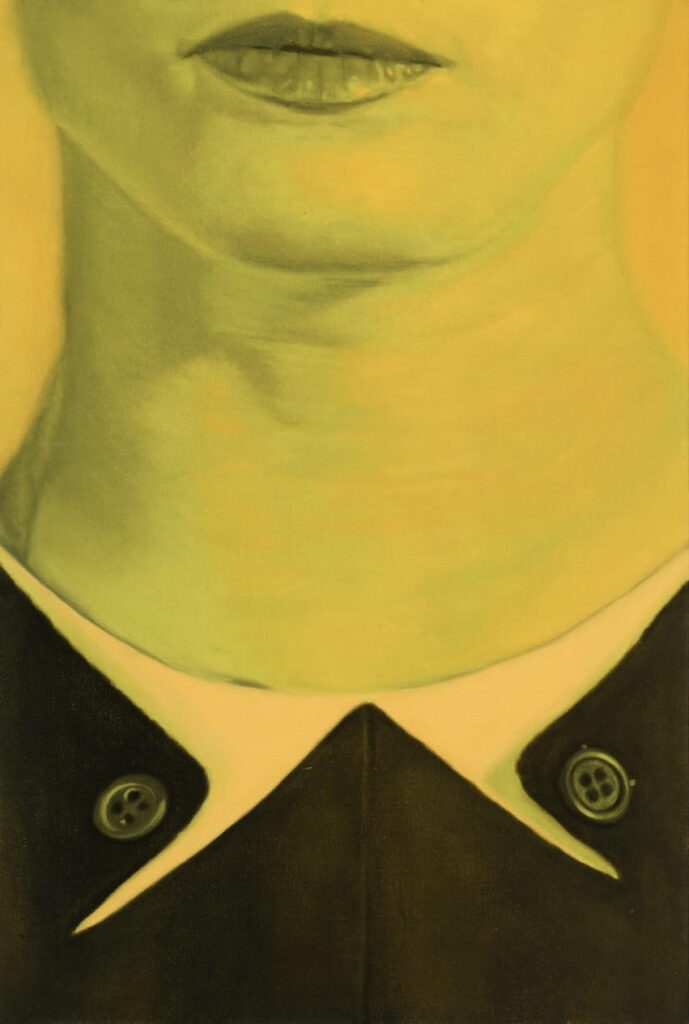
Jordan: Definitely all three. Concealment creates the tension that sort of slows down how the image is read, the intimacy brings the viewer uncomfortably close, and ambiguity keeps the figure unsettled or suggestive. All of them work together to push the image toward abstraction, where the emotional charge is just as important as the recognition.
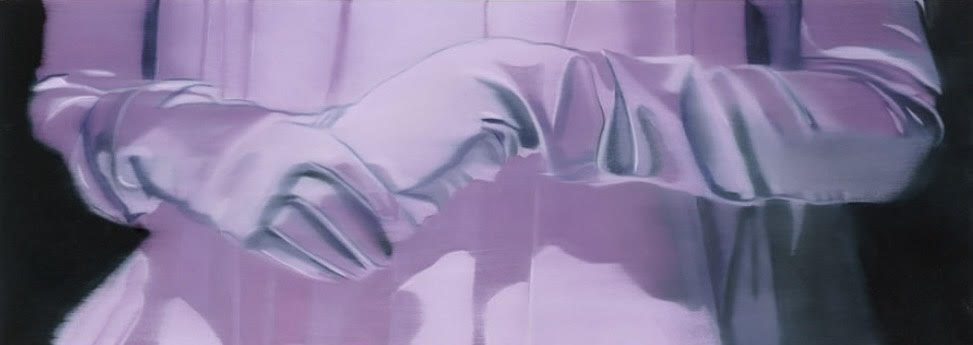
Do you want viewers to feel uncertainty when looking at your work — and if so, what do you hope that uncertainty provokes?
Jordan: Yeah, I hope it provokes a sense of anticipation as if something is just on the tip of your tongue. Similar to smelling a scent or tasting something that’s frustratingly familiar but not immediately identifiable.
Your paintings resist full clarity and invite misrecognition. Why is it important for you to disrupt the idea of a “finished” or “stable” image?
Jordan: In simpler terms, we live in a world of contradictions, and I’m drawn to that space between representation and abstraction. A painting can be complete and incomplete at the same time, much like everything else we experience. For me, disrupting the idea of a finished image reflects the instability of perception itself.
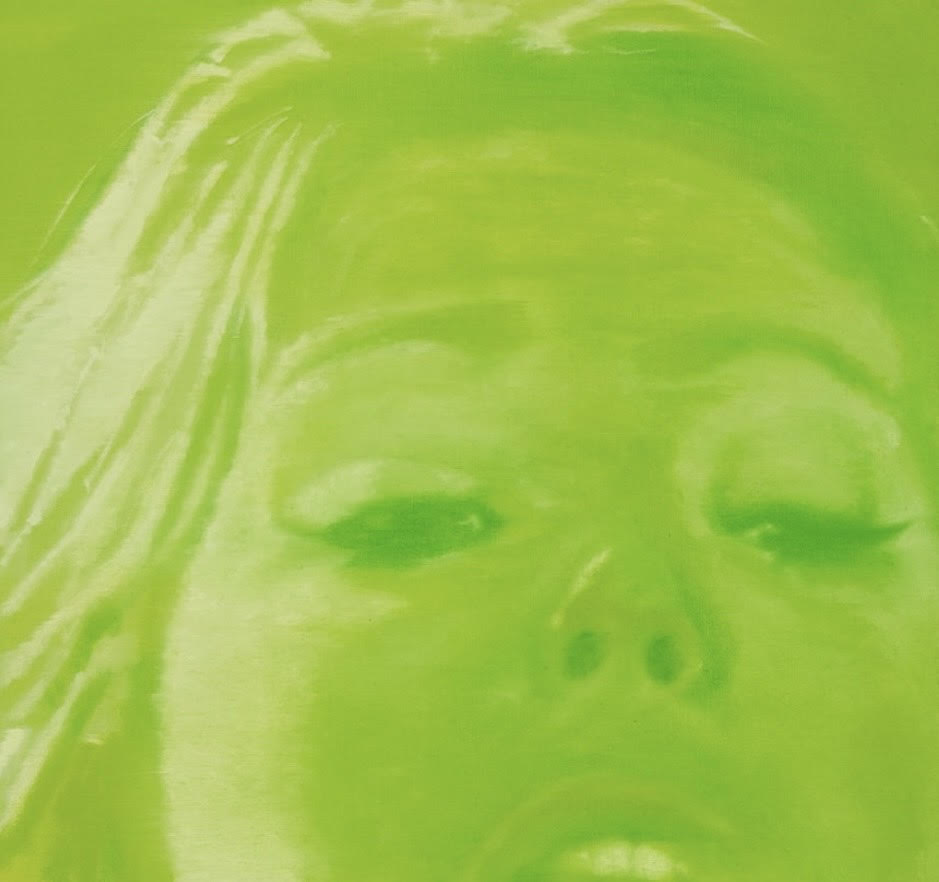
Do you see painting more as a tool for questioning perception rather than fixing it?
Jordan: Yeah, I think that’s what is so special about the language of painting. I could see a fixed image and understand where I’m situated as the viewer, but the second you paint that image, it’s more difficult to situate yourself. It becomes really ambiguous through that kind of translation. Painting is much slower, so anything slightly unclear in an image, is made so much more unclear in a painting and I’m definitely interested in using that as a tool in my work.
Can you walk me through your creative process from beginning to end result?
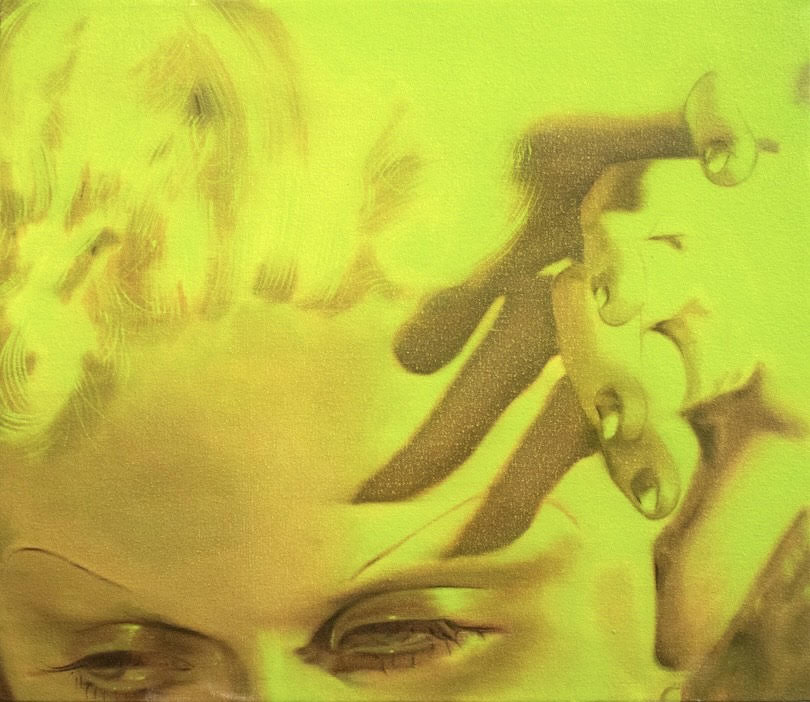
Jordan: Once I source an image, I digitally manipulate it through cropping, color grading, and distorting, if need be. Then I scale it to the dimensions of the canvas I want to build. After the surface is ready, I mix all of my colors in bulk, then I work in about 3-5 layers, depending on things like color opacity, contrast, and edges. I’m putting this all very simply, but there are a lot of contradictions in the process and lots of uncertainty.
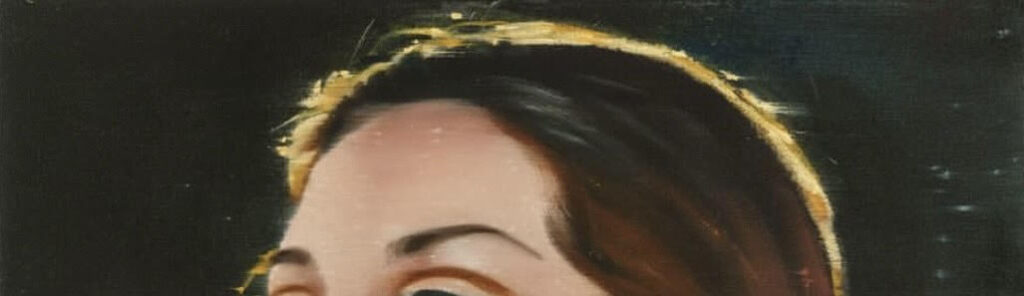
You work a lot with blues, greens, and nocturnal tones…. How do you approach color?
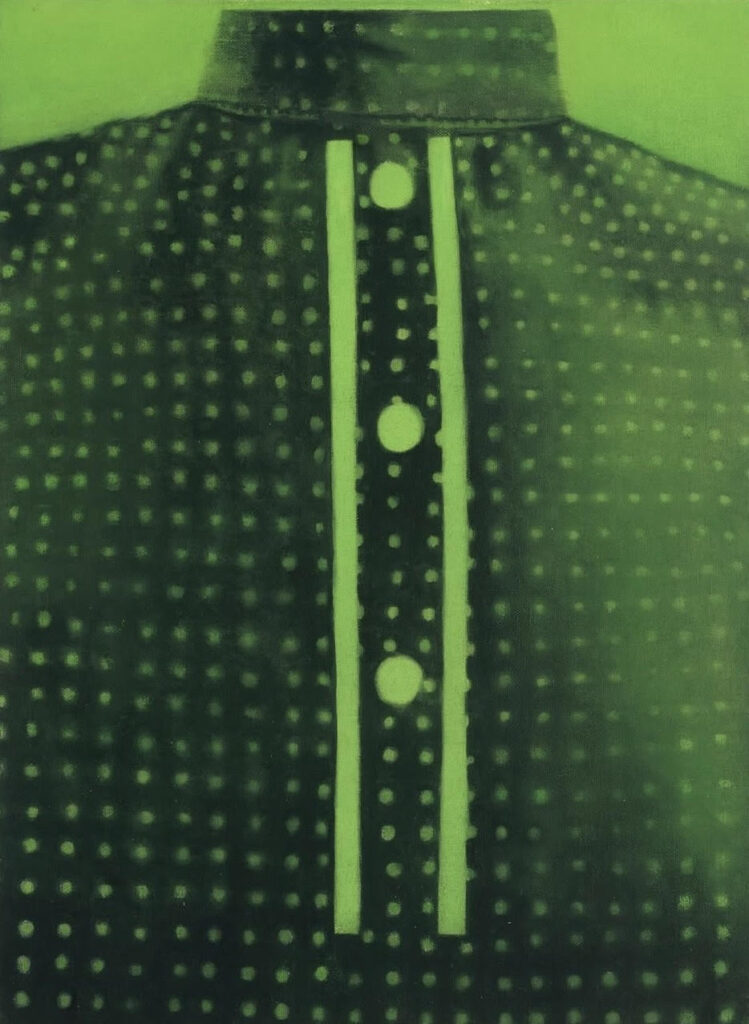
Jordan: I use color to set the atmosphere of the painting. Green shows up often, especially neon green, because it can feel unsettling, and I like how that pushes the instability of the images I work with. I gravitate towards pure, transparent colors and try to avoid white, since it tends to dull colors instead of brighten them. That choice makes the palette feel more electric and alive. I want the work to feel charged, as if something just happened or is about to happen, and color can really push that feeling.
Ok Jordan, now to something totally different. In a parallel universe who would you be? and what would you be doing?
Jordan: I’d probably be a soccer player, or I would have let soccer take me somewhere further. It was the first thing I really committed myself to, but I stopped playing because I felt an overwhelming self-consciousness from being watched or perceived. At the time though, I didn’t have language for that, so stepping away felt like the natural solution. What’s funny is, painting actually brings even more fear and uncertainty, but I’ve had to learn how to work with it instead of letting it drive me out. If not soccer, I’d probably be making music, which feels like another path I could have just as easily taken, and still see myself exploring someday.
Outside of art, what’s something you’re obsessed with right now—maybe a hobby, a show, or even a food—that keeps you grounded or inspired?
Jordan: I recently watched the Sopranos for the first time, and I keep thinking about it. I’m fascinated by the huge holes in the storyline alongside these moments of hyper focus that seem almost unimportant. It sometimes feels like a project that David Chase just kept throwing shit at and then finally walked away from, and I can relate to that in my studio practice – when you push something until it feels too big to drop, even if it doesn’t make sense. It’s complex and a little juvenile in parts, but maybe that’s the best part of it. I still can’t tell if I’m puzzled because it’s the ‘greatest show of all time’ or because it truly unsettled me. Either way, I think about it constantly.
Can you tell me a story about a time when a connection with someone had a big impact on you?
Jordan: I can’t think of one person or moment in particular, but I’ve had some amazing professors in my life. I could go on and on. I’ve learned how to ask questions, articulate myself, and think critically about the world around me, amongst a million other things. I’m super grateful for my education and aware that it comes with so much privilege. The system is completely fucked, that’s for sure. But I’ve met some incredible people during the process. My teachers have, hands down, shaped who I am today.
What qualities do you find most important in the people you choose to spend time with?
Jordan: You must have a sense of humor. I immediately know if we’re going to get along or not based on that alone. Also being a good listener, having the desire to grow, and being surprising or having an element of uniqueness – I struggle with people who conform, or who look and act like everybody else, or who don’t have an opinion.
Anybody you look up to?
Jordan: There are plenty of painters and, again, professors. Warhol, Domenico Gnoli, and Vivian Greven are some painters that I’ve been thinking a lot about lately. As for professors, I often think of my sewing professor, Hadley Clark, as she has such a fierceness and passion about her that I admire. I also think of one of the many incredible art history professors I’ve had, Rebecca Dubay, who was like an encyclopedia of art historical information.
What motivates you?
Jordan: I’m rarely motivated at first. A good cup of coffee will get me going sometimes, but I mostly just want to lay around. But I know that no one is going to make the work happen except for me. I honestly find it pretty boring, or common, to talk about wanting to do something without any true action behind the idea. I’ve disciplined myself to push against that mentality. I usually whine and complain while working until something finally clicks. I’ll mix a color perfectly, make a strong pass over something, or stumble across an image that feels compelling, and then I’ll stop complaining and suddenly become really excitable and work for hours. In short, I just have to get out of my own way a lot of the time.
How would you describe a perfect day?
Jordan: I wake up alone with absolutely no alarm, and I have no ailments to start the day. No headache, nausea, fatigue, or self doubt. I look outside and it’s 82 degrees with a breeze that wouldn’t really blow anything around, including my hair, because nothing ruins my day faster. Ideally, I would be hungry so that my morning coffee doesn’t send me into orbit. I’d eat 2 over medium eggs with 3 pieces of almost burnt bacon alongside the most beautiful, warm latte. In the afternoon, I would call the one who makes me laugh the most, Lyndsey Chandler, and we would laugh our way to the park where we would listen to all the classics, eat some kind of dip or cheese, drink miller high life’s, and smoke cigarettes.
This would last a while, I’m sure. Once it ended, I would go walking through one big museum full of all of my favorite painters, kind of buzzed, but completely alone. No guards or other visitors. Ideally, I’d have a couple of cigarettes here and there. I’d suddenly get a call from my mom or my cousin telling me to meet them, and everyone I’ve ever loved, even if we don’t speak anymore, for dinner at an outdoor hibachi grill where the sun never stops shining, I never get sleepy, I never have to tell someone which song to play, the wine is endless, the fried rice is endless, and we’re all just sitting around this huge circular grill.
It’s either a hibachi grill or just a good ole outdoor barbecue, I haven’t decided. Maybe there’s also pasta somewhere. Regardless, when the day ends and I must sleep, I fall asleep perfectly and wake up with no hangover. That sounds like a perfect, magical day.
Alright Jordan, I always ask these two questions at the end of an interview. The first is. What’s your favorite movie(s) and why?
Jordan: For the fun and easy viewing, probably Breakfast at Tiffany’s and/or Hocus Pocus. They simply make me feel happier when I watch them. Other than that, I watch a lot of documentaries because I like seeing how real life is edited and reframed and I also don’t get lost in trying to decode the story. When I watch narrative films, I get frustrated and have a hard time focusing. I can’t stop looking at the sets, the wardrobe, or the style of acting. There are a lot of films that I enjoy almost strictly for their visuals. What A Way To Go, A Girl Walks Home Alone At Night, and Paris, Texas to name a few. Although these plots are interesting, I’m really caught up in the atmosphere.
The second is. What song(s) are you currently listening to the most right now?
Jordan: I’m really into classic rock right now for some reason. I’ve been listening to a lot of Heart, Cream, and Fleetwood. I go through phases where I feel a little restless with music, like nothing feels substantial. But I always circle back to Pearly-Dewdrops’ Drops by Cocteau Twins or Spring by Angel Olsen to kind of ground me a bit.