

Share this
In their East London studio, Joy talks about painting in changing spaces, finding joy in colour, and making art that belongs to everyday life.
Interview and pictures by Brynley Odu Davies.
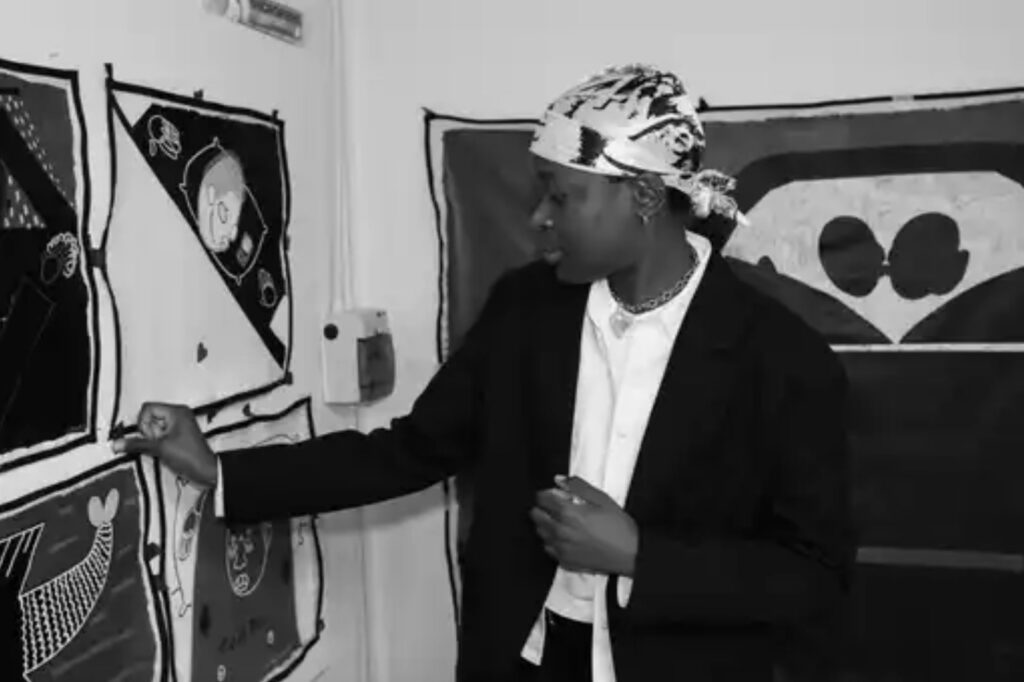
Can you tell me a bit about your journey into art and how you developed your style?
Joy: Earlier this year I went to an exhibition of Noah Davis’ work and there was a quote from him that essentially said he couldn’t imagine being anything other than a painter. That’s how I feel my journey into art has been, I couldn’t imagine having done anything else.
I’m not sure if I ever consciously worked on a style but I’ve felt like by drawing more and playing around with different materials then looking back at the line work has helped me to see what my “style” might be, this idea of ‘style’ then started to emerge organically becoming more and more apparent.
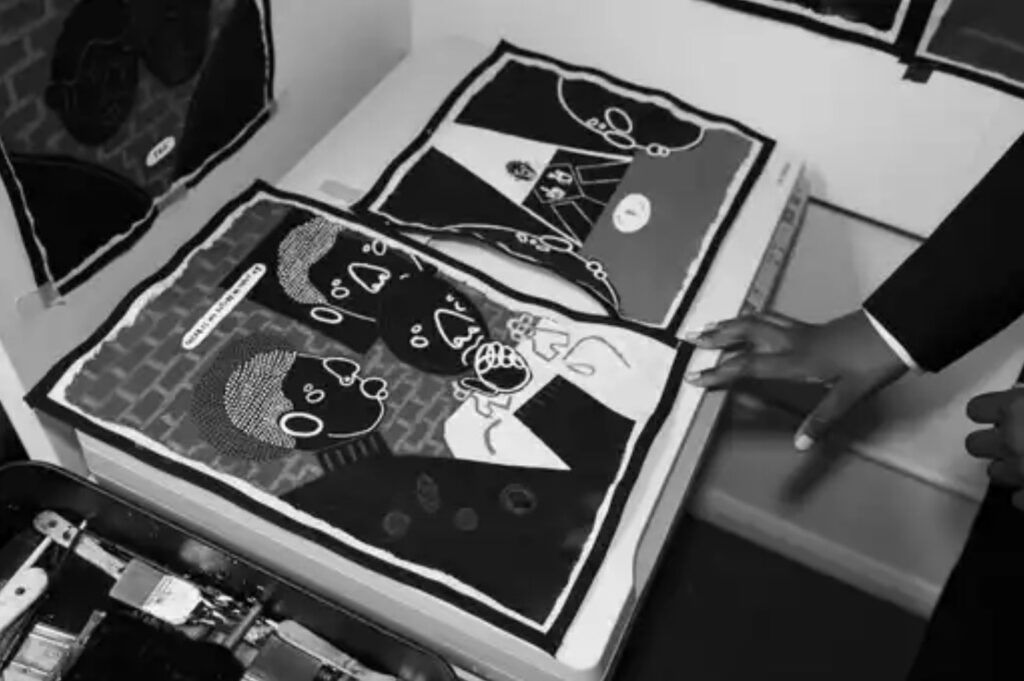
How do you usually spend a day in the studio?
Joy: I try to get all of my computer tasks out of the way in the morning and leave the rest of the day for sketching, drawing and painting all while listening to podcasts.
How does travelling give you inspiration?
Joy: There is so much different to observe and appreciate; sounds, architecture, foods etc. One of the most inspirational trips I have ever made was to Kinshasa, Congo. The hand painted signs on store fronts and some homes really drew me in, it’s a city with so much typography. It’s had a lasting influence on my practice. Also, visiting galleries in new countries is such a great way to see artists I wouldn’t have otherwise discovered.
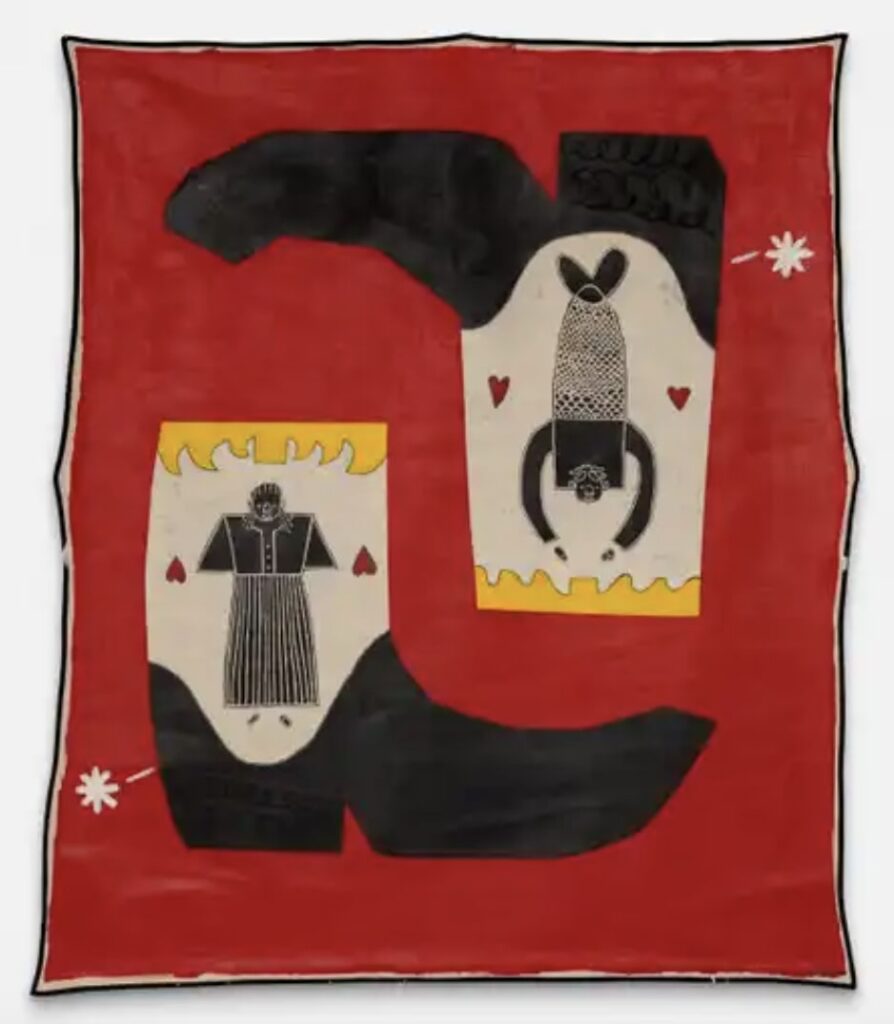
How do you choose your colours and motifs?
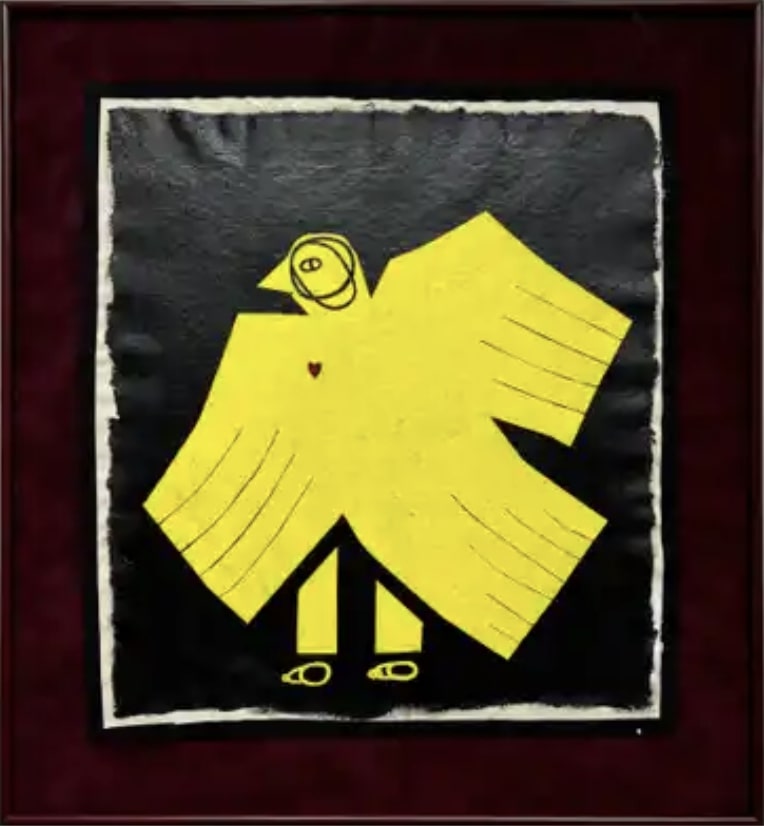
Joy: I usually go through long colour phases, it’s been a cherry red, a cobalt blue, a soft purple and I use it everywhere until the next colour wave. At the moment it’s this eggy mayo yellow. I think it’s from all the eggs I ate on my last holiday.
Moving between studios and now living in South London — how does changing spaces influence your creative process?
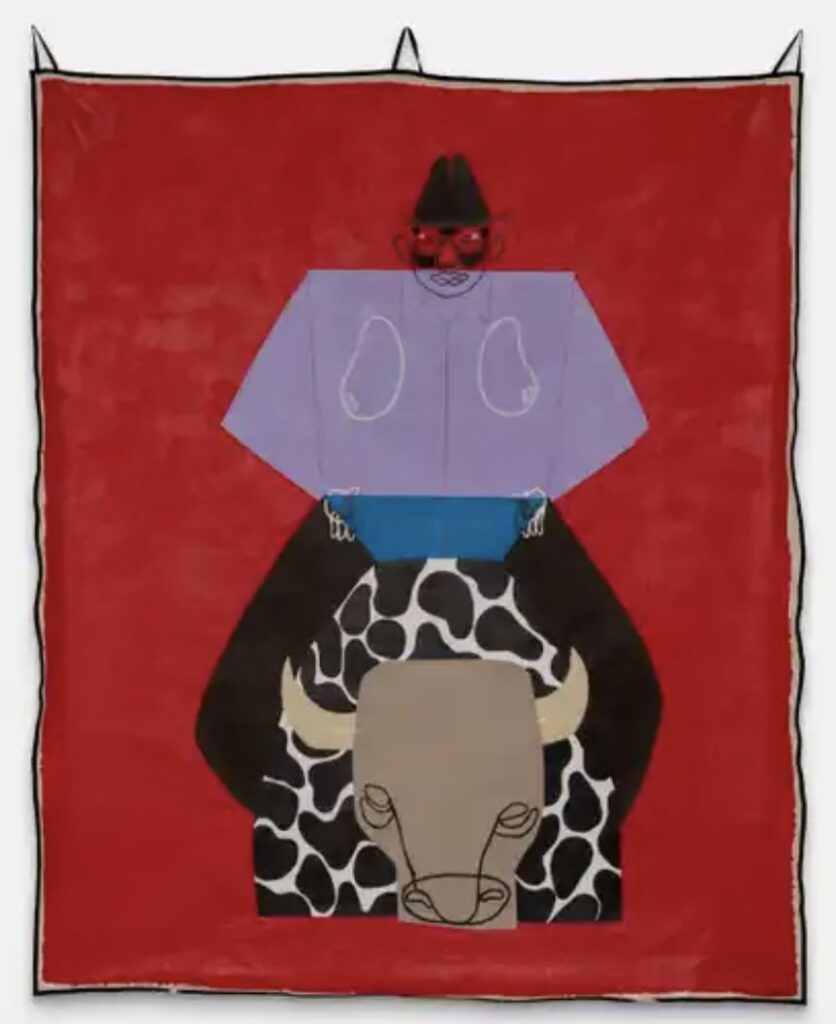
Joy: I’ve moved studios quite a few times, not out of want but because of increasing studio prices, short contracts ending or studio spaces being in poor condition. For me the space that I’m in reflects the work that I make. My studio is small so I make small works. The short contracts have made me think about the life my painting has after completion so I often make my works light and easy to store. This is probably the reality for quite a few working class artists in the city, having a studio is a privilege in itself. I do dream of having a studio space to settle in for the long run that I can really make mine and create work without constricts.
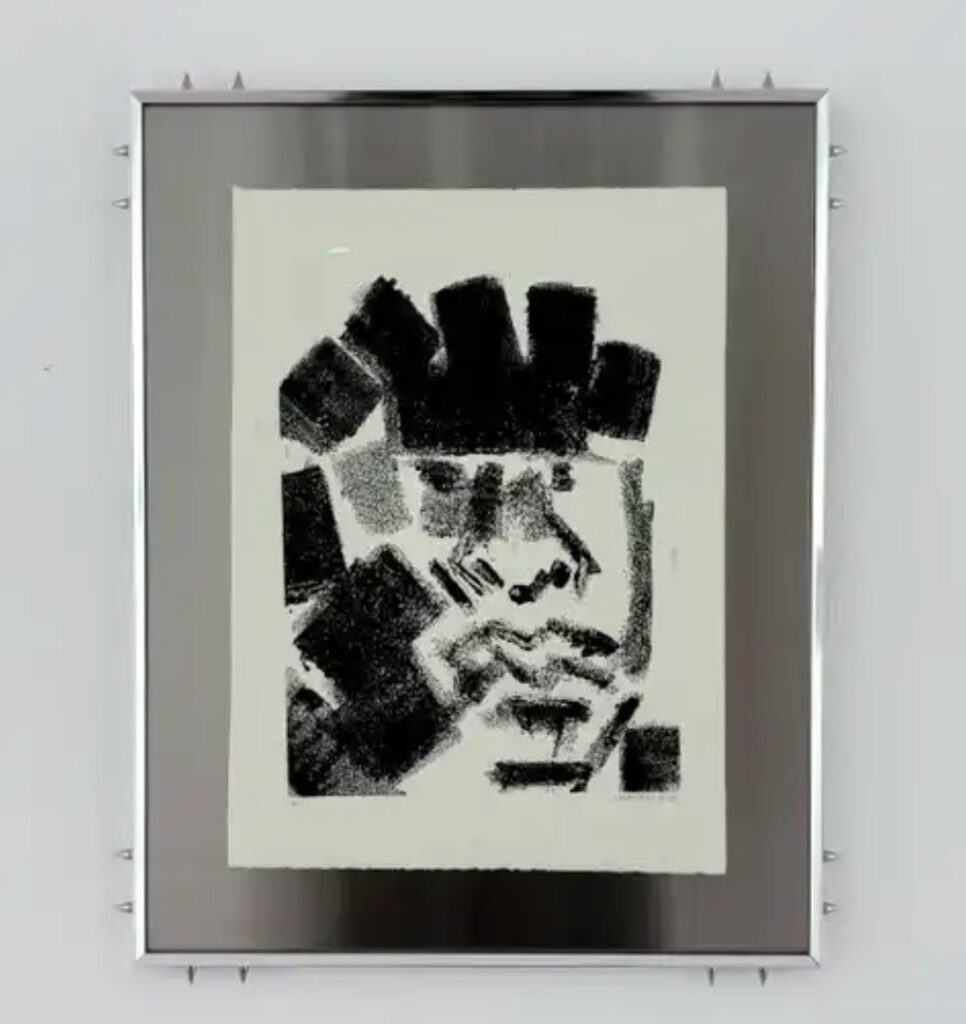
Seeing your work in the world: You mentioned feeling sadness when you finish a piece. I often see your work in friends’ homes or worn as badges by people in the street—how does that feel?
Joy: Art shouldn’t be restricted for galleries where it’s often expensive to even visit, it’s nice to see it in public space or to be displayed in our homes or worn. I feel honoured to make art that people want to buy and live with in their homes waking up each day to see it. It feels much more intimate than a gallery, it’s part of our everyday life, so I’m grateful to be part of that.
Who are some of your art heroes or people whose work inspires you?
Joy: There are so many that are contemporary, I love the vibrancy in Jon Key’s work and also love the tenderness in Sola Olulode’s paintings. Outside of paintings, creatives like Niyanta Sharma who use food cleverly as part of her practice and Maya Balfour who transforms space lovingly through curation and spatial design. I’m excited about all the art that’s being created right now, it’s truly inspiring.
What’s the feeling you get when you finish a piece?
Joy: Sometimes there’s this sadness in having to pack a painting away after working on it for so long and becoming used to seeing it on the walls. But it’s also a feeling of accomplishment for being able to get this idea out of my head and exist in the real world.
Do you have any advice for other artists trying to make it?
Joy: My dreams are often bigger than my budget which is constraining but I often think of my younger self who made so much happen with just A4 paper and pencils. My advice is to make the thing with what you’ve got. A great idea is a great idea so the rest will follow.
Looking ahead, what are you most excited about in life?
Joy: I have this dream of making a book, it would feel like a full circle moment from the graphic novels I’d made as a child, so I’m excited to one day work on that but aside from this I’m excited about small things in life; making small art works, love and good friendship.