
Share this
Founded in Tokyo in 2014, Upper Hights (UH), is a Japanese denim brand that has rapidly gained recognition for its understated yet refined style. Even the brand’s name embodies its spirit: “Upper” signifies excellence, while the slightly altered spelling of “Hights” evokes higher standards and a mindset that refuses to be confined by convention.
At the heart of the brand lies the philosophy of “quiet strength.” The clothes appear effortless and natural, yet each piece is deeply considered. Denim is its foundation, but the collection has expanded into ready-to-wear items that share the same philosophy—simple yet stylish, minimal yet distinctive.
What distinguishes Upper Hights is its commitment to Japanese craftsmanship. At a time when traditional industries are shrinking, the brand incorporates premium fabrics woven by Kaihara Denim, which has over 100 years of history, and collaborations with HOWA, a factory employing skilled artisans for sewing and finishing. By combining time-honored methods with modern design, Upper Hights stands against the tide of fast fashion, embodying the philosophy of “buy less, choose better.” Their goal is to create clothes cherished for both quality and style over time.

This sensibility has resonated beyond Japan. For its European expansion, Upper Hights partnered with Danish designers Amalie and Cecilie Moosgaard. Their minimal and sustainable approach aligned perfectly with Upper Hights’ values. Presented at Copenhagen Fashion Week, the collaboration introduced Scandinavian audiences—who value longevity and delicate design—to the refined world of “quiet luxury” denim.
Ten years on, Upper Hights continues to hold true to its founding vision: to create denim that feels like a second skin, infused with Japanese craftsmanship, an environmentally conscious production background, and timeless style.

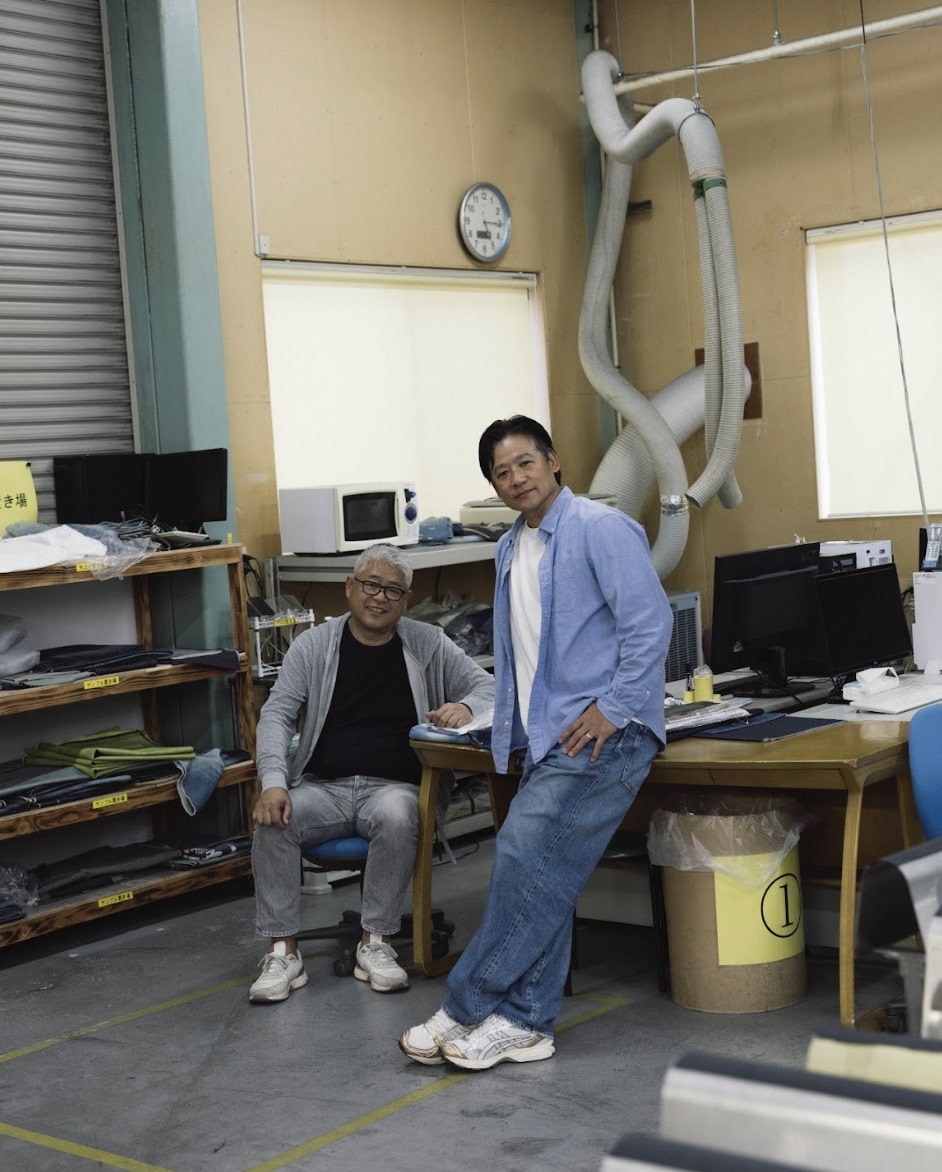
It’s a pleasure to sit down with you guys. First question. What’s you guys’ background? And what did you do before starting UPPER HEIGHTS (UH)?
Tsuyoshi Kikushima (UH): TRUE RELIGION Sales → RED CARD Product Development & Sales Manager → RAG & BONE Sales Manager (Japan) → Upper Hights Product Development & Sales Manager
So what inspired you to start UH, like what sparked the idea?
UH: Upper Hights was born out of a realization about the denim market at the time. In the early 2010s, contemporary brands such as Rag & Bone, Acne Studios, and Alexander Wang were beginning to launch denim lines. In Japan, however, there were very few brands positioned in this way.
Rag & Bone had a capsule line called Rag & Bone/JEAN, composed of tees, shirts, knits, and jeans. Although it was discontinued after a few years, in Japan it was very well received. This showed us there was a significant demand for clean and minimal denim. Japanese consumers naturally appreciate simplicity and refinement, so I believed that a denim collection with the clean expression of Acne Studios—rather than Rag & Bone’s more casual tone—would resonate strongly in the Japanese market.
Additionally, at the time, I was personally very drawn to Goldsign denim, which had a big influence. All of these experiences came together, leading me to create a brand that would be clean, timeless, and embody a sense of “quiet strength”—that was the origin of Upper Hights.
Looking back at 11 years. What has been some of the biggest obstacles with building UH?
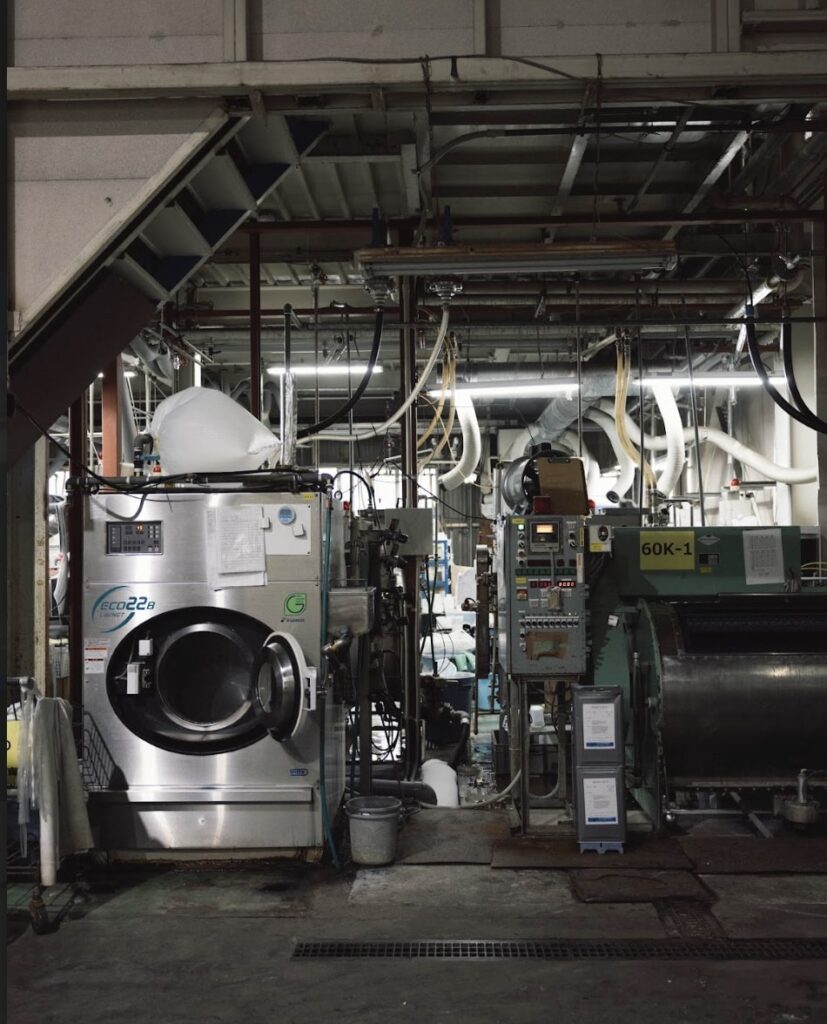
UH: The greatest challenge has been preserving craftsmanship while not stopping innovation. To achieve our ideal washes, we began with fabric development. We pushed the boundaries of what was thought possible—such as applying complex washes to soft or stretch fabrics— through repeated trials with factories and artisans. Respecting tradition while continuing to challenge ourselves became the driving force behind creating collections that embody Upper Hights’ “quiet strength.”
So what makes Upper Hights stand out, in the crowded world of Japanese denim?
UH: Many Japanese denim brands emphasize ruggedness and strong heritage. In contrast, Upper Hights values “quiet strength.” Our jeans are simple yet distinctive, blending seamlessly into daily life while maintaining timeless appeal. This minimal and modern approach defines us.
At the same time, we are actively involved in fabric development and new wash techniques. The rich color variations that result from this research are another key feature of Upper Hights.

With that in mind, Why is Japanese denim considered different from mainstream denim, both in feel and philosophy?]
UH: Japanese denim stands apart because of the meticulousness of its wash process. The damage, fading, and shading applied to each pair of jeans are never random but are the result of artisans’ careful calculations and painstaking attention. Natural abrasions and deep tonal gradations are only possible thanks to this thoroughness.
In these processes, we express the Japanese concept of wabi-sabi. Even though the jeans are new, they reproduce natural shadows and the beauty of imperfection that emerge over time. This imbues denim with quietness and depth, elevating it beyond ordinary clothing.
HOWA: Moreover, the Japanese sense of beauty, combined with the spirit of bringing things together and seeing them through to completion, informs the management of every stage—fabric, silhouette, sewing, and finishing. Each specification is drawn out to its fullest potential, and through repeated, meticulous testing, a synergy is created that directly translates into the final appearance.
Can you walk me through the process of how an Upper Hights pair of jeans is made, from fabric sourcing to finishing?
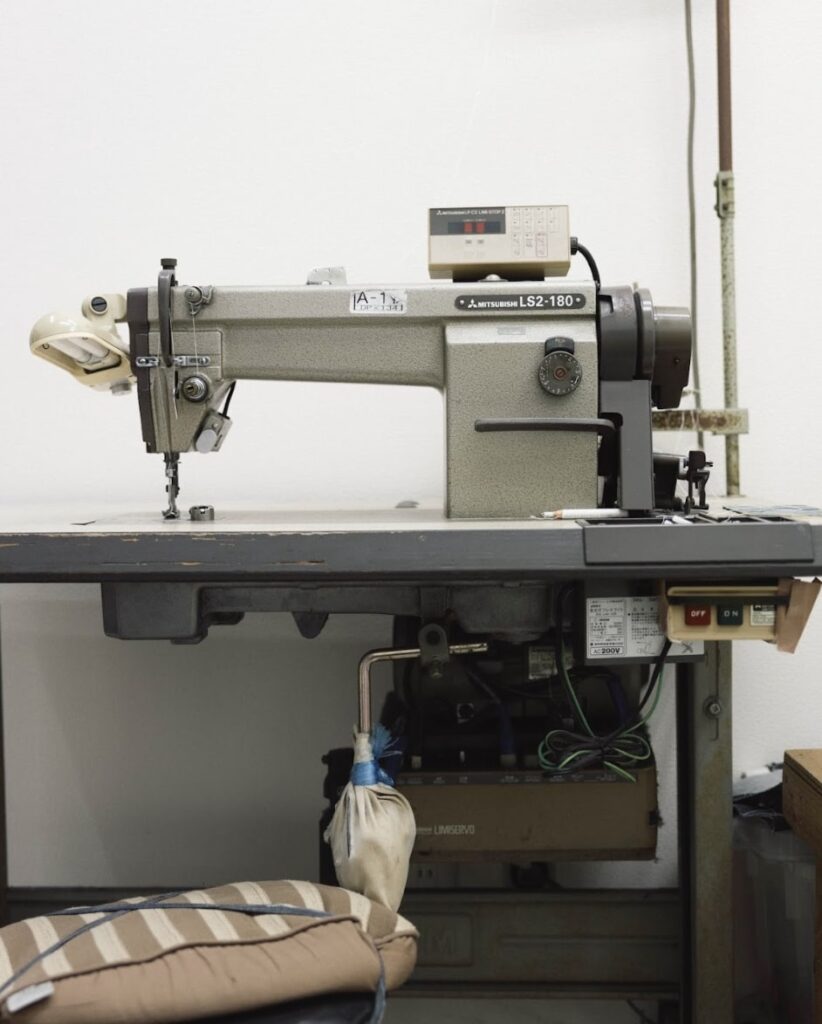
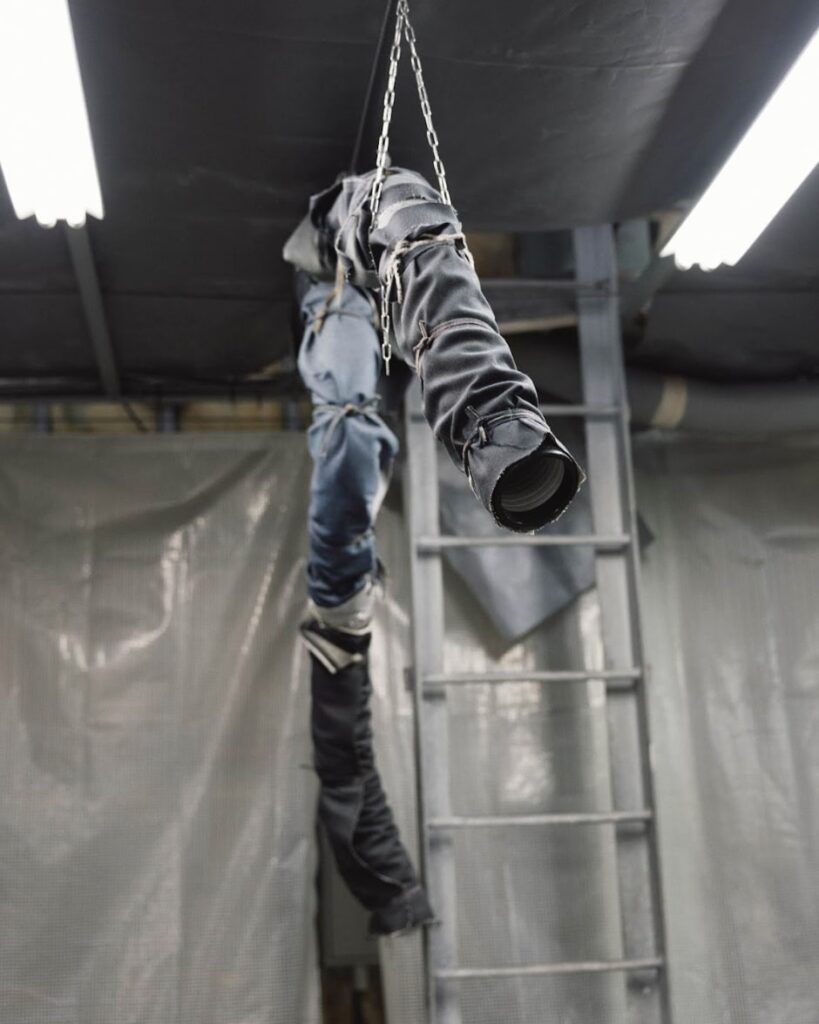
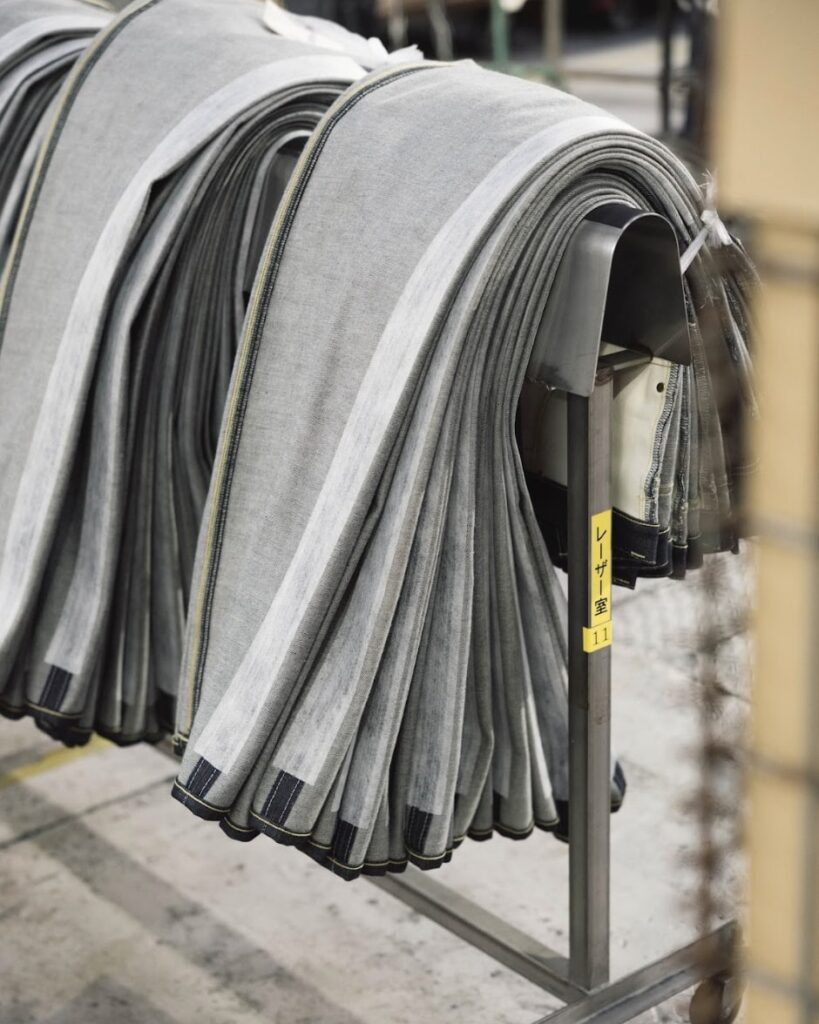
UH: Our fabrics are mainly sourced from Kaihara, with most developed as custom orders. From yarn selection and dyeing to the final washed look, every stage is carefully designed with the finished wash in mind. Sewing is carried out by denim specialists with precision and care. Finally, with the fabric’s characteristics in mind, the wash process is meticulously calculated to produce sophisticated depth and nuanced expressions.
How do you balance traditional Japanese techniques with new technologies in denim manufacturing?
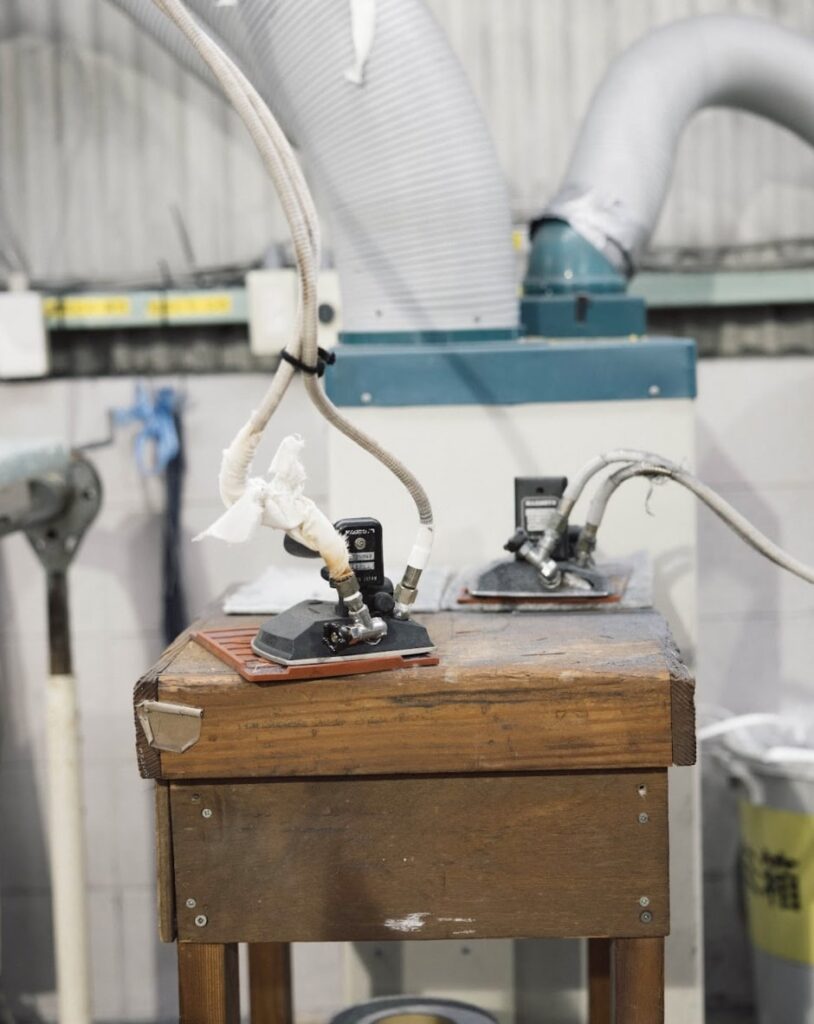
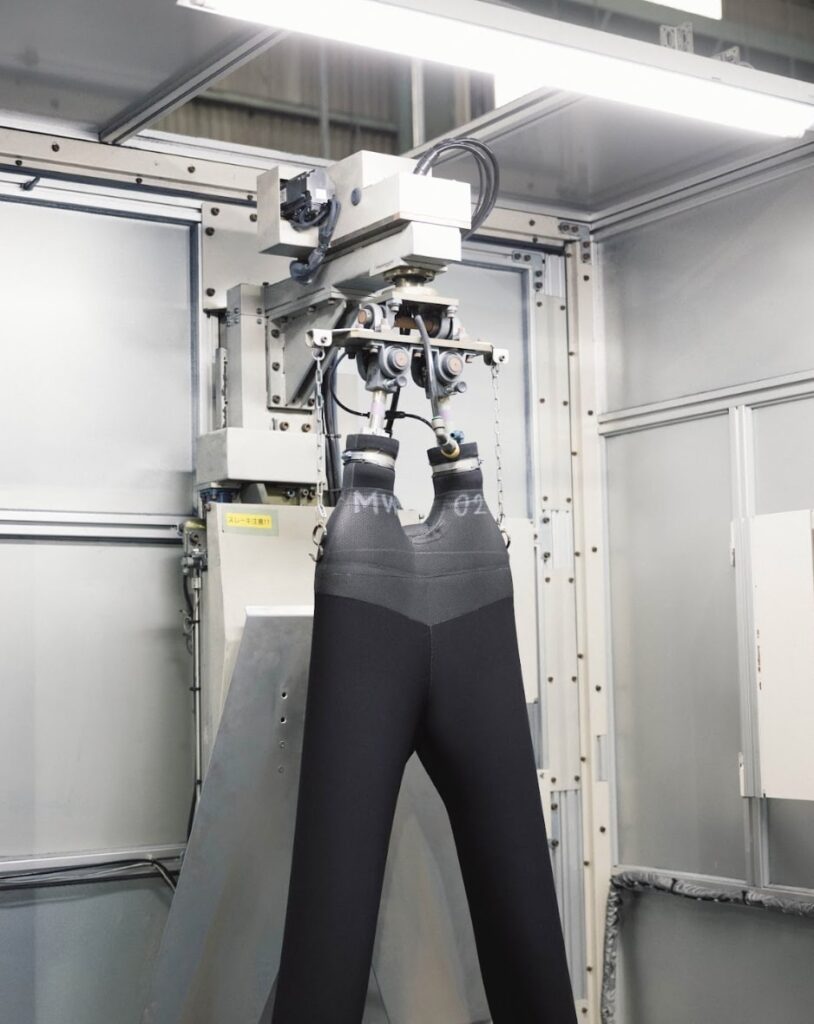
HOWA: The irreplaceable value of human touch and intuition comes from traditional craftsmanship, while efficiency and innovation come from modern technologies. By combining both, we achieve balance.
Are these century-old methods still relevant today — or perhaps more relevant than ever?
HOWA: They are more important now. Skilled craftsmanship provides differentiation from fast fashion and adds value. Today, it is not only about technique but also about telling the timeless story these crafts carry.
What are the most technically challenging aspects of producing denim at the level Upper Hights aims for?
HOWA: It lies in the precise management of dry processes and the meticulous control of wash techniques required to achieve refined colors and depth. This high-level fusion of refinement and naturalness is what makes it most challenging.
“Made in Japan” denim is synonymous with craftsmanship, integrity, and trust. How do you translate those values into a modern, international context?
UH: For us, “Made in Japan” symbolizes the spirit of craftsmanship. We express this in a contemporary and modern way—not just by boasting about quality, but through silhouettes stripped of excess, clean aesthetics, and natural fading calculated by artisans.
HOWA: The careful dedication to detail in fabrics, sewing, and finishing is something that can be trusted worldwide. Through exhibitions, collaborations, and social media, we work to share these values, but ultimately it is when people wear our jeans that they experience the true essence of Japanese craftsmanship.
How does working with historic textile areas affect the identity of your collection compared to mainstream denim production?
UH: The greatest significance lies in securing fabrics of stable quality. If fading is inconsistent, then all the meticulous calculations behind our washes would be meaningless. Because these regions have cultivated techniques and experience over generations, we are able to exert precise control over the expressions we aim to achieve. That is how we establish Upper Hights’ “quiet strength.”
The brand talks about “quiet strength” and “simple yet stylish” design. How do those ideas translate into material choices and production details?
HOWA: “Quiet strength” is reflected first in the way we select materials. We prioritize fabrics with the stability and texture necessary for intricate washes that can create depth and shadows. Sewing is entrusted to dedicated denim specialists, ensuring a clean and precise finish down to the smallest detail. These efforts result in denim that blends naturally into daily life while appearing stylish.
UH: Upper Hights is not a brand that merely reproduces heritage aesthetics. Instead, we maximize the specifications of our fabrics through innovative processing, testing silhouettes to ensure they look beautiful when worn, and conducting repeated trials. This dedication is the secret to crafting denim that becomes a lasting part of one’s wardrobe.

[UH/HOWA] Many Japanese denim brands focus on rugged heritage, but Upper Hights feels more minimal and modern. Why is that? And how does that shift affect how you manufacture?
UH: Japanese denim is often associated with ruggedness and strong heritage elements. In fact, many wash factories specialize in such processing, and most fabrics are designed to suit that expression. However, what we aim for is “quiet strength” and “simple yet stylish” denim. That is why we develop all fabrics as custom orders and reconstruct wash processes repeatedly until they achieve the expressions we envision. These accumulated efforts ensure our philosophy is reflected consistently from material selection to the final stage of production.
HOWA: While many clients request vintage-inspired references, Upper Hights maintains its own perspective on color and fade expression. Even the names of their colorways reflect this. The time invested in testing dry and wash processes allows them to achieve colors and denim expressions that are truly unique to their brand.

You recently teamed up with Cecilie & Amalie Moosgaard, for a collection. How did that collaboration come about?
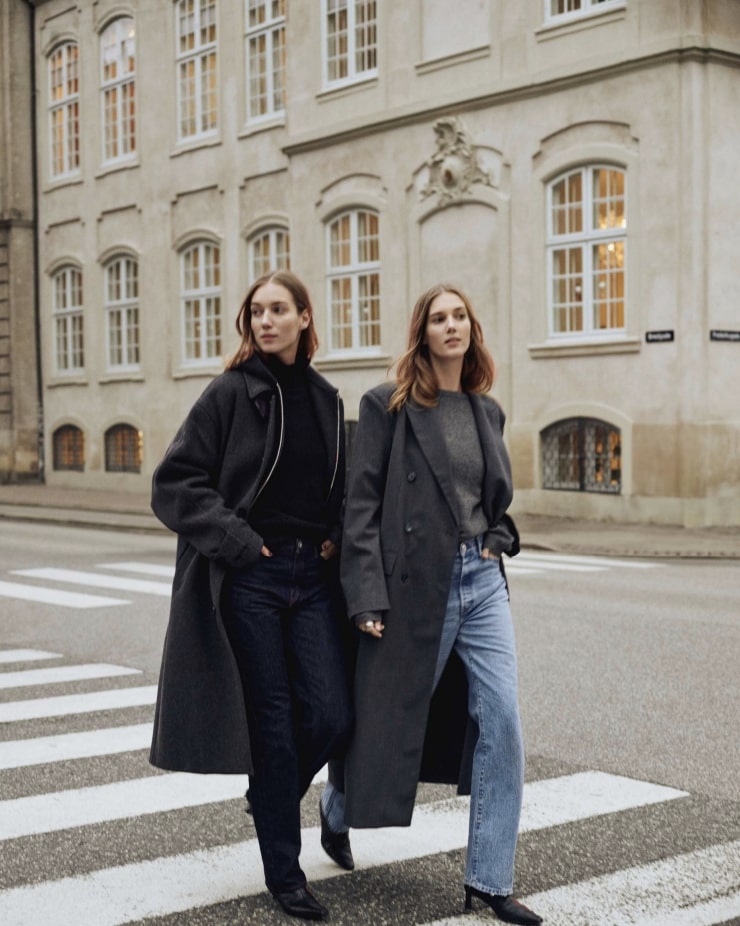
UH: It all began with a profound resonance of values. The philosophy of “quiet strength” and “simple yet stylish” intertwined seamlessly with the Moosgaard sisters’ Scandinavian minimalism and sustainable vision. From this harmony, the collaboration naturally took shape.
With that in mind, what do you look for, when collaborating with brands or people?
UH: For us, the most important factor is whether their aesthetic resonates with our philosophy of “quiet strength.” Working with partners who share an appreciation for simplicity, timeless aesthetics, and respect for craftsmanship leads to meaningful collaborations that go beyond simple partnerships.
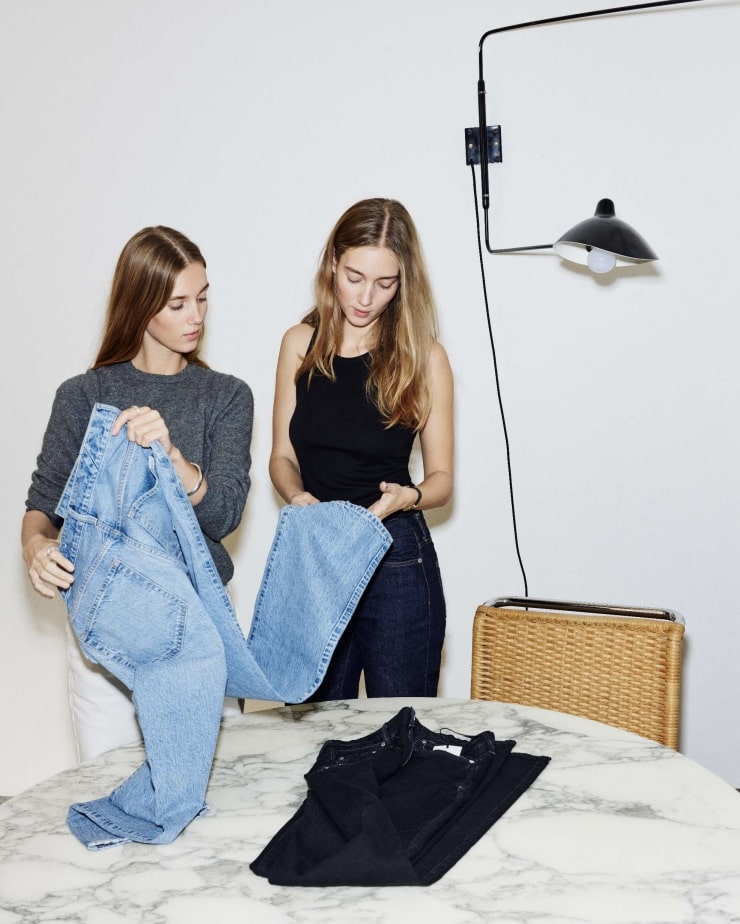
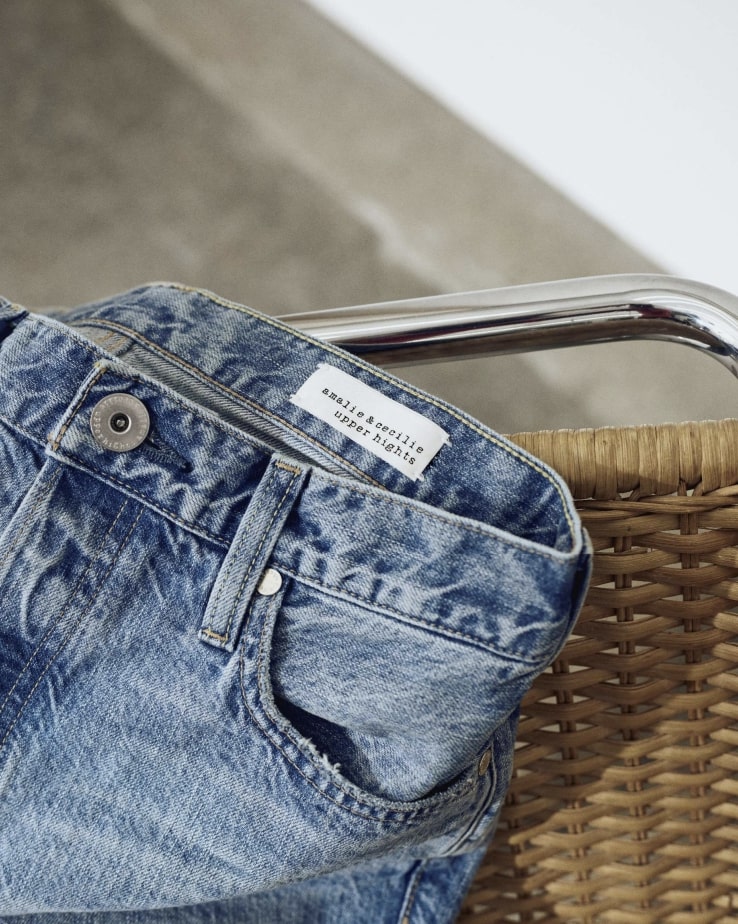
For the Moosgaard sisters, jeans are a foundation piece in almost every outfit — how did their idea of the “perfect jeans” shape the capsule collection?
UH: The sisters see jeans as the starting point for any style, and that perspective was strongly reflected in the capsule collection. They emphasized versatility and clean silhouettes that would complement any look. The result was a pair of jeans that are minimal yet capable of anchoring a wide range of outfits—what the sisters themselves called the “perfect jeans.”
What new elements did the collaboration bring that wouldn’t have come from Upper Hights alone?
UH: What emerged was a sense of effortlessness and timelessness. By combining Upper Hights’ craftsmanship and quiet strength with the Moosgaard sisters’ Scandinavian sensibility, the collection achieved a freer and more international expression. It became more than just jeans—it was reimagined as a wardrobe foundation.


How do these capsule jeans differ from mainstream jeans in terms of details, fit, or philosophy?
UH: They combine timeless appeal with the essence of Upper Hights. The Moosgaard sisters admired authentic denim like Levi’s, so details such as stitching and belt loops were adjusted to reflect that classic style. At the same time, we infused the jeans with our philosophy of “quiet strength” and “simple yet stylish,” adding effortlessness and modernity to the silhouette. The result was denim that merges timeless appeal with Upper Hights’ signature aesthetic—creating something entirely new.
How do you see this collaboration as a bridge between centuries-old Japanese workshops and a new generation of designers and wearers?
UH: Yes, we see it as a bridge between tradition and the future. The precise techniques and philosophy of Japan’s ateliers, with more than 100 years of history, combined with the Moosgaard sisters’ contemporary sensibility and Scandinavian minimalism, created a denim expression that is neither purely classic nor fleetingly trendy. It embodies both inheritance and renewal, presenting Japanese craftsmanship to the next generation.
HOWA: Opportunities to present traditional skills in new forms also lead to new expressions and the evolution of techniques.

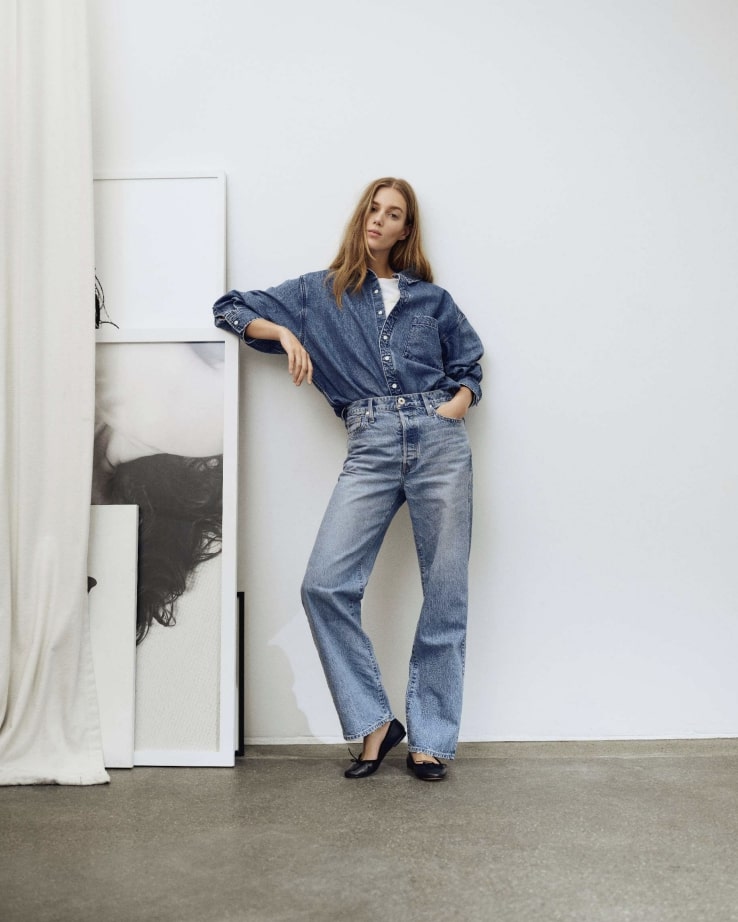
How do Japanese values of craft and durability meet Scandinavian values of simplicity and sustainability in this collaboration and in general?
UH: Japan’s emphasis on skill and durability ensures timeless reliability, while Scandinavia’s focus on simplicity and sustainability brings a lightness that fits modern lifestyles. The intersection of these two values results in denim that is both classic and fresh, strong yet gentle. This spirit permeates not only the collaboration but everything we do at Upper Hights.
Why do think jeans — as the ultimate democratic fashion piece — still resonate across such different cultural contexts?
UH: Jeans are like “air”—they naturally become part of people’s lives while leaving space for individual expression. They embody both the toughness of workwear and the freedom of fashion, giving them a universal quality that makes them a natural part of everyday life across cultures. Upper Hights adds to this universality with “quiet strength” and a minimalist, modern aesthetic, offering denim that harmonizes seamlessly with any culture.
HOWA: We believe jeans continue to captivate across cultures because they intertwine two narratives: the cultural story of freedom and individuality, and the story of technical evolution in fabric and silhouette as a fashion item.
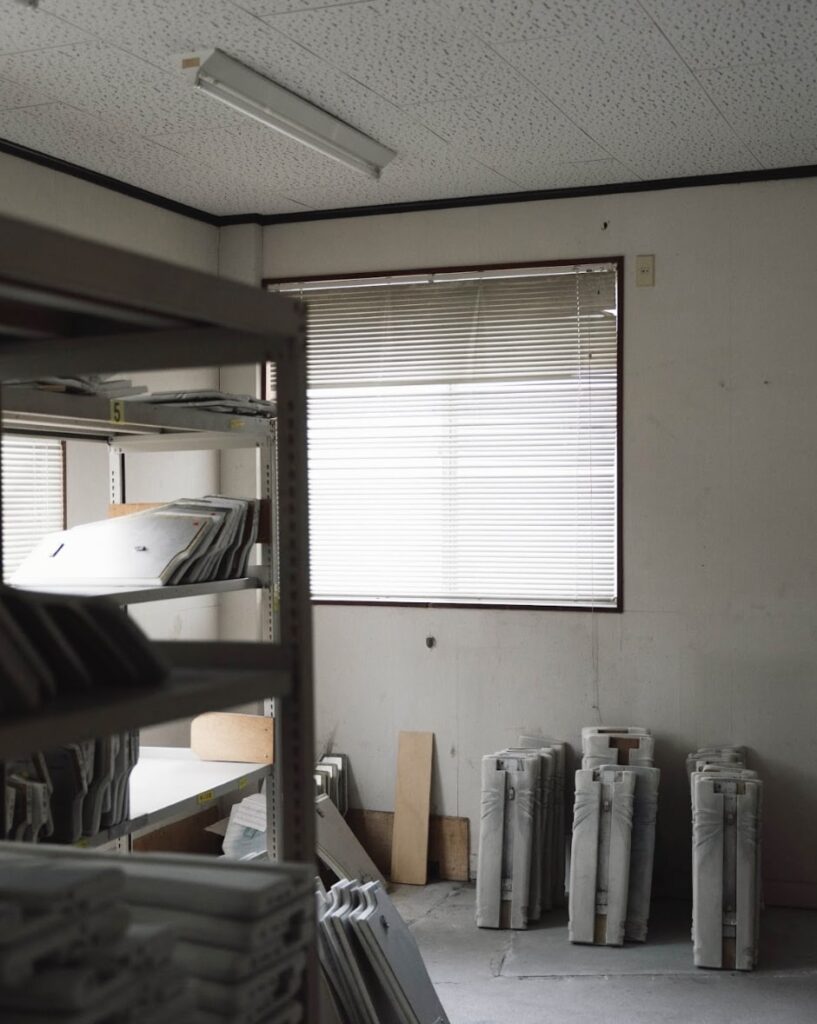
How important is it for you that local communities remain an integral part of denim production, and how do you bring that story forward in your collection?
UH: Denim production cannot be completed by a single factory. It requires the interconnected efforts of spinning, dyeing, weaving, sewing, and washing—supported by regional networks. Without the skills of ateliers and artisans with over a century of tradition, consistent quality would not be possible. These communities are the reason Japanese denim is trusted worldwide.
We do not treat this background as a hidden story but reflect it directly in our collections—for example, by commissioning custom fabrics and designing silhouettes and expressions that bring out their qualities. We also align the philosophy of production regions with our own aesthetic of “quiet strength,” elevating it into modern design. In this way, regional stories are delivered to the world as fashion.
HOWA: To preserve Japan’s traditional craft culture, regional communities are essential. The division of labor—dyeing, weaving, sewing, finishing—forms the foundation of production. When regions work together, it enables both the succession of skills to future generations and technical innovation. These communities are indispensable for sustaining Japanese craftsmanship.

Upper Hights emphasizes “buy less, buy better.” How do you actually make denim that genuinely lasts longer?
UH: For us, “lasting denim” does not refer only to physical durability. Of course, we secure durability through custom-developed fabrics with strong yarns and precise sewing by dedicated denim artisans. But more importantly, it means “aesthetic durability.” Our jeans are designed to transcend trends, with simple and refined designs that fit naturally into wardrobes of any era. That is the embodiment of “buy less, choose better”—denim that continues to be loved across time.
Japanese denim often comes from workshops with over a century of savoir-faire. How do you ensure this expertise survives as fast fashion pressures increase?
HOWA: We believe Japanese denim is more than clothing—it is a product that conveys culture, history, and philosophy. Protecting this expertise requires investing time in training younger artisans and actively passing down skills, ensuring the continuation of this cultural heritage.
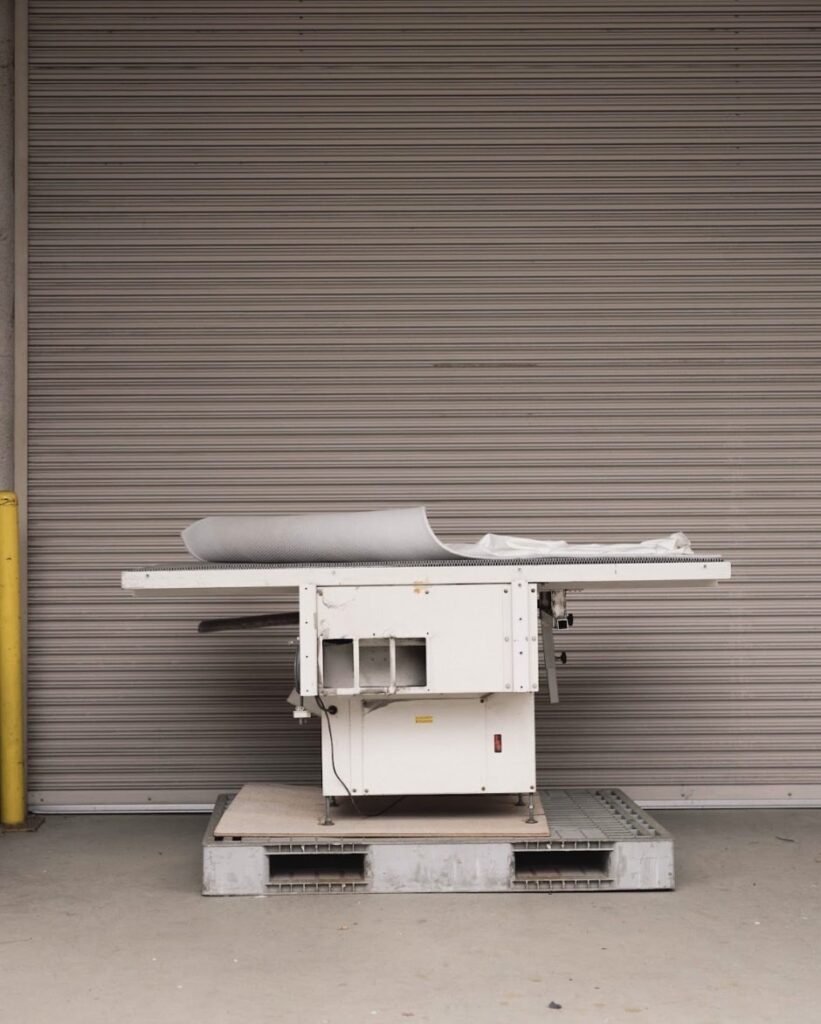
What risks do traditional factories face today?
HOWA: The aging of skilled artisans and a shortage of successors due to population decline.
How do you approach knowledge sharing — passing techniques and philosophies to younger generations so they’re not lost?
HOWA: When creating products, it is important to understand the properties of materials, the chemicals used, and the characteristics of machines. By respecting the sensibilities of younger generations while conducting repeated, delicate trials, they gain experience and come to understand these elements deeply.

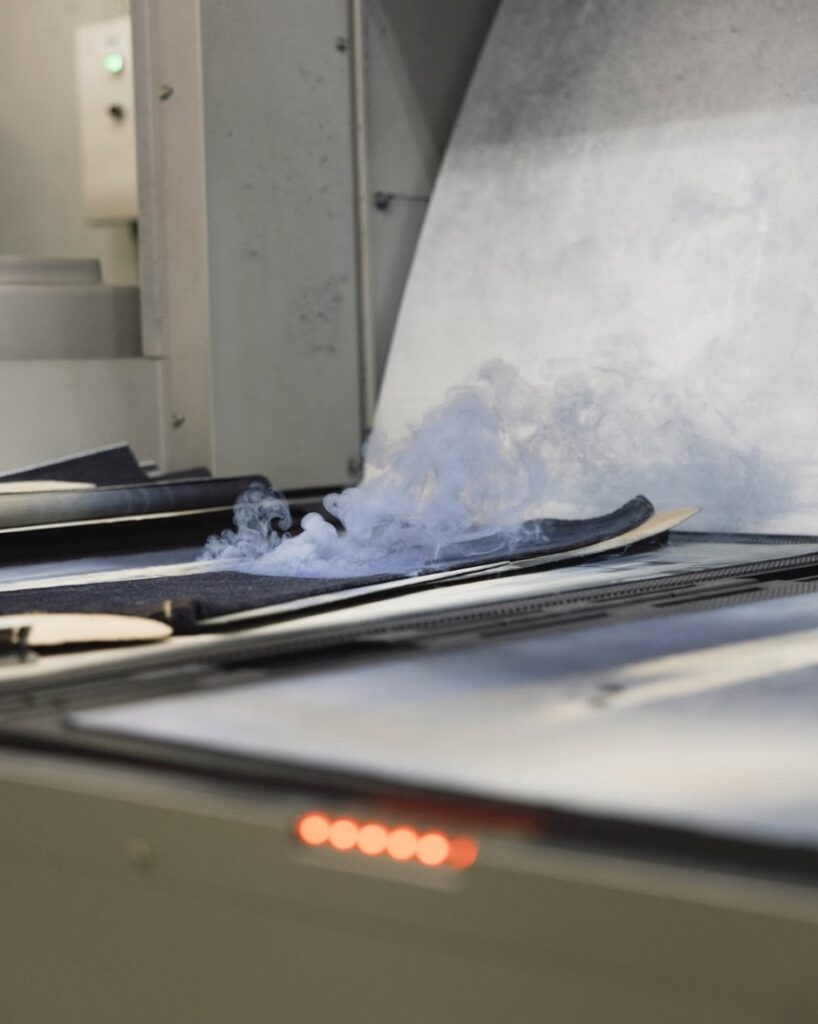
In what ways can younger generations engage with these traditions without diluting their authenticity?
HOWA: When the intuition, intentions, and aesthetics of skilled artisans intersect with the sensibilities of younger generations, it creates opportunities for new expressions and the evolution of techniques.
Alright guys, it’s been a long one. Any last words you wanna get off your chest before we wrap this up?
UH: Our goal is not to chase trends but to create jeans that will be loved for a long time. While valuing Japanese craftsmanship and our philosophy of “quiet strength,” we aim to continue delivering denim that combines universality with modernity to the world.
HOWA: Connecting tradition with innovation, artisans with the next generation, and regional communities with the global stage is essential for sustaining Japan’s denim industry. We want denim lovers everywhere to experience the precision and subtlety that define Japanese craftsmanship, and we will continue dedicating ourselves daily to developing products that embody these values.