Share this
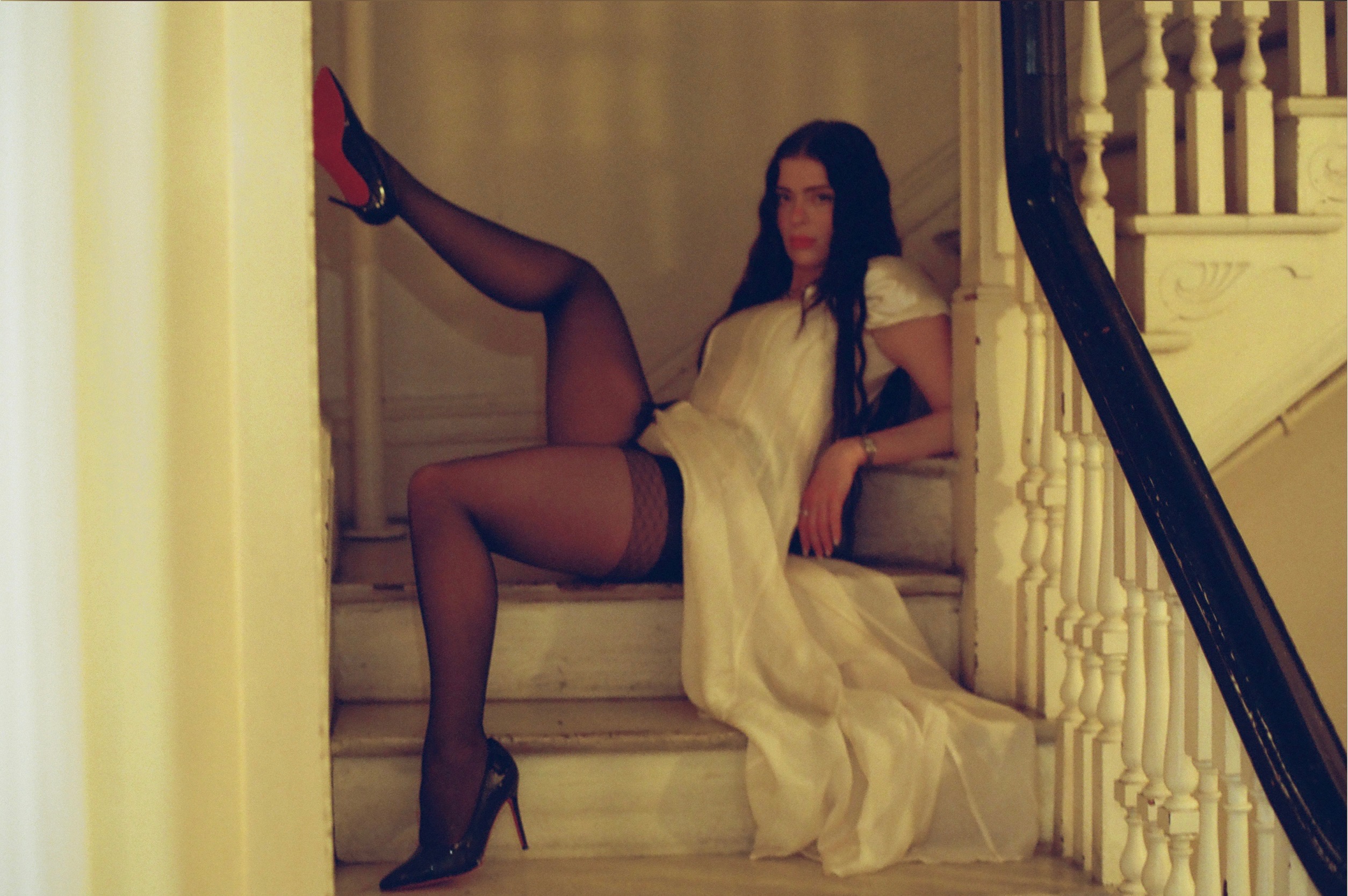
Australian multidisciplinary artist Meghann Herlihy doesn’t simply move between filmmaking, music and literature, she uses each medium to expand the same evolving mythology. Born in Perth and now based in London, her practice unfolds as an interconnected cinematic universe where songs, films and written works function as chapters of a larger psychological narrative. Drawing from mythology, folklore and feminine symbolism, Herlihy explores the stories we inherit about identity, memory and transformation, blurring the boundaries between reality and self-created myth.
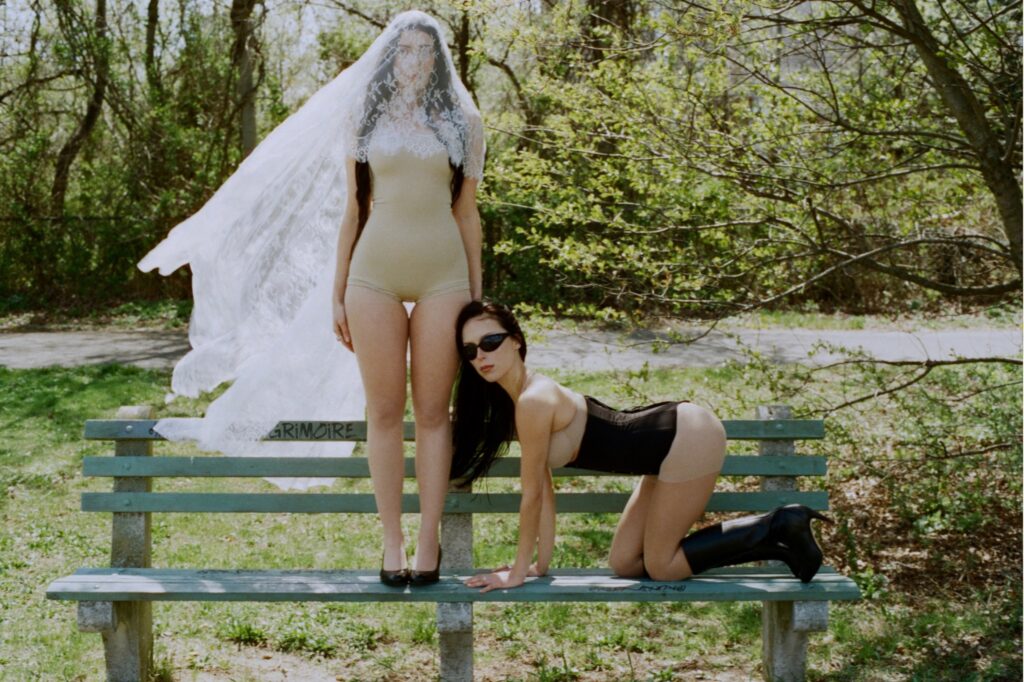
Her latest release, Grimoire, continues this exploration through an original single and accompanying music video that weave together fragmented VHS imagery, dreamlike cinematography and occult symbolism. Reimagining the spell book as a catalogue of the narratives we inherit—and too often mistake for truth, the project examines betrayal, blame and the possibility of liberation through surrender rather than control. Whether writing music, directing films or building fictional worlds, Herlihy invites audiences into richly imagined landscapes where psychological horror becomes a means of confronting the myths that shape who we are.
Hi Meghann! It’s a pleasure to sit down with you! First question that I always ask. How does a regular day look like for you in London?
Meghann: I’ve just moved to London! I’m only about seven days in, so I’m still a little jet-lagged and finding my rhythm. One thing that stays with me wherever I am in the world is my morning routine. It starts with breath work, an iced matcha, and a long walk while listening to music, finding inspiration, and curating playlists. A typical day might include an audition, writing from a local cafe or hotel lobby, wandering the city until I’ve accidentally clocked 20,000 steps, with a blister on each foot from the cute new ballet flats I mistakenly thought were a good idea to stomp around London in, before heading back to my sublet in Hackney to unwind with a movie. Last night I watched The Lure, a ridiculously campy horror musical about two mermaids who take up residency in a Polish nightclub.
I’m curious, growing up in Perth Australia, what was life like there? And what kind of kid were you? What did you enjoy doing?
Meghann: I was a day dreamer growing up. I was very happy but I always had a restless edge to me. My mother would say my impatience was just as intense as my creativity. I was always doing something, creating something, hardly able to sleep because I’d prefer to stay up all night, watching strange movies on those illegal streaming websites.
Perth is beautiful but it is so claustrophobically isolated. Outside of school & the beach, what I found myself doing most of the time was staring at myself in the mirror, acting out scenes from movies, with my reflection my scene partner and dreaming of moving to a big city.
So what brought you to London?
Meghann: The film industry! I’d been putting off moving here for eight years. During that time, I was drawn to New York and Vancouver for the same reason, and I felt as though I had to see those chapters through first. Looking back, I’m glad I waited. I’m more sure of myself now than I’ve ever been, and that kind of quiet confidence has translated well here so far. I think a younger version of me, coming from such a quiet corner of the world, would have struggled with this stimulating city. Now, life doesn’t feel right without the chaos.
Do you remember approximately at what age your creative side started to show? And when did you start taking being an artist seriously?
Meghann: I think I became conscious of it at a pretty young age. I don’t come from a particularly creative family, so the chaos within me stood out. It was always acknowledged and encouraged, even if nobody quite knew where it came from. I didn’t start taking it seriously until a couple of years ago. To be honest, I’d been just kind of floating around, saying yes to experiences and doing my best to document whatever inspiration found me. It wasn’t until I started surrounding myself with driven, successful artists that I realized I could alchemise all of that creative energy into something sustainable.
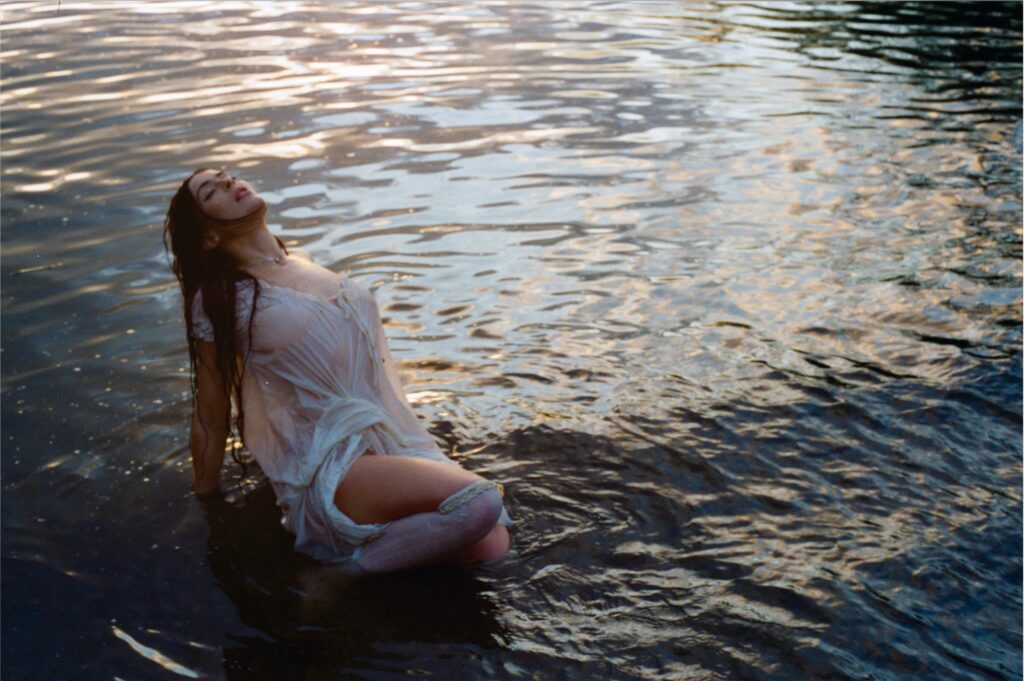
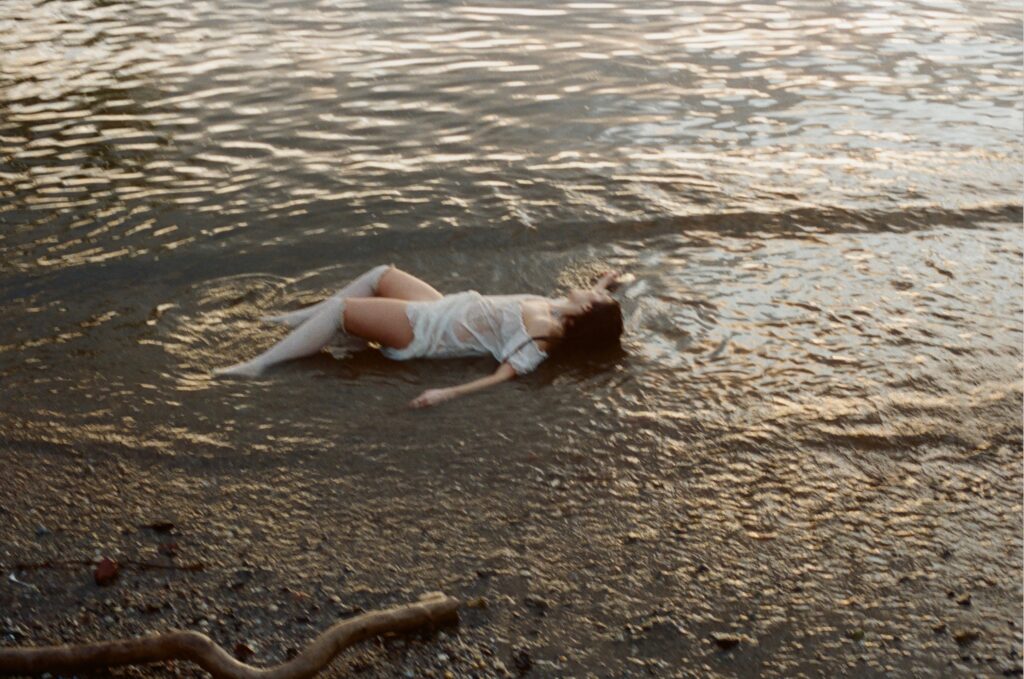
Your work suggests that identity isn’t something we discover but something we continuously write. Do you think we’re all authors of our own mythology, or are we mostly living inside stories inherited from other people?
Meghann: Look at the Greeks, the poets, the Romantics, Every story has been written, every experience has already been had. Personal mythology is how you interpret it and articulate it. We are in total control of who we are. What we aren’t in control of, is how others perceive us and that is so fucking freeing.
Mythology and folklore often survive because they express emotional truths rather than factual ones. What emotional truths are you trying to preserve through your own mythology?
Meghann: Transformation. We are not fixed beings. We are ever changing, evolving, adapting. To stay the same, is death. In all of my work, the protagonist undergoes some form of transformation, usually born from shame, desire or the pursuit of forgiveness. Those emotions are catalysts. They force us to shed one version of ourselves and become another.
Many artists create worlds. You seem interested in creating an entire belief system. What draws you to that scale of storytelling?
Meghann: It’s a kind of spirituality to me. I went to a religious boarding school, and although we were forced to attend church every week, we were also forced to learn about a different religion and belief system. I was fascinated by the way these stories could create meaning, validation and guidance for so many people. As someone who doesn’t personally align with any one religion, it gave me the space to craft my own belief system, one that’s always evolving alongside my understanding of the human experience.
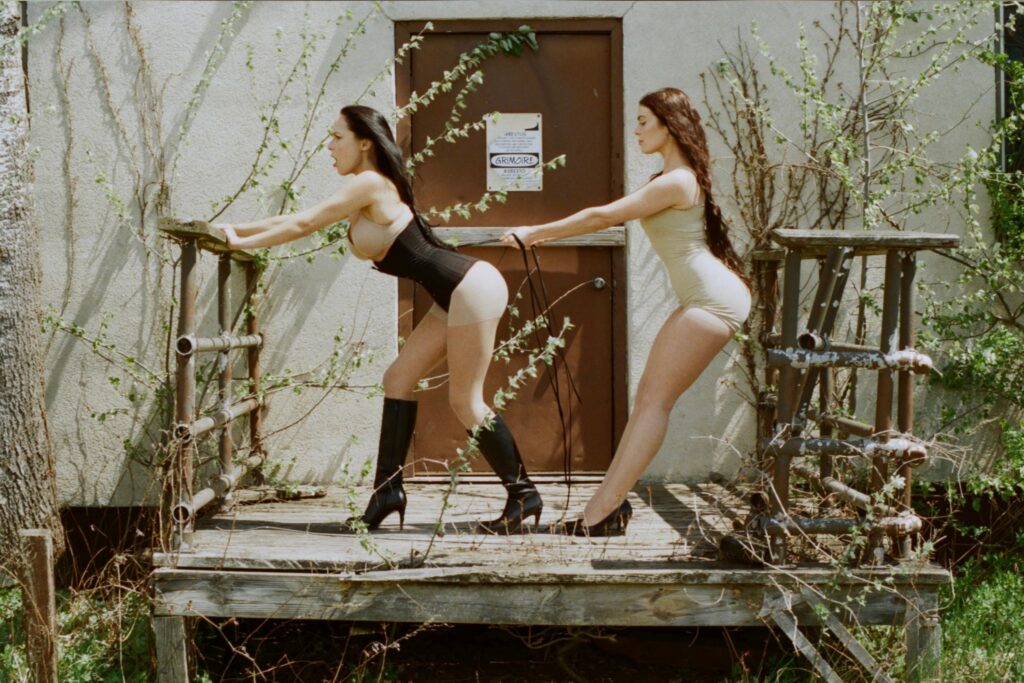
Has there been a myth, fairy tale or piece of folklore that has quietly followed you throughout your life?
Meghann: Oh my… where do I even begin? My work is heavily rooted in Greek mythology. Medusa taught me about shame, violation, female rage, and the idea that beauty can become a weapon. To me, she’s also about reclaiming identity after it’s been stolen from you. Circe embodies exclusion, isolation, and violation, but also the quiet power that comes through observation, knowledge, and eventually choosing clemency over revenge. Echo and Narcissus have always fascinated me because they’re really stories about losing yourself in someone else’s self-obsession. Echo slowly disappears trying to be loved, while Narcissus is ultimately destroyed by his inability to love anyone but himself.
You describe the grimoire as a catalogue of inherited stories that we mistake for truth. Was there a moment in your own life when you realized one of your deepest beliefs wasn’t actually yours?
Meghann: The pursuit of the perfect body. I believed my worth was tied to how I looked. It took me years to realize that belief wasn’t mine. It had been inherited—from culture, media, and all the quiet expectations placed on women before we’re even old enough to question them.
Now, I’m grateful to my body in whatever form it takes, as long as it’s healthy. I’m grateful to my feet for carrying me all over the world. My hands for writing countless stories. My eyes for absorbing beautiful visions. My ears for letting me listen to the experiences of others. My skin for feeling softness, intimacy and love. Grimoire is really about that realisation. We inherit stories about who we’re supposed to be, and at some point we have to decide which ones are actually ours.
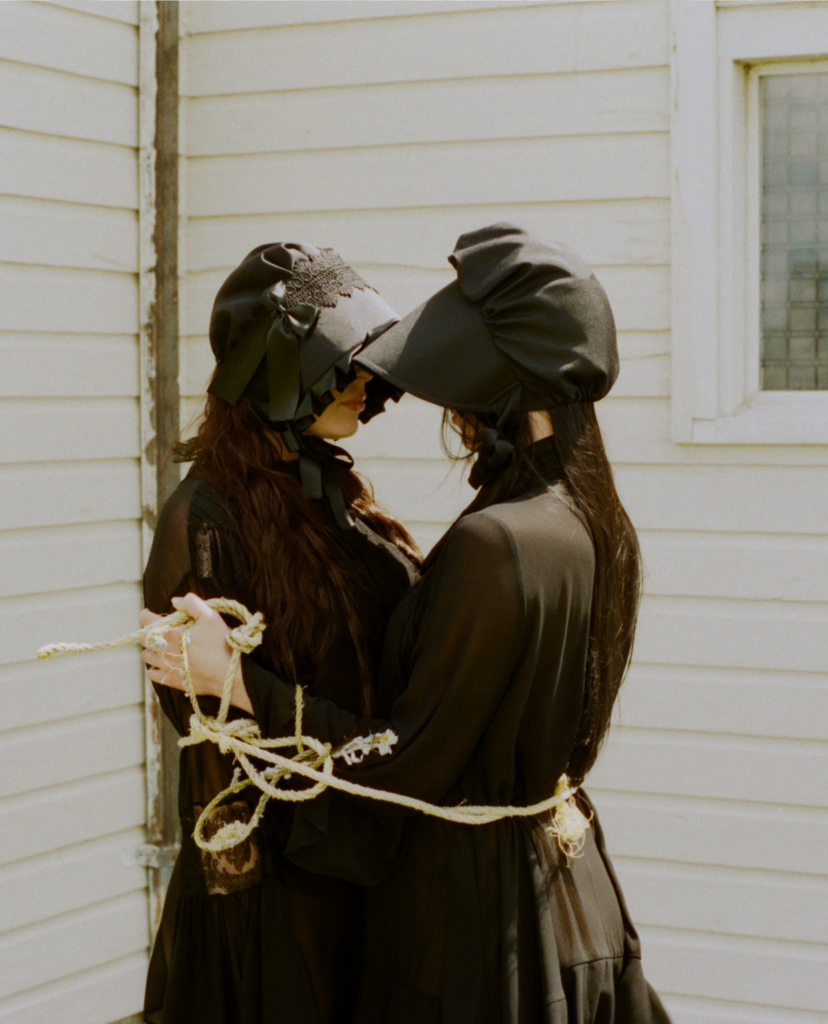
One of the central ideas in Grimoire is that the wound may never have been the prison, the story around it was. Has creating this project changed the way you understand your own past?
Meghann: Absolutely. This song became a cathartic way for me to release the pain of betrayal I’d been carrying for years. Even recently, I found myself navigating so much confusion and disorientation around my own identity and truth. It felt like poison had been poured into my ears, and I was trying to remember which thoughts were actually mine. Just before I released Grimoire, I had it on repeat while I was working through forgiveness. Somewhere in that process, I realized the song was helping me move on. That’s when I knew I had to release it. It’s a spell for forgiveness I couldn’t keep to myself anymore.
Forgiveness appears almost as a form of liberation rather than reconciliation. What does forgiveness actually mean to you?
Meghann: Freedom. A breath of fresh air. It’s not like a switch. It takes time and a rewiring of deeply ingrained thought patterns. Eventually, with new experiences, forgiveness washes away what wasn’t meant to be, in the most peaceful way.
With that in mind… Do you think artists spend their lives learning how to let go rather than learning how to master?
Meghann: I found that we are always trying to get over something. I can’t speak for all artists, but I know for a fact, the human experience is a constant state of letting go.
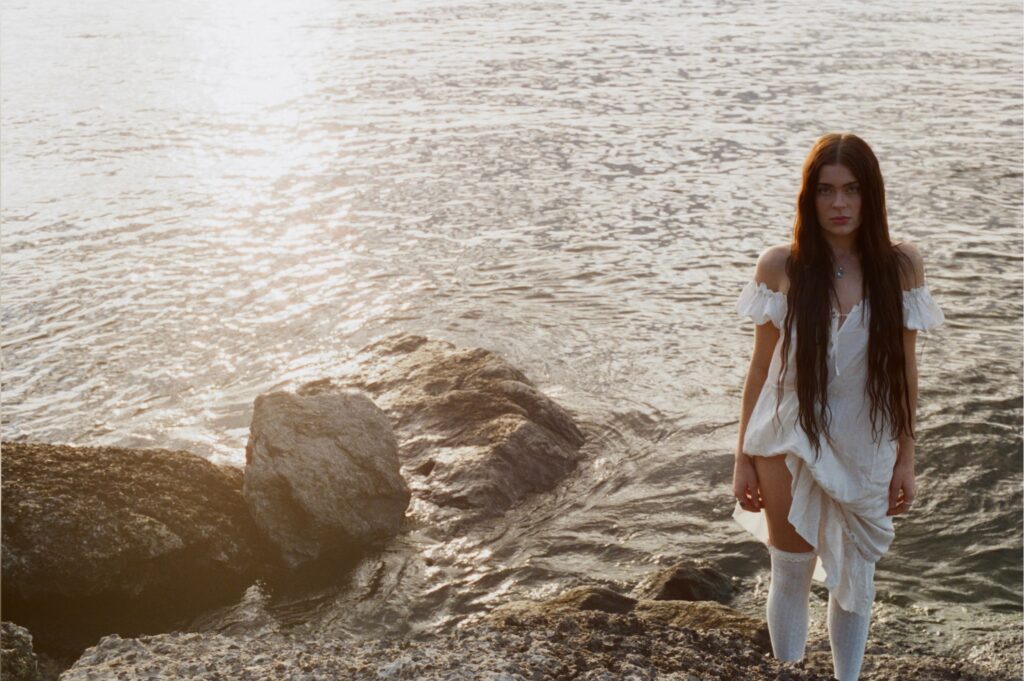
Feminine symbolism appears throughout your work without feeling symbolic for its own sake. What aspects of femininity do you think contemporary culture still struggles to understand?
Meghann: Femininity is not an aesthetic. It cannot be explained. It is must be lived to be understood. Femininity is a constant tension between the grotesque and the resplendent, the victim and the monster, desire and restraint, longing and freedom. That duality is what makes it so fascinating to explore through mythology, because myths have always understood that women can embody contradiction without needing to resolve it.
You write music, make films and write literature, yet you describe them as chapters of the same universe. Do different mediums reveal different truths about the same story?
Meghann: To be honest, I create through whichever medium I’m most inspired by at the time. An idea will come to me and I’ll play around with the best creative language the expression of the truth requires. I’ve found music is the most immediate and collaborative way to explore an idea. Literature and poetry require my most introspective and quiet moments. Film, for me, is the most tangible way of revealing a truth because it allows all those disciplines to exist together.
Can you walk me through your creative process from beginning to end result?
Meghann: Most of the time it starts with an image on Pinterest. I’ll save it, catalogue it, and then somewhere along the way I’ll come across a song, a sound, or a synth that unlocks a story hidden inside that image. From there, I’ll build a visual mood board around a character. If I find myself wanting to know more about them, then I know the idea is worth pursuing. At the moment, most of those ideas are being funnelled into music because it’s the newest medium I’m exploring.
With Scales: The Monster & The Muse, it started with a single image. I wrote a short film inspired by it, but I couldn’t stop thinking about the internal life of the protagonist. That curiosity eventually became a nine-chapter novella following a woman’s vengeful pursuit of freedom after she’s transformed against her will into a mute mermaid trapped in a bathtub. I think curiosity is really the thing that dictates my creative process. If I can’t stop asking questions about a character, I’ll keep following them until they tell me their story.
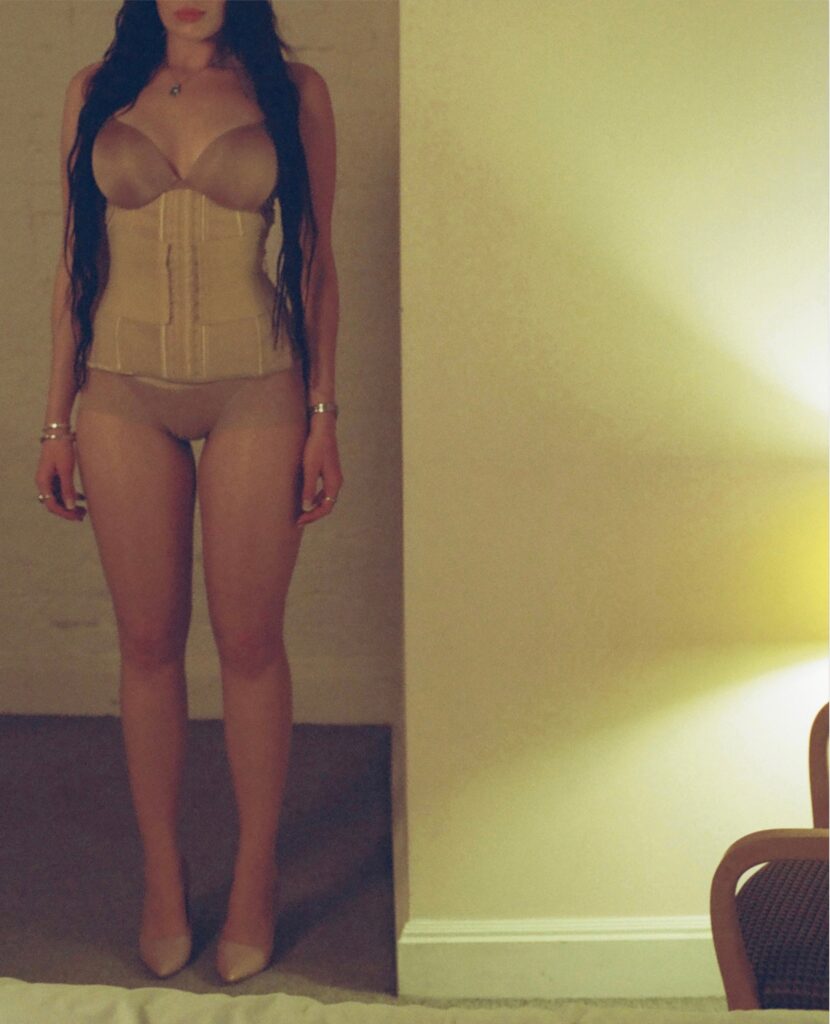
Can you also tell me about your use of symbolism?
Meghann: I use symbolism to invite thematic interpretation rather than dictate meaning. For example, in Grimoire, I suggest the book is stored in a rucksack. As someone who’s constantly on the move, it was my way of creating a traveller’s map for adventure and self-discovery. The idea that identity is something we carry with us rather than something fixed. The events of the song also take place under a New Moon, one of the most symbolic phases for new beginnings. There are so many more symbols in that song that I’ll allow listeners to discover at there own pace and in their own way.
Ok Meghann, now to something totally different. In a parallel universe who would you be? and what would you be doing?
Meghann: A sea nymph devouring the hearts of lost sailors.
Outside of music, writing and filmmaking, what’s something you’re obsessed with right now, maybe a hobby, a show, or even a food, that keeps you grounded or inspired?
Meghann: Boiled eggs and chewable vitamin C tablets. Two of each every morning. I’m obsessed. Protein as soon as you wake up & an excess of vitamin C assists in the absorption of iron, two tricks I’ve found more affective than prescribed anti-depressants.
Can you tell me a story about a time when a connection with someone had a big impact on you?
Meghann: Someone I deeply admire once said to me: “professionals just press publish… amateurs are in a constant pursuit of perfection.”
What qualities do you find most important in the people you choose to spend time with?
Meghann: Adventure, purpose, creative passion, talent, curiosity, compassion, discipline.
Anybody you look up to?
Meghann: My mother.
What motivates you?
Meghann: My anxiety.
Alright Meghann, I always ask these two questions at the end of an interview. The first is. What’s your favorite movie(s) and why?
Meghann: Mulholland Drive. I’ve seen it so many times and I’m still discovering more and more layers of symbolism. David Lynch trusts the audience, he doesn’t hand us answers. He created his own mythology of desire, beauty, fame & success and it’s fucking haunting.
The second is. What song(s) are you currently listening to the most right now?
Change (In the House of Flies) by Deftones.
Angel by Massive Attack
Glory Box by Portishead
Erotica by Madonna