Share this
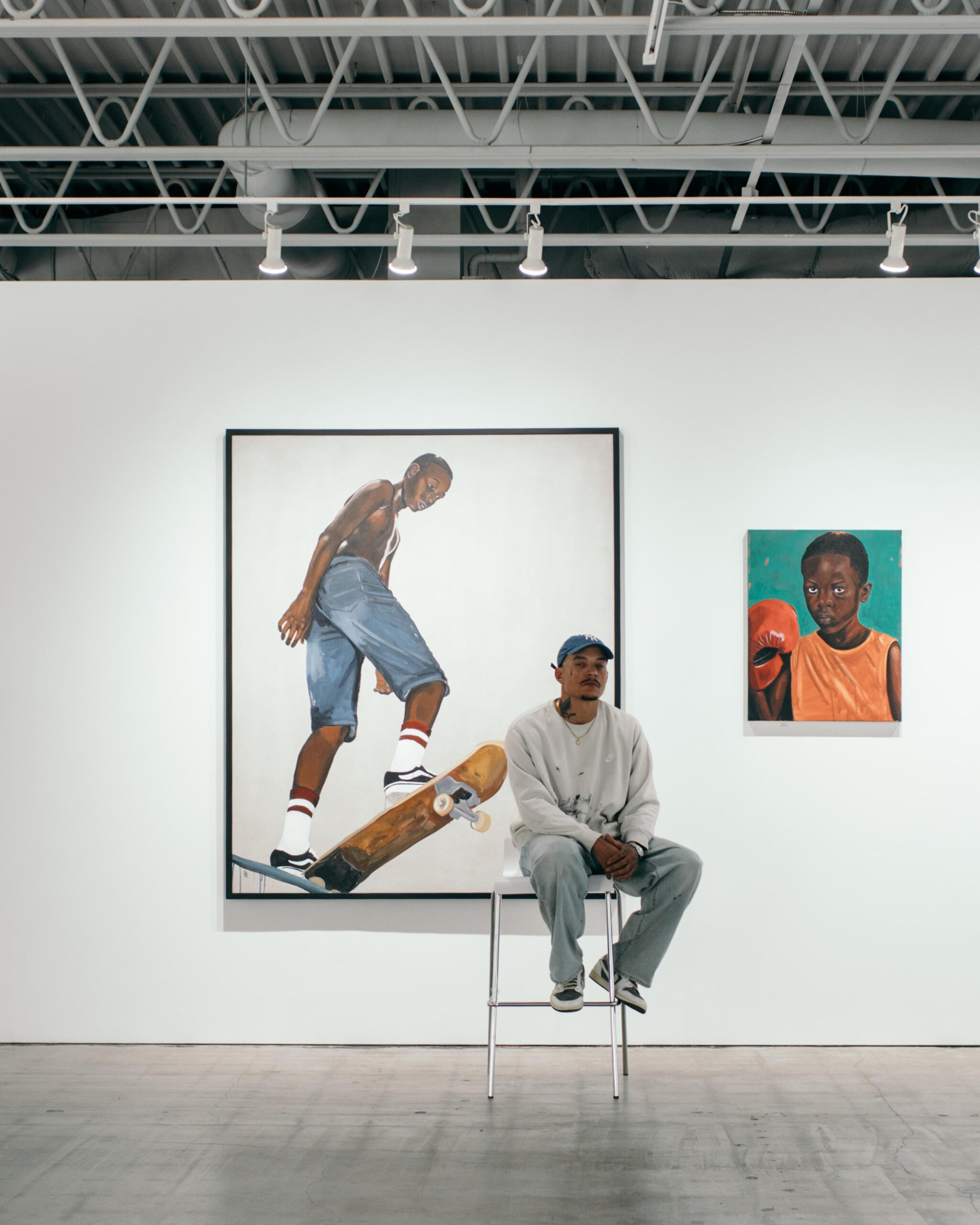
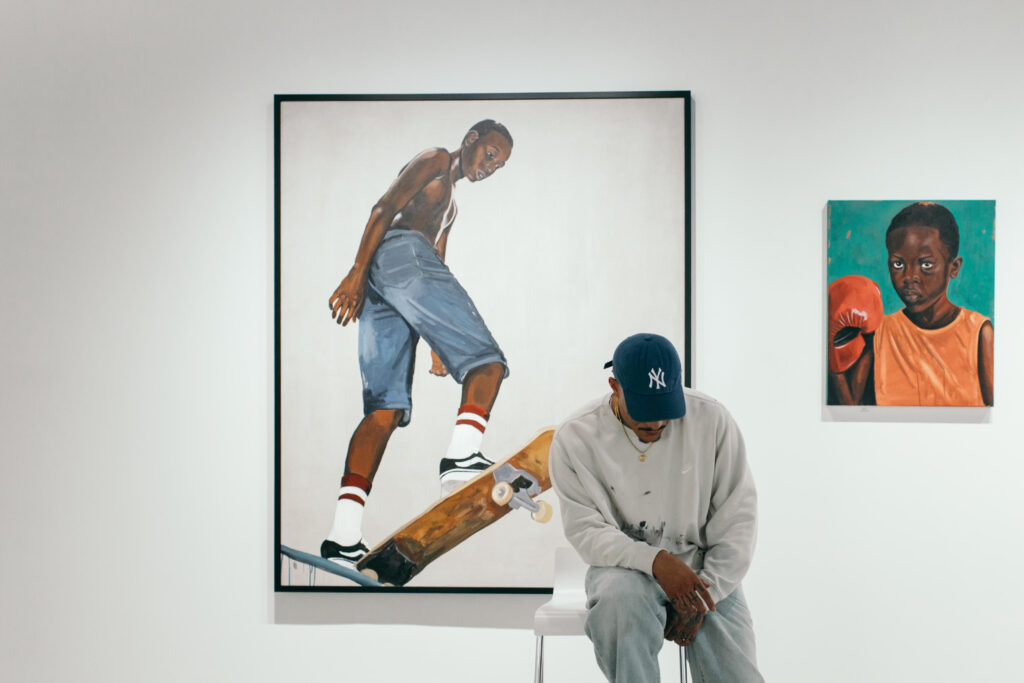
b. Robert Moore (b. 1983, Des Moines, Iowa) is a self-taught multidisciplinary artist who is heavily influenced by socio-political events, cultural criticism, and collective identity related to the African American experience. Though he began drawing as a child, Moore fully leaned into a dedicated studio practice as an adult to facilitate healing and rehabilitation. Robert truly believes art should be felt and not just seen. The hope is that we are all felt and seen.
He is proud to be an independent artist who has cultivated a loyal following around the world. His first solo exhibition Out the Mud debuted at ThinkSpace in Los Angeles in 2023. Recent group exhibitions include Operation Varsity Blues at Allouche Gallery in New York and Masterpiece II at Band of Vices in Los Angeles. His work belongs in esteemed private collections such as Dr. Joy Simmons, CFP Ayesha Selden, Dr. Michael Glassner, Wright Collection, DJ D-Nice, musician Lil Yachty and the permanent collection of the MOAH Lancaster Museum of Art and History. He has been featured in press outlets including LA Times, Ebony Magazine, Design Milk and Complex.
Various notable international collections, both public and private, collections ranging from notable established collections to green collections, including but not limited to MOAH Lancaster (Lancaster Museum of Art History), The Des Moines Art Center (permanent and institutional collections): Butts Family Collection, Selden Collection, Joy Simmons Collection, The Wright Collection, The Glassner Collection, D-Nice, Taye Diggs, Gayle King, Taraji Henson, Edward Little Collection, Ingrid Best, and many more……
Profile picture by jamimilne.
Hi Robert! It’s a pleasure to sit down with you! First question I always ask: How does a regular day look for you in Iowa?
Robert: A regular day for me in Iowa starts with waking up, getting my kids ready, and taking them to school. Then I try to fit in some studio time. Sometimes that’s computer work, sometimes it’s painting or something creative. Before long it’s time to pick the kids up again, and then we’re off to sports and after-school activities. That’s pretty much the daily rhythm.
Growing up, what kind of kid were you? What did you enjoy doing?
Robert: I was an only child raised by a single parent. My brothers and half-siblings lived in another city. So most of the time I had to entertain myself, usually outdoors. I spent a lot of time outside, finding creative ways to keep busy. If I wasn’t outside, I was probably with my dad or my grandma.
You began drawing as a child, but leaned into a studio practice later. When did you start taking being an artist seriously?
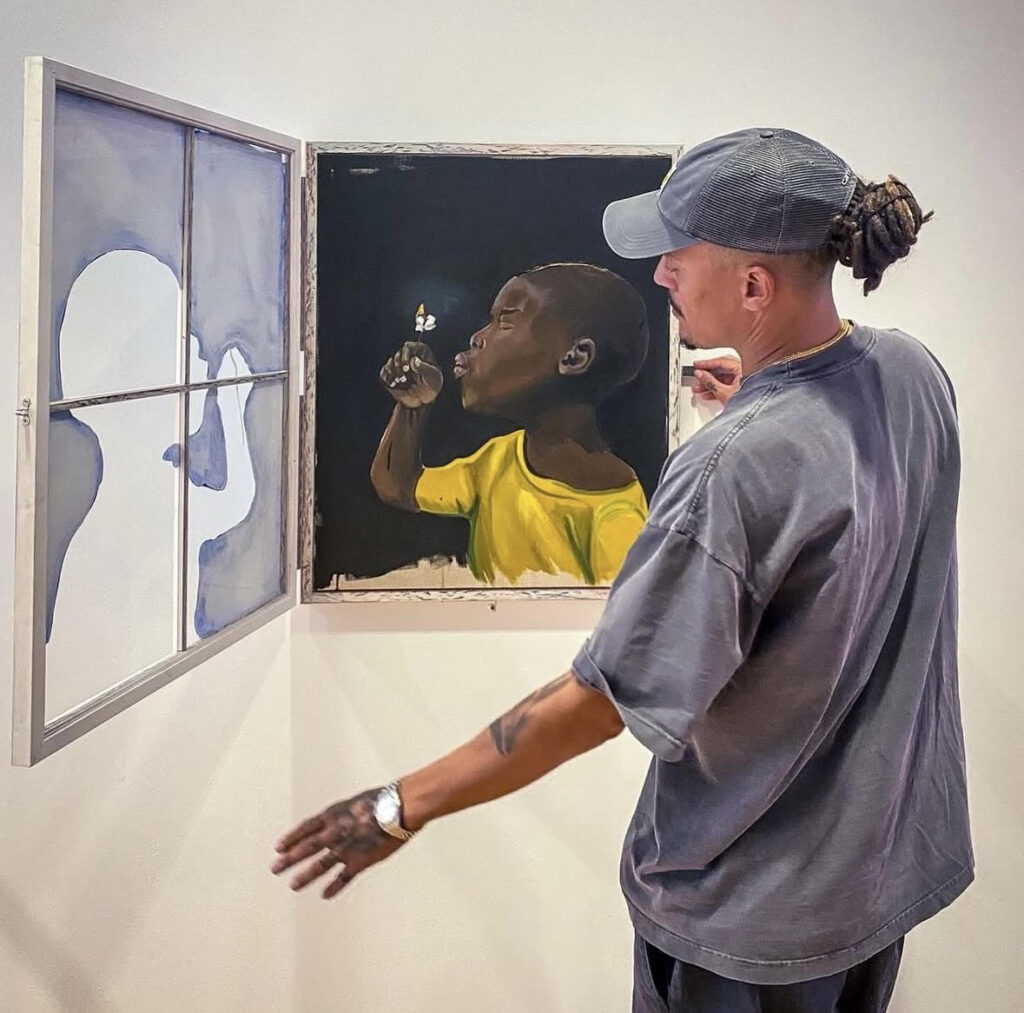
Robert: As a kid I painted in school art classes, but nothing beyond that. I wasn’t doing extra workshops or extracurricular programs. As an adult, once I got sober from alcohol and cocaine at the end of 2019, I started painting. By the spring of 2020, I was fully committed. I don’t want to call it an addiction, but if it was, it was a healthy one — something I did every day, the way I used to drink and use.
As a self-taught artist, what freedoms — and challenges — shaped your path compared to someone trained in institutions?
Robert: I approach my practice with a very organic mindset. There was never a textbook or a classroom telling me how to do it. I’ve also stayed independent, running my practice as a business completely in-house. That comes with challenges, because I rarely work with third-party partners or galleries. There are pros and cons, but I value the freedom.
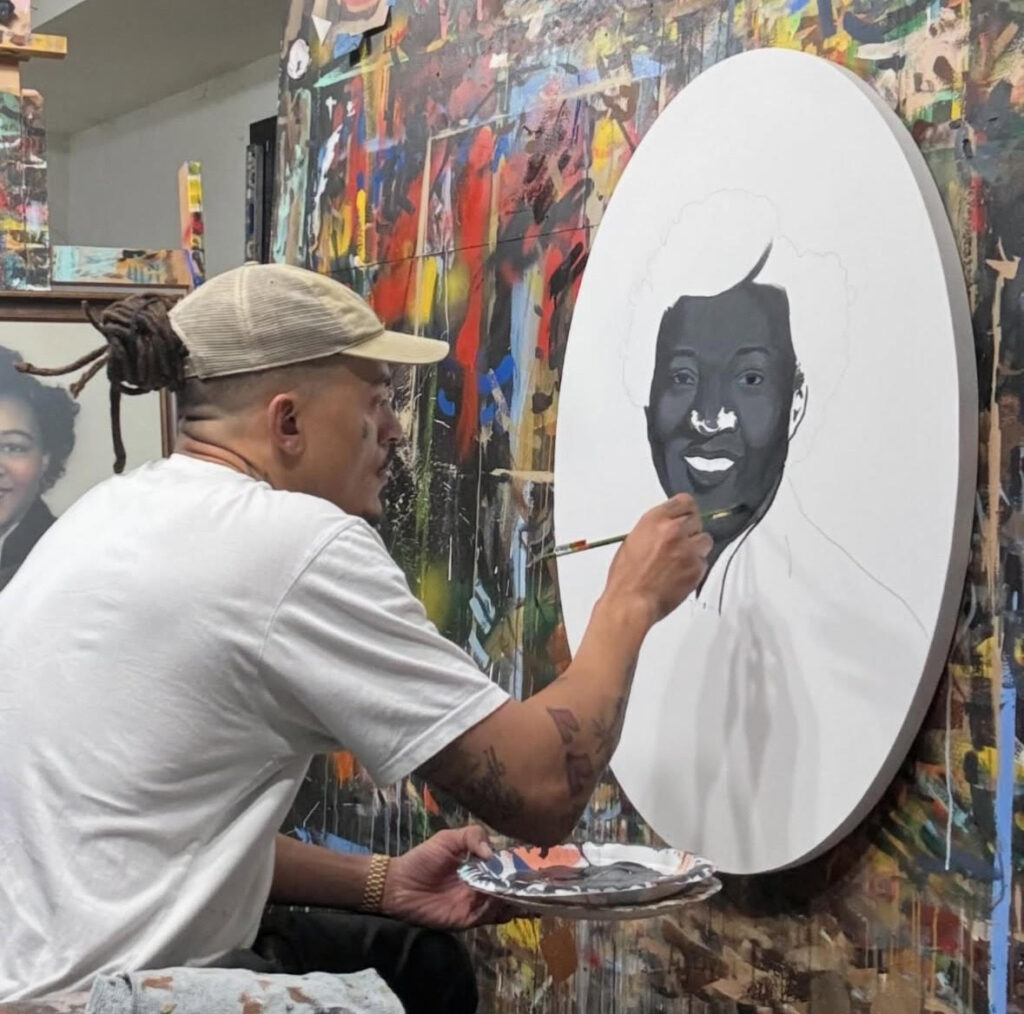
You describe art as a tool for healing and rehabilitation. How did creating become part of that journey for you?
Robert: When I became sober, I knew an idle mind could be dangerous. I needed something to fill that space — something that wouldn’t hurt me or anyone else. Art felt like the right thing to explore.
You’ve said: “Art should be felt and not just seen.” Can you elaborate?
Robert: I tell my kids this, and I say it in public talks too: there’s a lot of beautiful art, beautiful people, beautiful experiences. But it’s the depth under the surface that really matters — the feeling that lingers. If a painting leaves you disturbed, joyful, or awakened in some way, that’s when it succeeds. It disturbs the undisturbed and awakens the asleep.
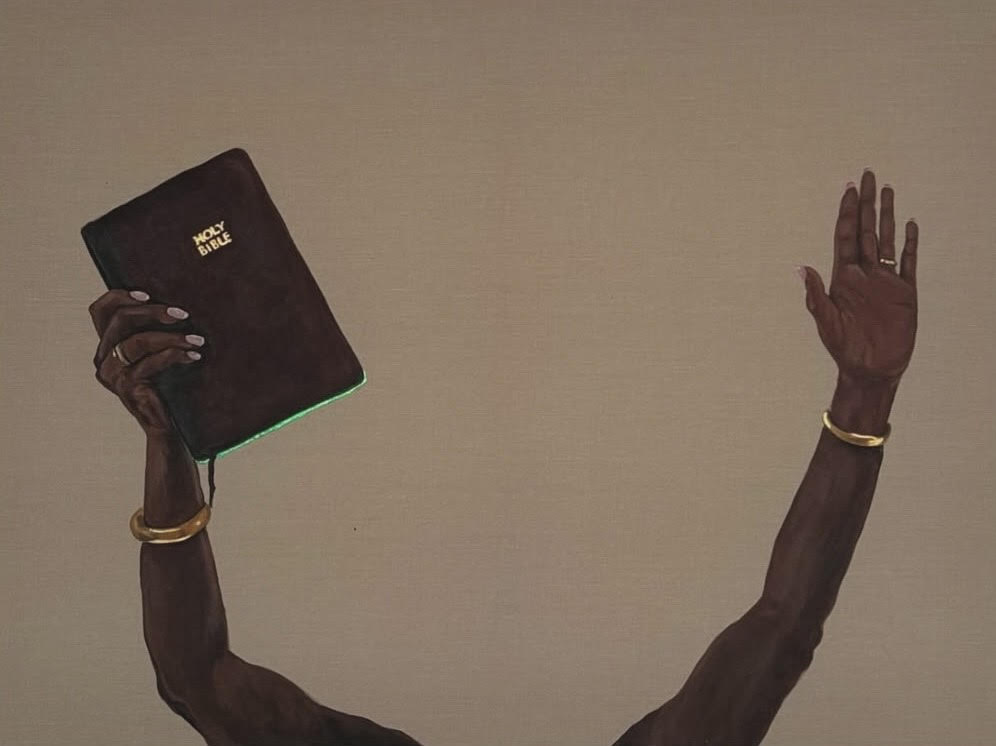
Your work often confronts trauma but also radiates tenderness. How do you navigate that duality?
Robert: It’s like rap music — there’s heaven and hell, good and bad. I approach my practice as storytelling, and authentic storytelling has both. Sometimes I feel good, sometimes I don’t, and both come through in the work. Like music: you can love a melody, but it’s the authentic lyrics that make you connect.
Some of your pieces carry grief, others reclamation. How do you decide which way to lean?
Robert: The grief I’ve lived, and that my community has lived, wasn’t chosen — it was trauma forced on us. Reclamation comes from recognizing resilience: how we rise through it. I don’t ignore the darkness, but I also don’t stay in it. There’s always light at the end of the tunnel.
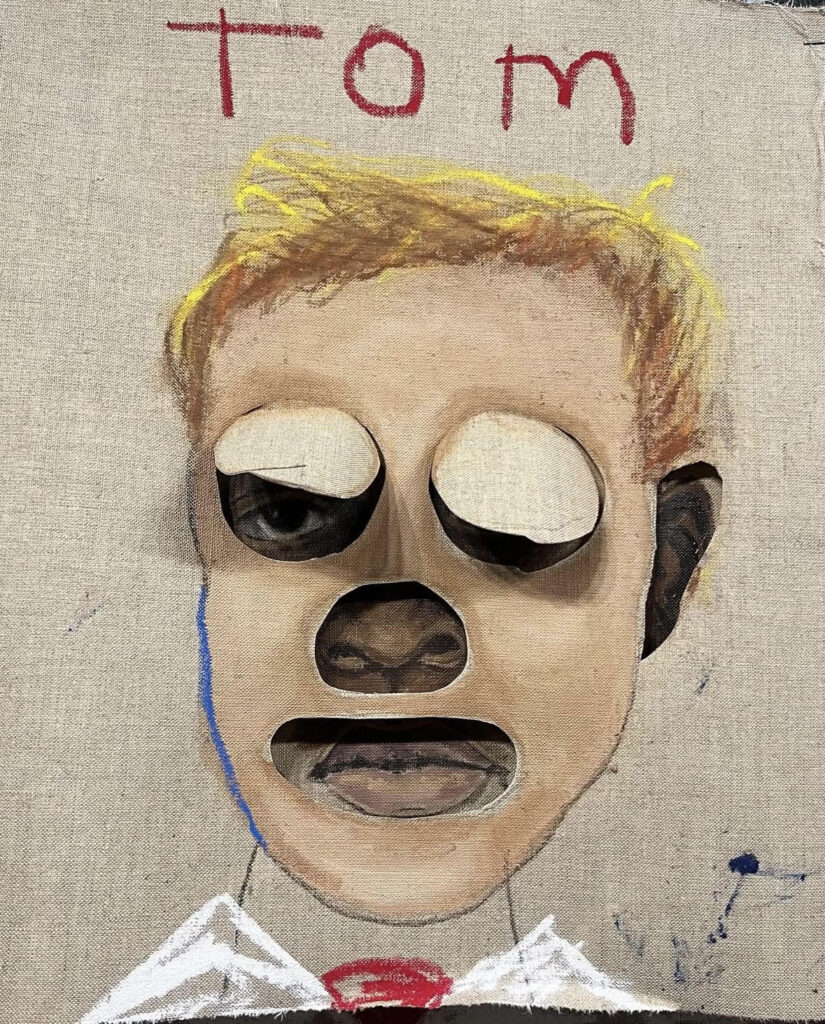
You mention socio-political events as influences. What recent issues have shaped your work most?
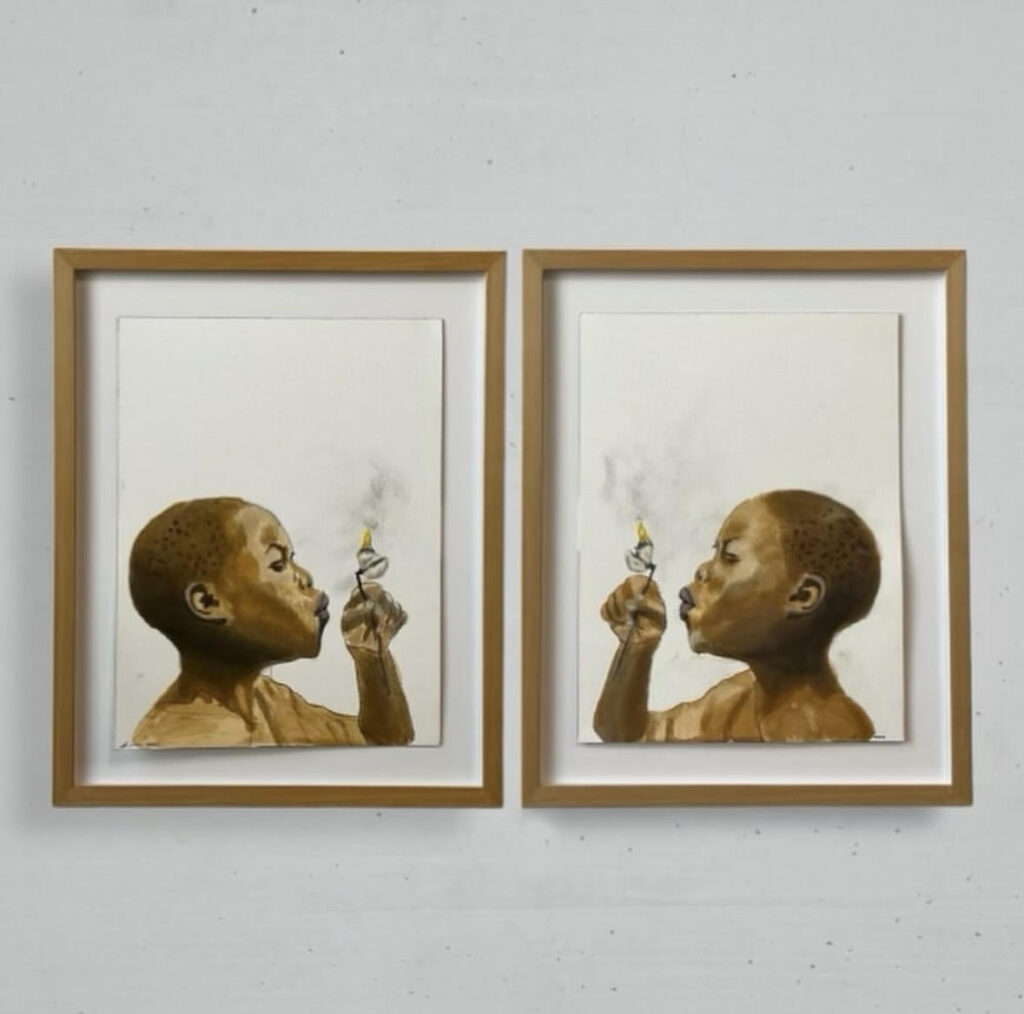
Robert: The ongoing mistreatment and killing of Black Americans through police brutality and systemic racism. And also the genocide of the Palestinian people — the crimes carried out by Israel’s government. I often use the watermelon as a universal symbol of liberation, both for my people and for others who aren’t free.
When you think of “collective identity” in relation to the African American experience, what role do you hope your art plays?
Robert: On the surface, my work represents people of the African diaspora. But my hope is that viewers also see a universal connection — something rooted in shared humanity.
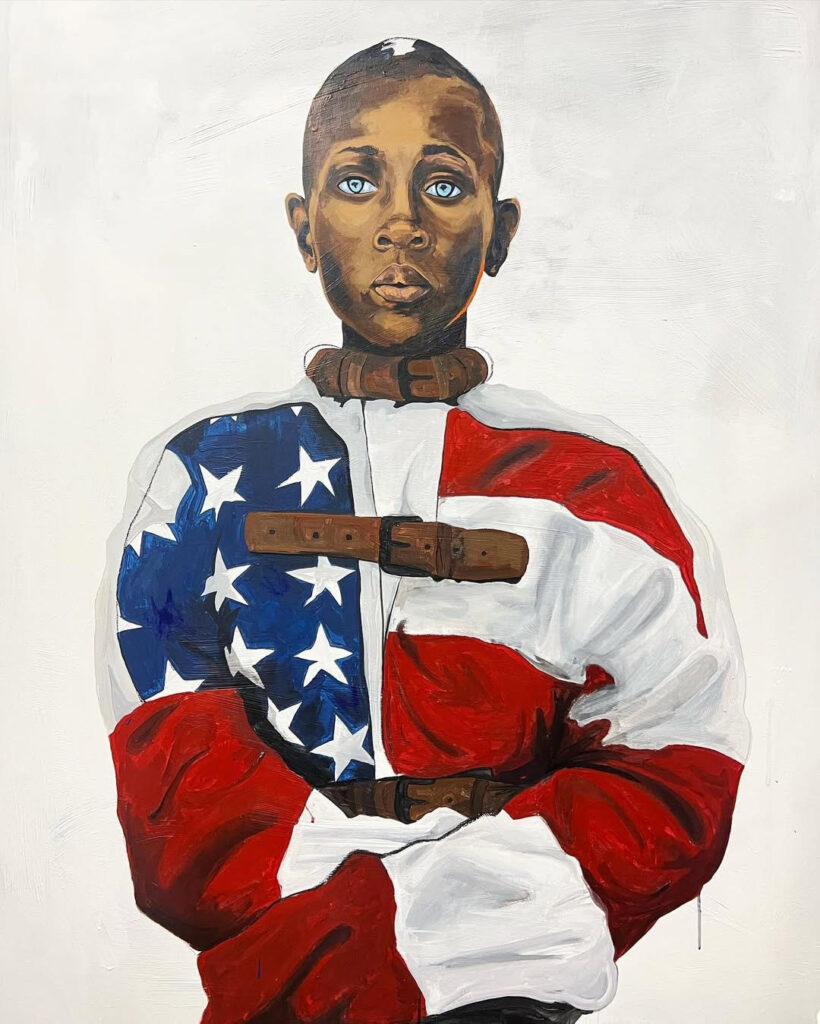
Do you see your work more as documentation, confrontation, or transformation?
Robert: All of the above — but mostly confrontation. I want to confront the truth and document it. Those two are the most important to me.
Your work ranges from deeply intimate to boldly political. Do you see them as two sides of the same coin, or separate?
Robert: It’s hard to separate them. Political events have directly shaped my life and my community’s life, which makes them intimate by nature. My work is also about sharing what I learn through the process — which helps me understand how those events became personal.
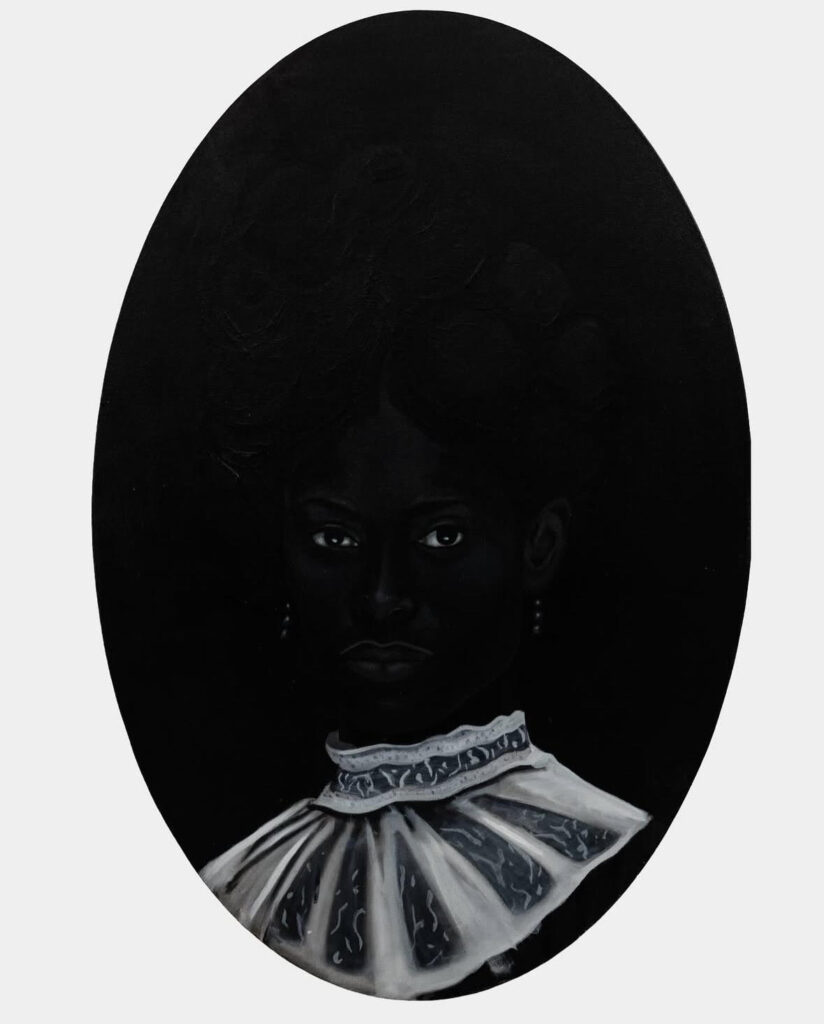
What role does art play in healing — for yourself and the communities you speak to?
Robert: It’s extremely healing. It allows energy to be shared — between creator and viewer — in a vulnerable space. The more diverse the people in that space, the closer we come together.
And memory — what role does that play in your imagery?
Robert: A big role. Memory and sensory triggers are central to my work. I want a painting to spark something in me and in the viewer, so it becomes more than an object — it becomes an emotional experience.
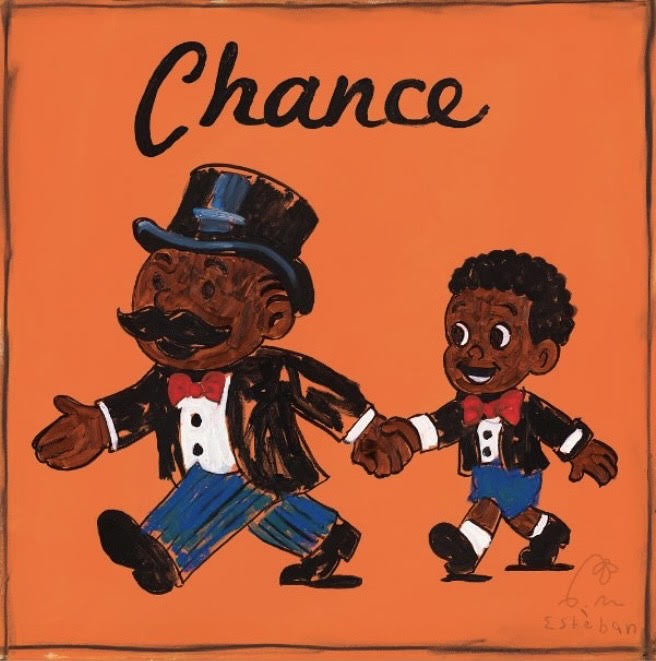
You’ve reimagined cartoon and pop culture figures as Black. What draws you to that, and what conversations are you hoping to spark?
Robert: When I was growing up, cartoons didn’t show people who looked like me. I didn’t realize what was missing until later. Reimagining those characters gave me, and others, a way to finally see ourselves in them. It’s about representation and diversity in familiar worlds.
Do you feel a responsibility to document injustice, or does the personal always come first?
It depends on the moment. Sometimes I’m making joyful work, but if a traumatic event happens — personal or political — it can immediately shift what I’m painting. My mood and emotions pour into the canvas. Every piece carries part of me.
What role does making art play in your own self-care?
Robert: It’s my lifeline, right after my family. Creating is a healthy activity I love doing, and it’s been the foundation of my sobriety and recovery.
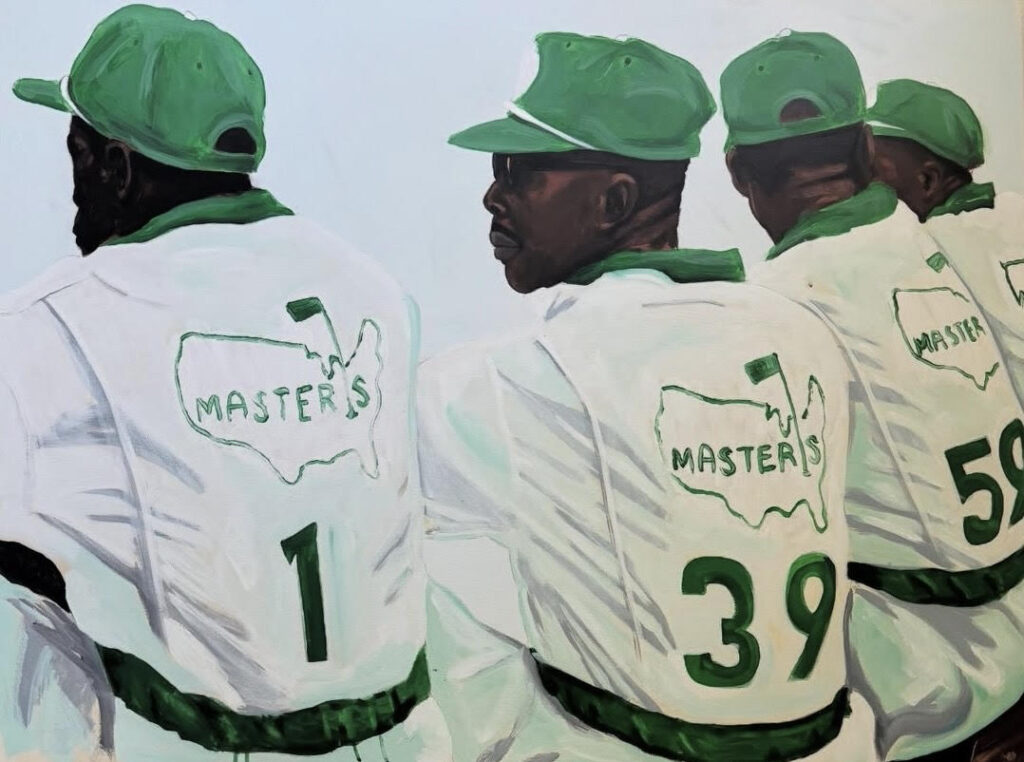
How do you handle the emotional toll of confronting trauma or injustice in your work?
Robert: That’s exactly why I do it. Painting lets me release those feelings, tell the truth, and give others space to be heard too.
When people describe your work as “healing,” what does that mean to you?
Robert: It means the vulnerability I put out into the world is resonating. Healing happens when someone sees themselves in the work — like looking in a mirror and realizing you’re not alone in your pain.
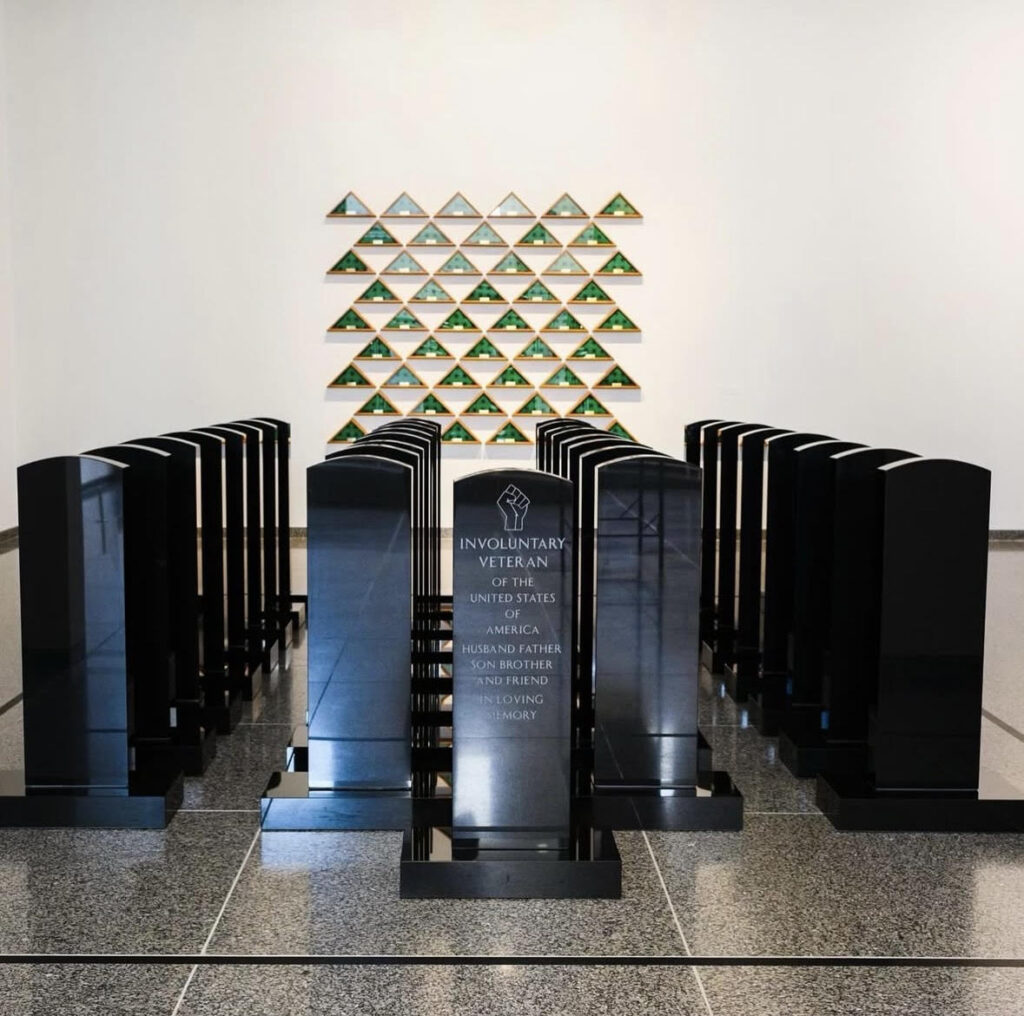
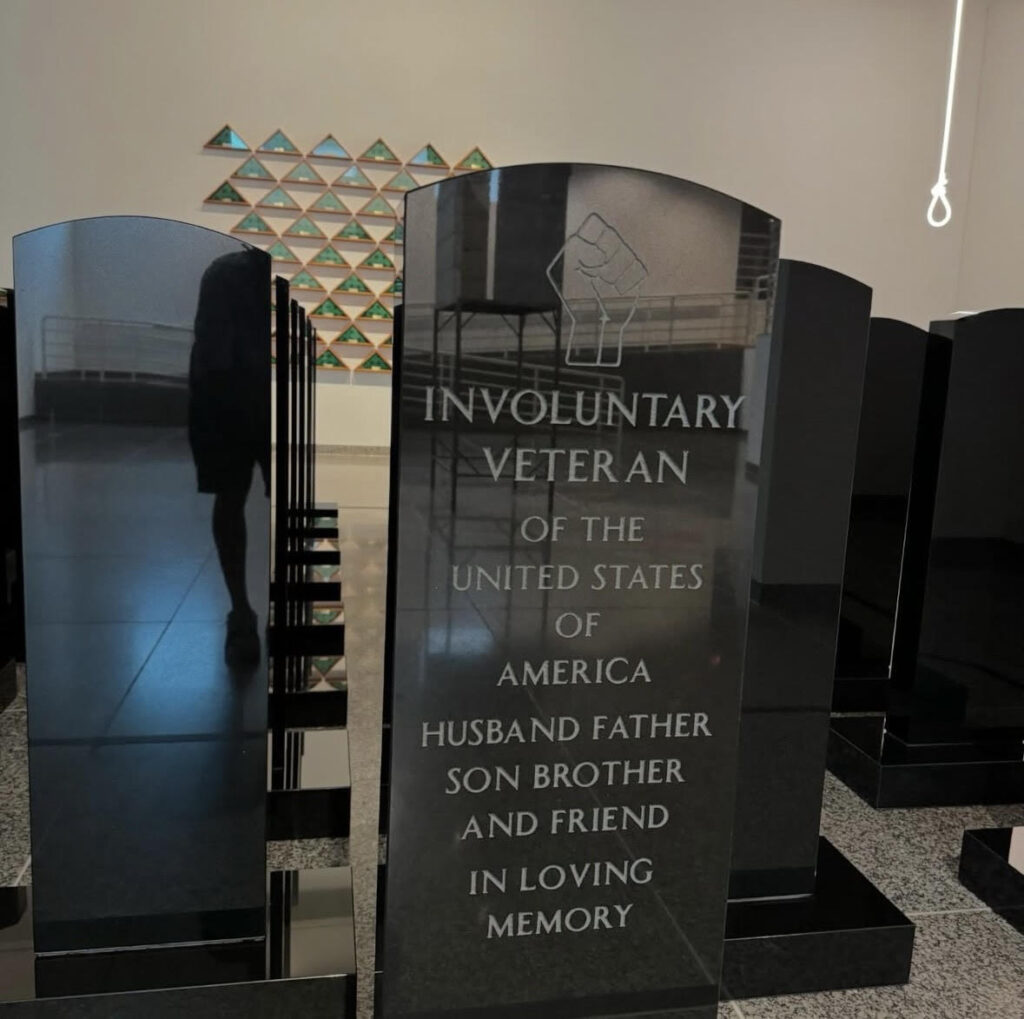
You’re drawn to symbolism — flags, gravestones, pop culture imagery. Can you talk about that?
Robert: I use iconography because it’s familiar. Then I flip it. I like taking something rooted in American culture and turning it on its head. That creates a wider entry point for people to engage with the work.
Through all your success, you’ve decided to stay independent instead of signing with a gallery. Why?
Robert: I’ve stayed independent because I admire that business model. I compare my practice to the music industry. I want to own my masters, so to speak. Being independent lets me retain ownership and control, and I see it as a long-term strategy.
Do you think more artists should consider independence, or does it depend on personality and practice?
Robert: It depends. Not everyone is comfortable with it. For me, it worked because I had corporate business experience before art. I knew how to handle customer service, product quality, consistency, and work ethic. That made me better equipped to run my studio like a business. But I also have a team and a supportive family. Doing it totally alone would be very hard.
How do you structure your practice so it runs like both a studio and a business?
Robert: I keep them mostly separate, with overlap. I dedicate structured time to creativity and structured time to business. My studio manager handles the business side, which helps me focus on creating.
What obstacles do you run into being independent?
Robert: Access. It’s harder to get into certain gallery or institutional networks. But independence also gives me control and flexibility. I treat it like dating — you don’t marry a gallery on the first date. A group show is like a first date. If it works, you do another. I think too many artists rush into long-term gallery contracts. I prefer building genuine, mutual relationships.
What have you learned about sustaining yourself as an independent artist?
Robert: Numbers matter. Process matters. You need to experiment, take calculated risks, and never get too comfortable. Constantly evaluate, get feedback, and audit yourself. Growth is the goal — not stagnation.
Does independence give you more freedom over your message?
Robert: Absolutely. There’s no censorship. My community is already aligned with my message, so I can be authentic. I still try to present things diplomatically, though, because delivery matters — truth is better received when it’s not shouted.
What advice would you give a younger artist about balancing independence, creativity, and financial stability?
Robert: Don’t quit your job right away. Pay your bills first. Then pour every free hour into your craft. Save money, stay healthy, and once your side hustle equals your main hustle, then you can transition. Study how galleries run their business and mirror that model in your own practice. When collectors come to you, they should get the same level of professionalism.
Can you walk me through your creative process?
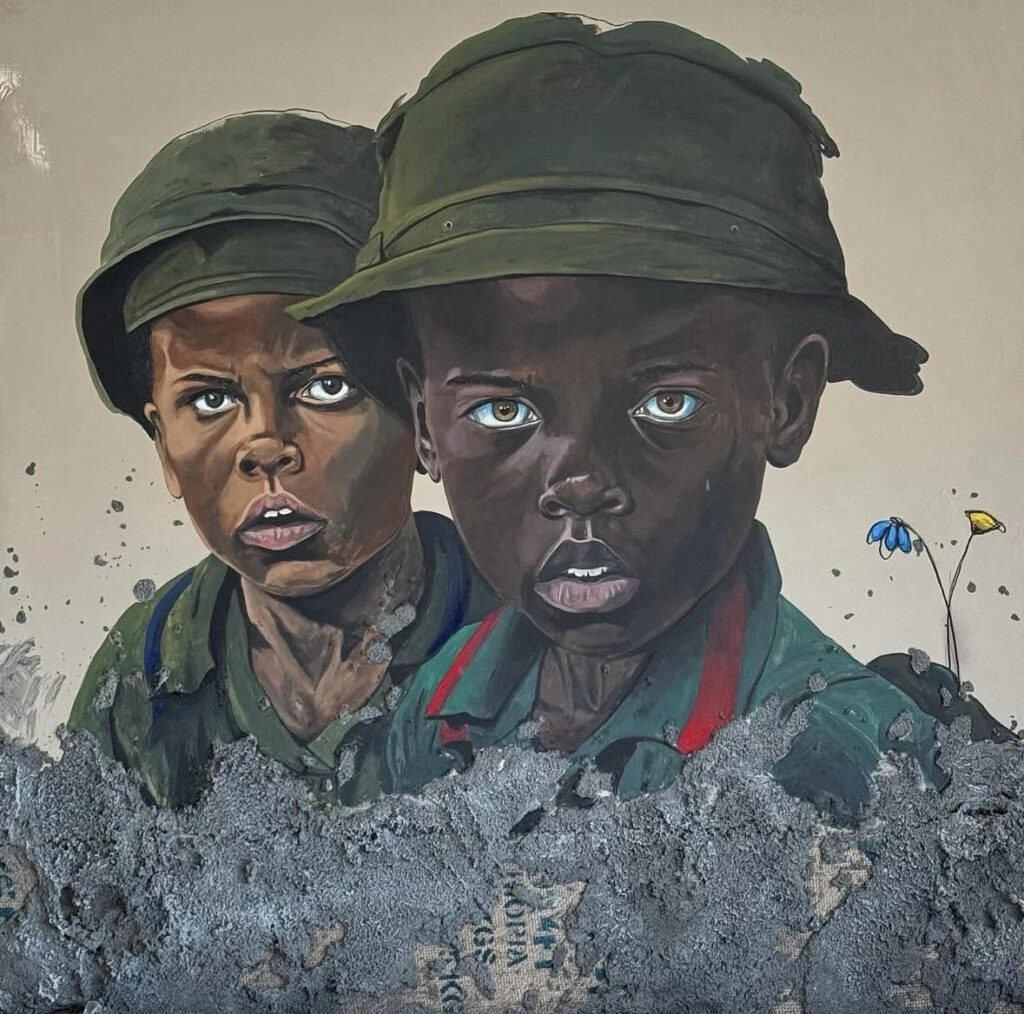
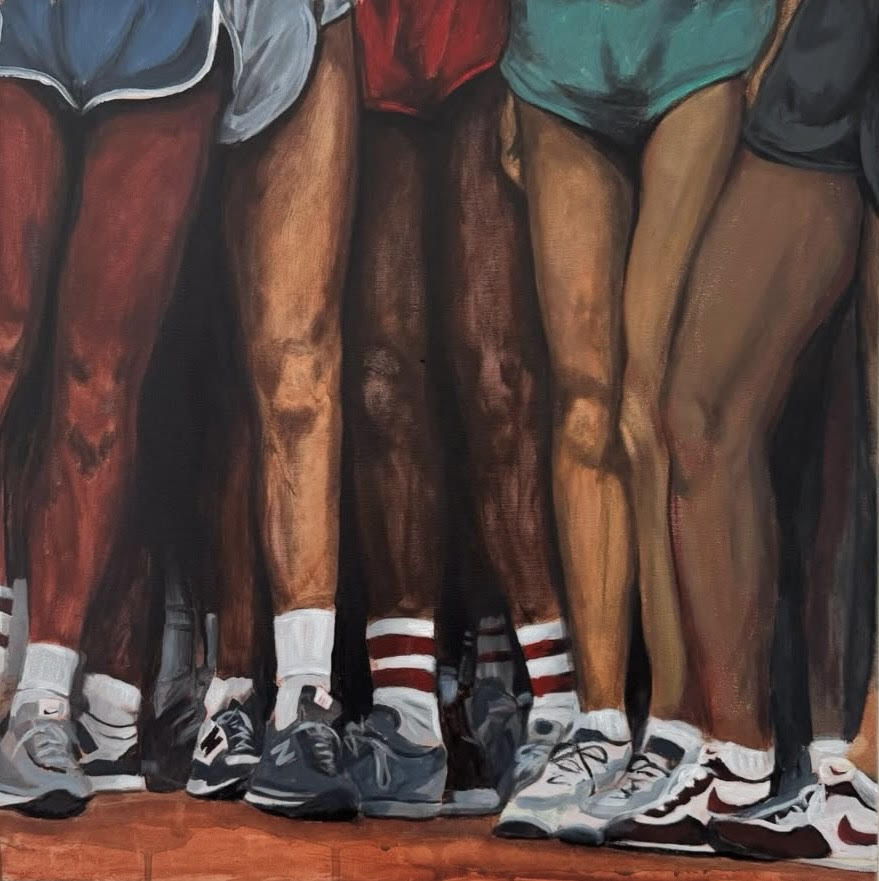
Robert: If I feel something, I sketch it. Sometimes I start small, then scale up. I often wash my canvases with Ethiopian coffee before painting. I use cheap house paint from Home Depot, and I paint fast — I like flow more than precision. I listen to everything from jazz to hip-hop while I work. It’s like freestyling in a booth: fluid, raw, immediate.
How do you approach color?
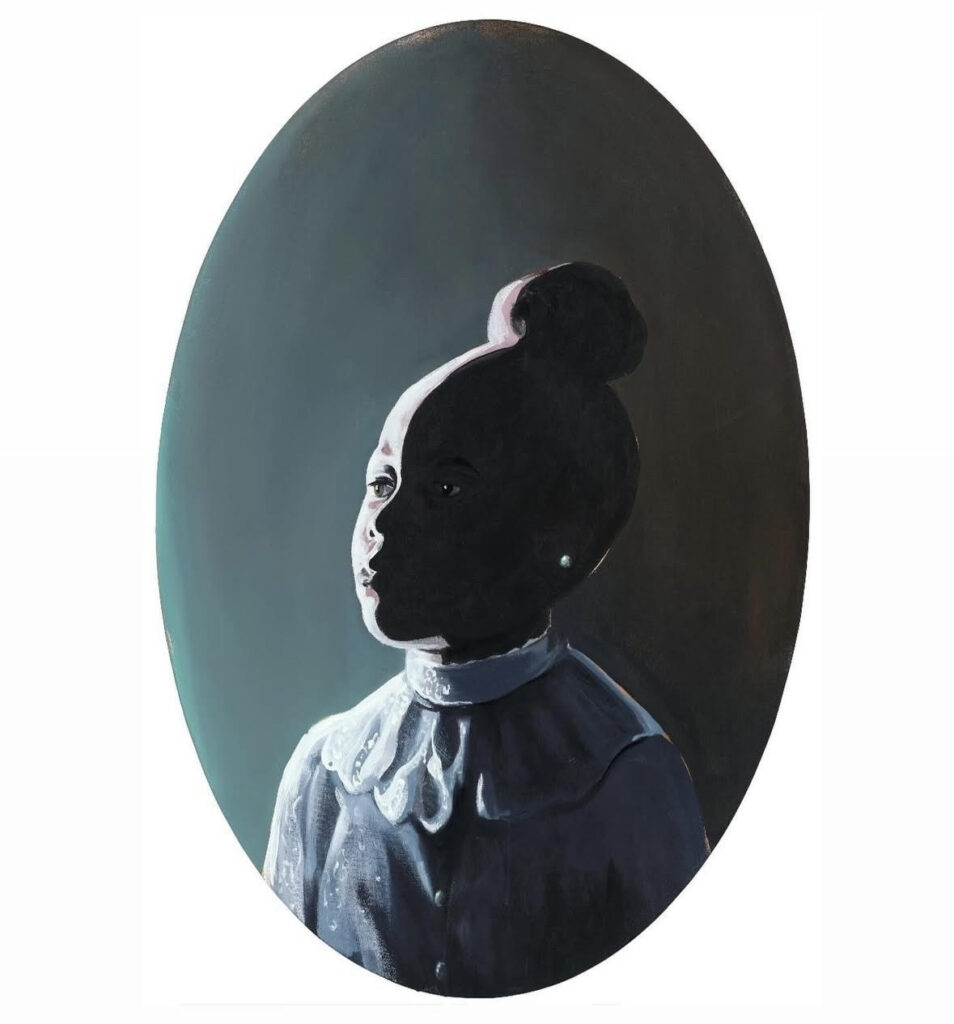
Robert: I was diagnosed as about 70% colorblind when I joined the army. So color is always tricky for me. I may not see it the same way others do, but I use what I see. I think of color as part of the story — part of the layered meaning of the work.
What are you hoping to convey through your work?
Robert: I don’t know if I’m trying to convey one thing. Mostly I want to inspire — whether it’s sobriety, creativity, or being a present parent. Hopefully my story can help someone else.
In a parallel universe, who would you be?
Robert: A creative director for a major cultural or clothing brand.
Outside of art, what are you obsessed with right now?
Robert: My family. Watching it grow, thinking about the future — that’s my obsession.
Tell me about a connection that had a big impact on you.
Robert: In early 2020, before I started my practice, I traveled to Jamaica and stayed in the Blue Mountains with a Rastafarian man. His way of life — simple, family-first, health-focused — changed me forever.
What qualities do you value most in the people you spend time with?
Robert: Authenticity, high emotional intelligence, and being problem solvers instead of problem presenters. I also pay attention to whether our energy is shared, not just one-sided.
Who do you look up to?
Robert: My dad and my kids.
What motivates you?
Robert: My family.
Describe a perfect day.
Robert: On the beach with the love of my life.
What’s your favorite movie, and why?
Robert: Malcolm X. I first saw it as a child, and it shaped how I saw my people, America, and the world. I still think about it at least once a week.
And what song are you listening to most right now?
Robert: “Jan. 14th” by Larry June.