
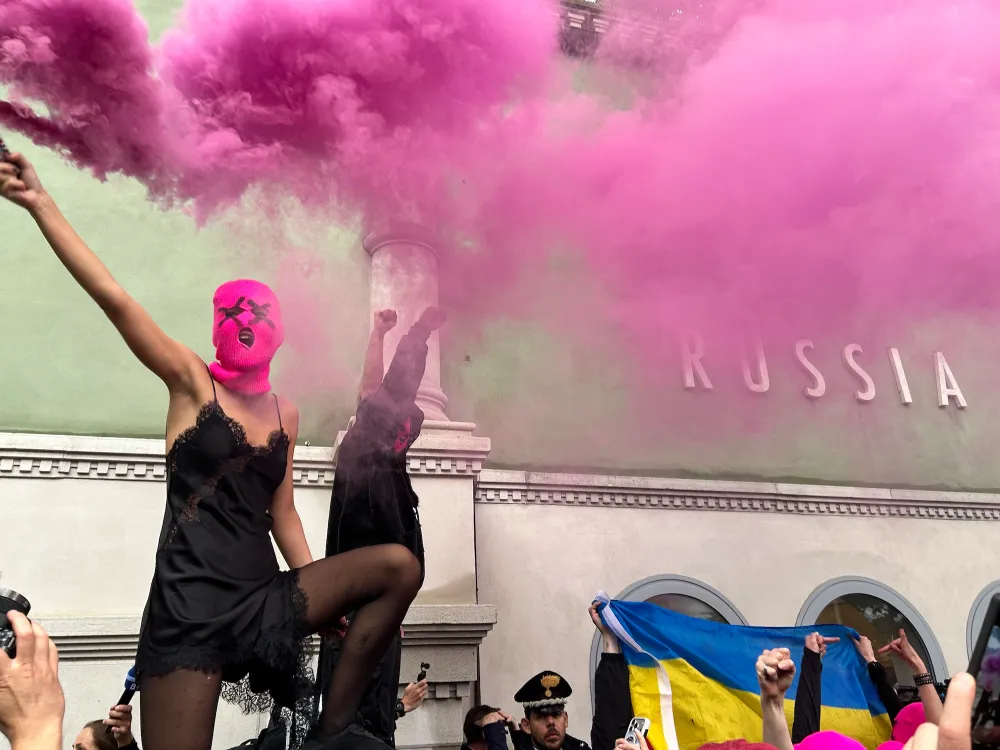
Photo: Members of Pussy Riot and FEMEN outside the Russian pavilion at the Venice Biennale on Wednesday.BRIAN BOUCHER
As Russia returns to the Biennale for the first time since its full-scale invasion of Ukraine, activists stage a protest against the idea that culture can remain neutral
The Venice Biennale has always carried politics inside its beauty. National pavilions, flags, borders, soft power, reputations — all of it sits beneath the surface of the world’s most prestigious art exhibition. But this year, that surface has cracked open.
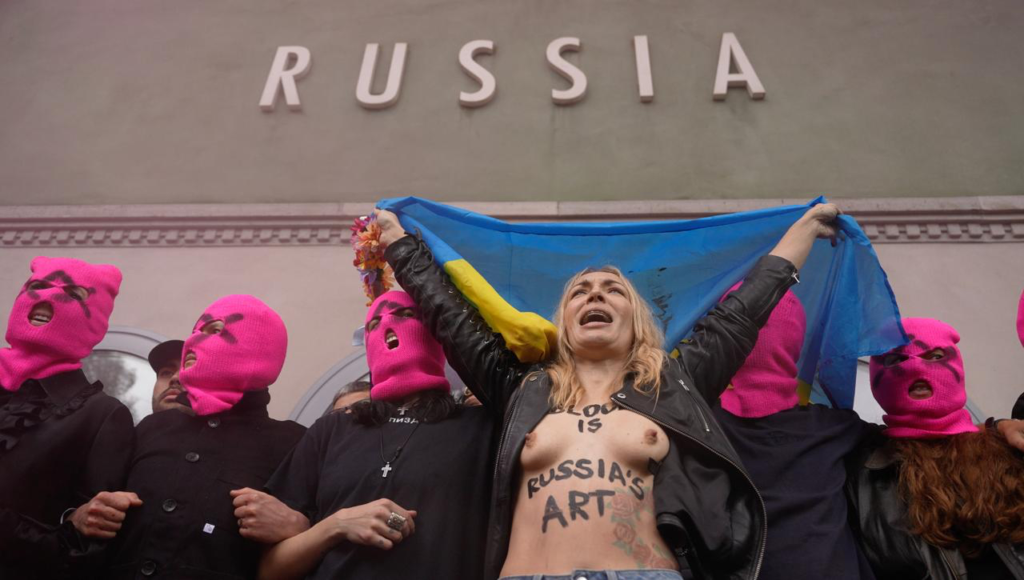
As Russia returns to the Biennale for the first time since its full-scale invasion of Ukraine in 2022, Pussy Riot and FEMEN have staged a protest against the country’s presence, turning the opening days of the exhibition into a confrontation over art, propaganda, and who gets to be welcomed back into the cultural room.
The protest arrives after months of controversy around the Russian pavilion. Russia’s participation in the 61st Venice Biennale has drawn criticism from Ukrainian officials, dissidents, and activist groups, with Pussy Riot previously arguing that Russian cultural “soft power” has become part of the state’s political and military machinery. The group has called Russia’s return a serious threat to European security, framing the pavilion not as a neutral artistic gesture, but as part of a wider system of legitimization.
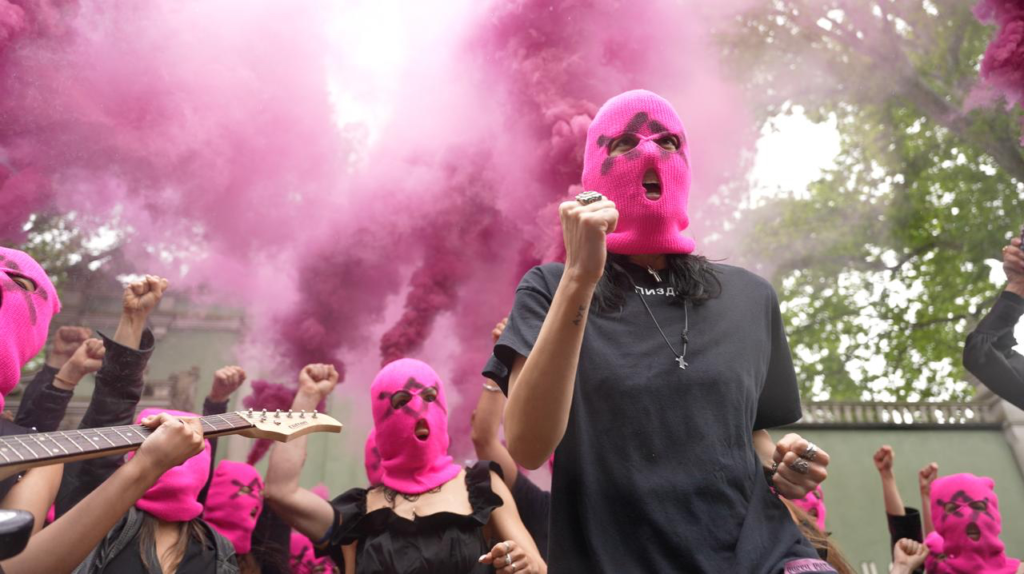
The Russian pavilion itself is operating under unusual restrictions. According to Reuters, the venue is only accessible to press during preview days, with the wider public left outside to experience video projections and music from the exterior of the building. The arrangement reflects the awkwardness of the Biennale’s position: Russia is present, but not fully open; included, but surrounded by protest and institutional tension.
That tension has spread far beyond one pavilion. Reports from Venice describe a Biennale overshadowed by resignations, funding threats, and arguments over whether countries accused of war crimes or subject to international pressure should be allowed to participate as normal. The European Union has reportedly threatened to withdraw €2 million in funding over Russia’s inclusion, while this year’s jury resigned amid wider controversy around the participation of both Russia and Israel.
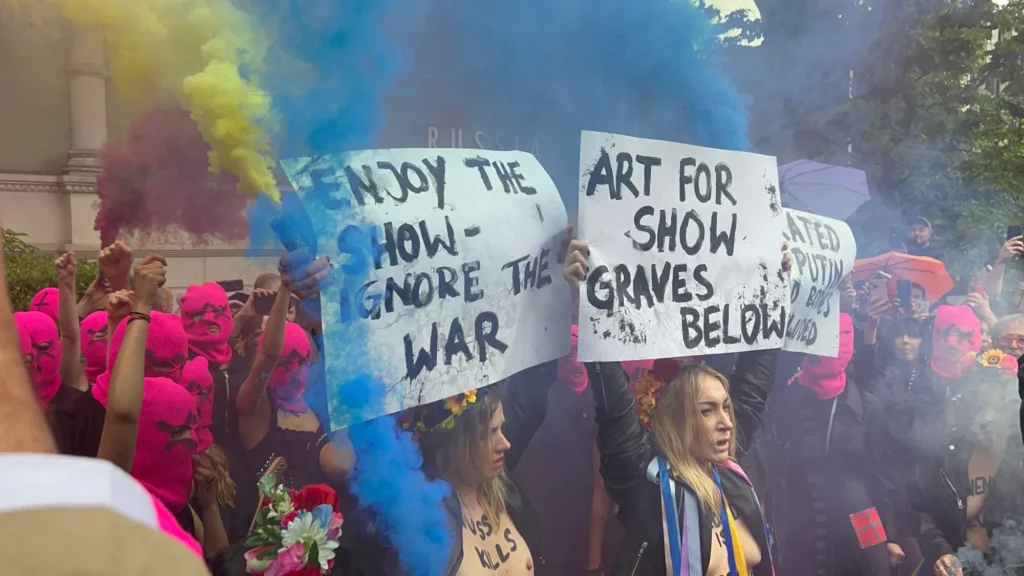
For Pussy Riot and FEMEN, the protest cuts through the polite language of cultural diplomacy. Their intervention insists that an exhibition built around national representation cannot pretend to float above the realities of war. If a pavilion carries the name of a state, then it also carries the violence, repression, and political meaning attached to that state.
That is what makes the protest feel so charged. It is not simply anti-Russian in some broad cultural sense. Pussy Riot has also been pushing for attention to Russian political prisoners and dissidents, including through Resistance Imprisoned, an exhibition of artworks by people currently or formerly imprisoned in Russia. The target is not culture itself, but the way authoritarian power uses culture as cover.
Venice, of course, knows all about spectacle. But this year, the spectacle is no longer only inside the galleries. It is outside them too: in the protests, the closed doors, the disputed pavilions, the statements, the withdrawals, and the uncomfortable question of whether the art world can keep performing openness while war presses against its borders.
In that sense, Pussy Riot and FEMEN’s action does what protest art is supposed to do. It interrupts the choreography. It refuses the clean separation between image and consequence. And it reminds the Biennale that neutrality, especially when staged under a national flag, is never really neutral.